






Abstract
Dear Editor,
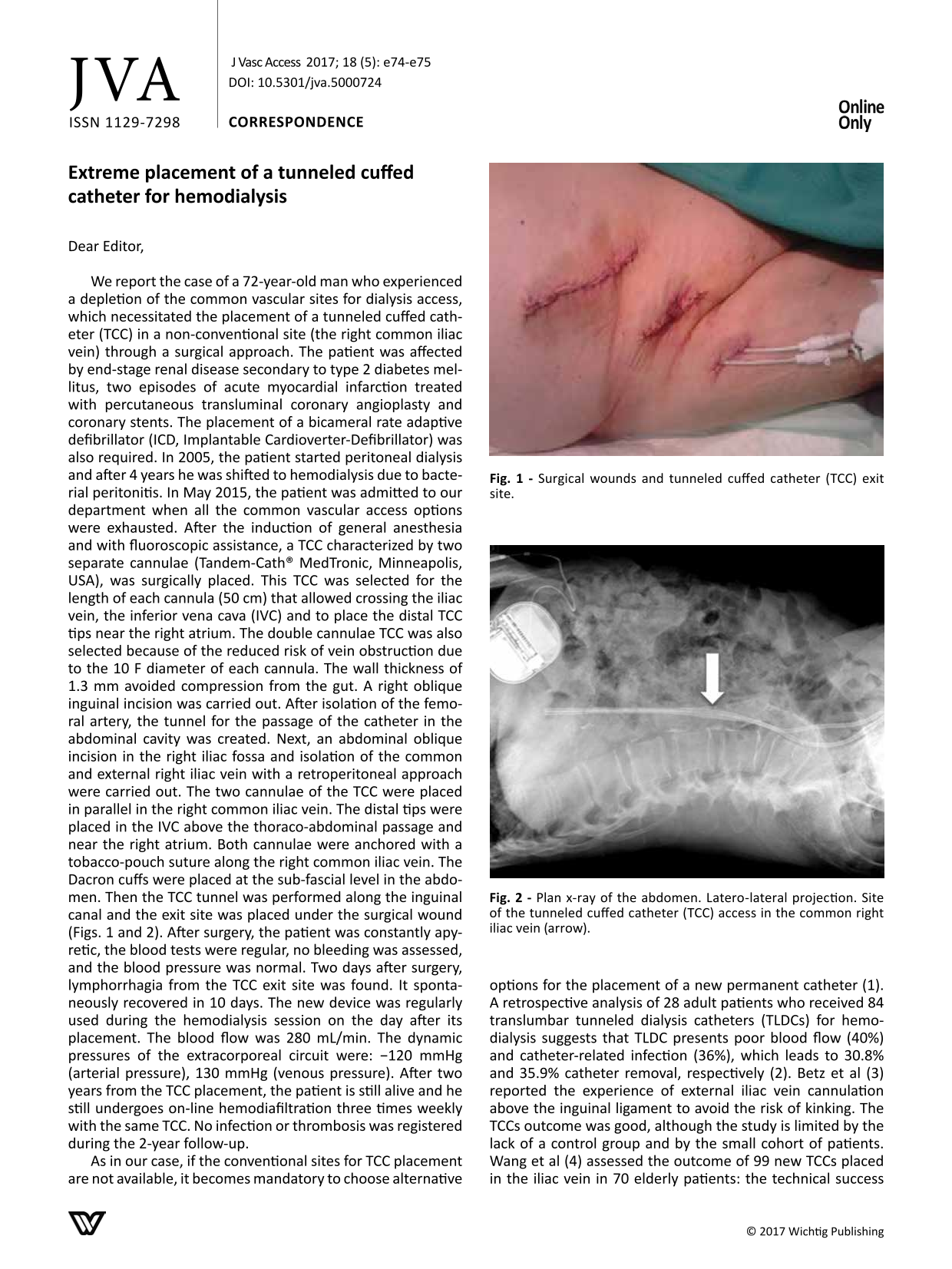
We report the case of a 72-year-old man who experienced a depletion of the common vascular sites for dialysis access, which necessitated the placement of a tunneled cuffed catheter (TCC) in a non-conventional site (the right common iliac vein) through a surgical approach. The patient was affected by end-stage renal disease secondary to type 2 diabetes mellitus, two episodes of acute myocardial infarction treated with percutaneous transluminal coronary angioplasty and coronary stents. The placement of a bicameral rate adaptive defibrillator (ICD, Implantable Cardioverter-Defibrillator) was also required. In 2005, the patient started peritoneal dialysis and after 4 years he was shifted to hemodialysis due to bacterial peritonitis. In May 2015, the patient was admitted to our department when all the common vascular access options were exhausted. After the induction of general anesthesia and with fluoroscopic assistance, a TCC characterized by two separate cannulae (Tandem-Cath® MedTronic, Minneapolis, USA), was surgically placed. This TCC was selected for the length of each cannula (50 cm) that allowed crossing the iliac vein, the inferior vena cava (IVC) and to place the distal TCC tips near the right atrium. The double cannulae TCC was also selected because of the reduced risk of vein obstruction due to the 10 F diameter of each cannula. The wall thickness of 1.3 mm avoided compression from the gut. A right oblique inguinal incision was carried out. After isolation of the femoral artery, the tunnel for the passage of the catheter in the abdominal cavity was created. Next, an abdominal oblique incision in the right iliac fossa and isolation of the common and external right iliac vein with a retroperitoneal approach were carried out. The two cannulae of the TCC were placed in parallel in the right common iliac vein. The distal tips were placed in the IVC above the thoraco-abdominal passage and near the right atrium. Both cannulae were anchored with a tobacco-pouch suture along the right common iliac vein. The Dacron cuffs were placed at the sub-fascial level in the abdomen. Then the TCC tunnel was performed along the inguinal canal and the exit site was placed under the surgical wound (Figs. 1 and 2). After surgery, the patient was constantly apyretic, the blood tests were regular, no bleeding was assessed, and the blood pressure was normal. Two days after surgery, lymphorrhagia from the TCC exit site was found. It spontaneously recovered in 10 days. The new device was regularly used during the hemodialysis session on the day after its placement. The blood flow was 280 mL/min. The dynamic pressures of the extracorporeal circuit were: −120 mmHg (arterial pressure), 130 mmHg (venous pressure). After two years from the TCC placement, the patient is still alive and he still undergoes on-line hemodiafiltration three times weekly with the same TCC. No infection or thrombosis was registered during the 2-year follow-up.

Surgical wounds and tunneled cuffed catheter (TCC) exit site.

Plan x-ray of the abdomen. Latero-lateral projection. Site of the tunneled cuffed catheter (TCC) access in the common right iliac vein (arrow).
As in our case, if the conventional sites for TCC placement are not available, it becomes mandatory to choose alternative options for the placement of a new permanent catheter (1). A retrospective analysis of 28 adult patients who received 84 translumbar tunneled dialysis catheters (TLDCs) for hemodialysis suggests that TLDC presents poor blood flow (40%) and catheter-related infection (36%), which leads to 30.8% and 35.9% catheter removal, respectively (2). Betz et al (3) reported the experience of external iliac vein cannulation above the inguinal ligament to avoid the risk of kinking. The TCCs outcome was good, although the study is limited by the lack of a control group and by the small cohort of patients. Wang et al (4) assessed the outcome of 99 new TCCs placed in the iliac vein in 70 elderly patients: the technical success rate for TCCs was 100%, the median infection-free survival and dysfunction-free survival after catheterization were 617 and 875 catheter days, respectively.
In conclusion, although TCC is still considered the vascular access of last choice in case of unavailability of conventional veins, TCC placement in the iliac vein can represent a useful and definitive extreme alternative, especially in elderly patients with several comorbidities who can benefit from special dialysis techniques (5).
Footnotes
Financial support: No grants or funding have been received related to this study.
Conflict of interest: None of the authors has financial interest related to this study to disclose.