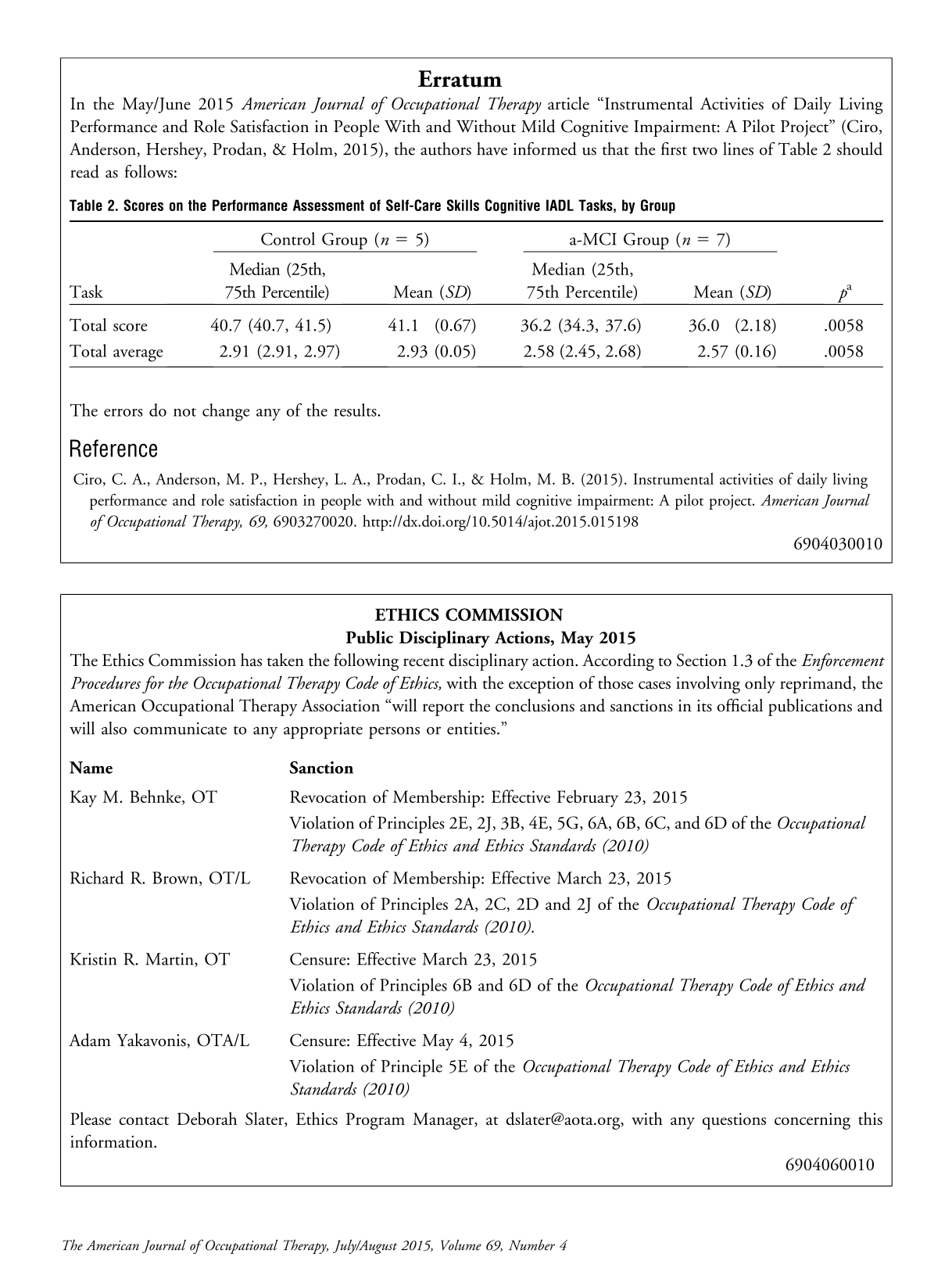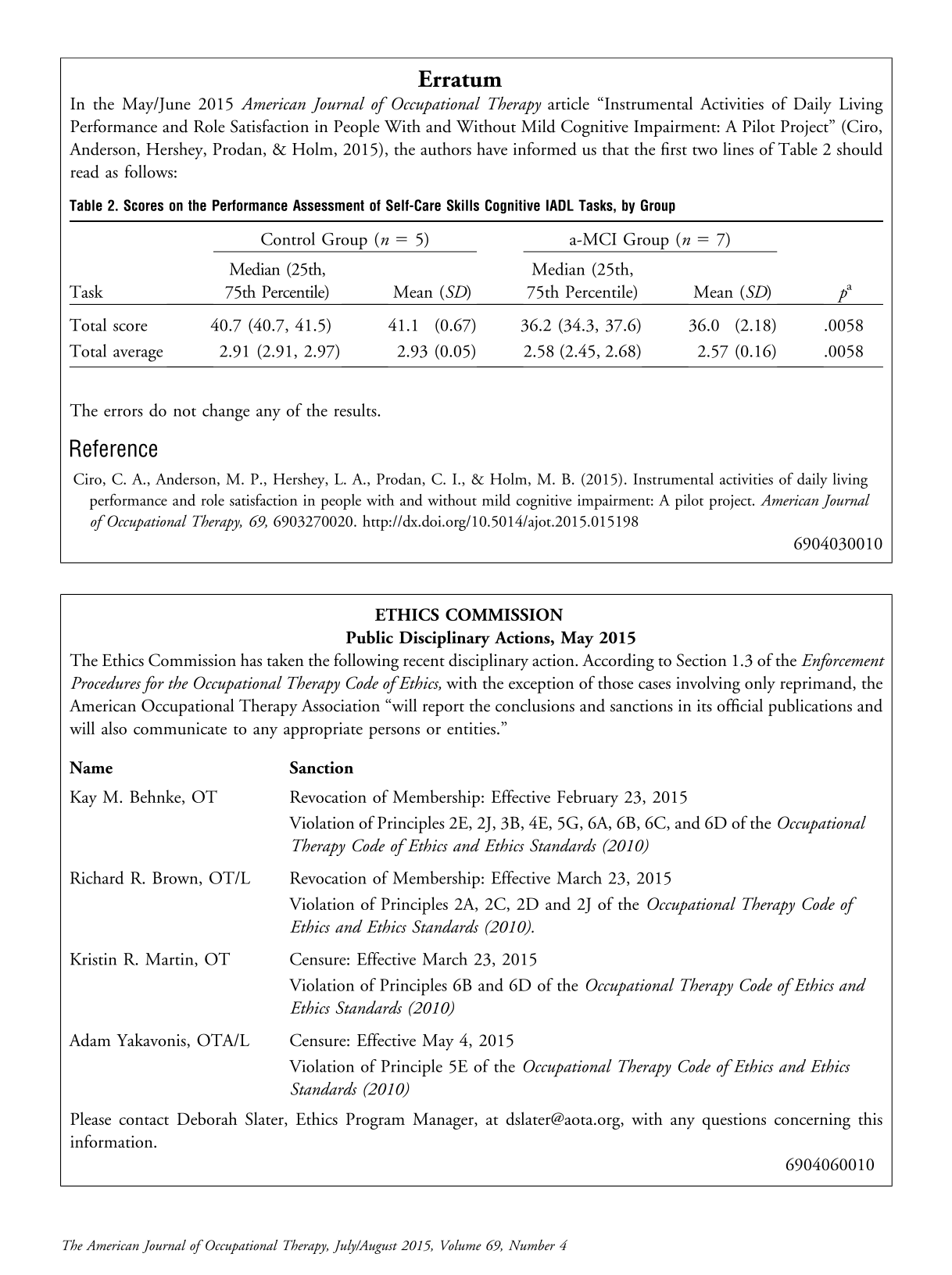
Correction
 Free accessCorrectionFirst published June, 2015pp. 425-426

Select search scope: search across all journals or within the current journal

 Free accessCorrectionFirst published June, 2015pp. 425-426Free accessNewsFirst published June, 2015pp. 426-427Free accessOtherFirst published June, 2015pp. 427-432
 Free accessCase reportFirst published June, 2015pp. 440-448Free accessResearch articleFirst published June, 2015pp. 448-459Free accessResearch articleFirst published June, 2015pp. 459-467Free accessResearch articleFirst published May, 2015pp. 467-476Free accessResearch articleFirst published May, 2015pp. 476-484Free accessResearch articleFirst published June, 2015pp. 484-494Free accessResearch articleFirst published June, 2015pp. 494-504Free accessResearch articleFirst published June, 2015pp. 504-512Free accessResearch articleFirst published June, 2015pp. 512-523Free accessResearch articleFirst published June, 2015pp. 523-533Free accessResearch articleFirst published June, 2015pp. 533-541Free accessResearch articleFirst published June, 2015pp. 541-546Free accessBrief reportFirst published June, 2015pp. 546-553Free accessBrief reportFirst published June, 2015pp. 553-559Free accessOtherFirst published June, 2015pp. 559-562Free accessOtherFirst published June, 2015pp. 562-566