Other
Select search scope: search across all journals or within the current journal


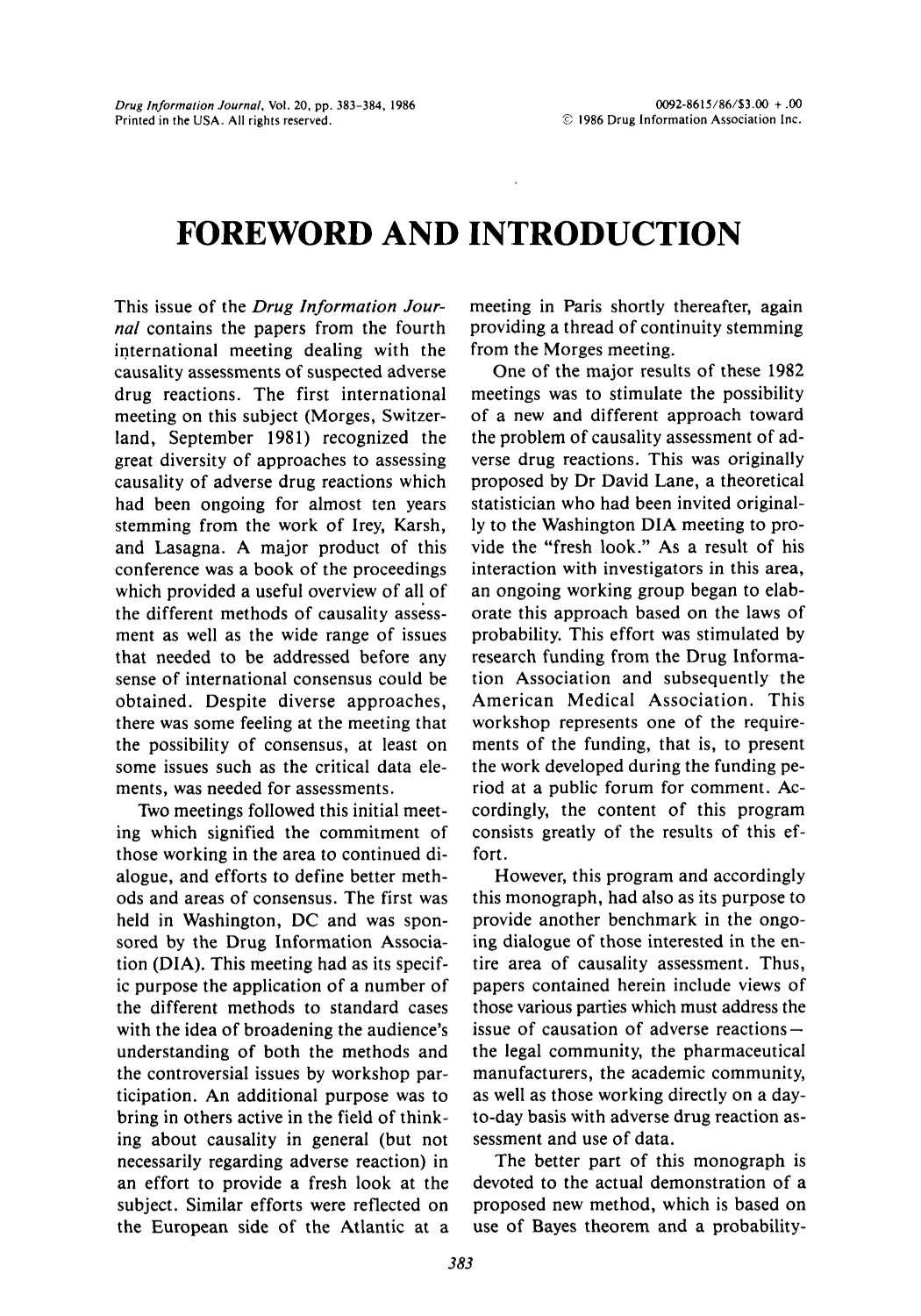
The study of a new drug includes the assessment of its pharmacologic effects, benefits (efficacy), and risks (safety). Most recent drug discontinuations in the United States and the United Kingdom have been associated with problems of safety. The assessment of clinical drug safety is difficult. Those assessing drug safety are confronted with the need to make causality assessment judgments of drug-related events. Several procedures for assessing causality of adverse reactions have been proposed; however, none of them is completely satisfactory. Global introspection (the unaided judgment based on knowledge and experience) and the currently available standardized decision aids (questionnaires or algorithms) have serious limitations that hamper their use. There is a need for better procedures.
Causality assessment in individual patients is an exercise in medical differential diagnosis. Its purpose is to determine whether a particular adverse event in a patient is caused by an administered drug. Currently, causality assessment is best done by trained persons who use specified information and an algorithm to bring discipline and consistency into the decision making process. This workshop will consider a new approach to causality assessment based on Bayesian principles.
Despite the many limitations to interpreting spontaneous adverse drug reaction (ADR) reports, including making causality judgments, ADR reports play a significant role in product liability lawsuits. Product liability is a rapidly growing issue for pharmaceutical manufacturers because recent judicial decisions have taken drug liability law beyond the traditional concepts of negligence and are approaching absolute liability, partly because many cases reveal a search for the “deep pocket.” A majority of cases center on the duty to warn of side effects and, more recently, the duty to warn about unknown side effects, a trend that could have deleterious consequences on pharmaceutical manufacturers. Examples are provided by experiences with cases involving vaccine liability, which rely on two major proofs of causation: (1) temporal association, an easily understood but flawed criterion when the alleged injury is either common in occurrence, or when it does not occur in thousands to millions of those exposed to a suspect agent; (2) epidemiologic studies, which are limited, particularly in retrospective analyses, by lack of conclusive evidence of causation versus group differences. The experience in this type of product liability suggests the need for alternatives to the current tort system. At present, however, a manufacturer can help diminish liability with programs directed to the major sources of liability — physical defects of the product and failure to warn. A detailed liability prevention plan is outlined, focusing on quality control, comprehensive ADR information management, and diligent training of the sales force.

The study of causality of suspected adverse drug reactions (ADRs) forces us to look at our state of knowledge about drugs. Frequently, effects associated with a drug in the product label or literature are variably related to that drug and sometimes are only an expected event for the population exposed to the drug. Frequency and likelihood of causation are seldom known. Examples of this imperfect state of knowledge and the reasons for it are elaborated, citing the standard sources of information: clinical trials, spontaneous reports, and epidemiologic methods — cohort and case control studies. Each method generates data not amenable to standard statistical analysis. It is proposed that these data can be evaluated using Bayesian methods, which in turn would provide guidance for improved study design.
The last ten years have seen the development of a number of different methods for standardized causality assessment. One of the major results of these efforts has been the understanding that available information on suspected cases is often inadequate. There has also developed a general concensus about what information is most important, and this has resulted in published guidelines for literature reports. The large number of existing methods are consistent with ongoing differences of opinion related less to reproducibility of any method than to its “correctness.” One approach to this dilemma is to develop information using experimental methods; however, a more ethical and practical approach is to rate data for importance in achieving a more refined concensus. The questions remain as to how far the methods can realistically be refined and whether expert opinion is still needed. Continued efforts to develop a standard method are important, particularly if the method is used to define areas of disagreement and to classify cases for subsequent analysis.
In assessing the probability of drug causation in individual cases of suspected adverse drug reaction (ADR), global introspection represents the oldest and most popular strategy. The assessor attempts to consider each factor that could possibly affect the causal link between one or more administered drugs and a subsequently observed adverse event. He or she makes a mental list of these factors, weighs them according to some sense of their relative importance, and then makes a decision about the probability of drug causation. Unfortunately, considerable evidence exists to show that global introspection, even by experts, is neither reproducible, valid, nor accountable. A variety of complicating issues and questions concerning persons, drugs, and events are grouped into seven general categories to facilitate presentation. These complicating factors are then illustrated using a case of methyldopa-associated pancreatitis.
The criteria currently used for the evaluation of methods for causality assessment are inappropriate. Reproducibility leads to suppression rather than resolution of real disagreements, and the method used to establish validity relies on the tarnished gold standard of expert opinion. We describe six alternative criteria that attempt to address a potential user's main concerns-the need to know whether to believe the results in general and in a particular case. When we assessed the published methods by these criteria, most of the methods failed most of the criteria. We believe that the problem and its solution lie at a fundamental level — real understanding of the true nature of causality assessment, which we suggest is an inherently subjective evaluation based on the multiple uncertainties that an assessor has about a case and not an objective attribute of the drug-event connection that can be determined from unambiguous evidence elicited in response to “operational questions.”
This paper discusses the need to quantitate degrees of belief to handle problems that involve making decisions when the consequences of the various possible decisions cannot be known with certainty. Degrees of belief are interpreted in such a way that inconsistent opinions about uncertainty can be recognized and avoided. Five general techniques for measuring uncertainty are introduced.
This paper outlines an approach to causality assessment that is based on the logic of uncertainty, Bayesian probability theory. The goal of causality assessment is taken to be the calculation of the posterior odds in favor of drug causation, given all available background and case information. There are two stages to the Bayesian approach: collecting the facts and evaluating the evidence. The evaluation proceeds by a series of probability assessments that decompose the overall causality assessment into a series of component evaluations, each of which focuses on one factor or source of information. The solutions to these component problems are then combined according to the rules of probability theory to give a solution to the overall causality assessment.

A case of cholestatic jaundice appearing after administration of chlorpromazine is analyzed using the Bayesian method. This analysis indicates a high probability of drug causation. The analysis illustrates the relative importance of the background and case information in making the differential diagnosis between drug and nondrug etiologics.
Panelists: Dr Hyman Zimmerman, VA Medical Center, Washington, DC; and Dr Carlos Dujovne, Division of Clinical Pharmacology, Kansas University Medical Center, Kansas City, Kansas.
We evaluated a published case of suspected nephrotoxicity due to gentamicin using the Bayesian approach. The posterior odds (158.7) and probability (.99) were overwhelmingly in favor of drug causation. The major factors that drove the assessment were evidence from the patient's history prior to the onset of renal failure (he received an overdose and there were no findings to suggest another cause), the timing of the renal failure (14 days after gentamicin was started), and its characteristics (compatible with acute tubular necrosis). Although agreeing with intuitive judgment, the assessment differed from it in two crucial ways: (1) the result achieved was far more in favor of drug causation; and (2) the reasons for this assessment (both the evidence used and how it was combined) were precisely delineated. The case illustrates how the Bayesian approach to causality assessment deals effectively with the multiple uncertainties of even a relatively straightforward clinical case of suspected adverse drug reaction — a feat that we believe is beyond the scope of unstructured clinical judgment.
Panelists: Dr Sarah Prichard, Nephrology Division, Royal Victoria Hospital, Montreal, Quebec, Canada; and Dr W. N. Bennett, Division of Nephrology, University of Oregon School of Medicine, Portland, Oregon

Panelists: Dr Bruce Wintroub, Department of Dermatology, VA Medical Center, San Francisco, California; and Dr Robert Stern, Department of Dermatology, Beth Israel Hospital, Boston, Massachusetts
A case of unexplained sudden death in a previously healthy 42-year-old woman is analyzed using the Bayesian approach. Autopsy findings were consistent with anaphylaxis, which appeared to have occurred one to three hours after a tooth extraction procedure. Four candidate drugs are considered in the analysis: zomepirac, lidocaine, and two doses of penicillin V (one taken before and the other after the dental procedure). The analysis shows that each of the four candidate drugs, if considered alone, would be a likely cause of sudden death in this case. Despite the fact that lidocaine is the only one of the four known to have been taken (from the case summary), the drug with the highest posterior odds, by far, is zomepirac. Although this result might at first seem counterintuitive, the initial (prior) uncertainty that the drug had been taken preceded the knowledge that the patient did indeed die suddenly from apparent anaphylaxis without another drug or nondrug cause of comparable likelihood.
Panelists: Dr Rolf Hoigné, Head, Medical Division, Ziegerspital, Berne, Switzerland; and Dr Tom Keahy, National Institute of Allergy, National Institutes of Health, Bethesda, MD
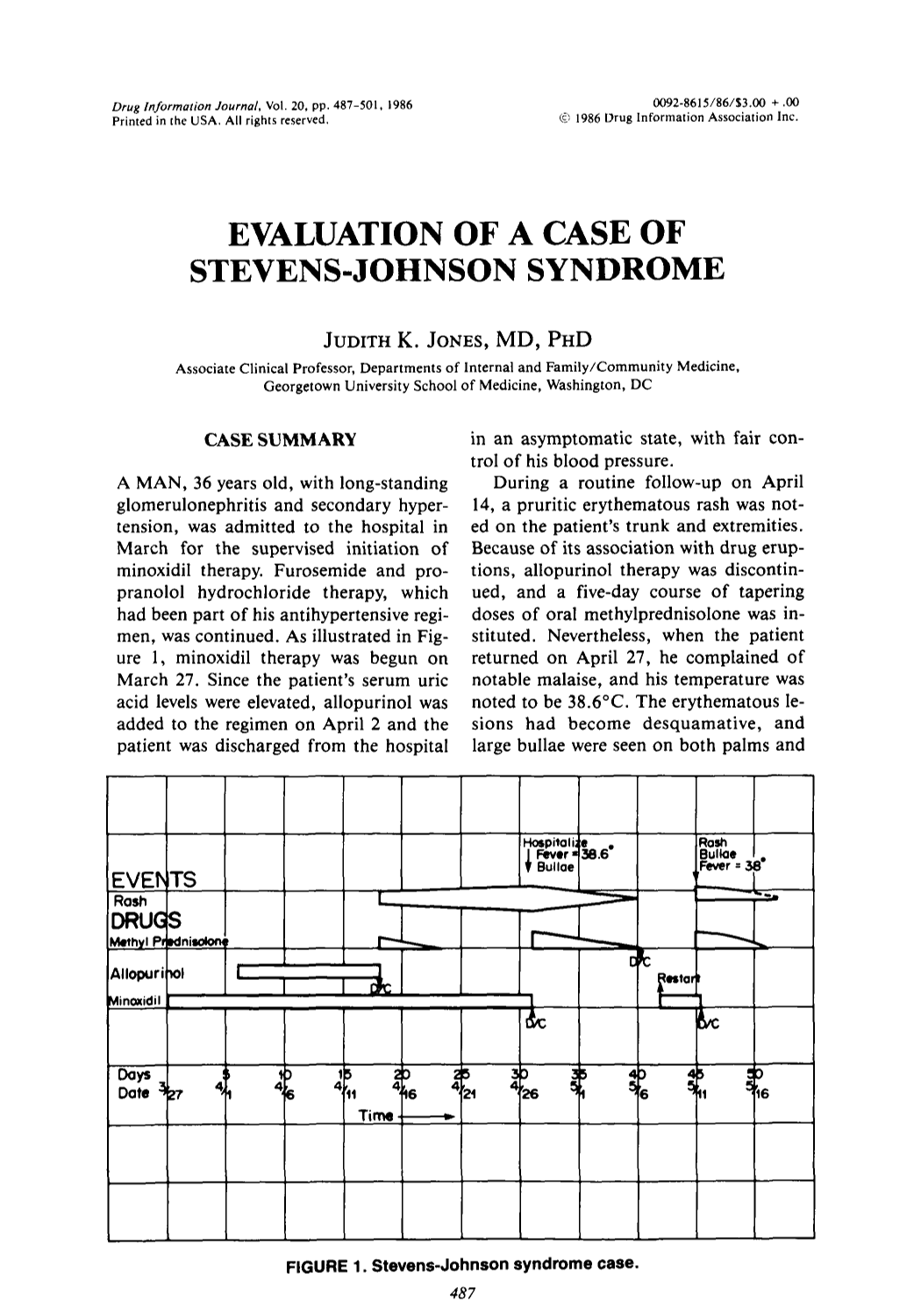
A published case report of exfoliative dermatitis in a previously healthy 16-year-old boy is analyzed using the Bayesian approach. Two candidate drugs, lithium carbonate and thioridazine, are considered, and all five case information categories contribute likelihood ratios that progressively point to lithium as the probable cause. Sensitivity analysis demonstrates that the inference of lithium causation is “insensitive” to feasible alterations in the constituent probability estimates.
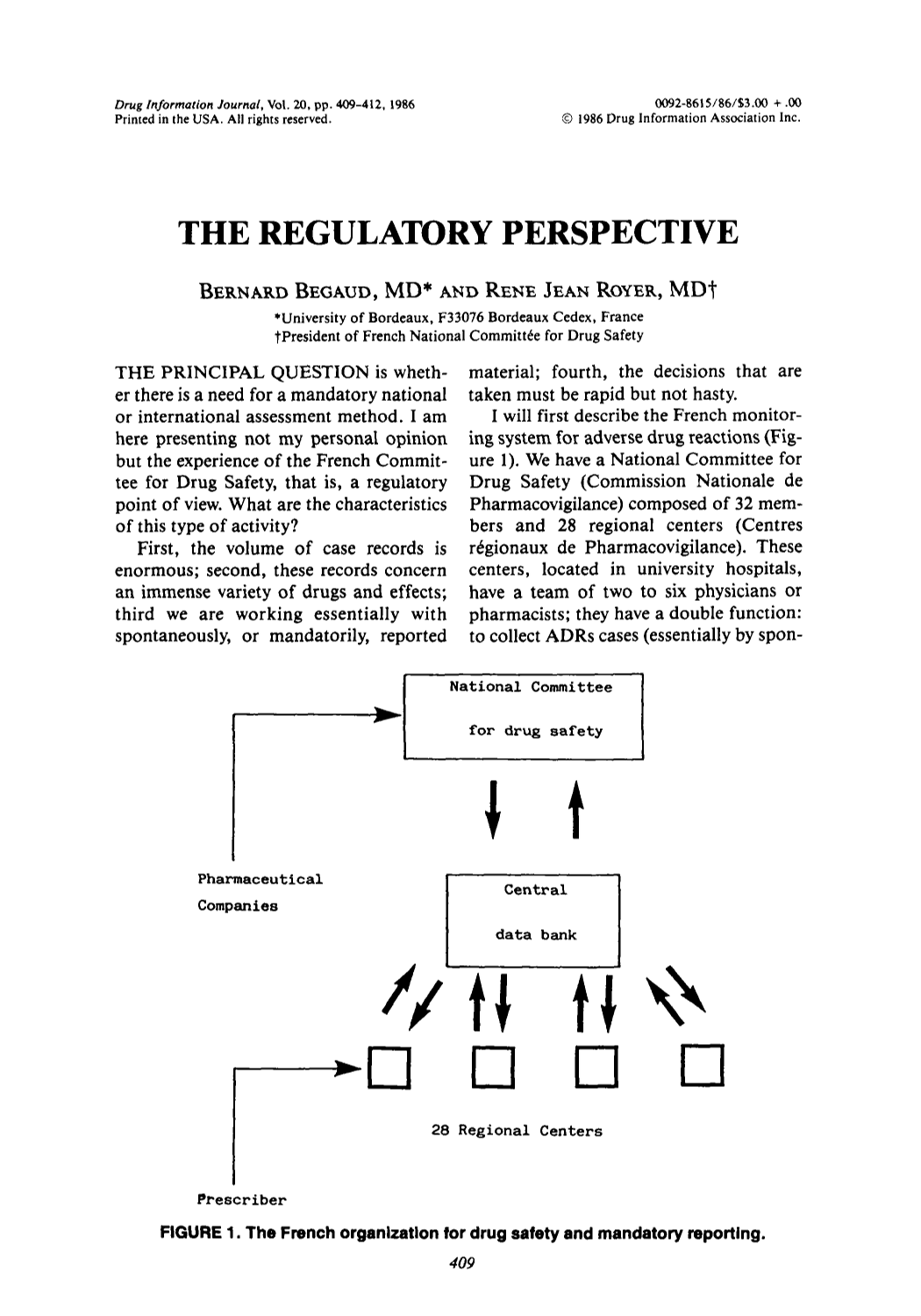
Panelists (Industry Representatives): Dr Suzanne Streichenwein, Drug Safety, Hoechst AG Medical Department, Frankfurt, West Germany; Dr Michel Auriche, Head of Drug Safety Department, Medical and Scientific Development, Rhone-Poulene Sante, Les Miroirs, France; Dr Jan Venulet, Ciba-Geigy Medical Department, Basle, Switzerland; Dr J. Richard Crout, Boehringer Mannheim, Rockville, Maryland (Regulatory Representatives): Dr Bengt-Erik Wiholm, National Board of Health and Welfare, Department of Drugs, Uppsala, Sweden; and Dr Bernard Begaud, University of Bordeaux, Bordeaux Cedex, France
It may be possible to automate the type of analysis under discussion, provided a prestructured framework can be established within a restricted class of suspected reactions. Parallels are drawn with computer-aided diagnosis of disease, and the potential use of “causal networks” as a representation of pharmacologic knowledge is pointed out. It is argued that many of the problems raised in the papers have been recognized in other research areas, and appropriate techniques are being evolved; in particular, it may be feasible to begin with a somewhat vague subjective opinion that is then “tuned” automatically in the light of experience. Another important feature of a working system should be the ability to continuously monitor “surprise” at what it is told in order to automatically detect “odd” cases. This only seems feasible within the coherent probabilistic framework described in these papers.
Panelists: Dr Hyman Zimmerman VA Medical Center, Washington, DC; Dr Bruce Wintroub, Department of Dermatology, VA Medical Center, San Francisco, California; Dr Winifred M. Castle, Medical Advisor, Product Safety Group, Medical Department, Imperial Chemicals Industries PLC, Pharmaceuticals Division, Macclesfield, Cheshire, United Kingdom; Dr Bruce Hill, Professor, Department of Statistics, University of Michigan, Ann Arbor, Michigan; Dr David Lane, Department of Theoretical Statistics, University of Minnesota, Minneapolis; Dr Tom A. Hutchinson, Nephrology Division, Royal Victoria Hospital, Montreal, Quebec, Canada; Dr Michael Kramer, Department of Epidemiology & Biostatistics, Montreal, Quebec; Professor Rolf Hoigné, Head, Medical Division, Ziegerspital, Switzerland; Dr David J. Spiegelhalter, Medical Research Council, MRC Centre, United Kingdom; and Dr. Jan Venulet, Ciba-Geigy Medical Department, Basel, Switzerland