







Abstract
Background
Thumb hypoplasia and thenar muscle anomalies are complex congenital conditions that are associated with other congenital anomalies or syndromes. Congenital absence of the opponens pollicis muscle is very rare and is associated with the absence of other muscles.
Methods
A 6-year-old male was referred to our clinic with a provisional diagnosis of carpal tunnel syndrome because electromyography findings at the referring hospital were consistent with this diagnosis. He was unable to oppose his thumbs to his other fingers or grasp objects. All physical examination, electromyography, and magnetic resonance imaging findings were consistent with bilateral absence of the opponens pollicis muscle.
Results
The patient underwent bilateral transfer of the extensor indicis proprius tendon. At 1 year after surgery, he had satisfactory thumb opposition on both sides.
Conclusions
Differentiation between congenital muscle anomalies and carpal tunnel syndrome is very important in order to avoid performing unnecessary surgical procedures. We present a case of bilateral congenital absence of the opponens pollicis muscle, which has not previously been reported, and review the literature regarding congenital muscle anomalies of the hand.
Introduction
Congenital disorders of the upper extremities usually result from insults during the embryonic or fetal periods. Upper limb differentiation occurs during the embryonic period, and insults during this period can result in agenesis of a part of an upper limb or an entire upper limb. Upper limb maturation and growth occur during the fetal period, and insults during this period can result in functional deficits such as hypoplasia [12]. The reported incidence of bone–muscle anomalies of the hand and forearm is 1/30,000 to 1/100,000 individuals, with a male/female ratio of 3:2 [12].
Thenar atrophy, or wasting of the thenar muscles, may be associated with other congenital anomalies or syndromes [2] or may be an isolated defect such as in Cavanagh's syndrome [10]. Mild abnormalities may be unrecognized or misdiagnosed as carpal tunnel syndrome.
We present a case of bilateral isolated absence of the opponens pollicis muscle, which has not previously been reported, and review the literature regarding congenital muscle anomalies of the hand.
Case Report
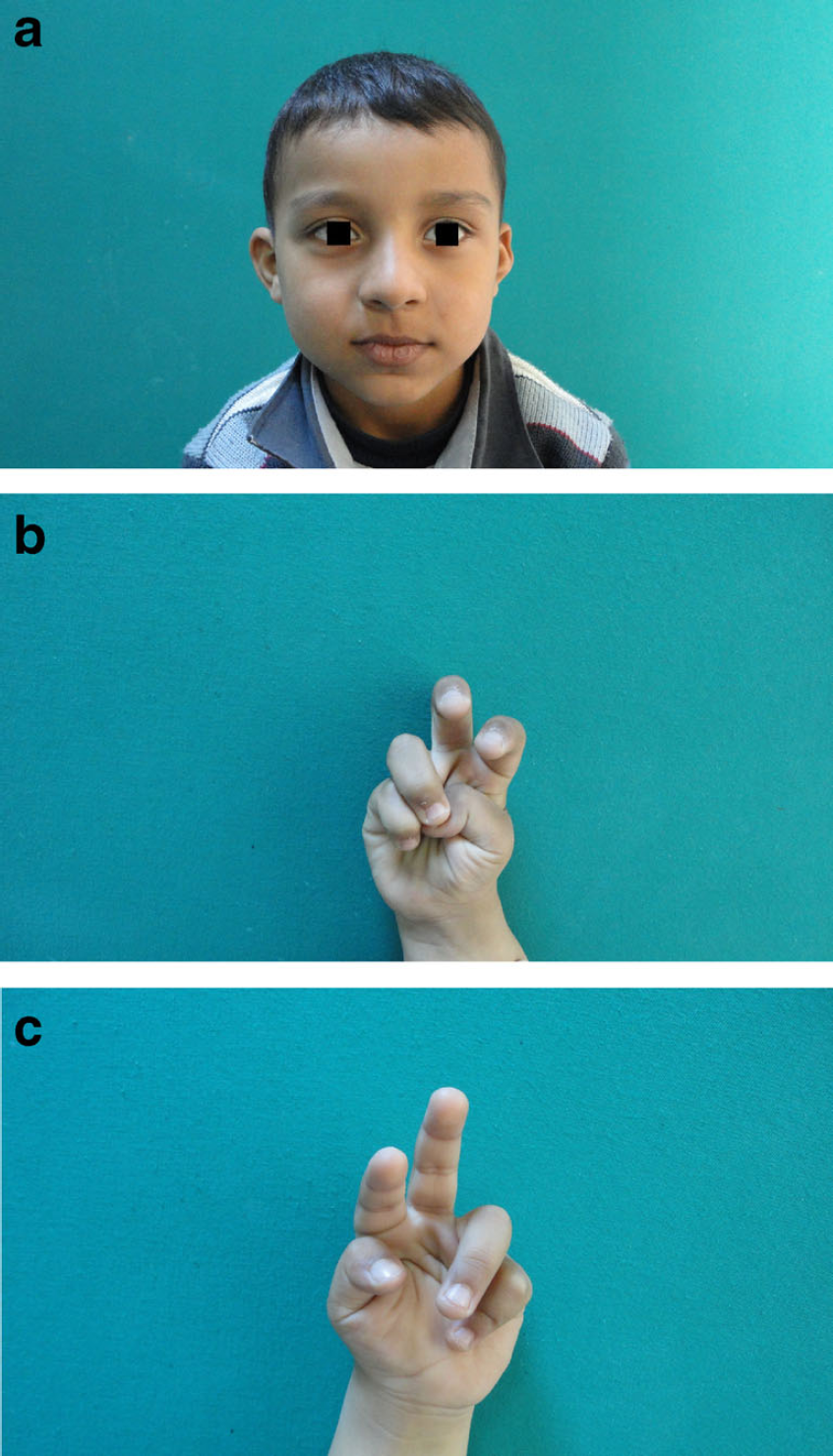
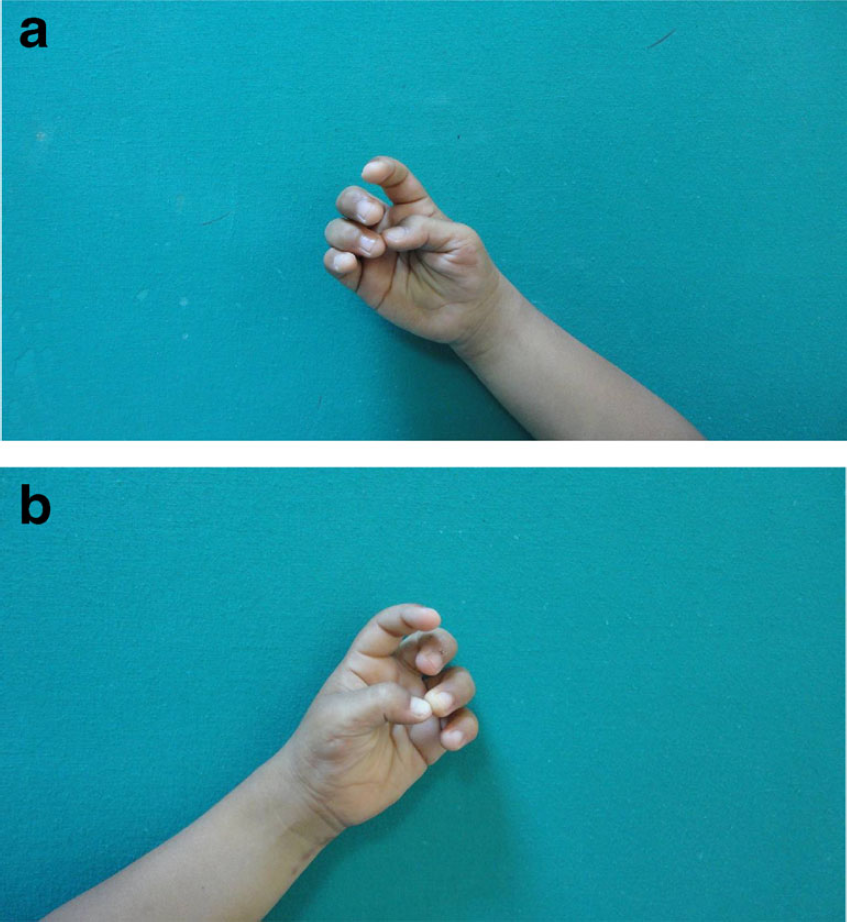
A 6-year-old male was referred to our clinic with a provisional diagnosis of carpal tunnel syndrome because electromyography findings at the referring hospital were consistent with this diagnosis. He had presented with inability to oppose his thumbs to his other fingers and difficulty grasping objects. There was no history of trauma and family history of congenital anomalies. Physical, neurological, and magnetic resonance imaging (MRI) examinations were performed. Hand X-rays did not show any abnormalities. Physical examination was unremarkable except for an abnormally shaped left ear (Fig. 1a), bilateral inability to oppose his thumbs, and bilateral thenar atrophy (Fig. 1b, c). Electromyography (EMG) performed at our hospital showed that the median nerve was intact. Doppler ultrasonography did not detect any vascular anomalies. Axial and coronal cross-sectional MRI images showed the absence of the opponens pollicis muscle bilaterally (Fig. 2a, b). All other thenar muscles including the flexor pollicis longus muscle were intact. The patient underwent surgical exploration and opponens plasty. Bilateral absence of the opponens pollicis muscle was confirmed intraoperatively (Fig. 3). The patient was successfully treated with bilateral transfer of the extensor indicis proprius tendon. At 1 year after surgery, he had satisfactory thumb opposition on both sides (Fig. 4a, b).
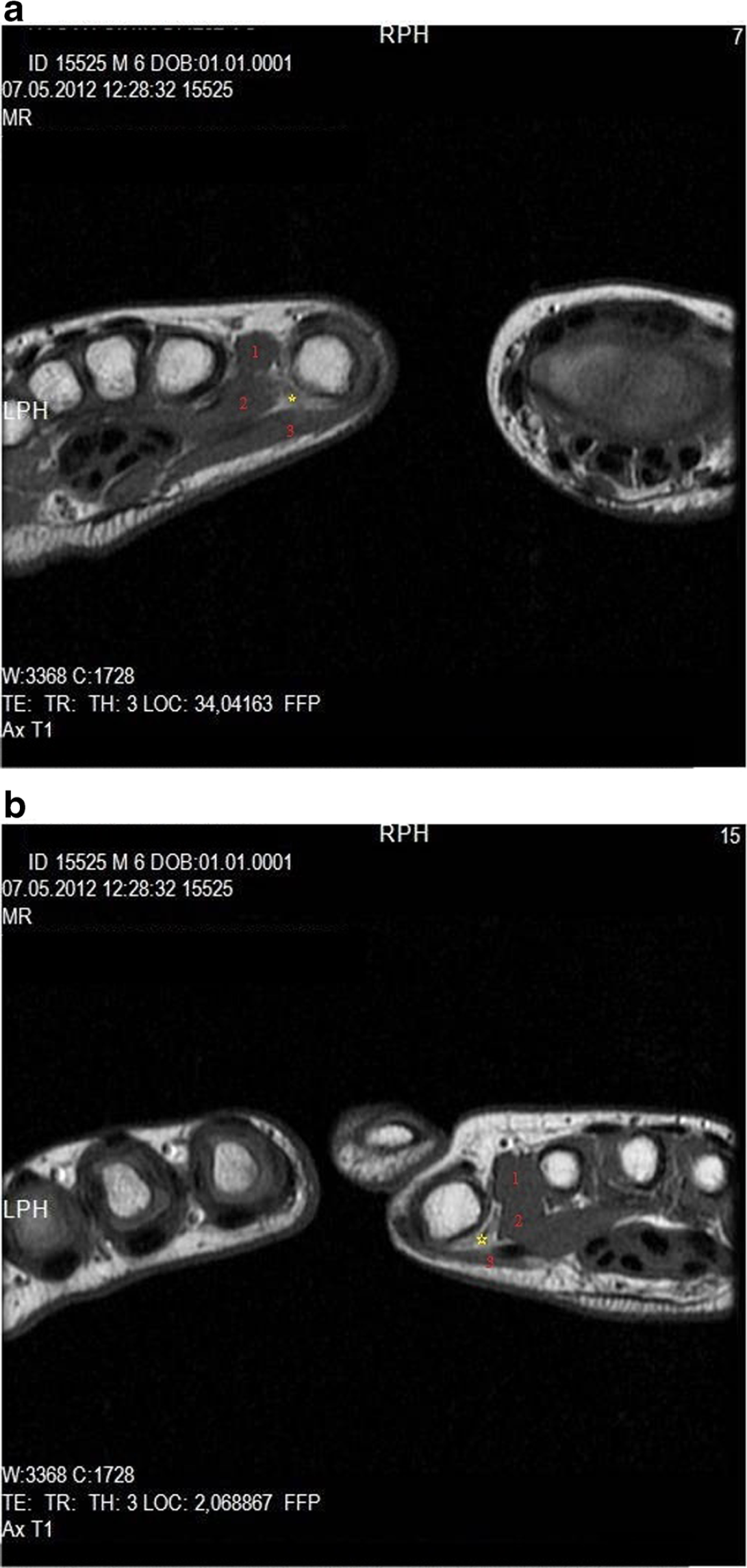
Axial MRI images of the left hand (
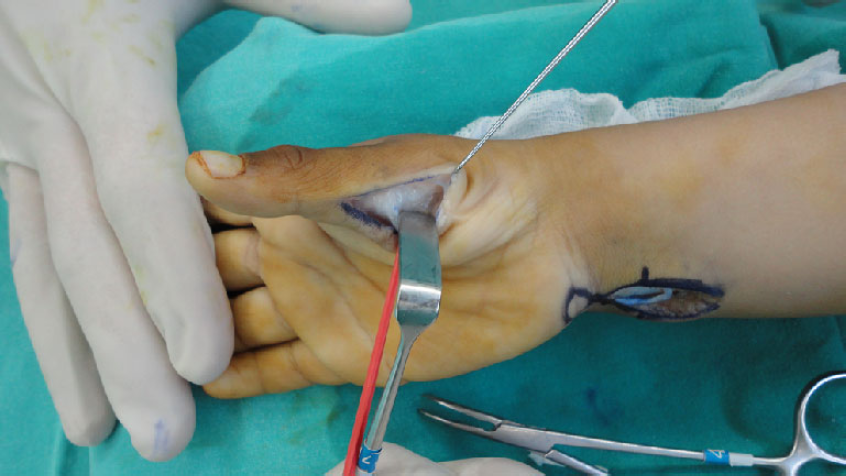
Intraoperative confirmation of absence of the opponens pollicis muscle
Discussion
The opponens pollicis, abductor pollicis, and flexor pollicis brevis muscles form the thenar eminence and play important roles in thumb movement [3]. Opposition is a combination of movements that allows the tip of the thumb to touch the tips of the other fingers. The opponens pollicis is a small, triangular muscle that originates from the flexor retinaculum and the tubercle of the trapezium, and inserts into the radial side of the metacarpal bone of the thumb. It lies lateral to the flexor pollicis brevis muscle and deep to the abductor pollicis brevis muscle. It is innervated by the median nerve and receives its vascular supply from the superficial palmar arch [3].
Treatment recommendations for thumbs with developmental anomalies are based on the Blauth and Schneider-Sickert classification. Corrective surgery is recommended for types 1, 2, and 3A anomalies, and pollicization is recommended for types 3B, 4, and 5 anomalies [5]. Although thenar muscle anomalies and thumb hypoplasia may be isolated defects, as in Cavanagh's syndrome [5], they are commonly associated with syndromes such as Holt–Oram syndrome (with associated cardiac disorders), Okihiro syndrome (with associated eye disorders), thrombocytopenia-absent radius syndrome, Fanconi's pancytopenia, the VACTERL association (vertebral abnormalities, anal atresia, cardiac abnormalities, tracheoesophageal fistula, esophageal atresia, renal defects, radial dysplasia, and lower limb abnormalities), radial bone anomalies, and hand anomalies such as Haas's malformation [8, 10, 12].
Cavanagh's syndrome is a rare hand anomaly that presents with unilateral or bilateral hypoplasia of the thenar eminence. This syndrome can be differentiated from carpal tunnel syndrome in two ways: (1) EMG shows normal distal latency, normal conduction velocity, low-amplitude compound motor action potentials, and no insertional activity and (2) absence of paresthesia, numbness, or pain that are exacerbated at night [7]. Although carpal tunnel syndrome occurs frequently in adults, it occurs very rarely in children [1, 9]. MRI and EMG findings are very important for ensuring a correct diagnosis.
In our patient, the opponens pollicis muscles were absent bilaterally. No other musculoskeletal, neurological, or vascular anomalies were detected, except for an abnormally shaped ear. We found no embryological basis for the isolated absence of these muscles. Previously reported anomalies include isolated absence of the thenar muscles innervated by the median nerve, isolated unilateral absence of the abductor pollicis brevis and flexor pollicis brevis muscles, bilateral congenital absence of the abductor pollicis brevis and flexor pollicis brevis muscles, and bilateral congenital absence of the opponens and abductor pollicis brevis muscles [4, 6, 8, 11]. To the best of our knowledge, isolated bilateral absence of the opponens pollicis muscle has not previously been reported. We suggest that the congenital isolated absence of thenar muscles or other hand muscles is very rare. Surgery should be carefully planned in such cases to avoid performing unnecessary or incorrect interventions.
Footnotes
The authors declare that they have no conflicts of interest, commercial associations, or intent of financial gain regarding this research.
This article does not contain any studies with human or animal subjects.
Informed consent was obtained from the patient for being included in the study.