






Abstract
The slag-free self-shielded flux-cored wire with simultaneous addition of ferroniobium (Fe-Nb) and ferrotitanium (Fe-Ti) was developed to fabricate the iron-based hardfacing alloys. The transfer coefficients of Nb and titanium of slag-free self-shielded flux-cored wire were 91.2 and 63.8%, respectively. The changes in microstructures indicate that Nb and Ti addition shifted the carbon concentration in the remaining liquid to one corresponding to the near eutectic state owing to the formation of (Nb, Ti)C which consumed carbon. The wear loss of the hardfacing alloy with 18 wt-% Fe-Nb and 6 wt-% Fe-Ti addition was the smallest among all the alloys owing to the formation of reinforced uniform quadrangle-shaped (Nb, Ti)C carbides in the refined microstructure and the highest hardness.
Introduction
Hardfacing is a surface treatment method to apply a hard, abrasion resistant material to the surface of a less abrasion resistant substrate such as steel by plating, welding, spraying or other deposition techniques [1,2]. Among these deposition techniques, the welding processes are preferable for depositing hardfacing alloys including manual metal arc welding, submerged arc welding, and self-shielded flux-cored arc welding. Among these processes, automatic self-shielded flux-cored arc welding is commonly used because of its high deposition rates without the using of external flux [3,4].
Frequently used hardfacing material includes hypereutectic high-chromium iron-based alloys because of their low cost and excellent wear resistance. Excellent wear resistance is associated with the presence of quantities of primary M7C3 carbides within their microstructures. However, these M7C3 carbides are large and brittle and thus easily form cracks and fall off from the matrix during the wear process. For this reason, the application of these high-chromium iron-based hardfacing alloys to wear-resistant parts exposed to heavy impact is limited.
Another way to improve the wear resistance, together with fracture toughness, over that of high-chromium iron-based hardfacing alloys is to add strong carbide-forming elements such as Nb and Ti to obtain MC-type carbides, which are harder and finer than M7C3 carbides. Wang et al. [1] found that the yield and tensile strength of Nb-bearing high-strength low-alloy surfacing layers greatly increased for the fine-grain strengthening of Nb and the precipitation strengthening of NbC, and the impact toughness was significantly improved due to the microstructure variation and obvious grain refinement. Maja et al. [5] researched the addition of Nb which increased the fracture strength due to the finer eutectic microstructure in the hypoeutectic high-chromium white cast irons. Liu et al. [6] demonstrated that the NbC particle was the heterogeneous nucleus of primary M7C3 carbide and thereby refined it in a hypereutectic Fe–Cr–C alloy. Moreover, Hsieh et al. [7] reported that Ti promoted the formation of the TiC carbide and thus contributed to the high hardness in the Fe–Cr–C–Si–Mn–Ti hypoeutectic alloy. Zhi et al. [8] found that the first precipitated TiC carbides could act as the heterogeneous substrate of M7C3 carbides, which resulted in significant refinement of M7C3 carbides in hypereutectic high-chromium cast iron. Previous research has focused on the individual effect of Nb or Ti, and the reports exhibited that the influence was complex. The effect of simultaneous addition of Nb and Ti, however, was rarely reported. Liu et al. [9] demonstrated that the hard composite phase NbC–TiC was formed by adding TiB2 and Nb into the Fe–Cr–C hardfacing alloys and thus improved wear resistance, but the optimal TiB2 and Nb level is still unknown.
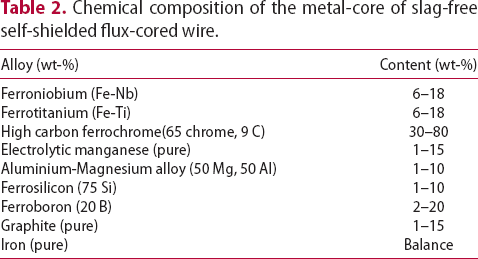
We have developed a series of slag-free self-shielded flux-cored wire with continuity of welding process, high speed of melting, absence of additional gas supply and reduction of slag exhausting [10–12]. Since TiB2 and Nb powders are more expensive than Fe-Nb and Fe-Ti powders, the Fe-Nb and Fe-Ti were added into the wires in this study. To transfer Nb and Ti element into the weld, the deoxidisers such as aluminium-magnesium alloy (Al, Mg), ferrosilicon (Fe–Si), magnesium (Mn), and graphite (C) into the core of the slag-free self-shielded flux-cored wire. A new-type of Nb-added Ti-added iron-based slag-free self-shielded flux-cored wire was developed and the effect of simultaneous addition of Fe-Nb and Fe-Ti on the microstructure and wear resistance was investigated for the first time, and find out the optimal ratio between ferroniobium and ferrotitanium in the wire.
Experimental
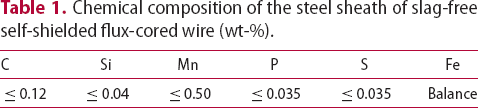
Chemical composition of the steel sheath of slag-free self-shielded flux-cored wire (wt-%).
Chemical composition of the metal-core of slag-free self-shielded flux-cored wire.
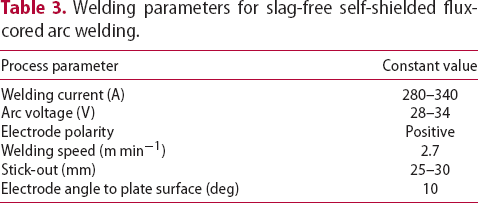
Welding parameters for slag-free self-shielded flux-cored arc welding.
The macro hardness of the surface of the hardfacing alloys was performed with an HR-150A Rockwell hardness tester. The compositions of the alloys were determined utilising a SPECTRO MAXx LAB optical emission spectrograph. Specimens of 10 × 10 × 8 mm3 were cut from each surface of the hardfacing alloy and were polished using standard metallographic techniques and then etched with the agent which included 3 mL 68% nitric acid solution, 15 mL 38% hydrochloric acid solution, 3 g ferric chloride, and 50 mL H2O.
The microstructure of the hardfacing alloy was examined with an optical microscope (OM) and a scanning electron microscope (SEM). The area mapping analysis for elements Nb, Ti, Cr, Mn, Si and Fe were obtained for the microstructure of the hardfacing alloy by using an electron probe micro-analyser (EPMA). The top surface of hardfacing alloys was investigated by X-ray diffraction (XRD) with Cu-Kα radiation and scanning angles (2θ) between 20 and 90°.
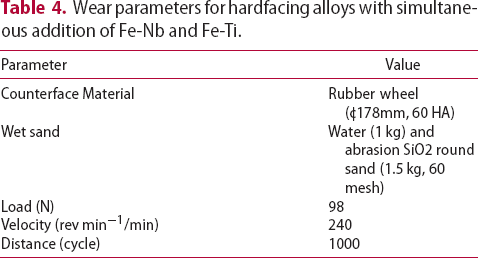
Wear parameters for hardfacing alloys with simultaneous addition of Fe-Nb and Fe-Ti.
Results and discussion
Transfer of Nb and Ti element into the weld
The addition of deoxidisers such as aluminium-magnesium alloy (Al, Mg), ferrosilicon (Fe–Si), magnesium (Mn), and graphite (C) into the core of the slag-free self-shielded flux-cored wire protected the transfer of alloying elements such as Nb and Ti into the weld. Al and Mg which were better deoxidants than the others reduced oxidisability of the welding atmosphere at an earlier stage of deoxidisation. The reaction formulas are as follows:


Moreover, at the later of deoxidisation (mainly in the weld pool) the reaction formulas of deoxidisation are as follows:



Specially, at this stage the Nb and Ti were oxidised:


According to the data of Gibbs free energy versus temperature [13,14], adding aluminium-magnesium alloy powder and graphite into the core of the slag-free self-shielded flux-cored wire deoxidised to protect the Nb and Ti element transferred to the weld pool, and adding ferrosilicon and magnesium powder into the core also benefited the Nb element transferred to the weld pool as well.
The Nb and Ti were not only oxidised but also were vaporised at elevated temperatures (up to approximate 5000 K) and became spatter which was removed from the weld deposit. Thus, the transfer coefficient for each element equalled the ratio of the composition fraction of the element in the hardfacing alloy to that in the slag-free self-shielded flux-cored wire. Table 5 shows the chemical compositions of the hardfacing alloys and Figure 1 summarises the transfer coefficients of Nb and Ti of slag-free self-shielded flux-cored wire; the mean values were 91.2 and 63.8%, respectively.
The transfer coefficients of Nb and Ti of slag-free self-shielded flux-cored wire. Chemical compositions of the hardfacing alloys with simultaneous addition of Fe-Nb and Fe-Ti (wt-%).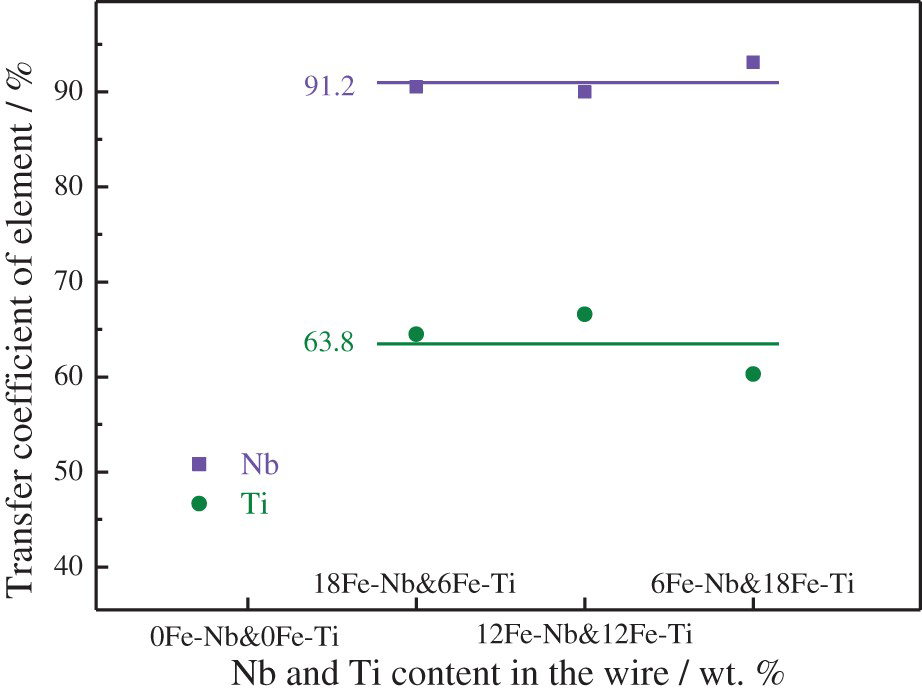

Effect of simultaneous addition of Fe-Nb and Fe-Ti on microstructure of the hardfacing alloy
Figure 2 shows the XRD pattern of the hardfacing alloys. The phase in the Nb-free Ti-free hardfacing alloy was mainly composed of M7(C, B)3, M3(C, B), martensite, and residual austenite. For the other three hardfacing alloys with the simultaneous addition of Fe-Nb and Fe-Ti, the MC-type (M = Nb, Ti) existed in the hardfacing alloy, the austenite was increased and the M7(C, B)3 and M3(C, B) carbide was decreased as well.
The XRD pattern of hardfacing alloys with simultaneous addition of Fe-Nb and Fe-Ti.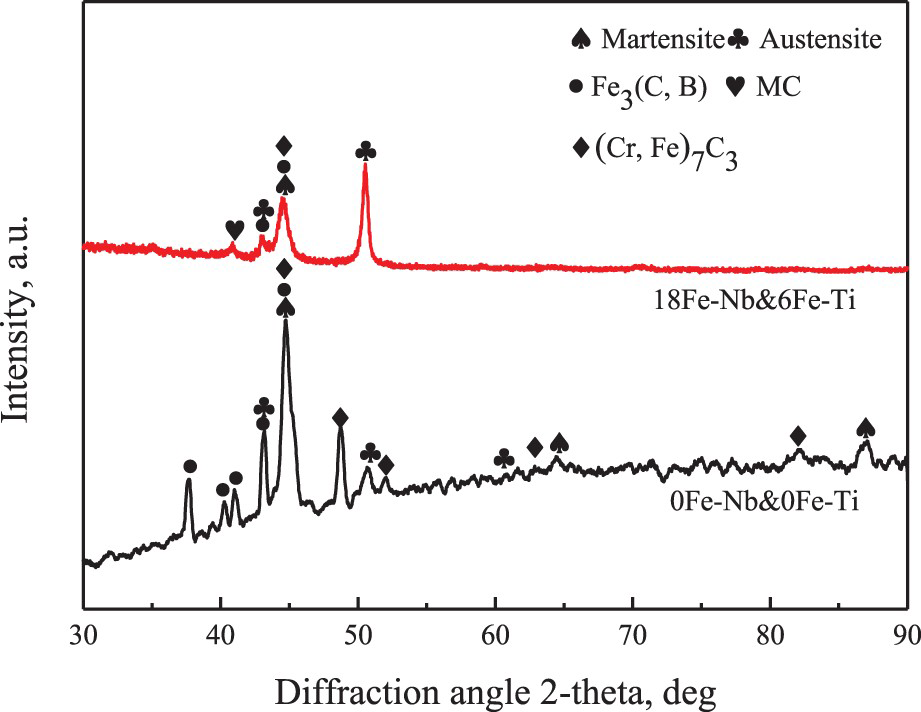
Figure 3 shows the microstructures of hardfacing alloys with simultaneous addition of Fe-Nb and Fe-Ti. As shown in Figure 3(a), the Nb-free Ti-free hardfacing alloy displayed a hypereutectic microstructure consisting of primary hexagonal-shaped M7(C, B)3, eutectic colonies of M3(C, B) plus martensite and austenite as determined by XRD analysis. As shown in Figure 3(b–d), the microstructure of the hardfacing alloys all displayed a hypoeutectic microstructure which contained consisting of austenite grains and irregular fine particles which are (Nb, Ti)C carbides. The changes in microstructures indicate that Nb and Ti addition shifted the carbon concentration in the remaining liquid to one corresponding to the near eutectic state owing to the formation of (Nb, Ti)C which consumed carbon.
Microstructures of hardfacing alloys with simultaneous addition, (a) 0 wt-% Fe-Nb and 0 wt-% Fe-Ti; (b) 18 wt-% Fe-Nb and 6 wt-% Fe-Ti; (c) 12 wt-% Fe-Nb and 12 wt-% Fe-Ti; (d) 6 wt-% Fe-Nb and 18 wt-% Fe-Ti.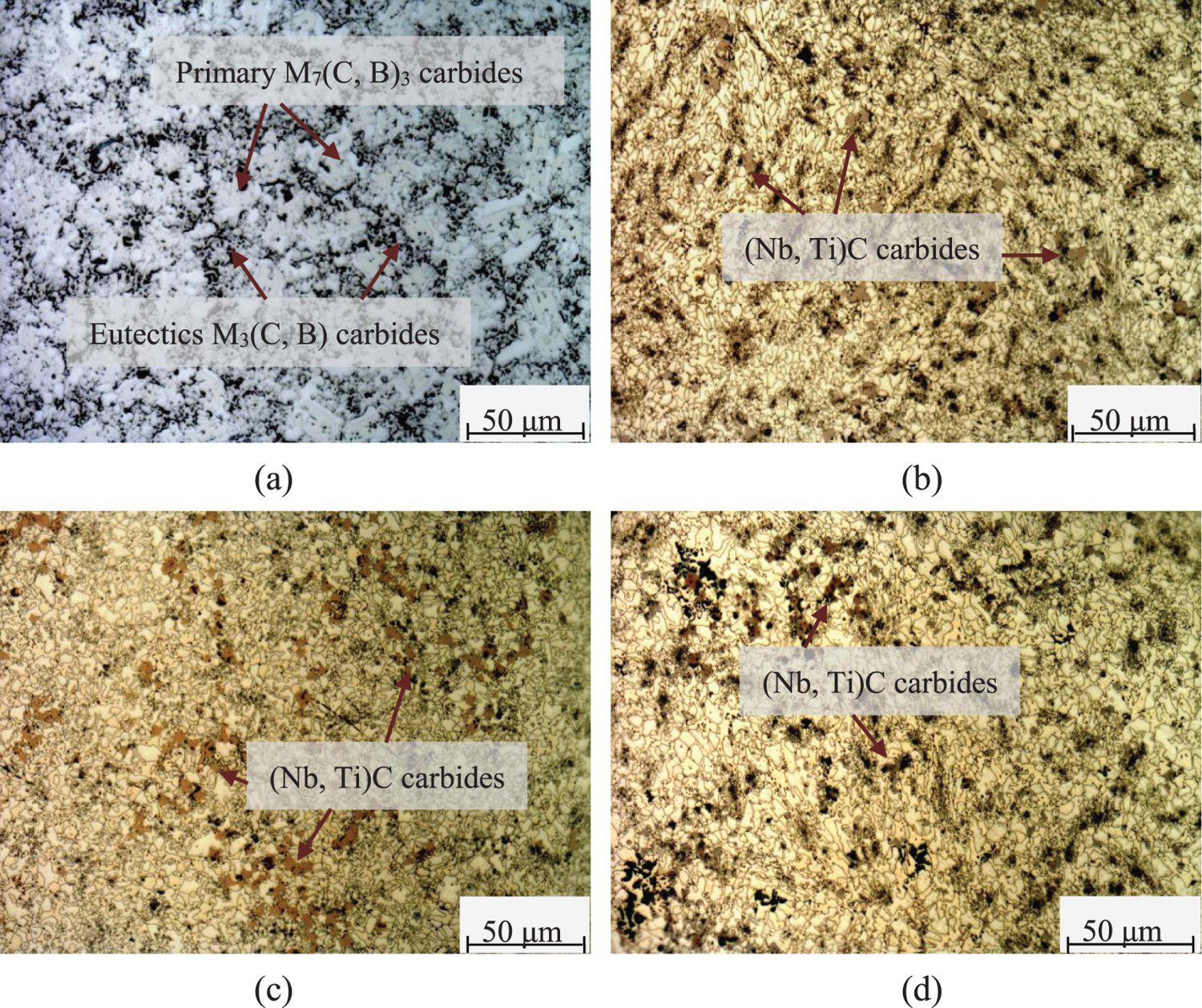
Figure 4 shows the distribution of Nb, Ti, Cr, Mn, and Fe in Nb-containing Ti-containing alloy examined by EDS mapping analysis. It was found that the irregular phases were rich in both Nb and Ti, which identified that those phases were (Nb, Ti) C carbides. In addition, Cr, Mn, and Fe were all detected in the matrix.
EPMA area analysis for hardfacing alloys with simultaneous addition, (a) SEM image; (b), (c), (d), (e) and (f) are corresponding X-ray maps of Nb, Ti, Cr, Mn and Fe.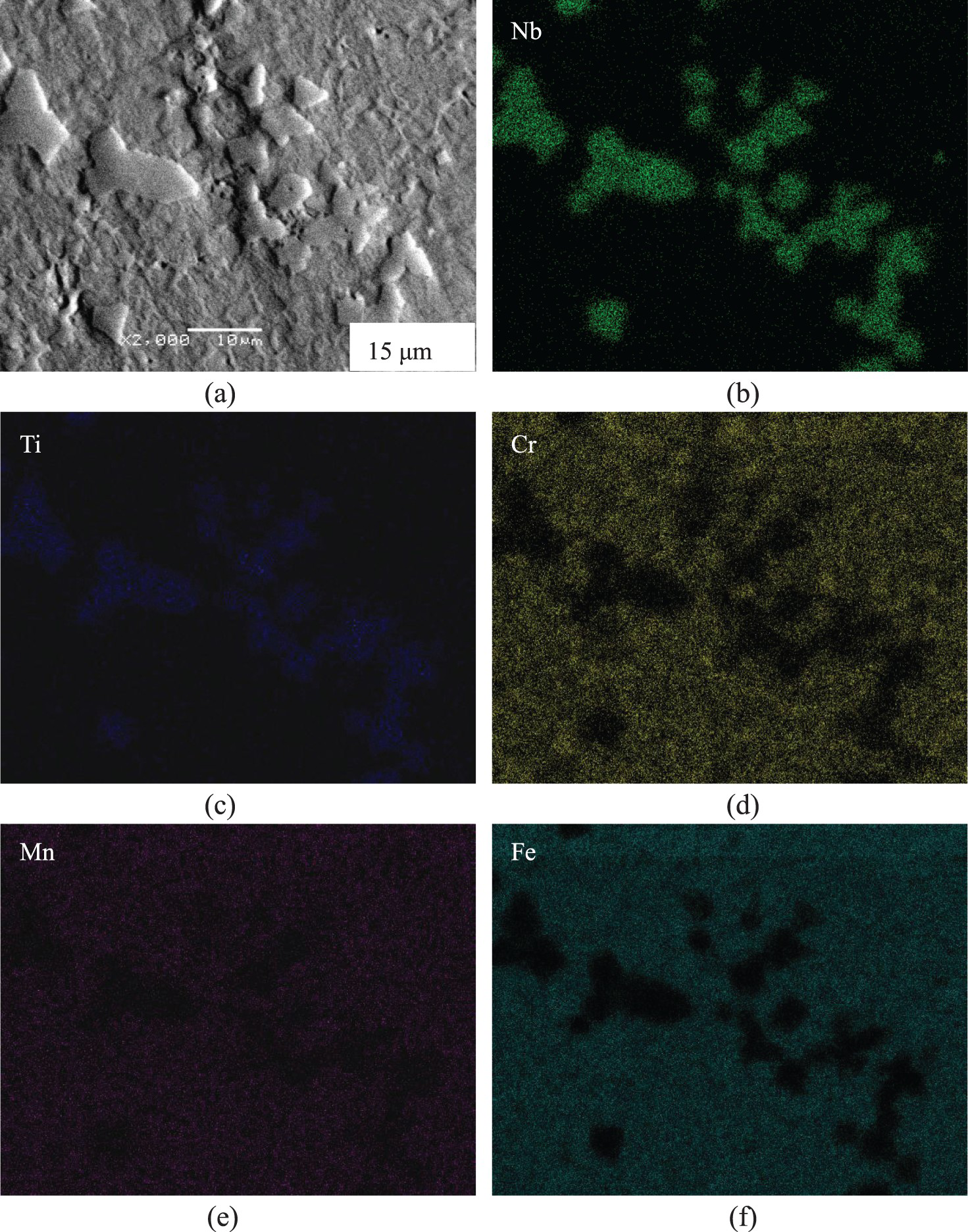
Figure 5 shows the SEM images of hardfacing alloys with simultaneous addition of Fe-Nb and Fe-Ti. It can be seen from Figure 5(a) that the Nb-free Ti-free hardfacing alloy consisted of primary M7(C, B)3 carbides, eutectic M3(C, B) carbides and austenite. In the solidification process, the eutectic M3(C, B) carbides and austenite were simultaneously precipitated after the primary M7(C, B)3 carbides were formed in the high-temperature melt. There was a typical hypereutectic structure in the hardfacing alloy without Nb and Ti addition. When the content of Fe-Nb was 18 wt-% and the content of Fe-Ti was 6 wt-%, the quadrangle-shaped (Nb, Ti) C carbides were precipitated in the microstructure (Figure 5(b)). When the content of Fe-Nb and Fe-Ti were both 12 wt-%, the (Nb, Ti) C carbides were connected with one another (Figure 5(c)). When the content of Fe-Nb was 6 wt-% and the content of Fe-Ti was 12 wt-%, the (Nb, Ti) C were refined compared to other hardfacing alloys (Figure 5(d)).
SEM images of hardfacing alloys with simultaneous addition, (a) 0 wt-% Fe-Nb and 0 wt-% Fe-Ti; (b) 18 wt-% Fe-Nb and 6 wt-% Fe-Ti; (c) 12 wt-% Fe-Nb and 12 wt-% Fe-Ti; (d) 6 wt-% Fe-Nb and 18 wt-% Fe-Ti.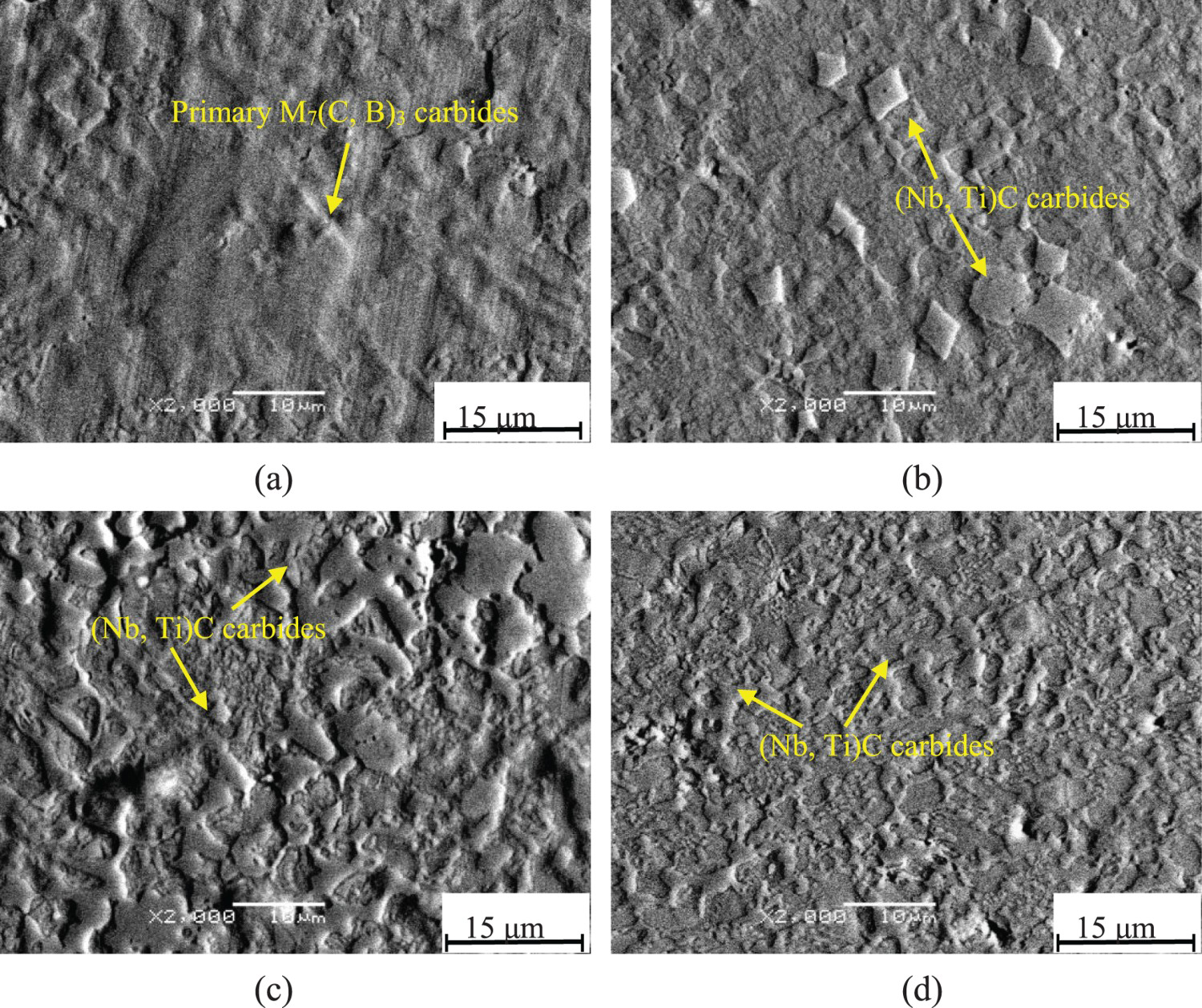
As strong carbide-forming elements, Nb and Ti easily form carbides with carbon [8,15]. For hypereutectic Fe–Cr–C–B hardfacing alloy, NbC and TiC particles were precipitated first from the melt in the solidification process when Nb and Ti were added into the alloys. Since the formation of (Nb, Ti)C depleted carbon in the melt, the microstructure of hardfacing alloy transformed from a hypereutectic structure to a hypoeutectic structure when the hardfacing alloys with simultaneous addition of Fe-Nb and Fe-Ti was up to 24 wt-% (whatever the ratio of Fe-Nb and Fe-Ti content).
Effect of simultaneous addition of Fe-Nb and Fe-Ti on hardness and wear behaviour of the hardfacing alloy
Figure 6 shows the change of hardness and wear loss of the hardfacing alloy with simultaneous addition of Fe-Nb and Fe-Ti. The hardness of hardfacing alloy was 59HRC without Fe-Nb and Fe-Ti addition and increased to 62.7 HRC with 18 wt-% Fe-Nb and 6 wt-% Fe-Ti addition. However, the alloy hardness was slightly decreased to 62.5 HRC with 12 wt-% Fe-Nb and 12 wt-% Fe-Ti addition, and to 62.0 HRC with 6 wt-% Fe-Nb and 18 wt-% Fe-Ti addition. On the other hand, the wear loss of hardfacing alloy was 72.9 mg with no Fe-Nb and Fe-Ti addition and decreased to 37.4 mg with 18 wt-% Fe-Nb and 6 wt-% Fe-Ti addition, and then increased a small amount for the two other alloys with different simultaneous addition of Fe-Nb and Fe-Ti. The macro-hardness be ascribed to the chemical composition, the fraction and the size of carbides, and the matrix structure in the iron-based alloy [16]. The NbC has an average hardness of 2550 HV, and the TiC has an average hardness of 2929 HV which was higher than that of the primary M7(C, B)3 carbides (1893 HV) [17,18]. Thus, the higher macro-hardness exhibited was owing to the higher volume fraction of hard (Nb, Ti) C carbides despite the decrease in the amount of M7(C, B)3 carbides. Additionally, the simultaneous addition of Fe-Nb and Fe-Ti reduced the volume fraction of M7(C, B)3 carbides due to the depletion of carbon that was consumed by Nb and Ti to form (Nb, Ti)C carbides and that promoted the amount of chromium dissolved within the matrix, leading to a solid solution strengthening of matrix. Moreover, the microstructure was clearly refined because of the replacement of M7(C, B)3 carbides by (Nb, Ti)C carbides. Therefore, the addition of Nb and Ti was conducive to a combination of reinforced (Nb, Ti)C carbides and a tough matrix in the refined microstructure, thus leading to the high hardness of the iron-based hardfacing alloy.
The hardness and wear loss of the hardfacing alloy with the simultaneous addition of Fe-Nb and Fe-Ti.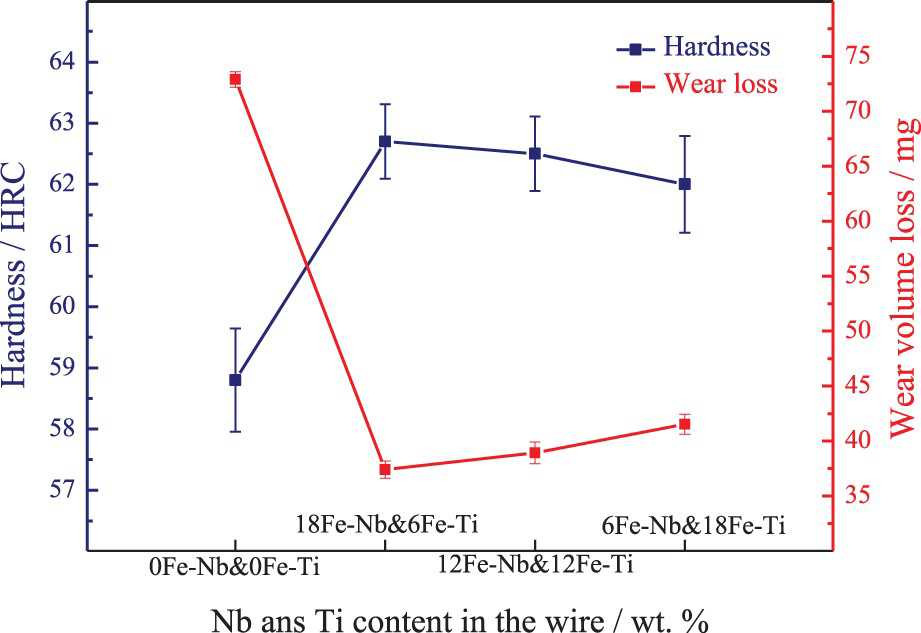
Moreover, among the three hardfacing alloys with simultaneous addition of Fe-Nb and Fe-Ti, the one with 18 wt-% Fe-Nb and 6 wt-% Fe-Ti addition exhibited the lowest wear loss (the best wear resistance). This was likely contributed from those uniformly distributed quadrangle-shaped (Nb, Ti) C carbides, rather than aggregated (Nb, Ti) C carbides or finer (Nb, Ti) C carbides in the other two alloys.
Figure 7 shows the macro-morphology of the hardfacing alloys with simultaneous addition of Fe-Nb and Fe-Ti after the wear test. There were some pits in the surface of the wear area of the hardfacing alloy without Fe-Nb and Fe-Ti addition (Figure 7(a)). However, when the Fe-Nb and Fe-Ti were simultaneously added into the wire, the wearing surface was very smooth and shiny, indicating the alloys had suffered slight wear (Figure 7(b–d)).
The macro-morphology of the hardfacing alloys with simultaneous addition of Fe-Nb and Fe-Ti after wear test.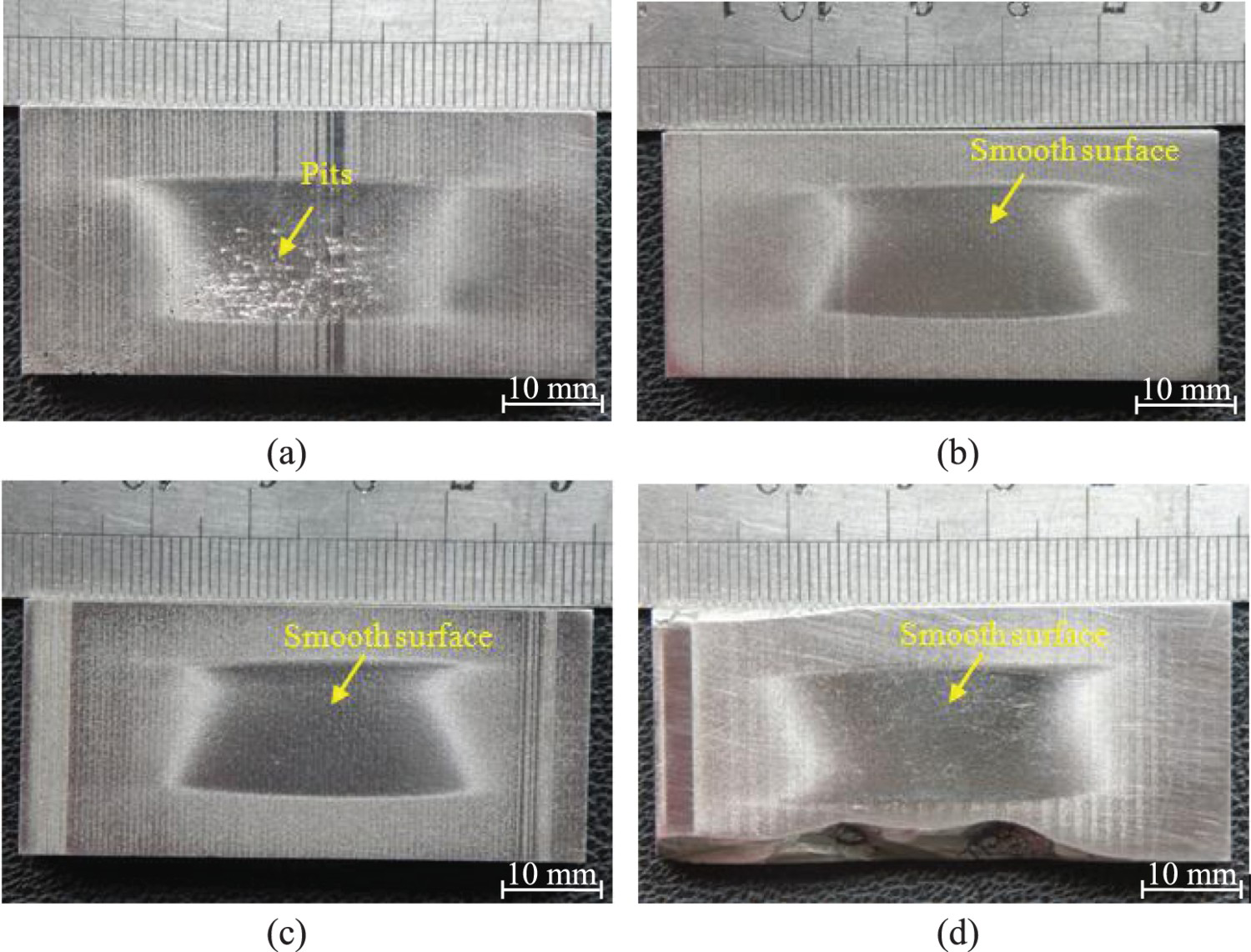
Figure 8 shows SEM images of the wearing surface of the alloys. Numerous craters and cracks were found at the wearing surface of the hardfacing alloy without Fe-Nb and Fe-Ti addition (Figure 8(a)). Slight grooves and plastic deformation were observed at the wearing surface of all the other hardfacing alloys with simultaneous addition of Fe-Nb and Fe-Ti (Figure 8(b–d)). Moreover, Figure 9 shows SEM images of the cross-section of the wearing surface of the alloys. It can be seen from Figure 9(a) that the primary M7(C, B)3 carbides were fractured in the hardfacing alloy without Fe-Nb and Fe-Ti addition. However, the crack-free (Nb, Ti)C carbides were observed near the wearing surface in the hardfacing alloys with simultaneous addition of Fe-Nb and Fe-Ti (Figure 9(b–d)).
SEM images of the wear surface of the hardfacing alloy with the simultaneous addition of Fe-Nb and Fe-Ti, (a) 0 wt-% Fe-Nb and 0 wt-% Fe-Ti; (b) 18 wt-% Fe-Nb and 6 wt-% Fe-Ti; (c) 12 wt-% Fe-Nb and 12 wt-% Fe-Ti; (d) 6 wt-% Fe-Nb and 18 wt-% Fe-Ti. SEM images of the cross-section of wear surface of the hardfacing alloy with simultaneous addition of Fe-Nb and Fe-Ti, (a) 0 wt-% Fe-Nb and 0 wt-% Fe-Ti; (b) 18 wt-% Fe-Nb and 6 wt-% Fe-Ti; (c) 12 wt-% Fe-Nb and 12 wt-% Fe-Ti; (d) 6 wt-% Fe-Nb and 18 wt-% Fe-Ti.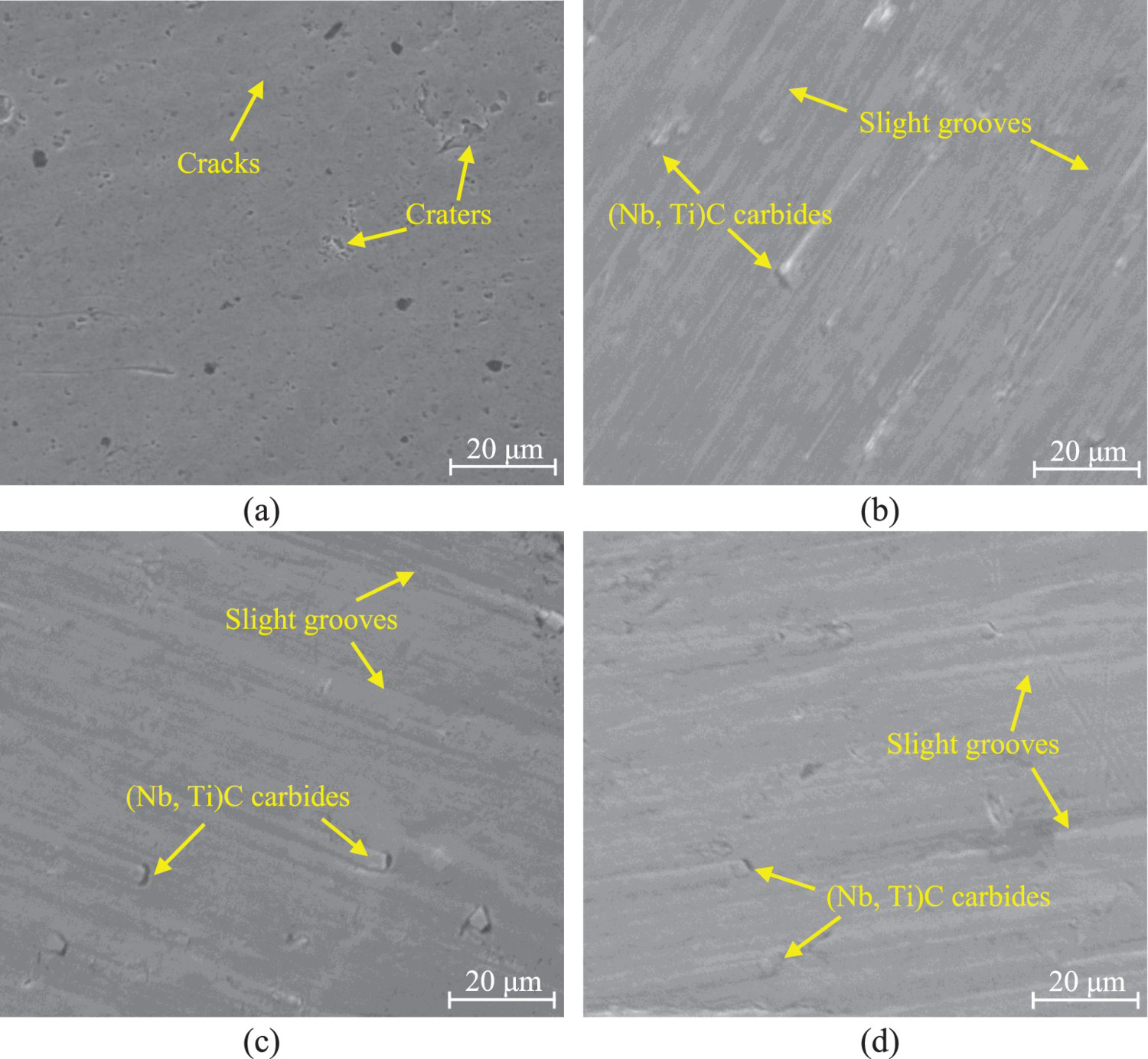
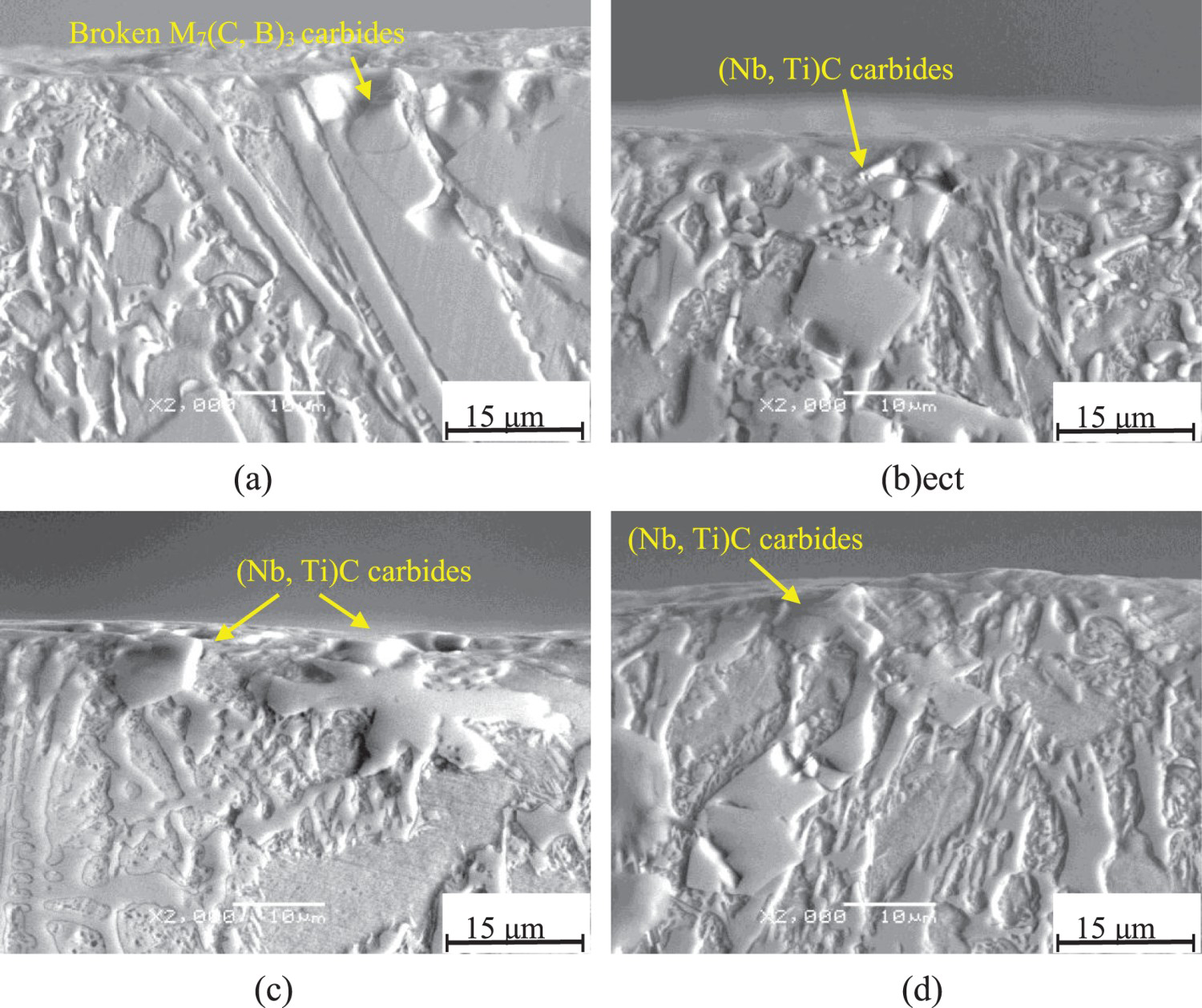
Microcracking, microcutting, and microploughing were considered as the main abrasive wear mechanisms [19,20]. Microcracking of the primary M7(C, B)3 carbides in the alloy without Fe-Nb and Fe-Ti addition was the dominant mechanism of material removal in the wear process because of the craters and cracks found on the wear surface (Figure 8(a)). It was reported that the pre-existing microcracks or voids were formed in the coarse and brittle primary M7C3 carbides during the welding solidification process [21]. On the other hand, high-stress concentration in the M7C3 carbides greatly influenced the release of strain energy, crack nucleation and propagation during the wearing process [22]. Moreover, the strain energy was developed much faster to promote the formation of microcracks at these regions [23].
Figure 10 illustrates schematically the wear behaviour of the hardfacing alloy with and without Fe-Nb and Fe-Ti addition. As shown in Figure 10(a), during the wear process, as the ‘turning tools’, the sharp corners of hard SiO2 abrasive particles were impacted in the soft rubber wheel. The softer matrix was first cut by the ‘turning tools’ fastened to the rubber wheel, resulting in the exposure of the M7(C, B)3 carbides. These M7(C, B)3 carbides were easily fractured and taken off owing to the abrasive SiO2 particles continuously attack. As a result, the M7(C, B)3 carbides were broken and the craters were formed at the wearing surface (Figure 8(a) and Figure 9(a)). The plastic deformation (Figure 8(b–d)) indicates that the primary wear mechanisms of the hardfacing alloys with simultaneous addition of Fe-Nb and Fe-Ti were microcutting and microploughing. The microstructure of hardfacing alloys with simultaneous addition of Fe-Nb and Fe-Ti consisted of hard (Nb,Ti)C and fine and strong eutectics matrix (M3(C, B) carbides plus austenite). This microstructure retained fair matching of high toughness and high strength. The (Nb,Ti)C carbides played the key role in wear resistance. The comprehensive action of normal and tangential force lead to the plastic deformation of the matrix of the alloy. The existence of the (Nb,Ti)C carbides can avoid severe selective wear of the matrix of the hardfacing alloy and thus only a slight groove is left (Figure 10(b)). Therefore, the wear loss of the hardfacing alloy with 18 wt-% Fe-Nb and 6 wt-% Fe-Ti addition was the smallest among all the alloys owing to the formation of reinforced uniform (Nb, Ti)C carbides in the refined microstructure and the highest hardness.
Schematic diagram of wear mechanism of the hardfacing alloy with and without Fe-Nb and Fe-Ti addition.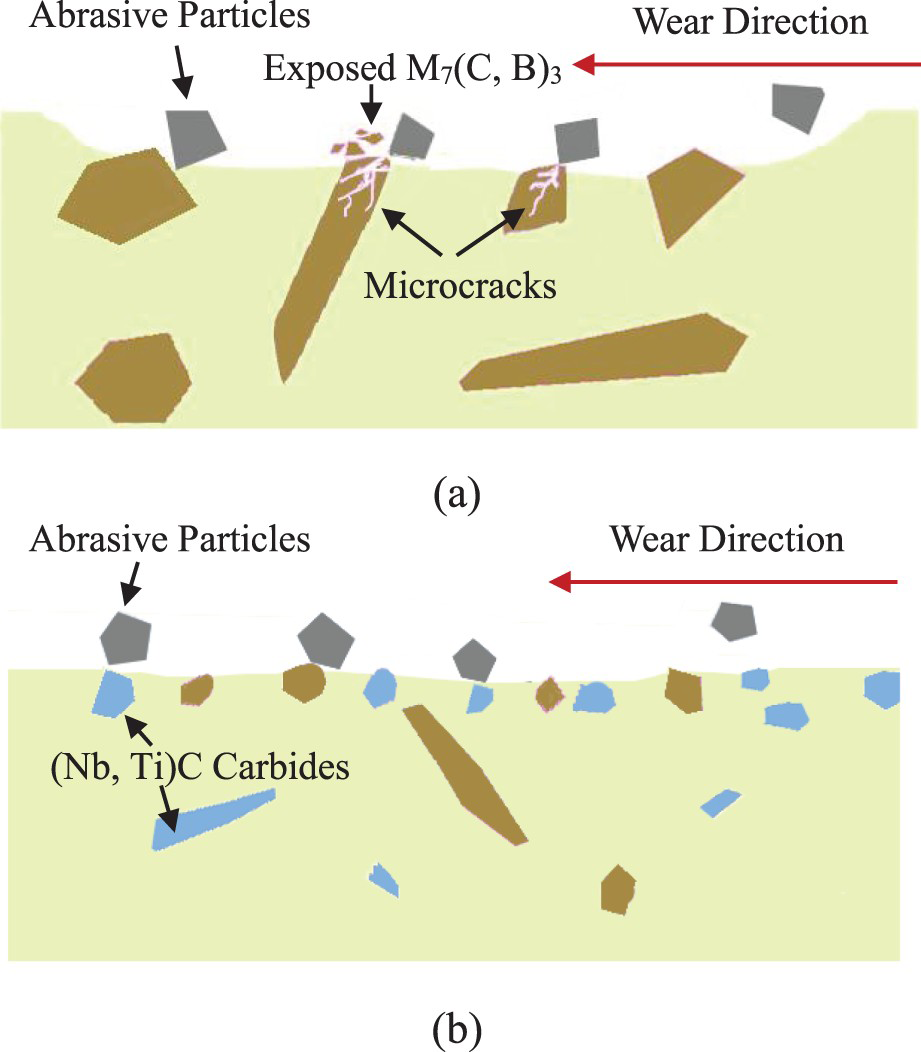
Conclusions
A new-type of Nb-added Ti-added iron-based slag-free self-shielded flux-cored wire was developed. To transfer Nb and Ti element into the weld, the deoxidisers such as aluminium-magnesium alloy (Al, Mg), ferrosilicon (Fe-Si), magnesium (Mn), and graphite (C) into the core of the slag-free self-shielded flux-cored wire. The effect of the simultaneous addition of Fe-Nb and Fe-Ti on the microstructure and wear resistance was investigated.
The slag-free self-shielded flux-cored wire with simultaneous addition of Fe-Nb and Fe-Ti was fabricated and the transfer coefficients of Nb and Ti of slag-free self-shielded flux-cored wire were 91.2 and 63.8%, respectively. The hardness of hardfacing alloy was 59 HRC without Fe-Nb and Fe-Ti addition and increased to 62.7 HRC with 18 wt-% Fe-Nb and 6 wt-% Fe-Ti addition. However, the alloy hardness was slightly decreased to 62.5 HRC with 12 wt-% Fe-Nb and 12 wt-% Fe-Ti addition, and to 62.0 HRC with 6 wt-% Fe-Nb and 18 wt-% Fe-Ti addition. The higher macro-hardness exhibited owing to higher volume fraction of hard (Nb, Ti) C carbides despite the decrease in the amount of M7(C, B)3 carbides. On the other hand, the wear loss of hardfacing alloy was 72.9 mg with no Fe-Nb and Fe-Ti addition and decreased to 40.2 mg with 18 wt-% Fe-Nb and 6 wt-% Fe-Ti addition, and then increased and increased a small amount for the two other alloys with different simultaneous addition of Fe-Nb and Fe-Ti. Among the three hardfacing alloys with simultaneous addition of Fe-Nb and Fe-Ti, the one with 18 wt-% Fe-Nb and 6 wt-% Fe-Ti addition exhibited the lowest wear loss (the best wear resistance). This was likely contributed from those uniformly distributed quadrangle-shaped (Nb, Ti) C carbides, rather than aggregated (Nb, Ti) C carbides or finer (Nb, Ti) C carbides in the other two alloys. Therefore, the wear loss of the hardfacing alloy with 18 wt-% Fe-Nb and 6 wt-% Fe-Ti addition was the smallest among all the alloys owing to the formation of reinforced uniform quadrangle-shaped (Nb, Ti)C carbides in the refined microstructure and the highest hardness.
Footnotes
Disclosure statement
No potential conflict of interest was reported by the authors.