







Abstract
Polymer electrolyte fuel cells (PEFCs) are attractive energy resources in transportation and portable applications due to their low operational temperatures, excellent energy densities, and simplicity of storage. For the past decade, metal oxides (MO) have been identified as plentiful supplies with excellent electrochemical properties, low cost, an abundance of hydroxyl groups, and environmentally acceptable alternative to currently available materials. Their intriguing properties such as extremely large surface area, low synthesis cost, and so on, make them ideals for many applications. This review covered MO structure, characteristics, and current preparation methods. MO/metal nanoparticles and MO/carbon nanoparticles are also addressed as electrocatalysts, co-catalysts, or supports, especially in PEMFC and DMFC applications. This review also examined the effects of different MO nanoparticles in polymer and biopolymer membranes on membrane characteristics. Finally, the existing issues and future perspectives of MO nanoparticles are also discussed in this review.
Graphical Abstract
Introduction
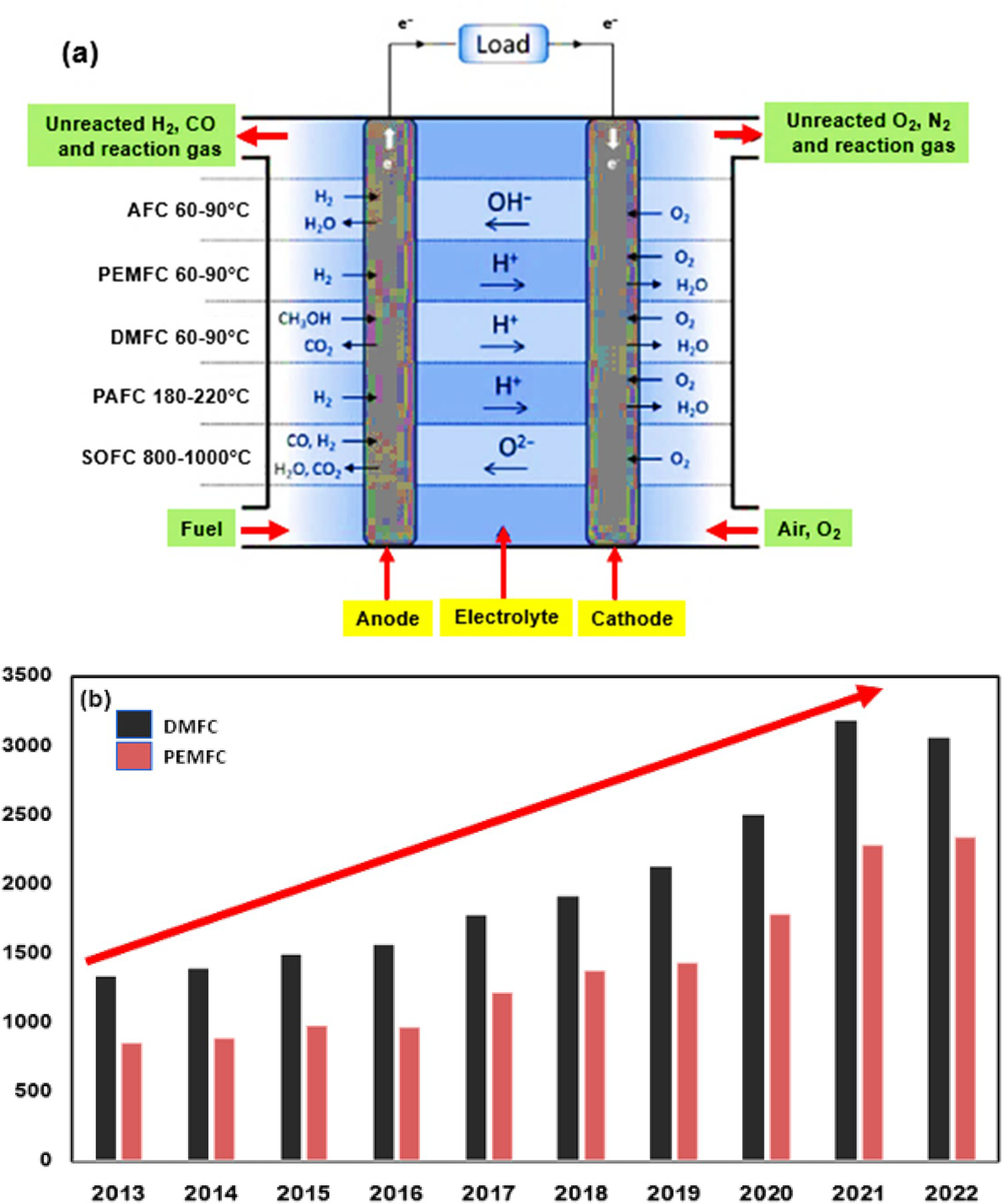
Global demands need some alternative energy that can be sustained. Regarding the usage of fossil fuels and the resulting environmental degradation, international research is focusing on energy generation, transport and storage that is efficient, clean and reliable [1]. Fuel cells with their high efficiency of energy conversion and zero emissions are widely recognised as one of the most suitable candidates for electrical power generation technologies. Typically, the oxidant used is oxygen from the air while the fuel used is from a hydrocarbon-related substance such as hydrogen or alcohol. Anode, cathode and electrolyte are generally known as three essential components of the fuel cell system. Instead of heat being produced, electrical energy is released in this reaction when fuels are oxidised to produce water (H2O) and carbon dioxide (CO2). Figure 1(a) illustrates the ion discharged in various types of fuel cells. There are few types of fuel cells such as polymer electrolyte fuel cell (PEFC), alkaline fuel cell (AFC), phosphoric acid fuel cell (PAFC), solid oxide fuel cell (SOFC) and molten carbonate fuel cell (MCFC). Typically, these fuel cells are classified based on their electrolyte. The example of overall reaction equations for fuel cell systems that use hydrogen gas are as follows:
(a) Summary of processes and reactions of different types of fuel cell technology and (b) the publications related to PEMFC and DMFC technology from 2011 until 2022 [2].


Owing to the properties such as long-lasting, extremely efficient and low pollution power sources that can be powered by presumably renewable resources, PEMFCs have known as the most popular device for low operating temperature (<100°C) in various applications such as portable, automotive and stationary applications [2]. Polymer, proton conducting, solid electrolyte distinguishes the PEMFC from the other fuel cells by connecting the anode side and cathode side ionically but separate physically and electrically. The PEMFC was originally known as an ion exchange membrane fuel cell (IEMFC) when it was first invented. In later years, it was described as a solid polymer electrolyte fuel cell (SPEFC) or solid polymer fuel cell (SPFC). The phrase proton exchange membrane fuel cell (PEMFC) has achieved worldwide popularity recently. Direct methanol fuel cell (DMFC) is also one of the subset PEMFC, in which the fuel is supplied directly to the cell in the form of methanol solution, usually at low concentrations (<2M). Over the last decade, research on PEMFCs has exploded. According to current estimates, manufacturers are investing $1 billion annually in the exploration of fuel cell technology for transportation applications [2].
Although PEMFC is widely known as effective technology, some drawbacks need to be solved before its commercialisation. Pt or Pt-based materials are the most frequently utilised electrocatalysts. It is generally known that Pt is a costly metal with a finite supply owing to its low amount in the Earth's crust. Pt material's natural supply is inadequate when considering its use in fuel cell automobiles. Even though Pt is employed as the cathode electrocatalyst in current PEMFCs, its catalytic activity for the oxygen reduction reaction process is insufficient to achieve the needed efficiency [3]. As a result, several attempts have been made to minimise Pt consumption and cost, as well as to increase its effectiveness in PEMFCs, including the creation of fine nanocatalysts, alloying with transition metals, and high dispersion of Pt particles on a substrate with a high specific surface area property. Another critical concern is the electrocatalysts’ long-term durability. Once PEMFCs are operated for an extended period, the electrochemical corrosion of the supports and metal nanoparticles’ aggregation and lead to the deterioration of the catalysts [4]. The aggregation of metal nanoparticles can be minimised by using a support that has a high affinity with the metal.
Researchers have studied a variety of metal oxide (MO)-based nanomaterials throughout the years. MO is created when metal ions make a coordination connection with the oxide group and produce a densely packed structure [5]. MO-based nanomaterials are commonly utilised in various applications such as chemical sensors, fuel cells, solar cells, batteries, gas sensors, catalysts, supercapacitors, anticorrosion coating, and so on, owing to their remarkable properties especially in mechanical, electrical, optical, magnetic, catalytic, and others [6]. A series of commonly known MO nanoparticles have been synthesised such as silicon dioxide (SiO2), zinc oxide (ZnO), titanium dioxide (TiO2), copper oxide (CuO), iron oxide, nickel oxide (NiO), tin oxide (SnO2) and others. MO-based nanoparticles come in a variety of morphologies, including star, spherical and triangular shapes, as well as nanowires, nanotubes and nanorods. MO nanoparticles have shown promising results in terms of physical and chemical properties owing to their high density and limited size; consequently, it is critical to comprehend their features, especially in the synthesis process, properties and applications. Figure 1(b) depicts the development of publications on MO in PEMFC and DMFC on the Science Direct search engine from 2013 to 2022. In this regard, the DMFC application outperforms the PEMFC application in terms of researcher preference. The use of MO increases gradually as demand increases, which can reduce the use of platinum group metals, particularly in the catalyst part of the system.
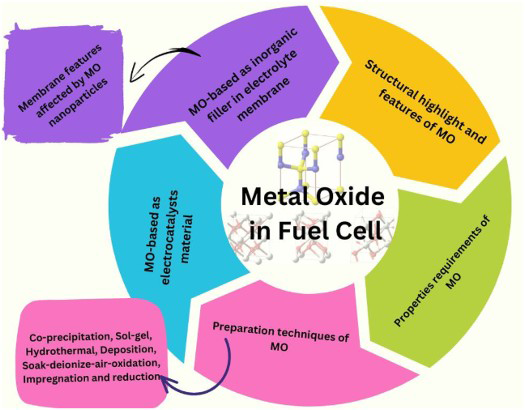
Owing to the copious supplies, environmental friendliness, and low cost, MO has a wide range of uses in a variety of fields. This review will contribute to recent progress in fuel cell involving the different roles of metal oxide materials as electrocatalysts or inorganic fillers for electrolyte membrane in both PEMFC and DMFC applications. The first part of this review discusses the structure and features of MO material, the properties requirement for MO materials and some preparation techniques of MO. Then, explore the MO's catalytic performance as electrocatalysts or as co-catalysts and supports for fuel cell reactions such as oxygen reduction reaction (ORR), hydrogen oxidation reaction (HOR), methanol oxidation reaction (MOR). Meanwhile, the performance of MO as an inorganic filler in polymer membrane was evaluated for the fuel cell system. Finally, this paper summarised the effects of incorporating, doping, morphology, and composition of MO in the polymer matrix while describing the existing issues and possible future perspectives of MO, especially in the fuel cell system. There are some reviews of electrocatalysts in fuel cell technology have been published, with an emphasis on Pt-based and non-Pt metal catalysts [7]. Zhu et al. discussed MO-based materials as hydrogen evolution electrocatalysts (metal oxide as electrocatalyst). Song et al. published about transition metal oxides as electrocatalysts for oxygen evolution reaction. However, to the best of our knowledge, there is no review to discuss about the performance of MO materials as electrocatalysts, co catalyst, support and also as inorganic filler for electrolyte membrane in PEMFC and DMFC applications [8]. Therefore, this paper is a valuable and necessary addition since it provides information on MO development as electrocatalyst and inorganic filler in fuel cell applications.
An insight of metal oxide
Structural highlights and features of metal oxide
Many examples of MO are widely used such as TiO2, ZnO, SnO2, and etc. This section will explain in detail the structure and features of MO-based nanoparticles. As widely known, TiO2 is found in three distinct crystalline phases such as brookite, rutile, and anatase. The TiO2 crystalline lattice's structural unit is connected by vertices such as each Ti4+ ion is encircled by six O2- ions, and each O2- ion is encircled by three Ti4+ ions. In this design, octahedra forms are organised because each oxygen ion corresponds to three octahedra [9]. Two subsequent TiO6 octahedra are joined along their edges in the (001) plane to form a rutile structure, producing longitudinal bands in the crystalline lattice. Meanwhile, the TiO6 octahedra are linked together at their edges in the (100) and (001) planes in the anatase structure. As a consequence, each octahedron has four shared vertices that create zigzag links with their neighbours. This concludes that one octahedron has four common ribs in anatase while in rutile, one octahedron consists of two common vertices. The anatase cell is made up of four TiO2 molecules, whereas the rutile cell is made up of just two TiO2 (as shown in Figure 2(a)). Anatase is less stable and dense compared to rutile structure under atmospheric pressure and temperature.
(a) Rutile and anatase typical unit cells of TiO2 (white colour is for titanium and red colour is for oxygen) [19], (b) The elementary cell for wurtzite structure of ZnO (yellow colour represents oxygen while the violet colour represents zinc) [13], and (c) ZrO2 crystalline lattices distortions of cubic, tetragonal and monoclinic modifications [20].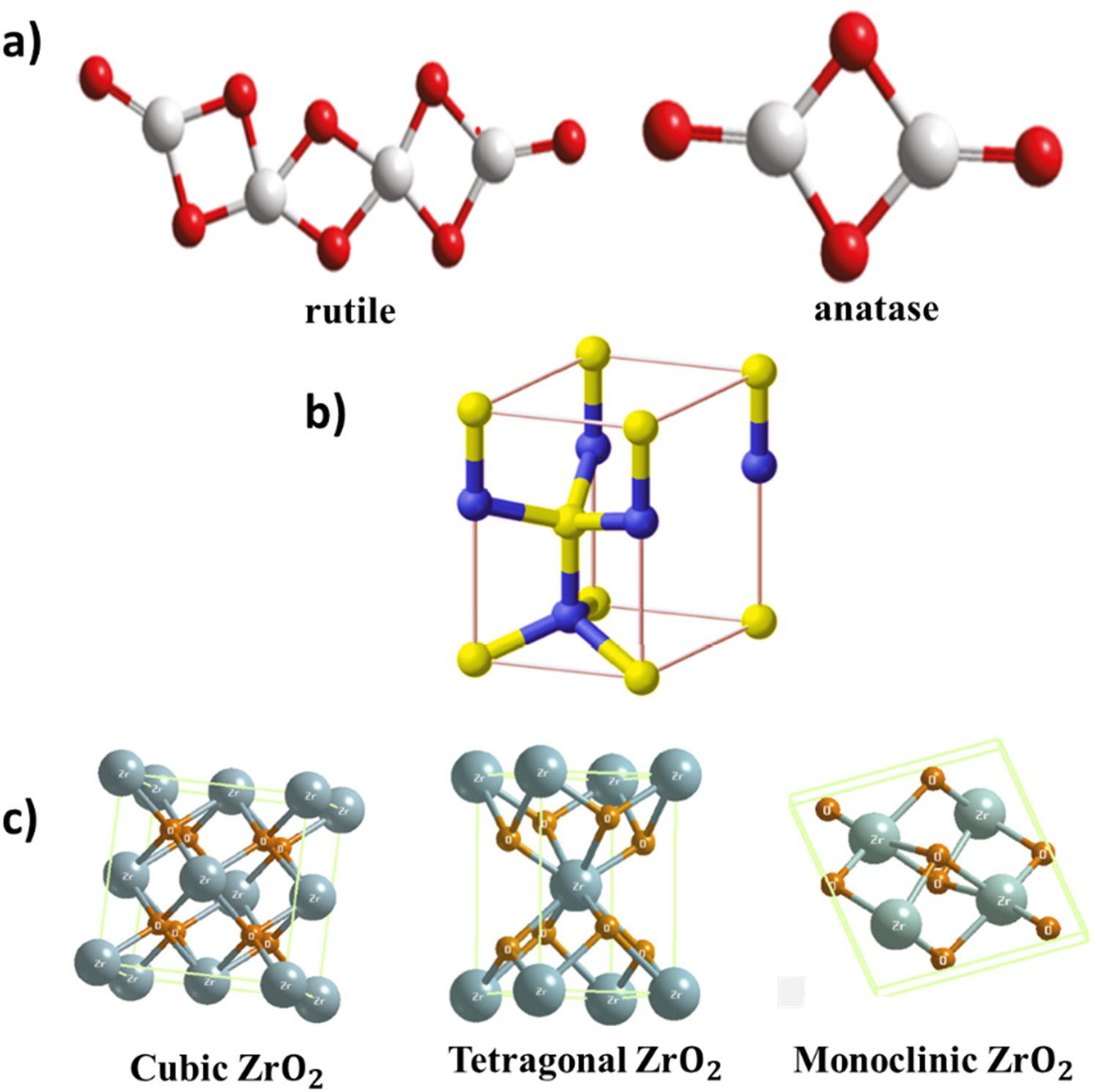
Each octahedron of TiO6 in the brookite structure shares two shared vertices and also creates zigzag chains. The Ti–O bond lengths in rutile, anatase, and brookite structures are 0.195–0.198, 0.194–0.197, and 0.187–0.204 nm, respectively [10]. Both brookite and anatase structures are permanently transformed into rutile when heated at a certain temperature. Many variables influence the temperature transition, including contaminants, the technique of preparation, the kind of precursor, and the final crystal size. Moreover, by modifying the finite particle size, the specific phase can be obtained directly [11].
Other than TiO2, ZnO also exists in three forms such as cubic sphalerite, hexagonal wurtzite, and the uncommon NaCl-type cubic modification. However, only the hexagonal wurtsite phase is thermally stable under ambient circumstances. ZnO synthesised on a cubic lattice substrate can create cubic sphalerite, but ZnO with an uncommon cubic NaCl structure may be produced at high pressures [12]. For hexagonal wurtsite, this structure is formed by combining two interlayers packed hexagonal Bravais lattices with coordinates (0 0 0) and
SnO2 has just one stable phase which is known as cassiterite and it is also crystallised in a rutile tetragonal structure. The lattice parameter of a and c for SnO2 tetragonal (cassiterite) is 0.4738 and 0.3188 nm, respectively. The volumetric density and band gap for SnO2 tetragonal (cassiterite) are 7.0 g cm−3 and 3.6 eV. Tin atoms are placed in the rutile middle structure and are encircled by six oxygen atoms arranged at the octahedron's regular’ corners [14]. Apart from SnO2, ZrO2 also can be categorised into three crystal structures such as cubic, monoclinic, and tetragonal forms (as shown in Figure 2(c)). Furthermore, each zirconium atom forms eight connections with oxygen atoms in the cubic ZrO2 crystal lattice. As a result, zirconium atoms may coexist with oxygen atoms in tetrahedral interstices to form face-centred cubic lattices. The cubic ZrO2 elementary cell consists of one Zr atom and two oxygen atoms while the Zr-O has a reported length of 0.221 nm [15,16]. The cubic shape of tetragonal ZrO2 is slightly distorted in Figure 2(c). Additionally, Zr atoms are connected to eight oxygen atoms and four neighbouring oxygen atoms with 0.207 nm Zr–O bond length in the crystalline tetragonal structure of ZrO2, whereas the remaining oxygen atoms are positioned at 0.246 nm distance from the zirconium atoms, which is 90° to the tetrahedron plane [16,17].
The monoclinic ZrO2 structure is generated by additional tetragonal structural deformation (see Figure 2(c)). It has less symmetry and is made up of 12 atoms from a basic cell as well as intricate geometric forms. Zr atoms share seven bonds with oxygen atoms in the ZrO2 monoclinic, while oxygen atoms create 134.5° and 109.5° angles in space. Therefore, the oxygen atoms are not in the same plane as zirconium. The interatomic lengths of Zr–O varied in the monoclinic ZrO2 crystalline structure, but still have 0.207 and 0.221 nm average values [17]. The most continuous and stable change of monoclinic ZrO2 occurs throughout the cooling phase from 1273 K to 923 K. However, the monoclinic form is converted into a tetragonal modification during the heating process which is starting at 1093 K while the modification process will occur up to 1443 K temperature [18]. For that reason, the tetragonal ZrO2 transformation is weak and unstable and has to be supported by the addition of dopants which are usually magnesium, iron, calcium, and rare earth oxides. Cubic ZrO2 form is dense compared to other structures but it still retains the instability associated with the tetragonal modifications. The cubic modification is stabilised using the same dopants as the tetragonal modification but in larger quantities.
Numerous works addressed both theoretical and practical perspectives of the MO structural properties and the production of MO particles for use in a variety of applications [21–24]. According to the Scopus search, hundreds of papers have been published after 2011 that combine the themes of metal-oxide fuel cell which merits to be reviewed broadly to keep up with the progress in this area of time. Yearly publications are increasing in line with the demand in industries focused on metal nanoparticles and MO particularly, which is experiencing good economic growth, especially as the world experiences covid-19 pandemic, where the economy is impacted but demand for MO industry angles and research by researchers is increasing. The electronics industry plays a role since there is a significant need for electronic goods such as consumer electronics, communication, and broadcasting equipment, and especially computers, to meet the demand for working and studying from home [25]. During this period of silence, this electronic equipment is utilised to allow public employees, commercial sector employees, and students to work and study from home, while parents may monitor the progress of their children. As a result, North America, Europe, Asia-Pacific (APAC), the Middle East and Africa (MEA), and South and Central America (SACM) all contribute to the manufacturing of this metal oxide to meet demand. This corresponds to the suitable geological and geographical structure for the characteristics and climate of the countries. Garino et al. [26] explore the nitrogen-doped reduced graphene oxide (rGO) functionalised with copper ions in ORR for electrocatalyst by the one-pot microwave-assisted route. Interestingly, Parkash and the team [27] adjusted the proportion of metal centres in a multiple MO for oxygen-reduction and evolution reactions. Other than that, the popular MO was investigated currently and deeply by Lavacchi and his colleague [28] emphasising TiO2 nanomaterial in fuel cells, carbon dioxide electroreduction, and electrolysis application and concluded that titania is good potential in electrocatalysis for energy.
Properties requirement for MO substances
Researchers must consider many critical requirements while looking for potential MO materials for fuel cell application. The first requirement is MO material must exhibit highly stable in an acidic medium for the acidic fuel cell and an alkaline medium for the alkaline fuel cell. The requirement for MO usage in fuel cell application is that MO cannot dissolve in acidic medium or alkaline medium. For example, manganese oxide and perovskite oxide are stable in alkaline medium whereas tungsten oxide (WO3), TiO2, ruthenium oxide (RuO2), and molybdenum oxide (Mo2O3) are stable in acidic medium. Despite that, there is some amphoteric MO such as aluminium oxide (Al2O3), ZnO, and vanadium oxide (V2O5) are incompatible with both media, whereas numerous alkaline metal oxides such as magnesium oxide (MgO), CuO, and calcium oxide (CaO) should be avoided in the acidic medium [4].
The other requirement for MO material is high resistance to electrochemical corrosion. MO must be electrochemically stable under fuel cell operating conditions, otherwise, metal nanoparticles mounted on them would peel off and aggregate, resulting in catalytic performance deterioration [29]. No oxidation peak was reported for Magnéli phase TiO2 between 0 and 2.0 V vs. NHE in 1 M H2SO4 solution [30]. Other than that, good electronic conductivity is also one of the important criteria for MO material. MO should be sufficiently conductive to enable ultralow Pt loading on the surface. Doping an insulating oxide with other metal ions can boost its conductivity while combining it with carbon nanotubes (CNT) or carbon black to generate carbon-oxide nanocomposite can greatly enhance its electrical conductivity [4].
MO material also should exhibit good proton conductivity properties and high specific surface area. Excellent proton conductivity properties could improve proton transfer and make electrocatalysis of HOR and ORR easier. For instance, MoO3 and WO3 can produce molybdenum bronzes/hydrogen tungsten and significantly boost MO's electrical and proton conductivity. With a high specific surface area property, it is possible to obtain good dispersion and excellent usage of noble MO nanoparticles. This requirement can also be achieved by using high surface area carbon materials as composite supports for MO nanoparticles. MO materials with the appropriate porosity are good for mass transfer of oxygen gas or liquid fuels, as well as preventing water flooding in electrodes. For the final requirement, MO should create an efficient bond with noble metal nanoparticles to promote conductivity and adhesion and to form a good three-phase boundary [4].
Preparation technique of MO
In fuel cell technology, MO plays an essential part. High material production costs and the process are obstacles to fuel cell commercialisation. MO sees notable physical and chemical properties as a solution for those issues [31]. According to the techniques of physical and chemical synthesis that have been used in MO manufacturing. There are several methods such as spray pyrolysis [32], ultrasound [33], chemical vaporisation, etc [34] that are used to produce MO.
The employment of chemical procedures to synthesise MOs is also possible in a situation where a metal ion precursor precipitation or an oxidation–reduction process in the aqueous medium phase takes place. This shows that chemical methods can have a positive effect on diverse inorganic nanomaterials with different morphologies. On the other hand, these commercial chemical procedures, are frequently associated with the use of harmful substances that are hazardous to the environment and public health. Hence, researchers are working to develop new eco-friendly synthetic methods.
Several different ways of synthesising MOs were illustrated in Figure 3(a). The economical and environmentally friendly results of nanoparticle production, through eliminating or reducing the use of green synthesis precursors, have attracted the interest of researchers to further explore. This technique arises for the recovery of nanoparticle toxicity that often results from physical and chemical synthesis methods. Green synthesis uses harmless reagents, simple protocols, and mild reactions [35]. Bacteria, fungi, algae, and plants are used as reducing or stabilising agents or in several circumstances as green synthetics agents.
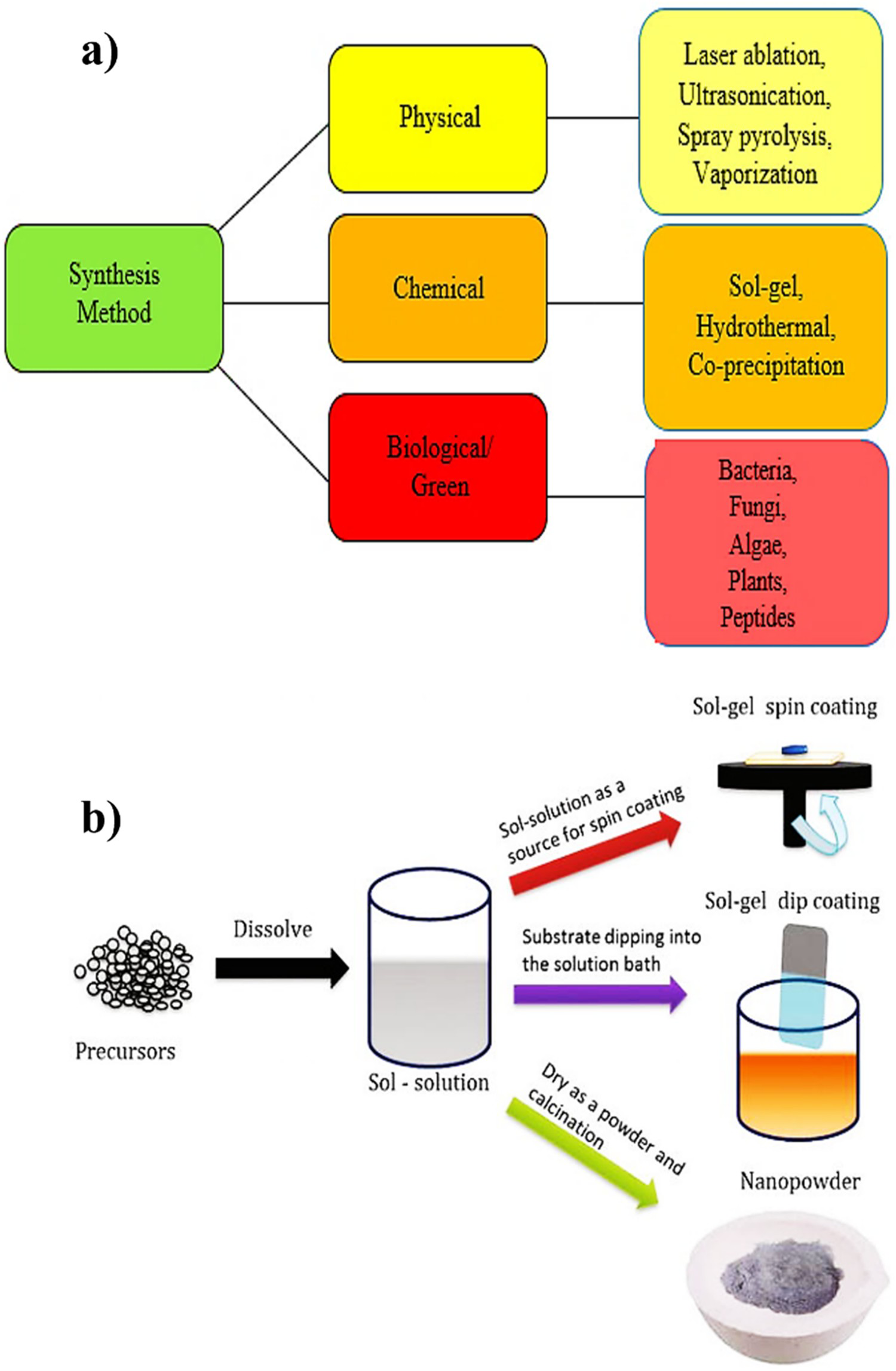
Comparative study of methods used for metal oxide manufacturing [42].
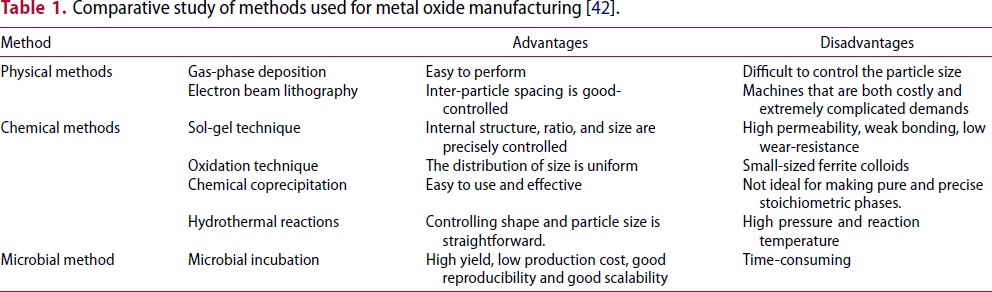
Co-precipitation method
The unique and simplest methodology in fabrication is for the preparation of MO nanoparticles. A solvent is used for oxo-hydroxide precipitation while chloride, nitrates, etc is used as an intermediate to salt. Thus, it is preferable for using surfactant or high or high-gravity sensitive precipitation to improve the morphology since regulation of size and chemicals during the synthesis of mixed metal oxides homogeneity gets questioned [43,44].
The co-precipitation method is generally used for the synthesis of nanoparticles in which several parameters such as reaction time, pH, the temperature of the reaction, concentration of the initial solution, and material play a crucial role in obtaining ceramic powders for the required shape and size. For example, nano aggregates of cobalt oxide (Co3O4) was successfully synthesised via co-precipitation method. The as-synthesised product is evaluated for its catalytic characteristics in the thermal breakdown of ammonium perchlorate and is demonstrated to be an effective catalyst in fuel application [45].
Sol–gel technique
This technique is a wet-chemical procedure in which the sol (or solution) progressively advances in this process to form a gel-like network including both solid and liquid phases. The approach of sol–gel technique enables the design of oxo-hydroxide through precursor hydrolysis which usually contains alcohol [46]. Following the molecules’ condensation, metal hydroxide is formed, and subsequently hydroxyl species are condensed by polymerisation to form a thick porous gel. Adequate drying and calcination process results in oxide that is ultrafine, porous, and pure. [47]. Figure 3(b) displayed the sol–gel process schematics model. Sol is generated either via polymerisation reactions or hydrolysis processes by allocating enough reagents to the precursor solution. The sol–gel process could be used to acquire the necessary material types, shapes, regulated phases, and also the size of the materials extracted [48].
The variables which could be regulated by the sol–gel technique involve (1) the nature of the solvent used (2) the saturation of the precursor used, (3) the solution pH, (4) the form and concentration of additives used, (5) the pre and post-heat treatment of the products, (6) the aging of the solution, and (7) the composition of the polymer applied for oxidation [50]. The magnetic, electrical, optical, and other inherent properties of the materials are reinforced by particles formed in the gel matrix, which have a uniform general shape. The sol–gel method has currently been used to fabricate GO-based nanocomposite materials, particularly throughout the manufacture of self-cleaning film and glass coating. Since sol–gel generated inorganic composites provide help to evaluate temperature, it is possible to maintain the physical characteristics of the doping portion by regulating the blending between the guest molecule and the host formulae. The sol–gel approach is a simple and quick procedure that is more flexible and practicable. The fabrication via the sol–gel method could be accomplished at low temperatures and is successful in achieving varied MO morphology, based on the initial precursor situation [51]. Santiago et al. investigated the performance of Nafion-TiO2 hybrids prepared using sol–gel process for high temperature PEMFC. Using a low-temperature sol–gel method, hydrophilic anatase nanoparticles were successfully incorporated into the Nafion matrix. Fuel cell tests at temperatures up to 130°C indicated that hybrid membranes display a greater ohmic drop than Nafion membranes [52].
Hydrothermal method
Hydrothermal development is a specific antidote process for setting up nanoarrays of MO on complex substrates for use [53,54]. Karl Emil von Schafhäutl, a German geologist who created minuscule quartz crystals in a pressure cooker, published the first case of hydrothermal crystal development in 1845 [55]. The cycle helps to show the soluble metal salts in an organic or aqueous solution or a combination of organic and water solutions at elevated temperatures and high circumstances in an autoclave. Hydrothermal chemical methods are known as easy and efficient routes on a water network and are becoming more common today in the manufacture of arranged nanoarray structures. Its approach is based on chemical reactions and changes in the solubility of materials in a sealed heated aqueous solution beyond ambient temperature and nanocrystal growth pressure. According to BET results from previous literature, which show a high specific surface area of 543 m2/g and pore volume of 0.5 cm3/g, the hydrothermal approach was discovered to be the best way for synthesising a high surface area ZrO2. At a scan rate of 100 mV s−1, the ZrO2 nanoparticles maintain their rectangular form with good cycling and reversibility stability. With an enhanced redox peak current caused by the transfer of electrons, the CV's rectangular form exhibits the optimal capacitive behaviour. Therefore, ZrO2 nanoparticles embedded in Nafion membrane are a potential electrolyte for fuel cell applications [56].
Deposition method
Deposition method is also one of the simple methods to produce metal oxide. The method to prepare nanoparticles is quite similar to the Au/TiO2 catalyst preparation. One benefit associated with this method is its ability to generate tiny nanoparticles of gold that are less than 10 nm in size [57]. In addition to ensuring convenience in the management of synthesis, electrochemical deposition is introduced which contributes to the best results in terms of synthesis and has many advantages in the development of metal oxide structure. This is demonstrated by the fact that ZnO can be successfully developed using appropriate electrolytes from the preparation of ZnO [58]. Rajalaksimi et al. reported that the durability of catalyst is one of the major issues in PEMFC application. Therefore, they prepared nano TiO2 as a candidate for catalyst support for Pt electrocatalyst. The deposition of TiO2 in the Pt matrix is anticipated to prevent the aggregation of Pt particles, efficiently scatter the Pt atoms in the clusters, manage the nanostructure of the catalyst, and offer corrosion-resistant heat and oxidative stability. Compared to typical Pt supported on carbon catalysts, these catalysts’ electrochemical activity and thermal stability were shown to be superior [59].
Soak-deoxidise-air oxidation
This approach can be used to process compounds such as ZnO/Cu2O especially use in photocatalysis activity. Here some methods of the experiment will be discussed where ZnO has diluted in 50 ml CuSO4·5H2O solution containing Cu2+ at a concentration of x mol/L and sonicated to produce a homogenous suspension. After that, the solution is then vigorously agitated for 30 min at room temperature to ensure that the Cu2+ ions are deposited on the ZnO nanoparticles’ surface. The solvent is solubilised and treated respectively three times using alcohol solution and deionised (DI) water to extract free Cu2+. 30 mL of DI water is slowly poured for suspension while being gradually heated for 5–10 min in a water bath with constant stirring. Slowly apply a solution of N2H4·H2O (1 M) to the suspension until a red-brown precipitate has developed. Once the temperature reaches a stable equilibrium, the solution was filtered in the water bath for 30 min while stirring, products are obtained by filtration, cleaned multiple times with alcohol and DI water, and gradually dried in air for 3 h at 60°C [60]. Regarding this technique, it is a big opportunity to be used in the fuel cell application which may bring high performance in the achievement.
Impregnation and reduction
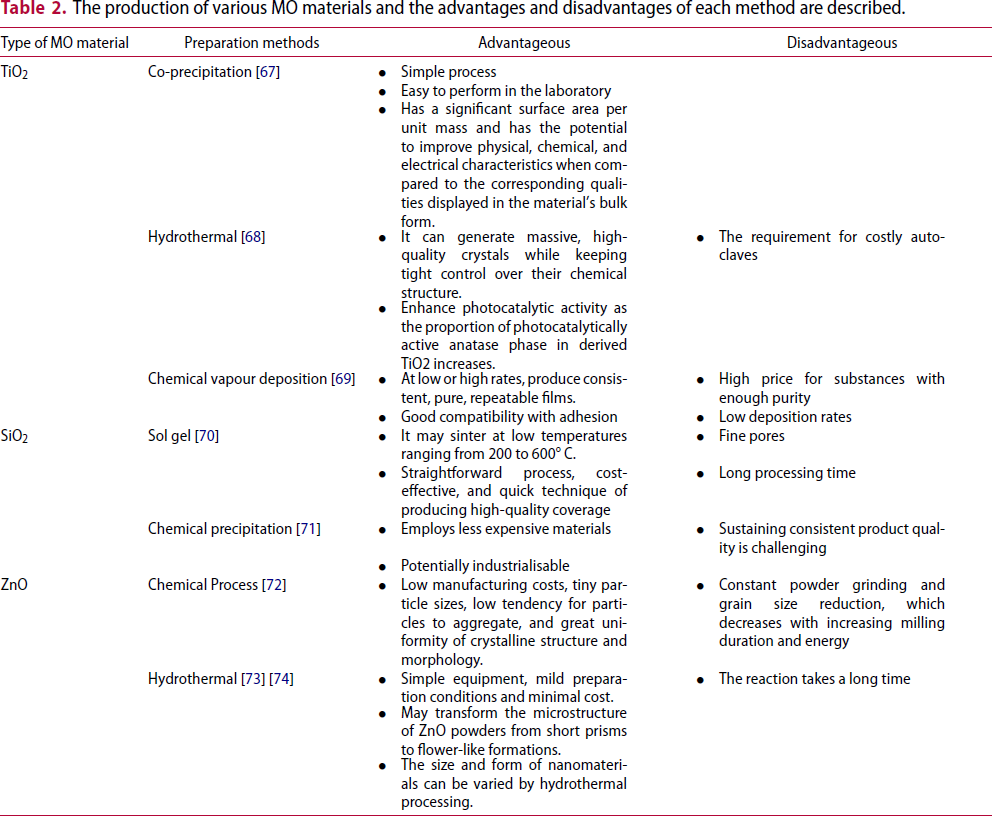
The method is straightforward economical and friendly handling. In this method, low loading of precious metal is attained by adsorption of the precursor or through the exchange of ions. According to that, if higher loadings are demanded, the washing step is skipped and the support is dried directly, ensuring that all precursor remains on the support (impregnation and drying). Generally, a metal salt solution is impregnated in a mesoporous substratum and the metal complexes are reduced to metallic nanoparticles. Several nonporous metal-incorporated products were developed by the impregnation and reduction process. The metal salt solution adsorbs directly onto mesoporous substratum or associates with it chemically. As demonstrated by Wen et al. [61] fabricated metal nanoparticles were embodied via the impregnation route in the ceria microchannels. Additional research Lysine-assisted modulated mesoporous alumina strongly supports Au nanoparticles about 2 nm in size [62]. Campelo et al. [63] documented a simple and environmentally friendly approach to prepare highly active and dispersed silica-supported Au and Pd nanoparticles using a microwave process without using any reduction agent which also provides some benefits over the traditional reduction in the concentration of hydrogen at high temperatures [64]. Rather than use a metal solution to wet the mesoporous substratum, Gao and Ying first fabricated SBA-15 with a dendrimer [65]. The technique of impregnation and reduction may be used to load multiple metals on the same mesoporous support. Futamura and his team [66] proved that methods impregnated with noble metal give up to 95% utilising performance beneficial to the fuel cell application. In conclusion, lead by wetting later the precursor solution in this method will only fill the support pores to avoid deposition on the catalyst external and beneficial in slight waste (Table 2). The variety of such methods of synthesis can be advantageous to attaining high performance in fuel cells (Figure 4).
Comparing probable processes in MO material synthesis. The production of various MO materials and the advantages and disadvantages of each method are described.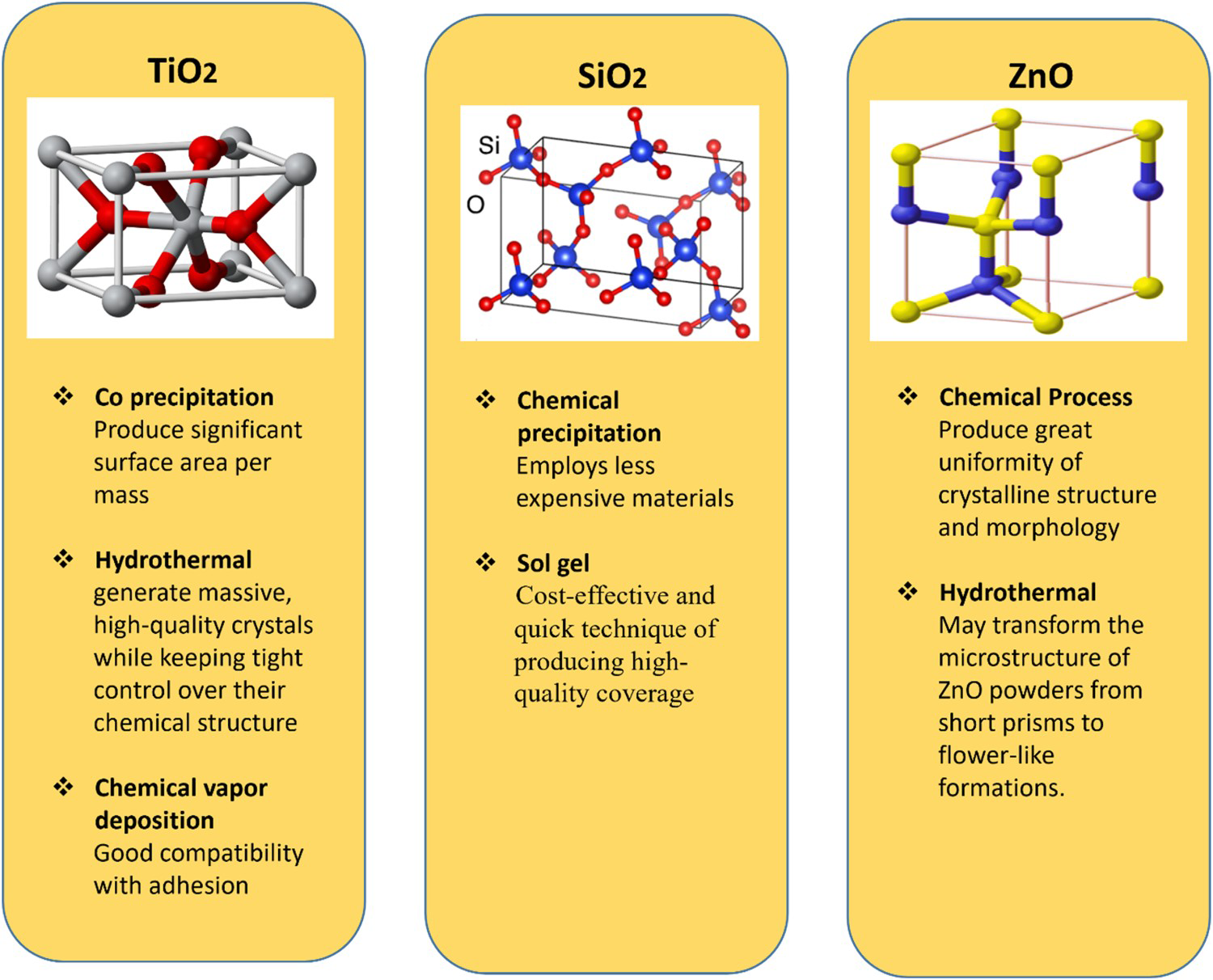
MO-based as electrocatalyst material
MO/metal nanoparticle composites
Owing to their distinct features, tailored MO is among the most widely utilised materials. The nonlinear optical features increased ductility at rising temperatures, and the unique catalytic, sensitive, and selective activity of metal oxides make them valuable instruments in modern nanotechnology. Regarding this part, the MO/metal nanoparticles composite focuses on the TiO2, WOx, SnO, and MoOx while MO/carbon material explains more on carbon black, graphene, and carbon nanotube.
Titanium dioxide (TiO2)
Since its utilisation by Fujishima and Honda for electrochemical photolysis of water [75], TiO2 has been commonly used in electrical and photoelectric fields. TiO2 has been explored as promising support for fuel cells, owing to its stability in the operation condition, minimal production cost, commercial availability, non-toxicity, and simplicity in regulating their size and structure. The existence of strong connections between TiO2 and metal nanoparticles is a great advantage [76], as it can prevent the metal particle from aggregating together, disperse metal atoms in clusters, and affect the electrical properties of metal nanocatalysts. TiO2 was used for oxygen reduction in acidic and alkaline mediums [77], early in the 1980s and 1990s.
Huang et al. [78] prepared Pt-Ir/TiO2 electrocatalysts and their physical incorporation was evaluated as a bifunctional oxygen electrode (BOE) catalyst for unitised regenerative fuel cells (URFCs). The Ir-TiN performance was tested and the findings indicated that it is suitable to be used as a corrosion-resistant microporous layer. The URFC performance also showed a significant enhancement in round-trip efficiency of supported Pt-Ir/TiO2 (42.2%) compared to unsupported Pt-Ir black (29.8%). Moreover, the Pt-Ir/TiO2 also demonstrated higher UFRC performance than the Pt-Ir black catalyst with a metal loading of 1.0 mg cm−2 and 2.0 mg cm−2, respectively on the oxygen electrode. The improvement of URFC performance was ascribed to the support effect of offering a high specific surface area. Even though TiO2 as a catalyst or support has a certain catalytic feature, its poor electrical conductivity and surface area limit its usage in PEFCs. These issues have been alleviated by the change in morphology and composition of TiO2 material are discussed in detail below.
First, the composition of TiO2 can be modified into sub-stoichiometric Tin O2n-1. The electronic conductivity of TiO2 must be increased for PEFC electrochemical application. One technique that was discovered to increase the electrical conductivity of TiO2 is by decreasing pure TiO2 and forming oxygen vacancies to obtain sub-stoichiometric TiO2. The existence of titanium interstitials and oxygen vacancies helps to reduce the band gap of TiO2, hence increasing their electrical conductivity. This sub-stoichiometric TiO2 also known as the Magnéli phase possesses a higher conductivity than graphite and has a general formula of TinO2n-1 (4 < n < 10) [79]. The conductivity of Ti4O7 rises as high as ca. 103 S cm−1 at room temperature. Furthermore, there were no oxidation peaks obtained between 0 and 2.0 V vs. NHE in 1 M H2SO4 solution for Magnéli phase TiO2 [30]. Magnéli phase TiO2 can be applied as PEFC catalyst support materials because of their high conductivity and oxidation resistance. Since Chen et al. revealed Pt–Ru–Ir catalysts deposited on Ebonex (several sub-oxides of TiO2, primarily Ti4O7 and Ti5O9) and Ti4O7 as bifunctional oxygen reduction/water oxidation catalysts [80] the group of Ioroi has conducted some studies on Ti4O7 as catalyst support for fuel cell applications. They synthesised Ti4O7 by decreasing TiO2 powder at high temperatures in an H2 condition and discovered that it has a substantially higher onset oxidation potential (ca. 1.8 V) than Vulcan XC-72 (ca. 0.9 V) and is extremely stable under the PEFC working system [81]. The HOR and ORR-specific activity of Pt nanocatalysts supported on Ti4O7 are comparable to those of the Pt/C catalyst. They also examined the impact of high-potential holding and cycling on the Pt/Ti4O7 catalyst's stability and electrochemical activity [82]. The Pt/Ti4O7 catalyst is highly stable with high potentials of up to 1.5 V. Even after 350 h of operation at 300 mA cm−2, there is no voltage deterioration when Pt/Ti4O7 was used as the cathode in pure H2/O2 fuel cells. Ioroi et al. [83,84] invented a novel pulsed UV laser irradiation technique to create nanometric Magnéli phase TiOx with a specific surface area larger than 20 m2 g−1 to enhance the surface area of the TiO2 support. After cyclic tests sweeping from 0.05 to 1.0 V at a scan rate of 10 mV s−1 in 0.1 M perchloric acid (HClO4) solution using the rotating disk electrode method at room temperature, the resulting Pt–TiOx and Pt–Ti/TiOx catalysts had 2-fold higher specific activity for the ORR than Pt/Vulcan XC72 catalyst. Figure 5(a) revealed that they still maintain their initial electrochemically active area even after 10,000 potential sweep cycles between 1.0 and 1.5 V. Zhang et al. [85] used a pyrolysis process followed by microwave radiation to develop Ti4O7 supported Pt@Ru core–shell. The purpose of this study is to increase the durability of PtRu by including a core–shell structure and a strong bonding with Ti4O7 particles. The first stage in this approach is to co-reduce a combination of TiO2 and ruthenium precursor under heat treatment in H2 reducing environment to produce a Ru core on Ti4O7 support, and the second stage is to build a platinum shell using microwave irradiation. The Ru@Pt/Ti4O7 catalyst displays a higher carbon monoxide (CO) tolerance capability towards H2 oxidation than the PtRu/C alloy catalyst. In PEFCs, sub-stoichiometric TiO2 exhibit significant co-catalytic activity with Pt. It must be noted that they tend to oxidise to stoichiometric TiO2 over long-term cell operation, which is resulting in a decrease in electrical conductivity and also electrocatalytic performance. As a consequence, improving the long-term durability of sub-stoichiometric TiO2 is still a concern among researchers.
(a) Cyclic voltammetry of MEAs with Pt/XC72 and Pt–Ti/TiOx cathode catalysts in the initial state and also after 5000 and 10,000 cycles at 80°C (under N2 flow), (b) Nb/TiO2 and Vulcan XC72 supported Pt cathode catalysts polarisation curves in oxygen-saturated 0.5 M H2SO4 at various rotation rates with a scan rate of 10 mV s−1 at room temperature and (c) a comparison of ORR catalytic activity on Pt/Vulcan XC72 and Pt/Nb-TiO2 catalysts.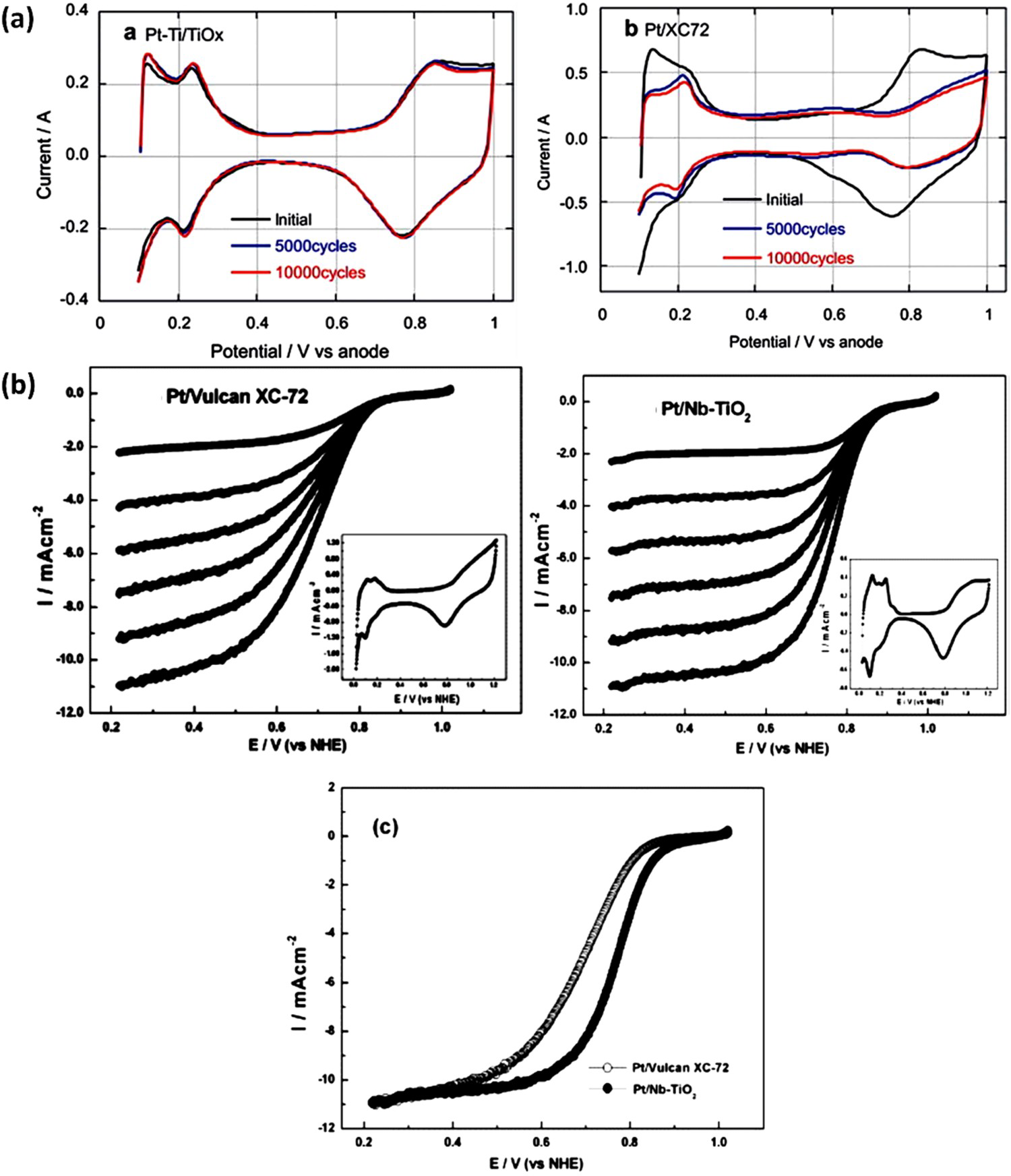
Doping TiO2 with other metals is another method to enhance the electrical conductivity properties of TiO2. The material that has received the greatest attention is niobium (Nb) doped with TiO2, which achieves electrical conductivity around 0.2–1.5 S cm−1 [80]. Despite that, the charge compensation for Nb5+ replaces Ti4+ is accomplished either by stoichiometric reduction of Ti4+ to Ti3+. or by creating one Ti cation vacancy for every four Nb atoms when TiO2 is doped with Nb. Nb0.1Ti0.9O2 was discovered by Chen et al. [80] as catalyst support for Pt-Ru-Ir, and they observed that it has a more extensive range of −0.4 to 2 V vs. NHE and it is more stable than Ebonex and Ti4O7. Garcia et al. [86] doped Nb into anatase TiO2 support by using the sol–gel technique. Then, the PtRu/Nb0.1Ti0.9O2 catalyst was prepared using lithium borohydride (LiBH4) as a reducing agent in tetrahydrofuran solvent. In comparison to the PtRu/C catalyst, the PtRu/ Nb0.1Ti0.9O2 catalyst demonstrated a 6% increase in mass activity and a 100% increase in the specific activity. The mass activity of the PtRu/Nb0.1Ti0.9O2 membrane electrode assembly (MEA) is 46% higher than the E-TEK MEA.
The use of Nb-doped with TiO2 was investigated by Park et al. [87] with a 10 nm particle size. These catalysts were synthesised via a hydrothermal approach followed by a borohydride reduction procedure to support Pt nanoparticles on the substrate. As seen in Figure 5(b), the ORR of the Pt/Nb-TiO2 catalyst has a higher mass activity with a value of 235.3 mA mg−1 and onset potential (1.0 V) than Pt/Vulcan XC-72 with a value of 58.8 mA mg−1 and 0.9 V onset potential. The improvement in ORR performance is owing to the excellent Pt dispersion on Nb-TiO2 catalyst support and great interaction between metal catalyst and oxide support. Other than Nb, molybdenum doping also can improve the electrical conductivity of TiO2. This process may increase the TiO2’s electrical conductivity by producing more vacancies for Ti, whereas it can transport more electrons to Pt from the TiO2 support via a strong metal catalyst-oxide support interaction. These findings suggest that if doping TiO2 with other metal ions may contribute more electrons to Pt or produce more Ti vacancies, it may be able to dope TiO2 to produce highly co-catalytic TiO2 [4].
Owing to their high efficiency and environmental friendliness, PEMFCs have sparked a lot of interest in recent years. Rajalakshmi et al. [59] investigated TiO2 as alternative catalyst support for electrocatalyst Pt and can withstand the corrosive environment of PEMFC application. The incorporation of TiO2 support in the Pt matrix was designed to prevent Pt particle aggregation, efficiently disperse the Pt atoms in clusters, regulate the catalyst's nanostructure, and enhance oxidative and thermal stability against corrosion. The Pt/TiO2 catalyst was reported to achieve better thermal stability compared to the conventional Pt/C catalyst. This catalyst demonstrated high electrochemical activity, durability, and fuel cell performance. Most of the ORR on TiO2 occurs through a 4-electron route. Kim et al. [88] synthesised TiO2 catalyst as the non-Pt catalyst via heat treatment of titanium sheets at a temperature ranging from 600°C to 1000°C. In 0.1 mol dm−3 H2SO4 solution, the prepared catalysts were chemically and electrochemically stable. For the ORR, the TiO2 catalysts have varied catalytic activity and the ORR of TiO2 catalyst heat-treated at 900 °C happened at a potential of 0.65 V vs RHE. The difference in ORR catalytic activity of heat-treated TiO2 catalysts is attributed to a change in the material property of the catalyst surface caused by the heat-treatment condition. It was discovered that the ORR catalytic activity of TiO2 improved as the specific crystalline structure, such as TiO2 (rutile phase) (110) plane and the work function also increased. A change in surface state such as crystalline structure and work function is expected to impact the ORR catalytic activity.
The other metal that is currently studied to dope with TiO2 particles is the bismuth (Bi) element. Bhowmick et al. [89] impregnated Bi element on pure TiO2 (Bi-TiO2) and evaluated it as photocathode catalyst in microbial fuel cell (MFC). Based on electrochemical impedance spectroscopy (EIS), Bi-TiO2 achieved twofold greater exchange current density and a lower charge transfer resistance than pure TiO2, indicating that it is a superior ORR catalyst. MFC performance was conducted by using Bi-TiO2 and could produce a maximum power density of 224 mW m−2, which was higher than MFC that operated with Pt as cathode catalyst (194 mW m−2). However, both of these performances are much higher than MFC that operated with TiO2 catalyzed cathode and without any cathode catalyst which is 68 and 60 mW m−2, respectively. These findings are proposed Bi-doped TiO2 catalyst as a superior low-cost alternative to the highly expensive Pt.
Tungsten oxides (WOx)
Tungsten oxides (WOx) gave much attention and have been produced using several approaches and employed in many fuel cell systems. Lalande et al. [90] found that Pt nanocatalysts on Pt/WOx exhibit CO tolerance comparable to commercial PtRu black catalyst in fuel cell tests with H2 and 100 ppm at the anode. Shafia Hoor et al. [91] and Lee et al. [92] used an electrodeposition approach to make Pt/WO3 and PtRu/WO3 nanocatalysts. In contrast, Park et al. used a multi-sputtering deposition process to reach Pt/WO3 and PtRu/WO3 nanocatalysts [93,94]. They discovered that Pt/WO3 and PtRu/WO3 have more incredible catalytic activity than Pt and PtRu for the MOR. The existence of alloy nanophases and WOx spillover impacts are intimately related to the improved catalytic activity of the MOR. The role of WOx as a co-catalytic was suggested by Hobbs and Tseung [95] in the anodic hydrogen oxidation reaction on Pt/WO3 electrodes by forming HxWO3. Many research on WOx in fuel cells reported since the 1960s. After that, the Tseung group conducted many experiments using PtRu and Pt nanocatalysts modified with WO3 in the electrooxidation process of formic acid [96], methanol [97], CO and H2 [98]. They discovered that Pt and PtRu as anode and cathode electrodes modified with WO3 are more efficient and poison resistant than Pt and PtRu alloy catalysts. Several factors have affected the promotion of WO3, such as (1) noble metal nanoparticles dispersed uniformly on WO3, (2) the effect of ‘hydrogen spillover’, and (3) a high level of CO tolerance towards poisoning. The dispersion of nanoparticles depends on the various production processes. The term ‘hydrogen spillover’ refers to the process of producing bronze hydrogen tungsten and then oxidising hydrogen on tungsten-hydrogen bronze. This ‘hydrogen spillover’ ensures that Pt-active sites may operate more effectively as dehydrogenation catalysts. The existence of WO3 may promote the adsorbed water (OHad) development, which would oxidise intermediate impurities efficiently.
Tin oxides (SnO)
MO may be suitable as support materials for future PEFC cathodes in their most significant oxidation state. SnO and TiO2 are two promising catalyst support materials with good potential stability that might be used to make iridium-based nano-size electrocatalysts similar to PEFC. According to Yasutake and his team [99] indium-decorated SnO2 supported on Vapor-Grown Cabon Fiber (IrO2/Sn(Nb)O2/VGCF) and carbon-free Ir/TiOx/Ti sheet, where Ti sheet with naturally occurring oxide surface is employed as the catalyst support and gas diffusion layer (GDL) [100]. The Pt nanoparticles’ kinetic activity supported by SnO2-based MOs was investigated using a multilayer method in this study. Model electrodes consisting of SnO2 thin films supporting Pt nanoparticles, as well as porous catalytic systems comprised of Pt nanoparticles supported by Sb-doped SnO2 high surface area powders, were studied in particular. Takabatake et al. [101] study the MO supports for PEFC electrocatalysts have been shown to have high cycle durability. In terms of stability, electrochemical activity, and resistance to dissolution, Pt/SnO2 performs well. Pt dissolution rates in Pt/SnO2 electrocatalysts are equivalent to those in Pt/C electrocatalysts. These findings show that SnO2 could be a credible replacement electrocatalyst support. Pt-SnO2 nanocatalysts were introduced by Matsui et al. [102] and Waki et al. [103], and they are shown to have a lesser onset potential for CO oxidation compared to Pt/C. Founded on features such as outstanding chemical stability, economical, electro-catalytic activity, wide band gap (3.5 eV), and ease of production, SnO2, a well-known n-type MO semiconductor, has been extensively used in DMFCs technologies. Fan and co-workers [104] came up with a hierarchical framework decorated Pt nanoparticles on SnO2 support. Zhang et al. [105] demonstrated a Pt-SnO2 flower for methanol oxidation. The synthesis process of Pt-SnO2/C via a microwave-aided polyol was discovered by Sandoval-Gonzalez et al. [106]. The results revealed that the designed catalyst achieved superior stability and catalytic activity for MOR performance compared to the PtRu/C catalyst owing to the obvious bifunctional characteristics of Pt and SnO2.
Molybdenum oxides (MoOx)
There are five Magnéli phases in molybdenum oxides, with compositions ranging from MoO2 to MoO3. The structure of MoO2 is rutile, with MO6 octahedra sharing cores and edges. Yan et al. [107] placed Pt nanoparticles on the composite support after synthesising MoO2 on carbon. The obtained Pt/C-MoO2 displayed good stability and higher mass activity (mA mgPt−1) at 0.9 V vs. RHE for the ORR performance compared to conventional Pt/C catalyst owing to the MoO2 promoting impact and the strong connection between Pt and MoO2 (98.4 mA mgPt−1). According to Wang and his colleagues [108], an electrochemical co-deposition process can discover Mo4+, Mo5+ and Mo6+ valence states in Pt/MoOx catalysts. The MoOx for MOR promotion mechanism was postulated to give OH species with decreased capacity for the elimination of adsorbed CO poisons. As high impurities tolerant electrocatalysts for PEFC systems, Liu et al. [109] explored into MoOx@Pt core–shell and PtMo particles. The MoOx@Pt core–shell nanocatalysts are displayed in Figure 6(a) discrete underpotential hydrogen adsorption/desorption peaks, whereas the Pt0.8Mo0.2 alloy catalyst does not. As shown in Figure 6(b), the MoOx core on the Pt shell nanocatalyst had a substantially decreased onset H2 oxidation potential (0.14 V vs. SCE) compared to conventional Pt and PtRu electrocatalysts and Pt0.8Mo0.2 alloy. Furthermore, it achieves the diffusion-limited current at 0.1 V vs. SCE, which is significantly lower than commercial electrocatalyst. More critically, the electrical action of MoOx@Pt core–shell was thought to diminish the oxidation overpotential and degrade the connection of Pt–CO. This is owing to the MoOx cores’ inadequacy to supply OH species to the Pt shells, which are required for the bifunctional process to regenerate the Pt surface and remove CO.
(a) The CV scans of Pt0.8Mo0.2 alloy and MoOx@Pt core–shell catalyst in H2SO4 solution (5M) at 298 K, and (b) The polarisation graphs for H2 oxidation reaction on 30% loading of various catalysts at 298 K in the presence of 1000 ppm CO and 1600 rev min−1 rotation rate [109].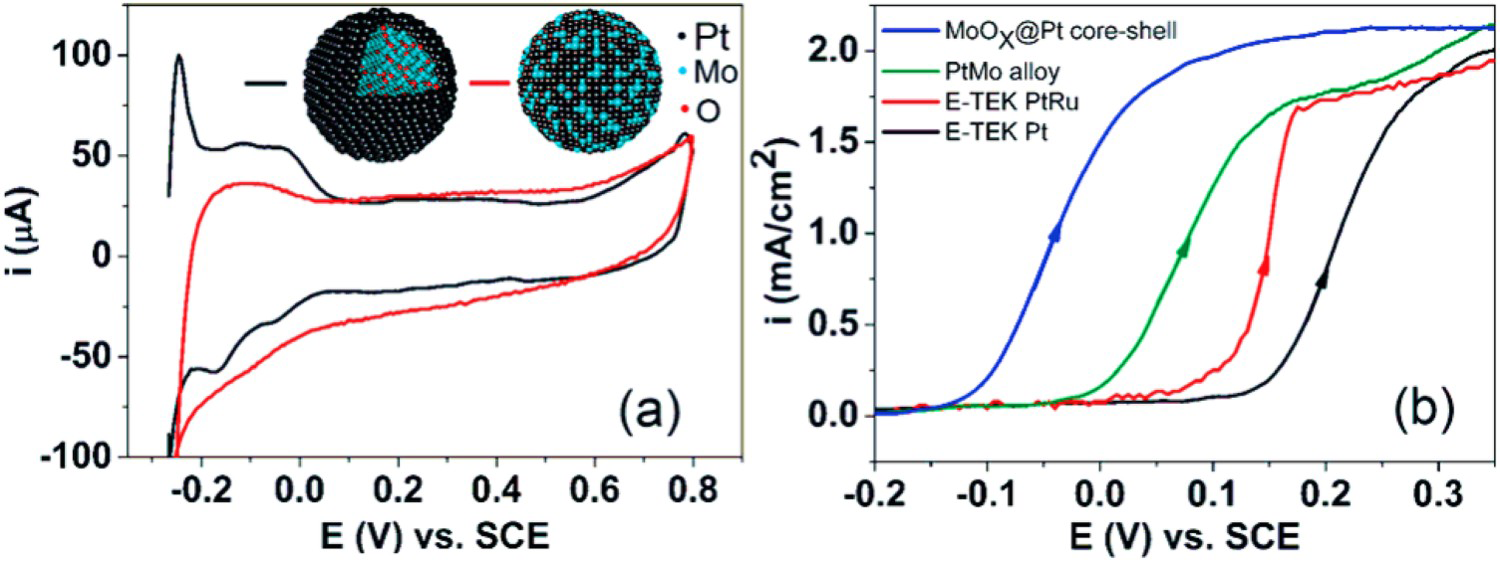
MO/carbon material composites
The combination of MO with various nanostructured carbon-based conductors (i.e. graphene, carbon black, and carbon nanotubes) could significantly enhance the MO's properties [110]. Various studies have shown that when conductive nanostructured carbon is added to an energy device, it improves electrochemical performance by facilitating charge transport from the redox effectively available in the MO [111].
Carbon black
Fuel cells have a lot of potential for constructing a future electrical power generating system that is both efficient and clean. Related to its small size and low operating temperature, the PEMFC is the most viable contender for replacing combustion engines in cars and stationary applications. Munakata and his team [112] discovered the enhancements of nanoparticle composite performance for Pt-loading PEMFCs. There have been a variety of carbon-supported platinum catalysts (Pt/Cs) commercially available and employed. However, because carbon supports erode over time during PEMFC operation, metal compounds such as oxides have been investigated as catalyst supports to increase PEMFC durability. Zhang et al. [113] reported the development of a high-performance electrocatalyst for methanol oxidation employing Pt nanoparticles supported on nitrogen-doped carbon-TiO2 composite (Pt/TiO2/NDC) using a microwave-assisted polyol process. The synergy impact of their distinct form and composition, as well as the electrical interaction between the TiO2/NDC, likely led to the development of Pt/TiO2/NDC catalysts. Further exploring study regarding metal oxide with carbon material by Pongpichayakul and his colleague [114] study the CeO2 was decorated onto a variety of carbons, involving carbon black (CB), graphene oxide (GO), reduced graphene oxide (rGO), carbon nanotubes (CNT) and mixed carbons, and then Pt was electrochemically deposited. A face-centred cubic structure was employed to study the dispersion of Pt and CeO2 nanoparticles onto carbon surfaces. Essentially, the fabrication of MO with carbon materials as a potential for new material is studied by the right synthesis in fabrication has a high tendency in reaction performance and be used as a problem solving by the new formulation applied.
Graphene
Graphene and graphene-based materials have unique qualities such as a large surface area, great durability, thermal stability, strong conductivity, and high mechanical stability, making them ideal for use as catalyst support in acidic DMFCs. Graphene has a larger surface area (2630 m2 g−1) than carbon nanotubes (CNTs) and graphite, making it appropriate for energy applications such as DMFCs [115]. Pt supported on holey-reduced graphene oxide frameworks [116], PtCu-rGO [117], graphene oxide-PVP [118], graphene-fullerene [119], and graphene-nanofibre [120] also demonstrate great efficiency as an electrocatalyst for methanol oxidation. Pt with nanoflowers structure evenly distributed over rGO-SnO2 is studied by Sha and his colleagues [121] for optimal utilisation of Pt nanostructures and better catalytic activity. In order to achieve Pt nanoflowers with uniform dispersion and high density properties, Pt nanostructures are synthesised using a new, ecologically hydrothermal procedure using lemon extract followed by Pt electro-deposition process. Yu et al. [122] published a paper describing the synthesis of a porous molybdenum dioxide (MoO2)/graphene oxide (POMOFs/GO) composite from a polyoxometalate-based MOFs/graphene oxide (POMOFs/GO) precursor. Owing to the presence of phosphorus (P) in the POMOFs precursor, the final composite product was made up of MoO2, phosphorus-doped nanocarbon (PC), and RGO support (referred to as MoO2@PC-RGO). Since of their distinctive 2D nanostructure, outstanding electrical conductivity, and high electrochemical stability, graphene sheets are a viable component to act as a support material for electrocatalysts in this POMOFs/GO-assisted method.
Carbon nanotube
Carbon nanotubes (CNTs) are tube-shaped carbon structures that come in a variety of lengths, thicknesses, and layer counts. One of the most important strategies for producing composite support is to use carbon or CNT to improve the MO's properties and surface area. For example, a hybrid of titanium cobalt nitride (TiCoN) and CNT has recently been employed as a supported catalyst to improve methanol oxidation reaction corrosion resistance [123]. After 5000 s of operation, the Pt catalyst supported on TiCoN-CNT showed increased activity and corrosion resistance [124]. The current density per mass of Pt was as high as 1400 mA mg−1 in a study utilising a hybrid catalyst of Pt and nickel phosphide (Ni2P) support on CNT [125]. TiN-CNT [126], a unique network connecting Pt and MWCNT [127], and dihydroxypolybenzimidazole (2OH-PBI)-MWCNT [128] as support for the methanol oxidation reaction in DMFC are two more studies that changed or added other materials to CNT. The incorporation of TiO2 into Pt-Ru matrix was investigated by Chen et al. [129]. When compared to PtRu/C catalysts, this new Pt-Ru-Ti/C catalyst had a greater catalytic performance for the MOR. The researchers discovered that the TiO2 particles added to the catalyst reduce the grain size to roughly 12 nm and improve intra-particle dispersion significantly. X-ray absorption fine spectra (EXAFS) analysis was used to create a Pt-Ru-Ti/C catalyst with a multi-scale design.
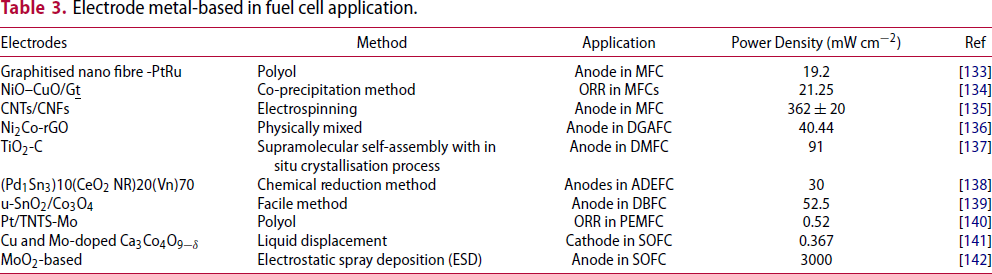
PtRu/C catalysts from Johnson-Matthey (Pennsylvania, USA), E-TEK (New Jersey, USA), and in-house preparations contain a Pt-rich encircled by a Ru-rich shell, as shown in Figure 7. This research showed that there is no discernible Pt and Ru segregation in the Pt–Ru–Ti/C catalyst, showing that TiO2 plays a role in boosting Pt and Ru atom dispersion in the catalytic clusters and encouraging intra-particle dispersion [4]. In addition, because of their high conductivity, remarkable stability, and huge specific area, CNTs have been combined with TiO2 nanoparticles as composite catalyst support for PEFC systems. According to Muhamad et al., Pd/C catalysts modified with TiO2 have greater catalytic activity for CO/H2 performance, than commercial Pt/C catalysts [130]. It has been shown that the addition of TiO2 nanoparticles enhances both metal particle dispersion and surface area, and it also improves CO tolerance. In a study conducted by Selvarani et al. [131], they investigated the heat treatment of Pt-TiO2/C catalysts at 750°C with 2:1 atomic ratio of Pt:Ti exhibits improved tolerance towards methanol while sustaining excellent catalytic activity. The peak power density of the DMFC with a Pt– TiO2/C cathode was 180 mW cm−2, which was greater than the peak power density of the DMFC with Pt/C, which was 80 mW cm−2. Song et al. used a sol–gel approach to cover a thin layer of amorphous TiO2 on CNTs and an ethylene glycol reduction process to create Pt composite nanoparticles [132]. Comparing the Pt–TiO2/CNTs catalyst to conventional Pt/CNTs and Pt/C electrocatalyst, the Pt–TiO2/CNTs catalyst displayed excellent CO tolerance and higher electrocatalytic activity for EOR performance. Table 3 shows the electrodes-based MO that gives good potential as used in fuel cell applications where the performance more stable rather than commercial catalyst.
Schematic diagram of Johnson Matthey 30 structure, ETEK 30 catalysts of Pt-Ru/C, and in house produced Pt-Ru/C and Pt-Ru-Ti/C [4]. Sidenote: 30 implies 20 wt-% Pt and 10 wt-% Ru. Electrode metal-based in fuel cell application.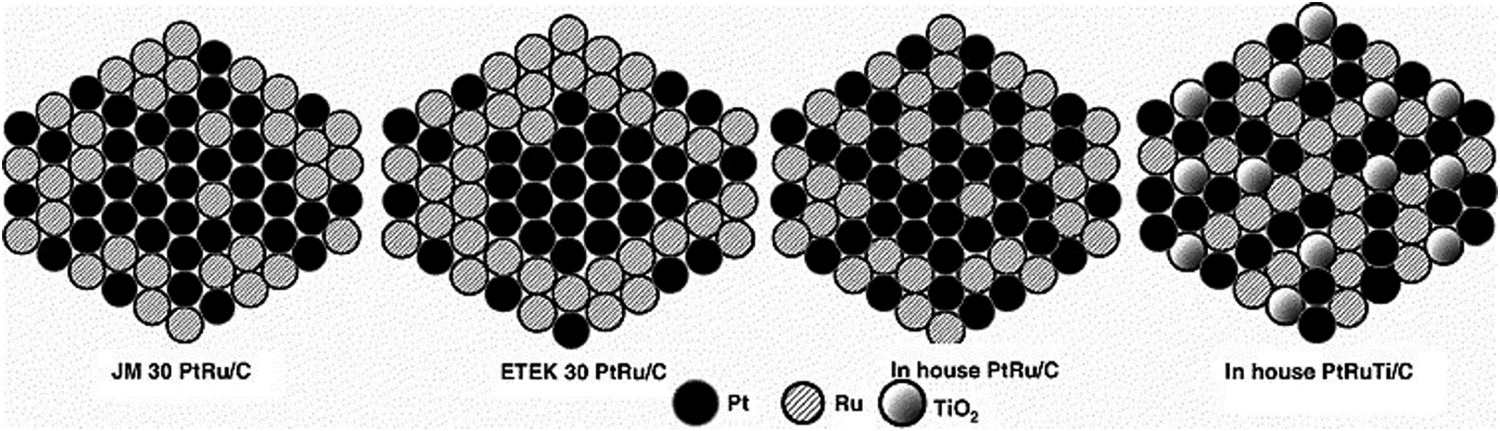
MO-based as inorganic filler in the polymer electrolyte membrane
Polymer electrolyte membrane (PEM) is the most extensively used membrane in various applications because of its simple fabrication method, inexpensive production costs, great flexibility and tunable morphology compared to ceramic membranes [143]. However, significant obstacles remain, such as high hydrophobicity, low mechanical properties, a trade-off between selectivity and permeability, and a strong fouling propensity, which limit the extensive usage of PEM [144,145]. Hence, researchers are very interested in developing membranes with excellent structural and practical properties as well as good mechanical stability for energy-efficient and cost-effective operation. One of the most often reported and potential strategies for removing or reducing the shortcomings of PEM is the introduction of inorganic nanoparticles into the polymer's matrix. A combination of PEM and inorganic materials has been proposed as a potential form of improved membranes to resolve the issues of polymeric membranes [146,147]. MO nanostructures have gotten a lot of attention lately because of their unique properties, which include a high surface area (which is enhanced by large lateral size and atomic thickness) and chemical stability. These properties have made them particularly attractive for the fabrication of PEM with inorganic materials [148].
The particle size of MO materials is crucially significant in the successful development of the membrane. The particle dimensions are a major factor, however, the distribution and the average particle size need to be measured. In recent years, there has been a lot of effort in developing particle size analysis techniques. The most recent advancements include the incorporation of nanoparticles into PEM to increase their permeability, selectivity nature, strength, and hydrophilicity properties. The potential of MO particles to increase the durability of PEM based on their perm-selectivity with varied temperatures is also revealed in research [149]. The addition of MO nanoparticles into the polymer matrix to enhance their properties such as strength, nature, selectivity, hydrophilicity, and permeability is one of the most recent advancements. However, MO sometimes can reduce the permeability of polysulfone membrane owing to the high loading of TiO2 nanoparticles (i.e. more than 2 wt-%) [150]. Furthermore, the imbalance between selectivity and permeability of the membrane and the increment of pore size is caused by the disproportion of MO nanoparticles.
Other than that, the researchers are also interested in the approach to MO dispersion into polymers by controlling the dispersion and agglomeration properties of new material in the preparation process. For nanoparticles smaller than 100 nm, the surface interaction between ions causes a variety of problems. The surface interaction among particles obeys six major mechanisms such as bridge force, hydration forces, electric double-layer overlap, depletion, adsorbed polymer steric interaction, and Van der Waals interaction [151]. Surface interaction occurs when nanoparticles in polymeric solution fulfil the required conditions. The surface interaction concept is well acknowledged now, but the factors that promote its aggregation are unknown. As a result, distributing the MO nanoparticles during membrane preparation is a challenging process. Yu et al. [152] and Gillbert et al. [153] have suggested that the aggregation can be improved by increasing the ionic strength and pH, or by varying the concentration of MO nanoparticles in the polymer mixture, respectively. Preparation of a casting solution by dissolving MO nanoparticles and polymers in the solvent is the most widely used procedure for embedding MO particles into polymeric membranes. Thereafter, dispersant is applied depending on the dispersion degree needed for solution casting. Figure 8 illustrates the technique of incorporating MO nanoparticles on these polymer membranes.
Embedding of MO nanoparticles on polymeric membranes [154].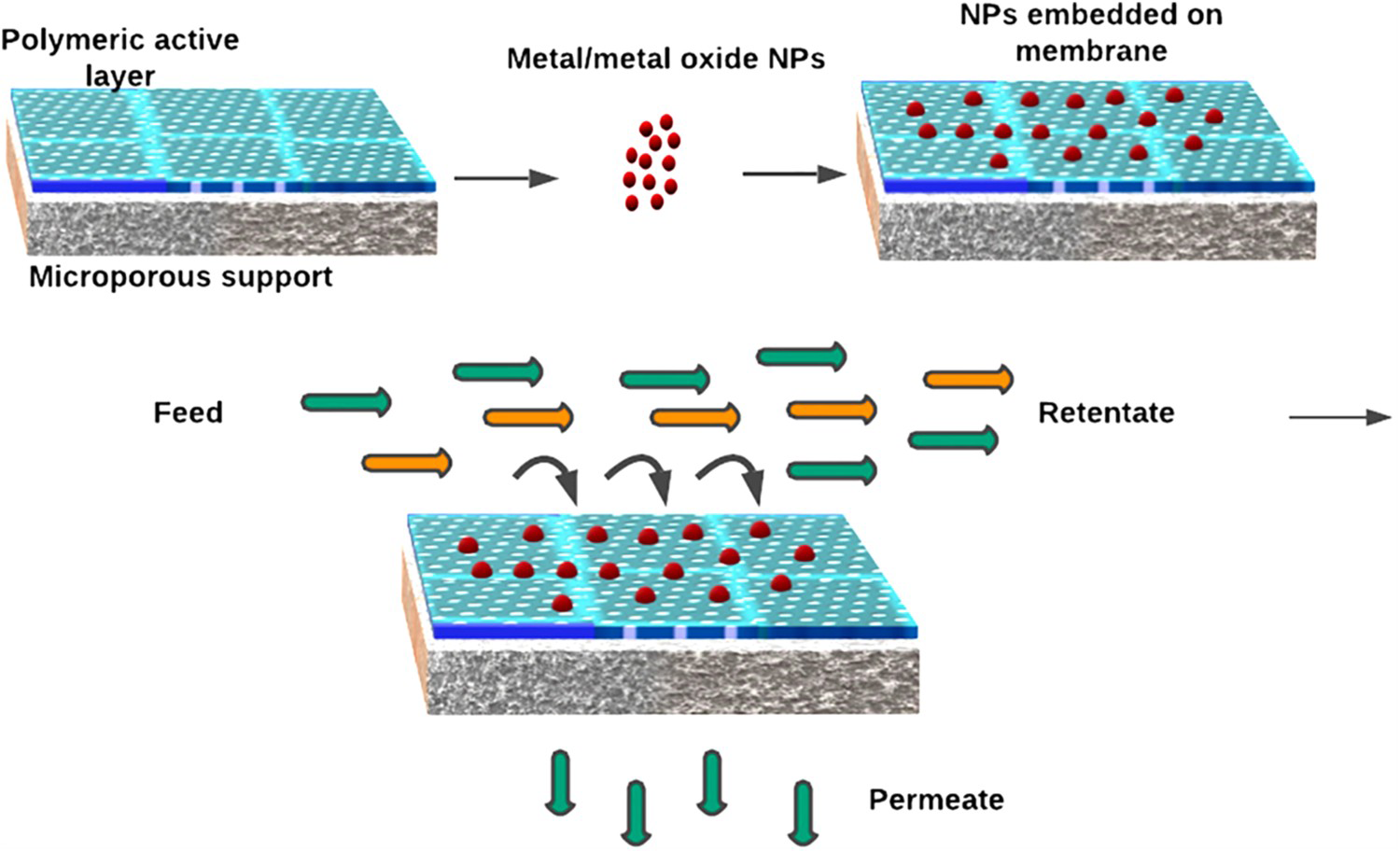
MO nanoparticles with 10–10,000 atoms or molecules typically have a length of a few tens of nanometres. TiO2 [155,156], SiO2 [157], ZrO2 [158], Fe3O4 [159], and Al2O3 are some of the MO nanoparticles that have been introduced to the polymer membranes. Each of these membranes may be paired with polymer materials available to produce membranes with unique features as a consequence of the synergic impact between the MO nanoparticles and polymeric material. The following sub-topic will cover some of the specific MO nanoparticle features that were introduced into the polymer matrix.
MO/polymer-based composite membranes
TiO2-based composite membranes
Owing to its outstanding stability, inexpensive, excellent photocatalytic activity, and non-toxicity, TiO2 nanoparticles have been the subject of various research. Polyvinylidene fluoride (PVDF) is a prominent polymer for fabricating membranes but this polymer is easily contaminated by proteins and other contaminants, resulting in a significant decline in membrane fluxes [160]. Various synthesis methods can be used to enhance hydrophilicity properties, however, this will damage the PVDF molecule's main chain and reduce the PVDF membrane's benefits. The incorporation of TiO2 material in the PVDF membrane not only enhances the hydrophilicity properties but also inhibits biofouling in membrane bioreactor systems and PVDF membranes [161]. Aside from that, PVDF/TiO2 has the potential to considerably enhance the rate of decomposition of isoproturon, a phenyl urea herbicide [162].
In the other study, PVDF/TiO2 ultrafiltration membranes were fabricated via the technique of phase inversion and evaluated by blood serum albumin (BSA) retention and pure water flux effectiveness [163]. The major goal of this research was to examine and compare the influence of TiO2 diameters on the PVDF structure and performance using a variety of methods. Smaller-sized TiO2 nanoparticles provide improved antifouling properties in the PVDF composite membrane. Besides, the PVDF/TiO2 membrane with a smaller nanoparticle diameter has a smaller mean pore size, decreased surface roughness, and more apertures inside the membrane, according to SEM and AFM measurements. The PVDF/TiO2 membrane with smaller nanoparticles exhibited lower mean pore sizes, reduced surface roughness, and more pores inside the membrane, as revealed by AFM studies (Figure 9(a)). Figure 9(b) displayed the XRD graphs of PVDF/TiO2 membrane, PVDF membrane, and TiO2 nanoparticles with different granular diameters. Based on XRD characterisation, smaller TiO2 nanoparticles demonstrated a greater influence on the crystallisation of PVDF.
(a) Three-dimensional AFM surface images of the PVDF and PVDF/TiO2 membranes and (b) XRD spectrum for PVDF/TiO2 with different TiO2 diameters [163].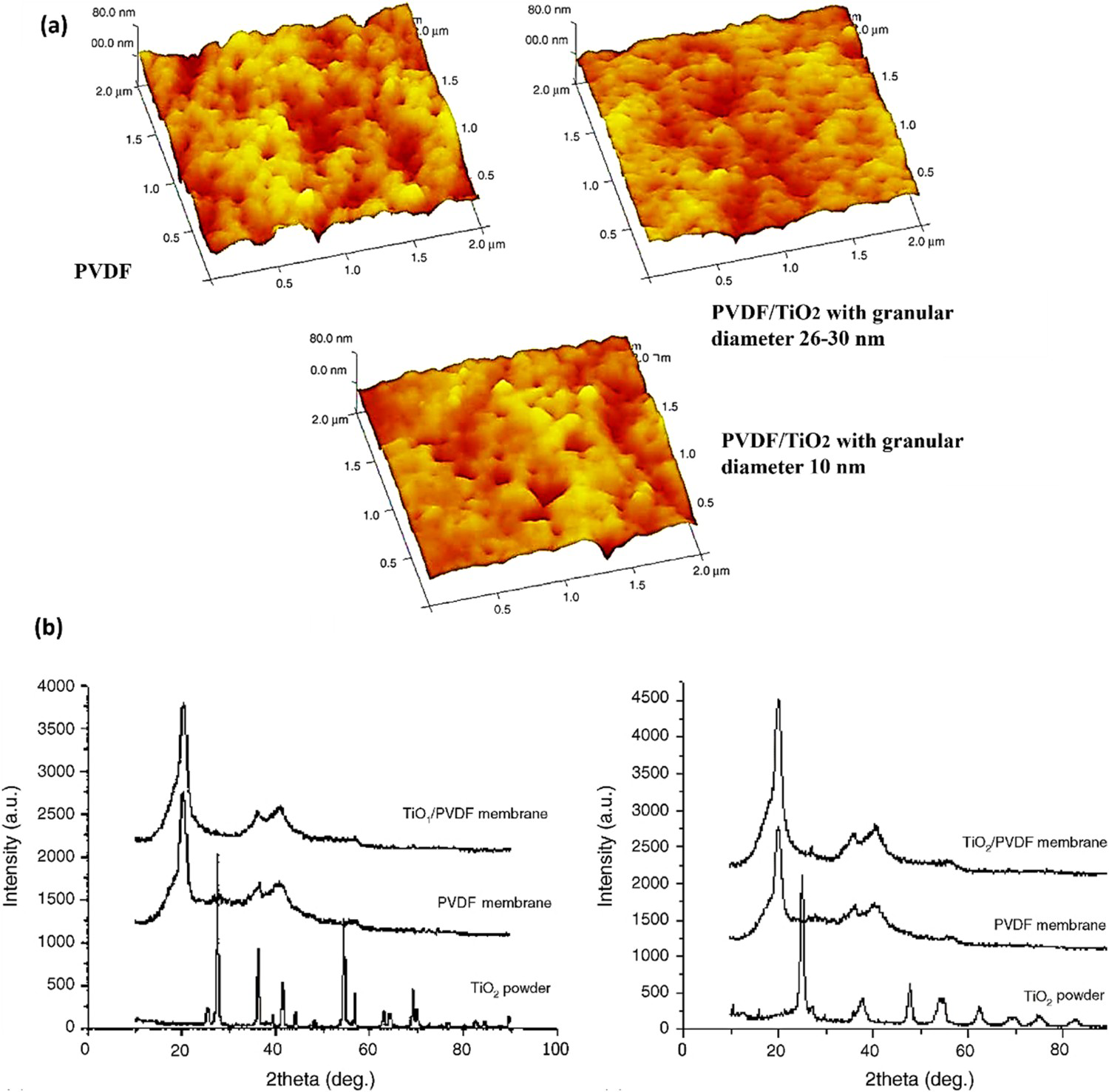
In the other study, Hasegawa et al. [164] investigated the dispersion of TiO2 into Nafion polymer membrane through liquid phase deposition (LPD) and this method had been carried out through titanium-fluoro complex reaction in an aqueous solution. The findings revealed that the dispersion of TiO2 increases the hydrophilicity and hygroscopic properties of PEM in PEFC applications operated at high temperatures. The TiO2 nanoparticles deposited on the Nafion membrane ranged from 0.07 to 0.18 wt-% for LPD reaction times varying from 3 to 9 h. Figure 10(a) shows the impedance plots for Nafion and Nafion/TiO2 membranes. It can be seen from the figure that Nafion/TiO2 displayed better conductivity than Nafion 117. This enhancement in conductivity is caused by nanoparticles that are constrained in a cluster of Nafion at the surface. These nanoparticles also participate in water retention since the majority of TiO2 is present as nanoparticles. The incorporation of TiO2 has no effect on the Nafion's ion-exchange capacity but improved water retention capacity of this composite membrane from 63% to 83%. The results proved that the incorporation of a small amount of TiO2 enhanced water uptake and also increase the membrane performance.
(a) Nyquist plots for Nafion 117 and Nafion/TiO2 at different temperatures and (b) SEM images of the Nafion/TiO2 prepared by different solvents [165].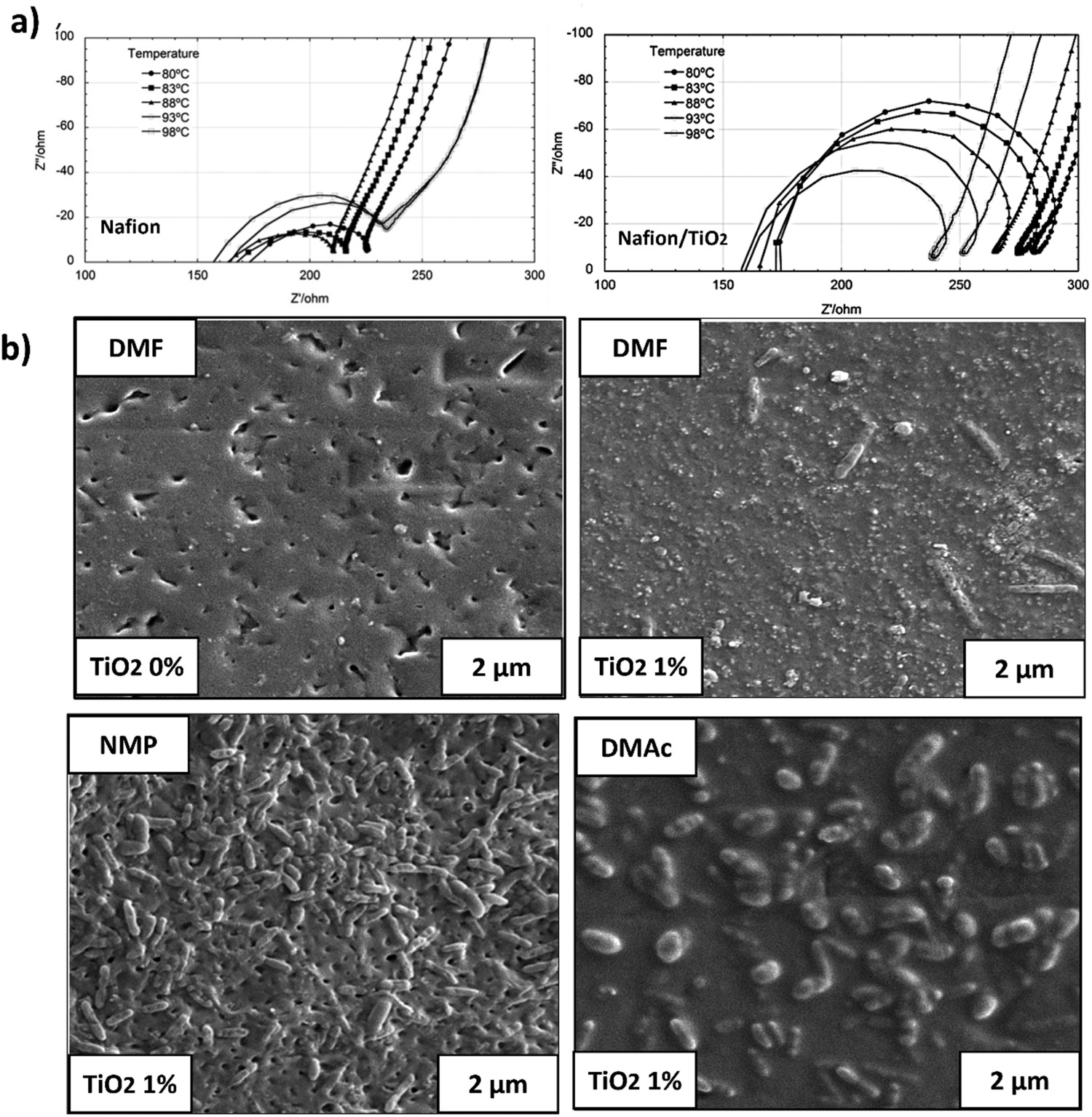
The fabrication of Nafion membrane with TiO2 as inorganic filler had been studied by Mousavi et al. [165]. A simple solution casting method was used to fabricate Nafion/TiO2 composite membrane. It was made with different solvents such as dimethylformamide (DMF), dimethylacetamide (DMAc), and N-methyl-2-pyrrolidone (NMP) for microbial fuel cell. The morphologies of these Nafion/TiO2 composite membranes were characterised using SEM microscopy. SEM images of Nafion composite membranes in Figure 10(b) displayed homogeneous morphology with 1 wt-% TiO2 particles. The lower gap between the solubility characteristics of the polymer material and solvent, suggests a greater interaction between the solvent used and the polymer. The interaction between Nafion polymer and DMF solvent can give an impactful role in micro phase-separated structures, owing to the existence of strong hydrogen bonding. This makes the polymer-solvent interaction stronger compared to the interaction between Nafion polymer and NMP solvent. When DMF solvent is used to make a Nafion/TiO2 composite membrane, it has the highest porosity, the best morphology, and the highest membrane conductivity. After testing the membranes in an MFC system, it was determined that Nafion/TiO2 produced in DMF solvent offered the maximum power density. This can be concluded that filler like TiO2 can influence membrane activity either by physical or chemical interaction.
Jang et al. [166] prepared Nafion/TiO2 composite membrane with prism-patterned structure for the PEMFC application at elevated temperature and low relative humidity conditions. This composite membrane was created by dispersing evenly formed TiO2 layers over a Nafion membrane and then imprinting it using a micro-sized prism mould. The use of a spin-coating method to produce the TiO2 layers resulted in well-distributed TiO2 layers with no aggregation issues. Other than that, more proton routes are also enabled by the extra prism patterning process. This process is done by deeply embedding the pre-inserted TiO2 particles in the Nafion polymer matrix and this technique could improve the interfacial surface area between the composite membrane and catalyst layer, and also increase the distance between TiO2 nanoparticles. This prism-patterned Nafion/TiO2 outperformed Nafion 211 polymer membrane under low humidity and high temperature circumstances owing to the hygroscopic properties of TiO2 and also the prism patterning effect.
Other than Nafion, polymer membranes such as polybenzimidazole (PBI), polyvinyl alcohol (PVA), and polyaniline (PANI) also used to be incorporated with TiO2 particles to increase PEM performance. Aparico et al. [167] developed a solution-casting approach to fabricate PVA/TiO2 composite membranes with glutaraldehyde solution (GA) as a linking agent to improve the physical, thermal, and chemical properties of the membranes. The degree of cross-linking in this study was varied by changing the reaction time. The results showed that by increasing cross-linking reaction time (h), the value of proton conductivity increases by several magnitude orders, achieving a maximum of 0.016 S cm−1 at 130 °C for a PVA/TiO2 composition of 1:12% that was cross-linked with GA for 42 h and subsequently immersed in a 32 wt-% KOH solution for another 24 h. Nano TiO2 doped with PVDF and phosphonated PVA (PPVA) was studied by Yagizatli et al. [168] to enhance fuel cell properties. The TiO2 was incorporated at varying wt-% (2, 5, 8, 10, and 15%) to increase the performance of membrane and the result demonstrated that the PPVA/PVDF membrane with 8 wt-% nano-TiO2 had an outstanding outcome, with a current density of 382.7 mA cm−2 and a power density of 225.4 mW cm−2 at 0.6 V cell potential. The performance of the synthesised membranes that are similar to Nafion 117 shows that these composite membranes are potential for PEMFC. The presence of TiO2 material enhanced the hydrophilicity and mechanical stability of the composite membrane, therefore researchers concluded that TiO2 inorganic material is a promising material to enhance fuel cell properties.
SiO2-based composite membranes
Other than TiO2 nanoparticles, silicon dioxide (SiO2) has been extensively studied and found to be appropriate owing to its properties such as being thermally and chemically stable, large surface area, being relatively environmentally inert, and being highly suspendable in aqueous solution [169]. SiO2 is a group IV MO and has excellent electrical insulation, abrasion resistance and good thermal stability. The SiO2 surface enhances the dispersion of nanoparticles in aqueous solutions, making it extremely miscible because of its electrostatic stability. Polysulfone (PSF) membranes are now widely used in a variety of fields because of their resistance to chlorine and oxidation and superior physicochemical stability. Despite that, they have a weaker ability of anti-fouling because of high hydrophobicity properties and low surface energy. One of the most frequent approaches for improving their hydrophilic properties is to dope the inorganic oxide into the polymer to generate organic–inorganic composite membranes, which is a combination of organic and inorganic components. This technique has been extensively explored because of its simple process technology and working process.
Some studies have focused on non-stoichiometric nano-SiO2 doped with Ce that was synthesised first and subsequently mixed with PSF to produce new and unique composite membranes [170]. Nevertheless, it is worth noting that the SiO2 composition in the PSF membrane does not vary for various compositions in this experiment. The SiO2 composition was purposely kept constant at 10 wt-% to discriminate between none addition of SiO2 nanoparticles on PSF membranes, the impacts of modified SiO2 nanoparticles, and unmodified SiO2 nanoparticles. The presence of nanoparticles can improve the permeability, mechanical stability, and other properties of the membrane. Unfortunately, a higher nanoparticles weight percentage in membranes may degrade membrane performance and lead to losses. Tensile strength is increased to some extent when inorganic oxide nanoparticles are added. The rationale given was that the intermolecular forces between inorganic oxide nanoparticles and polymeric chains dispersed evenly in PSF limit the free motion of polymeric chains, and increase the membrane's tensile strength consecutively. The tensile strength of the membrane is increased as a result of the inorganic oxide nanoparticles being placed in an interlocking polymer chain [171]. Furthermore, the incorporation of inorganic oxide nanoparticles can improve the hydrophilic property of the membrane. This is because inorganic oxide nanoparticles have hydrophilic hydroxide radicals on their surface. Based on porosity analysis, there is improvement in porosity by incorporating inorganic oxide nanoparticles. The addition of inorganic oxide nanoparticles decreases the PSF crystallinity and raises the amorphous portion, resulting an increment in membrane porosity. Finally, it can be stated that the PSF membrane with modified nano-SiO2 is not only tensile force tolerant but also fouling resistant and practical as well as desirable in treating wastewater containing oil.
Apart from the addition of SiO2 nanoparticles to PSF membranes, various polymeric membranes have been studied, and some of them have shown an improvement with the addition of SiO2 nanoparticles. Poly(vinyl alcohol) (PVA) is another common polymeric membrane that has been modified by SiO2 nanoparticles. As widely known, PVA is a semi-crystalline glassy polymer that is employed in technological and scientific applications. Unfortunately, the PVA membrane also has disadvantages such as its hydrophilic nature in water systems that cause the mechanical and chemical features to become unstable, restricting its application in aqueous conditions [172]. Numerous studies have investigated the implementation process of blending, grafting, or cross-linking into PVA membranes to improve mechanical properties and membrane stability. The introduction of inorganic filler materials into polymer membranes is another way to enhance mentioned properties. Inorganic fillers in PVA composites have been found to sustain higher water concentrations, improve membrane thermal stability, and enhance pervaporation selectivity. Some research showed that polymeric inorganic filler composites in gas separation applications demonstrated high permeability and enhanced selectivity.
The methanol crossover problem is one of the most challenging concerns for DMFC. Nafion/Palladium-silica nanofibre (N/Pd-SiO2) composite membranes with varied fibre loadings were fabricated using a solution casting process to solve this problem without affecting membrane conductivity [173]. The palladium nanofibres with SiO2 support were made using a simple electrospinning approach and have diameters between 100 and 200 nm. All composite membranes outperformed Nafion 117 in terms of water absorption and ion exchange and were shown to be thermally stable for use as PEM. The composite membranes with 3 wt-% of fibre content had optimum proton conductivity of 0.1292 S cm−1 and decreased methanol permeability of 8.36 × 107 cm2 s−1. The maximum power density of the composite membrane was found to be higher than that of commercial Nafion 117 in single-cell tests.
A novel bioinspired Nafion (Bio-Nafion) membrane composed of Nafion matrix and biofunctional SiO2 (Bio-SiO2) nanofibres was developed by Wang et al. [174]. Electrospinning process of silica sol produced from tetraethyl orthosilicate resulted in the formation of SiO2 nanofibres. Meanwhile, bio-SiO2 nanofibres were created by immobilising amino acids (lysine, serine, glycine and cysteine) on SiO2 nanofibres, which functioned as excellent proton conductors with many protons (H+) transport sites. The composite membranes were designated as Nafion-Lys, Nafion-Ser, Nafion-Gly, and Nafion-Cys, and the distinct amino acids polar groups (-NH2, -SO3H, and -OH,) that contributed to membrane characteristics were examined in detail. Owing to glycine having the lowest number of hydrophilic groups among the amino acid, it showed the lowest value of proton conductivity and water uptake while Nafion-Cys achieved the highest value of proton conductivity at 80°C. In general, the addition of Bio-SiO2 nanofibres to composite membranes increased methanol permeability, dimensional stability, and proton conductivity considerably.
Amjadi et al. [175] also studied the incorporation of SiO2 nanoparticles in Nafion 117 membrane via sol–gel reaction. The main goal of this study is to decrease the hydrogen permeation rate across the composite membrane in PEMFC application. The findings stated that Nafion/SiO2 displayed low hydrogen permeability (Figure 11(a)). Lower gas permeabilities are caused by doped particles that have been higher loaded. The decrease of void spaces in the membrane could be attributed to the lowering of H2 permeability by the addition of SiO2 particles to the Nafion membrane. In reality, mineral particles embedded in the Nafion matrix network inhibit hydrogen from penetrating by making the diffusion channel more torturous. As seen from Figure 11(b), water absorption rises as SiO2 doping level increases up to 7 wt-%. The Nafion with 7% SiO2 absorbs 36% more water compared to the pure Nafion membrane. This is owing to the presence of hydrophilic inorganic particles embedded in a Nafion matrix. Owing to the masking of hydrophilic HSO3 groups in the Nafion clusters, an increase in doping quantity reduces water absorption. Tg value in DSC measurements for composite membrane also shows an increment compared to unmodified Nafion membrane. In general, the proton conductivities of composite membranes are lower compared to unmodified Nafion membranes at room temperature. However, the modified membranes outperform the pure Nafion membrane at 110°C and low humidity. The PEMFC performance of Nafion/SiO2 at various temperatures and relative humidity levels is shown in Figure 11(c). The Nafion membrane with a SiO2 content of 5–7% absorbed more water and performed better in fuel cell application.
(a) Hydrogen permeability of Nafion/SiO2 in terms of Barrer, (b) water absorption of Nafion/SiO2 at two different temperatures and (c) PEM fuel cell performance at different temperatures and relative humidity [Note: PN is Nafion 117, NS.1 is Nafion with 2 wt-% SiO2 and NS.2 is Nafion with 5 wt-% SiO2] [175].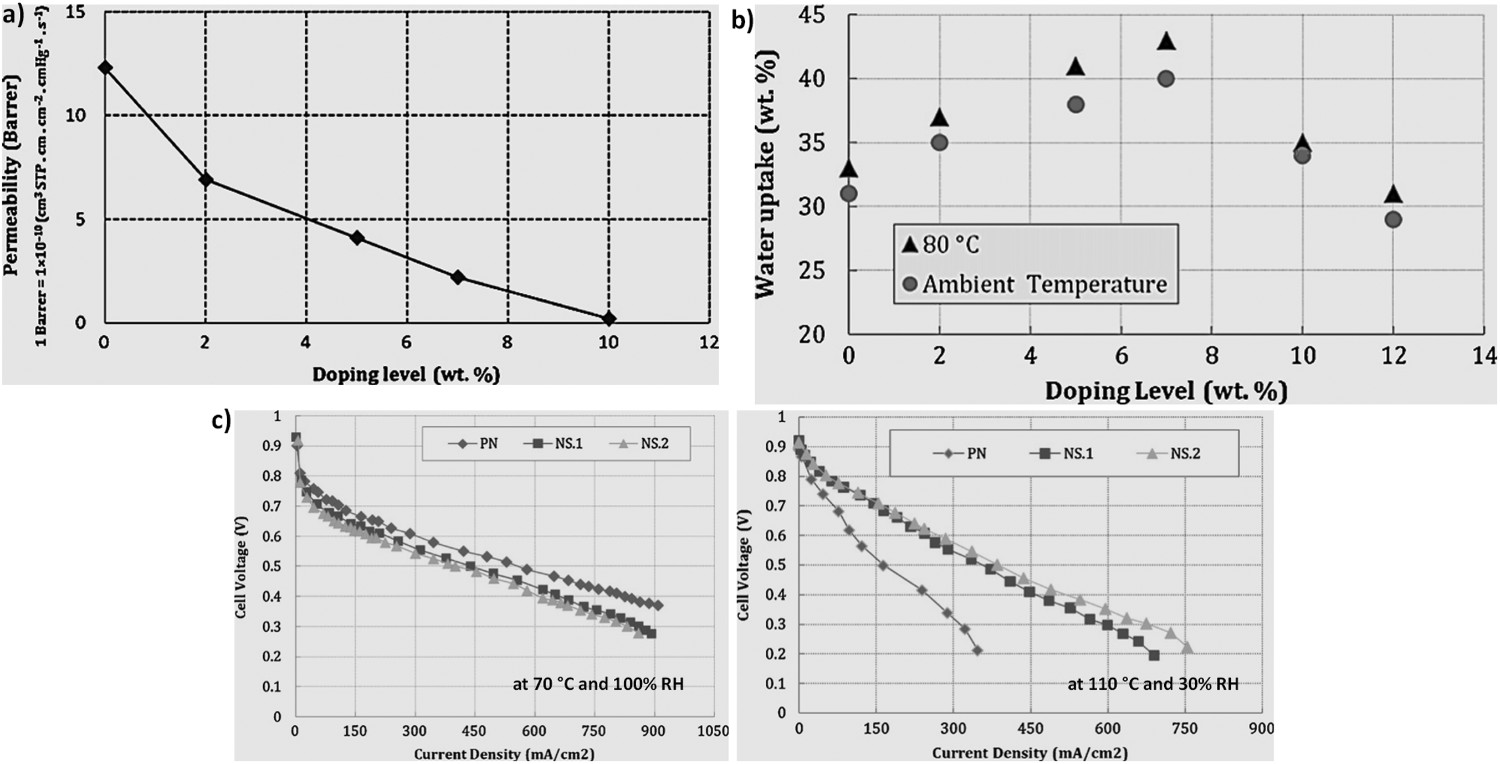
Owing to the prevalence of significant levels of CO in the reformats, strong CO tolerance or resistance is necessary for practical PEMFCs paired with onboard reformers for automotive industries. Increasing the working temperature of PEMFCs is the most effective method of improving their CO tolerance, and as a result, it is of significant technological relevance. Cheng et al. [176] investigated high-temperature polymer membrane, polybenzimidazole (PBI) doped with phosphoric acid and incorporated with SiO2 nanoparticles. These composite membranes are capable to operate at temperatures more than 200°C. The phosphoric acid in the polymer matrix is held in place by nanoclusters of PA and phosphosilicate that were formed by polarising the membrane cells at 250°C for 24 h at 0.6 V cell voltage. This allows the membrane to be more stable at higher temperatures than traditional PA/PBI membranes. The PBI/SiO2 composite membrane doped with PA has a high CO tolerance, with no performance degradation at CO concentrations as high as 11.7% at 240°C. With anhydrous circumstances, the single cell has a peak power density of 283 mW cm−2 and is stable at 240°C for 100 h under a cell voltage of 0.6 V in 6.3% CO-contained H2 fuel. Based on the results obtained by many researchers, the presence of SiO2 nanoparticles enhanced fuel cell performance, proton conductivities, and water uptake compared to unmodified polymer membranes.
ZrO2-based composite membranes
Zirconium dioxide (ZrO2), similarly recognised as zirconium oxide or zirconia, is a crystalline MO that is widely used in ceramics. Its achieved mechanical resistance, heat resistivity, and abrasive abilities. In membrane application, ZrO2 is widely used in methanol permeability in sulphonated polyetherketone to reduce water. The ZrO2 and polyetherketone combination is a promising contender for use in fuel cells with this property. The fuel cell was created as a potential energy conversion solution, and PEFC is especially appealing for mobile applications. It is a significant research field for all of the main automobile firms. Despite that, storage and delivery remain to be a challenge. This challenge can be solved via the usage of converters to create hydrogen from liquid fuels like gasoline or methanol. Assuming methanol might be fed directly to the fuel cell, which would be ideal, the reformer might be omitted, resulting in greater technical simplicity and space savings. Membranes having good low permeability properties and proton conductivity to water and methanol remain desired for the breakthrough of DMFC development. Nafion membranes have been widely utilised in fuel cells because of their excellent proton conductivity and chemical resistance, however, their methanol permeability and production costs are still too high. Various non-fluorinated membranes for fuel cells have been studied, with the potential for lower costs. Some reports describe sulphonated polyether ether ketone, sulphonated polysulfone, sulphonated polyamides and sulphonated polyphosphazane demonstrating hydrogen fuel cells have a good performance [177,178]. Nonetheless, methanol permeability is still rather high in many circumstances, and it has been shown that altering TiO2 and ZrO2 leads to a decrease in methanol and water permeability.
In another study [179], hydrolysis and tetrabutylzirconate (TBZ) condensation precursor was used to create ZrO2 nanoparticles with 6.3 ± 0.5 nm diameter via in situ method in Nafion. In this research, Nafion resin was dissolved in NMP solvent to produce Nafion solution. Then, the obtained solution undergoes solvent evaporation technique at 60°C beneath vacuum. In an inert nitrogen atmosphere at 80°C, the appropriate amount of TBZ solution in n-butanol was progressively poured into the Nafion solution under continuous stirring. After adding the required quantity of HCl solution (2 M), the mixture was continuously stirred for 1 h at 80°C and then allowed to cool to room temperature. The mixture was constantly agitated for another 8 h after adding the necessary amount of deionised water, to allow the TBZ to completely condense and yield a transparent sol containing Nafion–ZrO2 nanoparticles. The ultimate concentration of Nafion was reported to be around 2 wt-%, and the amount of ZrO2 was reported to be around 5 wt-%.
Figure 12(a) displayed a TEM image for Nafion-ZrO2 nanocomposite dispersion with 2 wt-% of Nafion content in NMP solution. A drop of the solution was directly placed on a thin carbon sheet supported by a copper grid to prepare samples for TEM measurement. The in situ produced ZrO2 nanoparticles were uniformly dispersed in Nafion with 6.3 ± 0.5 nm diameter [179]. The FTIR spectra of a Nafion–ZrO2 nanocomposite membrane are shown in Figure 12(b), which was obtained from a previous report [179]. The FTIR spectrum of the recast Nafion membrane was also plotted in the graph for comparison. The Zr-O vibrational mode has a notable peak at 1016 cm−1 in the FTIR spectrum of the Nafion-ZrO2 nanocomposite membrane, indicating the existence of ZrO2 nanoparticles. Some typical absorption peaks for ZrO2 in the FTIR spectrum are difficult to discern attributed to overlap with Nafion absorption peaks. Since all of the typical absorption peaks for Nafion were observed in the composite membrane without a shift in wavenumbers, the introduction of ZrO2 nanoparticles did not influence the structure and crystallinity of the Nafion membrane. Owing to electrostatic interactions, established Nafion molecules can self-assemble onto ZrO2 particles, preventing the initial ZrO2 nanoparticles from becoming any larger. At increased temperatures and relative humidity, the Nafion-ZrO2 nanocomposite membrane outperforms the recast Nafion in terms of water retention characterisation.
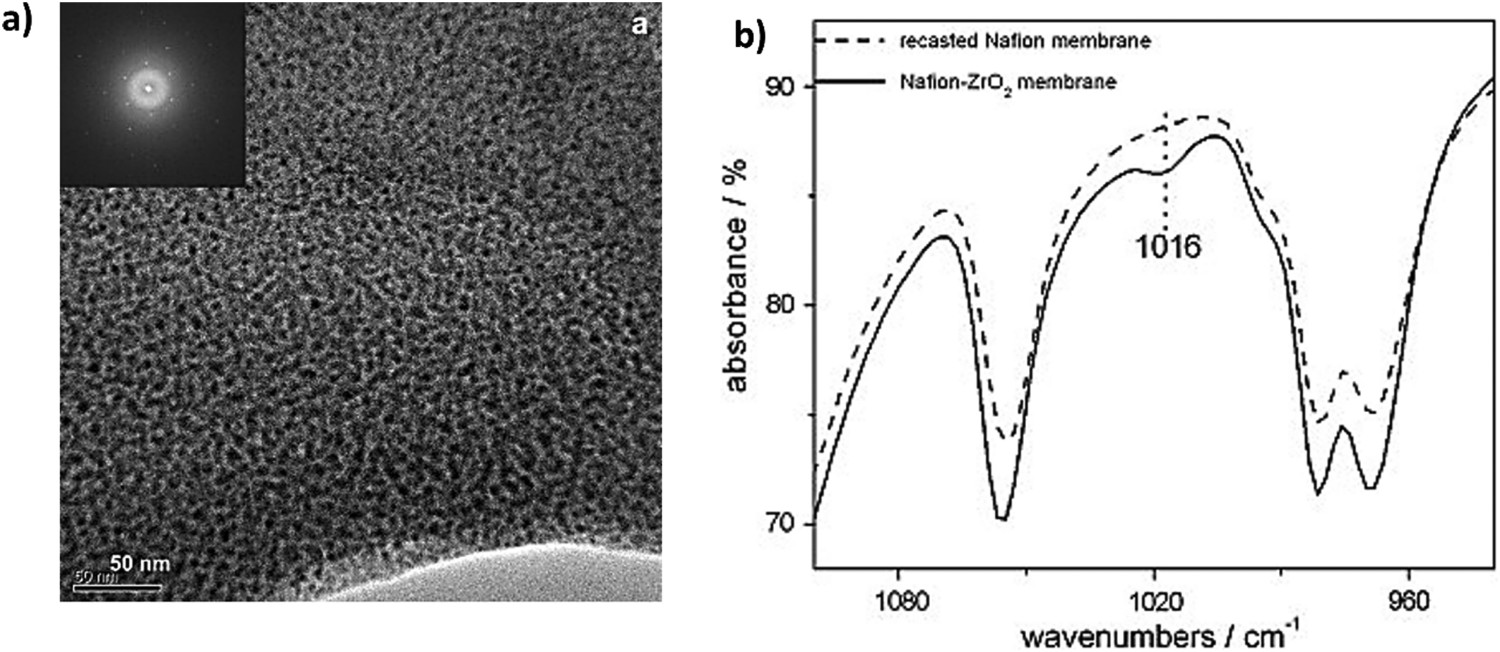
Sacca et al. [180] reported that recast the Doctor-Blade casting method was used to create Nafion with three varying percentages (5, 10, and 20 wt-%) of commercial ZrO2 as an inorganic oxide filler is needed to conduct in PEFC at temperatures about 120–130°C. Nanocomposite membranes were made by dispersing inorganic oxide components in 10 wt-% Nafion. The prepared membranes were investigated in terms of water uptake capacity, ion exchange capacity, X-ray diffraction, and thermos-gravimetric analyses. The addition of the inorganic oxide component increased the mechanical properties of the developed composite membranes. Aside from that, the membranes were tested in a 5 cm2 commercial single cell at temperatures ranging from 80°C to 130°C in humidified H2/air at 3 bar pressures, and the findings were contrasted to a recast Nafion membrane using the same process. At 130°C (85% relative humidity) and 110°C, Nafion-ZrO2 with a 10% concentration attained power densities of 387 and 604 mW cm−2 (100% relative humidity), respectively.
Mohammadi et al. [181] recast Nafion composite membrane containing ZrO2 and TiO2 nanoparticles with a 75 nm mean size diameter for PEMFC application was explored. The in situ sol–gel method was used to make Nafion/TiO2 composite membranes while tiny ZrO2 nanoparticles were manufactured. A Nafion/ZrO2 composite membrane was made by mixing the inorganic component with a 5% (w/w) Nafion-water dispersion. All nanocomposite membranes retained more water than non-modified membranes were compared to non-modified membranes. ZrO2 increased proton conductivity, but TiO2 (with a mean size of 25 nm) improved water retention. The physical structures of the membranes were then investigated using XRD SEM and AFM. The proton conductivity and water uptake for these modified nanocomposite membranes were also determined. The single-cell test in terms of I-V polarisation beneath 0.6 V and 110°C, Nafion/TiO2-ZrO2 demonstrated excellent performance, and 30% relative humidity and 1 atm. This study shows that the use of nanoparticles in the manufacture of MEA has a significant impact on the performance of fuel cells and that a more careful selection of the nanoparticle and its manufacturing process merits future investigation.
Other than Nafion, the addition of ZrO2 into other polymer membranes was also investigated. Rambabu et al. [182] show the inclusion of ZrO2 into a PSF anion exchange membrane (AEM) in a fuel cell application. In this study, innovative imidazolium functionalised polysulfone (ImPSF) membranes with ZrO2 nanoparticles were fabricated using a solution casting technique, and the adhesion and property enhancement by the introduction of ZrO2 were determined using structural, morphological, mechanical, and thermal analysis. ImPSF revealed better water absorption with intact morphology. These modified membranes also achieved 47% and 21% higher values of ionic conductivity and ion exchange capacity, respectively as compared to pure ImPSF membrane. With increasing contents of ZrO2 in the nanocomposite membrane composition, the performance of fuel cells using Pt/C catalysts improved in terms of OCP and power density. ImPSF nanocomposite membrane containing 10% ZrO2 displayed the highest OCP and power density of 1.04 V and 270 mW cm−2, respectively, which was about 35% and 39% greater than pure ImPSF membrane. Vinodh et al. [183] prepared a novel quaternised polysulfone incorporated with ZrO2 nanoparticles (QPSU/ZrO2) via a solution casting procedure. Then, the characteristic properties of QPSU/ZrO2 were studied by thermal-gravimetric analysis, electrochemical impedance spectroscopy (EIS), and XRD while the morphological properties of this membrane were observed via SEM and TEM images. Fuel cell performance was evaluated using membrane electrode assemblies (MEA) that are made up of carbon-supported platinum as electrocatalyst at the anode while platinum as cathode catalyst and hot pressed with QPSU/ZrO2 composite membrane. Based on the obtained findings, a cheap QPSU/ZrO2 nanocomposite membrane demonstrated better electrochemical performance in AMFC application. At 60 °C, the QPSU containing 10% ZrO2 achieved maximum power density of 250 mW cm−2. This finding demonstrated that QPSU/ZrO2 is a viable choice for AMFC applications.
MO/biocomposite membranes
Current studies have developed simple biopolymers as a new membrane material with a clear structure. Biopolymers have already been proven to achieve desired features including carbon neutrality, renewable production methods and sustainability since they are derived directly from natural plant creatures and can be utilised every year [184]. Biopolymers made from natural substances such as chitosan, cellulose, and alginate have been used to build polymer networks such as carriers for controlled medicine release, artificial muscle, a sensor device, and membranes with regulated permeability. The polymer must react promptly toward just any alterations in the physicochemical microstructure, internal or external to achieve excellent functional properties. The production of novel and efficient biopolymers, as well as boosting their operation and membrane processing capacity, have been the area of attention on biopolymer membrane materials and systems [184].
Chitosan (CS) can be discovered in molluscan organs, insects, fungi, and crustacean shells, and it is one of the most environmentally-friendly compounds. CS is known as a copolymer of N-acetylglucosamine and glucosamine made up of β-(1,4)-linked 2-amino-deoxy-D-glucopyranose. Furthermore, the amino and hydroxyl groups of CS could behave as electron donors. CS is often used as a biomaterial in a variety of applications counting fuel cells, the pharmaceutical industry, and wastewater treatment. CS is also available in a variety of forms, including fibre mats and spans, membranes, and films. Despite these benefits, CS also has disadvantages that limit its use such as CS is a low-strength material with poor electrical conductivity and CS is also extremely brittle because it has a high glass transition temperature [185]. Blending CS with the other polymers and incorporating inorganic fillers in the CS matrix can help to overcome CS's disadvantage, thus creating a CS-based organic–inorganic composite membrane or chemically CS modified. CS is soluble in dilute organic acids including formic, lactic, and acetic acids but insoluble in the majority of organic solvents, alkalis, and water. Owing to three distinct polar groups such as hydroxyl (OH), amine (NH2), and ether (COC), CS achieves a very higher water solubility. Ahmed et al. [186] explored the CS polymer matrix with the addition of sulphonated TiO2 for the fabrication of CS/STiO2 nanocomposite membranes in the fuel cell system. The nano-TiO2 was sulphonated with 1,3-propane sultone. The physicochemical feature of CS/STiO2 membranes was investigated in terms of liquid uptake, thermal and mechanical stability, swelling ratio, proton conductivity, and ion exchange capacity. The value of proton conductivity for CS/STiO2 nanocomposite membrane can be enhanced owing to the presence of proton-conducting groups on the nano-TiO2 surface, thus can provide continuous proton-conducting channels along with the composite membrane interface. The proton conductivity of the CS membrane with 5 wt-% STiO2 was comparable to that of the commercial Nafion 117 membrane which is 0.035 and 0.033 S cm−1, respectively. However, the mechanical and thermal properties of modified membranes showed an improvement owing to the interfacial interaction between the –NH2 group of CS and sulphonic acid (-SO3H) group of TiO2 that can inhibit the polymer chain's mobility.
The other CS-sulphonated TiO2 nanocomposite membranes were fabricated and evaluated by Humelnicu et al. [187] as promising proton exchange membranes. These membranes were cross-linked using sulphuric acid, pentasodium triphosphate, and epoxy terminated polydimethylsiloxane to exhibit excellent chemical stability. The physical, morphological, mechanical, and thermal stability of membranes were examined before and after cross-linking reactions. The conductivity of membranes is greatly influenced by the composition of the cross-linker and the membrane hydration state, as demonstrated by dielectric spectroscopy. The CS-sulphonated TiO2 membrane cross-linked with sulphuric acid offers the most promising findings. This hydrated CS-sulphonated TiO2 membrane showed proton conductivity values of 1.1 . S cm−1 and 6.2
Ruiz Gómez et al. [188] evaluated the influence of TiO2 nanoparticles on physicochemical properties and mechanical stability of polymer matrix produced from a binary mixture of CS and PVA at a ratio of 80:20. A nanocomposite membrane was prepared through solution casting procedure with the mixture of the precursors. The addition of nanoparticles had an impact on the material's moisture absorption. This can be verified by the highest concentration demonstrating largely hydrophobic characteristics, while the sample with lowest amount displayed 90% absorption values. When compared to the undoped samples, the membranes doped with a 4 M KOH solution showed two orders of magnitude increase in conductivity, achieving 10−6 S cm−1 at room temperature while their activation energy was decreased by 50%. Other than TiO2 nanoparticles, SiO2 is also used as inorganic oxide filler in the CS membrane. Vijayakumar et al. [189] prepared a series of CS with polyaniline/nano SiO2 (PAni/SiO2) as an inorganic filler and sulphuric acid as a cross-linker. Water retention and phase separation can be improved by incorporating PAni/SiO2 into the CS polymer matrix, improving proton transport, and promoting the creation of hydrophilic domains. Additionally, the doped polyaniline provides extra proton conduction pathways. Owing to its good water retention capabilities, the CS membrane with 3 wt-% of PAni/SiO2 inorganic filler possesses a high value of proton conductivity which is 8.39 . 103 S cm−1 at 80°C fully hydrated condition. The addition of PAni/SiO2 nanoparticles reduces the methanol permeability of ionic cross-linked CS-PAni/SiO2 composite membrane and this membrane achieves the best overall performance.
The researchers attempted to fabricate nanocomposite membranes out of sulphonated chitosan and PEO mixes with sulphonated silica dioxide (s-SiO2) nanoparticles and studies their thermal and mechanical stability, structural and morphological features. A few characterisation such as TGA, XRD, SEM, and FTIR analyses, as well as water contact angle, were used to characterise the electrolytes. Through the chitosan matrix, FTIR analysis showed the existence of SiO2, PEO, chitosan, and sulphonic acid groups, indicating that the components utilised were compatible. The thermal and mechanical investigations revealed that s-SiO2, sulphonated chitosan, and PEO had strong interactions. The hydrophilic property of chitosan membranes was improved by combining sulphonated chitosan with PEO and adding s-SiO2 nanoparticles. When compared to chitosan/PEO membranes with s-SiO2 nanoparticles, the s-chitosan/PEO-based nanocomposites with 7.5 wt-% s-SiO2 nanoparticles showed considerable enhancements in ultimate tensile strength values and an increase in conductivity in the order of 10−2 S cm−1 at room temperature.
Kalaiselvimary et al. [190] focused on the preparation process of sulphonated CS incorporating PEO blends and sulphonated SiO2 nanoparticles. The physical and electrochemical tests were done in this study in order to investigate the sulphonated CS/PEO-sulphonated SiO2 nanocomposite membrane performance. FTIR analysis showed the existence of CS, PEO, SiO2 and –SO3H group in CS polymer matrix, indicating that all the components were compatible while the mechanical and thermal analysis revealed that there is a strong interaction between sulphonated CS, PEO and sulphonated SiO2. The hydrophilic property of CS membranes was improved by blending with PEO and adding sulphonated SiO2 nanoparticles. The sulphonated CS/PEO with 7.5 wt-% sulphonated SiO2 displayed notable improvements in tensile strength and conductivity.
Other than CS membrane, cellulose is also one of the well-known biopolymers owing to its availability, cheaper price, biocompatibility, good hydrophilicity, variety of potential functions, and resistance to various organic solvents. The cellulose molecular structure describes these fascinating characteristics. Cellulose is a typical homopolymer of d-glucopyranose subunits with exclusively -1,4-glycosidic bonds, which results in an abundance of hydroxyl groups in the structure. Cellulose has been studied extensively as a possible proton exchange membrane in DMFC, either in its natural state, chemically modified or mixed with other polymers, same with CS membrane. Aburabie et al. [191] evaluated the development of sulphated cellulose (SC) biopolymer through controlled acid hydrolysis of microcrystalline cellulose as a promising electrolyte membrane in DMFC. The effects of glutaraldehyde (GA) concentration on methanol permeability, thermal properties, proton conductivity, and water uptake, were evaluated after the SC solution was crosslinked with GA and dried at 30°C. The FTIR test validated the crosslinking process, which showed a strong bond between the GA aldehyde groups and the cellulose primary OH groups, resulting in an enhanced hydrophobic membrane backbone. The GA crosslinked SC membrane exhibited 8.2 × 10⁻⁹ cm2 s−1 and 3.7 × 10⁻² mS cm−1, respectively for methanol crossover (3M) and proton conductivity. Crosslinked SC membranes demonstrated lower ionic conductivity than commercial Nafion but these SC membranes achieved magnitude with three orders lower than Nafion, indicating high methanol resistivity in DMFC application. The other series of novel TiO2/phosphorus-functionalised cellulose acetate (Ph-CA) were fabricated by Khalifa et al. [192] via solution casting method using different content of TiO2. The ion exchange capacity results clarified the existence of 5 wt-% TiO2 nanoparticles displayed maximum value of 1.13 and 2.01 meq g−1 at 25 and 80°C, respectively compared to 0.6 and 0.8 meq g−1 at the same temperature. The TiO2/Ph-CA nanocomposite membrane also possessed excellent thermal stability with good mechanical properties.
The last biopolymer that will be discussed in this review paper is alginate. Alginate is known as a large biopolymer found in the ocean and is made up of a variety of algae species, including green and brown algae that are reliable on the breeding ground. Owing to its natural features, alginate was historically applied as a food packaging and medical tool [184]. Alginate has been used as a fuel cell membrane in certain prior research, with better results than other biomembranes. Alginate also has a lot of potential as a fuel cell membrane, but it has significant drawbacks that need to be resolved with the addition of other additives. Excessive water uptake owing to hydrophilic characteristics, low mechanical stability, and low proton conductivity are example of drawbacks for alginate membranes. Any additives such as crosslinking agents, plastic agents, and inorganic fillers are commonly employed to restore the features of membrane polymer. For example, Zuo et al. [193] used GO inorganic filler to prepare carrageenan membrane with stronger mechanical properties while GA is applied as the crosslinking agent, which resulted in an increment in polymer conducting and mechanical properties as reported by Zhang et al. [194].
Shaari et al. [195] explored the use of aluminum oxide (Al2O3) as nanofiller in sodium alginate polymer membrane. Compared to pure sodium alginate membrane, the findings obtained with the manufactured membrane were significantly better in terms of ion exchange capacity, methanol permeability, water uptake, oxidative stability, and proton conductivity. The good interaction between the sodium alginate matrix and the Al2O3 filler results in a great performance by the composite, which also has outstanding new properties. At 60°C, sodium alginate with 15 wt-% of Al2O3 filler showed the highest value of proton conductivity which is 25.6 . 10−3 S cm−1. Determining the optimal amount of Al2O3 nanofiller has increased performance parameters such as conductivity and methanol permeability. Interestingly, the hydrophilic nature of sodium alginate is well compensated for by the presence of Al2O3, resulting in a good swelling ratio and water uptake capacity. Based on the findings, the presence of MO nanoparticles as inorganic filler in biopolymer could affect membrane activity thus leading to the higher fuel cell performance.
Membrane features affected by MO nanoparticles
Conventional membranes in fuel cells continue to expand in quantity and have garnered considerable interest because of their potential and demonstrated capabilities. However, there are still several obstacles to overcome before this composite membrane can be considered competitive and accepted at all levels. The MO materials usage has received considerable attention, particularly in the domains of nanomaterials and polymeric composite. As mentioned further in this section, some parameters and membrane performance have been enhanced with the incorporation of MO materials such as water uptake and proton conductivity.
Membrane water uptake
In membrane performance, water is a critical component because it serves as a proton conductor. However, exceeding the appropriate water content harms the membrane and its function [196,197]. Water uptake performance may be determined by examining the change in the membrane's weight (thickness) between wet and dry circumstances. The polymer membrane is immersed in deionised water for 24 h or two days at room temperature and the weight after immersing is calculated. Then, the wet membrane is dried in a vacuum oven at a certain time and temperature. The water uptake is calculated using the below equation:

Muliawati et al. [201] also stated that an effective membrane typically achieved high proton conductivity with high water uptake. This is because water intake significantly contributes to the establishment of hydrophilic characteristics in membranes that facilitate proton transport even at low humidity levels. The rate of water absorption in the polymer matrix may be improved by increasing the ionic group content(-OH and -SO3H) in the polymer chain, however excessive water absorption causes the membrane to inflate, resulting in a higher methanol permeability and loss of mechanical stability. After all, the water uptake also depends on the types of MO used as inorganic filler in the polymer chain and their properties in order to enhance fuel cell performance.
Membrane proton conductivity
Proton conductivity is the most critical performance criterion in fuel cell membrane applications, with a required value of >0.01 S cm−1 [202]. Four electrodes or two electrodes are employed to obtain proton conductivity values that connected potentiostat with a frequency set from 1 MHz to 0.1 Hz. The membrane was prepared rectangular with a dimension of 1 cm . 4 cm or in a circle shape with a diameter of 2 cm depending on the type of electrode used. After that, the membrane was soaked in deionised water overnight to keep the membrane in a hydrated state. The equation of proton conductivity for four electrodes was described by Shaari et al. [196], whereas the proton conductivity by using two electrodes was explored by Yusoff et al. [147]. Protons’ poor conductivity poses a significant obstacle to today's fuel cell membranes, except for the commercial Nafion membrane. One option to boost proton conductivity is to increase the ion exchange capacity by synthetic methods; nevertheless, this strategy reduces the membrane's mechanical stability. The addition of MO materials as inorganic filler is expected to significantly increase the conductivity of protons.
Zeng et al. [203] found that the addition of SiO2 with different content displayed better performance compared with pure Nafion. They studied the proton conductivity value on pure and annealed Nafion with different content of SiO2 (3, 5, 10 and 15 wt-%) at room temperature and anneal completed over a temperature range of 240–300°C. The results indicate that lower SiO2 materials (<5 wt-%) slightly affected the membrane performance compared to pristine Nafion. Unfortunately, excessive SiO2 nanoparticle addition (>10 wt-%) drastically lowered the proton conductivity values. Therefore, they only focused on Nafion with 5 wt-% SiO2 nanoparticles. The temperature has a considerable effect on proton conductivity in composite Nafion/SiO2 membranes (as seen in Figure 13(a)). The proton conductivity evaluated for pure Nafion, Nafion-5 wt-% SiO2@240°C, Nafion-5 wt-% SiO2@270°C and Nafion-5 wt-% SiO2@300°C were 0.12, 0.11, 0.13 and 0.12 S cm−1, respectively. The values indicated that high-temperature annealing had a significant effect on the proton conductivity of the composite membranes, particularly at 270°C.
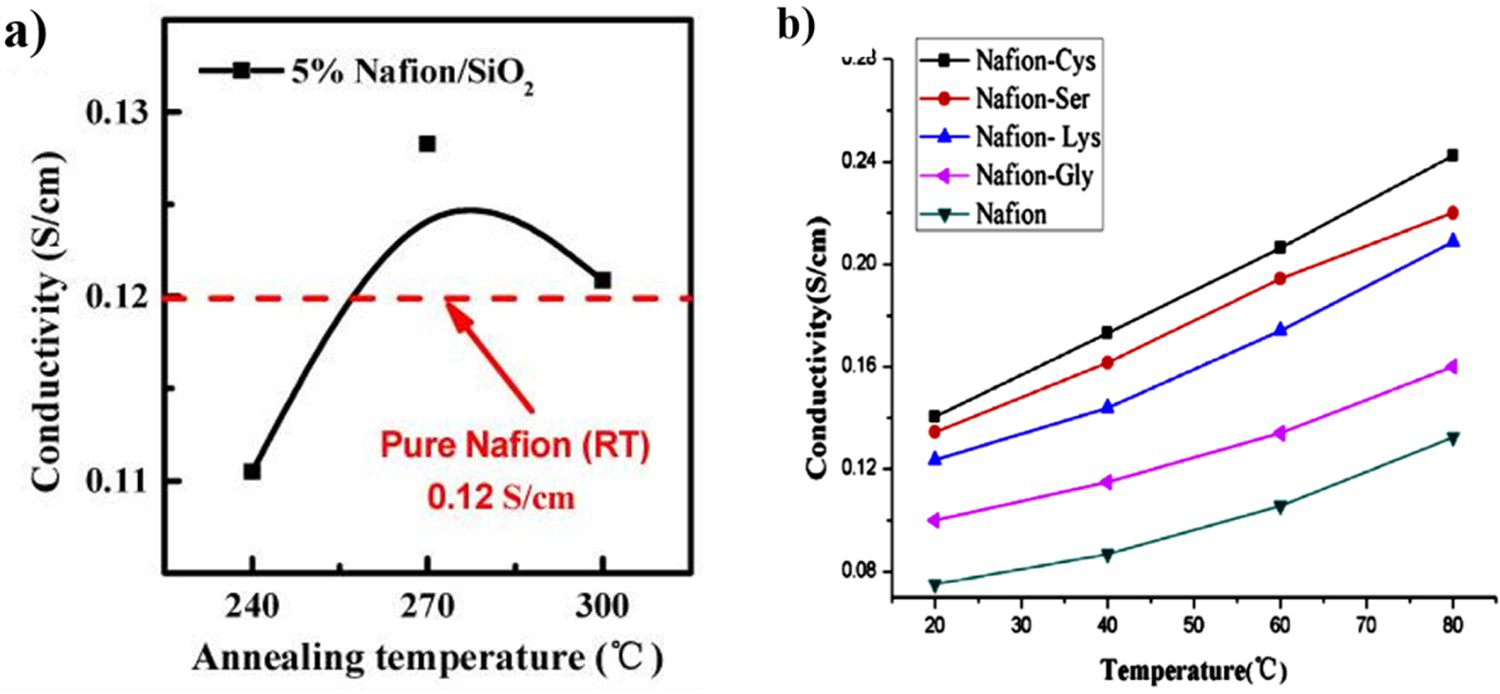
The other study was conducted by Wang et al. [174] for the modification of Nafion with biofunctional SiO2 materials. Bio-SiO2 nanofibres were created by immobilising amino acids on SiO2 nanofibres, which functioned as excellent proton conductors with multiple H+ transport sites. Figure 13(b) demonstrated the proton conductivity for Nafion and bio-SiO2 at the temperature range from 20 to 80°C. Notably, the pristine commercial Nafion membrane has proton conductivities of 0.075, 0.087, 0.106, and 0.132 S cm−1 at temperatures of 20, 40, 60, and 80°C, respectively. All Nafion with bio-SiO2 achieved higher proton conductivity values than pristine Nafion membrane. Bio-SiO2 addition may provide acid–base pairs into PEMs as proton donors and acceptors, resulting in the creation of nanofibre proton channels with regularly spaced amino acids. Thus, this design facilitates proton hopping and increases proton conductivity. Proton conductivity values for all composite membranes are as follows: Nafion-Cysteine > Nafion-Serine > Nafion-Lysine > Nafion-Glycine, with Nafion-Cysyeine having the greatest value of 0.2424 S cm−1 at 80°C. Thus, conductivity is largely reliant on the number of proton acceptors and donors in amino acids, as well as the ability of these amino acids to bind to and dissociate from H + .
Existing issues and future perspective
Researchers have previously become interested in materials made of MOs, while the industry has noticed that many applications have used these materials as being one of the components in fuel applications. In order to lower the cost of metal oxides-based materials and enable applications other than purely academic research, it is necessary to develop materials and production processes simultaneously. The development of new metal oxides-based material types should also be application-driven, and the target product's properties and constraints should be understood [204]. Figure 14 illustrates the development path for a fuel cell application.
MO development for fuel cell application.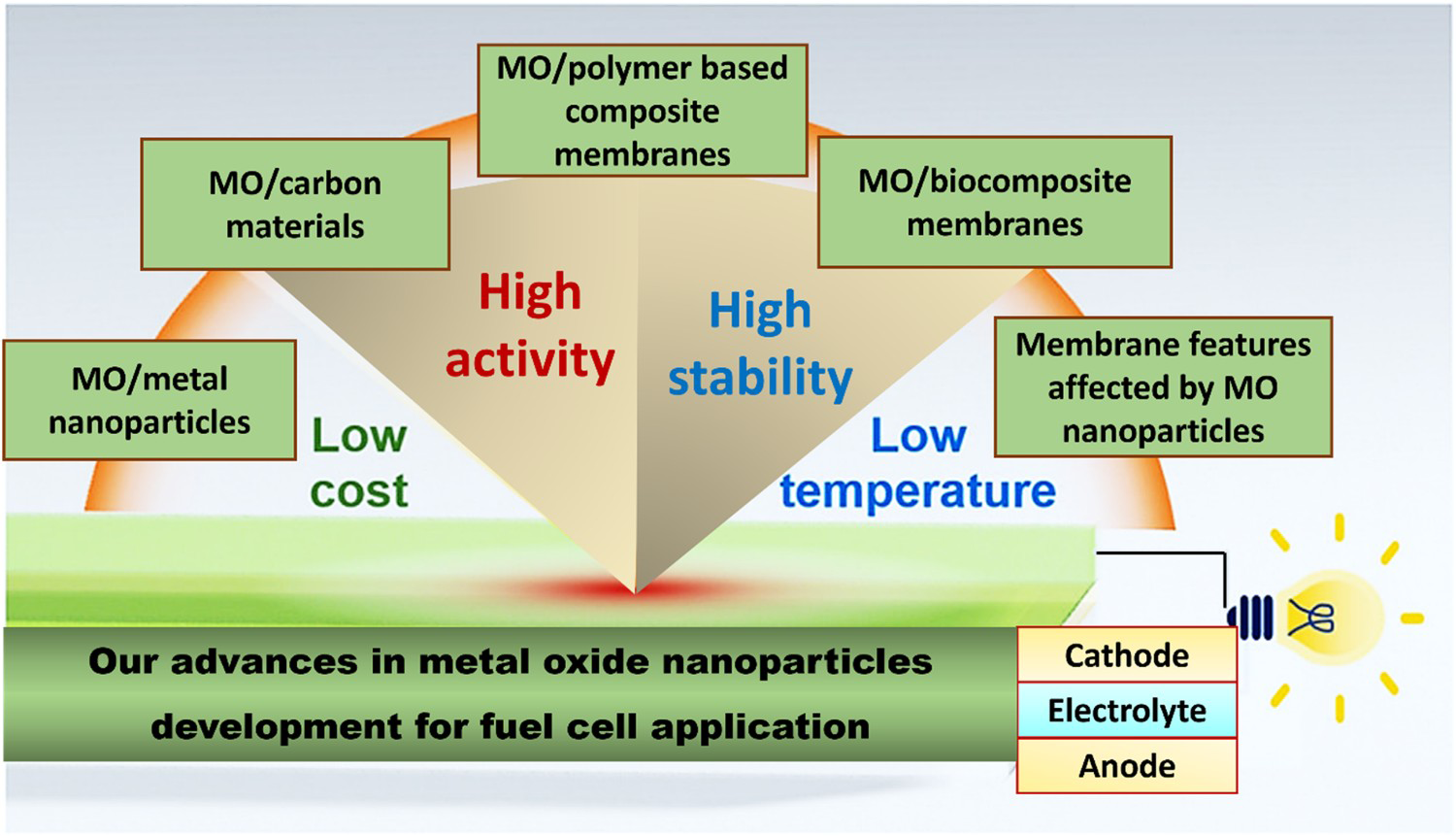
Although MO nanoparticles give beneficial for the manufacture of nanomaterials on an industrial scale, many concerns or challenges still need to be faced. One of the major concerns for MO nanoparticles used as an electrocatalyst, co-catalyst and support is some MO have high electronic conductivity and stability while most MO nanoparticles remain low specific surface area, low electronic conductivity, and poor stability. Some potential future work of MO nanoparticles as a support in electrocatalysts can be as follows:
Dope MO nanoparticles with different metal ions to increase electrical conductivity and lower the band gap Producing hierarchical nanostructures with three-dimensional shapes to achieve higher specific surface area Modifying MO nanoparticles to create the interaction and hence improve the chemical and electrochemical stability.
The other main concerns of employing MO nanoparticles in polymer or biopolymer membranes on a wide industrial scale are the agglomeration of MO nanoparticles when dissolved in the polymer solution, the potential of incompatibility between polymer and MO nanoparticles as well as nanoparticles leakage. These are some of the technical obstacles to using these membranes, although they are not the only ones. Many industries are still employing obsolete technology like composite membranes and have not upgraded, resulting in less effective operations and increased environmental harm. Despite the challenges of implementing newer technologies, the future seems to be potential for the progress that has been achieved in the industry. Membrane modification to reduce agglomeration characteristics is being researched intensively and MO nanoparticles must be dispersed carefully in the polymer solution to avoid breaking into smaller fragments when subjected to excessive shear forces, especially for very small MO with a diameter of a subnanometer.
Conclusion
This review highlighted the significant development of MO nanoparticles as the most diverse research materials and a wide variety of applications in the present era. Their notable properties have provided an ever-growing base of information for a variety of applications, especially fuel cell technology. This review emphasises the structure and features of MO nanoparticles, properties requirement, preparation technique of MO as well as the application of MO as electrocatalysts in fuel cell systems and also as inorganic oxide filler in polymer electrolyte membranes. A few examples of MO nanoparticle preparation methods have been highlighted in this present review such as co-precipitation, sol–gel, hydrothermal, deposition, soak-deoxidise-air oxidation, and impregnation and reduction methods.
As discussed, there are wide varieties of MO nanoparticles as electrocatalysts or co-catalyst or as support in fuel cell systems. MO nanoparticles must exhibit unique properties such as excellent stability in acidic fuel cell or alkaline fuel cell, high resistance towards electrochemical corrosion, and should achieve good proton conductivity properties and high specific surface area. MO nanoparticles as electrocatalysts in this review divide into two parts such as MO/metal nanoparticles that focused on the existence of TiO2, WOx, SnO, and MoOx while the other part is focused on MO/carbon material that discussed the presence of MO nanoparticles in carbon black, graphene, and carbon nanotube. Their unique features, increased ductility at elevated temperatures, good catalytic, and the sensitive and selective activity of MO make them valuable materials in modern nanotechnology.
The application of MO nanoparticles for the modification of polymer and biopolymer membranes was discussed in a separate section. The crucial effects of MO as inorganic filler in the polymer or biopolymer membranes with optimal content can be summarised as hydrophilicity properties improvement, enhancement in proton conductivity as well as methanol permeability, and increment in overall membrane performance. These benefits suggest a bright future for membranes comprising MO nanoparticles in a variety of applications ranging from fuel cells to other applications.
Footnotes
Disclosure statement
No potential conflict of interest was reported by the author(s).
Funding
The authors would like to express their gratitude to Universiti Kebangsaan Malaysia (UKM) and the Ministry of Higher Education for providing financial assistance through a Fundamental Research [Grant Scheme FRGS/1/2021/STG05/UKM/02/10].
Declaration of interest statement
The authors whose names are listed immediately below certify that they have NO affiliations with or involvement in any organization or entity with any financial interest (such as honoraria; educational grants; participation in speakers’ bureaus; membership, employment, consultancies, stock ownership, or other equity interest; and expert testimony or patent-licensing arrangements), or non-financial interest (such as personal or professional relationships, affiliations, knowledge or beliefs) in the subject matter or materials discussed in this manuscript. Author names: Yusra Nadzirah Yusoff, Norazuwana Shaari, Siti Hasanah Osman.