







Abstract
The iron ore sinter is still the main raw material for the blast furnace ironmaking process, its properties, such as strength and reducibility, are of vital importance to the productivity and the smooth operation of the blast furnace. In the present study, one model based on an artificial neural network (ANN) was established to predict the sinter strength. The ANN model was trained with the sample set, which was generated from the credible data from the published papers. The comparison between the direct prediction model and the indirect prediction model with the amount of liquid phase and spinal phase calculated with thermodynamic theory as the middle layer was carried out. The results show that the indirect ANN model gave much higher accurate prediction results than that of the direct one without the middle layer.The parametric study with the validated model shows that the sinter strength increased first with increasing the SiO2 to 5.4% and then decreased with further increasing the SiO2.
Introduction
The grade of iron ore is continuously decreasing with the fast-developing steel industry world widely in the recent 20 years. Some iron-bearing resources with high harmful elements and low grade are used in the ironmaking process, resulting in the frequent fluctuation of the properties of the sinter, which become an important reason for the abnormality of the blast furnace [1,2]. The laboratory-scale experiment with the sintering pot can offer useful information on the sinter properties and avoid the failure of industrial production, but it is a method with low efficiency and high energy and time consumption. It is highly recommended to develop an effective and accurate prediction model of the iron ore sinter properties with huge industrial or experimental data.
The literature review shows that many attempts made to model the iron ore sinter properties, which can be generally classified into two category models, the mechanism model [3,4] and the statistical model [5,6]. The development of mechanical models is generally based on the physical and chemical behaviour of the sintering process, while the development of statistical models mostly relies on the artificial neural network (ANN). The sintering process is a typical complex dynamic system with multiple variables, the nonlinearity and apparent time delay are the main futures [7]. While the ability of the nonlinear prediction for the ANN model is excellent and is widely used in complex industrial application [8,9].
In the present work, the ANN model was used to model the properties of the iron ore sinter through being trained by a credible sample set, and the direct prediction model and the indirect prediction model using liquid phase and spinel content during the sintering as intermediate variables were compared. The results obtained from the actual prediction demonstrated that the two-layer indirect prediction model was with a higher prediction accuracy. Finally, the two-layer model was used to study the influence of the main chemical composition on the strength of the sinter.
A prediction model based on ANN for iron ore sinter strength
Direct prediction model with one layer
Samples set
The previous trial on the prediction model with the industrial data shows that the variables of the raw materials and operation parameters were hardly related to the sinter properties. The present study collected and selected reliable data from the published papers to establish a credible sample set of sintering properties. The operation parameters for the sintering process, the raw material composition, and the strength and yield of the sinter were all obtained from the pieces of literature.
The main literature that offers the samples used in the present study is shown in Table 1. In addition, the sample set was also built with some other references [10–28]. The correlation analysis of the sample set is shown in Figure 1, which revealed that there was a strong correlation between tumbler index (TI) and CaO content and ignition temperature (IT), an increase of CaO content or ignition temperature could increase the sinter drum strength when other experimental conditions were fixed. The correlation between TI and fuel ratio (FR) was the middle one. Besides, the correlation between other input characteristics and drum strength was not obvious, but other correlations might also exist. Heat map of the correlation coefficients of the sample set. Part of the literature used in the present research to mine data.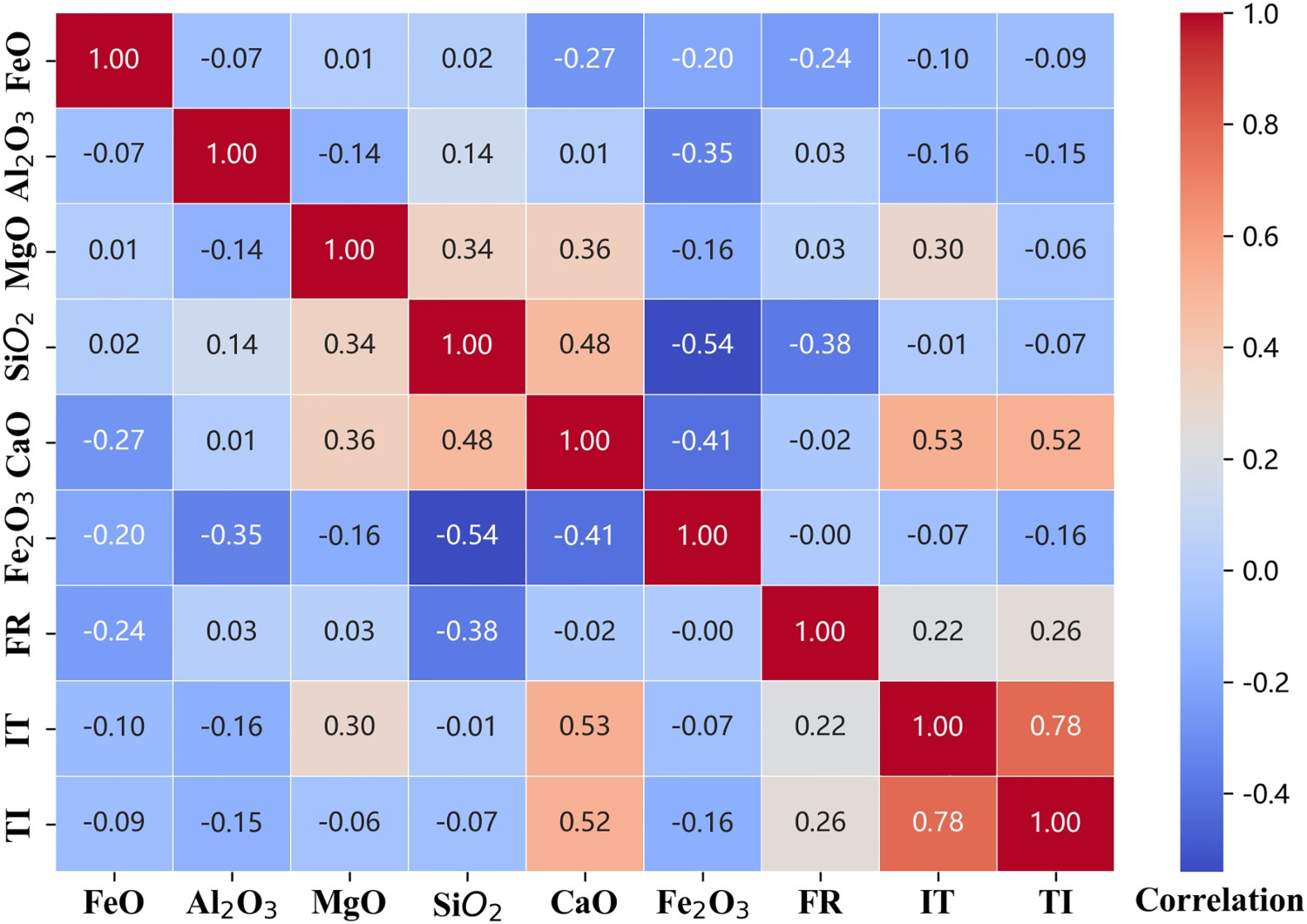
Model structure and parameters
Performance comparison of prediction models for TI with different numbers of hidden layer nodes based on experimental data.
As the number of hidden layer nodes increased, the MSE of the model on the training set gradually decreased, the lowest was 1.61, and R 2 gradually increased, and the highest reached 0.98. However, the prediction results of the model on the test set fluctuated significantly. When the number of hidden layer nodes was 5, the generalization ability of the model was optimal. Then the number of nodes was fixed at 5 and various activation functions were set to further investigate the adaptability and generalization performance of the model.
Performance comparison of prediction models for TI with different activation functions.
Performance comparison of prediction models for TI with different optimization algorithms.
The optimal algorithms also influenced the model performance. Three algorithms were compared for the prediction performance, and the Adam one was optimal, as shown in Table 4.
Modelling results
The results of the direct prediction model developed are shown in Figure 2. The model predictions on the training set basically matched the actual values, but the testing set performed poorly, indicating that the model had a trivial ability to fit the training set and the generalization ability of the model was insufficient, meaning the model was not good enough to predict the tumbling strength for the industrial application. Results of the prediction model for the direct prediction mode.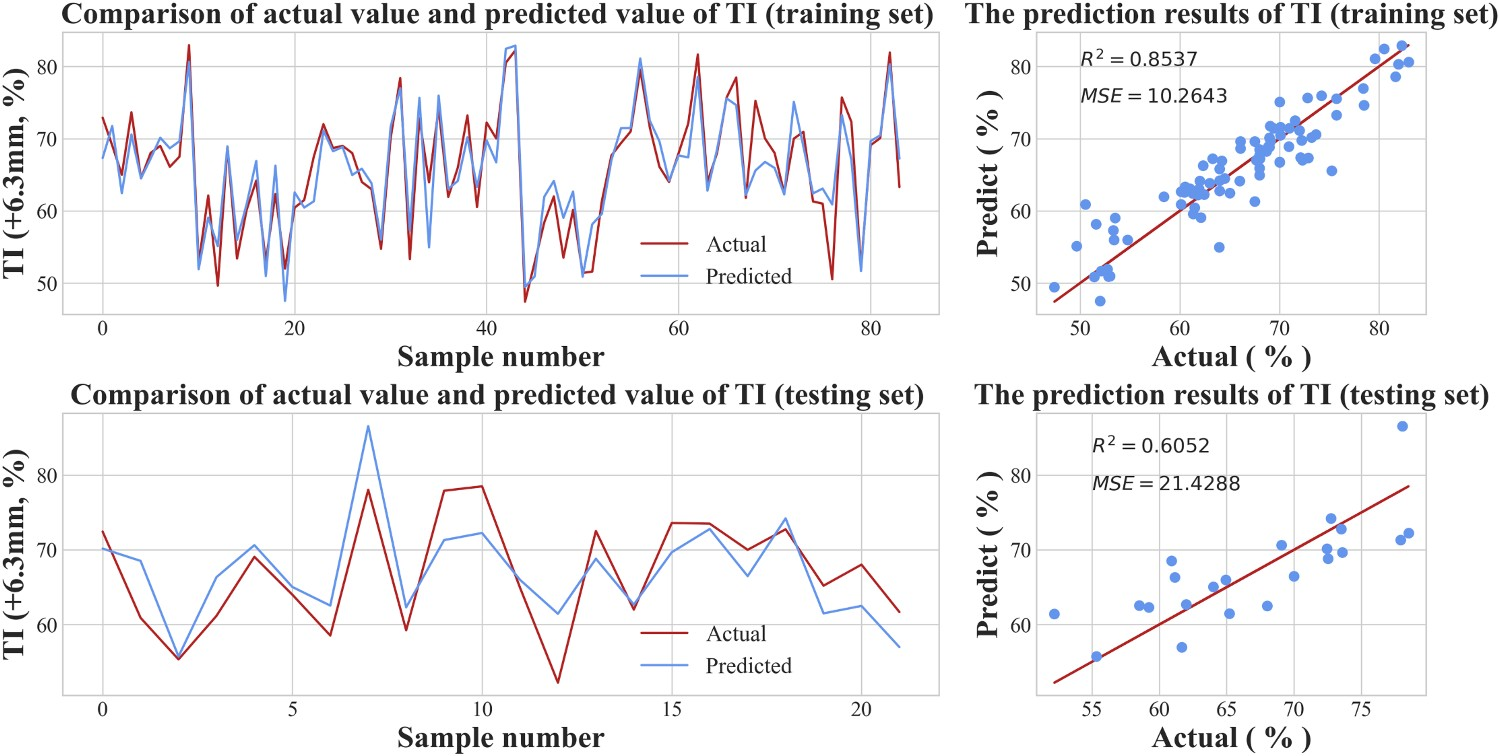
Indirect prediction model with two layers
Sample set
The liquid phase produced during the sintering process was the basis for the agglomeration of iron ore powder. The properties and the quantity of the liquid phase largely determined the strength and the metallurgical properties of the sinter [43]. To improve the prediction performance of the direct model, the liquid phase and the main solid phase formed, which can be calculated by the FactSage software at 1250°C with the oxygen partial pressure of 0.005 atm, was suggested as a new input for the model. A new sample set was formed by adding the generated liquid phase and spinel phase with the operating parameters in the previous sample set.
Model structures and parameters
Compared with the direct prediction model, the indirect prediction model did not predict the sinter’s strength directly from the sinter’s composition, it contained a two-layer structure. The first layer was used to calculate the liquid phase and the spinel phase during the sintering process, of which the chemical composition of the mixed iron and flux was the input. The second layer was used to predict the strength of the sinter, of which the liquid phase and the spinel phase from the first layer, and the operation parameters, such as ignition temperature and fuel ratio, were all used as the input variable in the second layer. The schematic structure of the indirect prediction model for TI is shown in Figure 3. Framework of the indirect prediction model for the Tumbler Index.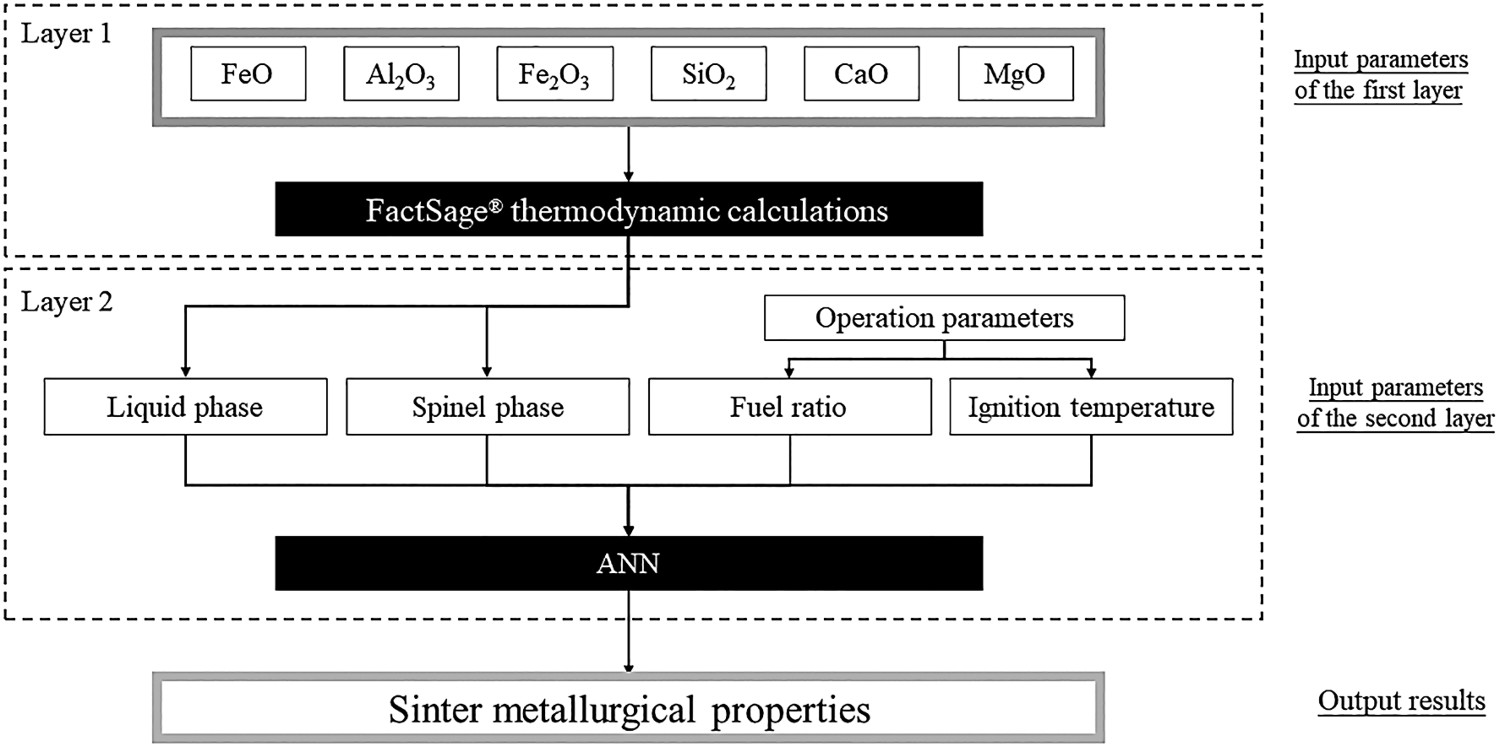
Structure of the prediction model of the tumbler index.
Modelling results
The comparison curve between the predicted value and the actual value of the double-layer indirect prediction model as well as the prediction results are shown in Figure 4. In the training set, the square of correlation coefficient (R
2) of the model was 0.89, and the MSE was 6.07, showing that the model had the considerable fitting ability. In the testing set, the R
2 reached 0.79, and the MSE increased to 19.24, but it was still in the acceptable range. There was no overfitting or underfitting phenomenon, demonstrating that the model had good generalization ability. Results of the prediction model for the indirect prediction mode.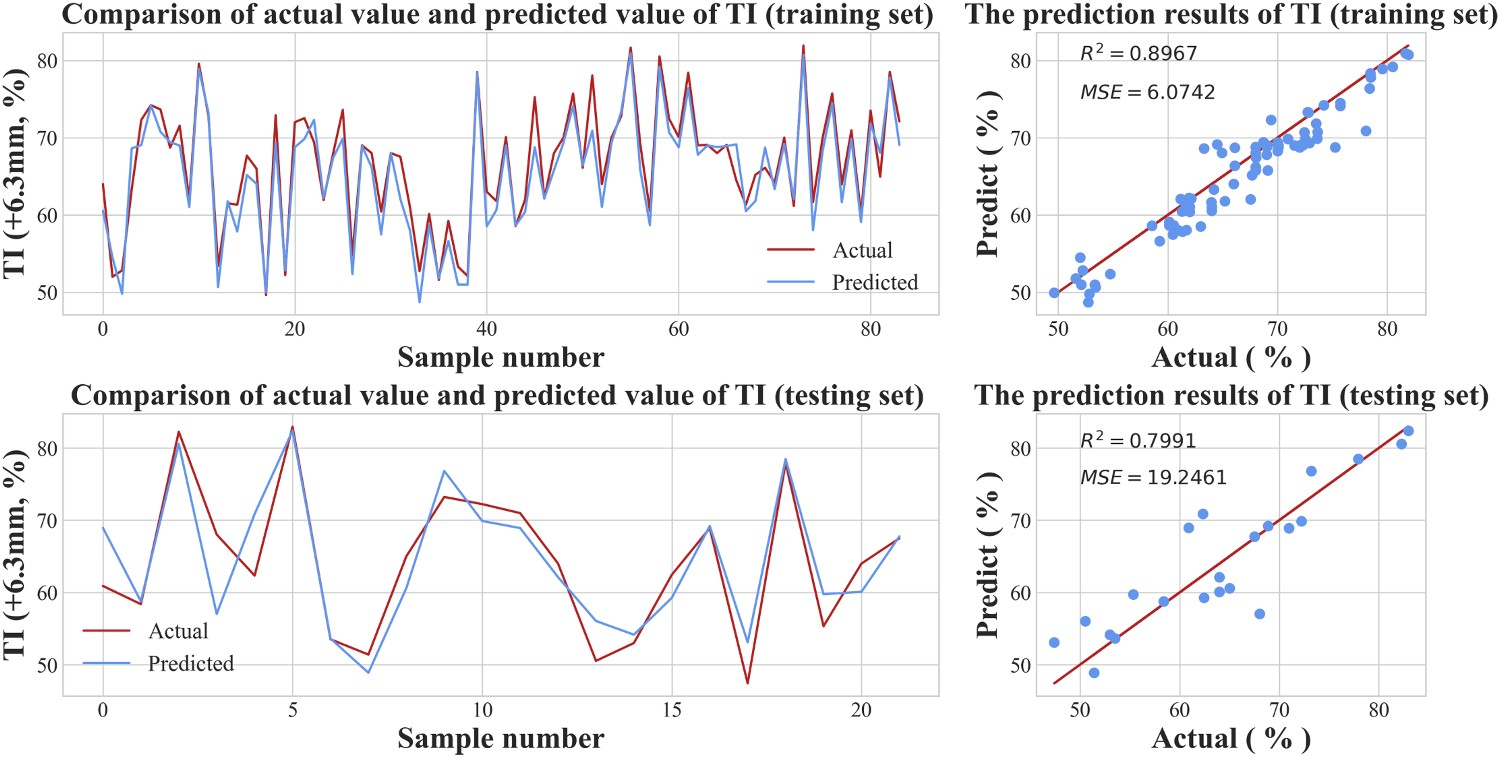
Models’ comparison
Direct and indirect prediction models were built based on ANN, but their performances were with great deviation. The one-layer prediction model directly predicted the metallurgical properties of the sinter using only the ANN technology. However, the indirect prediction model was based on the sintering mechanism, which used the liquid phase and spinel phase generated in the sintering process as an internal variable and combined process parameters as the input parameters. Finally, the ANN technology was adopted, and TI was taken as the output parameter to build the model.
Comparison of sinter performance prediction models.
Correlation comparison of model input parameters.
In machine learning, the goodness of feature engineering directly affected the performance of the prediction model, and it was an indispensable part to select parameters that were highly correlated with the tumbler index as the input parameters of the model. The input parameters of the direct prediction model overwhelmingly had a low correlation with TI, while this bottleneck was broken by thermodynamically calculating the liquid and spinel phases. The introduction of the intermediate layer led to a substantial increase in the correlation between the input parameters and TI, and a strong correlation overall, which would improve the performance of the model.
Parametric study with the indirect model
Univariate analysis of all inputs was carried out with the indirect model to explore their influence on TI. For the univariate analysis, one chemical composition changes, while the total amount of the other composition changes respectively, but the ratio of all the other components was fixed. The results of the univariate analysis are shown in Figure 5. TI was found to be declining with increasing FeO content of the sinter. This could be attributed to the fact that the calcium ferrite is the main binder phase of the high basicity sinter, but calcium ferrite was formed under low temperature and high oxygen potential [38]. The content of FeO in the sinter was closely related to fuel consumption. After the fuel ratio increased, the sintering temperature increased and the reducing atmosphere was strong, which adversely influenced the formation of calcium ferrite, thereby affecting the strength of the sintered ore. Effect of chemical composition on the Tumbler Index (TI).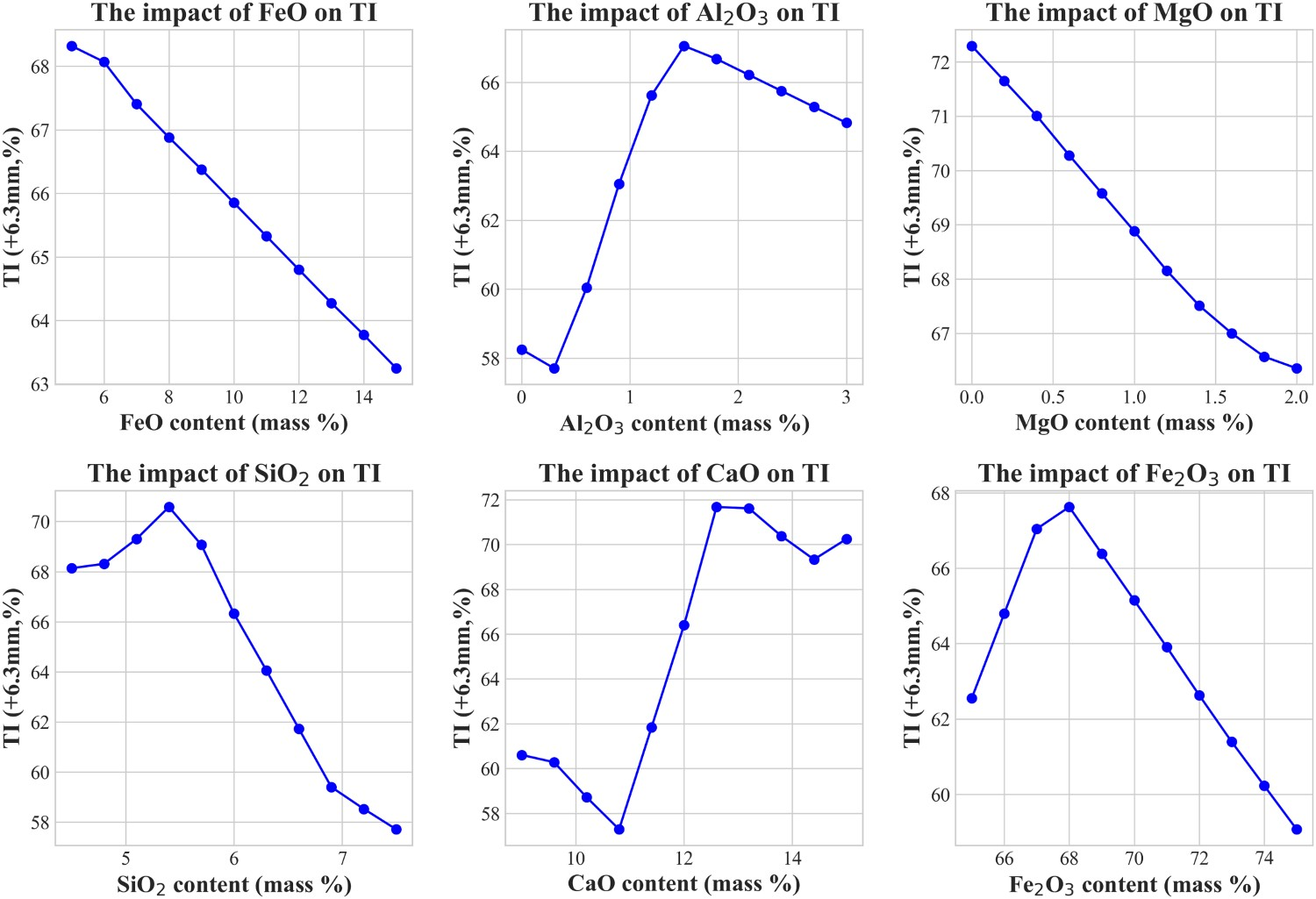
With the increase of Al2O3 content, TI increased initially and then decreased, which was like the experimental results of previous studies [35]. Al2O3 can reduce the formation temperature of the sintering liquid phase. Al3+ ions were present in the crystal lattice of haematite and magnetite, which tended to stabilize and promoted the formation of the silico-ferrites of calcium and alumina (SFCA)phase, inhibited the formation of 2CaO·SiO2, and was conducive to the strength of sintered ore. However, if the content of Al2O3 increased and exceeded 1.5%, the viscosity of the melt formed during the sintering process increased, leading to a deterioration in the fluidity of the liquid phase and densification of the sinter, which deteriorated the strength of the sinter [24,38].
With the increase of the MgO, sinter strength would decrease. Because MgO was a high melting point substance, the increase of MgO mass fraction was not conducive to the formation of the sintering liquid phase. In addition, MgO was present in magnetite to form magnesium spinel, which stabilized the magnetite crystal lattice, prevent oxidation [16], inhibited the formation of the SFCA phase and reduced the strength of sintered ore.
The strength of the sinter would increase first and then decline with the rise of the content of SiO2. When the content of SiO2 was low, the melting temperature of the calcium ferrite phase decreased, which promoted the formation of a liquid phase in the sintering process. As the content of SiO2 surpassed 5.4%, the content of silicate and magnetite in the sinter increased, which inhibited the formation of calcium ferrite. On the other hand, the increase of SiO2 content would also affect the viscosity of the melt generated during the sintering process, resulting in poor liquid phase fluidity [44], which was against the improvement of the strength of sintered ore.
Increasing the CaO content of the sinter was favourable to the strength of the sinter. When the content of SiO2 remained unchanged, the rise of the content of CaO meant that the basicity of the sinter rises. However, when the basicity rose to 2.19, the strength TI (+6.3mm) reached a maximum of 71.67% and then started to decline and fluctuate. The increase in basicity could promote the formation of calcium ferrite, and it was also conducive to the densification of the binder phase at low sintering temperatures [18,28], thereby improving the strength of sintered ore.
As the Fe2O3 content increased, the sinter strength first rose and then fell. Gigh Fe2O3 content that exceeded 68% was unfavourable to the improvement of sinter strength. Because the high content of Fe2O3 meant that the content of gangue in iron ore was low, and the high content of Fe2O3 facilitated the formation of calcium ferrite [45]. As the main binder phase of high basicity sintered ore, the increase of calcium ferrite content was favourable to the formation of a liquid phase in the sintering process. However, the melting point of Fe2O3 is1565°C, and when its content is too high, which is not conducive to the generation of liquid phase during the sintering process.
Conclusions
In the present work, the direct and indirect prediction models of sinter strength were constructed and compared, and a univariate analysis was performed. The conclusions were as follows: The performance of the indirect prediction model was better than that of the direct one without the middle layer. Under the optimal conditions, the R
2 of the strength prediction of the iron ore sinter for the validation set was 0.79. The sinter strength increased first with increasing the SiO2 to 5.4% and then decreased with further increasing the SiO2. A similar tendency was found with increasing Al2O3, and the turning point was 1.5%. MgO can deteriorate the strength of the sinter, as its content increases, the strength of the tumbler index will gradually decrease. FeO also had this raw.
In future work, we will use other intelligent algorithms to explore the degree of model improvement by the introduction of intermediate layers from multiple angles and explore the relationship between the weights of the input parameters, to further investigate the contribution of the introduction of spinel and liquid phases to model improvement. Finally, optimization methods, such as knowledge distillation [46] and model compression, are also indispensable in the application of this task to further reduce the model inference time and training cost while ensuring the model effect, so that the model can be applied to edge computing devices with limited computing resources and meet the real-time requirements of production scenarios.
Footnotes
Acknowledgements
The authors would like to express their gratitude for the financial support of the National Natural Science Foundation of China (grant nos. 51974048 and 51974053), Natural Science Foundation of Chongqing (grant no. cstc2021jcyj-msxmX0882), the Innovation research group of universities in Chongqing (CXQT21030) and Chongqing University of Science and Technology Graduate Research Innovation Project (grant no. YKJCX2120225).
Disclosure statement
No potential conflict of interest was reported by the author(s).The authors declare that they have no known competing financial interests or personal relationships that could have appeared to influence the work reported in this paper.