







Abstract
This answer to Reviel Netz's article at first questions his optimism concerning our technological future. After that, it suggests a different role for Archimedes and the other prominent Greek mathematicians than the one claimed by Netz: as providers not of answers but of problems which called for the transformation of the abbacus and cossist algebra tradition, thereby allowing first Viète and then Descartes to create the first level of the new analysis of the seventeenth century (the second level being infinitesimal analysis).
Obviously, Reviel's article is not one concerning which it is possible to claim that what it states is right or wrong. Reviel himself says as much on his last page. Nonetheless, I agree with much; but I have some supplements, objections and oblique views. As will be seen below, the arguments are tangled – for which I apologize, but which I believe they have to be.
True or not, Reviel's exploration of counterfactual history has the merit that it brings into the open what is hidden but tacitly presupposed in many discussions about, for instance, the ‘causes of the scientific revolution’ or the ‘Needham problem’.
So, I shall try to keep my own cogitations on the same level as that of Reviel's article, somewhere between history and applied philosophy of history – with references for quotations and for matters where my evidence cannot be presupposed to be broadly known, but none elsewhere.
Before approaching my main subject, I must confess I was struck by Reviel's optimism, expressed in the belief that humanity got lucky that Archimedes happened.
I have strong doubts that the First Industrial Revolution – the English one, say, from 1600 to 1850 – depended much on the kind of Scientific Revolution that on its part depended on Archimedes and his ancient successors. But the Second Industrial Revolution, carried (very roughly speaking) first by Germany, and after Edison also by the US, depended critically on mathematical analysis which – as I shall explain later – in the actual process was the outcome of a process where Archimedes and his ancient successors played a decisive role.
Coal was mined already before the First Revolution, and could have been so without the Second; the mathematics of Lavoisier's chemical revolution (essential to what he did) had nothing to do with Archimedes and much more with accounting. Even drilling for oil was initially in no need of higher mathematics; but without the highly mathematical seismological techniques that allow the tracing of resources deeply buried in the ground we might have hit ‘peak oil’ decades ago (as was predicted in the 1950s); without mathematical analysis, ballistics would hardly have gone more than marginally beyond that of WWI, and atomic weapons would not have existed. Concentrating on oil we may say that industrial society would have stopped its expansion long before we came into the situation where we can now say with Madame de Pompadour, après nous le Déluge. She died 25 years before 1789; but 1789 arrived, and a climate catastrophe reducing the human survivors to something we prefer not to think about may still arrive, thanks to technologies made possible inter alia by the arrival of Archimedes long ago, and the survival of his works. So, perhaps, humanity was not so lucky; we shall know within a few decades (that is, those of us who shall still be able to know anything).
Getting closer to Reviel's central reflections, I would object that he leaves out of consideration the role of the humbler level of mathematics in the centuries leading up to the seventeenth-century transformation of mathematics – that is, of the mathematics of those who counted and measured for a living and of their teachers. Not that Reviel in general disregards them, as many other historians of mathematics do: to the contrary, vide (Netz 2002). He also does not mention a book quoted almost as often as the Bible in the Latin medieval world: Isidore's Etymologiae. Isidore did not know much mathematics and was hardly at a philosophical level where we can ascribe any Neoplatonism to him (nobody was in the Latin seventh or eighth centuries, none indeed before Eriugena); but Isidore's most important misunderstanding was not mathematical but the belief that the quadrivial arts were of utmost importance, which they had never been in Roman Antiquity (ask Augustine, who found no teacher for them, and no students who were interested). So, when cathedral schools woke up again around 980 after the interruption caused by Magyar and Viking marauders, there was a good excuse to take up the quadrivial arts. 1 Some 150 years later, the interest in Boethius's Arithmetic and Music and the use of the ‘Gerbert abacus’ (all well established by then) prepared the reception of Euclid and a bit of Archimedean mathematics from 1120 onward, as well as the teaching of some Euclid and Euclidean geometry at universities together with astronomical compendia.
Back to the mathematics of those who counted and measured. If we look at the pseudo-Heronian late ancient or early Byzantine collections Geometrica and Stereometrica, traces of Euclidean influence are beyond doubt (mediated by Heron but certainly not only); but there is also much beyond that, and generally the traces of Euclid are surface. Most of the substance is likely to have been shared with Near Eastern practical geometers.
This – but mostly without any Euclidean surface – is also what we find in the geometries of the Italian abbacus books. A modest part of it can be seen to have been borrowed from the post-agrimensor geometry of first-millennium Latin Europe, but the bulk appears to be derived from Near Eastern practical geometry mediated by medieval Arabic culture. However that may be, this is what we find in a typical fourteenth-century abbacus geometry (not necessarily in this order):
– Areas for squares and rectangles; – determination of circular parameters (diameter, circumference, area) from one of them – the Archimedean approximation to – determination of the area and the hypotenuse of a right-angled triangle, the other sides being given, or of the third side from the hypotenuse and another side; – similarly for a square; – approximate determination of square roots corresponding to the formula
– sometimes volumes of parallelepipedal walls; – and sometimes some other spatial problem like the surface of a conical tent, often badly understood and solved.
All magnitudes have numerical measures – some given, others to be found.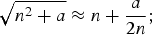
Fibonacci's Practica geometrie is evidently of a different mould, comparable in aim to Heron's Metrica though of greater size. A fair number of reduced vernacular versions survive. However, these were not part of the abbacus treatises; they may have been produced for and kept by the kind of wealthy citizens that also possessed a copy of Fibonacci's Liber abbaci as a prestige object. This genre culminated in the geometric second part of Luca Pacioli's Summa.
Neither type inspired anything that with good will could be characterized as a research programme; Pacioli's geometry, though less amputated than vernacular predecessors, still does not go beyond Fibonacci. An even more striking illustration is the geometry contained in Giovanni Sfortunati's Nuovo lume: Libro de arithmetica from (1534). The author presents himself as a ‘most perspicacious scrutinizer of the Archimedean and Euclidean doctrines’, 2 but the only Euclidean or Archimedean aspects of the book are that the problems are no longer ragioni but propositioni, and that the geometry part begins with some explanations serving as definitions – some contaminated, some inspired by the Campanus Elements. The substance goes somewhat beyond what was habitual in earlier abbacus treatises (never beyond ps.-Heron, to be sure), but arguments for the correctness of procedures are wholly absent.
Another high-level fellow-traveller of the abbacus tradition is Elements X. Chapter 14 of the Liber abbaci, dealing with ‘roots’, draws heavily on the Euclidean theory of irrational magnitudes but so disorderly than one might suspect Fibonacci of borrowing from somewhere without understanding; his Flos, however, leaves no doubt that he understood well (as he mostly did when copying); in all probability the lack of order is a consequence of the mere addition of extra material in the 1228 version without rewriting of what was already there. The three Florentine ‘abbacus encyclopediae’ 3 from around 1460 borrow much of the material, adding some questions not found in the Liber abbaci; two of them also offer a paraphrase of the Campanus version of Elements X (statements with added explanatory numerical examples, no proofs). Pacioli also borrows from Fibonacci, whereas Michael Stifel, when taking up the classes of irrationals in the Arithmetica integra, makes something more systematic – even, under the conditions of the new arithmetization, more systematic than Euclid, whose ‘order now nobody can present in a satisfactory manner’ (thus the beginning of book II chapter 13, [Stifel 1544, 143v]).
Stevin, in the Arithmetique, reformulates the theory of irrationals more radically (1585, 43–54). However, in Descartes’ Géométrie it plays no role.
4
The closest we come seems to be this passage about equations (ed. Adam and Tannery 1902, 454):
If the known quantities that are there contain some broken numbers, they have to be reduced to other integers by multiplication, as was just explained. And if they contain surds, they also have to be reduced to other rationals, inasfar as possible, either by the same multiplication or by various other means, which are also easily found.
Two other pieces of advanced mathematical theory were also studied or at least copied by a small handful of abbacus teachers: congruous-congruent numbers 5 and an investigation of the ancient ten means. 6 The former topic is still alive today in number theory as a minor concern, and still in part experimental; the latter, as far as I know, was totally forgotten after 1500 (probably the reason that no historian of mathematics has noticed what goes on before 2008, when I stumbled on what Fibonacci does). None of them had the least impact on the new algebra of the seventeenth century.
So, the few segments of high-level Greek mathematics that had been dealt with by Fibonacci and transmitted along with the abbacus tradition had no influence on the transformation of algebra in the seventeenth century. As we shall see, abbacus algebra had. But first another branch of the labyrinth.
In 2012, Christian van Randenborgh discovered that Frans van Schooten had had access to the manuscript of Descartes’ Géométrie in late 1632, and that its pagination shows that the Dioptrique and the Météores had been written first. That is, these three essays were not added to the Discours de la méthode as illustrations: they precede it. The Discours is, so to speak, a summary preface – written when Descartes had come under the influence of Mersenne's Neoplatonism. Descartes did not glue an Archimedes-inspired geometry to a Neoplatonically tainted method, thereby sparking the creation of the mathematics of the Newtonian revolution and the technological world.
Nonetheless, I agree that Archimedes played an essential role in what happened. But we have to look at what happened to algebra between al-Khwārizmī and Descartes – disregarding al-Khayyāmī and al-Samaw'al, since their work seems not to have been known to Descartes or any predecessor of his.
We can even disregard Fibonacci. Two of the Florentine encyclopediae, after copying the introduction to algebra from Guglielmo de Lunis's translation of al-Khwārizmī, also copy from Fibonacci; but their own algebra is different, and descends from the abbacus algebra of the fourteenth century.
More on that in a moment. First, however: what was Descartes’ immediate source for algebra? In the Discours (ed. Adam and Tannery 1902, 17) we find that he had read a bit, when being younger,
logic and, among the mathematics, the analysis of the geometers and algebra, three arts or sciences which seemed to promise something for my purpose.
Abbacus algebra goes back to the early fourteenth century, and behind that to a kind of Arabic algebra that seems to have learned something (but nothing advanced) from al-Karajī 8 – probably practised in the Maghreb and/or al-Andalus, and then seemingly borrowed via Romance-speaking Spain and/or Provence. Exactly where is unimportant, decisive is that it was a new start. 9 Already from the beginning there was interest in solving reducible higher-degree problems, and some writers also offered (wrong) rules for non-reducible equation types of the third and fourth degree (surviving here and there until the 1550s, see imminently).
Algebra was a topic serving for challenges, not least in the competition for positions – the Cardano-Tartaglia controversy exemplifies that. 10 It was of no use in the abbacus school (whose students were mostly 11–12 years of age or less) or in any real-work practice of those who had attended it (excepting those who were themselves to become abbacus masters). Since solutions were never tested (those involving roots were not approximated), false solutions – useful in competitions against incompetent adversaries with equally incompetent lay judges – could survive for long, being still repeated by Piero della Francesca and even by Bento Fernandes in Portugal in 1555. But algebra was a prestige topic, for which reason mathematically more competent abbacus teachers invested much effort in developing the field, not just repeating what was inherited in the way a few of them would repeat and slightly reformulate Elements X in Fibonacci or Campanus version. They became familiar with the character of the sequence of powers as a geometric progression, extending it upwards as well as downwards to negative powers; they explored how complicated distortions of commercial problems could lead to reducible higher-degree equations, and also examined the arithmetic of polynomials systematically; they introduced abbreviation systems for powers and arithmetical operations (often at odds with each other – ‘as many territories, so many usages’, and ‘as many heads, so many opinions’, in Pacioli's words [1494: I, 67v]); they gradually got habituated to see subtractive numbers as negative numbers, without having a clearly defined concept; and more.
When abbacus mathematics spread from northern Italy to Germanic and French areas, 11 this transformed algebra travelled together with the humbler levels of merchant mathematics as cossic algebra (reflecting the Lombardic orthography cossa for Tuscan cosa). Authors like Michael Stifel and Johann Scheubel brought more order to the field, and provided the basis for Clavius's Algebra (1608). This was what was used by Descartes’ Jesuit teachers (Descartes graduated from La Flèche in 1614). In a letter to Beeckman from 1619 (ed. Adam and Tannery 1908, 154–160), Descartes indeed uses Clavius's notation, not that of Viète; the same letter expresses the ambition to solve all problems ‘dealing with any kind of quantities, discrete as well as continuous’, by means of curves corresponding to higher-degree equations. 12
The problem Descartes discussed in 1619 concerned the use of a mesolabe, a particular geometrical compass, to solve cubic problems, including the division of an angle into three or any other number of parts. 13 It was thus located at the intersection of advanced cossic algebra, pre-Euclidean Greek geometry, and mechanics.
Descartes was not alone, however. His ambition to solve all problems is hardly an echo of Viète's famous nullum non problema solvere, ‘to leave no problem unsolved’ (1591a, 9r), which Descartes probably did not know. All the more, it is evidence of appurtenance to a shared mathematical culture: a culture of problem solving, not of proving theorems or developing theory; moreover, of agonistic problem-solving.
As we have touched upon, even the abbacus culture was agonistic – teachers competed for positions, but also as a matter of professional prestige. We may look at two examples of the problems used by abbacus teachers to challenge the ability of colleagues.
First one from the Ottoboniano Praticha (fol. 132r):
5 eggs and 4 oranges and 10 denari are worth 8 eggs and 2 oranges and 6 denari. And 7 eggs and 6 oranges less 3 denari are worth 5 eggs, 4 oranges and 7 denari. It is asked, what is an egg worth, and what is an orange worth? This case has been given to me a few days ago to solve. Find me a number which, when divided by 64 leaves 18, and when divided by 82 leaves 13.
Most of the abbacus challenges were, like the first example, complicated variants of traditional recreational problems; as a rule they did not invite a simple algebraic procedure as glaringly as here. The second example shows, however, that problems we would classify as simple number theory were not absent. This corresponds to the challenges which Fibonacci says to have been confronted with. One, as told in the Liber abbaci (ed. Giusti 2020, 324) was proposed to him by a Constantinopolitan master:
One [man] asks 7 denarii from another one, saying that he shall then have 5 times as much as him; the second asks the first for 5 denarii, and he shall have seven times as much. five numbers, of which the first with the half of the second and third and fourth makes as much as the second with the third part of the third and fourth and fifth numbers, and as much as the third with the fourth part of the fourth and the fifth and the first numbers, and also as much as the fourth with the fifth part of the fifth and the first and the second numbers, and besides as much as the fifth number with the sixth part of the first and the second and the third numbers.
Then, of course, there is the properly number-theoretical question asked by master Theodoros from the same courtly circle, the starting point for Fibonacci's Liber quadratorum (reported last in this same ‘book about squares’, [ed. Boncompagni 1862, 279]). Similarly difficult questions, we should be aware, were apparently not exchanged as challenges between the abbacus masters.
Number theory was certainly not forgotten by all mathematicians after 1600 – vide Fermat. But it did not contribute to the reshaping of mathematics, and on its part, it did not benefit from the new analysis before Euler. The decisively productive problems taken up by the seventeenth-century mathematicians came, as Reviel rightly points out, from Archimedes, Apollonios, and Pappos; they were wholly different from anything circulating in or in the vicinity of the abbacus environment.
We may take the famous Viète – van Roomen exchanges as the starting point (Busard 1975, 533). First, van Roomen proposed an algebraic equation of degree 45, which Viète recognized as the one corresponding to a division of the angle 45° into 45 equal parts; as counter-challenge Viète asked for the drawing of a circle touching three given circles, presenting himself a better solution in Apollonius gallus than the rather trivial answer proposed by van Roomen (obtained by means of the intersection of two hyperbolas, and thus non-constructible). The hint of arrogance with which Viète addresses his interlocutor in the end (ed. van Schooten 1646, 338) shows that no research in common but a game of prestige was meant: van Roomen is spoken to as candide belga.
Viète's Variorum de rebus mathematicis responsorum liber VIII (1593) gives a broader view of the kind of problems and techniques occupying the minds of the competing mathematicians of the outgoing sixteenth and the first half of the seventeenth century: two intermediate proportionals (with abundant extensive Greek quotations); squaring and rectification of the circle and of circular segments, using Archimedean spirals and the quadratrix; construction of a regular heptagon; lunules; etc. In the end comes much spherical trigonometry, the only topic pointing to broader practices (astronomy and navigation).
Fermat, Roberval – and of course Descartes – extended the field of interest, within as well as beyond the Greek horizon. Far from everything they did integrated algebra and geometry or kinematics, but much of it did; this new range of problems was thus what led to the creation of the new algebra, soon to engender also infinitesimal analysis.
This had little to do with Neoplatonism – probably nothing. Even in Descartes’ case, his plan if not its completion preceded his encounter with that doctrine. Instead, we should look at Humanism.
Original Humanism had not been interested in mathematics. Symptomatically, fourteenth-century Humanists knew no more than classical Latin writers about Archimedes – that is, little in total, and nothing at all about Archimedes the mathematician (Høyrup 2017, 6–12). Fifteenth-century Humanism, though mostly similar, was not quite a monolith in this respect. A few of its representatives were linked to the higher artisans of the epoch – best known is the case of Leon Battista Alberti and his collaboration with Filippo Brunelleschi, but military engineers and architects in general should be not be forgotten. We might be tempted to mention also Cusanus, who was a kind of Neoplatonist and used surveying mathematics to prove that God has to be ternary, 14 but whose contribution to mathematics (fallacious squarings of the circle, all in [Hofmann 1952]) hardly invited emulation. Sixteenth-century Humanism was forced by a changing world to go further. As pointed out by Mario Biagioli (1989), the efficiency of the French artillery in its grands tours d'Italie in the 1490s showed that Coluccio Salutati, chancellor of Florence until 1406, was no longer right that Latin letters were ‘a weapon more to be feared than a troop of horses’ (Gragg 1927, x); or at least that Latin letters were no match for modern gunnery. The discovery of ‘new’ worlds beyond the oceans had similar implications, and so had the great hydraulic projects. The many mathematical instruments depicted in Hans Holbein's ‘Ambassadors’ demonstrate that Northern Humanism was aware of the new conditions from its very beginning. These civically useful mathematical practices, however, had no need for Archimedes. Even Tartaglia saw no use for him when he tried to transform ballistics into a scientia. 15
In agreement with the discovery of the civic necessity of the mathematical arts, however, printed Humanist editions of the Greek classics (in Greek and/or Latin) took off after 1500, making Archimedes, Apollonius, Diophantos and Pappos accessible. Whereas the higher artisans of the fifteenth century (including a towering figure like Alberti) had understood Archimedes in their own image, as a higher artisan, the court mathematicians (better, some of them, those few who are remembered in the history of mathematics) were now able to see him as a mathematician (still in their own image, but they themselves were different).
Famously, in 1547 Alessandro Piccolomini was to base the certainty of mathematics on Proclos's newly accessible commentary to Elements I, and thus on Neoplatonic epistemology (Jardine 1988, 693f). But the conviction that mathematics is not only the most certain of the sciences (that had also been Aristotle's view in the Posterior Analytic) but also the basis on which everything else has to be built had profounder implications, and it is older; if anything, this conviction was what came to the fore when the new mathematics became part of new science in the seventeenth century. It had arisen among those fifteenth-century surveyors and architects to whose experience it corresponded. It was given voice by Pacioli in the dedicatory letter to the De divina proportione from 1498
16
(ed. Winterberg 1889, 36) (the italicized passage is in Latin and a quotation from Aristotle):
the said mathematical sciences are the fundament and the stairway by which we arrive at knowing every other science, because they possess the first degree of certitude, the Philosopher declares so, saying that The mathematical sciences are indeed in the first degree of certitude, and the natural sciences are next to them. And without knowing them it is impossible to understand any other well.
Galileo, in Intorno alle cose che stanno in su l'acqua and elsewhere, is certainly in dialogue with Archimedes, but mostly critically in spite of his general veneration of the figure, trying to do or explain better; little if anything of this probably contributed to Galileo's indubitable impact on the upcoming Scientific Revolution. Kepler used the ellipse in his Astronomia nova from (1609, 221) – but as an approximation to the supposedly true egg-shaped orbit (vere esse ovalem, non ellipticam). Archimedes is also appealed to a few times afterwards (Kepler 1609, 223, 232 and 226), but only under the condition si figura nostra esset perfecta ellipsis.
If we make the jump from Kepler to Newton's Principia from 1687, the ellipse is no longer a computable and thus convenient approximation but truth. However (I omit details and references), a closer analysis of the several decisive points where Hooke had the fundamental insights (universal gravitation, inverse square law for gravitation) before Newton raises the question whether the results justly known under Newton's name would have been reached within the next few decades, perhaps by means of Cartesian algebra and Leibnizian or some other calculus – as soon to be done anyhow, cf. (Nauenberg 2010); this was the technique that came to serve in the second industrial revolution, when even the British had replaced Newtonian by Lagrangian analysis since long). That would certainly have been without the propagandistic effect of the Principia, which even Newton (1687, 401) knew was propagandistic, not expecting his readers to study in depth the mathematical foundations provided in Book I. 17
Moreover, the impact of the great Greek geometers was mediated through two decisive encounters: the encounter of Humanism with the material world and with the world of mathematical practitioners around 1500; and the encounter of Humanist and post-Humanist mathematicians with the algebra ultimately coming from the abbacus school but transformed by the German cossists (to some extent as further transmitted by Jacques Peletier in original or as plagiarized by Ramus). All of it was conditioned by a culture of agonistic problem-solving – similar to that of the abbacus masters, we might claim, yet no descendant but a product of the socio-cultural circumstances of its own epoch which I shall not discuss (there is no end to context but there has to be one to discussions).
There are at least two reasons that the new problem culture became productive in a way abbacus culture had not been. I have mentioned the introduction of abbreviations for powers and operations in abbacus algebra. Occasionally these were used in genuine though rudimentary symbolic calculations. However, as I have formulated it on earlier occasions, the development was hesitating, when not directly stumbling (Høyrup 2019, chapters 30 and 31). Quite striking is that Benedetto da Firenze created a symbolism for symbolic first-degree algebra with four to five unknowns (nothing preventing him to go to six or more) in his Praticha from 1463, fully equivalent and very similar to what Johannes Buteo was to do in 1559 – see (Høyrup 2020) – but even more striking that nobody appears to have adopted the innovation, even though Benedetto's treatise still survives in three copies and will have been copied more often; Viète, furthermore, took over from Buteo (if not from Stifel) at most the idea of using letters for several unknowns.
There is a good reason that Benedetto's technique was not adopted by others: in the contemporary perspective it was superfluous (Benedetto himself appears to have regarded his innovation as a marginal improvement only). Since Fibonacci, two algebraic unknowns had been used regularly though sparsely, sometimes in rhetorical and sometimes when we reach the fifteenth century in symbolic calculations. But they served in recreational problems of types like the ‘purchase of a horse’ or ‘men finding a purse’, 18 and these could be solved without any use of algebra (and had been solved without algebra since Antiquity – Thymarides’ bloom is our first certain evidence); the gain by using a new technique did not outweigh the trouble to learn it and make your audience (readers or competitors) understand it.
But there is a further reason, equally forceful. Benedetto's treatise was copied, but chances are fair that it never reached readers who were competent enough to adopt his new technique and use it for their own purposes. Abbacus culture was a manuscript culture, and results present in a few manuscripts could still safely be presumed to be unknown to whatever audience one had. A challenge sent by an abbacus master from L'Aquila to the Florentine colleagues in 1445 had indeed been solved in a rather prestigious abbacus Praticha written before 1340, as Benedetto tells on fol. 315r.
Stifel and other German cossists systematized the abbreviations and the use of schemes for polynomial algebra; but the cossists were not much engaged in a culture of controversy (they were writing books to be printed, whose title pages as a rule claim the book as a whole to be new). 19 Nothing pushed them to explore the possibilities inherent in these techniques; even Stevin did not go far in this direction.
The controversies and the communication systems of the seventeenth century changed both aspects of the situation. Firstly, the problems that were now explored were of a kind that was often not accessible to traditional methods – not even to those of the ancient Greek geometers. Secondly, the audience of Viète encompassed van Roomen, and that of van Roomen encompassed Viète; that of a Fermat, a Descartes or a Roberval encompassed Fermat, Descartes and Roberval (together with Cavalieri and others). Seventeenth-century competition was a competition between mutually connected intellectual peers, and any advance made by one of the participants would be known to the others, criticized and (if it was found worth it) emulated. Certainly, much of the communication was semi-private, occurring through the widely diffused letters to Mersenne; but correspondents knew the same books and thereby had a shared basis. The closest we come to this in the previous century is probably Bombelli's criticism of and advancement over Cardano – at a distance of 27 years. Density counts.
This analysis, admittedly, is labyrinthine. What actually happened was probably much more of a labyrinth – dialectic (even when pluridimensional) remains an approximation. Archimedes and Apollonios stay as parts of the process, though as providers of problems and challenges to be reshaped rather than as those who had delivered the tools.
Footnotes
Disclosure statement
If there is any direct application of my research, it will be for mining plutonium on the moon, in which I have no personal interest.
(to quote Tom Lehrer, “If you ask a silly question you get a silly answer”.)
1
Whether more than an excuse can be debated: there must have been reasons beyond a venerated book to do so – other even more venerated books condemned astrology, but that had no effect.
2
My translation, as all translation into English below.
3
All three carry the title Trattato di Praticha d'arismetrica, and all three are known from autographs:
– Vatican, Ottobon. lat. 3307 (speaking of 1445 as ‘twelve years ago’); – Florence, Biblioteca Nazionale Centrale, Palatino 573 (an owner, probably the dedicatee, taking possession in 1460); – Siena, Biblioteca Comunale L.IV.21 (dated 1463, written by Benedetto da Firenze).
The former two have so much material (as well as structure) in common that they must be free elaborations (with different additions) based on a shared model. Benedetto also knows this model, but uses it much less.
4
Similarly already Cardano's Ars magna. A few stray references (Cardano 1545, 9r, 15r, 49r, 61r) confirm that Cardano knew the topic, but discarded it as of no relevance for his project. In De regula aliza (Cardano  , 8–15) he does deal with it.
5
Number pairs (a,q2), for which both q2+a and q2–a are squares. On Fibonacci's work on the topic, see (Sigler 1987), on their appearance in the Florentine encyclopediae (Franci ).
6
7
In the early mathematical writings contained in (Adam and Tannery 1908), Cardano only appears in the editors’ notes, not in Descartes’ texts. In the Géométrie, Descartes knows Cardano's solution to the third-degree equations. Viète he also seems to have learned about at a late moment, without being much impressed by him. Indeed, if we try to look at Viète's Zeteticorum libri quinque (Viète ) with Descartes’ eyes, the symbolism with its insistence on explicit homogeneity is too heavy to facilitate calculations, and a large part of the problems that are solved had been dealt with in abbacus and cossic algebra.
9
Documentation in (Høyrup 2007) and in various articles in (Høyrup ).
10
Cardano did not compete for a position; Tartaglia's misfortune was that he did.
11
To other areas too, but they do not concern the present discussion.
12
In 1628, when Descartes met Beeckman again, the project had grown to encompass something like the future Discours. That is, as we see again, algebraicized geometry was not created as an illustration and application of the Discours, it came first.
15
Apart, that is, from an unspecific appeal in the dedicatory letter (Tartaglia 1537, A iv) to ragion Archimedane – changed in (Tartaglia ) into ragion naturale, after the author had become familiar with the genuine Archimedes and brought part of the Moerbeke translations into print.
16
Published in print in 1509, 10 years after the dedicatee Ludovico Sforza had lost power.
17
Voltaire's example illustrates this propagandistic efficiency. As well known, Voltaire was the prophet of Newtonianism in France. However, the article “Atheism” in his Dictionnaire philosophique (ed. Moland Do you understand the extreme folly in pretending that it is due to a blind cause that the square of the revolution of one planet is always to the squares of the revolutions of the other planets as the cube of its distance to the cubes of the distances of the others to the common centre? Either the stars are great geometers, or the eternal geometer has put the stars into order., 465f) contains this:
18
“Three men walk on a road and find a purse, The first says to the second, if I get the money in the purse I shall have twice as much as you … ”, and similarly.
19
Studied of physics with mathematics at the University of Copenhagen 1962–1969 (dissertation in particle physics).
1969–1970, conscientious objector's civil service.
1971–1973, assistant lecturer in physics at an engineering school.
1973–1989 ‘senior lecturer’, 1989–2005 ‘reader’ (British equivalents) first in social, then in human sciences at Roskilde University, Denmark. Dr. phil. (habilitation) 1995. Since 2005 emeritus.
Gast-Dozent, Karl-Marx-Universität Leipzig 1990. Guest researcher at Max-Planck-Institut für Wissenschaftsgeschichte, Berlin 1994–1995; since 2016 visiting scholar (not in permanent residence) at the Institute. 2019, visiting professor, Department of the History of Science, Tsinghua University, Beijing.
2008/2009, George Sarton Memorial Chair, University of Ghent.
2013, awarded Zhu Kezhen Visiting Professorship and permanent Honorary Research Fellowship at the Institute for the History of Natural Science, Chinese Academy of Sciences.
2013 awarded Kenneth O. May Medal and Prize ‘for outstanding contributions to the history of mathematics’.
Main field of research: History of science, especially the history of mathematics in pre- and early Modern cultures; secondary interest in social and societal aspects of modern science. Also publications in linguistics and philosophy of science.