







Abstract
The sands of Bangladesh's rivers are potentially economically important hosts for heavy mineral (HM) resources. Characterisation tests carried out by the authors on 50 sand samples collected from sand bars of the Brahmaputra River in northern Bangladesh revealed that the HM assemblage of the predominantly quartz-rich sands ranged from 4.5 to 17.0% (by weight) HM. The HM assemblage of the samples tested predominantly comprised amphibole, epidote, garnet, kyanite and feldspars along with minor amounts of the valuable heavy mineral (VHM) components of ilmenite, magnetite, rutile and zircon. The HMs were generally well liberated and had an angular to sub-round texture. A grain size analysis of a composite sample prepared from a subset of 7 of the 50 samples collected indicated that >75% of the total HM assemblage was within the +250 to −125 µm size fraction with VHMs enriched in the size fractions −250 to +125 µm and −125 to +63 µm. The total HM contents in the coarser −500 to +250 µm size fraction and the finer −63 µm size fractions were negligible. The potentially recoverable VHM components of the composite included magnetite (∼3%), ilmenite (∼4%), titanite (∼1%), titanomagnetite (∼1%), zircon (∼0.5%) and rutile (∼0.4%). Preliminary laboratory separation studies on a bulk sample indicated that magnetite-, ilmenite-, rutile- and zircon-rich concentrates could be prepared from the sands. Analyses of the ilmenite indicated that the ilmenite was primary in composition (∼34% Ti), low in detrimental impurities and would be suitable for pigment production via the sulphate processing route. The zircon and rutile components were also low in total impurities and as such, little or no further processing would be required to produce saleable concentrates of these VHMs. However, the magnetite concentrate was contaminated by composite magnetite/silicate particles and further work involving fine grinding would be required to liberate the magnetite particles and generate a magnetite-rich product.
Introduction
Heavy mineral (HM) sands are occurrences of high specific gravity (SG > 2.9) detrital minerals such as rutile, zircon, ilmenite, magnetite, kyanite, sillimanite, monazite, xenotime, chromite, tourmaline, garnet and staurolite. These HMs are chemically stable, are resistant to abrasion and can withstand diagenetic alteration – with the exception of ilmenite, which can be beneficiated in titanium grade under certain conditions (Force 1991). Nearly, all major economic deposits that contain rutile, zircon and ilmenite occur as detrital accumulations in young (Pliocene or younger) shoreline or beach placer deposits. Non-marine fluvial accumulations of these minerals do occur, however, these deposits are rarely economically viable. One notable exception is the Gbangbama District in the southern province of the Republic of Sierra Leone, where rutile is exploited from proximal alluvial placers (Force 1991). More often, fluvial deposits are exploited for other commodities, such as gold or cassiterite, but some of these deposits do contain titanium oxide and zircon minerals that are recoverable as a valuable by-product (e.g. Flinter 1959; Achalabhuti et al. 1975; Aral et al. 2008).
Bangladesh has many HM sands occurrences along the southern and southeastern coastlines of the country where the HMs occur in shoreline placer deposits and in associated sand dunes (Mitra et al. 1992; Islam 1997; Bari et al. 2011; Zaman et al. 2012). These shoreline deposits are typically high grade and can contain up to 20–25% (by weight) HM. Current and past mineral sands development opportunities in Bangladesh have focused on developing these high-grade coastal sand deposits. However, many of the development opportunities are limited as some deposits are located in populated, environmentally sensitive areas and some of the contained VHM minerals have high levels of radioactivity. Both make exploitation potentially problematic. There is, however, an emerging potential for sourcing HM sands from the widespread river sand placer deposits associated with some of the extensive river systems in Bangladesh (Rahman et al. 2012, 2014).
The Brahmaputra River is the second largest river system in Bangladesh and within the country, this river is known as the Jamuna River. The river originates in Manassarabar, Tibet, flows through the northern Himalayas and drains the Tibetan Plateau of China (which is dominated by upland tributaries originating in the Himalayas) before entering India and flowing through the Shillong Massif. The river flows over and erodes a large variety of rock types including Precambrian metamorphics (high-grade schists, gneisses, quartzites and metamorphosed limestones), felsic intrusives and Palaeozoic–Mesozoic sandstones, shales and limestone, before entering Bangladesh in the Nagaeshwari Thana region of the Kurigram District.
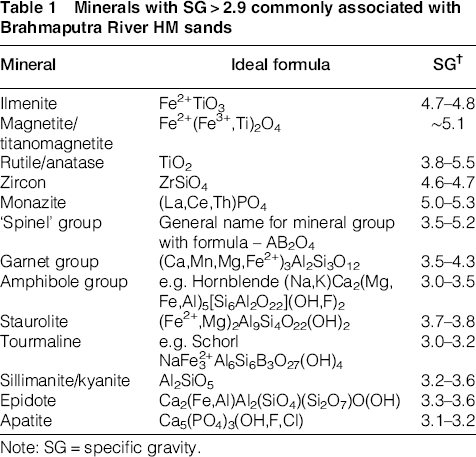
In Bangladesh, the Brahmaputra River broadens into a large, sand-bedded braided river system having a ∼15 km width, with individual channels 2–3 km wide – refer to Fig. 1 (Coleman 1969; Rahman et al. 2012). The river bed elevations vary from 7 to 20 m above the mean sea level (Rahman 1972) and estimates of the suspended load sediment annual flux range from 402 to 1157 Mt (Islam et al. 1999 and references therein). The alluvial sediments contain both light and HMs with the HM usually deposited on the bed of the river system in sand bars that are up to 44 m in thickness. The bars are variably enriched in HMs (Umitsu 1987). Compared to HM sand accumulations in beach sand deposits, the concentration of HMs in river sands is generally lower, with as little as 5–10% HM (Force 1991). Table 1 is a list of the HMs commonly found in the alluvial sand deposits of the Brahmaputra River system.
Map showing the region where the river sand samples were sourced as well as the locations of the seven samples that were subject to further analysis (location map from Rahman et al. 2014) Minerals with SG > 2.9 commonly associated with Brahmaputra River HM sands Note: SG = specific gravity.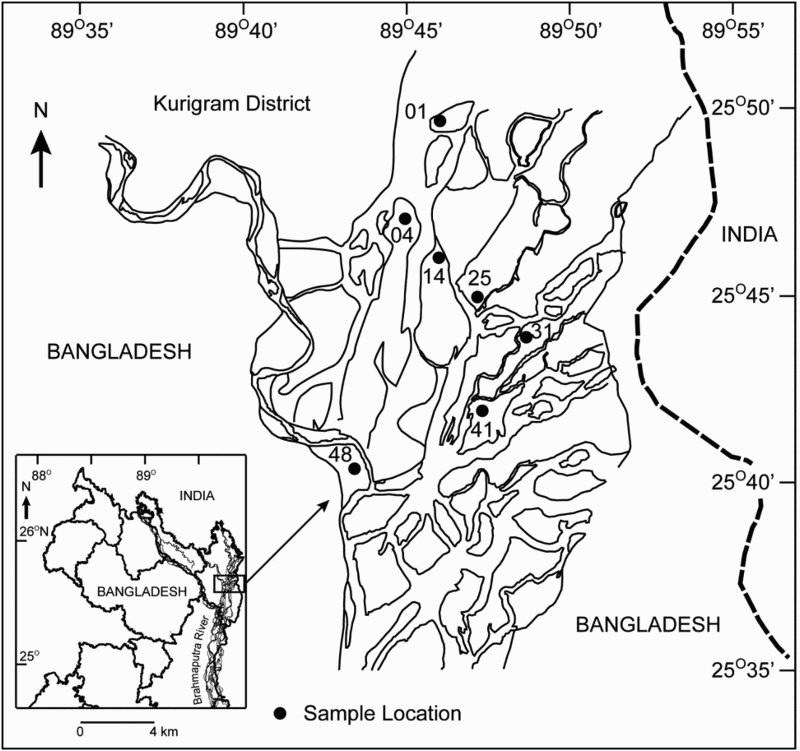
Apart from defining the volume of potentially viable sands in a HM deposit, the critical components in mineral resource assessment of HM deposits include identifying the mineralogical assemblage, quantifying the HM grade and assessing the quality of the contained mineral species for potential end-use applications. This study extends earlier works completed on the magnetic properties and compositional variation within the iron- and titanium-rich components of the Brahmaputra River sands (Rahman et al. 2012, 2014). Specifically, this study examined the morphology, mineralogy, grain size, composition and grade of the HM sands.
Testing of the physical separation of each of the VHM components from a bulk HMC was also completed. These data are useful for the potential evaluation of any future exploitation proposal of the mineral sands of the Brahmaputra River.
Previous work
The Brahmaputra River is a comprehensively studied river system. The drainage region in the Bengal Basin forms an important alluvial basin due to the size and location of the system, density of human population, often catastrophic deposition of sediments, flooding events and the generally low elevation above the mean sea level of the basin. Previous studies on the river system have focused on measurements of sediment discharge (Milliman and Meade 1983; Milliman and Syvitski 1992) and sediment bed load distribution (Islam et al. 1999). The textural, mineralogical and chemical nature of the river sediments have also been extensively studied with these aspects of the system having an important bearing on the environmental quality of the basin, as well as for the Bay of Bengal.
While extensive chemical and sedimentological data have been gathered for the entire Brahmaputra River system, including the associated tributaries, only limited data exist for the HMs occurring within the region considered in the current study – specifically, the pre-confluence region with the Tista River. Moreover, until recently, data for the HM contents were mainly confined to the total HM content without regard to the potential recovery and processing of the individual VHM components such as rutile, ilmenite and zircon.
Singh and France-Lanord (2002) sampled Brahmaputra River bank sediments in the region of Chilmari, ∼1–2 km north of the confluence with the Tista. They found that the bank sediments were silty-sand and dominated by quartz, muscovite, feldspars, biotite and lithic fragments. These researchers found that the major oxide components of the sediments in the area of sampling were 73–77% SiO2, 10–12% Al2O3, 3.9–4.2% Fe2O3, 1.2–1.7% MgO, 2.0–2.4% CaO, 1.8–2.0% Na2O, 2.0–2.5% K2O, 0.5–0.6% TiO2, 0.05–0.09% MnO and ∼0.1% P2O5.
Garzanti et al. (2004) reported that the pre-Tista area sediments were dominated by quartz (59%), feldspars (27%) and metamorphic lithic fragments (12%) with minor volcanic and subvolcanic lithic fragments. These researchers concluded that quartz, garnet and epidote had been sequestered in the bed load and trapped on the coastal plains in sand bars, whereas feldspars and amphiboles had been concentrated in the suspended load and eventually deposited in the sea. Mineralogical and petrographic analysis of the very fine to fine sand fraction indicated ∼10% of HMs. These included amphibole (55%), epidote (24%), garnet (10%), pyroxene (4%) and high-grade metamorphic minerals (kyanite/sillimanite/staurolite – 2%). The ultra-stable HMs of zircon, tourmaline and rutile made up a combined 10%. However, no ilmenite was reported in this prior study.
Similar measurements of bed sediments of the Brahmaputra River north of the Tista/Brahmaputra confluence by Datta and Subramanian (1997) indicated 14.7% of HM in the size range +63 to 200 µm. In this study, the HM assemblage was found to be dominated by ‘unstable’ minerals (garnet, magnetite, ilmenite, hornblende and augite) followed by ‘semi-stable’ minerals (apatite, staurolite, kyanite and epidote). The content of ‘stable’ and ‘ultra-stable’ minerals (zircon and rutile) was very minor. The relatively high amount of unstable and semi-stable HMs in the sediment indicated that little chemical alteration occurred during sediment transportation. The majority of the HMs were interpreted to have been eroded from high-grade metamorphic and mafic igneous rocks.
In the most comprehensive dataset available, Jasy, Rahman and Yeasmin (2010) examined the HM content of 14 samples of Brahmaputra River sands from the Kurigram District and found that the HMs in the samples were dominated by amphibole (∼45.8%) and epidote (∼31.1%) with lesser garnet (∼10.1%), apatite (∼1.9%), tourmaline (∼3.4%), sillimanite (∼1.4%), kyanite (∼1.8%), zircon (2.4%), rutile (0.6%) and staurolite (∼1.1%). The dominance of amphibole and epidote in these Brahmaputra River sand samples was in agreement with the previous results reported by Huizing (1971) and Heroy et al. (2003).
In 2012, preliminary work by the Bangladesh Council of Scientific and Industrial Research, that concerned the mineralogy, morphology, magnetic properties and composition of the sands from the Brahmaputra River, found that the valuable magnetic HMs included ilmenite, titanomagnetite, magnetite and garnet while the valuable non-magnetic heavy mineral suite comprised zircon, rutile, xenotime, monazite and sillimanite (Rahman et al. 2012). In a 2014 follow-up study that focused on the characterisation and assessment of the potential processing of the titanium-rich components of the sands (Rahman et al. 2014), it was found that the bulk VHM content in the samples tested to be ∼10–15% VHM, and that the VHM fraction was dominated by ilmenite (4.7%), magnetite (4.4%), titanomagnetite (0.9%), titanite (0.9%) and rutile (<0.1%).
Experimental
Sample collection
A barrel auger was used to collect samples at 50 locations characterised by well-developed, stable sand bars. During the fieldwork, a visual inspection of the surface and core samples was used not only to identify key physical sand features such as colour, grain size, shape and size as well as the presence (or not) of HM, but also to guide the sampling. Samples were collected after the monsoon season and focused within a region east of Chilmari in the Kurigram District, ∼1–2 km north from the confluence of the Tista and Brahmaputra Rivers (refer to Fig. 1).
Coordinates of the seven samples selected for detailed mineralogical analysis
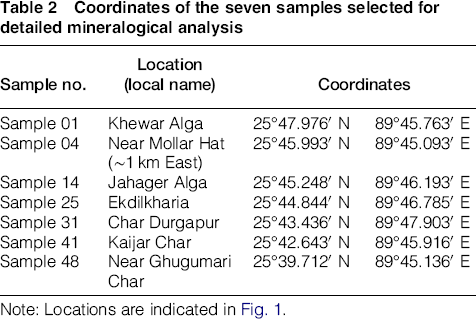
Note: Locations are indicated in Fig. 1.
Sample analysis
Size analysis
Prior to size analyses, any organic matter in the samples was removed by gently washing each of the 50 samples in 1 M HCl and then rinsing the sands with triple-distilled water. A ≈100 g fraction was split from each sample and then machine sieved into six size fractions (+500 µm, −500 to +250 µm, −250 to +125 µm, −125 to +63 µm, −63 to +45 µm and −45 µm) to provide quantitative data to model the size distribution of the HM particles. Three size fractions (−500 to +250 µm, −250 to +125 µm and −125 to +63 µm) were then selected for detailed examination using a combination of optical microscopy, X-ray fluorescence spectroscopy (XRF), X-ray diffraction (XRD), scanning electron microscopy and electron probe microanalysis (EPMA). The three size fractions examined in detail were typical of the sizes of ilmenite, rutile and zircon particles routinely processed from HM deposits. Finer grained HM materials (those with diameters <70–80 µm) are currently unable to be effectively processed using existing technologies, for example, the fine-grained WIM-style deposits of the Murray Basin in southeastern Australia (Bruckard et al. 2015).
Optical microscopy
The VHMs of ilmenite, rutile, zircon, monazite, that were present in the fine- to medium-sized sand fractions (−500 to +250 µm, −250 to +125 µm and −125 to +63 µm), were identified using a polarising microscope and a binocular microscope under transmitted and reflected light. The mineral proportions in each fraction were quantified by point counting of at least 200 grains in each sample using the ribbon method (Mange and Maurer 1991).
Bulk chemistry (XRF) and mineralogy (XRD)
Chemical and mineralogical studies were carried out on each of the seven selected HM fractions. Bulk chemical analysis was carried out by XRF using a pressed powder preparation method. The selected samples were crushed for 20 min in a planetary ball mill (Model: PM-200, Retsch, Germany) to produce <75 µm powders, which were then mixed with a steric acid binder using a binder to sample ratio of 1:10, and then pulverised for an additional 2 min. The mixtures were then placed into 30 mm diameter aluminium caps and pressed with a manual hydraulic press using a pressure of 137.9 MPa for 2 min to produce the final pellets for XRF analysis. Analyses were made using a Rigaku ZSX Primus XRF analyser equipped with an Rh-anode X-ray tube.
The XRD analyses of the powdered samples were performed using a Philips PANalytical X'Pert Pro MPD (PW3040) automated powder diffractometer equipped with a Cu X-ray radiation source operating at 40 kV and 30 mA. Samples were continuously scanned over the range 10–80° 2θ at a step size of 0.020 2θ, and counting times of 0.50 s per step. The patterns were interpreted using ‘X'Pert High Score Plus’ software available on the PANalytical X-ray system, which employs a search-match routine based on the ICDD Powder Diffraction File.
EPMA mapping and quantitative analysis
A composite ‘bulk’ HM sample of 350 g was prepared by combining all seven samples described above, and a sub-sample was split and then mapped using a high-resolution field emission gun-equipped EPMA (JEOL 8500F Hyperprobe) to determine the distribution of major and minor mineral phases. An optically flat, polished grain mount was mapped over a grid of analysis points covering 3800 × 3800 µm using a combination of wavelength dispersive (WD) and energy dispersive (ED) spectroscopic techniques. The elements mapped using the WD spectroscopic technique included Cr, P, K, Ti and Zr. Standard reference materials were used to calibrate the EPMA WD spectrometers prior to mapping and included synthetic eskolaite (Cr2O3), synthetic aluminium phosphate (AlPO4), adularia (KAlSi3O8), rutile (TiO2) and baddeleyite (ZrO2). The elements that were not measured by WD spectroscopy were measured using two ED spectrometers operating in parallel. To ensure that the complete chemical spectrum was obtained for each step interval in the map, both the ED and WD signals were measured simultaneously. The additional ED information was important when trying to identify phases that contained elements not present in the main WD element map suite. Operating conditions for the microprobe during mapping were an accelerating voltage of 15 kV, a beam current of 80 nA, a step size of 2 µm (in x and y) and a counting time of 15 ms per step. The beam was defocused to 2 μm for the analysis. The EPMA map data were used to identify individual mineral phases based on chemistry before using the data to construct a series of phase-patched maps that depicted the distributions and textures of all phases in the HM concentrate.
The chemical compositions of individual VHMs within the combined bulk HM sample were quantitatively determined using the JEOL 8500F Hyperprobe. Approximately, 80 grains were randomly selected from the sample and analysed to determine the dominant elements in each grain. The analysis position within each grain was random. For the quantitative analyses, the microprobe was operated at 20 kV and 20 nA with the electron beam defocused to 10 µm to accommodate any within-grain inhomogeneity. Counting times were 20 s on the main peak and 20 s on the background (i.e. 10 s on either side of the main X-ray peak). A suite of 13 elements analysed were analysed (Na, P, Fe, Cr, K, Ti, Si, Mg, Mn, Zr, Y, Al and Ca). The oxygen concentration was calculated by difference, based on valence. The calibration standards used included wollastonite (CaSiO3), synthetic spinel (MgAl2O4), rhodonite (MnSiO3), hematite (Fe2O3), rutile (TiO2), synthetic eskolaite (Cr2O3), adularia (KAlSi3O8), baddeleyite (ZrO2), albite (NaAlSi3O8), synthetic aluminium phosphate (AlPO4) and yttrium vanadate (YVO4). All analysis positions were determined to be homogeneous and flat through viewing the secondary electron image of the area to be analysed (at 5000× magnification). Elemental analyses were corrected for atomic number (Z), absorption (A) and fluorescence (F) using the ϕρz (Phi-Rho-Z) procedure of Armstrong (1988).
Results
Bulk HM content
HM (SG > 2.9) percentages in the Brahmaputra River sand samples
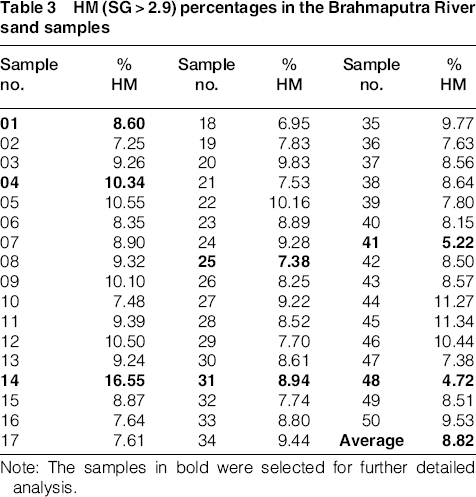
Note: The samples in bold were selected for further detailed analysis.
Grain size analysis
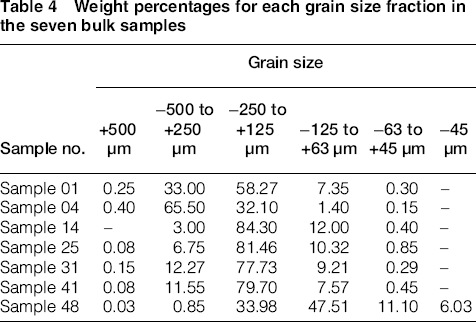
Grain size analysis results are listed in Table 4 and plotted on a line plot in Fig. 2. The most frequent grain size was the +250 to −125 µm fraction (Samples 14, 25, 31 and 41). Within these four samples, there was a narrow grain size distribution with >75% of particles falling within the +250 to −125 µm fraction, which indicated that the sediments were well sorted. In contrast, Samples 1 and 4 had grain size populations that were skewed more towards the coarser −500 to +250 µm fraction, whereas Sample 48 had a higher proportion of grains reporting to the finer, sub −125 µm fraction, which indicated a higher silt component.
Grain size distribution results for the seven bulk samples Weight percentages for each grain size fraction in the seven bulk samples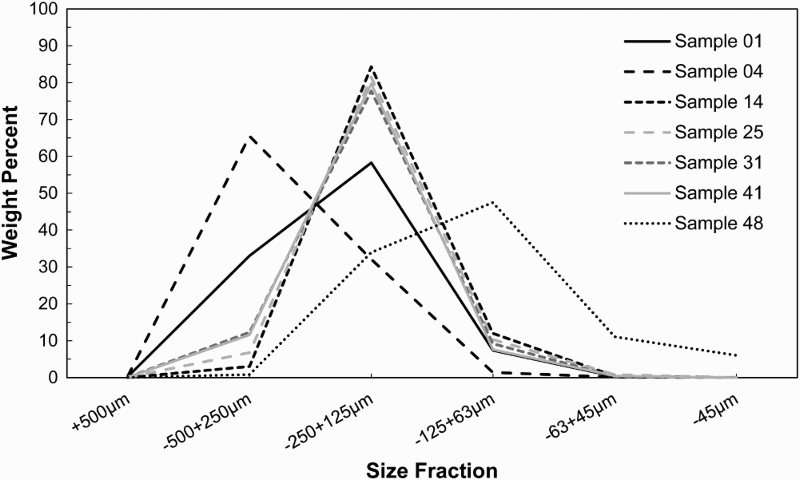
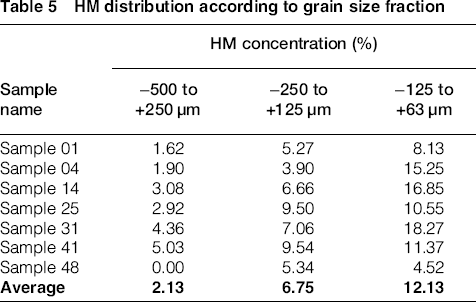
HM distribution according to grain size fraction
Chemical (XRF) analysis
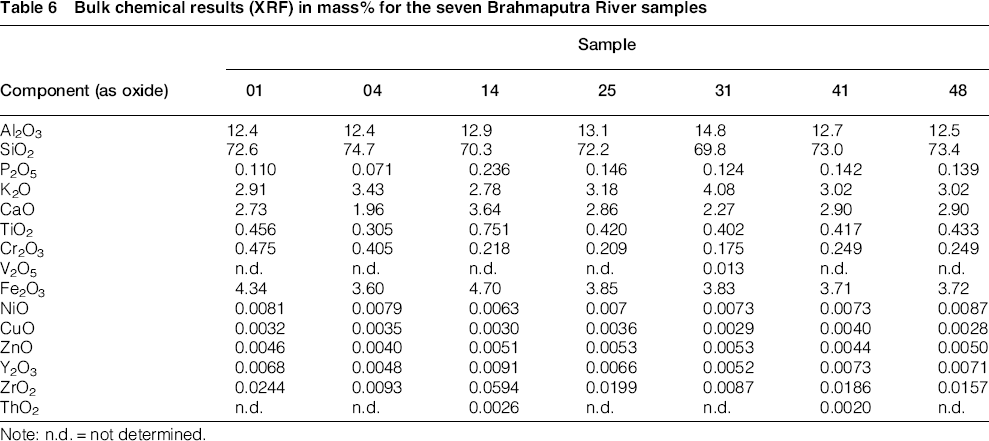
Bulk chemical results (XRF) in mass% for the seven Brahmaputra River samples
Note: n.d. = not determined.
HM concentration XRF results (mass %) for a sized composite HM sample from the Brahmaputra River
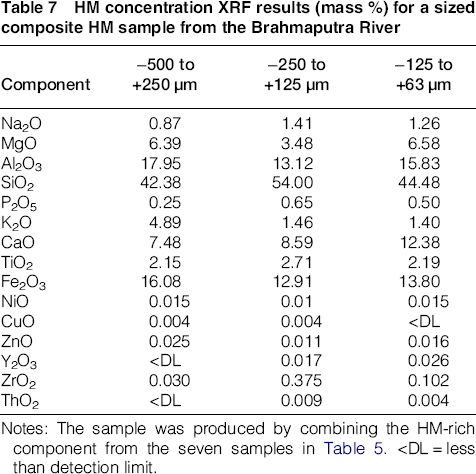
Notes: The sample was produced by combining the HM-rich component from the seven samples in Table 5. <DL = less than detection limit.
Mineralogical analysis
XRD phase analysis
XRD analysis of the seven samples revealed that all samples were quartz-rich (>70%) with a large number of minor phases including amphibole, epidote, garnet, kyanite and feldspars. The valuable HM components were found to be generally below detection (i.e. less than 1–2%) in the bulk sediments except in Sample 14 where a trace amount of ilmenite was observed. Analysis of the HM concentrates produced from the bulk sediments confirmed the presence of HMs such as garnet (almandine), zircon, ilmenite, sillimanite, xenotime, rutile, chlorite, monazite, kyanite plus other amphibole and pyroxene group minerals.
Modal abundance of HMs
Weight percentage of valuable heavy minerals (VHM) in each sample determined by optical grain counting

Weight percentage of valuable heavy minerals (VHM) in each sample according to size fraction
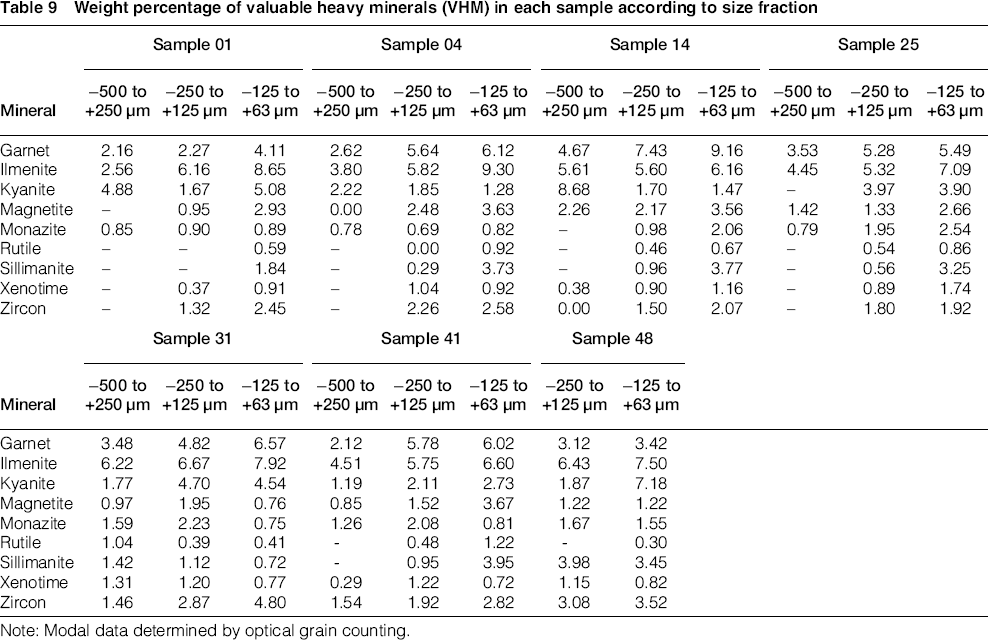
Note: Modal data determined by optical grain counting.
Textures of the VHMs
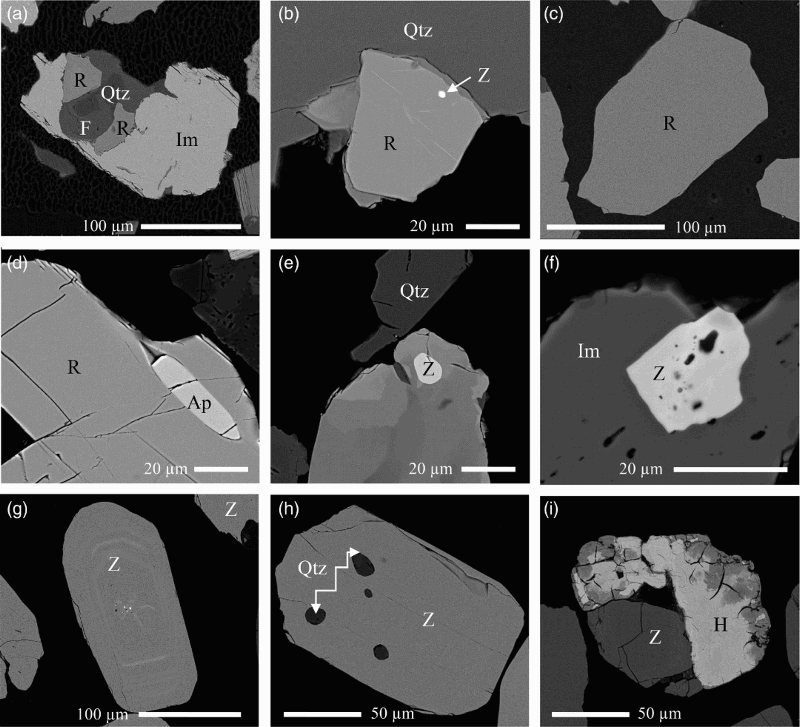
Figure 3 contains back-scattered electron (BSE) images of the textures of the VHMs such as ilmenite, titanomagnetite and magnetite. Figure 4 contains similar images for the minerals rutile, zircon and huttonite, which is a thorium silicate, ThSiO4, with some uranium in solid solution.
Representative BSE images showing textures of the valuable heavy minerals ilmenite, titanomagnetite and magnetite in the Brahmaputra river sands. Key to abbreviations: Im = ilmenite, Tim = Titanomagnetite, Mt = Magnetite. Gangue heavy mineral grains are not labelled Representative BSE images showing textures of the valuable heavy minerals rutile, zircon, huttonite and apatite in the Brahmaputra river sands. Key to abbreviations: R = rutile, F = feldspar, Im = ilmenite, Z = zircon, Qtz = quartz, H = huttonite, Ap = apatite.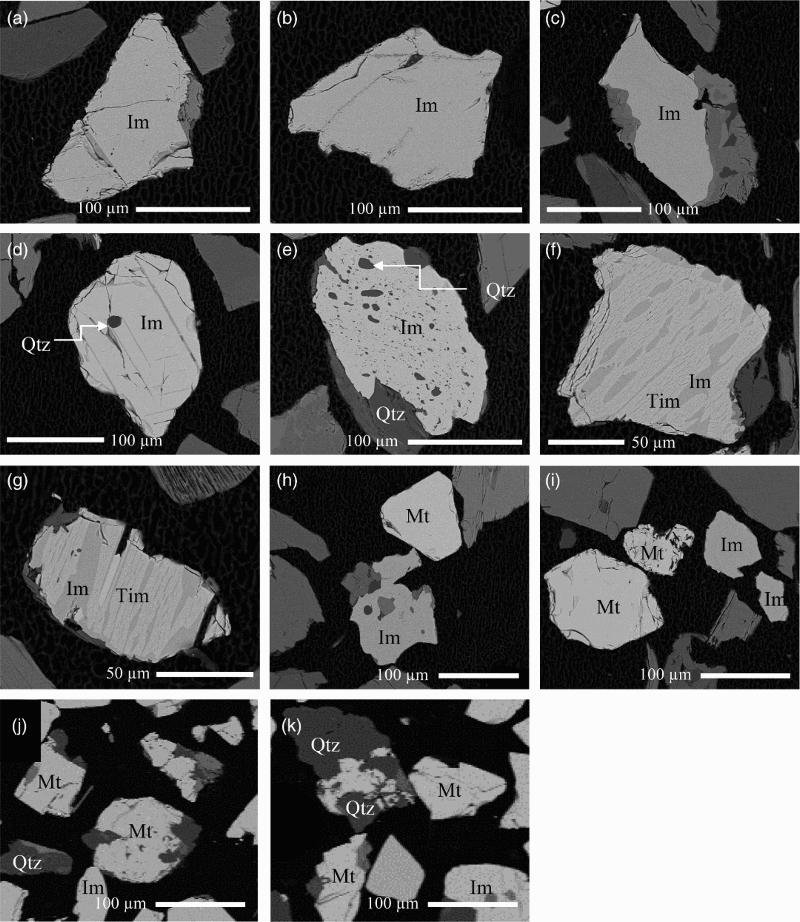
Textural examination indicated that the majority of ilmenite grains were >100 µm in size, well liberated and occurring as angular to sub-rounded particles with little or no gangue minerals attached to surfaces (refer to Fig. 3 a and b). HM grains from fluvial environments typically have a much poorer roundness than equivalent grains from the aeolian and coastal environments.
The ilmenite grains had few features diagnostic of chemical alteration during weathering and transport – except for minor alteration along outer grain surfaces or within fracture surfaces. Based on the angular nature of the HM grains and the lack of evidence for substantial alteration, the interpretation is that the ilmenite was relatively primary in composition. However, there was a small population of ilmenite grains that were not fully liberated or clean. These grains were attached to gangue silicates (refer to Fig. 3 c) or contained numerous inclusions, usually of quartz (refer to Fig. 3 d and e). Additionally, many Fe/Ti grains showed exsolution features typical of slow-cooled, partially oxidised Fe/Ti oxides. The most common type of exsolution involved the formation of coarse-oriented ilmenite rods within titanium-rich magnetite grains (refer to Fig. 3 f and g).
The magnetite particles in the river sands occurred as a mixture of fully liberated to particles (refer to Fig. 3 h and i) that formed complex intergrowths with silicate gangue minerals (refer to Fig. 3 j and k). The majority of magnetite particles were angular in appearance indicating a resistance to abrasion during transport.
The rutile grains in the river sands ranged from fine-grained (<30 µm) composite particles (refer to Fig. 4 a and b) to fully liberated sub-rounded grains up to 100–150 µm in diameter (refer to Fig. 4 c). Some grains showed evidence for inclusions (refer to the apatite in Fig. 4 d). Similar textures were observed for zircon, which tended to occur as fine-grained inclusions in silicates or ilmenite grains (refer to Fig. 4 e and f) or as coarser, up to 100 µm in diameter, fully liberated grains (refer to Fig. 4 g). A small proportion of the fully liberated zircon grains contained inclusions of other minerals. These were primarily quartz (refer to Fig. 4 h) or monazite grains. Other potentially recoverable minerals included rare-earth-element (REE)-rich monazite (not shown) or a thorium silicate phase, huttonite (ThSiO4, refer to Fig. 4 i). Huttonite is dimorphous with thorite and isostructural with monazite, and preliminary EDX analysis of grains indicated relatively high U and P contents.
Mineralogy by automated EPMA mapping
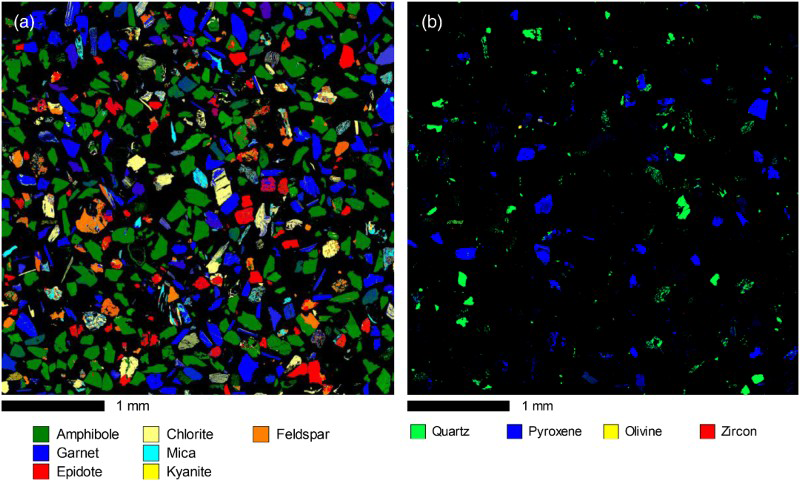
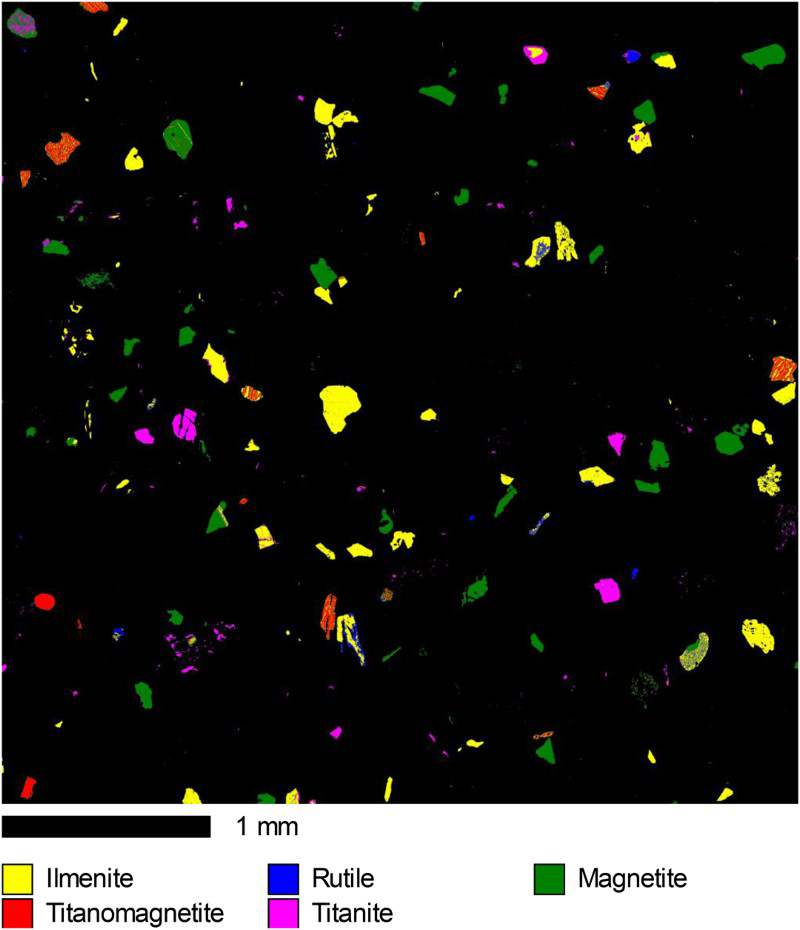
Data from the EPMA mapping of the split sample produced from the bulk, un-sized HM concentrate were analysed via a clustering algorithm (Wilson and MacRae 2005) to identify the mineral phases presence. The concentrate contained a large number of HM's, broadly separable into aluminosilicates (amphibole, garnet, epidote, mica, feldspars and chlorite), silicates (quartz, pyroxene and zircon), phosphates (apatite, trace amount) and Fe/Ti mineral phases (Fe-oxides, ilmenite, titanite and rutile) (refer to Fig. 5). Trace amounts of chrome spinel and carbonates were also identified. Modal analysis of the 2D map of Fig. 5 b gave the following abundances for each group (in area percent): aluminosilicates ∼81%; silicates ∼10%; phosphates <0.1%; Fe/Ti oxides ∼9%. Within the aluminosilicates, amphibole (∼36%) and garnet (∼22%) were most commonly represented with lesser amounts of epidote (∼8%), chlorite (∼7%), feldspars (∼5%), micas (∼3%) and kyanite/andalusite (<0.2%). Figure 6 a is an image of the distribution of each of these mineral phases within the mapped area. For the silicates (refer to Fig. 6 b), the main mineral phases identified were pyroxene (∼6%), quartz (∼4%), zircon (∼0.5%) and olivine (<0.1%). The Fe/Ti oxide phases present in the HM concentrate are potentially recoverable for further processing and these have been identified as comprising a mixture of magnetite (∼3%) ilmenite (∼4%), titanite (∼1%), titanomagnetite (∼1%) and rutile (∼0.4%). Figure 7 is an image of the distribution of these oxide phases.
a Back-scattered electron (BSE) image of the bulk HM concentrate showing the distribution and textures of all minerals within the mapped area, b Phase-patched map showing the distribution of the main mineral groups; aluminosilicates, silicates, phosphates, and Fe/Ti oxide phases Final phase-patched maps for the bulk HM concentrate showing the distribution and textures of; a all aluminosilicate phases, and, b all silicate phases Phase-patched map showing the distribution and textures of all Fe/Ti oxide phases in the bulk HM concentrate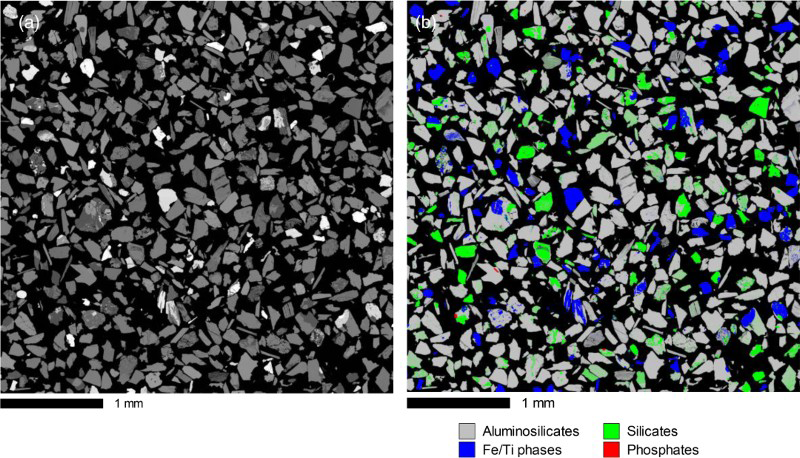
Quantitative EPMA
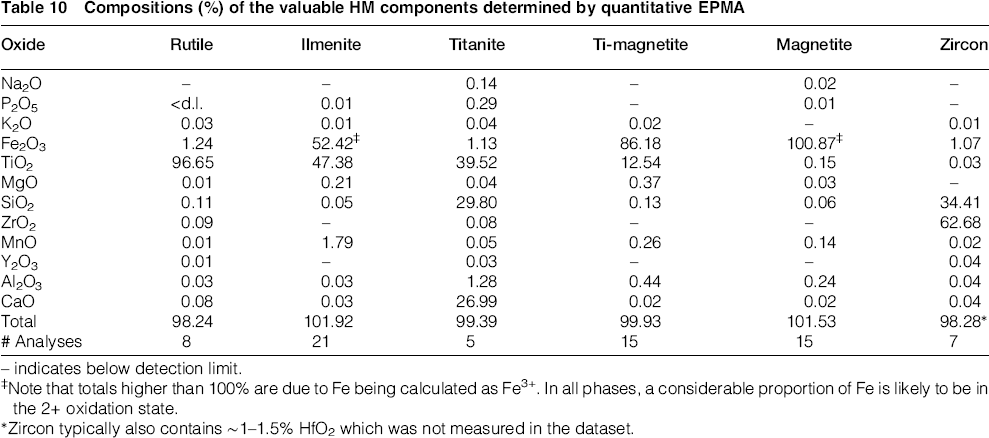
Quantitative EPMA data were acquired to evaluate the ‘quality’ of the potentially valuable components of the river sands which included rutile, ilmenite, magnetite, titanomagnetite, titanite and zircon. The results are listed in Table 10 with compositions also plotted on a Ti versus Ti/[Fe + Ti] scatter plot (refer to Fig. 8) to highlight the variation between the different titania mineral groups.
Ti versus Ti/[Fe + Ti] scatter plot for the Ti-rich components of the Brahmaputra river sands Compositions (%) of the valuable HM components determined by quantitative EPMA – indicates below detection limit. ‡Note that totals higher than 100% are due to Fe being calculated as Fe3+. In all phases, a considerable proportion of Fe is likely to be in the 2+ oxidation state. *Zircon typically also contains ∼1–1.5% HfO2 which was not measured in the dataset.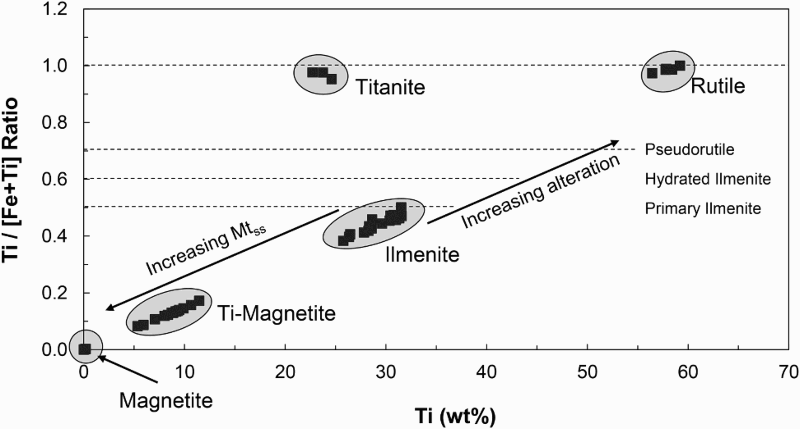
The data for the Fe/Ti oxide components of the river sands plot over an extended compositional range from ∼0% to ∼34% Ti (∼0–0.5 Ti/[Fe + Ti] ratio) and as such, represent a wide spectrum from relatively pure magnetite to titanium-rich primary ilmenite compositions. Beyond ∼34% Ti, there was no further increase in titanium content indicating that the ilmenites had not been altered to any extent. This observation is in contrast to ilmenites that are typically found in beach sand HM deposits where the combination of continuous high energy wave action followed by post-depositional alteration leads to hydration, oxidation and leaching of iron from ilmenite, which results in enriched titanium contents in altered ilmenites due to the formation of alteration phases such as hydrated ilmenite and pseudorutile (Pownceby 2010). The titanium-rich cluster of results in the region ∼60% Ti was from rutile particles, while the data cluster at ∼22–23% Ti represented titanite (or sphene – CaTiSiO5).
The major impurities present in the ilmenite grains were manganese oxide (1.79% MnO) and magnesium oxide (0.21% MgO). These were both likely to be present within the structure of the ilmenite grains as the solid solution components pyrophanite (MnTiO3) and geikielite (MgTiO3). Other minor impurities in the ilmenite grains included silica (0.05% SiO2), alumina (0.03% Al2O3) and calcium oxide (0.03% CaO). These oxides do not substitute into the ilmenite structure and most likely represented fine-grained contaminant silicate and aluminosilicate minerals present in pores and/or fractures of the ilmenite grains. The titanomagnetite grains comprised up to 12.5% TiO2 and had significantly less manganese oxide (0.25% MnO) than ilmenite but contained more magnesium oxide (0.37% MgO) and alumina (0.44% Al2O3) – the latter two interpreted to be magnesium aluminate (MgAl2O4) or hercynite (FeAl2O4) spinel solid solution components. The magnetite comprised relatively pure grains with minor impurities including alumina (0.24% Al2O3), titania (0.15% TiO2) and manganese oxide (0.14% MnO).
Analyses of the rutile grains indicated a composition containing 96.7% TiO2 with impurities comprising hematite (1.24% Fe2O3) and zirconia (0.09% ZrO2). Both are typical impurity elements in rutile grains capable of substituting directly into the rutile lattice (Bramdeo and Dunlevey 1999). Silicon substitution is not compatible except at extreme conditions and the level of 0.11% SiO2 indicates either contamination by inclusions or material in pores and fractures.
Zircon grains were of high purity with total contaminants <2.5% of the total chemistry. The major contaminant was hematite (1.07% Fe2O3). Note that zircon grains typically contained ∼1–1.5% HfO2 and also may contain elevated levels of uranium and thorium albeit these elements were not analysed in the initial study. However, a follow-up examination using EDX analysis indicated that minor hafnium was present, but uranium and thorium were below detection levels.
Feasibility of physical separation
Based on the abundance of VHMs and the observation that the majority of HM grains were fully liberated, a study into the physical separation of each of the VHM components from a 10 kg bulk HMC was conducted. The separation was performed using a combination of routine industry HM separation techniques including gravity (shaking table), magnetics (induced roll magnetic separator [IRMS]) and electrostatics (plate separator). Figure 9 is a flow sheet summary of the procedure applied to the bulk sample.
Preliminary flow sheet for the separation of valuable heavy components from the Brahmaputra river sands. The concentrates circled were examined by BSE imaging and are shown in Fig. 10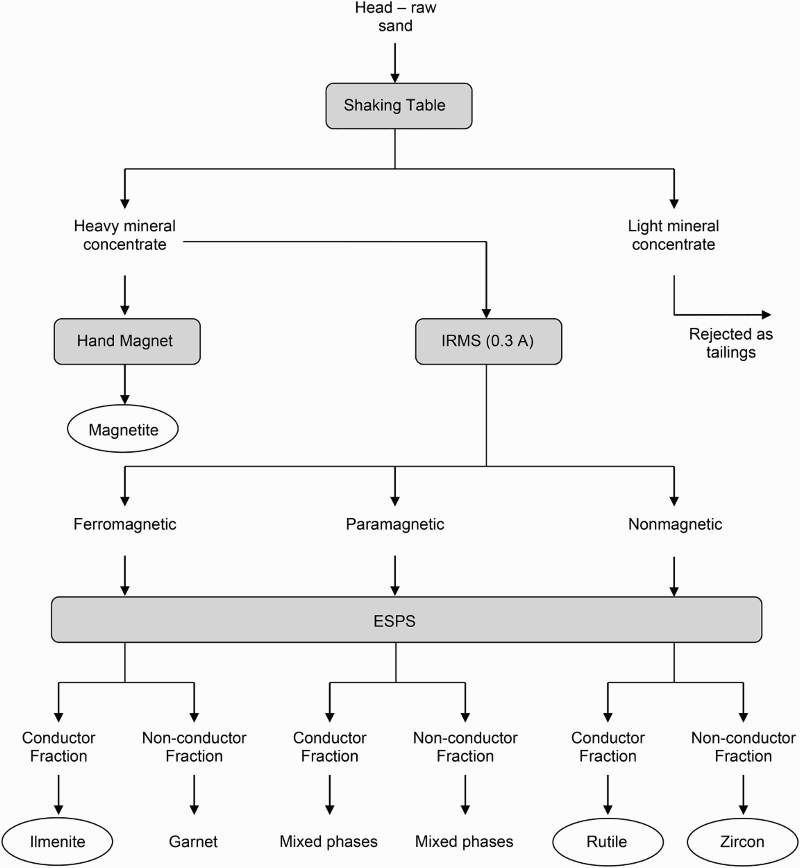
The bulk sand composite was first processed using a wet gravity shaking table to separate the heavy and light components. The light fraction was discarded. The highly magnetic magnetite was then separated from the heavy fraction using a rare-earth hand magnet. The remaining heavy fraction was then separated into ferro-magnetic, para-magnetic and non-magnetic fractions with an IRMS run at 0.3 A (2000 Gauss) and 3.0 A (20 000 Gauss). The fractions separated by the IRMS were then processed using an electrostatic plate separator operating at 25 kV and a feed rate of 20 rpm to separate the conductive and non-conductive minerals from each of the IRMS fractions. The full process produced mineral-rich fractions that were either ilmenite-rich, garnet-rich, rutile-rich, zircon-rich or one of two mixed fractions from the para-magnetic concentrate.
Figure 10 contains BSE images from each of the separated VHM fractions for magnetite, ilmenite, rutile and zircon. The images revealed that with an optimisation of a separation regime to remove silicate and aluminosilicate gangue particles, relatively clean concentrates of ilmenite, zircon and rutile could be prepared. Additional process optimisation may also recover, as separate streams, the REE-phosphates and thorium-silicates which at present report to the rutile, zircon (and also garnet) streams. Examination of the magnetite concentrate, however, indicated considerable contamination by silicates and aluminosilicates, primarily due to composite magnetite/silicate particles. Further work involving fine grinding may be required to fully liberate the magnetite particles to generate a magnetite-rich product stream.
BSE images showing the minerals, textures and grain sizes from each of the HM separates. a Magnetite concentrate. Magnetite grains (bright) are angular and relatively homogeneous. Note the high proportion of composite magnetite/silicate particles; b Ilmenite concentrate. The ilmenite grains are the brightest contrast phase in the image. Variation in the contrast is due to the presence of titanomagnetite-rich grains and exsolution which are also present. Compared to the magnetite concentrate, the ilmenite concentrate is a cleaner separate with less overall silicates and aluminosilicates. The majority of gangue particles present are associated with composite ilmenite/gangue particles. c Rutile concentrate. The concentrate contains mainly rutile (mid-grey contrast phase) but with a significant amount of silicates (various shades of dark grey) and RE phosphates and Th-rich silicates (bright phases). d Zircon concentrate. Except for two very bright contrast phases (RE phosphates) the majority of the sample is zircon with minor silicates/aluminosilicates (darker grey). Note the high degree of liberation of zircon grains. In all images the scale bar is 1 mm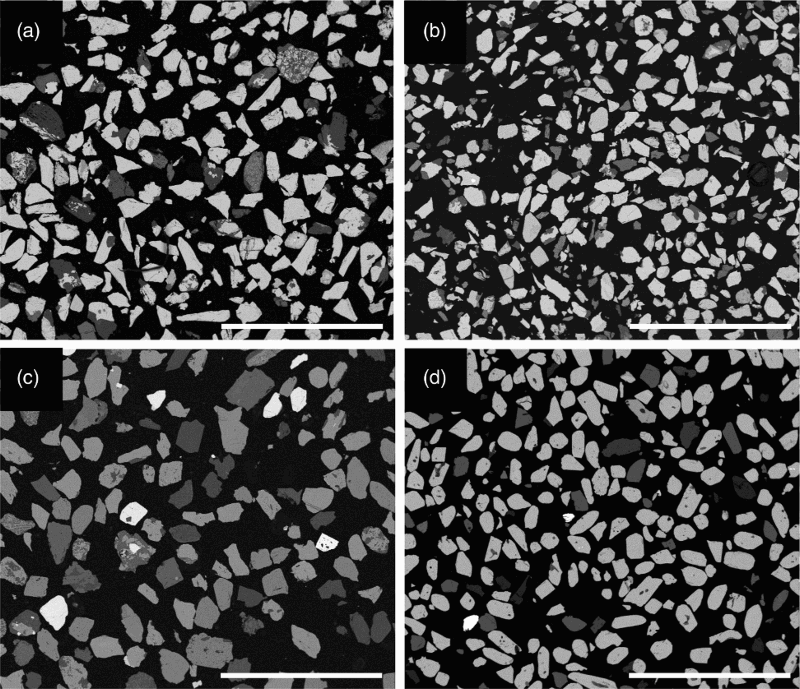
Discussion
In extensively studied fluvial systems, the distribution of titanium-rich HMs occurs in predictable ways, generally decreasing in HM grade further away from the source (Minard et al. 1976). The grade trend is due to a combination of lag effects and dilution by other debris. In the Brahmaputra drainage system, dilution from other systems, including the Tista and Ganges rivers, has the potential to dilute the HM content of the Brahmaputra River sands downstream. As such, this study was limited to samples sourced before the confluence with the Tista River, which is expected to have a significant diluting effect.
The results indicate that the upper 1 m of Brahmaputra River sands contain a HM suite that, depending on the sample site, varies between ∼4.5 and 16.5% total HM. Furthermore, the HM fraction was enriched in the VHMs ilmenite, titanomagnetite, rutile and zircon. Along with other potentially VHMs such as magnetite, garnet and REE-phosphates, these made up approximately 10–15% of the HM. The low concentration of these VHMs was consistent with amounts typically observed in fluvial placer deposits. However, the main attraction of the Brahmaputra sands is that there is a large volume of material that could potentially be processed.
Preliminary testing has indicated that the grain sizes of the VHM components in the HM, predominantly within the −250 to +63 µm size range, are within the size ranges typically processed by simple physical separation and upgrading methods. The separation testing has demonstrated that clean concentrates of ilmenite, zircon and rutile can be produced, while magnetite concentrates may require further processing. The chemistry of the ilmenite concentrate produced in the preliminary tests indicated that the major impurities present in the ilmenite included manganese oxide (1.79% MnO) and manganese oxide (0.22% MgO) and minor impurities were alumina (0.03% Al2O3), silica (0.05% SiO2) and calcium oxide (0.03% CaO). The ilmenite composition was similar to that previously reported by Rahman et al. (2014) for ilmenites sourced from the Brahmaputra River sands. Although not all possible impurity elements were analysed in the current study, based on the compositions measured, the most likely route for processing the ilmenite-rich component of the HM sands would be to produce pigment via the sulphate route. The sulphate process route is more likely since the chloride route requires a feed with a higher titania grade. Other VHM components, zircon and rutile, were low in total impurities indicating that little or no further processing would be required to produce saleable concentrates.
While the current study has demonstrated that only relatively low grades of VHM could be recovered from the Brahmaputra River sands, the authors caution that the samples collected are derived from the top 1 m of exposed sand bars. Importantly, Garzanti et al. (2011) showed that within the Brahmaputra River system, there was considerable compositional variability with depth and that HM concentrations were found to steadily increase with depth relative to micaceous phases and clays. Additionally, a systematic depth analysis of selected boreholes indicated a general increase in the amount of opaques (such as ilmenite, magnetite and rutile) and zircon with depth and as such the results presented here may understate the HM and VHM potential of the study area. Moreover, the increase in HM content with depth was consistent with more general studies on alluvial placers by Raufuss (1973) and Minard et al. (1976). It is recommended that more work is required in the Brahmaputra River locations to determine if depth is a significant factor contributing to the lower HM contents.
While the results of this study indicate that the Brahmaputra River system has the potential to profitably recover VHMs, work by Garzanti et al. (2011) suggests that the Ganges River may be more attractive (see Table 1 in Garzanti et al. 2011). The limited data in this Ganges River study indicate ‘opaque’ HM concentration to be between 10 and 25% HM total in the Ganges, which is much higher than the concentrations determined in this study. Unfortunately, the depth and locations of the samples studied by Garzanti et al. (2011) were not reported. A similar study to that conducted here is recommended for the Ganges River.
Summary
The Brahmaputra River is one of the largest fine-grained, sandy braided river systems in the world. The river traverses a long course through many and varied geologic formations carrying enormous quantities of sediment annually forming numerous relatively stable sand bars. The HM assemblages of the Brahmaputra River sands are marked by the predominance of amphibole and epidote, followed by garnet, apatite, tourmaline, sillimanite, kyanite and staurolite. A bulk HM concentrate produced by combining samples from seven individual sites revealed that there was a marked enrichment in some VHMs such as zircon, ilmenite, magnetite, rutile and titanomagnetite in the size fractions −250 to +125 µm and −125 to +63 µm whereas the concentration of VHMs was either low or absent in the coarser −500 to +250 µm size fraction. Modal analysis of a combined HM concentrate indicated that Fe/Ti oxide phases (∼9–10% in total) were the main VHM present in the HM concentrate that are potentially recoverable for further processing. These have been identified as comprising a mixture of magnetite (∼3%) ilmenite (∼4%), titanite (∼1%), titanomagnetite (∼1%) and rutile (∼0.4%). Zircon, also a potentially recoverable VHM, was present at levels of ∼0.5%.
Preliminary laboratory separation studies successfully prepared ilmenite, rutile, garnet and zircon-rich concentrates from a bulk composite sample. The ilmenite would most likely be suitable for producing pigment via the sulphate route while the other VHM components, zircon and rutile, were low in total impurities indicating little or no further processing will be required to produce saleable concentrates. Based on the results of this preliminary characterisation study, the authors recommended that a comprehensive mineral resource estimation study is undertaken to assess the resource potential of HMs within the Brahmaputra River sands.
Footnotes
Acknowledgements
The authors wish to acknowledge who have contributed to the work reported, in particular CSIRO co-workers Cameron Davidson (EPMA sample preparation) and Nick Wilson and Aaron Torpy (EMPA characterisation). Dr Graham Sparrow is thanked for critically reviewing the final draft this manuscript.
Disclosure statement
No potential conflict of interest was reported by the authors.