






Abstract
Black sands represent a good source of economic minerals with various industrial applications. However, their radioactive properties may prevent their use in specific applications. In this study, zircon, ilmenite, magnetite, and rutile are four minerals represent more than 75% of the black sand content, were selected to evaluate their Intrinsic radiological properties. The chemical composition of these minerals was determined along with their density and particle size. Then, the activity concentrations of the naturally occurring radioactive nuclides were experimentally determined and the most important radiological hazard indices were calculated. The results indicated that the upgrading process concentrates the natural radioisotopes in some minerals like the zircon and rutile leaving the magnetite and ilmenite with lower content than permissible limits. Moreover, the risk analysis identified the dangerous conditions and situations and suggest possible solutions to reduce these hazardous situations to a minimum and to keep a safe environment for the workers.
Introduction
Black sand deposits are formed due to the erosion of some of the igneous and metamorphic rocks in the Southern part of Sudan and the Ethiopian Plateau (Pettijohn et al. 1987). They are transported through the River Nile to settle along the Nile Delta coastal zones and the northern coast of Sinai (Aziz et al. 2020). It was noticed that the black sand deposits contain significant concentrations of natural radioisotopes which are called naturally occurring radioactive materials (El-Naggar 1999; El-Khatib et al. 1993). The exposure to radiation coming from these materials may threaten the people, either living close to their existence or working with, and their surrounding environment (Akram et al. 2007).
Some of the previous studies indicated that the black sand deposits do not have harmful natural radiation emissions as they fell into the permissible limits (Aboelkhair and Zaaeimah 2013; UNSCEAR, 2000, 2018). However, these black sands were subjected to different concentration steps that expectedly increase their radioactivity measures. The concentration steps split the whole deposit into several economic minerals; such as ilmenite, magnetite, rutile, zircon, garnet, and monazite (Alam et al. 1999). As an example, El-Burbllus black sand processing flowsheet was among different suggested concentration flowsheets (El-Afandy et al. 2016). These minerals are rich in appreciable concentrations of economic minerals along with some radioactive elements in concentrations higher than the ordinary global level, nevertheless, they do not necessarily have the same radiological indices or even exceed the permissible radiation limits (El-Kammar et al. 2011; Abdel-Karim et al. 2016). The inhalation of these minerals during their processing is one of the main threats, which depends mainly on the particle size and requires proper ventilation (Adelikhah et al. 2020; Dodge-Wan and Viswanathan 2021; Kocsis et al. 2021). In addition, radon-contained minerals in particular seriously affect the respiratory system and resulted in severe health problems (Khan et al. 2017).
Magnetite, ilmenite, rutile, and zircon not only represent more than 75% of the black sand components but also have the most significant economic feasibility (Khedr et al. 2023). For instance, Rutile and Ilmenite are the main sources of titanium dioxide that have different applications in pigments, papers, plastics, and titanium alloys. Whereas zircon is usually used in the ceramics industry besides, it contains zirconium which is used in nuclear fuel rod manufacturing. Also, magnetite, which is an important iron ore, is widely used in the sponge iron industry and for oil pipe wrapping.
Therefore, in this study representative samples for these four minerals coming from the black sand and its concentration process are subjected to different characterisation stages. Initially, the minerals were chemically and physically characterised using X-ray fluorescence (XRF), real density, and particle size, respectively. Most importantly, the activity concentrations of the samples’ contents of the naturally occurring radioactive nuclides were measured and the important radiological hazard indices were estimated. Furthermore, the risk analysis was conducted using the preliminary risk assessment method.
Experimental
Materials
Representative samples for Magnetite, ilmenite, rutile, and zircon were obtained from the Black Sand Company, Egypt. These minerals are products of the concentration of the black sand deposits that are located on the northern coast, especially near El-Burullus and Rasheed areas. Figure 1 shows a schematic flowsheet for the black sand beneficiation steps. The material balance of this flowsheet shows that the mineral percentages are 40, 15, 15, and 10% for ilmenite, magnetite, zircon, and rutile, respectively. It is clear that these four minerals represent more than 75% of the total black sand composition.
Balanced flowsheet for the black sand processing.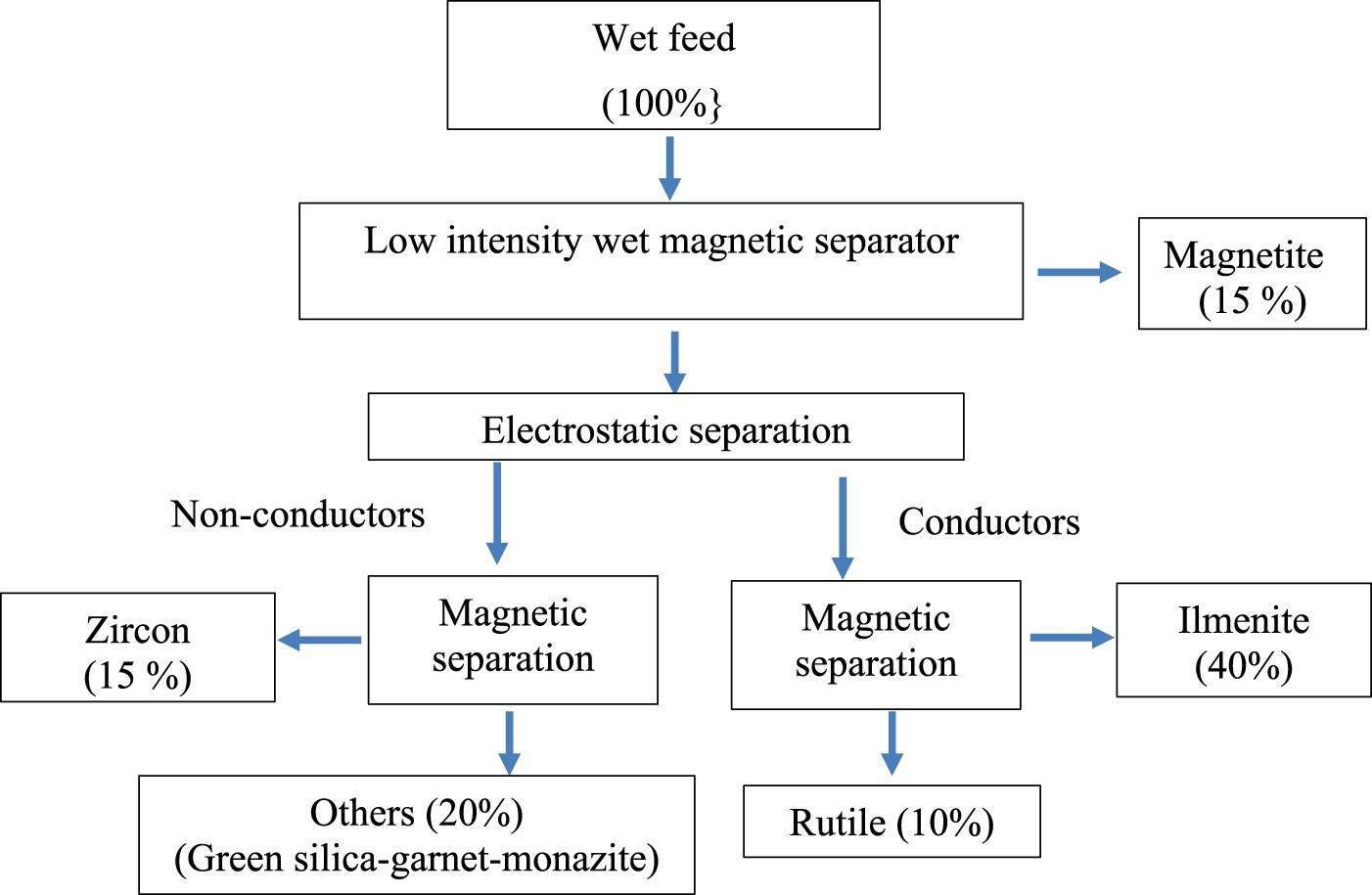
Methods
Chemical analysis (XRF)
X-ray fluorescence (XRF) Spectrometer (S-8 Tiger Bruker, Germany) was used to define the chemical composition of the studied samples (García-Florentino et al. 2018).
Density measurement
The density was measured by Ultrapyc 1200e Automatic Gas Pycnometer, Quantachrome Instruments, USA, using highly-purified nitrogen gas.
Particle size analysis
The mean particle size (d50) of the investigated samples was determined from the cumulative size distribution obtained using a BT-2001 laser diffraction particle size analyzer with a detection range of 0.1-1036 μm using water as the dispersive medium. The device is equipped with a dispersing system to ensure powder complete dispersing and consequently more accurate measurements (Guerra et al. 2017).
Radiological activity and associated hazard indices
Specific radioactivity
The dried samples at 100 °C in an oven for 24 h were kept in tightly-sealed polyethylene Marinelli cylindrical containers for 28 days before measurements reached a secular equilibrium between 226Ra (represents 238U decay chain), 232Th, and their daughters (Kocsis et al. 2021; Tawfic et al. 2021).
The radiological activity was measured using Sodium Iodide (NaI (Tl)) scintillation detector (Bicron) with a 3՛՛×3՛՛ crystal hermetically sealed with a photomultiplier tube in an aluminium housing. The detector is placed in a cylindrical hollowed lead chamber with a 6 mm thickness copper internal liner for protection against induced X-rays and background radiation. The detector is connected to a Nuclear Enterprises amplifier, model NE-4658, Tennelec high voltage power supply, model TC-952, Nucleas PCA-8000 computer, and MA-8192 multichannel analyzer.
Uranium and thorium are indirectly measured using specific gamma lines emitted by their daughters (Tawfic et al. 2021). Radioactivity of 226Ra, 232Th, and 40K was measured using selected energy regions representing; 214Pb, 212Pb, and 40K at 352, 239, and 1460 keV, respectively.
To ensure that the measured activities were taken accurately at the chosen gamma radiation energies, energy calibration was carried out using 57Co and 137Cs radioactive standard sources, and efficiency calibration was performed using four artificial standard sources (geological reference materials) prepared from a series of certified reference samples with certain 226Ra, 232Th, and 40K activity concentrations obtained from the International Atomic Energy Agency (IAEA). Background count rates were measured using empty containers with the same geometry and dimensions then, count rates for the chosen regions of interest (ROI) were recorded and corrected by subtracting the corresponding background count rates. The measurements were taken three times, each for 1000 Sec, and then processed by ‘ANALYSIS’ computer software.
The radioactivity concentrations (Ac) of; 226Ra, 232T,h, and 40K in (Bq/kg) in the studied samples were calculated using Equation 1 (Turhan et al. 2008; Tawfic et al. 2021).

External hazard indices and doses
Radium equivalent activity (Raeq)
The radium equivalent activity (Raeq) can be described as an equivalent summed value gathering the specific activities of the main three NORMs; 238U, 232Th, and 40K, as if they are all in terms of 226Ra specific activity assuming that; 370, 370, 259, and 4,810 Bq/kg for 226Ra, 238U, 232Th, and 40K, respectively, produce the same γ-ray dose rate, as denoted by the following equation (Beretka and Mathew 1985):

Gamma index (I
γ
)
It is employed in evaluating construction and building materials to assess the possible γ-ray dose that may be obtained by dwellers or occupants who occupy places or buildings constructed mainly or partially from those materials. Gamma index (Iγ), to restrict the exposure up to 1 mSv/year, Iγ is set to be ≤ 1 for the material used as a bulk and calculated by the following equation (European Commission 1999 Ali et al. 2012;):

External hazard index (Hex)
The external hazard index, Hex, is calculated using Equation 4 (Radiation 2000). Hex is used to assess the possible external radiological exposure hazard upon being in direct and prolonged contact with the investigated materials like workers in mining, processing plant, and piling up of these minerals. The limit of the external hazard index is set to be unity to not exceed the recommended public annual permissible dose of 1 mSv/y (Radiation 2008).

External absorbed dose rate and annual effective dose
The external absorbed dose rate, Ḋout, in nGy/h, is the rate by which this dose can be received during staying outdoors at 1 m above the ground level in an area (i.e. mining, separation, and piling-up work sites) that contain significant amounts of the materials under investigation. Ḋout can be estimated using the following formula (Radiation 2000):


Results and discussion
Minerals characterisation
Chemical composition and densities
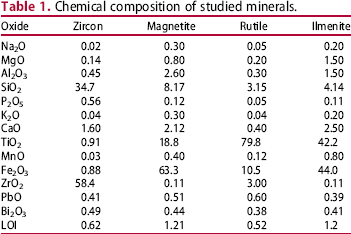
Table 1 and Figure 1 show the chemical composition and true density of the used samples. All samples have considerable percentages of heavy elements such as titanium, iron, and/or zirconium, which were reflected in their densities. Zircon has the highest density, 5.23 g/cm3, followed by magnetite and ilmenite, 5.02 and 4.6 g/cm3, respectively, Figure 2.
Real density of the studied samples. Chemical composition of studied minerals.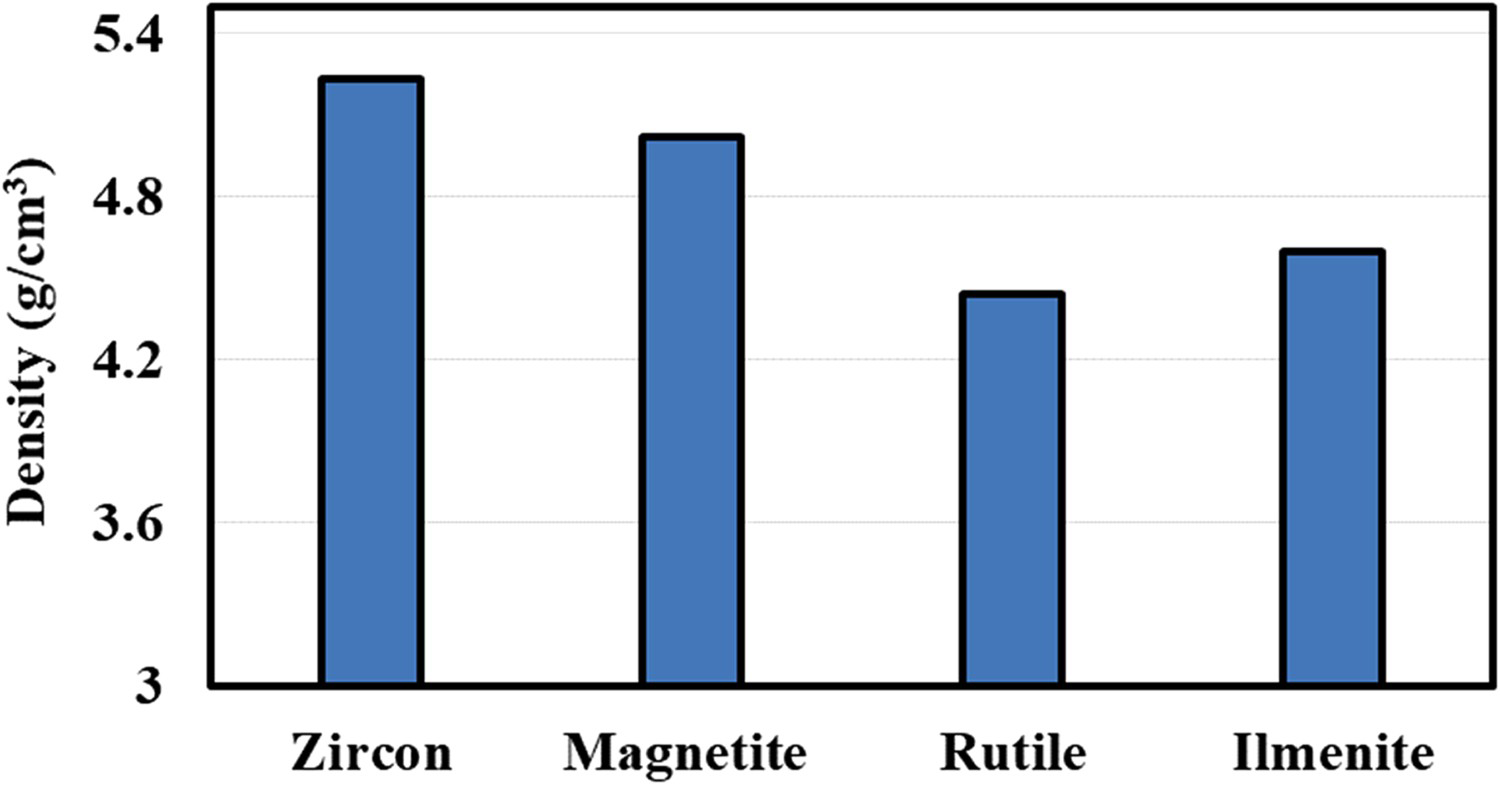
Particle size distribution
Average particle size (d50) of the studied samples.

Radiological characteristics
Specific activities
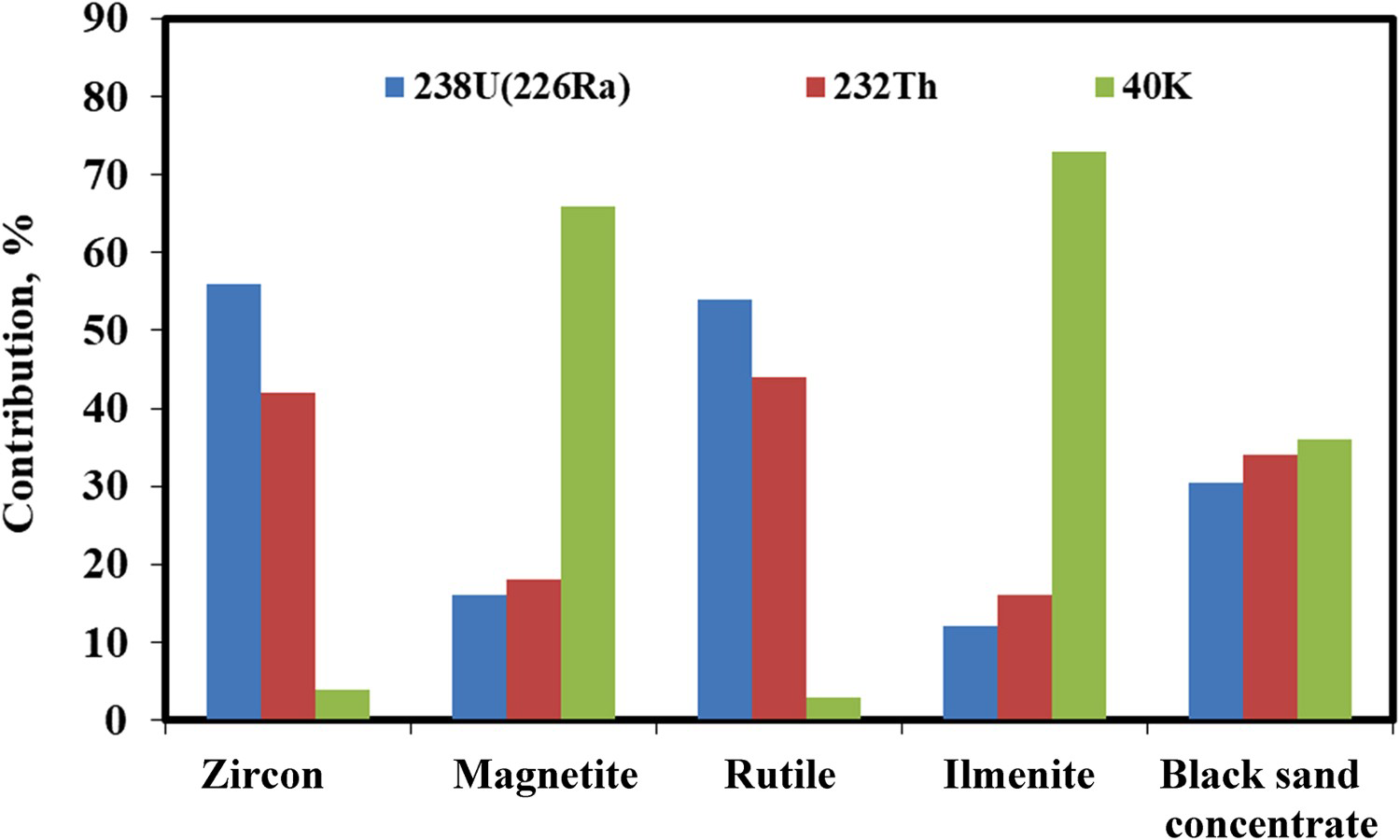
Figure 3 shows the difference in specific activity contributions of the black sand before and after concentration. Most of the 40K was removed in the concentration process while the 226Ra and 232Th get higher after concentration which gives an alarm towards the expected radiological hazards which was confirmed by the increase of the 226Ra and 232Th in zircon and rutile products and the 40K in magnetite and ilmenite, Figure 4.
Contributions of black sand before and after upgrading. Minerals contributions including the reference black sand concentration sample.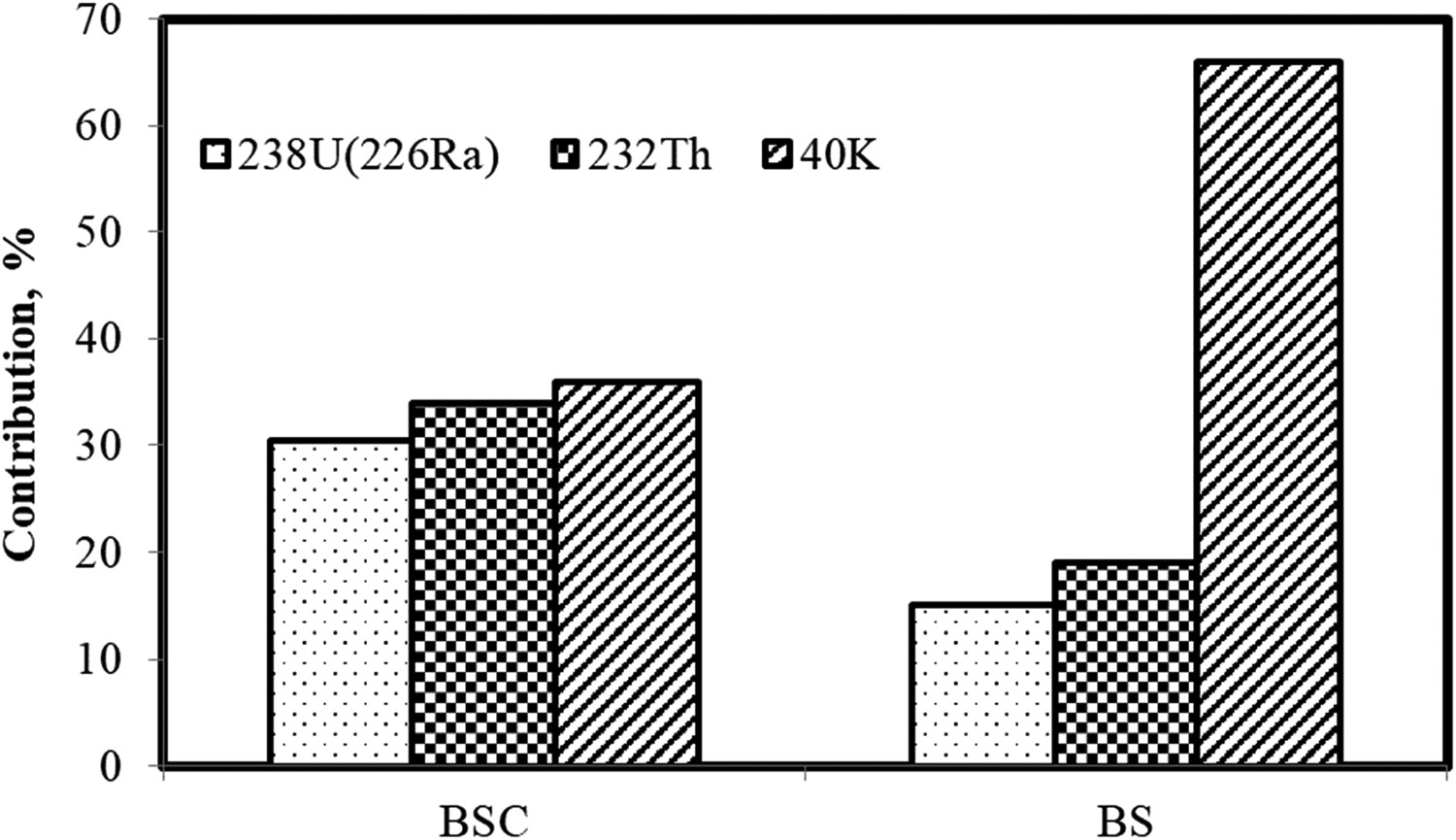
On the other hand, Figure 5 shows that the Rutile has the highest total specific activity of 4841 Bq/kg followed by the zircon with a net specific activity of 4231 Bq/kg. The major contribution in the total specific activities of these samples is due to 238U, in terms of 226Ra, then 232Th.
Activity concentrations of the main naturally occurring radioactive nuclides.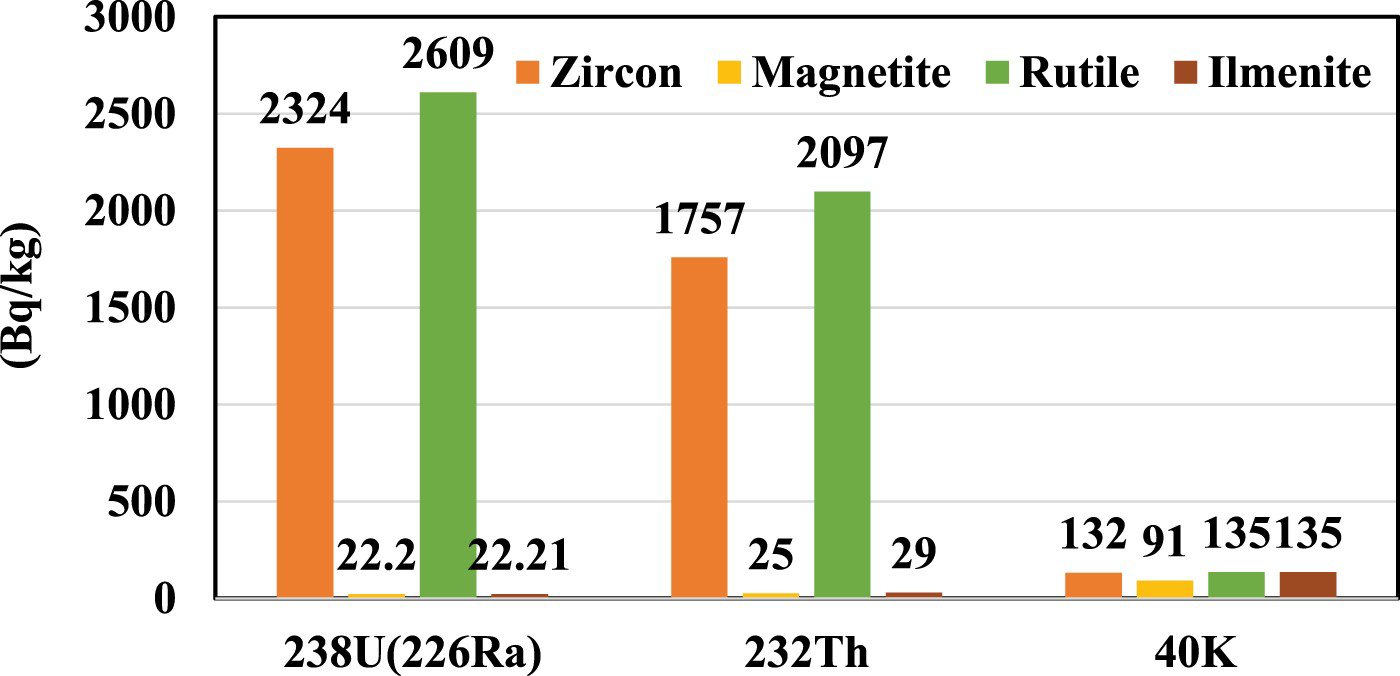
The measured specific activities of 238U(226Ra) in Rutile and Zircon are 2609 and 2342, and those of 232Th are; 2097, and 1757, respectively, Figure 5. These values are high compared to the mean international activity concentrations in soil which set these values as; 35 and 30 Bq/kg for both 226Ra and 232Th, respectively. The zircon and rutile are higher than the raw black sand due to concentration processes (European Commission 1999; Radiation 2008). The specific activity of 40K contained in zircon and rutile was lower than that for natural black sand and the mean international value in soil, was 400 Bq/kg (Radiation 2000; Ali et al. 2012), while ilmenite and magnetite were equal or slightly higher than that for raw sand.
On the other side, Magnetite and ilmenite were found to have relatively low net specific activities ranging from 138.2 to 328.9 Bq/kg, even lower than that for raw black sand, 725.1 Bq/kg, from which those minerals have been extracted. They also possess NORM activity concentrations lower or close to the average international values in soil.
Outdoor radiological hazard indices and doses
Calculated Outdoor radiological hazard indices.
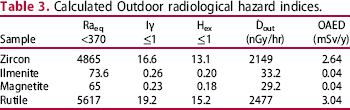
The high (OAED) values obtained for the abovementioned three samples show the mentioned positive correlation between Raeq, Ḋout, and OAED. The rutile, and zircon, exceed the maximum permissible annual dose with values equal; to 3.04 and 2.64, respectively, which may cause unsafe consequences for the public or even for the workers who don't take the necessary radiation protection considerations upon prolonged existence in place containing these materials such as working sites which contain piles of these products.
On the other side, the ilmenite and magnetite in addition to the reference black sand sample show acceptable (Raeq) values below the recommended limit and safer annual doses less than the ‘1 mSv/y’. In general, Ilmenite and Magnetite have adequate and safe values for all outdoor radiological hazard indices and doses. The external hazard index (Hex) should be less than unity to ensure a safe radiological environment and low predicted received external doses below the permissible dose limit for those people who may be in direct and prolonged contact with these investigated materials (European Commission 1999; Radiation 2008; Ali et al. 2012).
Risk analysis
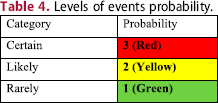
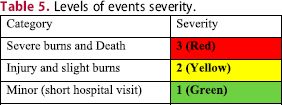
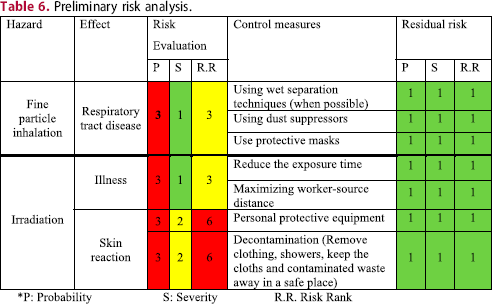
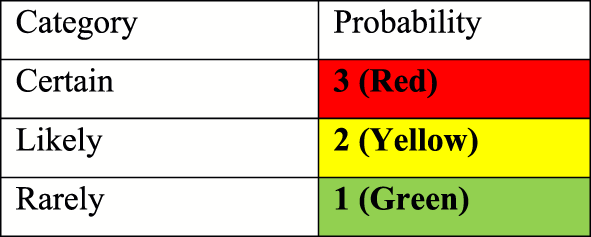
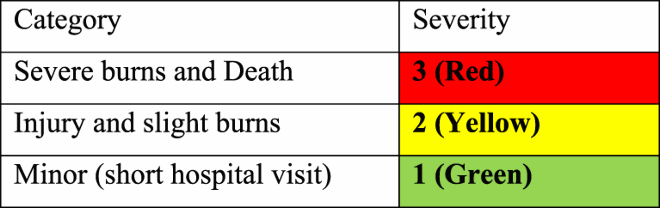
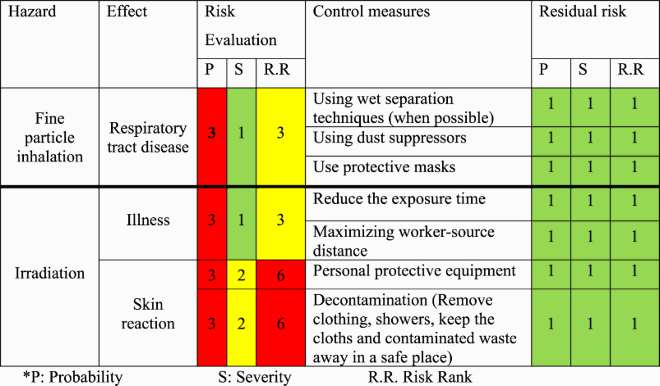
The target of risk analysis is the determination of the risk rank which represents its level of dangerousness. The risk analysis begins with the determination of the categories of probable appearance of the event and the consequences of that event, Tables 4 and 5. 3-level for probability and severity were chosen. On the other hand, Table 6 shows the identification of possible hazards during the upgrading process and their effect followed by determination or risk ranks for each situation depending on their probability and severity, where the risk rank equals the probability times the severity (R.R. = PXS), as indicated by risk matrix in Figure 6. Furthermore, suggested control measures that should be taken were listed and their risk ranks were determined. It is worth mentioning that the burns and death cases due to irradiation do not include in this study because the worker needs to be exposed to high doses in short time intervals for such symptoms to appear.
Risk matrix for risk ranking. Levels of events probability. Levels of events severity. Preliminary risk analysis.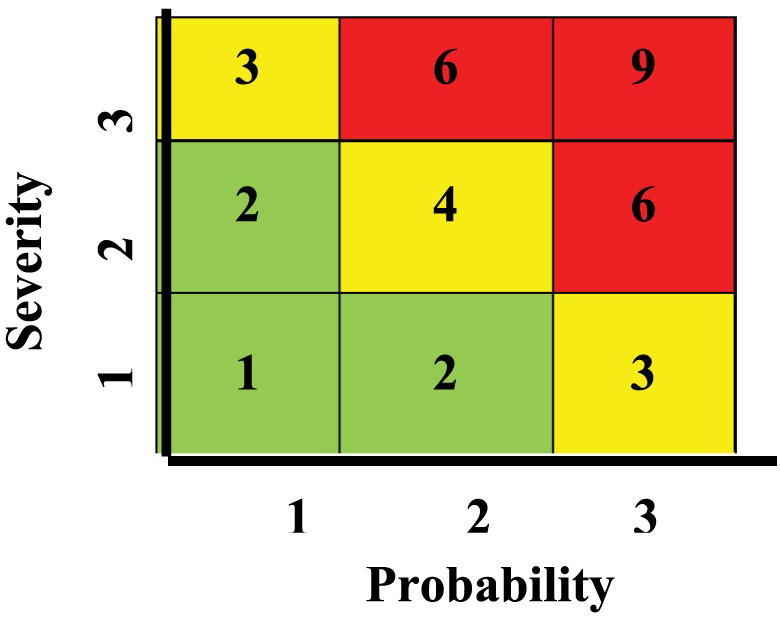
Conclusions
Four minerals obtained from the Egyptian black sand concentration process were investigated. These minerals were characterised chemically, physically, and radiologically. All minerals possess high densities and their particle size lies in the microscale. They have considerable percentages of high-Z elements knowing that zircon comes in the first place having the highest content of heavy elements and the greatest density followed by magnetite and then, ilmenite. Rutile and zircon not only have significantly higher specific activities than magnetite and ilmenite but also they are radiologically hazardous, in terms of outdoor radiological hazard indices, and can cause annual doses higher than the permissible limits recommended for the public. The risk analysis was conducted to show the different cases that can face the worker in the black sand upgrading process. The analysis indicated that taking suitable precautions and measures the hazardous situations can be reduced to safer ones.
Footnotes
Disclosure statement
No potential conflict of interest was reported by the authors.