






Abstract

Fate Therapeutics, a San-Diego based biopharmaceutical company, and Memorial Sloan Kettering Cancer Centre (MSK) announced in September that they would partner to develop off-the-shelf T-cell immunotherapies using engineered pluripotent cell lines.
The new partners plan to engineer therapeutic properties such as broad histocompatibility and enhanced effector functions into pluripotent cell lines, which are capable of self-renewal and differentiation.
Their three-year collaboration will combine two scientific teams with unique expertise—MSK’s in manufacturing and delivering cell-based immunotherapies and Fate’s in generating and engineering pluripotent cell lines.
Cell-based immunotherapies have been touted as the future of cancer treatment. However, most available options are patient specific, which require a long, onerous and costly process to develop. On the other hand, off-the-shelf treatments mean more efficient, large-scale manufacturing and the potential for broader access to patients.
Fate and MSK see themselves at the beginning of a shift toward off-the-shelf approaches. They are not alone in their venture—other biopharmaceutical companies, including Pfizer and KitePharma, are also in the process of developing off-the shelf immunotherapies. Last year at the American Society of Hematology Annual Meeting, the French biotechnology company Cellectis announced the success of their off-the-shelf genetically engineered T-cells in treating an 11-month-old girl with leukemia.
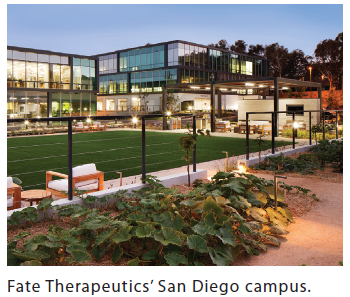
Fate Therapeutics’ San Diego campus.
Fate also announced the launch of Tfinity Therapeutics, a new venture focused on advancing off-the-shelf T-cell immunotherapies.