






Abstract

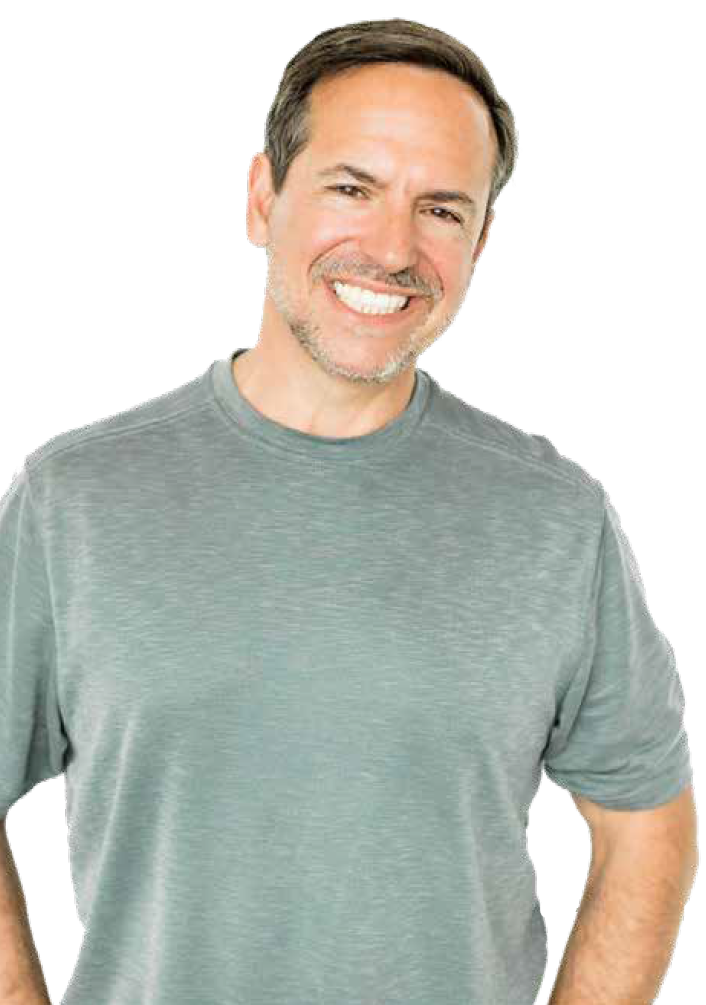
Bob Kain's background—he began his career as a designer of custom laser-based instrument systems—might not have suggested the success he has achieved over 30 years in the genomics world, including 15 years spent at Illumina during its formative and subsequent high-growth years 1999 through 2014. During his tenure at Illumina, the company grew from a 30-person, research-oriented startup, to a genomic sequencing powerhouse with more than 3,000 employees and $1.4 billion in revenue. Kain left Illumina in 2014 and in 2017 was one of the founders of LunaDNA, a genomic and health data platform company that is owned by the people who have contributed their health data to the company. The aim is to develop a data hub of genomic and other health-related data that can be used both by individual members, but also by academia and pharmaceutical companies to improve understanding of a host of diseases with an eye toward developing better, more targeted treatments. Kain recently spoke with Clinical OMICs Editor in Chief Chris Anderson to reflect on what he learned at Illumina and how that has informed the business model at LunaDNA.
But the HiSeq was built on a technology roadmap that assumed a number of the internal components would move along an exponential improvement curve and so the future HiSeqs, including the HiSeq x10 really took advantage of those exponential improvement curves to bring the cost of a genome down to under $1,000, and the time to sequence a genome to a day.
The other interesting thing is in 2012 after HiSeq had been out and matured and the HighSeq follow on instruments were moving forward. I and many others, including (LunaDNA CIO) Scott Kahn, and (LunaDNA president and co-founder) Dawn Barry, started looking at what would it take to accelerate sequencing. But instead we thought about using sequencing to drive medical discoveries. This was very enlightening to me. It changed my perspective of wanting to build faster instruments that could do sequencing less expensively to trying to figure out what it would take to drive discovery.
When I left Illumina, I wasn't sure what I would do with that information, but it was pretty clear that the bottlenecks to driving discovery were no longer technological and that discoveries that would save lives and improve our health were very possible. The bottlenecks had to do with the data being siloed and how people were treated as patients in these research activities.
Colin Anderson Productions pty ltd / DigitalVision / Getty Images
Organizations like this, until now, had to go figure out how to manage their own data. Many have their own efforts to design a database, how to appropriately store and protect the data and steward the data over time, how to make it interoperable, harmonize the data, and the other challenges in this area.
They were applying resources and dollars in a way that wasn't bringing back any unique value, but it was necessary. They also weren't in a position to let other organizations manage their data because the costs were too high either in dollars, or in some cases they gave up rights to the data—there were organizations who had approached them to manage the data and they said they would do it for free, but these organizations want to take ownership of the data and use it to enrich their own pockets.
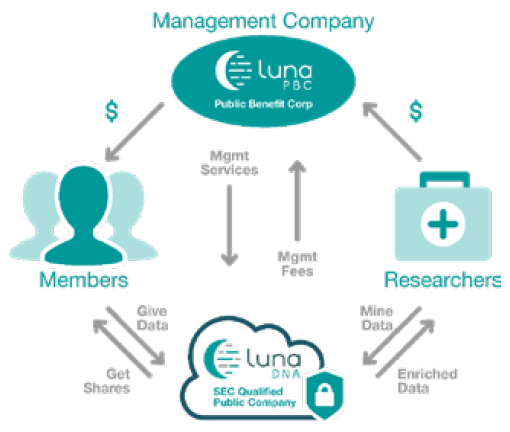
When they hear about LunaDNA, we say that we will take over management of the data, make it interoperable, add it to a richer database, and your patients will become members of LunaDNA. They will be able to share in any commercial proceeds, and this data will create value. From their perspective, it was all upside.
There is also a broad recognition that you need engagement with individuals to collect private data and also to keep the individuals engaged for longitudinal data or data that you realize you need that you didn't collect. The disease registries have the strongest relationships, so they are in the best position to partner for these problems.
It will be very easy and seamless for us to upload data. In fact, some data will be uploaded without us having to interact. You can image a world with wearables, implantable devices, and the internet of things where data will flow freely, as long as you trust the stewards of our data.
Whether that is your wearables data, the data from your refrigerator that show what you ate, the data from your grocery store that show what you bought, data from your doctor, there will be a rich set of data about you that you will be able to use to understand how you are living your life. It can be looking at diet and exercise, what you are eating, your weight and identifying things might drive you to see your doctor.
You can imagine from a global scale how that data can also help us deconvolve the complexities involved with many of the chronic diseases we are facing. Many of them are highly complex. The capability will be there and the data will be there. We will start to deconvolve these at a faster rate to provide people with feedback on how their decisions might affect their health or quality of life. And I think we will make better decisions because strong, solid data drive behaviors. This will all work together to give us richer lives, to allow us to live longer lives with a better quality of life.