







Abstract
Foodborne pathogens have always been of public health concern and represent safety issues for food processors. These pathogens develop new ways to overcome antibiotics, survive in different environmental conditions, and the ability to reproduce in many hostile environments configure them as serious health hazards. Considering the huge number of microorganisms, three bacterial representatives were selected to provide a better knowledge about the question of which one is the worst enemy for humans, from the food industry point of view, taking into consideration their multiplication specificity, virulence, and resistance. As we constantly are exposed to these pathogens in our nutritional habits, this overview aims to summarize the most relevant characteristics associated with the pathogenicity, clinical symptoms and most importantly, how deadly Listeria monocytogenes, Salmonella spp., and Staphylococcus aureus can be in the hospital and the food industry, by comparing among them. Overall, the microbiological knowledge clearly suggests that while all three pathogens are dangerous, L. monocytogenes presents the highest risk of death due to their ability to cause severe complications in vulnerable populations as it presents a range of virulence factors that facilitate evasion of the immune system and cytological effects. Additionally, it shows great resistance to standard food processing and preservation techniques, making it one of the most difficult pathogens to control. Understanding the risks and characteristics of these foodborne pathogens is essential for implementing effective control measures to prevent their occurrence in food products and to promote public health.
Keywords
Introduction
In the food industry food safety is an essential concept because it is imperative that foods are free or have acceptable levels of spoilage and pathogenic organisms. The presence of pathogens in food products can lead to the development of illness in consumers and even cause outbreaks. Bacterial contaminations are the most common cause of foodborne disease outbreaks (Swarnakar et al., 2024). Moreover, the virulence profile of pathogenic bacterial species plays an important role in the outcome of the diseases they produce. The individual specificity of each pathogenic bacterial species (or even the strain) is clearly related to the virulence factor repertoire encoded within its genome, and this can determine the resultant symptoms, which in many cases may result in the death of the patient (Johnson, 2018).
The contamination of foods by pathogens depends on the origin of the product, the applied industrial processes, transport, and storage, in addition to how consumers handle the products. Microbial species are part of the natural environment and their presence in the food products can be considered as status quo. Their presence in the environment cannot be exterminated, since they have their ecological role and are part of natural biodiversity (Gupta et al., 2016). However, when virulent strains get access to the food product and reach a vulnerable target, they can be responsible for the development of food-associated clinical cases. The presence of Salmonella spp., Listeria spp., and Staphylococcus aureus in the food production chain is a reality. However, specificity of the virulence characteristics, levels of microbial titers, production of toxins, and type of food products and storage conditions, in addition to the immunological status of the victims of food poisoning, are some of the factors that can play a role in the pathogenicity of the aforementioned species (Fisher et al., 2018; Hennekinne et al., 2012). Appropriate food storage and processing before consumption plays an important role in the reduction of the microbial titer and reducing the risks of foodborne diseases. Moreover, consumers’ cultural habits and educational knowledge are some important sets of the entire food safety puzzle and can contribute to the reductions of the negative consequences of foodborne disease outbreaks (Bolek, 2020). However, in order to establish appropriate preventive measures, a better knowledge of the specificity of the pathogens, their biochemistry, physiology, and genetic content should be well studied.
Academic and governmental, the control authorities search for solutions to control pathogens and to build knowledge about them with a clear aim to improve food safety. Foodborne pathogens and spoilage bacterial organisms are able to adapt, via different mechanisms, to survive against new processing technologies including novel generations of antimicrobials and sanitizers applied during food production (Marriott et al., 2018). To survive in the host different mechanisms developed by microorganisms are essential to evade the complex machinery that makes the immune system, which is composed of a cellular portion responsible for phagocytosis and antigen presentation, as well as a humoral part that is responsible for antibodies produced by plasma cells. These tactics are called virulence factors, and the greater the arsenal of the microorganism in producing these factors, the more chances it will have to win the battle against the immune system and other microbes (including spoilage and pathogens) or are associated with toxin production and cellular invasion. Even if can be constantly expressed, some virulence factors are overexpressed under stress conditions, situations that negatively affect the invaded organism. Combined with the high capacity of resistance to antibiotics and control methods, these factors became a very sensitive topic in the food industry (Cross, 2008; Martinović et al., 2016).
Antibiotics were first introduced to the clinical setting and later to food production and farming animal practices. With the growing concerns regarding the increase in antibiotic resistance, several countries have banned their use for nontherapeutical purposes (Hutchings et al., 2019). Antibiotics can either kill bacteria (bactericidal effect) or inhibit their growth (bacteriostatic effect) by different mechanisms involving inhibition of cell wall synthesis (penicillins and cephalosporins), disruption of cell membrane functions (polymyxins), inhibition of protein synthesis (tetracyclines and macrolides), inhibition of nucleic acid synthesis (quinolones and rifamycins), and inhibition of metabolic pathways (sulfonamides) (Hutchings et al., 2019). However, bacteria can acquire resistance to antibiotics through several mechanisms, including processes of spontaneous genetic mutations that can alter bacterial proteins targeted by antibiotics, rendering the drugs ineffective; some bacteria express efflux pumps that actively expel antibiotics from the cell, reducing the drug’s concentration to sublethal levels; bacterial species can produce enzymes, such as β-lactamases, that degrade or modify antibiotics, neutralizing their effects (Christaki et al., 2020); or even alter the structure of their target sites (e.g., ribosomes, enzymes), so that antibiotics can no longer bind effectively (Munita and Arias, 2016). Processes of horizontal gene transfer can be associated with acquiring resistance genes from other bacteria through processes like conjugation, transformation, or transduction (Christaki et al., 2020; Munita and Arias, 2016).
Biofilm formation is a complex and dynamic process that involves several stages, starting with the attachment of bacterial cells to a surface. In the food industry, biofilm formation can lead to the contamination of food products and the corrosion of equipment. Once attached, bacterial cells begin to produce extracellular polymeric substances, which form a protective matrix around the cells. This matrix provides structural support and protection against environmental stresses such as antibiotics and disinfectants. As the biofilm matures, it becomes more complex and organized, and the bacterial cells within the biofilm communicate with each other through a process called quorum sensing, which allows them to adapt to changing environmental conditions (Lima et al., 2023). Therefore, understanding the factors that influence biofilm formation and the control strategies that can prevent it, is essential for the food industry. By doing that, a cost savings of billion dollars per year will be possible, for example, with bovine mastitis contamination in milk production; on a global scale, contamination by S. aureus provides money losses of about 35 billion dollars (Park and Ronholm, 2021; Wang et al., 2020; Zhao et al., 2021). Moreover, the presence of pathogens, combining virulence properties, ability to form biofilms, and carrying resistance to antibiotics can be the worst scenario for contamination of any production factory, food product, or medical case.
This review aimed to explain better how dangerous each pathogen can be, exposing their virulence factors, antibiotic resistance, induced symptoms, and their relation to the industry. Listeria monocytogenes, Salmonella spp., and S. aureus were compared with an answer which is the worst bacteria in the food industry and related areas.
Listeria monocytogenes
General characteristics
L. monocytogenes is a Gram-positive bacterium, part of the phylum Bacillota, known to cause listeriosis, which is a series of infections that can be fatal in high-risk individuals, especially those immunocompromised, newborns, elderly individuals, and pregnant women (Camargo et al., 2017; Gandhi and Chikindas, 2007). It is a foodborne pathogen that encodes a range of virulence factors in addition to being able to grow at low temperatures, including under commercial refrigeration conditions (Gandhi and Chikindas, 2007). The first reports on L. monocytogenes were one century ago, dating back to 1924, when E.G.D. Murray, a bacteriologist from Cambridge, isolated Gram-positive rods from the blood of laboratory rabbits that died suddenly. He named the new bacterium Bacterium monocytogenes (Hof, 2003). Two years later, Murray et al. published a description of the bacterium and its pathogenicity in rabbits (Schlech and Acheson, 2000). In 1940, Harvey Pirie, a bacteriologist from South Africa changed the genus name of the bacterium to Listeria, in honor of Joseph Lister, the pioneer of antiseptic surgery (Hof, 2003). And in 1949, J. Potel and H.P.R. Seeliger, two German bacteriologists, identified L. monocytogenes as the cause of an epidemic of granulomatosis infantiseptica, a severe disease in newborns or stillborn infants (Hof, 2003). Later, in 1952, A.H. Dack et al. from the U.S. Public Health Service isolated L. monocytogenes from human cases of meningitis and septicemia (Khelef et al., 2006). In 1981, R.J. Mitchell et al. from Canada reported the first outbreak of listeriosis associated with food consumption, involving coleslaw contaminated with L. monocytogenes (Bell and Kyriakides, 1998). Since then, many outbreaks and sporadic cases of listeriosis have been reported worldwide, linked to various food products such as cheese, meat, seafood, vegetables, and fruits (Ribeiro et al., 2023).
Nowadays L. monocytogenes is well accepted and known as a relevant foodborne pathogen, associated with serious health issues and even death of consumers, normally related to its virulence (Batt, 2014). The infections caused by ingestion of L. monocytogenes, called listeriosis, are noninvasive for healthy individuals and invasive for immunocompromised individuals, elderly, newborns, and pregnant women, associated with causing meningitis or miscarriage in pregnant women. However, even healthy individuals can occasionally experience invasive forms of the disease, particularly when consuming large quantities of L. monocytogenes, even though flu-like symptoms and mild diarrhea may be more common in these individuals (Camargo et al., 2017; Matereke and Okoh, 2020). The infective dose for individuals with a generally healthy status is estimated to be around 107–109 CFUs per digested food and around 105–107 CFUs for individuals with immunocompromised status, pregnant women, elderly, or newborns (Quereda et al., 2021). The death rate of listeriosis is in the range of 15–60% for the at-risk groups, representing half of the foodborne infections lethality in Western countries (Disson et al., 2021; Lecuit, 2020; Maury et al., 2016; Wiktorczyk-Kapischke et al., 2021). It is well known that L. monocytogenes infections besides being a serious health issue because of its pathogenicity, L. monocytogenes is also able to survive in a wide range of temperature intervals, pH, and water activity (Aw). The organism can also be associated with biofilm formation properties which give it a better chance of survival in different environmental conditions (soil, water, plants, and animals), including in the gastrointestinal tract of humans and other animals (Anwar et al., 2022; Duze et al., 2021; Lecuit, 2020; Matereke and Okoh, 2020).
Bacteria from the genus Listeria are classified as catalase positive and are able to metabolize glucose to lactic acid (Batt, 2014). The genus Listeria includes, among others, L. monocytogenes, L. ivanovii, L. innocua, L. seeligeri, L. welshimeri, and L. grayi. However, only L. monocytogenes and L. ivanovii are considered pathogens to humans and other animals (Schmid et al., 2005). Moreover, Bouznada et al. (2025), based on the development of biomolecular taxonomic tools, suggested the taxonomic re-evaluation of the genus Listeria, where the division to Listeria senso stricto and Listeria senso lato was created and as a consequence three newly proposed genera: Murraya gen. nov., Mesolisteria gen. nov., and Paenilisteria gen. nov. within Listeriaceae family were proposed.
L. monocytogenes is a non-spore-forming Gram-positive, rod-shaped bacterium (0.5–2.0 µm), a facultative anaerobe, and capable of growth on complex media. This species grows from 0°C to 45°C, with optimum growth temperature ranging from 30°C to 37°C; at 20°C–25°C the bacterium forms the flagella, being motile, produce antigens, and actively express virulence factors (Batt, 2014; Matereke and Okoh, 2020; Wiktorczyk-Kapischke et al., 2021; Zamuz et al., 2021) (Table 1). L. monocytogenes are also characterized by tolerating a wide pH range (4.3–9.6), surviving in Aw ≥0.9, and a NaCl concentration of up to 10% (Wiktorczyk-Kapischke et al., 2021; Zamuz et al., 2021).
Optimal Growth Conditions for Listeria monocytogenes, Salmonella spp., and Staphylococcus aureus

L. monocytogenes has several serotypes, each with varying prevalence and implications for human health. The most frequently encountered serotypes in human listeriosis cases are 1/2a, 1/2b, and 4b (Ribeiro et al. 2014). These three serotypes are responsible for approximately 95% of human infections. Moreover, serotype 4b is particularly notable for its association with large outbreaks of listeriosis. While less common, serotypes 1/2c, 3a, 3b, 3c, 4a, 4c, 4d, 4e, and 7 are also recognized. These serotypes can be found in various environmental and food sources. L. monocytogenes is divided into three major phylogenetic lineages. For example, serotypes 1/2a, 1/2c, 3a, and 3c belong to lineage I, while serotypes 1/2b, 3b, and 7 are part of lineage II (Nho et al., 2015). Lineage III strains are rarely isolated and are less frequently associated with human listeriosis. They are more commonly found in ruminants and environmental samples. It was suggested that lineage III has a unique evolutionary status, which may contribute to its specific adaptations and lower prevalence in human infections (Ravindhiran et al., 2023; Zhao et al., 2011).
Virulence factors
L. monocytogenes may invade human cells by three mechanisms: by crossing the intestinal barrier, by crossing the placental barrier, and by crossing the blood–brain barriers (Lecuit, 2020; Maury et al., 2016). Each one of these cases is influenced by specific L. monocytogenes virulence factors and a susceptible individual (Anwar et al., 2022; Maury et al., 2016) (Table 2).
Principal Virulence Factors Reported for Listeria monocytogenes, Salmonella Spp., and Staphylococcus aureus (Keerthirathne et al., 2016; Lungu et al., 2009; Matle et al., 2020; Otto, 2014)
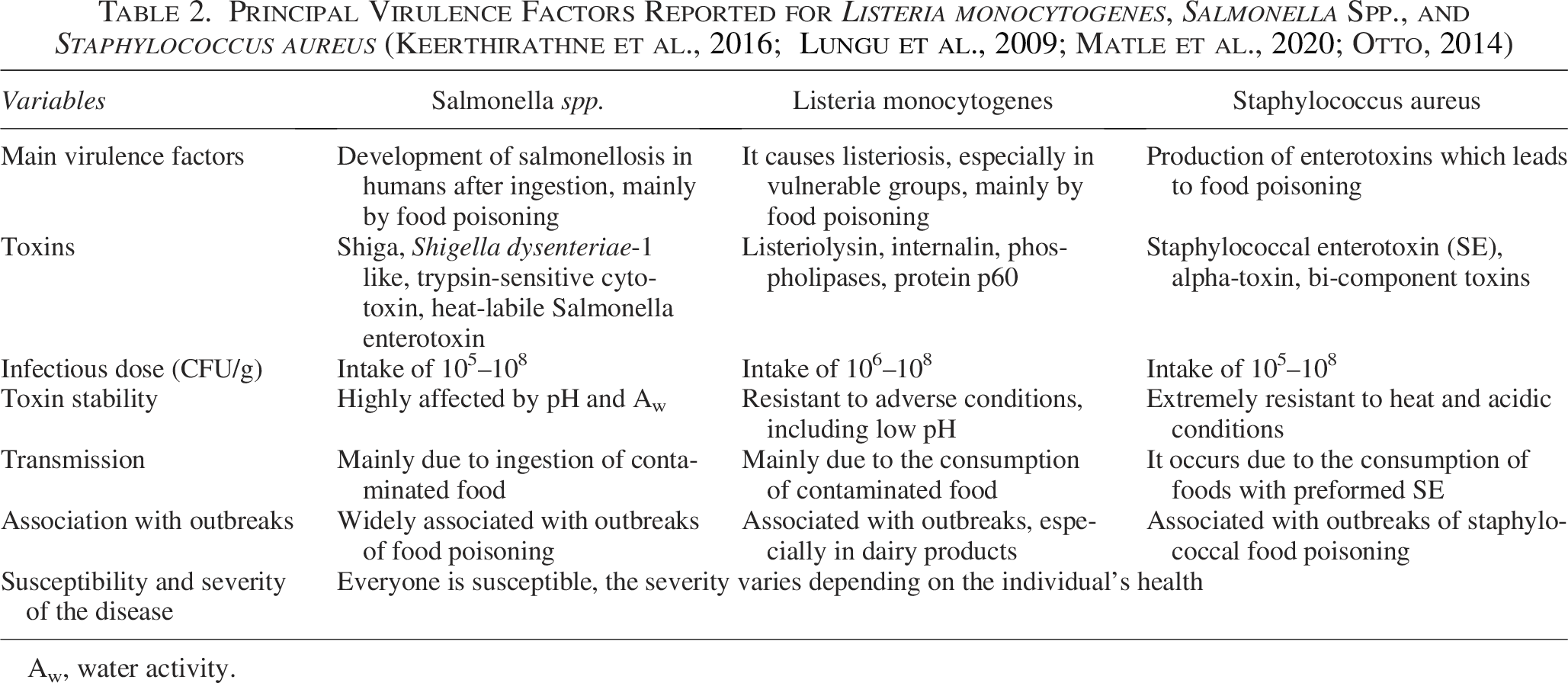
Aw, water activity.
The virulence factors of L. monocytogenes are grouped in genes that are part of the pathogenicity islands (LIPI-1, LIPI-2, LIPI-3, and LIPI-4). LIPI-1 and LIPI-2 are related to adhesion, binding, invasion, polymerization, and cell-to-cell spread within the host organism; LIPI-3 is related to listeriolysins, toxins (listeriolysin O) with hemolytic activity, and that act as bacteriocins, dysregulating the gut microbiota; LIPI-4 is associated with neural and placental infections (Anwar et al., 2022; Disson et al., 2021; Maury et al., 2016).
During the installation of the infection, the ActA protein (enconded within LIPI-1) helps to shield the pathogen from the phagosomes with host proteins, which propels the bacteria in the cell. ActA plays an essential role in the process of the polymerization of actin, a structural protein in host cells. It mimics host cell proteins to recruit and activate the Arp2/3 complex, which initiates the formation of actin filaments. This process generates an “actin comet tail” that propels the bacterium through the host cell cytoplasm. By inducing actin polymerization, ActA enables L. monocytogenes to move within and between host cells. This motility is critical for the bacterium’s ability to spread from cell to cell, evading the host's immune response. Moreover, ActA facilitates the bacterium’s escape from the phagosome into the cytoplasm and its subsequent spread to neighboring cells. This cell-to-cell spread is a hallmark of Listeria infection and contributes to its virulence. Moreover, ActA can interact with different host cell proteins, including profilin and vasodilator-stimulated phosphoprotein, and as a consequence, it can contribute to actin filament formation and stability (Travier and Lecuit, 2014).
Internalins InlA and InlB (LIPI-2) are proteins capable of creating an entrance in the host cell, enabling the bacterium to colonize the cell (Pizarro-Cerda et al., 2024). In addition, these proteins induce the cell to “embrace” the pathogen-synthesizing actin. They are responsible for the internalization of the bacteria into the host cell where it is enclosed in phagosomes. After that, L. monocytogenes produces the listeriolysin O (encoded in LIPI-3), and together with phospholipase A and B (PlcA and PlcB), lysis the phagosome (Vilchis-Rangel et al., 2019). Once in the cytosol, the bacteria multiply and use ActA, as previously mentioned (Pillich et al., 2016). These filaments form a tail that propels L. monocytogenes through the cytoplasm to the periphery of the host cell. L. monocytogenes enters the neighboring cells through protrusions and the cycle of infection initiates again. Other internalins also interact with the bacterium’s capability to cross the blood–brain barrier and the placental barrier (Ireton et al., 2021; Lecuit, 2020; Matereke and Okoh, 2020). Moreover, this variety of virulence facts is a powerful illustrative fact for the potential negative impacts of L. monocytogenes on consumers and evolution adaptation (for review, see Gandhi and Chikindas, 2007; Kathariou, 2002; Radoshevich and Cossart, 2018; Wiktorczyk-Kapischke et al., 2023).
L. monocytogenes has resistance to antibiotics and chemicals applied in the cleaning/sanitizing process. The first reports regarding antibiotic resistance in L. monocytogenes were seen in France in 1988, including the first multidrug-resistant strain. Up through 1999, only sporadic resistance had been observed to antibiotics, including tetracycline, chloramphenicol, erythromycin, and streptomycin (Hanes and Huang, 2022). In clinical terms, antimicrobial resistance is the most important, affecting the listeriosis lethality. This resistance to antibiotics is associated with the following factors: horizontal gene transfer, which allows the bacteria to receive genes from other bacterial species; and the formation of biofilms, with dormant cells in the bottom layer, which contributes to the chances of surviving against antibiotics, disinfectants, temperature, and pressure (Matereke and Okoh, 2020).
Listeria monocytogenes in the food industry
L. monocytogenes is a bacterial species, designated as a serious foodborne pathogen, subject to continuous surveillance and control by the food industry. L. monocytogenes can be found in various natural environments including soil, which can contaminate vegetables and other crops, especially when manure is used as fertilizer; water sources can harbor Listeria and contaminate food during irrigation or processing; L. monocytogenes can be an inhabitant of the intestinal tract of many animals, including livestock. This can lead to contamination of meat during slaughter and processing. Moreover, decaying plant material and silage can be reservoirs of Listeria, and further contaminate crops and animal feed; The feces of healthy animals and humans can contain Listeria and contribute to environmental contamination (Gandhi and Chikindas, 2007). It is a sanitary and economic risk for the food production industry, particularly for the dairy and meat industries, which have products commonly related to outbreaks of listeriosis (Disson et al., 2021; Shamloo et al., 2019; Wiktorczyk-Kapischke et al., 2021). There are several possibilities for cross contaminations, which aligned with the metabolic activity of the organism under refrigeration, makes L. monocytogenes one of the dangerous pathogens in the food industry, particularly for ready-to-eat products (Gandhi and Chikindas, 2007; Ribeiro et al., 2023). Moreover, the capability to form biofilm is an additional major problem in the dairy industry, making the removal of the contamination a challenge (Bahrami et al., 2020; Ribeiro et al., 2023; Townsend et al., 2021). The most affected products are surface-ripened, soft, and semi-soft cheeses (Ribeiro et al., 2023; Wiktorczyk-Kapischke et al., 2021). The L. monocytogenes contamination in food products may come from contaminated raw material or equipment with biofilms, which release the pathogen in all the products of that production line. Depending on the contamination source, different solutions are applied. For example, if the raw material is contaminated, the industry can change the supplier, process, and/or formulation to eliminate contamination. On the other hand, if the contamination comes from the production line, elimination of the organism may require extreme measurements, including the use of alternative methods because the organism may resist traditional treatments.
Biofilm formation can be considered one of the major problems faced by the food industry when the issue is contamination with L. monocytogenes. This capability significantly enhances its survival and persistence in various environments, particularly in food processing settings. The environmental conditions are directly involved in biofilm formation, where several factors, such as temperature, pH, nutrient availability, and the presence of salts may play a role in the persistence of L. monocytogenes formed biofilms (Gandhi and Chikindas, 2007; Lee et al., 2019b). Moreover, the specificity of each strain of L. monocytogenes, in other words, is that its genetic background can predispose capacities for biofilm formation. In general, genes associated with quorum sensing, flagellar synthesis, and extracellular polymer production are upregulated during biofilm formation (Yang et al., 2024). Moreover, resistance to disinfection and antibiotics may contribute as well to biofilm stability or even biofilm may provide a protective environment for L. monocytogenes, making them more tolerant to disinfectants and antibiotics compared with their planktonic counterparts (Møretrø and Langsrud, 2004). The processes of biofilm formation are associated with surface adherence properties of L. monocytogenes, giving advantages to adhering to a variety of surfaces commonly found in food processing environments, such as stainless steel and plastic (da Silva and De Martinis, 2013). However, the persistence of L. monocytogenes in biofilms within food processing facilities can lead to contamination of food products, posing a serious risk to public health. This is particularly concerning for ready-to-eat foods, which do not undergo further cooking to eliminate pathogens (Lee et al., 2019a).
Most common sources of contamination with L. monocytogenes are soil, water, and animal feces, and can contaminate raw vegetables and fruits that are grown or washed with these sources. Moreover, animal feces can also contaminate foods of animal origin, such as meats and dairy products (Camargo et al., 2017; Rodrigues et al., 2016). Raw or unpasteurized milk and dairy products are often pointed out as sources of L. monocytogenes. L. monocytogenes can be present in the udder or milk of cows, goats, sheep, or other animals, and can contaminate raw or unpasteurized milk and dairy products, such as cheese, butter, yogurt, and ice cream (Condoleo et al., 2020; El-Hajjaji et al., 2022; Hamidiyan et al., 2018; Lee et al., 2019a; Rodrigues et al., 2016; Shamloo et al., 2019). In addition, L. monocytogenes can be present in the intestinal tract or skin of animals, such as pigs, cattle, sheep, chickens, or turkeys, and can contaminate raw or processed meat and poultry products, such as sausages, hot dogs, deli meats, pâté, and liver and other processed food commodities of animal origin (Hamidiyan et al., 2018; Liu et al., 2020; Matle et al., 2020; Rodrigues et al., 2016). Raw or smoked fish and seafood products are maybe one of the most associated with L. monocytogenes contaminated food products, since Listeria can be present in the water or on the surface of fish and seafood, such as salmon, trout, tuna, shrimp, crab, or oysters, and can contaminate raw or smoked fish and seafood products, such as sushi, sashimi, smoked salmon, or caviar (Elbashir et al., 2018; Zahedi Bialvaei et al., 2018). Moreover, L. monocytogenes can also be a serious pathogen for pets and transmitted via raw pet food products that contain meat, poultry, fish, or dairy ingredients. Pets can also spread the bacterium in the home environment if they eat food contaminated with L. monocytogenes (Bilung et al., 2018; Davies et al., 2019).
The conventional thermal treatment is capable of reducing the number of L. monocytogenes, but new nonthermal approaches have been studied to solve the L. monocytogenes contamination in food products, such as high pressure, ultrasound, irradiation, cold plasma, ohmic, and ozone (Bahrami et al., 2020). The addition of ingredients with antimicrobial activity has also been explored, such as phenolic compounds (Zamuz et al., 2021), the addition of bacteriocins (nisin is applied worldwide as an antimicrobial agent in the dairy industry), and other bacteria, where interbacterial interactions were explored as part of the biopreservative strategy (Aragon-Alegro et al., 2021; Castilho et al., 2019, 2020; Cavicchioli et al., 2019). In addition, the use of new approaches to biofilms formation also has been explored with the application of bacteriocins, postbiotics, essential oils, and shikonin to disrupt and inhibit biofilm formation (Hossain et al., 2021; Li et al., 2021; Ribeiro et al., 2023; Somrani et al., 2020).
Salmonella spp.
Salmonella is a bacterial genus, part of the phylum Pseudomonadota, family Enterobacteriaceae, associated with various diseases in humans and other animals, including typhoid fever, gastroenteritis, and septicemia (Santos et al., 2003). First reports on Salmonella were from 1880 by Karl Eberth, a German bacteriologist, who observed a bacterium in the spleens of typhoid patients (Monte and Sellera, 2020). Later, in 1884, Georg Theodor Gaffky, a student of Robert Koch, confirmed Eberth’s discovery and isolated the bacteria in pure culture (Ibrahim and Morin, 2018). The genus Salmonella was named only in 1900 by Harvey Pirie, a South African bacteriologist, in honor of Daniel Elmer Salmon, an American veterinarian who worked on hog cholera (Bernstein, 1983). However, the bacterium that Salmon and his colleague Theobald Smith found in pigs was later shown to be different from the one that causes typhoid fever in humans (Schultz, 2008).
The first recorded outbreak of salmonellosis associated with humans and food ingestion was reported in 1919 by Edwin Oakes Jordan, an American microbiologist, who traced the contamination to cheese (Hudson, 1937). In the last (20th) century, numerous outbreaks and sporadic cases of salmonellosis were reported and linked to various food products of animal and plant origin, including meat, poultry, eggs, dairy products, fruits, and vegetables (Eng et al., 2015).
Morphology and serology
Salmonella is a bacterial genus of rod-shaped, facultative anaerobes, non-spore-forming, Gram-negative, predominantly motile bacteria ranging from 0.7 to 1.5 µm in diameter and 2 to 5 µm in length. This genus has more than 2600 serotypes (serovars). It grows in an Aw above 0.93 at temperatures ranging from 2°C to 54°C, with the optimum temperature at 37°C, and the pH range from 6.5 to 7.5, with some strains growing at pH values of 9.5 as well as below 4.05 (Cox and Pavic, 2014) (Table 1). Cellular components such as flagella and fimbriae may not be expressed under extreme pH conditions. Salmonella are environmental bacteria found majorly in the gastrointestinal tract of humans and animals (Ehuwa et al., 2021). Nowadays, the genus Salmonella consists of two species: Salmonella enterica with six subspecies and Salmonella bongori. The six subspecies of S. enterica are: S. enterica subsp. enterica, S. enterica subsp. salamae, S. enterica subsp. arizonae, S. enterica subsp. diarizonae, S. enterica subsp. houtenae, and S. enterica subsp. indica. S. enterica subsp. enterica comprises more than 2600 serovars (Uzzau et al., 2000). Salmonella serovars can be classified as: host-restricted serovars, which are able to cause a typhoid-like disease in a single host species. Examples of this group are Salmonella Typhi, Salmonella Sendai, and Salmonella Paratyphi A, B, and C in humans and Salmonella Gallinarum and Salmonella Pullorum in poultry; host-adapted serovars, which are associated with one host species but are also able to cause disease in other hosts. Salmonella Choleraesuis and Salmonella Typhisuis belong to this group; broad-host-range serovars, which rarely produce systemic infections but are able to colonize the GI tract of a wide range of animals. The vast majority of serovars are in this group, of which the most common strains are Salmonella Typhimurium and Salmonella Enteritidis, are collectively referred to as nontyphoidal serovars (Uzzau et al., 2000). However, most species may not cause a health problem.
Most Salmonella infection cases are not severe, but in immunocompromised individuals, it can develop into a severe disease. The symptoms usually last 4–7 days, and the patient recovers without treatment. For most of the cases, the infectious dose is between 106 and 108 CFUs. These infections are common, and only the United States estimates 1.4 million Salmonella cases annually, with 415 fatal cases. However, in developing countries, these infections affect 21.5 million people annually. But typhoid fever, a disease resultant of S. Typhi contamination, is estimated at 12–33 million cases and 600,000 deaths annually (Jaroni, 2014). Salmonella infections normally are associated with financial costs of around $2.7 billion annually (Jaroni, 2014; Ricke and Gast, 2014). Salmonella, together with L. monocytogenes and Shiga toxin–producing E. coli are responsible for most recalls within the food industry (Qiu et al., 2021).
Virulence factors
Biological diversity between various Salmonella spp. is related to specific serology variety. Moreover, different strains of Salmonella may carry a variety of virulence factors that help them overcome host defenses with a profound effective pathogenicity. Generally, as a result, Salmonella can cause two distinct syndromes which are characterized as gastroenteritis and systemic diseases (Ehuwa et al., 2021) (Table 2).
Several of those virulence factors may have been acquired by horizontal gene transfer and integrated into the bacteria’s chromosome on Salmonella pathogenicity islands (SPIs). Twelve of these SPIs are currently recognized with SPI1 and SPI2 being the most critical for cell invasion. These determinants, along with other virulence traits encoded elsewhere on the chromosome or on plasmids, are common to many strains and work together to allow Salmonella to function as pathogens (Cox and Pavic, 2014; Jennings et al., 2017). The bacteria can also express a specific membrane-bound protein named cytotoxin, which is released intracellularly related to the limited bacterial lysis and can inhibit protein synthesis and consequently lead to host cell lysis. The toxin’s chelation of divalent cations also causes cell membrane disruption (Cox and Pavic, 2014).
Salmonella (LPSs) composition of the O side chains influences virulence, particularly the ability to cause invasive infection, as different serogroup determinants interact differently with components C5–C9 of the complement cascade (Cox and Pavic, 2014). For instance, the length and structure of the O-antigen can affect the bacterium’s ability to evade complement-mediated killing, with longer O-antigen chains providing better protection against the host immune response (Krzyżewska-Dudeket al., 2024) Additionally, variations in the O-antigen structure can influence the rate at which Salmonella is taken up by macrophages, thereby affecting its survival and replication within host cells (Lerouge and Vanderleyden, 2002).
Several of the Salmonella serovars can produce one or more of the different fimbrial structures, some of them being involved in pathogenicity, an important research model for studying the Enteritidis serotype fimbriae. Fimbriae are flagella-like appendages on the surface of the bacteria, involved in the processes of adhesion to host cells, a critical step in initiating the infection process (Dufresne and Daigle, 2017). Type 1 fimbriae are the most studied and are involved in adhesion to epithelial cells; curli fimbriae are associated with biofilm formation and adhesion to surfaces; type IV fimbriae are related to the motility but as well play a role in DNA uptake (Dufresne and Daigle, 2017; Yue et al., 2012). The genes associated with encoding fimbriae are generally organized in clusters known as fimbrial gene clusters. Those specific clusters contain genes for the structural components of the fimbriae, as well as for their assembly and regulation (Yue et al., 2012). Fimbriae do not play a role only for initial adhesion but are involved in biofilm formation processes, and as a consequence contribute to the protection from the host immune system and effects of antibiotics (Dufresne and Daigle, 2017; Thanassi et al., 2007). Salmonella, like many other members of the Enterobacteriaceae, produces two types of chelating molecules, or siderophores, to acquire iron. Strains of various Salmonella serotypes harbor large serotype-specific plasmids, containing an identical piece of DNA known as the Salmonella plasmid virulence (Ibarra and Steele-Mortimer, 2009).
Salmonella biofilm facilitates their capacity for survival and long-term persistence in adverse environmental conditions and increases their ability to transmit to new hosts. Bacterial biofilm members resist various antibiotics, disinfectants, detergents, and UV radiation. Salmonella biofilm formation abilities can lead to increased mortality and morbidity rate, chronic infection, and hospitalization rate, thus the resistance to several antibiotics and evading the host’s immune system (Pradhan et al., 2023).
Salmonella enterica Enteritidis
Salmonella enterica Enteritidis is a subspecies of S. enterica, generally associated with infections transmitted from poultry to humans. Several identified virulence factors contribute to the pathogenic behavior of Salmonella Enteritidis: Salmonella Enteritidis endotoxin, associated with cell wall LPS, increases resistance to attack and digestion by host phagocytes. Heat-labile protein exotoxins are also involved in the virulence of Salmonella Enteritidis. Enterotoxin activity induces secretion by intestinal epithelial cells, while cytotoxin inhibits protein synthesis and causes structural damage to intestinal epithelial cells (Coburn et al., 2007; Ricke and Gast, 2014).
Salmonella Typhi
Salmonella Typhi causes typhoid fever, a febrile systemic illness, atypical of the gastrointestinal syndrome associated with most Salmonella characterized by fever, headache, constipation, malaise, chills, and myalgia. The severe manifestation of the disease is hemorrhagic necrosis of the ileal Peyer’s patches, resulting in tissue perforation, peritonitis, septicemia, and death. However, this disease progression happens in less than 5% of the cases but has a mortality rate of 40%, which can increase to more than 80% if treatment is delayed. It is transmitted by the fecal-oral route, mainly through contaminated food and water. Individuals with typhoid fever can carry bacteria in their intestinal tract. In addition, a small number of individuals, called carriers, recover from the disease but continue to harbor the bacteria in their gallbladder, serving as a reservoir for these pathogens. Both patients and carriers excrete Salmonella Typhi in their faces. Typhoid fever is more common in areas of poor hygiene, and water is likely to be contaminated with sewage. The virulence of Salmonella Typhi depends on its ability to invade cells and produce a protective layer of LPSs and the production and excretion of invasin (inv genes), a protein that helps the bacterium invade nonphagocytic cells, where the bacterium can survive and replicate intracellularly. Salmonella Typhi strains produce two types of siderophores, aerobactin and enterochelin, and toxins, including enterotoxin (Coburn et al., 2007; Jaroni, 2014).
Salmonella in the food industry
Several environmental conditions affect Salmonella growth and survival, which are used to control the contamination level in the products, such as temperature, pH, and Aw. Moderate heat processes, such as pasteurization, quickly eliminate the bacteria. Foods low in moisture and high in solids, particularly protein or fat, are highly protective of the bacterium, increasing its thermal resistance (Liu et al., 2018). Its heat resistance is lower when solutes such as NaCl rather than sugars are used to reduce Aw. Salmonella also survives low temperatures (Cox and Pavic, 2014).
Incidents related to contamination of food products with Salmonella, normally are associated with raw meat and poultry. Beef, chicken, pork, and turkey are common sources, especially if not cooked. Moreover, raw or undercooked eggs can carry Salmonella, even if the shell appears intact. Unpasteurized dairy products, and specially milk and different types of cheeses prepared from unpasteurized milk, raw or undercooked seafood and shellfish, fruits, and vegetables, especially those consumed raw can be carriers for Salmonella. Food processed products such as nut butters, frozen pot pies, chicken nuggets, and stuffed chicken entrees are considered as high risk (Ehuwa et al., 2021).
Salmonella pathogens contamination in the food industry is a significant problem, thus the bacteria contamination source and the capability to grow in conditions that affect specific products. Moreover, the specificity of the food products (Aw, pH, nutrients, storage temperature) can be facilitating the development of Salmonella when present. For example, foods such as mayonnaise made with raw eggs, undercooked food products, and ready-to-eat products can be carried as primary contaminated or cross contaminated during food handling stages. Salmonella is naturally found in poultry and eggs. What makes necessary the use of processes to reduce natural contamination or eliminate it, the most effective method is the application of heat above 70°C and the use of hygienic handling practices (Ehuwa et al., 2021). Environmental spread of Salmonella and industrial mass production of food commodities when hygienic controls are not sufficient can give an opportunity for that microbial species to be found in a variety of food products, including poultry, beef, eggs, dairy products, fruits, and vegetables. Contamination may occur at multiple points along the food production chain, starting from the farm and going all the way up to ready-to-eat products. Salmonella bacteria is the natural inhabitant of the intestines of many farm animals and can be transferred to meat during slaughter and processing. Fruits and vegetables can be in contact with contaminated water or soil. Cross contamination can be an important factor in the spread of Salmonella, and thus proper handling and hygiene practices need to be implemented when manipulating food products (Ehuwa et al., 2021).
Staphylococcus aureus
S. aureus is a Gram-positive bacterium, part of the phylum Firmicutes, that causes various infections in humans and other animals, including skin infections, pneumonia, endocarditis, and food poisoning (Tong et al., 2015). First observations and reports on S. aureus dates back to 1880 by Karl Eberth, a German bacteriologist, who found the bacteria in the spleens of typhoid patients (Contrepois, 1996). In 1884, Georg Theodor Gaffky, another scientist working with S. aureus, confirmed Eberth’s discovery and isolated the bacterium in pure culture (Stillwell, 2013). The genus Staphylococcus was named in 1900 by Harvey Pirie, a South African bacteriologist. In 1928, Alexander Fleming, a Scottish biologist, discovered penicillin, the first antibiotic that could kill S. aureus (Dosani, 2004). However, already in the 1940s, some strains of S. aureus had developed resistance to penicillin and other antibiotics (Bal and Gould, 2005). In 1961, Patricia Jevons, a British microbiologist, reported the first case of methicillin-resistant S. aureus (MRSA), a strain of S. aureus that is resistant to most antibiotics. Methicillin was introduced to the pharmaceutical market as a narrow-spectrum β-lactam antibiotic that was historically used to treat infections caused by certain Gram-positive bacteria, particularly those producing β-lactamase, such as S. aureus. Since then, MRSA has become a major public health problem worldwide, causing serious and sometimes fatal infections in hospitals and communities (Boucher and Corey, 2008; Stefani et al., 2012).
General characteristics
S. aureus is a Gram-positive, with coccoid morphology, catalase, and coagulase-positive bacterium. It forms irregular colonies of convex shape with a yellow color on the surface when grown on solid culture media. Its diameter ranges from 0.5 to 1.5 μm. The optimal growth conditions for S. aureus include temperatures between 7°C and 48°C, with optimal for the production of etoxins around 40°C and 45°C and pH between 4.0 and 9.8, and Aw up to 0.83 (Missiakas and Schneewind, 2013). The microorganism naturally colonizes the skin and mucous membranes of most land and marine animals. In humans, S. aureus can be found in the upper respiratory tract and is part of the skin microbiome. It is estimated that about 30–50% of the population carry the pathogen as a transient or permanent host without any symptoms since the protective epithelial tissue acts as a physical barrier preventing contamination and the entry of the microorganism. Under normal circumstances, colonization of this microorganism is not directly associated with diseases since the bacteria benefit from the nutrients provided by the host’s skin. S. aureus can become a problem when the integrity of this barrier is compromised or there is a failure in the body’s defense mechanisms, a situation that can be seen in individuals with immunodeficiency. This coexistence on the skin confers high resistance to changes in osmolarity since S. aureus is well adapted to a high amount of inhospitable environment, being able to survive outside its host in various environmental conditions (Powers and Wardenburg, 2014; Short and White, 1971) (Table 1). Moreover, some coagulase-negative staphylococci can be even beneficial starter cultures and plays an essential role in meat products’ fermentations (Laranjo et al., 2019).
Serotypes
S. aureus presents a wide variety of serotypes, which are based on the presence of specific surface antigens. There are more than 30 known serotypes, which are classified based on their surface proteins, such as protein A, protein G, fibronectin-binding A and B, and clumping factor protein types A and B. These serotypes are of fundamental importance for epidemiological studies and investigation of infection outbreaks (Powers and Wardenburg, 2014).
Virulence factors
S. aureus produces various types of factors that facilitate its entry and adhesion to the host and enable its survival in a variety of environments. To recognize and eliminate a pathogen, cells must first recognize it through professional antigen-presenting cells (APCs), which present the antigen to T lymphocytes that will produce specific antibodies to neutralize the antigen. Based on this system, S. aureus has many mechanisms that allow it to evade this defense mechanism (Pantosti et al., 2007; Powers and Wardenburg, 2014) (Table 2).
S. aureus virulence is related through the release of superantigen, described as highly pyrogenic factor exotoxin. When activated, this toxin, classified as pyrogenic toxin superantigens (PTSAg), recruits a large amount of immune system cells such as APCs and lymphocytes, and through its interaction with T lymphocyte receptors and major histocompatibility complex (MHC), responsible for preventing a foreign body from entering or spreading throughout the host, results in extensive cytokine release by these cells, resulting in a failure in the functionality of cells such as macrophages and T and B lymphocytes (Tan et al., 2020).
Not limited to the aforementioned, there are several types of PTSAg toxins, each with its specificity and effects on the host, such as the toxin of type 1 toxic shock syndrome (TSST-1), as well as staphylococcal enterotoxins (SEs A-E, G-J, K, L, M, O, and P), exfoliative toxins, hemolysin (α, β, δ, γ, and δ), and leukocidin, among others, which vary according to the strain of the microorganism (Pineda et al., 2023). At a macro level, these toxins cause symptoms such as fever, tissue destruction, toxic shock, and even death (Dinges et al., 2000; Pantosti et al., 2007).
Multiresistance to antibiotics
Using various mechanisms of horizontal gene transfer, bacteria such as S. aureus can acquire and proliferate their abilities responsible for resistance against different classes of antibiotics. Horizontal gene transfer can occur through transduction, transformation, or conjugation, and this passage means that several bacterial generations are not necessary before a mutation responsible for antibiotic resistance occurs. Then, this genetic material is incorporated into the bacterium’s genome, making it available for use. Currently, different types of antibiotics can be applied for the control of S. aureus, each with a specific mechanism of action and recommended for a particular pathogen according to its metabolism and resistance factors. Antibiotics can be divided into classes based on their specific interactions with bacterial groups and cause the microorganism’s death by lysis, while there are also antibiotics that belong to the bacteriostatic group that inhibits pathogen proliferation, making it possible for the immune system to eliminate the invader (Doulgeraki et al., 2017; Pantosti et al., 2007).
Microbial cells express different genes in response to various antibiotics due to specific resistance mechanisms inherent to the targeted microorganisms. In summary, S. aureus uses enzymatic means to deactivate the product, alteration of the antibiotic’s action site, promoting changes in the membrane’s thickness, making it difficult for the antibiotics to penetrate, and even trapping the substance, in addition to efflux pumps. S. aureus strains present many antibiotic resistance mechanisms. Antibiotics resistance is recorded, including penicillin, amoxicillin, cefazolin, cephalothin (β-lactam), ampicillin, cephalexin, (first-generation cephalosporin), ciprofloxacin (aminoglycoside), erythromycin, tetracycline (macrolides), gentamicin (lincosamide), oxacillin (fluoroquinolone), and some strains are resistance to vancomycin (glycopeptide) (Mohammed et al., 2015).
Growth conditions
S. aureus is a facultative anaerobic bacterium that cannot produce its toxins under restricted or no air conditions. This ability allows it to survive through a wide range of temperature variances, from 7°C to 46°C, and even resist freeze cycles down to −20°C. These factors also depend on the Aw that needs to be at 0.86 or higher and pH levels ranging from 4.5 to 9.3. In anaerobic conditions, the microorganism can double its colony in almost an hour, while in aerobiosis, it can do it in only 25 min (Dos Santos et al., 2007).
S. aureus in different fields: hospital and industry
Due to its resistance to most of the antibiotics available on the market, and its virulence factors, S. aureus is a very problematic pathogen in the hospital setting. Here are some common diseases caused by it, principally in immunodeficient patients. Pneumonia, for example, caused by S. aureus, is a severe lung infection that can occur in healthy people or those with underlying diseases. Symptoms include fever, productive cough, chest pain, and shortness of breath. In severe cases, pneumonia can cause respiratory failure and death. The infection is usually acquired by inhaling respiratory droplets containing the bacteria or through contact with contaminated surfaces. S. aureus produces a series of virulence factors that contribute to the pathogenesis of pneumonia, including adhesive proteins that allow the bacteria to attach to respiratory tract cells and toxins that damage lung tissue. Treatment involves the use of antibiotics and, in some cases, respiratory support. Bacteremia is a bloodstream infection that can be caused by S. aureus. Symptoms include fever, chills, sweating, and in severe cases, septic shock. The infection can occur from a primary source of infection, such as an infected wound, or can be a complication of another infection, such as pneumonia or endocarditis. S. aureus produces a variety of virulence factors that allow the bacteria to evade the host’s immune system and spread throughout the body. Treatment involves the use of intravenous antibiotics and, in severe cases, hemodynamic support. Endocarditis is a heart infection that can be caused by S. aureus. Symptoms include fever, chills, sweating, fatigue, shortness of breath, and chest pain. Endocarditis can occur when the bacteria attach to heart valves, causing damage and blood clot formation. S. aureus produces enzymes that allow the bacteria to adhere to heart valves and virulence factors that promote blood clot formation. Treatment involves the use of intravenous antibiotics and, in some cases, surgery to repair or replace damaged heart valves. Osteomyelitis is a bone infection that can be caused by S. aureus. Symptoms include pain, swelling, redness in the affected area, fever, and general malaise (Dos Santos et al., 2007; Kretschmer et al., 2012).
S. aureus is also a common foodborne pathogen that poses a potential risk to both customers and staff in the food industry. This bacterium can form biofilms, which are complex structures of bacterial cells that provide a protective environment for the pathogen to survive and be able to tolerate many forms of stress. Various factors, such as subtypes, genetic locus, environmental conditions, and adhesion surfaces, can affect the formation and maturation of S. aureus biofilms. Over the past decades, several studies have reported on the formation and development of S. aureus biofilms in the food industry, and the consequences can include contamination of food products, leading to food poisoning outbreaks and substantial economic losses for the sector (Dos Santos et al., 2007).
Who is the Worst Enemy: L. monocytogenes, Salmonella spp., or S. aureus?
To answer this central question, it is crucial to analyze the different characteristics of L. monocytogenes, Salmonella spp., and S. aureus as the growth condition, contamination source, infectious dose, virulence factors, infection symptoms, number of cases, and the fatality of the diseases. As the modern world is facing a lot of inequality and cultural diversity contrasting with the globalized world, it is not intuitive to point out the worst enemy for everyone everywhere. Also, it is important to rephrase the question and consider the worst enemy to whom and in which scenario.
L. monocytogenes is well known for its importance due to its virulence factors and symptoms of the infection, but the number of cases is not high, on the other hand, the disease’s fatality could reach 60% in some conditions. Moreover, the formation of biofilms of L. monocytogenes is a significant problem in the dairy industry; due to the low infectious dose, its biofilms could contaminate all the products and generate big outbreak with several fatal cases.
Salmonella is known for the millions of cases annually, but it presents, in general, a lower fatality rate in comparison to L. monocytogenes, the real problem for this genus is Salmonella enterica Enteritidis and Salmonella Typhi, which are related to the most aggressive infections. Salmonella Typhi can achieve 80% of the fatality rate in some cases. However, even with this specific aggressive species, the cases reduce drastically with the implementation of hygienic patterns in the food chain and in the people’s daily routine, which makes the majority of fatal cases happen in developing countries, with poor sanitary conditions such as lack of treated water and wastewater treatment.
S. aureus is a bacterium naturally present in the human skin and is generally not associated with diseases, but in some cases, the bacteria can infect immunocompromised individuals. The bacterium produces toxins and uses several resistance mechanisms against the immunity system and antibiotics, and it spreads through the host, making the infection almost fatal. This infection is more related to hospitals, where the bacteria could have contact with antibiotics and gain resistance, but with the commonly excessive use of antibiotics in livestock, multiresistant bacteria can become a health emergency in the future.
Salmonella spp. are a big problem in terms of the number of cases but are easily solved by implementing hygienic patterns in the food chain and people’s daily routines. And S. aureus is a concern because of its multiresistance, but it still does not spread in the environment, and foodborne outbreaks are usually self-limited and have a very low fatality rate. After these considerations, the worst enemy seems to be L. monocytogenes because of its infection’s hospitalizations and fatality, low infectious dose, and biofilms formation in industry, which can lead to large-scale outbreaks, also affecting the health systems with overcrowded hospitals.
Who is the worst? That is a difficult question to answer, as different pathogens may have different effects on different people and situations.
L. monocytogenes causes listeriosis, which can be fatal in high-risk individuals, such as pregnant women, newborns, elderly, and immunocompromised people. It is one of the most virulent foodborne pathogens and can grow at low temperatures, such as in refrigerated foods (Xiao et al., 2014). Some of the symptoms of listeriosis include fever, muscle aches, headache, stiff neck, confusion, loss of balance, and convulsions. Listeriosis can also cause miscarriage, stillbirth, premature delivery, or life-threatening infection of the newborns (Huang, 2021).
Salmonella spp. are a group of bacterial species belonging to the same genus, associated with various diseases in humans and other animals, such as typhoid fever, gastroenteritis, and septicemia (Olea‐Rodríguez et al., 2021). Salmonella infections are usually acquired by consuming contaminated food or water, or by contact with infected animals or individuals. Some of the symptoms of salmonellosis include diarrhea, fever, abdominal cramps, nausea, vomiting, and headache. Salmonellosis can also lead to complications such as dehydration, reactive arthritis, or invasive infection (Huang, 2021).
S. aureus is responsible for causing various infections in humans and animals, such as skin infections, pneumonia, endocarditis, and food poisoning. S. aureus infections are usually acquired by contact with infected wounds or skin lesions, or by ingestion of contaminated food. Some of the symptoms of staphylococcal food poisoning include nausea, vomiting, abdominal cramps, and diarrhea. S. aureus can also produce toxins that can cause severe diseases such as toxic shock syndrome or scalded skin syndrome.
All three pathogens can cause serious illnesses and even death in some cases. Therefore, which one is the worst, all depends on factors such as the dose of exposure, the type of infection, the host susceptibility, and the availability of treatment. The best way to prevent these infections is to follow proper food safety practices and hygiene measures. The economic losses from L. monocytogenes per year vary depending on the country, the number of cases, and the methods of estimation. Some countries even do not have appropriate statistics about foodborne pathogens cases. However, one possible source of information is the Cost Estimates of Foodborne Illnesses data product from the USDA Economic Research Service (USDA ERS—Cost Estimates of Foodborne Illnesses) where provided data product reports on the costs of major foodborne illnesses in the United States, including L. monocytogenes. According to this source, in 2018 in the United States, L. monocytogenes outbreaks were related to about $2.8 billion, which includes medical costs, productivity losses, and willingness to pay to reduce mortality. According to the same agency, this represents about 16% of the total cost of foodborne illnesses caused by 15 major pathogens in the United States, which was estimated at $17.6 billion (USDA ERS—Cost Estimates of Foodborne Illnesses) (Fig. 1).
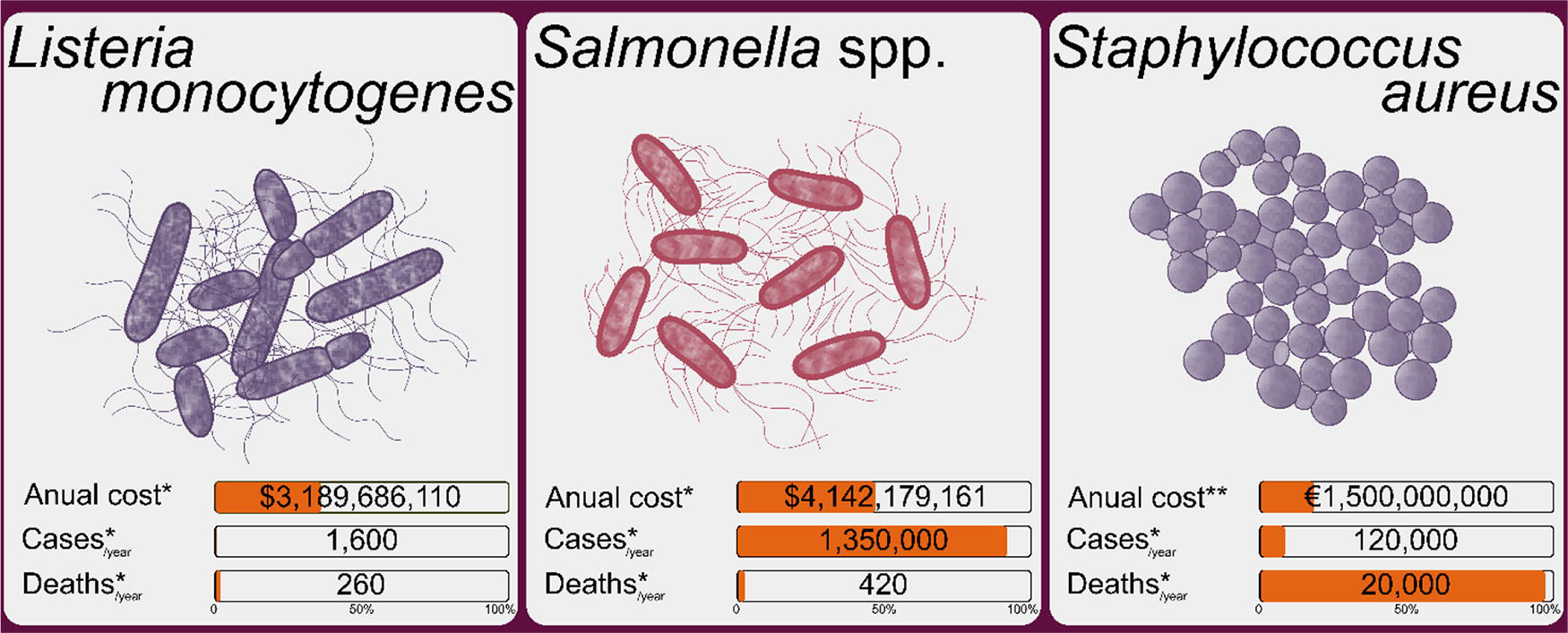
Annual cost, cases per year, and deaths per year of Listeria monocytogenes, Salmonella spp., and Staphylococcus aureus. *Data only appliable for the United States (Kourtis et al., 2019; https://www.cdc.gov/listeria/index.html; https://www.cdc.gov/salmonella/index.html; https://www.ers.usda.gov/data-products/cost-estimates-of-foodborne-illnesses.aspx) **Data applicable for Europe (Guo et al., 2020).
According to the World Health Organization, Salmonella spp. are considered as principal pathogens, usually acquired by consuming contaminated food or water, or by contact with infected animals or people. According to the World Bank, the impact of unsafe food costs low- and middle-income economies about US$110 billion in lost productivity and medical expenses each year. A large proportion of these costs could be avoided by adopting preventative measures that improve how food is handled from farm to fork. Salmonella spp. are one of the major foodborne pathogens that affect millions of people annually, sometimes with severe and fatal outcomes. According to the European Food Safety Authority, economic losses associated with human salmonellosis could be as high as €3 billion a year.
According to the USA Centers for Disease Control and Prevention, S. aureus is one of the world’s most common pathogen, associated with numerous cases and outbreaks, a bacterium that causes various infections in humans and other animals (Antonanzas et al., 2015). According to a report by Roberts et al. (2009), the annual cost of S. aureus infections in the USA was estimated at $14.5 billion in 2005, which includes direct medical costs and productivity losses. Same authors mentioned that MRSA accounted for 63% of the total cost (Shrestha et al., 2018) (Fig. 1). Antonanzas et al. (2015) reported on the economic burden of S. aureus infections in Europe and pointed estimated value of €1.5 billion in 2010, which includes medical costs and productivity losses; as well MRSA infections were pointed as the principal infection responsible for the higher cost, as a consequence of the longer hospital stays and higher mortality rates (Guo et al., 2020).
L. monocytogenes, Salmonella spp., and S. aureus infections are all caused by bacteria that can contaminate food and cause foodborne illnesses, commonly named as foodborne pathogens. The best way to prevent these infections is to follow proper food safety practices and hygiene measures. Personal hygiene of food handling personnel, food preparation utilities, and appropriate cooking procedures are just principal steps in the reduction of the distribution of foodborne pathogens. Separate raw meat, poultry, eggs, seafood, and their juices from ready-to-eat foods. Use separate cutting boards and plates for raw and cooked foods. Do not cross contaminate one food with another; avoid eating or drinking foods that are more likely to be contaminated with L. monocytogenes, Salmonella spp., or S. aureus, such as unpasteurized milk and dairy products, raw or undercooked eggs, raw or lightly cooked sprouts, raw or smoked fish and seafood, and deli meats and cheeses that are not heated until steaming hot. These are some of the general tips to prevent L. monocytogenes, Salmonella spp., and S. aureus infections. However, there may be more specific recommendations for different groups of people who are at higher risk of these infections, such as pregnant women, older adults, and people with weakened immune systems.
Alternative methods for controlling foodborne pathogens are becoming increasingly important due to the rise of antibiotic resistance and the need for more sustainable and effective food safety practices. The reinvention of traditional and some innovative approaches such as the use of bacteriophages, application of probiotics and postbiotics, different antimicrobial peptides and bacteriocins, natural extracts and essential oils, silver and zinc oxide nanoparticles, or cold plasma can be considered as alternative methods that offer promising solutions for controlling foodborne pathogens, enhancing food safety, and reducing reliance on traditional antibiotics.
“Scientia est potentia” (the knowledge is the power), this Latin aphorism (by Sir Francis Bacon, a 16th-century English philosopher and scientist) is clearly in support of evaluation of scientific knowledge on foodborne pathogens and finding appropriate ways to prevent foodborne illnesses and reducing their negative impacts.
Authors’ Contributions
Conceptualization: S.D.T. and U.M.P. Writing of the article: V.B.M., D.F.S., L.C.G.J., and S.D.T. Preparation of visual material: V.B.M., D.F.S., and L.C.G.J. Literature screening: V.B.M., D.F.S., L.C.G.J., and S.D.T. Intellectual support, corrections, and editing: S.D.T., M.L., and U.M.P. Writing, review, and editing: S.D.T. and U.M.P.
Footnotes
Acknowledgment
The authors acknowledge Mia Miau for her unconditional support.
Funding Information
This research was funded by São Paulo Research Foundation (FAPESP) (Grants 2013/07914-8; 2023/05394-9; 2023/02522-6; 2024/01721-8) to Coordination of Superior Level Staff Improvement (CAPES) for the scholarship (Code 001).
Ethical Approval
This article does not contain any studies with human or animal subjects.
Data Availability
All data generated or analyzed during this study are based on existing literature and were presented as critical reading of the authors of the current article.
Disclosure Statement
The authors declare that they have no conflicts of interest.