







Abstract
This study evaluates the impact of traditional sun drying and modern industrial drying techniques on fungal contamination and mycotoxin production in dried figs. A total of 80 samples (40 per drying method), collected from various retail sources in Upper Egypt, were analyzed. Fungal isolation was performed on Dichloran Rose Bengal Chloramphenicol agar medium and incubated at 28°C. Sun-dried figs exhibited significantly higher fungal loads (1395 colony-forming unit [CFU]/g) compared with industrially dried figs (750 CFU/g). Mycobiota analysis identified 33 fungal species across 12 genera in sun-dried figs, whereas industrial drying yielded 21 species. Internal transcribed spacer sequencing facilitated species identification, with accession numbers PV065865 to PV065896 deposited in GenBank. Aspergillus spp. were dominant in both drying methods, with Aspergillus welwitschiae, A. flavus, and A. niger being the most prevalent. Mycotoxin analysis revealed aflatoxin contamination in 37.5% of sun-dried and 15% of industrially dried figs, while ochratoxin A was detected in 57.5% and 27.5% of samples, respectively, for sun-dried and industrially dried figs. Total fumonisins were present in 12.5% of sun-dried and 5% of industrially dried figs. These findings highlight the efficacy of industrial drying techniques in mitigating fungal contamination and mycotoxin accumulation, thereby improving the microbiological safety of dried figs.
Introduction
Drying is a well-established food preservation method that extends the shelf life of fruits such as figs (Ficus carica) by lowering water activity, thereby preventing the growth of microorganisms and pathogens (FAO, 1981; Mujumdar, 2006). Figs are highly valued for their rich nutritional profile and distinctive flavor (Oliveira et al., 2009); however, the drying technique used significantly influences their quality and safety. Traditional sun drying, while cost-effective and reliant on natural air circulation, exposes figs to environmental contaminants and pests, increasing the risk of fungal contamination and mycotoxin formation (Jayaraman and Gupta, 2006; Palumbo et al., 2015). In contrast, modern industrial drying methods—including hot air, vacuum, and freeze-drying—offer controlled conditions that reduce contamination and ensure product consistency, albeit at a higher cost (Mujumdar, 2006).
Economic constraints and climate variability
The widespread adoption of modern industrial drying technologies, such as hot air and freeze-drying methods, is often hindered by significant economic barriers in many developing countries. While industrial drying techniques offer controlled conditions that can reduce fungal contamination and mycotoxin production, the high capital investment required for purchasing and maintaining such equipment remains a major challenge, especially in rural areas. Small-scale producers and local drying operations may lack the financial resources to invest in this technology, preferring the lower-cost, traditional sun drying method (Dibbern et al., 2024; Machala et al., 2022).
Furthermore, the lack of proper infrastructure—including access to reliable electricity and suitable storage facilities—can make it difficult for smallholder farmers and food processors to implement these modern drying techniques effectively. In some regions, particularly in rural areas, the financial strain is compounded by limited access to credit, which may prevent investments in necessary infrastructure and equipment upgrades (Dibbern et al., 2024; Nwachukwu, 2018). For many, the cost-effectiveness of traditional sun drying outweighs the potential benefits of industrial methods, even if the latter would lead to better product safety and quality (Dibbern et al., 2024).
Moreover, the operational costs associated with industrial drying—such as energy consumption, labor, and maintenance—may not be justifiable in areas where dried fig production is a relatively low-margin business. As a result, improving access to affordable drying technologies and developing financial incentives or subsidies for smallholder farmers could encourage wider adoption and help mitigate these economic barriers (Machala et al., 2022). Policy support and financial assistance would be key to overcoming these challenges and enabling a more sustainable transition to industrial drying (Dibbern et al., 2024).
In addition to economic constraints, climate variability significantly affects the effectiveness of sun drying. Variations in temperature, humidity, and precipitation can significantly impact the rate at which figs are dried, leading to inconsistent drying times and conditions (Casu et al., 2024). For instance, prolonged periods of high humidity or rainfall can hinder the drying process, creating a more favorable environment for fungal growth. Fungal species such as Aspergillus thrive under these humid conditions, and their proliferation can lead to higher mycotoxin production, particularly aflatoxins and ochratoxins (Benkerroum, 2016; Magan and Aldred, 2005).
On the contrary, high temperatures and dry conditions may accelerate the drying process, but such conditions may also lead to the overdrying of figs, which could compromise the fruit’s texture, flavor, and nutritional content (Casu et al., 2024). In contrast, industrial drying technologies, which provide controlled environments, can mitigate the impact of such climate fluctuations by maintaining optimal temperature and humidity levels during the drying process. This leads to more consistent results, significantly reducing the risk of fungal contamination and mycotoxin accumulation (Mujumdar, 2006).
Regions that are more susceptible to climate extremes, such as the Mediterranean and tropical zones, are particularly vulnerable to these issues (Ayeni et al., 2021). Global climate change is expected to exacerbate such variability, making it even more critical to adopt reliable, climate-resilient drying methods that can ensure food safety and quality under changing environmental conditions (Casu et al., 2024). Industrial drying methods that provide a stable drying environment will be more resilient to the fluctuating climate patterns, ensuring more reliable food safety outcomes even as climate conditions become more unpredictable (Mujumdar, 2006).
In this context, adapting to climate variability through more efficient drying technologies not only addresses immediate food safety concerns but also contributes to long-term sustainability goals by reducing food waste and improving the shelf life of dried products (FAO, 2018; UN, 2020).
Fungal contamination in dried figs is a major food safety concern due to mycotoxins such as aflatoxins, ochratoxins, and fumonisins, which are associated with carcinogenic, nephrotoxic, and immunosuppressive effects (Benkerroum, 2016; Magan and Aldred, 2005; Richard, 2007; Wild and Gong, 2010). The primary mycotoxin-producing fungi in figs belong to the Aspergillus and Penicillium genera, with contamination levels influenced by factors such as fungal species, environmental conditions, and drying methods (Taniwaki et al., 2018; Varga and Kozakiewicz, 2006). Research has demonstrated that controlled drying techniques play a crucial role in reducing contamination, as mycotoxin levels tend to be higher in sun-dried figs compared with those processed through modern industrial methods (Galván et al., 2022; Gilbert and Senyuva, 2008; Özay and Alperden, 1991).
Predictive modeling for contamination risk estimations
Predictive modeling techniques are increasingly used to assess contamination risks in food safety, particularly for fungal contamination and mycotoxin production. These models forecast contamination levels based on environmental variables, drying methods, and other factors. Regression analysis is commonly applied to model the relationship between environmental factors (e.g., temperature, humidity, rainfall) and fungal contamination (Casu et al., 2024). This helps estimate fungal growth and mycotoxin production, optimizing drying processes and minimizing risks, as shown in Galván et al. (2021) for aflatoxin contamination in dried figs. Recently, machine learning techniques such as support vector machines, random forests, and artificial neural networks have been used to develop models that handle complex datasets with multiple variables (Dibbern et al., 2024). These methods provide more robust predictions across diverse regions and conditions, such as predicting ochratoxin A (OTA) contamination in dried fruits (Tian et al., 2024).
While the literature review provides a solid foundation, primarily based on regional studies, further integration of global perspectives is necessary to provide a more comprehensive understanding of drying methods and mycotoxin contamination, a widespread issue affecting food safety worldwide (González-Curbelo and Kabak, 2023). Studies from regions with diverse climatic conditions, such as those in Mediterranean (Özay and Ozer, 2008; Ozer et al., 2012) or tropical countries (Ayeni et al., 2021; Zuza Jnr et al., 2018), may offer valuable insights into the effectiveness of different drying methods (Martins and Da Silva Pena, 2017). For example, research from countries with comparable temperature and humidity patterns could inform how different environmental factors influence fungal contamination and mycotoxin production during the drying process (Galván et al., 2021; IARC, 2012).
This study aims to evaluate the effectiveness of traditional sun drying versus modern industrial drying techniques in minimizing fungal contamination and mycotoxin presence in dried figs. By assessing fungal counts, mycotoxin levels, and the diversity of fungal species, this research provides valuable insights into the impact of different drying methods on the safety and quality of dried figs, ultimately contributing to enhanced food safety and reduced health risks associated with mycotoxin exposure.
Materials and Methods
Sample collection and mycobiota analysis
A total of 80 dried fig samples were obtained from various retail outlets and market sources in Upper Egypt, with 40 samples subjected to traditional sun drying and the remaining 40 processed using modern industrial drying techniques. Samples were stored in sterile plastic bags at 4°C for no more than 72 h prior to analysis. Homogenization was performed using an Ultra-Turrax blender at a 1:1 (w/w) ratio with sterile water. Small aliquots of the resulting homogenate were directly plated onto Dichloran Rose Bengal Chloramphenicol (DRBC) agar medium and evenly spread using a glass spreader. DRBC was selected for its broad-spectrum capacity to support the growth of a wide range of xerophilic fungi commonly found in dried fruits, including Aspergillus and Penicillium species. Although selective media such as AFPA or DG18 can enhance the detection of specific toxigenic fungi like A. flavus, DRBC was preferred to allow a comprehensive assessment of total mycobiota diversity across samples. Plates were incubated at 28°C for 7–14 days, with duplicate inoculations conducted, and each experiment replicated three times (Şenyuva et al., 2008). Fungal enumeration was performed on plates containing 15–150 colony-forming units (CFU), with results expressed as CFU per gram of sample. Individual fungal colonies were subcultured onto Malt Extract Agar for further characterization. Morphological identification of fungal genera and species was conducted based on macroscopic and microscopic features, following standard taxonomic keys (Klich, 2002; Nelson et al., 1983; Samson et al., 2002).
Molecular identification of fungal isolates
Fungal isolates were initially identified based on morphological criteria, and 33 representative strains were subsequently subjected to ITS sequencing to confirm their taxonomic identity. Molecular confirmation of fungal isolates was performed through DNA analysis. Genomic DNA was extracted according to the method outlined by Gashgari et al. (2011). The internal transcribed spacer (ITS) region of ribosomal DNA was amplified using polymerase chain reaction (PCR) with the ITS1-F (CTTGGTCATTTAGAGGAAGTAA) and ITS4 (TCCTCCGCTTATTGATATGC) primers (Gardes and Bruns, 1993; White et al., 1990). PCR reactions were conducted in a total volume of 50 μL, containing 2 μL of DNA, 150 μM dNTPs, 1 U of Taq DNA polymerase (Promega), reaction buffer, and 0.5 μM of each primer. The PCR cycling conditions consisted of an initial denaturation at 94°C for 3 min, followed by 35 cycles of 94°C for 1 min, 50°C for 1 min, 72°C for 1 min, and a final extension at 72°C for 10 min. Amplified products were resolved on a 1% agarose gel, stained with ethidium bromide, and visualized under ultraviolet (UV) transillumination.
PCR products were purified using ExoSAP-IT (USB Corporation) according to the manufacturer’s protocol, followed by sequencing with the BigDye Deoxy Terminator cycle sequencing kit (Applied Biosystems) on an ABI PRISM 3700 automated DNA sequencer. Sequences were submitted to GenBank through the National Center for Biotechnology Information (http://www.ncbi.nlm.nih.gov) and analyzed using the BLAST tool (http://www.ncbi.nlm.nih.gov/BLAST) for species identification. Sequence alignment was performed using Clustal X 1.81 (Thompson et al., 1994), and phylogenetic relationships were inferred using the neighbor-joining method in TREECON for Windows (version 1.3b, 1998) with the Jukes–Cantor model (Van de Peer and de Wachter, 1994).
Detection of mycotoxins in dried fig samples
The presence of total aflatoxins (TAFs), total fumonisins (TFs), and OTA in dried fig samples was analyzed using an immunoaffinity-based method, adapted from the Association of Official Analytical Chemists protocol (Trucksess et al., 1991). According to Lewis et al. (2005), each sample was extracted with 100 mL of a methanol:water (80:20) solution, supplemented with 5 g of NaCl, and blended at high speed for 3 min. The homogenate was filtered through fluted filter paper (Whatman 2V; Whatman plc, Middlesex, UK) and subsequently diluted (1:4) with water before being refiltered through a glass-fiber filter (Whatman plc).
For the quantification of TAFs, TFs, and OTA, 3 mL of the filtered extract was passed through AflaTest WBSR, FumoniTest, and OchraTest WB Columns (VICAM, Watertown, MA) at a flow rate of 1–2 drops per second. The columns were washed twice with 5 mL of water, and mycotoxins were eluted using 1 mL of high-performance liquid chromatography-grade methanol. A 1 mL bromine developer solution was added to the eluate, and fluorescence measurements were performed using a VICAM Series-4 fluorometer recalibrated for mycotoxin detection. Excitation and emission wavelengths were set at 360 nm (for TAFs and OTA) and 335 nm (for TFs), with fluorescence recorded at 450 nm (VICAM, 2005). The immunoaffinity column method was validated with a limit of detection of 0.1 μg/kg, a limit of quantification of 0.3 μg/kg, and average recovery rates ranging from 85% to 110% for all three mycotoxins tested. This method was selected for food sample analysis due to its high sensitivity, specificity, and compliance with international food safety standards. In contrast, thin-layer chromatography (TLC) was used exclusively for fungal isolates to qualitatively confirm their mycotoxin production capabilities. TLC was not applied to food matrices due to its lower sensitivity and limited quantitative accuracy compared with immunoaffinity-based methods. All fungal isolation and mycotoxin quantification assays were conducted in triplicate and included both positive and negative controls to ensure analytical reliability and reproducibility.
Quantitative analysis of mycotoxin production by Aspergillus isolates
To assess the production of TAFs, TAFs, and OTA by Aspergillus isolates, spores and mycelia from 5- to 7-day-old fungal cultures were inoculated into yeast sucrose broth and incubated for 6–8 days at 25°C. Following incubation, fungal biomass and broth were homogenized with 100 mL of chloroform in a blender. The resulting mixture was agitated on a shaker for 24 h and subjected to liquid–liquid separation using a separation funnel. The chloroform phase containing extracted mycotoxins was collected, evaporated, and dried to form a residue, following the procedure described by Samson et al. (2002).
The dried toxin extract was dissolved in 1 mL of chloroform, and 20 μL of the solution was spotted onto an activated TLC plate and air-dried. The TLC plates were then developed in a solvent system comprising chloroform:methanol (97:3 v/v) until the solvent front reached the top of the plate. Fluorescent bands corresponding to aflatoxins, fumonisins, and OTA were visualized under UV light at 365 nm, 360 nm, and 366 nm, respectively (Betina, 1985; Gherbawy et al., 2025).
Results and Discussion
Mycobiota in dried fig samples
This study examined the fungal contamination of dried figs processed via traditional sun drying and modern industrial techniques. Sun-dried figs exhibited significantly higher fungal loads (1395 ± 120 CFU/g) compared with industrially dried figs (750 ± 95 CFU/g; p < 0.01), highlighting the influence of drying conditions on microbial growth (Table 1). Sun drying exposes figs to variable environmental factors, increasing fungal colonization and mycotoxin risks (Gilbert and Senyuva, 2008). In contrast, controlled industrial drying conditions minimize fungal proliferation by maintaining optimal temperature and humidity (Galván et al., 2022). Industrial drying methods, such as hot air drying at 60°C, reduce water activity more rapidly, creating an unfavorable environment for xerophilic and toxigenic fungi to proliferate. This supports the use of controlled drying protocols as an effective intervention to enhance the microbiological safety of dried fruits. The strong correlation (r = 0.94) between fungal abundance in sun-dried and industrial-dried samples likely reflects shared environmental contamination routes or a common initial microbiota, despite differences in fungal proliferation driven by drying conditions (Fig. 1).
Detailed Analysis of Fungal Species Isolated From Sun-Dried and Industrial-Dried Samples: Accession Numbers, Average Total Counts per Sample (CFU/g), Percentage of Total Isolated Fungi, and Occurrence in 40 Samples
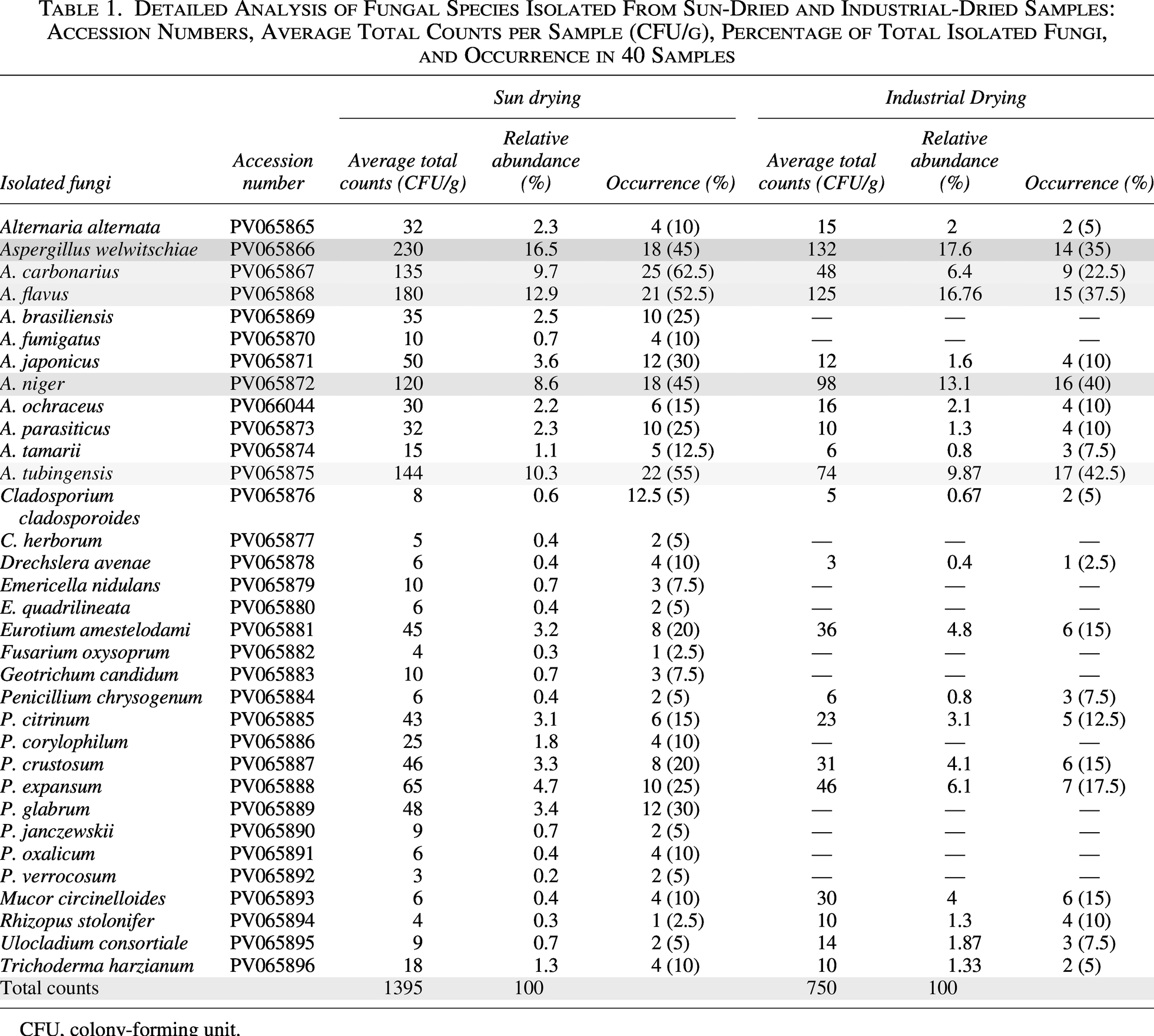
CFU, colony-forming unit.
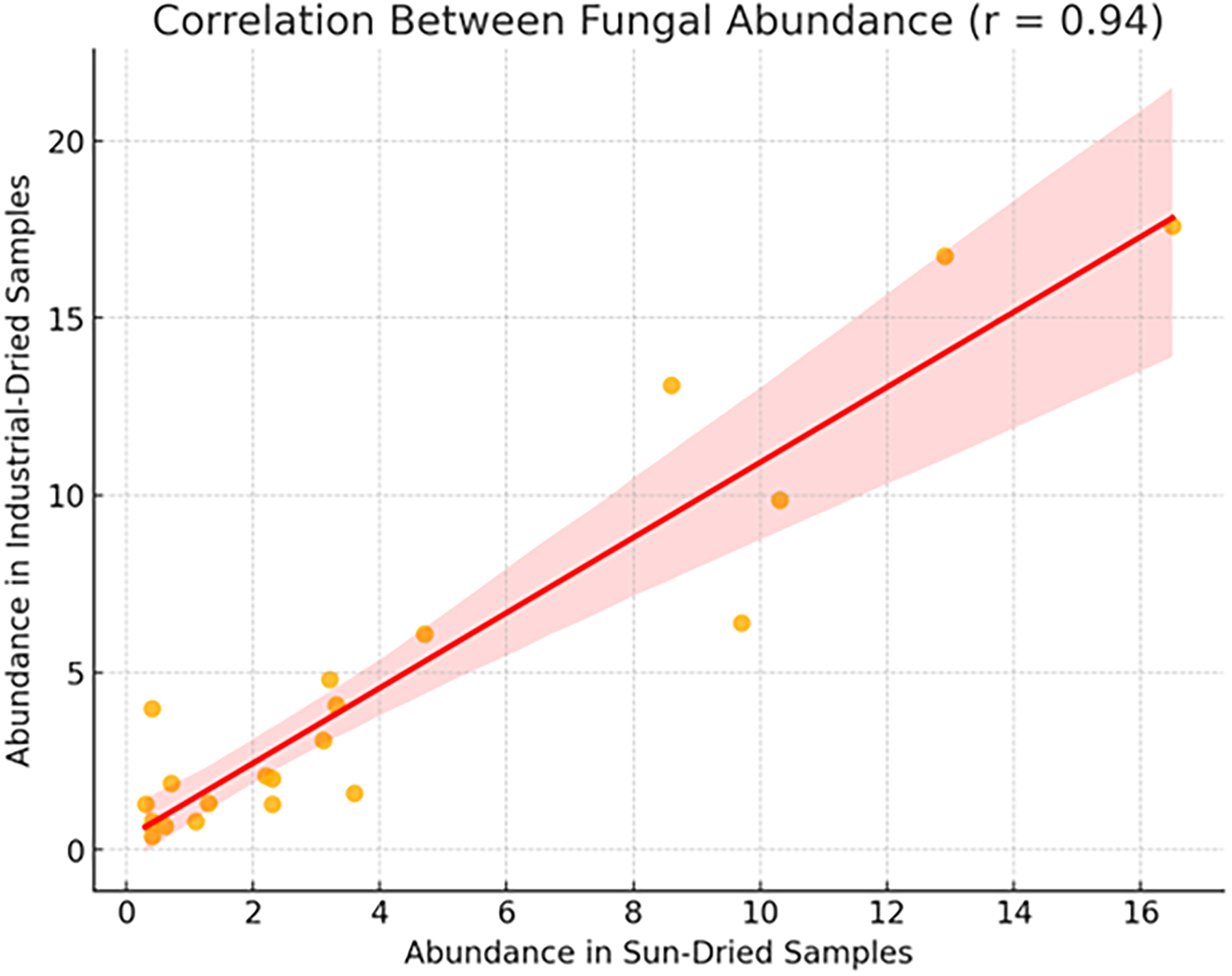
The correlation coefficient between fungal abundance in sun-dried and industrial-dried samples.
Molecular identification via ITS sequencing confirmed fungal isolates, with sequences deposited in GenBank (PV065865 to PV065896) (Table 1, Fig. 2).
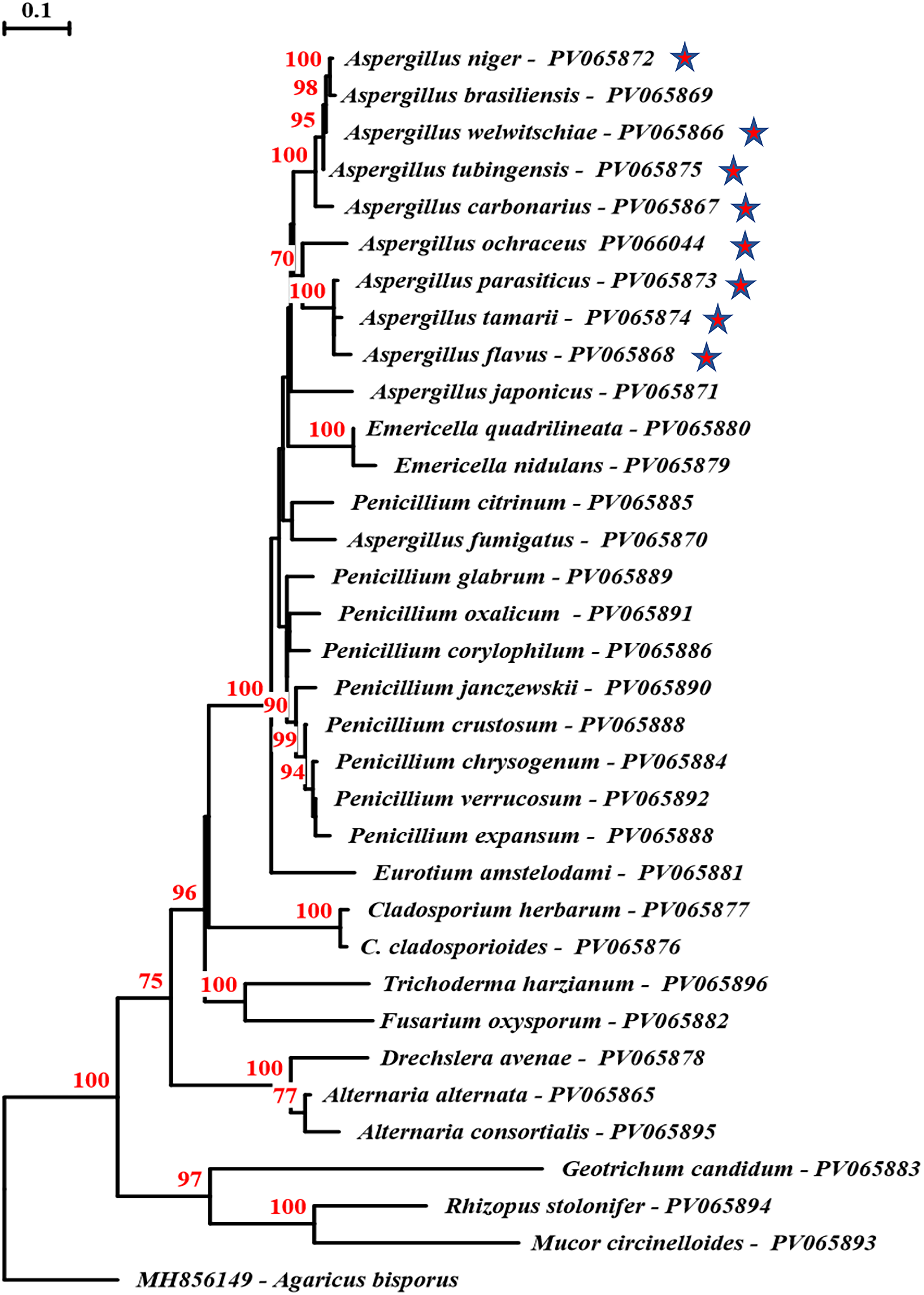
Phylogenetic analysis of isolated strains from dried fig samples based on ITS region sequences: Bootstrap values (only values >70%) indicated above branches, red asterisks denote mycotoxigenic strains. ITS, internal transcribed spacer.
Aspergillus species were dominant in both drying methods (Table 1). Aspergillus welwitschiae was the most abundant, with OTAOTA0 CFU/g (45%) in sun-dried figs and 132 CFU/g (35%) in industrially dried figs. A. niger followed, with 120 CFU/g (45%) and 98 CFU/g (40%) in sun-dried and industrially dried figs, respectively, consistent with reports of its prevalence in dried fruits (Pitt, 2009). A. tubingensis was also significant, occurring at 144 CFU/g (55%) in sun-dried figs and 74 CFU/g (42.5%) in industrially dried samples. Members of Aspergillus section Nigri are xerotolerant, thriving under low water activity and high sugar concentrations, conditions prevalent during drying (Abarca et al., 2003; Samson et al., 2002; Zinedine et al., 2007).
A. flavus was found at 180 CFU/g (52.5%) in sun-dried figs and 125 CFU/g (37.5%) in industrially dried figs, while A. parasiticus was present at lower levels (32 CFU/g, 25%; and 10 CFU/g, 10% in sun-dried and industrial samples, respectively). These species are known for their ability to persist in dried fruits due to their tolerance to desiccation (Kumar et al., 2008). Studies have also documented frequent isolation of A. flavus and A. parasiticus from dried figs (Heperkan, 2006; Heperkan and Karbancıoğlu-Güler, 2009; Isman and Biyik, 2009).
Penicillium species, including P. chrysogenum, P. citrinum, P. crustosum, and P. expansum, were detected in both drying methods. P. expansum was recorded at 65 CFU/g (25%) in sun-dried figs and the same count but with lower frequency (17.5%) in industrially dried figs. Similar findings have been reported in Iraq (Saadullah and Abdullah, 2015) and Turkey (Şenyuva et al., 2008). Alternaria alternata was detected at lower levels, with 35 CFU/g (10%) in sun-dried figs and 10 CFU/g (2.5%) in industrially dried figs. Although Alternaria species pose lesser contamination risks compared with Aspergillus, their presence has been noted in dried figs from Mediterranean regions (Heperkan et al., 2012; Logrieco et al., 2009).
Post-drying storage conditions
While the drying process plays a major role in fungal contamination and mycotoxin production, post-drying storage conditions significantly impact these factors. Temperature, humidity, and packaging during storage can either promote or inhibit fungal growth after drying. High humidity or improper storage can cause moisture reabsorption, creating an environment conducive to fungal growth, which can increase mycotoxin levels. Proper packaging and maintaining optimal storage conditions are essential to limit these risks. Impermeable packaging, which reduces moisture entry, can help prevent fungal growth and subsequent contamination (Kim et al., 2021; Magan and Aldred, 2005).
Studies have shown that moisture reabsorption in improperly stored dried products significantly increases fungal growth and mycotoxin accumulation. For instance, P. expansum and A. niger thrive under high humidity, leading to higher toxin concentrations (Syamilah et al., 2022). Poor storage conditions, such as storing in non-airtight containers, exacerbate contamination by allowing moisture to enter the dried product, promoting fungal colonization (Jacobsen, 2014).
Optimized packaging and controlled storage environments, such as refrigerated or desiccated storage, have been shown to mitigate these risks by preventing further fungal growth and mycotoxin accumulation (Galván et al., 2021). For example, sealed vacuum packaging helps limit moisture entry, reducing the likelihood of post-drying fungal contamination (Syamilah et al., 2022). Therefore, post-drying storage should be considered a critical factor in ensuring the microbiological safety of dried figs, alongside the drying process itself (Marin et al., 2013).
Natural occurrence of TAFs, TFs, and OTA in dried figs
Table 2 highlights significant differences in mycotoxin contamination between 40 sun-dried and 40 industrially dried fig samples. The mean Aspergillus spp. count was higher in sun-dried figs (981 CFU/g) than in industrially dried figs (521 CFU/g).
Comparative Analysis of Fungal Contamination in Dried Figs: Mean Total Fungal Counts (CFU/g), Aspergillus spp. Counts, TAFs and OTA Positive Sample Percentages, and Contaminant Ranges in Sun-Dried Versus Modern Industrial Drying Techniques
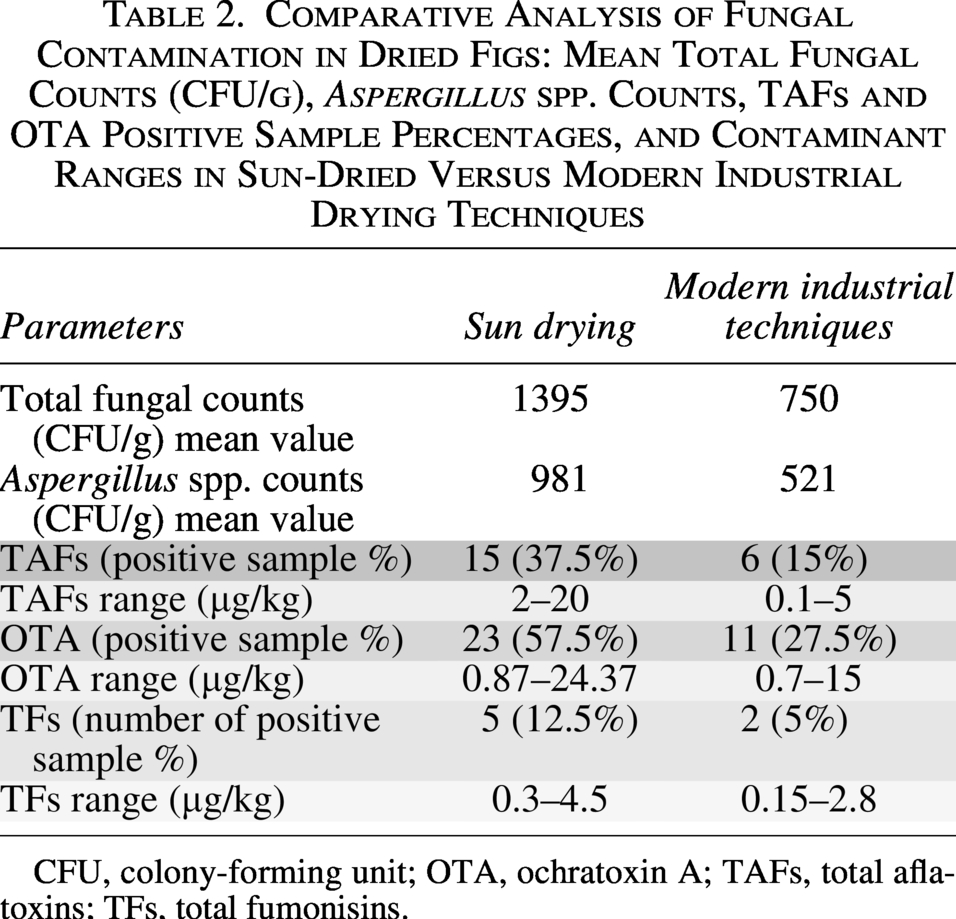
CFU, colony-forming unit; OTA, ochratoxin A; TAFs, total aflatoxins; TFs, total fumonisins.
TAFs contamination
Aflatoxins were detected in 37.5% of sun-dried figs (2–20 μg/kg) and 15% of industrially dried figs (0.1–5 μg/kg), with the difference being statistically significant (p < 0.05). These findings align with Özay and Alperden (1991), who reported aflatoxins in 29% of dried fig samples (0.5–78.3 μg/kg), and Kabak (2016), who found contamination in 12.3% of samples (0.1–28.2 μg/kg, mean = 3.8 μg/kg). Other studies reported aflatoxin prevalence in dried figs across various countries, with contamination rates ranging from 11% to 76% and concentrations from 0.1 to 696.3 μg/kg (Bakirci, 2020; Basegmez, 2019; Di Sanzo et al., 2018; Heperkan et al., 2012; Heshmati et al., 2017; Iqbal et al., 2014; Mimoune et al., 2018). These variations highlight differences in environmental conditions and drying practices.
TFs contamination
Fumonisin contamination was significantly higher in sun-dried figs (12.5%) compared with industrially dried figs (5%; p < 0.05), with concentrations ranging from 0.3 to 4.5 μg/kg and 0.15 to 2.8 μg/kg, respectively. Moretti et al. (2019) reported low fumonisin levels in Italian dried figs. In Turkey, Kosoglu et al. (2011) found fumonisins in 67.5% of 262 dried fig samples, with mean fumonisin B1 (FB1) and fumonisin B2 (FB2) concentrations of 0.080 ± 0.047 μg/g and 0.055 ± 0.031 μg/g, respectively. Karabancıoğlu-Güler and Heperkan (2009) reported FB1 in 74.8% of samples (0.046–3.649 μg/g), with 9.6% exceeding 1 μg/g.
OTA contamination
OTA was present in 57.5% of sun-dried figs and 27.5% of industrially dried figs, with significantly higher levels in the sun-dried group (p < 0.05). Concentrations ranged from 0.87 to 24.37 μg/kg and 0.7 to 15 μg/kg, respectively. Şenyuva et al. (2008) reported OTA in 32 of 50 Turkish dried fig samples (0.7–1710 ng/g). Pavón et al. (2012) found OTA in 54.3% of Spanish dried figs (maximum of 245.3 μg/kg), while Palumbo et al. (2015) detected OTA in 4 out of 88 U.S. dried fig samples (0.5–3.3 μg/kg). In Iran, nearly half of the dried fig samples contained OTA, with a maximum of 10 μg/kg (Heshmati et al., 2017). Kulahi and Kabak (2002) reported OTA in seven Turkish samples (maximum of 1.55 μg/kg). These variations may be attributed to differences in toxin distribution, climate conditions, and processing methods.
Regression analysis and mycotoxin levels
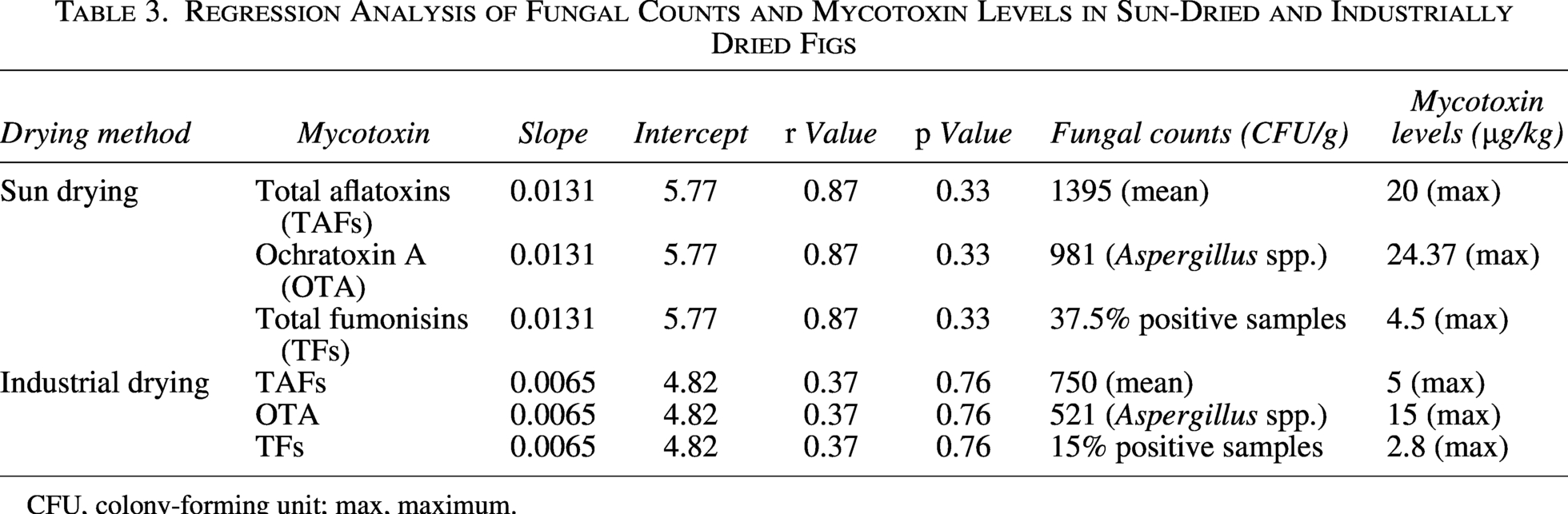
Regression analysis was performed to evaluate the relationship between fungal counts and mycotoxin levels in both sun-dried and industrially dried figs. In sun-dried figs, a moderate positive correlation (r = 0.87) was observed, but it was not statistically significant (p = 0.33). In contrast, industrial drying showed a weaker correlation (r = 0.37) with a non-significant p value (p = 0.76), suggesting a lesser association between fungal growth and toxin accumulation under industrial drying conditions (Table 3).
Regression Analysis of Fungal Counts and Mycotoxin Levels in Sun-Dried and Industrially Dried Figs
CFU, colony-forming unit; max, maximum.
Relationship between fungal contamination and mycotoxin levels
To further explore the interplay between fungal presence and mycotoxin production, regression analysis was conducted on fig samples subjected to either sun drying or industrial drying. Generally, effective drying processes reduce both fungal counts and mycotoxin concentrations (Tian et al., 2024).
For sun-dried figs, a moderate positive correlation (r = 0.87) was found between fungal counts and mycotoxin concentrations. The regression yielded a slope of 0.0131 and an intercept of 5.77, but the relationship was not statistically significant (p = 0.33). This aligns with other studies where the correlation between fungal load and mycotoxin levels is not always predictable, as toxin production can be influenced by multiple factors, and mycotoxins may persist even after fungal growth ceases (Maciel et al., 2025). Sun drying often exhibits higher microbial loads than more controlled methods (Chen et al., 2025).
In contrast, industrial drying showed a weaker correlation (r = 0.37), with a slope of 0.0065 and an intercept of 4.82, and was statistically non-significant (p = 0.76). This implies that under controlled conditions, industrial drying is more effective at reducing moisture and inhibiting fungal activity (CPN, 2025), resulting in a less pronounced link between fungal growth and mycotoxin accumulation. Neither method, however, showed a statistically significant predictive relationship between fungal counts and mycotoxin levels (Table 3).
Dietary exposure and chronic exposure risk
To estimate the dietary exposure to OTA based on daily fig consumption, we assumed a 10 g/day consumption per capita. The maximum OTA concentration observed in sun-dried figs was 24.37 μg/kg, resulting in a daily exposure of 0.24 μg/day of OTA. The European Food Safety Authority (EFSA) tolerable weekly intake (TWI) for OTA is 0.12 μg/kg body weight per week, which translates to 7.2 μg/week for a 60 kg individual. For an individual consuming 10 g of sun-dried figs daily, the weekly exposure to OTA would be 1.68 μg/week, which is below the EFSA TWI (EFSA, 2011). Therefore, the chronic exposure risk from eating 10 g of figs per day remains within safe limits for a typical adult. However, higher levels of fig consumption or higher contamination levels could lead to exceeding the TWI, especially in sun-dried figs where mycotoxin levels are found to be higher. Additionally, vulnerable populations, such as children, pregnant women, or individuals with compromised kidney function, may face increased risks at even lower levels of exposure due to greater sensitivity to mycotoxins (EFSA, 2018; JECFA, 2001).
In conclusion, while the estimated exposure from 10 g/day of sun-dried figs is below the EFSA TWI for a typical adult, higher consumption levels or chronic exposure could increase risks of nephrotoxicity, immunosuppression, and potential carcinogenic effects, particularly in regions where dried figs are a dietary staple (EFSA, 2011; IARC, 1993). It is therefore important to monitor mycotoxin levels in dried figs and ensure the use of controlled drying techniques to mitigate mycotoxin contamination.
Comparative context
When comparing the mycotoxin contamination levels in the current study to European Union (EU) regulatory standards and existing data from Turkish figs, several important observations were made. The EU limit for OTA in dried fruit is 10 μg/kg, and in this study, 7 out of 40 sun-dried fig samples exceeded this limit, with levels reaching up to 24.37 μg/kg. This is consistent with the findings from Turkish figs, where the levels of OTA ranged from 1 to 11,400 μg/kg in the 2017 harvest and 5 to 77,300 μg/kg in the 2018 harvest (Sulyok et al., 2020). In both cases, maximum levels far exceed the EU limit of 10 μg/kg, highlighting a significant risk of mycotoxin contamination in sun-dried figs, particularly when drying methods expose the product to environmental contamination. Additionally, aflatoxin (TAF) contamination was observed in both sun-dried and industrially dried figs. The EU limit for aflatoxins in dried fruits is 4 μg/kg, and in our study, 15% of industrially dried figs and 37.5% of sun-dried figs exceeded this limit, with sun-dried figs showing concentrations ranging from 2 to 20 μg/kg. Turkish figs also showed high levels of aflatoxins (AFB1), with the 2017 harvest showing levels from 1 to 4320 μg/kg, and the 2018 harvest ranging from 2 to 22,300 μg/kg (Sulyok et al., 2020), far exceeding the EU limit of 4 μg/kg. These findings suggest that sun drying may pose a higher risk of aflatoxin contamination compared with industrial drying methods, which are more likely to provide controlled conditions that mitigate fungal growth and mycotoxin production. This supports the use of controlled drying protocols as a practical intervention to enhance the microbiological safety of dried fruits.
Mycotoxin production potential of Aspergillus species in dried fig samples
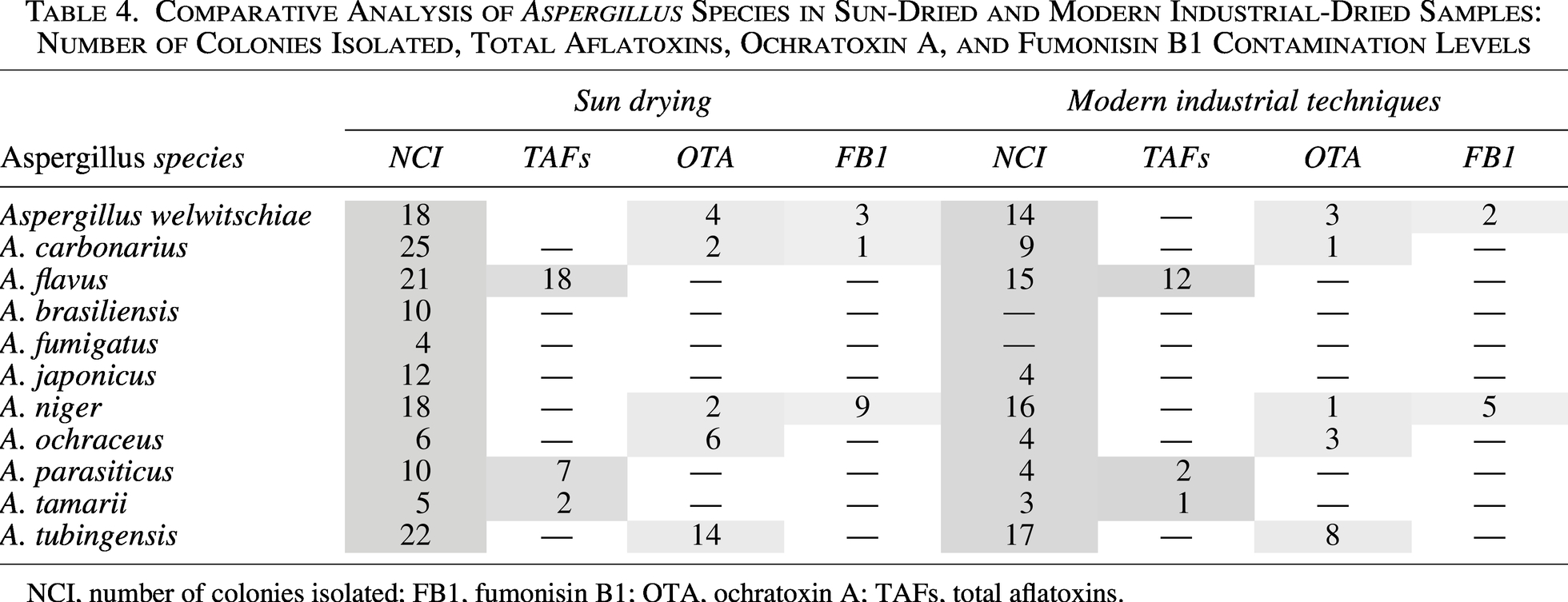
Table 4 presents the isolation and mycotoxin production potential of 151 Aspergillus strains from 80 dried fig samples. The study assessed TAFs, TFs, and OTA production under sun drying and modern industrial drying methods.
Comparative Analysis of Aspergillus Species in Sun-Dried and Modern Industrial-Dried Samples: Number of Colonies Isolated, Total Aflatoxins, Ochratoxin A, and Fumonisin B1 Contamination Levels
NCI, number of colonies isolated; FB1, fumonisin B1; OTA, ochratoxin A; TAFs, total aflatoxins.
TAF production was observed in A. flavus (12 strains), A. parasiticus (7 strains), and A. tamarii (2 strains) from sun-dried figs, whereas industrial drying yielded TAFs in A. flavus (8 strains), A. parasiticus (2 strains), and A. tamarii (1 strain). A. flavus is a known aflatoxin producer in dried figs, as previously reported (Iamanaka et al., 2007; Pitt and Hocking, 1997). Studies in Mediterranean countries have also identified A. flavus as the primary aflatoxin contaminant in dried fruits such as dates and prunes (Ragab et al., 2001; Shenasi et al., 2002; Zohri and Abdel-Gawad, 1993).
TFs production was detected in A. welwitschiae (three strains), A. niger (nine strains), and A. carbonarius (one strain) from sun-dried figs, while industrial drying yielded FB2 in A. welwitschiae (two strains) and A. niger (five strains). Studies indicate significant variation in FB2 production among Aspergillus species, with A. niger exhibiting a higher production rate than A. welwitschiae (Onami et al., 2018; Perera et al., 2021; Susca et al., 2010). These findings support the observed FB2 production in dried figs across different drying methods.
OTA production was identified in A. welwitschiae (4 strains), A. carbonarius (2 strains), A. niger (2 strains), A. ochraceus (6 strains), and A. tubingensis (14 strains) from sun-dried figs. In contrast, industrial drying yielded OTA in A. welwitschiae (three strains), A. carbonarius (one strain), A. niger (one strain), A. ochraceus (three strains), and A. tubingensis (eight strains). A. carbonarius is a major OTA producer in grapes and dried fruits (Battilani et al., 2003; Karabancıoğlu-Güler and Heperkan, 2008; Leong et al., 2006). Additionally, A. ochraceus has been recognized as a significant OTA contaminant in dried fruits, with production influenced by environmental and storage conditions (Hadi et al., 2021; Hosseini and Bagheri, 2012).
Conclusion and recommendations
This study demonstrates that industrial drying methods significantly reduce fungal contamination and mycotoxin levels compared with sun drying. Controlled techniques such as hot air and freeze-drying offer more reliable methods for ensuring the microbiological safety of dried figs. However, the widespread adoption of these technologies faces significant economic barriers and implementation challenges, especially in developing regions.
Economic feasibility
The transition to industrial drying requires substantial capital investment for equipment purchase and maintenance. Industrial drying technologies, such as hot air and freeze-drying, are often cost-prohibitive for small-scale producers and rural farmers, due to high initial costs, ongoing maintenance, and energy consumption (Dibbern et al., 2024; Machala et al., 2022). To improve feasibility, financial support in the form of subsidies, loans, or government incentives is crucial. Successful case studies, such as in Italy, where government-supported initiatives helped smallholders adopt drying technologies, can provide valuable insights into cost-effectiveness (Moretti et al., 2019).
Barriers to implementation
Several challenges hinder the adoption of industrial drying, particularly in rural areas, including lack of infrastructure (reliable electricity, transportation, and storage facilities) and limited access to credit, making investment in modern drying technologies difficult. Additionally, high operational costs such as energy and labor expenses may be unjustifiable in regions where dried fig production is a low-margin business. Overcoming these barriers requires targeted financial incentives, improved infrastructure, and facilitating access to credit for smallholder farmers.
Recommendations
Financial support: Governments and international organizations should develop funding mechanisms or subsidies to help small-scale producers transition to industrial drying technologies.
Improved infrastructure: Rural areas need better infrastructure, including reliable electricity, transportation, and storage facilities, to support effective industrial drying.
Capacity building: Farmers should receive training in the use and maintenance of drying equipment to maximize its benefits and longevity.
Monitoring and regulation: Regular monitoring of mycotoxin levels in dried figs should be implemented to ensure safe drying practices and minimize contamination risks.
Collaboration with international agencies: Collaboration with international agricultural development agencies can address financial constraints by providing low-interest loans or grants to facilitate safe drying technology adoption.
While industrial drying offers clear advantages in terms of food safety and mycotoxin reduction, the economic feasibility and barriers to implementation must be carefully addressed. Targeted support is essential to enable smallholder farmers to transition from traditional methods to efficient, safe, and sustainable industrial drying techniques.
Authors’ Contributions
H.F.A.-H.: Conceptualization, methodology, validation, formal analysis, investigation, and funding. H.A.: Methodology and writing—original draft preparation; P.I.: Writing—review and editing. Y.A.G.: Conceptualization, data curation, writing—original draft preparation, and writing—review and editing. All authors have read and agreed to the published version of the article.
Footnotes
Acknowledgment
The authors extend their appreciation to Taif University, Saudi Arabia, for supporting this work through project number (TU-DSPP-2025-12).
Funding Information
This research was funded by Taif University, Saudi Arabia, Project No. (TU-DSPP-2025-12).
Data Availability
All data generated or analyzed during this study were included in this article.
Disclosure Statement
The authors have no potential conflicts of interest to report.