







Abstract
Fungi are a common cause of skin infections. The pathogens involved are usually dermatophytes and yeasts. This article covers the common types of fungal infections and provides information on how they can be recognized and managed in a primary care setting. Providing patients with advice on the preventative measures that can be taken is essential to prevent recurrent infections.
The GP curriculum and fungal infections
The GP curriculum statement 15.10 focuses on skin problems. It states that problems with the skin are a common reason for time off work and account for 15% of all consultations in primary care. The vast majority of these conditions can also be managed in primary care and it is therefore essential that GP trainees receive adequate training in this field.
In particular GPs should:
Manage primary care contact with patients who have a skin problem Work with patients to empower them to look after their own health and take responsibility for managing their skin problems Appreciate the importance of the social and psychological impact of skin problems on the patient's quality of life, including, e.g. the effects of disfigurement or sleep deprivation as a result of itching Identify the patient's health beliefs regarding skin problems and reinforce, modify or challenge these beliefs as appropriate Demonstrate a reasoned approach to the diagnosis of skin symptoms using history, examination, incremental investigations and referral Describe the side effects of common medicine used to prevent and treat other conditions that may cause skin problems Demonstrate the ability to take specimens for mycology from skin, hair and nail
Dermatophyte infections (Tinea)
Dermatophytes are fungi that cause infections of the skin, nail and hair. The most common dermatophyte infections are caused by Trychophyton rubrum, Trychophyton mentagrophytes and Trychophyton tonsurans. They invade and grow in dead keratin, producing a ring-like pattern. The name of the specific infection depends on the area infected, e.g. tinea pedis (foot), tinea capitis (scalp) and tinea corporis (body).
Infection can be spread between people, from soil and from animals. It is common all over the world. Tinea infection of the feet is more common in adults, with tinea infection of the scalp common in children.
History
Patients usually present with a combination of the following symptoms: skin itching, scaling, rash, nail discolouration and loss of hair. There may also be secondary bacterial infection. The diagnosis can often be made on a clinical basis. Certain conditions that predispose to fungal infections include diabetes mellitus, pregnancy, an immunocompromised state (such as HIV infection), corticosteroid use, Cushing's disease and after a course of antibiotic therapy.
Types of dermatophyte infection Tinea manum (hand)
Tinea manum usually affects the dominant hand and is often associated with tinea pedis. It presents as well-demarcated patches of scaling on the palmar creases. Erythematous papules with severe exfoliation may also occur.
Tinea barbae (beard area)
Tinea barbae is an infection of the hair shafts in the beard area, causing scaly and itchy skin. Hair loss can sometimes be extensive resulting in permanent alopecia.
Tinea cruris (groin)
In tinea cruris there are plaques of scale, sometimes with papules and pustules. Often occurs at the margin of the groin and thigh, but can extend to the buttock area. In contrast to candidiasis, it usually spares the scrotum.
Tinea corporis (body)
Tinea corporis presents with well-demarcated patches on the body. The infection enlarges from the edges, and with time there may be central clearing, hence the colloquial term for this condition: ‘ringworm’. Scaling is common. The scaly ‘active border’ of the lesion can be pustular or vesicular.
Tinea pedis (feet)
Tinea pedis or athlete's foot can be transmitted by contact with fungal spores in communal places such as swimming pools and changing rooms. It affects the area between the toes, resulting in skin looking dry and scaly or moist and macerated. There is often peeling and fissuring of the skin, associated with itching (Fig. 1).

Tinea pedis.
Tinea unguium (nail bed)
For people with fungal nail infections, the most common complaint is of a poor cosmetic appearance of the nail. Many patients will also be suffering from tinea pedis. On examination there is thickening and roughening of the nail, nail discolouration to a yellow or brown colour, separation of the nail from its bed (subungal hyperkeratosis) and destruction of the nail with crumbling (Fig. 2). The term onychomycosis is also used but refers to infection of the nail caused by any fungi, yeasts or moulds. Tinea unguium infection refers specifically to nail infection caused by dermatophytes.
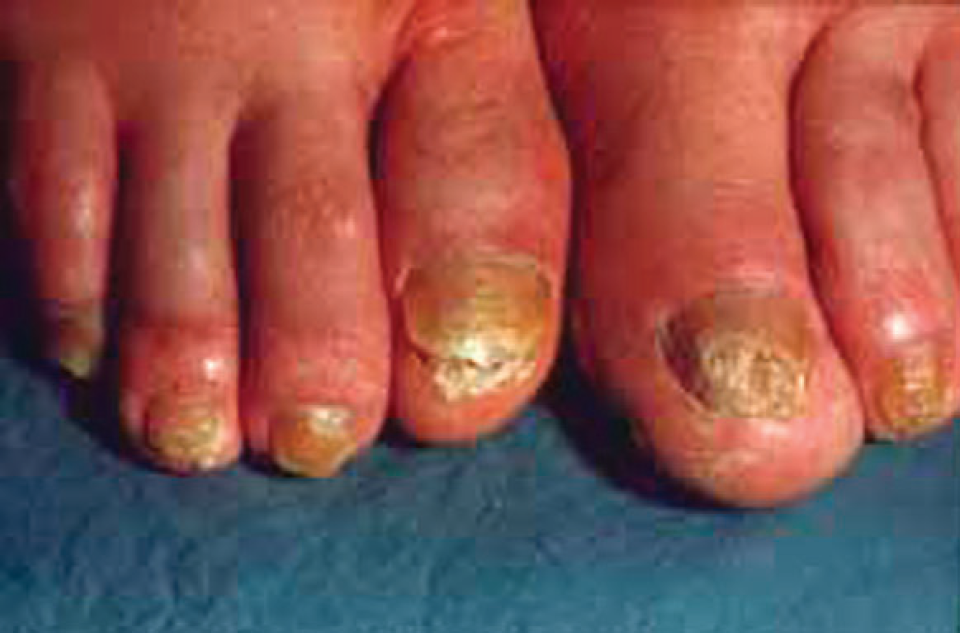
Tinea unguium.
Tinea capitis (scalp)
Tinea capitis is usually as a result of person-to-person spread. The organism can remain viable on combs, brushes, furniture and bed sheets for a long time. May be associated with hair loss (Fig. 3).
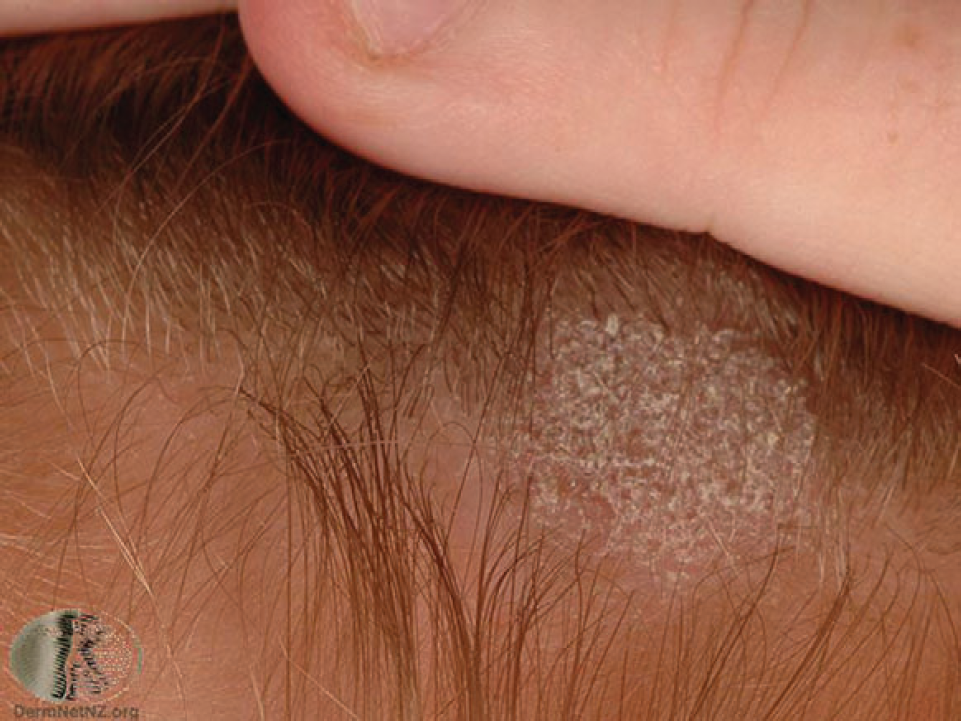
Tinea capitis.
Tinea incognito
Tinea incognito occurs in areas of skin treated with steroid alone. The skin appears red, with follicular papules or pustules. It is difficult to recognize as a typical fungal infection.
Differential diagnosis
Other conditions to consider include eczema, psoriasis, contact dermatitis and seborrhoeic dermatitis. If steroids have been applied to the area, the appearance of the lesion may change, resulting in difficulty in making a clinical diagnosis (tinea incognito).
Investigations
Consider sending scrapings (Box 1) for direct microscopy and direct culture. Microscopy may reveal hyphae and spores. Culture can identify the organism but it may take up to 6 weeks to get a result. Confirming the diagnosis with skin scrapings is particularly important if systemic therapy is being considered in the case of tinea capitis and tinea unguium. Examination with Woods (UV) Lamp may reveal a blue-green fluorescence of scales.
Taking skin scrapings for mycology
The best result site for sampling is from the active edge of a lesion, otherwise a general scrape of the scaly area should be sufficient. Use the blunt edge of a scalpel blade to scrape. Place the samples in some folded paper or card to ensure that they remain dry and free from contamination.
Treatment Topical
For most skin infections (with the exception of scalp infections), imidazole creams, such as clotrimazole, miconazole or econazole, can be used for 2–4 weeks to clear fungal lesions (Table 1). Patients should be advised to continue treatment for 2 weeks after lesions have healed. Terbinafine cream can also be used in adults and the duration of treatment is usually 1 week. It is an effective but more expensive treatment. In breastfeeding or pregnant women, terbinafine is not recommended; however, topical clotrimazole or miconazole can be used. A combination of an imidazole cream and steroid should not be used routinely, but only if there is associated inflammation of the skin. Topical antifungal nail lacquer (such as amorolfine) can be useful for treating nail infections. Antifungal powders are not very effective in treating infection, but have a useful role in preventing re-infection.
Pharmacological therapy for fungal infections

Systemic
If topical therapy has failed, has been ineffective, there is chronic infection, or infection of the scalp or nails, oral therapy (Table 1) can be considered. It is advisable to send skin scrapings for mycology to confirm the diagnosis before starting oral treatment.
Oral terbinafine can be used for adults but is not licensed for use in children. The length of time that it should be used depends on the site of the infection. Daily 250 mg is given for 2–6 weeks in tinea pedis, 2–4 weeks in tinea cruris and 4 weeks in tinea corporis. It is also used for tinea unguium and is taken in this case for 6 (finger nails) to 12 weeks (toe nails). It can affect taste causing an unsatisfactory side effect in some patients.
Oral griseofulvin is an alternative to oral terbinafine. It is given for at least 4 weeks. The dose for children over 1 month of age is 10 mg/kg once a day or 5 mg/kg twice a day. Children above the age of 12 years and adults require 500 mg once a day or 250–500 mg twice a day. It is most frequently used for tinea capitis, which does not clear with topical treatment alone. Taking the drug with fatty food aids absorption. Important points to discuss with the patient prior to starting treatment with griseofulvin include the following:
It cannot be used in pregnancy and pregnancy should be avoided for up to 1 month after stopping treatment Men should not father children within 6 months of treatment It reduces the effectiveness of both the combined oral contraceptive pill and the progesterone-only pill It impairs performance of skilled tasks such as driving, and may enhance the effect of alcohol
Oral itraconazole is another alternative. The dose, frequency and length of treatment depend on the site of infection, and whether the patient is immunocompromised. Itraconazole enhances the effect of warfarin. It must be avoided in patients with a risk of heart failure. It can interact with the liver, so if there is a history of liver disease or treatment is to continue for more than 1 month, liver function tests must be checked. Patients should be taught how to recognize signs of liver disease and to seek prompt medical attention if symptoms of liver disease develop. It is not licensed for use in children.
Prognosis
If there is good concordance with treatment, the prognosis is very good. Advice should be given on precautions to take to prevent recurrent infection. For example, avoiding prolonged dampness of skin between toes for tinea pedis and good nail hygiene for tinea unguium.
Case scenario one
A 6-year-old boy comes to see you with his mother. His mother informs you he was seen by the doctor 2 months ago with a rash on his scalp. The area is dry and itchy and he is losing hair. He was prescribed an antifungal cream which he has been applying twice a day. The cream has not helped and the patient now has new patches which have appeared on his scalp. He is otherwise fit and well. On examination there are well-circumscribed crusty scaly patches on his scalp. There is associated hair loss. There are no other lesions on his body.
What should your management of this patient include?
The patient appears to be suffering with tinea capitis or scalp ringworm. It is a very common infection in children. In this case, Griseofulvin would be the most suitable therapy. Treatment often needs to be continued for 8 weeks. Topical treatment alone is not recommended, but it may help reduce infectivity and transmission during the initial stages of oral therapy. Consider the use of selenium sulphide shampoo or ketoconazole shampoo to reduce the risk of spread to others.
Yeast infections
Candida is a yeast-like unicellular organism. It is part of the normal flora but can overgrow to cause infections. Candida albicans is the most common yeast to cause infections although other species may be involved. It can infect the skin, mouth and vagina. Infection often occurs in moist occluded areas of skin. In babies, it may present as napkin dermatitis.
History
The main symptoms of candida infection are of skin itching, irritation and pain. Affected areas are usually red and moist with scaly borders. Satellite lesions are common. If the diagnosis is in doubt, skin swabs can be taken for microscopy and culture. The differential diagnosis may include bacterial skin infection, eczema or psoriasis. Risk factors include:
Treatment with broad-spectrum systemic antibiotics for more than 7 days Immunocompromise Areas of occluded skin, e.g. under breasts, groin and axillary areas Immunosuppressive drugs such as steroids Certain systemic diseases, e.g. diabetes mellitus, Cushing's disease and malignancy
If untreated, secondary bacterial infection may occur. In the immunocompromised there may be invasive systemic spread.
Management
General advice on avoiding occlusion of the skin and keeping the skin dry is useful. Topical imidazoles are effective treatments, which cover both candida and other yeast infections (Table 1). There is little difference in the efficacy of the different imidazoles. A combination treatment with added hydrocortisone can be used if there is severe inflammation. It should be used sparingly to avoid skin atrophy on areas of thin skin.
Systemic treatment is only indicated for severe extensive infection, systemic infection or infection unresponsive to topical therapies. In this case oral fluconazole can be used. Patients should be warned that a common side effect of oral treatment is gastro-intestinal upset. Fluconazole should only be used in children below 12 years after seeking specialist advice. Terbinafine and griseofulvin are not considered to be effective for the treatment of candidal infections and are not licensed for this indication.
Types of candida infection Vulvovaginal candidiasis
Candida is a normal commensal of the vagina. Pathological overgrowth can occur following a change in the natural local environment, for example after a course of antibiotics, or a rapid hormonal change, or following an increase in the patient's susceptibility to infections. Patients present with a combination of vulval itching, thick white vaginal discharge, vaginal soreness and burning. There may also be dyspareunia. On examination, vulval erythema, oedema and a white discharge may be seen.
The infection usually responds well to topical imidazole creams and pessaries. Advice should be given on wearing loose cotton underwear, avoiding topical irritants and ensuring good hygiene. Patients should be informed that miconazole and itraconazole have an adverse effect on latex condoms.
Recurrent infections are defined by more than four episodes of infection in a year. In cases of recurrent infection, treatment compliance should be checked, and underlying factors causing the infection should be addressed. A high vaginal swab can also be taken from the lateral vaginal wall or anterior fornix to confirm the diagnosis and exclude a sexually transmitted disease as the cause of the symptoms. The partner should also be checked as may be a source of re-infection, and if symptomatic should be treated. Oral fluconazole 100 mg once a week or a clotrimazole pressary 500 mg once a week can be used on a regular basis for 6 months to prevent recurrent infections. An alternative is to use oral itraconazole 400 mg (as a divided dose) once a month for 6 months. There is some evidence that taking fluconazole 150 mg orally on day 21 of the menstrual cycle, or a 500-mg clotrimazole pessary on days 7 and 21 of the cycle may be effective. The theory is that candida infection is more likely to occur when oestrogen levels are high. The above regimens are all unlicensed.
Fluconazole and itraconazole are not licensed for use in pregnancy. In pregnancy, a longer course of a topical imidazole cream may be required.
Candida balanitis
Patients with candida balanitis have erythema and swelling of the penis and may complain of discomfort and itching. The partner should be checked as often both partners are infected. It is more common in uncircumcised men. A topical antifungal cream is usually effective in clearing the infection.
Napkin dermatitis
In babies, candida infection may present as napkin dermatitis. It can be differentiated from nappy rash by the presence of satellite lesions and non-sparing of the skin folds. Prolonged contact with urine and faeces in the nappy exacerbate the situation, causing maceration of the skin. The skin is red and sore and satellite lesions are seen (Fig. 4).

Napkin dermatitis.
Candidal nappy rash responds well to a combination of an imidazole and mild steroid cream. Advice should be given on keeping the area clean, dry and exposed to air to promote rapid healing. Advice should be given on cleaning the child with cotton wool and a moisturiser. The nappy should be changed frequently and if using a barrier cream, a thin layer should be applied.
Oral candida
Oral candidiasis is common in immunocompromised patients. It may also occur in infants who will present with problems feeding. There may be creamy or white-coloured patches within the oral cavity. There is also sometimes associated erythema. Oral nystatin, amphotecerin suspension or miconazole gel can be used. Nystatin can be given as 1 ml four times a day for 1 week. In resistant or recurrent cases, 50—100 mg of fluconazole once a day for 1–2 weeks can be used. Patients using a steroid inhaler should be advised to use a volumatic spacer device and rinse their mouth after inhaler use to prevent oral candida infection.
Angular cheilitis
Angular cheilitis results in erythema, soreness and fissuring of the angle of the mouth. There can be superinfection with Staphylococcus aureus. It responds well to topical miconazole or nystatin ointment. Angular cheilits is also associated with vitamin B12 deficiency and anaemia, so patients should be investigated accordingly.
Intertrigo
Intertrigo frequently occurs in the axilla, groin and under the breasts. The warm and moist environment provides an ideal environment for the candida to thrive. Clinically, there is erythema, pustules and macerated skin. Secondary bacterial infection is common (Fig. 5). A combination of an imidazole and steroid cream works well. The area should be kept clean, dry and exposed to air (Box 2).
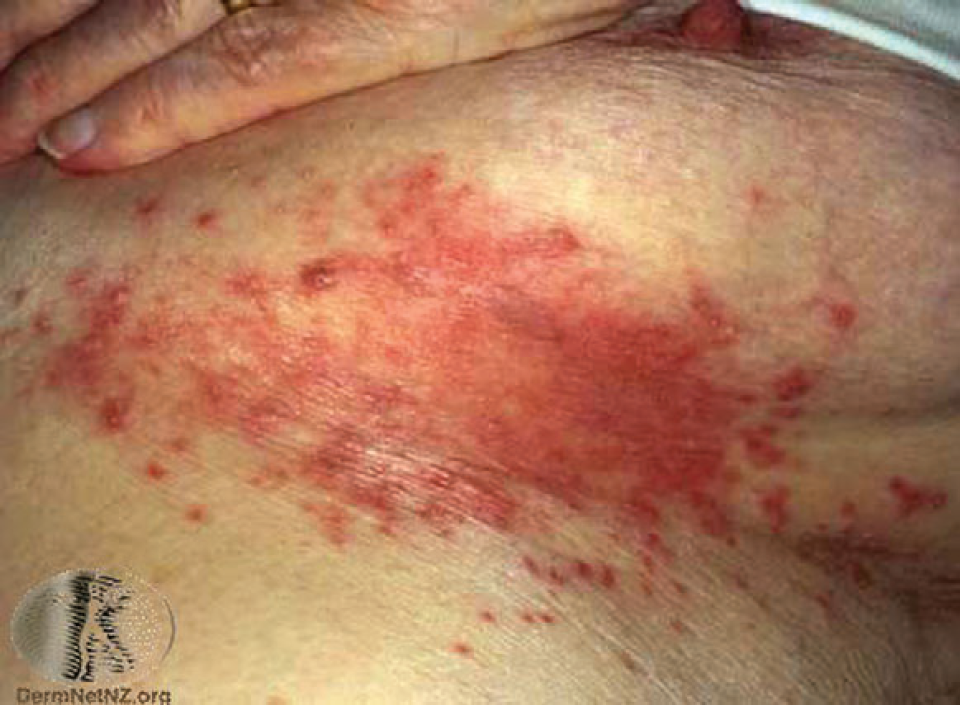
Interigo.
Advice for patients
Dry skin thoroughly after washing, especially in the skin folds
Avoid skin occlusion where possible
Do not share towels, and wash towels frequently
Otomycosis
Fungal infection of the external auditory canal accounts for one in eight otitis externa infections. The pathogen is usually aspergillosis or candida. Predisposing factors include high humidity, increased temperature, absence of cerumen, local trauma and eczema. It commonly occurs after patients have been on holiday in a tropical climate and have been involved in aquatic sports.
Patients present with ear discomfort, pruritis and discharge. There is associated scaling and white discharge may be seen. The diagnosis should be considered when the patient fails to respond to antibiotic therapy. Ears swabs can be taken to confirm the diagnosis.
Management should include cleaning the ear and keeping it dry. Ear drops containing antifungal, such as clotrimazole or nystatin, with or without a topiccal steroid, are usually effective in clearing the infection. A combination of antifungal and steroid eardrops can be used.
Referral
Patients with suspected systemic candidal infection should be referred for specialist care as an emergency if in immunocompromised.
If a patient fails to respond to primary care management, consider the points summarized in Box 3. Always send a skin scraping to mycolgy. Consider referral for a specialist opinion in patients where the diagnosis is in doubt, there is no response to primary care management, there is widespread severe infection, patients are having recurrent infections or are immunocompromised. In the above cases, skin scrapings or swabs should be taken and sent off for mycology.
What to do if there is treatment failure
Check concordance with treatment
Consider alternative diagnosis
Consider sending samples for mycology, this must be done 2 weeks after stopping treatment or may lead to a false-negative result
Consider oral treatment
If oral treatment has failed, seek advice/referral to secondary care
Case scenario two
A 32-year-old female comes to see you. She complains of vaginal soreness and itching associated with thick white vaginal discharge. There is no offensive smell. She has no dyspareunia or abdominal pain. She informs you that she has suffered with this problem on five previous occasions in the last year, and has treated herself with over the counter creams and pessaries. She is anxious about the cause of her recurrent symptoms and would like some definite treatment to cure the condition.
What should your management of this patient include?
It would appear that the patient is suffering from recurrent thrush, as she has had more than four episodes in a year. Recent evidence suggests that recurrent vulvovaginal candidiasis is due to persistent infection as opposed to re-infection. Treatment should therefore be aimed at avoiding overgrowth of candida rather than completely eradicating the infection.
With recurrent infection, an underlying cause such as diabetes mellitus, iron deficiency anaemia or immunodeficiency should be excluded. The patient should be advised on wearing cotton underwear, loose fitting clothing and avoid perfumed products in the bath.
Treatment options include use of an oral antifungal (fluconazole or itraconazole) or an antifungal pessary (clotrimazole). The local area can be treated with an antifungal cream. A mild steroid can be combined with the antifungal if there is inflammation. Prophylactic treatment before menstruation and after the use of antibiotics can be considered.
Key points
Fungal infections are a common cause of skin conditions and thus it is essential to be able to recognize and treat them adequately Itching, scaling and inflammation are common symptoms Topical therapy with an imidazole is effective for most skin conditions If topical therapy is ineffective or the infection is recurrent, oral antifungals can be used In recurrent fungal infections, an underlying cause such as diabetes mellitus or an immunocompromised state should be excluded If there is diagnostic uncertainty or a long course of treatment is being prescribed, a sample should be sent for mycology to confirm the diagnosis Patients should be provided guidance on self-help measures to prevent re-infection