







Abstract
Sitting in the stifling heat of our open-air clinic room, we practise our rudimentary Hindi with our first patient of the day. K is a 13-year-old boy who has sustained a foot injury following a collision with a cycle-rickshaw. Severe pain, swelling and considerable difficulty weight-bearing make us suspect a fracture, and thus we dispense analgesia, apply a support and dispatch him to hospital with one of our health workers for plain films and an orthopaedic review.
At the start of August, after concluding my ST1 year, my wife Laura (who had just completed her FY2 year) and I had decided to take a year out of our respective training to fulfil an ambition of undertaking some voluntary medical work in the developing world. After explaining well in advance our intentions and plans to my educational supervisors, I applied to my deanery for an Out of Programme Experience (OOPE). Fortunately, my supervisors were extremely helpful and supportive, and, after a meeting with the deanery lead to discuss my plans, the application was approved.
Following positive experiences during our medical student days, we were keen to spend time working with small, local, non-governmental organizations (NGOs). After exhaustive correspondence with a number of such organizations, we lined up projects in India, Nepal and Belize.
We have recently finished the first of these, as volunteers at an outreach clinic for street children in India's bustling capital New Delhi. The clinic is run by the Salaam Baalak Trust (SBT), a local NGO which also operates shelter homes for vulnerable children in Paharganj, one of Delhi's poorest areas and is based nearby at the chaotic New Delhi railway station. Always bustling, this huge station and the surrounding area have a sizeable population of street children, most of whom arrive in the capital on trains from all over India in search of a better life.
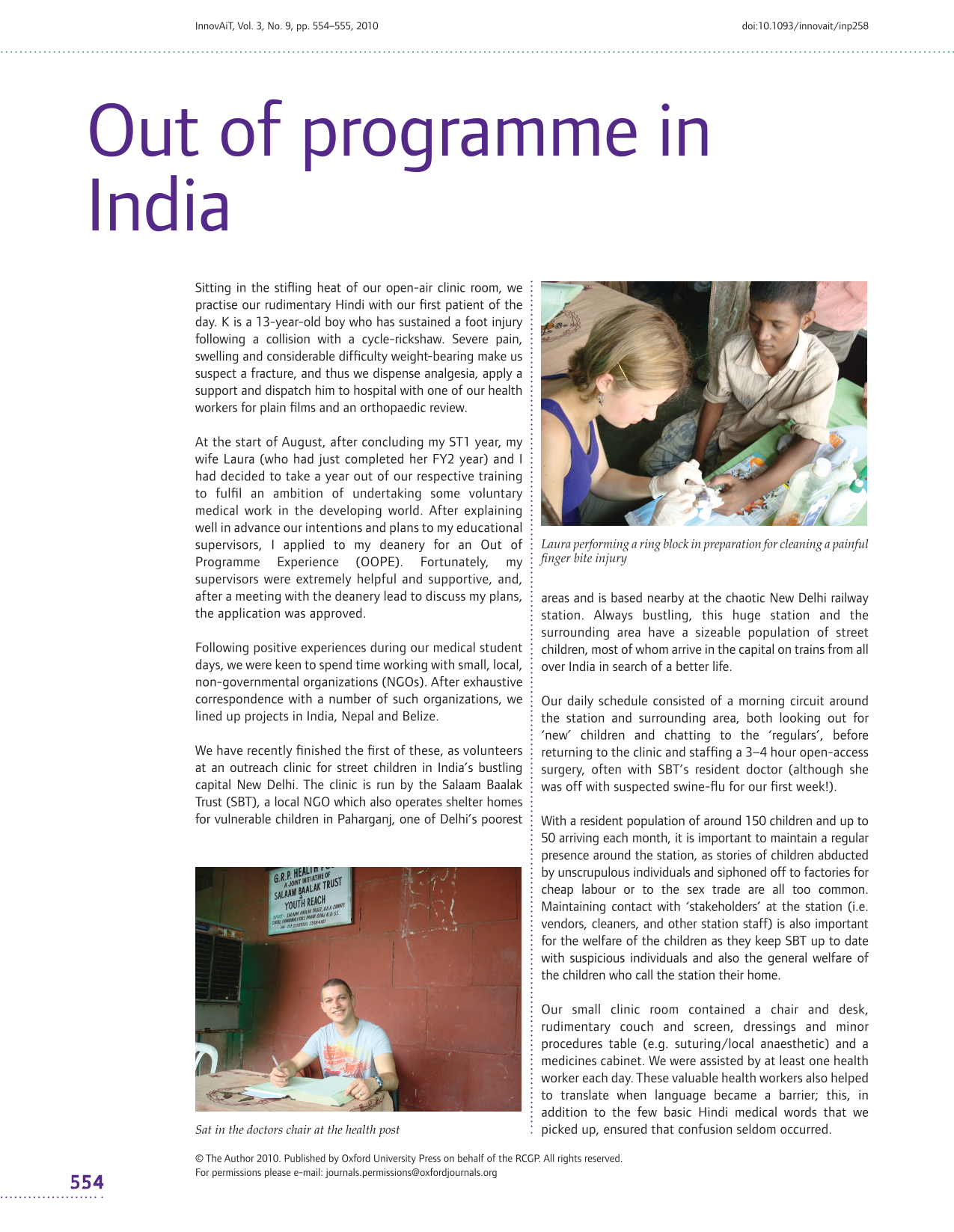
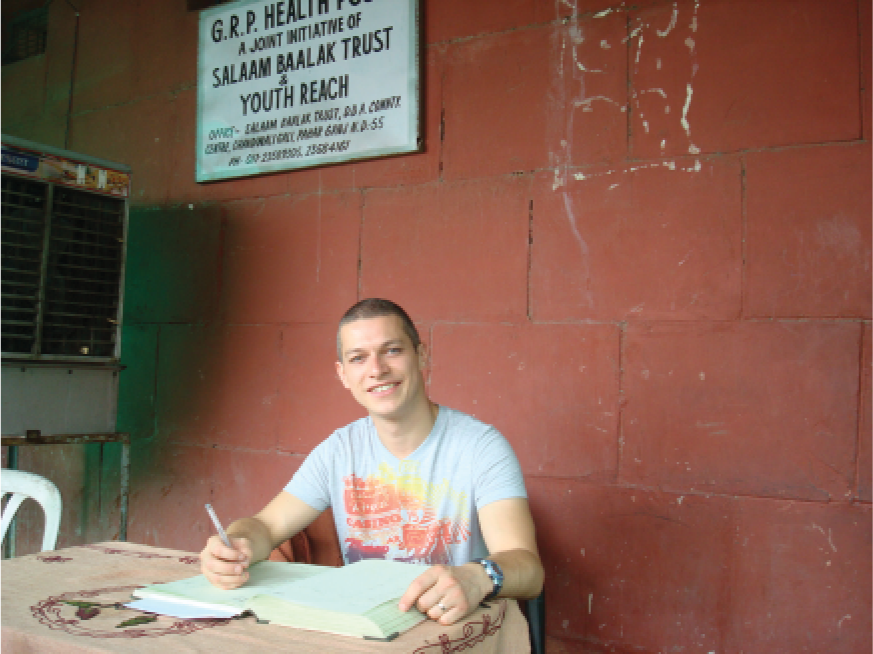
Sat in the doctors chair at the health post
Laura performing a ring block in preparation for cleaning a painful finger bite injury

Our daily schedule consisted of a morning circuit around the station and surrounding area, both looking out for ‘new’ children and chatting to the ‘regulars’, before returning to the clinic and staffing a 3–4 hour open-access surgery, often with SBT's resident doctor (although she was off with suspected swine-flu for our first week!).
With a resident population of around 150 children and up to 50 arriving each month, it is important to maintain a regular presence around the station, as stories of children abducted by unscrupulous individuals and siphoned off to factories for cheap labour or to the sex trade are all too common. Maintaining contact with ‘stakeholders’ at the station (i.e. vendors, cleaners, and other station staff) is also important for the welfare of the children as they keep SBT up to date with suspicious individuals and also the general welfare of the children who call the station their home.
Our small clinic room contained a chair and desk, rudimentary couch and screen, dressings and minor procedures table (e.g. suturing/local anaesthetic) and a medicines cabinet. We were assisted by at least one health worker each day. These valuable health workers also helped to translate when language became a barrier; this, in addition to the few basic Hindi medical words that we picked up, ensured that confusion seldom occurred.
Clinical cases varied widely, from simple musculoskeletal problems, mite infestations, malnutrition-related problems, respiratory and skin infections to TB and drug addiction (usually to cheap toluene-containing solvents). Wound care and dressings took up a good deal of our time. The poor nutritional state of the children means that wounds heal slowly and are prone to infection, and it is difficult to keep wounds clean when children live in such a dirty environment.
Spending time volunteering at the clinic has been a thoroughly valuable experience and a fantastic way to apply our medical knowledge and abilities in a different context. It has given us a privileged and inestimable insight into the health needs and attitudes of a vulnerable population. Our clinical examination skills have benefited, we have learned to work with limited and precious resources (SBT pays for all medicines, investigations, etc.) and we have learned to use our own initiative. Taking these positive experiences with us, we look forward to our next project in Nepal …
Tips on how to go about organizing an QOPE
Organize early, involve your educational supervisors, contact your deanery and find out your deanery-specific process for application Start saving! - For us, all the work has been voluntary and self-funded … from locum shifts and dedicated saving for the past 3 years Read the relevant parts of the Postgraduate Gold Guide to Specialty Training (link attached) and become familiar with the concept of OOPE Decide what you want to do-Remember, this may be the experience of a lifetime, so put the effort into getting what you want out of it Contact organizations well ahead of time (months), correspondence will inevitably be slow as you will be organizing ‘placements/projects’ yourself. For us, this involved lots of web and paper research into small NGOs, after which we generally contacted them directly. Many emails and letters remained unanswered, but the precious few replies facilitated the projects we have embarked upon.