







Abstract

Collective noun for a group of patients
David Carvel wrote a brief article discussing possibilities for a collective noun to describe a group of patients. His list included ‘expectation’, ‘torrent’ and ‘concern’. When I first started, ‘fright’ might have been apposite; now, depending on mood, I might opt for ‘tsunami’, ‘challenge’ or ‘gratitude’. What descriptors would you choose?
Carvel, D. What is the collective noun for a group of patients? British Journal of General Practice (2011) 61(585): p. 301
Care after death
Dealing with death in the community may not match the experiences you have had in secondary care. It is useful to try to get involved in the palliative care of at least one patient during your general practice training. Discussing practical aspects beforehand such as certifying death and how families find an undertaker might make a death when you are on call easier to deal with. There is a new guidance document available. It is more relevant to secondary care but would make a useful basis for discussion.
www.endoflifecareforadults.nhs.uk/publications/guidance-for-staff-responsible-for-care-after-death
The Royal College of General Practitioners (RCGP) Patient Partnership Group has collaborated with the Royal College of Nursing to produce a Patient Charter for End of Life Care, setting standards for care that should be available to patients from the primary health care team. Practices in the UK should all have been sent a copy to display in the waiting room. Has your surgery discussed or displayed its copy?
Two new e-learning modules will also support the implementation of this guidance. They are being developed by End of Life Care for All (e-ELCA), commissioned by the Department of Health and the National End of Life Care Programme and delivered by e-learning for Healthcare (e-LfH), in partnership with the Association of Palliative Medicine of Great Britain and Ireland.
For more information, go to www.e-lfh.org.uk/projects/e-elca
Supporting carers
The RCGP, in partnership with the Princess Royal Trust for Carers and with support from The Children's Society, has produced six e-learning sessions (available on the e-learning for health care website) to help health care professionals support people who care for others. If you want to know more about it, Clare Gerada has produced a short video summarizing five ways in which health care professionals can support carers. www.e-lfh.org.uk/projects/supportingcarersingenealpractice
Read codes
Dr James Read who developed Read codes died in June 2011. Despite jokes about the more bizarre codes (most practices have a list of ‘the most unlikely Read codes’), his system allowed GP note entry to develop into a system that allowed us to search for information. Make sure that you understand how the hierarchy of Read codes works as you will then find them much easier to use. You might also want to think about how difficult audit would be without structured note entry. You might then use your reflections to give you an Information and Management Technology entry for your learning log.
Digital rectal examination
I enjoy reading Dr Des Spence's regular column in the British Medical Journal; I suspect enjoying satirical columns in medical journals labels me as middle-aged and cynical. In June, this year, he debated the value of routine digital rectal examinations; read the article yourself and discuss with your colleagues. What are the pros and cons? You might want to look at other routine tests that we do and wonder how much of our medical practice is done ‘because we have always done it this way’.
Spence, D. Bad medicine; digital rectal examination. British Medical Journal (2011) 342: p. 1266
Ethical discussions
Europe is in the middle of a recession so prioritization of services has become very important. The Netherlands has ceased funding translation services from January 1 2011. Do you think that this is reasonable? You could discuss this in a tutorial or at your Vocational Training Scheme; try using an ethical framework to structure your discussion.
If you want to stimulate a discussion about justice, you could read the recent ‘Patient's Journey’ discussing the experience of a young woman who developed vaginal fistulae during the birth of her first child.
Aliyu, F., Esegbona, G. Living with obstetric fistula. British Medical Journal (2011) 342: p. 1360–2
First5
Some of you will have left your vocational training schemes in August. Now that the initial flurry of adapting to life in the world of independent practice is over, have all of you remembered to join First5? For those of you still on schemes, joining First5 is one of the things that should go down on your end of year activities. First5 was designed to support new GPs from the end of training through the first 5 years of practice. As well as continuing professional development events and educational materials, you can keep up to date via Facebook and Twitter. First5 members also have a reduced subscription rate for InnovAiT (£35 per year for online and paper copies).
Dermatitis and mobile phones
Yes, it has been proven. USA dermatologists have shown that in a very small group of adolescents (aged 12–18 years), ‘cellular phone dermatitis’ does exist. Patients tended to develop unilateral eczematous plaques on the pre-auricular cheek or ears, sometimes in geometric shapes. It is postulated that those with a background history of nickel dermatitis are more prone (given that their mobile phones contained nickel).
Berk, D., Bayliss, S. Cellular phone and cellular phone accessory dermatitis due to nickel allergy: report of five cases. Pediatric Dermatology (2011) 28: p. 327–31
Can diabetes management be safely transferred to practice nurses in a primary care setting?
In general practice or in hospital, doctors (me included) do not always have the time to attend to all the patients' needs particularly those with chronic health problems. As a consequence, patients may have unanswered questions or uncertainties. It is often nurses involved in chronic disease management that contribute enormously.
In the Netherlands, a recent randomized controlled trial involving type 2 diabetes mellitus care again substantiated the reason why the National Health Service (NHS) has adopted this model. In the study, 230 patients were randomized to the intervention group who were cared for by practice nurses according to a specified protocol. The control group received conventional care from a GP. The primary outcome measure was the mean decrease seen in HbA1c levels. After 14 months, blood pressure decreased significantly in both groups: 7.4/3.2 mm Hg in the intervention group and 5.6/1.0 mm Hg in the control group. The between-group differences with respect to reduction in HbA1c and lipid profile were not significant. However, patients being treated by a practice nurse were more satisfied with their treatment than those being treated by a GP.
Houweling, S., Kleefstra, N., van Hateren, K., et al. Can diabetes management be safely transferred to practice nurses in a primary care setting? A randomised controlled trial. Journal of Clinical Nursing (2011) 20(9–10): p. 1264–72
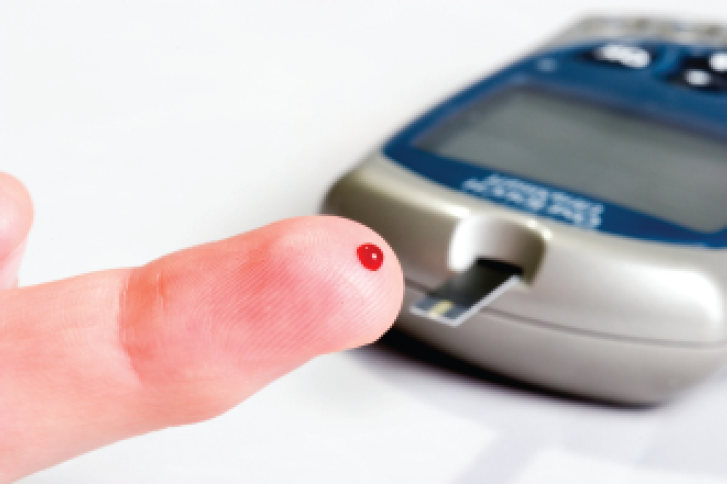
New onset diabetes with intensive-dose statin therapy
We know that intensive-dose statin therapy has been shown to further reduce cardiovascular events compared with moderate-dose statin therapy. We also know that the risk of developing diabetes is higher with standard statin therapy if compared to placebo. Recently, however, there is some evidence to suggest that an excess risk of incident diabetes exists among those treated with intensive statin regimens.
Following on from this, a group in Glasgow investigated whether intensive-dose statin therapy was associated with increased risk of new-onset diabetes compared with moderate-dose statin therapy. Comparing five statin trials with over 30 000 participants without diabetes at baseline, they confirmed that the use of intensive-dose statin therapy compared with moderate-dose statin therapy was associated with a higher incidence of new-onset diabetes [odds ratio (OR), 1.12]. Intensive statin therapy was, however, associated with fewer major cardiovascular events (OR, 0.84).
The exact mechanism of the raised incidence or whether there is a specific group of individuals at particular risk of new-onset diabetes is not clear. To what extent statin therapy is associated with a higher incidence of diabetes and the associated long-term risks of developing microvascular disease is also unknown.
The short answer is that the net cardiovascular benefit in high-risk individuals will still strongly favour statin therapy but that that we should be vigilant for the development of diabetes in patients receiving intensive statin therapy.
Sattar, N., Preiss, D., Murray, H., et al. Statins and risk of incident diabetes: a collaborative meta-analysis of randomised statin trials. Lancet (2010) 375(9716): p. 735–42
Preiss, D., Seshasai, S., Welsh, P., et al. Risk of incident diabetes with intensive-dose compared with moderate-dose statin therapy. Journal of the American Medical Association (2011) 305(24): p. 2556–64