







Abstract

Happy new year
Two years ago, I wrote that I thought the future would hold revalidation, cost-cutting and innovative ways of working. I was correct about the second two, and I would guess that revalidation really would be on its way within the next 2 years.
I think your training has to prepare you for a future of change rather than give you a set of skills that will last you through your general practice career. Once you leave the protection of your vocational training scheme, use the other resources available to you: GP tutors, local deaneries, First Five and Innovait among others.
Oliver and I wish you well for the New Year particularly those of you who complete training in 2012.
A new meaning for ‘going Dutch’
I write from the Netherlands for this Christmas edition where I have spent the last 2 weeks on a GP exchange through the Royal College of General Practitioners (RCGP) Leonardo Scheme for Associates-in-training (AiTs) and First5 GPs. Apart from ‘surviving’ cycling on the ‘wrong’ side of the road, it was such a rewarding time to experience an excellent health system outside the National Health Service (NHS). You will not be surprised to hear that the same problems exist: how to deal with ever-increasingly complex patients in a 10 minute consultation, frequent attenders, etc.
But you might be interested to know that Dutch GPs do not complete fit-for-work certificates. They tend to type their own referrals to specialists. They are likely to utilize technology more effectively, e.g. electronic prescriptions sent directly to the pharmacy, and consult with patients via secure email. GPs are also not ‘swamped’ with Quality and Outcomes Framework (QOF) parameters but instead use those same parameters as a guide to provide good medical care when assessing a patient with a chronic illness.
In my opinion, one of the major differences is the attitude of Dutch patients to healthcare. Dutch patients do not pay directly for medical care similar to the UK. However, personal medical insurance is mandatory, which allows for unlimited basic medical care. And yet, given this ‘unlimited’ access to healthcare, Dutch patients seem very sensible when utilizing this finite resource (dare I say, unlike in the NHS). I raised this issue with my Dutch host. He suggested that the main difference might be a concerted drive to improve patient health education and highlighting their responsibility towards personal health and healthcare.
Now, if we could try to do the same here, it might put a 21st century spin on the meaning of ‘going Dutch’?
Flu vaccination
Have you had your flu vaccine? Only 38% of GPs were vaccinated last year. I am not sure how we can honestly persuade patients to have a vaccine that we are not prepared to accept. How many patients would you infect while you were going through the prodromal phase? How many patients would go untreated if there were a flu epidemic and their health professional had not been vaccinated?
Patient expectations
What do your patients expect from you? The RCGP has produced a patient guide that gives advice about registering with a surgery and making the most of the services available. For once, the document applies to all four nations, so the differences are highlighted.
It's your practice: a patient guide to GP services can be accessed on www.rcgp.org.uk/pdf/rcgp_iyp_full_booklet_web_version.pdf.
Drawing attention to depression
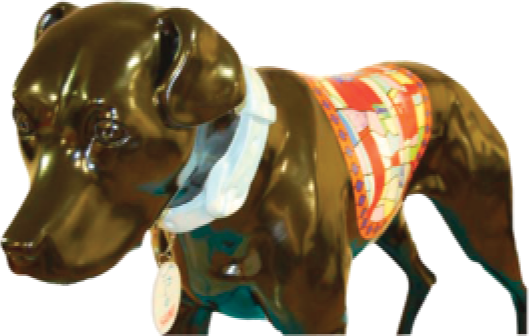
Black dogs have often been used as a metaphor for depression. It is the 25th anniversary of SANE, the mental health charity, and so they have launched the
www.sane.org.uk/what_we_do/black_dog/ [date last accessed 3.10.2011].
Why change?
Several pieces of news made me reflect on how we tend to do things in a particular way because we have always done them that way.
There were media headlines about the Royal College of Surgeons suggesting that high-risk emergency cases should be prioritized over elective cases to try to reduce the high rate of complications and death after major abdominal surgery. Less publicity was given to a study that showed excess mortality after the gap in dialysis that is accepted as standard over weekends. You could think about why you do some things in your everyday practice.
Foley, R., Gilbertson, D., Murray, T., Collins, A. Long interdialytic interval and mortality among patients receiving hemodialysis. New England Journal of Medicine (2011) 365: pp. 1099–1110.
World Organiztion of National Colleges and Academies?
‘What? You mean like Willy Wonca’, my partner asked? ‘No’ I said. ‘The World Organization of National Colleges and Academies (WONCA). That's where I'm going next week’.
The recent WONCA Europe conference in Warsaw gave an excellent opportunity for European and world GPs to come together and exchange ideas. More than 3000 doctors attended the conference from across central and southern Europe.
We are privileged that the NHS provides an outstanding example of family medicine across the world. However, as an insular nation, we are prone never to think beyond our healthcare system. But it is a real eye-opener that so many countries grapple with the same problems as we face in the UK.
The RCGP continues to make a major contribution to WONCA ensuring that we bring our unique voice and perspective on the role and development of general practice in Europe. What WONCA does give is a global perspective of family medicine. This provides a podium for other countries to share their developments and research.
When it comes to research in general practice, most of the research is conducted by a handful of countries in the most developed part of the world. This in turn generates more money for particular research and higher impact factors in scientific journals. A recent editorial compares this vicious circle to the ‘inverse care law’ applied to publication. Remember the barriers to produce high-quality research reports that are publishable in high impact journals are so much more difficult in these countries —less research infrastructure, less expertize and less involvement in general practice in the scientific community. But this does not diminish any of their findings.
As a global leader in general practice, it is our responsibility to support doctors in less developed countries. We can do this by working with the RCGP and its international section, by joining the Vasco da Gama movement for junior doctors and participating in international exchange programmes.
Swab, I. The blind spot issue. European Journal of General Practice (2011) 17: pp. 143–5.
RCGP Junior International Committee Accessed via www.rcgp.org.uk/international/services_we_provide/junior_international_committee.aspx.
Vasco da Gama Movement Accessed via www.vdgm.eu/.
British Medical Association Book Awards 2011
The British Medical Association runs an annual Medical Book Awards competition. The full list of prizes is available online but I thought a list of the winners in the primary healthcare section might be interesting. Five of the authors of the winning and highly commended books are regular contributors to InnovAiT.
First prize
Max Watson, Karen O'Reilly, Chantal Simon. Pain and palliation.
Highly commended
Simon Gilbody, Peter Bower. Depression in primary care.
Jasdeep Gill. Secrets of success: getting into GP training.
Roger Gadsby, David W. Haslam, Kamlesh Khunti, Michael Kirby, M. Mead. The 10-minute consultation: type 2 diabetes mellitus. (2nd edition).
Stephen Gillam, Niroshan Siriwardena, The quality and outcomes framework: QOF—transforming general practice.
Accessed via www.bma.org.uk/library_services/medical_book_awards/2011bookawardswinners.jsp#Primary_health_care [date last accessed 16.09.2011].
Domestic violence
Not all consultations are equal; some are more difficult than others. Many of us find consultations about domestic violence to be anxiety provoking. The RCGP has produced a new online course on domestic violence. Even if you do not have time to complete all the sessions you might want to try the first two sections that are on recognizing violence and asking about violence.
The Hajj
Over the years, I have got to grips with giving patients advice about Ramadan. I have not previously found succinct advice about performing the Hajj. A recent ‘10 minute consultation’ article in the British Medical Journal gives a short account of the main issues that may be discussed in consultations.
Gatrad, A., Sheikh, A. The Hajj. British Medical Journal (2011) 343: pp. 637–8.
Foam dressings for diabetic ulcers
A recent Cochrane review indicates that the (scant) available research evidence suggests that foam wound dressings are no more effective in healing foot ulcers in people with diabetes than basic wound dressings or alginate-type dressings.
Dumville, J., Deshpande, S., O'Meara, S. et al. Foam dressings for healing diabetic foot ulcers. Cochrane Database Systematic Review (2011) 9: CD009111. (Review).
Fermented food the next best thing?
Another Cochrane meta-analysis suggests that probiotics are better than placebo in preventing episodes of acute upper respiratory tract infections. However, probiotics are very expensive. It would be interesting to see the effectiveness of studies that used natural sources of probiotics from fermented food (e.g. yoghurt, cheeses, beans, meat, fruit, honey, vegetables or grain). One commentator asked whether eating such foods might be as efficacious as expensive probiotics? I think that is an important research question.
Hao, Q., Lu, Z., Dong, B, et al. Probiotics for preventing acute upper respiratory tract infections. Cochrane Database Systematic Review (2011) 9: CD006895. (Review).