







Abstract
Nonresidents’ perceptions of disorder are potentially consequential for neighborhoods in many ways, as disorder shapes individuals’ behavior within neighborhoods. Unfortunately, there is little research which delves into understanding how nonresidents perceive disorder. Our study provides insight into the perceptions of nonresidents by assessing their interpretations of disorder through their reaction to three photographic stimuli of neighborhoods where they do not live. Through qualitative analysis, we examine various themes in the responses, including disorder theory and both implicit and explicit racial bias. Results show that while nonresidents do have traditional interpretations of disorder, they also interpret disorder in many different ways. Also, even in the absence of people in the photographic stimuli, nonresidents frequently associated disorder with race. Given that nonresidents have the capability to influence the flow of money and resources into the neighborhood, their racially encoded disorder perceptions may have the unintended consequence of entrenching neighborhood issues like segregation, concentrated disadvantage, or unemployment that are common in minority neighborhoods.
Introduction
Disorder, or visual cues signaling a violation of social norms surrounding public behavior (Sampson and Raudenbush 1999; Skogan 1990), has played a leading role in urban sociology and criminology for some time. Recently though, studies have emerged which shift the focus of disorder research away from neighborhoods and to individuals (Hipp 2010; Sampson and Raudenbush 2004). A critical component of this shift is the examination of individuals’ perceptions and interpretations of disorder.
Many current disorder theories tell us how individuals, specifically residents or offenders, interpret disorder. For instance, the broken windows theory suggests that as residents perceive disorder, they interpret it as “no one cares” about the neighborhood or that they are at risk for criminal victimization (Wilson and Kelling 1982). As disorder persists, residents withdraw and disengage from neighborhood life. This behavior reinforces the sense that the neighborhood is out of control, finally enabling crime and further decay to occur (Skogan 1990; Wilson and Kelling 1982). On the other hand, to offenders, disorder signals something different: There is little risk to committing crime given that residents seem to be unable or unwilling to intervene in disorderly processes (Wilson and Kelling 1982). Thus, the message emanating from neighborhood disorder—namely, that there is little to no guardianship, either from residents or the local government—buttresses the perspective of offenders that there is little to lose by committing crime in these areas (Wilson and Kelling 1982).
While the perspectives of residents and offenders are vital to understanding neighborhood processes like social control, neighborhood participation, and crime, the nonresident perspective of disorder is also crucial to neighborhood processes. At first glance, nonresidents do little to contribute to neighborhood processes given that they do not live in the neighborhood, participate in neighborhood activities, or engage in informal social control efforts. However, nonresidents’ perceptions of disorder likely impact neighborhoods in ways neighborhood scholarship has left relatively unexamined. Disorder is informative to people not living in the neighborhood; for instance, police officers use it to gauge criminal activity (Klinger 1997; Werthman and Piliavin 1967) and real estate agents, their clients, and property investors use it to make decisions about buying property in neighborhoods (Immergluck 2012). Businesses and politicians may use disorder to determine if they will gain a return on their investment. These are important perspectives given that they shape resources flowing into neighborhoods. Should disorder convey to nonresidents “stay away from this neighborhood,” then disorder is a core mechanism behind neighborhood inequality (Sampson 2012).
Regrettably, little research has grappled with understanding how nonresidents perceive disorder. For some time, there have been calls to assess interpretations and meanings of disorder (Harcourt 2001; Kubrin 2008; Murphy 2012; Wallace 2015). In his critique of the broken windows theory, Harcourt (2001) calls for researchers to move away from statistical efforts testing disorder theories and toward “in–depth interviews of informants, participatory observation, and other investigatory or experimental techniques that probe the structure of meaning” (120; see also Murphy 2012). We heed this call by exploring this issue using mixed methods, where we ask respondents to interpret a neighborhood setting to which they do not belong portrayed in a photograph. To do this, we employed a static stimulus design where respondents were shown a picture of a neighborhood and asked to describe the neighborhood. Through qualitative coding and photo elicitation of open–ended survey responses, we explore various interpretations of disorder from nonresidents. Consequently, there are far reaching implications of this work. Nonresidents have strong impacts on neighborhoods that are not often considered. For instance, the use of neighborhood amenities like restaurants, bars, and shopping, among others, is dependent not just on residents, but nonresidents as well. People will not be unlikely to travel to try a new restaurant or shop if they perceive the neighborhood as disorderly or dangerous. There is a similar response for housing decisions: People are unlikely to relocate to neighborhoods that they are uncomfortable to be in. As such, the disorder perceptions of nonresidents play a crucial role in understanding how neighborhoods thrive socially and economically (Sampson 2012).
Residents’, Offenders’ and Nonresidents’ Perceptions of Disorder
For some time, the meaning of disorder and individuals’ subsequent behaviors stemming from their perceptions of disorder has been examined from the perspective of both residents and offenders. In resident–based conceptions of disorder, disorder signals a potential for individual victimization, a need to be fearful of crime, and the possibility that if in need of assistance, no one will help (Wilson and Kelling 1982). Residents’ perceptions of disorder impact neighborhood processes such as neighboring behavior, local activism (Taylor 1996; Woldoff 2002), and informal social control (Wilson and Kelling 1982), to name a few.
As for offenders, they perceive disorder as an invitation to commit crime. Disorder, therefore, signals to offenders that no one will intervene or potentially call the police if they commit crime in the area (Wilson and Kelling 1982). The only study of offenders’ perceptions disorder 1 was conducted by Peter St. Jean (2007). St. Jean's work demonstrates that disorder does not simply signal the opportunity for crime in an area, but also information that the drug–trade is based in the area, such as information about the prevalence of buyers and potential “employees” (St. Jean 2007).
The disorder perceptions of nonresidents are similar to those of residents and offenders (Wutich et al. 2014): This neighborhood is unsafe and there is a potential for crime and victimization. However, the ensuing behavior of nonresidents is likely different from that of residents or offenders. Both residents and nonresidents are likely to engage in avoidance behaviors, but where residents decrease their neighboring and behaviors related to informal social control, nonresidents are likely to avoid the neighborhood altogether rather than simply reduce activities within the neighborhood (Permentier et al. 2008). Also, since nonresidents can be a variety of people (i.e., police officer, real estate agent, nonresident city dweller) (Permentier et al. 2007), nonresidents’ perceptions of disorder may impact neighborhood processes related to a number of neighborhood processes and conditions. As such, nonresidents’ views of disorder have the potential to impact neighborhoods’ use patterns, and larger neighborhood conditions like the local economy and neighborhood stigma (Permentier et al. 2007, 2008; Sampson 2012). These processes undergird the importance of examining nonresidents’ perceptions of disorder. We turn to these issues next.
Why Nonresidents’ Perceptions of Disorder Matter: Macro–Level Impacts
One might ask, what makes the disorder perceptions of nonresidents important to know? In truth, disorder perceptions are at the core of inequality in American cities, and potentially cities globally as policing styles and policies are imported to and used by other nations (Sampson 2009). Why is disorder at the heart of inequality, having a place as important as structural factors, like stratification and segregation, or neighborhood mobility, change, or homogeneity? It is because disorder or—more to the point—individuals’ perceptions of disorder have the power to replicate and fuel inequality. Scholars studying neighborhood reputation associate disorder with easy to use, gross indicators of neighborhood conditions, which, over time, can fuel inequality and stigma. Similarly, Sampson (2009) makes this argument by linking disorder to implicit racial bias. Below we walk through both of these arguments to show how vital nonresidents’ perceptions of disorder are for understanding city life, inequality, and even racism.
Neighborhood reputations—especially those of ill repute—negatively impact social (Galster 2007), employment (Wilson 1996), and financial opportunities (Aalbers 2008), as well as lead to behavioral adjustments of residents (Anderson 1999; Permentier et al. 2007). Reputation can be seen as both the positive and negative views about a community, the widespread image of the neighborhood for all city residents, and the neighborhood's place in the hierarchy of neighborhoods within a city (Permentier et al. 2007). Thus, neighborhood reputation captures the idea of neighborhood stigma, which is at the core of both explanations and critiques of disorder (for explanations see Skogan 1990; Taylor 2001; for disorder critiques, see Harcourt 2001; Harcourt and Ludwig 2006). Neighborhood reputations do not solely impact residents, though: Residents and nonresidents alike use reputation to influence where they choose to work, shop, live, and play (Wacquant 1993). Neighborhood reputations influence how nonresidents experience and use a city given that reputations enable nonresidents to make the city and its neighborhoods understandable for use (Permentier et al. 2008). A neighborhood's reputation as being “unsafe” or “great for shopping” dictates the types of behavior that nonresidents are willing to conduct within the boundaries of the neighborhood.
There are multiple aspects of neighborhoods that facilitate the formation of neighborhood reputation, which also serve to elucidate the connection between neighborhood reputation, disorder perceptions, and nonresidents. Specifically, neighborhood reputation is formed through information coming from three factors: functional, physical, and social factors (Permentier et al. 2008). Functional factors include neighborhood location in relation to the rest of the city, resources and organizations within the neighborhood, and neighborhood accessibility (Permentier et al. 2008). Physical factors include the look of the neighborhood, the quality of the buildings, decay, and other physical attributes (i.e., parks, graffiti, etc.) that would assist in the formation of neighborhood reputation. Lastly, social factors influencing neighborhood reputation include media coverage and direct or indirect personal experience with the neighborhood.
Importantly, though, for nonresidents, information that contributes to forming neighborhood reputations is limited, or rather, simplistic. The external reputation—or the reputation of a neighborhood held by nonresidents—is made up of “simplified images of neighborhoods, expressed as sharp boundaries and exaggerated differences noted by outsiders” (Permentier et al. 2007, p. 203; see also Suttles 1972). Information coming from the media, social media, or even stories and experiences from friends will also be used given that it does not require nonresidents to have any experience with the neighborhood. Thus, nonresidents will be prone to use crude, easily accessed and understood cues, like the media information, or, important for our argument, neighborhood disorder, when forming reputations associated with neighborhoods. Neighborhood disorder easily demonstrates a plethora of information to nonresidents that is core to reputation formation, and depending on how nonresidents view disorder (the crux of our study), disorder may result in the establishment of a very poor neighborhood external reputation.
As noted above, neighborhoods are not only used by residents: They often have grocery stores, restaurants, banks, bars, retail shops, and parks, for example, which may bring nonresidents to the neighborhood. When disorder is present, it signals to nonresidents that it may not be entirely safe to use the amenities and businesses within the neighborhood. Nonresidents likely act on this information in a number of ways: They may visit the neighborhood only in the daytime, travel into the neighborhood only by car, choose not to walk or use public transportation in a neighborhood, or, most drastically, they may choose to not use the neighborhood at all. When nonresidents eschew a neighborhood, businesses and amenities may economically suffer. Furthermore, businesses may be less likely to move into the neighborhood. Disorderly neighborhoods are synonymous with other neighborhood problems, like poverty (Sampson and Raudenbush 1999; Skogan 1990). When both locals and nonresidents are not using neighborhood businesses, few new businesses locate in the neighborhood and neither will current businesses be likely to stay or survive. Similarly, disorder impacts other important decisions made by nonresidents, such as whether to invest in business and property in a neighborhood. One study demonstrates that property investors in Atlanta commonly refer to neighborhood disorder and crime to determine where they should buy property (Immergluck 2012). In this type of environment, businesses cannot sustain themselves; as such, disorder impacts the strength of the neighborhood economy.
Related to the link between disorder perceptions and neighborhood reputation is the implicit bias often nested in disorder perceptions (Sampson 2009). Implicit bias is when individuals invoke strong cultural stereotypes and employ them unconsciously (Bobo 2001; Sampson and Raudenbush 2004). Like people, neighborhoods can be stigmatized (Sampson and Raudenbush 2004; Wacquant 1993; Werthman and Piliavin 1967). Given the strong link between poverty and racial segregation in the US, scholars have argued that poor, racially segregated neighborhoods have durable spoiled identity (Wacquant 1993). The race and class stratification of place has led poor neighborhoods and the residents in them to be stigmatized (Wacquant 1993). As a consequence, persons in disadvantaged neighborhoods are viewed as “possessing the moral liability of the area itself” (Smith 1986: 316). Wacquant demonstrates this elegantly: “In America, the dark ghetto stands similarly as the national symbol of urban ‘pathology’ and its accelerating deterioration since the racial uprisings of the mid–1960s and is widely regarded as incontrovertible proof of the moral dissolution, cultural depravity and behavioral deficiencies of its inhabitants” (Wacquant 1993: 371).
Compounding the issue of the stigmatization of place is individuals’ natural desire and ability to order and categorize to understand their environment (Sampson 2012). The urban word is visually complex, and without categorization, it would be highly difficult to navigate (Lofland 1973; Sampson 2012). “The human tendency to quickly categorize racial and other groups, our ability to easily observe skin color, and our sensitivity to the opinions of others in the form of reputations or identities that stigmatize areas, makes for a potent combination” (Sampson 2012: 125). Individuals are most likely to use stereotypes when interpreting disorder in neighborhoods they have little experience with; in other words, when they are nonresidents. After all, disorder perceptions provide information about safety, victimization, and crime. Even when coupled with race, these perceptions of disorder serve to “protect” the individual; because of the practical nature of disorder perceptions (i.e., they help individuals form assessments of victimization risks), it would likely be difficult to disabuse individuals from using these stereotypes. Thus disorder and individuals’ perceptions of disorder are not simply related to poor health (for example, Hill et al. 2005; Ross and Mirowsky 2001; Ross and Mirowsky 1999) or increases in crime (Skogan 1990; Wilson and Kelling 1982) as much criminology and health studies research would perpetuate—disorder has the potential to have a much larger reach. For, as Sampson (2009) suggests, “the designation of areas as disreputable and disordered…can set in motion long–term processes that reinforce the initial stigmatization state and thereby contribute to the social reproduction in inequality” (2).
There is, unfortunately, an underlying assumption in these lines of thinking that is problematic: What if nonresidents do not ascribe meaning to disorder in the way scholarship suggests they do? While Sampson (2009) makes a powerful argument regarding disorder and its role in the creation and maintenance of inequality, that argument is based on the assumption that the meanings ascribed to disorder perceptions are known. Sampson even partially acknowledges this predicament by stating, “It is one thing to perceive, more or less accurately, what is in the objective environment, and another to assign it value, meaning and to rate its seriousness” (10), yet he offers no solutions. The truth is, scholarly work to date has no solutions: There is little to no current work that illuminates what meanings residents and/or nonresidents ascribe to disorder (for exceptions, see Murphy 2012; St. Jean 2007). What we do know is about heterogeneity: Individuals do not see disorder the same (Hinkle and Yang 2014; Sampson and Raudenbush 2004; Wallace 2015; Wallace et al. 2014; Yang and Pao 2015).
Current Study
Calls to understand disorder in a more basic, qualitative way have been made (Harcourt 2001; Kubrin 2008). The goal of this study is to provide a rare insight into the perceptions of nonresidents. To do this, we use three photographic stimuli to assess how nonresidents interpret disorder then employ qualitative coding to assess their responses. Using these methods, we seek to answer three questions. First, disorder theories suggest that neighborhood residents should interpret disorder as indicating the potential for crime and victimization in their neighborhood as well as meaning that no one in their neighborhood cares to do anything about disorder; do nonresidents interpret disorder in ways that align with current disorder theories? Second, are there other interpretations of disorder that nonresidents have that are outside of what current disorder theories would suggest? Finally, given that nonresidents have little experience with the neighborhoods tested here, do their interpretations of disorder rely on stereotypes and other information not necessarily in the photos? In the coming section we detail our approach to these questions, which is followed by a section regarding our findings. We conclude with a discussion of the implications of this work.
Methods
Data
The data used in this study originate from the Perceptions of Neighborhood Disorder and Interpersonal Conflict Project, which is a pilot study aimed at investigating how individuals perceive and interpret neighborhood contexts, as well as the manner in which individuals interpret and respond to interpersonal conflicts. Our sample consists of 1,056 students at a large southwestern university recruited to be a part of the project. Students from both in–person and on–line classes were recruited for the study. Professors gave the researchers permission to sample classes, and some faculty chose to give their students extra credit for participation. Additionally, because of the nontrivial proportion of this university's students who take classes online, there are two modes of administration: in–person and online. Approximately 53 percent of the sample responded via web–based surveys. The web survey was slightly longer: It included additional questions and photos. For this study, only web survey respondents saw Photo 3. 2 In–person respondents completed the survey during class as a paper and pencil survey. The overall response rate is 77 percent, with an 86 percent response rate for the in–person survey and a 67 percent response rate for the online survey. After calculating response rates for each course surveyed, the lowest response rate was an online course at 42 percent, with the highest response rate corresponding to an in–person class at 98 percent. While a student convenience sample may not be widely generalizable to a larger population, the admission rate of the university where the study is conducted is approximately 88.9 percent. Thus, we are confident that the sample will capture sufficient variation in disorder perceptions.
Table 1 shows the summary characteristics of the sample. In general, the sample is relatively homogenous with respect to age and marital status, which is expected given the student population. First, about 53 percent of the sample is Female. Additionally, 53 percent of the sample is White while about 30 percent of the sample reports being Hispanic, and only 7 percent of the sample reports being Black. The vast majority of respondents report being younger adults; nearly 83 percent of respondents report being between the ages of 20 and 29. Furthermore, 86 percent of the sample report being single. Only 15 percent of the sample reported having children. There are missing data for each of the questions coded, though the percentage is not substantial. Of the 1,056 individuals who were surveyed, for Photo 1, 941 individuals responded to the question and for Photo 2, 958 individuals responded to the question we base our study on (described below). Finally, for those surveyed online (n = 564), for Photo 3, 456 individuals responded to the question the study is based on.
Summary Statistics
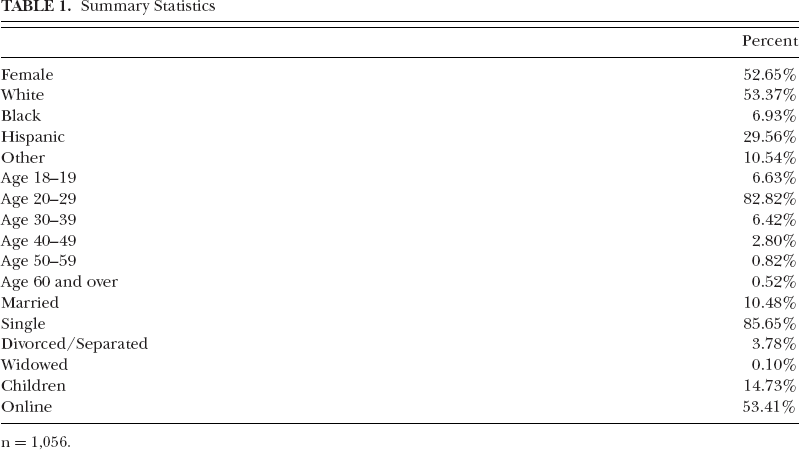
n = 1,056.
The Percent of Respondents Conveying the Broken Windows, Alternative, and Socially Encoded Interpretations by Photo
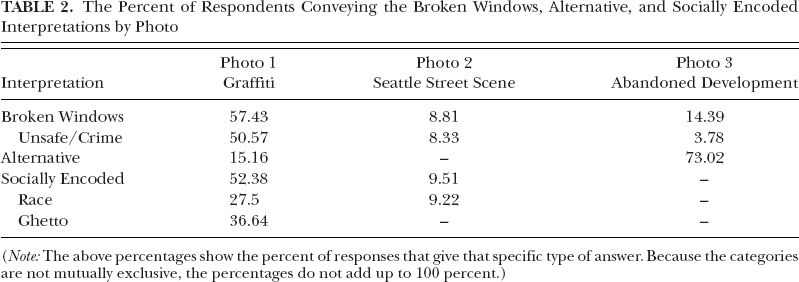
(Note: The above percentages show the percent of responses that give that specific type of answer. Because the categories are not mutually exclusive, the percentages do not add up to 100 percent.)
Disorder perceptions were assessed through a static stimulus design, namely photographs of neighborhoods. Using the photographs shown in Figures 1, 2 and 3, we assess individuals’ perceptions of neighborhood disorder and how they interpret it. Using photographs allows us to hold constant the “neighborhood” that the respondent is viewing; as a consequence, variation in responses will reflect differences in individuals, not neighborhoods. Respondents were shown one of the three study photos that portrayed a physical disorder cue, a social disorder cue, or a form of neighborhood abandonment. Upon seeing the photos, respondents were asked to give their immediate or gut reaction and finish the following statement, “Based on this photo, I get the sense that this neighborhood is…” The response format enabled respondents to—in their own words—portray how they perceived and interpreted the neighborhoods shown in the photos.
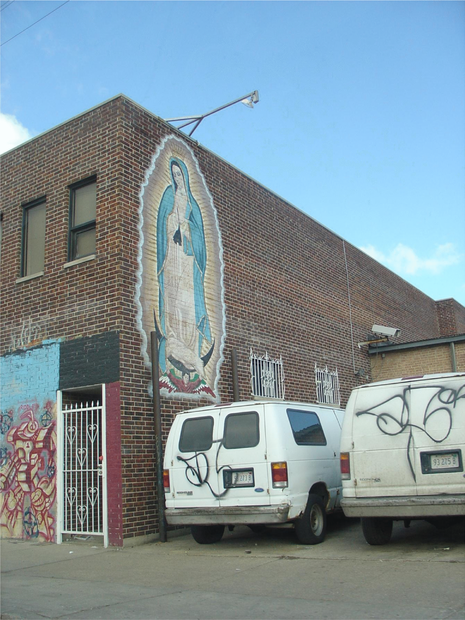
Photograph of Various Forms of Graffiti, Murals, and Street Art.
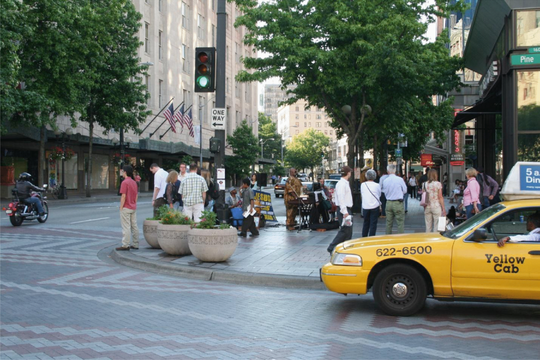
Photograph of Downtown Seattle Street Scene.
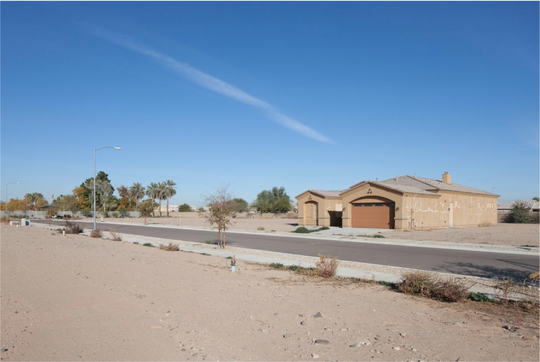
Photograph of Abandoned Building Development.
All the photos in the study were chosen and photographed with care. First, all the photos were in color. Black and white photography tends to add grittiness to images that we did not want to include, especially given that we test disorder. All photographs were taken with digital cameras, ranging from 8 to 12 megapixels. The photos used in the study were from different sections of the Phoenix metropolitan area, Seattle, and Chicago to reduce the likelihood that respondents would recognize the locations. Each photo is shown in Figures 1, 2 and 3. To use the vernacular of visual sociology, we also used highly legible photos—meaning that our photos have a heightened ability to strike a strong image in the mind of the viewer (Lynch 1960). While we want the perceiver to imbue the photo with their own schemas, to do this, we need the image to speak to their schemas, to be a vernacular landscape (Jackson 1984).
Analysis Plan
In this study, we use qualitative coding to discern how people interpret disorder. A team of professors and research assistants participated in coding the data. The coding process began with the team meeting several times to discuss themes found in the responses. Using these themes, research assistants combed responses by hand to determine sets of search terms in order to sort responses into the thematic categories. The search terms were then entered into Maxqda 10.0, and appropriate codes were attached to the responses. In order to assure that the individual's response was accurately coded, each coded response was then checked for accuracy and recoded as necessary. Appendix A contains the coding themes employed.
There are many benefits to a qualitative approach, particularly for this study. First, qualitative coding allows us to approach the research questions in both an inductive and deductive manner. Our research questions necessitate different coding approaches. For example, we approach the disorder interpretations with a coding scheme in mind, one that codes words and phrases like “unsafe,” “crime–ridden,” or “no one cares” as signaling interpretations consistent with disorder theories. On the other hand, we use grounded theory to examine responses for potential alternative interpretations of disorder. Appendix A includes coding scheme examples from the two primary codes: disorder theory interpretations and alternative interpretations. Additionally, unlike disorder studies that do not capture all potential meanings of disorder (only problematization), our study design allows for nuanced personal descriptions of what individuals perceive and interpret as disorder. Given that few have examined the meaning making surrounding disorder (Harcourt 2001; Murphy 2012), this study provides a rare opportunity to examine how individuals interpret disorder.
Additionally, we employ methods from visual sociology, particularly a simplistic form of photo–elicitation (Collier and Collier 1986; Harper 1986). Given that “the spatial arrangement of life is meaningful” (Krase and Shortell 2011: 373), taking a visual approach to understanding nonresidents’ perceptions of disorder enables us to examine the meanings nonresidents inscribe into neighborhood space. Our study uses a form of photo–elicitation where we allow subjects to discuss the community in the photo in their own words (Packard 2008). While we do not use the traditional approach of photo interviewing—where the participant and researcher discuss a photo during a larger interview (see Collier and Collier 1986; Harper 1986 for more details)—we do allow the participant their own voice in the process of examining and commenting on the photo. As such, we empower the participant to freely discuss their thoughts on the photo without prompting or researcher interference.
There are a few assumptions we make when analyzing the responses that are worth mentioning. First, in the question prompt, we ask individuals to give us their “immediate or gut response” to the photo. Thus, we assume that the responses our subjects give are reflective of their first, uncensored impression of the photo. Additionally, we assume that the totality of the response given is their primary reaction—meaning that their response is reflective of what they find most salient to them in the photo.
Results
By holding the neighborhood constant through photographs, our data illuminate not only how nonresidents interpret neighborhoods, but also the stereotypes and supplemental information nonresidents use to inform what they see in a neighborhood. Any differences in interpretation that emerge are due to the individual, not their experience with the neighborhood in question because the neighborhood is held constant. Thus, due to the construction of the neighborhood stimuli, we are able to reveal individuals’ judgments about neighborhoods when they have no experience with the neighborhood. We begin by assessing whether nonresidents’ interpretations adhere to the way disorder theories suggest disorder cues are interpreted by residents. In short, we find that nonresidents also adhere to the dominant interpretation of disorder for all three photographs: Disorder signals issues of crime, safety, and fear. Below we discuss these interpretations.
The common disorder theory interpretations arose frequently, though not across all respondents or photos. The primary photo to elicit traditional disorder interpretation was Photo 1, or the graffiti photo. Here, respondents reported that the neighborhood was unsafe or had a crime problem. The disorderly interpretation occurred in approximately 57 percent of the respondents. Individuals also interpreted the scene in the abandoned development photo, or Photo 3, as unsafe, though to a lesser degree than Photo 1. In Photo 3 the unsafe interpretation arose primarily from the abandoned home, but respondents also signaled issues with the surrounding area. Approximately 14 percent of the respondents had similar interpretations. Conversely, Photo 2, which portrayed a street scene in Seattle, elicited the smallest number of traditional disorder interpretations; only 9 percent of the respondents suggested issues of crime and safety. Furthermore, respondents generally suggested that the neighborhood was only unsafe at night.
Occasionally, traditional disorder interpretations involved discussions regarding the presence of specific crimes occurring in the neighborhoods displayed in the photos. Photo 1 generated the strongest and most varied responses regarding criminal activity. Some respondents noted general criminal activity while other respondents suggested that such crimes as burglary, robbery, prostitution, graffiti, and crimes related to the drug trade occurred in this neighborhood. To a much lesser degree, respondents suggested that crime was present in Photos 2 and 3. Photo 2 (Seattle Photo) generated interpretations of crime that typically involved low level street crime, like loitering, harassment on the street, or pick pocketing.
Some respondents also suggested that they would restrict their activities within the neighborhoods. For those respondents that did, about 3 percent, the responses from Photo 1 are clear: Do not use this neighborhood. Restriction of activities within the respondents’ interpretations of Photo 2 was related to cautiousness while being in a busy area or large city, particularly at night.
Finally, some respondents suggested that “no one cares” about some of the neighborhoods in the photos. This interpretation, or its opposite, arose in all photos. In Photos 1 and 3, the responses indicated that no cared about the neighborhood. For Photo 3, respondents conveyed that no one cared about the community, but this typically was not evidenced by disorder but by the sheer emptiness of the neighborhood. Conversely, the neighborhood in Photo 2 was typically inferred to be a well–kept, well cared for community with cohesive residents.
While it bodes well for existing disorder theories that the respondents’ interpretations of these photos are in line with their predictions, we must once again note that these are specifically nonresident responses. Responses suggesting fear and that no one cares indicate that nonresidents interpret disorder in some of the same ways as residents in previous research. An important difference here, however, are the “stay away” responses to Photo 1. As previously discussed, there is a continuum of avoidant responses to disorder that nonresidents may employ. These results suggest that, at least for some levels of disorder, nonresidents may adjust their behavior to the most avoidant end of this continuum with very little experience of the neighborhood in question. The absence of the “stay away” responses for the other photos suggests that there may be some version of a “tipping point” for neighborhood disorder, beyond which nonresidents will avoid the area entirely. In the coming section, we discuss the alternative interpretations of the photos.
Evidence of Alternative Interpretations of Disorder 3
While many respondents had traditional disorder interpretations of the photos, nontraditional interpretations were also evident in responses. Some of the interpretations were contextualized by individual characteristics; other interpretations were characterized by larger, macro–level contexts. 4 Next, we discuss the most dominant alternative interpretations of disorder.
For Photo 1, the most prominent alternative interpretation was that of an artistic or creative community. For instance:
“Street art, maybe a creative area with a crime problem.” (23 year old White male)
“… I automatically felt like it was a very creative part of a community because of the painting on the building. Once I looked at the graffiti on the two vans and on one of the walls I assumed it was probably a gang associated community. I also noticed the iron covering the doorway and the windows which makes me automatically associate the community with burglars.” (19 year old White female)
As seen above, when respondents interpreted the photo in this light, many contextualized the disorder they saw in the photo with other information. While the mural seemed to signal creativity and art, the other street art and graffiti also signaled crime issues.
Another alternative interpretation coming from Photo 1 was the religious context of the neighborhood. Many respondents, specifically 13 percent, suggested this was a religious neighborhood.
“Influenced by religious beliefs but there is gang activity committing property” (23 year old White male)
“May be a poorer neighborhood; however, that doesn't necessarily mean it's bad. Seems religious.” (19 year old White female)
Like the creative and artistic interpretations, the mural, street art, and graffiti seem to temper the negative interpretations of the neighborhood with the addition of religious interpretations.
Unlike Photo 1, Photo 2 did not generate strong alternative interpretations. There was general agreement among the respondents that this was not a highly disordered or unsafe area; only 9 percent of respondents suggested elements of disorder, crime, or lack of safety. On the contrary, while a few individuals suggested the two street performers were “panhandlers,” “beggars,” or “hobos,” many respondents envisioned them as street performers, musicians, and entertainers. The re–formulating of this disorder cue to be positive is evident in a few responses:
“Urban center w/lots of people. Musical entertainment and restaurants, seems populated w/clean streets” (21 year old White female)
“This neighborhood is very classy. Everyone is interacting with one another. The sidewalk is well paved, nice buildings in good shape, patriotic, plants are taken care of, they have entertainment on the side of the street, everyone is dressed professionally also.” (White female, no age given)
“An upbeat, sophisticated, artistic area with shoppers, tourists, and locals who feel comfortable and safe. Street performers are allowed and talented…religious…an urban hot spot” (19 year old White male)
We see that the respondents suggest that the two street performers are for entertainment purposes; they are not there to panhandle or make money but to provide a legitimate social service—entertainment.
Photo 3, however, generated the largest number of interpretations that were not within the traditional disorder framework. Here, respondents suggested interpretations of abandonment, neighborhood developmental trajectories, and even touched upon issues of foreclosure, the economy, and the housing crisis. For instance, 66 percent of all respondents who viewed the abandoned development suggested the home or neighborhood was abandoned. Furthermore, most of these respondents (254 out of 299 who suggested abandonment or 85 percent) did not also invoke disorder theories, suggesting their abandonment interpretations stand alone. For example:
“Empty and abandoned” (20 year old mixed race female)
“Somewhat safe, looks a bit lonely/abandoned” (22 year old Hispanic female)
A few respondents, specifically 5 percent, went further by explicitly suggesting why the abandonment was occurring:
“Underdeveloped. Can't tell if in the process of construction or possibly the general contractor went bankrupt as so many had near me. By the street lights, it looks like the intention was for a neighborhood or community.” (43 year old White female)
“Suffering from the economy and filled with people who don't make enough money to prevent things like this, and has a government or city council that doesn't have their priorities straight” (22 year old Hispanic male; 875)
“An abandoned/bankrupt McMansion community.” (27 year old White female)
Other respondents linked the lack of other housing in the area to neighborhood developmental trajectories. On the whole, more respondents inferred that the neighborhood was on a positive developmental trajectory (15 percent) than a negative trajectory (6 percent). Sometimes residents would not decide on a developmental direction:
“Young and growing” (48 year old White female)
“I think this neighborhood looks brand new. The house was built as a model home and they are developing new homes.” (Hispanic female, no age given)
“Undeveloped and headed for trouble” (38 year old White male)
“An area hit hard by foreclosures or an area being primed for new housing developments” (32 year old Black female)
Only 15 percent of all respondents suggested interpretations consistent with traditional disorder interpretations.
These results suggest that nonresidents may take a more nuanced view of neighborhoods than theory currently accounts for. Ideas about community characteristics, as well as neighborhood trajectories, have implications for nonresident neighborhood participation and investment. When, for example, people interpret graffiti as an indicator of a creative community as opposed to an indicator of crime, it does not necessarily suggest avoidance, but possibly exclusivity. That is, a “creative” community might not be for everyone, but is certainly desirable to some. This interpretation could be used to pitch investors looking for this specific kind of community. Similarly, the reformulation of the same people in Photo 2 from “panhandlers” to “performers” indicates that some disorder indicators may be interpreted as desirable neighborhood features and may even be considered amenities by nonresidents looking for avenues of entertainment or investment.
As with community characteristics, nonresident interpretations of neighborhood trajectories have investment implications. To the extent that nonresidents perceive neighborhoods to be on a negative trajectory, we would expect avoidant behavior. Conversely, when nonresidents perceive neighborhoods to be on a positive trajectory, they may see even disordered neighborhoods as a good opportunity for investment. After all, it is much easier to convince oneself to join in something that is already going well than something that is going to get worse. The fact that both positive and negative trajectory interpretations arose for the same photo may indicate that opportunity is in the eye of the beholder, or may be a more general societal indicator of confidence (or lack thereof) in the ongoing U.S. economic recovery. In either case, the lack of a uniform rejection of the neighborhood in Photo 3 demonstrates diversity of interpretations that denotes the possibility of hope for nonresident investment in similar neighborhoods.
The Presence of Social Categories in Interpretations of Disorder
Prior research shows that perceptions of disorder can be imbued with categories originating from the stratification system in the United States (Murphy 2012; Sampson and Raudenbush 2004; Wickes et al. 2013). Through their responses, our respondents show that interpretations of physical space are intimately linked to how our social system organizes the physical space, which is through race and class. Disorder is used by individuals in many ways. For example, individuals may use it to gauge their safety in a neighborhood, or potential homebuyers may use disorder to assess whether they want to live in a community. Thus, our stratification system is reaffirmed when interpretations of disorder do not reflect objective reality.
Respondents’ interpretations of disorder reflected the stigmatization of place and ecological contamination. Beginning with Photo 1, 27 percent of all respondents inferred that the neighborhood was a minority neighborhood, and of those, 93 percent suggested the neighborhood was Mexican, Latino, or Hispanic. For example:
“A Hispanic neighborhood with gangs or gang activity” (Hispanic female, no age given)
“Shit hole, Mexican area” (White male, no age given)
“Inhabited by Latinos just by seeing the picture of the Virgin Mary” (23 year old Asian male)
Linked to the inferred racial distribution of the neighborhood is the citizenship status of the neighborhood residents. While few respondents commented on citizenship, this interpretation is noteworthy due to where the respondents are located. Local media, employment, and political environments are sharply focused on the issue of undocumented immigrants in the Southwest. Some responses included:
“Poor Hispanic neighborhood that has a gang and poverty presence and likely many illegal immigrants” (28 year old White male)
“Predominantly Mexico Mexican, lots of gangs, lots of drug use, untrust among neighbors” (23 year old White male)
“Poor, immigrants, gangs, trouble.” (27 year old Hispanic female; 909)
“Gangs related graffiti. Hispanic gang because of the virgin Mary. Bad neighborhood. White damage(d) vans probable poor owners or kidnappers.” (Hispanic female, no age given)
Also of importance is the co–occurrence of traditional disorder interpretations and interpretations of stratification categories, particularly that of race. For example, 50 percent of all individuals who inferred that the neighborhood shown was minority also suggested themes in line with the broken windows theory:
“Full of Mexicans that are somewhat religious and may have children that are more interested in gang activity” (19 year old Hispanic female)
“Full of ghetto people that like to graffiti up their neighborhood, all Hispanic gangsters.” (20 year old Hispanic female)
“Oh hell nooooo I am not trying to be in this area right now…I'm good! Oh I get the sense that there are gangs, a huge Hispanic community, disrespect for the neighborhood, aggression, ‘ghettoness’.” (23 year old White male)
These responses demonstrate that traditional disorder interpretations and racially encoded interpretations often go hand in hand.
Additionally, interpretations often invoked the “racialized American ghetto” (Wacquant 1993). First, approximately 42 percent of all respondents interpreted Photo 1 to suggest the neighborhood was a “bad” or “ghetto” neighborhood; while 35 percent of all respondents explicitly suggested the neighborhood was a “ghetto.” Approximately 12.5 percent (129 out of 1,030) of respondents suggest both themes simultaneously.
“In a predominantly Mexican/Hispanic neighborhood, ghetto neighborhood, low socio–economic area with gangs because of the graffiti in the inner city” (21 year old White female)
“Ghetto! Also filled with Mexicans. Mexicans are usually into religion like that and have beat up vans. It also appears to be inner city, which means minorities. All of the graffiti really depletes the setting; along with the vans.” (22 year old White female)
“Hispanic based. Possible gang activity, drug selling/using. I definitely wouldn't feel safe here day or night.” (32 year old White female)
These responses suggest that when neighborhood characteristics are seen negatively, race is also often associated with these negative neighborhood qualities.
Important to note is the absence of people in Photo 1. Respondents inferred race or ethnic group, class, education level, citizenship, and/or criminal propensity without seeing residents in the photo. While previous research has demonstrated that the racial distribution of a neighborhood influences how severely residents problematize disorder (Sampson and Raudenbush 2004; Wickes et al. 2013), here, the race of the residents is inferred simply through the ecological characteristics of place.
To show the durability of racial encoding of the photo, we examined responses for implicit or explicit racial stereotyping. We considered responses to include explicit racial stereotyping if they contained swearing, blaming, or causal language, in addition to referencing race. Remember that implicit bias is when strong cultural stereotypes are used unconsciously (Bobo 2001; Sampson and Raudenbush 2004). For example, in a study examining how quickly a subject shot a suspect based on whether that subject was armed, Correll et al. (2002) found that respondents were much quicker to correctly shoot an African American subject than a white subject. In this study, the authors argue that the race of the “suspect” influenced respondents’ responses based on a strong cultural schema linking African Americans with violence and danger (Correll et al. 2002). Thus, to code for implicit racial bias, we examined responses for concept pairing (i.e., linking race to crime) or meaning laden verbiage (i.e., “Infested with Mexicans”).
First, nearly 33 percent of respondents mentioned race in their responses (n = 343); of those 343 responses, over 76 percent of them contained either implicit or explicit racial stereotyping. Thus, when race is cued in the photo, responses are infrequently neutral, and many are openly derogatory. Below, for example, are responses considered to contain explicit racial stereotyping:
“Filled with Hispanics. Some of them gang members or trouble–making kids. Probably not too educated of people and do not respect their neighborhood. Filled with trouble–poorer class people.” (20 year old Hispanic Male)
“A shit hole…Safe until dark then stay out if you're not Hispanic.” (25 year old White male)
“Dominated by guilt ridden Hispanics who have kids who enjoy tagging up the place.” (White male, no age given)
Conversely, while responses that contain implicit racial stereotypes are not derogatory, the stereotypes employed by the respondents, such as the linking of race to crime and poverty, are evident in the responses.
“Hispanic, most likely gangs. Not safe, dirty and poor.” (20 year old Hispanic Female)
“Hispanics, ghetto, Guadalupe, Catholic, graffiti, Phoenix, gang activity, black”
(22 year old Female, no race given)
“Latino or Hispanic. Lower class and poverty stricken. Gang violence is a problem here, as well as, drug trafficking.” (20 year old White male)
In sum, respondents moved quickly from a racial cue to racial stereotyping, again confirming the link between place and race (Wacquant 1993; Werthman and Piliavin 1967).
The stratification categories respondents invoked when interpreting Photo 2 are nearly the opposite of Photo 1. A small number of respondents suggested that the Seattle photo conveyed that the neighborhood residents were wealthy, upper class individuals, who were predominantly white. Additionally, this interpretation often went hand in hand with interpretations of safety.
“Mainly whites, safe, unkempt, rich, pleasant, good, new york?” (22 year old White female)
“Very busy (aka lively), mostly white or wealthier people hang out so it's cleaner. Its downtown so it's more appealing” (20 year old Hispanic female)
“High class. Frequented by businessmen and women. A place where people come to enjoy a safe community and engage in legal transactions. Low in crime and high in security. A neighborhood that every law–abiding citizen would feel comfortable in. Great for children and old folk alike.” (28 year old White male)
“Full of white rich people and business people” (21 year old Black female).
Thus, even though Photo 2 could be considered less disorderly than the graffiti photo, encoding the space with social categories, even those that are not negative, does occur.
These findings are particularly troublesome when considering the effect that nonresidents have on neighborhoods. When nonresidents encode neighborhoods with social categories, based on the limited information that visual stimulation alone provides, it enables the kind of neighborhood social stratification based on race that is resilient. On the one hand, while it has been possible to legislate against real estate “red–lining,” for instance, a quick drive through a neighborhood may be enough to perpetuate property buying practices that ultimately result in the segregation of America and the oppression of Americans of color (Sampson 2009). On the other hand, when nonresidents make positive attributions to a neighborhood, it bodes well for new or continued investment in the neighborhood.
Discussion
Nonresidents likely impact neighborhoods in consequential ways, yet their presence in neighborhood disorder research is remarkably lacking (notable exceptions being Murphy 2012; St. Jean 2007). Even with the existence of calls to understand the definition of disorder and processes embedded in perceptions of disorder (Harcourt 2001; Kubrin 2008; Taylor 2001), the assumption remains that disorder means the same thing to all, even when individuals, like residents, nonresidents, or criminals, have differing views and uses of neighborhoods. In this study, we begin filling this void by examining how nonresidents interpret disorder. In brief, the results show that nonresidents’ interpretations of disorder are both similar and different from what we would anticipate given current disorder theories; we discuss these findings below.
While nonresidents interpret disorder in line with disorder theories, there are some caveats. Safety, crime, and a lack of care were common interpretive themes, though interpretations in line with the broken windows theory were not universal. For instance, only 57 percent of respondents conveyed broken windows themes in their responses to Photo 1, demonstrating that there does not seem to be a homogenous interpretation of disorder among respondents. Furthermore, broken windows interpretations often co–occurred with interpretations that were embedded with social categories or bias: 50 percent of respondents reporting Photo 1 as a minority neighborhood also interpreted the neighborhood in accordance with disorder theories.
Secondly, as touched upon above, nonresidents employed social categories, stigma, and bias very frequently in their interpretations of disorder. A multitude of studies show the power of bias and cultural prejudice at play in criminal justice settings (for examples see Fagan and Davies 2001; Werthman and Piliavin 1967). Sampson notes, “the power of cultural stereotypes is that they operate beneath the radar screen of our conscious reasoning, forming what has been termed as implicit bias” (Sampson 2012: 132). Our study demonstrates just this: Both explicit and implicit biases are involved when individuals interpret disorder. Stereotypes of race and ethnicity and illegal immigration often arose in the interpretations and were commonly paired with broken windows interpretations.
Social categories exist for everyone, but how they manifest themselves is contextually formed. Our sample strongly related racial cues in the photos to Hispanics, immigration, and citizenship; as such, we see the political–social context of Arizona, where our sample lives, as a lens through which disorder is interpreted. Current research shows that disorder perceptions are most highly associated with Blacks (Sampson and Raudenbush 2004), however, in areas where Hispanics are the majority, the idea that dark skin is associated with disorder is transferred to Latinos. Our work suggests that disorder interpretations facilitate the stigmatization of neighborhoods and their residents (Klinger 1997; Werthman and Piliavin 1967).
Finally, the respondents offered interpretations of disorder that have not been previously seen. The most common nondisorderly interpretation of the photos was seen in Photo 3 where respondents commented on larger socio–political issues like the recent housing crisis. This finding is supported by recent research in foreclosure and crime that demonstrates that foreclosures were unrelated to crime and disorder during the years of the housing crisis (Katz et al. 2011; Wallace et al. 2012). These studies suggest that residents and criminals were interpreting foreclosed homes differently (i.e., not “disorder” as we theorize it) during the housing crisis. The above is only one example. Alternative interpretations of disorder are likely to widely vary by people, place, and the type and level of disorder that is present.
With all research, there are limitations; our study is no exception. First, our sample lacks generalizability. While a student sample is excellent to pilot studies, the sample typically comes from a relatively homogenous population. However, as a first step into the investigation of disorder interpretations, the results from our sample suggest a high likelihood of finding variability in disorder interpretation in the general population. The prevalence of substantive variations in disorder perceptions should be minimal in such a constrained sample as ours; as such, these findings strongly signal the need for further testing in this area with a general population sample. Thus, our study has tested methods for assessing disorder interpretations that can be employed when studying more generalizable samples. Indeed, this is often the purpose of student samples in social science research (Payne and Chappell 2008). It would be interesting to compare the results from this sample to perhaps a sample of students from historically Black colleges and universities. Next, the respondents did not spend inordinate amounts of time carefully examining the photo stimuli; the average time to complete the instrument was approximately 25 minutes. Therefore, we assume that their reaction to the photographs is a more immediate response. However, it is possible that even though disorder figures a prominent role in each photo that they are responding to a multitude of stimuli in the photo. In the future, we recommend researchers perform eye–tracking analysis or hot spot mapping over the photos to determine which cues were most salient to individuals. Next, the ordering of stimuli might be an issue in the study since it may cue responses. Occasionally, respondents made comments about the lack of graffiti in Photo 2; therefore, we suspect Photo 1 was their reference for Photo 2. Ideally, the order of the photos would be randomized. Future research should work to address these limitations.
To conclude, nonresidents’ interpretations of disorder are different than those of residents or offenders, and they are often imbued with racial and social categories. The confounding of race and class within disorder perceptions is particularly troubling when it occurs among nonresidents, who may include potential home or business owners or simply individuals spending money in a neighborhood. Given that nonresidents have the capability to influence the flow of money and resources into the neighborhood (Sampson 2009), their negative disorder perceptions may have an unintended consequence of entrenching neighborhood issues like segregation, concentrated disadvantage, unemployment, or high crime often seen in minority neighborhoods (Sampson 2012; Sampson 2009). Our study is the first to confirm this: Nonresidents’ perceptions of disorder contain the racial animus and stereotypes surrounding poverty and stratification that can facilitate the role of disorder perceptions in the reproduction of urban and racial/ethnic inequality. Future research in this area should not ignore the importance of nonresidents’ perceptions of disorder in regards to neighborhood conditions; indeed, they are likely more central in neighborhood change than previously thought.
Footnotes
Acknowledgements
The authors would like to thank David Schalliol for his assistance with photography. We additionally thank Robert Fornango for his comments, as well as Andrea Borrego, Gabriel Cesar, and Taylor Bianchino for their excellent work with data gathering, entry, and assistance with thematic coding. We also thank Alexandra Murphy, John Eason, Eric Hedberg, Justin Ready, Jacob Young, and the individuals attending the ASU School of Criminology and Criminal Justice Brown Bag Series and the Urban Workshop at University of Chicago for their insightful comments. This research was funded by the College of Public Programs at Arizona State University.