







Abstract
Why do certain ideas catch on? What makes some ideas more powerful than others? Using a novel dataset that traces Chinese netizens’ discussion of U.S. politics on an online forum, this study examines key predictors of cultural power—novelty, emotion, status, and linguistic features—using an innovative diachronic word-embedding method. The study finds a curvilinear relationship between novelty and resonance, as well as a positive relationship between status and cultural power. Contrary to theoretical expectations, moderate emotions, whether positive or negative, are found to be more effective in evoking resonance than more intense emotions, possibly due to the mediating effect of the forum’s “group style.” Thus, it appears that although extreme sentiments toward the United States may exist, they are not likely to be resonant, at least among more educated Chinese netizens. The study also finds significant effects of linguistic features, such as lexical diversity and the use of English in Chinese discussions. This suggests a Bourdieusian “cultural capital signaling and selection” path to cultural power, which has not been considered in most studies of resonance.
Cultural power affects how people perceive social realities, shaping social actions through “persuasion” rather than via coercion or material incentive. That is, cultural power can reinforce, change, or even create the perspectives we hold about how the world works. While “persuasion” itself is not free of the influence of political and economic power, the qualities of the cultural object itself—be it a speech, a melody, or a visual motif—are important in determining its cultural efficacy. But what factors determine an object’s cultural efficacy? Why are some cultural objects more “catching” than others (Schudson 1989)? Sociologists have developed some theories of such cultural power, but few empirical efforts have been made to systematically examine and revise these theoretical claims, leading to piecemeal progress in our sociological knowledge about cultural power.
This article reviews and synthesizes theory and research on cultural power and empirically tests a set of propositions about how the qualities of a cultural object may affect its efficacy. Specifically, this article invokes the concept of resonance in social interactions to understand what makes some ideas stand out in political discussions among Chinese internet users as they “puzzle out” (McDonnell, Bail, and Tavory 2017:3) the rise of Trump during the 2016 U.S. general election.
Doing so, this article addresses two problems in the current literature on cultural power. First, various theories have been devised, from Aristotle’s (1857) general theory of persuasion to Griswold’s (1987) theory of the power of multivocality to Bourdieu’s (1992) treatises on linguistic practice and symbolic power, but little empirical research synthesizes and tests these propositions systematically. Recent work that asks similar questions—for example, what makes pop culture popular (Askin and Mauskapf 2017; Salganik, Dodds, and Watts 2006; Toubia, Berger, and Eliashberg 2021), what makes some publications have more scientific impact (Uzzi et al. 2013), and what contributes to successful engagements in civil organizations (Bail 2016a; Paxton, Velasco, and Ressler 2020)—tend to focus on a particular mechanism of cultural power, such as cultural power realized through novelty or emotion. Individual mechanisms are building blocks toward a general theory, but we do not know whether these mechanisms hold when other factors are considered or the relative importance of these individual elements.
The second problem in this literature is the inaccurate measurement of one of its key predictors: novelty. Although novelty has been the focus of much social science research (Foster, Rzhetsky, and Evans 2015; Shi and Evans 2020; Uzzi et al. 2013), the actual method of measurement is detached from its theoretical definition. Novelty, which denotes experience against a preexisting knowledge structure, is often measured as novelty compared to a cultural object’s contemporaneous competitors, rather than compared to the pool of knowledge subjects typically have when they encounter the cultural object. The current operationalization of novelty measures novelty of a certain kind, but it departs from the theoretical construct of the concept, which is the novelty of the cultural object experienced by the audience given what they know when encountering the object. In other words, novelty is adjudicated synchronously when it is experienced by the audience diachronically.
This article addresses these two weaknesses by examining the elements of the cultural power of ideas in real-world interactions. First, using a dataset collected from a political discussion forum that is time-labeled, I model the effect of key predictors of cultural power—novelty, emotion, status, and linguistic features—based on the theory of resonance (McDonnell et al. 2017) and Bourdieu’s (1992) insights on linguistic capacity. Second, to address the measurement problem of novelty, I develop a measure of novelty using diachronic word-embedding models that effectively resolve the problem of measurement by measuring a text’s novelty against the preexisting “discourse establishment,” rather than its contemporaneous competitors.
To anticipate the findings, the study confirms the curvilinear relationship between novelty and resonance, yet also finds that the effect of novelty does not begin decreasing until the level of novelty gets quite high. Therefore, novelty has a positive effect across most of its distribution. Second, contrary to expectation, emotion does not have a simple positive linear relationship with cultural power. Rather, slight or moderate emotions are most effective. This result is likely driven by the specific “group style” and speech norms of the discussion forum from which the data are sourced (Eliasoph and Lichterman 2003). This discrepancy reveals two theoretical oversights in the sociology of emotion: first, the causal connection between emotion and resonance is likely to be mediated by local interaction norms, that is, the group style the community developed; second, to capture the relationship between emotion and resonance, it might be more productive to attend to different institutionalized types of emotions, rather than only to a valence scale that runs from negative to positive or from neutral to intensive.
Third, I find a Bourdieusian mechanism of cultural power: “cultural capital signaling and selection.” The use of a diverse vocabulary and a relevant foreign language effectively increases the resonance of a text when these practices are not overplayed, most likely because audiences associate these practices with greater linguistic and social capacities in the context of the discussion forum. Previous research has overlooked this element of cultural power, because the sample of cultural objects studied in prior work has been prescreened to meet a certain standard of sophistication—plays that theaters deem good enough to stage (Griswold 1986), theories that economists deem good enough to consider as viable policy guidance (Block and Somers 2014), or organizations that media deem legitimate enough to contact (Bail 2012, 2014). However, once we observe the unmediated process of idea selection, objectified cultural capital plays a role in how an audience experiences and evaluates the cultural object. Synthesizing theories and research of cultural power, this study provides new evidence and new methods for cultural sociologists to understand the elements of cultural power in social interactions.
Cultural Power and Resonance in Interaction
To capture the insight that some ideas are more powerful than other competing ones, and to find how a discursive field gets “settled” (Bail 2012:855) by one voice rather than another, cultural sociologists have increasingly invoked the metaphor of resonance (Griswold 1987; McDonnell 2014; Mohr et al. 2020; Schudson 1989; Snow et al. 1986). This conceptualization approaches the problem of cultural power at the micro interactional level, asking which elements in the interaction between the cultural object and the individual are crucial to generating resonance. 1 It sees cultural power as created in the interaction between a cultural object and its socially embedded “interpreters,” particularly when the cultural object can help people “puzzle through” a problem they face or construct (McDonnell et al. 2017).
This perspective was first proposed by Griswold (1987). She argues that cultural power is determined by how a cultural object’s content and quality are perceived by an audience with a particular set of propositions, problems, and concerns in the social reality they live in. In her study on the success of novels by George Lamming among literary critics in West India, the United Kingdom, and the United States, she discovered that works that invoked diverse interpretations were most esteemed by reviewers. Thus, Griswold argued that the power of a cultural object does not come from its content, but from the way it interacts with its audience. Ideas or cultural objects that are multivocal or ambiguous are more likely to have a higher impact across time and space because their content is more likely to reverberate with various audiences, who may find the cultural object meaningful in sharply contrasting ways.
Reformulating Griswold’s theory of cultural power at the cognitive level, McDonnell and colleagues (2017:3) define resonance as an “emergent process” that entails a cognitive experience of problem-solving for the subject. This experience is affected by three factors. First, the optimal cognitive distance factor predicts that an idea is more likely to resonate when it deploys an analogy that is neither “too close” nor “too distant” given the actors’ shared cultural schema. Second, the emotionality factor predicts that a higher emotional intensity will make resonance more likely. Third, the structural power and status of the interlocutor will likely be positively related to resonance. That is, more centrally-located and more prestigious actors are more likely to create resonant objects. These three theoretical propositions comprise the first three hypotheses regarding the determinants of cultural power that this study examines.
By understanding resonance as a process, this new theorization resolves the long-standing methodological challenge to studies of resonance—the “selection on the dependent variable” problem. That is, we cannot infer what makes an idea successful based on a sample of successful ideas (Bail 2014; Ferree 2003; Mohr et al. 2020; Salganik et al. 2006). As we cannot observe failed ideas, we do not know if our argument holds true for negative cases, and thus we often revert to circular logic: an idea is successful because it is resonant, and we know it is resonant because it was successful. The key to solving this problem is to anchor the analytic focus not on the features of successful ideas but on the process through which both successful and failed ideas are observed (Bail, Brown, and Mann 2017). McDonnell and colleagues (2017) offer possibilities to address this selection: they evaluate resonance not by the known outcome but by features of the interactional process. Following this conceptualization, this study views resonance as an emergent process in which actors feel that an idea provides a solution to a problem. Such cognitive experience can be caused by a novel combination of conceptions or ideas in an actor’s conceptual map or by intensified emotion. Contextual factors may also come into play in the form of the actor’s structural power or status, or via linguistic features that may affect how an audience experiences an idea.
Resonance and Novelty
The first element of resonance I examine is novelty. In the interactional perspective of cultural power, novelty refers to a subject’s experience when encountering a cultural object that invokes concepts or symbols that are unlinked or weakly associated in one’s cultural schema. The optimal cognitive distance hypothesis, proposed by Griswold (1987) and McDonnell and colleagues (2017), argues that an idea is more likely to resonate when it deploys an analogy that is neither “too close” nor “too distant” given actors’ shared cultural schema. For example, the metaphor “Juliet is the sun” is more likely to resonate than “Juliet is a girl” (too close) or “Juliet is a frying pan” (too distant) (Griswold 1987:1112). The audience is more likely to feel the “fit” when an idea puts together things that are not previously connected in the audience’s mind but are also not too distant, so the audience can “work out” the metaphor or analogy and feel the “reward of resonance” (McDonnell et al. 2017:6).
According to such a definition, the novelty of an idea can be measured by how different one message is from others in the discursive field in terms of its choice of concepts and the connections an interlocutor draws between such concepts. At the cognitive level, this conceptualization assumes individuals enact their cultural schema in their speech practices, and actors in an interaction share a cultural schema that contains a map of associations and categorizations to a degree that they can effectively adjudicate whether an idea is making a banal or novel statement (DiMaggio 1997; Ignatow 2009). If the optimal cognitive distance thesis is true, we should expect to observe maximum popularity at some intermediate level of novelty. I thus predict the following:
Hypothesis 1: An idea’s novelty is curvilinearly related to resonance, with the highest resonance at intermediate levels of novelty.
Resonance and Emotionality
The second element of resonance is emotionality (i.e., the intensity of emotion). Emotion is related to resonance in two distinct ways in McDonnell and colleagues’ (2017) theorization. First, emotion is a critical part of the experience of resonance. Various emotions accompany the process of resonance, from the “anxiety and frustration individuals face” in problem-solving, to “the excitement of finding a novel solution” (McDonnell et al. 2017:6; see also McDonnell 2014). Second, emotion can be a causal factor that makes resonance more likely. In other words, cultural objects that embody more intense emotions are more likely to make interlocutors experience resonance. In what follows, I focus on this second way emotion shapes resonance, as my focus is on factors that lead to the creation of cultural power.
Extensive research in psychology, political science, sociology, and even natural language processing (NLP) have shown that emotional arousal can intervene in the cognitive process of learning and understanding, and an idea can be resonant just by heightening its emotional appeal (Brader 2005; Erisen, Lodge, and Taber 2014; McDonnell et al. 2017). In political psychology, Brader’s (2005) study of political campaign ads found that the use of music and images that evoke enthusiasm and fear can affect a viewer’s evaluation of political candidates. Similarly, Erisen and colleagues (2014:187) found that people’s political reasoning was “biased systematically” by the emotions aroused in the earliest “affect priming” stage of the experiment. In NLP research, the use of sentiment words was found to significantly predict whether a Reddit user changed a poster’s view (Tan et al. 2016).
In sociology, Bail’s (2012) study on the post-9/11 rise of anti-Muslim organizations in mainstream media found that by displaying fear and anger, anti-Muslim fringe organizations were able to attract public attention and initiated a reorganization of media reporting, from more neutral voices to predominantly anti-Muslim sentiment. Related to Bail’s study, Paxton and colleagues (2020) discovered that nonprofit organizations that express a more intense positive emotion are associated with more donations and volunteers. Whereas Bail’s study found a positive relation between negative sentiments and cultural power, Paxton and colleagues found positive sentiments doing the work. Extant research thus suggests that intensity, rather than the direction of emotion, leads to resonance. This leads to my second hypothesis:
Hypothesis 2: Ideas with more intense emotions, regardless of the direction of emotion (positive or negative), are more likely to be resonant.
Resonance and Status
Third, resonance arises from interaction and depends on actors’ structural positions in the interaction. Higher-status or “centrally located” actors are more likely to create resonance (McDonnell et al. 2017:8). This echoes earlier studies on organizational isomorphism and diffusion (DiMaggio and Powell 1983; Strang and Meyer 1993). Diffusion is more likely to happen when actors conceive of themselves as engaged in a “cultural linkage” with each other. Therefore, changes within one actor are likely to diffuse to culturally linked others (Strang and Meyer 1993:490). Among actors in a field, those seen as “more legitimate or successful” are more likely to motivate mimics (DiMaggio and Powell 1983:152).
Empirical research supports this hypothesis. Salganik and colleagues (2006) found that the presence of distinction markers affects the outcome of a cultural selection process. Bail (2016b) also demonstrates that advocacy organizations that create “cultural bridges” (measured by the overlapped use of topical words) are much more likely to stimulate conversations than those that do not. In a study on an online debate forum, Debate.org, Durmus and Cardie (2019) show that participants’ level of activity (e.g., number of comments, votes, friends) and their network centrality are positively related to the likelihood of winning a debate. Therefore, the third hypothesis stipulates the following:
Hypothesis 3: Individuals with higher status are more likely to generate resonant ideas.
Resonance and Linguistic Features
Linguistic features of speech are a crucial element of cultural power. The interactionist theory of resonance reviewed earlier did not consider linguistic features as a determinant, but Bourdieu (1992) argued that linguistic competence directly affects the power of one’s speech; this idea has recently been rediscovered in natural language processing (NLP) literature. According to Bourdieu (1992:72), linguistic features such as grammar, vocabulary, and the choice of languages and dialects are an enactment of one’s “linguistic capital”—an important dimension of cultural capital. The symbolic power of linguistic practices has to be understood in the specific “linguistic field” or “linguistic market” that entails its own expectations, rules, and valuations. Consequently, the effect of one’s utterances is determined by two factors: (1) one’s “linguistic capacity” to generate “grammatically well-formed sentences” (Thompson 1992:18), and (2) one’s “social capacity” to recognize the specific linguistic field and utilize one’s linguistic competence accordingly (Bourdieu 1992; Thompson 1992).
Recent NLP literature corroborates Bourdieu’s “linguistic capacity” thesis. For example, in a study about Reddit’s “Change My View” community, Tan and colleagues (2016) found that the length and vocabulary diversity of a post were statistically significant in predicting a reply’s probability of successfully changing a user’s view. Durmus and Cardie’s (2019) study of Debate.org yielded similar results. They found that features of a debater’s language, including post length, number of positive and negative words, and lexical diversity increased the classification precision of the machine learning model in predicting the success of a debater’s post.
Accordingly, this study considers two linguistic features. The first is the effect of lexical diversity. This feature indexes the diversity of the vocabulary deployed in a given text. Different from novelty, which measures the originality of concept combination, lexical diversity focuses on the mere diversity of words. For example, one can imagine a post that engages with a conventional idea but draws on a variety of closely associated concepts and terms to convey the argument. Compared to a post that engages with the same conventional idea but has a much smaller vocabulary, the former post will have a higher lexical diversity than the latter; the former uses more distinct words, yet their novelty is tied.
The specific mechanisms through which lexical diversity affects resonance are not fully clarified in extant research. A high level of lexical diversity may suggest sophistication and thus be preferred (Bradac, Konsky, and Davies 1976; Hosman 2002). But such complexity may work against the persuasiveness of a text if it obscures the clarity of an argument (Ta et al. 2022). For example, Tan and colleagues (2016) and Ta and colleagues (2022) identified a negative effect of lexical diversity on the persuasiveness of a text. Ta and colleagues (2022:896) explain this as a “navigating” role played by lexical repetition: repeated words can serve as “textual markers” that help an audience navigate through the structure of a complicated argument. Given the inconclusive evidence, I propose that the effect of lexical diversity will work consistently with recent NLP studies:
Hypothesis 4a: Messages that use a more diverse lexicon will be less likely to resonate.
In addition to the diversity of one’s vocabulary, this study also considers the effect of foreign language usage in communication. This is a distinct feature of the empirical case that will be laid out in the next section. Foreign language usage in communication often occurs in bilingual or multilingual settings, and in interactions that concern cross-cultural topics (Gal 1987). Bourdieu (1992:79) sees language usage as a forceful demonstration of one’s cultural capital, particularly in a social context where the audience deems a particular language as having a higher status. Geipel, Hadjichristidis, and Surian (2016) also found that use of a foreign language can affect how people make moral evaluations. In an interactional setting where the topic being discussed is relevant to a specific foreign culture, use and reception of the foreign language are an indispensable part of users’ experience of (non)resonance and should thus be taken into account. Because use of a foreign language is a display of one’s cultural capital in the foreign culture being discussed, and thus can make the author of a text appear more credible, I predict the following:
Hypothesis 4b: When discussing a topic relevant to a foreign culture, messages that use a higher proportion of the respective foreign language are more likely to be resonant.
The Case: Chinese Netizens Puzzling Through Trump’s Rise
To study the process of resonance, I leverage a case of political interaction that traces how users in a Chinese political forum “puzzle through” (McDonnell et al. 2017:1) U.S. politics over a two-year period (2016 to 2017) when Trump and the 2016 presidential election were popular topics in the Chinese virtual public sphere. 2
I collected the data from China’s most prominent question-and-answer (Q&A) forum, Zhihu, which attracts more than 8.2 million daily visitors and is ranked China’s seventh most-used social network (Statista 2021). Similar to the U.S. Q&A website Quora, this forum hosts discussions on a wide gamut of topics, ranging from natural science to relationship advice. Compared to Sina Weibo—the Chinese equivalent of Twitter, on which most studies on Chinese online discourse are based—this Q&A forum is an overlooked treasure that offers much richer text data on Chinese netizens’ deliberation of social, political, economic, and cultural issues, as users of this Q&A website are more likely to engage with extended debate and knowledge sharing than are users of Sino Weibo (see Part F of the online supplement).
During the 2016 U.S. general election, the enthusiastic political discussions that unfolded in this community even attracted attention from U.S. media. Zhihu was described as the hub of fanatical Chinese Trump supporters; posts that passionately praised Trump were frequently seen on the platform (Carlson 2018; Dychtwald 2016; Fu 2016). Thus, to understand how the United States was discussed and perceived by the Chinese public as Trump came to power, discussion texts from this forum serve as an important source for analysis.
Similar to other studies that use social media data, I do not claim the data are representative of the Chinese population. Rather, the data approximate Chinese “middle-class” views, as users of this forum are more educated, have higher income, and are more likely to live in urban areas than the average Chinese citizens (CNNIC 2021; Peng 2016; Statista 2021). This bias toward the Chinese middle-class is also a feature of Weibo, by far the most studied Chinese social media platform (Fu and Chua 2013). Although these urban, educated Chinese are not the majority of the total Chinese population, they often play an important role in social policy development in China. 3 Studies and news reports show the Chinese middle-class is at the forefront in initiating and participating in China’s recent political protests and activism on issues such as pollution (Li 2010; Li and Tilt 2018), property rights (Wang et al. 2013), and the “996 work culture” (Yip 2021). In most of these cases, the government took prompt, policy-making action to acknowledge their concerns, suggesting the political importance possessed by this group.
The data were collected with both state censorship and participants’ “self-censorship” in place, although recent studies consistently show that the actual proportion of censored speech on Chinese social media is extremely low (King, Pan, and Roberts 2013, 2014; Lu, Pan, and Xu 2021). Moreover, state censorship is less of a problem in this analysis than it would be if the discussions under study were about Chinese domestic politics, because discussions of foreign politics face much less censorship (King et al. 2013).
The extensive political discussions about U.S. politics on the forum allow us to trace the evolution of Chinese users’ views of the United States, a topic that is under scholarly debate. On the one hand, research shows that the Chinese public’s anti-Americanism is on the rise, and increased exposure to the social realities of Western democracies in recent decades has led to increasing doubts about liberal democracy as a viable political model among Chinese netizens on Weibo (Shi, Lu, and Aldrich 2011; Zhang 2022). Yet, other studies have found that Chinese people’s attitudes toward the United States are quite favorable when it comes to U.S. domestic politics and its social institutions. The more educated Chinese middle-class tends to hold even more positive views than do less affluent groups (Guan et al. 2020; Johnston 2004). The mixed evidence on the Chinese public’s view of the United States begs for additional empirical study to understand what kind of sentiment toward the United States is more likely to be popular in Chinese netizens’ deliberations.
Moreover, studies of Chinese people’s sentiment toward the United States have always relied on an oversimplified dichotomous measure (positive versus negative), ignoring the fact that the intensity of emotion may matter more than its direction (Guan et al. 2020; Lu et al. 2021). In addition, besides emotion, the other elements of cultural power are rarely considered in such studies. Most studies focus on understanding how sentiments are distributed in public discourse, rather than what kind of discourse and sentiment are culturally most powerful. Therefore, by leveraging this novel dataset that captures elaborate debate about U.S. politics, this study can improve the current understanding of how the Chinese public’s view of the United States evolved and what features of a text contribute to resonance among Chinese netizens as they discuss U.S. political issues.
Beyond its substantive importance, this case is a valuable example of political interactions where resonance is minimally confounded by one’s preexisting political opinion. Few studies have addressed determinants of resonance in political interactions, other than the role of emotion (Bail 2012, 2014; Brader 2005; Erisen et al. 2014). The key challenge is that resonance in political interactions is often more like a cause than an effect. People are more likely to converse in communities whose political views resonate with theirs and reproduce such resonance through further interactions (Huckfeldt, Johnson, and Sprague 2004; McPherson, Smith-Lovin, and Cook 2001; Mutz and Martin 2001). To overcome this challenge, we can study competitions of political ideas among individuals who enter a “political idea market” with the potentially confounding prior preference held constant; the case under study is such a scenario. Because the discussion participants, as middle-class Chinese living in urban areas, share similar political attitudes toward the United States (Johnston 2004; Li 2010), were not politically involved in the U.S. presidential election, and were generally unfamiliar with the specifics of U.S. politics, the case minimizes the effect of individuals’ preexisting political affiliations, opinions, or economic interests on finding a particular idea resonant. With tens of thousands of posts that received dramatically different numbers of “upvotes,” this case provides an opportunity to examine what factors most effectively produce resonance in political interactions.
Data and Method
Data
This study uses a dataset of political discussions of U.S. politics on a widely-used Chinese question-and-answer (Q&A) platform, Zhihu. This platform’s setup is similar to the U.S. Q&A website Quora. Users can post questions and answers to topics of interest to them, and each question and its answers are labeled with the topic it relates to (see Figure 1). For foreign politics, the discussion volume of U.S.-related topics in this forum steadily increased from 2011 to 2015, with a significant boost in 2016 and a slight decline in 2017 (see Table 1). The heightened discussion volume in 2016 was most likely caused by the controversial Republican presidential candidate Donald Trump, who triggered heated debates about U.S. politics not only in this forum but in the Chinese public sphere in general (Carlson 2018; Dychtwald 2016). As shown in Table 1, before 2016, the average number of daily questions and answers about U.S. politics was quite small, with fewer than three questions and 20 answers posted every day. In 2016, the figures surged to 20 questions and 181 answers. In 2017, although user activeness declined to about eight questions and 114 answers, the level of participation was still much higher than the pre-2016 period.
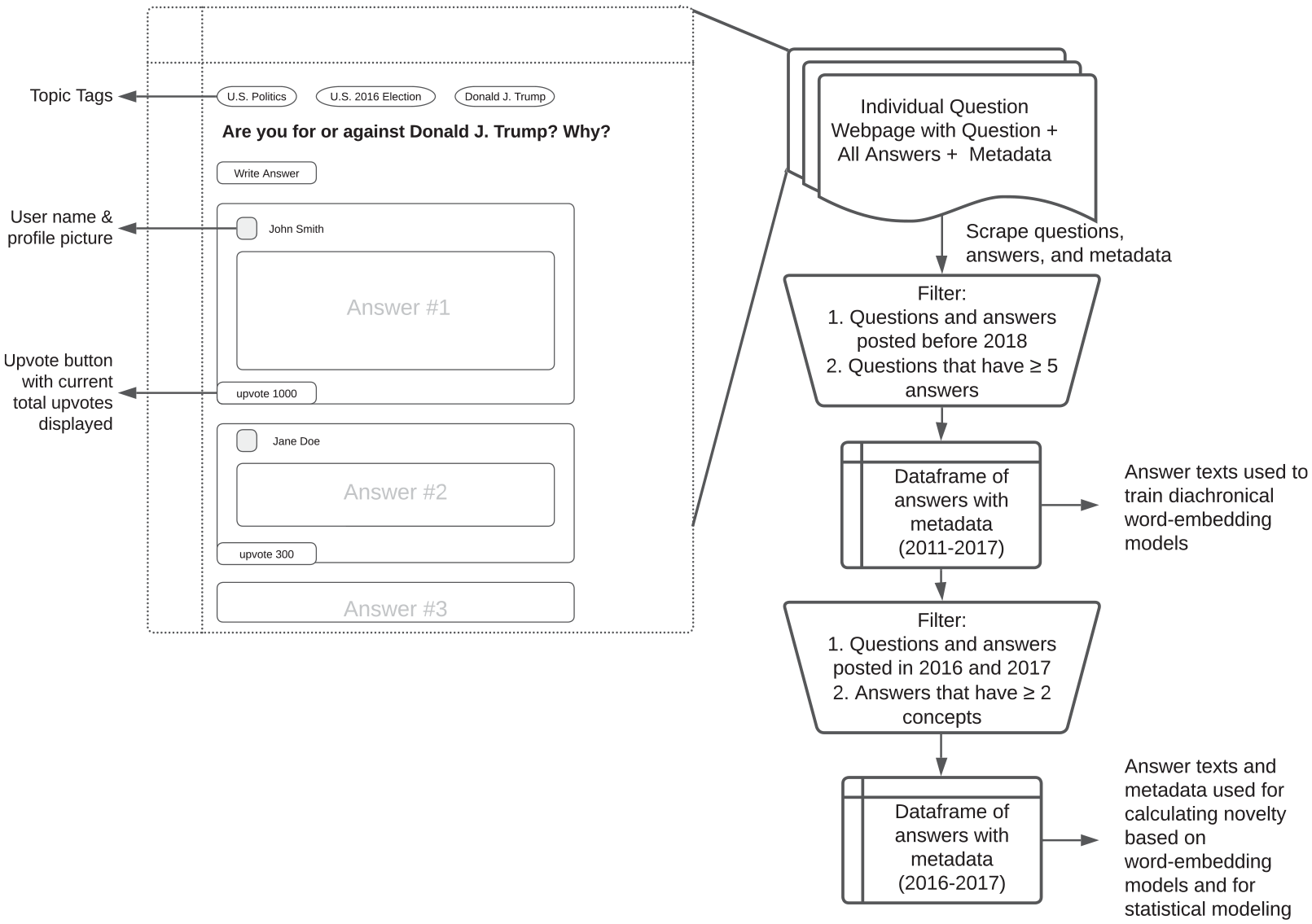
Data Collection and Subset Workflow with Demo of Webpage Structure
Discussion Volumes of the Forum (2011 to 2017)
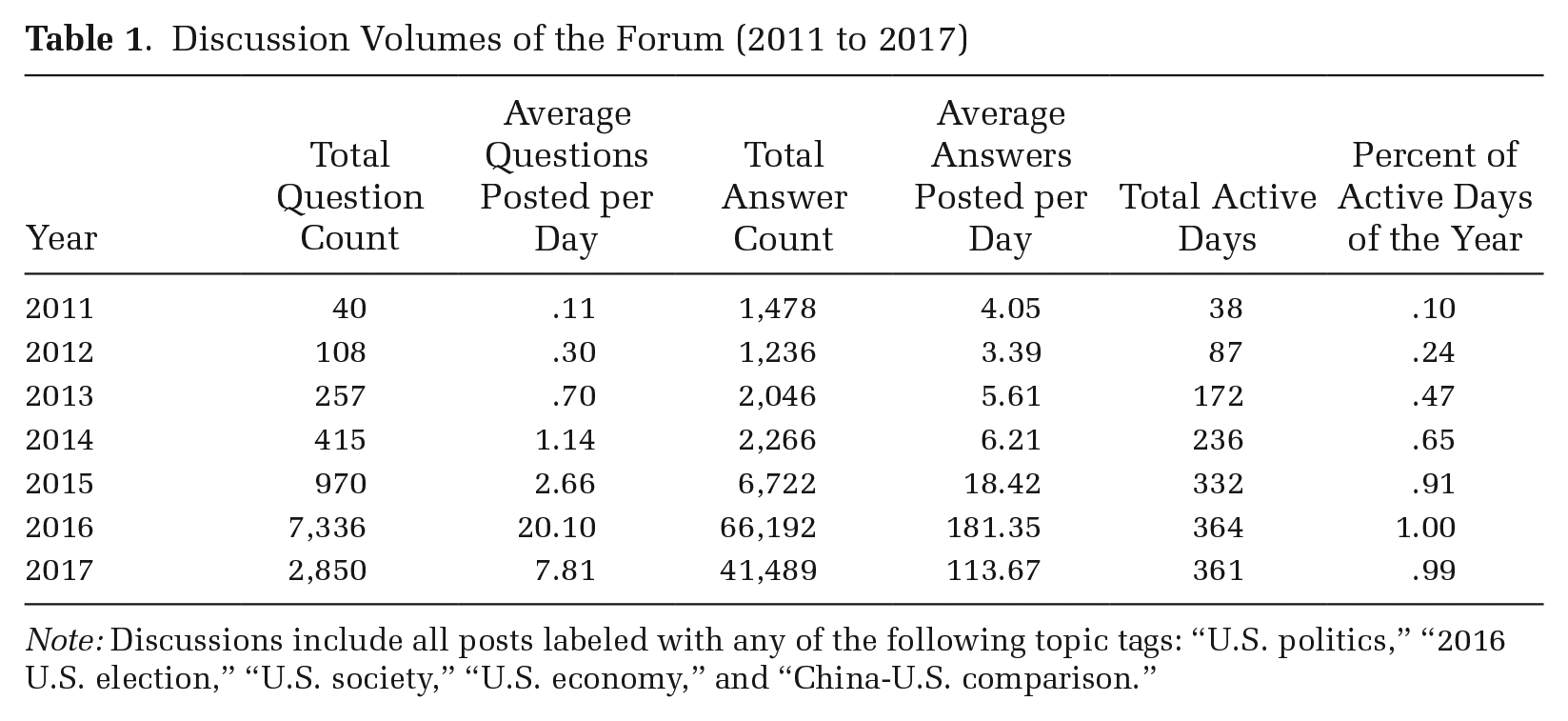
Note: Discussions include all posts labeled with any of the following topic tags: “U.S. politics,” “2016 U.S. election,” “U.S. society,” “U.S. economy,” and “China-U.S. comparison.”
I wrote a web crawler that collected the questions, answers, and other meta information for all content labeled with any of the following topic tags: “U.S. politics,” “2016 U.S. election,” “U.S. society,” “U.S. economy,” and “China-U.S. comparison.” 4 The data were then filtered to keep answers in response to questions that had five or more answers and answers posted by the end of 2017. 5 This resulted in a corpus of 84,259 unique answers. I used this time-labeled corpus to train diachronic word-embedding models, as I will discuss in the Measurement subsection. Then, to calculate novelty and other predictors in the model, I kept answers posted between 2016 and 2017 that contain at least two concepts after concept extraction (see Measurement subsection). The final dataset used for modeling contains 75,079 unique answers (see Figure 1). 6
Because this corpus is time-labeled and contains the entire universe of the discussion of U.S. politics that occurred in this forum since its inception, I can monitor the change in discourse over time in response to forum deliberations and real-world events. As I will discuss in the next subsection, leveraging the time-labeled observations, diachronic word-embedding models can be trained and used to measure novelty according to its theoretical definition. With tens of thousands of posts that received dramatically different numbers of “upvotes,” this dataset provides an opportunity to examine what factors most effectively produce resonance.
Measurement
This study aims to examine the effect of novelty, emotionality, status, and linguistic features on resonance, controlling for other potentially relevant characteristics. The key dependent variable, resonance, is operationalized as the number of upvotes a post receives (similar to “likes” on U.S. social media). This information is collected when each answer is scraped. Compared to studies that can directly observe the experience of resonance through expressions of heightened emotions such as rapid speech and raised voices (McDonnell 2014), the measure of upvotes in this study relies on the assumption that the action of upvoting is linked to an unobserved cognitive process—the experience of resonance. 7 In many studies, such binary outcomes are usually the best available proxy for the experience of cultural power, despite the assumptions it entails, as researchers only have access to outcomes of people’s cognitive process (e.g., likes, shares, consumption) (Askin and Mauskapf 2017; Bail 2016a; Casas and Williams 2019; Salganik et al. 2006). Future research is needed to understand the extent to which the assumption might be violated, and how it might affect results. In this study, I follow the practice of previous research and use upvote as a proxy of the experience of resonance.
Four sets of independent variables are of particular interest to this study. First, I operationalize novelty by measuring the extent to which the concepts a post engages are close or distant in a high-dimensional semantic space (Shi and Evans 2020). Here, the semantic space is predefined by the entirety of the discourse that occurred before the given post. Novelty, in this conception, is a “diachronically moving target.” What was considered novel a year, or even a month, ago may be considered banal today. The challenge is to approximate the true novelty of a given text by measuring it within the discursive space at the point in time it is written. To achieve this goal, I use diachronic word-embedding modeling, capturing meaning changing over time (Kim et al. 2014; Rodman 2020).
Word-embedding models represent each word in a given corpus as a vector. These word vectors can be computed using different word-embedding model implementations, most commonly Word2Vec (used in this article) and GloVe. The core idea of word-embedding models is to “learn” the relationship between words by examining each target word and its local context words. The learning process is performed through a neural network that leverages stochastic gradient descent and backpropagation to minimize incorrect predictions about the target and context words occurrence in the given corpus (Mikolov, Yih, and Zweig 2013; Rodman 2020; Rong 2016). 8 The resultant vector representations of words encode semantic information that can successfully solve various natural language processing problems, including analogy tests, part-of-speech tagging, and named-entity-recognition (Garg et al. 2018; Mikolov, Chen, et al. 2013; Rodriguez and Spirling 2022).
Figure 2 summarizes the steps involved in calculating novelty diachronically. First, a word-embedding model, Mstart, is trained using the entire corpus (all discussions from 2011 to 2017). 9 Then, the entire corpus is divided into sub-corpus by week. 10 This resulted in 106 year–week corpora. Third, to obtain a vector representation of the semantic relationship for each point in time, a new word-embedding model is trained using the previous time-point’s model for initialization and the current year–week sub-corpus for training. Using this method, each year–week is represented with a vector space that reflects the relationship between words at their specific point in time. To account for randomness in the Word2Vec (W2V) modeling result obtained for each time point, the bootstrapping method is applied with 150 iterations at each time point (Rodman 2020). Thus, novelty is calculated by taking the bootstrap sample mean. A confidence interval of the novelty measure is also obtained by taking the 5 percent and 95 percent values in the bootstrap samples.
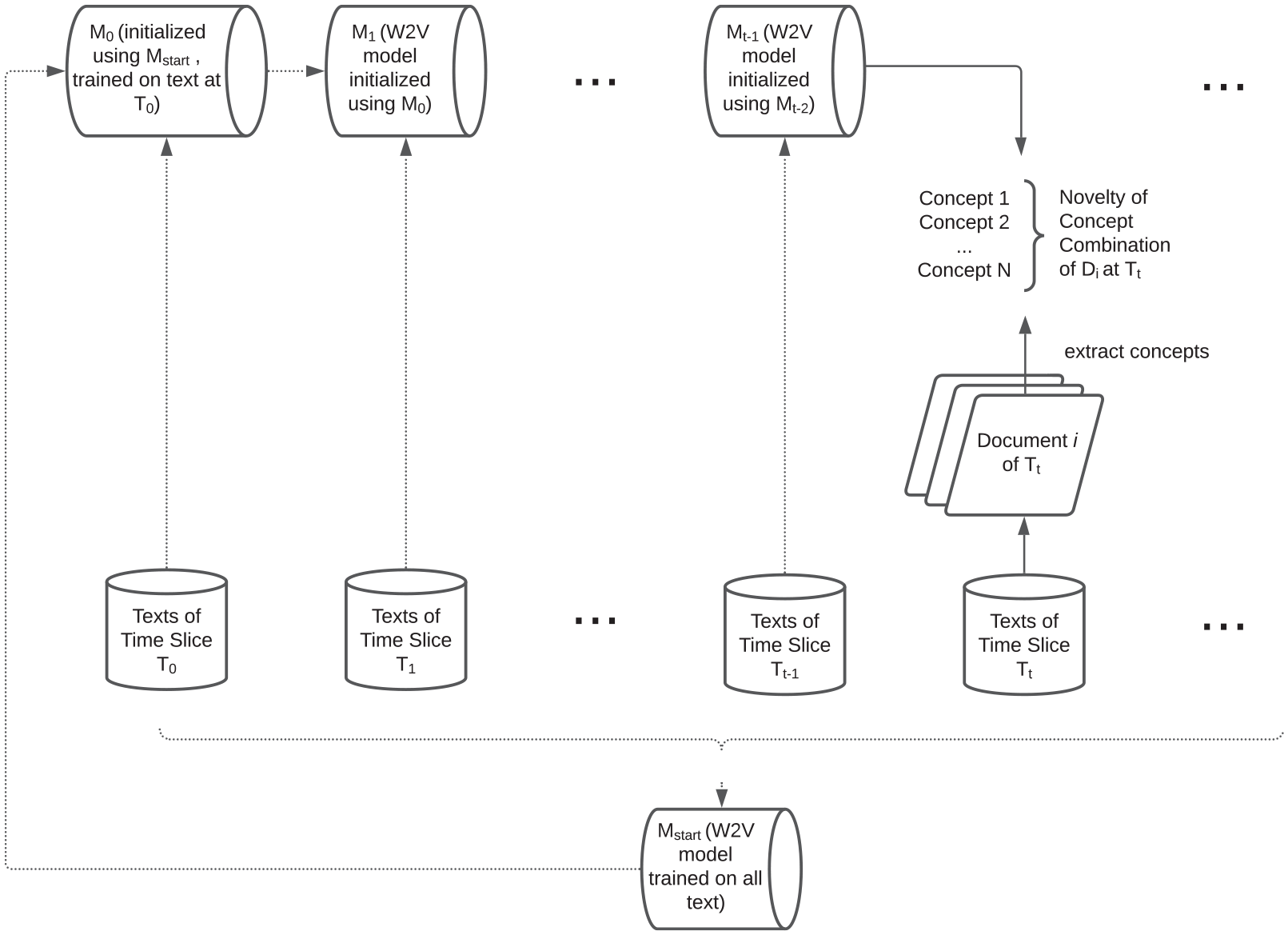
Diachronic Measure of Novelty
Then, the novelty of time point Tt is calculated using the vector space trained at time point Tt−1. This way, one can effectively measure the novelty of a post not against its contemporaneous competitors, but against the “discourse establishment” it speaks to, because novelty is always experienced in relation to an existing cognitive mapping of concepts and their associations (DiMaggio 1997; McDonnell et al. 2017; Strauss and Quinn 1997). In other words, novelty is not measured by comparing a post to other posts created at the same time point, but by comparing it with what has been said and posted in the public sphere. This way of measuring more accurately reflects the theoretical definition of novelty in the theory of resonance than does measuring novelty by comparing a text with its counterparts generated at the same time point.
In general, concepts that have been more frequently used together in this forum will be more similar in the semantic space, and those that are rarely discussed together will be less so. At each time point, adjustments of the word-embedding models mean concepts that are discussed together in the current text slice will be reflected in the resultant model, and concepts that were discussed together previously but not in the current text slice will either have an unchanged or attenuated relationship, depending on how the rest of the concept network changes. Therefore, the diachronic word-embedding model reflects not only the current text slice, but also the discourse that occurred up to the current time point through the cumulatively evolved semantic network relations.
Intuitively, one can think of the diachronic word-embedding model as working similarly to human memory: present and recurring events are more readily retrievable, in comparison to rare or distant past events (Schudson 1989). Thus, concepts that have been discussed together in the most recent past, and concepts discussed together frequently in this forum, will both obtain relatively low novelty scores. This realistically reflects the cognitive “carrying capacity” of forum users (Hilgartner and Bosk 1988:59), as it does not assume or require that participants know the entire discourse history of the forum. Rather, it emphasizes recurring discourses and more recent ideas. When the target post embeds those concepts, the novelty will be lower than posts that do not.
Not all words in a post are used to calculate novelty. In this study, concept words are defined as words with a part-of-speech (POS) tag of nouns, verbs, adjectives, or idioms, 11 and only words with such POS tags are used to calculate novelty (stop words 12 are removed). I made this decision after examining a random sample of forum posts with each segmented word and its POS tag. I found that words tagged as nouns, verbs, adjectives, or idioms are most likely to represent key concepts of the argument. In addition, because this study measures the novelty of concept word combinations, at least two concepts are needed. Thus, posts that engaged with fewer than two concepts are removed. I measured novelty following Shi and Evans (2020):
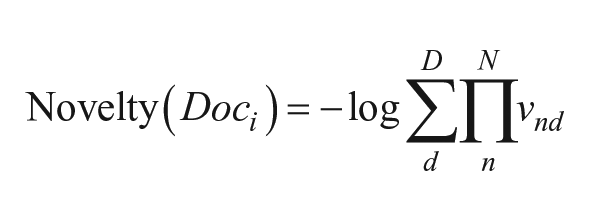
In this measure, Doci is the ith document in the sub-corpus, and vnd is the word-embedding value of concept n at dimension d. This measure relies on the assumption that the W2V space reveals a latent high-dimensional space where the loadings each word has on each dimension indicate the probability that the word’s meaning belongs to that dimension (Kim and Shin 2017; Kozlowski et al. 2019; Xing et al. 2014). Accepting such an understanding, the novelty measure indicates how likely one is to observe the combination of concepts in a defined word-embedding space.
To validate the effectiveness of the diachronic measure of novelty, I examined the change of novelty score over time for posts with similar content. Because posts that engage with different concepts are not directly comparable, I searched for posts that were almost identical copies with only minor edits. Figure 3 shows three such cases, with the posts and their English translations displayed at the top of each panel, and their novelty-score point estimates with confidence intervals on the bottom.
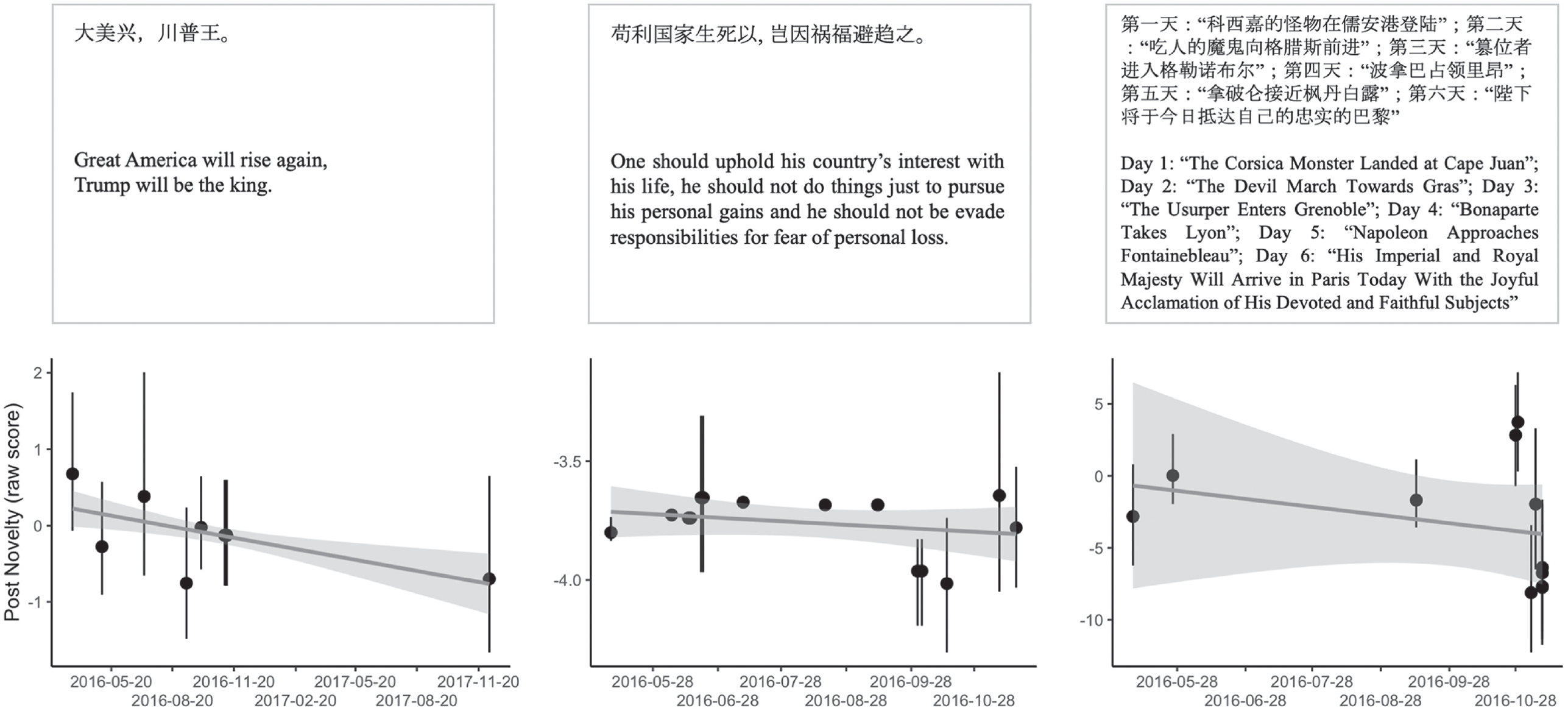
Content and Novelty Score across Time of the Trump King Post (Left), the Chinese Political Motto Post (Middle), and the Napoleon Post (Right)
The left panel of Figure 3 shows a short post that is a parody of a famous line in the classic Chinese history, Records of the Grand Historian. It is used on the forum as a slogan, either sincerely or ironically, to support Trump. The middle panel shows a post that recites a Chinese political idiom, a phrase often used by past Chinese Communist Party leaders as a motto to show one’s loyalty to the country and Party regardless of personal gain or loss. In this forum, this line is often used, either sincerely or ironically, to praise a political leader (sometimes Trump, sometimes others). The right panel is a post that tries to show how a Parisian newspaper changed their political stance over the course of six days as Napoleon arrived in Paris and dethroned the Directory. The post is used to prove how the mainstream media serve as the mouthpiece of dominant political establishments; it is evoked on the forum when people discuss U.S. news media. All three posts appear in the data multiple times in almost identical form, suggesting that multiple users have used the same content to answer different questions at different points in time.
In all examples, the novelty score trends downward as time progresses, despite the deviations of two data points in the Napoleon panel. This is because both posts introduced one or two new concepts to the original text, leading the novelty score to increase as such combinations are relatively less common. This validation shows the diachronic novelty measure is effective in penalizing concept combinations that have appeared before while rewarding novel concept co-occurrence.
Note that the measure of novelty used in this study is an indirect measure of “cognitive distance.” It assumes that cultural schemas, as “organized network[s] of associations” (Mohr et al. 2020:25), are embodied in people’s narratives through their use of concepts (Ignatow 2009). Although it is possible to measure “cognitive distance” directly through measuring individuals’ schematic associations (Hunzaker and Valentino 2019), this cognitive measure requires experimental settings that are costly and not always viable in studies that use social media data. Therefore, the novelty measure in this study rests on the assumption that the network of concepts in discourse provides an approximation of the shared cultural schema (Ignatow 2009).
The second independent variable of interest is emotionality, which is measured using a Chinese sentiment prediction package “bixin,” which has a test accuracy 13 of above .82 on a mixed corpus of customer reviews, Weibo tweets, general news, and financial news in Chinese. 14 The raw sentiment score ranges from −1 (negative) to 1 (positive), and I operationalize this measure to a categorical variable that captures both the intensity and the direction of the emotion. As discussed earlier, current literature suggests it is the intensity rather than the direction of emotion that leads to a higher chance of resonance, but the direction of emotion is often monitored in research about Chinese netizens’ views of the United States (Guan et al. 2020; Lu et al. 2021). Therefore, to be able to engage with the literature, a measure that captures both intensity and direction is preferred.
Based on the percentile of a post’s sentiment score, I categorize it using a seven-level emotionality scale. The top and bottom 10 percent are categorized as “extremely positive” and “extremely negative” (scoring above .99 or below −.99 in the raw sentiment measure). Posts between 70 and 90 percent (scoring between .18 and .99) and 10 and 30 percent (scoring −.99 to −.25) are labeled as “moderately positive” and “moderately negative,” respectively. Posts scored between 50 and 70 percent (.001 to .18) and 30 to 50 percent (−.25 to −.001) are defined as “slightly positive” and “slightly negative.” Posts at the 50th percentile (−.001 to .001) are defined as “neutral.” As a robustness check, I used the absolute value of the sentiment score as a continuous measure of emotionality, and the findings hold (see the Appendix). 15
To test the third hypothesis, the third set of independent variables measures status. I use two measures for these variables: (1) a user’s number of followers, which is log-transformed as the distribution is skewed, 16 and (2) a dummy variable indicating if the user has a “top-writer” badge awarded by the forum’s editors. For anonymous users, the latter measure is coded “false” regardless of whether or not the actual user is a “top-writer,” because when users choose to answer a question anonymously, their “prestige badge” disappears, meaning the status marker is veiled when users browse the text and decide if the post resonates.
The last group of independent variables describes linguistic characteristics of the text that might influence resonance. First, the lexical diversity of a post is measured by a post’s Type-Token Ratio (TTR), following previous research (Ta et al. 2022; Tan et al. 2016). I calculate the TTR by dividing the number of unique tokens (i.e., Chinese and English words) by the number of all tokens in a document. This measures how diverse the language is by looking at how many unique words appeared in the text. 17 The second linguistic feature of interest is use of a foreign language; here, this refers to Chinese forum users’ use of English in their discussion of U.S. politics. This is measured by the number of English words divided by the sum of the number of English words and the number of Chinese characters. Although the primary language on the forum is Chinese, almost all discussants use some English words or expressions when talking about U.S. politicians, institutions, and social problems. In China, the ability to command the language is still associated with higher social status, with less than 20 percent of the population equipped with English proficiency beyond simple greetings (Wei and Su 2012; see Part G of the online supplement). Furthermore, less than 4 percent of the population has the ability to read and write English freely (Wei and Su 2012). Therefore, use of English is associated with higher social status and is considered an important linguistic feature in this empirical case.
Controls
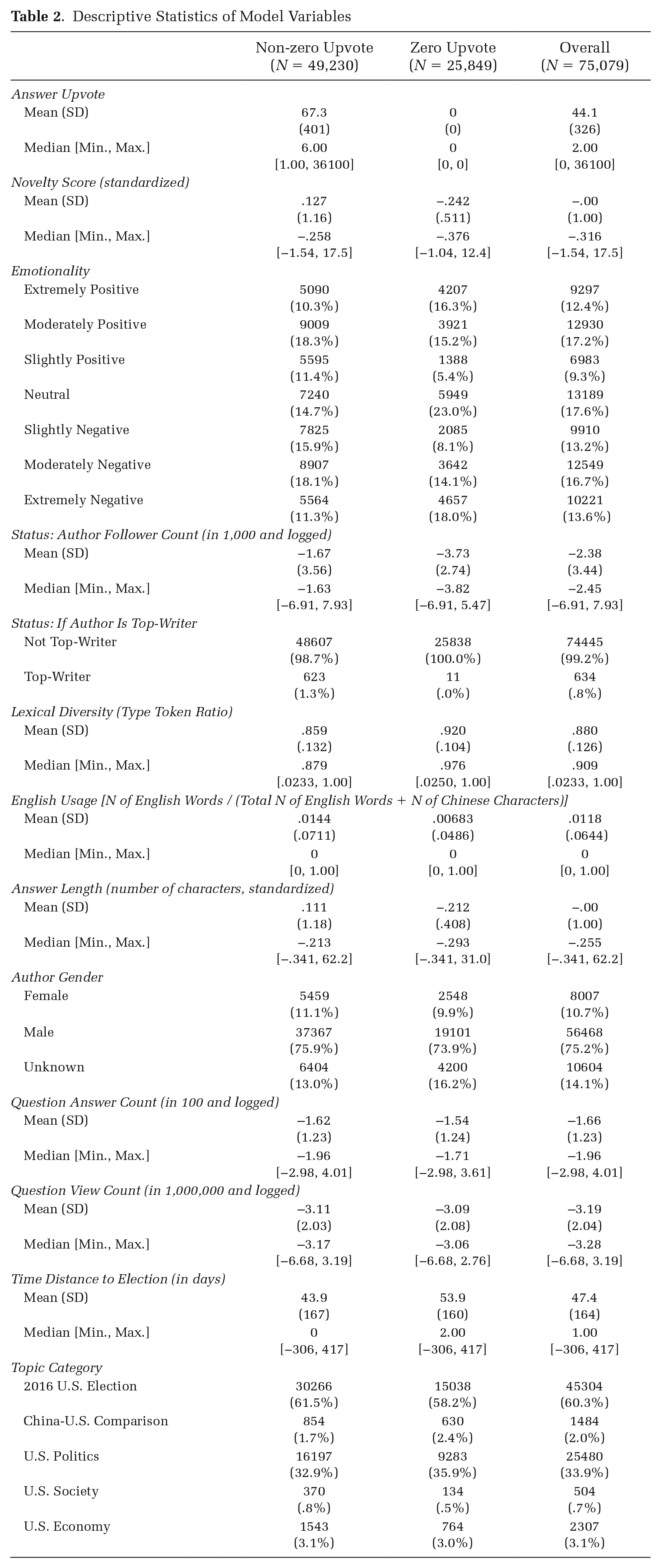
Control variables are included in the models to account for differences in the questions and author characteristics, including (1) length of the post as measured by the number of characters; (2) the topic a post engages with, defined as the topic tag attached to the question the post is responding to, which is a categorical variable of five topic tags (i.e., 2016 election, U.S. politics, U.S. society, U.S. economy, and China-U.S. comparison); 18 (3) question characteristics, which are measured by (a) the number of answers a question has, and (b) the number of views a question has (both variables are log-transformed because of skewed distribution; these question characteristics control for the effect of question popularity, that is, a post to a more popular question may get more upvotes); (4) user’s gender, which is a categorical variable of male, female, or unknown; and (5) time distance to the 2016 U.S. general election day, which is an integer variable indicating a post’s distance, in days, from the 2016 election, to control for the effect of time dependencies, as people’s interest in U.S. politics might peak around election day and decline as the time distance increases. Table 2 displays the descriptive statistics of the key variables of interest and the control variables.
Descriptive Statistics of Model Variables
Modeling Strategy
The main question for this research is what kinds of answers resonate with the platform’s users. Given the overdispersed distribution of upvote counts, I model the relationship between resonance and its predictors using a zero-inflated negative binomial (ZINB) count regression (Fox 2015; Moghimbeigi et al. 2008). Many prior studies use negative binomial regression to model overdispersed count data (Bail 2016b; Evans 2008; Foster et al. 2015). But, unlike the typical negative binomial distribution, the number of zeros is inflated in my data (for distributions, see Part A of the online supplement), and it is reasonable to assume the data-generation process for zero-upvote and non-zero-upvote posts involves distinct mechanisms. For example, there may be a “threshold” of word count or number of followers below which the post is unlikely to get any visibility. In this case, ZINB regression is a preferable choice because it assumes the data-generation processes for zeros versus non-zeros could be different (Fox 2015; Moghimbeigi et al. 2008). Using ZINB, the expected number of upvotes a post receives is modeled with a covariant vector containing the measures discussed before.
To account for the possibility of a curvilinear relationship between novelty and upvote, the covariant vector contains a quadratic term for novelty. Because the raw score of novelty has a relatively large range, to reduce multicollinearity with the quadratic term, the novelty score is standardized to have a mean of 0 and a standard deviation of 1, and then squared to obtain the quadratic term. Both (the standardized measure of) novelty and its squared term are entered in the equation. Similarly, to reduce multicollinearity with novelty and with length’s quadratic term, answer length is standardized to have a mean of 0 and a standard deviation of 1. To check for nonlinearity for our key predictors, squared terms of author’s follower count (logged), lexical diversity, and English usage are also modeled.
Findings
Table 2 provides descriptive statistics for all variables. Because this study assumes a different data-generation process for the inflated number of zeros, summary statistics for non-zero-upvote posts and zero-upvote posts are both displayed, with the overall summary statistics displayed in the last column. Across key continuous measures (novelty, author follower count, lexical diversity, and English usage), we see that the non-zero-upvote group has a higher mean than the zero-upvote group, except for lexical diversity. This seems to confirm the results of Tan and colleagues (2016) and Ta and colleagues (2022) that lexical diversity is negatively associated with cultural power. For the categorical measure of emotionality, the non-zero-upvote group has more posts concentrated in the “moderately positive/negative” and “slightly positive/negative” categories, whereas the zero-upvote posts are more likely to be “neutral” or “extremely positive/negative.” This pattern seems to contradict my hypothesis, suggesting that higher emotional intensity does not lead to more cultural power.
Correlations (R) between key variables are shown in Table 3. There is a relatively high correlation between answer length and novelty, at .68. This suggests that longer posts are associated with a higher probability of drawing on more distant concepts. 19 Answer length is negatively associated with lexical diversity. This suggests that longer posts also tend to include more repetitive use of words, such as common stop words (e.g., “the” and “a”; both length and lexical diversity are measured with stop words included).
Correlation of Continuous Variables
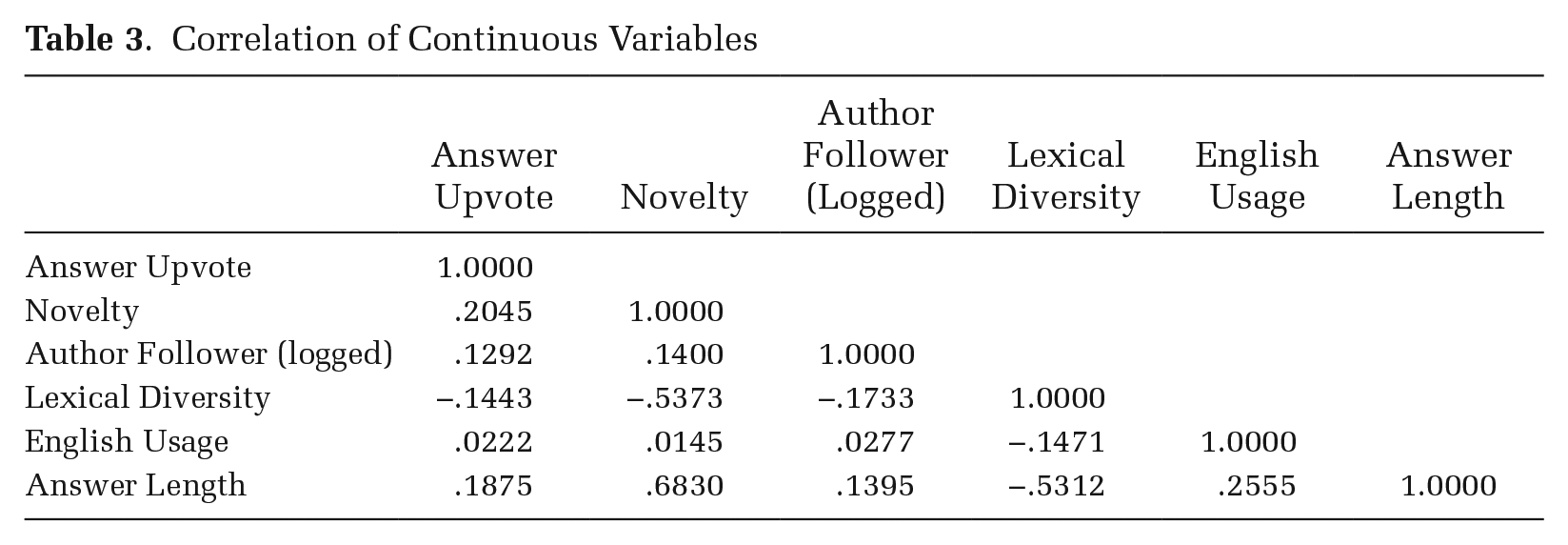
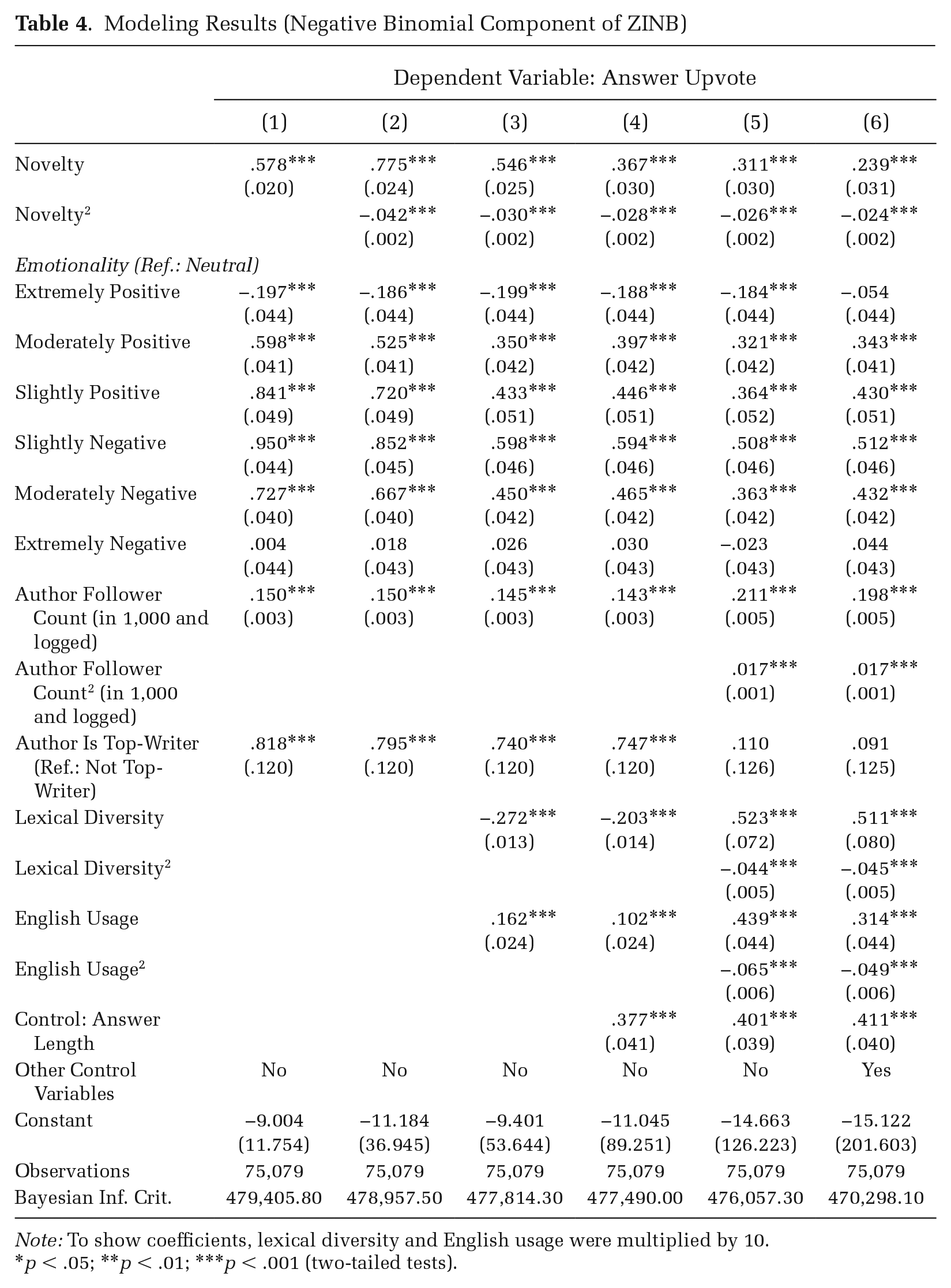
Table 4 shows the results. Model 1 is a simple model that only includes the three theoretical predictors as proposed in McDonnell and colleagues (2017)—novelty, emotionality, and author’s status, without adding novelty’s squared term. Model 2 adds novelty’s squared term to test for the curvilinear relationship between novelty and resonance. These two simple models show four tentative findings: (1) novelty is positively related to resonance when a curvilinear relationship is not modeled; (2) however, when novelty’s squared term enters the equation, it is significant and negative, revealing a curvilinear relationship between novelty and resonance; (3) in contrast to Hypothesis 2 (more intense emotion will lead to more cultural power), slight or moderate emotions seem to perform better than neutral or extreme emotions, as the positive effect of emotion declines as emotion intensifies; and (4) author’s status is positively associated with resonance in terms of author’s follower count (logged) and the prestigious top-writer badge.
Modeling Results (Negative Binomial Component of ZINB)
Note: To show coefficients, lexical diversity and English usage were multiplied by 10.
p < .05; **p < .01; ***p < .001 (two-tailed tests).
Model 3 includes linguistic features as predictors. Adding lexical diversity and English usage to the model, Model 3 finds statistically significant relationships between lexical diversity and resonance as predicted in Hypothesis 4a (negative association), and English usage and resonance as predicted in Hypothesis 4b (positive association). This seems to confirm my hypotheses about linguistic features: increased diversity of vocabulary decreases the likelihood of resonance, whereas increased use of English increases the cultural efficacy.
Model 4 adds answer length as a control on top of Model 3. Once answer length is considered, the effect of novelty decreases considerably. This is expected, as the two variables are correlated at .68 (Table 3). Yet, the effect of novelty and its square are still statistically significant, which assures us there is a curvilinear relationship between novelty and resonance.
To check for nonlinearity for key predictors, I model squared terms of author’s follower count (logged), lexical diversity, and English usage to see if there are statistically significant nonlinear relationships in Model 5. Both lexical diversity and English usage have statistically significant and negative coefficients for their squared terms, whereas author’s follower count (logged) has a statistically significant and positive coefficient for its squared term (see Table 4, Model 5). Although the main effect of lexical diversity is negative, adding a squared term suggests the effect of lexical diversity will likely remain positive until it reaches an optimal point. Similarly, English usage also presents a statistically significant curvilinear relationship with resonance.
For author’s follower count (logged), in contrast, the squared term’s coefficient is statistically significant and positive, resulting in a positive effect of author status across all observed values. The coefficients of the author top-writer dummy are significant in Models 1 to 4, but once the squared term of logged author follower count is added, the significance of the dummy variable disappears. This is most likely because the author top-writer dummy picks up the effect of the squared term of author’s follower count (logged) before it is added to the model, and because insufficient observations have the top-writer badge (only .8 percent and mostly in the non-zero-upvote posts in the dataset). The pattern of coefficients for emotionality dummies does not change as I add these squared terms and the control variable for answer length.
Comparing the Bayesian Information Criterion (BIC) for Models 4 and 5, the lower BIC of Model 5 suggests a better fit when squared terms of these variables enter the equation. 20 These surprising results suggest that in addition to disconfirming Hypothesis 2 (more intense emotion will have a positive effect on resonance), one might also reject Hypothesis 4a (lexical diversity has a negative effect on resonance) and Hypothesis 4b (use of English has a positive effect on resonance).
Model 6 is the full model including all control variables. The effects of key predictors and key controls do not change much after adding the additional controls in Model 6. The full model shows that novelty, lexical diversity, and English usage all have curvilinear relationships with resonance, whereas status (measured by logged author’s follower count) is positively related to resonance. Emotionality presents a nuanced pattern that suggests both the intensity and the direction of the emotion matter. Compared to neutral posts, posts that are “slightly negative” perform the best, followed by posts that are “moderately negative.” As intensity increases, the effect of emotionality declines, and the effects of “extremely positive” and “extremely negative” are not statistically different from that of neutral posts. This pattern is illustrated in Figure 4, which plots the coefficients of the emotionality dummies in Model 6.
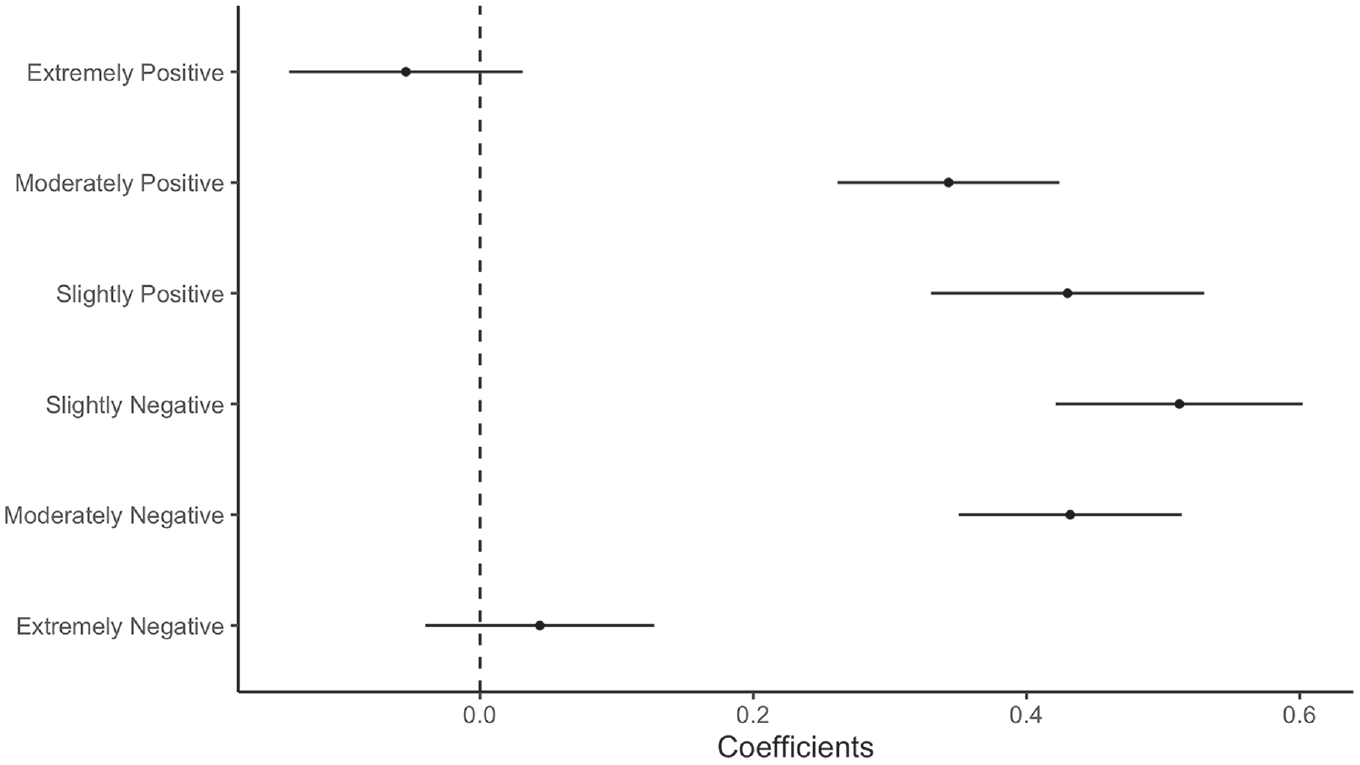
Model 6 Coefficients of Emotionality Dummies
I performed an additional modeling exercise to cross-validate the curvilinear relationship between novelty and resonance. In this model, I created dummy variables by categorizing each observation based on the range of its standardized novelty score. As depicted in Figure 5, the coefficient plot for this novelty-dummy model, the effect of novelty steadily increases as novelty gets higher, until it reaches its maximum effect when novelty is one to two standard deviations (SD) away from the mean (from the 92nd to 98th percentile). After that, the effect starts to decrease.
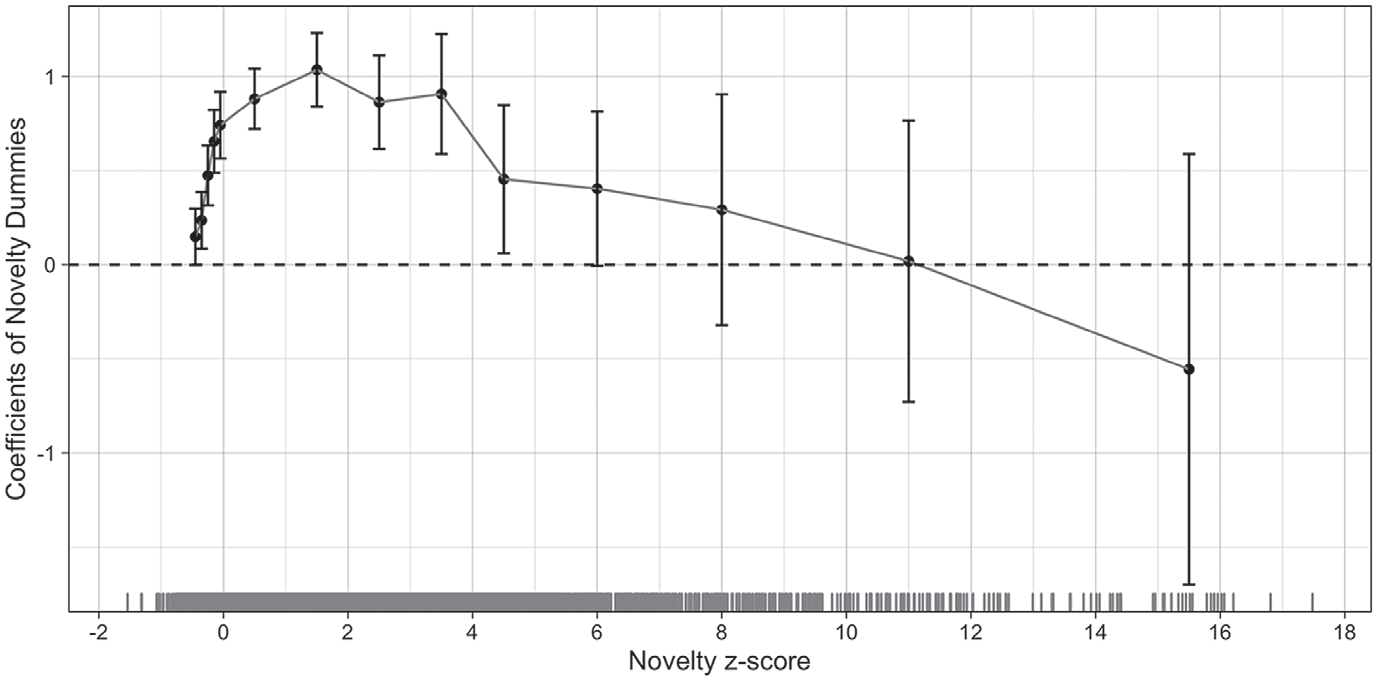
Coefficients of Model 6 Using Novelty Dummies
The novelty-dummy model further clarifies the positive effect of novelty on resonance across most of its distribution. Thus, the declining effect of novelty beyond the inflection point pertains to only a small proportion of cases at the very top of the distribution. About 2,946 cases have an “optimal novelty” between one to two SD away from the mean, with only about 2,608 cases scoring higher than two. However, the rarity of the cases is consistent with the overdispersed distribution of novelty, with 75 percent of posts scoring less than the mean. Thus, in most of the distribution, novelty is associated with enhanced resonance.
Figure 6 shows the predicted number of upvotes for key independent variables according to the results of Models 3, 5, and 6, with other covariates fixed at the mean. The full model is depicted with the black solid curve. Novelty, as shown in the top-left grid, has an effect of about 30 upvotes at its optimal value when all the control variables are added, which is four to five SD from the mean. This approximates the novelty-dummy modeling results shown in Figure 5.
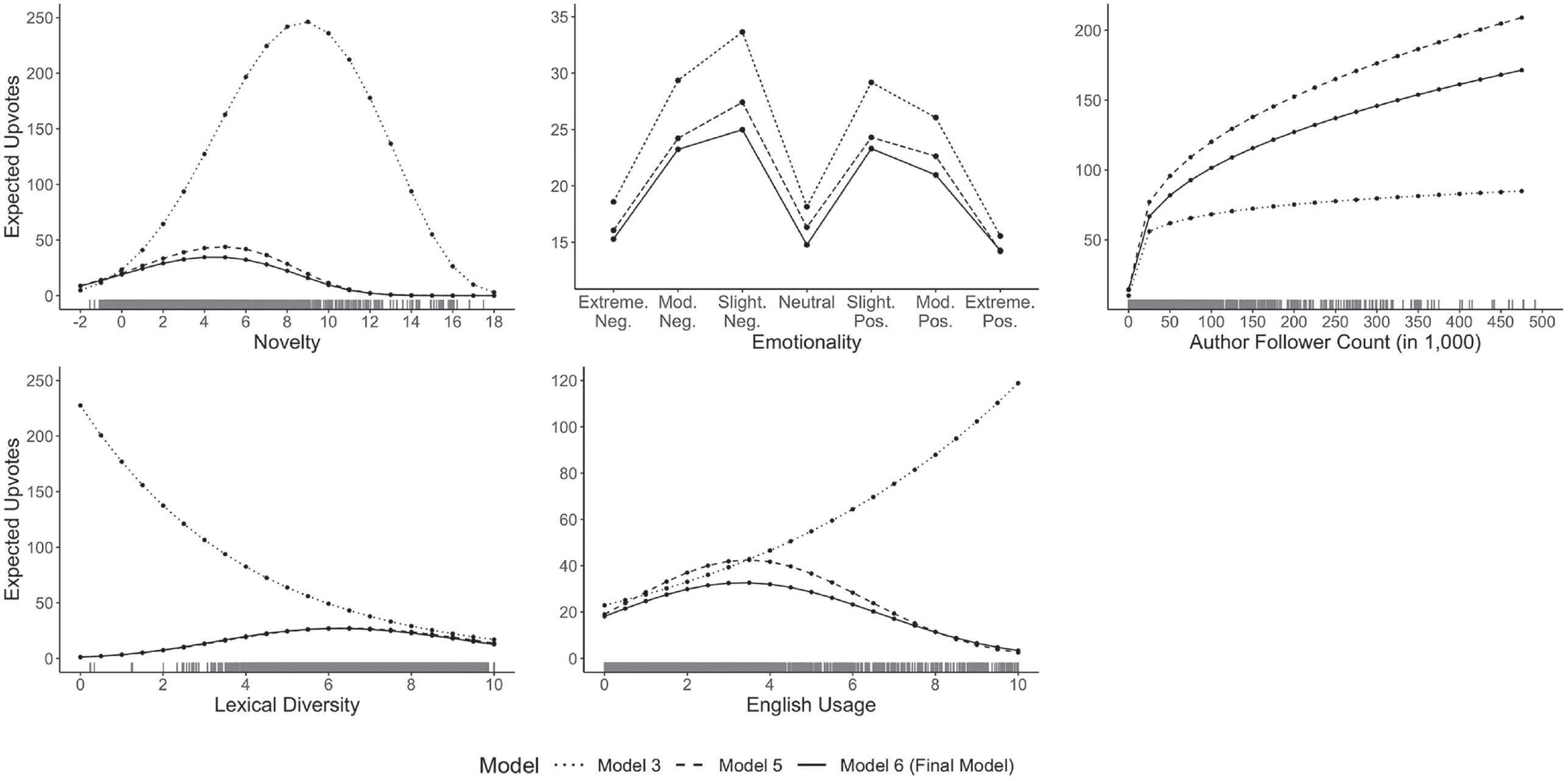
Predicted Number of Upvotes of Key IVs and Controls, by Models
Figure 6 also demonstrates how the intensity and direction of emotion affect resonance. Two patterns emerge. First, the trend of the predicted effect of emotion is approximately symmetric with respect to the “neutral” category. That is, the expected number of upvotes increases by about 10 from “neutral” to “slightly positive” or “slightly negative.” Then, the predicted number of upvotes starts to decline as emotion intensifies, for both positive and negative emotions. Second, negative emotion is consistently in the lead over positive emotion across the three emotionality categories by a small margin. This result suggests that (1) regardless of the direction of the emotion, the intensity of emotion, instead of having a positive linear relationship with resonance, presents an approximate curvilinear relationship that rewards slight or moderate expression of emotion the most; and (2) when the direction of the emotion is considered, negative emotion holds a small advantage over positive emotion. Modeling exercises that use a continuous measure of emotionality also yield a curvilinear relationship (see the Appendix).
In terms of the effect of author status, Figure 6 shows a decelerating positive effect of author’s follower count on expected upvote. A positive return of an additional increase of 1,000 followers diminishes from about two upvotes to less than one upvote once the author’s follower count hits 2,000. Importantly for my analysis, the effect remains positive across all observed values.
The nonlinear relationships between resonance and both lexical diversity and English usage have a notable effect on upvotes. An optimal value of lexical diversity amounts to an increase of more than 40 upvotes compared to the lowest predicted value, and that of English usage is about 30 upvotes. 21
Discussion
The modeling results allow an evaluation of the hypotheses. First, this study finds a curvilinear relationship between novelty and resonance (i.e., Hypothesis 1 is confirmed). Yet the point where the effect of novelty is overturned is far above the median (i.e., above the 90th percentile), so that novelty has a positive effect across most of the distribution. In other words, there is a high bar for a text becoming so novel that novelty becomes detrimental to its cultural power.
Askin and Mauskapf (2017), who found a curvilinear relationship between novelty and popularity in the production of popular music, also found that only a minority of songs are at or above the “optimal novelty” level in their dataset. In their study, novelty is measured by the “typicality” (the reverse of novelty) of a song, compared to other songs released in the previous 52 weeks in a high-dimensional sonic feature space. Conceptually, both their and my measurements aim to capture how similar a cultural object is compared to an existing pool of cultural objects. In their findings, songs that achieved optimal novelty are at the long tail of the sample distribution (Askin and Mauskapf 2017). 22
Combining their study with this one, the tentative conclusion is that the optimal point of novelty is likely to be in the far-right tail of the novelty distribution. In other words, instead of thinking of novelty’s optimal effect as somewhere in the middle, it is more plausible to think of it occurring somewhere closer to “strangeness” than banality. Going back to the example used by Griswold (1987) and McDonnell and colleagues (2017), “Juliet is the sun” is deemed as achieving an optimal cognitive distance that is neither too strange nor too banal, but if we were able to obtain “discourse establishment” data that represent the cultural schema that Shakespeare’s work spoke to, we might find it was quite novel to associate a female lover with the sun before Shakespeare articulated it that way, and that the novelty enhanced resonance.
Second, the modeling results do not find a positive linear relationship between emotionality and resonance (i.e., Hypothesis 2 is rejected). Rather, the evidence shows a curvilinear relationship between emotionality and resonance, with emotionally moderate speech more effective than emotionally intense speech or emotionally neutral speech. In addition, negative emotion tends to have a stronger positive effect than positive emotion across different levels of emotionality.
This is a rather unexpected result given that previous studies about emotionality and political interaction consistently demonstrate that emotionality is positively associated with resonance (Brader 2005; Erisen et al. 2014). Although journalists repeatedly emphasized the intensely fervent pro-Trump sentiment found on Zhihu (Carlson 2018; Dychtwald 2016; Fu 2016), the community members themselves did not find ideas with extreme emotions resonant. Instead, opinions expressed with moderate emotions were favored.
This unexpected finding might be explained by the “filtering” or mediation effect of “group styles” in the relationship between emotion and resonance (Eliasoph and Lichterman 2003). As defined by Eliasoph and Lichterman (2003:737), group styles are “recurrent patterns of interaction that arise from a group’s shared assumptions about what constitutes good or adequate participation in the group setting.” A critical dimension that defines a group style is its “speech norms”: what kinds of topics, in what form, and with what emotions are appropriate given the group setting (Eliasoph and Lichterman 2003:739). As groups differ, the effectiveness of intense emotions in interactions may vary. In the suburban activist group Eliasoph and Lichterman (2003:755) studied, members followed “an unspoken rule that speech should sound reasonable” and often avoided expressions of anger or rage. Schudson (1989:167) provides an interesting example of the “group style” of a science community, where members prefer a speech norm that may not be effective elsewhere: “[i]n science, the duller, the better.” Similarly, in the case of this discussion forum, users may have developed a group style constituted by a speech norm that promotes the sharing of logical, well-crafted opinions, rather than speech that appeals to heightened emotions. The fact that the forum attracts the more educated, urban professional Chinese middle-class, who are more concerned with foreign politics, may act as a filter, creating a group that is willing to engage in extensive debate about foreign affairs in a manner where ideas and opinions are deliberately conveyed with moderate emotions.
Therefore, the results of this study should not be interpreted as a refutation of the theory of emotion and resonance. Rather, it is more likely that I have identified an important mediator to the general theoretical claim that intense emotion makes resonance more likely.
My findings also lead us to question how emotion should be understood, theorized, and measured. As many have pointed out, emotions do not fall on a simple one-dimensional spectrum of negative to positive or neutral to intense (Brader and Marcus 2013; McDonnell 2014). The types of emotion people experience in social interactions matter. In a recent study on Twitter images, Casas and Williams (2019) leveraged a five-category emotional structure and found that while there is a positive relationship between emotional intensity and cultural efficacy (measured by retweets) for fear, disgust, and enthusiasm, such a relationship is absent for anger and sadness. This demonstrates that emotion types may play a role in determining cultural efficacy. Similarly, in my study, it could be that the most effective type of emotion that is truly being conveyed by authors and felt by the audience is not perceived by “amount,” but as a type that we commonly describe as careful, prudent, or collected. In a different group setting, such as an alt-right discussion board on the anonymous forum 4Chan, anger and rage, as emotional types, could be valued more than other types of emotion.
Social and political psychology put emotion types into loosely clustered families (Brader and Marcus 2013). More recent political psychology literature argues that it might be more effective to understand emotions in an “affective space” with at least three dimensions (Brader and Marcus 2013; Marcus, Neuman, and MacKuen 2017). Cultural sociologists should expand on such efforts to develop a theory and measurement of emotion that goes beyond a one-dimensional scale. By improving our theorization of emotion, we will be able to test if the relationship between emotion and resonance also depends on how emotions are measured and categorized. It is possible that it is the intensity of a particular type of emotion, rather than any emotion, that makes resonance more likely depending on the group or interactional setting.
In terms of the interlocutor’s status, one of the two measures (author’s follower count) supports the hypothesis that status positively predicts resonance (Hypothesis 3). The other status measure (top-writer badge) does not have a robust effect in the full model. Nonetheless, the positive relationship between author’s follower count and upvote is consistent with previous studies on status and resonance.
Hypothesis 4a, that lexical diversity is negatively related to resonance, is rejected. The modeling results suggest a curvilinear rather than a negative linear relationship. Drawing on a more diverse vocabulary, but not overplaying it, appears to help a text achieve higher cultural power. Finally, Hypothesis 4b, that foreign language usage is positively related to resonance, is also rejected, because I find a curvilinear rather than a positive linear relationship. In the context of Chinese discussion of U.S. politics, modest usage of English helps an answer build credibility. But as the proportion of English continues to increase beyond a certain point, a post’s chance to create resonance declines.
Lexical diversity and the use of foreign language suggest a “cultural-capital signaling and selection” mechanism in creating resonance. Authors signal their knowledgeability through a diverse vocabulary and the deployment of a relevant foreign language; and the audience selects posts whose enacted cultural capital effectively demonstrate credibility without making the content too difficult to understand. Signaling and selection thus reproduce linguistic markets that “impose themselves as a system of specific sanctions and censorships” (Bourdieu 1992:37).
From the speaker’s standpoint, this echoes Bourdieu’s (1992) thesis that symbolic power is tied to both the linguistic and social capacity mobilized in interactions. The speaker needs not only competence with an expansive vocabulary and a relevant foreign language (the linguistic capacity), but also an awareness of when to stop (the social capacity). From the audience’s standpoint, this confirms Schudson’s (1989) proposition that audiences play an active role in evaluating and thus creating cultural power. Specifically, crucial to the experience of resonance is a match between object features and the local “aesthetic conventions” (Schudson 1989:167). The “cultural-capital signaling and selection” mechanism is not only about the author signaling cultural capital through linguistic or other object features, but also about audiences actively selecting on the kind and amount of cultural capital they value the most in the interactional situation.
Importantly, the “cultural-capital signaling and selection” mechanism should not be confused with the “speaker status” path to cultural power, although these two could be correlated. The former refers to the experience of resonance arising from audiences’ evaluation of an object’s features, whereas the latter is about the speaker’s structural position and the audiences’ evaluation of the speaker’s preexisting status (e.g., one’s titles and disclosed credentials). A speaker with higher status could be more likely to mobilize highly-valued cultural capital, but as shown in this and other studies (Bradac et al. 1976; Durmus and Cardie 2019; Tan et al. 2016), holding the speaker’s status as constant, different deployment of linguistic features can affect the likelihood of resonance. These are thus two analytically distinct elements of cultural power.
Previous studies have examined cultural capital as an independent cause for various life outcomes, such as educational attainment, marital selection, friendship ties, and hiring decisions (DiMaggio and Mohr 1985; Lewis and Kaufman 2018; Rivera 2012). Yet the effect of cultural capital embedded in the cultural object is considered less in the study of ideas and their cultural power. Selection on the dependent variable is likely to obscure the consideration of these elements, as studies of the competition of ideas tend to observe competing ideologies and discourses that approximate each other in their sophistication of articulation, because a gate-keeping mechanism was usually in place—for example, what was chosen for stage performances (Griswold 1986), what was published (Griswold 1987), what qualified as theories that merit scholarly debate (Block and Somers 2014), or what the news media deemed worth broadcasting (Bail 2012; Ferree 2003). However, once we observe the unmediated process of idea selection, objectified cultural capital plays a role in how the audience experiences and evaluates the cultural object.
To conclude, this study confirms a curvilinear relationship between novelty and resonance, as well as a positive effect of status on resonance, as suggested by extant literature on cultural power (McDonnell et al. 2017). However, this study does not find a positive association between emotional intensity and resonance, most likely because the way emotion affects resonance is mediated by “group styles” (Eliasoph and Lichterman 2003). Future research is needed to clarify how group styles might mediate the causal connection between emotion and resonance, possibly by a new conception of “emotion types” that goes beyond a simple sentiment scale. This article also confirms an additional “cultural capital signaling and selection” mechanism to cultural power: the use of a diverse vocabulary and a relevant foreign language increases the resonance of a text when these practices are not overplayed, most likely because audiences associate these practices with greater linguistic and social capacities.
Methodologically, this article introduces a new method to sociology that utilizes word-embedding models dynamically. The method was recently introduced to political science (Rodman 2020). Its potential in exploring various sociological inquiries using word-embedding models with a time dimension makes it a valuable addition to the sociological toolbox. With such an improvement, novelty measured in this study reflects its dynamic relation to the ever-changing discourse structure. Subsequent research that aims to better understand resonance through computational methods can attend to the following two limitations of this research. First, one could develop a more accurate method for concept extraction than selecting on the part-of-speech (POS) tagging; this approach could select concepts that may not be perceived as key concepts by the audience. A content-specific approach would be preferred. For example, one may apply tf-idf 23 keywords extraction or topic modeling to create a concept list (although this might overlook concept combinations that are rare but novel). Second, it is worth further complicating our understanding of novelty. The key question is: the novelty of what? This study demonstrates the novelty of concept combination, developed from the theoretical proposition made about an optimal cognitive distance. However, novelty can also be created by combining different topics (DiMaggio et al. 2018), and it is worth exploring how these two different kinds of novelty relate to each other and to resonance.
Substantively, this article provides one of the most up-to-date examinations of the Chinese public’s view of the United States, particularly after Trump’s rise to power. Contrary to popular accounts that assume the popularity of the Trump craze among Chinese netizens, I find that such extreme sentiments were not well received in this forum of more educated users. Instead, ideas that were moderate in emotion were most likely to be resonant. In addition, whereas previous research has found that the Chinese middle-class holds more positive attitudes toward the United States than do less well-off individuals (Johnston 2004), I found that slightly and moderately negative posts were more effective than positive posts in the discussion of U.S. politics in this forum during the 2016 to 2017 period. This raises the question of whether there was a change in sentiments toward the United States among the Chinese middle-class during the past decade. As government responses to Covid-19 have been highly politicized in China (Zhang 2022), it is politically important to build a better understanding of what kinds of emotion toward the United States are culturally most powerful among different social classes in China. At the same time, the study also demonstrates that such research should go beyond a dichotomous sentiment measure, because a simple negative-positive categorization might result in a mischaracterization of the Chinese public’s view of the United States.
There is still much to be learned about the cognitive and interactional process leading to resonance. My findings raise questions about some of the core assumptions held in our theorization. Besides thinking about emotion along a sentiment score scale, how else can we define and measure different types of emotion? Is intensity the most important aspect of emotion that affects the experience of resonance? What other signals of cultural capital are picked up by observers and how do they affect the cultural power of ideas? How do local norms and expectations intervene in the creation of cultural power? Indeed, as sociologists strive to answer these questions, they will engage in a creative process of problem-solving; a process that searches for scientific facts and imaginative theorizations that can “resonate” with our everyday experience of cultural power.
Supplemental Material
sj-pdf-1-asr-10.1177_00031224221123030 – Supplemental material for The Elements of Cultural Power: Novelty, Emotion, Status, and Cultural Capital
Supplemental material, sj-pdf-1-asr-10.1177_00031224221123030 for The Elements of Cultural Power: Novelty, Emotion, Status, and Cultural Capital by Di Zhou in American Sociological Review
Footnotes
Appendix: Descriptive Statistics and Results Using a Continuous Emotionality Measure
In these models, the continuous emotionality measure is the absolute value of the sentiment score, and its value ranges from 0 to 1, with 0 representing the least intense emotion and 1 representing the most intense emotion.
Acknowledgements
I am grateful to Iddo Tavory, Paula England, Carly Knight, Ann Morning, Mike Hout, participants of the computational reading group at NYU Sociology, and two anonymous reviewers for their thoughtful comments on earlier versions of this article. I am also grateful to Paul DiMaggio for his Sociology of Culture seminar that helped me develop ideas for this article.

Notes
References
Supplementary Material
Please find the following supplemental material available below.
For Open Access articles published under a Creative Commons License, all supplemental material carries the same license as the article it is associated with.
For non-Open Access articles published, all supplemental material carries a non-exclusive license, and permission requests for re-use of supplemental material or any part of supplemental material shall be sent directly to the copyright owner as specified in the copyright notice associated with the article.
