







Abstract
Youth misuse of fire is a substantive community concern. Despite evidence which indicates youths account for a significant proportion of all deliberately lit fires within Australia, an absence of up-to-date, contextually specific research means the exact scope and magnitude of youth misuse of fire within Australia remains unknown. Despite research suggesting commonalities exist between youth misuse of fire and juvenile offending more broadly, misuse of fire is rarely explained using criminological theory. In light of this gap, a descriptive analysis of youth misuse of fire within New South Wales was performed. Routine Activity Theory and Crime Pattern Theory were tested to explain differences in misuse of fire across age groups. Results suggest these environmental theories offer useful frameworks for explaining youth misuse of fire in New South Wales. It is argued that the Routine Activity Theory and Crime Pattern Theory can be employed to better inform youth misuse of fire policy and prevention efforts.
Youth misuse of fire (YMF) is a community concern which has attracted the attention of authorities and researchers throughout the world. Although there exists a substantial body of research pertaining to the study of YMF, a lack of theoretical and empirical consensus means such research remains ungeneralisable (Williams, 2005). Furthermore, despite evidence which indicates YMF may exist within the realm of normative juvenile delinquency, Australia-specific research predominantly derives from the field of psychology, relying upon studies of clinical or incarcerated populations (Dadds & Fraser, 2006). Because YMF continues to be one of the least understood forms of juvenile delinquency (Brett, 2004; Stanley, 2010), systematic analysis within an Australian context, and the application of criminological theory to enhance comprehension of empirical findings is necessary.
YMF
‘Youth misuse of fire’ refers to any fire incident caused by a person under the age of 17 years. It is a psychological and clinical term (Johnson, Beckenbach, & Kilbourne, 2013), which encompasses all forms of misuse of fire attributed to youths: from inquisitive behaviour performed by 3–5-year-olds (defined as fire interest: Dolan, McEwan, Doley, & Fritzon, 2011; Gaynor, 2002); to experimental behaviour committed by 6–9-year-olds (termed fire-play or fire-starting: Dolan et al., 2011; Gaynor, 2002; Haines, Lambie, & Seymour, 2006; Putnam & Kirkpatrick, 2005); to the deliberate, malicious behaviour of youths 10 years and over (referred to as firesetting: Britt, 2011; Dolan et al., 2011; Gaynor, 2002; Haines et al., 2006; Putnam & Kirkpatrick, 2005); to arson (the criminalisation of the latter). All youth-related fire incidents which exist along this continuum are encompassed by the term YMF. It therefore eliminates problems arising due to the interchangeable and arbitrary use of the above-mentioned categorisations, which are yet to be empirically differentiated.
YMF within Australia has not been explicitly measured. This is primarily because YMF is a covert and complex behaviour which does not lend itself well to empirical inquiry. Nevertheless, a small number of studies have been performed which provide partial insight into the magnitude of the YMF problem. Dadds and Fraser (2006) conducted a study of 1359 Brisbane elementary school children aged 4–9 years. Primary care giver reports revealed that 347 (25.6%) children had a history of fire interest, 73 (5.4%) had a history of match play, while 24 (1.8%) had a history of fire play (Dadds & Fraser, 2006, p. 584). Although this study measures YMF prevalence, the generalisability of the findings to other jurisdictions remains unknown. Muller (2008) conducted an analysis of 1232 arson defendants in New South Wales (NSW) between 2001 and 2006, revealing 288 (23.4%) were under the age of 17 years. Although young people represent a significant proportion of this sample, Muller’s (2008) analysis only considered YMF in its criminalised form (arson). Bryant (2008) conducted an Australian-based study of deliberately lit vegetation fires as recorded by fire brigade data. Findings revealed that between 1997/1998 and 2001/2002, youths accounted for 0.4% of all rural fires and 16.0% of all urban fires detected in NSW (Bryant, 2008, p. 134). However, Bryant’s study did not include fires involving structures such as residential dwellings. When considered in light of overseas evidence, indicating around half of all structure fires occur as a result of YMF (Lowenstein, 2003, p. 193), such findings provide only limited insight into the magnitude of the YMF problem within Australia. In addition, these findings must also be considered in light of evidence suggesting that for every three fires reported to authorities, one remains unreported (Hardesty & Gayton, 2002), and that fires which occur outdoors are reported more often than fires which occur indoors (Corcoran, Higgs, Brunsdon, Ware, & Norman, 2007). As such, the potential dark figure means the exact scope and magnitude of YMF remains unknown.
Existing literature suggests YMF behaviour arises from both normal, transitional behaviour which occurs due to the delayed maturation of the prefrontal cortex (Britt, 2011; Kocsis, 2002; Pinsonneault, 2002; Stadolnik, 2000) and more complex antisocial tendencies (Gannon & Barrowcliffe, 2012; Lambie & Randell, 2011; Muller & Stebbins, 2007; Watt, Geritz, Hasan, Harden, & Doley, 2015). Both of these explanations align with those employed to explain juvenile delinquency more broadly (Richards, 2011). Not surprisingly these are not the only commonalities shared by the YMF and juvenile delinquency literature. Factors such as antisocial behaviour, psychological dysfunction, low educational attainment, poor parenting, and child maltreatment have been highlighted as both criminogenic and YMF risk factors (Britt, 2011; Dolan & Stanley, 2010; Drabsch, 2003; Lambie & Randell, 2011). Dolan et al. (2011) posit that these shared risk factors mean YMF is similar to delinquent behaviour in general. Comparably, a 10-year follow-up study conducted on youths referred to the New Zealand Fire Awareness and Intervention Program revealed that those who misuse fire are at risk of future offending (Lambie, Ioane, Randell, & Seymour, 2013). Yet, despite such propositions, YMF has not been extensively explained from a criminological perspective.
In light of this gap within the existing literature, an analysis of YMF within NSW has been performed. In an attempt to explain differences in YMF behaviours across age groups, the results have been couched in the framework of two of the most well-known and widely scrutinised environmental criminology theories – Routine Activity Theory (RAT) and Crime Pattern Theory (CPT).
RAT
Cohen and Felson’s (1979) RAT proposes that it is the routine activities of everyday life which present opportunities for crime. These criminal opportunities emerge from the convergence in time and space of a motivated offender, a suitable target, and the absence of a capable guardian (Cohen & Felson, 1979). Although originally devised to explain direct contact predatory offences, and despite not having been explicitly applied to YMF within existing literature, RAT seems to be a solid framework through which to understand YMF. The applicability of RAT to YMF is supported by empirical findings which correlate suspicious fires with everyday patterns of activity, influenced by guardian movement and opportunity (Corcoran et al., 2012, p. 18). Indeed, as predicted by RAT, previous literature indicates that as youthful age groups differ in their routine activities, corresponding differences can be seen in the context of their perpetration of YMF (Dolan et al., 2011).
A motivated offender
According to Cohen and Felson (1979), a motivated offender must have natural inclination and capacity to commit crime. Although the concept of natural criminal inclination has been the topic of considerable debate within criminology, it is especially applicable to the study of YMF. This is because a substantial body of literature suggests that YMF manifests from intrinsic motivation arising from the inquisitiveness of children and the need for adolescents to experiment (Pinsonneault, 2002; Stadolnik, 2000). Research indicates an interest in fire typically emerges by the time a child is five years old due to increased levels of cognitive curiosity and natural childhood inquisitiveness (Bowling, Merrick, & Omar, 2013; Dolan & Stanley, 2010; Lyons, McClelland, & Jordan, 2010). Youths between the ages of six and 12 years are similarly intrigued by fire, and although their capacity to understand the world expands and cause-and-effect reasoning develops, this is not sufficient to comprehend the consequences of YMF (Pinsonneault, 2002). Finally, 13–16-year-olds are said to engage in YMF due to increased levels of experimentation and the need to test limits and structure (Pinsonneault, 2002; Stadolnik, 2000). Here, YMF is portrayed as developmentally appealing due to the delayed maturation of the prefrontal cortex which is responsible for decision making and risk assessment (Britt, 2011, p. 16). Regardless of age, the literature suggests there exists motivation for any youth to engage in YMF. Since YMF, by its very definition, refers to all types of misuse of fire regardless of motivation, it requires a theoretical framework which assumes motivation exists, but does not require categorisation of offenders based on different types of motivation. RAT is therefore a good fit for explaining YMF.
Opportunity
If youths are intrinsically motivated to commit YMF, it is important to determine why only some do so, and only some of the time. Since broader offending patterns are facilitated by opportunity arising from the physical and social environment (Hollis, Felson, & Welsh, 2013, p. 65), patterns of YMF may be similarly governed by opportunity. According to RAT, the opportunity to engage in YMF differs according to the routine activities of youths. If routine activities differ by age, youths would be expected to exhibit patterns of misuse of fire particular to their age. Existing literature supports this proposition, indicating divergent spatial and temporal patterns of YMF according to age. Zero to five-year-olds are more likely to set fires during the day, in the home, in areas where they sleep or play (Bahr, 2000; Corry, 2002; Dolan et al., 2011; Pollack-Nelson, Faranda, Porth, & Lim, 2006). Six- to 12-year-olds are more likely to engage in YMF in the home or in a nearby location between 1300 and 1900 h (Britt, 2011; Dolan et al., 2011; Schoonover, 2013). Finally, adolescents are more likely to set fires away from home between 2200 and 0100 h (Corry, 2002; Dolan et al., 2011; Schoonover, 2013). These different YMF patterns, according to RAT, occur due to routine activities which generate age-specific opportunities for the misuse of fire.
A suitable target
RAT posits that a motivated offender must converge in time and space with a suitable target. Similarly, for YMF to occur, a youth must have access to combustible materials and incendiary devices. From a RAT perspective, any accessible and available combustible material and incendiary device which a youth encounters during their daily activities is a suitable target. Existing literature suggests that these targets are often plentiful and easy to obtain. Harpur, Boyce, and McConnell (2013) found that, of the nine fatal dwelling fires lit by children five years and under in Northern Ireland, eight (89.0%) occurred in a household where at least one member smoked. Smoker’s materials are usually found in readily accessible locations (Bahr, 2000), and when exposure to incendiary devices is high, YMF is more likely to occur (Kolko, 2002). Routine activities are therefore likely to bring together motivated offenders with suitable targets in time and space, and these targets will differ according to the activities of the motivated youth. Existing literature indicates young children are more likely to conduct YMF in or around the home, against combustible materials such as clothing or toys when indoors, and leaves or paper when outdoors (Dolan et al., 2011, p. 383). Meanwhile, older children and adolescents are more likely to commit YMF away from the home, against leaves or bushes when outdoors, and to vandalise or damage property when indoors (Dolan et al., 2011, p. 383).
It is also important to heed Tilley’s (2014) extension of RAT which emphasises that crime can only occur when an offender is adequately capable. This is particularly applicable to YMF which requires the specific capability of being able to ignite and position an incendiary device within or around combustible material in a manner which causes combustion. If YMF is a developmental behaviour, it is assumed that age differences in YMF arise when youths are at different stages of development. Hence, YMF caused by younger youths is likely to involve simple incendiary devices, while older youths involve more varied and complex incendiary devices. This presumption is supported by evidence indicating that younger youths predominantly commit YMF with matches or lighters, while older youths commit YMF with matches, lighters, a stove-top, or accelerants (Corry, 2002; Dolan et al., 2011; Talbot & Harris, 2008). Suitable targets for YMF are therefore those combustible materials and incendiary devices which a youth has the capacity to use and which they come into contact with throughout their daily routine activities. Although previous literature indicates that a suitable target will differ according to age, the assumption that differences in age-specific targets are the result of differences in routine activities and developmental capabilities is yet to be empirically tested.
Capable guardianship
The final core element of RAT is the absence of capable guardianship. A guardian refers to a human element who, through presence, proximity, and capability, makes crime less likely (Hollis et al., 2013, p. 66). Presence refers to the existence of a human element, proximity to the physical closeness of the human element to the offender, and capability to the ability of the human element to deter offending. According to Tilley (2014), capability requires an intimate connection between guardian and offender which is significant enough to ensure guardian disapproval deters the offender from engaging in criminal activity. When one or more of these three core elements of guardianship is lacking, crime is more likely to occur.
This premise is supported by existing literature which suggests the mere presence of a guardian may not be sufficient to deter YMF. Pollack-Nelson et al. (2006) conducted a study of parents of 57 American children aged six years and younger, who misused fire. The study revealed that parental presence did not inhibit YMF and that children actively sought incendiary materials and covert locations in which to engage in YMF. Of the 60 parents studied, 84.2% reported being inside the home at the time their child lit a fire (Pollack-Nelson et al., 2006). Similarly, Harpur et al. (2013) found that eight of the nine fatal dwelling fires studied occurred when a parent was home, while three occurred when the parent was in the same room. However, Pollack-Nelson et al. (2006) also discovered that parents deem the home to be the safest place to leave a child without direct supervision. Where guardianship, according to RAT, requires a human element who is present, in close proximity, and capable of deterring the likely offender (Hollis et al., 2013), YMF may not be deterred simply because a parent/guardian is at home.
In line with Eck’s extension of RAT, guardianship can be divided into three roles: the handler whose presence deters the potential offender, the place manager who protects the place, and the guardian who protects potential targets of crime (Felson, 2008, p. 74). However, such divisions are not so clear-cut when considering the patterns of YMF. When a youth is in or around the home, a parent/guardian acts as the target–guardian, the place–manager, and the offender–handler. When a youth moves away from the home, guardians and place managers are other human elements whose presence protects at-risk places and supervises suitable targets. Hollis et al. (2013) stress that guardians and place managers are people who, by going about their daily activities, regulate places and supervise targets, whether intentionally or unintentionally. RAT predicts that YMF committed away from the home is likely where there is an absence of human elements, whether consistently or fleetingly, which permit misuse of fire to occur.
The above literature indicates that the intricacies of YMF can largely be explained by the RAT framework. Where youths are intrinsically interested in fire, and are therefore sufficiently likely to commit YMF, all that is required is an absence or remoteness of guardianship and access to suitable targets. When these factors converge in time and space, conditions are conducive to YMF.
CPT
CPT posits that crime patterns are best explained by the interrelationship between people and the environment. Brantingham and Brantingham (2008) drew upon the theoretical underpinnings of RAT to suggest that routine activities form movement patterns which evolve into activity and awareness spaces. Crime is likely to occur when an offender’s awareness space intersects with that of a victim and/or target, and the opportunity to commit crime. Activity spaces include nodes – places routinely visited, and paths – routes normally travelled between nodes, while awareness spaces are the areas within visual range of activity spaces (Brantingham & Brantingham, 2008). Particular nodes used by a large number of people may create conditions conducive to certain types of crimes, acting as crime generators. Nodes which attract a large number of potential victims and/or targets may provide greater opportunities for crime, and thus be crime attractors. Areas may be crime generators and/or crime attractors for various types of crime, while also being crime neutral for others (Brantingham & Brantingham, 2008).
CPT also considers the context within which crime occurs. According to Brantingham and Brantingham (2008), the urban backcloth influences the location of activity nodes and paths, engendering a spatiotemporal clustering of crime. Cozens and Christensen (2011) believe that this environmental backcloth is highly relevant to the study of bushfire arson. Specifically, the authors state that opportunities for bushfire arson are generated by the design, use, and management of the urban–bush interface (Cozens & Christensen, 2011). Where the urban–bush interface is within the awareness space of an individual, the offender is likely to converge in time and space with the target, at a node, path, or edge, which facilitates opportunities for bushfire arson (Cozens & Christensen, 2011). Despite this application of CPT to explain bushfire arson, the theory has not been explicitly applied to explain, or inform the prevention of, YMF.
Two seemingly unrelated bodies of literature have contributed to understanding YMF and the applicability of RAT and CPT to crime, yet the reciprocal nature of these fields of knowledge is yet to be thoroughly investigated. Evidence suggests that differing routine activities, and thus different crime targets and facilitators, are associated with distinctive crime types (Miller, 2013). Miller (2013) conducted a study of 3064 Edinburgh adolescents and found that patterns of assault, drug use, fair evasion, vandalism, and shoplifting were unique to youths’ routine activities. If YMF is positioned as a delinquent behaviour similar to youth offending more broadly, then the well-known and widely supported theories of RAT and CPT can be similarly applied to explain YMF and to inform policy and prevention efforts.
To test the applicability of RAT and CPT, the differences in YMF between various age groups were examined. Should RAT and CPT hold as useful frameworks, it was expected that, as routine activities and awareness spaces differ by age, patterns of YMF will be distinct to each age group.
Method
To determine whether RAT and CPT can provide a theoretical framework to enhance comprehension of YMF, an examination of the YMF population of NSW was undertaken. Descriptive statistics of YMF in NSW were derived from available data collected by Fire and Rescue New South Wales (FRNSW) and the New South Wales Rural Fire Service (NSWRFS).
Sample
The sample included every fire incident report within NSW pertaining to a youth between the ages of 0 and 16 years between July 2004 and June 2014, where this fire was attended to, and recorded by, FRNSW or the NSWRFS. The datasets included FRNSW’s Australasian Incident Reporting System (AIRS) and the NSWRFS’s Fire Incident Reporting System (FIRS). The sample was accessed via convenience sampling, where all reported fire incidents were accessible within the datasets. AIRS contained 25,369 incident reports, while FIRS contained 1011 incident reports, creating a sample size of 26,380.
Measures
The variables extracted from the AIRS and FIRS databases included situational level variables. For each of the 26,380 fire incident reports available, the following variables were extracted. Area of origin (area where the fire originated defined by its use) consisting of eight levels: commercial, exterior living, interior living, public, rubbish, sleeping, transportation, other; Alarm source (person or agency responsible for notifying the brigade) consisting of seven levels: ambulance, automatic, fire, occupier, passer-by, police, other; Form of heat ignition (incendiary device) consisting of seven levels: electrical equipment, fuelled equipment, heat/hot object, matches/lighters, open flame, smoker’s materials, other; Form of material ignited first (combustible material) consisting of seven levels: apparel/linen, furniture/wares, recreational, rubbish, structural, vegetation, other; Type of property (property use) consisting of seven levels: commercial, institutional, public, recreational, residential, storage, other; Type of owner consisting of seven levels: Commonwealth Government; Department of Health, Housing and Community Services; Indigenous; Local Government; private; State Government; other; Day of the week; and Time recorded in hourly intervals.
Procedure
FRNSW AIRS data were accessed via FRNSW Strategic Reporting System (SRS) which collates all AIRS data at the aggregate level. The SRS database was accessed via secure FRNSW computers. The FIRS database was accessed by NSWRFS personnel within the Operations Services Directorate and made available to the researcher in aggregated form.
All data were analysed in SPSS version 22. Data were cleaned, recoded, and collated to marry the two datasets. Descriptive statistics, cross-tabulations, and chi square r x c tests for independence were then calculated. In order to discern measures of association between the three distinct YMF age groups, chi square calculations did not include the variable age undetermined. All underlying assumptions of chi square tests were met.
Results and discussion
Of the 26,380 fires attributed to youths between July 2004 and June 2014, 642 (2.4%) were caused by 0–5-year-olds, 4464 (16.9%) were caused by 6–12-year-olds, 13,709 (52.0%) were caused by 13–16-year-olds, and 7565 (28.7%) were attributed to youths whose ages could not otherwise be determined. For each of the tables presented herein, statistics pertaining to the number of cases (n =) and the proportion these cases accounted for within age group (per cent) are provided. Chi square r x c test results are also provided for each respective table.
A motivated offender
The analysis assumed that youths maintain some form of intrinsic motivation to commit YMF. Since RAT requires only the presence of motivation, differentiating the sample based on motivation was not required. As a result, age-specific patterns of YMF were analysed in accordance with opportunity generated by routine activities, suitable targets, and capable guardianship.
Opportunity
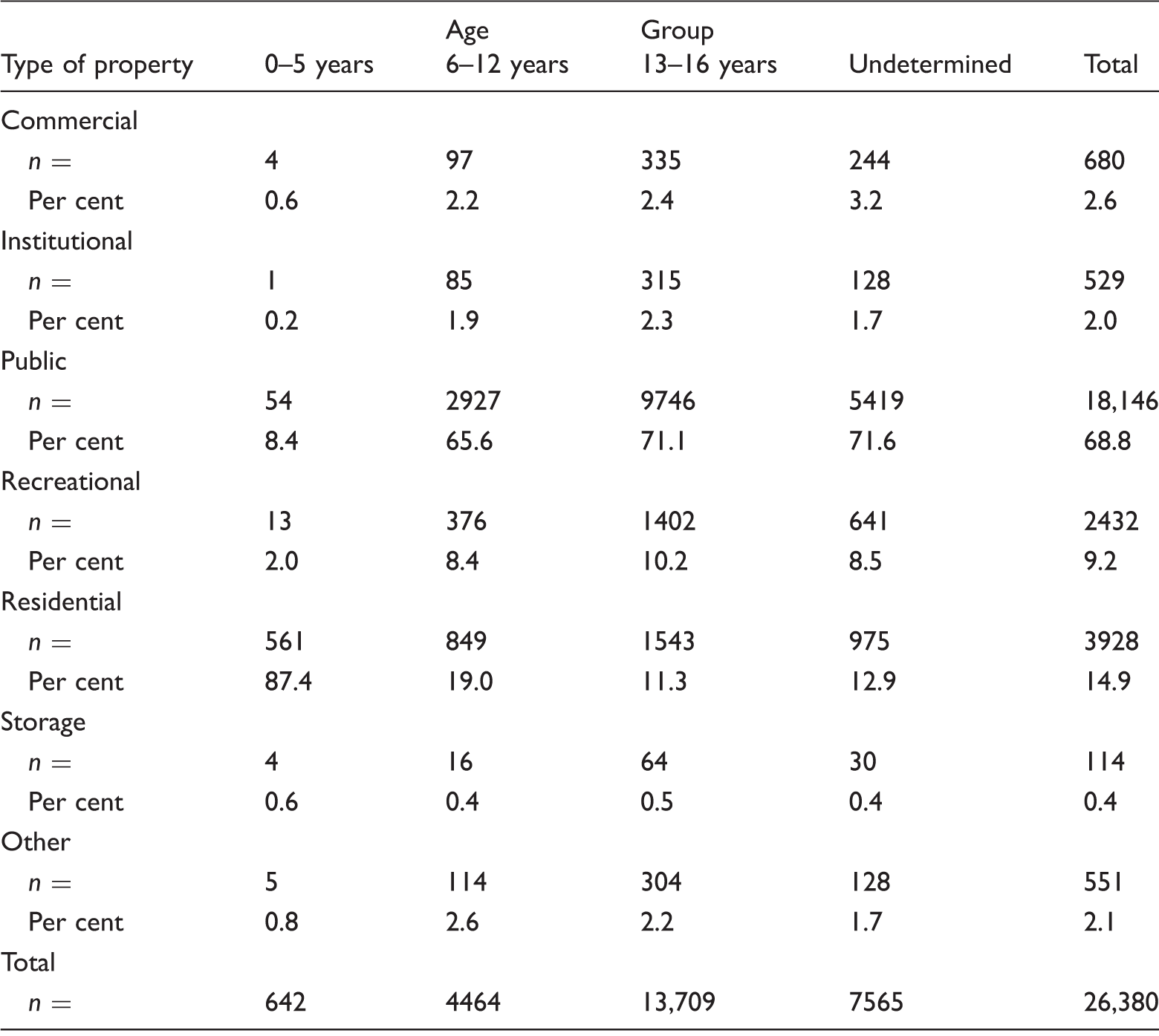
YMF age group × type of property.
Source: Statistics derived from raw data collected from FRNSW and NSWRFS.
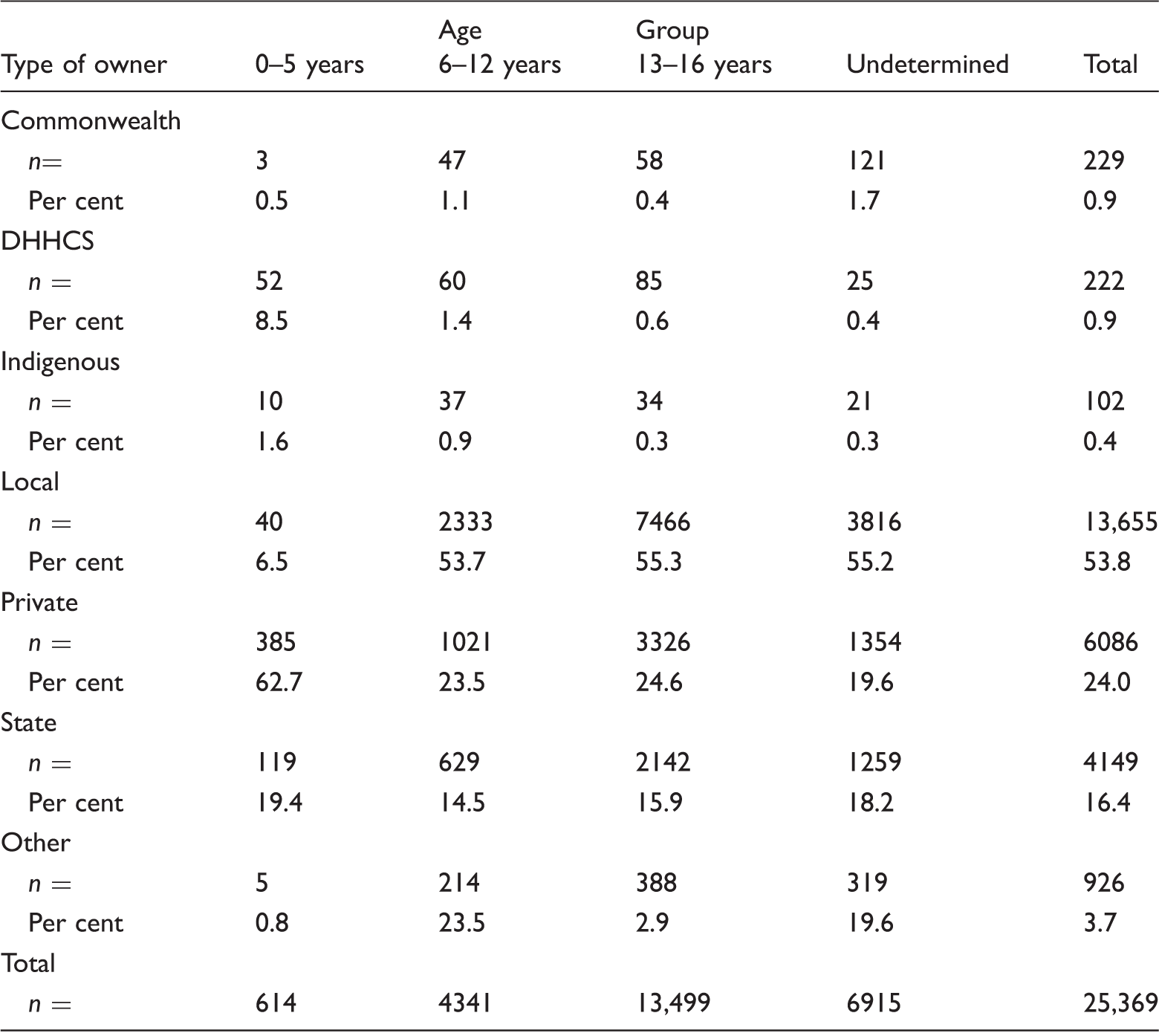
YMF age group × type of owner.
Source: FIRS did not contain the variable type of owner. Statistics derived from raw data collected from FRNSW only.
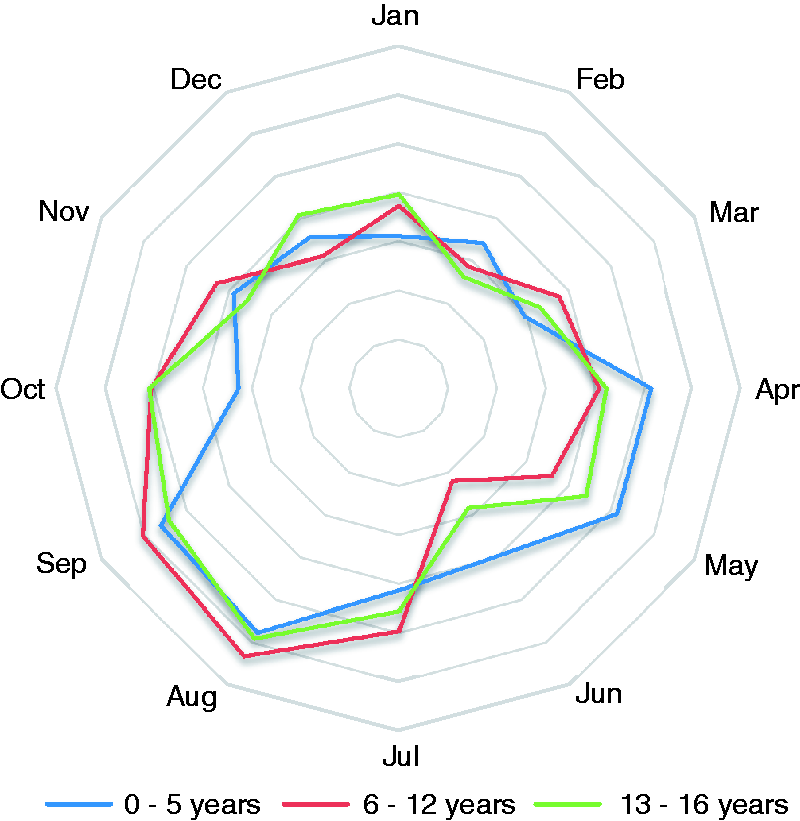
YMF by month by age group. Source: Statistics derived from raw data collected from FRNSW and the NSWRFS.
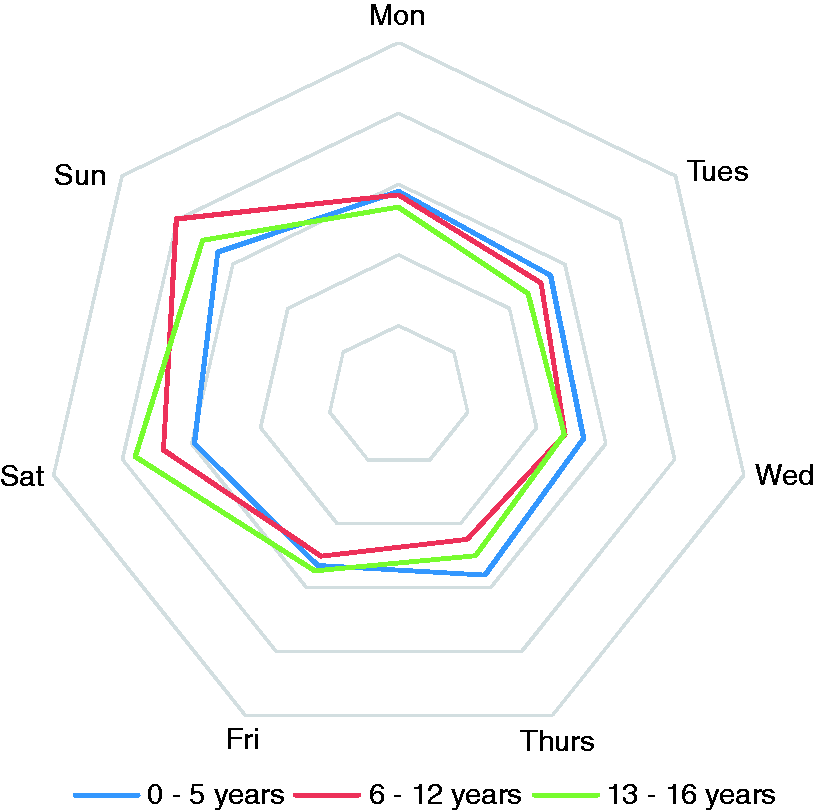
YMF by day by age group. Source: Statistics derived from raw data collected from FRNSW and the NSWRFS.
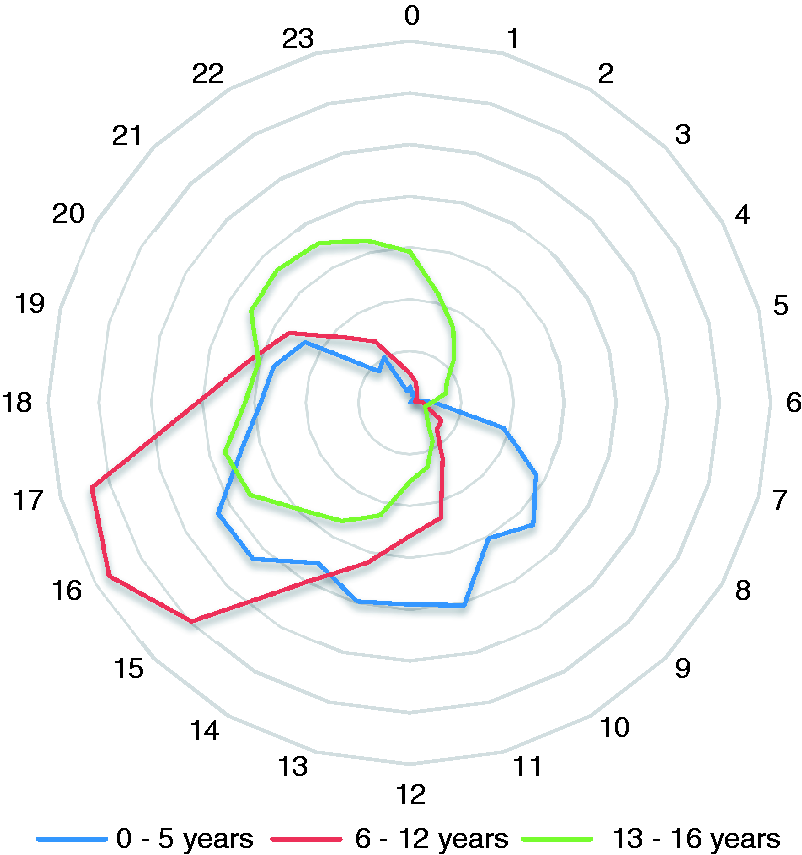
YMF by hour by age group. Source: Statistics derived from raw data collected from FRNSW and the NSWRFS.
A statistically significant measure of association was identified between the variables age group and type of property (χ2 (12, N = 18,815) = 2749.77, p < .001). The effect size (Cramer’s V = .27) reveals that 7.3% of variance in type of property can be attributed to variance in age.
A statistically significant relationship was also identified between the variables age group and type of owner (χ2 (14, N = 18,454) = 1136.03, p < .001). However, the effect size (Cramer’s V = .18) indicates that only 3.2% of variance in type of owner can be attributed to variance in age. Nevertheless, the association between variables suggests that both type of property and type of owner differ by age. This proposition is supported by RAT, which predicts that each age group would commit the majority of YMF in environments where they engage in unstructured time, and CPT, which predicts that YMF will occur within the awareness spaces of individuals.
Table 1 reveals that the 0–5-year group committed 87.4% of their fires on residential property, indicating that opportunity to commit YMF is more likely to occur in the home, a location where this age group engages in unstructured activities. The home also represents a major node (Brantingham & Brantingham, 2008) and given the unlikelihood that many other nodes or paths of activity will exist at this age, awareness spaces of 0–5-year-olds are likely to be concentrated around the home. The tendency for 0–5-year-olds to commit YMF in the home may also explain the disproportionate number of fires lit by this age group on private (62.7%), state government (19.4%), and DHHCS (8.5%) property, as displayed in Table 2. As a youth matures, less of their unstructured time is spent inside the home, and more outside of, or away from the home. As routine activities take 6–12-year-olds outside, they are more likely to develop multiple nodes and paths of activity, expanding their awareness spaces. This may explain the results displayed in Tables 1 and 2, where 6–12-year-olds were found to light more fires on public property (65.6%) rather than residential property (19.0%), owned by the local government (53.7%) rather than private owners (23.5%). Findings reveal that 13–16-year-olds are even more likely to commit YMF on public property (71.1%) than residential property (11.3%), owned by the local government (55.3%) rather than private owners (24.6%). These findings, presented in Tables 1 and 2, suggest that as adolescents’ routine activities take them further from the home, opportunities to commit YMF are generated in public areas encompassed by their expanded awareness spaces.
To determine if the temporal opportunities to commit YMF in NSW differ by age, a temporal analysis was performed.
Figure 1 reveals that YMF for all age groups peaks during the winter/spring transition, with lower rates occurring across the summer months. RAT and CPT may provide some insight into these temporal patterns. February marks the onset of the school year. During this time, youths experience a change in their routine activities, attending new classrooms and different extracurricular or leisure activities regulated by altered timetables. This newly developed activity space means a youth’s awareness space may encompass new territory. It may be presumed that youths are thus less attuned to opportunities to commit YMF during this time. As embedded routine activities increase environmental familiarity over time, opportunities to commit YMF are more likely to evolve. Lower rates during the winter months may similarly represent a change in routine activities, where mid-winter daylight hours and weather conditions influence the routine activities of youths. These conditions are more likely to influence the opportunity for 6–16-year-olds to commit YMF, where the older the youth the more likely they are to commit YMF outside. As the weather warms and daylight hours increase in August and September, the awareness spaces of youths once again expand, as does their environmental familiarity, increasing opportunities to commit YMF. Finally, the decline observed in October, followed by relatively stable low rates observed in November, December, and January may be explained by both RAT and CPT. Under CPT, these patterns may emerge as a result of holiday periods which alter routine activities and environmental familiarity. Under RAT, heightened guardian vigilance during the bushfire season may be indicative of increased capable guardianship and thus, fewer opportunities to commit YMF.
RAT and CPT thus predict that YMF is more likely to occur when unstructured, unsupervised time within one’s awareness space presents greater opportunities to light fires. The trends displayed in Figure 2 similarly support this proposition, where all age groups were more likely to commit YMF on weekends than during the week.
This premise is further supported at the hourly level. Temporal analysis, as displayed in Figure 3, shows three distinct temporal hotspots, revealing patterns unique to each age group.
Temporal analysis of YMF committed by the 0–5-year group, as shown in Figure 3, indicates a focused temporal hotspot between 1100 and 1600 h. This pattern supports that expected under RAT and CPT, suggesting young children are more likely to commit YMF when unstructured time is available within a familiar environment. Disparately, YMF committed by the 6–12-year group is acutely temporally clustered between 1500 and 1700 h with few events occurring outside this timeframe. This evidence reflects that expected under RAT and CPT, indicating older children are more likely to engage in YMF when after-school hours present opportunities to engage in unstructured time within familiar environments. Another distinct pattern emerges when YMF committed by the 13–16-year group is analysed. Figure 3 reveals a focused hotspot between 1600 and 2400 h. Again, this temporal pattern mirrors that predicted by RAT and CPT where adolescents have more unstructured time later in the day, which is likely to be experienced within an awareness space which presents opportunities for YMF.
Clearly, situational and temporal findings pertaining to opportunity are consistent with those expected under RAT and CPT. Here, children are more likely to light fires in the home during the day, older children are more likely to light fires outside of the home during the afternoon, and adolescents are more likely to light fires away from the home during the evening. This evidence supports the notion that youths carry out YMF in familiar environments where unstructured routine activities facilitate opportunity.
A suitable target
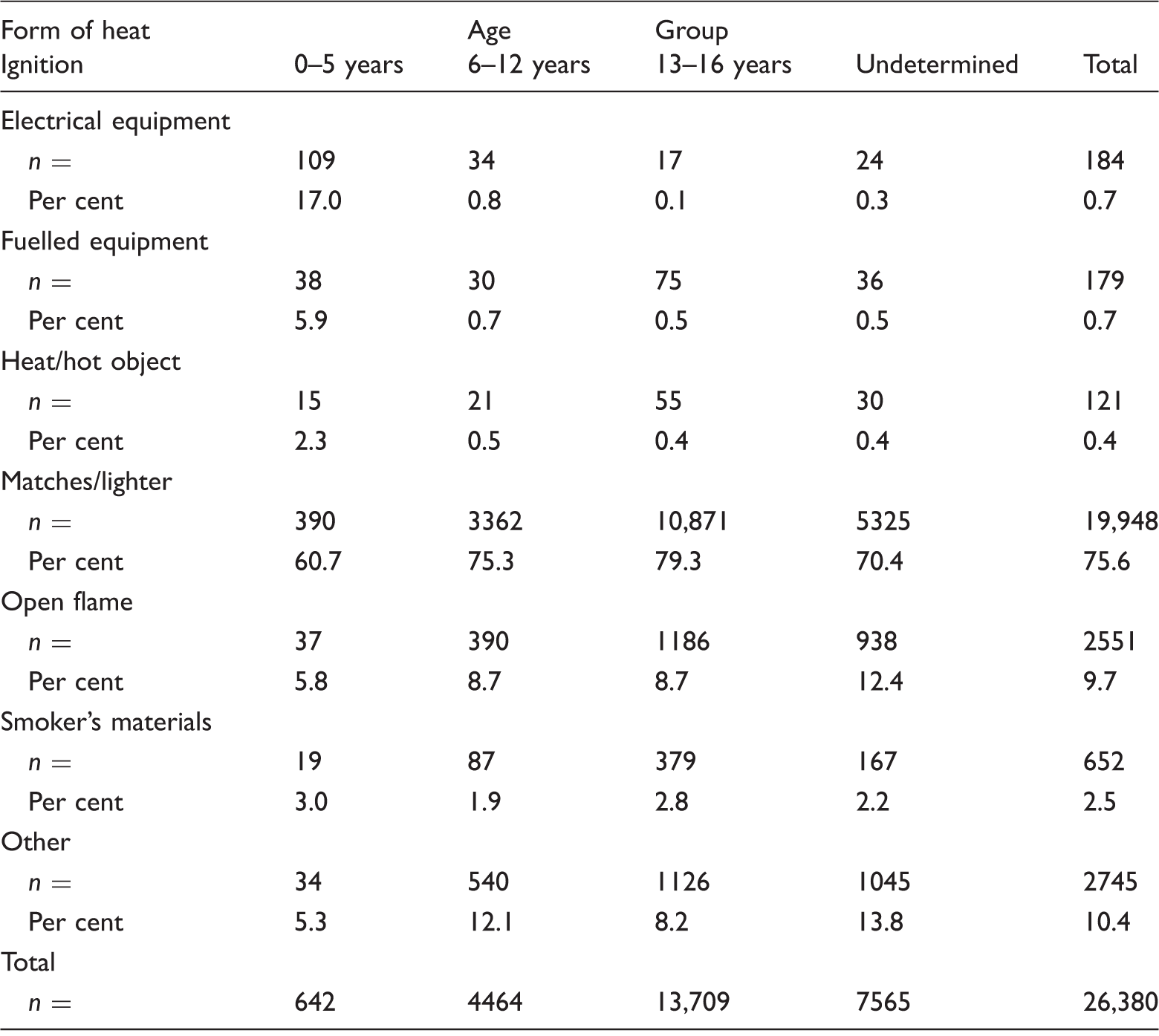
YMF age group by form of heat ignition.
Source: Statistics derived from raw data collected from FRNSW and NSWRFS.
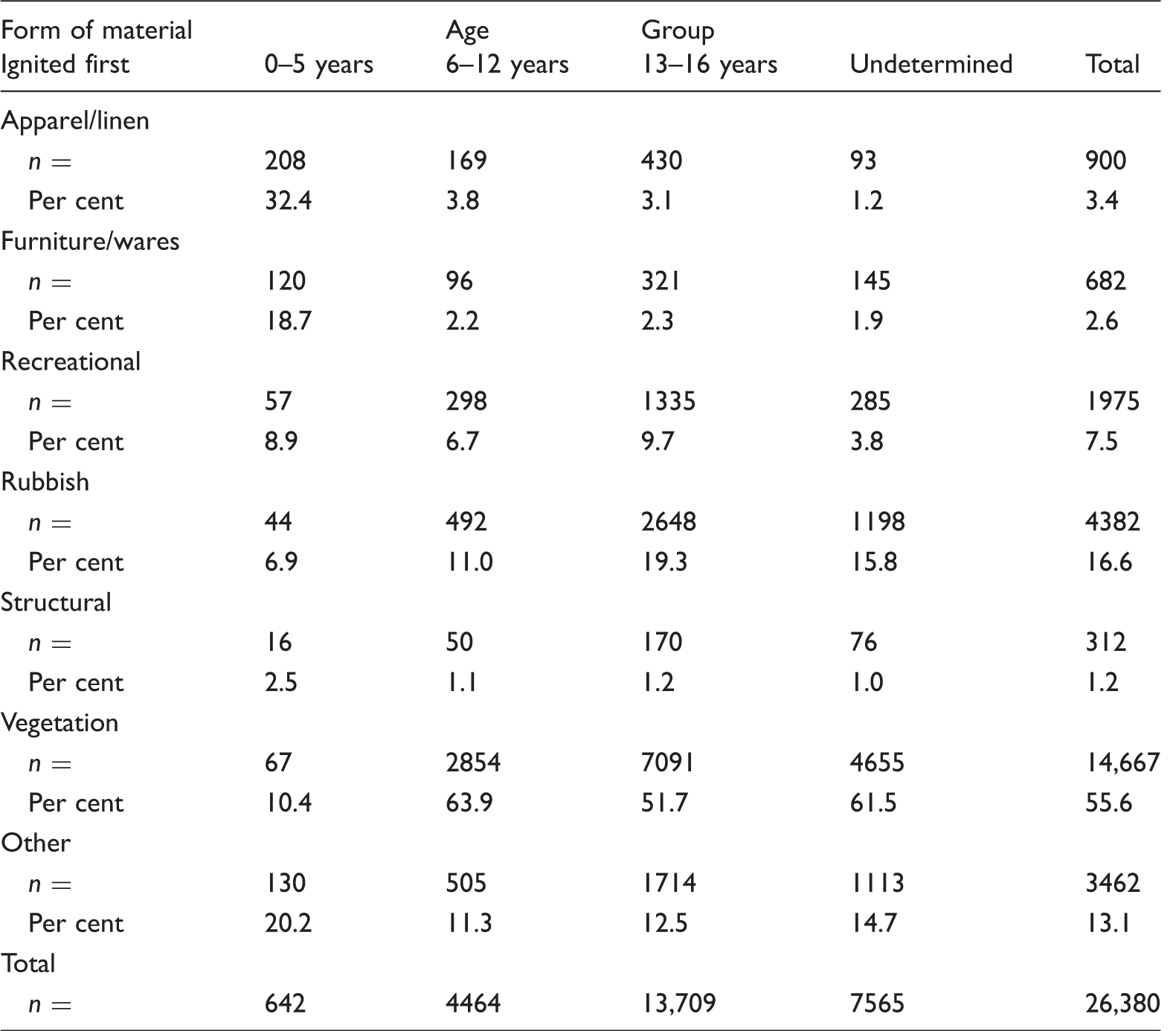
YMF age group × form of material ignited first.
Source: Statistics derived from raw data collected from FRNSW and NSWRFS.
Statistically significant measures of association were identified between the variables age group and form of heat ignition (χ2 (12, N = 18,815) = 2443.33, p < .001). The measure of effect (Cramer’s V = .26) suggests 6.8% of variance in form of heat ignition can be attributed to variance in age group.
Statistically significant associations were also identified between age group and form of material ignited first (χ2 (12, N = 18,815) = 2391.56, p < .001). The effect size (Cramer’s V = .25) suggests 6.3% of variance in material ignited first can be attributed to variance in age group. The statistical relationships identified support the notion that incendiary devices and combustible materials differ by age. RAT predicts that each age group would employ incendiary devices (form of heat ignition) and combustible materials (form of material ignited first) naturally affiliated with environments encountered during routine activities. CPT predicts that these targets exist within the awareness spaces of individuals, and that these awareness spaces will differ by age.
Findings depicted in Tables 3 and 4 reveal that the 0–5-year group lit the majority (60.7%) of their fires using matches or a lighter, and were more likely to set alight apparel and linen (32.4%) or furniture and wares (18.7%) than any other form of material. This age group was diverse, accounting for the majority of all fires ignited with electrical equipment (59.2%) and a high proportion of those ignited with fuelled equipment (21.2%). Zero to five-year-olds were also more likely than the other groups to ignite structural materials (2.5%) and materials not otherwise classified (20.2%). Findings displayed in Tables 3 and 4 demonstrate that the 6–12-year group lit the majority of their fires using matches or a lighter (75.3%) against vegetation material (63.9%). This age group was more likely than the others to use other forms of incendiary devices such as fireworks (12.1%) and was equally as likely as the 13–16-year group to use an open flame (8.7%). Finally, the 13–16-year group set the majority of their fires using matches or a lighter (79.3%), against vegetation material (51.7%). However, this age group was the least diverse. When compared to other age groups, they were most likely to use matches or a lighter (79.3%) and equally as likely as the 6–12-year group to use an open flame (8.7%).
These findings indicate that youths commit YMF with resources naturally affiliated with their awareness spaces and the environments with which they are most familiar. Matches or lighters are common household items and as a result all age groups are more likely to use these than any other form of heat ignition. This evidence supports the notion that YMF is correlated with access to incendiary devices that are readily available within awareness spaces. Furthermore, the everyday use of synthetic fibres in furnishings, homewares, clothing, and apparel means that items encountered during routine activities act as suitable targets for YMF committed within the home. Vegetation offers the most accessible, available, and combustible form of material encountered during a youth’s routine activities when YMF is committed outside of or away from the home. However, deeper analysis of these findings reveals incongruities with existing literature. Some research has found that the older the youth, the more diverse or complex their suitable targets become. Current findings conversely indicate that the youngest group employs the greatest diversity in their choice of incendiary devices and combustible material. Such results suggest that offender capability is not the main determinant of target variability. All age groups commit YMF within their awareness spaces. The youngest age group is more likely to commit YMF in the home as this encompasses their major nodes and paths. The home provides greater access to a variety of combustible materials and incendiary devices. As older children and adolescents move outside of and away from the home to commit YMF, incendiary devices are confined to materials which can be transported, such as matches or lighters, and combustible materials which are available within outdoor environments, such as vegetation and rubbish. These findings suggest a youth’s choice of suitable target will be governed by the opportunities produced by routine activities and the resources available within their awareness spaces. This notion further strengthens the applicability of RAT and CPT to explain YMF.
Capable guardianship
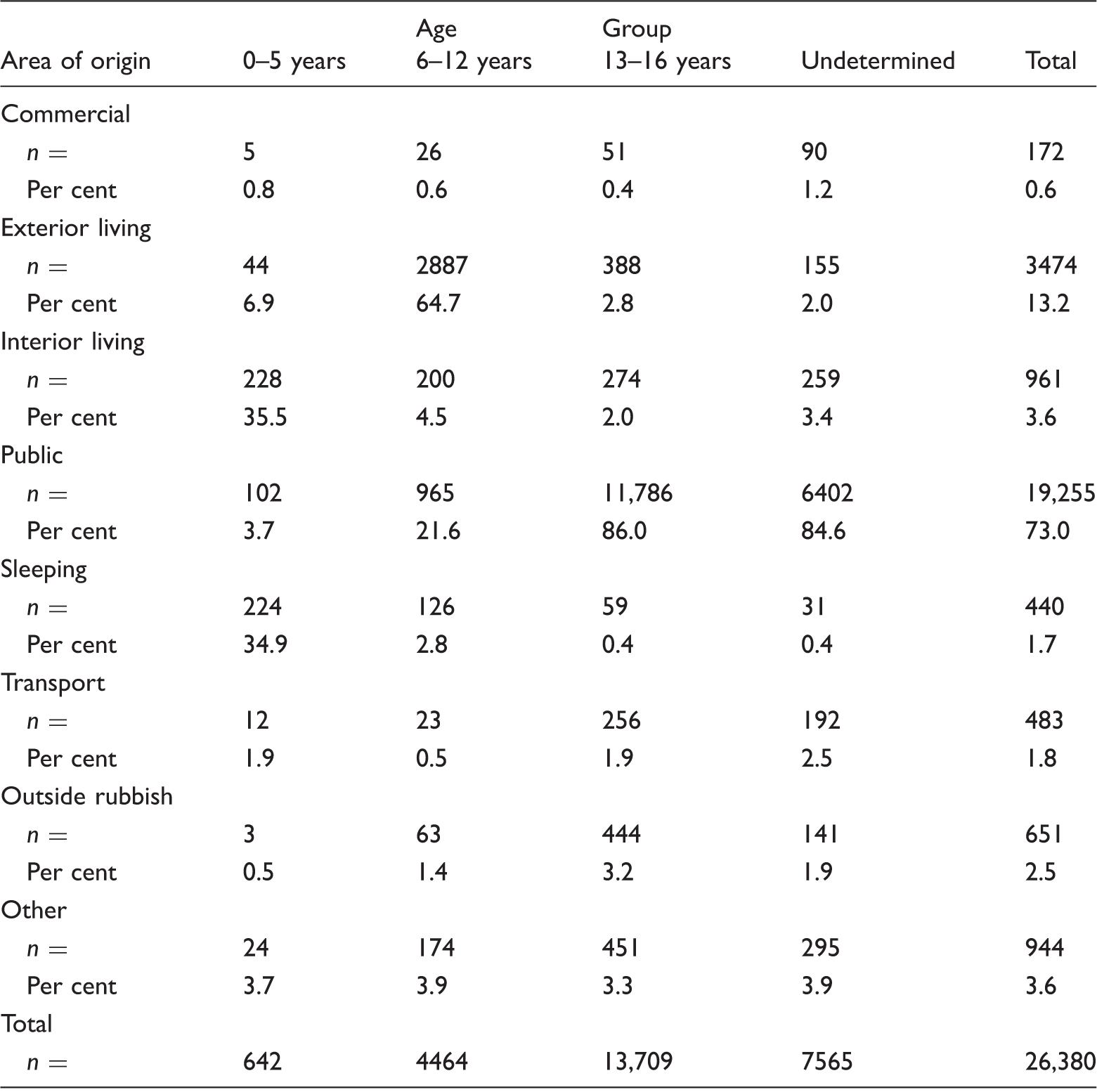
YMF age group × area of origin.
Source: Statistics derived from raw data collected from FRNSW and NSWRFS.
YMF age group × alarm source.
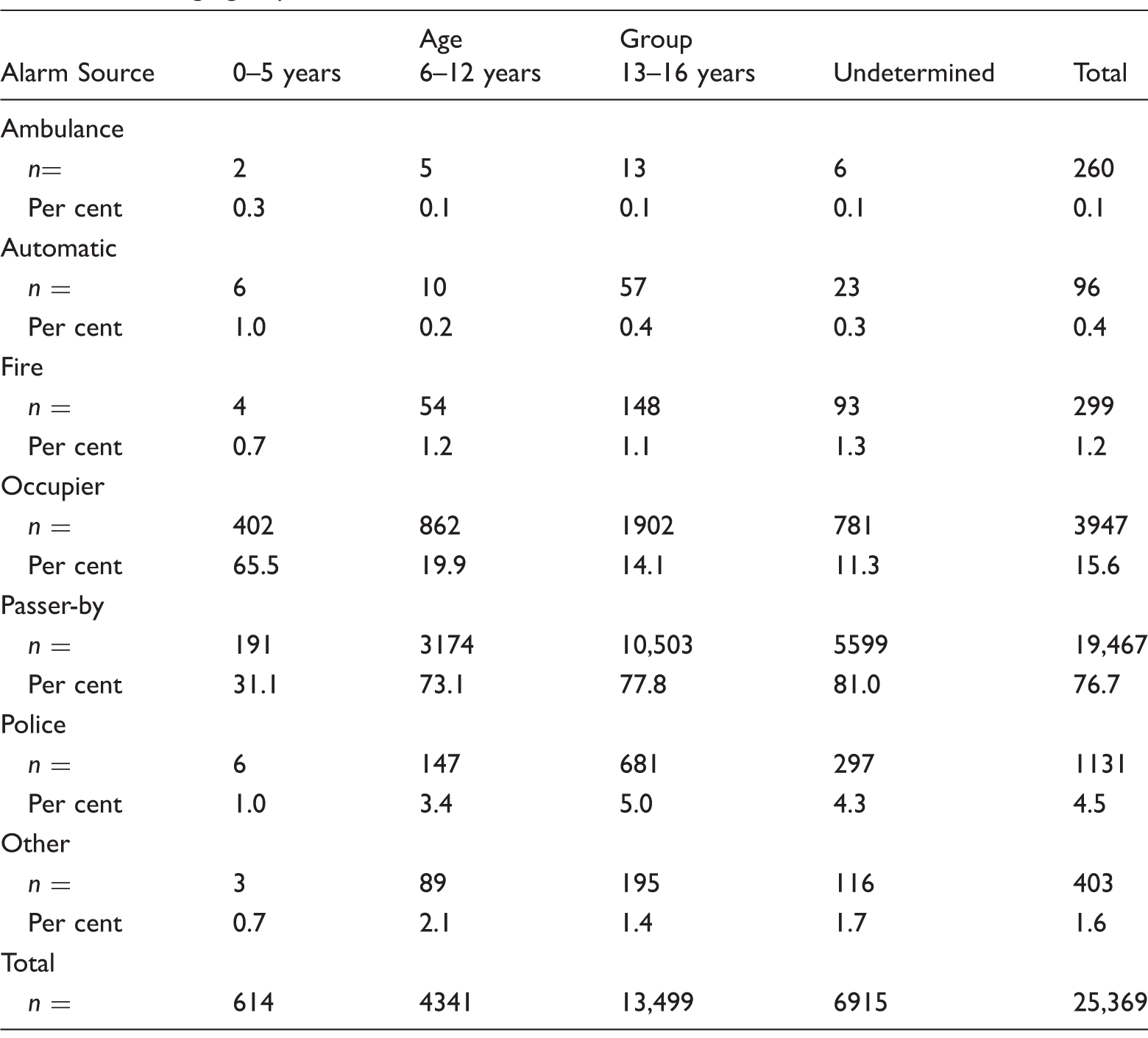
Source: FIRS did not contain the variable alarm source. Statistics derived from raw data collected from FRNSW only.
Chi square tests reveal statistically significant measures of association between age group and area of origin (χ2 (14, N = 18,815) = 14973.63, p < .001). The measure of effect (Cramer’s V = .63) suggests 40.0% of variance in area of origin can be attributed to variance in age group.
Measures of association also reveal a statistically significant association between age group and alarm source (χ2 (12, N = 18,815) = 1164.71, p < .001). The effect size (Cramer’s V = .18) is considerably smaller however, suggesting only 3.2% of variance in alarm source can be attributed to variance in age. Nonetheless, these findings possess explanatory power when considered within the frameworks of RAT and CPT. These theories predict that YMF for each age group would occur within different awareness spaces, where opportunity is facilitated by unstructured routine activities at a time when capable guardianship is absent.
Findings displayed in Table 5 reveal that 0–5-year-olds committed the majority of YMF in interior living areas (35.5%) and sleeping areas (34.9%), accounting for the majority (50.9%) of all sleeping area fires. Zero to five-year-olds are likely to have nodes limited to bedrooms and living areas, concentrating their movement patterns within the home. When committed in the home, RAT suggests the occupier acts as the offender–handler, place–manager, and target–guardian, protecting against YMF. Not surprisingly then, Table 6 indicates a significant percentage (31.1%) of fires lit by 0–5-year-olds were called in by a passer-by, implying occupiers were absent. This evidence supports RAT’s prediction that occupiers, and thus capable guardians were not present. However, in line with previous studies, fires lit by 0–5-year-olds in this sample were called in by the occupier of the property 65.5% of the time. This suggests parents were usually home when YMF took place within this age group. A possible explanation is that despite being present in the home in these instances, guardianship was either not in close enough proximity, or not possessing the capability, to prevent YMF. Impaired capability may manifest from a lack of intimacy between handler and offender, failure of the handler to display disapproval of the behaviour, preoccupation, sleep, and/or substance abuse. Where presence and proximity of capable guardianship is required under RAT, an absence of one of these components can create conditions conducive to YMF.
Further, findings displayed in Table 5 reveal that 6–12-year-olds committed 64.7% of their fires in exterior living areas and 21.6% in public areas. In fact, this age group was responsible for the vast majority (83.1%) of all exterior living area fires. This evidence supports the theory that, as nodes and paths extend into environments outside of the home, 6–12-year-olds have wider awareness spaces. The majority of fires attributed to 6–12-year-olds (73.1%) were called in by a passer-by who had observed the aftermath of YMF, usually fire or smoke. This evidence, shown in Table 6, supports RAT’s proposition that an absence of guardianship, in presence, proximity, or capability, increases the likelihood of YMF.
Further empirical support for RAT and CPT is provided at the 13–16-year level. Tables 5 and 6 reveal that this age group lit the majority (86.0%) of their fires in public places, with most (77.8%) called in by a passer-by. This validates the prediction that 13–16-year-olds are more likely to possess larger awareness spaces, frequenting nodes other than the home, where targets are suitable and capable guardianship is minimal. Further, automatic fire alarms, the police, ambulance, and fire services called in fires lit by 13–16-year-olds more so than any other age group. This indicates that, without the presence and proximity of capable guardianship to monitor the adolescent, the place, and the target, fires attributed to this age group are left to be called in by fire detection systems or emergency services.
The findings derived from the YMF population of NSW support those predicted under both RAT and CPT. That is, YMF occurs most often within the awareness space of the individual when capable guardianship is absent. However, as identified at the 0–5-year level, the mere presence of a guardian is not sufficient to deter YMF. Instead, the prevention of YMF requires guardianship which is present, proximate, and capable so that behaviour can be monitored directly, targets can be protected, and the place can be managed.
Conclusion
Empirical findings pertaining to YMF within NSW appear to align with the theoretical propositions underpinning RAT and CPT. Where YMF is deemed a product of natural childhood inquisitiveness and adolescent experimentation, offender motivation will exist and will likely vary with age. This means that the presence of YMF is dictated by a lack of capable guardianship, access to suitable targets, and opportunity generated by routine activities. In addition, the spatiotemporal patterns of YMF are likely to be governed by the awareness spaces of youths. Such findings must however be considered with regard to the limitations of this research. First, the applicability of RAT and CPT was tested through the analysis of intact groups within available data. Second, the data did not provide for an analysis of motivational differences between age groups. Future research which collects self-report data from community samples is recommended to empirically discern patterns of YMF and motivational differentiation by age.
Despite the need to conduct more substantial inquiry into YMF within an Australian context, the empirical findings presented within this study are of importance. Birks, Townsley, and Stewart (2012) found that both RAT and CPT contribute to a generative explanation of crime. This means that the mechanisms underpinning these theories can be employed to explain or predict crime computationally, and thus, can be manipulated to achieve targeted crime prevention. By employing RAT and CPT to enrich our understanding of the mechanisms operating in YMF, prevention efforts may be enhanced.
Although this research does not suggest that the convergence of RAT’s three elements always generate YMF, it does imply that without such convergence, YMF is not possible. RAT thus indicates that prevention of YMF requires the elimination of just one of these elements. This premise implies that environmental criminology, specifically situational crime prevention, has the potential to provide a framework through which YMF prevention initiatives can be designed, implemented, and evaluated. CPT posits that YMF is spatiotemporally clustered, occurring within an offender’s awareness space. Such findings highlight the importance of targeted prevention efforts and may provide guidance to authorities investigating fires set by an unknown offender. Finally, the application of RAT and CPT to YMF means that the mechanisms which underpin these theories can be used to conduct generative or predictive modelling, enhancing both understanding and prevention of YMF. Future directions for research should involve further investigation into YMF from a criminological perspective, a more detailed analysis of temporal patterns involved, and evaluation of YMF prevention programs to determine their effectiveness in mitigating or eliminating the mechanisms operative in YMF.
Footnotes
Acknowledgements
The authors would like to acknowledge Fire and Rescue New South Wales and the New South Wales Rural Fire Service for providing access to data for this research.
Declaration of conflicting interests
The author(s) declared no potential conflicts of interest with respect to the research, authorship, and/or publication of this article.
Funding
The author(s) received no financial support for the research, authorship, and/or publication of this article.