







Abstract
The 79-day Umbrella Movement in 2014 is the largest civil disobedience movement in Hong Kong’s history. Based on a sample of 186 protesters and 503 students, the present paper aims to examine the protesters’ tolerance of triad activities; their perceptions of the police, of triad protection of occupiers, and of triad weiwen (maintenance of stability for the government); and the relationship between police legitimacy and tolerance of triad activities. We found that attitudes toward democracy, toward the importance of national identities, and toward triad involvement, and negative perceptions of the police were all significant predictors of an individual’s support for the Movement. We further found that the predictors we had identified earlier were able to significantly differentiate protesters from student opponents. When compared with students, protesters had lower ratings for police procedural justice and were more tolerant of triad legal behavior and of protecting protesters, but less tolerant of triad illegal behaviors and weiwen. Implications of Hong Kong’s self-help movement are discussed.
Keywords
Introduction
The Occupy Central with Love and Peace or Umbrella Movement (UM) started with people’s fight for universal suffrage in Hong Kong in August 2014. A demonstration was held in the government headquarters and the police use of 87 canisters of tear gas on unarmed protesters drew even more people to the site armed with umbrellas and protective gear to support those already there. The protesters later occupied three sites in different parts of the city. The 79-day UM came into the spotlight for discretionary law enforcement and suspicion of police-triad (Chinese mafia) collusion to clear the occupied sites. Mongkok, one of the occupied sites, has a high level of triad-protected activities, such as mahjong parlors, entertainment clubs, and drug dealing. There were constant conflicts between the police, occupiers, and government supporters who tried to reoccupy the sites. Triads were allegedly involved in helping the police: “‘black cops’…‘police are working with triads’” (Staff Reporters, 2014, October 3). On some occasions, groups of suspected triads marched into the sites, and damaged the tents and supplies. Fistfights broke out between the triads and occupiers. Hui (2015) observed that triad involvement inadvertently helped sustain the protesters’ determination after the initial adrenaline rush died down. Every episode of violence against protesters, whether initiated by the police or by triads, “backfired” and drew more support from the public (p. 114). It was also reported that individual triads were involved in helping the occupiers (Lo et al., 2015).
The police withdrew not long after firing tear gas, and the government left the protesters largely undisturbed. As predicted by self-help literature, the decline of state control led to rise in self-help. Black and Baumgarner (1987: 35) were confident that “informal social control exercised by citizens themselves virtually always maintains order. Even a sudden breakdown of police control, then, may give rise to self-help without large-scale disorder.” Black and Baumgarner’s idea of self-help is mostly about taking justice into one’s own hands, but the self-help in UM took a very different approach. Based on the principles of “love and peace,” protesters observed orderliness and voluntariness at all sites. People from all walks of life looked out for one another according to their ability: medical professionals organized first-aid teams, carpenters constructed barricades and infrastructure (e.g., desks and chairs for the study corner), teachers tutoring students, etc. People donated and volunteers distributed meals, fruits, snacks, water, cooling packs, face masks, tents, and raincoats. They cleaned up the streets, recycled garbage, and cleaned public toilets (Dissanayake, 2014). Protesters formed human chains to protect students from harm during clashes with the police and triads. Marshal teams were formed to maintain social order. Marshals restrained violent intruders and handed them over to the police (Commercial Radio, 2014).
It is important to note that such large-scale citizen-mobilized self-help was virtually unheard of prior to the social unrest. During peacetime, Hongkongers deferred many of the tasks, such as maintenance of public order and keeping the streets clean, to the government. Yet as suggested in the self-help literature (Black & Baumgarner, 1987; Mileti et al., 1975), the decline of state control prompted protesters to act in ways they normally would not have done: to abstain from their dependence on the government and rely upon themselves.
Recently, a number of research papers have been published on UM. The majority of them are related to media, legal and political studies. Some of them investigated the role of social, online, or alternative media in the acquisition of political news and promotion of radicalism in UM (Lee et al., 2015; Lee, 2015, 2018). Some examined whether UM undermined the rule of law (Chen, 2016) and whether UM offered an alternative legal normativity to consider civil rights (Erni, 2015). Some reviewed the discourses on realpolitik of civil disobedience (Hui & Lau, 2015) and assessed the legitimacy-building and the regime-transformative power of UM (Chen, 2016). Some attempted to identify the antecedents, contingencies, and spaces of the spontaneous occupation in UM (Cheng & Chan, 2017) and searched for the causes of failure of democratization through the lens of UM (Ortmann, 2016). A minority of the papers investigated the role and experience of the activist scholars (Kong, 2019), the participation of the Protestant community in UM (Chan, 2015), and the use of thugs-for-hire to clear the Occupy sites (Ong, 2018; Varese & Wong, 2018) (see Figure 1). However, no academic research has been published on the protesters’ views on the police and triads. It is expected that the present paper can contribute to the existing UM and self-help literature from the protesters’ perspective.
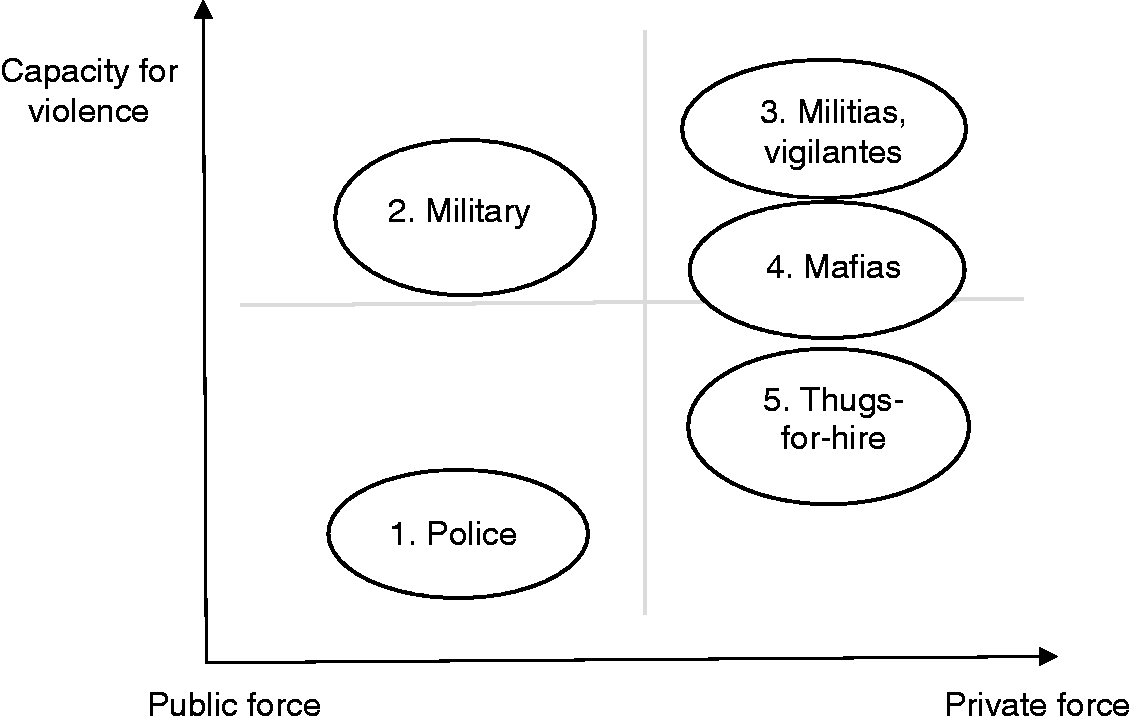
Public/private force versus capacity for violence (Ong, 2018).
Against this backdrop, we attempt to explore several research questions: How do people of different political stands view police legitimacy and the triads’ participation in UM? In particular, do they tolerate triads who commit crimes in attacking and protecting the occupiers? What are the unique self-help elements in UM? The present study aims to model the predictors of an individual’s support for UM. It also aims to compare the differences between protesters, and student UM supporters and opponents on those predictors. We will address the research questions from the perspectives of self-help, triad activities and police legitimacy.
Literature review
Black (1983) proposed that both law and self-help are forms of social control. As citizens grew to defer increasingly to the state regarding dispute settlement and the maintenance of social order, the theory of self-help predicts that citizens will increasingly withdraw from any role in social control. Instead of intervening, citizens are conditioned to call the police immediately when they witness an assault occurring. For incidents where the state fails to provide order and control, citizens are compelled to “draw upon their own resources” and take personal responsibility for their safety (Black & Baumgartner, 1987, p. 35). State legal enforcement and self-help are therefore inversely related, and the theory predicts that a decline in state policing would lead to an increase in citizen-mobilized self-help (Black, 1976). A similar prediction was suggested in bystander intervention studies, as they showed that people were more likely to help a victim in distress when their assistance is the only apparent solution (Darley & Latené, 1968; Fischer et al., 2011).
The inverse relationship between state control and self-help could be seen in the aftermath of natural disasters. Mileti et al. (1975) noted that emergent groups began to form to “get the job done” when state provisions (e.g., shelter, food, order maintenance, etc.) were inadequate to meet community demands. At least three types of such emergent groups have been documented that took over to meet the demands generated by disasters: damage assessment groups, operations groups, and policy groups. Anderson (1999) pointed out that in drug- and violence-ridden parts of Philadelphia, poor Black inner-city youths uphold the code of the street as a form of self-help. Alienation from mainstream society has substantially eroded these youths’ trust in the police (predominately White) and the judicial system. As the police were not responsive to their needs, inner-city residents were held responsible for defending themselves in a city ridden with violence and drug trading. The code of the street therefore emerges as a replacement for formal laws and acts as a set of informal rules governing interpersonal behavior (Anderson, 1999).
Triad societies are commonly known as criminal organizations that are involved in a variety of illegal activities such as prostitution, gambling, loan sharking, drug trafficking, and financial crime (Broadhurst & Lee, 2009; Lo, 2010; Lo & Kwok, 2017). Most triad societies were originally ethnic, and mutual-help groups existing in working class neighborhoods that tried to protect their own interest for the sake of survival. For example, laborers working on piers joined together to help each other in seeking jobs and welfare (Chu, 2000; Lo & Kwok, 2013). In the Second World War, while some triads worked for the Japanese during their occupation of Hong Kong, many triads organized self-help groups to fight against the Japanese (Morgan, 1960). After the Tiananmen Incident in 1989, triads were involved in the Operation Yellow Bird to help democracy-fighters escape from China (Lo, 2010).
Black and Baumgartner (1987) observed that the degree to which self-help is practiced varies according to social context. Self-help was the most prevalent in primitive societies and has substantially declined with modernization and the expansion of law. In modern states, the police are granted the exclusive legal authority to use force to maintain public order in times of conflict. Under what circumstances would citizens decide not to rely on the state for protection and social control? Tyler’s model of procedural fairness argues that perceptions of police legitimacy are primarily based on evaluations of fairness in which the police exercise power and authority in a fair manner (Jiang et al., 2012; Sunshine & Taylor, 2003; Tyler, 1990; Tyler & Huo, 2002). Procedural justice posits that people do not solely focus on the favorability of outcomes they receive from third parties. Instead, people are equally (if not more) concerned with aspects of their experience when they encounter legal authorities, such as fairness, neutrality, politeness, respect for citizens’ rights, etc. (Tyler, 1990). Police legitimacy is the recognition by citizens that the police have the right to exercise power and request compliance. Citizens are more likely to comply with the law and cooperate with legal authorities when they believe that legal authorities are trustworthy and procedures are administered in a fair and just manner—a finding reached in both developed nations (e.g., Bradford, 2014; Telep & Weisburd, 2016; Tyler, 1990) and developing nations with relatively high crime rates (e.g., Kochel et al., 2013). Furthermore, Jackson et al. (2013: 480) suggested that positive judgments of legitimacy “crowd out” attitudes of private use of violence. When citizens recognize that the police have the power and authority to monopolize the use of force and request compliance, they are also more likely to believe that it is wrong to use violence outside formal state channels.
Conversely, perceptions of untrustworthiness and unjust procedures could lead to a decline in the perception of police legitimacy (Gau & Brunson, 2010). Jackson et al. (2013) found that perception of procedural justice positively predicted perceptions of police legitimacy, which in turn was negatively correlated with acceptance of the use of private violence. Of particular relevance to the present study is that police malpractice appeared to have injured citizens’ perceptions of police legitimacy, which then led to greater acceptance of the use of protests and violence to achieve social change. Police misconduct might even promote crime as it lowers a neighborhood’s collective efficacy to fight crime (Kochel, 2013).
Once police legitimacy atrophies, another possible outcome is greater support for alternative sources for dispute settlement and public order maintenance. Ziegenhagen and Brosnan (1991) found that New York subway riders who were concerned about personal security were more willing to support both state (New York City Transit Authority Police) policing and non-state policing (Guardian Angels, a citizen anti-crime organization). It appears, then, that subway riders who were concerned with personal safety were less supportive of the exclusive provision of policing service by the state; they were in fact willing to draw upon multiple forms of social control to stay safe. Furthermore, subway riders who indicated a willingness to utilize self-help measures were also more likely to support both forms of policing. Tankebe (2009) also found an inverse relationship between Ghanians’ assessments of police procedural fairness and support for vigilante self-help; police procedural injustice undermined public trust in the police, thereby leading to an increase in support for vigilantism.
The study
Objectives
The present study aims to examine the protesters’ tolerance of triad activities; their perceptions of the police, of triad protection of occupiers, and of triad weiwen (maintenance of stability for the government); and the relationship between political legitimacy and tolerance of triad activities, so as to add a new dimension of self-help to the existing literature. We achieved this objective by using a student sample (UM supporters and opponents) as a baseline for comparison. The following hypotheses were proposed based on the research questions: H1: Tolerance of triad activities will be positively associated with support for UM. H2: Acceptance of triad protection by occupiers will be positively associated with support for UM. H3: Acceptance of triad weiwen will be inversely associated with support for UM. H4: Positive perceptions of the police will be inversely associated with support for UM. H5: Protesters will indicate a more negative perception of the police than UM opponents. H6: Protesters will indicate higher tolerance for triad activities than UM opponents. H7: Protesters will indicate higher tolerance for triad protection of occupiers than UM opponents. H8: Protesters will indicate lower tolerance for triad participation in weiwen than UM opponents.
Procedures
After ethics approval was sought from City University of Hong Kong, two samples of respondents: university students and protesters, were recruited by the purposive sampling method. The students were recruited because students have been involved in UM in different ways. After informed consent was obtained, they were invited to fill in a self-administered questionnaire. For the first group of participants, researchers recruited students in the campus of two universities in late October 2014. Self-administered questionnaires were randomly distributed to the students. For those who gave consent to participate in the study, they were allowed to return the questionnaires to the researchers in about 30 minutes. For the second group of participants, researchers visited the Occupy sites in Admiralty and in Mongkok to recruit participants in early November 2014. Researchers took stacks of questionnaires and randomly approached protesters in the sites. For those who gave consent, the researchers went back to collect the self-administered questionnaires 30 minutes later. No monetary compensation was given to students and protesters. Researchers reassured participants that no identifying information was required.
Participants
There were two groups of participants (N = 689): students (n = 503) and protesters (n = 186). All students were above 18 years of age (M = 19.18, standard deviation (SD) = 1.35) and were citizens of Hong Kong (i.e., resided in Hong Kong for at least seven years). The sample included 160 males (31.8%) and 343 females (68.2%). The protesters were above 21 years of age and were citizens of Hong Kong. They were mainly male (64.5%) and aged between 21 and 30 years (68.8%). The majority had completed associate/university degrees (79%). Most participants worked full time (77.8%) and only 10.8% self-identified as full-time students.
Materials and scale construction
In addition to the demographic data, three scales were developed to measure the participants’ tolerance of triad activities, perceptions of police, and political attitudes, as follows:
Triad tolerance
Fifteen items were initially generated by two experts in triad research (two authors of the present study) to explore Hongkongers’ acceptance/tolerance of triad activities (see Table 1 for full list of items). In addition to these 15 items, participants were asked to rate “I accept triad protection of occupiers in UM” and “I accept triads helping the government weiwen.”
Factor loadings of the triad tolerance scale.
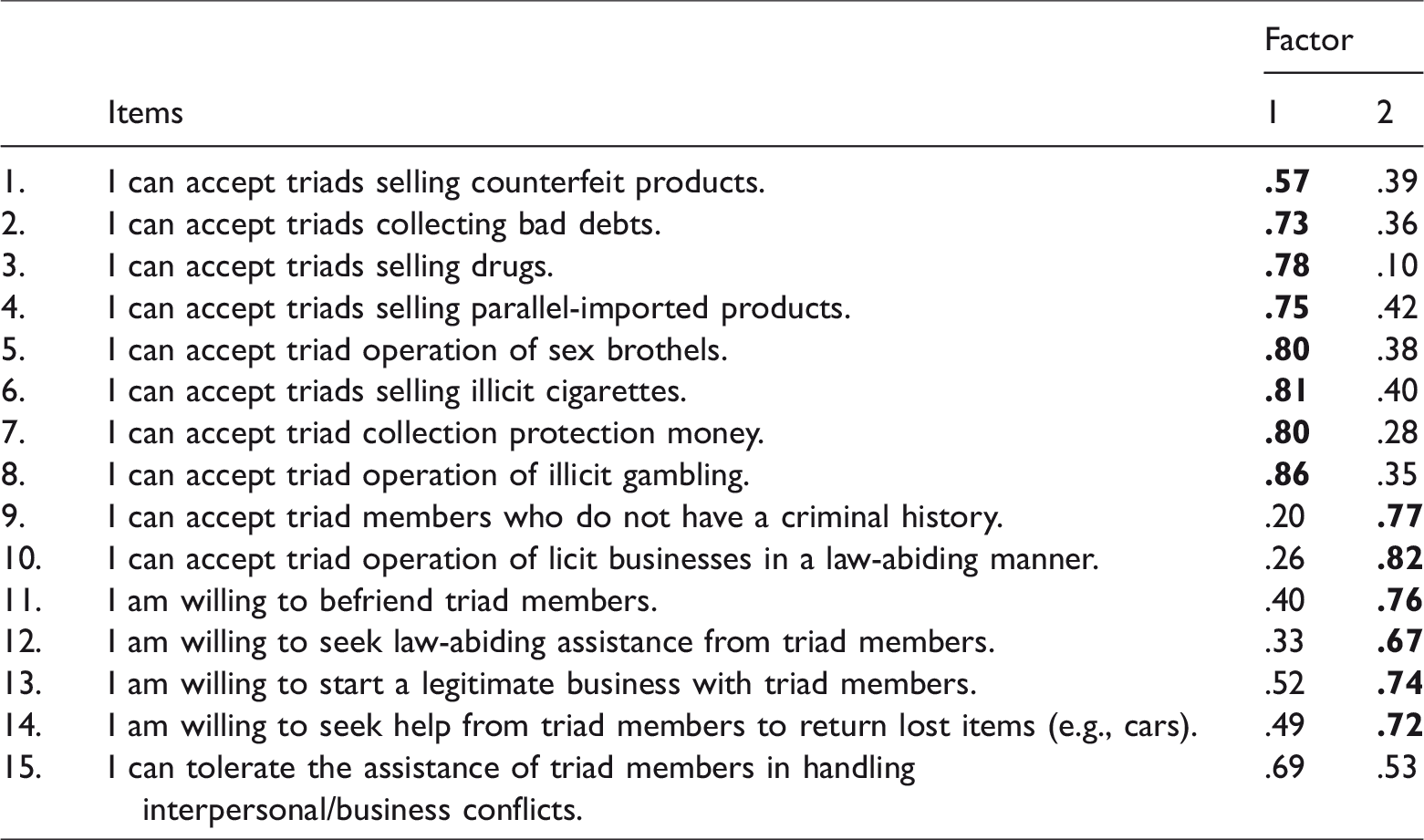
The Kaiser–Meyer–Olkin Measure of Sampling Adequacy (KMO index = .91) and Bartlett’s Test of Sphericity (p < .001) showed that the respondent data are suitable for factor analysis. We used a parallel analysis to first determine the number of factors to extract. We generated 1000 random permutations to compute average eigenvalues for the parallel analysis. Results suggested that we retain two factors because eigenvalues for the first two factors were higher in the actual data set (6.76, 2.10) than in the parallel analysis (1.37, 1.28). An exploratory factor analysis using a principal component extraction method was then conducted. The two extracted factors accounted for 59.1% of the total variance and communalities (between .35 and .75) were of moderate size for the 15 items. An oblimin rotation was conducted because we observed a moderate correlation (r = .42) between the two factors. Table 1 shows the component loadings after rotation. Item 15 was dropped because of cross-loadings. Eight items weighted heavily on factor one which was labeled “tolerance of triad illegal behavior.” Tolerance of triad illegal behavior had an eigenvalue of 6.77 and accounted for 45.1% of the total variance. Six items weighted heavily on factor two which was labeled “tolerance of triad legal behavior.” Tolerance of triad legal behavior had an eigenvalue of 2.1 and accounted for 14% of the total variance.
Perceptions of police
Eight items were adapted from the police legitimacy scale and police procedural scale in Jackson et al. (2013), and one item was generated by the researchers (item 7 in Table 2) to explore the impact of frequent violent acts during UM on perceptions of the police. The KMO Measure of Sampling Adequacy (KMO index = .90) and Bartlett’s Test of Sphericity (p < .001) showed that the respondent data are suitable for factor analysis.
Factor loadings of the perceptions of police scale.
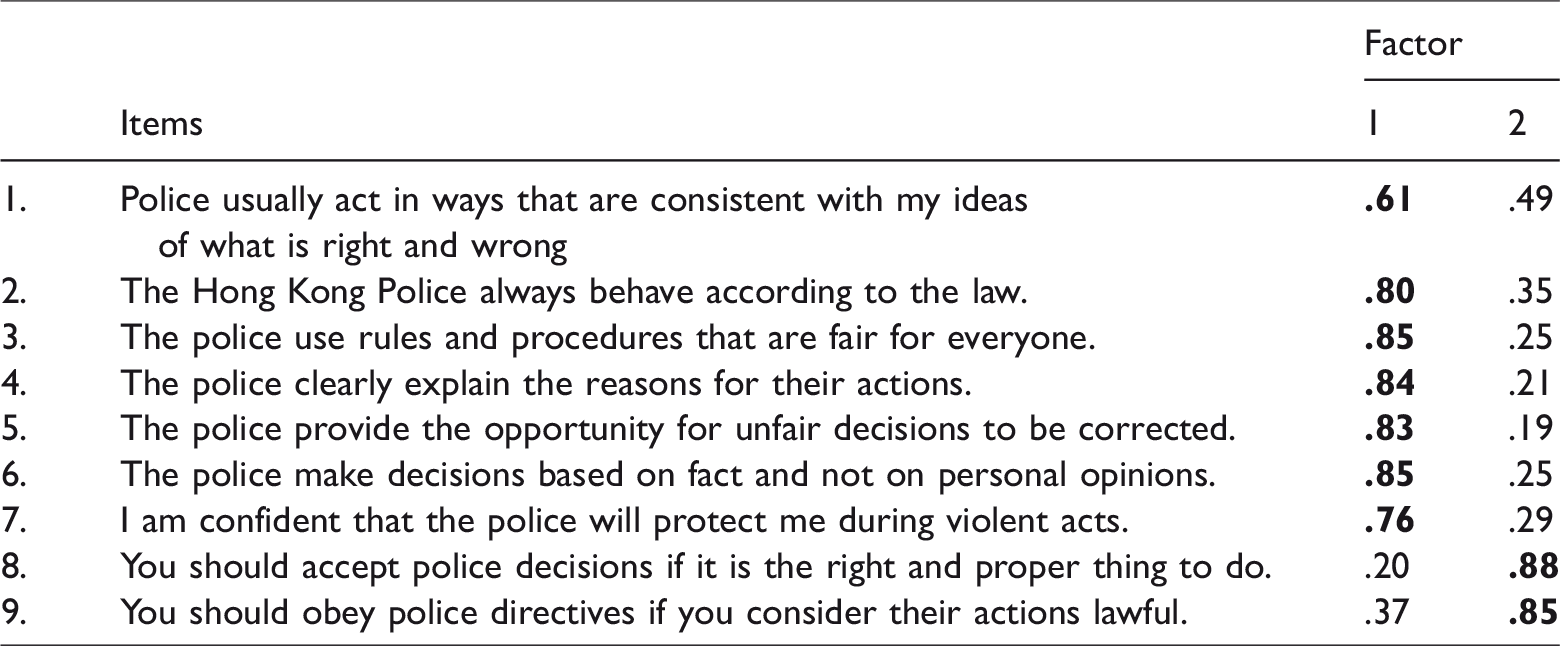
We used a parallel analysis to determine the number of factors to extract. Two factors were retained because eigenvalues for the first two factors were higher in the actual data set (4.71, 1.35) than in the parallel analysis (1.27, 1.18). Exploratory factor analysis (EFA) using a principal component extraction method was then conducted. The two extracted factors accounted for 67.31% of the total variance, and communalities were of moderate size (.46 to .78) for the 9 items. An oblimin rotation was conducted because we observed a moderate correlation (r = .33) between the two factors. Table 2 shows the component loadings after rotation. Seven items weighted heavily on factor 1, and were grouped into “perception of police procedural justice.” This scale measures the extent to which individuals find the police fair, effective, and morally aligned with themselves. Perception of police procedural justice had an eigenvalue of 4.71 and accounted for 52.29% of the total variance. Two items weighted heavily on factor two and factor two was labeled “validity of police authority.” This scale specifically asks participants their willingness to comply if it is “the proper and right thing to do” or if they “consider their actions lawful.” We believe the higher ratings indicate that participants are more willing to comply with the police if they find police authority to be valid. Validity of police authority had an eigenvalue of 1.35 and accounted for 15.02% of the total variance.
Democracy and political attitudes
The scale for attitudes toward democracy is adopted from Jackson et al. (2013). Participants were asked to report on 4-point scales regarding the following statements: “Democracy may have many problems, but it is better than any other system,” and “Having a democratic system is a good way of governing Hong Kong.” For statements concerning political stands and attitudes toward UM, participants were asked to indicate the importance of the identities of “Hongkonger” and “Chinese,” and their support of UM.
Results
To test research
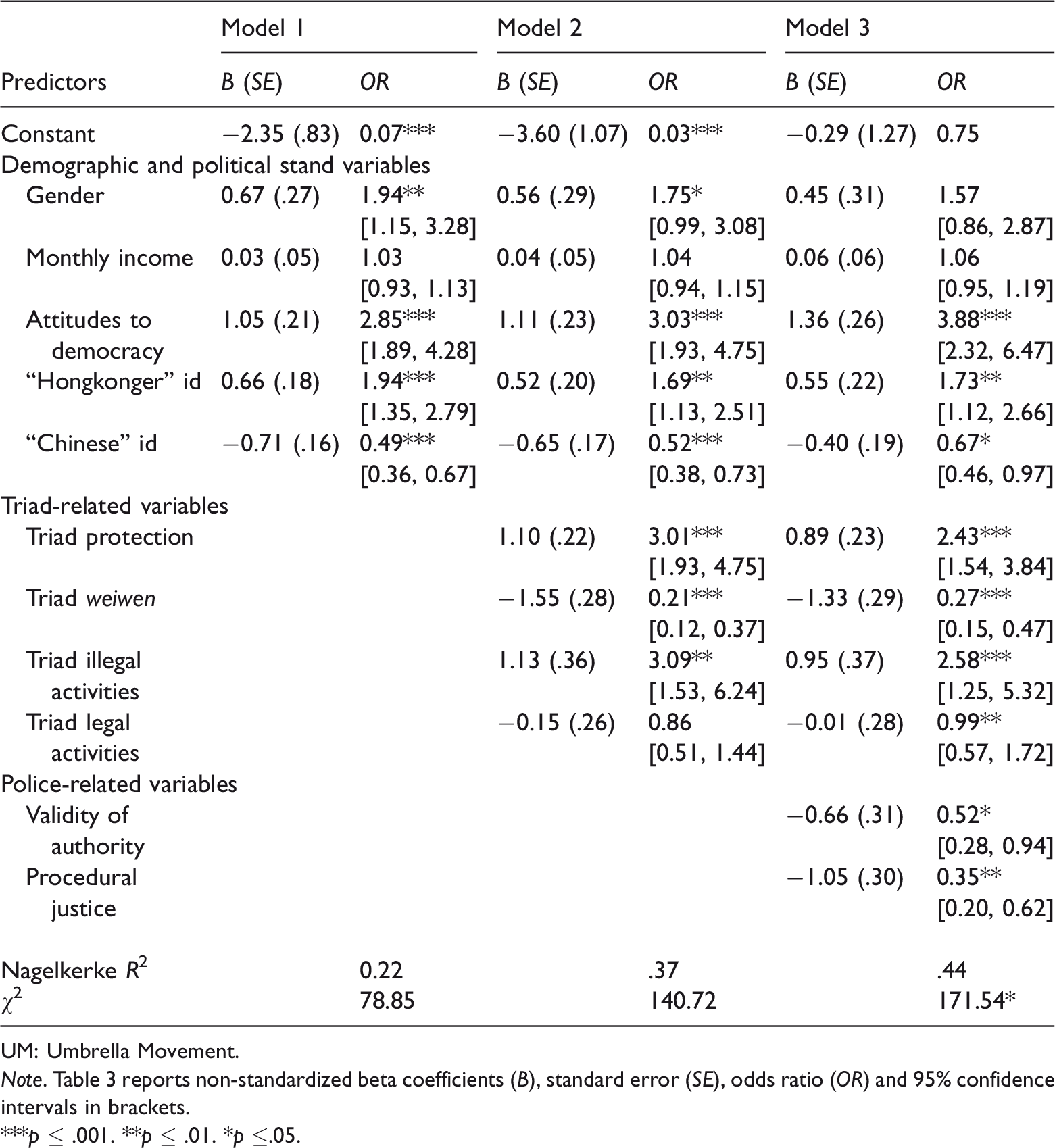
Binary logistic regression analyses predicting support for UM (student sample).
UM: Umbrella Movement.
Note. Table 3 reports non-standardized beta coefficients (B), standard error (SE), odds ratio (OR) and 95% confidence intervals in brackets.
***p ≤ .001. **p ≤ .01. *p ≤.05.
To test
Comparison between supporters and opponents of UM.
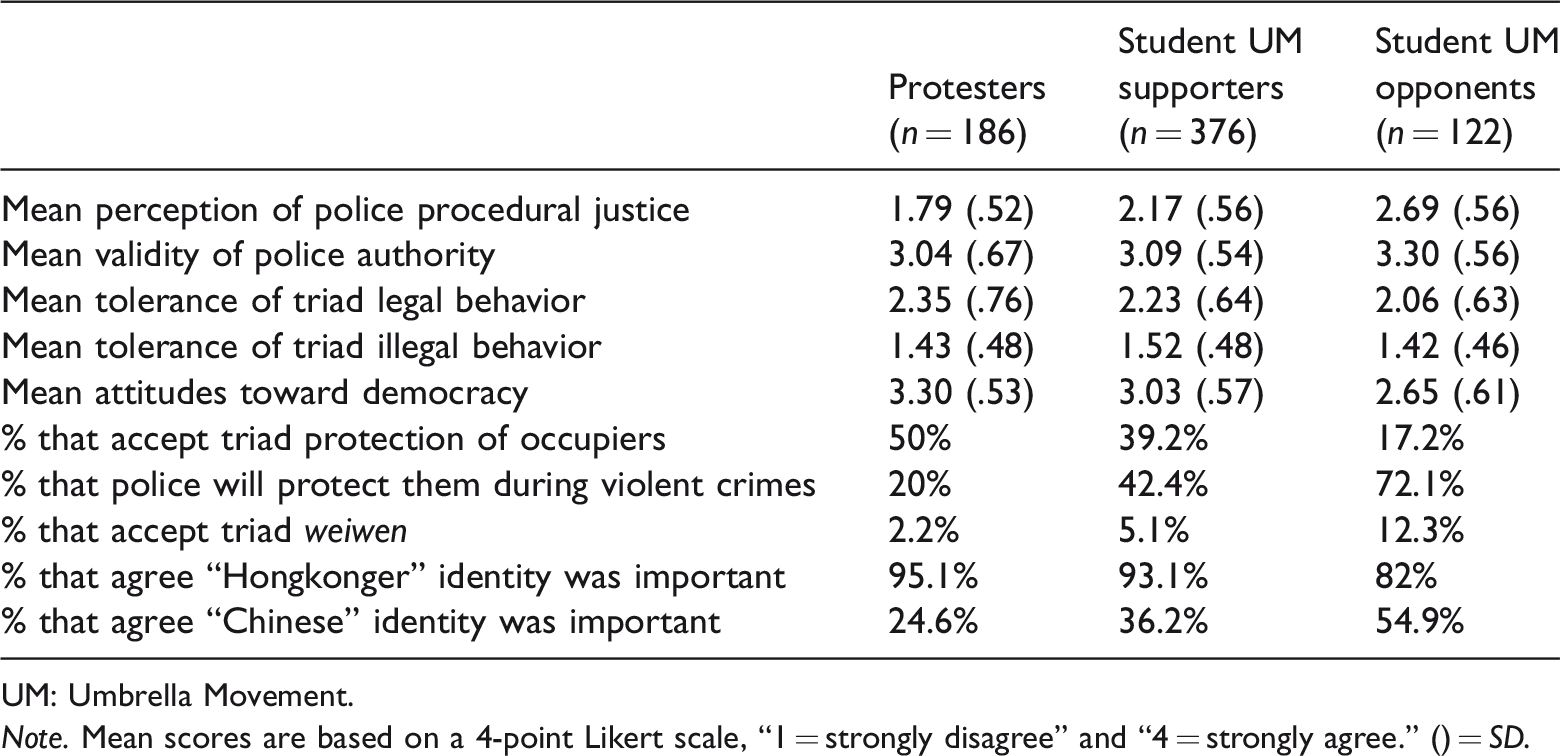
UM: Umbrella Movement.
Note. Mean scores are based on a 4-point Likert scale, “1 = strongly disagree” and “4 = strongly agree.” () = SD.
Participants, including protesters, had much higher ratings for validity of police authority (α = .70). Student UM opponents (M = 3.30, SD = .56) had the highest rating for validity of police authority, followed by student UM supporters (M = 3.09, SD = .54) and protesters (M = 3.04, SD = .67), F(2, 679) = 8.11, p < .001. Post hoc analysis showed that student UM opponents had a significantly higher rating than the other two groups.
Discussion
We found in Model 1 of the binary regression that attitudes toward democracy, and the importance of “Hongkonger” and “Chinese” identities, albeit being strong predictors, could not sufficiently account for an individual’s support for UM. In other words, although support for UM is strongly associated with support for democracy and the awakening of Hongkonger identity, participants still need additional reasons to support UM.
In line with Hui’s (2015) observation that the authorities unintentionally constructed UM, our findings suggest that authorities have “encouraged” people’s participation in UM via the involvement of triads and police use of excessive force. Our logistic regression showed that one of the biggest predictors of support for UM was opposition of triad weiwen. In Model 2, the use of triads to maintain stability was intolerable to many students and were strongly predictive of students’ support for UM. Students who could accept triad protection of occupiers were also more likely to support UM. Students perhaps understood that the police frequently used force inside the Occupy sites during conflict. The belief that some triads were protecting the occupiers might have therefore helped to ease some of students’ fears and embolden them to support UM. Tolerance of triad illegal behavior was also positively associated with support for the movement. Students most likely understood that triads are criminal organizations. Student UM supporters were, however, more willing to tolerate triad illegal behaviors, perhaps because they saw triads as their comrades during the movement.
We found in Model 3 that negative perceptions of the police were significantly predictive of one’s support for UM. Perceptions of police procedural injustice and an invalid basis of police authority were associated with support for UM. Although we are unable to make any causal inference, our results corresponded with Jackson et al.’s (2013) finding that lower ratings of police procedural fairness were associated with greater acceptance of the use of protests and violence to achieve social change.
Results further show that the predictors identified in Tables 1 and 2 can differentiate between students and protesters. When compared with student UM supporters, protesters attached an even greater importance to the “Hongkonger” identity, a lower importance to the “Chinese” identity, and had an even more positive attitude towards democracy.
As suggested in the literature, perception of procedural injustice increases the likelihood of self-help behavior. We believe that in instances where the police violated normative expectation of procedural justice and failed to provide effective protection, identification of triads as comrades could be an attempt at self-help. For example, protesters were the least likely to believe that the police would protect them during violent crimes. To seek alternative sources of protection during frequent clashes, protesters were most likely to accept triad protection of occupiers. Results show that protesters’ tolerance of triad behavior painted a more complicated picture than that of students. Protesters were more tolerant of triad legal behaviors than student UM supporters and opponents. They were less tolerant of triad illegal behaviors than students were. We speculate that protesters were aware of different groups of triads operating inside the Occupy sites (some protected them and some attacked them), and hence were more selective in their support. Thus it can be concluded that protesters were only tolerant of the “good” type of triad. When compared with students, protesters were more tolerant of triad legal behavior and protection of protesters, and were less tolerant of triad illegal behavior and weiwen, suggesting the existence of approach and avoidance conflicts (Boyd et al., 2011).
We also found that protesters were more likely than the students to perceive the police as procedurally unjust. However, the perceived validity of police authority was still relatively high among all participants (albeit still lowest for protesters and highest for student UM opponents). Even protesters were willing to comply with police demands if it was “the proper and right thing to do” or if they “considered police actions lawful.” We interpret the findings as the protesters still seeing moral alignment and legality, the basic premises of police authority, as valid. Saucier et al. (2009) concluded that militant extremists often use the illegitimacy of the civil government as a convenient excuse. A government is only legitimate if the people have consented to its power, and militant extremists claim that they are merely acting on behalf of the people when they break the law established by an illegitimate authority. The situation was different in Hong Kong during UM because of its unique nature of love and peace. Protesters disapproved of the nature in which the police exercised their authority during the occupation (i.e., low ratings for perception of procedural justice) yet still agreed with the premises that backed police authority (i.e., high ratings for validity of police authority).
Conclusion
Undoubtedly, the unfolding of UM is closely tied to the public’s perception of police use of excessive force. The legal authority to maintain public order is exclusively bestowed upon the police (e.g., Police Force Ordinance and Public Order Ordinance). However, as Beetham (2013, p. 69) pointed out, “…rules cannot justify themselves simply by being rules.” The procedural justice literature predicts that the public is less willing to defer to the police and comply with police claims when they lose trust in them. As the protesters refused to turn to the government and police for help, we observed a different type of public order when they engaged in self-help, including the acceptance of triad protection, which explains why the protesters had lower ratings for police procedural justice and a higher tolerance for triads.
The finding is in line with that of previous studies that perceptions of police legitimacy are associated with evaluations of police performance and procedural justice (Jiang et al., 2012; Telep & Weisburd, 2016). A punitive and aggressive policing style, if perceived as unfair by citizens, may backfire and even erode police legitimacy and the law, in the long run. Members of the public who respect police legitimacy would be less likely to consider private force as a means of achieving social change (Jackson et al., 2013). The appropriate police response motivates willing deference and voluntary cooperation that is based upon a perception of their legitimacy (Tyler et al., 2015). Citizens who viewed the police as less trustworthy were more likely to express support for vigilante violence (Tankebe, 2009). When people cannot rely on formal justice, they seek private justice. However, this is not the model of self-help in Hong Kong.
Referring to Figure 1, the police’s (1) use of excessive force sparked the mass occupation and impacted police legitimacy. At one point, there was news about site clearance by the Liberation Army (2). But the military interference did not occur, avoiding the massive use of violence (Liberty Times Net, 2014). Although UM marshals took a similar role to vigilantes (3) to maintain site order, they adhered to the principle of love and peace and refused to use violence to exercise control (Hui & Lau, 2015). Rather, they restrained the attackers and handed them over to the police (Commercial Radio, 2014). Protesters even used umbrellas to protect themselves from the attack of tear gas and pepper spray, and they were extremely constrained not to retaliate. Triads (4) were dominating in the Mongkok site because of the widespread of illicit businesses in this district, and thus it is reasonable for them to defend their own interests. On the other hand, some triads were involved in supporting the protesters, albeit on an individual basis (Lo et al., 2015). However, there is not sufficient empirical data to confirm the police-triad conspiracy hypothesis, which suggests the existence of some form of partnership. Rather, increasingly, recent research has confirmed a “thugs-for-hire” (5) phenomenon in UM (Ong, 2018; Varese & Wong, 2018), whereby individual triad and thuggish groups were paid to use privatized coercion to disperse the protesters on hourly or piecemeal rates, which is a common practice of any authoritarian, communist regime (Ong, 2018).
Against this backdrop, the UM, with the main slogan “we save our own Hong Kong,” is characterized by the protesters’ fight for democracy, strong Hongkonger identity, weak Chinese identity, and adherence to the principle of love and peace. Despite weak police legitimacy and procedural justice, protesters did not take the law into their own hands. The self-help kind of vigilante (Black & Baumgarner, 1987; Tankebe, 2009) and the code of the street (Anderson, 1999) had not developed. Although UM resembled the “color revolutions” in many aspects, such as because it took place in a nondemocratic regime (Chen, 2016), it caught the eyes of the world with its nonviolent and orderly self-help organization. A BBC News correspondent (Dissanayake, 2014) reported this phenomenon, describing the scenarios as “things that could only happen in a Hong Kong protest. Tear gas, pepper spray, feelings of anger and betrayal, crowds forced to run from riot police… and yet the protests retain that uniquely Hong Kong character.” Because the protesters lived in tents in the “battlefields” for 79 days, it is logical that they would draw on any form of protection at hand, including individual triads who defended them. This does not mean that triads contribute to their self-help organization. Rather, they hate triad illegal behavior, and they hate triad weiwen. Different from present knowledge on weak police legitimacy leading to vigilantism, this study concludes that protestors and triad gangsters are never partners in the self-help UM.
Footnotes
Declaration of conflicting interests
The author(s) declared no potential conflicts of interest with respect to the research, authorship, and/or publication of this article.
Funding
The author(s) disclosed receipt of the following financial support for the research, authorship, and/or publication of this article: This work was supported by the Hong Kong Research Grant Council under the General Research Fund (GRF) No. 11611815.