







Abstract
Self-selection policing is an approach whereby serious underlying criminality is detected by an offender’s minor crimes (known as trigger offences). Strategic offences are offences that indicate an increased likelihood that the associated offender will engage in later offending. The purpose of this study was to determine if first-time serious traffic offending in Western Australia indicates previous and/or future non-traffic criminality, thereby demonstrating the utility of serious traffic offences as trigger offences and strategic offences. The authors collated the crime data of all first-time serious traffic offenders in Western Australia between December 2004 and December 2014. Using this data, survival analyses were conducted to determine if and when a first-time serious traffic offender committed an initial non-traffic offence within 10 years of their first serious traffic offence. When comparing this data to data from the Australian Bureau of Statistics, the authors found that first-time serious traffic offenders are more likely than the average Western Australian to have a previous or future initial non-traffic offence. Some groups of first-time traffic offenders were more likely to commit non-traffic offences than others including males, individuals under the age of 25, drug drivers and drivers without authority. These results support the use of first-time serious traffic offences as trigger/strategic offences and could be used to identify and divert traffic offenders with versatile criminal histories and traffic offenders at risk of future criminal activity.
Keywords
For most adults, driving is a largely automatic task. Only novice drivers think laboriously about how to drive a car or follow the road rules. Despite its automaticity, members of the general public might pay more attention to their driving style if they knew it reflected their personality and behavioural tendencies. As quoted by Fleiter et al. (2015, p. 1), “we drive as we live”. Accordingly, if individuals are displaying risky or deviant behaviour on the road, it is likely that they are displaying similar behaviours in other aspects of their lives.
Individuals who frequently disobey the road rules are more likely to receive traffic infringements, fines, demerit points and other penalties. These consequences are imposed predominantly to deter individuals from putting themselves and others at risk of a road traffic accident. However, it is unlikely that these consequences have a deterrent effect for all individuals. One study found that receiving legal consequences for a speeding violation had no deterrent effect. Rather, individuals with speeding violations were more likely to receive a citation in the future (Lawpoolsri et al., 2007).
Because current driving violations might indicate future traffic offending, and driving behaviour implies individuals’ behavioural tendencies, people who violate traffic laws might also commit non-traffic-related offences. The notion that offenders commit more than one type of offence is known as offence versatility (Roach & Pease, 2016). Offence versatility is a key assumption of Roach and Pease’s (2016) self-selection policing theory, which posits that an individual’s more serious criminal activity can be uncovered when they are apprehended for committing a minor offence. These minor (but potentially serious) offenders offer themselves up for police scrutiny rather than being detected using more traditional and sometimes discriminatory forms of policing, e.g. profiling.
If one type of minor offence is typical of revealing an offender’s more serious criminality, it is known as a trigger offence. Roach and Pease (2016) claim that traffic offences (e.g. disqualified while driving) can be used as trigger offences. There might be some dispute about whether traffic offences can be considered minor, and thus whether they fit into the self-selection policing theory. However, Roach and Pease (2016) suggest that when a trigger offence is serious rather than minor, but still reveals wider criminality, it is a win-win situation (because the offender receives consequences for their serious offence, and concurrent criminality might still be detected).
There exist many psychology-based theories that help to explain the link between traffic and non-traffic offending, and/or overall offence versatility. These are not the focus of this paper (for a review, see Brace et al., 2009 and chapter three of Roach & Pease, 2016), but could be important when designing rehabilitative interventions for individuals who have found themselves entrenched in a criminal career, consistently committing both traffic and other offences. Many of these theories suggest that some behavioural tendencies (e.g. impulsivity and low self-control; Gottfredson & Hirschi, 1990; Wagner et al., 2018) may predispose individuals to commit crimes, especially when coupled with a maladaptive environment and situations conducive to offending.
Existing research suggests that traffic offending reveals concurrent, serious criminality. Some studies measuring traffic offenders’ general self-reported behaviour revealed that those who receive more frequent driving citations also report engaging in more risky and illegal behaviours (Sansone et al., 2011; Wagner et al., 2018). In Queensland, Fleiter et al. (2015) found that 30.5% of speeding offenders had committed a non-traffic criminal offence prior to their speeding offence. For multiple, high-range speeding offenders, 55.2% had a criminal history (Watson et al., 2015). The types of traffic offending linked to more general offending are not limited to speeding, but also include driving while disqualified and driving under the influence of drugs (Nunn, 2018; Roach, 2017; Rose, 2000). Overall, it seems that traffic offenders cannot be thought of as otherwise-law-abiding members of the public (Roach, 2017; Rose, 2000).
Self-selection policing is focused on minor crimes revealing an offender’s concurrent criminality (often demonstrated as an offender’s previous offences). When an offence identifies an increased likelihood of the offender engaging in future serious offending, this is known as a strategic offence (Svensson, 2002). Svensson (2002) investigated one-time drink driving/other motoring offenders and the likelihood that they would become occasional (2–3 offences), repeat (4–8) or chronic (9+) offenders. They found that there is one in 25 chance that a first-time drink driving/other motor offender will become a chronic offender within eight years, and approximately 39% will become occasional offenders. This probability increased when the offender committed two or more drink driving/motor offences. Another study found that nearly 80% of traffic offenders attending crime diversion programmes were re-convicted within two years (Suggs, 1998). These individuals were not just re-convicted for motor offences but for other non-motoring offences including theft, burglary and violence against the person. This research demonstrates that individuals who commit traffic offences might already have, or be on the path towards, versatile criminal careers.
The utility of traffic offences as trigger offences is supported in the extant literature. However, there is a need to determine what type of traffic offence reveals concurrent criminality best. Drug driving is a potential candidate, as individuals that consume illicit substances while driving are already displaying offence versatility (being in possession of illicit substances and driving under the influence are separate offences). One study also found that drug drivers are likely involved in other types of non-traffic criminal activity, especially drug-related (Nunn, 2018). There is a lack of empirical support for the utility of traffic offences as strategic offences, despite some mention in the extant literature (Svensson, 2002; Suggs, 1998). To the authors’ knowledge, there is also little research investigating the usefulness of serious traffic offences (STOs) as a trigger/strategic offences for different populations. The utility of STOs may increase for populations already at risk of entering the criminal justice system, particularly young males.
Risk taking and sensation seeking are common among adolescents, often considered a normal part of development (Johnson & Jones, 2011). The re-shaping of the brain’s dopaminergic system drives increased reward seeking, especially amongst peers (Steinberg, 2008). For youth, this risk-taking, coupled with inexperience on the road could lead to an increased probability of unintentional traffic offending. However, some literature has suggested that STOs committed by youth could be considered strategic offences, indicating a pattern of behaviour that results in later criminal offending. Waters (2015) found that almost half of New Zealand youth offenders presenting in court in 2013 had their first ever offence as a traffic offence. From this, they concluded that traffic offending is “a leading path into the criminal justice system for young New Zealanders” (Waters, 2015, p. 63).
Previous literature examining gender differences in the rates of traffic offending has found that males receive more traffic tickets than females (Factor, 2018; Lawpoolsri et al., 2007), commit more high speed offences (Watson et al., 2015), are more likely to engage in driving under the influence of drugs and alcohol (Fernan & Palk, 2012; Nunn, 2018), be sentenced for driving while disqualified/suspended (Hoel & Freiberg, 2008) and display risky driving behaviours in general (Voogt et al., 2014). This may be the reason why men are over-represented in Western Australia (WA) road traffic fatalities (Road Safety Commission, 2019).
To address these gaps in the literature, the aim of this research is to determine the percentage of WA drivers who proceed to commit an initial non-traffic offence (NTO; i.e. being charged by Police by means of summons or arrest for a non-traffic-related offence) after their first STO (i.e. first recorded violation of the Road Traffic Act that resulted for the matter to be settled in the Magistrate’s Court), thereby confirming whether initial traffic offending can be considered a strategic offence in WA. Another aim of this research is to determine the percentage of WA drivers who had an initial NTO before their first STO, thereby demonstrating whether traffic offending can be thought of as a trigger offence in WA. Through this research, the authors aim to specify a timeframe within which a serious traffic offender may be most likely to commit a previous/subsequent NTO. This will allow the proposal of an ideal time period within which at-risk, first-time traffic offenders should be approached with diversionary interventions. Finally, the authors aim to assess if the risk of committing an NTO before/after an initial STO is greater for some groups compared to others. This might facilitate the design of tailored interventions for at-risk offenders, thereby optimising the allocation of police resources. Supplementary to these aims, the authors hypothesise that:
Western Australians who commit initial STOs will be more likely than the general Western Australian population to commit later NTOs. Western Australians who commit initial STOs will be more likely than the general Western Australian population to have committed previous NTOs. Most serious traffic offenders who do commit an NTO will do so within a short time period (within a year), as serious traffic offending reflects a general pattern of deviant behaviour. Some groups of serious traffic offenders will be more likely to commit an NTO than others. This would parallel groups in Australia that are at a higher risk of being involved in criminal activity, i.e. males and young people. There will be some initial traffic offences that are more closely related to previous/future non-traffic offending than others, demonstrating their utility as trigger offences/strategic offences, e.g. drug driving.
Method
Subjects
This study used data from 121,264 WA drivers who committed their first STO between 29 December 2004 and 28 December 2014 (i.e. the study period). To separately assess first STOs as strategic offences and trigger offences, the dataset was split into those who committed their first STO before an initial NTO (STO First, N= 18,807) vs. those who committed an initial NTO before their first STO (NTO First, N= 18,980). Individuals who had not committed an NTO (N= 83,477) were included in both datasets as a comparison, reflecting the average Western Australian whose first STO is a once-off. In the STO First dataset, there were 102,284 drivers (73,814 males). In the NTO First dataset, there were 102,457 drivers (73,426 males).
Western Australian population data
The authors did not have access to first-time NTO data from a control group of Western Australians who had not committed an initial STO. Therefore, the authors had to rely on offender rates from the Australian Bureau of Statistics (ABS) in an equivalent time frame. Using ABS offender rates and estimated residential population (ERP) statistics in WA between 2008–2009 and 2017–2018 (ABS, 2019a, 2019b), the cumulative percentage of non-traffic offenders in WA was calculated over a 10-year period (out of the 2017–2018 ERP; ABS, 2019a). This percentage will be compared to these findings in order to evaluate hypotheses one and two.
Measures and covariates
The data used for this analysis was held by the WA Police Force and had been previously cleaned and collated for a forecasting project. From this dataset, the researchers extracted demographic variables (gender, birthdate), first NTO dates and first STO dates of various traffic offence types (Table 1). Then, other variables such as age-group, STO count, STO type and time from first STO to first NTO were calculated.
STO types used in the analysis.
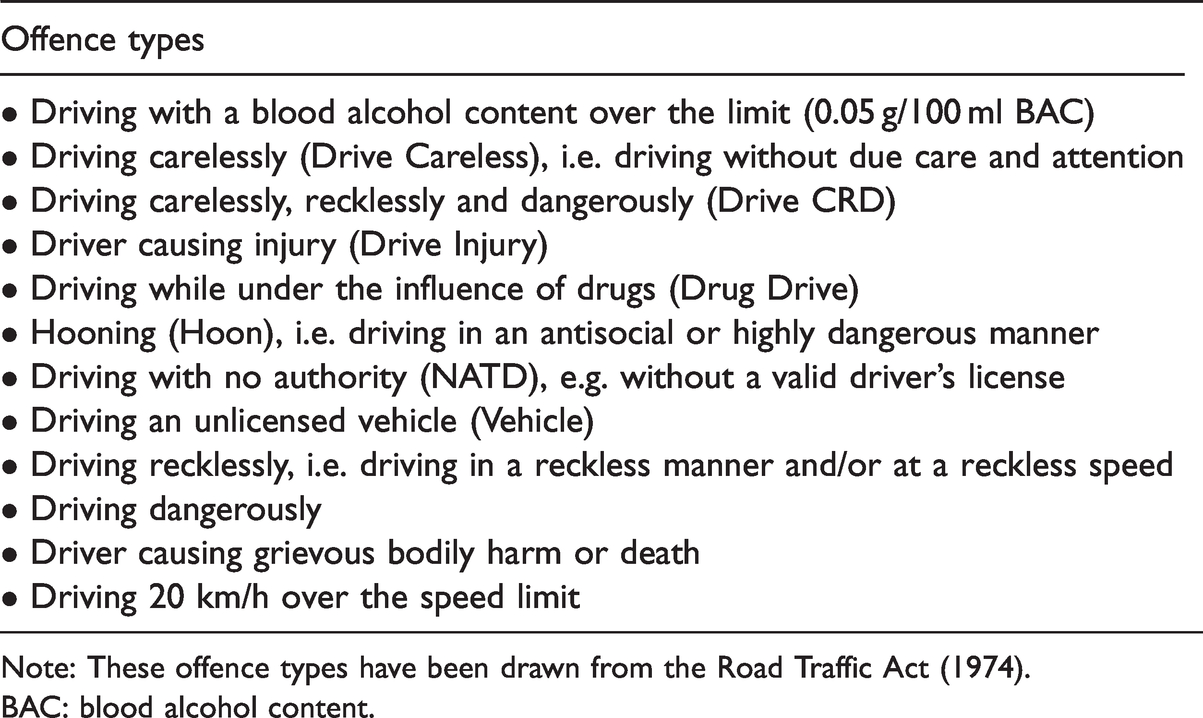
Note: These offence types have been drawn from the Road Traffic Act (1974).BAC: blood alcohol content.
First STO was established as the earliest first traffic brief date (prosecution brief) of a group of offence types. A first traffic brief for, for example, drug driving, is the first date an offender drove under the influence of drugs and was apprehended, resulting in a prosecution brief for the matter to be settled in the Magistrate’s court. All first-time serious traffic offenders who committed the offence types; driving recklessly, driving dangerously, driving causing grievous bodily harm or death or driving 20 km/h over the speed limit also committed other concurrent STOs (on the same date). Therefore, these offenders were included in the “Multiple” category.
The time variable was calculated as the number of days between each individual’s first STO and their first NTO (going back in time in the NTO First dataset). If the participant did not commit an initial NTO during the study period, their time variable represented the days between their first STO and the study end date (or the study start date in the NTO First dataset). Similarly, if the participant died during the study period without committing a first NTO, their time variable reflected the days between their first STO and their deceased date.
STO count was established as the number of times an individual committed a first STO in any offence category within the study period. For example, if an individual committed an initial drug driving offence and an initial BAC offence, and these offences were on separate dates, their STO count would be 2. The dataset was split into those who had committed one first STO vs. two or more. STO count is intended not only as an indicator of offender severity but also traffic offence versatility. This is because to have a higher STO count, a serious traffic offender would have committed multiple different types of traffic offences.
Analysis method
Survival analysis can help researchers explore if and when an event is likely to occur. In this study, survival analysis has been used to answer the questions: (1) To what extent do first-time serious traffic offenders initiate non-traffic offending in the 10 years before/after their first STO? And (2) if they do, when this is likely to occur?
The median survival time represents the time at which 50% of first-time serious traffic offenders in the study population initiated an NTO. The researchers could only identify one group comparison where more than 50% of the first-time serious traffic offenders committed an NTO. In all populations, initiating non-traffic offending was rare. Instead, the researchers state the cumulative proportion of first-time serious traffic offenders who committed an initial NTO during the study period.
The Kaplan Meier analysis is used to compare survival functions between groups, helping to ascertain whether the risk and timeline of non-traffic offending is different for separate groups of first-time serious traffic offenders.
The Kaplan Meier analysis has six statistical assumptions that need to be met for the results to be considered valid. Of the six assumptions, the current dataset meets five.
As per the sixth assumption (that there should be a similar amount and pattern of censoring – i.e. those who did not commit an NTO – between the groups), we visually inspected scatter plots of censored cases across survival times, and censoring patterns were mostly similar between groups. There were, however, some large differences in censoring between STO types. Despite these differences, significance tests reflected the same pattern of results in all three types (Log Rank, Breslow and Tarone-Ware). When different statistical tests show different patterns of results, there is an indication that the data has censoring issues. Given the consistency in the significance tests, the authors felt confident to proceed with the analysis.
Results
Descriptive statistics
The STO First dataset was made up of mostly males (72.17%) and the age of the subjects when committing their first STO ranged from 16 years to 92 years (M = 30.42; SD = 12.05; Figure 1).
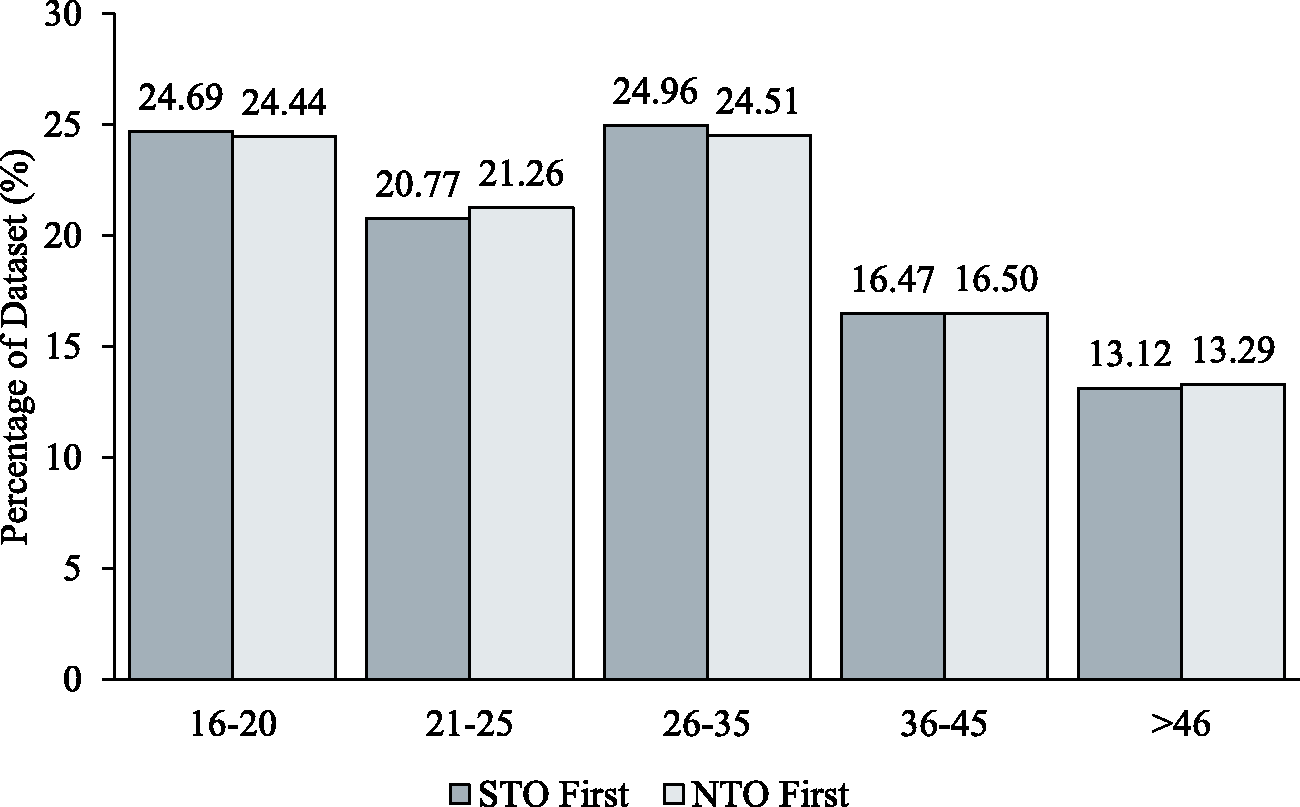
Age makeup of both datasets.
The NTO First dataset was also made up of mostly males (71.67%) and the age of committing first STO also ranged from 16 to 92 years (M = 30.47; SD = 12.07; Figure 1).
Both datasets were made up of subjects mostly under the age of 35 (Figure 1), who had committed only one initial STO (Figure 2). The most common offence type in both datasets was driving with a blood alcohol concentration over the legal limit (Figure 3).
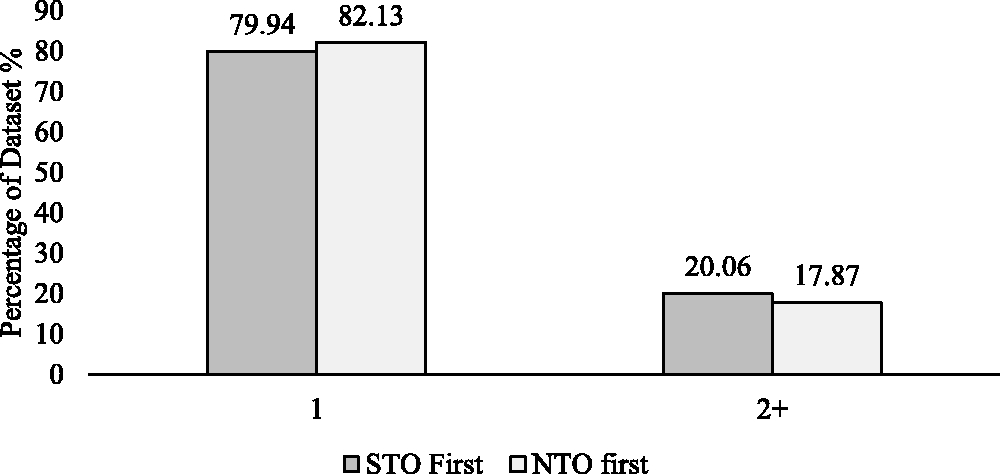
STO count makeup of both datasets.
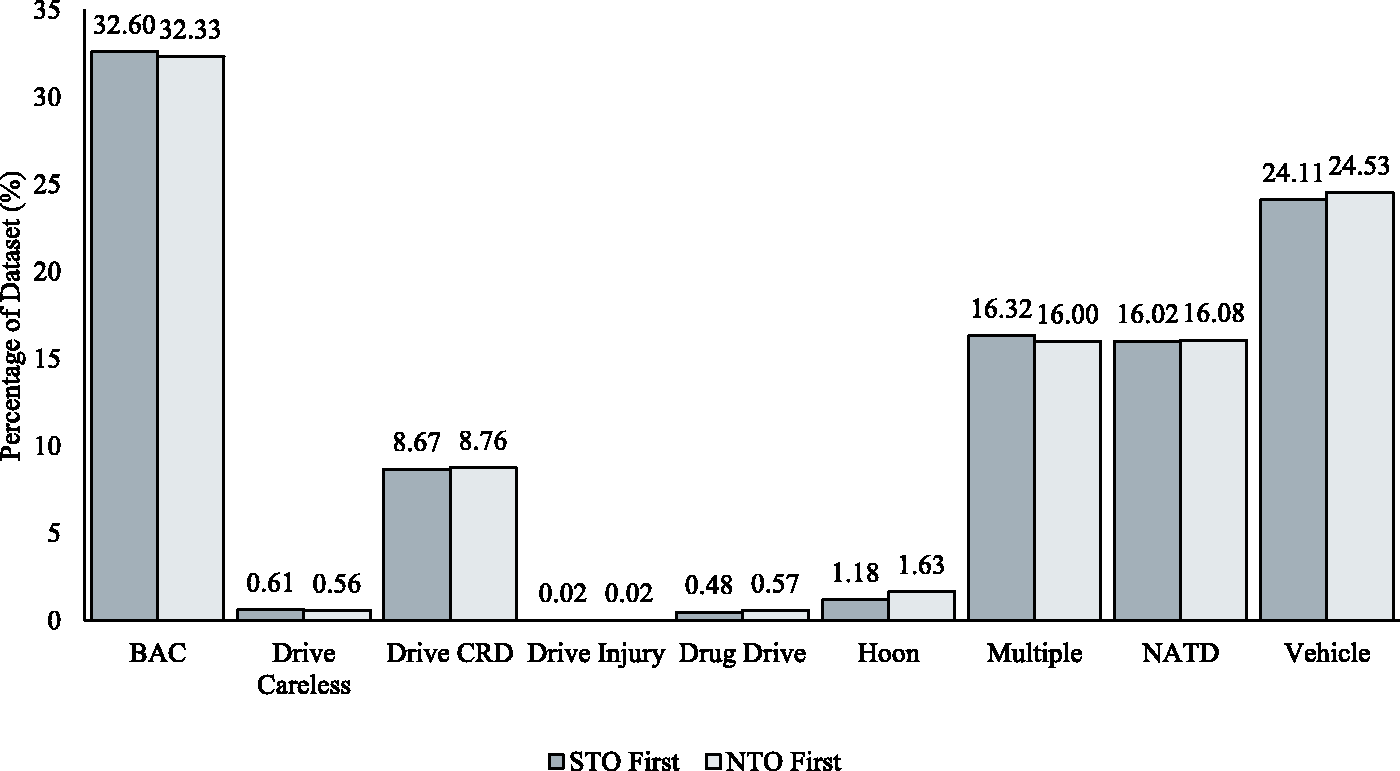
STO type makeup of both datasets.
Survival analysis
Overall
In the STO First dataset, 17.62% of first-time serious traffic offenders also committed an initial NTO in the subsequent 10 years (Figure 4). Of the 17.62%, 33.35% committed their NTO within one year and 50.76% within two.
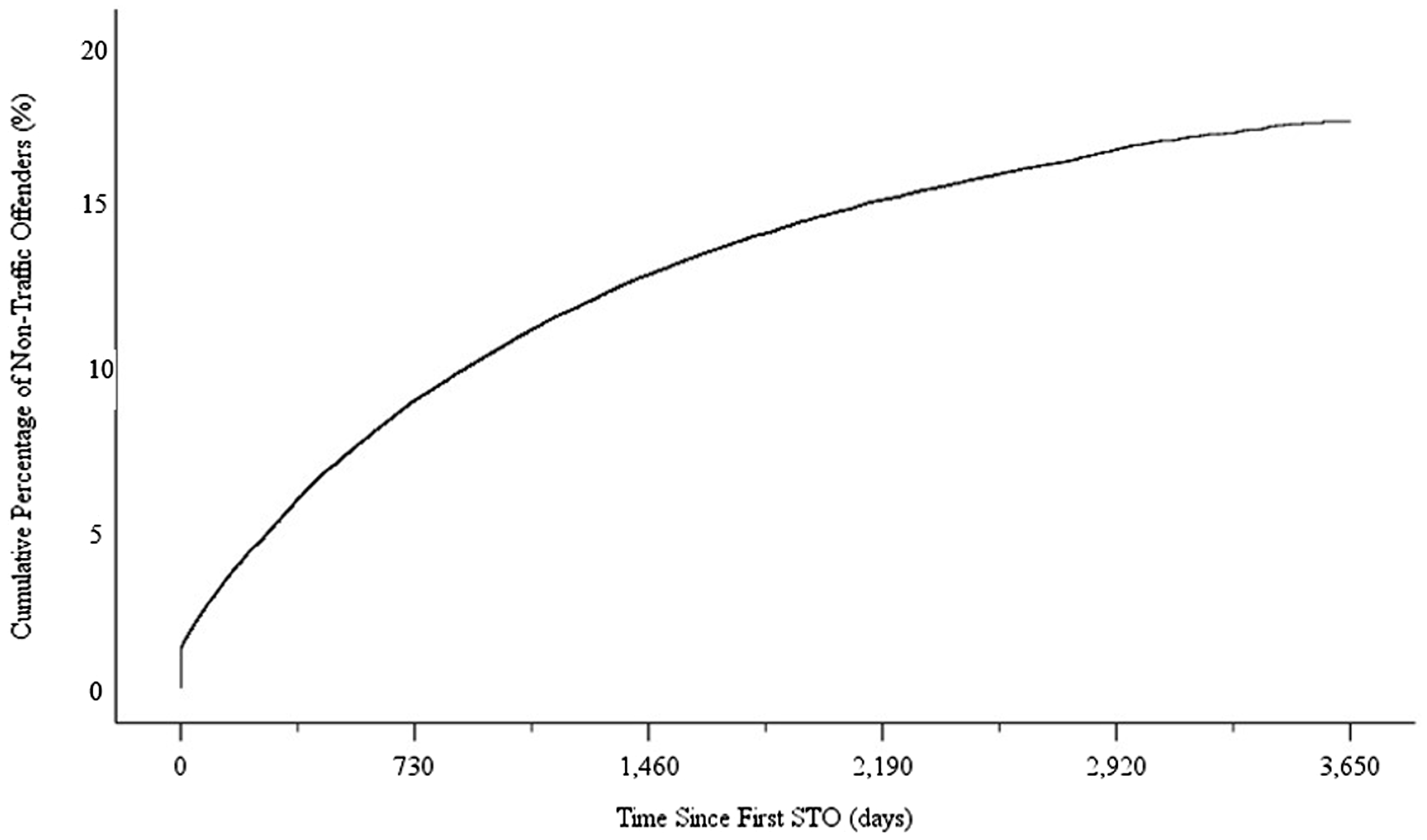
Survival function for first-time serious traffic offenders in the STO First dataset.
In the NTO First dataset, almost a quarter (22.29%) of first-time serious traffic offenders had also committed an initial NTO in the preceding 10 years (Figure 5). Of these non-traffic offenders, 23.92% committed their NTO one year before their STO and 41.44% two years before.
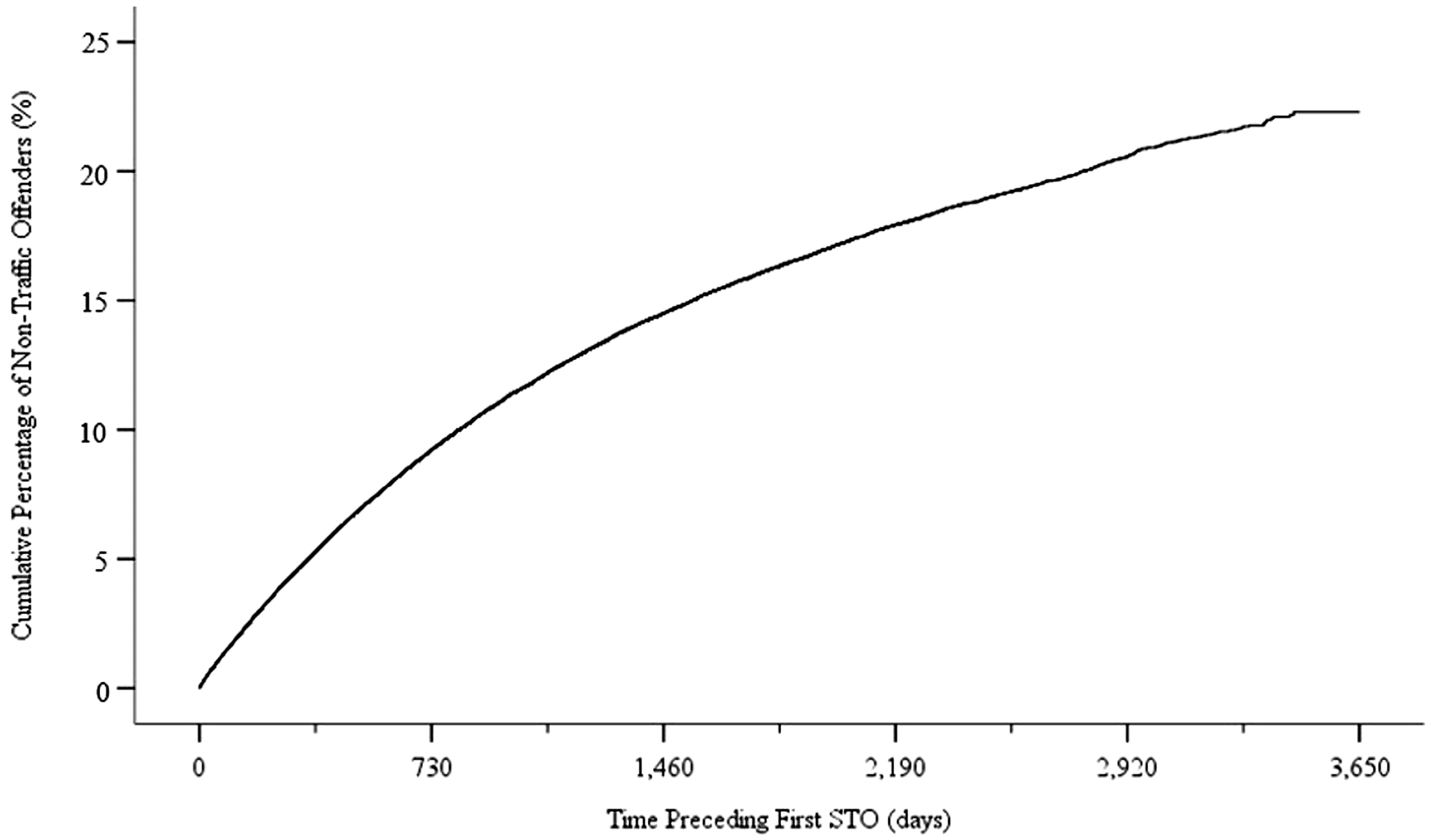
Survival function for first-time serious traffic offenders in the NTO First dataset.
Only the NTO First dataset had a higher cumulative percentage of non-traffic offenders than the cumulative percentage of non-traffic offenders in WA from 2008–2009 to 2017–2018, calculated as 17.71%.
Gender
In the STO First dataset, 13.67% of female and 19.19% of male serious traffic offenders also committed an initial NTO in the following 10 years (Figure 6). The authors ran a log-rank test which revealed that the survival functions for males and females were significantly different, X2(2) = 505.24, p < . 001. Of those individuals who committed an NTO, 43.32% of females did so in the subsequent two years, compared to 51.20% of males.
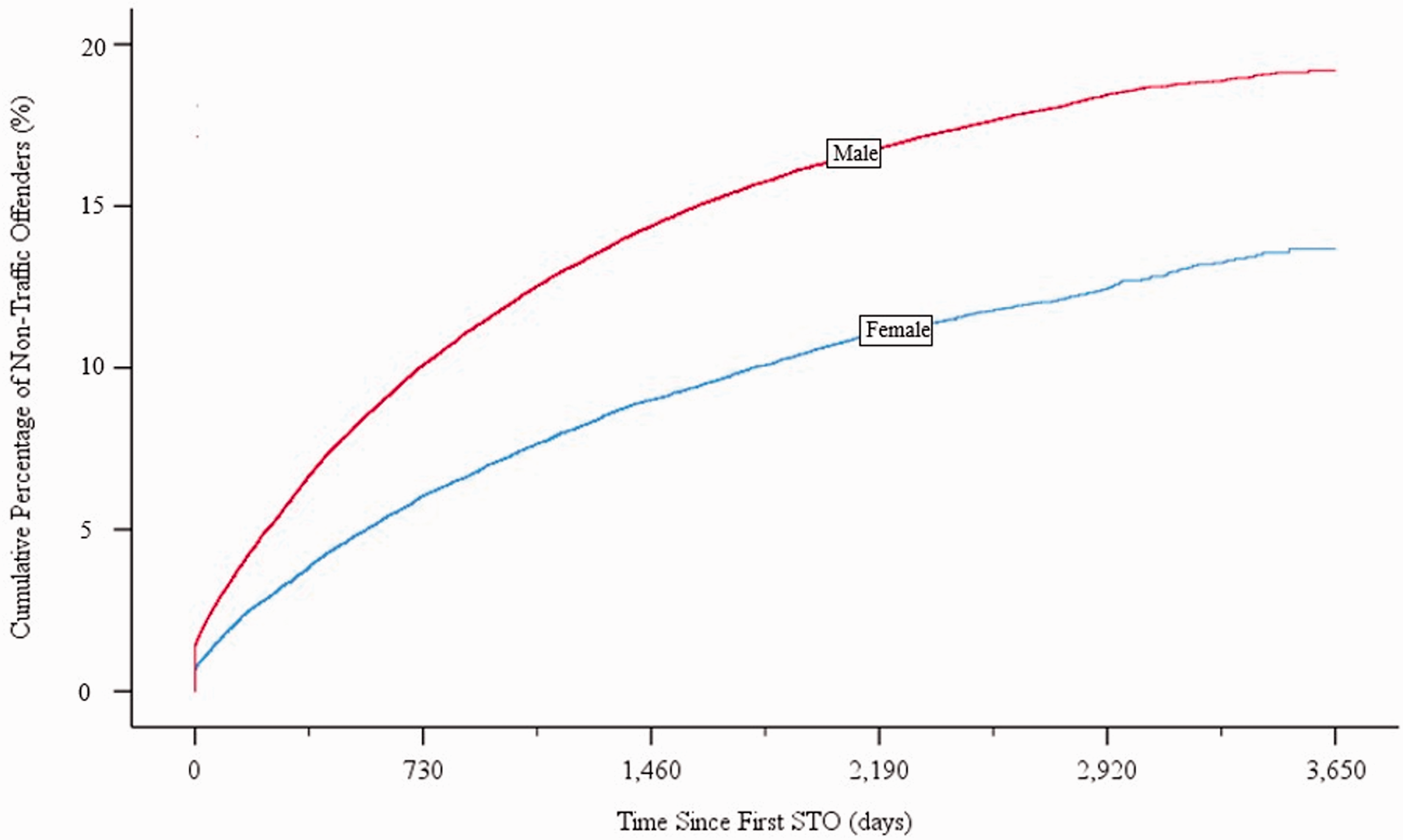
Survival functions for males and females in the STO First dataset.
In the NTO First dataset, a larger proportion of male than female serious traffic offenders (24.43% and 17.01%, respectively) committed an initial NTO in the 10 years prior to their first STO. Of these individuals, 36.56% of females committed their initial NTO in the preceding two years compared to 42.75% of males. A log-rank test revealed that the survival functions for males and females in this dataset were significantly different X2(2) = 640.63, p < . 001 (Figure 7).
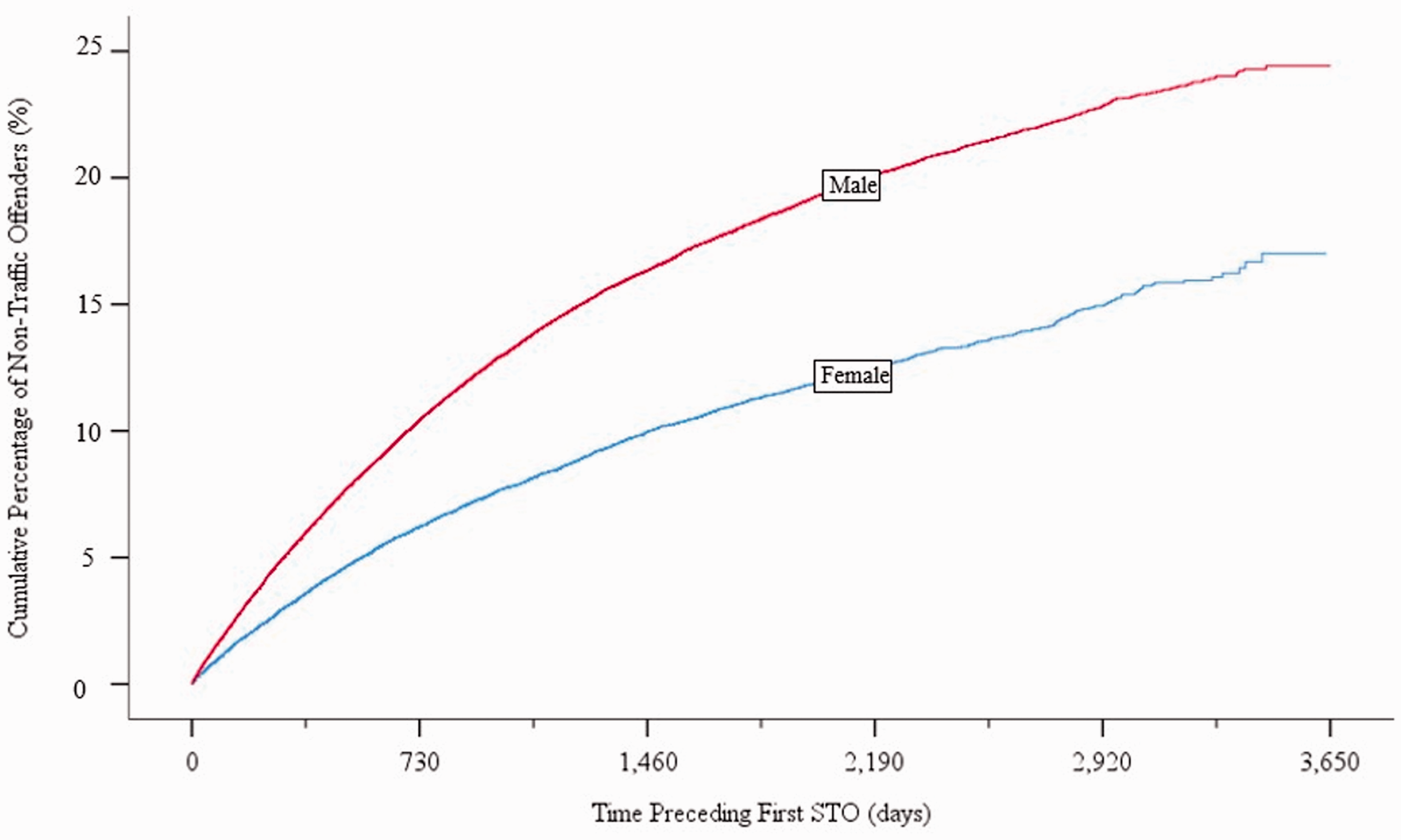
Survival functions for males and females in the NTO First dataset.
Age groups
In the STO First dataset, drivers aged 16–20 had the highest cumulative rate of initial non-traffic re-offending after an initial STO. Subsequent age groups had a lower, yet similar rates compared to younger drivers, and the oldest age group had the lowest (Figure 8).
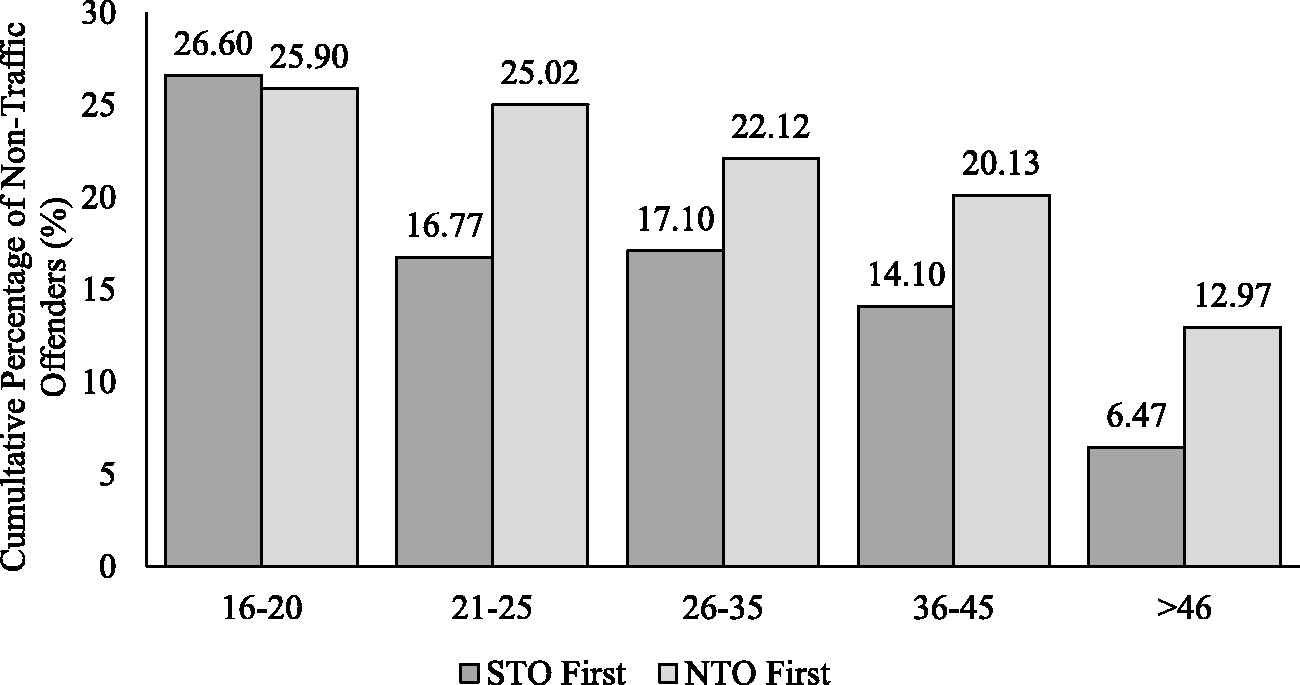
Percentage of first-time non-traffic offenders within both datasets, by age.
A log-rank test was conducted to determine whether the survival functions differed between age groups. The survival functions for the five age groups were significantly different, X2(4) = 2540.42, p < . 001 (Figure 9). Log-rank pairwise comparisons revealed differences in survival functions between all age groups (all ps <.001), except for between the 21–25 age group and the 26–35 age group X2(2) = 0.24, p = 0.63. Of those who committed an NTO after their STO, approximately half did so within two years (Table 2).
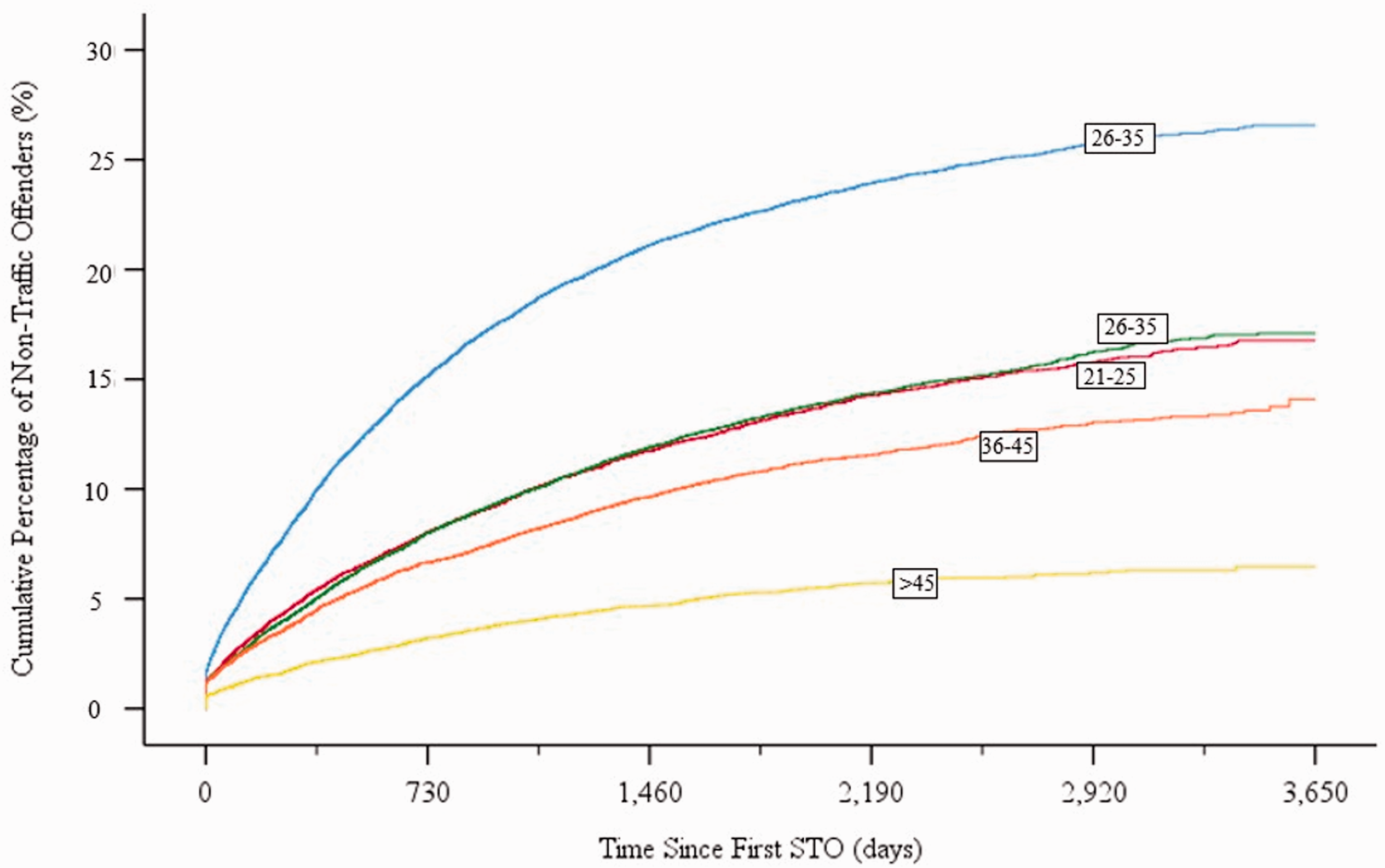
Survival functions for different age groups in the STO First dataset.
Percentage of first-time non-traffic offenders within each age group who committed their initial NTO within two years.
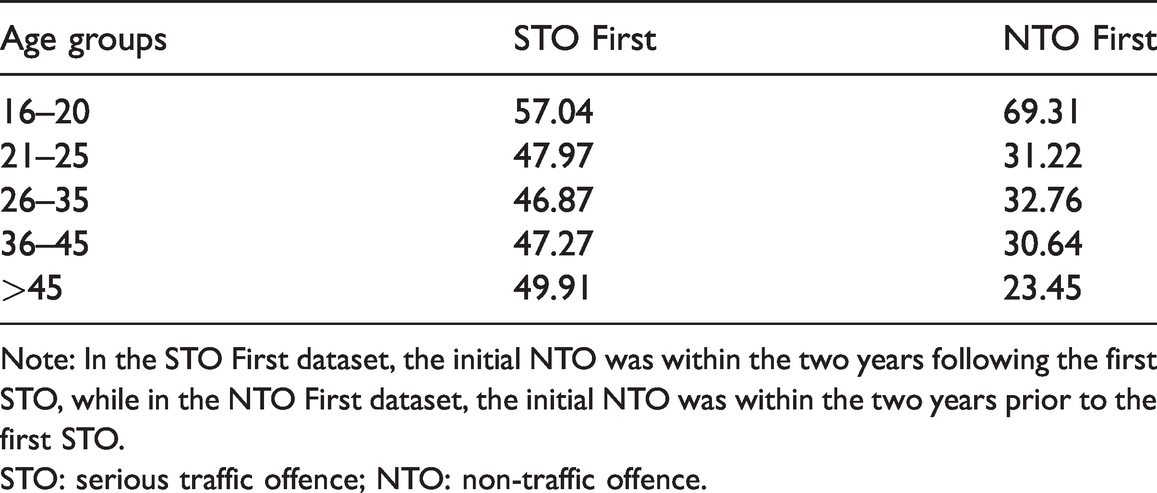
Note: In the STO First dataset, the initial NTO was within the two years following the first STO, while in the NTO First dataset, the initial NTO was within the two years prior to the first STO.STO: serious traffic offence; NTO: non-traffic offence.
In the NTO First dataset, all age groups of serious traffic offenders had similar percentages of first-time non-traffic offenders in the 10 years prior to an initial STO, except for the oldest age group (Figure 8). Despite this, a log-rank test revealed that the survival functions of the age groups were significantly different, X2(4) = 2621.09, p < . 001 (Figure 10) and pairwise comparisons revealed that the differences were significant between all age groups (all ps <.001). Of those who had committed an NTO prior to their STO, between 20% and 70% had done so in the preceding two years (Table 2). The youngest age group of previous non-traffic offenders were the most likely to have committed their first NTO within two years of their first STO.
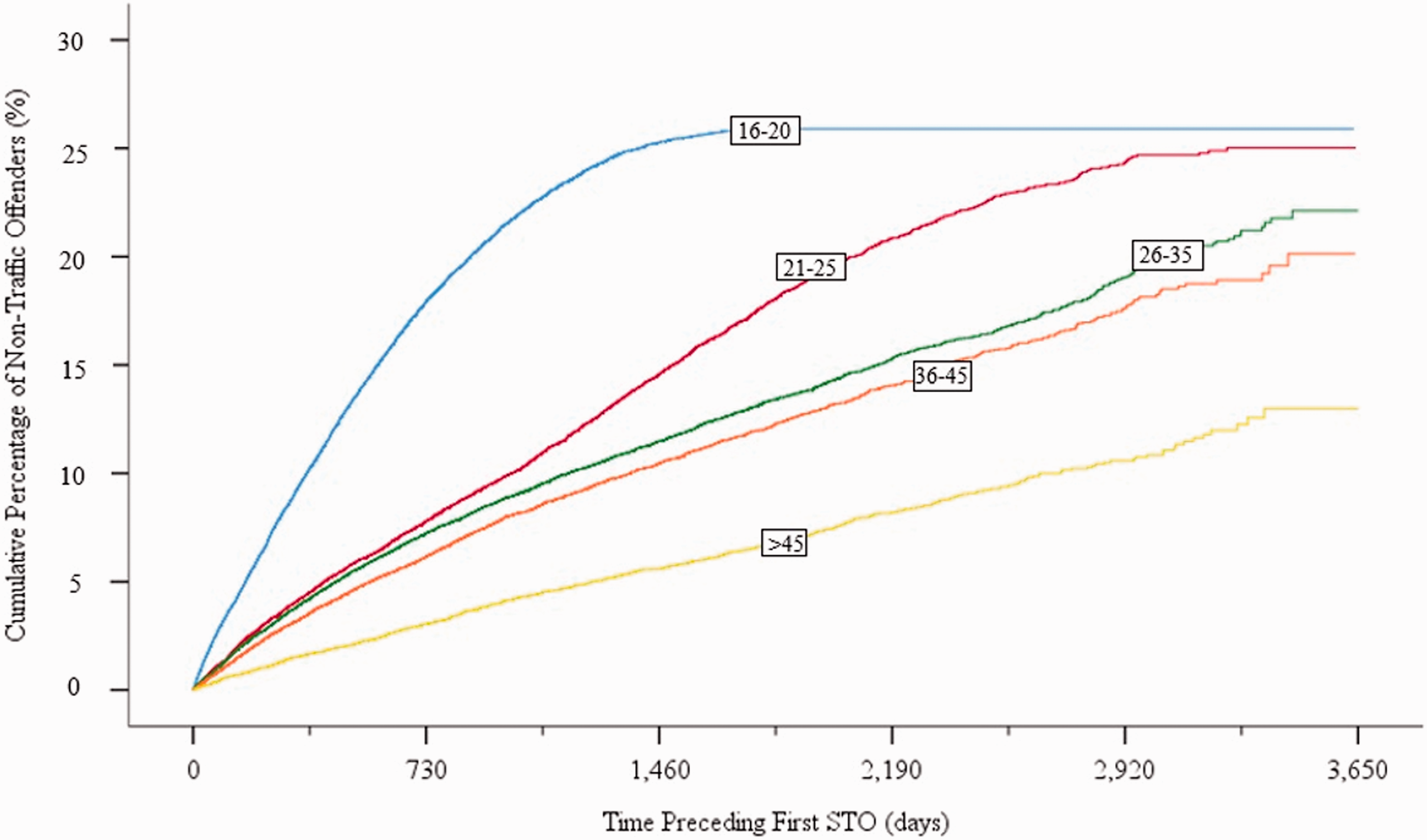
Survival functions for different age groups in the NTO First dataset.
STO type
In the STO First dataset, the percentage of first-time serious traffic offenders who committed their first NTO during the study period was the highest for those whose first STO was drug driving (Figure 11). A log-rank test was run to determine whether the survival functions were significantly different between different first STO types. The log-rank test was found to be significant X2(8) = 2700.72, p < . 001, demonstrating that the likelihood of a first-time serious traffic offender committing a subsequent initial NTO differs according to the STO type (Figure 12). Pairwise log-rank comparisons were run to determine where the significant differences were between the survival functions. Most pairs of offence types had significantly different survival functions (Figure 9). For example, the survival function for the offence type Drug Drive is significantly steeper than that of the BAC offence type, especially in the first two years (Table 3), X2(1) = 567.42, p < .001. Those who committed a Drug Drive had a significantly steeper survival function than most other offence types, except when compared to the Drive Injury category X2(1) = 1.79, p = . 18. In comparison, those in the Vehicle and Drive CRD categories had survival functions that were significantly flatter than all other offence types (all ps <.001).
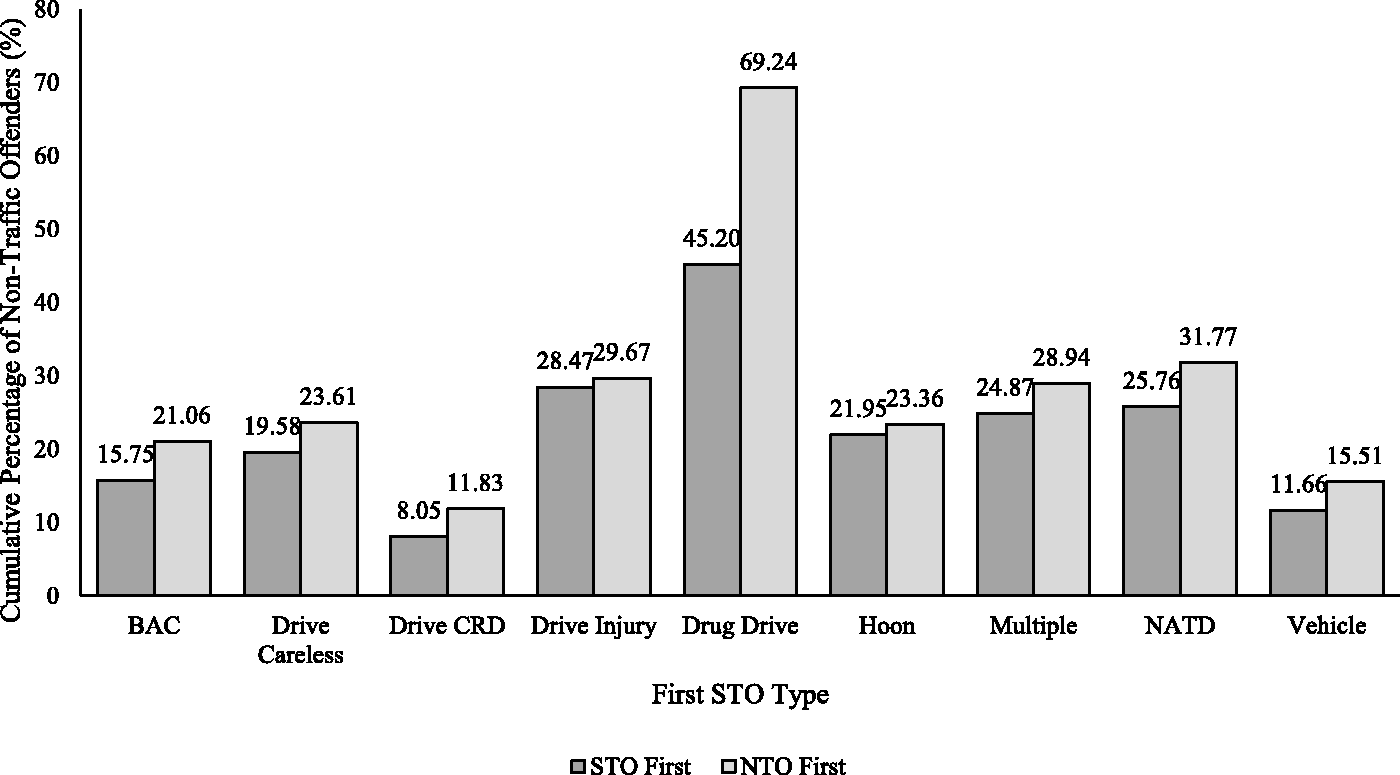
Percentage of first-time non-traffic offenders within both datasets, by STO type.
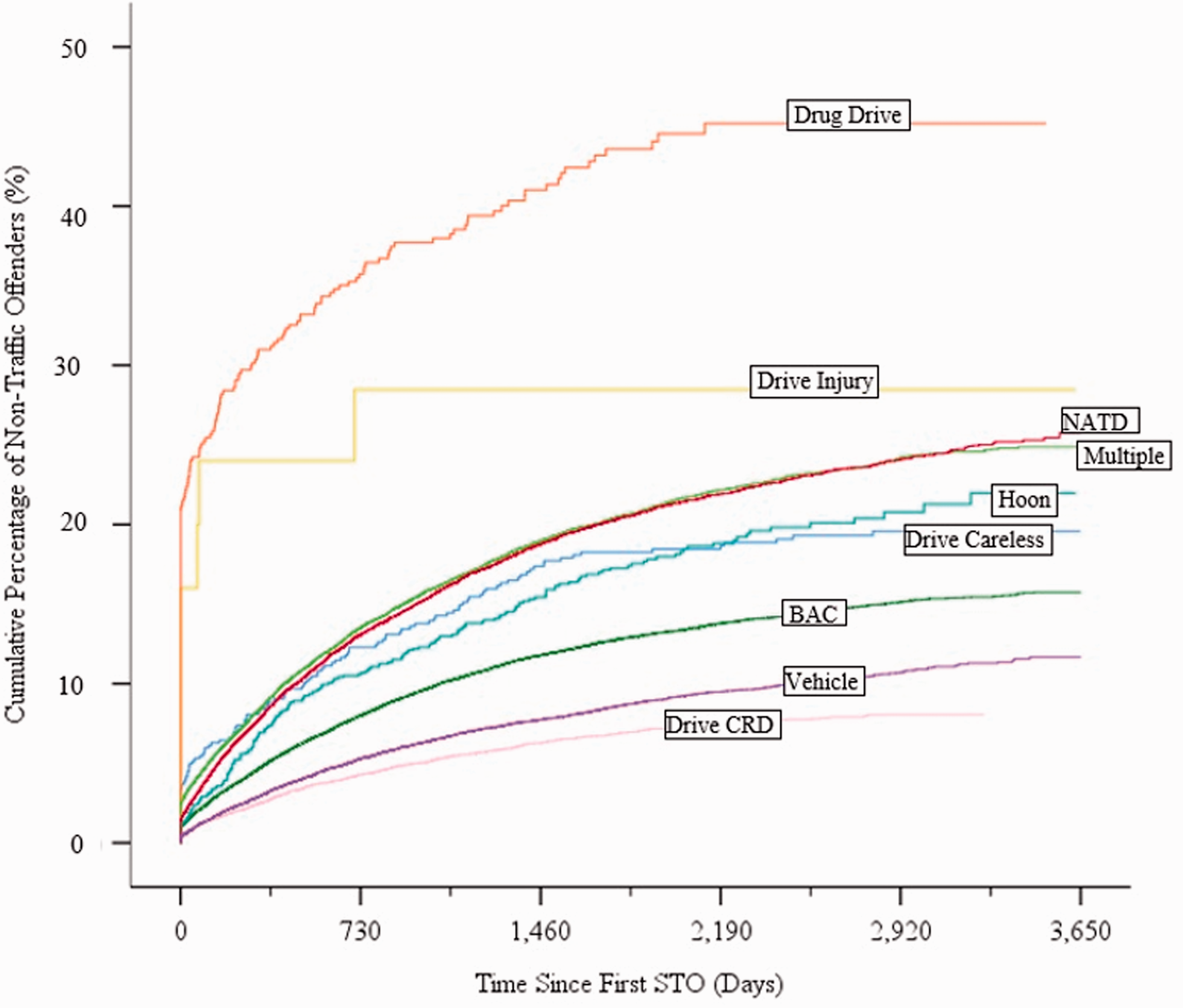
Survival functions for different STO types in the STO First dataset.
Percentage of first-time non-traffic offenders within each STO type who committed their initial NTO within two years.
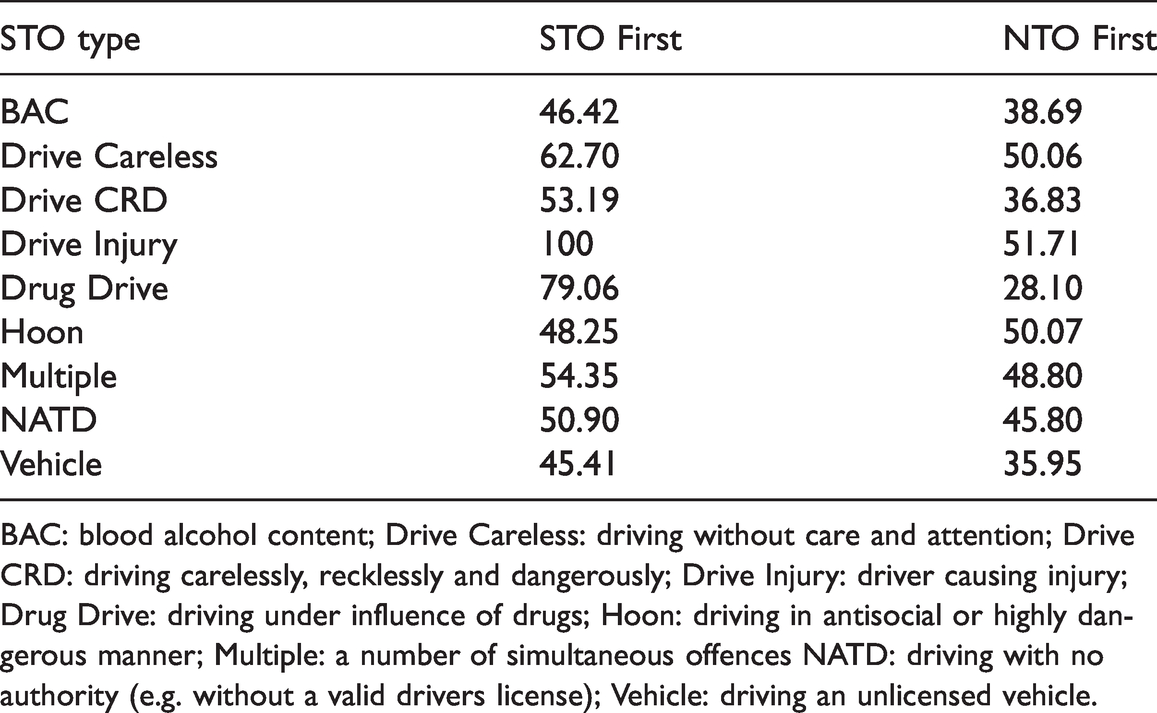
BAC: blood alcohol content; Drive Careless: driving without care and attention; Drive CRD: driving carelessly, recklessly and dangerously; Drive Injury: driver causing injury; Drug Drive: driving under influence of drugs; Hoon: driving in antisocial or highly dangerous manner; Multiple: a number of simultaneous offences NATD: driving with no authority (e.g. without a valid drivers license); Vehicle: driving an unlicensed vehicle.
In the NTO First dataset, the percentage of first-time serious traffic offenders who had committed a prior initial NTO was the highest for those whose first STO was drug driving (Figure 11). This was the only group where more than 50% of first-time serious traffic offenders had also committed an NTO. The median survival time or the number of days preceding a first STO within which 50% of first-time drug drivers had committed an initial NTO was 2121 (95% confidence interval [CI], 1816.68 to 2425.32) or approximately 5 years and 10 months. A log-rank test was conducted and it was established that first-time serious traffic offenders’ survival functions differed according to STO type, X2(8) = 2705.73, p < . 001 (Figure 13). Pairwise comparisons revealed that most pairs of STO offence types had different survival functions (ps <.05). However, many offence types had similar survival functions to Drive Injury (ps >.05). This may have been because there were very few individuals in the Drive Injury category. The only other two offence types whose survival functions were similar were Hoon and Driving Careless, X2(1) = 0.01 p = . 94.
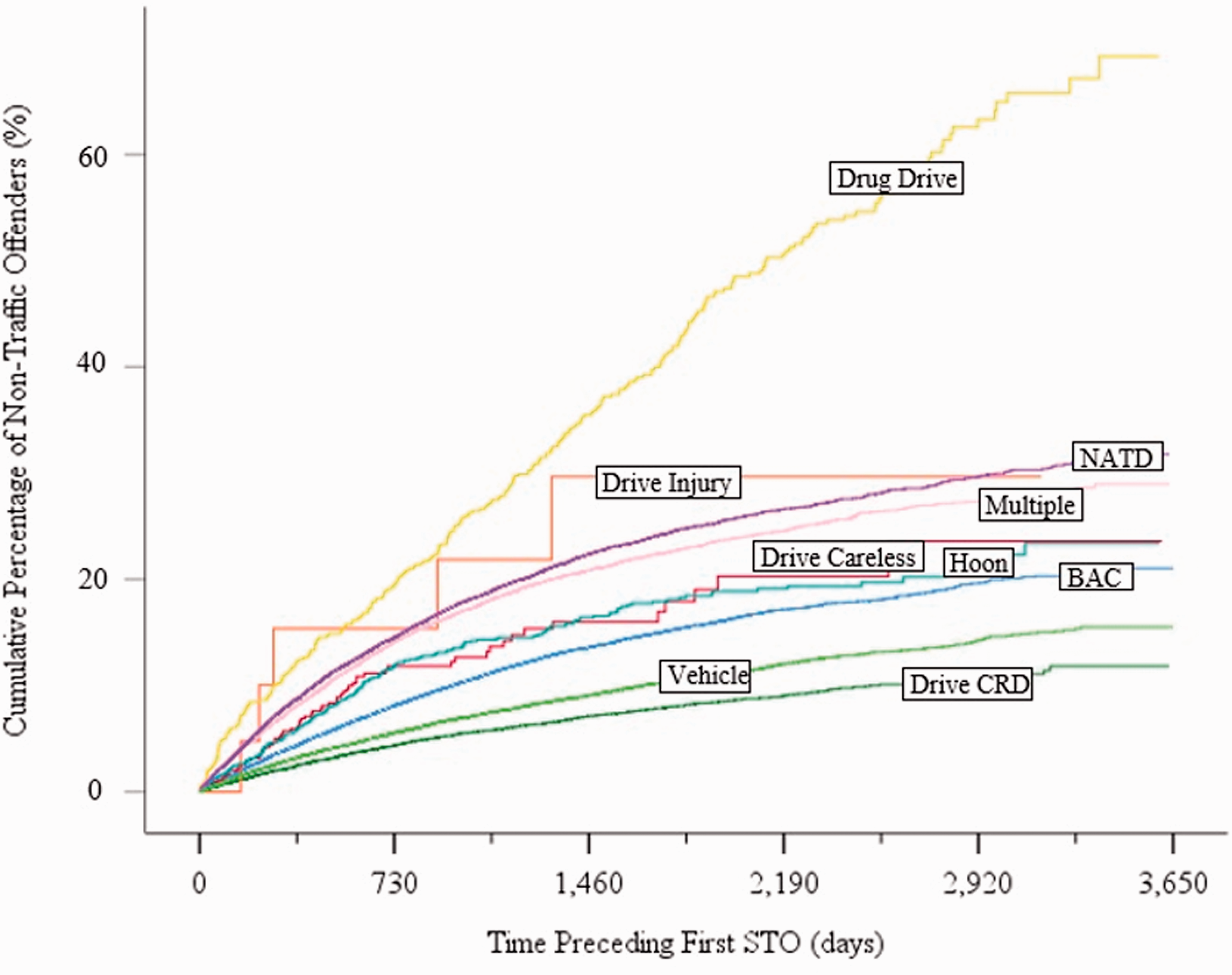
Survival functions for different STO types in the NTO First dataset.
STO count
In the STO First dataset, a higher percentage of first-time serious traffic offenders committed subsequent initial NTO if they had an STO count of two or more. Of those whose STO count was one, 11.64% committed an NTO within 10 years, compared to 37.57% of those whose STO count was two or more. According to a log-rank test, the survival functions of these two groups of offenders were found to be significantly different, X2(1) = 7591.04, p ≤.001 (Figure 14). Of those who did commit an NTO after their first STO, most did so within two years of their first STO (one = 51.18%, two or more = 54.80%).
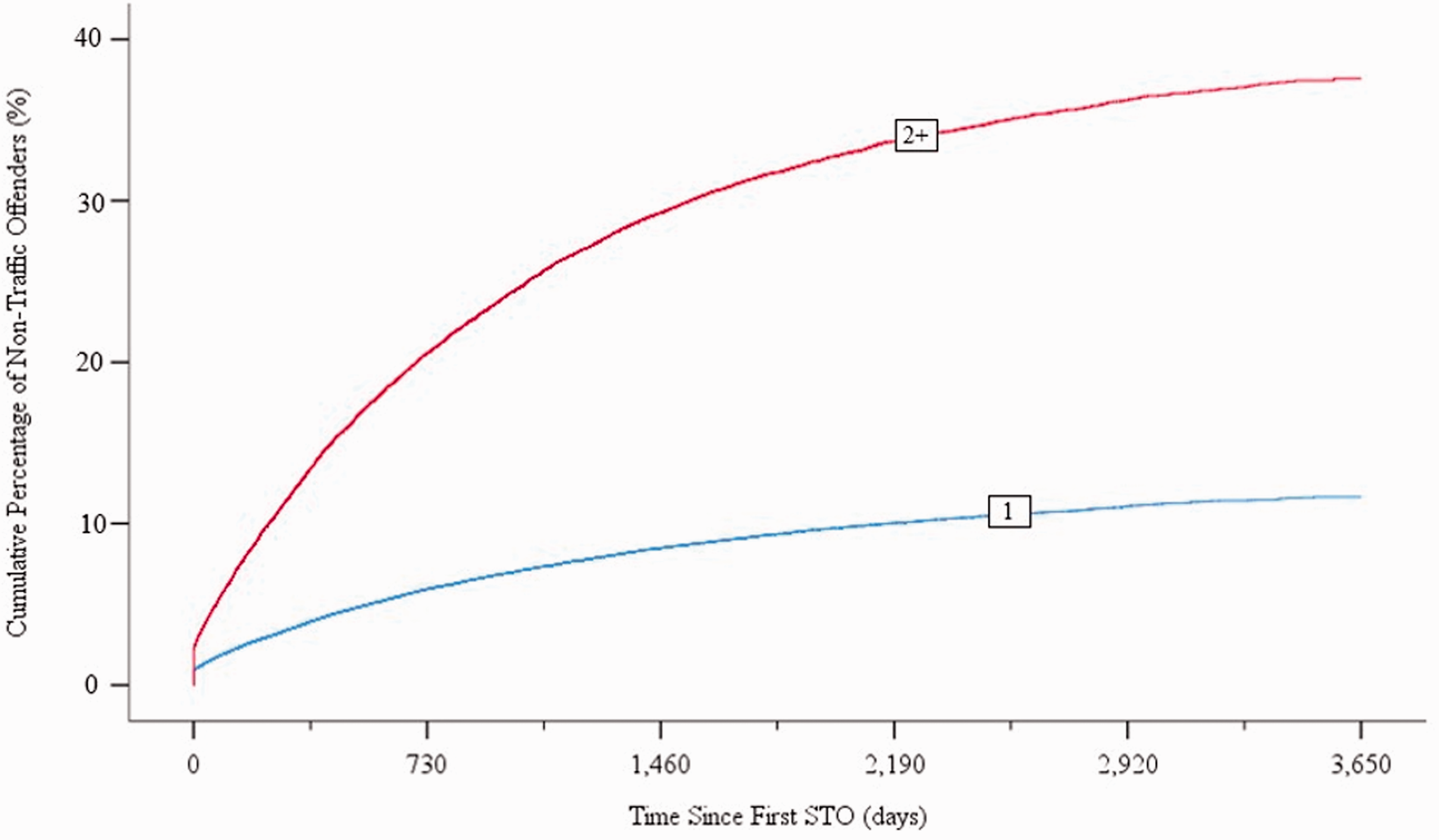
Survival functions of different STO counts in the STO First dataset.
In the NTO First dataset, a higher percentage of first-time serious traffic offenders had committed a previous initial NTO if their STO count was two or more (42.75% vs. 18.89%). Of those who did commit a prior, initial NTO, between 30% and 50% did so within two years of their initial STO (one = 35.96% and two or more = 49.42%, respectively). A log-rank test was conducted and revealed that survival functions of prior initial non-traffic offending were different depending on STO count, X2(1) = 4547.37, p = <.001 (Figure 15).
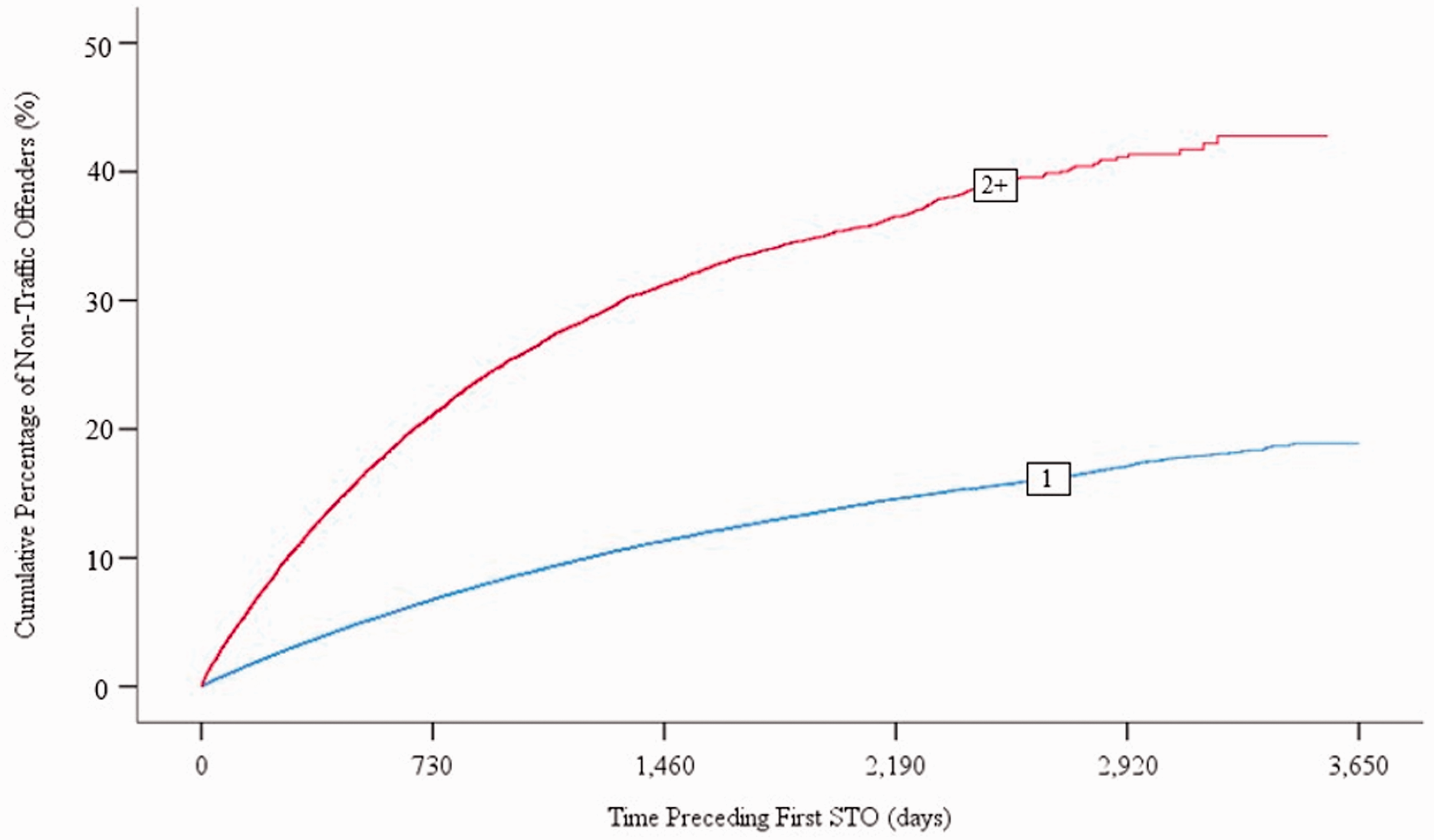
Survival functions of different STO counts in the NTO First dataset.
Discussion
The aim of this research was to investigate the utility of first-time STOs as trigger offences/strategic offences in WA. In support of hypothesis two, first-time serious traffic offenders in the NTO First dataset were more likely than the average Western Australian to have a previously recorded, initial NTO. As there was no “pure” control group, the current results were compared to the cumulative percentage of non-traffic offenders over a 10-year period, calculated from ABS data (ABS, 2019a, 2019b). This figure is not a direct comparison, and is most likely over-stated. To calculate this figure, the authors accumulated the number of non-traffic offenders per year between 2008–2009 and 2017–2018 and divided it by the 2017–2018 ERP. An offender who commits multiple offences over 10 years would have been counted as an offender more than once, contributing to a higher cumulative percentage. In the current datasets, a non-traffic offender can be counted only once. Additionally, the ABS data on offender rates would have included first-time STO offenders, and offenders outside of this study’s age range, thereby inflating the cumulative percentage even further. For these reasons, and considering the similarity in the cumulative non-traffic offender percentages from the STO First dataset and that calculated from ABS data, the authors agreed that the current findings were also in partial support of hypothesis one.
The current results support the use of first-time STOs as trigger offences, similar to findings from other Australian states (Fleiter et al., 2015; Watson et al., 2015). Fleiter et al. (2015) and Watson et al. (2015) found higher rates of previous criminality in their traffic offender database, but that might be because their research focused on speeding offenders, while this study evaluated multiple types of serious traffic offenders who had committed an STO for the first time. The current findings also support the use of first-time STOs as strategic offences. Similar to the current findings, Svensson (2002) found that first-time motoring offences do not appear indicative of future non-traffic offending. However, their utility as a strategic offence increases when an individual commits more than one. Overall, it appears that a first-time STO has more utility as a trigger offence than as a strategic offence in WA. This is because the NTO First dataset revealed higher percentages of previous non-traffic criminality than the STO First dataset revealed future non-traffic criminality.
In partial support of hypothesis three, if first-time serious traffic offenders were to commit an NTO, many (approximately 50%) did so within a short time frame of two-years instead of one year. Finally, in support of hypotheses four and five, males, drivers under the age of 20, and drug drivers were more likely than their counterparts to commit an initial NTO within 10 years of their first STO.
The finding that males were more likely to commit an initial NTO in both datasets aligns with previous literature. Broughton (2007) found that approximately 30% of males who committed at least one STO between 1999 and 2003 had also committed an NTO, compared to only 16.4% of females. In addition, males self-report greater rates of driving citations and general illegal behaviour (Sansone et al., 2011). Gender differences in impulsivity may explain why males are more likely than females to drive recklessly, be arrested, and engage in other risky behaviours (Cross et al., 2011). Females are more sensitive to the punishing consequences of risky behaviour (Cross et al., 2011). Therefore, an initial STO or NTO was likely more of a deterrent for females than males, which explains why fewer females in these datasets continued their engagement with the criminal justice system.
There was a strong relationship between first-time serious traffic offending and non-traffic offending for youth. A substantial proportion of first-time serious traffic offenders aged below 35 years committed an initial NTO within the study. This finding suggests a young individual committing an initial STO could be reflective of a pattern of behaviour that is a risk indicator for future criminal offending. The difference in the percentage of first-time non-traffic offenders in the youngest age group compared to the older age groups was not as pronounced in the NTO First dataset. This may be because when a young person commits their first STO, their previous, potentially juvenile NTOs may not be recorded. Overall, an initial STO likely exposes a youth’s psychological proneness to display more nonspecific problem behaviours (Jessor, 1987). Accordingly, Bina et al. (2006) found a strong association between risky driving and antisocial behaviours in adolescents, including sensation seeking activities, drug and alcohol use, and tobacco smoking.
Some STO types seem more closely related to non-traffic offending than others. Of those whose first STO was a drug drive, almost half also committed an initial NTO in the following 10 years and more than half did so in the 10 years prior. Similarly, Nunn (2018) argues that drink drivers are less likely to have criminal histories compared to drug drivers. Alcohol is a legally permitted substance, permissible while driving under a certain BAC. Therefore, some normally law-abiding members of the public may misjudge their BAC before deciding to drive, leading to an STO. However, it is illegal to possess illicit drugs and the penalties for drug-influenced driving are much more severe. Therefore, driving under the influence of drugs requires both an initial illegal act (drug possession) and a much greater risk than drink driving, and is likely performed by individuals who participate in other high-risk activities.
Previous literature suggests that disqualified drivers have similar profiles to mainstream offenders (Roach, 2017; Rose, 2000). Rose (2000) even found that disqualified drivers were more likely to have a previous conviction than mainstream offenders, 78% vs. 70%, respectively. According to other researchers, this value may be even higher (86%; Roach, 2017). Research supports an increased risk of re-offending after a driving while disqualified offence. Specifically, Rose (2000) found that 37% of disqualified drivers were re-convicted within a year, most likely for mainstream offences. Similarly, Roach (2017) found that 68% of those who committed a mainstream offence after driving while disqualified did so within 12 months. In the current study, no authority to drive (NATD) first-time serious traffic offenders were the third most likely to initiate future non-traffic offending and second most likely to have a previous initial NTO, mostly within two years of the initial STO. Therefore, focussing on these individuals could provide an opportunity for police to disrupt more mainstream types of crime, both future and concurrent. Early intervention with these individuals may also reduce road traffic accidents as the crash risk of unlicensed drivers is 2.7 to 9 times greater than licensed drivers (Knox et al., 2003).
These results suggest that drug driving and driving with no authority are the best candidates for trigger offences/strategic offences in WA. Roach’s (2017) research supports using disqualified driving as a trigger offence and a strategic offence, as disqualified drivers seem to be both frequent and versatile offenders. In the current dataset, NATD offenders were less likely to commit an NTO than drug drivers, but there were more NATD offenders in the dataset. Therefore, NATD offenders who are also involved in non-traffic crime may be easier to detect. There has been some research evaluating the criminal histories of drug drivers (Nunn, 2018), but no research looking at the utility of drug driving as a trigger offence or strategic offence. There are a few reasons why disqualified driving/drug driving might not be currently used as a self-selection policing tool or considered a strategic offence. Police services are organised into specialist teams (Roach, 2017) and therefore police often view criminals as specialist offenders. If self-selection policing is to be useful in reducing crime and road crashes, a change in perspective is needed to regard traffic offenders as more versatile offenders. As quoted in Roach (2017, p. 5) by a chief constable in West Midlands, UK “Most drivers are not criminals, but most criminals are drivers”.
The survival functions revealed that a first-time NTO was most likely to be committed within two years of a first STO. For first-time serious traffic offenders, this represents a window of opportunity within which an intervention can be implemented to divert these individuals from future criminal offending. Early intervention programmes should be individually tailored and focused on changing the offender’s cognition and behaviour (Wagner et al., 2018). They should also be multi-faceted, highlighting the risk and consequences of engaging in a wide range of illegal behaviour. These findings demonstrate that the likelihood of being involved in future non-traffic-related crime increases if an individual has committed more than one STO. Therefore, an individual intervention should be implemented after two STOs, as diverting every first-time traffic offender to an intervention would be very resource-demanding. However, one cannot ignore that a first-time serious traffic offender may already be engaging in ongoing, undetected criminal behaviour. Additionally, a focus on first-time serious traffic offending could uncover such undetected criminal activity. A balance must be struck where police resources are used in the most efficient way to deter the maximum number of future offences.
This study had several limitations. Each individual’s first STO date was calculated as their first occurring STO out of a set of STO types between 2004 and 2014. It is possible that some individuals within the dataset committed an initial traffic offence of an excluded type before the study period began. These individuals’ first STOs recorded in our dataset would have been one of their subsequent traffic offences. For these individuals, the time between their first STO and NTO would have been recorded as different than in reality.
Another limitation is that there was no data available on NTO type. This would have been useful as first-time serious traffic offenders may be more inclined to committing particular types of NTOs.
These findings present a range of applications for WA Police and government, providing novel opportunities to better address traffic violations, traffic accidents and criminal activity. First, Police could use individuals’ traffic offence history to determine the likelihood that they have committed/will commit NTOs. This will be useful in deciding which individuals will require further police monitoring or diversion to additional programmes. Second, the proposed timeframe between serious traffic offending and non-traffic criminal offending could help Police when designing interventions. Interventions designed to reduce criminal offending should be implemented before an individual has another opportunity to cause further harm to themselves, others and the community. Third, these findings could help police in identify individuals who may be most at-risk of committing an NTO after their first initial traffic offence. Interactions with at-risk traffic offenders could be seen as a point of opportunity to intervene and deter any further criminal activity. Furthermore, it may be more resource-efficient to proactively target interventions towards these types of offenders. Overall, every interaction with the driving public represents an opportunity for Police to deter future crime. The findings of this study should encourage Police to develop initiatives to do so in the most efficient way possible.
Footnotes
Declaration of conflicting interests
The author(s) declared no potential conflicts of interest with respect to the research, authorship, and/or publication of this article.
Funding
The author(s) received no financial support for the research, authorship, and/or publication of this article.
