







Abstract
What impact, if any, do ethnic federalism and the geographic concentration of ethnic minorities have on the political incorporation of minorities in democracies with single-member district elections? Many studies on ethnic voting in the United States have examined the impact of majority-minority districts on the turnout of minority voters and the election of minority candidates. However, few studies have explored the effects of similar institutions in other countries. The authors address this issue by applying insights on ethnic voting from the American politics literature to Russia’s 1995 parliamentary election. They use multilevel regression models and census and electoral data that are disaggregated at the subdistrict (raion) level to systematically assess whether ethnic federalism and majority-minority districts increase the vote share of minority candidates and encourage the turnout of minority voters. The findings suggest that district-level characteristics—specifically, majority-minority districts—are more important than ethnic federalism for promoting minority representation in Russia.
What impact, if any, do ethnic federalism and the geographic concentration of ethnic minorities have on electoral results in single-member-district (SMD) elections? The question of how ethnic minorities are incorporated into new democracies is of central importance to the study of ethnic politics and democratization. The interaction between ethnic diversity and democratization has long been a fundamental concern for scholars, and many have argued that ethnically divided societies face particularly difficult obstacles to consolidating democracy (see, e.g., Rabushka & Shepsle, 1972; Snyder, 2000; Wilkinson, 2004). Scholars have also concentrated on institutional factors such as electoral systems and federalism that presumably affect the level of representation of minorities and general regime stability within ethnically divided states (see, e.g., Norris, 2004; Saideman, Lanoue, Campenni, & Stanton, 2002).
The numerous studies on so-called majority-minority districts in the United States suggest that geographic concentration and institutional mechanisms in the form of ethnic-conscious gerrymandering affect voter turnout among minority and majority voters and are instrumental to the election of minority candidates. Similarly, studies of minority representation in the comparative politics literature suggest that geographic concentration is a primary factor in promoting minority representation in ethnically divided states, particularly when SMD electoral systems are used (see, e.g., Barkan, 1995). However, although the impact of ethnic-based federal units and geographic concentration on ethnic voting and voter turnout is often asserted or presumed, very few studies have systematically studied their effects outside the American context (for an exception, see Banducci, Donovan, & Karp, 2004). This is surprising given the amount of attention to this issue in the American politics literature and the central importance of minority inclusion for new democracies. This article seeks to fill this gap in the literature through a study of the impact of geographic concentration and ethnic federalism on minority voting patterns in Russia.
Russia provides a particularly interesting test case for theories on the inclusion of ethnic minorities in democratic and democratizing polities for several reasons. First, Russia has a federal system (inherited from the Soviet period) that explicitly designates certain regions as “ethnic homelands” that are named after particular minority ethnic groups. This form of ethnic federalism has had important implications for ethnic identity, settlement patterns, and the inclusion of minorities in the polity (Gorenburg, 2003; Harris, 1993). Among other things, ethnic-based federalism has promoted the geographic concentration of minorities, thus making majority-minority districts relevant in this country. Second, Russia was part of the wave of democratization that ended communist rule in the early 1990s. Although a competitive authoritarian regime (that is arguably more authoritarian than competitive) has reemerged since Vladimir Putin’s presidency, relatively competitive elections prevailed through the 1990s. In short, Russian elections in the 1990s offer a chance to examine the impact of geographic concentration on minority representation and mobilization within a new democracy that possessed a type of ethnic cleavage and political context dramatically different from the United States, the most common case used for detailed analysis of this issue.
Our article examines the extent to which ethnic federalism and majority-minority districts (defined here as districts with non-Russian populations of at least 45%) affected (a) the vote share of the winning candidate and (b) voter turnout levels. We examine these questions using raion-level electoral data for the SMD tier of Russia’s mixed-member electoral system from the 1995 parliamentary election, arguably the most competitive election held in Russia since the collapse of communism.
Drawing on the extensive literature on the American context and the minority empowerment theory (Banducci et al., 2004; Barreto, 2007; Barreto, Segura, & Woods, 2004), we would expect majority-minority districts to be positively related to the election of minority candidates and the voter turnout of minorities. We would also expect ethnic federalism to have an effect on minority representation and minority voter turnout both independently and in interaction with geographic concentration, given that, historically, ethnic federalism has served to advance minority elites in leadership positions. For example, we would expect that the impact of majority-minority districts will be greater in ethnic homelands (republics and autonomous okrugs) than in predominantly Russian regions given the greater incentives and resources for ethnic mobilization present in the former. We use multilevel regression models to systematically test these expectations and find that although majority-minority districts are consequential for promoting the election of minority candidates, as in the American context, Russia’s ethnic regions are less directly salient. We also find some support for the minority empowerment theory in the Russian context.
The article proceeds by first surveying the literature on minority representation, drawn mainly from the American context. We then discuss the ethnic composition of Russia and the influence of ethnic federalism in Russian elections. In our final sections, we test the theories underlying minority representation and minority empowerment using a subdistrict (raion-level) analysis of SMD contests in the mixed-member electoral system of the 1995 Russian parliamentary elections.
Theories of Ethnic Electoral Mobilization
The mechanisms by which ethnic minorities gain representation in American SMD elections have garnered considerable scholarly attention. With the adoption of the 1982 amendments to the Voting Rights Act of 1965 (and the subsequent Supreme Court Gingles decision of 1986), it has been possible to construct so called majority-minority districts, where the minority population (either African American or Latino in the American context) makes up the majority of the voting-age population in the district. These legal decisions culminated in widespread ethnic-based gerrymandering and a groundswell of research on the effects of majority-minority districts on turnout, vote choice, and substantive (as opposed to purely descriptive) representation.
Majority-Minority Districts and Minority Representation
The most direct and primary effect attributed to majority-minority districts is the election of ethnic minorities in SMD elections. All other benefits for the minority population—greater substantive representation, higher voter turnout, greater knowledge and interest in politics, and a stronger sense of the political system’s legitimacy—presumably emanate from increased numbers of minority representatives.
Under a SMD system, the ethnic character of electoral districts is assumed to be the major factor influencing the likelihood of minority representation. When minorities are geographically concentrated, SMD elections allow an ethnic party to become one of the two major parties in its “home districts” or push nonethnic parties to run minority candidates to attract the ethnic vote. In contexts without well-developed parties, such as Russia, one might expect ethnicity to be an even stronger voting cue, given the increased primacy that individual candidate characteristics should have in the absence of strong partisan attachments. Consequently, opportunities for minority candidates should be even more contingent on the ethnic composition of electoral districts in new democracies, all else being equal.
Studies of American majority-minority districts have suggested that a threshold exists where the majority population is dissuaded from mobilizing against minority candidates and the minority population is convinced that mobilization in favor of such candidates will be effective (Keech, 1968; Key, 1949). (Grofman and Handley, 1989) argue that a combined minority population above 50% is a virtual precondition for minority candidate success in the United States. Voss (1996) illustrates the importance of looking at the overall minority figures (e.g., taking into account the Latino vote when studying African Americans) and not just concentrating on one minority. The voting behavior of other mobilized groups could raise or lower the number of votes that a minority group needs to affect the electoral outcome. Majority acceptance of minority candidates also fits into the formula since any degree of support from (national) majority voters means that a minority candidate needs less support from his or her coethnics. Consequently, Barreto et al. (2004) conceive of majority-minority districts in more flexible terms as “electoral districts drawn with a sufficient minority population so that the minority population can elect a candidate of choice, usually candidates of like race or ethnicity” (p. 65).
This debate over the threshold necessary for minority representation is even more complicated for the Russian context. Unlike the American context, Russia’s SMD contests within its mixed electoral system experienced multicandidate rather than two-candidate competition. Russian SMD elections had an average effective number of parties (at the district level) of 6.61 in the 1995 election (Moser, 2009). Such party proliferation significantly lowers the electoral threshold of representation. Indeed, during the 1995 election, the winning SMD candidate averaged only 29% of the vote (Belin & Orttung, 1997, p. 128). Therefore, in the Russian case a small but mobilized minority that concentrates its vote on a single candidate could win if the majority splits its vote among a plethora of other candidates. In short, in cases where SMD elections do not constrain competition to two major parties, the “sufficient minority” needed to elect a coethnic candidate may be much lower than in the American case. For the purposes of this study we operationalize a majority-minority district as any district in which non-Russians compose 45% or more of the population. Given the average threshold for winning a SMD seat in Russia’s 1995 election, we believe this is a conservative estimate of the degree of minority concentration necessary to elect a minority candidate in the Russian context, provided the minority population concentrated its vote on a single minority candidate.
In summary, the argument that majority-minority districts promote the election of minority candidates rests on a combination of ethnic voting and a critical mass of minority voters. Presuming that minority candidates will gain election based on support from coethnic voters, majority-minority districts are expected to promote minority representation by creating a critical mass of minority voters capable of electing a minority candidate. Although other considerations, particularly the behavior of other ethnic groups within specific districts, play a role in the election of minorities, the argument that majority-minority districts are conducive or even essential for minority representation is based on this interaction between ethnic voting and geographic concentration of minority groups within SMDs.
Studies in the American politics literature, such as Lublin, Brunell, Grofman, and Handley (2009), strongly suggest that ethnic voting and geographic concentration in majority-minority districts continue to be the primary cause of the election of minority candidates in U.S. elections. The central empirical question of this article is whether such dynamics are also present in another multinational state, Russia, with a significantly different set of political conditions. To examine this question we test three hypotheses:
Hypothesis 1: Minority voters are more likely to support minority candidates.
Hypothesis 2: Majority-minority districts increase the likelihood that minority voters will support minority candidates.
Hypothesis 3: Ethnic federal regions increase the likelihood that minority voters will support minority candidates.
We expect ethnic minorities in Russia to behave in similar ways in the 1995 parliamentary elections as minorities in American elections. Ethnicity has been sufficiently politicized through ethnic federalism and the politics surrounding the Soviet collapse to make ethnic differences a salient political cleavage and thus significant voting cue (Harris, 1993; Moser, 2008; Roeder, 1991). Thus, in Hypothesis 1, we expect to find evidence of ethnic voting in general through a positive relationship between the percentage of non-Russians in a raion and the vote share for minority candidates. However, we also expect that non-Russian voters will be affected by their local electoral contexts, especially the presence or absence of a critical mass of coethnic voters that would provide a coethnic minority candidate a better chance of gaining election. Hence, in Hypothesis 2, we expect to find a stronger relationship between the percentage of non-Russians and the vote share for minority candidates when raions are located in majority-minority districts. Finally, we argue that there may be an additional, independent effect of ethnic federalism itself. Ethnic regions in Russia demanded more autonomy and managed to extract greater concessions than their nonethnic federal counterparts, Russian oblasts and krais, because of the threat and realization of mobilization along ethnic lines during the 1990s (Treisman, 1996, 1997). Gorenburg (2003) notes that ethnic homelands provided institutions, resources, and incentives for the development of an ethnic-based regional elite that could very well have its own impact on ethnic voting and minority representation. Consequently, in Hypothesis 3, we also expect to find a stronger relationship between the percentage of non-Russians and the vote share for minority candidates at the raion level when raions are located in ethnic regions.
Majority-Minority Districts and Voter Turnout
The issue of turnout, which essentially goes to the heart of Bobo and Gilliam’s (1990) “empowerment” thesis, is a contentious one with theories going both ways on how majority-minority districts could affect minority (and overall) turnout. In the case of minority turnout, the conventional wisdom is that with greater chances of electoral success for coethnic candidates, turnout within the minority population should increase. Bobo and Gilliam’s theory posits that a viable minority candidate will send positive signals to the minority population about the costs of participating. The chance to elect a coethnic would therefore increase turnout as Bobo and Gilliam (1990), Lublin and Tate (1992), and, most recently, Barreto (2007) argue. Beyond the American case, Banducci et al. (2004) show that the “empowerment theory” can be extended to New Zealand, which provides the Maori special representation through exclusive electoral districts. They show that “minority representation increases the likelihood that minority citizens will vote in those places where minorities hold office,” as in the United States and New Zealand, but they cannot make conclusions about the “aggregate effects” because of the methodological limitations of district-level data (Banducci et al., 2004, p. 552).
Although the minority empowerment theory expects higher turnout among ethnic minorities, some have shown that low voter turnout could also be the outcome of majority-minority districts. Gaddie and Bullock (1994), Haeberle (1997), and, to an extent, Brace, Handley, Niemi, and Stanley (1995) argue that majority-minority districts may depress minority voter turnout because these districts lose their competitiveness and/or the minority becomes disenchanted with electoral gains that failed to deliver concrete policy changes.
Some literature suggests that these contentious results are the result of the use of aggregated turnout data that encompass both the turnout of the concentrated national minority and the national majority within the district. Because the minority of a majority-minority district is made up of the national majority (Whites in the American context and ethnic Russians in the Russian context), their turnout could be significantly lower in a majority-minority district, thus depressing the overall turnout. In the American context, Gay (2001) argues that lower turnout in majority-minority districts is in fact driven by Whites (the national majority), whereas the results among the African Americans (the target minority) are somewhat inconclusive. A similar conclusion is reached by Lublin (1997), who shows that turnout can decline among White Democrats in majority-minority districts because the electorate expects the African American candidate to win overwhelmingly. In their research on Latino voting in the United States, Barreto et al. (2004) conclude that both dynamics are at work—Latinos had increased turnout whereas non-Latino voters experienced lower turnout when residing in majority-minority (Latino) districts.
In examining the empowerment thesis in the Russian context, we expect geographic concentration to increase voter turnout. Unlike the American context where majority-minority districts may create “safe” seats that dampen turnout, candidate proliferation in Russian SMDs should diminish the chances that majority-minority districts will produce a single minority candidate that will be the obvious front-runner. Therefore, we expect that the prospect of a viable minority candidate in raions within majority-minority districts and ethnic regions will promote minority voter turnout in Russia. We test the following three hypotheses:
Hypothesis 4: Minority voters are more likely to feel empowered, and are therefore more likely to vote, when a viable minority candidate is running for office.
Hypothesis 5: Majority-minority districts increase the likelihood that minority voters will feel empowered, and therefore vote, when a viable minority candidate is running for office.
Hypothesis 6: Ethnic federal regions increase the likelihood that minority voters will feel empowered, and therefore vote, when a viable minority candidate is running for office.
Following the same logic as our arguments regarding ethnic voting, we argue that minority voters will likely turn out to vote more often, in general, when presented with a viable minority candidate, and so, in Hypothesis 4, we expect a positive relationship between the percentage of non-Russians in raions and voter turnout when a minority candidate was elected (our proxy for a viable minority candidate). We also expect this effect to be greater when raions are located in “minority-empowering” contexts such as majority-minority districts (Hypothesis 5) and ethnic federal subunits (Hypothesis 6). In majority-minority districts, the critical mass of minority voters should increase the opportunities to elect fellow minorities and thus empowerment, further promoting minority turnout. The link between ethnic homelands and increased turnout is more tenuous since the effect of ethnic federalism is partly an indirect one through the promotion of geographic concentration. Indeed, regional elites, even minority ones, may support the election of Russian candidates in districts with Russian majorities as part of a regionwide political machine. However, given the fluid nature of elections and the proliferation of candidates in district races, we suspect that minority elites within ethnic homelands may use their influence to support coethnic minority candidates even in districts with Russian majorities. Evidence of electorally successful minority candidates in ethnic homelands with Russian majorities provides some support for this hypothesis (Moser, 2008). Such a scenario would possibly produce an additional, independent effect from ethnic federalism on minority voter turnout.
Ethnic Minorities in Russia
Russia is unique among postcommunist states in terms of its ethnic composition. It has a significant minority population—around 20%—similar in size to many countries in the region such as Bulgaria, Romania, and Slovakia. However, unlike these states, Russia lacks a single major minority group. Instead, the non-Russian population is composed of literally dozens of very small groups. The largest minority group of the Russian Federation, Tatars, makes up less than 4% of the population, and only three groups (Tatars, Ukrainians, and Chuvash) compose more than 1% of the country’s population.
The composition of Russia’s ethnic population cannot be properly understood without acknowledgment of its institutionalization within a system of ethnic federalism. The Russian Federation has continued the Soviet practice of defining some of its federal units along ethnic lines. At the time of the 1995 elections, Russia was composed of 89 subjects or regions that were divided into 21 republics, 49 oblasts, 6 krais, 2 cities (Moscow and St. Petersburg), 10 autonomous okrugs, and one autonomous oblast (Ishiyama, 1996). Republics, autonomous okrugs, and the Jewish Autonomous Oblast make up the 32 regions named after a non-Russian ethnic group and are considered to be ethnic regions for this article.
As Harris (1993) and Gorenburg (2003) have demonstrated, Russia’s ethnic federalism has had a strong influence on the ethnic identity of non-Russians. Groups provided with “ethnic homelands” managed to retain their native languages and resist assimilation efforts to a much greater extent than (often larger) minority groups that lacked their own designated federal region (Harris, 1993, p. 571). Moreover, regional governments in ethnic homelands have cultivated ethnic mobilization in center–periphery relations. The very designation of ethnic federal units has produced incentives and resources for the promotion of an ethnic cadre of elites and mass mobilization tied to ethnicity (Gorenburg, 2003; Roeder, 1991; Treisman, 1996, 1997). Thus, ethnic federalism has indirectly affected minority representation through its influence over ethnic identity and behavior itself, creating, in most cases, less assimilated and more geographically concentrated ethnic groups that have certain political opportunities and resources that other groups without their own ethnic homelands lack.
As Moser (2008) has shown, the confluence of certain levels of cultural assimilation and geographic concentration with federal or nonfederal status within Russia’s ethnic federal system has produced two discernible categories of ethnic minorities within Russia—those with ethnic homelands and those without. Those minorities with ethnic homelands tend to be more geographically concentrated—on average 66% of titular nationalities live in their designated federal units—and less assimilated into the majority Russian culture. Those minorities without a homeland tend to be more geographically dispersed and more culturally assimilated (also see Harris, 1993, pp. 553, 573). These demographic differences have seemed to produce different election patterns within Russia’s mixed-member electoral system. More assimilated geographically dispersed groups tended to gain election in the PR tier in greater numbers and in majority-Russian SMDs, suggesting a greater willingness of Russian voters to support candidates from these more assimilated groups. Less assimilated, geographically concentrated ethnic minorities with ethnic homelands tended to win election in SMDs located in these regions (Moser, 2008, p. 283), suggesting the presence of ethnic voting.
Data
Our study is based on ethnicity and electoral data from postcommunist Russia. The ethnicity data are from the 2002 Russian census, which is the first census to be published in Russia since the 1989 Soviet census. We combined the census information with the 1995 parliamentary election results collected at the Russian Central Election Commission. 1 We also managed to gather information on the ethnic identity of Russian legislators elected in 1995 through parliamentary handbooks published by the Russian State Duma. 2 The combination of census data on ethnicity and electoral data at the raion level as well as the ethnicity of elected deputies represents a quite unique data set that offers new insights into the dynamics surrounding the election of minorities to a national legislature in a non-American context. 3
The election results and the census data are both at the raion level, which is roughly equivalent to the county level in the United States. For this article, we gathered data on 784 raions located in all of Russia’s electoral districts with at least 20% minority populations. Taken as a whole, our data set includes roughly equal numbers of majority-minority raions and raions with a Russian majority (hereafter referred to as majority Russian). However, as one might expect given the discussion above, pockets of minority concentrations are not randomly located across Russia. Ethnic regions and majority-minority districts have a preponderance of raions with a high concentration of ethnic minorities, whereas majority-Russian districts are predominantly made up of majority-Russian raions. Nevertheless, because ethnic regions often contain a considerable proportion of Russians, there is a large enough number of raions with substantial Russian populations to allow for meaningful comparisons between pockets of Russian and minority voters within different electoral environments. Indeed, nearly 27% of raions in majority-minority districts and just more than 30% of raions in ethnic regions have a majority Russian population. Pockets of minority concentration within majority-Russian districts are less common, with approximately 13% of raions in Russian districts composed of a majority-minority population. Table 1 provides basic information on the data set.
Number of Raions by Percentage of Minority Population
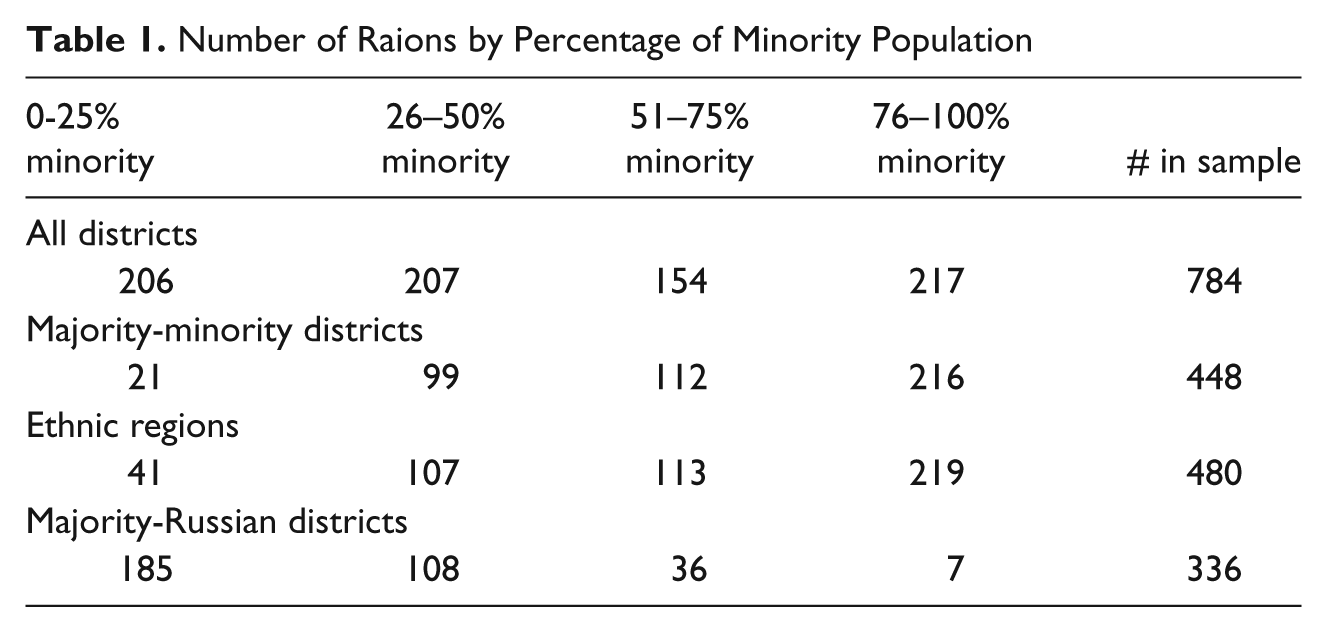
Ideally, we would have access to individual-level data to investigate questions that pertain to individuals within raions, such as surveys or exit polls that contain information about individual respondents’ ethnicity and vote choice. In Russia, unfortunately, these types of data are not available, and so our data set composed of raion-level data provides the best alternative. In addition, in our empirical section, we address the main problem that can arise when making inferences about the behavior of individuals based on aggregated data, that is, the risk of committing the ecological fallacy.
Simply put, this problem arises because it is difficult to discern the behavior of certain subgroups of voters based on correlations of aggregate variables within a geographic region also composed of other social groups. In our case, it would not be clear whether the success of minority candidates is the result of ethnic voting or higher minority turnout rates, even if raions with denser minority populations are positively related these outcomes. However, using King’s (1997) ecological inference solution, we can report with greater certainty whether minorities are voting for minority candidates at higher rates than Russians and whether higher turnout is the result of increased minority participation in particular. Thus, we begin our analyses of ethnic voting and minority empowerment by estimating the differences in voting patterns between minorities and Russians. We subsequently turn to a multilevel analytical strategy, for which we use the data aggregated at the raion level, to test hypotheses about varying characteristics at the higher district and regional levels.
The fact that our data set contains data at the subdistrict level provides certain additional advantages. First, data compiled at such a low level of aggregation allow us many more cases on which to base our analyses as well as a much smaller geographic region on which to base our findings, both of which are preferable to extrapolating voting preferences and turnout at the much larger and more diverse district or regional levels. Second, we can use the variation within electoral districts to examine the effects of ethnic federalism and geographic concentration of minorities at the district level. Theories about the effects of majority-minority districts argue that a certain threshold of minority concentration promotes the election of minority representatives and, in turn, increased minority voter turnout. Our raion-level data set allows us to examine the impact of ethnic federalism, majority-minority districts, and electorally successful minority candidates on the voter behavior of minority ethnic groups by comparing raions with varying proportions of minority populations located in districts and regions with these different characteristics.
Is There Ethnic Voting in Russia?
There is good reason to believe that ethnic voting exists in Russia, especially among ethnic minorities within their own federal regions. In 1995, ethnic minority groups with ethnic homelands won 24 seats in the SMD tier of Russia’s mixed electoral system. Of those 24 minority SMD deputies, 19 were elected in a SMD located in an ethnic-based region (Moser, 2008, p. 283). Given the geographic concentration of ethnic minorities prevalent in such regions, one might expect that this minority representation was driven in part by ethnic voting, that is, the mobilization of minority voters in favor of coethnic candidates.
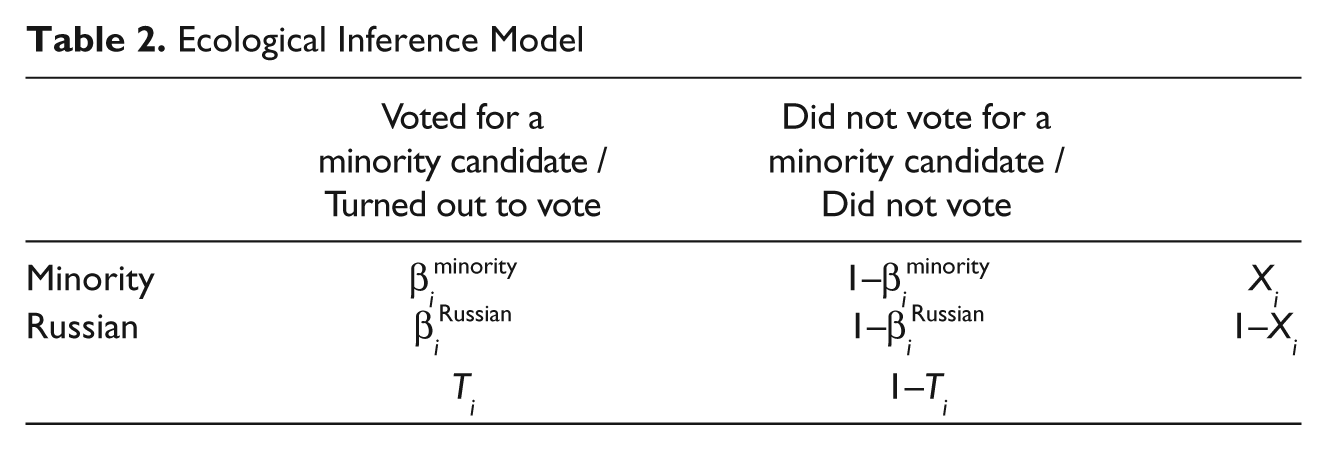
To assess whether ethnic voting occurs in Russia, we begin with the ecological inference (EI) solution developed by King (1997) to estimate the proportion of winning minority candidates’ vote shares that can be attributed to minority voters.
4
To this end, we use observed data, represented by T
i
and X
i
in Table 2, where, in this case, T
i
reflects the proportion of votes for the winning minority candidate in raion i and X
i
reflects the proportion of the total population that is ethnic minority in raion i. Based on these observed data, the EI solution estimates the unknown parameters
Ecological Inference Model
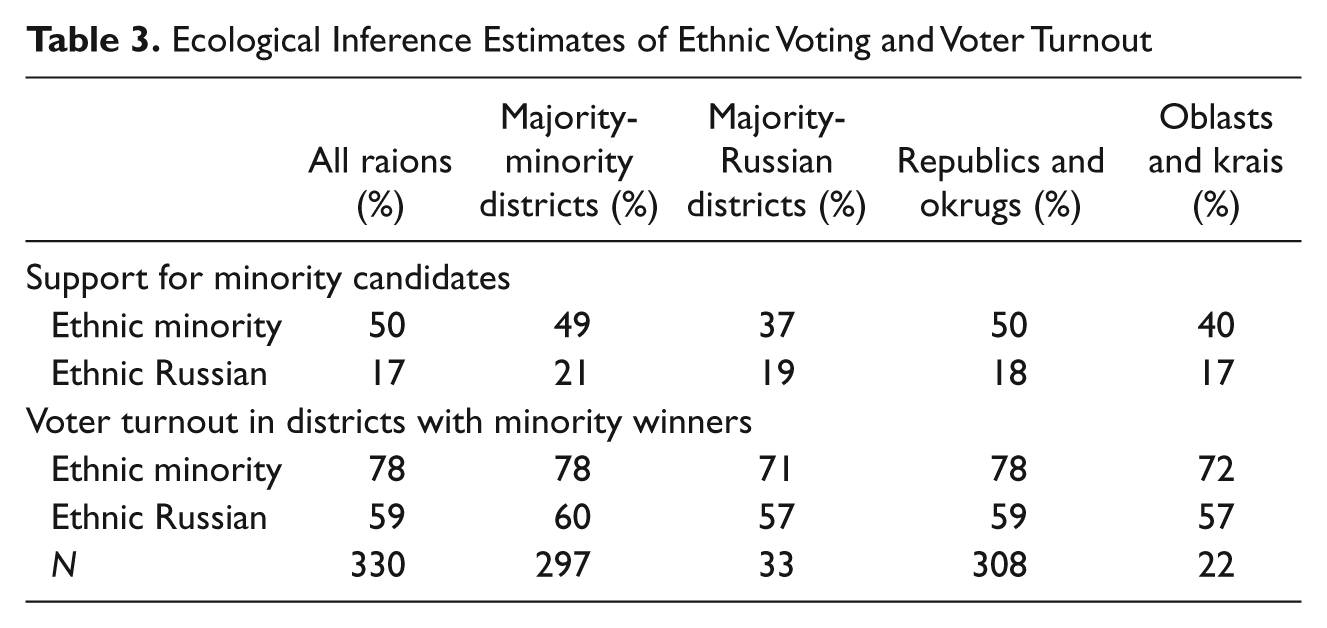
We report the average EI point estimates for each raion in the top half of Table 3. 5 In the districts in which minority candidates were electorally successful, minority voters contributed an estimated 50% to winning minority candidates’ vote shares. In contrast, Russian voters contributed just 17%. These estimates present a clearer picture of how minority candidates fared specifically among minority voters—a trend that holds across majority-minority and majority-Russian districts as well as ethnic and nonethnic regions but seems stronger in raions located in majority-minority districts and ethnic regions, suggesting they have an impact on ethnic voting.
Ecological Inference Estimates of Ethnic Voting and Voter Turnout
Next, we turn to a multilevel analytical strategy to test our first three hypotheses. This approach provides several important advantages. First, our data occur at three levels of analysis—the level of the raion, the level of the electoral district, and the regional level. If we ignored the nested structure of the data we would risk overestimating the strength of the effects for the variables at the district and regional levels and underestimating their respective standard errors, which could lead us to believe that they are significant when they are not. Second, our goal is to account for the effect of minority concentration on minority candidates’ electoral success as a function of district and region-level variables, including whether the raion is in a majority-minority district and whether or not the raion is in an ethnic region. The multilevel approach provides a comprehensive framework for testing the direct effects of variables at each level of analysis in addition to the cross-level interactions among variables. The approach differs from more conventional methods that introduce control variables and interactions terms in that it allows the differences in intercepts and slopes to vary randomly across regions and districts.
We construct the ethnic voting model in four stages to evaluate separately as well as jointly the effects at the raion, district, and regional levels. In the first stage we estimate a model to test the first hypothesis: Minority voters are more likely to support minority candidates. The model includes a variable reflecting the percentage of the raion population that is ethnic minority and its cross-level interaction with a variable indicating whether the district’s winning candidate is an ethnic minority. In this way, we can assess whether voters in raions with higher minority populations support winning candidates at a higher rate when the winning candidate is a minority. The raion-level equation is,

where Y ijk is the vote share for the winning candidate in raion i, in district j, in region k. π0jk is the raion-level intercept, π1jk is the coefficient for the percentage minority variable, and e ijk is the Level 1 error term, which we assume to be distributed normally with a mean of zero and variance σ2. When we add the district-level minority winner variable, the raion-level intercept π0jk and slope coefficient π1jk are specified as,

where, of most interest, β01 and β11 are the minority winner’s respective direct and interactive (with percentage minority) effects on winning candidates’ vote shares. The other parameters reflect district-level intercept and random effects.
In the second stage we add the majority-minority variable to the above district-level equations to test the second hypothesis: Minority voters are more likely to support minority candidates in majority-minority districts. The equations are,

where β02 and β12 are, respectively, the added direct and interactive effects of the majority-minority variable.
We subsequently specify a model to test our third hypothesis: Minority voters are more likely to support minority candidates in ethnic regions. Here, we introduce a Level 3 variable to test the effect of Russia’s ethnic federal structure on minority representation. Specifically, this variable distinguishes between ethnic regions, that is, republics and autonomous okrugs, and nonethnic oblasts and krais. At this stage, we remove the majority-minority variable from the district-level portion of the model to test the effect of ethnic regions independently. 6 The equations for the third level of the model are,
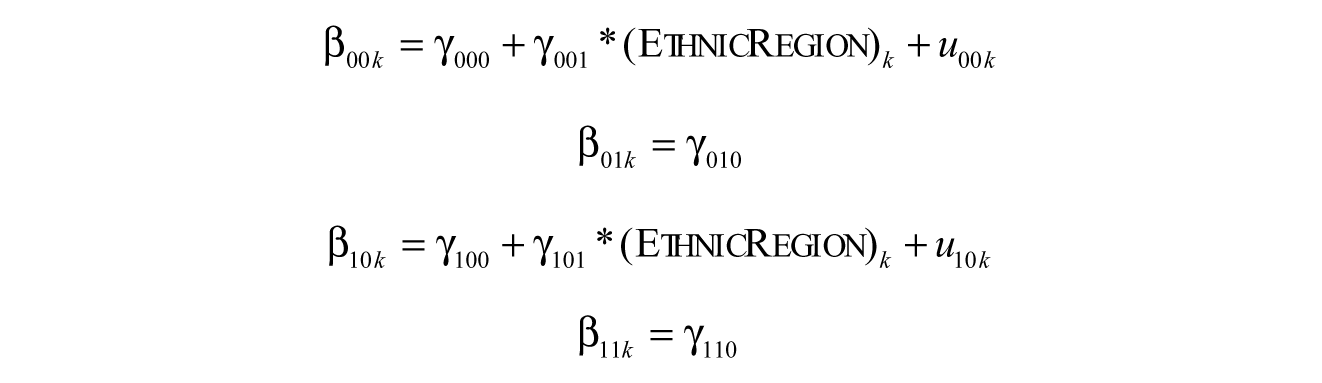
where the parameters of interest are γ001—the direct effect of ethnic region—and γ101—the effect of the interaction between ethnic region and percentage minority. We estimate the Level 3 random effects for the equations that concern the raion level only. Finally, γ010 and γ110 are the district-level intercept and slope effects for minority winner.
In the fourth and final stage, we simultaneously test the contextual effects of majority-minority districts and ethnic regions. In this fashion, the third level of the model is expanded to,
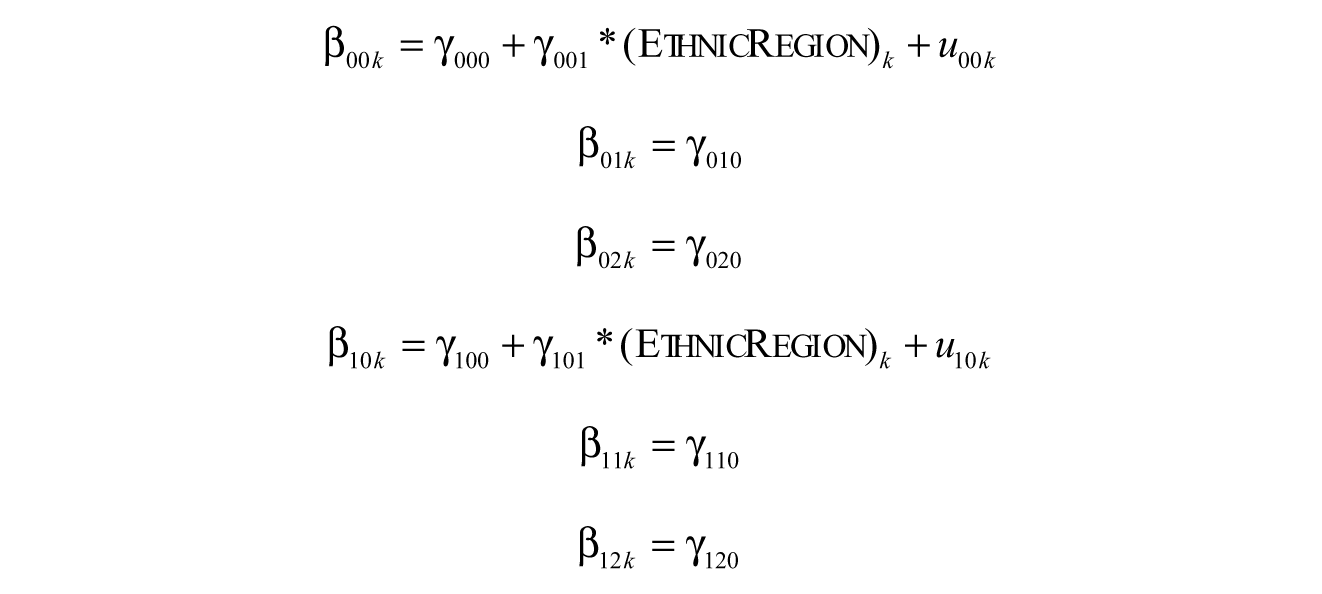
where γ020 and γ120 reflect the added district-level effects of the majority-minority variable. This fourth, all-inclusive model combines the above system of equations in the following manner
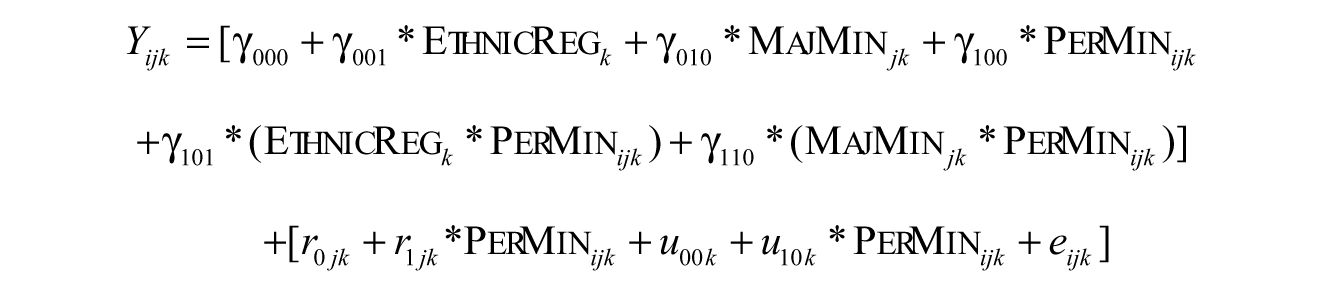
where the contents of the first set of brackets reflect the fixed portion of the model and the contents of the second set of brackets reflect the random components.
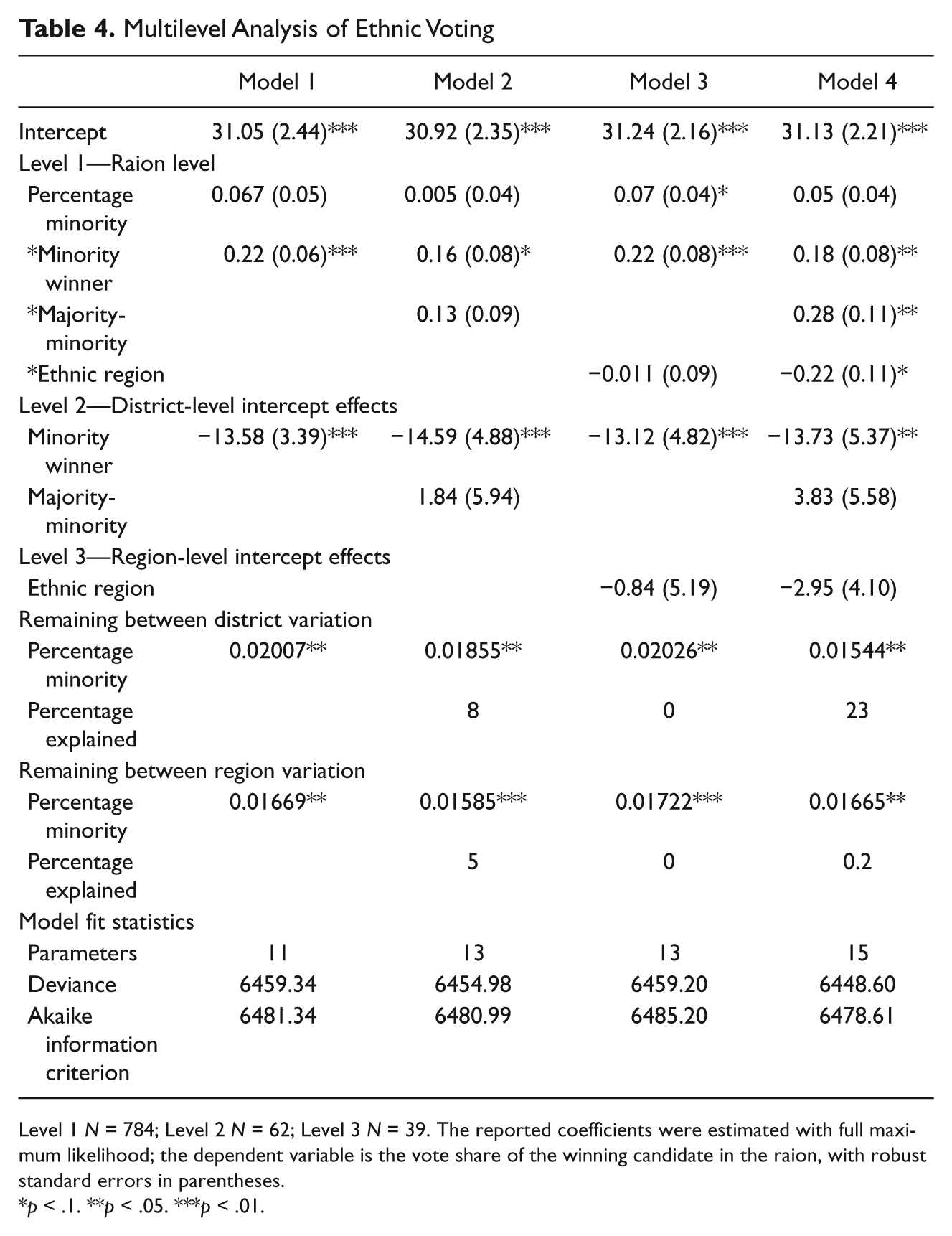
We present the results in Table 4 in the same order in which we constructed the model: Model 1 includes the raion-level percentage minority variable and the district-level minority winner variable, Model 2 incorporates the effects of majority-minority districts, Model 3 assesses the effects of ethnic regions, and Model 4 simultaneously evaluates the effects of majority-minority districts and ethnic regions.
Multilevel Analysis of Ethnic Voting
Level 1 N = 784; Level 2 N = 62; Level 3 N = 39. The reported coefficients were estimated with full maximum likelihood; the dependent variable is the vote share of the winning candidate in the raion, with robust standard errors in parentheses.
p < .1. **p < .05. ***p < .01.
In the first model, the negative direct effect of the minority winner variable indicates that winning minority candidates receive lower vote shares than their Russian counterparts across all districts. However, the positive and significant interaction between majority winner and percentage minority indicates that voters in raions with higher minority concentrations support winning candidates at a higher rate when the winning candidate is a minority. Thus, the evidence supports our first hypothesis—ethnic voting indeed occurs in Russia.
In the second model, we introduce the variable that allows us to test our second hypothesis about the effects of majority-minority districts. Of particular interest is the cross-level interaction between the majority-minority and percentage minority variables. The estimated coefficient is positive but just short of statistically significant. Turning to the third model, we find that ethnic regions exert a negative, although not significant, effect on the likelihood that ethnic voting will occur.
Finally, in the more fully specified fourth model that accounts for varying electoral contexts at both the district and regional levels, we find that the coefficient for the interaction between the majority-minority and percentage minority variables remains positive and the coefficient for the interaction between the ethnic region and percentage minority variables remains negative. Both these relationships are statistically significant. Accordingly, ethnic voting rates decrease in the context of ethnic regions and increase in the context of majority-minority districts. Thus, based on this evidence, we can accept Hypothesis 2 and reject Hypothesis 3—majority-minority districts, unlike ethnic regions, appear to promote ethnic voting.
Correspondingly, the measures of model fit indicate a closer fit between the data and the second and fourth models than between the data and the third model, which the respective magnitudes of the deviances and Akaike’s information criteria, relative to the least constrained first model, reflect. In addition, the inclusion of the majority-minority variable, unlike the ethnic region variable, accounts for some of the variation between districts and regions for the key raion-level percentage minority variable. These statistics further substantiate the finding that district-level characteristics are more important for explaining ethnic voting than region-level characteristics.
Geographic Concentration and Voter Turnout
Given the relative electoral success of minority candidates in non-Russian regions, one might expect that all three factors of interest—ethnically defined federal units, majority-minority districts, and the election of minority representatives—would each have an impact on voter turnout. Following the American literature and the minority empowerment theory, we would expect that ethnic minorities will turn out in greater force when the potential to elect a coethnic representative is greater (see, e.g., Banducci et al., 2004; Barreto, 2007; Barreto et al., 2004). The prevalence of electoral success among minority candidates in SMD elections within ethnically defined regions and the virtual absence of the election of such minorities in majority-Russian districts (see Moser, 2008) make for a highly conducive environment for testing the minority empowerment theory.
Our strategy for testing this theory in the Russian context follows the same logic as the above ethnic voting analysis. First, we use an EI model to estimate the proportion of minorities who voted versus the proportion of Russians who voted in the 330 raions in districts where minority candidates were elected. As with the first EI analysis, X
i
reflects the proportion of the total population that belongs to a minority group, and, in this case, T
i
represents the proportion of the total population that turned out to vote (see Table 2). The goal is to estimate
The point estimates derived for
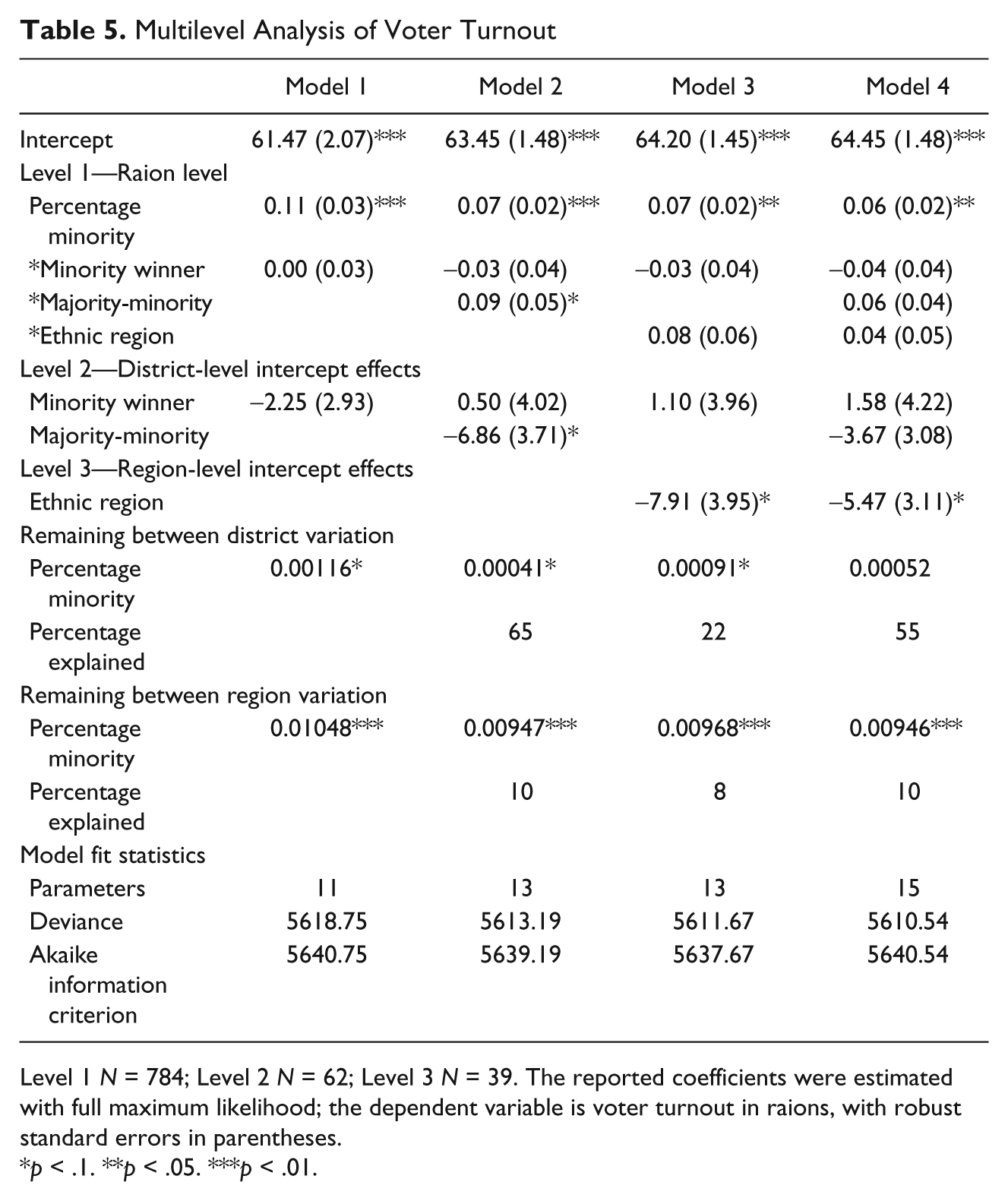
To assess the role of majority-minority districts and ethnic regions in the empowerment of minority voters, we construct the multilevel model following the same steps as the ethnic voting model. Thus, the equations are identical with the exception of the dependent variable Y ijk , which reflects, in this case, voter turnout in raion i, in district j, in region k.
We begin by constructing a model to assess the fourth hypothesis: Minority voters are more likely to feel empowered, and are therefore more likely to vote, when a viable minority candidate is running for office. In this model, we include the raion-level percentage minority variable, the district-level variable that indicates whether the winning candidate is a minority, and the cross-level interaction between the minority candidate and percentage minority variables. In this way, we can account for whether or not the district had a viable minority candidate in the race. Our second model incorporates district characteristics to test Hypothesis 5: Majority-minority districts increase the likelihood that minority voters will feel empowered, and therefore vote, when a viable minority candidate is running for office. Accordingly, we include a dichotomous variable indicating whether or not the district has a minority population of at least 45% and its cross-level interaction with varying levels of minority concentration across raions. In our third model, we test Hypothesis 6: Ethnic federal regions increase the likelihood that minority voters will feel empowered, and therefore vote, when a viable minority candidate is running for office. At this stage, we exclude the district-level majority-minority variable to test independently the effect of ethnic regions on voter turnout. Thus, we can assess in the fourth, all-inclusive model whether the estimates for the majority-minority and ethnic region variables perform in a comparable manner.
The estimates for the minority empowerment analysis presented in Table 5 indicate that raions with higher minority populations indeed have higher voter turnout levels—the coefficient for the percentage minority variable is positive and significant across all four models. The predictors at the district and regional levels can shed light on the reasons why we observe this trend.
Multilevel Analysis of Voter Turnout
Level 1 N = 784; Level 2 N = 62; Level 3 N = 39. The reported coefficients were estimated with full maximum likelihood; the dependent variable is voter turnout in raions, with robust standard errors in parentheses.
p < .1. **p < .05. ***p < .01.
Specifically, although the negative effects on the intercept from the majority-minority and ethnic region variables suggest that overall turnout levels are suppressed in such districts and regions, the positive and significant coefficient for the interaction between majority-minority and percentage minority in the second model indicates that majority-minority districts may well promote turnout among minority voters. In other words, turnout levels in raions with higher minority concentrations increase in the context of majority-minority districts. On the other hand, we fail to observe a similar effect from ethnic regions in the third model. The signs on the coefficients in the fourth model are consistent with the other models, although the coefficient for the interaction between majority-minority and percentage minority does not retain its statistical significance. However, we observe a substantial boost in the explanatory power of the key raion-level variable—percentage minority—with the inclusion of the majority-minority variable, reflected in the second and fourth models’ enhanced capacity to explain cross-district and, to an extent, cross-region variation in the dependent variable.
The mechanisms that promote minority mobilization in majority-minority districts, however, are not clear. More specifically, the presence of viable minority candidates does not appear to have any bearing on turnout levels among minority voters in Russia. Although this result raises new questions, the minority empowerment analysis in the Russian context produces some significant findings: Russia’s ethnic federal structure, counter to expectations, does not appear to influence the mobilization of ethnic minorities. Instead, in both the ethnic voting and minority empowerment analyses, the evidence points to intermediate institutions and, in particular, the presence of majority-minority districts as the more likely electoral framework to promote minority representation in Russia.
We can see the impact of majority-minority districts suggested by our quantitative analyses in paired comparisons of raions located in different types of electoral contexts. For example, in the ethnic republic of Adigei, the region’s one SMD had a majority Russian population, whereas the one SMD in the ethnic republic of Tuva had an ethnic composition that was decidedly majority-minority (88% Tuvan). EI estimates of raion-level results suggest that both regions experienced some mobilization along ethnic lines with minority voters turning out to vote and supporting the winning candidate at higher rates than Russian voters. However, in Adigei the winning candidate, who was Russian, garnered a much lower share of the EI estimates of the minority vote in raions (36%) whereas the native Tuvan winner averaged a much higher percentage of the minority vote (52%). However, despite the apparently different levels of ethnic voting in Adigei and Tuva, minority voter turnout was remarkably similar with the two districts averaging 75% and 73% turnout among minority voters, respectively.
Conclusions
The American context provides the most well-developed research agenda and theoretical lens for the study of the interrelationship among majority-minority districts, minority representation, and ethnic electoral mobilization. We have extended this research agenda by applying the concepts and hypotheses from this literature to a non-Western context. The comparative politics researcher is at a considerable disadvantage to his or her American politics counterpart because of a lack of data that would allow for individual-level analysis of the ethnic minority vote that takes into account regional and institutional dynamics such as majority-minority districts. Nonetheless, we feel that it is imperative to apply these theories and hypotheses beyond the American context because the inclusion of ethnic minorities within democratic contexts is such a vital issue for democratic consolidation around the world.
In this analysis of ethnic electoral politics in Russia, some of our expectations were confirmed whereas others were not. Like in the United States, we found that majority-minority districts in Russia seemed to promote ethnic voting—support by minority voters for victorious minority candidates (and consequently minority representation)—and, to an extent, minority voter turnout. However, contrary to expectations, ethnic federalism did not seem to provide its own additional impact on ethnic voting or minority turnout. This is rather surprising given the relative success of non-Russian candidates in ethnic regions in spite of the fact that ethnic minorities in such regions often did not constitute a majority of the population (Moser, 2008).
Such findings have important implications for the study of ethnicity and elections in comparative politics and for contemporary Russian politics. In terms of comparative politics, our findings support three important arguments. First, theories of ethnic voting and minority empowerment based on the American experience seem to extend to very different electoral contexts. The impact of minority geographic concentration and majority-minority districts seems to be quite applicable to new democracies such as Russia.
Second, contrary to the prevailing bias against the use of SMD elections in ethnically diverse countries, our findings suggest that SMD systems may provide very real benefits to geographically concentrated ethnic minorities. Previous work on minority representation in Russia’s mixed system showed that small, geographically concentrated minorities witnessed more representation through the SMD tier than the PR tier (Moser, 2008). This article expanded on these findings, demonstrating that SMD elections promoted ethnic voting and tended to increase minority voter turnout in Russia where majority-minority districts existed. Such findings, if generalizable, would be very important for issues of minority inclusion in new democracies.
Third, our findings suggest that the impact of ethnic federalism on minority representation in Russia is realized only indirectly through its impact on the ethnic demography of the country rather than through other more direct effects such as the development of minority elites in ethnic homelands or elite and mass perceptions of the role of minorities within ethnic-based regions. Further research in Russia and other countries that utilizes ethnic federalism is warranted on this point.
As for contemporary Russian politics, our findings suggest that the institutional change from a mixed electoral system to a pure PR system may have serious and detrimental consequences for the representation of ethnic minorities in the national legislature and the electoral mobilization of minorities. This study suggests that SMD elections provided an important mechanism for small, geographically concentrated minorities to gain access to legislative power and were a vital source of electoral mobilization for minorities. Moraski (2007) suggests that the move to replace Russia’s mixed electoral system with a pure PR system was driven by short-term interests of the increasingly authoritarian Putin regime to further centralize power; yet such a move may actually increase democratic consolidation over the long-term. Although this may be true, the findings presented here suggest that this electoral change also entails certain costs for the political inclusion of certain ethnic minorities.
Footnotes
The author(s) declared no potential conflicts of interest with respect to the authorship and/or publication of this article.
The author(s) received no financial support for the research and/or authorship of this article.