







Abstract
To combat the prevailing deficit and dysfunction paradigm, scholars have called for research focusing on LGB individuals from a positive psychology perspective. Thus, we examined the mediating roles of coping with discrimination via resistance and education/advocacy in the relations between heterosexist discrimination and positive LGB identity among 356 LGB persons. We also examined the potential moderating role of personal growth initiative between (a) heterosexist discrimination and five positive LGB identity dimensions, (b) heterosexist discrimination and engagement coping, and (c) engagement coping and the LGB identity dimensions. Findings revealed that coping with discrimination via education/advocacy mediated the relationships between heterosexist discrimination and belonging to the LGB community, commitment to social justice, self-awareness, authenticity, and relationship intimacy links. We also found coping via education/advocacy predicted both commitment to social justice and self-awareness for LGB persons with low and high personal growth initiative, with stronger relations for those with low personal growth initiative.
A large body of existing lesbian, gay, and bisexual (LGB) research has focused on (a) poorer mental health for sexual minority persons when compared to their heterosexual counterparts, and (b) the negative effects of minority stress on mental, relational, and physical health (Meyer, 2003; Szymanski & Moffitt, 2012). In reaction to this deficit and dysfunction paradigm, scholars have recently called for more research focusing on LGB issues from positive psychology and resilience perspectives (Meyer, 2015; Vaughan et al., 2014). Thus, we examined the mediating role of two forms of engagement coping (i.e., active efforts to negotiate with or approach a stressor; Wong, Kim, & Tran, 2010) in the relations between heterosexist discrimination and five dimensions of positive LGB identity, namely, belonging to a community, commitment to social justice, self-awareness, authenticity, and increased intimacy in romantic relationships. Our two forms of engagement coping were coping with discrimination via resistance and education/advocacy. We also examined the potential moderating or enhancing role of personal growth initiative (PGI) in the links between (a) heterosexist discrimination and five dimensions of positive LGB identity, (b) heterosexist discrimination and engagement coping, and (c) engagement coping and five dimensions of positive LGB identity. As such, we examined a moderated mediation model (see Figure 1).
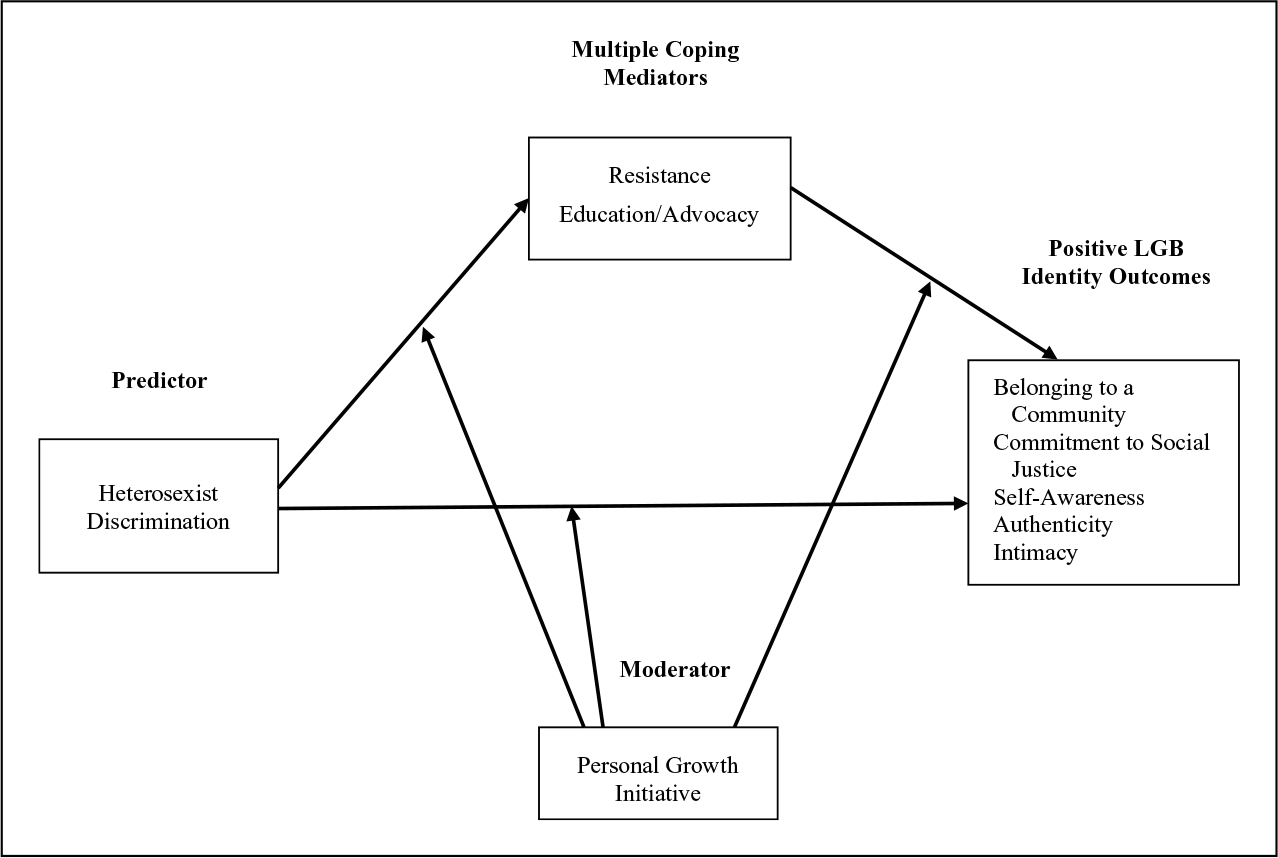
Hypothesized moderated mediation model predicting dimensions of positive LGB identity. LGB = lesbian, gay, and bisexual.
Heterosexism and LGB Positive Identity
As a result of coming out and navigating life as a LGB person within a heterosexist context, LGB persons may experience not only negative psychological outcomes but positive outcomes as well. The stress associated with living in a heteronormative context and dealing with experiences of heterosexist prejudice, discrimination, harassment, and rejection can offer LGB persons opportunities to develop and hone survival skills and transform heterosexist experiences into attitudes and actions that lead to resilience (Riggle, Whitman, Olson, Rostosky, & Strong, 2008). For example, several qualitative studies (e.g., Riggle et al., 2008; Rostosky, Riggle, Pascale-Hague, & McCants, 2010; Sung, Szymanski, & Henrichs-Beck, 2015) and one quantitative study (Riggle, Mohr, Rostosky, & Balsam, 2014) have identified positive aspects of LGB identification, including belonging to a community, commitment to social justice, self-awareness, authenticity, and increased intimacy in romantic relationships.
As a result of experiences of heterosexism, LGB persons may reach out to the LGB community as a source of support, validation, safety, acceptance, strength, and empowerment (Riggle et al., 2008; Rostoksy et al., 2010; Russell & Richards, 2003; Sung et al., 2015). This may lead to them having a sense of belonging, and feeling connected and supported in the LGB community (Riggle et al., 2014). In addition, experiences with heterosexist oppression may sensitize some LGB persons to prejudice and discrimination toward others. This sensitization increases LGB persons’ empathy and respect for other minority groups, encourages LGB advocacy efforts, and prompts the development of a larger commitment to social justice and equality (Riggle et al., 2008, 2014; Sung et al., 2015). Many LGB individuals may question their identity as a result of their sexual orientation because it deviates from the heterosexual norm (Riggle et al., 2014). Regular reflection on one’s sexual orientation may increase self-awareness (i.e., being more in tune with and insightful about oneself; Riggle et al., 2014) by fostering an understanding of how sexual orientation identity develops and how heterosexism influences one’s life. In addition, regular reflection may aid in understanding one’s sociocultural worldview, values, biases, and choices, while becoming more attuned to one’s own feelings about, and reactions to, heterosexism (Riggle et al., 2014; Sue & Sue, 2003). Through the process of coming out and grappling with heterosexism, many LGB persons choose to “not live a lie” and instead choose to live authentically. This authenticity primarily involves feeling secure in one’s LGB identity and a comfort in sharing this aspect of identity with others (Riggle et al., 2014). Finally, shared experiences of sexual orientation-based oppression in same-sex relationships can form the basis for mutual understanding, respect, and support of one another, potentially contributing to higher levels of intimacy in romantic relationships (Szymanski, Ikizler, & Dunn, 2016).
Taken together, successfully dealing with experiences of heterosexist prejudice, discrimination, harassment, and rejection may offer LGB persons opportunities for growth and contribute to enhanced functioning (Riggle et al., 2008). However, scant research exists examining mechanisms that might mediate the links between heterosexist experiences and dimensions of positive LGB identity and functioning. One such mechanism is engagement coping.
Engagement Coping as a Mediator
As noted above, engagement coping involves implementing strategies to actively deal with a stressor, whereas disengagement coping refers to efforts to avoid or withdraw from a stressor (Wong et al., 2010). Engagement and disengagement coping have been assessed at both general (i.e., how one copes with all of life stressors) and specific (i.e., how one copes with a particular type of stressor) levels (Wei, Alvarez, Ku, Russell, & Bonnett, 2010). Existing research indicates that heterosexist discrimination, a form of minority stress, is related to disengagement general coping styles, such as reactive, avoidant, and suppressive coping, but not to engagement general coping styles, such as reflective coping, among LGB individuals (c.f. Szymanski & Henrichs-Beck, 2014). However, scholars (e.g., Bandermann & Szymanski, 2014; Wei et al., 2010) have argued that general coping styles may not capture the unique ways in which LGB persons might deal with experiences of oppression. Thus, they advocate for the importance of examining discrimination-specific coping when examining the links between heterosexist discrimination and various outcomes. Furthermore, other scholars (Szymanski & Lewis, 2015) have suggested that engagement coping might be more important in explaining the relations between heterosexist discrimination and positive psychological outcomes (e.g., self-efficacy, well-being, life satisfaction, community engagement, identity development), whereas disengagement coping might be more important in explaining negative mental health outcomes (e.g., depression, anxiety, psychological distress). Therefore, we focused on two discrimination-specific engagement coping strategies, coping with discrimination via resistance and education/advocacy, that might mediate the relations between heterosexist discrimination and Riggle et al.’s (2014) five dimensions of positive LGB identity.
According to Wei et al. (2010), coping with heterosexist discrimination using resistance is the process of confronting perpetrators for the discriminatory behavior, whereas coping with education/advocacy is the process of raising self- and others’ awareness of discrimination, as well as implementing advocacy efforts to fight heterosexist oppression at individual, community, structural, and policy levels (Wei et al., 2010). LGB persons might use both of these strategies in the face of heterosexist discrimination to (a) contextualize rather than internalize oppression, (b) manage negative emotional responses (e.g., anger, frustration, depression, anxiety), (c) thwart self-devaluation associated with the event, (d) stimulate the perpetrator to change the discriminatory behavior, (e) inspire others to take action, and (f) feel empowered (Szymanski & Hilton, 2013; Szymanski & Moffitt, 2012).
Rostosky, Riggle, Horne, and Miller (2009) found that LGB persons living in states that had passed anti-LGB marriage amendments in 2006 reported increased LGB activism compared to LGB persons living in states that had no anti-LGB legislature on the ballots or had passed them in previous years. Relatedly, Swank and Fahs (2013) found that experiencing heterosexist discrimination predicted engagement in activism among LGB persons. Furthermore, Friedman and Leaper (2010) found that in a sample of sexual minority women, gendered heterosexism (i.e., discrimination that is both sexist and heterosexist) predicted commitment to both LGB and feminist activism. Another study of African American women found that more experiences of gendered racism were specifically related to more coping with discrimination via resistance and education/advocacy (Szymanski & Lewis, 2016). In addition, discrimination-specific disengagement coping strategies (i.e., internalization/self-blame and detachment), but not coping with discrimination via resistance and education/advocacy, were related to psychological distress. Finally, women who used confrontation to deal with oppression were less likely to engage in rumination and more likely to feel they had been effective than women who did not confront their perpetrators (Hyers, 2007). Given this small body of research, the need to examine various methods for coping with discrimination in the heterosexism-positive identity links is warranted.
PGI as a Moderator
PGI describes a process of intentional self-change in which a person is aware of the occurring change as well as actively engaged in the process of self-improvement (Robitschek, 1998; Robitschek et al., 2012). Moreover, it is a skill set consisting of cognitive and behavioral components that a person implements across different life domains. According to Robitschek et al. (2012), the cognitive component of PGI consists of two factors: readiness for change and planfulness. Readiness for change measures preparedness to engage in intentional self-change whereas planfulness describes the ability to plan the process of self-improvement. The behavioral component of PGI is similarly comprised of two factors: intentional behavior and using resources. Intentional behavior refers to the extent to which a person capitalizes on opportunities for personal growth, and using resources refers to the individual’s ability to access outside resources for self-improvement. PGI is conceptualized as a psychological health promoter and has been empirically linked to emotional, psychological, and social well-being (Robitschek & Keyes, 2009). In addition, PGI correlates negatively with psychological distress, depression, and anxiety (Hardin, Weigold, Robitschek, & Nixon, 2007; Weigold & Robitschek, 2011).
To date, there has been no research examining the relations among PGI, heterosexist discrimination, engagement coping, and positive LGB identity. However, theory and empirical research on non-LGB groups facing negative life events or other minority stressors suggest that PGI may serve as a moderator or enhancer in the links between (a) heterosexist discrimination and positive LGB identity dimensions, (b) heterosexist discrimination and engagement coping, and (c) engagement coping and positive LGB identity dimensions.
PGI may serve to enhance the relations between heterosexist discrimination and positive LGB identity. LGB individuals with greater levels of PGI who experience heterosexist discrimination may perceive this potentially traumatic and negative life event as an opportunity for personal growth, contributing to the development of positive LGB identity dimensions that include community, social justice, self-awareness, authenticity, and intimacy (Riggle et al., 2014). LGB persons with high PGI may be more resilient and be able to quickly recognize the potential harmful effects of discrimination. Consequently, individuals with high PGI may be better able to identify specific ways to respond to the heterosexist stressor, feel more confident in their ability to deal successfully with the heterosexist stressor, be more capable of changing the situation and/or their behavior, and feel more optimistic that positive change can occur (Hardin et al., 2007; Robitschek, et al., 2012). As a result, PGI may buffer any potential harmful effects on mental health, enhancing positive LGB identity. Supporting these assertions, Shigemoto, Ashton, and Robitschek (2015) found that greater levels of PGI predicted more positive psychological growth in individuals who experienced a traumatic event. Furthermore, a study by Yakunina, Weigold, and Weigold (2013) found that PGI served as a protective factor against acculturative stress on adjustment in a sample of international college students. Given the findings of these two studies, it may be that PGI not only acts as a buffer in the stress-distress links but also as an enhancer of the relations between stress and resilience, psychological growth, and positive identity. Therefore, LGB persons may naturally use their PGI skills such as using resources (e.g., supportive friends, family, community) to deal with these interpersonally traumatic and stressful minority experiences, enhancing and validating their identity as a member of the LGB community. Thus, the relations between heterosexist discrimination and positive LGB identity dimensions might be stronger for LGB persons with high PGI.
PGI may also serve to enhance the relations between heterosexist discrimination and engagement coping. Research on PGI and coping has shown that individuals with high levels of PGI are more likely to engage in problem-focused coping as well as actively cope with their distress (Robitschek & Cook, 1999; Weigold & Robitschek, 2011). LGB people with high PGI levels may be more likely to utilize engagement coping (i.e., resistance and education/advocacy) in response to heterosexist discrimination because they perceive themselves as having a greater sense of control over the situation, see this form of coping as an effective response, and recognize their experience as an opportunity for personal growth (Robitschek, 1998; Shigemoto et al., 2015). Therefore, LGB persons who have higher PGI may be more likely to take an active approach to problems (i.e., heterosexist discrimination) because of their higher sense of self-efficacy. Thus, it seems likely that the relations between heterosexist discrimination and coping via resistance and education/advocacy will be stronger for LGB persons with high PGI.
High levels of intentional efforts to grow and develop could also potentially strengthen the link between engagement coping and positive LGB identity dimensions by serving as a psychological health promoter. LGB persons with high levels of PGI may be more motivated to further develop their connection to the LGB community, social justice efforts, self-awareness, authenticity, and intimacy with others when confronting heterosexist discrimination due to their greater intentional engagement in the process of self-improvement. In short, LGB persons who possess this attribute may be more likely to use their PGI skills such as planning and using their resources to enhance their engagement coping skills, which in turn could lead to greater development of a positive LGB identity. Thus, it seems likely that the relations between coping via resistance and education/advocacy and positive LGB identity dimensions might be stronger for LGB persons with high PGI.
The Present Study
The present study aimed to address recent calls to focus on LGB resilience and optimal functioning in the face of sexual orientation-based oppression (Herrick, Stall, Goldhammer, Egan, & Mayer, 2014; Horne, Puckett, Apter, & Levitt, 2014; Meyer, 2015; Vaughan et al., 2014). We examined two forms of engagement coping—resistance and education/advocacy—as possible mediators of the heterosexist discrimination-positive LGB identity links. We hypothesized that more experiences of heterosexist discrimination would be related to higher levels of coping with discrimination via both resistance and education/advocacy, which in turn would be related to more belonging to the LGB community, greater commitment to social justice, higher levels of self-awareness, more authenticity, and greater levels of intimacy. In addition, we examined the potential moderating role of PGI in the links between (a) heterosexist discrimination and positive LGB identity dimensions, (b) heterosexist discrimination and engagement coping via resistance and education/advocacy, and (c) engagement coping via resistance and education/advocacy and positive LGB identity dimensions. Finally, we examined PGI as a moderator of the mediated relations of heterosexist discrimination via our two forms of engagement coping (resistance and education/advocacy) with greater positive LGB identity (i.e., community, social justice, self-awareness, authenticity, intimacy). As such, we examined a moderated mediation model (see Figure 1). We hypothesized that PGI would play an enhancing role.
Method
Participants
Our data were collected as part of a larger study that examined the mediating role of internalized heterosexism in the link between heterosexist discrimination and psychological distress, and the moderating roles of meaning in life (both search for and presence of) in the links between heterosexist discrimination and psychological distress, and between heterosexist discrimination and internalized heterosexism (Szymanski, & Mikorski, 2016). We have no future plans to use this dataset beyond the published study and the current one. As reported earlier (Szymanski, & Mikorski, 2016), the larger study sample consisted of 361 LGB persons. Five participants with substantial missing data (more than 20%) on one or more of the additional scales used for this study were eliminated from the dataset, which resulted in a final sample of 356 participants for the current study.
Of the 356 participants in the final sample, 62% self-identified as lesbian or gay (48% among women and 80% among men), 35% as bisexual (48% among women and 17% among men), and 3% as unsure. Participants’ descriptions of their current feelings of romantic/sexual attraction on a Kinsey-type scale ranging from 0 (attracted only to the opposite sex) to 6 (attracted only to the same sex) were as follows: 34% attracted only to the same sex, 44% attracted more to the same sex than the opposite sex, 14% attracted equally to both sexes, 8% attracted more to the opposite sex than the same sex; none of the participants reported being attracted only to the opposite sex. Twenty seven percent of participants (34% of women and 17% of men) reported alternating between lesbian/gay and non-lesbian/gay (e.g., bisexual) labels, whereas the other 73% consistently maintained their sexual identity label. Participants identified as women (59%) and men (41%); 11% also identified as transgender. The sample was 75% White/European American, 7% Latino, 7% Multiracial, 5% Asian American/Pacific Islander, 5% Black/African American, and 1% Native American. Participants resided in the following regions of the United States: 29% Northeast, 27% Midwest, 26% South, and 18% West.
Participants’ ages ranged from 18 to 73, with a mean age of 28.29 years (SD = 12.79). Sixty two percent (n = 219) of participants were currently enrolled in a college or university, with 19% being first year undergraduates, 23% sophomores, 17% juniors, 13% seniors, 21% graduate students, and 7% other. Of the 38% who were not currently students (n = 137), 39% had attained a graduate/professional degree, 24% had attained a 4-year college degree, 25% had attained a high school diploma, 10% had attained a 2-year college degree, and 2% had attained less than a high school diploma. Self-reported social class was 36% lower middle/working, 35% middle, 20% upper-middle, 7% poor, and 2% wealthy.
Measures
Heterosexist discrimination
Heterosexist discrimination was assessed with Szymanski’s (2006) 14-item Heterosexist Harassment, Rejection, and Discrimination Scale-LGB, inclusive version. Example items include “In the past year, how many times have you been treated unfairly by your family because you are a lesbian/gay/bisexual person” and “In the past year, how many times have you been treated unfairly by your co-workers, fellow students or colleagues because you are a lesbian/gay/bisexual person.” Each item is rated on a 6-point Likert-type scale from 1 (the event has never happened to you) to 6 (the event happened almost all the time [more than 70% of the time]). Mean scores were used with higher scores indicating more experiences of heterosexist harassment, rejection, and discrimination in the past year. Internal reliability (.90), as well as structural validity (via exploratory factor analyses) were supported (Szymanski, 2006). Construct validity was supported by significant positive correlations with several measures of psychological distress, internalized heterosexism, and sexual orientation-based hate crime victimization (Bandermann & Szymanski, 2014; Szymanski, 2006; Szymanski, & Henrichs-Beck, 2014). Cronbach’s alpha for the current sample was .89.
Coping with discrimination
We used Wei et al.’s (2010) Coping with Discrimination Scale (CDS) to assess engagement coping strategies. Although the whole scale was administered to ensure the integrity of the scale, we only used two of the five subscales that were relevant to our study: resistance (5 items) and education/advocacy (5 items). Example items include “I directly challenge the person who offended me” (resistance), and “I try to educate others about the negative impact of discrimination” (education/advocacy). Participants were instructed to rate each item assessing the degree to which they personally cope with heterosexist discrimination on a 6-point Likert-type scale ranging from 1 (never like me) to 6 (always like me). Mean scores were used, with higher scores indicating a greater use of that coping method. Wei et al. (2010) demonstrated support for internal reliabilities (range: .72–.90), 2-week test–retest reliabilities (range: .48–85), and structural validity (via both exploratory and confirmatory factor analyses). Construct validity for resistance and education/advocacy was supported by positive correlations with each other and with ethnic identity and self-esteem. Furthermore, education/advocacy was related to more engagement in general active coping. Incremental validity evidence for the CDS was obtained by explaining variance in outcome variables (i.e., depression, life satisfaction, self-esteem, ethnic identity) that could not be explained by general coping strategies. Cronbach’s alphas for the current sample were .81 for resistance and .90 for education/advocacy.
PGI
PGI was assessed with the Personal Growth Initiative Scale-II (PGIS-II; Robitschek et al., 2012), which consists of 16 items reflecting four factors: readiness for change, planfulness, intentional behavior, and using resources. Example items include “I take every opportunity to grow as it comes up,” and “I am constantly trying to grow as a person.” Each item has a 6-point response scale ranging from 0 (disagree strongly) to 5 (agree strongly). Due to Robitscheck et al.’s (2012) conceptualization of the PGI subscales as interrelated components of an overarching construct, as well as the importance of limiting the number of statistical tests conducted, we used the full scale score in this study. Mean scores were used with higher scores representing greater levels of PGI. Robitscheck et al. (2012) demonstrated support for internal reliabilities (range: .90–.94), test–retest reliabilities (range: .62–.82), as well as content, structural (via both exploratory and confirmatory factor analyses), and construct validity (via positive correlations with the original PGIS, internal locus of control, instrumentality, and assertiveness and no relationship with socially desirable responding). Cronbach’s alpha for the current sample was .88.
Lesbian, gay, and/or bisexual positive identity
LGB positive identity was assessed with Riggle et al. (2014)’s Lesbian, Gay, and Bisexual Positive Identity Measure (LGB-PIM). This 25-item scale includes five subscales each containing five items: belonging to community, commitment to social justice, self-awareness, authenticity, and intimate relationships. Example items include “I feel a connection to the LGBT community” (belonging to community), “My experience with my LGBT identity leads me to fight for the rights of others” (commitment to social justice), “My LGBT identity leads me to important insights about myself” (self-awareness), “I am honest with myself about my LGBT identity” (authenticity), and “My LGBT identity helps me to communicate better with my intimate partner” (intimate relationships). Participants respond to each item on a 7-point Likert-type scale ranging from 1 (strongly disagree) to 7 (strongly agree). Mean scores are used, with higher scores indicating greater levels of belonging to community, commitment to social justice, self-awareness, authenticity, and intimacy. Riggle et al. (2014) demonstrated support for internal reliabilities (range: .85–.95), test–retest reliabilities (range: .54–.87), as well as content, structural (via both exploratory and confirmatory factor analyses), and construct validity (via positive correlations with scales assessing positive well-being and group specific measures corresponding to subscale constructs). Cronbach’s alphas for the current sample were .90 community, .79 social justice, .83 self-awareness, .88 authenticity, and .83 intimacy.
Procedure
We recruited participants through research announcements emailed to the contact person of a variety of LGB listservs, organizations (e.g., college campus, regional, community, professional), and Internet resources. This person was then asked to forward the research announcement to the listserv and to eligible colleagues, students, and friends. In addition, we recruited participants through a Facebook “news feed” advertisement. Our ad was shown to specific Facebook users who indicated that they were over 18 years old, lived in the United States, spoke English, identified as LGB openly on their profile (i.e., women interested in women, women interested in women and men, men interested in men, men interested in women and men) or had Facebook interests related to one of these keywords: lesbian, gay, bisexuality, or LGB community. The ad also targeted individuals who “liked” LGB-related pages or who were part of LGB-related groups.
After participants clicked a hypertext link provided in the email research announcement or the Facebook advertisement, they were directed to an online web-based survey located on a secure firewall-protected server. Respondents went to the first page, read the informed consent, and then indicated consent to take the survey by clicking a button. They were then directed to the webpage containing the survey. We used a raffle drawing, awarding a $20 coffee shop gift card to each of five randomly chosen individuals, as a participant incentive. We used a separate raffle database so that participants’ contact information could not be linked to their survey responses. Participants reported hearing about the survey from a Facebook advertisement (39%), LGB-related listserv, group, or organization (46%), a friend or colleague (10%), and “other” (5%).
Results
Preliminary Analyses and Descriptive Data
Analysis of missing data patterns for the 356 participants in our final sample indicated that 54% of the items were not missing data for any participant/case, 90% of participants had no missing data, and no item had 2% or more of missing values. Given the very small amount of missing data, we used available case analyses procedures at the scale level (Parent, 2013). This is a type of conditional mean imputation where missing values are imputed from each person’s observed scores on the measure where missing points occur. Thus, available data was used to compute scale scores resulting in complete data for all 356 participants.
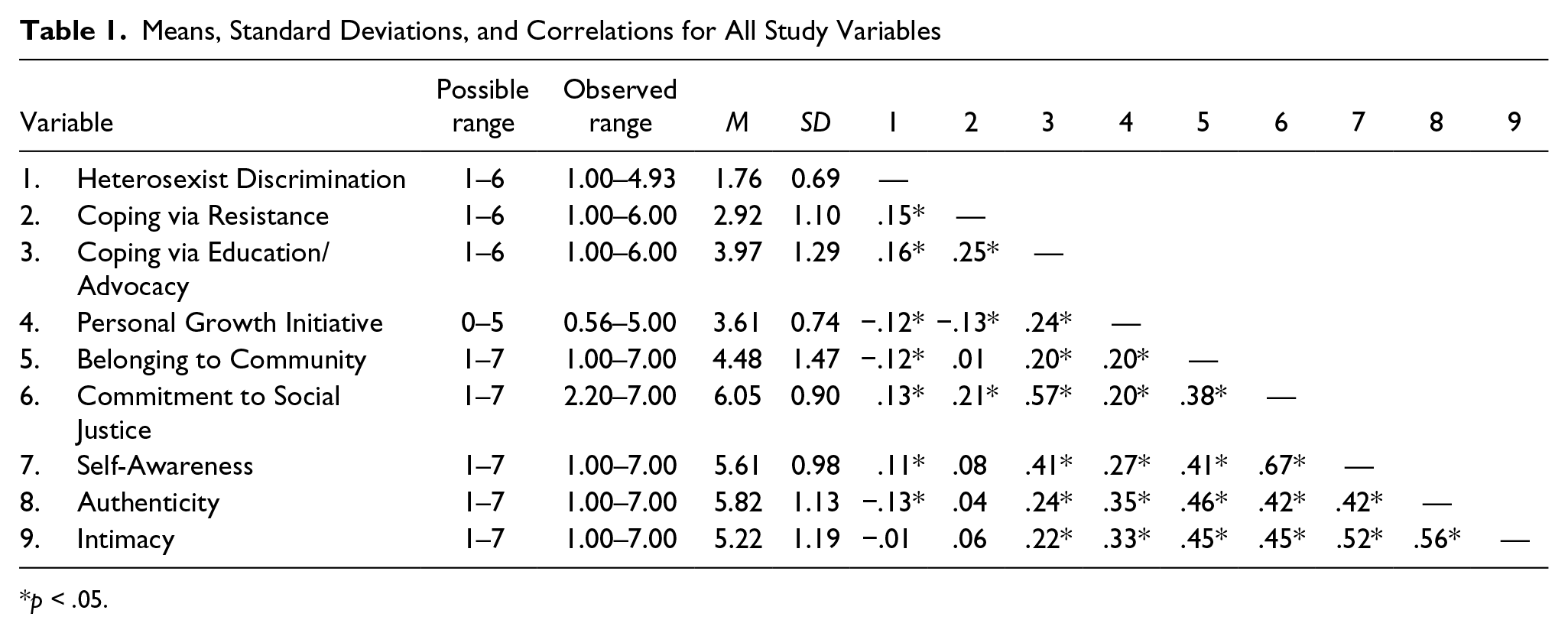
Examination of absolute values for skewness (range: .21–1.70) and kurtosis (range: .09 – 3.53) for each variable indicated sufficient normality (Weston & Gore, 2006). Five multivariate outliers were observed (Mahalanobis distance p <.001). Each of these outliers did not display a particular pattern in their responses (e.g., selecting “1” for all item level responses). Thus, we retained these outliers because we could not see any justifiable reason to remove them. Furthermore, none of these cases had a Cook’s distance greater than 1, indicating that they did not have a significant bearing on the overall model (Field, 2013). Descriptive statistics and bivariate correlations among all study variables are shown in Table 1. The percentage of observations at the scale minimum for heterosexist discrimination was 5%; at the scale maximum they were: 1% coping with discrimination via resistance, 6.5% coping with discrimination via education advocacy, 1% PGI, 2.5% community, 17% commitment to social justice, 6% self-awareness, 15% authenticity, and 8% intimate relationships. Examination of multicollinearity indexes for all analyses indicated that multicollinearity was not a problem (i.e., variance inflation factors < 10 and condition indexes < 30; Field, 2013; Tabachnick & Fidell, 2001).
Means, Standard Deviations, and Correlations for All Study Variables
p < .05.
Mediation Analyses
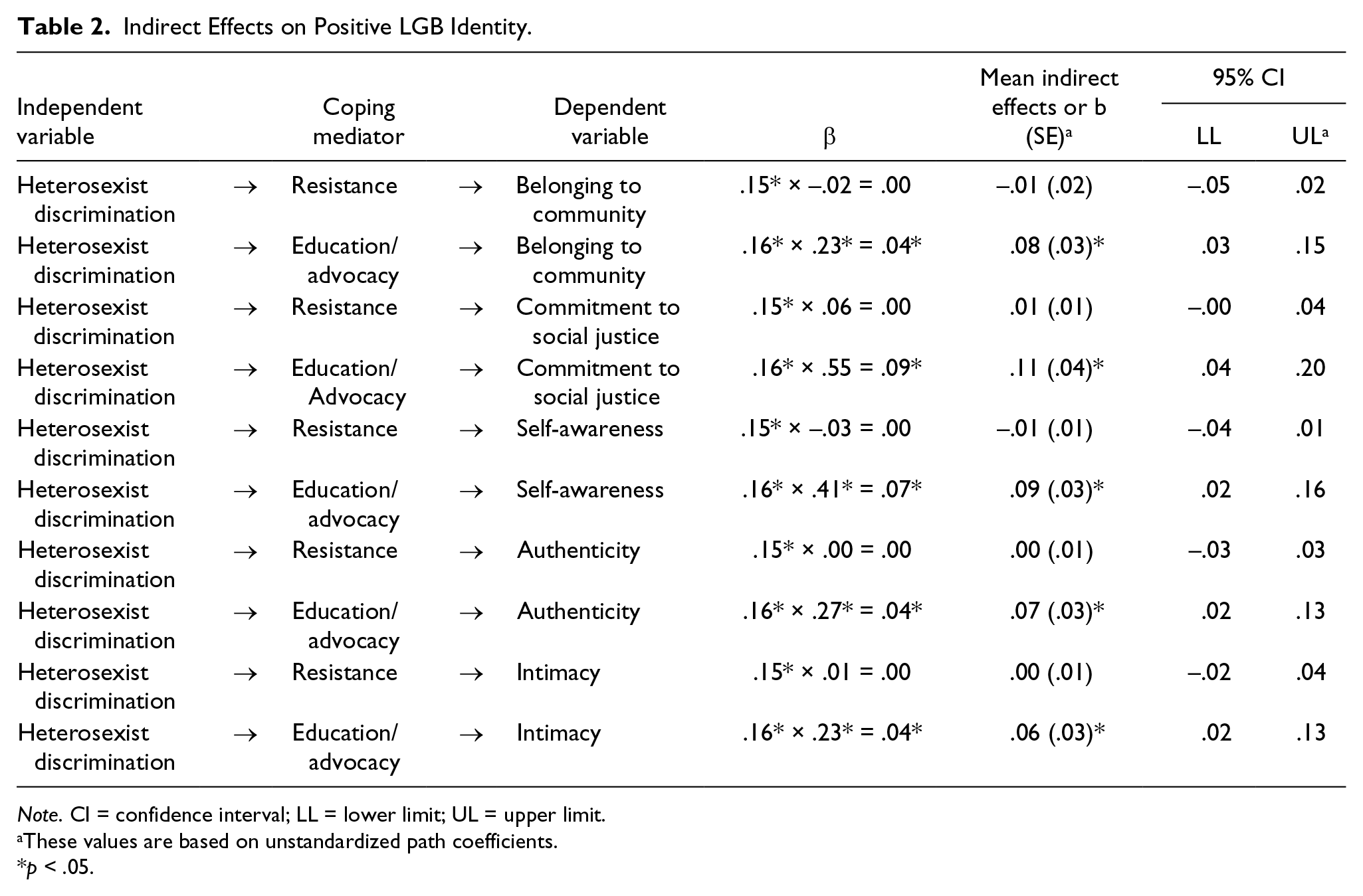
We used the PROCESS macro for SPSS (Model 4; Hayes, 2013) to test the hypothesized mediation models. We used bootstrapping analyses with 1,000 bootstrapping resamples to produce 95% confidence intervals (CIs) for the indirect effect because it does not assume normality in the distribution of the mediated effect and can be applied with confidence to smaller samples (Mallinckrodt, Abraham, Wei, & Russell, 2006; Preacher & Hayes, 2008). If the CI does not contain zero, one can conclude that mediation is significant and meaningful (Preacher & Hayes, 2008).
The results of our mediation models are shown in Table 2. The test of mediation using bootstrapping analyses revealed that coping with discrimination via education/advocacy mediated the links between heterosexist discrimination and belonging to the LGB community, commitment to social justice, self-awareness, authenticity, and intimacy. No mediated effects were found for coping with discrimination via resistance. The variance accounted for was 6% community, 33% commitment to social justice, 17% self-awareness, 9% authenticity, and 5% intimate relationships.
Indirect Effects on Positive LGB Identity.
Note. CI = confidence interval; LL = lower limit; UL = upper limit.
These values are based on unstandardized path coefficients.
p < .05.
Moderator and Moderated Mediation Analyses
To test the moderator and moderated mediation analyses, we again used the PROCESS macro for SPSS (Model 59; Hayes, 2013). Some readers may be familiar with the index of moderated mediation, which is a test used to determine whether the moderated mediation effect is significant or not. However, the index of moderated mediation cannot be provided for Model 59 unless the moderator is dichotomous (see Hayes, 2015). Thus, we followed Preacher, Rucker, and Hayes’s (2007) recommendations for examining moderated mediation hypotheses by providing evidence of moderation of one of the paths in the theorized causal model along with evidence of the moderation of one of the conditional indirect effects. For the latter, we report the recommended effect (B), bootstrap standard errors (SE), and 95% CI for the conditional indirect effect of X on Y at the values of the moderator.
Prior to analysis, predictor and interaction measures were centered (i.e., placed into deviation units by subtracting their sample means to produce revised samples means of zero). Results of these moderated analyses are shown in Table 3. PGI moderated the coping via education/advocacy, social justice (R² change = .03; significant F change p < .001), and self-awareness (R² change = .04; significant F change p < .001) links. Follow-up simple slopes analysis revealed that education/advocacy predicted social justice for LGB persons with low (SD = -1; B = .47) and high (SD = +1; B = .25) PGI, but this relationship was stronger for those with low PGI (see Figure 2). That is, the positive effect of coping via education/advocacy on commitment to social justice was stronger when PGI was low than when PGI was high. There was also evidence that the mediation effect involving coping with discrimination via education/advocacy differed as a function of PGI. Coping with discrimination via education/advocacy mediated the relationship between heterosexist discrimination and social justice when PGI was low, (-1 SD), B = .17; bootstrap SE = .07; 95% CI [.04, .32], and when PGI was high (+1 SD), B = .09; bootstrap SE =.04; 95% CI [.02, .18], but this relationship was stronger for those with low PGI.
Test of Personal Growth Initiatives as a Moderator of Predictor–Mediator, Mediator–Criterion, and Predictor–Criterion Links
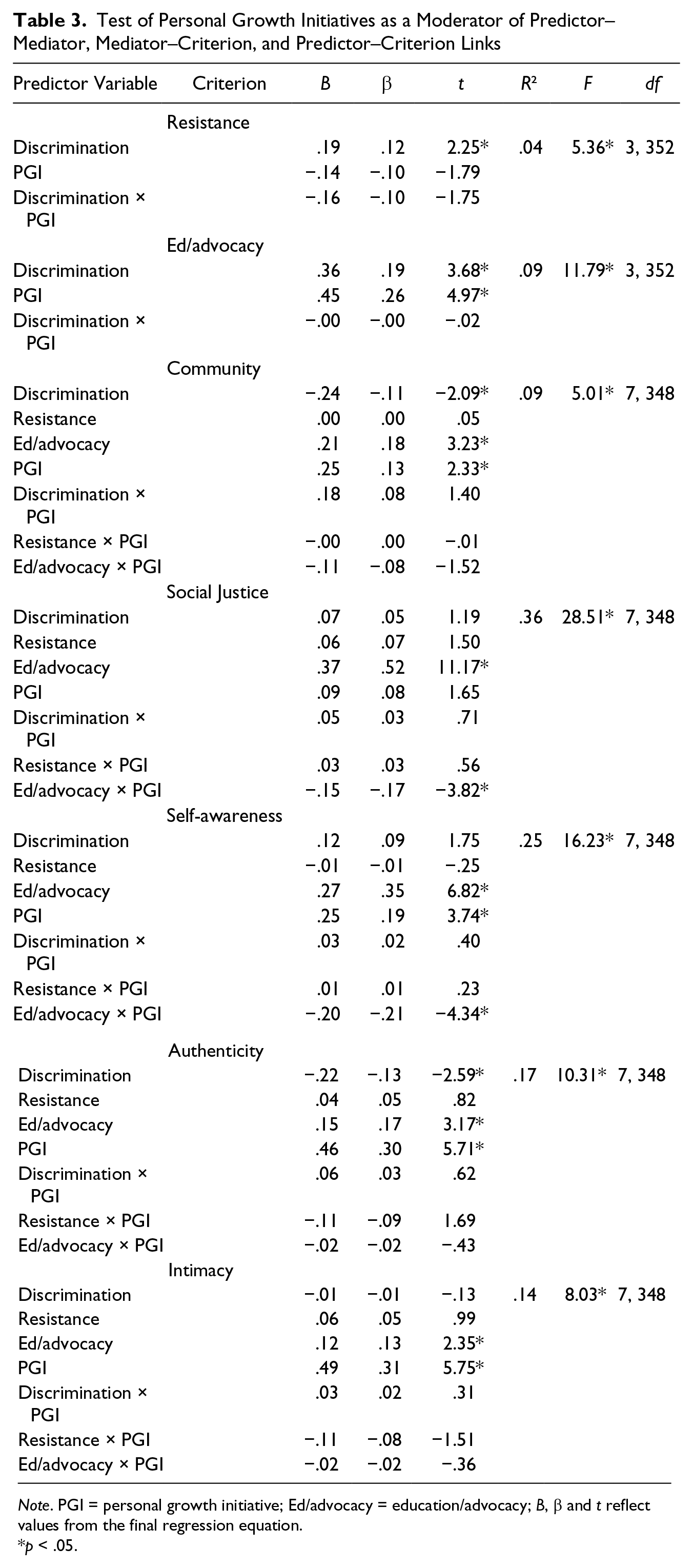
Note. PGI = personal growth initiative; Ed/advocacy = education/advocacy; B, β and t reflect values from the final regression equation.
p < .05.
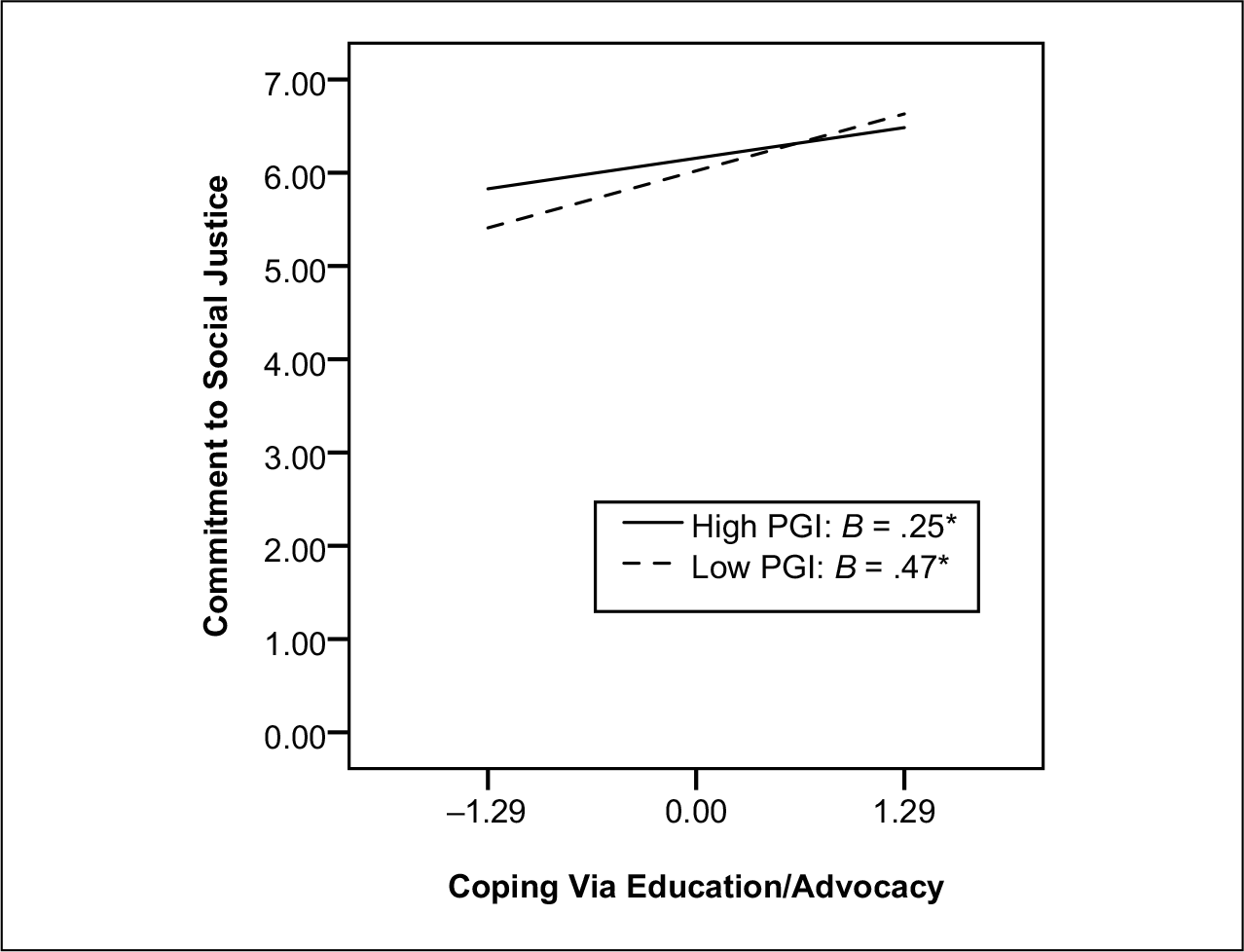
Interaction of coping with discrimination via education/advocacy and PGI on commitment to social justice. PGI = personal growth initiative.
As shown in Figure 3, education/advocacy predicted self-awareness for LGB persons with low (B = .41) and high (B = .12) PGI, but this relationship was stronger for those with low PGI. That is, coping via education/advocacy is more likely to predict self-awareness when PGI is low. Coping with discrimination via education/advocacy mediated the relationship between heterosexist discrimination and self-awareness when PGI was low, - B = .15; bootstrap SE = .06; 95% CI [.03, .29], and when it was high, B = .04; bootstrap SE =.03; 95% CI [.005, .12], but this relationship was stronger for those with low PGI. No other moderated effects were significant.
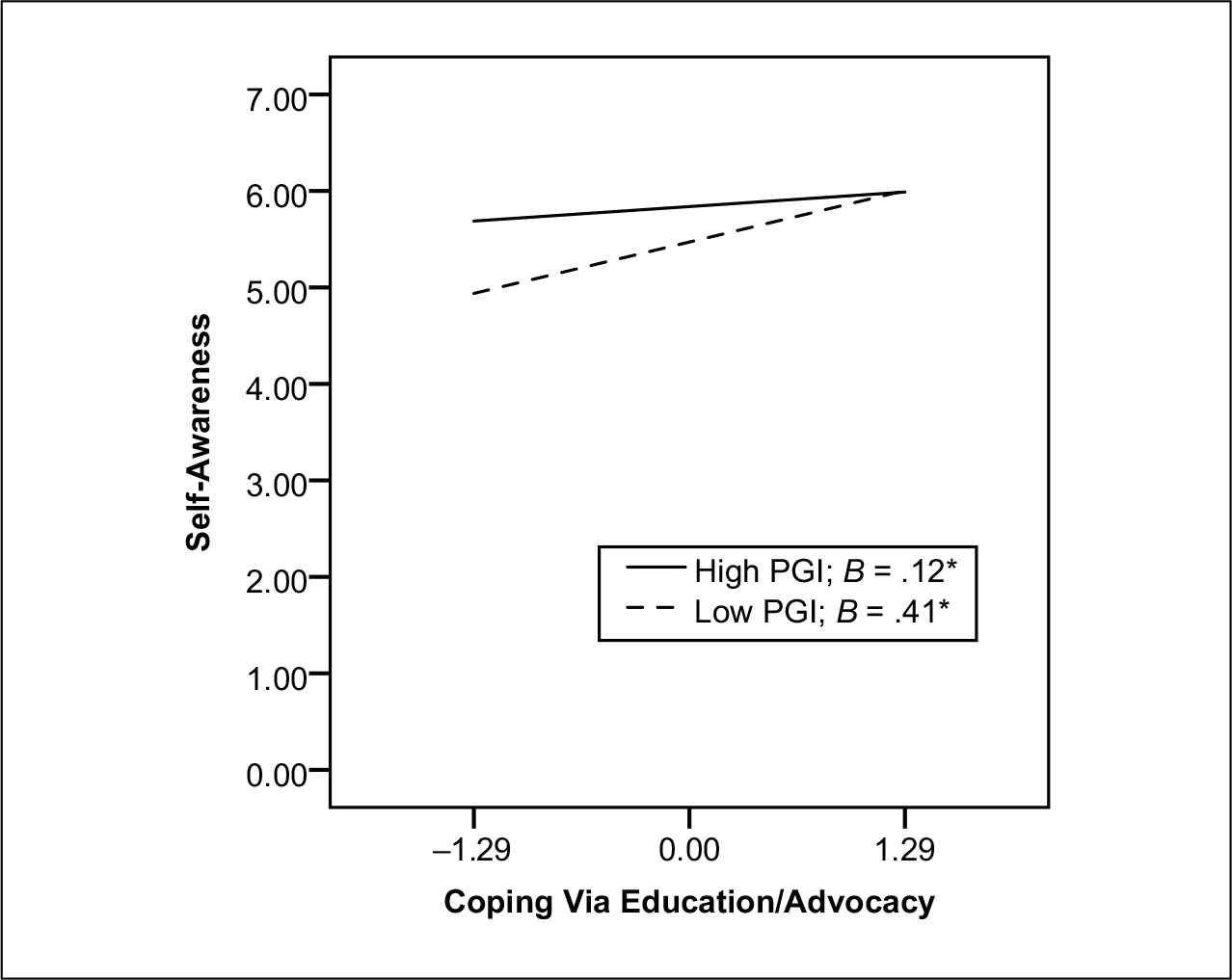
Interaction of coping with discrimination via education/advocacy and personal growth initiative on self-awareness. PGI = personal growth initiative.
Discussion
Although some LGB persons experience negative psychological outcomes due to heterosexism (Meyer, 2003; Szymanski & Moffitt, 2012), they may experience positive outcomes as well (Riggle et al. 2008, 2014; Rostosky et al., 2010). However, the link between heterosexist discrimination and positive outcomes is likely not a simple pathway, but rather a complex one. As such, we examined potential mediating and moderating factors in this link. Our findings illustrate the important mediational role of one form of engagement coping in the heterosexist discrimination and positive LGB identity link. More specifically, our results revealed that more experiences of heterosexist discrimination were related to more coping with discrimination via education/advocacy, which in turn was related to greater levels of community, commitment to social justice, self-awareness, authenticity, and intimacy in romantic relationships. These findings are consistent with previous research that highlights the relationships between heterosexist discrimination and involvement in collective action (i.e., feminist and LGB activism; Friedman & Leaper, 2010) as well as positive outcomes (such as empowerment) as a result of belonging to educational and advocacy organizations (i.e., gay-straight alliances; Russell, Muraco, Subramaniam, & Laub, 2009). Our results also support the idea that some forms of engagement coping may be more important in explaining the relationship between discrimination and positive psychological outcomes than in explaining the relationship between discrimination and negative mental health outcomes. Previous research has shown that engagement coping does not mediate the relationship between discrimination and psychological distress among sexual minority women (Szymanski & Henrichs-Beck, 2014) and African American women (Szymanski & Lewis, 2016).
No mediated effects were found for coping with discrimination via resistance. These findings are consistent with studies showing no effects of confrontation style coping in the discrimination-distress links among Southeast Asian refugees living in Canada (Noh, Beiser, Kaspar, Hou, & Rummens, 1999) and African American women (Szymanski & Lewis, 2016). Although previous research has shown some positive outcomes for confrontation (Hyers, 2007), there could be some potential drawbacks for the person who is confronting. For example, engaging in confrontation may escalate interpersonal conflict, increase threats to one’s psychological and physical safety, and contribute to feelings of powerlessness and hopelessness associated with trying to alter experiences that are frequently chronic and uncontrollable (Hyers, 2007; Noh et al., 1999; Villegas-Gold & Yoo, 2014). The benefits and costs associated with coping with discrimination via resistance may cancel each other out, producing no relation to positive LGB identity.
PGI may be an important process in fostering positive growth and LGB identity when faced with heterosexist discrimination. Our study extends previous research by examining the potential moderating role of PGI in the links between (a) heterosexist discrimination and aspects of positive LGB identity, (b) heterosexist discrimination and engagement coping, and (c) engagement coping and dimensions of positive LGB identity dimensions. Our findings revealed that PGI moderated the coping via education/advocacy and social justice and self-awareness links, and indicated support for mediated moderation via conditional process analyses. More specifically, coping via education/advocacy predicted both commitment to social justice and self-awareness for LGB persons with low and high PGI, although the relations were stronger for those with lower levels. Thus, it appears that engagement in education/advocacy efforts as a way to deal with heterosexist discrimination is particularly important to certain aspects of positive LGB identity (i.e., commitment to social justice and self-awareness) when LGB individuals have low levels of PGI. This finding is contrary to our hypothesis that the link between engagement coping and positive LGB identity dimensions would be stronger for those with high PGI.
Previous research has shown that PGI is related to more assurance that one will continue to grow (Robitschek & Cook, 1999) and to multiple domains of well-being, including a greater sense of helping one’s community (Robitschek & Keyes, 2009). Similarly, as shown in Table 1, our study found positive correlations between PGI and both commitment to social justice and self-awareness. Because those with high PGI may already be receiving direct benefits of their active engagement in the self-improvement process on their social justice commitment and self-awareness, it may not be as important in enhancing the link between coping via education/advocacy and aspects of positive LGB identity as it may be for those with low PGI. It may also be that LGB persons with low levels of PGI are focusing more energy and attention outside themselves (e.g., ‘society needs to change’) rather than internally on personal growth and change (e.g., ‘I need to change’), which may enhance the relationship between coping via education/advocacy and commitment to social justice and self-awareness. Furthermore, Russell et al. (2009) found that positive youth LGB identity development was related to three different aspects of empowerment: personal, relational, and strategic. It may be that LGB persons with low PGI may be more inclined to use a relational empowerment approach (e.g., focusing on group membership and social support, improving the lives of future generations, and empowering others) rather than a personal approach (e.g., feeling good about oneself, having a voice, and having agency or personal control), which enhances the link between their education/advocacy efforts and their commitment to social justice and self-awareness.
Beyond the coping via education/advocacy and social justice and self-awareness links, no other moderated effects of PGI were significant. Similarly, another study failed to find support for the interactive role of PGI in the links between self-discrepancies and both positive and negative affect (Hardin et al., 2007). Because PGI focuses on intra-individual change (e.g., self-actualization) it may not be as important when investigating variables such as discrimination and discrimination-specific engagement coping, which originate from, and are clearly connected to, an external heterosexist social context. It may be fruitful to examine other potential moderators that are not so individually focused, such as efficacy for collective action and sexuality-specific social support, in future research.
Limitations and Directions for Future Research
Although our use of Internet recruitment offered some advantages (e.g., access to a large, national sample), it also resulted in some disadvantages. For example, participants needed to have some degree of public self-identification as LGB and access to a computer in order to participate. LGB persons who are more “out” may be more likely to use engagement coping to deal with heterosexist discrimination and experience positive LGB identity than those who are closeted. In addition, our sample was primarily White and highly educated, and thus not representative of all racial or ethnic groups and educational levels. Future research might use other methods of participant recruitment that focus on underrepresented groups. Our study was also limited by a cross-sectional design. Although one-time surveys of LGB persons can provide an insightful snapshot of their current beliefs and life experiences, such data do not address temporal or causal hypotheses (Maxwell & Cole, 2007). Our study can offer some groundwork for future longitudinal and experimental studies to address the directional assumptions embedded in our theorizing.
Future research might be conducted to more fully examine the advantages and disadvantages of resistance as a coping mechanism for dealing with heterosexist discrimination. In addition, determining under what conditions resistance might be linked to positive outcomes is needed. Finally, future research might examine other potential mediators and moderators in the heterosexist discrimination-positive outcomes links, such as other engagement styles of coping, resilience, optimism, locus of control, and LGB identity salience.
Practice Implications
Developing positive coping mechanisms is extremely important in the face of oppression or other environmental influences outside of one’s control (Bowleg, Craig, & Burkholder, 2004; Szymanski & Heinrichs-Beck, 2014; Szymanski & Owens, 2008, 2009; Wilson & Miller, 2002). Therefore, this study adds to a body of literature on coping with environmental stressors specifically in the LGB community. Our findings suggest that teaching LGB clients skills for dealing with heterosexist discrimination that are linked to positive identity outcomes, such as education and advocacy, might be fruitful. In this vein, clinicians might (a) help clients identify the advantages and disadvantages of using different strategies; (b) use modeling, role-play, and provide constructive feedback on how to use education and advocacy interventions; and (c) process reactions related to its use outside the therapy room. Clinicians might also encourage LGB clients dealing with heterosexism to join advocacy groups or other LGBT-supportive community organizations. These strategies may be especially important when working with younger individuals who are still developing their LGB identity (Heck, Flentje, & Cochran, 2011) and for those with low levels of PGI.
Footnotes
Declaration of Conflicting Interests
The author(s) declared no potential conflicts of interest with respect to the research, authorship, and/or publication of this article.
Funding
The author(s) received no financial support for the research, authorship, and/or publication of this article.