







Abstract
The present study primarily aims to empirically identify offender trajectory groups and their associated first-, second-, and third-degree familial characteristics. Data were extracted on all first and subsequent juvenile offenders (n = 18,915) with criminal convictions (n = 90,393) from 1996 to 2008 recorded in the National Crime Registry of the State of Israel. Semiparametric group-based modeling identified low-rate (76.88%), late-peak adolescence (3.85%), middle-peak adolescence (10.22%), early-peak adolescence (3.22%), and chronic (5.83%) offender trajectories. Compared with low-rate offenders, chronic offenders had significantly more nonviolent offenses and first-degree imprisoned relatives who were imprisoned during childhood and adolescence. In conclusion, parental imprisonment appears to act as a parent–child separation mechanism that modestly increases the likelihood of chronic offending.
The longitudinal prediction of criminal behavior has a long history in criminology. Empirical analysis of the long-term course of offending dates back to the pioneering work of Wolfgang, Figlio, and Sellin (1972). They reported that a small group of chronic offenders were responsible for the majority of crimes. Their findings instigated many criminological studies and taxonomic theories that attempt to characterize chronic offenders (Blokland, Nagin, & Nieuwbeerta, 2005). In recent years, statistical methods have been developed to directly test taxonomic theories (e.g., Moffitt, 1993), such as trajectory analysis (Nagin & Land, 1993).
Trajectories in criminology refer to an empirically derived grouping of longitudinal patterns of criminal activity over age or time (Piquero, Farrington, & Blumstein, 2007). Trajectories are empirically derived with group-based modeling (Nagin, 1999; Nagin & Land, 1993). Examination of studies using official registry data (Bersani, Nieuwbeerta, & Laub, 2009; Blokland et al., 2005; Blokland & Nieuwbeerta, 2005; D’Unger, Land, McCall, & Nagin, 1998; Eggleston, Laub, & Sampson, 2004; Wiesner, Capaldi, & Kim, 2007) suggests that offenders may be clustered into between three and six groups based on their offending trajectory. Several trajectory groups have been identified using official registry, including low-rate, high-rate adolescence-peaked, and chronic offenders. Low-rate offenders’ crime rates remain consistently low during a given follow-up period. High-rate offenders’ crime rates peak during adolescence and then drop sharply during late adolescence and early adulthood. Chronic offenders’ crime rates peak during late adolescence or early adulthood, and then gradually decline by late adulthood.
Criminal careers research highlights several other key issues relevant to the study of offending trajectories. These include the heterogeneity of criminal careers, the use of sample rather than population-based research, the variations in demographic and criminal risk factors across trajectory groups (Piquero et al., 2007), and a lack of research on the association between developmental patterns of crime and imprisonment of family members (Murray & Farrington, 2005). To date, trajectory studies have not examined the association between the development of crime and timing of imprisonment of first-, second-, and third-degree family members. This is relevant because research suggests that familial imprisonment increases the likelihood of offspring delinquency (Murray & Farrington, 2008). Accordingly, the current research uniquely aims to examine the extent to which trajectories of offending are distinct and are associated with criminal career dimensions, demographic factors, and familial imprisonment in first- to third-degree family relationships.
Moffitt’s Dual Taxonomy Theory
The developmental taxonomy of crime (Moffitt, 1993) proposes that there are two offender types. The first offender group engages in criminal behavior across their life course. This group is known as life-course persistent offenders to denote their continuous antisocial behavior over the life course. A second larger group of offenders engage in criminal behavior for a short period. This group is known as adolescence-limited offenders to denote their temporary involvement in antisocial behavior during adolescence.
Life-course persistent delinquent behavior is rooted in neuropsychological deficiencies in conjunction with failed parent–child interaction (Moffitt, 1993). Offenders whose criminal activity follows this trajectory are likely to begin delinquency at a young age, display diverse offending patterns, and commit more violent crimes than other offenders (Blokland et al., 2005; Piquero, Paternoster, Mazerolle, Brame, & Dean, 1999). They are expected to display constant and frequent criminal behavior from adolescence through adulthood.
Unlike life-course persistent offenders, adolescence-limited offenders are not exposed to the same childhood risk factors and so are less likely to persist in life-course antisocial behavior. Their antisocial behavior is an instrumental way to demonstrate their independence (Moffitt, 1993). This offender group is thought to engage primarily in nonviolent offenses and display a flexible criminal response pattern. Their criminal activity peak during adolescence and is followed by a rapid decline. Recently, Moffitt’s theory has been extended to include other trajectory groups. These groups were labeled as recoveries who display antisocial behavior during childhood and at most moderate antisocial behavior during adolescence, and abstainers who refrain from antisocial behavior (Moffitt, Caspi, Harrington, & Milne, 2002).
Among the strongest predictors of persistent antisocial behaviors are criminogenic and family characteristics (Moffitt, 1993). Research generally has examined the validity of criminogenic risk factors with regard to Moffitt’s theory (Bersani et al., 2009; Blokland et al., 2005; Sampson & Laub, 2003). The association between imprisonment in up to third-degree relationships and life-course persistent offending is currently unknown. Theoretically, it has been suggested that separation from the family due to imprisonment is likely to be associated with developing a trajectory of chronic persistent offending (Moffitt, 1993).
Parental Imprisonment and Long-Term Juvenile Delinquency
Theory and research suggest that parental imprisonment is a traumatic event that has a unique separation effect. Unlike other natural yet tragic forms of separation (e.g., death), parental imprisonment increases deviant rearing conditions that exacerbate the risk of a persistent offending lifestyle (Juby & Farrington, 2001; Murray & Farrington, 2008; Murray, Janson, & Farrington, 2007). Research indicates that imprisoned parents have little opportunity to participate in family life, making positive social control and parental attachment difficult (Murray & Farrington, 2008).
The timing of the separation is detrimental to developing long-term offending pattern (Murray & Farrington, 2005). At a younger age, parental separation increases the risk of developing persistent offending trajectory. Recent analysis of the Cambridge Study of Delinquent Development has reported that parental imprisonment (before the age of 11) is strongly associated with measures of antisocial behavior to late adulthood (Murray & Farrington, 2008). Thus according to theory and empirical research, parent–child separation due to imprisonment that occurs during childhood may further induce long-term antisocial behavior among their offspring.
Theory also suggests that other family members, through the process of social mimicry, may promote persistent course of criminal offending (Moffitt, 1993). Theoretically, there is a maturity gap between biological and social age. Adolescents remain financially and socially dependent on their families, yet want to establish intimate bonds, acquire material belongings, and be independent. Life-course persistent offenders do not experience this maturity gap, as their lifestyle provides them with autonomy free from adult supervision (Moffitt, 1993). This lifestyle is noticed by other adolescents, and so social mimicry comes into play. This consists of a shift during early adolescence by persistent offenders from a peripheral to a more influential position on their peers (Moffitt, 1993). Delinquent behavior that develops prior to the influential position of persistent offenders is largely associated with social mimicry of delinquent family members during early adolescence (Moffitt, 1993). These family members may include parents, spouse, brothers and sisters, uncles and aunts, and distant relatives. It is noted, however, that an effective mimicry occurs between family members who have strong social bonds (e.g., by frequent interaction with the child). Thus, it is hypothesized that compared with the imprisonment of distant relatives, imprisonment of first-degree relatives will have more influence on chronic offending.
Collectively, the literature highlights three unique directions that guide the present study hypotheses. First, the number and form of trajectories of offending, and their association to demographic and criminogenic factors are unknown based on a national population-based data set. Second, parental imprisonment early in a child’s life may be associated with developing a long-term persistent offending trajectory. Finally, imprisonment of distant relatives will effect long-term persistent offending, although to a lesser degree than first-degree relationships.
Method
Israeli National Police Contact Registry
The data used in the present study consist of the entire Israeli juvenile offender population with first and subsequent police contacts during adolescence from 1996 to 2008 (N = 51,779). A police contact refers to a criminal act that warrants police attention that results in a criminal record (“rap sheet”). Given sufficient evidence, a criminal record may result in police charge and eventually a court ruling (i.e., conviction vs. nonconviction). By legal mandate, all this information is registered at the individual level in the Israeli police national computer system. To parallel prior research only police contacts that resulted in a conviction by court ruling were used (e.g., Bersani et al., 2009; Blokland et al., 2005). This left 18,915 (20.93%) offenders with at least one police contact that resulted in conviction by court ruling for a total of 90,393 convictions.
Biannual Person-Period Inclusion Criteria
In most official data, there is a significant time between police contact or arrest and court ruling. In the present study, the average elapsed time between a police contact and a conviction by court ruling was 16.64 (SD = 12.34) months. To reflect this, biannual person-period conviction rates ranging from 13 to 31 were created. Convictions that occurred at the age of 13 reflect an aggregate measure of convictions between ages 12 and 13, age 15 reflects an aggregate conviction measure between ages 14 and 15, and so on to the age of 31.
Criminogenic and Demographic Risk Factors
Demographic factors, including sex, ethnic minority status, marital status, socioeconomic status (SES), and death rates have been associated with delinquent behavior (Bowles & Florackis, 2007; Cottle, Lee, & Heilbrun, 2001). The current research examines the association between trajectory group membership and these factors. Offender SES in the current data is based on residential area (range = 1 [low SES area] to 20 [high SES area]), as provided by the Central Bureau of Statistics of the State of Israel. Neighborhood SES is an indirect measure of economic status that previous study indicated to be a valid measure for SES (Bollen, Glanville, & Stecklov, 2001).
Age of onset was examined as research and theory suggest that a younger age of onset is associated with long-term offending (Benda, Corwyn, & Toombs, 2001; Cottle et al., 2001). Age of onset in the present research ranges from 12 to 17 and is based on the offender’s age at first police contact. Second, the theory suggests that life-course persistent offenders engage in more serious violent crimes. The crime type variables in the present study were aggravated assault, simple assault, drugs, property, public order, theft, and vandalism. The proportion of convictions within each crime type variable was compared across the trajectory groups.
Familial Risk Factors
The current data uniquely consist of first- to third-degree imprisoned relatives. For a juvenile offender imprisonment of a spouse, a parent, or a brother or sister is a first-degree relationship, uncles or aunts are second-degree relationships, and other imprisoned relatives (i.e., cousins) are third-degree relationships. Familial imprisonment effects on the juveniles are considered prospectively by examining familial imprisonment prior to the children’s first conviction. For each juvenile offender, it was ascertained whether the imprisonment of a familial relatives occurred before birth, during childhood (from birth to age 10), or during adolescence (from age 11 to 17).
Data Merger
Data on family relationships are held by the Israeli Ministry of Interior, and the demographic and crime data are held by the Israeli Police Force. To merge these data sources, ethical approval was received from Bar-Ilan University Institutional Review Board, the Israeli Police Force, and the Israeli Ministry of Interior. Using unique identification numbers that are assigned to all citizens at birth in Israel or migration, the data sets were merged. Following the merger, all individual identification codes were encrypted to ensure the data were anonymous and access to the data was granted.
Statistical Analysis
The semiparametric group-based modeling procedure to analyze longitudinal data is particularly well suited to test typological developmental theories (Nagin & Land, 1993). The procedure assumes that the population is composed of a mixture of distinct groups (Nagin, 1999), and uses an appropriate data distribution to approximate it. In the case of conviction data, the procedure uses a Poisson distribution to approximate the distribution. The semiparametric group-based method uses a quadratic function (i.e., AGE, AGE2; Broidy et al., 2003; Laub, Nagin, & Sampson, 1998; Nagin, 1999) or a cubic function (Bersani et al., 2009; Sampson & Laub, 2003) to describe the age-crime curve relationship. The choice between functions depends on the length of the follow-up period (Eggleston et al., 2004). For long follow-up period studies, use a cubic function (i.e., AGE, AGE2, AGE3) to allow for flexibility in the shape of the trajectory. For relatively short-time period models, a quadratic function is more appropriate (Eggleston et al., 2004).
The follow-up period in the current research is relatively short and so the mixture modeling is assumed to follow a Poisson distribution of the form,

where
Posterior Group Membership
A useful by-product of the group-based modeling is the posterior probabilities of group membership (Nagin, 1999). This is the probability of assigning each offender to the groups that make up the model. Posterior probabilities are denoted by the equation,

where
Model Selection
The current analysis evaluated models with two to six latent trajectory groups. This range coincides with prior semiparametric group-based approach research (e.g., Nagin, 1999; Nagin & Tremblay, 2001). To determine the optimal number of groups like prior mixture modeling research (D’Unger et al., 1998), the Bayesian information criterion (BIC; Schwarz, 1978) was used. The BIC measure is used to compare unnested models and rewards parsimonious models. The BIC is defined as,

where p is the number of parameters and n is the sample size. Smaller BIC values correspond to a more parsimonious and thus better model (Kreuter & Muthén, 2008).
The current data can be regarded as multiple age-cohort accelerated longitudinal design where participants of varying ages are followed over time (Lauritsen, 1998). This design has been used previously to examine criminal trajectories (Bersani et al., 2009; Blokland et al., 2005). If estimates of crime involvement are not significantly different across cohorts, then it is reasonable to assume that a single developmental trajectory describes all cohorts (Lauritsen, 1998). Accordingly, trajectory analysis was conducted separately for three birth cohorts (1982, 1983, and 1984 birth cohorts). Results indicated that multiple age cohorts and unequal follow-up periods have a minor influence on the number of groups that best fit these data (results available on request).
Trajectory Group Membership Characteristics
The derived trajectory groups were distinguished on the demographic, criminogenic, and familial imprisonment factors using the Marascuilo (1966) procedure. The Marascuilo procedure is designed to examine the null hypothesis that the proportions of demographic, criminogenic, and familial imprisonment variables are equal across the trajectory groups. The advantage of the procedure over the traditional χ2 analysis is that it allows multiple-contrast comparisons that are the present study focus.
Results
Trajectory Analyses
Table 1 reports the BICs for all convicted juvenile offenders across trajectory Models 2 to 6. These results indicated that a model with five trajectories was the best model to the data. The posterior probability of correct classification was 1.0, which indicated that the model fitted the data very well. Moreover, the average and median posterior group membership probabilities across the five-group model ranged from .84 to .98, which indicated good classification accuracy (Nagin, 1999).
BIC Results for the Convicted Juvenile Offenders and Their Trajectory Posterior Probabilities Distribution.
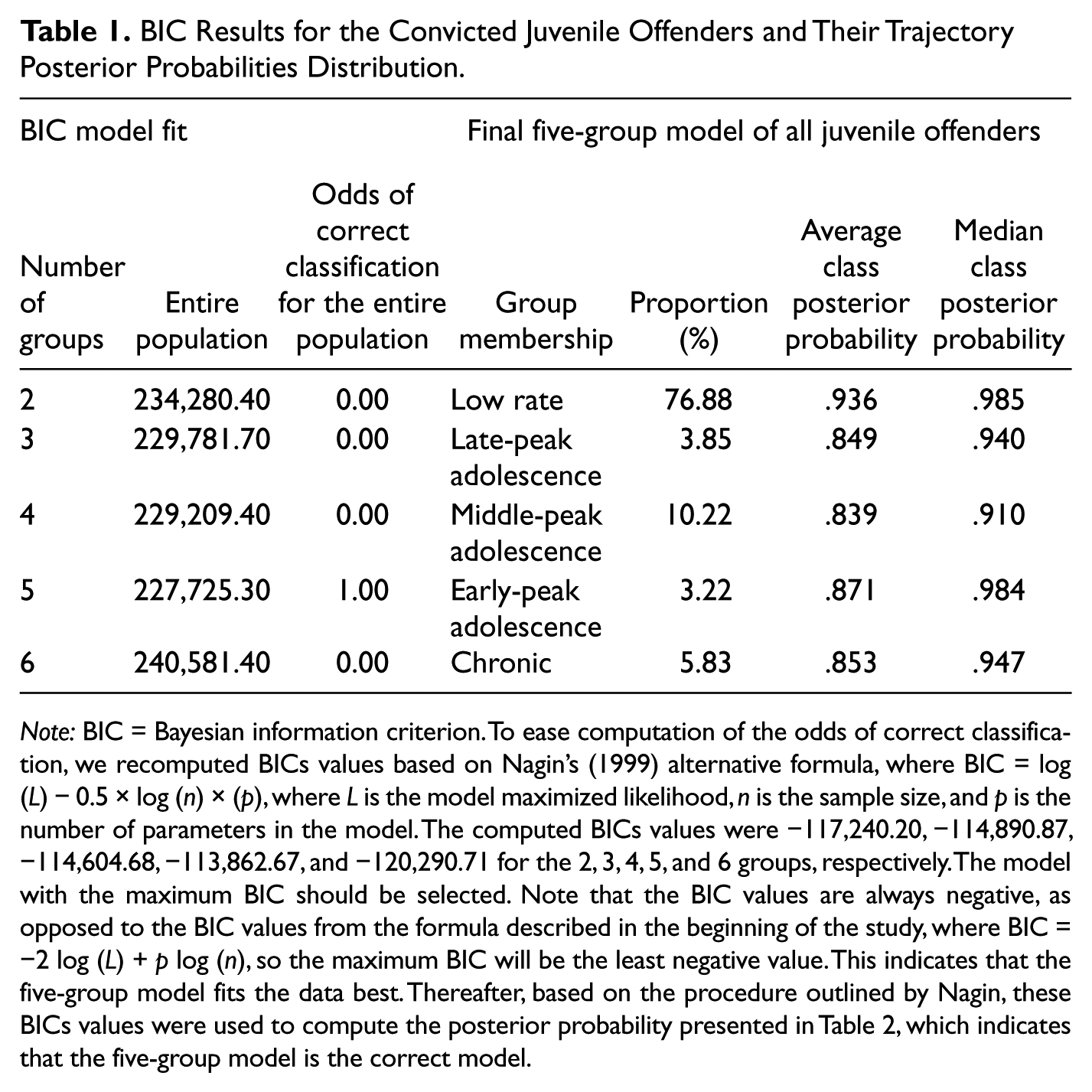
Note: BIC = Bayesian information criterion. To ease computation of the odds of correct classification, we recomputed BICs values based on Nagin’s (1999) alternative formula, where BIC = log (L) − 0.5 × log (n) × (p), where L is the model maximized likelihood, n is the sample size, and p is the number of parameters in the model. The computed BICs values were −117,240.20, −114,890.87, −114,604.68, −113,862.67, and −120,290.71 for the 2, 3, 4, 5, and 6 groups, respectively. The model with the maximum BIC should be selected. Note that the BIC values are always negative, as opposed to the BIC values from the formula described in the beginning of the study, where BIC = −2 log (L) + p log (n), so the maximum BIC will be the least negative value. This indicates that the five-group model fits the data best. Thereafter, based on the procedure outlined by Nagin, these BICs values were used to compute the posterior probability presented in Table 2, which indicates that the five-group model is the correct model.
The average conviction rates at each age are presented for the five trajectory groups in Figure 1. The majority of offenders (76.88%) fell into a “low-rate offenders group.” This group had a consistently low conviction rates throughout the entire follow-up period. A second group was labeled as “late-peak adolescence” (3.85%). This group showed a marked increase in conviction rates during late adolescence followed by a rapid decline to a zero conviction rate by the age of 25. A third group labeled “middle-peak adolescence” was identified (10.22%). Their conviction rates rapidly increased until midadolescence and then consistently decreased to a zero conviction rate by the age of 23. The fourth group that was identified was labeled “early-peak adolescence” (3.22%). This group’s conviction rates peaked by early adolescence. Although, this group’s high conviction rates declined sharply with age, they maintained a low offending rate throughout early adulthood. The final group of offenders was the “chronic group” (5.83%) that displayed a steady conviction rate increment through early adulthood, a peak between the ages of 19 and 20, a gradual desistence from crime from their 20s, and a zero conviction rate by the age of 30.
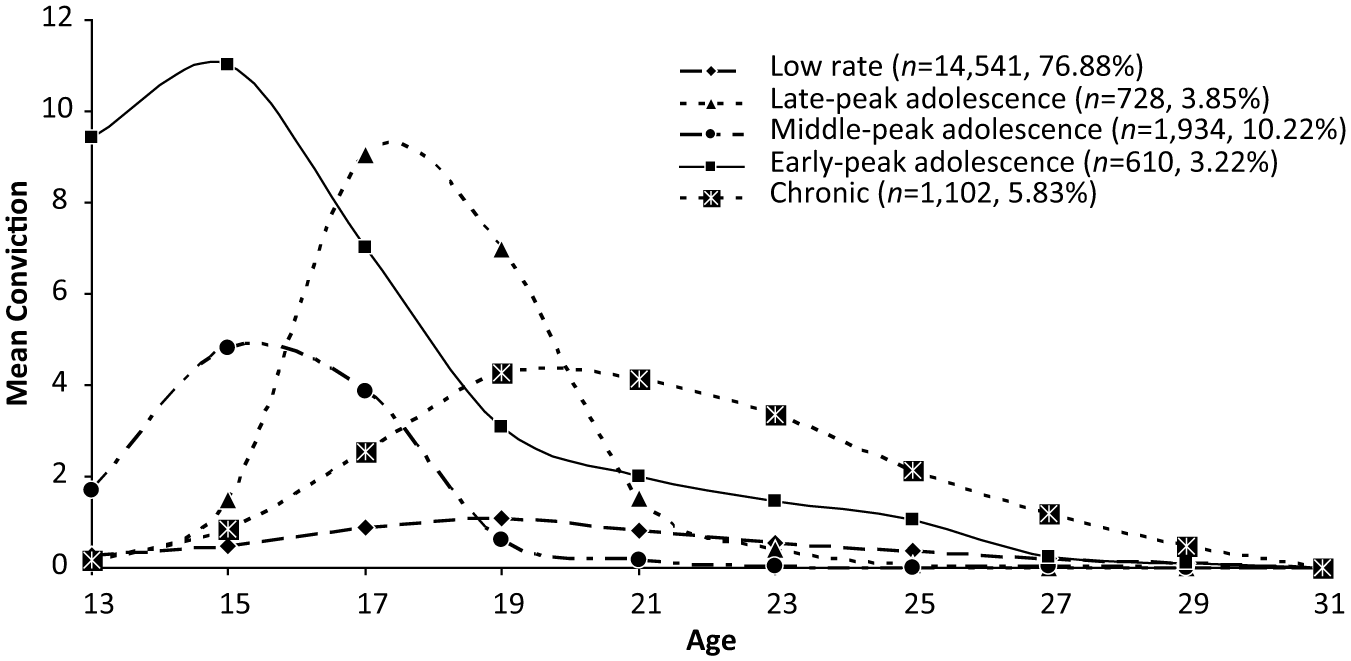
Trajectories of conviction rates among juvenile offenders’ population.
Risk Factor Characteristics by Trajectory Group Membership
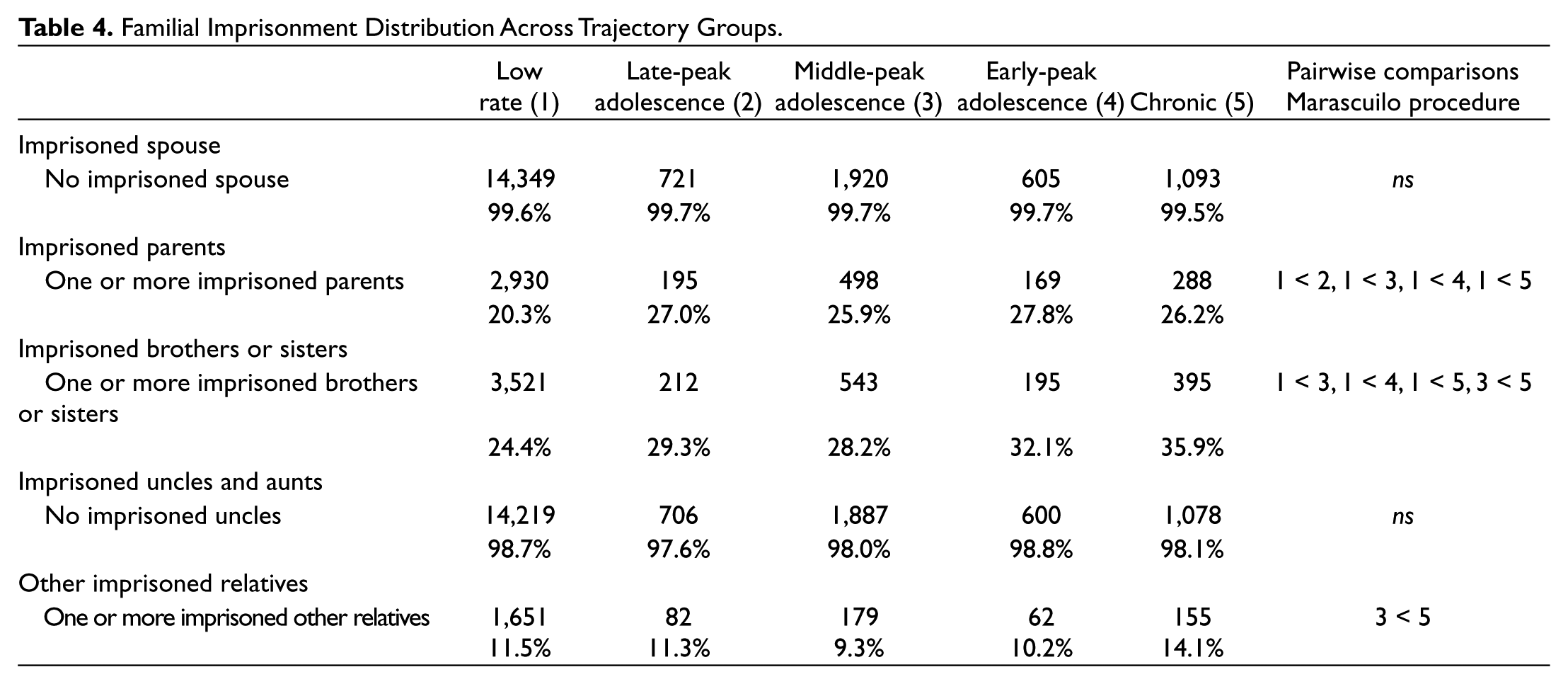
Differences on demographic, criminogenic, and familial characteristics between trajectory groups were examined (see Tables 2-5). Analysis of demographic characteristics indicated that the low-rate group had, in general, significantly higher proportion of female offenders, and natives than the other groups (Table 2). In addition, the middle-peak adolescence group had higher proportions of single offenders than the other groups. Finally, the low-rate group had significantly lower proportions of low SES compared with the chronic group (see Table 2).
Demographic Factor Distribution Across Trajectory Groups.
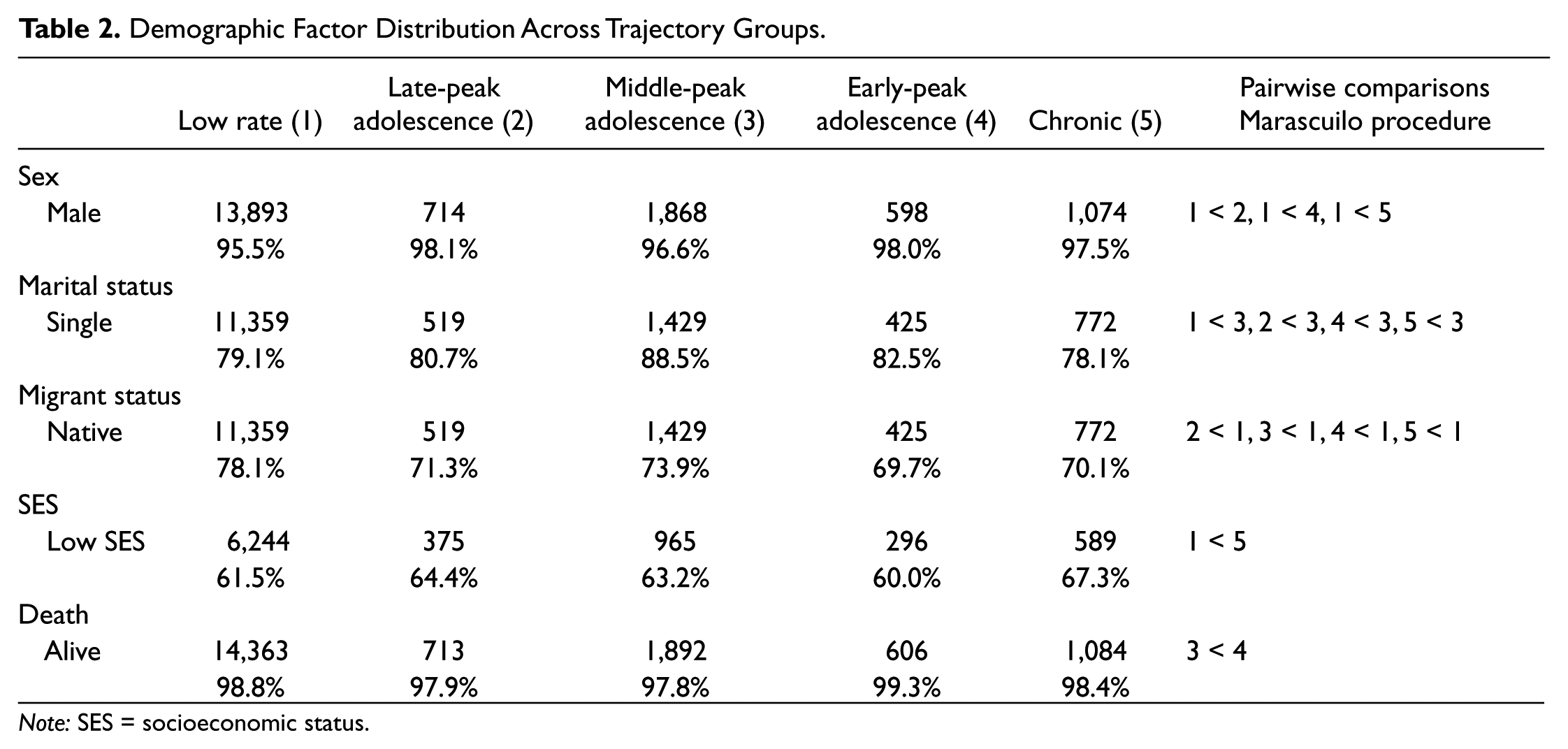
Note: SES = socioeconomic status.
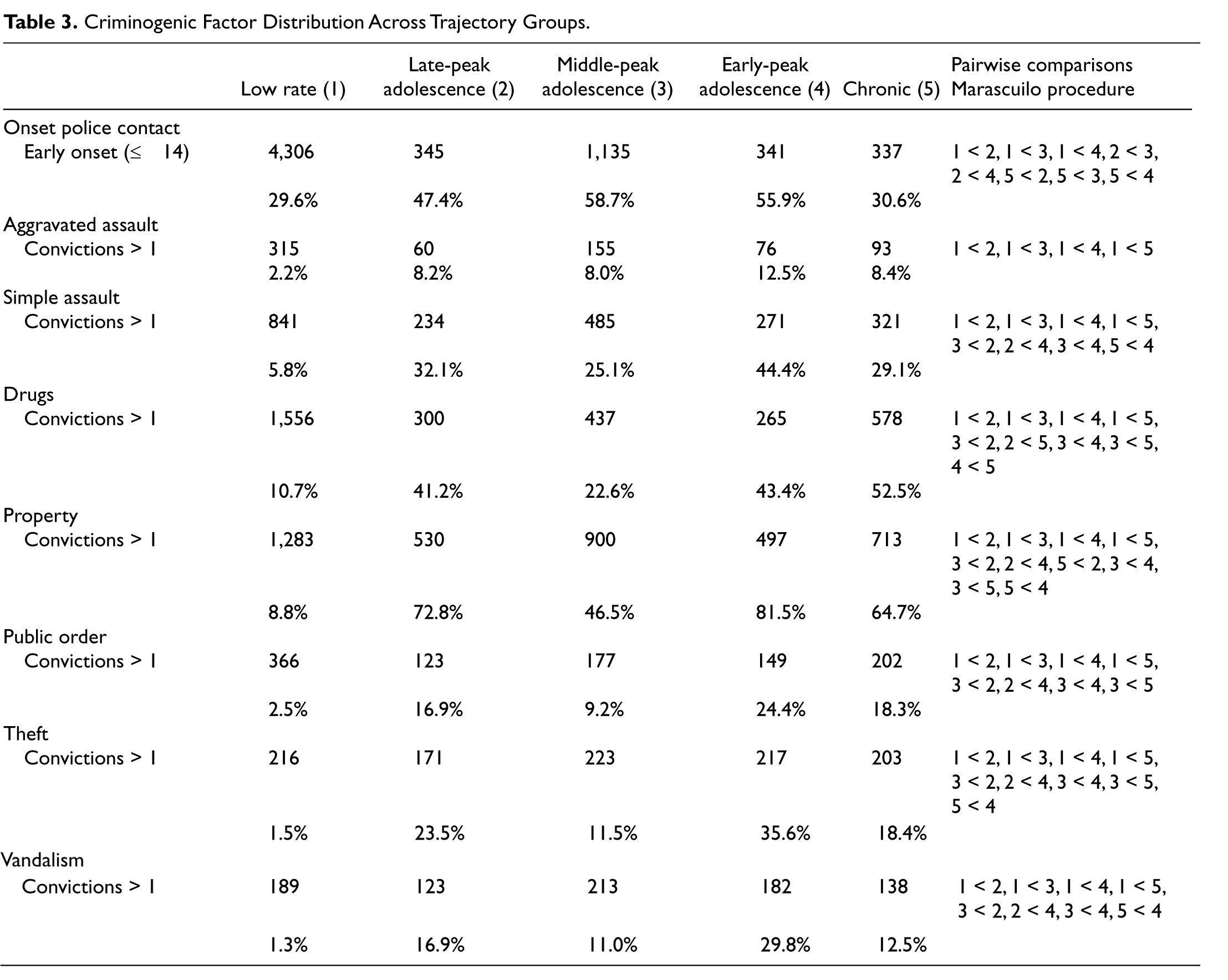
Criminogenic Factor Distribution Across Trajectory Groups.
Familial Imprisonment Distribution Across Trajectory Groups.
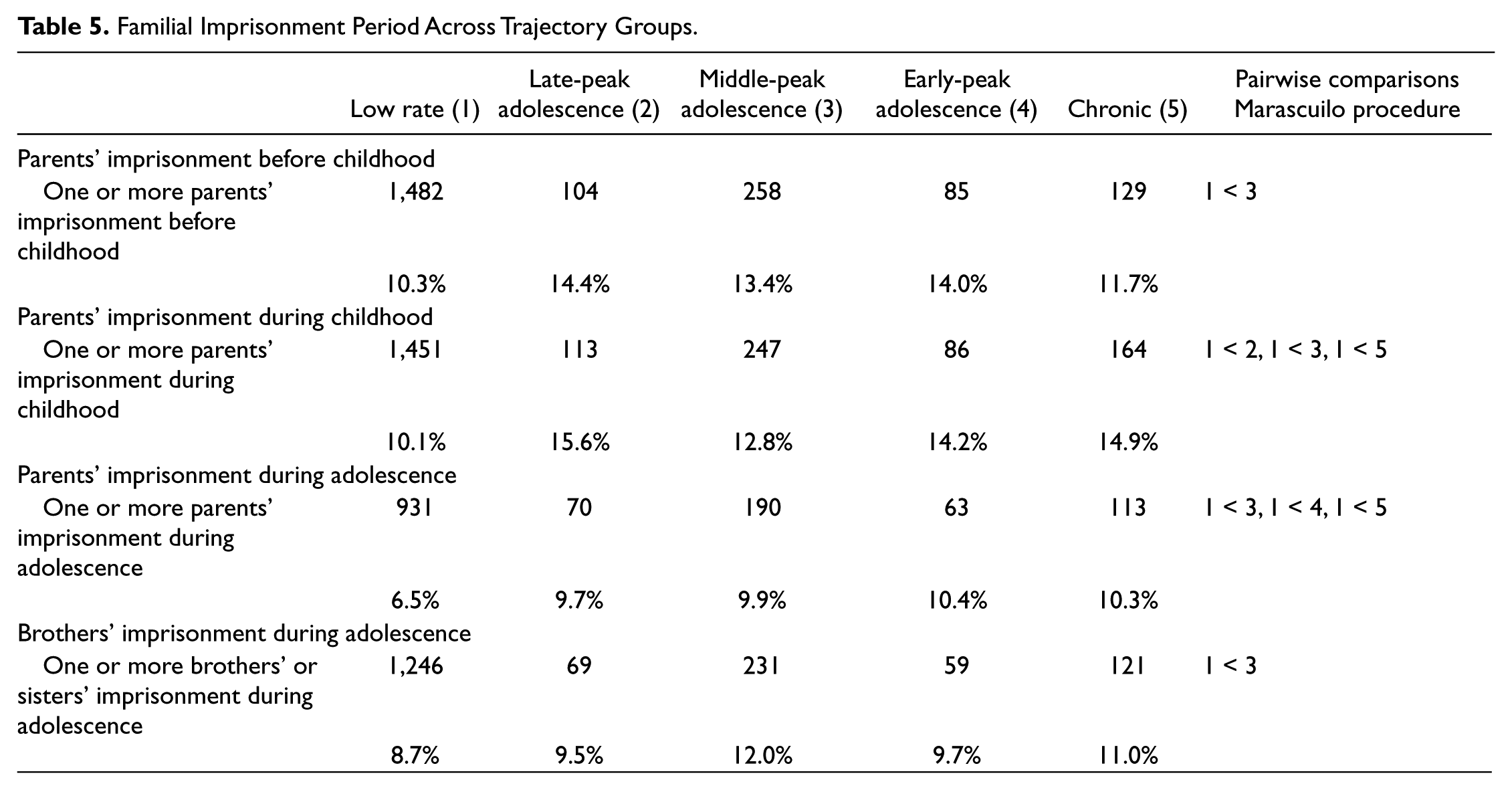
Familial Imprisonment Period Across Trajectory Groups.
As a secondary research aim, trajectories by age of police contact onset and crime types (see Table 3) were analyzed. Results indicated that the proportion of early age of onset offenders in the low-rate group was significantly lower than the other trajectory groups. Approximately, 30% of all offenders in the low-rate group had an early age of first police contact compared with 47%, 59%, and 56% in the late-peak adolescence, middle-peak adolescence, and the early-peak adolescence, respectively. Analyses of crime types indicated that the low-rate group had the lowest proportions of violent crimes. Repeated convictions in aggravated assault crimes among the chronic offenders were not significantly different from the adolescence groups. The early-peak adolescence group had significantly higher proportions of simple assault, property, theft, vandalism, and public order crimes compared with the middle- and late-peak adolescence groups.
Analysis of imprisoned family members indicated that the low-rate group had significantly fewer imprisoned parents (6%-8%) than the other trajectory groups (see Table 4). Similar results were obtained with imprisoned brothers and sisters. Imprisoned second- and third-degree relatives were not significantly associated with trajectory group membership. The timing of imprisonment was also examined (only statistically significant results are displayed; see Table 5). Generally, results indicated that significantly higher proportions of parents were imprisoned during childhood and during adolescence among persistent offenders than the low-rate offenders. Significantly higher proportions of brothers and sisters were imprisoned during adolescence among the middle-peak adolescence than the low-rate offender group. The timing of imprisonment of second- and third-degree relatives, however, was not associated with persistent offending.
Discussion
The present study findings are based on a national population-based registry data and provide three contributions to the literature. First, juvenile offenders assume five different trajectories of criminal development from early adolescence to midadulthood. Second, imprisonment of parents, brothers, and sisters is associated with developing a trajectory of persistent offending. Third, parental imprisonment during childhood and adolescence, and to a lesser degree imprisonment of brothers and sisters during adolescence, is associated with developing persistent offending later in life.
The current trajectory study design is based on a national population-based data of offenders as opposed to previous sample-based trajectory studies (e.g., Piquero et al., 2001; Sampson & Laub, 2003; Wiesner et al., 2007). Despite the difference in design, the form and number of trajectories in the current results converge with past trajectory studies (D’Unger et al., 1998; Piquero et al., 2007). For example, a recent analysis of the Cambridge Study of Delinquent Development (Piquero et al., 2007) resulted in five trajectory groups with similar offending pattern to those obtained in the present study. Moreover, it has been proposed that offending patterns in future studies will include (a) an adolescence group whose offending pattern peak between ages 15 and 18 but drops during early adulthood, and (b) a chronic offending pattern, which does not peak until ages 17 and 21 and drops much more slowly during adulthood (D’Unger et al., 1998). It has also been argued that “with a comprehensive cohort sample across the entire population . . . it is possible . . . that these two patterns will bifurcate into high and low offending groupings (and possibly into an even larger number of groupings)” (D’Unger et al., 1998, p. 1623). Thus, the current results converge with these propositions.
The current findings appear to be similar to prior population-based criminal career research (Tracy, Wolfgang, & Figlio, 1990). In their research, Tracy and colleagues (1990) traced the criminal careers of more than 27,000 boys and girls born in Philadelphia in 1958 who resided in the city from the age of 10 to 18. Their findings indicated that a small number of chronic offenders were responsible for approximately half of all official incidents of delinquency, and that an earlier age of onset was associated with persistent offending. These findings replicate the work of Wolfgang et al. (1972) and are consistent with the current research findings. Subsequent analysis of the 1958 cohort, extended to the age of 26 (Tracy & Kempf Leonard, 1996), indicated that adult crime was more likely among juvenile delinquents than nonjuvenile delinquents. Moreover, early offending onset was identified among the key predictors of adult crime. This is consistent with the current findings suggesting that persistent offenders are characterized by early offending onset and assumes a course of persistent offending into adulthood.
A recent review of trajectory studies in criminology documents that prior research is predominantly from English-speaking Western nations and identifies between three and five trajectory groups (Piquero, 2008). Despite the varying number of trajectory groups, across studies, there tends to be a low rate, a high rate, a moderate declining group, and a late-onset trajectory group. The current research uniquely differs to prior trajectory studies as it is based on the Israeli national juvenile offender population. Despite this difference, the trajectory groups identified in the review (Piquero, 2008) and in the present study based on the Israeli population are similar in form. Thus, generally there appears to be consistency across prior and current findings with respect to the number and form of trajectory groups that transcend divergent data sources and hence attests to the robustness of trajectory-based research (Piquero, 2008).
Trajectory Group Association With Demographic and Criminogenic Factors
The present study examines how demographic and criminogenic factors differ across the trajectory groups. Regarding the demographic factors, the current results replicate previous findings (Bersani et al., 2009), and suggest that (a) male and female offenders follow distinct developmental trajectories, (b) immigrants are at increased risk of assuming a long-term offending trajectory, (c) low-SES residential areas increase the likelihood of assuming a persistent offending trajectory, (d) marital status is associated with middle-peak adolescence offending and not with the other groups, and (e) persistent and low-rate offenders have comparable death rates.
An earlier age at first police contact is significantly more characteristic of the more persistent offenders, and indicates that earlier offending ages may increase the risk of developing long-term offending. Similarly, persistent offenders had higher proportions of less serious violent crimes, property, public order, and theft crimes than other groups. These findings appear to replicate past theory (Moffitt, 1993) and research (Bersani et al., 2009; Piquero et al., 2007; Wiesner et al., 2007).
Trajectory Groups and Family Imprisonment
Research consistently shows that the children of imprisoned parents are at increased risk of antisocial behavior (Murray & Farrington, 2005). Possibly, parent–child separation due to imprisonment is a chronic form of trauma that reduces social support and coping, and increases the risk of maladjustment and antisocial behavior (Murray & Farrington, 2008; Young & Smith, 2000). The current findings suggest that parental imprisonment during childhood (until age 10) increases the child’s likelihood of developing persistent offending trajectory later in life. Results appear to provide support of the separation mechanism by indicating that developing long-term offending trajectory is associated with parent–child separation due to imprisonment. Analysis of parents’ criminality (results not shown) measured by the number of police contacts was not significantly different across groups. The difference between parents’ criminality and imprisonment is that the former does not reflect actual parent–child separation. This suggests that parental imprisonment is a separation mechanism that predates the development of subsequent long-term chronic offending pattern in their offspring.
Although a casual mechanism is not deductible, the current results uniquely point to the association between developing a persistent offending among children and imprisonment of their brothers or sisters. This may suggests that social mimicry of family members during adolescence modestly influences long-term offending. These results provide modest evidence that the imprisonment of first-degree relationships plays a role in offspring persistent offending, one reason for which may be a separation mechanism due to imprisonment (Murray & Farrington, 2005).
Policy Implications
Parental imprisonment may result in antisocial behavior in the next generation as it is often unexpected or unexplained to the child, and results in severe parent–child contact conditions (Murray & Farrington, 2005). Policy makers may use intermediate sanctions such as house arrests, and increased electronic monitoring. These sanctions have been previously recommended to be appropriate alternative forms of punishments (e.g., Tonry, 1998). Policy makers may consider using these sanctions particularly for imprisoned parents whose children are below 10 years of age, as suggested by the current findings.
In the current results, the imprisonment of brothers and sisters is associated with developing persistent offending in children, perhaps by way of mimicking antisocial behaviors (Moffitt, 1993). Seen this way, policy makers may provide these children with stable role models to increase their interaction with older less antisocial peers or friends. Policy makers may provide emphasis to children in the community at the ages of 11 to 17 who have to cope with the absence of their imprisoned brothers or sisters.
Limitations and Conclusion
There are several limitations associated with the current research. First, the current results are based on official data and not self-report data. Past research indicates moderate levels of agreement between the data sources (Mulvey et al., 2010). For example, applying trajectory analysis to self-report data may result in a different number of groups compared with official data (Wiesner et al., 2007). A reason for this is that more frequent, less severe types of crime are assessed by self-reports than official offending. Accordingly, the use of official data in the present study may underestimate the pattern and the number of trajectories.
Second, the follow-up period in the current research ranges from early adolescence to midadulthood. Prior research has indicated that the semiparametric modeling is sensitive to the length of the follow-up period (Eggleston et al., 2004). Thus, the present study may underestimate the number of trajectories, although our results largely converge with past research. Moreover, the current research strategy is to differentiate between trajectory groups using various background characteristics. This strategy may lack predictive utility, as previous studies maintain that the ability to predict which offender will be classified to which trajectory group is limited (Mulvey et al., 2010; Nagin & Tremblay, 2005). A reason for this is that assigning offenders to trajectory groups is probabilistic (Nagin, 1999). As a result, classification errors may occur in the process.
Third, the demographic variables are static rather than dynamic in nature. The absence of dynamic variables has theoretical and pragmatic consequences, as certain demographic factors may persist and others change over time. As a result, the identification of key differences between trajectory groups is limited. For instance, theoretically, marital status may change with age and so its effects may differ at different times across the life course (Gottfredson, 2005). A younger marital age may reflect lower levels of self-control, whereas an older marital age may reflect higher levels of self-control. Repeated marriage may reflect the impulsive behavior that is characteristic of life-course persistent offenders (Gottfredson, 2005). Accordingly, future studies are warranted to examine dynamic characteristics, as static characteristics appear to be insufficient to differentiate between trajectory groups (Nagin & Tremblay, 2005).
In conclusion, the current research uniquely contributes to the criminological literature in at least three key ways. First, the current results are based on a complete national population-based data set at the individual level with group-based modeling and identify five trajectory groups, which are generally consistent with theory (Moffitt et al., 2002) and research (Piquero, 2008). Second, the present study is the first study to show that the imprisonment of first-degree and not second- or third-degree relationships is prospectively associated with long-term offending among offspring. Finally, the current findings uniquely show that the timing of parents’ imprisonment may serve as a parent–child separation mechanism that increases the likelihood of assuming a trajectory of chronic offending.
Footnotes
Authors’ Note
Stephen Z. Levine moved from Bar-Ilan University to the University of Haifa during the course of this study.
Declaration of Conflicting Interests
The author(s) declared no potential conflicts of interest with respect to the research, authorship, and/or publication of this article.
Funding
The author(s) received no financial support for the research, authorship, and/or publication of this article.