







Abstract
Public policy in the area of youth crime has periodically shifted back and forth between punishment and child saving. Generally, scholars believe that public opinion and youth justice policies are linked. It is also believed that crime salience—fear and perceived risk of victimization—is linked to public opinion about youth sanctions. To test these widely held beliefs, this study examines public opinion about youth justice policies by exploring the impact of crime salience on public support for child saving versus youth punishment. This study expands on prior literature by also considering the public’s willingness to pay (WTP) for the youth justice policies they prefer. Results indicate that fear increases punitiveness, WTP for youth justice policies generally, and, more specifically, the WTP for youth punishment. However, fear does not affect the public’s WTP for child saving. Limitations and suggestions for future research are discussed.
In relation to the social control of youth crime, public opinion and public policy have been highly dynamic, cycling over time between an emphasis on child saving and a focus on harsher juvenile sanctions (Bernard & Kurlychek, 2010). During the final three decades of the 20th century, public opinion and policy making generally trended in the direction of “get tough” youth justice approaches that centered on efforts to increase the punishments for youthful offending (Cullen, Fischer, & Applegate, 2000; Feld, 1999). The first 10 years of the 21st century, however, have seemingly witnessed a shift in public attitudes and policy back toward less punitive, more treatment-oriented responses to delinquency (Bernard & Kurlychek, 2010; Scott, Reppucci, Antonishak, & DeGennaro, 2006).
The general consensus among scholars is that public opinion and juvenile justice policy making are causally connected; specifically, policy is responsive to shifts in popular attitudes about youth sanctions (Roberts, 2004). It is also theorized that crime salience—widespread concern about and fear of victimization—is an important factor shaping public opinion about juvenile sanctions and, thus, youth justice policy (Bernard & Kurlychek, 2010; Zimring, 1998).
For this reason, examining the extent and correlates of public views about whether policy efforts to control youthful offending should focus on “child saving”—that is, prevention and rehabilitation—or punishment is of key importance for developing a better understanding of the factors that shape social responses to delinquency. Recognizing this, prior research has explored the extent to which members of the public support an array of punitive and nonpunitive juvenile justice approaches (Applegate, Davis, & Cullen, 2009; Cullen, Golden, & Cullen, 1983; Mears, 2001; Mears, Hay, Gertz, & Mancini, 2007; Moon, Sundt, Cullen, & Wright, 2000). This work has demonstrated that the public not only supports getting tough with juvenile offenders but also holds very favorable attitudes toward early intervention and juvenile rehabilitation (Moon et al., 2000).
A smaller number of studies have assessed the degree to which measures of crime salience, such as perceptions of victimization risk or fear of victimization, are associated with popular views about youth justice (Cochran, Boots, & Heide, 2003; Evans & Adams, 2003; Piquero, Cullen, Unnever, Piquero, & Gordon, 2010; Schwartz, Guo, & Kerbs, 1992; 1993; Wu, 2000). Surprisingly, evidence of the effects of crime salience has been mixed and appears to be largely dependent on the operationalization of crime salience and the specific rehabilitative or punitive sanctions studied (see, for example, Evans & Adams, 2003; Sims & Johnston, 2004; Wu, 2000).
In contrast to the sizable literature on public attitudes toward youth sanctions, there is a surprising dearth of research on the public’s willingness to pay (WTP) for punitive and nonpunitive juvenile justice policies. We are aware of only three previous investigations that have examined WTP in relation to youth-specific sanctions (Cohen, Rust, & Steen, 2006; Nagin, Piquero, Scott, & Steinberg, 2006; Piquero & Steinberg, 2010), and only one has evaluated whether crime salience influences individuals’ WTP for such policies (Cohen et al., 2006). This gap in the literature is particularly remarkable given that, as Cohen et al. (2006) emphasized, questions asking merely about support for a policy approach provide less accurate estimates of public attitudes because they “are not subject to explicit trade-offs or constraints and are not set in a realistic context” (p. 318)—that is, the common approach of examining individuals’ support for different policies without also assessing their WTP for these policies provides little information about individuals’ degree of economic commitment to competing policies, which is the information most germane to policy making (Nagin et al., 2006).
The current study addresses this gap in the literature. Specifically, we draw on data from a recent national survey to evaluate (a) individuals’ support and WTP for child saving and youth punishment and (b) the extent to which cognitive and emotional measures of crime salience—perceived victimization risk and fear of crime—predict support and WTP for these two policy approaches. Below, before describing our methodology and detailing our findings, we further discuss the role of public opinion in juvenile justice policy making. We also review the extant evidence on the relationship between crime salience and public attitudes toward youth sanctions and the public’s WTP for child saving and juvenile punishment.
From
Parens Patriae
to Get-Tough: The Role of Public Opinion
The debate about the appropriateness of focusing on rehabilitation versus punishment for juvenile offenders is at the foundation of the juvenile justice system itself. Driven by economic, social, and other extralegal forces, the ideological pendulum has swung from rehabilitation to punishment numerous times in the juvenile justice system’s relatively brief history (Bernard & Kurlychek, 2010; Hess, Orthmann, & Wright, 2010). Public opinion about the causes of delinquency and the appropriate response to youthful offending played a particularly important role in the period surrounding the establishment of the first separate court for juveniles (Howell, 1997). Preceding the Illinois act at the end of the 19th century that established a separate system for individuals below 16 was an evolving public sentiment that rejected the harsh punishment that typified society’s responses to youth crime in favor of rehabilitation and reform for delinquent youth.
By the end of the 20th century, juvenile justice policy, presumably, as a result of increased public concern about youth violence (Roberts, 2004), had shifted dramatically from the system’s rehabilitative roots (Feld, 1999). Public discourse emphasized public safety and the best interests of society over offender rehabilitation and the best interests of the delinquent (Hess et al., 2010). In policy and practice, the parens patriae philosophy that had guided the juvenile justice system for decades was effectively abandoned in favor of get-tough policies that emphasized deterrence, retribution, and punishment (Ainsworth, 1995). Public fear of juvenile crime reached alarmingly high levels (see Krisberg & Austin, 1993, for a review) and was further fueled by scholarly notions and media reports of juvenile “superpredators” (e.g., DiIulio, 1995). Legislators responded in kind by significantly expanding youth transfer mechanisms to criminal court and enacting harsher sanctions for juvenile offenders (Snyder & Sickmund, 2006).
Fear of Crime and Victimization Risk: Affecting Punishment Philosophy
One leading explanation for the punitive turn in juvenile justice has been that public fear of and concern about crime, driven largely by moral panics and distorted media depictions associated with the dramatic increase in juvenile crime between the mid-1980s and early 1990s, in part explains widespread support for getting tough with youthful offenders (Bazemore & Umbreit, 1997; Chiricos, 1996; McCord, Widom, & Crowell, 2001; Roberts, 2004; Zimring, 1998). For example, Bazemore and Umbreit (1997) have argued that fear of violent juvenile crime and a sense of frustration with both real and perceived system ineffectiveness are fueling major changes in juvenile justice. If left unchecked, these changes could culminate in the elimination of a separate and distinctive justice system. (p. 5)
Similarly, Roberts (2004) observed that punitive juvenile justice reforms are in part a result of media-fueled “changes in public ratings of the seriousness of the youth crime problem, in overestimates of youth crime rates, and in misperceptions of changes in those rates over time” (p. 526).
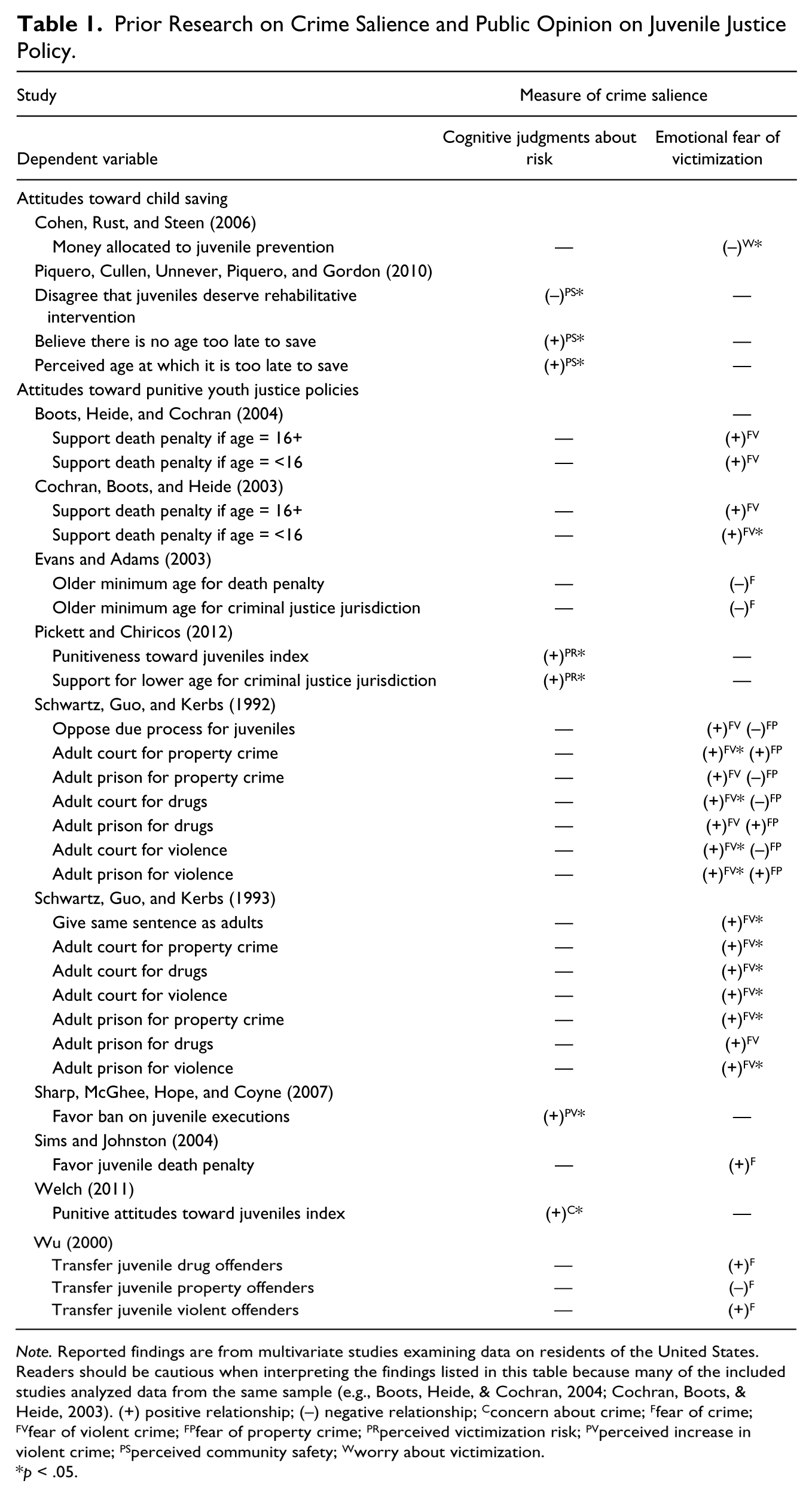
At the heart of such accounts of the punitive turn in juvenile justice is the assumption that support for getting tough with youthful offenders will be higher, and support for child saving will be lower, among individuals for whom crime is a more salient issue—persons who judge their risk of crime to be higher (i.e., the cognitive component of crime salience) or who are more emotionally fearful of victimization (the emotional component of crime salience). Surprisingly, and despite the centrality of this assumption to accounts of contemporary juvenile justice policy making, few studies to date have examined the extent to which measures of crime salience are associated with views about youth sanctions. As shown in Table 1, just two studies to date have explored the relationship between crime salience and attitudes toward child saving, and only ten prior investigations have assessed the effects of such measures on support for punitive juvenile justice policies. The relevant findings from these studies are reviewed below.
Prior Research on Crime Salience and Public Opinion on Juvenile Justice Policy.
Note. Reported findings are from multivariate studies examining data on residents of the United States. Readers should be cautious when interpreting the findings listed in this table because many of the included studies analyzed data from the same sample (e.g., Boots, Heide, & Cochran, 2004; Cochran, Boots, & Heide, 2003). (+) positive relationship; (–) negative relationship; Cconcern about crime; Ffear of crime; FVfear of violent crime; FPfear of property crime; PRperceived victimization risk; PVperceived increase in violent crime; PSperceived community safety; Wworry about victimization.
p < .05.
Table 1 demonstrates that the extant research pertaining to the effects of cognitive and emotional measures of crime salience on views about youth justice policies is mixed. Of the 12 studies, 7 found that measures of crime salience are either not related to juvenile justice policy preferences or have inconsistent effects on such preferences, depending on the specific measure of crime salience included and the particular policy in question (Boots, Heide, & Cochran, 2004; Cochran et al., 2003; Evans & Adams, 2003; Schwartz et al., 1992, 1993; Sims & Johnston, 2004; Wu, 2000). For example, Wu (2000) found that emotional fear was not related to views about juvenile transfers, regardless of the type of offense committed by the youthful offender. Similarly, Sims and Johnston (2004) demonstrated that fear of crime was not related to views about the juvenile death penalty. Cochran et al. (2003) found that emotional fear was associated with support for the death penalty for juveniles below 16 years old but was not associated with support for the death penalty for juveniles aged 16 years and above.
WTP for Child Saving and Punitive Youth Justice Policies
In assessing public opinion about criminal justice issues, support is only part of the equation (Cohen et al., 2006; Cohen, Rust, Steen, & Tidd, 2004). The public must be willing to pay, presumptively through taxes, for their preferred approach; otherwise, their support is simply an indicator of policy preference. Without increased revenue, such preferences have little chance of actual implementation. Moreover, individuals who support a given policy but are unwilling to pay for its implementation are arguably only superficially committed to that line of legislative action. If justice policies are to be implemented on the basis of public support, a stronger measure of commitment is needed to evaluate the public’s true preferences when dollars are at stake.
Surprisingly, only three studies to date have evaluated the public’s WTP for youth justice policies. Nagin et al. (2006) interviewed 1,502 Pennsylvania residents in 2005. Using a contingent evaluation method, these authors randomly assigned respondents to receive a hypothetical scenario asking about their WTP for juvenile incarceration or rehabilitation, and all respondents were asked about their WTP for early prevention. Their results demonstrated that Pennsylvanians were willing to pay on average US$80.97 in additional taxes to incarcerate serious juvenile offenders for an extra year, US$98.10 to provide a rehabilitation program, and US$125.71 for early prevention through nurse visitation (Nagin et al., 2006).
Piquero and Steinberg (2010) analyzed data from a 2007 contingent evaluation survey of 2,282 individuals in four states (Illinois, Louisiana, Pennsylvania, and Washington). The questionnaire included items identical to those used by Nagin et al. (2006). Similar to Nagin and colleagues, Piquero and Steinberg found that on average, respondents in their sample were willing to pay more for rehabilitation programs for delinquents who commit serious crimes (US$98.49) than for juvenile incarceration (US$83.52). Building on Nagin et al.’s analysis, however, Piquero and Steinberg also evaluated the predictors of individuals’ general WTP for juvenile rehabilitation or incarceration. They found that Whites, younger persons, and those respondents who received the rehabilitation scenario all tended to report a greater WTP for youth justice programs. However, the outcome variable in their multivariate analysis did not distinguish between WTP for rehabilitation and WTP for incarceration, and the study did not evaluate the effects of crime salience on WTP.
Cohen et al. (2006) examined WTP for youth-specific and non-youth-specific policies using data from a nationally representative sample of 1,300 adults who were interviewed in 2000. Those authors evaluated WTP for three non-youth-specific policies—hiring more police, drug treatment, and building more prisons—and one youth-specific policy—providing “more prevention programs to help keep youth out of trouble” (p. 324). Specifically, they asked respondents to choose how to distribute the funds, where options included a federal grant to these different programs or a tax rebate for residents. They found that, on average, respondents allocated a larger percentage of the grant to prevention (36.6%) than to any of the other programs (8.9%-22.1%, depending on the policy) or to the tax rebate (11.9%; Cohen et al., 2006).
In addition, Cohen et al. (2006) conducted several multivariate analyses to assess the factors associated with individuals’ allocation decisions across these different policies. The estimated models included as a predictor a single-item measure of crime salience: “How much do you personally worry about you or a loved one becoming a victim of a crime?” (p. 327). Results showed that, in regard to the youth-specific policy, individuals who worried more about being victimized allocated less to prevention. They also found that Blacks, prior burglary victims, persons with prior arrests, those with less than a high school degree, those who had not previously reported a crime to police, and those living in urban areas all allocated more money to prevention efforts (Cohen et al., 2006). These findings constitute the only extant evidence on the correlates of individuals’ WTP for a specific type of youth justice policy approach.
Taken together, the findings from the previous studies to assess individuals’ WTP for youth justice policies have demonstrated that members of the public are willing to pay more for juvenile rehabilitation than for punitive youth justice policies. However, only the studies by Cohen et al. (2006) and Piquero and Steinberg (2010) used multivariate methods to evaluate the determinants of individuals’ WTP for youth justice policies, and only Cohen et al.’s (2006) study examined the predictors of individuals’ WTP for a specific youth justice policy approach, though their analysis of respondents’ WTP for juvenile justice policies was limited exclusively to youth prevention. Thus, very little is currently known about the factors associated with WTP for child saving more generally, and no evidence exists regarding the correlates of WTP for punitive youth justice policies.
Data and Method
To summarize, little evidence exists about whether crime salience influences individuals’ WTP for different juvenile justice policies. To address this gap in the literature, the current article tests the following five hypotheses:
Participants
To test our hypotheses, we surveyed a national sample of households between January and March 2009 using random-digit dialing and computer-assisted telephone interviewing. To ensure randomness of respondents in households occupied by multiple eligible respondents, we asked to speak with the individual in the household above the age of 18 who had a birthday most recently (O’Rourke & Blair, 1983). We completed 400 interviews. The overall response rate was 36.3% based on the American Association for Public Opinion Research (2004) RR6 calculation. After listwise deletion of missing data, the final sample size for all models was n = 312.
Dependent Variables
We include four dependent variables measuring respondents’ preference and WTP for different youth justice policy approaches. The first outcome variable, Support for Child Saving, measures respondents’ preference for focusing youth justice resources on prevention and rehabilitation rather than punishment. It is derived from the following survey question “Which one of the following areas do you believe your state’s juvenile justice system needs to focus more resources on?” The response categories were “treatment, prevention through intervention, skills and employment training, arresting offenders, punishing offenders, or other 1 .” The measure was collapsed into two categories based on whether the nature of the selected solution was centered on child saving or punishment. Treatment, prevention through intervention, and skills and employment training were identified as child saving initiatives (coded “1”), while arresting offenders and punishing offenders were classified as punitive policies (coded “0”).
After answering the aforementioned question, respondents were presented with the follow-up question: “Would you be willing to pay increased taxes in order to support resources in this area?” Responses to this question were used to create three additional dependent variables. The first, Willingness to Pay, is a binary indicator that simply distinguishes between respondents who are willing to pay taxes for the youth justice policies they support (coded “1”) and those who are not (coded “0”). Stated differently, this variable combines those who are willing to pay for child saving with those who are willing to pay for punishment to allow for an examination of individuals’ general willingness to fund youth justice policies. The second, Willingness to Pay for Child Saving, is a binary variable that is coded “1” if a respondent prefers to focus youth justice resources on child saving and is also willing to pay for this policy approach and is coded “0” for all other responses, including if they are unwilling to pay for their preferred policy approach, and if they support and are willing to pay for punishment. Willingness to Pay for Punishment is a binary variable that is coded “1” if a respondent prefers to focus youth justice resources on juvenile punishment and is also willing to pay for this policy approach and is coded “0” for all other responses, including if they are unwilling to pay for their preferred policy approach, and if they support and are willing to pay for child saving.
Independent Variables
The analysis included two key independent variables that tap the cognitive and emotional dimensions of crime salience. The first variable, Perceived Victimization Risk, measures respondents’ cognitive judgments about the risk of crime and derives from responses to the following three questions: “Now I want you to rate the chance that the following type of crime will happen to you or someone close to you during the coming year. On a scale from 0 to 10, where 0 means not at all likely and 10 means very likely, how likely do you think it is that you or someone close to you will be a victim of a violent crime? . . . a nonviolent crime?” and “Compared to a year ago, how much more or less likely do you believe that you or someone close to you will be a victim of crime? Please use a scale a scale from 0 to 10, where 0 means much less likely, 5 means the same, and 10 means much more likely.” These three items were combined into a single index with a Cronbach’s alpha of .73.
The second variable, Fear of Crime, measures respondents’ emotional fear of victimization. It was measured with responses to the following three questions: “On a scale from 0 to 10, with 0 being not at all afraid and 10 being very fearful, how much would you say you fear being murdered? . . . being robbed or mugged? . . . having your home broken into?” We combine responses to these three items into an index with a Cronbach’s alpha of.83. This measure is an improvement over ambiguous single-item indicators that ask generally about fear in hypothetical situations, such as when walking alone in one’s neighborhood at night (Ferraro, 1995).
To further validate that our measures were tapping different dimensions of crime salience, an exploratory factor analysis was conducted examining all six risk and fear measures. Results of the factor analysis indicated two separate and distinct measures. Along with the coefficients of reliability, the results of the factor analysis provide support for the discriminate and construct validity of our Perceived Victimization Risk and Fear of Crime measures.
Control Variables
Like previous studies in this area, we controlled for race, sex, age, marital status, education, conservatism, and geographical region of residence (Cohen et al., 2006; Pickett & Chiricos, 2012). 2 Race, sex, marital status, and region were dichotomous variables, operationalized as White = 1, male = 1, married = 1, and South = 1. Education was measured as the highest grade or year of formal education completed and was categorized into seven responses: less than high school = 1, some high school = 2, high school degree = 3, some college/associates degree/trade school = 4, bachelor’s degree = 5, master’s degree/professional degree = 6, and PhD/other degree beyond master’s = 7. Conservatism was measured using a five-item scale where individuals were asked, “how would you describe yourself politically?” and response items were very liberal = 1, liberal = 2, middle of the road = 3, conservative = 4, or very conservative = 5.
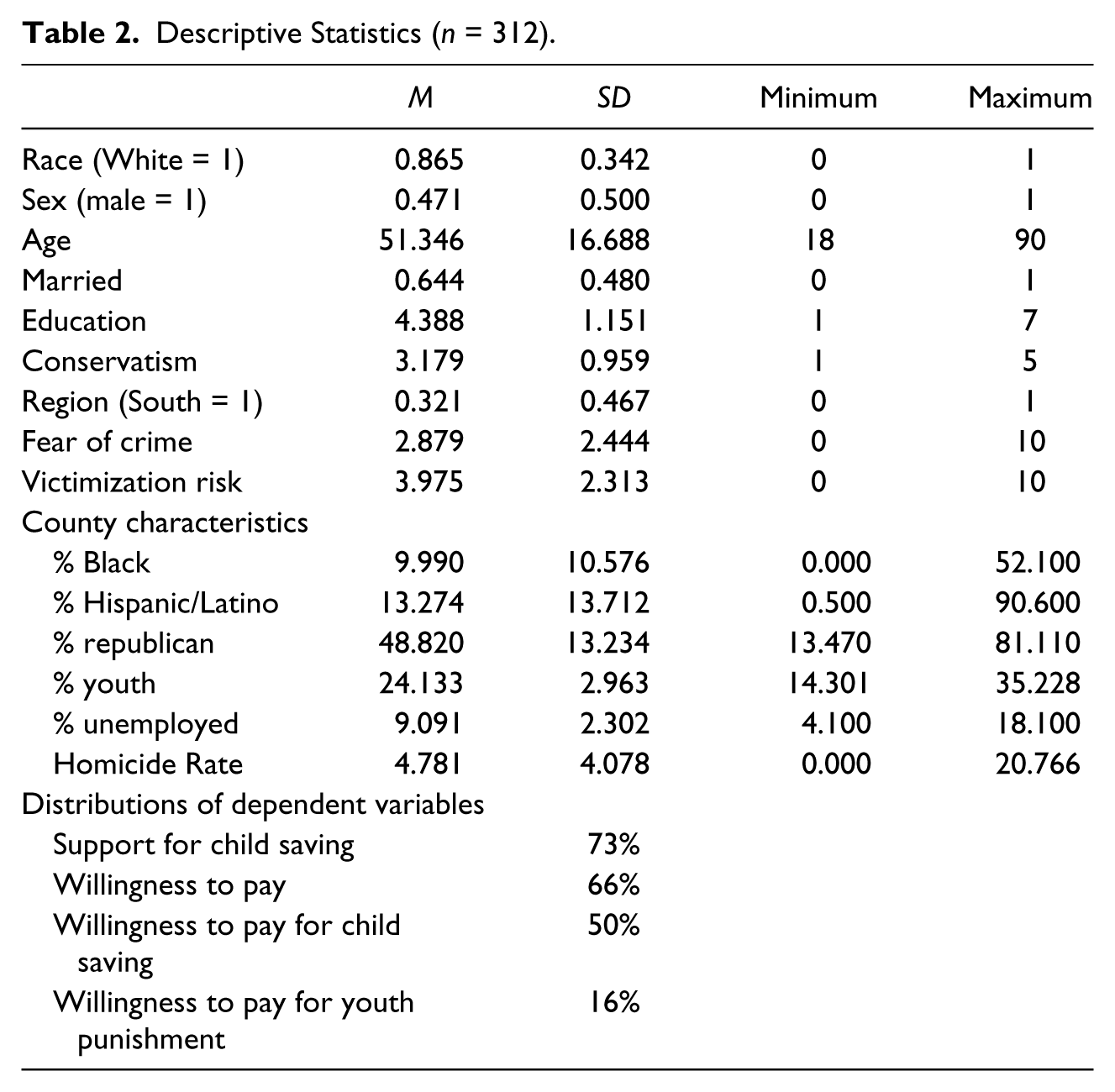
Because prior studies have demonstrated that local contextual factors influence individuals’ views about crime and punishment (Baumer, Messner, & Rosenfeld, 2003; Pickett & Chiricos, 2012), we also control for characteristics of respondents’ counties. Using the 2010 Census data, we control for the percentage of the county population that is Black (Percent Black), Hispanic/Latino (Percent Hispanic/Latino), and below the age of 18 (Percent Youth). To account for the potential confounding effects of the local economic and political context, we also control for the average unemployment rate in respondents’ counties in 2009 (Unemployment Rate) and the percentage of the county that voted for John McCain in the 2008 presidential election (Percent Republican) 3 . Finally, to control for the objective risk of crime, we incorporate a measure of the average Homicide Rate in respondents’ counties across the years 2007, 2008, and 2009. The descriptive statistics of the sample are presented in Table 2.
Descriptive Statistics (n = 312).
Analytic Strategy
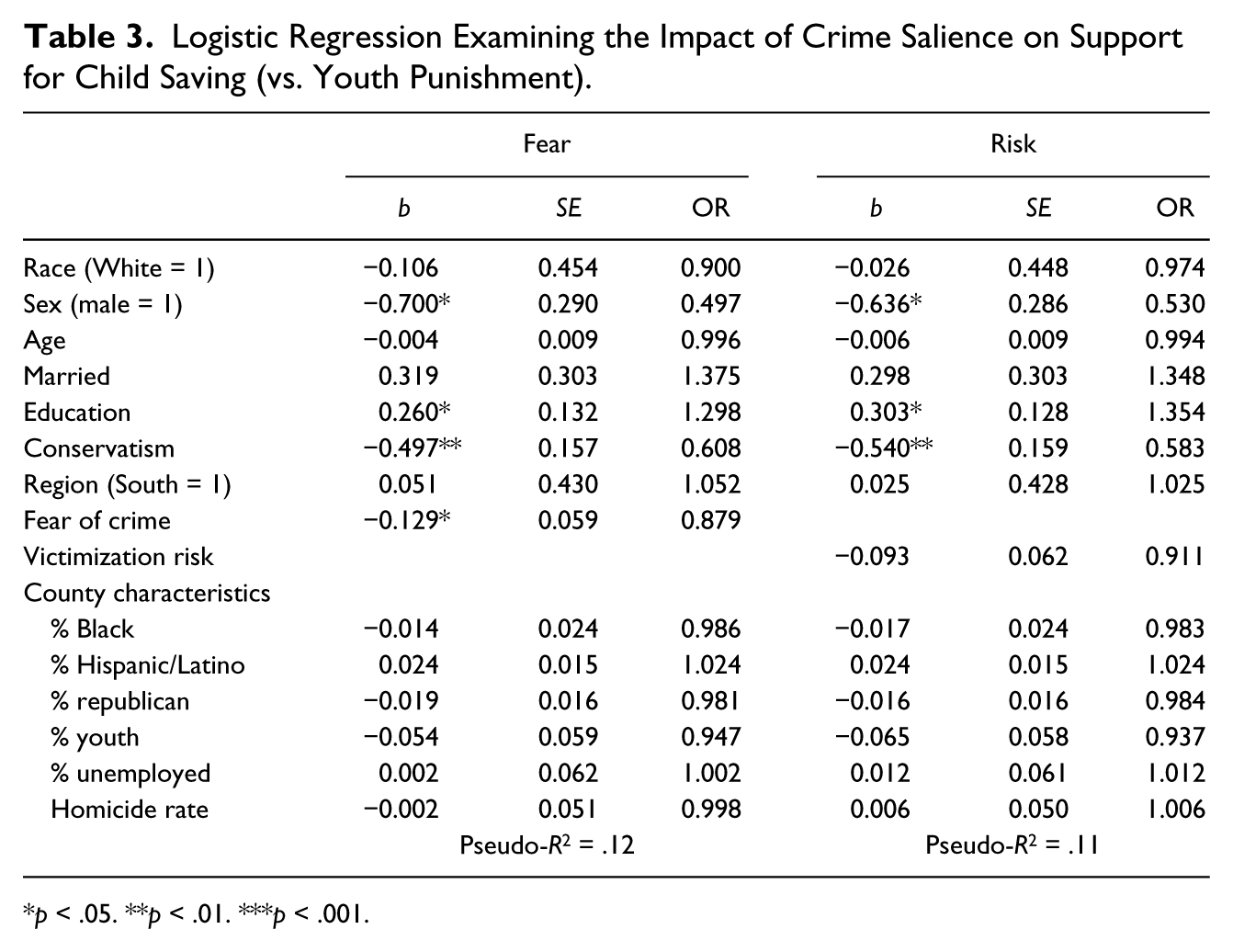
Because all of our dependent variables are dichotomous, we use logistic regression to estimate the statistical models. In separate models, we examine the effect of perceived victimization risk and fear of crime on general Support for Child Saving (Table 3). Next, we explore the separate effects of risk and fear on Willingness to Pay for youth justice policies generally (Table 4). Finally, we conduct analyses examining the effects of perceived victimization risk and fear of crime on Willingness to Pay for Child Saving (Table 5) followed by analyses examining the effects of perceived victimization risk and fear of crime on Willingness to Pay for Punishment (Table 6).
Logistic Regression Examining the Impact of Crime Salience on Support for Child Saving (vs. Youth Punishment).
p < .05. **p < .01. ***p < .001.
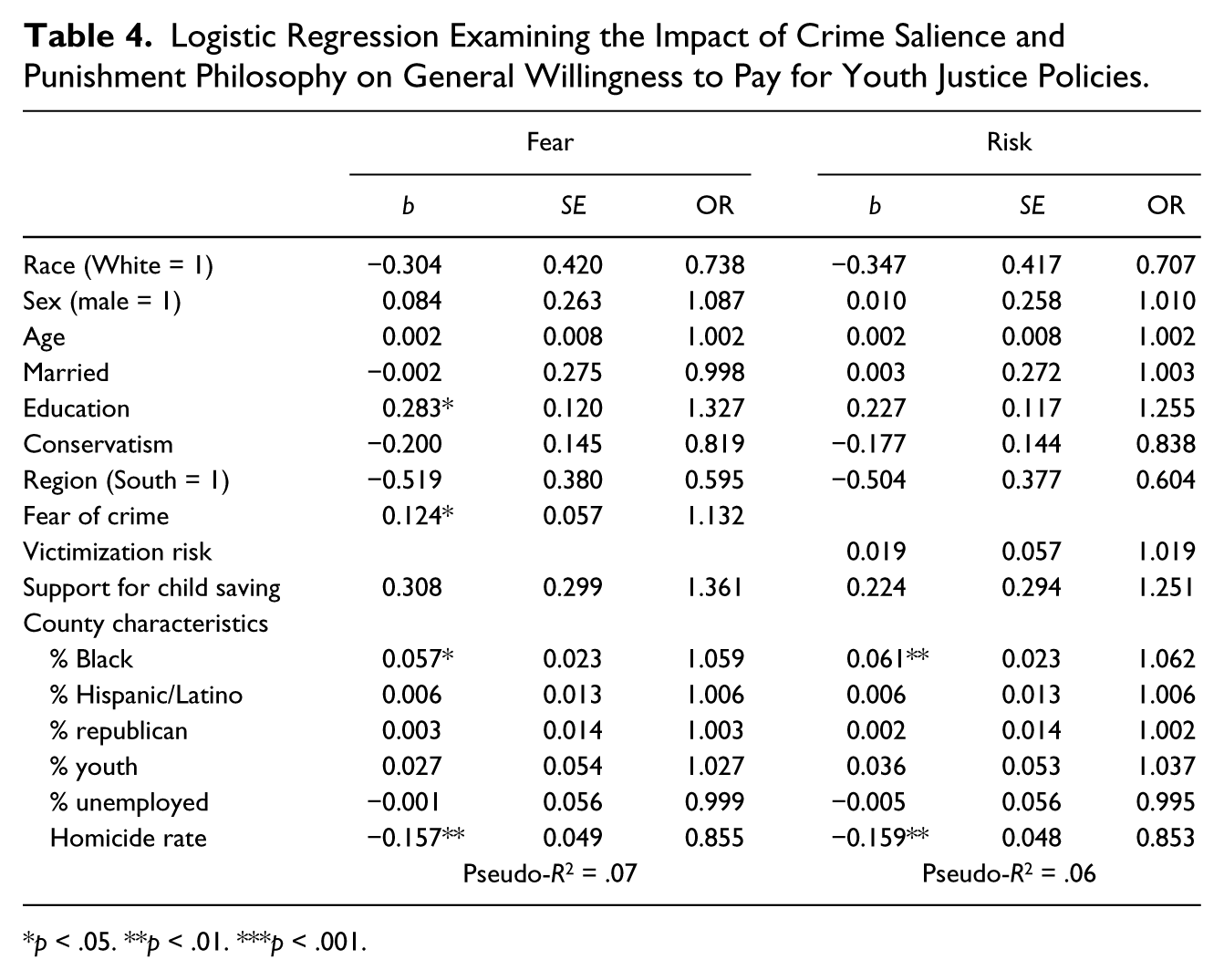
Logistic Regression Examining the Impact of Crime Salience and Punishment Philosophy on General Willingness to Pay for Youth Justice Policies.
p < .05. **p < .01. ***p < .001.
Logistic Regression Examining the Impact of Crime Salience on Willingness to Pay for Child Saving.
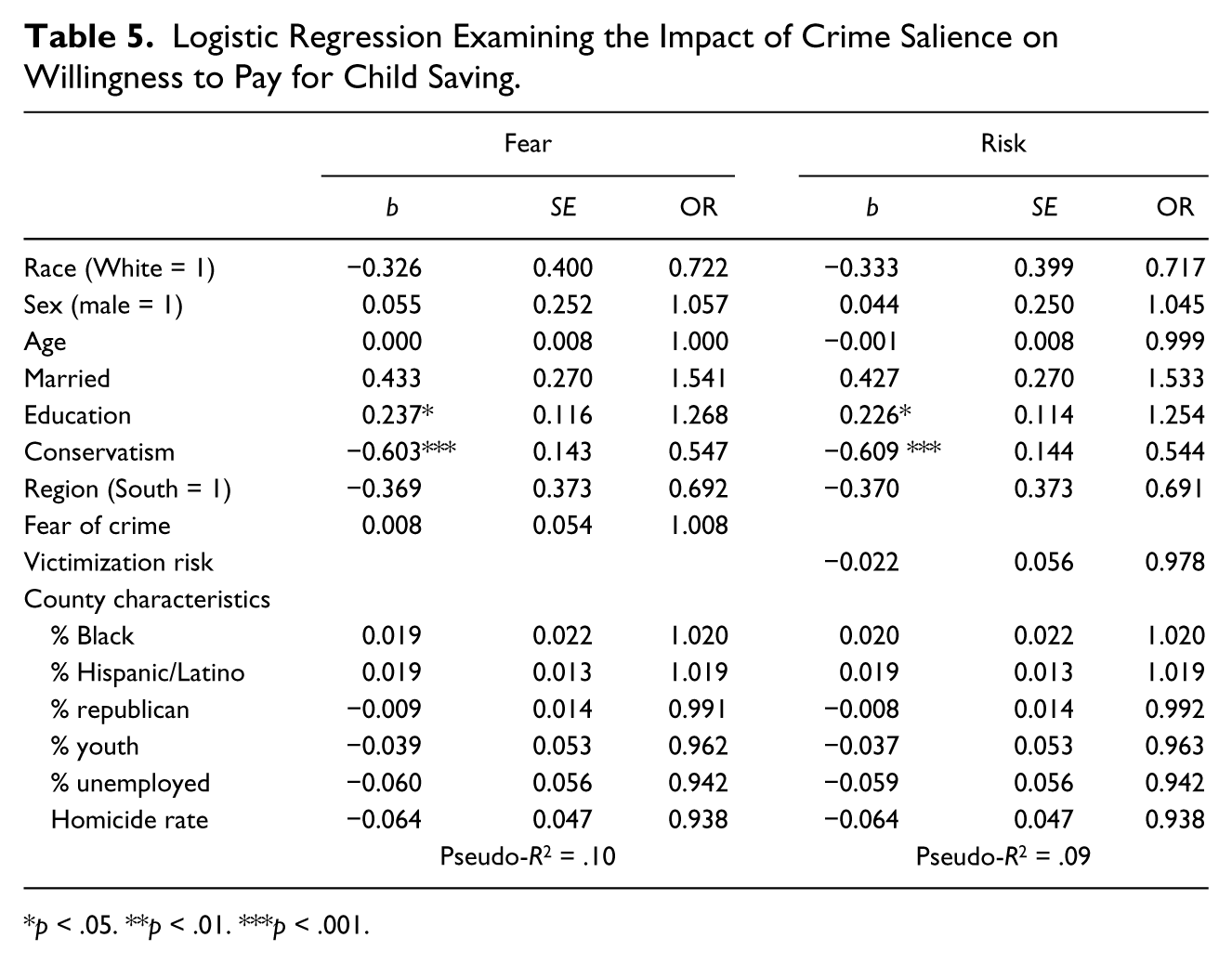
p < .05. **p < .01. ***p < .001.
Logistic Regression Examining the Impact of Crime Salience on Willingness to Pay for Punishment.
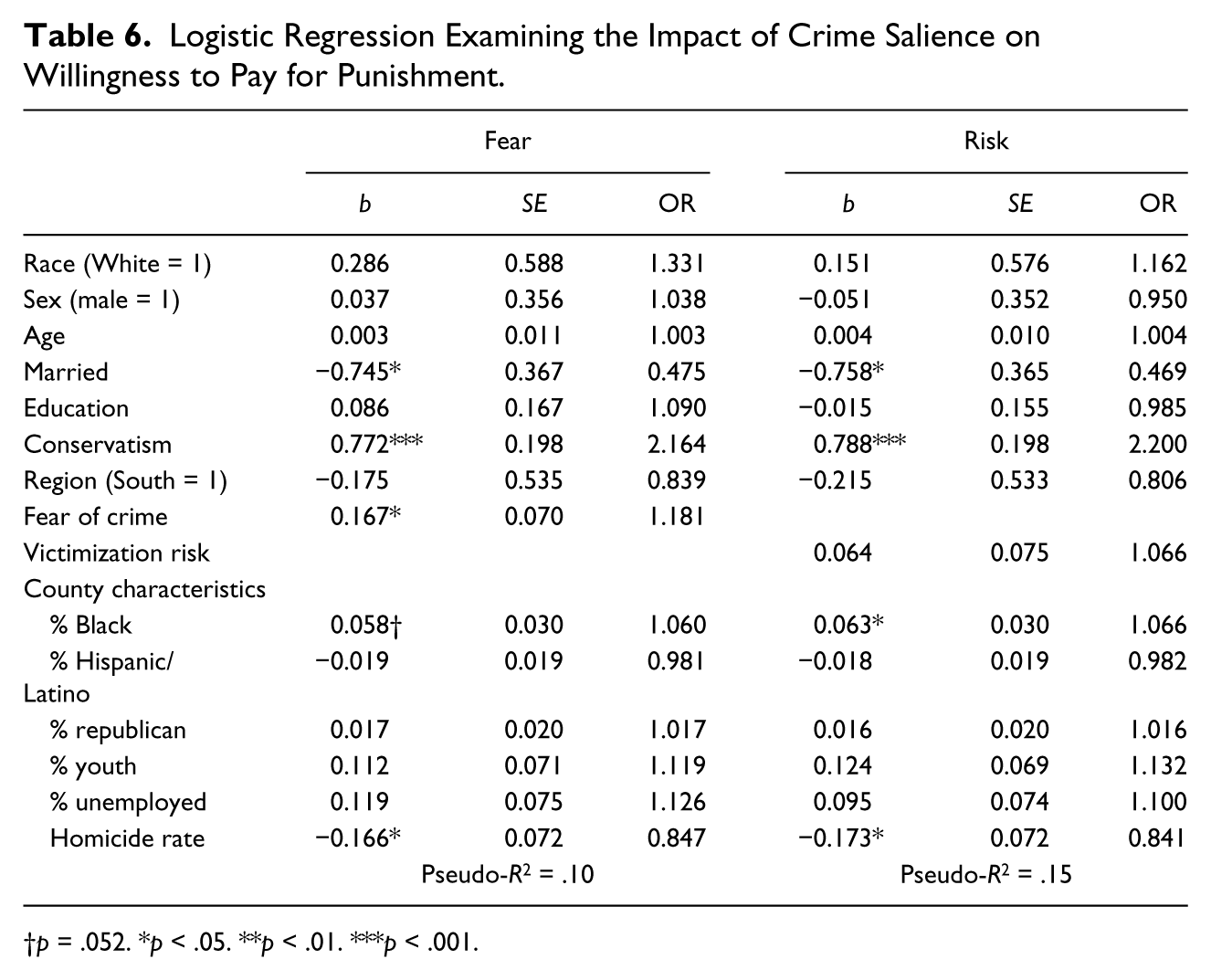
p = .052. *p < .05. **p < .01. ***p < .001.
Results
We begin by first describing the distribution of respondents’ support and WTP for youth justice policies presented in Table 2. Seventy-three percent of respondents prefer focusing state resources on child saving, while only 27% prefer focusing resources on youth punishment. Generally, 66% of respondents are willing to pay for their preferred juvenile policy, but when broken down by the type of policy approach, approximately 50% are willing to pay for child saving, while only 16% are willing to pay for youth punishment. These findings support prior research showing that the public is more supportive of and more WTP for child saving than youth punishment (Nagin et al., 2006; Piquero & Steinberg, 2010).
The results for the effects of crime salience on Support for Child Saving (vs. youth punishment) are presented in Table 3. Two separate analyses are displayed: the effect of emotional fear (plus control variables) on support for child saving versus punitiveness and the effect of cognitive judgments about victimization risk and controls on child saving versus punitiveness. Results from the fear model indicate that males, conservatives, those with less educational attainment, and individuals who are fearful of being victimized are significantly less likely to support child saving versus punitive policies for youth offenders. Specifically, a one-unit increase in the emotional aspect of crime salience reduces the odds that an individual will support child saving by 12%. Results from the risk model indicate that the cognitive dimension of crime salience does not have a significant effect on child saving. These results demonstrate partial support for Hypothesis 1. Individuals with higher fear of crime are less likely to support child saving when given a choice between focusing resources on prevention and rehabilitation or youth punishment.
Table 4 presents the results of the impact of crime salience and punishment philosophy on general Willingness to Pay for youth justice policies. Two separate analyses are shown. First is the effect of fear, punishment philosophy, and control variables on WTP for youth policy preferences. The second is the effect of victimization risk, punishment philosophy, and control variables on WTP for youth policy preferences. The results of the fear model indicate that greater fear of crime, greater educational attainment, living in counties with a higher percentage of Black, and a lower homicide rate increase respondents’ WTP for their youth justice policy preference. The risk model presents similar findings with the exception that the cognitive dimension of crime salience does not have a significant impact on WTP. Thus, these results provide no support for Hypothesis 2 and only partial support for Hypothesis 3. Specifically, punishment philosophy—as measured by Support for Child Saving—does not influence WTP, and only one dimension of crime salience, that is, emotional fear, increases WTP.
Table 5 depicts the results for the effect of crime salience on Willingness to Pay for Child Saving. Again, separate models are presented for fear and risk. Neither dimension of crime salience has a significant impact on respondents’ WTP for child saving. Greater education and less conservatism are the only significant predictors of WTP for child saving, suggesting that educational attainment and political ideology are key determinants of individuals’ views about personally contributing to the funding of prevention and rehabilitation programs for at-risk youth.
Alternatively, the results of tests predicting Willingness to Pay for Punishment (Table 6) present a different picture. Results from the fear model indicate that unmarried individuals, respondents who are more conservative, those who are more fearful of crime, and respondents living in areas with lower homicide rates are more willing to pay for punitive solutions to youth crime. Percentage of Black in the respondents’ county is marginally significant in the fear model (p = .052, two-tailed test) and suggests the possibility that individuals living in counties with a higher percentage of Black are more willing to pay for punitive solutions to youth offending. The risk model shows similar results to the fear model, although again, the cognitive dimension of crime salience is not significant. Unmarried respondents who are more conservative, living in areas with a lower homicide rate, and higher percentage of Black are significantly more willing to pay for punitive solutions for dealing with juveniles. The results provide partial support for Hypothesis 5 but no support for Hypothesis 4—that is, only the emotional dimension of crime salience increases WTP for youth punishment. However, neither the emotional nor cognitive dimension of crime salience has an effect on WTP for child saving.
Discussion and Conclusion
Using national survey data, we analyzed the independent effects of the emotional and cognitive dimensions of crime salience on individuals’ support for child saving versus youth punishment. We also examined individuals’ WTP for youth justice policies. The emotional dimension of crime salience reduced the likelihood of supporting child saving over youth punishment, increased general WTP for youth justice policies, and, more specifically, increased the WTP for youth punishment. The cognitive dimension of crime salience, however, had no significant effect on any of the dependent variables we analyzed.
In total, we found partial support for three of our five proposed hypotheses. We found no support for the proposed relationships in Hypotheses 2 and 4. Support for child saving was unrelated to general WTP for youth justice policies, and neither dimension of crime salience had an effect on WTP for child saving. In fact, few of the variables traditionally used to predict punitiveness were also significant for predicting WTP for child saving. This seemingly indicates the uniqueness of the sources of individuals’ economic commitment to child saving as compared with punitive youth justice policies. In short, rehabilitation may not be the opposite of punitiveness but rather a unique concept with distinct predictors that extend beyond merely “the opposite” of the predictors for punitiveness (Bishop, 2006). Future research should explore possible predictors of WTP for child saving and rehabilitation that are not necessarily linked to those related to support for punitive policies.
Our findings also add to the small but growing literature on the effects of crime salience on support for child saving versus punitiveness. As Table 1 demonstrated, only two studies have examined the relationship between crime salience and support for child saving. We found no evidence for the effect of perceived victimization risk on support for child saving but did find a significant negative effect of fear of crime on support for child saving. Furthermore, we found that fear of crime, but not perceived victimization risk, influenced respondents’ WTP for youth justice policies, though this effect was limited to WTP for youth punishment.
This pattern of findings is intriguing and suggests that the two dimensions of crime salience may have distinct effects on views about youth justice. Prior research indicates that emotional fear results from the intersection of perceived victimization risk with a high perceived seriousness of crime and a judged lack of control over victimization and, thus, is a reaction to crime experienced by those who feel uniquely threatened by the prospect of being victimized (Jackson, 2011). Therefore, it may be that the especially high salience of crime among those who are emotionally fearful of victimization is why we only find a significant relationship for the effect of fear in our models. It is also possible, however, that the emotional rather than the cognitive reaction to crime risk is more consequential for shaping views about the importance of child saving versus youth punishment, because emotions often undermine rationality in punishment considerations (see, for example, Garland, 2001). Clearly, further research is needed to examine the interplay of perceived victimization risk, along with perceived control over victimization and the judged seriousness of crime in shaping public attitudes toward youth justice. In addition, future studies should explore the differences in the effects of the cognitive and emotional dimensions of crime salience on the public’s preferences for punitive versus rehabilitative criminal justice policies.
Recall that previous studies have not examined the correlates of individuals’ WTP for punitive youth policies. As such, our study is the first to bring evidence to bear on scholarly arguments that crime salience structures public commitment to retributive youth justice policy approaches. We found that individuals who fear crime are not only more punitive but also more willing to pay for punitive policies. These findings provide some support for the idea that crime salience is an important factor shaping public opinion about juvenile sanctions that may in turn affect policy (Bernard & Kurlychek, 2010; Zimring, 1998).
In our analyses, we also controlled for individual context to provide a more accurate depiction of individuals’ support and WTP. In so doing, we found results worth discussing in more detail. Specifically, the percentage of Black in respondents’ counties was a significant predictor of WTP in general and in particular WTP for punishment. To our knowledge, this is the first study to examine the effect of this contextual factor on WTP for youth justice policies. The percentage of Black of individuals’ local area is often explored in analyses of punitive attitudes as an indicator of racial threat, where higher levels of minority presence are deemed more threatening resulting in greater social control (Baumer et al., 2003; King & Wheelock, 2007). Our results present a different component to the racial threat literature. Percentage of Black did not make it more likely that respondents would be supportive of punishment but, rather, more likely that they would be willing to pay for punishment. This may be even more indicative of the effect of racial threat, as it not only affects public opinion but it is also an affirmation that individuals are actually more willing to fund punitive policies if they live in areas where the percentage of Black is higher. Findings from the work of Barkan and Cohn (2005) may provide some additional reasoning as to why this relationship exists. They found that Whites were in favor of spending more money to fight crime if they perceived Blacks as more violent (Barkan & Cohn, 2005). WTP for punitive youth justice policies by individuals living in counties with a higher percentage Black may be a result of the “racialized depiction of youthful offending” as a young Black male phenomenon (Feld, 2003; Pickett & Chiricos, 2012). Individuals living in areas with a higher percentage of Black may be more susceptible to fear of young Black males, resulting in a greater WTP for and support policies that increase control as opposed to child saving.
Like all studies, ours is not without limitations. Unfortunately, due to missing data, we were unable to control for income. While supplemental analyses of subsamples including income did indicate that it may not be an important factor in predicting WTP, other researchers have noted its importance (Cohen et al., 2006). Relatedly, we have a relatively conservative sample size. This increases the risk that random sampling error influenced our findings. We believe that this is unlikely given that our results converge with those in previous studies in showing that the public is more supportive of juvenile rehabilitation than punishment. Nonetheless, caution is warranted when generalizing our findings to the broader U.S. population. Future research may benefit from reexamining existing data on views about juvenile justice. For example, Nagin et al.’s (2006) large data set on public preferences may yield new insights if analyzed with a focus on the potential effects of respondents’ local context. In addition, studies using qualitative methods to investigate the determinants of attitudes toward juvenile rehabilitation and punishment may be better able to ascertain the nuanced sources of views about juvenile justice. It may also prove fruitful to consider the use of advanced data mining techniques on other large and existing datasets to uncover additional variables that may have more explanatory power for predicting youth justice policy preferences. Also, while our measures of crime salience are improvements over single-item indicators, more robust measures based on scales of additional items could result in different findings. For example, Pickett and Chiricos (2012) used a six-item index as opposed to our three-item index for perceived victimization risk and found a significant effect for the cognitive dimension of crime salience on support for punitive youth justice policies. In addition, the policy alternatives we presented to respondents could be considered relatively abstract, which may be less ideal than asking about specific policies when attempting to assess public policy preferences (Piquero & Steinberg, 2010). Given the limitations of survey methodology, however, we feel that our measures provide distinct enough conceptualizations to categorize respondents’ punishment philosophy as punitive or child saving in nature. So while our findings do not directly assess the support for specific sentences or specific rehabilitative programming options, they provide a general sense of how the public feels that juvenile offenders should be handled. Similarly, our measure of support for child saving was derived from a forced-choice question that gauged respondents’ policy preferences. However, scholars suggest that many people simultaneously support child saving and youth punishment (Bishop, 2006), such that future studies should examine whether similar findings emerge when respondents have the option to equally fund both policy approaches. We were also unable to ascertain how much respondents would be WTP for their policy preferences, and, thus, our analyses cannot speak to the factors influencing the actual extent of additional taxes citizens would be WTP for competing policy approaches.
Despite these limitations, our findings still have important implications for policymakers who must make difficult decisions regarding government approaches to youth crime. Individuals in our sample were given the choice between child saving and punitive youth justice policies and then asked whether they were willing to pay for their policy preferences. We found that only a subset of those who support a policy is actually willing to pay for it. For example, more than 73% of individuals in the sample supported child saving, but less than 50% of the sample was willing to pay increased taxes for this policy approach. This suggests that the public’s abstract opinions about responses to youth crime may overstate their actual commitment to funding those responses, whether they are rehabilitative or punitive. Nonetheless, our data clearly show that at present, a much larger proportion of the public is supportive of child saving and willing to pay to fund this policy approach (49.7%) than is either supportive of youth punishment (26.9%) or willing to pay for it (16.0%). These findings may help to shape public policy conversations about how to appropriately respond to youth crime and to inform public debates about competing proposals for dealing with juvenile delinquency.
Footnotes
Declaration of Conflicting Interests
The author(s) declared no potential conflicts of interest with respect to the research, authorship, and/or publication of this article.
Funding
The author(s) received no financial support for the research, authorship, and/or publication of this article.