







Abstract
Identity judgments are central to the theoretical arguments of procedural justice theory. Perceptions of procedural injustice have been argued to compromise an individual’s social identity and contribute to disengagement from group values and norms. Thus, it is important to clarify the relationship between perceptions of procedural justice and specific facets of social identities, such as ethnic identity. This study attempts to evaluate the relationship between these concepts by examining the potential interaction effect between procedural justice and ethnic identity on two measures of offending, self-report and number of arrests, in a longitudinal study of serious juvenile delinquents.
Identity judgments are an important component of procedural justice theory. Tyler and Blader’s (2003) group engagement model argues that perceptions of procedural fairness send cues to the individual about their status or identity in society. Perceptions of procedural injustice call into question the social identity of the individual and cause the individual to withdraw from the group that identity is attached to. This withdrawal can cause an individual to disengage from the morals and values of society leading to noncompliance with the law (Bradford, Murphy, & Jackson, 2014).
Social identity, as used in Tyler and Blader’s (2003) group engagement model, is an individual’s self-assessment of their status, worth, and belonging within a broader group. For the purposes of procedural justice and offending behaviors, the broader group is society at large. However, one could easily view an ethnic group as providing a social identity. Phinney (1992) describes ethnic/racial identity (hereafter ethnic identity 1 ) as an aspect of an individual’s broader social identity gained from their self-concept, feelings of value, and emotional significance derived from the individual’s ethnicity or race. If, as Tyler and Blader (2003) hypothesize, perceptions of procedural injustice can cause an individual to question their status and broader social identity, ethnic identity may present an alternative identity for individuals to engage. If the ethnic/racial group holds the same morals and values as society, engagement in this group will prevent the individual from drifting from societal norms when his or her social identity is compromised.
The ability of ethnic identity to keep an individual engaged in the morals and values of society would undoubtedly be linked to the ethnic/racial group that identity is associated with. First, the morals and values of the ethnic/racial group must be consistent with the morals and values of society. Second, if ethnic identity is to be engaged when social identity is compromised, whatever compromises the social identity must not also compromise the individual’s ethnic identity. Thus, it is important to consider ethnicity/race when examining relationships between ethnic identity and procedural justice.
The present study utilizes data from the first six waves of the Pathways to Desistance study conducted in Philadelphia, Pennsylvania and Phoenix, Arizona to evaluate whether the strength of ethnic identity reduces the effect of perceived procedural justice on offending. That is, perceptions of procedural injustice should have a weaker relationship with offending behaviors among ethnic/racial minorities when ethnic identity is strong, due to ethnic identity’s ability to reduce offending behavior and its ability to serve as a substitute for social identity. This relationship is not expected among White Americans, as their majority status likely results in their social identity being conflated with their ethnic identity. As such, this study expands on the existing literature in three ways. First, it attempts to clarify the relationship between procedural justice and ethnic identity. This will help determine if identity judgments related to a specific ethnic group are important for procedural justice theory. Second, this study examines this potential relationship on offending behaviors, a previously unexplored outcome. Finally, it expands research on procedural justice and ethnic identity by considering the potentially differential impact of these two concepts across ethnic/racial groups.
Theoretical Orientation—Procedural Justice and Identity
The importance of ethnic identity in evaluating the impact of procedural justice is framed within the arguments of the group engagement model (Tyler & Blader, 2003). According to the group engagement model, evaluations of procedural justice influence an individual’s social identity. Social identity is defined as the individual’s self-assessment of status, worth, and belonging within a social group (Tyler & Blader, 2003). If perceptions of procedural justice are low, the social identity of the individual is compromised. A compromised social identity can result in the individual withdrawing from that group and disengaging from that group’s values and norms (Tyler & Blader, 2003). Positive perceptions of procedural justice, however, can reaffirm the individual’s social identity and reinforce the values of the group.
Tyler and Blader’s (2003) discussion of the group engagement model is grounded in the field of social psychology and intended to guide all types of organizational behavior. This makes the model general and applicable to all social groups. In applying this model to issues of policing, the police are “prototypical group authorities, who are defending group norms” (Sunshine & Tyler, 2003, p. 154) making evaluations of procedural justice regarding the police important for judgments of group norms and values. Bradford et al. (2014) identify the group that police represent as society as a whole, describing police officers as representatives of law and the government. Thus, negative perceptions of procedural justice can cause an individual to question his or her “citizen identity” (Bradford et al., 2014). As such, the individual would not feel obligated to comply with the laws set up by the government that represents this group. Whereas it may seem improbable that an individual makes conscious assessments of their citizenship based on his or her interactions with police officers, Bradford and colleagues’ (2014) argument that these interactions cause individuals to question their belonging and status within society is convincing. Put more succinctly, perceptions of procedural injustice make an individual question their status within the society and as a result, question the norms and values of that society.
What remains unanswered by these theorists, however, is the issue of whether different aspects of social identity can prevent individuals from disengaging from the norms and values of society. A multi-faceted social identity is not inconsistent with Tyler and Blader’s (2003) original conception of social identity and procedural justice. In fact, in providing examples of authority figures for which procedural justice is important, Tyler and Blader (2003) identify both teachers and parents, individuals who would represent two different groups (school and family) that a child would need to engage in. As such, different facets of the child’s social identity are affected by different authority figures. In their own example, the question remains if a child is engaged in a family who values positive behavior at school, would a procedurally unjust teacher cause the child to not behave positively? In this study, we take the same theoretical question and apply it to an individual who has a strong ethnic identity.
Phinney (1992) describes ethnic identity as being one aspect of the individual’s broader social identity that is tied to the individual’s ethnic/racial group. While police officers are representatives of the norms and values of society at large, they should not be seen as representatives of an ethnic/racial group, particularly minority ethnic/racial groups. This is important, as perceptions of police officers, whether procedurally just or unjust, should not affect the individual’s ethnic identity. If an individual’s broader social identity is called into question by an experience with police, the individual may disengage from the norms and values of society. However, if that individual still has a strong ethnic identity and that ethnic/racial group has norms and values that are consistent with law-abiding behavior, then the individual may still be engaged in norms and values that are consistent with the law. In other words, perceived injustice may cause an individual to disengage from the laws that police officers represent but remain attached to the norms and values supported by their ethnic/racial group. Thus, attachment to the ethnic/racial group may prevent the individual from engaging in offending behaviors despite perceived injustice at the hands of the police. Again, this relationship may vary by ethnic/racial group depending on the norms and values supported by that group. This makes it necessary to establish that a strong ethnic identity is associated with positive values and social outcomes.
Ethnic Identity and Important Outcomes
Ethnic identity has been shown to be an important predictor of several social outcomes related to criminal behavior. Studies of African American youth have found that ethnic identity is related to less aggressive attitudes and behaviors, including a youth’s attitudes toward fighting (Arbona, Jackson, McCoy, & Blakely, 1999; McMahon & Watts, 2002). Aggressive attitudes like positively valuing fights could be seen from a criminological standpoint as attitudes favorable toward breaking the law (Akers, 2009). In addition, social bonds have been implicated in the research on ethnic identity, with a study of African American youth also finding that positive ethnic identities are related to positive academic beliefs and stronger attachments to school (Chavous et al., 2003). Although neither of these research findings evaluate ethnic identity’s impact on offending behaviors, the results suggest that ethnic identity is related to important criminological precursors to offending.
Studies that evaluate ethnic identity and discrimination have also revealed important relationships. Research on discrimination helps inform this study as it is a concept that has considerable overlap with the perceptions of justice used in procedural justice theory. Experiences of discrimination are shown to negatively affect several outcomes including self-esteem, depression, and school achievement (Greene, Way, & Pahl, 2006; R. M. Lee, 2005; Wong, Eccles, & Sameroff, 2003). However, having a stronger ethnic identity has been found to lessen the negative impact of discrimination on self-esteem and depression (Greene et al., 2006; R. M. Lee, 2005). In addition, a study of African American middle school youth found that a strong ethnic identity was associated with smaller negative impacts of perceived discrimination on school achievement, self-concept of ability, and fewer problem behaviors (Wong et al., 2003). In other words, a strong ethnic identity appears to partially protect individuals from the deleterious effects of discrimination. In relation to criminal offending, Martin and colleagues (2010) found that discrimination was an important mediator between concentrated disadvantage and criminal behavior for Black Americans. That is, the impact of concentrated disadvantage on criminal behavior is at least partially explained by perceived discrimination among Black Americans. As Black Americans perceive greater discrimination, they are more likely to engage in crime.
The impact of discrimination on criminal behavior has also been shown to be moderated by an important concept related to ethnic identity, ethnic-racial socialization (Burt & Simons, 2015; Burt, Simons, & Gibbons, 2012). Specifically, higher scores on measures of ethnic-racial socialization were associated with smaller effects of discrimination on engagement in criminal activity (Burt et al., 2012). Ethnic-racial socialization can be thought of as the process through which an individual gains his or her ethnic identity. To measure ethnic-racial socialization, subjects are typically asked questions about parental support for their ethnic identity, such as how often their parents “highlighted African American culture and history or promoted black pride” and how often they had discussions that prepared the youth for biased experiences (Burt & Simons, 2015, p. 547). From a theoretical standpoint, there is an important difference in these measures and measures of ethnic identity. Ethnic identity measures actual feelings of belonging, rather than others’ encouragement to have a sense of belonging. As discussed earlier, a sense of belonging is a key concept in the link between procedural justice and offending (Tyler & Blader, 2003). In addition, Burt and Simons’ measurement of discrimination dealt with actual experiences of discrimination. Tyler’s (2006) arguments regarding procedural justice highlight how the perception that injustice exists—rather than just the experience of injustice—is important for understanding how our perceptions influence our attitudes and behaviors (see also Tyler & Wakslak, 2004). Thus, the current study recognizes the important contributions of Burt and Simons (2015) and Burt and colleagues (2012) on discrimination, ethnic-racial socialization, and criminal behavior, but hopes to build on their findings by considering the influence of perceptions of injustice, ethnic identity, and criminal behavior.
Ethnic identity and procedural justice have been examined in prior literature looking at legitimacy and trust in the police. Trust in the police is a concept often linked with both procedural justice and police legitimacy, whereas police legitimacy is argued to be a key link in the causal mechanism between procedural justice and noncompliance behaviors such as offending (Tyler, 2006). J. M. Lee, Steinberg, and Piquero (2010) used a smaller part of the same data set this study uses to demonstrate that both ethnic identity and procedural justice affect perceptions of police legitimacy among African Americans. However, J. M. Lee and colleagues (2010) did not find that the impact of procedural justice on perceptions of legitimacy varied by ethnic identity as predicted here. Conversely, Murphy (2013) found that procedural justice was more important for predicting trust in the police among individuals with a strong ethnic identity. Whereas Murphy’s (2013) finding seems to run counter to the present hypothesis that procedural justice will matter less to individuals with a strong ethnic identity, J. M. Lee and colleagues (2010) make clear that the causal process from procedural justice to legitimacy to cooperation and compliance may not be operating in the manner Tyler hypothesized when taking ethnic identity into account.
J. M. Lee and colleagues’ (2010) finding suggested that individuals with a strong ethnic identity may perceive greater procedural injustice but find the police to be more legitimate, the opposite of Tyler’s (2006) predicted model. Thus, it is clear that the causal process from procedural justice to legitimacy to trust, cooperation, and compliance may be different when individuals have a strong ethnic identity. It may be possible for procedural justice to matter more to individuals with strong ethnic identities when the outcome is trust in the police but less to those same individuals when the outcome is offending behaviors. In addition, the present hypothesis that procedural justice matters more to individuals with a weaker ethnic identity is consistent with the previous literature evaluating the relationship between ethnic identity and discrimination experiences, as well as Burt and colleagues’ findings regarding ethnic-racial socialization and discrimination. Overall, this suggests that social identity, or the more specific facet of ethnic identity, is necessary for understanding how perceptions of procedural justice influence our attitudes and behaviors. It is important to note, however, that all the studies reviewed here have examined ethnic identity among ethnic/racial minorities. Ethnic identity may not play a role in the relationship between procedural justice and offending for White Americans.
The Present Study
The present study works from the theoretical framework of social identity and the group engagement model to assess the relevance of ethnic identity on procedural justice. A strong ethnic identity should help individuals who have compromised social identities to continue to engage in norms and values consistent with law-abiding behavior. Thus, a strong ethnic identity is expected to moderate the impact of procedural injustice on offending behaviors. Specifically, greater perceptions of procedural injustice are expected to be associated with higher rates of offending but a strong ethnic identity is then expected to reduce this positive association between perceptions of procedural injustice and offending behaviors among ethnic minorities. However, this relationship is expected to vary across ethnic/racial group. That is, the moderation effect of ethnic identity is expected to be stronger for ethnic minorities.
Method
Data
The current analyses use data from the first six waves of the Pathways to Desistance (Mulvey, 2013) study (hereafter, “Pathways”). Pathways is a longitudinal study of 1,354 adolescents between the ages of 14 and 17 who were adjudicated delinquent for a serious crime in Phoenix, Arizona or Philadelphia, Pennsylvania between November 2000 and January 2003. Eligibility for the study was determined through an examination of court files at the study locations. Once eligibility was determined, researchers contacted the subjects and their parents or guardians and asked for informed consent. One out of every three individuals eligible for the study gave informed consent and enrolled in the study (Schubert et al., 2004). The number of drug offenders in the study was capped at 15% to increase study heterogeneity, ensuring that there were a diverse number of crimes and people in the study sample. Importantly, however, all eligible females and all youths who were being considered for an adult court transfer were included in the study regardless of whether they were being charged for a drug crime.
Analysis of the sample demonstrates that individuals enrolled in the study were significantly younger with more prior petitions and were more likely to be White and female when compared with all individuals eligible for enrollment (Schubert et al., 2004). These differences are probably due to the enrollment constraints discussed above regarding drug offenders and females. After enrollment, subjects were interviewed at 6-month intervals for 3 years and then 12-month intervals for 4 more years. The present study utilizes data from the first six waves of the Pathways to Desistance study after the baseline interview. 2 These waves were chosen because they have consistent reference periods (6 months) regarding questions about the juveniles’ contact with police and offending behaviors. Pathways achieved a very high retention rate as approximately 92% of all subjects enrolled completed an interview at each of the six waves used here.
The Pathways study provides a uniquely comprehensive set of data on serious juvenile offenders. Previous work on ethnic identity and social outcomes reviewed above was almost entirely conducted on juvenile populations. In addition, serious juvenile offenders are more likely to come into contact with police than other juveniles, making perceptions of procedural injustice especially relevant to this population. The comprehensive nature of Pathways allows for a wide variety of variables to be considered in the present study, including the two independent variables, the dependent variables, and a considerable number of known correlates of criminal behavior, reviewed below.
Measures
Self-report offending—dependent variable
The Pathways interviews asked respondents to self-report the number of times they committed a number of criminal acts. 3 Questions were asked so that the subject indicated whether he or she engaged in a certain behavior over the recall period (e.g., entered or broke into a building to steal). A positive answer resulted in a follow-up question regarding the frequency of offending (i.e., “How many times during the recall period did you enter or break into a building to steal?”). The self-report offending variable sums the answers to the follow-up question for 19 different crimes. Thus, the dependent variable “self-report offending” is the sum of the number of times an individual self-reported committing 19 crimes during the recall period. 4
Arrests—dependent variable
In addition to the self-reported offense numbers, offending behaviors were also captured by a count of the number of times an individual was arrested for any crime during the recall period. Data were obtained from searches of FBI arrest records, as well as the local police department’s arrest records.
Procedural injustice—independent variable
The independent variable, procedural injustice, is the mean of either 19 or seven items—depending on whether the subject had contact with the police—regarding perceptions of fair treatment by police officers (see the appendix). For instance, one item was “The police treat me the same way they treat most people my age.” Twelve items on the Procedural Justice Scale were skipped if the subject indicated that they had not had contact with the police during the recall period. Items utilized in the Pathways Scale were adapted from Tyler (1997). Responses to the procedural injustice items were averaged so that responses from subjects who had contact with the police were on the same 5-point scale as subjects who had not had contact with the police. After averaging the responses, the scale was reversed (i.e., a score of 1 on the scale became a score of 5) so that higher scores represented greater perceived injustice.
Ethnic identity—independent variable
Ethnic identity was measured using the Multigroup Measure of Ethnic Identity developed by Phinney (1992). The scale is the mean of 12 items from two subsections of ethnic identity—affirmation and belonging (e.g., “I have a strong sense of belonging to my own ethnic group.”), and identity achievement (e.g., “I have spent time trying to find out more about my ethnic group, such as its history, traditions, and customs”)—with scores on each item ranging from 1 (strongly disagree) to 4 (strongly agree; see the appendix). Higher scores on the scale indicate a stronger ethnic identity. Affirmation and belonging is an affective component measuring feelings of acceptance within the individual’s ethnic group, whereas identity achievement is a cognitive component measuring the degree to which an individual has attempted to become more socialized into their ethnic group.
Control variables
Pathways provides a comprehensive list of variables that are known correlates of criminal behavior. As such, measures of low self-control, routine activities, peer delinquency, and parental monitoring were utilized as control variables. Low self-control was measured using the Weinberger Adjustment Inventory (Weinberger & Schwartz, 1990). Specifically, the Temperance Scale, a combined scale of suppression of aggression and impulse control, was used as the measure of self-control. The decision to use temperance as a measure of self-control is based on existing literature using this data set (Pirutinsky, 2014; Sullivan & Loughran, 2014). Temperance is the mean of 15 items, combined from subscales on suppression of aggression (seven items) and impulse control (eight items). Suppression of aggression was measured with items such as “People who get me angry better watch out.” Impulse control was measured with items such as “I say the first thing that comes into my mind without thinking enough about it.” Routine activities is the mean of four items regarding activities without adult supervision (e.g., “How often did you get together with friends informally?”). These items were adapted from Monitoring the Future (Osgood, Wilson, O’Malley, Bachman, & Johnston, 1996) for use in the Pathways interviews. Peer delinquency was measured by asking the subject how many of their peers committed 12 delinquent acts (such as, “During the recall period how many of your friends have sold drugs?”). The mean of the ratings of the prevalence of these behaviors was calculated to create a score for peer delinquency. For these questions, Pathways adapted items from the Rochester Youth Study (Thornberry, Lizotte, Krohn, Farnworth, & Jang, 1994). Parental monitoring is the mean of four items assessing the degree to which the subject’s caretaker monitored their behavior (such as, “How often do you have a set time to be home on weekend nights?”). These questions were adapted from the work of Steinberg, Dornbusch, and Darling (1992).
Demographics
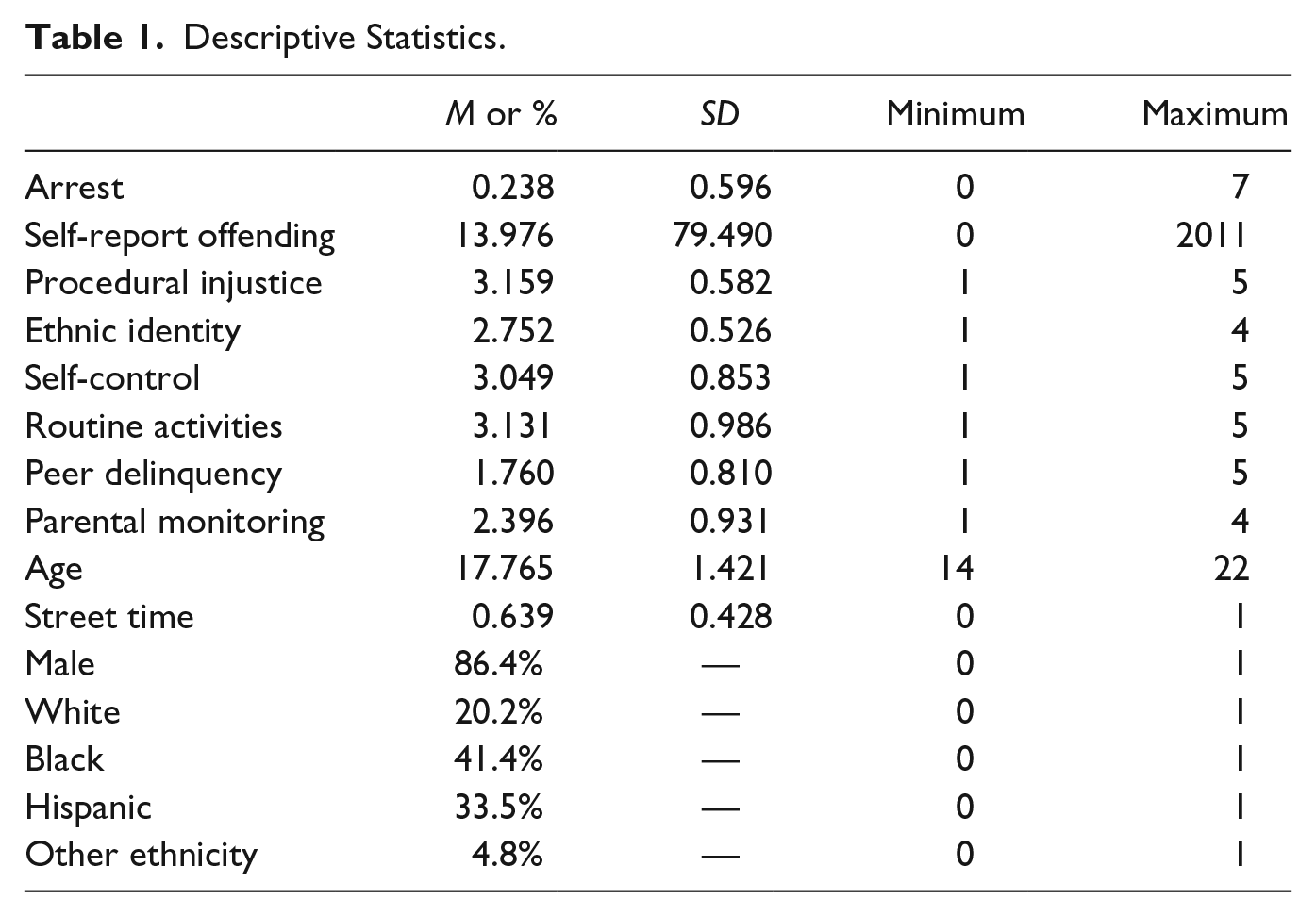
Variables were also included in the model for the demographic characteristics of age (in years), gender (1 = male, 0 = female) and ethnicity (White, African American, and Hispanic/Other). 5 In addition, given that the sample was composed of serious juvenile offenders a measure of time on the street was used as an exposure variable. Street time was operationalized as a proportion of the amount of time between interviews that the individual was not in a residential placement facility (i.e., amount of time out of residential placement between interviews/total time between interviews). Descriptive statistics for all the variables are presented in Table 1.
Descriptive Statistics.
Analysis
Multiple imputations by chained equations (50 imputations) was used to handle missing data. This procedure lessens the likelihood of obtaining biased results or incorrect standard errors compared with complete case analysis when missing data are present (see Johnson & Young, 2011). In addition, the recommendation of Von Hippel (2007) regarding multiple imputation and then deletion was followed in this study. The Pathways data set has missing values for self-report offending on several cases. Given that this is the key dependent variable, a decision must be made regarding the missingness of self-report offending. Von Hippel (2007) emphasizes that the dependent variables need to be included in any imputation model as cases where the dependent variable is nonmissing can use the dependent variable to help predict other missing variables in that case. In addition, cases where the dependent variable is missing should be included as those cases will help make the model more robust creating more accurate imputations. Thus, the dependent variable should be imputed to achieve the most robust imputation possible. However, including imputed dependent variables in the analysis creates excess noise and adds nothing substantive to the analysis. Deleting cases where the dependent variable was missing prior to imputation after imputations are complete produces a cleaner, more accurate model for analysis (Von Hippel, 2007). Thus, offending is included in the overall imputation model, but cases where offending was missing prior to imputation were excluded when conducting analyses. Missing imputation then deletion is not, however, required for the official arrest record variable. Arrest records were searched for all individuals in the data set and a value recorded for the number of re-arrests. Although there could easily still be missing data (someone’s arrests could for whatever reason fail to be recorded in the records), these data are indistinguishable from real zeroes and must simply be treated as error rather than missing values.
Population-averaged negative binomial regression was used to regress offending on procedural injustice, ethnic identity, race/ethnicity, a three-way interaction of these variables and the control variables. A negative binomial regression was chosen because the dependent variables measured counts of self-report offenses and counts of arrests. In addition, a preliminary examination of the data reveals that the unconditional variance of self-report offending is 3951.17. Given that this value greatly exceeds the mean of 12.43, it is extremely unlikely that the conditional variance will be reduced to the level necessary to achieve the equal variance and mean necessary for the use of a Poisson regression. Similarly, for the arrest variable the variance (.356) also exceeded the mean (.238), though to a lesser extent. 6
Population-averaged models look at the between-subjects effects of the independent variable, whereas random-effects models focus on subject-specific effects evaluating how changes in independent variables over time affect the dependent variable. The research question at hand is concerned with how individuals of differing levels of ethnic identity will be affected by perceptions of procedural injustice, not how changes in ethnic identity or procedural injustice affect offending. Thus, the population-averaged model, focusing on between-subjects effects, is appropriate for this research question. In addition, the data have greater between-subjects variation than within-subjects variation for ethnic identity providing statistical support for choosing a model that focuses on between-subjects rather than within-subjects effects. Thus, a population-averaged negative binomial regression is the preferred method of statistical analysis for this study. 7
Regressions were run on both dependent variables using the multiply imputed data with an interaction term specified. An interaction term allows the effects of one independent variable to vary across different values of another independent variable. For the interaction of procedural injustice and ethnic identity, the effects of procedural injustice on offending are allowed to vary across different strengths of ethnic identity. The interaction term is statistically significant if the impact of procedural injustice on offending is significantly different at different values of ethnic identity. As mentioned above, a three-way interaction among procedural injustice, ethnic identity, and race/ethnicity was utilized here. A three-way interaction allows an interaction effect to vary across different values of a third variable. Specifically, the three-way interaction between ethnic identity, procedural injustice, and ethnicity allows for the procedural injustice–ethnic identity interaction discussed previously to vary across ethnicities. Thus, the effect of procedural injustice on offending could vary by ethnic identity for African Americans but not for Whites. After estimating the regression models, predictive margins will be used to examine the directions and sizes of any effects that are found.
Results
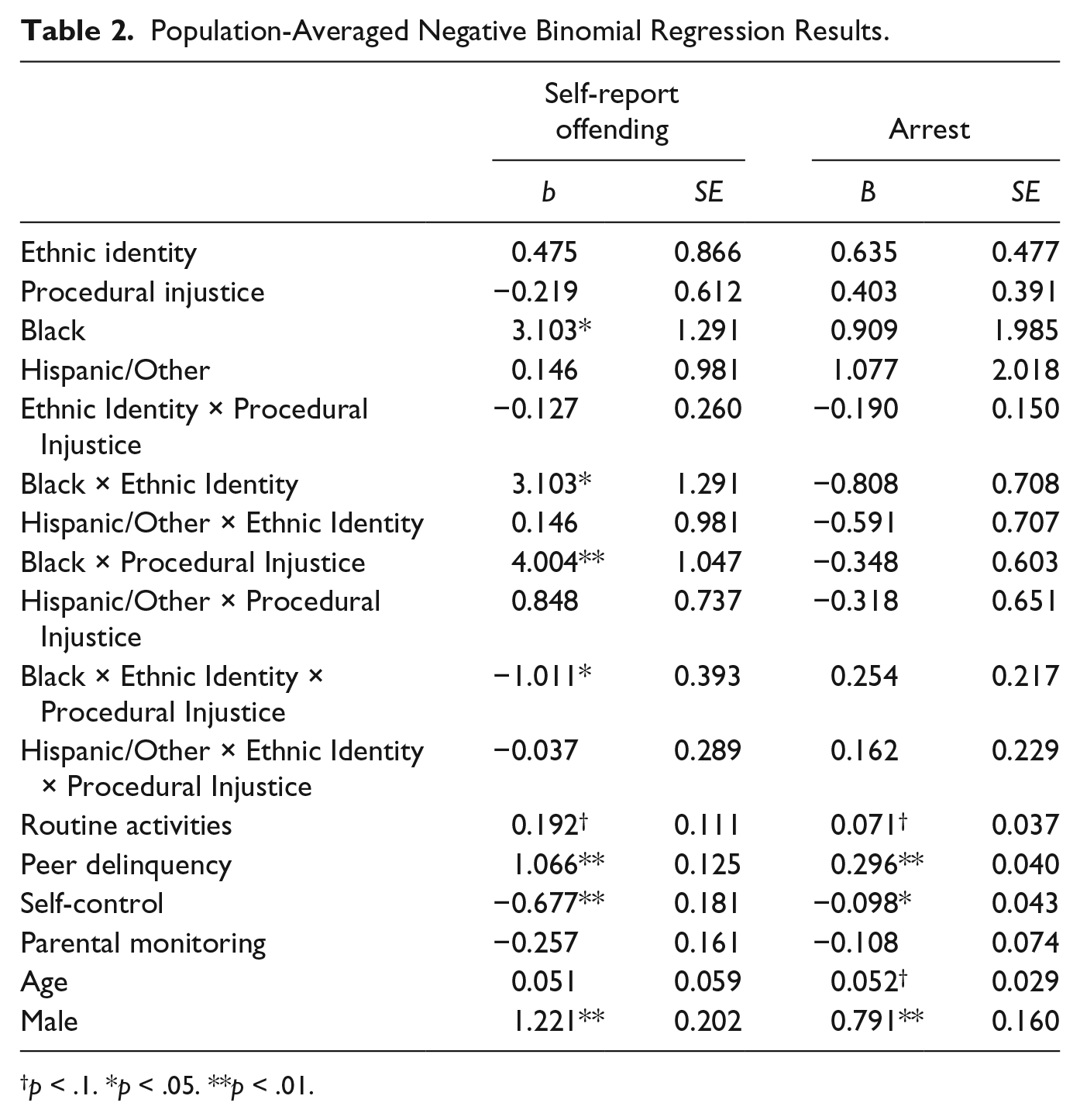
The results from the population-averaged negative binomial model are presented in Table 2. For both models, the direct effects of ethnic identity and procedural injustice are insignificant. This is not altogether unexpected as the hypothesized effects of these variables are expected to vary across other variables. There are, however, significant direct effects for peer delinquency, low self-control, and gender with greater peer delinquency, less self-control, and being male predicting higher offending. There is also significance in the self-report offending model for race/ethnicity, with African Americans self-reporting more criminal behavior. Furthermore, when examining self-report offending, there is significance in the interaction between being African American and ethnic identity, being African American and procedural injustice, and the three-way interaction between being African American, ethnic identity, and procedural injustice. Significance alone does not explain the true nature of these interactions.
Population-Averaged Negative Binomial Regression Results.
p < .1. *p < .05. **p < .01.
To more fully explain the interaction between being African American and ethnic identity, as well as the interaction between being African American and procedural injustice, predictive margins were run. Figure 1 plots the predictive margins of ethnic identity by ethnicity with each line representing a different ethnicity. As seen in the plot, a stronger ethnic identity is associated with more offending for both the “White” category and the “Hispanic and Other” category. However, for African Americans, a stronger ethnic identity is actually associated with less offending. It is important to note that the slopes of these lines do not reach statistical significance (significance not shown). As mentioned previously, a significant interaction term means that the impact of an independent variable differs significantly across values of another independent variable. It does not necessarily mean that the impact is significant for each value of the independent variable, as seen here. Thus, being African American results in a significantly different association between ethnic identity and offending; however, that impact is not significantly different from zero or no impact.
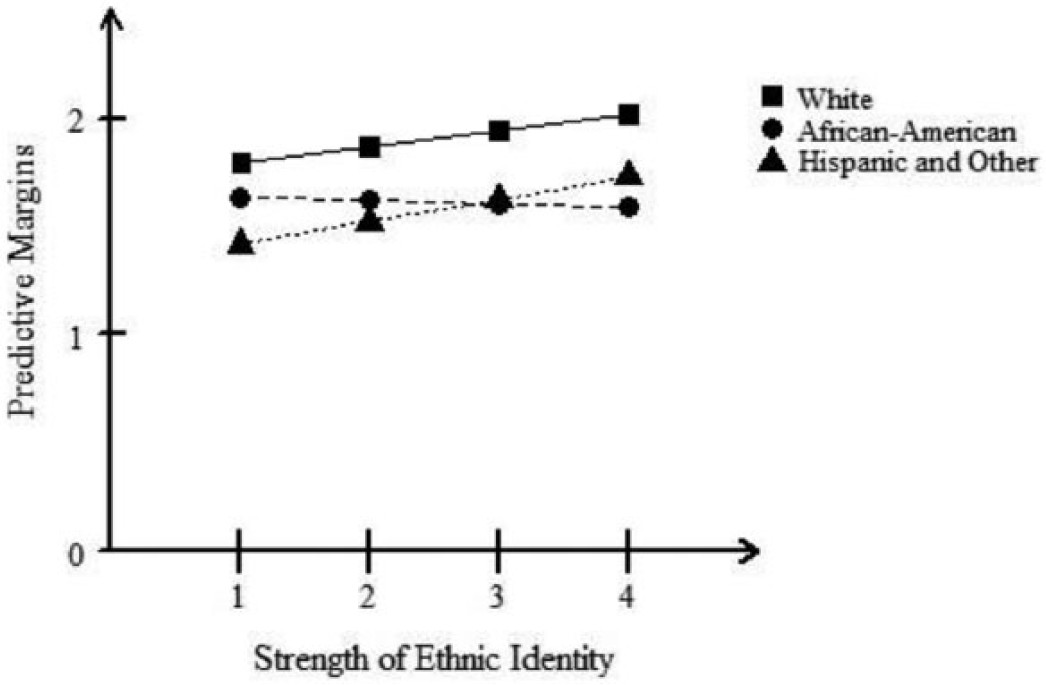
Differential impact of ethics identity by ethnicity.
Figure 2 plots the predictive margins of procedural injustice by ethnicity with each line representing a different ethnicity. Here, higher perceptions of procedural injustice have the predicted effect of increasing the likelihood of offending behavior for both the “African American” category as well as the “Hispanic and Other” category. For the “White” category, however, greater perceived procedural injustice has the opposite effect. In checking for significance, only the impact of being African American reaches statistical significance (significance not shown). That is, for Whites and those in the Hispanic and Other category, the effect of perceived procedural injustice is not statistically significant from zero or no impact. For African Americans, higher perceptions of perceived procedural injustice are associated with greater offending behaviors.
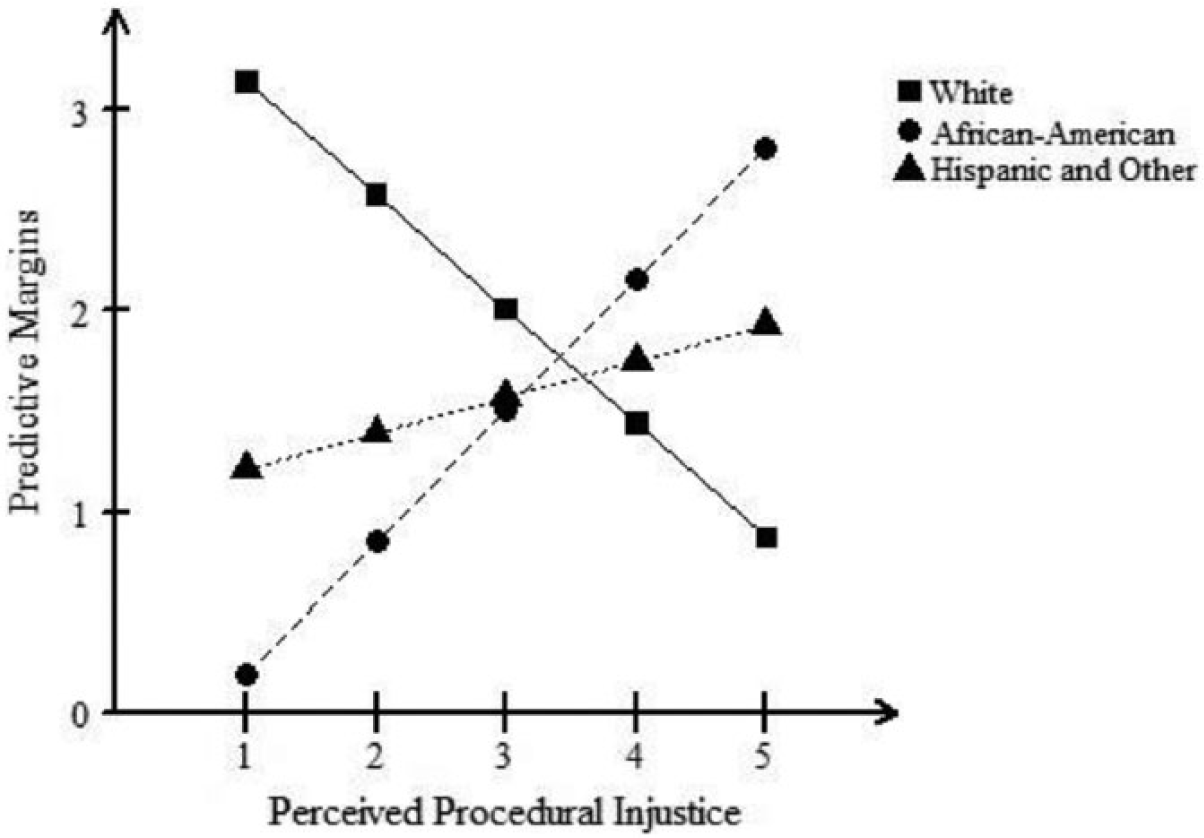
Differential impact of procedural injustice by ethnicity.
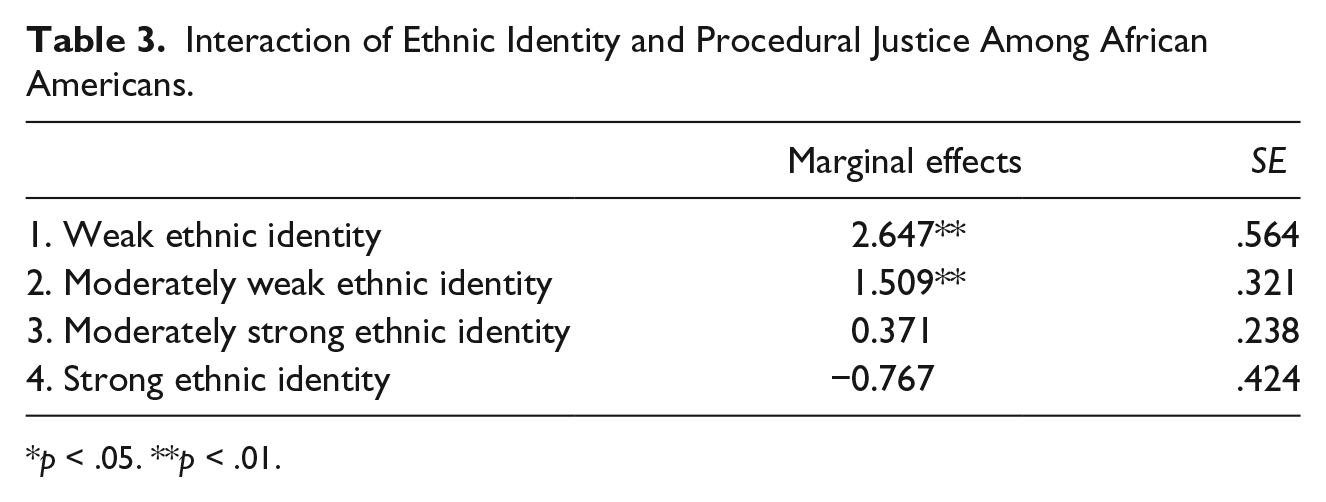
Thus far, Figures 1 and 2 have shown that procedural injustice and ethnic identity are acting in ways consistent with previous literature for African Americans. Specifically, greater perceptions of procedural injustice are associated with greater offending behaviors and higher values of ethnic identity are associated with less offending behavior (though the ethnic identity effect is not statistically significant). Figure 3 presents the results of the three-way interaction term showing the predictive margins of perceived procedural injustice for African Americans with each line representing a different value of ethnic identity. At lower values of ethnic identity, increased perceptions of procedural injustice are associated with increased offending behaviors; however, at higher values of ethnic identity the impact weakens and changes direction. Here, the impact of procedural injustice on offending is significant for the “Weak Ethnic Identity” and the “Moderately Weak Ethnic Identity,” but not the “Moderately Strong Ethnic Identity” or the “Strong Ethnic Identity” (see Table 3). Consistent with the hypothesis, this means that when ethnic identity is weaker, perceived procedural injustice increases offending behavior, but at higher values of ethnic identity, perceived procedural injustice does not affect offending behavior.
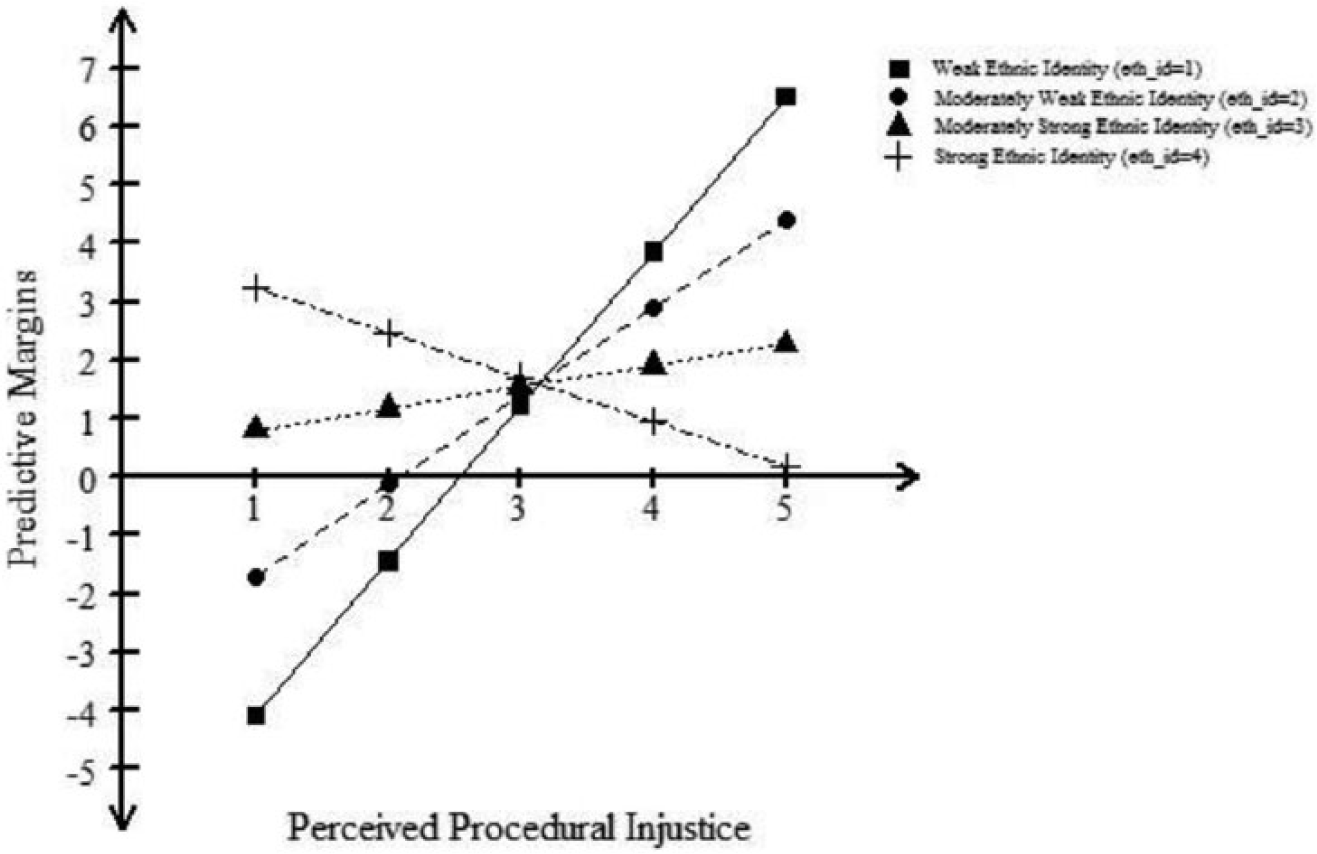
Differential impact of procedural injustice by strength of ethnic identity for Africans Americans.
Interaction of Ethnic Identity and Procedural Justice Among African Americans.
p < .05. **p < .01.
When arrest is the dependent variable, significance is not seen in any of the key independent variables or the interaction terms. This finding stands in contrast to much of the procedural justice literature and the ethnic identity literature reviewed here, as neither variable is associated with offending for any ethnic group. The analysis did, however, reveal that routine activities, peer delinquency, and level of self-control significantly affected the number of arrests.
Discussion
Tyler and Blader’s (2003) group engagement model argues that perceptions of procedural justice communicate messages to individuals about their identity and status in a group. These identity judgments then influence engagement in the group’s norms and values. Despite this emphasis on identity judgments in procedural justice theory, relatively little research on procedural justice has examined the multi-faceted nature of social identity. That is, little work has examined whether different aspects of social identity can be engaged when the broader social identity is compromised by perceptions of procedural injustice. If different aspects of social identity can be engaged, procedural justice may not affect all individuals in the same way. The analysis presented in this article demonstrates that procedural justice does affect individuals differently. Among African American juvenile delinquents, greater perceptions of procedural injustice are associated with higher levels of self-report offending, but the effect of procedural injustice on self-report offending is reduced to the point of insignificance for individuals with strong ethnic identities.
The findings, however, did not hold for other minority groups or when the number of arrests, rather than self-report offending, is used as the measure of criminal behavior. 8 The present study’s implications are also limited due to the sample used in the Pathways to Desistance study. That is, Pathways participants were juvenile delinquents that had already been adjudicated delinquent of a crime. Thus, future research needs to be done to replicate these findings among samples of the general population. In addition, future work should attempt to uncover the reason why ethnic identity was found to be an important predictor among African Americans, but not other ethnic minorities. The measure utilized in the study was designed for multiple ethnicities, not just African Americans, and other ethnicities, particularly Hispanics, had significant representation in the sample. Still, the findings for self-report offending are not only statistically, but practically significant among African Americans, suggesting that ethnic identity and procedural justice play an important role in predicting criminal behavior among African Americans.
From a procedural justice perspective, the findings here continue to support the use of procedurally just tactics by law enforcement to gain compliance with the law. Developing policies and training officers to act in manners consistent with the constructs of procedural fairness can help encourage compliance behaviors and decrease offending. This is an especially important task among African Americans who typically view the police less positively than their White counterparts (Hurst, Frank, & Browning, 2000; Rosenbaum, Schuck, Costello, Hawkins, & Ring, 2005; Tyler & Huo, 2002). Furthermore, promoting strong ethnic identities among African Americans can help reduce the likelihood that those individuals will engage in criminal behavior when they experience injustice. Thus, these findings support the concepts used by Burt and colleagues (2012). As suggested by Burt and colleagues, ethnic identities can be promoted through parental socialization that includes preparation for bias as well as the promotion of pride and self-esteem in the individual’s ethnic or racial group. In sum, ethnic-racial socialization can help promote positive ethnic identities and decrease crime among African Americans.
More broadly, the finding that the impact of procedural injustice on offending varies by ethnicity and strength of ethnic identity demonstrates that procedural justice does not work the same for everyone. That is, different facets of social identities can help insulate individuals from the negative effects of perceptions of injustice. Police officers, as representatives of society and its laws, may serve as a “prototypical group authority” for society as a whole (Sunshine & Tyler, 2003), but may not be seen as a group authority figure for other groups. Future research could explore other groups and other aspects of social identity that can be engaged when perceptions of injustice are high. Whereas existing research supports the importance of procedural justice theory, this study should be used as evidence for further examining how different aspects of social identity can influence the effect of procedural justice on compliance behaviors. If perceptions of procedural injustice do not impact everyone the same, as demonstrated here, it is important to understand which individuals are at risk when perceptions of injustice exist.
Footnotes
Appendix
Items for Key Independent Variables.

| Ethnic identity |
| 1. I have spent time trying to find out more about my ethnic group, such as its history, traditions, and customs. |
| 2. I am active in organizations or social groups that include mostly members of my own ethnic group. |
| 3. I have a clear sense of my ethnic background and what it means for me. |
| 4. I think a lot about how my life will be affected by my ethnic group membership. |
| 5. I am happy that I am a member of the group I belong to. |
| 6. I have a strong sense of belonging to my own ethnic group. |
| 7. I understand pretty well what my ethnic group membership means to me. |
| 8. To learn more about my ethnic background, I have often talked to other people about my ethnic group. |
| 9. I have a lot of pride in my ethnic group. |
| 10. I participate in cultural practices of my own group, such as special food, music, or customs. |
| 11. I feel a strong attachment toward my own ethnic group. |
| 12. I feel good about my cultural or ethnic background. |
| Procedural injustice |
| 1. During your last contact with the police when you were accused of a crime, how much of your story did the police let you tell? |
| 2. Of the people you know who have had a contact with the police (in terms of crime accusation), how much of their story did the police let them tell? |
| 3. The police treat me the same way they treat most people my age. |
| 4. Over the last couple of years, the police have been treating me the same way they always treated me in the past. |
| 5. During my last encounter with the police, they treated me in the way that I expected they would treat me. |
| 6. During my last encounter with the police, they treated me in the way that I thought I should be treated. |
| 7. Even after the police make a decision about arresting me, there is nothing I can do to appeal it. |
| 8. Even after the police make a decision about arresting me, someone in higher authority can listen to my case, and even in some cases, change the decision. |
| 9. Police considered the evidence/viewpoints in this incident fairly. |
| 10. Police overlooked evidence/viewpoints in this incident. |
| 11. Police were honest in the way they handled their case. |
| 12. Police used evidence that was fair and neutral. |
| 13. Police made up their mind prior to receiving any information about the case. |
| 14. Police treat males and females differently. |
| 15. Police treat people differently depending how old they are. |
| 16. Police treat people differently depending on their race/ethnic group. |
| 17. Police treat people differently depending on the neighborhoods they are from. |
| 18. Think back to the last time the police accused you of doing something wrong. Did the police treat you with respect and dignity or did they disrespect you? |
| 19. Think back to the last time the police accused you of doing something wrong. Did the police show concern for your rights? |
Acknowledgements
The author thanks Eric Sevigny and Scott Wolfe for their comments, guidance, advice, and general assistance on the methods and direction of the article.
Declaration of Conflicting Interests
The author(s) declared no potential conflicts of interest with respect to the research, authorship, and/or publication of this article.
Funding
The author(s) received no financial support for the research, authorship, and/or publication of this article.