







Abstract
Social dominance orientation (SDO) has been reported to predict attitudes and behavior toward the natural environment. This research investigated whether dispositional connectedness with and temporary exposure to nature would reversely alter SDO. Two studies reported consistent results: Nature connectedness predicted lower SDO, and exposure to nature (vs. urban) decreased SDO only among nature-connected people. Moreover, the effect of nature exposure was strongest when the environment registered high security features. Study 2 generalized the findings on SDO to people’s policy support for marginalized groups in the US during the COVID-19 pandemic. The findings are discussed in the light of the transition from people-to-nature connections to interpersonal connections and the heterogeneity of nature’s effect. We conclude by discussing the importance of nature exposure, of which people have been deprived since the global lockdown, in combating the COVID-19 pandemic.
The literature has suggested that humans are innately connected to the natural world. This connection contributes to evolutionary fitness (Wilson, 1993), esthetic experience (Appleton, 1996), and cognitive resources (Kaplan & Kaplan, 1989). People also vary in their individual level of connectedness to nature (Mayer & Frantz, 2004; Schultz, 2001). Some people see themselves as part of nature and equal to other life forms. They thus develop physical, cognitive, and affective relationships with nature. On the other hand, people who are less connected to nature hold a sense of superiority over other life forms. Expectedly, people who are connected to nature engage in more pro-environmental behavior (Gosling & Williams, 2010; Mayer & Frantz, 2004; Tam et al., 2013).
Nature Connectedness and Social Dominance Orientation
While dispositional connectedness to nature is evidently related to environmentalism, less is known about its relationship with people’s intergroup behavior and attitudes. If a person can empathize with nature, such as an endangered species, it should not be surprising that they also show kindness to fellow human beings, such as marginalized groups in society. To fill this theoretical gap, it is useful to consider Duckitt and Sibley’s (2009) Dual-Process Motivational (DPM) Model, which contends that intergroup bias stems from two ideological attitudes, namely Right-Wing Authoritarianism (RWA) and Social Dominance Orientation (SDO). The two constructs are strong predictors of generalized prejudice (Hodson et al., 2017; McFarland, 2010), but they distinguish themselves with distinctive features and motivational goals. RWA pertains to conservatism, traditionalism, and authoritarian submission and aggression (Altemeyer, 1981), whereas SDO pertains to power, hedonism, and beliefs in social hierarchy and dominance (Pratto et al., 1994; Sidanius et al., 1994). According to the DPM model, people high in RWA see the world as dangerous. They seek to maintain social order by submitting to authority and suppressing outgroups that threaten traditional values. People high in SDO see the world as a competitive environment and seek to maintain their dominance over subordinate groups. Therefore, RWA predicts prejudice against deviant out-groups that threaten social order, while SDO predicts prejudice against disadvantaged out-groups that challenge existing social inequalities (e.g., Duckitt & Sibley, 2007).
Of the two constructs, SDO is a potential candidate to link nature connectedness to intergroup bias. Nature connectedness alludes to an egalitarian view on the human-nature relationship (Mayer & Frantz, 2004), which is opposite to SDO that emphasizes hierarchical relationships with other beings. They may also share a common personality basis, with nature connectedness correlating positively (Tam, 2013) and SDO correlating negatively with agreeableness (Sibley & Duckitt, 2008). In contrast, the RWA themes of authoritarian submission and traditionalism are absent in nature connectedness. There is also no consistent match between the personality correlates of RWA (high conscientiousness and low openness; Sibley & Duckitt, 2008) and nature connectedness (high conscientiousness and high openness; Tam, 2013).
To date, there is no direct evidence supporting the association between nature connectedness and SDO. However, people high in SDO have been found to emphasize the dissimilarity between humans and animals (Costello & Hodson, 2009), consume more animal products (Hyers, 2006), oppose veganism (Allen et al., 2000), and engage less in pro-environmental behavior (Milfont et al., 2013, 2018). These findings show that SDO is a reliable predictor of negative attitudes toward the environment and other life forms, which are signs of disconnection from nature. We thus proposed that people high in SDO would report lower nature connectedness: A negative correlation was expected.
The reviewed literature indicates that SDO predicts not only intergroup bias, but also environmentalism. In the same vein, the proposed relationship between nature connectedness and SDO suggests that nature connectedness can inform a person’s intergroup behavior, particularly if the target is of lower status and perceived as competitive. To put it more concretely, if nature connectedness is correlated with lower SDO, it should also predict less oppression of and more support for marginalized groups in society. In line with this, research (Bastian et al., 2011; Costello & Hodson, 2009) has reported that enhancing the perception of human-animal similarity, which is a core component in nature connectedness, would increase people’s moral concern toward outgroups and decrease their tendency to dehumanize immigrants.
To sum up, there is no research examining the relationship between nature connectedness and SDO. Filling the knowledge gap would help extend the implication of nature connectedness to intergroup bias driven by SDO, such as support for hierarchy-maintaining policies (Ho et al., 2015; Sidanius et al., 1994). In this research, we focused on people’s policy orientation toward marginalized groups during the COVID-19 pandemic. We hypothesized that nature connectedness would predict lower SDO and higher support for policies benefitting vulnerable groups affected by the pandemic.
The Prosocial Effect of Nature Exposure
The DPM model (Duckitt & Sibley, 2009) posits that SDO is caused by a competitive worldview, which is driven by dispositional toughmindedness and social contexts (e.g., group dominance and inequality). Toughmindedness, as already noted, draws theoretical connection between SDO and nature connectedness. Contextual input, on the other hand, implies that SDO is also influenced by transient social effects. This has been demonstrated in previous studies with the induction of social threat to research participants (Duckitt & Fisher, 2003; Morrison et al., 2008). As intergroup attitudes and behavior are intertwined with environmentalism, it is possible that exposure to nature can serve as a contextual influence on SDO. Indeed, nature experience has been associated with lower aggression and higher prosociality (Kuo, 2003; Kuo & Sullivan, 2001). Moreover, brief exposure to nature (e.g., seeing natural sceneries) has been shown to increase helping (Guéguen & Stefan, 2016), and intrinsic aspirations for meaningful relationships and community contributions (Weinstein et al., 2009). However, the extant research has yet to investigate this prosocial effect in intergroup relationships. If exposure to nature increases general prosociality, the effect may also be applicable to intergroup attitudes and behavior, as in reducing SDO and increasing support for marginalized groups.
This literature raises two research questions regarding the relationship between nature and SDO. First, social-cognitive theory notes that it is inadequate to consider dispositional and situational effects separately (Mischel & Shoda, 1998). Research that emphasizes person-situation interaction often leads to better understanding of a phenomenon. Accordingly, it is instructive to consider whether dispositional nature connectedness moderates the effect of nature exposure on intergroup attitudes and behavior. People who feel connected and unconnected to nature probably perceive the same nature experience differently, thus resulting in different outcomes. Only scarce research has examined this person-situation interaction. For example, watching nature documentaries increased environmentalism only among nature-connected people (Arendt & Matthes, 2016), who also received a stronger positive effect on well-being upon nature visits (Martin et al., 2020). Apparently, nature connectedness strengthens the beneficial effects of nature exposure. Therefore, we hypothesized that dispositional nature connectedness and short-term nature exposure would interactively predict SDO and support for marginalized groups. Specifically, we expected nature exposure to decrease SDO and increase policy support among nature-connected people, but less so for nature-unconnected people.
The second question concerns with the heterogeneity of nature experience. Nature is a broad concept that it is unreasonable to expect all natural environments to cause the same effect. Research on the nature exposure effect has been overrepresented by green sceneries, and the variation in nature has been inadequately addressed (Hartmann & Apaolaza-Ibáñez, 2010). Ng et al. (2019) proposed from an evolutionary perspective that nature’s prosocial effect rests on its ability to provide resources and security. The sight of vegetation often implies the presence of water and food (resources), as well as places for concealment (security). The research reported that when compared to urban control, lush green environments featuring high resource and security increased prosociality. However, rainforest images featuring high resource and low security did not.
The resource-security model helps elucidate the nature exposure effect on SDO. Resource scarcity and security threat in society prompt people to see the world as a “ruthlessly competitive jungle,” leading to higher SDO (Duckitt & Sibley, 2009, p. 102). SDO increases (decreases) as the competition is made more (less) salient to people (Morrison et al., 2008). Similarly, natural environments with high resource and security features may deactivate the competitive worldview and thus lead to lower SDO. In contrast, less favorable environments (low resource and/or low security) may increase competitiveness and thus lead to higher SDO. Therefore, rather than treating nature as a single condition, it would also be useful to compare the hypothesized effect of different natural environments. We speculated that the positive effect of nature exposure would be more pronounced in favorable environments (high resource and/or security), but less so in unfavorable environments (low resource and/or low security).
Research Overview
Two studies were conducted to address the above research questions. The research materials and data are available at https://osf.io/fcjr6/. In Study 1, participants reported their dispositional nature connectedness. They were then exposed to visual stimuli of natural environments with varying resource and security features, or urban sceneries in the control condition. SDO was measured at the end as the outcome variable. In Study 2, we added items about policy support for undocumented immigrants and people of lower classes in the US during the COVID-19 pandemic. Research hypotheses are listed below:
Nature connectedness is negatively correlated with SDO and positively correlated with policy support for marginalized groups.
Nature connectedness moderates the effect of nature exposure on SDO and policy support. Nature exposure decreases SDO and increases policy support only when dispositional nature connectedness is high.
The nature exposure effect, as moderated by nature connectedness, is different across natural environments. The positive effect of nature exposure is more pronounced in favorable (high resource and/or high security) environments than unfavorable environments (low resource and/or low security).
Study 1
Participants
Power analysis for a linear model (multiple ρ = .30, α = .05, β = .95) with nine predictors (see Table 4 for specifications) required a sample of 284. We recruited participants online from the United States in two batches. In the first batch, we recruited 300 participants on Amazon Mechanical Turk (MTurk) and received 321 responses. Each participant was rewarded $0.50 for completing a 10-minute study. We screened the data with the following criteria: time taken less than 5 mins (n = 45), 1 repeated inputs from the same IP address (n = 55), 2 invalid or irrelevant text entry (n = 101; e.g., random letters, irrelevant text copy-and-pasted from the Internet, bot-like responses), and failing the first (n = 76) and second (n = 100) attention check items. The screening retained 157 (49%) valid responses.
To achieve the required sample size and tackle the poor data quality, we recruited additional 150 responses on Prolific, a platform that claimed to adopt various measures to tackle common data quality issues in MTurk. Participants signed up to complete the 10-minute study for a reward of £0.50. One-hundred-and-twenty-one responses remained (81%) after applying the above screening criteria. Together, we obtained 278 valid responses, which was close to the power requirement. Table 1 reports the demographic information.
Demographic Information of Samples in Study 1 and Study 2.
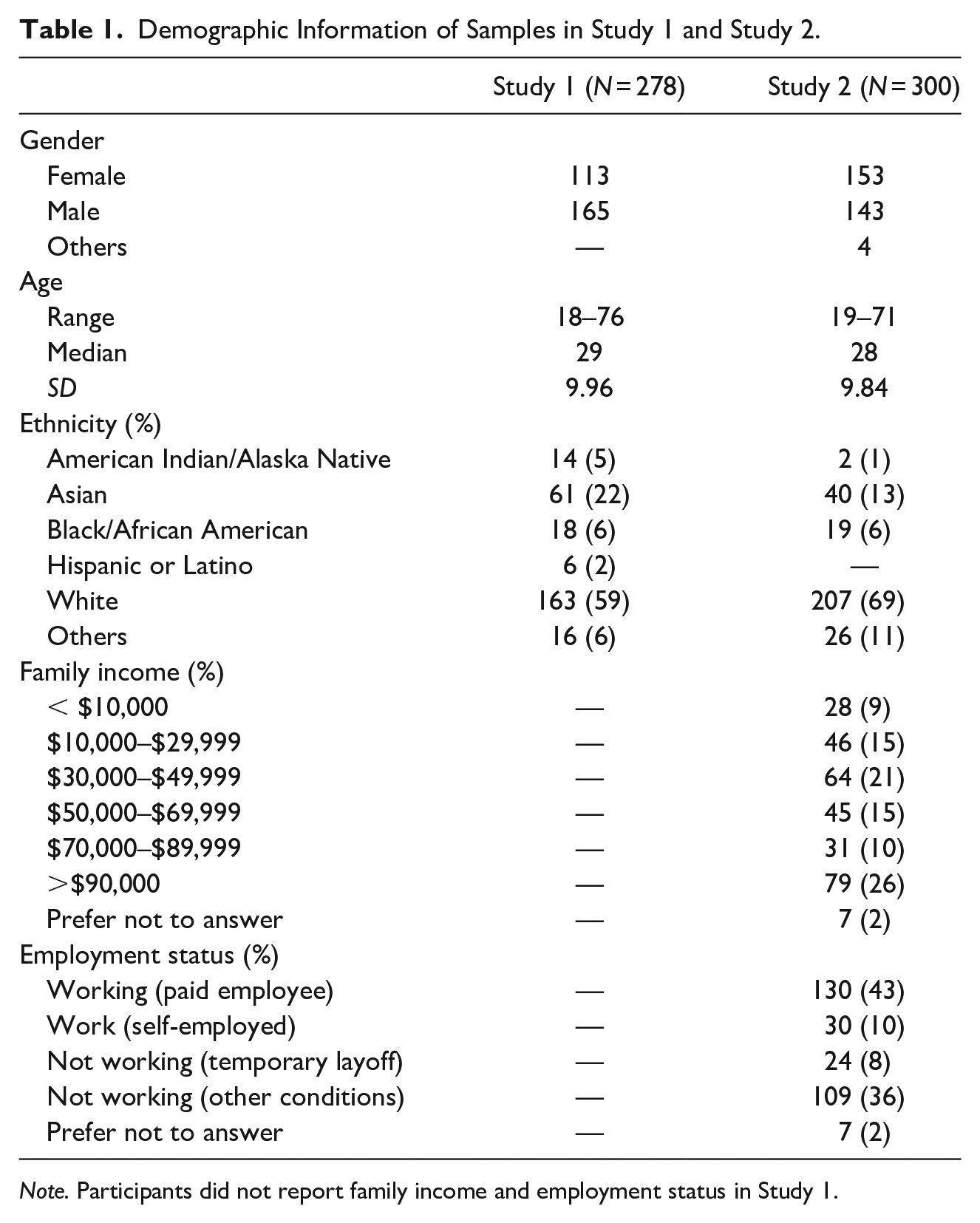
Note. Participants did not report family income and employment status in Study 1.
Procedures
All procedures described in this paper have been approved by the Human and Research Ethics Committee (HREC) of the University of Hong Kong (EA1605030). The research materials were hosted on a survey link in the following order.
Connectedness to nature
Participants completed the 14-item connectedness to nature scale (CNS, α = .81; Mayer & Frantz, 2004). It measured people’s dispositional tendency to connect to nature emotionally (e.g., “I often feel a sense of oneness with the natural world around me”). People responded on a 5-point scale of agreement with higher scores indicating higher connectedness.
Nature exposure
Participants were randomly assigned to one of five environmental conditions, namely high-resource-high-security (HR-HS, n = 52), high-resource-low-security (HR-LS, n = 60), low-resource-high-security (LR-HS, n = 54), low-resource-low-security (LR-LS, n = 60), and urban environment (n = 52). The first four conditions were natural environments defined by the resource-security model. The urban environment served as a control condition.
We conducted a pilot study to survey people’s perception of resource and security features in natural environments. One-hundred-and-fifty-seven participants were asked to draw a natural scenery that had high or low levels of resource and security. Two coders naïve of the research coded the drawings and agreed on 14 features. Decision tree learning (depth = 3; see Supplemental Material S1) identified drinkable water and food as resource features. Hiding places, dangerous animals, and pleasant weather were identified as security features. Accuracies for the training and testing sets were .82 and .73.
Nature stimuli were developed based on the learned features. Participants imagined they had to stay in the wilderness alone for 3 days and saw eight captioned photos describing the environment (see Supplemental Material S2). High-resource conditions showed streams of fresh water and an abundance of nutritious fruits. Low-resource conditions showed muddy water and sour fruits that were scarce and unreachable. High-security conditions showed pleasant weather, ample hiding places, and harmless animals. Low-security conditions showed unpleasant weather, a lack of hiding places, and dangerous animals (e.g. rattlesnakes). The two factors were crossed to form the four nature conditions. In urban control, participants saw eight captioned photos of buildings in Hong Kong.
Participants were required to write at least two sentences describing how they would act and feel in the scenario. They then rated on a 7-point scale the resource, security, and beauty of the environment. They also indicated how likely they would survive (visit) in the natural (urban) environment.
Social dominance orientation
On a 7-point scale, participants responded to the short form of the Social Dominance Orientation Scale (α = .78; Ho et al., 2015). The 8-item scale had two subdimensions, namely dominance (α = .74; e.g., “Some groups of people are simply inferior to other groups”) and anti-egalitarianism (α = .77; e.g., “Groups equality should not be our primary goal”). The former related to overt oppression of subordinate groups, while the latter related to subtle endorsement of social inequality. Higher scores indicated higher SDO tendencies.
Quality assurance
Two check items were inserted in CNS and SDO, requiring entry of a specific scale point. Upon completion of the study, participants were asked to write down, without penalty, anything that might hamper their response quality. One participant doubted if they had understood the instructions correctly, and their input was retained after careful inspection.
Results
Preliminary analysis
Table 2 sums up the descriptive statistics and one-way ANOVAs of all variables across the five conditions. Resource and security ratings of each nature condition were compared with urban control, and they varied as intended: High (low)- resource conditions were rated as having more (less) resources, whereas high (low)- security conditions were rated as more (less) secure. The manipulation was successful. Beauty also varied significantly across conditions. Urban control was perceived as less beautiful than HR-HS, HR-LS, and LR-HS nature, but more beautiful than LR-LS nature. This indicated that participants generally perceived natural sceneries as more beautiful than urban sceneries except when both resources and security were depleted.
Descriptive Statistics and One-Way ANOVAs across the Five Conditions (Study 1).
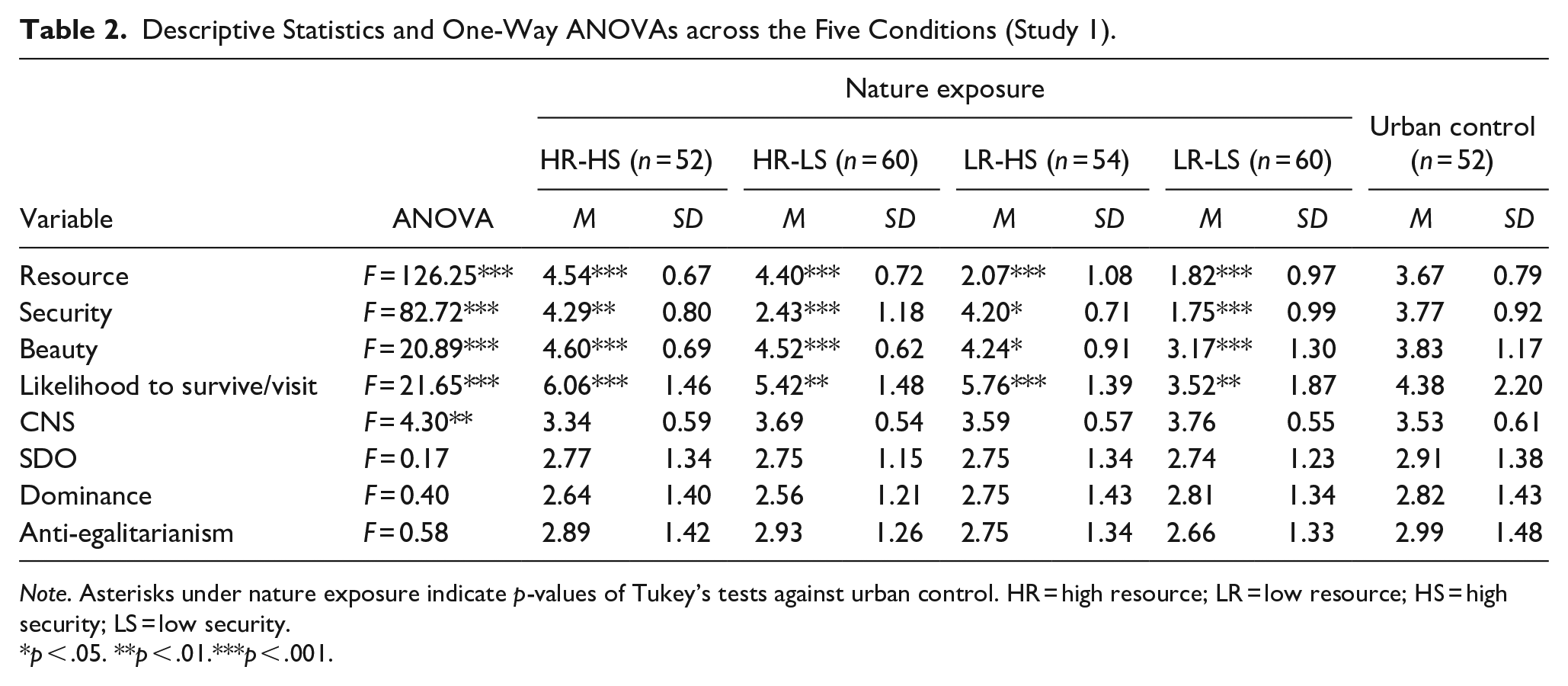
Note. Asterisks under nature exposure indicate p-values of Tukey’s tests against urban control. HR = high resource; LR = low resource; HS = high security; LS = low security.
p < .05. **p < .01.***p < .001.
Factorial ANOVA on the four nature conditions indicated a consistent resource-security interaction effect on beauty, F = 16.10, p < .001, and survival likelihood, F = 14.70, p < .001. Briefly, participants rated LR-LS nature as least beautiful and least likely to survive than the other three nature conditions. Lastly, perceived beauty was significantly correlated with survival likelihood (r = .40, p < .001). The findings supported Appleton’s (1996) view that esthetic response to nature was a proxy for surveying the habitability of a place. It added that resource and security features were important antecedents of such responses, which is in line with the resource-security model (Ng et al., 2019).
Nature exposure and connectedness to nature
Supporting the first hypothesis, CNS correlated negatively with social dominance orientation (SDO), r = −.24, p < .001. Its correlations with dominance and anti-egalitarianism were −.20 and −.25, respectively.
Next, we examined the effect of nature exposure, CNS, and their interaction on SDO. The four nature conditions were combined and coded as 1, while urban was coded as 0. The nature-CNS interaction effect was significant, F = 6.05, p = .015, η2 = .020. Analysis with dominance and anti-egalitarianism produced similar results. We thus focused on the overall SDO score below. Table 3 summarizes the linear model (see also Supplemental Material S3).
Regressing SDO Scores on Nature, CNS, and their Interaction (Study 1).
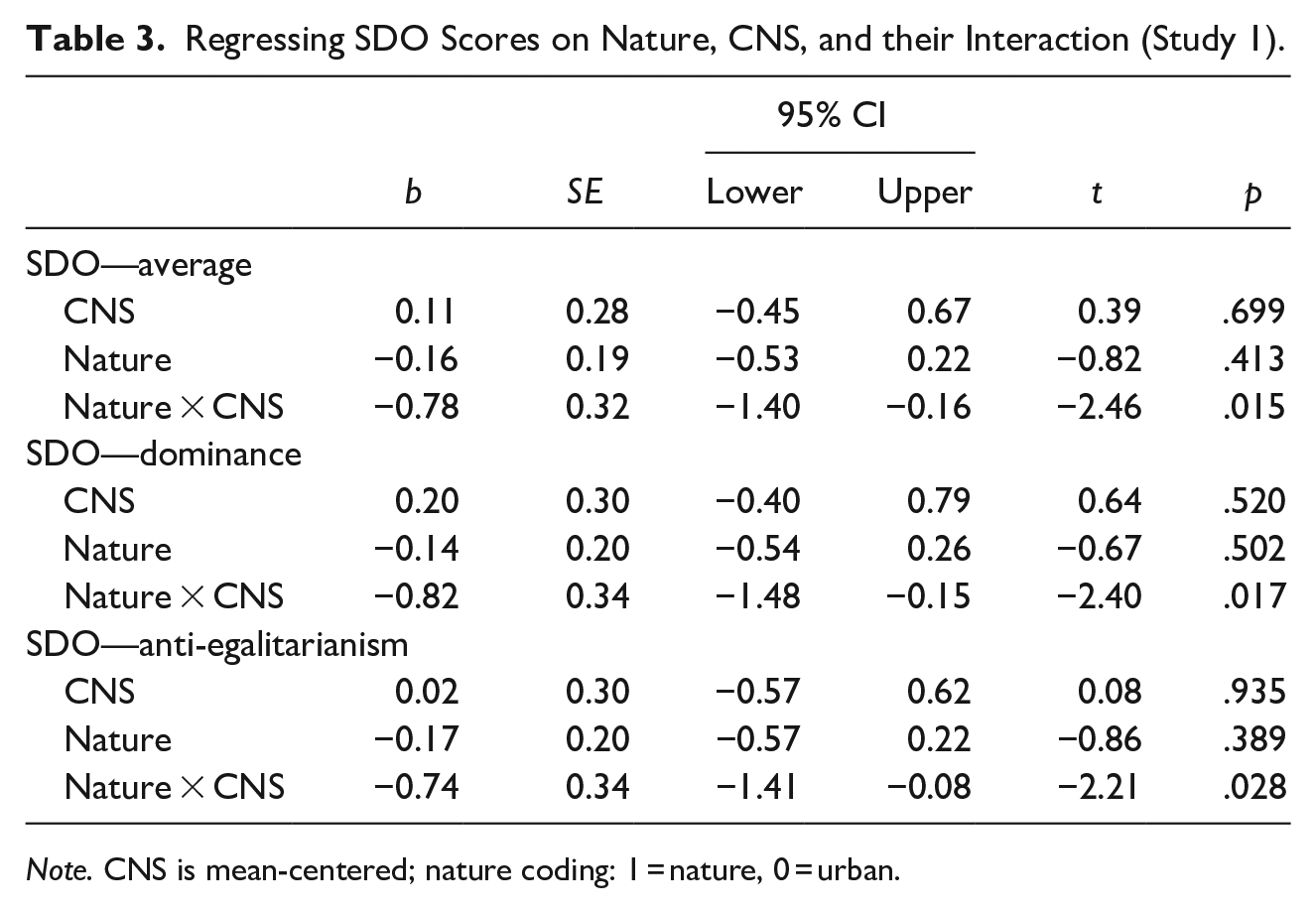
Note. CNS is mean-centered; nature coding: 1 = nature, 0 = urban.
Figure 1a illustrates the simple slopes of nature exposure on SDO at three levels of CNS: low (−1 SD or −0.58), average, and high (+1 SD). When CNS was low, nature exposure did not significantly change SDO, b = 0.30, t = 1.17, p = .244. When CNS was average, the direction of effect changed but remained non-significant, b = −0.16, t = −0.82, p = .413. Finally, when CNS was high, the effect of nature exposure was negative and significant, b = −0.61, t = −2.22, p = .027. Put otherwise, nature exposure decreased SDO when the person was dispositionally connected to nature. The second hypothesis was supported.
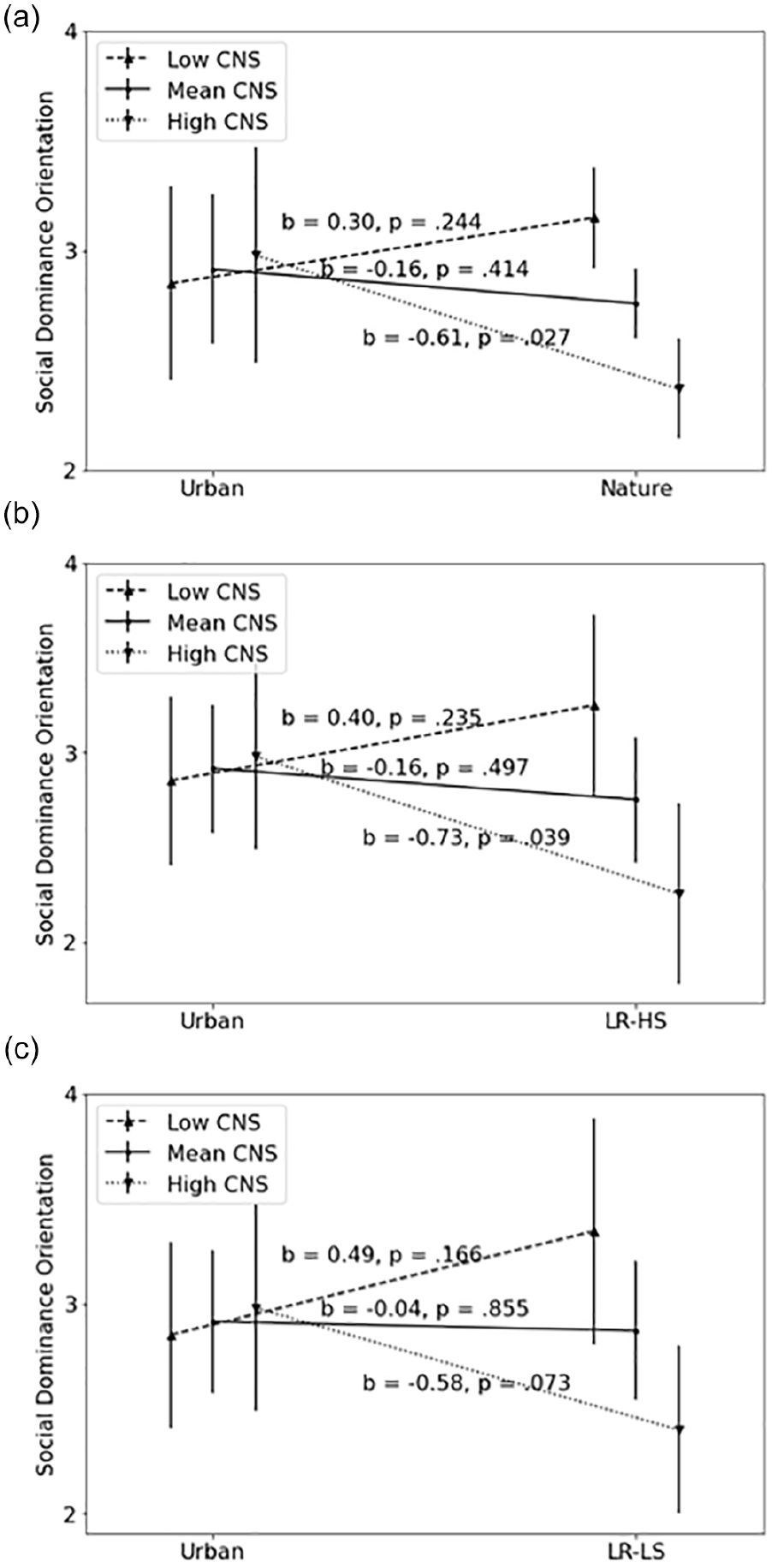
Significant interaction effects of nature exposure on SDO at three levels of CNS (Study 1).
Distinguishing between nature conditions
First, we compared SDO and its subscale scores across the four nature conditions. The resource and security factors did not have any main or interaction effects on SDO, nor did they interact with CNS to affect SDO. The results (see Supplemental Material S4) showed that the nature conditions did not lead to different SDO levels according to the resource-security model.
We further examined if the four nature conditions would be differentiable when they were compared individually to the urban condition. We dummy coded each nature condition with reference to urban control and tested its interaction effect with CNS. Significant interaction effects (Figure 1b and c) 3 were found in LR-HS, F = 5.42, p = .021, η2 = .019, and LR-LS, F = 5.06, p = .025, η2 = .017. Interaction with HR-HS was marginally significant, F = 3.74, p = .054, η2 = .013, whereas interaction with HR-LS was non-significant, F = 2.20, p = .139, η2 = .007. Table 4 summarizes the linear model. Moreover, simple-effects analysis revealed similar patterns. When CNS was high, the simple effects of LR-HS nature (b = −0.73, t = −2.08, p = .039) and HR-HS nature (b = −0.78, t = −1.99, p = .048) were both significant, but that of LR-LS nature was non-significant (b = −0.58, t = −1.80, p = .072).
Regressing SDO Scores on Nature Conditions, CNS, and Their Interactions (Study 1).
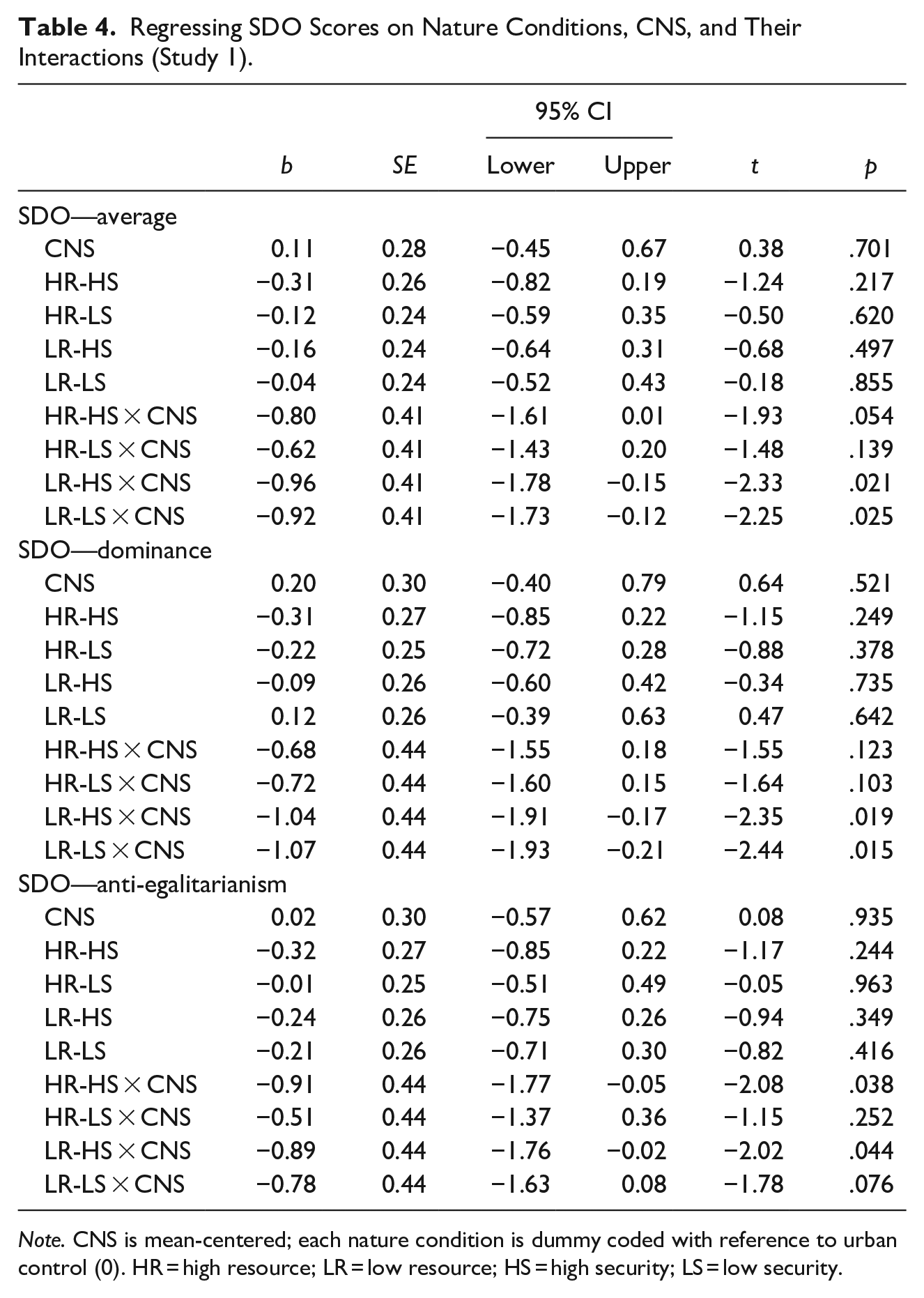
Note. CNS is mean-centered; each nature condition is dummy coded with reference to urban control (0). HR = high resource; LR = low resource; HS = high security; LS = low security.
Table 4 also reports model estimates for the dominance and anti-egalitarianism subscales. The results were generally consistent that the effects of LR-HS and LR-LS were moderated by CNS. Moreover, it is noteworthy that the HR-HS-CNS interaction was significant on the anti-egalitarianism subscale, F = 4.34, p = .038, η2 = .015.
Exploratory conditional process analysis
As shown in Table 2, the five conditions received significantly different ratings on resource, security, beauty, and likelihood to survive/ visit. The differences may inform the mechanism underlying the above results. Therefore, conditional process analysis was conducted to test if the four subjective ratings mediated the moderation effect between nature connectedness and nature exposure. However, no significant mediation was found (see Supplemental Material S5), which was mainly due to the lack of correlation between the ratings and SDO (r range: .01–.11).
Discussion
Study 1 supported the first hypothesis that nature-connected people would report lower SDO levels. It also supported the second hypothesis that nature exposure decreased SDO only among people who were more connected to nature. When separating nature conditions by resource and security levels, the interaction effect was observed in LR-HS and LR-LS nature, and inconclusively in HR-HS nature. The findings lent limited support to the heterogeneity hypothesis. Finally, subjective ratings of the environment did not explain the above effects, suggesting other mechanisms at work.
The findings should be interpreted with caution. First, extensive data screening in the first batch might harm the random assignment of conditions, as evidenced by the imbalanced sample size across conditions. The relatively small sample size of the HR-HS condition could be the reason why its interaction term did not reach statistical significance. Moreover, although CNS was measured before the manipulation, Table 2 shows that it varied significantly across conditions, with the HR-HS group reporting lower CNS than the HR-LS and LR-LS groups. The nonorthogonality between CNS and nature exposure could invalidate their interaction effect. Moreover, differences across the two recruitment platforms (e.g., payment) could be a confounding factor in the study. These limitations necessitated a replication of the findings with higher-quality data.
Study 2
Study 2 sought to replicate the findings of Study 1 with three modifications. First, to improve overall data quality, we recruited all respondents on Prolific. This was justified by the fact that in Study 1, the rate of valid response was much higher in Prolific (81%) than in MTurk (49%). Second, since SDO has been found to predict support for hierarchy-maintaining policies (Pratto et al., 1994), we expected that the nature-CNS interaction effect could be generalized to policy support for marginalized groups. As noted by Ho et al. (2015), the anti-egalitarianism subscale was expected to make better predictions of policy support than the dominance subscale. Third, one may argue that the survival-themed scenarios in Study 1 might evoke mortality salience in participants. The terror management theory (TMT) literature has linked mortality salience to intergroup attitudes and behavior. Bassett (2010), for example, reported that college students’ SDO predicted more negative attitudes toward undocumented citizens when they were exposed to high mortality salience. We included a measure of morality salience to control for this possible confounding effect.
Participants
Based on the previous power analysis, we aimed to recruit 300 participants from Prolific, with 60 responses per condition. Unlike Study 1, we continued data collection until 300 valid responses were collected. Three-hundred-and-nine US citizens completed the 10-minute study for a reward of £0.50. Using the same screening criteria of Study 1, we detected nine invalid responses for failing at least one of the two check items, leaving 300 valid responses. At the end of the session, participants were invited to write down any factors that might hamper the quality of their data. No participant reported any factors of such. Table 1 summarizes their demographic information.
Procedures
Data collection took place from May to July 2020 when the COVID-19 pandemic was still happening and had taken more than 100,000 lives in the US. After consenting to participate, respondents were referred to a link that hosted the research materials. As in Study 1, they completed the CNS (α = .81) and were then assigned to one of the five environmental conditions: HR-HS (n = 64), HR-LS (n = 57), LR-HS (n = 60), LR-LS (n = 57), and Urban (n = 62). They also gave ratings on the beauty, resource, security, and likelihood to survive (nature) or visit (Hong Kong). 4
On the next screen, participants read two texts related to the pandemic. The first one read, “In California, undocumented immigrants can apply for state coronavirus relief. The one-time benefit will provide $500 of support per adult, with a cap of $1,000 per household” (Kaur, 2020). Participants rated to what extent they would oppose or support a similar fund in their state of residence and how much would undocumented immigrants benefit from it. 5 The second text read, “Research suggests that people in lower socioeconomic classes are likelier to contract the coronavirus and die from it. They are also likelier to suffer loss of income or health care as a result of quarantines and other measures” (Fisher & Bubola, 2020). Participants rated whether people in lower classes should receive more financial support than those who were better off, whether they should receive more financial support than what they had already received, and whether they should be given priority for vaccination if the COVID-19 vaccine became available. All items were rated on a 7-point scale, with higher scores indicating higher policy support and greater perceived benefits. The five items formed an index of policy support for marginalized groups during the pandemic (α = .76).
Afterwards, participants responded to the SDO scale (α = .83) and three mortality salience items adopted from Ferraro et al. (2005; e.g., “I often think about how short life really is”; α = .69).
Results
Preliminary analysis
Table 5 summarizes the descriptive statistics and one-way ANOVAs of all variables across the five conditions. It reveals that the resource and security ratings of each nature condition varied from urban control as intended. The manipulation was thus successful. Moreover, CNS did not vary significantly across the five conditions, indicating that random assignment was successful.
Descriptive Statistics and One-Way ANOVAs across the Five Conditions (Study 2).
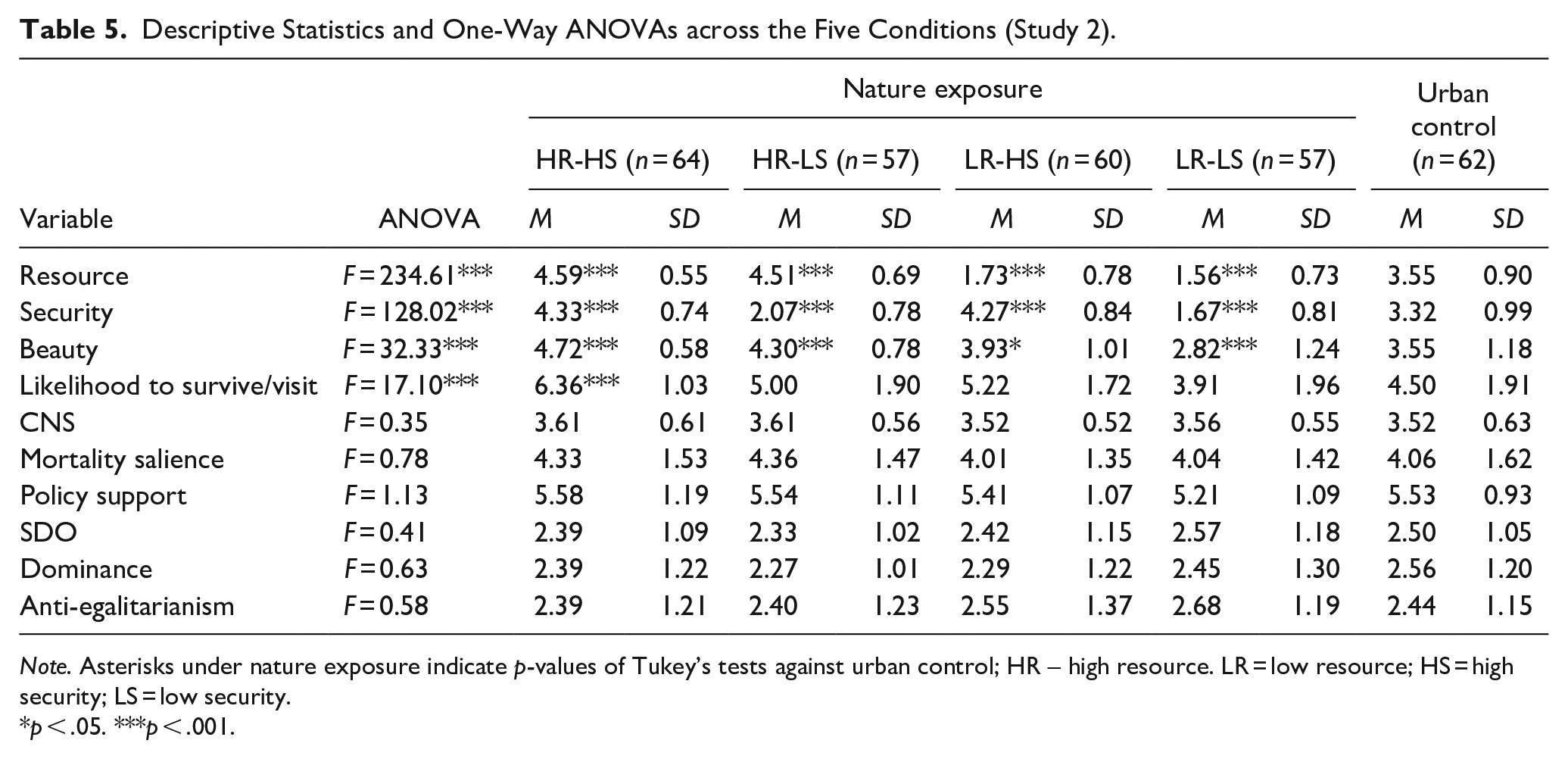
Note. Asterisks under nature exposure indicate p-values of Tukey’s tests against urban control; HR – high resource. LR = low resource; HS = high security; LS = low security.
p < .05. ***p < .001.
As in Study 1, we conducted factorial ANOVA on the four nature conditions. It revealed a similar interaction pattern on perceived beauty (F = 7.96, p = .005) as LR-LS nature was rated as the least attractive among the four sceneries. It also reported significant main effects of the resource (F = 25.02, p < .001) and security (F = 35.80, p < .001) factors on survival likelihood, but, unlike Study 1, no resource-security interaction effect was found. Expectedly, the manipulation of the resource and security factors led to higher perceived survival likelihood. Lastly, similar to Study 1, perceived beauty was significantly correlated with survival likelihood (r = .42, p < .001). Together with Study 1, the preliminary analysis supports the resource-security model (Ng et al., 2019) in accounting for the connection between esthetic experience and survival in perceiving natural environments (Appleton, 1996; Wilson, 1993).
CNS correlating with SDO and policy support
CNS correlated negatively with SDO (r = −.30), dominance (r = −.26) and anti-egalitarianism (r = −.28), ps < .001. It also correlated positively with policy support (r = .33, p < .001). The analysis replicated the finding of Study 1 that nature-connected people endorsed less SDO beliefs and extended it to greater policy support for marginalized groups during the COVID-19 pandemic.
Nature-CNS interaction and policy support
We tested the effects of nature exposure (nnature = 238; nurban = 62), CNS, and their interaction on policy support (Table 6). The interaction effect was significant, F = 6.63, p = .011, η2 = .019 (see also Supplemental Material S6). Figure 2a illustrates the simple effects of nature exposure at three levels of CNS: low (−1 SD or −0.57), average, and high (+1 SD). When CNS was low, nature exposure decreased policy support, b = −0.46, t = −2.35, p = .019. The simple effect became non-significant when CNS was average, b = −0.11, t = −0.73, p = .465, and high, b = 0.24, t = 1.20, p = .232. While we replicated the nature-CNS interaction effect of Study 1, the pattern emphasized a negative effect among nature-unconnected people rather than a positive effect among nature-connected people.
Regressing Policy Support and SDO Scores on Nature, CNS, and Their Interaction (Study 2).
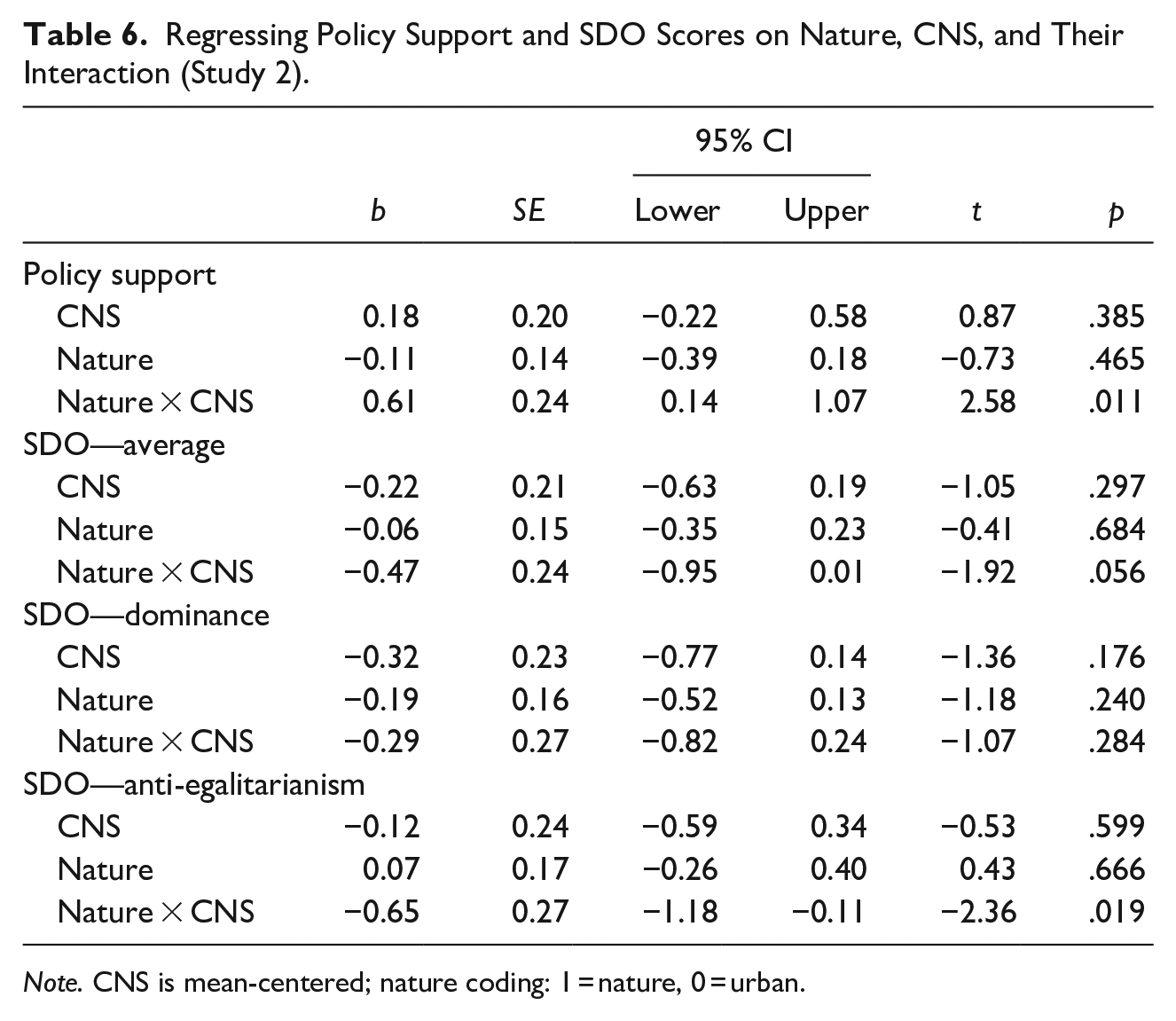
Note. CNS is mean-centered; nature coding: 1 = nature, 0 = urban.
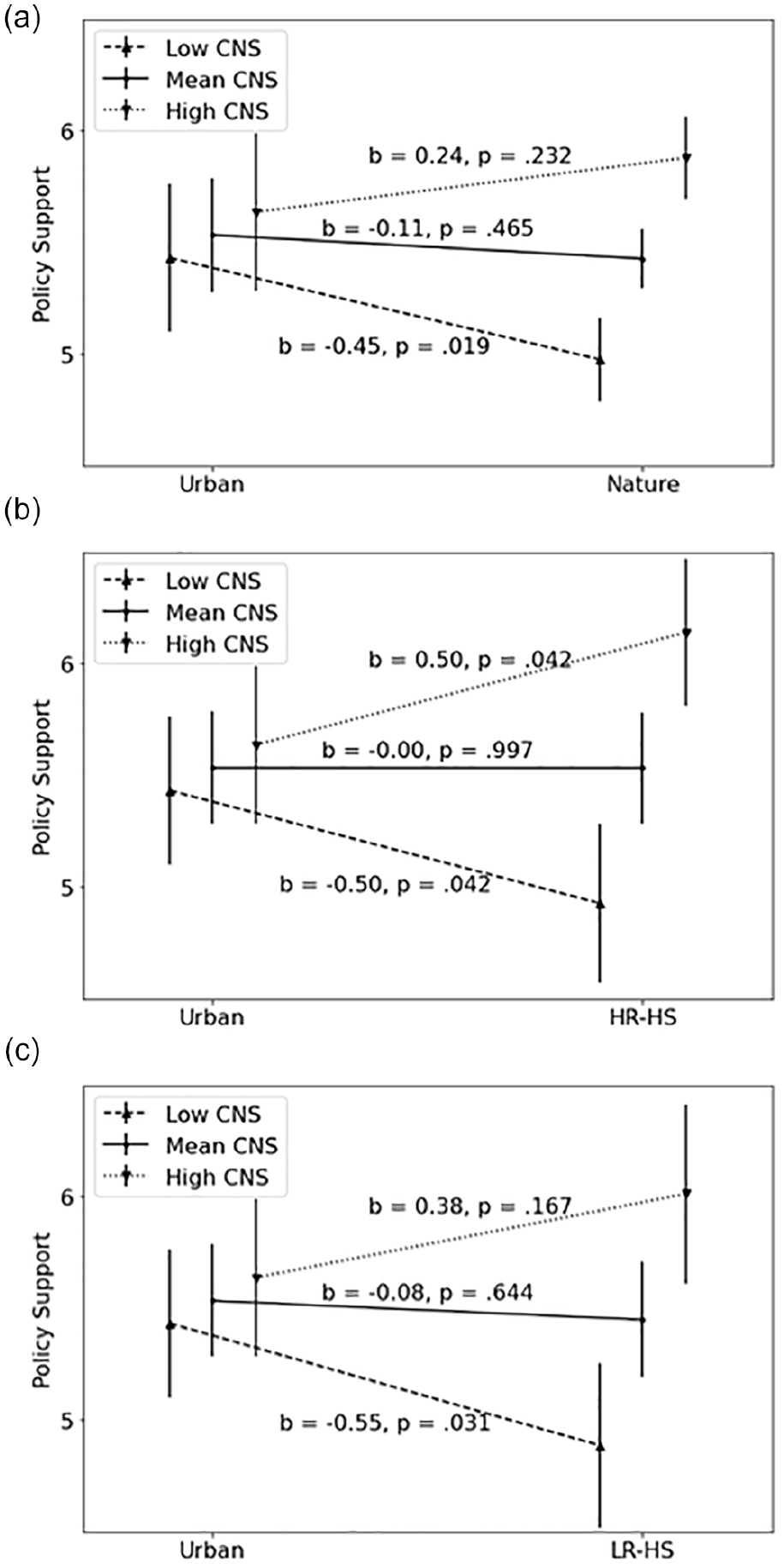
Significant interaction effects of nature exposure on policy support at three levels of CNS (Study 2).
Further analysis was carried out with each nature condition dummy coded with reference to urban control (Table 7). The model revealed a significant HR-HS-CNS interaction, F = 9.04, p = .003, η2 = .026, and a significant LR-HS-CNS, interaction, F = 6.09, p = .014, η2 = .018. Simple-effects analysis revealed that exposure to HR-HS nature increased policy support when CNS was high, b = 0.50, t = 2.05, p = .042, and decreased policy support when CNS was low, b = −0.50, t = −2.05, p = .042 (Figure 2b). A similar pattern was observed in the LR-HS condition (Figure 2c). When CNS was high, LR-HS’s effect was positive but did not reach statistical significance, b = 0.38, t = 1.39, p = .167. When CNS was low, it decreased policy support, b = −0.55, t = −2.17, p = .031. 6
Regressing Policy Support and SDO Scores on Nature Conditions, CNS, and Their Interactions (Study 2).
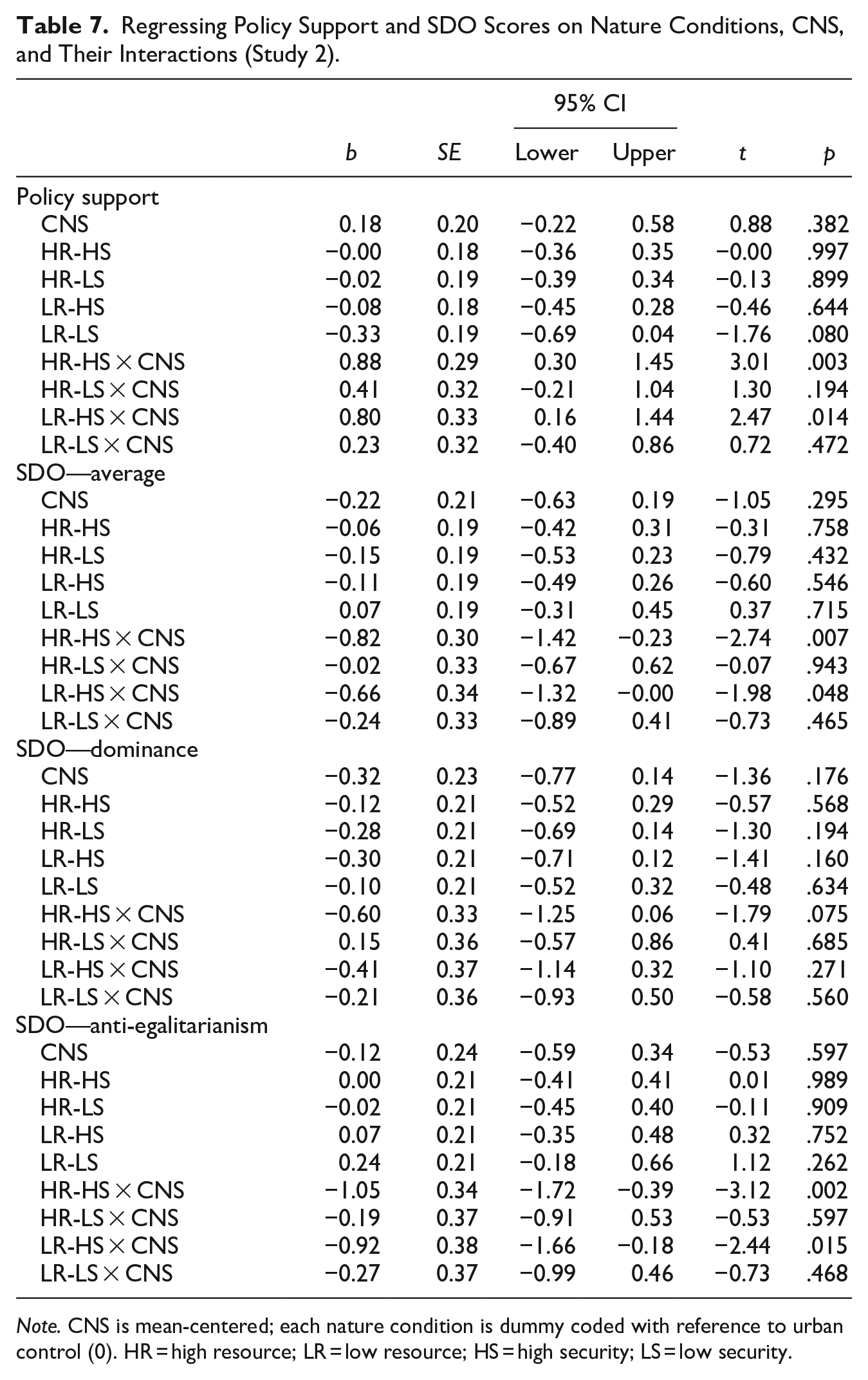
Note. CNS is mean-centered; each nature condition is dummy coded with reference to urban control (0). HR = high resource; LR = low resource; HS = high security; LS = low security.
Nature-CNS Interaction and SDO
Table 6 summarizes the linear model regressing SDO on nature exposure, CNS, and their interaction term. The interaction effect was marginally significant, F = 3.68, p = .056, η2 = .011 (see also Supplemental Material S6). For SDO subscales, the interaction effect was non-significant on dominance, F = 1.15, p = .284, η2 = .003, but significant on anti-egalitarianism, F = 5.57, p = .019, η2 = .017. Figure 3a illustrates the interaction pattern on anti-egalitarianism. Nature exposure increased anti-egalitarianism when CNS was low, b = 0.44, t = 1.98, p = .049, but the effect was non-significant when CNS was average, b = 0.07, t = 0.43, p = .666, or high, b = −0.30, t = −1.27, p = .206. Similar to policy support, the interaction effect highlighted a significant effect of nature exposure when CNS was low.
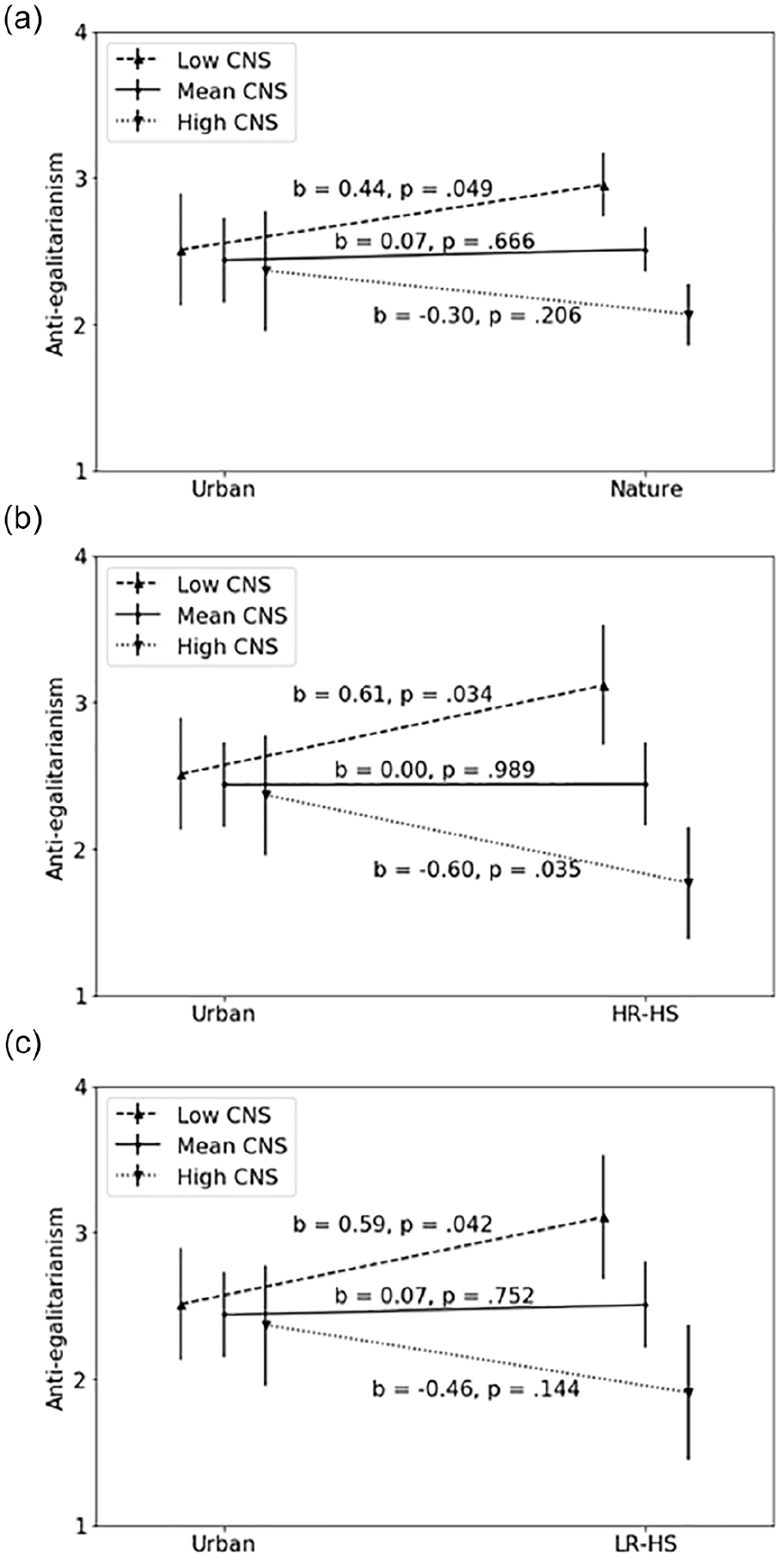
Significant interaction effects of nature exposure on anti-egalitarianism at three levels of CNS (Study 2).
We proceeded by examining the interaction model with each nature condition dummy coded against urban control (Table 7). The HR-HS-CNS (F = 7.51, p = .007, η2 = .023) and LR-HS-CNS (F = 3.93, p = .048, η2 = .012) interaction effects were significant on SDO. Exposure to HR-HS nature decreased SDO, b = −0.53, t = −2.10, p = .037 when CNS was high, but had no significant effect when CNS was average or low. LR-HS nature registered a similar pattern, although its simple effect when CNS was high did not reach statistical significance, b = −0.49, t = −1.77, p = .078.
As shown in Table 7, the above interaction effects were even stronger on the anti-egalitarianism subscale (FHR-HS-CNS = 9.74, p = .002, η2 = .030; FLR-HS-CNS = 5.96, p = .015, η2 = .018), but non-significant on the dominance subscale of SDO. Figure 3b and c illustrates the simple effects on anti-egalitarianism. Exposure to HR-HS nature led to lower anti-egalitarianism (b = −0.60 t = −2.12, p = .035) when CNS was high, but higher anti-egalitarianism when CNS was low (b = 0.61, t = 2.13, p = .034). LR-HS nature recorded a similar pattern, with a non-significant effect when CNS was high (b = −0.46, t = −1.47, p = .144) and a significant positive effect when CNS was low (b = 0.59, t = 2.04, p = .042). Lastly, it is noteworthy that unlike Study 1, no interaction effect was found for the LR-LS condition (see Note no. 6).
Taken together, we replicated the nature-CNS interaction effect on SDO, with a focus on the effects of HR-HS and LR-HS nature on anti-egalitarianism.
Exploratory conditional process analysis
Conditional process analysis was conducted to explore the mechanisms underlying the interaction effect between nature exposure and nature connectedness. We particularly focused on anti-egalitarianism, which has registered the strongest and most consistent effect in this study.
Environment ratings and mortality salience as mediators
As shown in Table 5, the five conditions received different environment ratings but had no effect on mortality salience. On the other hand, anti-egalitarianism correlated negatively with mortality salience (r = −.14, p = .016), but not with environment ratings (r range: −.07 to −.01) or survival likelihood (r = .014). Similar to Study 1, we entered these variables as mediators to test if they could explain the interaction effect on anti-egalitarianism. No significant moderated mediation was found (see Supplemental Material S7).
Anti-egalitarianism as a mediator
The DPM model holds that SDO leads to biased intergroup behavior. Confirming this, anti-egalitarianism correlated strongly with lower policy support (r = −.60, p < .001). Since nature exposure and nature connectedness produced consistent interaction effects on both measurements, it would be instructive to examine if anti-egalitarianism statistically mediated the interaction effect on policy support.
For the sake of model simplicity, we collapsed the five conditions into high-security nature (n = 124), low-security nature (n = 114) and urban control (n = 62). The decision was based on the above findings that only high-security nature conditions evoked significant interaction effects. It was further confirmed by a Resource [H/L] × Security [H/L] × CNS ANCOVA of the four nature conditions. Briefly, the security factor elicited significant interaction effects with CNS on anti-egalitarianism (F = 7.50, p = .007) and policy support (F = 4.60, p = .033). The resource factor did not return any significant effects, however (see Supplemental Material S8). In short, the interaction effects were driven by security features, but not resource features.
Figure 4 illustrates the conditional process model (Model 8; Hayes, 2018). Anti-egalitarianism was entered to mediate the interaction effect between nature exposure and nature connectedness on policy support. Nature exposure was coded as HS-urban and LS-urban contrasts. The moderated mediation was significant for the HS-urban contrast (Index = 0.47, 95% CI [0.24, 0.76]), but not the LS-urban contrast (Index = 0.11, 95% CI [−0.16, 0.41]). 7 Table 8 shows that the HS-CNS interaction effect on policy support became non-significant upon the entry of anti-egalitarianism, suggesting a solid mediation. To sum up, the indirect effect of HS nature on policy support through anti-egalitarianism was moderated by CNS. When CNS was low, HS nature predicted higher anti-egalitarianism, which translated into lower policy support (Indirect effect = −0.29 [−0.51, −0.07]). Conversely, when CNS was high, HS nature predicted lower anti-egalitarianism, which translated into higher policy support (Indirect effect = 0.26 [0.05, 0.50]).
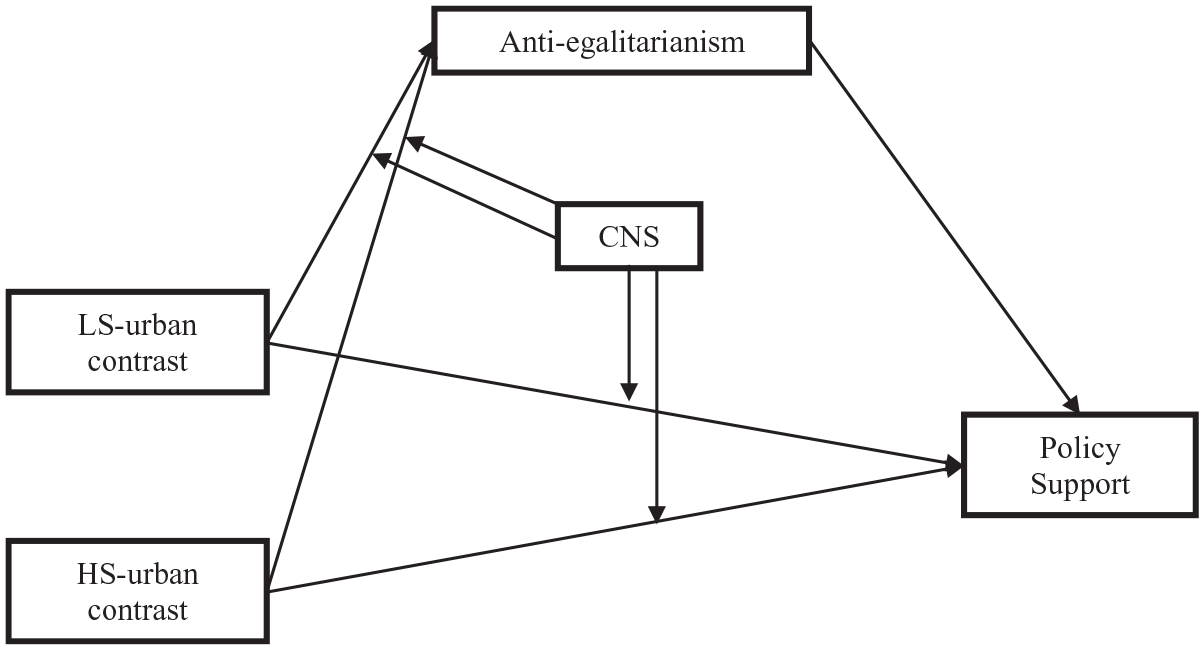
Conceptual model of the conditional process analysis in Study 2.
Summary of the Moderated Mediation Model in Study 2.
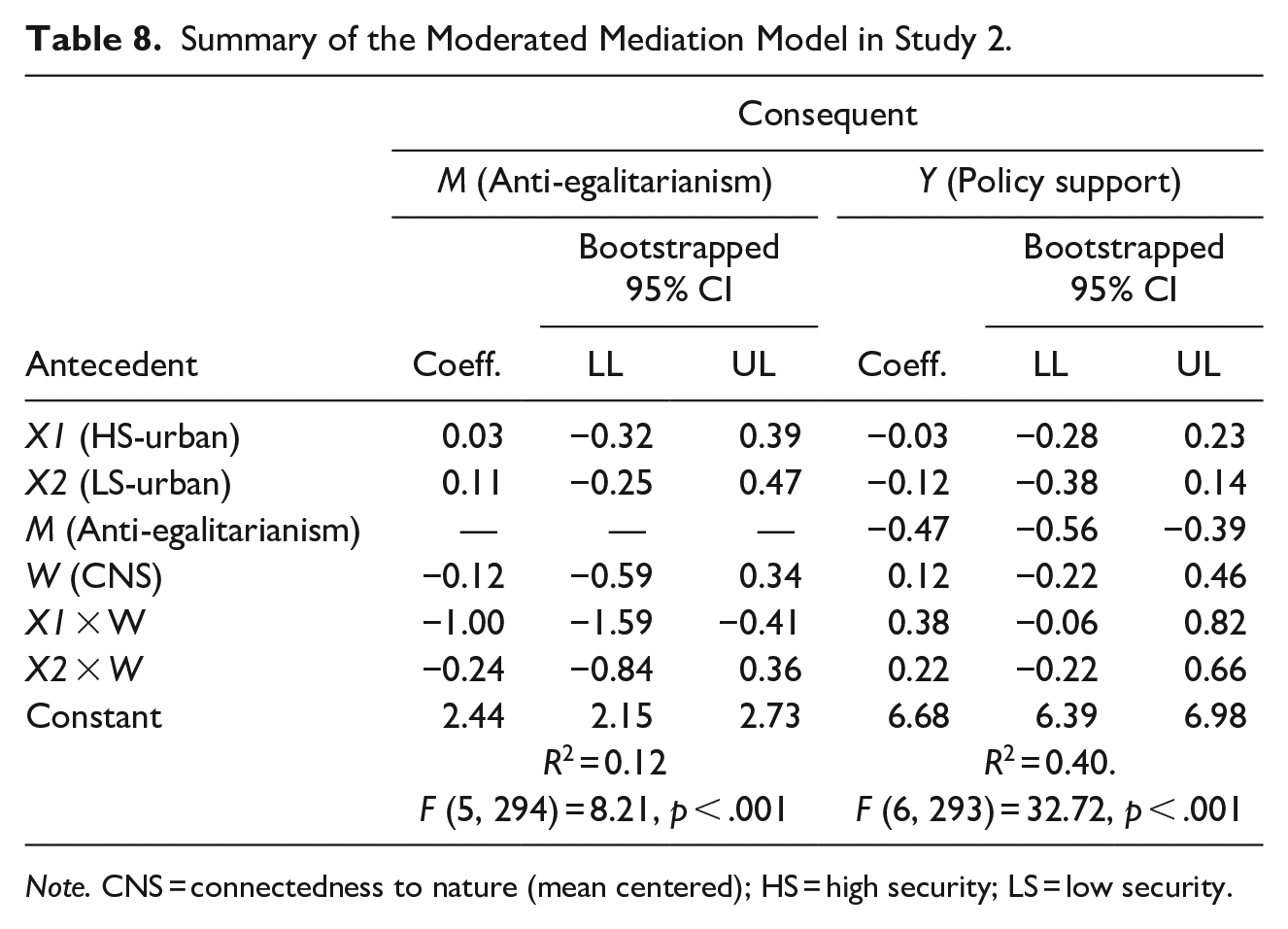
Note. CNS = connectedness to nature (mean centered); HS = high security; LS = low security.
Discussion
Study 2 tackled the methodological issues in Study 1. It replicated the CNS-SDO correlation and the moderated effect of nature exposure on anti-egalitarianism. However, environment ratings and mortality salience did not explain the interaction effect, suggesting other mechanisms at work. Moreover, it extended the interaction effect to policy support for marginalized groups during the COVID-19 pandemic, which was statistically explained by anti-egalitarianism. The analysis also suggested that the interaction effect was driven by high-security features in nature.
Meta-analysis on SDO
Both studies highlighted the effect that nature exposure decreased SDO when nature connectedness was high. The findings, however, were not entirely consistent. Study 1 reported similar patterns on dominance and anti-egalitarianism, whereas Study 2 reported the effect on anti-egalitarianism only. Moreover, Study 1 reported the effect in LR-HS, LR-LS, and marginally HR-HS conditions, whereas Study 2 reported it in LR-HS and HR-HS conditions. Lastly, the two samples were different in terms of data quality and demographic compositions, which might compromise the generalizability of the results. To reconcile the differences, we conducted fixed-effects meta-analysis using Goh et al.’s (2016) guide.
Table 9 reports the meta-analysis of the simple effect of nature exposure on SDO when CNS was high. First, nature as a whole had a negative and weak effect on SDO, d = −0.28, 95% CI [−0.48, −0.07]. Next, among the four nature conditions, significant effects were detected in HR-HS, d = −0.30, 95% CI [−0.51, −0.10], and LR-HS, d = −0.28, 95% CI [−0.49, −0.08], conditions only. We also meta-analyzed the simple effects of exposure to HS and LS nature. Only the effect of HS nature was significant, d = −0.28, 95% CI [−0.45, −0.11], which was consistent with Study 2’s conclusion that the effect was driven by high security features. Lastly, it is noteworthy that HS nature registered significant effects on both the dominance (d = −0.24, 95% CI [−0.41, −0.08]) and anti-egalitarianism (d = −0.27, 95% CI [−0.44, −0.10]) dimensions of SDO, although the latter effect was more consistent across studies.
Meta-Analyses of the Simple Effect of Nature Conditions on SDO and its Subscales When CNS was 1 SD above Mean.
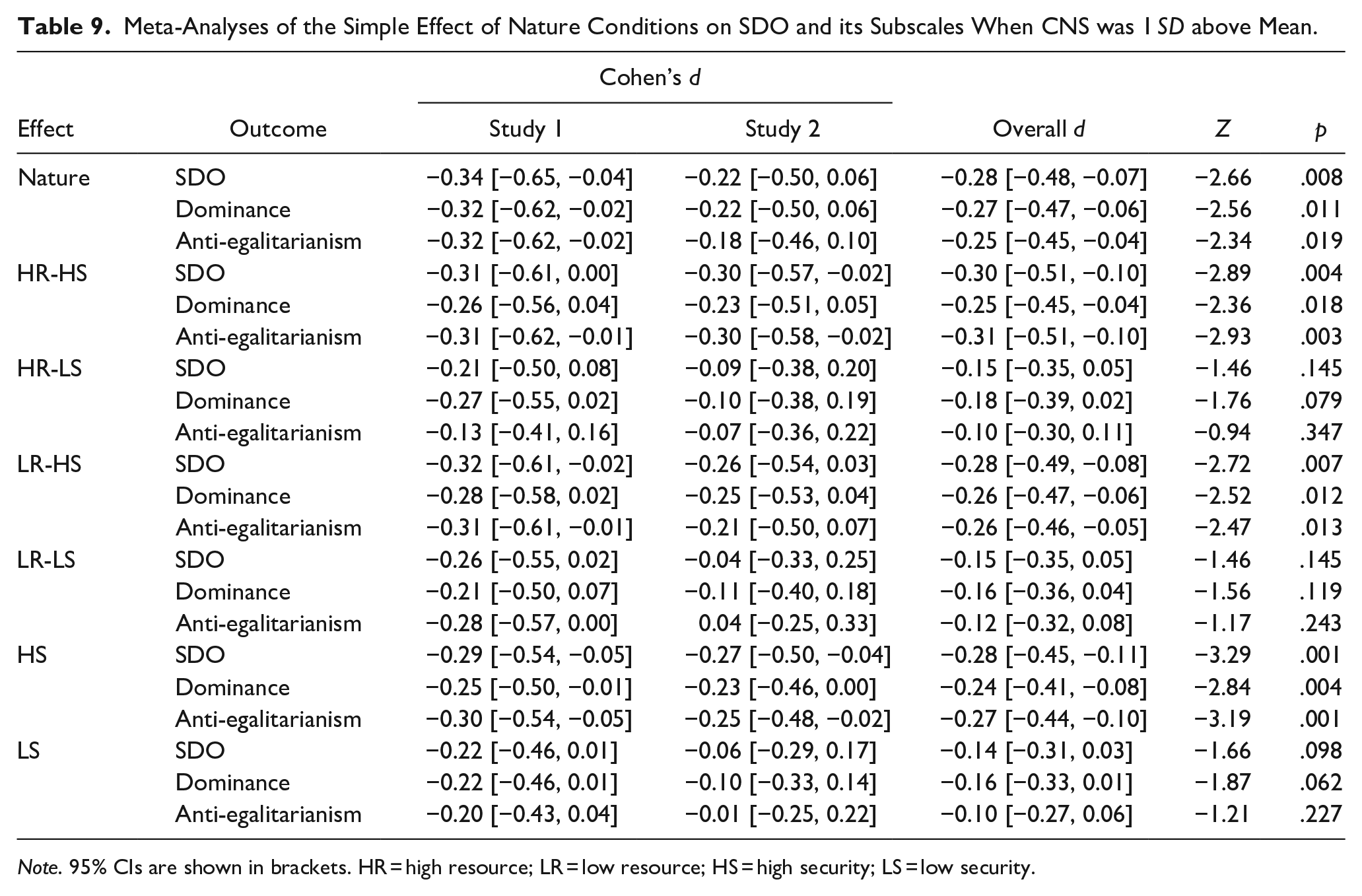
Note. 95% CIs are shown in brackets. HR = high resource; LR = low resource; HS = high security; LS = low security.
Table 10 reports the meta-analysis when CNS was low. Overall, nature exposure led to higher anti-egalitarianism among nature-unconnected people, d = 0.22, 95% CI [0.01, 0.43]. The simple effect was weaker than when CNS was high. Similar effects were reported in HR-HS, d = 0.21, 95% CI [0.01, 0.41], LR-HS, d = 0.21, 95% CI [0.01, 0.42], and HS nature, d = 0.20, 95% CI [0.04, 0.37]. No significant effect was found on SDO and the dominance dimension.
Meta-Analyses of the Simple Effect of Nature Conditions on SDO and its Subscales When CNS was 1 SD below Mean.
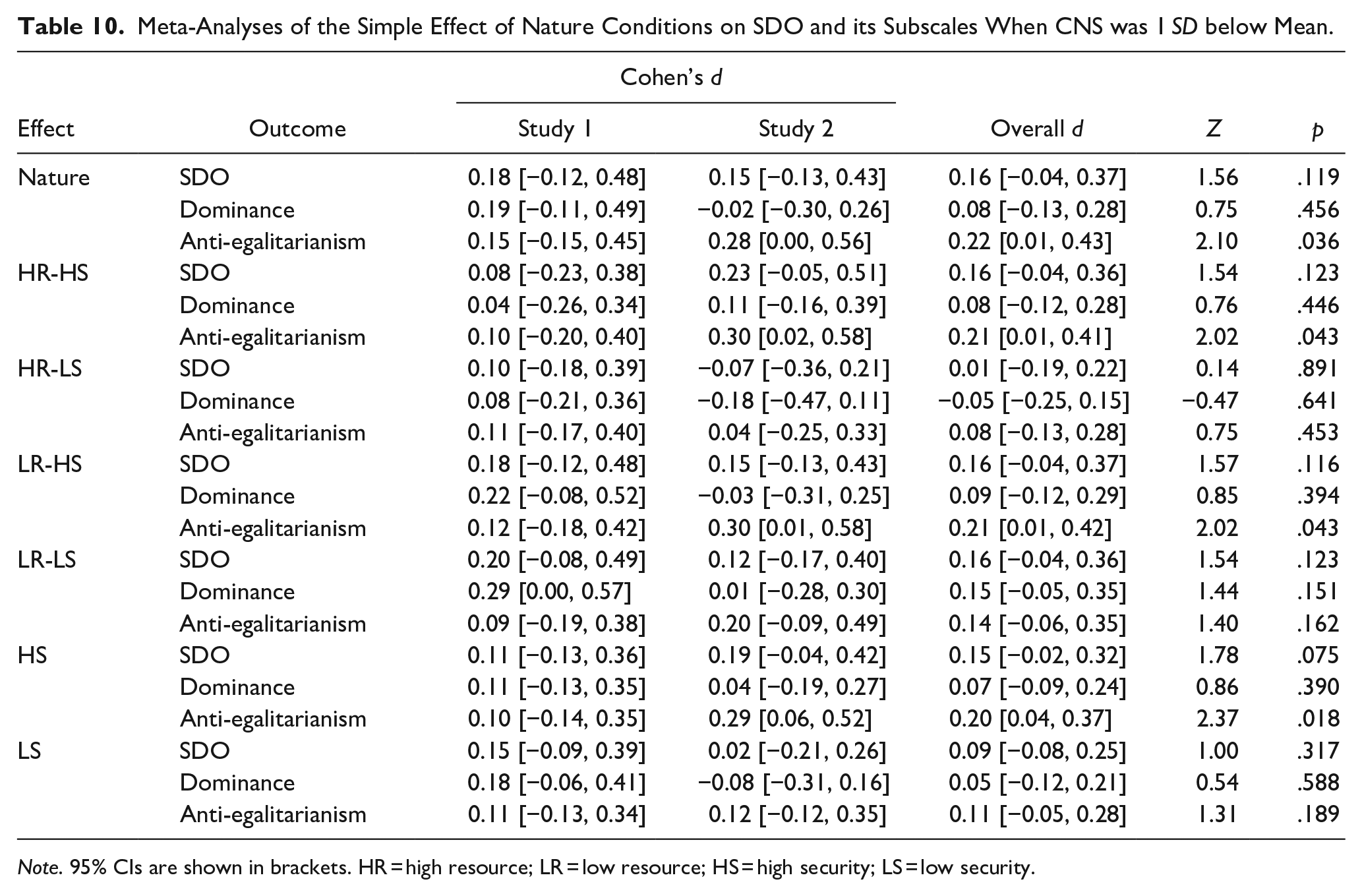
Note. 95% CIs are shown in brackets. HR = high resource; LR = low resource; HS = high security; LS = low security.
General Discussion
The literature indicates that not only do people high in SDO care less about others, but they also care less about the natural world. This paper investigates a related question, which is whether nature-connected people report lower SDO and higher policy support for marginalized groups. The two studies support this hypothesis with medium effect sizes. Just as it is informative to predict environmentalism with SDO (d = .32–0.56; Milfont et al., 2013), our data reveals comparable predictive power of nature connectedness on SDO (d = −0.63 to −0.49) and support for marginalized groups (d = 0.70).
Given the correlational findings, a theoretical development that warrants future research is whether people generalize their views on social hierarchy to nature, or the other way around. While some researchers suggest the former (e.g., Milfont et al., 2018), we conjecture that the latter is also plausible. Social bonding operates on a positive gradient of similarity, which predicts that if a person empathizes with non-human lives, they are likely to also connect with other humans with whom they share even higher similarity. For nature-connected people, it is perhaps their perceived similarity with marginalized groups that contribute to higher policy support, especially in the context of combatting the COVID-19 pandemic (Wolf et al., 2020). Supporting this, the induction of human-animal similarities has been reported to increase nature connectedness (Tam et al., 2013) and moral concern for disadvantaged outgroups (Bastian et al., 2011). These findings, together with the CNS-SDO association, suggest that the change in nature connectedness precedes the change in intergroup attitudes and behavior. Future research can examine this hypothesis by comparing perceived intergroup similarities and intergroup bias after an independent manipulation of nature connectedness, such as having respondents watch nature videos (Mayer et al., 2009) or assigning them to environmental education programs (Liefländer et al., 2013). The findings may lead to a new approach to reduce intergroup bias in society.
This paper also addresses the person-situation interaction concerning the effect of nature experiences. Previous research often reports nature as a general experience that benefits all people and puts little emphasis on the moderating role of individual differences. This view is obviously inadequate according to social-cognitive theory (Mischel & Shoda, 1998). Just as people perceive and process the same natural environment differently (De Groot & Van den Born, 2003), they are also likely to respond to the same environment differently. The person-situation interaction has only been studied sparsely in the environmental psychology literature. For example, the effect of nature exposure on pro-environmental behavior and psychological well-being is stronger among those who are connected to nature (Arendt & Matthes, 2016; Martin et al., 2020). Our findings further support this view as the nature exposure effect is stronger among nature-connected respondents. Given the consistent moderating effect of nature connectedness, researchers will benefit from conceptualizing their research questions as person-situation interaction problems.
The person-situation interaction has been evident in behaviors such as aggression (Bushman, 1995) and justice behavior (Schmitt et al., 2003). According to these studies, dispositional traits prepare people to respond to situational cues through an associative network of constructs. A stimulus leads to greater (less) activation if it is (in)compatible with the construct system. In the context of this research, nature-connected people may construe nature as a core self-concept and are thus more responsive to nature stimuli than those who are less connected. A nature-connected personality may also imply stronger association between attitudes toward nature and people, which prompts the person to behave congruently. Therefore, not only do nature connectedness and social dominance orientation correlate with each other, but they also predict the same behavioral outcomes, such as environmentalism and prosociality (Mayer & Frantz, 2004; Milfont et al., 2018). In contrast, a nature-unconnected personality may associate the exploitation of natural resources with the exploitation of subordinate groups, resulting in outgroup prejudice and lower environmental concern (Costello & Hodson, 2009; Milfont et al., 2013). Taken together, an associative network model may help explain (1) why the two apparently distinct constructs correlate with each other, (2) how the two constructs reciprocally affect each other, and (3) how people respond to the same nature stimulus differently.
Despite the theoretical contribution, it bears mentioning that the reported interaction effect is more delicate than the main effect of nature connectedness. Specifically, the simple effect of nature exposure is generally weak (d = 0.20–0.30), limiting its practical significance. However, it should be noted that our nature stimuli last for a few minutes only, whereas in reality, nature experiences are longer and more immersive than seeing pictures on a computer screen. It is reasonable to expect more immersive nature experiences to produce stronger psychological effects (Mayer et al., 2009; Weinstein et al., 2009). Further research is needed to inform the practical value of the present findings. This can be achieved by replicating the experiment with exposure to a real natural environment. A less expensive approach is to survey the level of vegetation (e.g., acreage, quality, distance to travel) in respondents’ neighborhoods with a Geographic Information System and use it as a proxy of their daily exposure to nature. Successful replications with realistic data will potentially inform how greening policies (e.g., park management, tree planting, environmental education) affect people’s intergroup attitudes and behavior.
Another strength of this research is the use of heterogeneous environmental stimuli. Previous studies seldom defined nature experiences clearly, and when they did, they tended to differentiate them by subjective perceptions (e.g., beauty; Zhang et al., 2014) rather than objective features. The difficulty of using heterogenous stimuli is exacerbated by the diversity of physical features in nature. This paper fills the void by adopting both theory-driven and data-driven approaches in developing stimuli. We first theorized that the nature exposure effect hinges on its ability to provide resources and security. Then we extracted such features by applying a decision tree algorithm on people’s drawings of natural environments. As shown in our analysis, the extracted features of resource and security are perceived as intended and affect subjective ratings on beauty and survival likelihood. This approach provides a means for researchers to develop and justify their environmental stimuli in laboratory settings.
Despite the successful manipulation of resource and security, the meta-analysis suggests that the moderated effect of nature exposure is driven by security features only (shelters, pleasant weather, lack of dangerous animals). This result aligns with previous findings that safety threat is related to intergroup bias (Landmann et al., 2019). However, it is premature to conclude that the resource factor is irrelevant. The absence of a resource effect can be due to the lack of immediacy of the resource problem in the 3-day scenario, as humans can usually survive without food or water for some days. The U.S. participants may also find it easier to imagine the consequences of safety hazards than resource scarcity. The findings are far from excluding all resource features. Future research will benefit from focusing on a single resource feature at a time, such as different forms of water (White et al., 2010). Regardless of the unexpected finding, the two studies partially support the heterogeneity of nature’s effect, which is a promising direction in the field (Hartmann & Apaolaza-Ibáñez, 2010).
Taken together, the two studies report a consistent interaction effect between nature connectedness and nature exposure on SDO. The effect is more evident in nature with high security features. Despite the small effect size, the theoretical and practical values of the findings should not be overlooked. Since the testing of multiple nature conditions and small interaction effects demands a large sample to achieve enough statistical power, it is recommended that future research focus on high-security nature in replicating our findings or testing similar hypotheses. The mini meta-analysis should guide researchers to design better powered studies in detecting such effects in the future.
Mechanisms
The DPM model (Duckitt & Sibley, 2009) posits that social dominance orientation is a major predictor of intergroup attitudes and behavior. In line with this, Study 2 reports a strong correlation between SDO and policy support. The model helps explain the interaction effect between nature connectedness and nature exposure on policy support, as evidenced by successful mediation through the anti-egalitarianism dimension of SDO. The dominance dimension, though also predictive of policy support, is excluded from the mediation model because it is unresponsive to the interaction effect. In other words, the interaction effect happens through changing people’s beliefs about intergroup inequality rather than intergroup hierarchy. The differential effect aligns with recent research findings that environmental values are correlated with anti-egalitarianism, but not dominance (Clarke et al., 2019; Stanley et al., 2017). Together, the findings mark the importance of adopting the two-dimensional model of SDO (Ho et al., 2015) in future studies.
However, it remains unclear as to how nature connectedness and nature exposure interactively affect SDO. Two potential mechanisms are rejected, though. First, while most of our nature stimuli (except LR-LS) are perceived as more beautiful than urban stimuli, perceived beauty does not explain the interaction effect. This is in contrast to previous findings that beautiful nature leads to higher prosociality than less beautiful nature (Zhang et al., 2014). A possible explanation is that our nature scenarios require participants to contemplate the environmental features, which is cognitively more engaging than passive viewing of beautiful images. Put otherwise, nature is more than beautiful sceneries, and its unique effect becomes evident when people consciously process its content. Further research is needed to differentiate between the cognitive and esthetic effects of nature exposure, which can be achieved by requiring respondents to focus on the environmental features or their esthetic experiences.
Study 2 also rejects the mechanism through mortality salience. The result, however, should be interpreted with caution. First, the mortality salience scale correlates with lower anti-egalitarianism and higher support for marginalized groups, which contradicts with the Terror Management Theory literature. Second, it does not vary across the five conditions nor does it correlate with survival likelihood in nature conditions. These findings challenge the validity of the measurement. Finally, it has been suggested that mortality salience invokes worldview defense only when it subsides to the unconscious level after a delay (Burke et al., 2010; Steinman & Updegraff, 2015). Our experimental setting does not fulfill this requirement. Therefore, the rejection of the mortality salience mechanism can be a result of inferior methods, which should be addressed in future research using optimal condition.
What other mechanisms can possibly explain the interaction effect on SDO? While the effect is invoked by high-security nature, it is not mediated by perceived security of the environment. This implies that the effect happens through the activation of other remote constructs, which aligns with the previous discussion of an associative network model. The DPM model (Duckitt & Sibley, 2009) hints that the interaction effect is due to changes in people’s competitive worldview beliefs. On the one hand, such beliefs originate from a tough-minded personality (i.e., low agreeableness). Nature-connected people, who are also high in agreeableness (Tam et al., 2013), may report lower SDO because they perceive the world as less competitive than the nature-unconnected counterparts. On the other hand, our nature stimuli may also influence SDO by contextually altering the competition in the environment. At first sight, it seems reasonable to expect that (un)favorable nature conditions induce lower (higher) competition and thus lower (higher) SDO. However, our data does not support this theorizing because high-security features are responsible for both increases and decreases in SDO, direction of which is determined by dispositional connectedness to nature. Perhaps, people consider competition only when there is something to compete for in the environment.
The DPM model highlights group dominance and social inequality as contextual factors that can transiently affect competitive worldviews and SDO. With our consistent findings on anti-egalitarianism, we speculate that the contextual effect of nature exposure is more similar to that of social inequality. The survival-themed nature scenario may not only reset the inequality between nature and people, but also that between dominant and subordinate groups as social status no longer serves any advantage. The reset may resonate with nature-connected people’s sense of oneness with the natural world, thus resulting in more egalitarian responses. In contrast, nature-unconnected people may see it as a competitive environment and seek to resolve it by restoring inequality in real life, leading to more anti-egalitarian responses. Future research can verify this mechanism by including measures of competitive worldviews and perceived inequality after the nature exposure procedure.
Conclusion
To conclude, the present investigation shows that dispositional connectedness to nature is related to social dominance orientation and policy support for marginalized groups. Nature connectedness also moderates the effect of short-term exposure to nature on the two outcome variables. Furthermore, our data partially support the heterogeneity hypothesis as the effect is reported in nature with high security features only. Despite the small effect size, the finding is the first of its kind that relates nature experience to a real-world policy problem. While more evidence is needed to inform its practical value and underlying mechanisms, our findings should stimulate researchers to develop nature-based intervention to reduce intergroup bias.
Supplemental Material
sj-pdf-1-eab-10.1177_00139165211031198 – Supplemental material for Nature Connectedness and Nature Exposure Interactively Influence Social Dominance Orientation and Policy Support for Marginalized Groups during the COVID-19 Pandemic
Supplemental material, sj-pdf-1-eab-10.1177_00139165211031198 for Nature Connectedness and Nature Exposure Interactively Influence Social Dominance Orientation and Policy Support for Marginalized Groups during the COVID-19 Pandemic by Henry Kin Shing Ng and Angel Nga Man Leung in Environment and Behavior
Footnotes
Declaration of Conflicting Interests
The author(s) declared no potential conflicts of interest with respect to the research, authorship, and/or publication of this article.
Funding
The author(s) received no financial support for the research, authorship, and/or publication of this article.

Supplemental Material
Supplemental material for this article is available online.
Notes
Author Biographies
References
Supplementary Material
Please find the following supplemental material available below.
For Open Access articles published under a Creative Commons License, all supplemental material carries the same license as the article it is associated with.
For non-Open Access articles published, all supplemental material carries a non-exclusive license, and permission requests for re-use of supplemental material or any part of supplemental material shall be sent directly to the copyright owner as specified in the copyright notice associated with the article.
