






Abstract
Public Administration (PA) teaching aims to prepare the next generation of public sector professionals. Given its strong connection to practice, it should align with civil service requirements. Research on the relationship between PA teaching and public sector professions in Africa in general, and in Ethiopia in particular, is scarce. Using a deductive content analysis approach, this study examines the competencies required in the civil service and evaluates the relevance of PA curricula. The findings show a general but insufficient alignment. PA teaching curricula do not adequately integrate critical areas of public governance, local politico-administrative traditions, sociocultural values, the political economy of the country and the broader African context. Weak collaboration among actors further exacerbates the problem. The study calls for curricula and pedagogical reforms and a stronger collaboration among academic institutions and stakeholders. It contributes to the debate on the relevance of PA teaching by offering both theoretical and empirical insights.
Keywords
Introduction
Robust institutions staffed by competent bureaucrats are pivotal to the effective implementation of policies and the promotion of public service values. The complexity of contemporary, interlinked societal challenges heightens the need for civil service capacity. However, shortages of capable bureaucrats remain a key driver of institutional weakness across much of the Global South (Peeters and Campos, 2023). In Africa, for example, repeated efforts to modernize bureaucratic systems through administrative reforms have often produced limited results, largely due to enduring capacity constraints (Adamolekun, 2002). This suggests, first, that Public Administration (PA) teaching programmes must be closely aligned with PA practices to equip graduates with transferable competencies (Denhardt, 2001). Second, systematic evaluation of PA programmes and sustained efforts to strengthen the theory–practice interface is essential, not only to enhance professional relevance but also to foster innovation and advance theoretical development beyond administrative demands (Bouckaert, 2013). This is particularly crucial, as contemporary public service expectations extend beyond traditional principles of efficiency, effectiveness and economy, demanding a broader commitment to public values (Gerton and Mitchell, 2019). State capacity grounded in a professional bureaucracy is indispensable for meeting these expectations and ensuring societal well-being (Haque et al., 2021).
In many African countries, PA teaching continues to reflect colonial legacies, with limited engagement with indigenous administrative traditions (Edimo and Obosi, 2024). Reforms are often donor-driven, in contrast to those in developed economies, where PA teaching is rooted in long-established, integrated processes, such as the Bologna Process in Europe. Although Ethiopia was never colonized, its PA teaching exhibits features similar to those observed elsewhere on the continent. This makes Ethiopia a compelling case for examining the relationship between PA education and administrative practice.
Public administration teaching in Ethiopia began in the 1950s as part of broader efforts to professionalize the civil service. Since the 2000s, the number of PA programmes has expanded, with more than 20 public universities now offering undergraduate and postgraduate degrees. Institutionally, universities house PA programmes in diverse academic units: some place them in social science faculties, others within colleges of business and economics, or law, while a few have established independent institutes (see Debela et al., 2022). Curricula commonly encompass public policy, finance, governance, development management and human resource management (HRM), and are framed as producing graduates equipped to advance national development priorities. Despite these claims, the alignment of PA education with civil service needs remains understudied. Existing Ethiopian studies (cf. Debela et al., 2022; Angaw et al., 2025a) have not systematically analysed how stakeholders shape the relevance and fitness-for-purpose of PA teaching. This gap motivates us to prompt the central question: To what extent does PA teaching in Ethiopia align with civil service needs, and how do actors shape this alignment? To answer this question, the study draws on actor–network theory (ANT), specifically Callon's (1986) moments of translation, to analyse how different actors interact to shape PA competencies (Brans and Coenen, 2016). By integrating PA competence domains with the ANT framework, the study assesses the fitness-for-purpose of PA education programmes. It elucidates how key actors shape the design and implementation of PA programmes and the formation of professional competencies.
The study offers three main contributions. First, it contributes to professional practice by examining how PA teaching equips public servants with the competencies necessary to address an increasingly complex and dynamic work environment (Gerton and Mitchell, 2019). It bridges the theory−practice divide and fosters skills essential for both scholarship and practice (Denhardt, 2001; Reichard and Van der Krogt, 2014; O’Neill, 2022). Second, the study advances the theoretical development of PA competencies by elucidating their role in shaping PA education and informing pragmatic quality-assurance instruments. Third, it underscores the importance of inward-looking engagement with indigenous knowledge and practices to enhance local relevance and enrich the international scholarship, thereby strengthening both theory and practice.
The next section presents the theoretical and analytical framework, which comprises the reliance on ANT and the clarification of PA competencies. This is followed by a presentation of the methodological details and empirical results. The paper ends with a discussion and concluding remarks.
ANT and PA competence domains
ANT
Actor−network theory, developed in the late 1970s within science and technology studies, has become influential across the social sciences, including in PA (Müller, 2016). ANT conceptualizes social phenomena, and the world around us emerges from the interactions of heterogeneous networks of human and non-human actors (Latour, 2005; Unsworth, 2024). This relational perspective is useful for analysing socio-technical systems in the education sector, where formal rules, institutional structures and diverse actors intersect to shape outcomes. ANT facilitates the mapping of actors in learning processes, their influence and their interactions (Fenwick, 2011). ANT proponents (Callon, 1986; Unsworth, 2024) argue that social order is co-produced through dynamic networks rather than top-down causation.
Hence, the ANT perspective illuminates how different actors collectively shape PA curricula and competencies. First, ANT offers a systematic explanation of how diverse actors, such as the Ministry of Education, the Education and Training Authority, faculty, alumni, employers, curriculum steering committees, education policies and resources, shape PA teaching (Education and Training Authority, 2023). Rather than treating these elements as background conditions, ANT views them as agents whose interests, constraints and capacities influence the design and implementation of PA education.
Second, ANT clarifies how the relational dynamics among these actors, shape PA programmes. The relevance and quality assurance of PA teaching do not stem from any single authority, neither at the programme level nor in system-wide policy, but from negotiated alignments across the network (Latour, 2005). Through these interactions, what Callon (1986) identifies as a ‘consensus societal phenomenon’ emerges as an accepted understanding of what a PA curriculum should achieve.
Third, ANT's central instrument, the movement of translation, offers a more in-depth understanding of how the theory–practice interface in PA teaching is constructed. Through the moments of problematization, interessement, enrolment and mobilization (Callon, 1986), actors define problems, negotiate commitments, coordinate roles and expand alliances. These processes explain how actors are constituted, and roles are distributed, how relationships are structured within the network, and how broader support is mobilized to sustain the programme's relevance and legitimacy (Unsworth, 2024). The four moments of translation provide a robust framework for analysing how actors collectively shape PA programmes. Figure 1 illustrates how Callon's (1986: 203–211) stepwise sociology of translation clarifies the connection between PA teaching and the public service profession. Expected outcomes, operationalized through PA competence domains, emerge from the dynamic interplay of heterogeneous actors. Within this network, ‘PA teaching → public service profession’ functions as an ‘obligatory passage point’ structuring actors’ engagement. This configuration enables the application of PA competence domains to examine the extent to which PA teaching programmes meet professional requirements, as discussed in the next subsection. Such evaluation corresponds to ANT's mobilization phase, providing a lens to determine whether the network requires maintenance, adjustment, or reform.
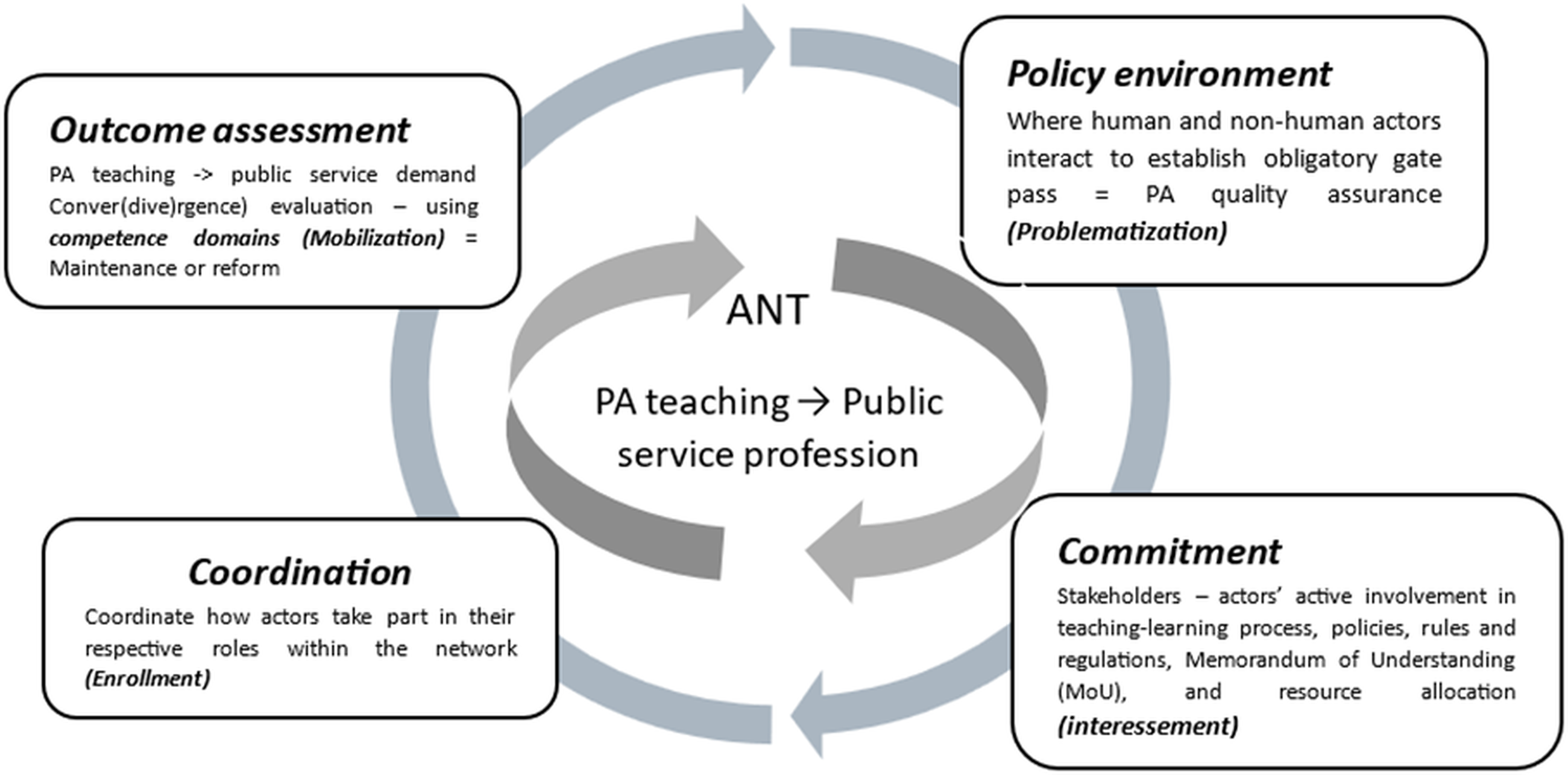
Public administration teaching moments of translation.
Public governance competencies
Public administration scholars and professional networks have developed competence frameworks to train qualified public service professionals (Reichard and Van der Krogt, 2014; Brans and Coenen, 2016; Network of Schools of Public Policy, Affairs, and Administration, 2019; United Nations Department of Economic and Social Affairs /International Association of Schools and Institutes of Administration, 2025). Central among these are the six competence domains identified by Reichard and Van der Krogt (2014), later further elaborated by Brans and Coenen (2016), which underpin quality assurance in PA programmes, strengthen the theory–practice interface, guide accreditation standards and inform PA education and research (Brans and Coenen, 2016; Network of Schools of Public Policy, Affairs, and Administration, 2019). Recently, Angaw et al. (2025a) confirmed the theoretical and empirical relevance of these competencies within PA teaching in Ethiopia.
The competence domains provide an analytical basis for linking the classroom content to real-world practice and for analysing the (mis-)match between the two. Table 1 summarizes these competencies and their indicators. Moreover, these competence domains broadly align with Ethiopia's ongoing civil service reform agenda, as articulated in the National Competence Framework. The reform aims to transform public service by strengthening civil servants’ technical and behavioural competencies, including values, ethics and global best practices (Civil Service Commission, 2024). Accordingly, the seven domains provide an analytical lens for assessing how these competencies are embedded in PA teaching.
Public Administration (PA) competence domains.
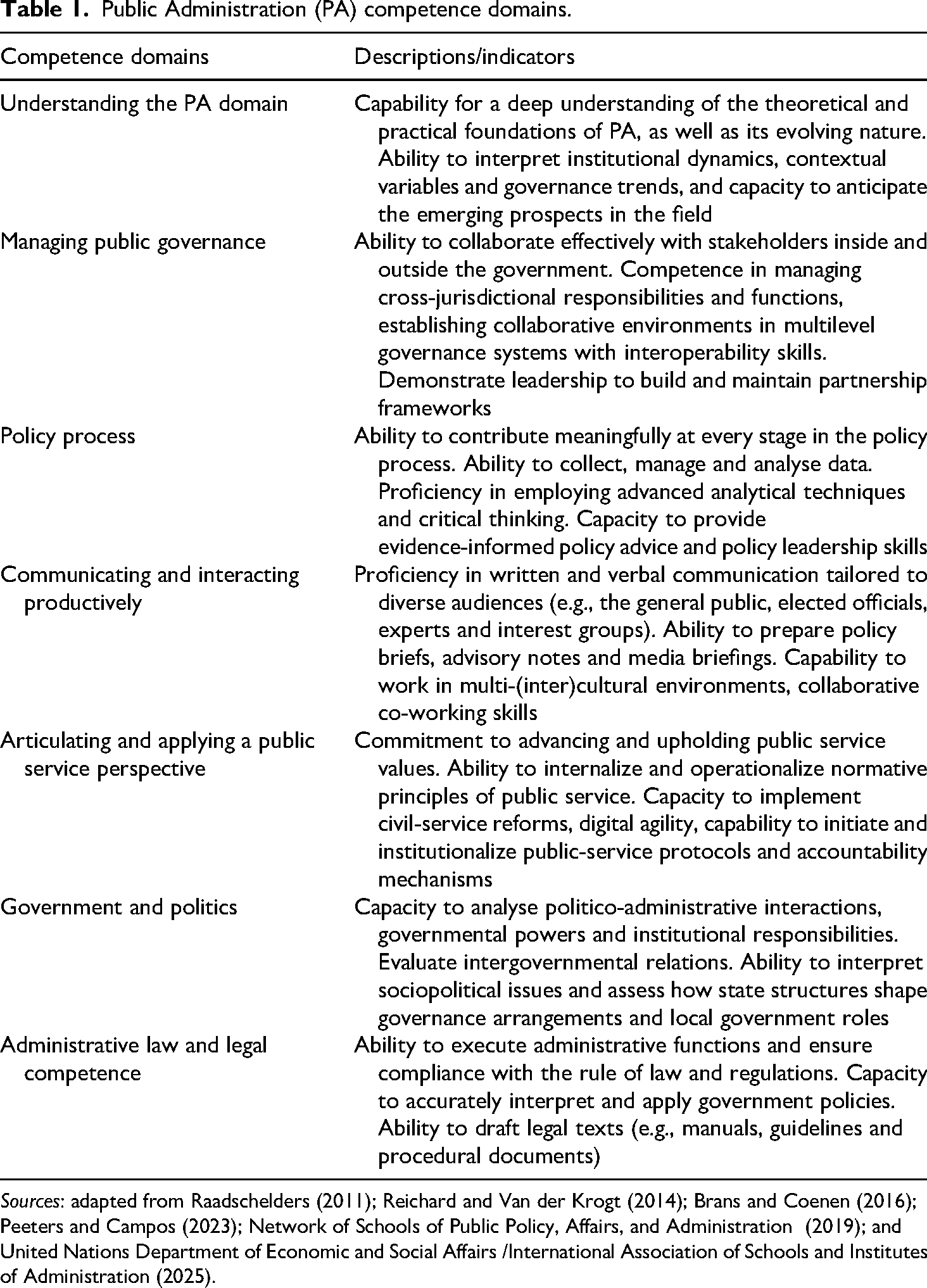
Sources: adapted from Raadschelders (2011); Reichard and Van der Krogt (2014); Brans and Coenen (2016); Peeters and Campos (2023); Network of Schools of Public Policy, Affairs, and Administration (2019); and United Nations Department of Economic and Social Affairs /International Association of Schools and Institutes of Administration (2025).
Methodological approach
This research uses a qualitative approach to examine the relevance of PA programmes to civil service employment (O’Neill, 2022). It analyses the (mis-)match between PA teaching content and civil service requirements, using a case study and a theoretical sampling method. A case study strategy enables an understanding of dynamics within a single setting, drawing on multiple methods and datasets (Eisenhardt and Graebner, 2007). Theoretical sampling, in turn, is a purposeful, flexible strategy (Coyne, 1997) that prioritizes cases most likely to offer strong theoretical insights (Eisenhardt, 1989).
The case study approach allows for an in-depth analysis of the growing critiques of PA teaching in Africa. University curricula across the continent remain largely shaped by colonial legacies (Tapscott, 2021; Edimo and Obosi, 2024), with insufficient engagement with the historical, cultural and institutional contexts essential to Afro-centric authenticity. As a result, isomorphically imported knowledge, theories and administrative frameworks are often poorly aligned with indigenous realities (Tapscott, 2021), reinforcing a disconnect between external paradigms and local administrative practices (Edimo and Obosi, 2024). As an applied discipline, PA must engage with African contexts while responding to evolving global dynamics. This dual orientation needs to equip students with an intellectual foundation that integrates local realities with global relevance. The study proceeded in the following four steps.
Data collection
We collected job descriptions from the Federal Civil Service Commission and six PA curricula − three undergraduate programmes (Public Administration and Development Management, Governance and Development Studies, and Development Management) and three postgraduate programmes (Public Management and Policy, Development Management, and Public Policy).
Competence extraction
To operationalize job requirements into PA competence domains, essential skill attributes were extracted from job descriptions and categorized into seven competence domains. Job requirement competence attributes were identified as discrete units of analysis and iteratively refined by merging related items and then mapped into the seven competence domains. This created a methodological anchor and a coherent analytical pathway for empirical analysis. It also enabled a systematic identification of the required skills and their alignment with PA competencies. By integrating theoretical constructs with practical demands, we examined how PA teaching contributes to the development of professional competencies.
Coding
We coded PA curricula in NVivo 15 using a deductive thematic approach, with seven competence domains as parent codes and specific skills as child codes. Matchmaking scores assessed the alignment between curricula and civil service requirements.
Comparative content analysis
Horizontal and vertical analyses compared explicit and implicit learning outcomes, teaching methods and assessment methods across programmes informed by an interpretive framework (Flick, 2014).
To ensure validity and triangulation, we conducted a total of 24 semi-structured interviews: ten senior bureaucrats; five PA alumni; and nine faculty. The interviews took place between August 2024 and February 2025, using both face-to-face and virtual formats, with each session averaging approximately 75 min. Confidentiality was strictly maintained throughout the study. In addition, relevant policy documents, such as the higher education proclamation, regulations, curriculum development and national accreditation standards, were incorporated into the analysis.
Results
The results section addresses key aspects of PA education, including a curriculum–competence matchmaking index. It then presents the ANT-based analysis of actors and institutional processes, as well as pedagogical and localization practices, in PA teaching. Together, these analyses show the multifaceted challenges and opportunities facing PA education in Ethiopia.
Matchmaking score analysis of PA curricula and civil service requirements
As shown in Table 2, the results reveal uneven coverage across competence domains. Understanding PA theory and practice, both undergraduate and postgraduate programmes align with certain skills such as institutional reforms, stakeholder analysis and strategic planning. However, both programmes insufficiently address the foundations of PA theories and practice skills in Ethiopia's politico-administrative history, traditions and practices, albeit with the variation between undergraduate and postgraduate programmes.
Public service requirements matchmaking.
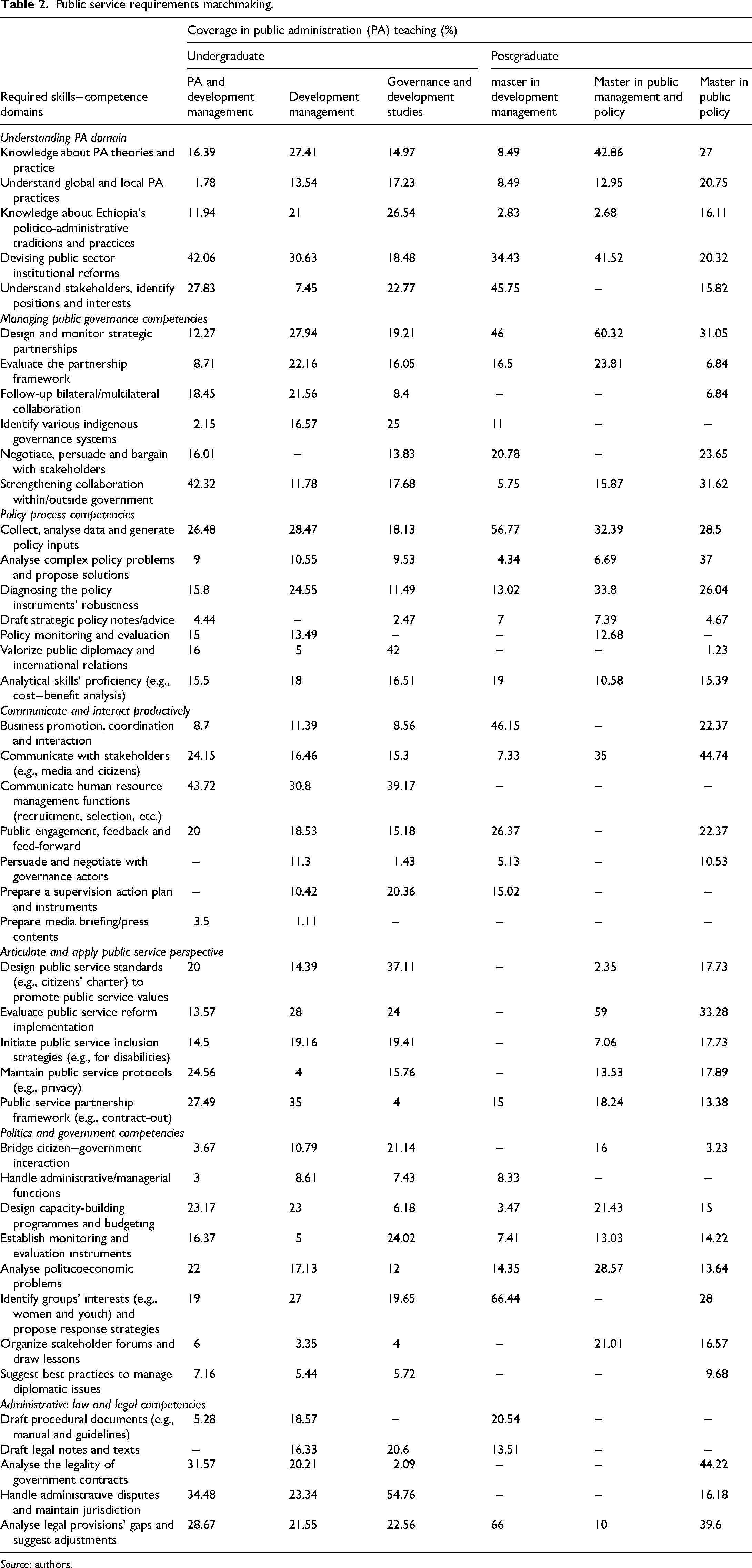
Source: authors.
Managing public governance competencies
Governance and development studies (GaDS) stand out for addressing local contexts and public governance skills. PA and development management (PADM) shows moderate alignment, particularly in fostering collaboration and partnerships (42.32%) and development management (DM) skills related to translating international agreements into actionable plans (21.56%) and into indigenous governance practice (25%). Surprisingly, postgraduate programmes generally inadequately address this domain.
Policy process competencies
Undergraduate programmes provide broader coverage of several policy skills. GaDS address international relations and diplomacy policy skills at 42%, whereas DM and PADM cover data analysis skills at 28% and 27%, respectively. Postgraduate programmes provide attention to data collection and analysis (master in development management (MDM), 57%), and policy problem diagnosing skills (master in public management and policy (MPMP), 34% and master in public policy (MPP), 37%). However, postgraduate programmes exhibit notable gaps in policy advice skills, impact evaluation, and international relations areas.
Communication competencies
Undergraduate programmes show relatively higher communication skills, such as HRM communication skills (43.72%), PADM and 40% GaDS. Regarding stakeholder communication with media and citizens, PADM accounts for 24% of the frequency against 16.5% for DM, indicating a discernible differential in communicative orientation across programs. Postgraduate programmes (MDM and MPP) have stronger coverage of business coordination (46.2%) and feedback mechanisms (22.37%), respectively. However, postgraduate programmes give limited attention to the remaining communication skills.
Public service competencies
The MPMP programme has relatively strong coverage, particularly in public service reform monitoring and evaluation (59%). By contrast, the MDM and MPP programmes devote little attention to public service competencies. At the undergraduate level, GaDS covers 37% of public service standards, DM addresses 35% of public service partnerships and PADM covers 25% of public service protocols. This suggests noticeable variations in the integration of public service competencies.
Political and government affairs competencies
Political acumen and government affairs skills are unevenly addressed in PA programmes. The MPP curriculum covers up to 28.5% of related politico-economic analysis skills (28.5%) and fiscal management (21%), but it overlooks many other skills. MDM performs similarly, except for interest group analysis (66%). At the undergraduate level, GaDS shows moderate alignment, with 24% coverage in monitoring and evaluation (24%) and 21% in citizen−government interaction. PADM follows closely with 23% coverage of fiscal management and 22% in socio-political analysis skills.
Administrative law and legal competencies
Postgraduate programmes generally lack strong coverage, except for MDM, which addresses 66% of legal provisions and procedural gaps analysis. MPP covers 40% and 44.2% of contract evaluation skills. Among undergraduates, PADM performs well with 34.5% in dispute resolution and 31.5% in contract evaluation, while GaDS and DM show moderate alignment, ranging from 21% to 55% across key legal skills.
The overall matchmaking scores indicate that, although public service requirements are broadly reflected in PA teaching, significant gaps persist across competence domains. This finding reinforces the Civil Service Commission's (2024: 11) observation that ‘graduates entering the public sector often lack essential competencies, and that higher education institutions (HEIs) inadequately impart skills.’ A practitioner pronounces this: working across federal organizations, I often had to retrain for specific skills, both when I first joined and when changing units. My studies did not fully provide transferable (e.g., communication and decision-making) skills. Of course, there are also gaps in job designing that could not allow theories and scientific principles to apply in practice. (PS#13)
In its 2023 education and training policy, the government acknowledges that higher education has not adequately equipped graduates with the required competencies nor sufficiently addressed local governance practices.
Evidence indicates that postgraduate programmes are less aligned with public service needs. Faculty and practitioners echo these concerns: Undergraduate programmes benefit from a harmonized modular curriculum that fosters dialogue and content improvement, whereas graduate programmes are developed independently, often replicated from other [outside] universities without adaptations, resulting in limited depth and rigour. (AC#3) Despite the growing number of civil servants with postgraduate degrees, the relevance of these qualifications remains questionable. (PS#3)
This misalignment may be linked to shorter programme length, reduced credit loads, and vertical repetition of course content (see Table 3).
Course/content repetition in Public Administration (PA) teaching.
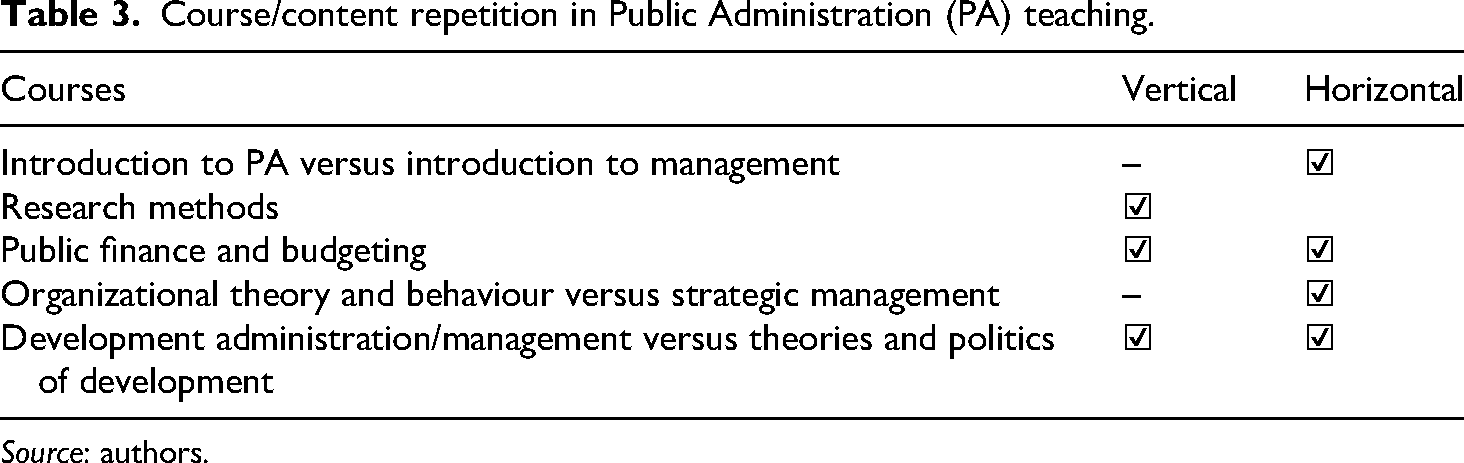
Source: authors.
Another key finding is the dominance of Western literature in PA syllabi, with minimal inclusion of Ethiopia-specific sources, such as textbooks, reports, grey literature and legal documents, a gap even more prevalent at the postgraduate level. Of the hundreds of references reviewed, Ethiopia-focused materials remain scarce. An interviewee highlighted gaps in content, pedagogy, and institutional linkages, noting that PA education neglects practical administrative and policy analysis skills: New graduates often need to retrain because their education is perceived as disconnected from real-world practice. Postgraduate programs should cultivate analytical and problem-solving skills, unlike many hard sciences, where theory is more universally applicable. (PS#6).
In addition, Table 3 shows horizontal repetition in undergraduate programmes and vertical overlap between undergraduate and postgraduate curricula, redundancies that contribute little to theoretical advancement or practical skill development.
There is also limited faculty engagement in research, affecting the quality and relevance of PA teaching. Interviewees highlighted that low salaries, scarce research grants and capacity gaps collectively hinder sustained scholarly activity (AC#1, #3 and #5). These barriers extend beyond individual productivity but also undermine the broader academic ecosystem. Postgraduate students often receive insufficient mentoring, exacerbating skill gaps and increasing the risk of topic redundancy (AC#7). The lack of plagiarism detection tools and underdeveloped cross-institutional repositories further restrict the ability to ensure originality (AC#4). These systemic hurdles prompt an analysis of actor roles, guiding the next section's turn to ANT's moments of translation.
ANT moments of translation in PA teaching
According to Higher Education Proclamation No. 1152/2019 and the 2023 education and training policy, HEIs have autonomy to design academic programmes, subject to rigorous evaluation and validation by relevant stakeholders. At the system level, the Ministry of Education sets overall policy, while the Education and Training Authority (ETA) is responsible for institutional accreditation and quality assurance. Within universities, the Senate, the highest internal governing body, approves programmes before Ministry endorsement. The Academic Standards and Curriculum Review Committee (ASCRC), an ad hoc committee, oversees curriculum development and screens proposals before Senate review (see also Debela et al., 2022).
The Education and Training Authority Directive No. 988/2024 requires HEIs to conduct thorough needs assessments and labour market analyses. Academic departments must engage stakeholders, including alumni, employers and public institutions, to incorporate indigenous knowledge, national priorities and global standards, followed by validation sessions. The university–industry linkage policy further emphasizes sustained collaboration between universities and industries, including public institutions across curriculum development, teaching and learning process and joint projects, anchoring the central role of multiple actors.
The roles of actors outlined above can be interpreted through Callon's (1986) moments of translation in ANT. In the problematization phase, programme and curriculum design are intended to address quality and relevance gaps through stakeholder involvement, with quality assurance (demand-driven) education serving as the ‘obligatory passage point.’ During implementation, university–industry linkage policies and ETA regulations act as instruments to secure stakeholder commitment at the interessement stage. Practical strategies, such as internships, externships, joint projects and practitioner-academician co-teaching, function as operational tools in the enrolment phase. Finally, mobilization occurs through impact assessment processes, including internal and external quality audits and inspections.
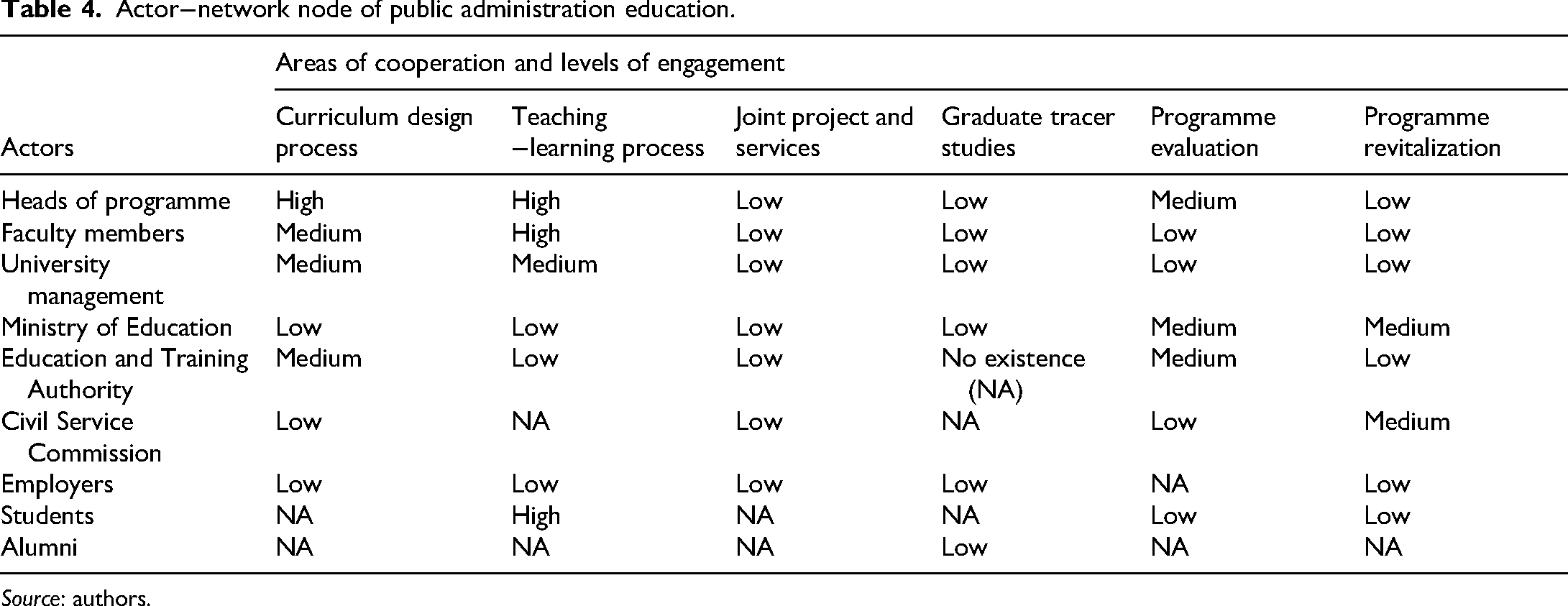
Applying the moments of translation reveals a substantial gap between policy intent and implementation. Despite formal requirements for stakeholder involvement, Table 4 shows low actor engagement. The Ministry of Education's role remains largely procedural, with minimal participation in graduate impact assessments, programme evaluation, or revitalization, reflecting weak problematization and fragmented interessement. Interviewees reported limited collaboration between universities and public organizations, including shared service arrangements. This disconnection undermines enrolment and effective mobilization, such as internal and external quality audits, ultimately restricting programme revitalization and weakening the preparation of graduates for increasingly complex public governance challenges (PS#5, AC#1, AC#3 and AC#9).
Actor−network node of public administration education.
Source: authors.
Despite formal efforts, the needs-assessment process exhibits two major limitations: alumni are largely excluded; and public sector (employers’) engagement is minimal/superficial. The process often prioritizes procedural compliance. For instance, postgraduate curricula are mainly shaped by faculty preferences or replication of existing programmes than by actual demand. As one faculty noted: Needs assessments often appear merely to fulfil procedural requirements … not to guide meaningful curricular reform. (AC#3)
This isomorphic approach has produced curricula insufficiently responsive to Ethiopia's administrative realities, highlighting the need to analyse pedagogical practices, an issue discussed in the next section.
Pedagogies and localization of PA teaching in Ethiopia
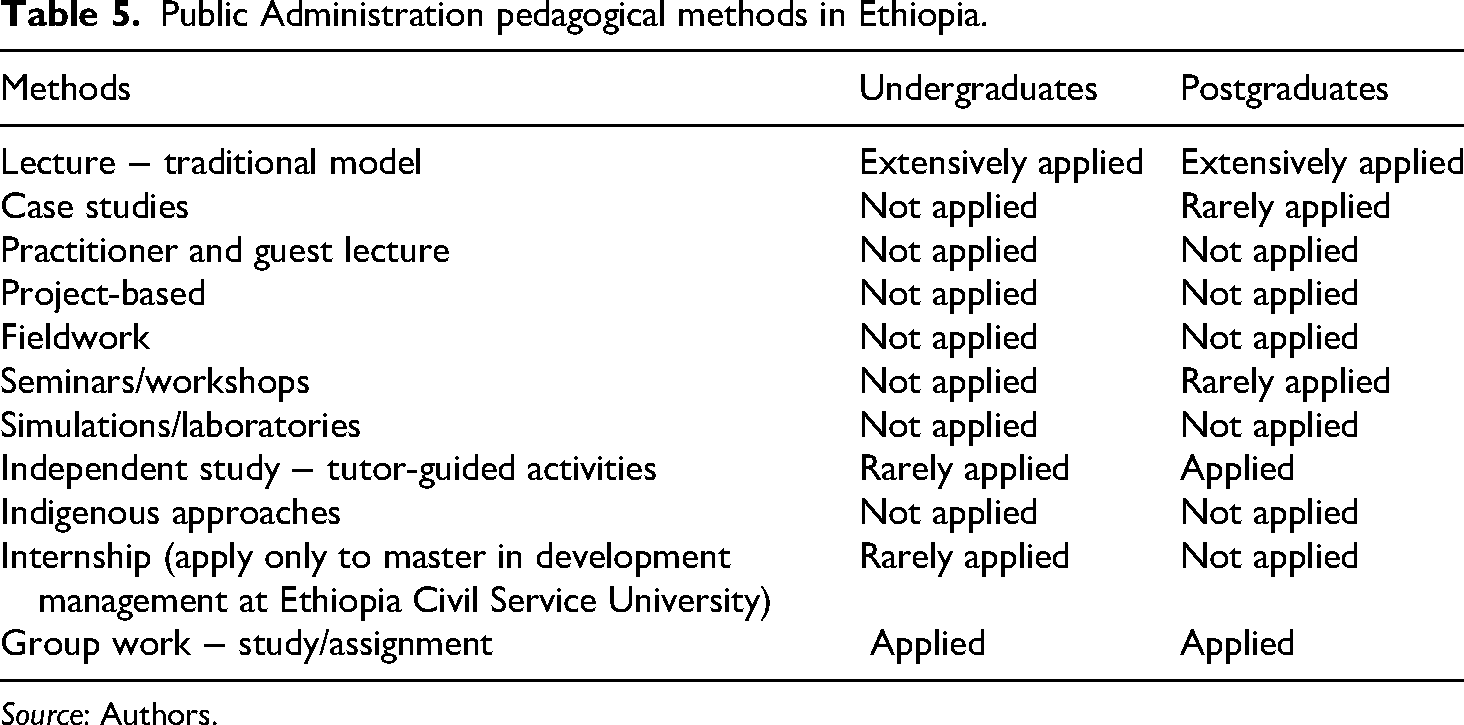
Although education policies and curricula promote student-centred learning, co-production of knowledge and the integration of local practices remain underdeveloped. Evidence indicates the continued dominance of teacher-centred, codified knowledge transmission, suggesting that the interessement and enrolment moments of ANT are largely unfulfilled. Pedagogical strategies continue to emphasize memorization rather than critical thinking and analytical reasoning. As a faculty member noted: We not only lack application of innovative pedagogical techniques and integration of local real-life practice and research findings but also fail to implement the curriculum. (AC#1)
As shown in Table 5, instructional strategies remain predominantly lecture-centred and examination-centred, with limited involvement of practitioners in co-teaching. This narrow pedagogical approach mirrors broader constraints on experiential learning in African PA education (cf. Edimo and Obosi, 2024).
Public Administration pedagogical methods in Ethiopia.
Source: Authors.
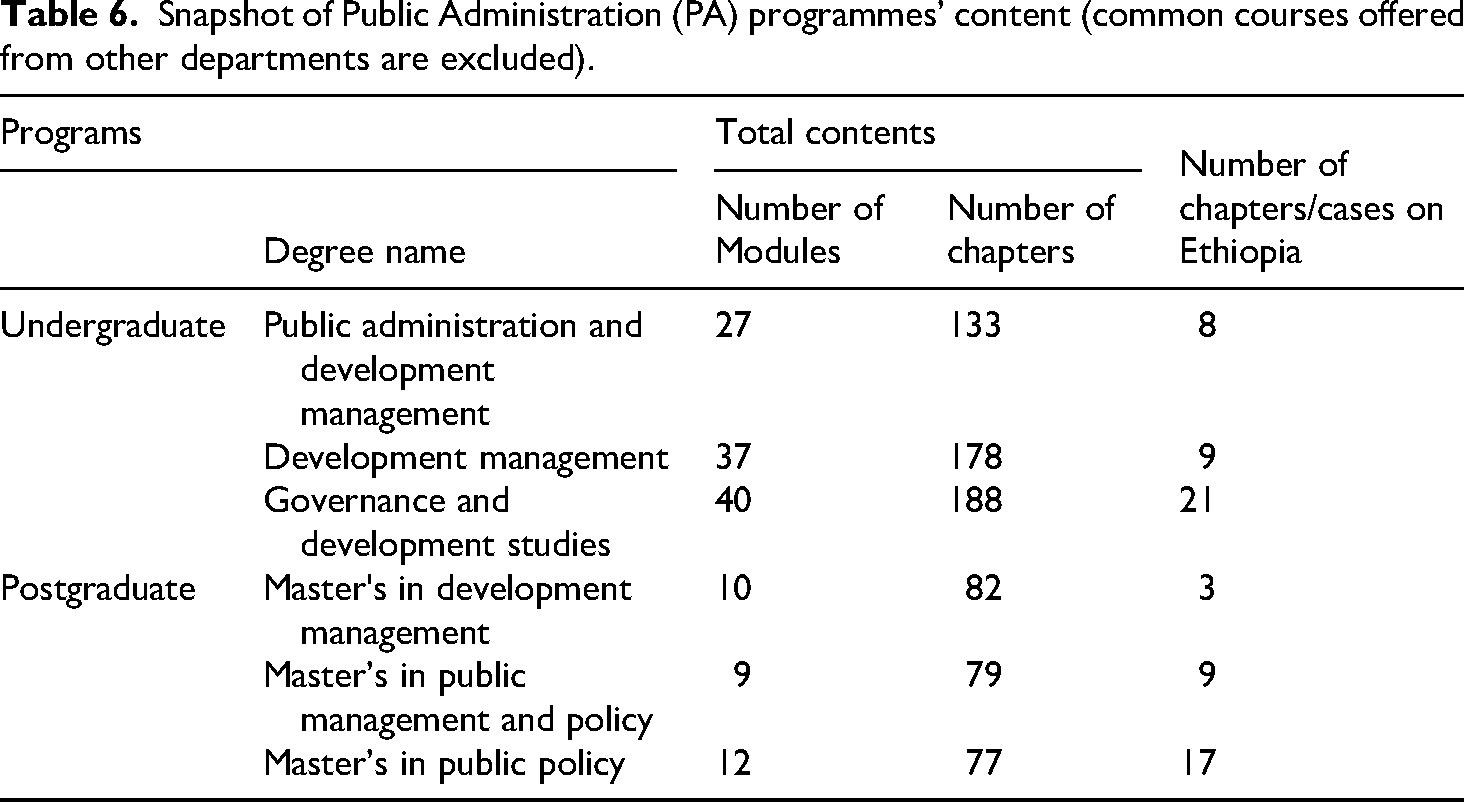
The pattern of limited stakeholder engagement and narrow pedagogical practice is further reflected in the stalled agenda of curriculum indigenization. Although Ethiopian education policies emphasize contextual relevance and meaningful stakeholder involvement, implementation remains weak (PS#5 and AC#3), revealing another gap in the interessement, enrolment and mobilization moments of ANT. PA teaching continues to be dominated by Western (see Table 6), particularly American, models, often marginalizing local administrative practices. Despite Ethiopia being the cradle of ancient civilization, its rich historical administrative practices, indigenous sociocultural institutions that shape state-citizen interactions and the divergent politico-administrative paths of the late twentieth century, are inadequately addressed in PA teaching (PS#7 and AC#3). This overreliance on imported frameworks, coupled with the neglect of local practices, risks reinforcing neo-colonial dynamics that foster dependency, cultural alienation and institutional inefficiencies. As a faculty observed: What value does teaching foreign experiences hold when we fail to engage students with Ethiopia's administrative heritage, theories and practices? PA is practice-oriented, yet we are not preparing students for real-world realities. (AC#5)
Snapshot of Public Administration (PA) programmes’ content (common courses offered from other departments are excluded).
Similarly, Negash (2006) critiques Ethiopian education as drifting towards collapse, failing to embed socio-cultural relevance, self-awareness and societal transformation.
The limited attention to local administrative traditions and practices is particularly evident, as highlighted by interviewees: ‘Local case studies are minimal, often relegated to the end of course materials without references’ (AC#9) and ‘students receive little instruction on local theories or practices’ (AC#2). Examples of such local knowledge include enduring administrative practices and regulations from past times, historically embedded practices such as Fetiha Negeste (Law of the Kings) and Kibre Negeste (Glory of Kings), the Oromo indigenous governance system known as the Gada system and sociocultural institutions, including elder councils and traditional microfinancing mechanisms (AC#1, AC#3 and AC#7). An alumnus highlighted the lack of courses on Ethiopia's administrative history, emphasizing its importance for informing present and future governance (PS#7). Overall, the integration of local knowledge, such as community conflict-management practices, environmental adaptations and the unique insights of sociocultural institutions, remains limited during the problematization phase of curriculum design. Importantly, neither PA competencies (e.g., Brans and Coenen, 2016) nor Network of Schools of Public Policy, Affairs, and Administration (NASPAA) and International Association of Schools and Institutes of Administration (IASIA) standards include specific indicators to assess indigenous uniqueness.
Although PA programmes aim to prepare graduates for public service, internship data from the 2023 PADM cohort reveal a pronounced mismatch: over 87% of students interned in the private sector, mainly in banking and business industries, while fewer than 10% were placed in public institutions. This pattern reflects limited strategic direction in the curriculum and a persistent perception of public service as an unattractive career path. This highlights a discrepancy between the stated mission of PA programmes and their actual outcomes. This gap is further exacerbated by weak collaboration between universities and the public sector, which collectively undermines graduates’ clarity about career pathways and their preparedness for professional roles in public service.
Discussion
Convergence and divergence of PA teaching with public service professions
The findings indicate that PA teaching broadly aligns with general public service requirements. However, there are noticeable divergences between the required competencies and PA curricula. This misalignment is driven primarily by curricular deficiencies and weaknesses in job design processes. Regarding the former, despite frequent claims that PA programmes reflect national priorities and public service needs, notable discrepancies remain. Additionally, the degree of alignment between PA competencies and public sector requirements varies across PA subfields, competence domains, and between undergraduate and graduate programmes. Specific to postgraduate programmes, this is partly because the curricula are shaped largely by limited faculty members, with inadequate inputs from external stakeholders and public-sector actors. Needs assessments in the designing phase are often used as a procedural formality rather than a substantive, iterative and evidence-based design processes. Regarding the latter, job design processes are similarly shaped predominantly by limited individuals within public sector organizations, with insufficient broad-based input into the substantive skills, expertise and functional requirements associated with the role, including limited engagement of faculty members.
In a similar vein, the findings show that curricula often neglect Ethiopia's rich administrative history, successive development policy trajectories, evolving public service demands and indigenous knowledge traditions, including historical governance practices, ancient statecraft and long-standing nation-building experience (Tamrat, 1968; Markakis, 1974). More broadly, this pattern reflects wider trends in PA teaching across Africa, where programmes adopt isomorphic approaches (Edimo and Obosi, 2024), resulting in a deep structural education system crisis (Negash, 2006). Although Ethiopia is distinct from many African countries whose administrative systems were shaped primarily by Anglophone or Francophone legacies, its PA teaching continues to follow broader continental patterns. As Edimo and Obosi (2024: 416) observe, ‘public policy teaching in Africa has often meant relying on and transferring Western knowledge.’ This is further reinforced by donor-driven capacity-building agendas that extend beyond bureaucratic reform objectives (Haque et al., 2021).
While PA competence domains, NASPAA accreditation standards and the United Nations Department of Economic and Social Affairs/IASIA Standards of Excellence provide useful general benchmarks to prepare the next generation of bureaucrats and policy experts, they also have shortcomings. A major limitation of these frameworks is that they pay limited attention to indigenous perspectives and local context. Such omissions weaken practical relevance, constrain opportunities to enrich international scholarship and hinder the development of a genuinely global PA scholarship beyond prevailing contextual hegemonies. In this respect, these frameworks sit uneasily with calls from PA scholars (e.g., Peters, 2021) to move beyond dominant Western paradigms and advance a more pluralistic and contextually grounded discipline.
The transplantation of Western models, compounded by limited Ethiopia-focused and Africa-focused references, and inadequate resources, undermines the relevance of PA education (Tapscott, 2021) and limits students’ readiness for real-world practice. The Ethiopian case thus challenges the assumption that non-colonized states naturally cultivate pedagogical traditions distinct from the colonial legacy (cf. Haque et al., 2021). The results underscore the need to move beyond codified, Western-centric knowledge transmission towards contextual knowledge production. Achieving this shift requires the effective application of Callon's (1986) moments of translation (see the next section), with active involvement of actors throughout the PA curriculum design and implementation phases.
The study also shows, on the one hand, a declining interest among PA graduates in pursuing public service careers, reflecting a growing disconnect between the mission of PA education and students’ career orientations. This disengagement is shaped not only by curriculum–practice misalignment but also by broader systemic factors, including an unattractive work environment, politicization and bureaucratic inefficiencies (Adamolekun, 2002; World Bank, 2019), and declining perceptions of government employment. On the other hand, as argued by Bouckaert (2013), PA teaching should not be driven solely by labour-market demands. Rather, it should also contribute to the production and advancement of theory by balancing fitness-for-purpose, strengthening the role of local knowledge and adhering to international standards. Achieving this balance requires inside-out looking, reflexive perspectives and sustained engagement from key actors, as emphasized by Fenwick (2011). This brings us to the role of actors in PA teaching, which is discussed hereafter.
The role of key stakeholders in PA teaching programmes
The study finds that stakeholder participation in PA teaching remains underdeveloped. On the one hand, the engagement of employers (public sector organizations), practitioners and alumni in both curriculum design and implementation is rare. The evidence indicates that these groups are not sufficiently consulted on graduate performance, invited to contribute to guest lectures, or asked to assess the impact of PA education on alumni career progression and professional development. On the other hand, regulatory actors, including the Ministry of Education and the ETA, play limited roles, revealing policy implementation gaps. Similarly, bodies of universities, such as the Senate, governing boards, the ASCRC and internal quality audit units often emphasize procedural compliance rather than rigorous oversight of curriculum design and implementation. Moreover, the study identifies that both domestic and international accreditation practices specific to PA programmes remain uncommon.
The findings also show that the faculty contribution to practice remains limited, hindering the institutionalization of practice-informed education. These constraints hinder both the development of transferable technical and analytical skills, as well as the advancement of the field. Consistent with earlier research, the policy capacity of PA alumni in the civil service appears largely unaffected by their level of education (Angaw et al., 2025b). Gaps in curriculum design and implementation, are evident in limited stakeholder engagement, vertical and horizontal content repetitions and outdated pedagogical strategies. Together, these constraints constrain experiential learning, analytical reasoning skills development, self-awareness, creativity and the development of professional competencies. The findings further indicate a substantial misalignment between the expected outcomes and actual learning outcomes, as reflected in the matchmaking score index.
From Michel Callon's (1986) ANT perspective on moments of translation, the results are clear: weak engagement by actors in articulating requisite competencies during both curriculum design and the implementation phases, alongside limited stakeholder involvement in job design, which remains largely controlled by a small group of individuals. These constraints reinforce the theory–practice divide, with universities and practitioners operating in silos rather than in coordinated pursuit of societal well-being, thereby limiting meaningful transformation in both scholarship and PA practice. This shortfall also represents a clear divergence from national education and policy priorities, which call for curricula grounded in national identity, informed by cultural and historical heritage, responsive to local governance realities and aligned with internationally recognized standards (see Negash, 2006).
Concluding remarks
All in all, the evidence suggests an urgent need for reform, including rigorous curriculum revision, faculty development and the promotion of a stronger research culture. Such efforts should be underpinned by strong institutional commitment, robust accountability mechanisms, international collaboration, adequate resource allocation and improved infrastructure (see Edimo and Obosi, 2024). To bridge the gap identified by the study, reform efforts should integrate both local and global knowledge, values and practices in PA teaching. In this regard, the findings indicate that applying Michel Callon's (1986) ANT moments can effectively support the revitalization process. Problematization helps identify gaps in PA teaching and public service practice, establishes a shared understanding of challenges and defines innovative solutions together with actors’ responsibilities. Interessement secures commitment through legal, regulatory and accountability mechanisms. Enrolment coordinates and aligns actors’ roles throughout the reform process. Mobilization expands and stabilizes the network to build broader support and sustain effective implementation. Revitalization could include instruction in local languages to enhance contextual relevance and support the ongoing reforms of the national public service competence framework. Despite their limitations, PA competencies remain a useful general benchmark to guide this process.
This study has three main limitations. First, it did not examine how job design and structuring processes involve HEIs in defining skills, competencies and academic fields in the public service profession. Second, it has not examined the intermediate factors shaped by weak collaboration among key actors in higher education, particularly in PA teaching. Third, it lacked a comparative perspective, excluding insights from neighbouring countries or the broader Horn of Africa region. These limitations point to valuable directions for future research at national, regional and continental levels, particularly through comparative studies.
Footnotes
Funding
The authors disclosed receipt of the following financial support for the research, authorship, and/or publication of this article: This work was supported by the Global Minds Programmes of KU Leuven, funded by the Flemish Interuniversity Council−University Development Corporation scholarship framework (grant number 00000022949).
Declaration of conflicting interests
The authors declared no potential conflicts of interest with respect to the research, authorship, and/or publication of this article.
