






Abstract
Conducting polymer/ferrite nanocomposites with an organized structure provide a new functional hybrid between organic and inorganic materials. The most popular among the conductive polymers is the polyaniline due to its wide application in different fields. In the present work nickel ferrite nanoparticles were prepared by sol–gel citrate-nitrate method. Polyaniline/nickel ferrite nanocomposites were synthesized by a simple general and inexpensive in-situ polymerization in the presence of nickel ferrite nanoparticles. The effects of nickel ferrite nanoparticles on the DC-electrical and magnetic properties of polyaniline were investigated. The structural, morphological and thermal stability of nanocomposites were characterized by X-ray diffraction, FTIR, scanning electron micrograph and TGA. The DC conductivity of polyaniline/nickel ferrite nanocomposites have been measured as a function of temperature in the range of 80 K to 300 K. The magnetic properties of the nanocomposites were measured using vibrating sample magnetometer in the temperature range 300–10 K up to 30 kOe magnetic field.
Keywords
Introduction
The research in nanoscience is aimed to explore synthesis and understand new nanomaterials and the related phenomena. Electronically conducting polymers are the novel class of synthetic metals with widespread application in number of technological devices. Among the conducting polymers, polyaniline (PANI) has been extensively studied due to its easy synthesis, low cost, excellent environmental stability and high electrical conductivity. 1 PANI has attracted much attention because of its potential application in molecular electronics, electromagnetic interference (EMI) shielding, chemical sensors, antistatic coatings, rechargeable batteries, corrosion inhibitors, absorbing materials2,3 etc. To overcome the EMI shielding problem, the development of microwave absorbing materials with strong absorption over a broad frequency range is required, whereas for traditional microwave absorbing materials such as carbonyl iron or iron oxides (e.g. Fe2O3 and Fe3O4), the disadvantage of overweight limits their wide application.4,5 It is well-known that conducting polymers can effectively shield electromagnetic waves generated by an electric source. Thus, a combination of magnetic constituents and conducting polymeric materials opens new possibilities to provide shielding from various electromagnetic sources.
Nanocrystalline ferrites which possess a general formula MFe2O4 (M=divalent metal ion, e.g. Ni, Co, Cu, Mn, Mg, Zn, Cd etc.) are one of the most attractive class of materials for technological applications.6–11 Among magnetic materials, the spinel ferrites exhibit remarkable magnetic properties particularly in radio-frequency region, physical flexibility, high electrical resistivity, mechanical hardness and chemical stability. 12 Nickel ferrite (NiFe2O4) has been intensively investigated as one of the magnetic nanomaterials. 13 NiFe2O4 has an inverse spinel structure. The location of the divalent cations (Ni2+) in the crystal structure is closely related to the magnetic properties of the NiFe2O4. Their properties are particularly enhanced when the size of the particles reaches the nanometer range. 14 NiFe2O4 is an important magnetic ferrite which has found its extensive applications in diverse areas such as gas-sensor, magnetic fluids, catalysts, magnetic storage systems, photo magnetic materials, magnetic resonance imaging, site-specific drug delivery and microwave devices.4,6,13
With the recent development in nanoscience and nanotechnology, conducting polymer nanocomposites received an ever-increasing attention and keeping this in view we have made efforts to present synthetic methodologies of PANI/ferrite nanocomposites and their potential applications. We report here the synthesis of NiFe2O4 nanoparticles by sol–gel citrate–nitrate method, and PANI/NiFe2O4 nanocomposites via in-situ polymerization of aniline monomer in an aqueous. It is pointed out that the NiFe2O4 and PANI/NiFe2O4 nanocomposites obtained in our experiment have cubic spinel phase. The structural, morphological and thermal stability have been investigated through X-ray diffraction (XRD), FTIR, scanning electron micrograph (SEM) and TGA methods. The temperature dependence of DC conductivity on PANI/NiFe2O4 nanocomposites were investigated in the temperature range 80–300 K. The magnetic properties of the nanocomposites were measured using vibrating sample magnetometer (VSM) in the temperature range 300–10 K up to 30 kOe magnetic field.
Synthesis
NiFe2O4 nanoparticles have been prepared by citrate–nitrate method13,15 using nickel nitrate and ferric nitrate in the molar ratio 1:2. A certain amount of citric acid was dissolved in a molar ratio 1:1 of nitrate to citric acid. The combustion reaction during the process can be described as
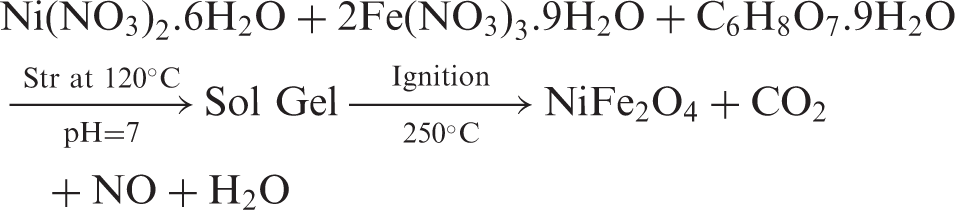
PANI/NiFe2O4 nanocomposites were prepared by a simple in-situ polymerization method8,16 in the presence of NiFe2O4 nanoparticles as explained briefly in Figure 1. PANI/NiFe2O4 nanocomposites were synthesized using 0 wt%, 20 wt% (N1), 40 wt% (N2), 60 wt% (N3) and 80 wt% (N4) of NiFe2O4 nanoparticles with respect to aniline monomer. The detailed synthesis of similar nanocomposites is discussed in our previous work.6,7
Schematic diagram of synthesis procedure of the polyaniline (PANI)/nickel ferrite nanocomposites by in-situ chemical polymerization technique.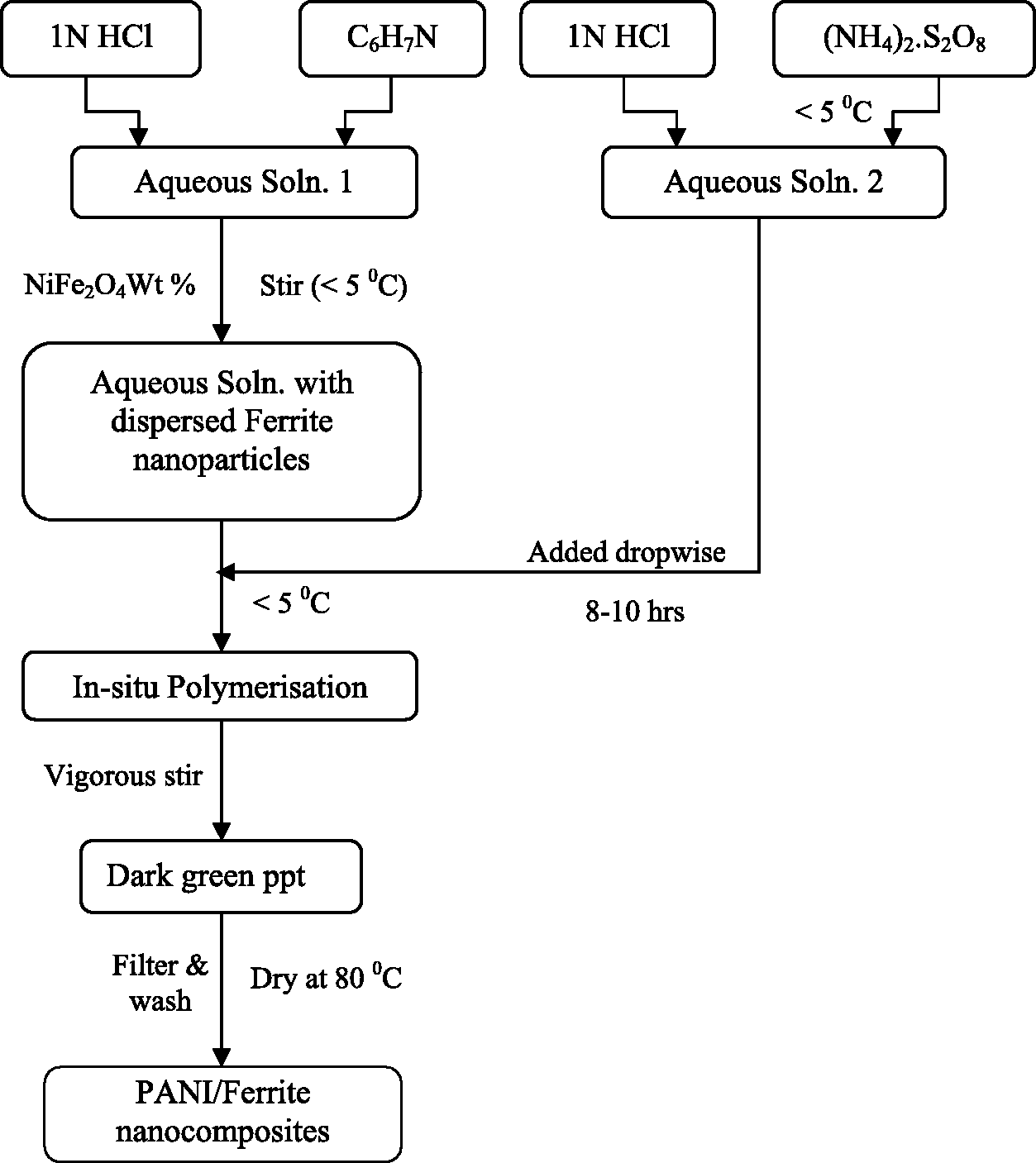
Characterization
XRD pattern of the samples were collected on a Philips X’pert Pro MPD X-ray diffractometer with Cu Kα radiation (λ = 1.5418Å) at a scanning rate of 0.05° per step with 15 s/step in the range of 10–80°. FTIR spectroscopy was recorded on a PERKIN-ELMER (model-1000) spectrometer in the range of 400–4000 cm−1 using KBr pellets. SEM was carried out in a Hitachi model S-3200N microscope. Thermal stability of samples was also studied by TGA using Shimadzu, TGA 50, Japan, with heating rate of 10℃/min in the temperature range from 25 to 800℃.
The DC electrical conductivity was carried by four probe method using Keithley source meter (model 220) and a multimeter (Model 2000) in the temperature range 80–300 K by using Lakeshore auto tuning temperature controller (Model-330). The measurements were recorded during cooling cycle. Magnetic hysteresis loops were recorded at various temperature (300–10 K) using a VSM (PPMS-VSM, M/s Quantum Design, USA) with a maximum magnetic field of 30 kOe. The data have been repeated several times and the variation is found to be within the error bars of the instrument.
Result and discussion
Structural characterization
XRD patterns for NiFe2O4, PANI and PANI/NiFe2O4 nanocomposites (Figure 2) shows a cubic spinel phase for NiFe2O4 nanoparticles with fcc crystal structure
17
with no extra reflections and are well-indexed to the crystallographic planes of spinel ferrite (220), (311), (222), (400), (422), (511) and (440) with 100% intensity at 2θ = 31.04° that corresponds to the reflection plane (311). The diffraction result well agrees with the standard XRD data (JCPDS card No. 74-1913). By using Debye-Scheffer’s formula, the average crystallite size was calculated and it is found to be 21.6 nm for pure NiFe2O4, and increases with decreasing content of NiFe2O4 in PANI. It is also evident from Figure 2 that the pure PANI has broad peak in the region of 20–30° with a maximum at around 25° indicating its semicrystalline nature and with increasing content of NiFe2O4 nanoparticles in the composite the relative intensity of the characteristic peaks of PANI/NiFe2O4 nanocomposites increase regularly, clearly indicating an increase in the NiFe2O4 content in nanocomposites.
XRD patterns of pure PANI, NiFe2O4 and PANI/NiFe2O4 nanocomposites. PANI: polyaniline; NiFe2O4: nickel ferrite.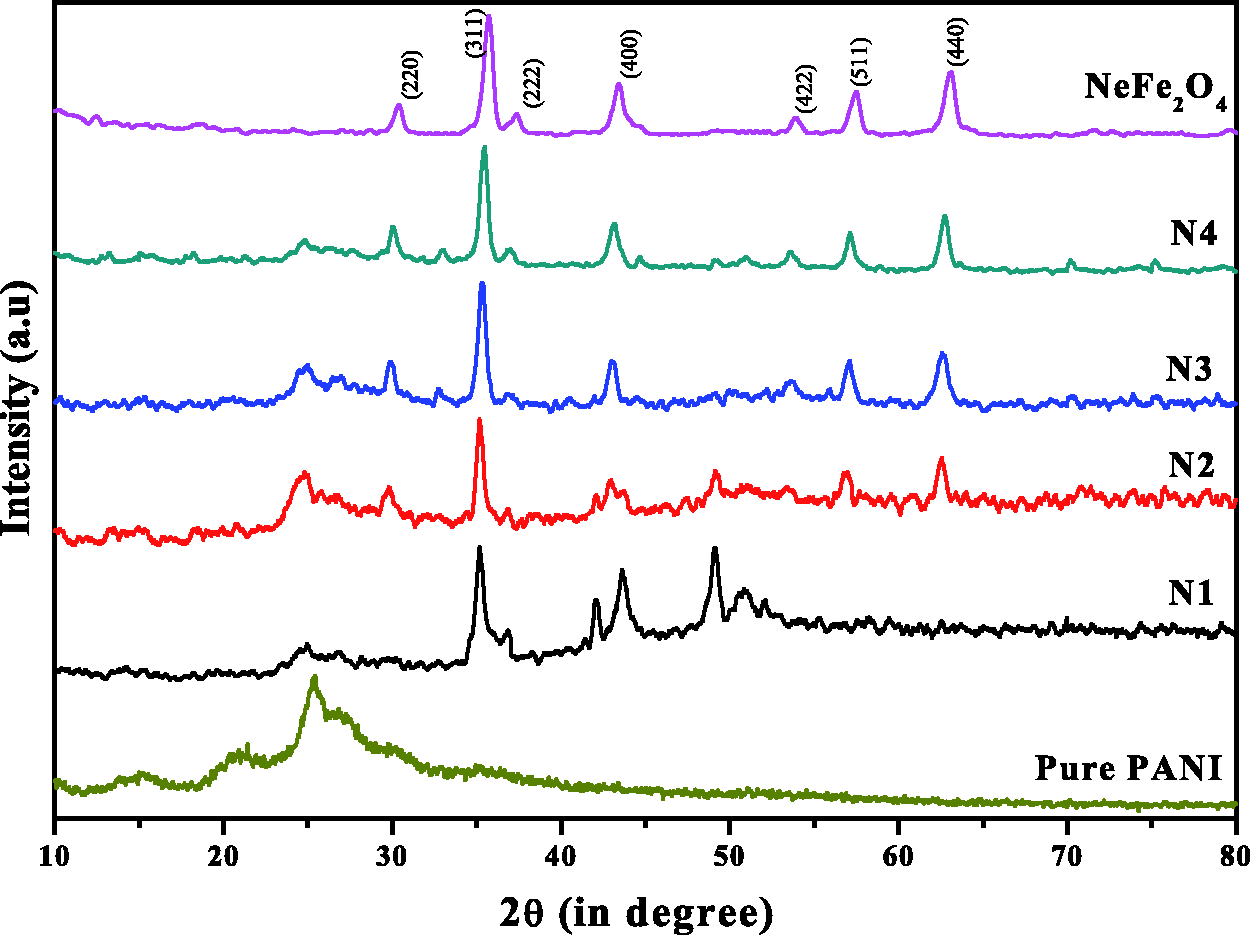
FTIR spectra
FTIR spectra of pure PANI and PANI/NiFe2O4 nanocomposites are shown in Figure 3. The characteristic peaks of PANI occur at 1563, 1483, 1298, 1242, 1143 and 800 cm−1.
18
The peaks at 1563 and 1483 cm−1 are attributed to the characteristic C=C stretching of the quinoid and benzenoid rings, the peaks at 1298 and 1242 cm−1 are assigned to C–N stretching of the benzenoid ring, the broad peak at 1143 cm−1 which is described by MacDiarmid et al.
19
as the “electronic-like band” is associated with vibration mode of N=Q=N, indicating that HCl-doped PANI is formed in our samples, and the peak at 800 cm−1 for PANI is attributed to the out-of-plane deformation of C–H in the 1,4-disubstituted benzene ring. We can notice that the FTIR spectra for PANI and PANI/NiFe2O4 nanocomposites are similar with the characteristic peak value at 1143 and 1483 cm−1. The peaks of the PANI/NiFe2O4 nanocomposites shift to lower wave numbers. This indicates that the PANI/NiFe2O4 nanocomposites are composed of NiFe2O4 nanoparticles, which infer there is some interaction between NiFe2O4 nanoparticles and PANI.
FTIR spectra of PANI/ NiFe2O4 nanocomposites. PANI: polyaniline; NiFe2O4: nickel ferrite.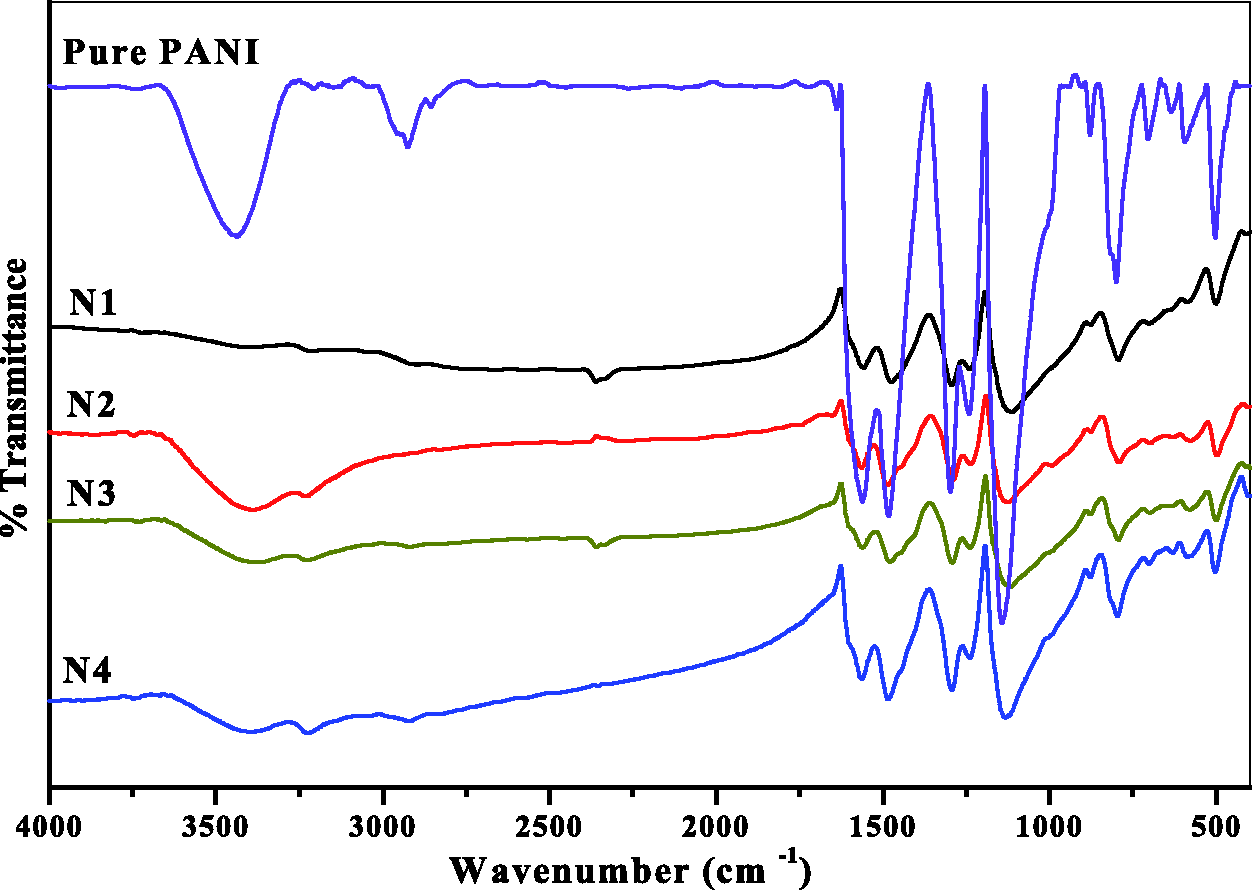
SEM
The SEM images of NiFe2O4 nanoparticles, PANI and PANI/NiFe2O4 nanocomposites are shown in the Figure 4. It can be observed that the NiFe2O4 nanoparticles appear uniform sphere-like shaped. The SEM micrograph of the PANI indicates the big globular agglomerates with smooth surface. It is noticeable that the SEM micrograph of PANI/NiFe2O4 (40 wt%) nanocomposites presents different morphology as compared with the bare NiFe2O4 nanoparticles. The PANI layers are wrapped on the surface of NiFe2O4 nanoparticles appearing as small aggregated globules.7,18
SEM images of pure NiFe2O4, PANI and PANI/NiFe2O4 nanocomposites (40 wt% of NiFe2O4).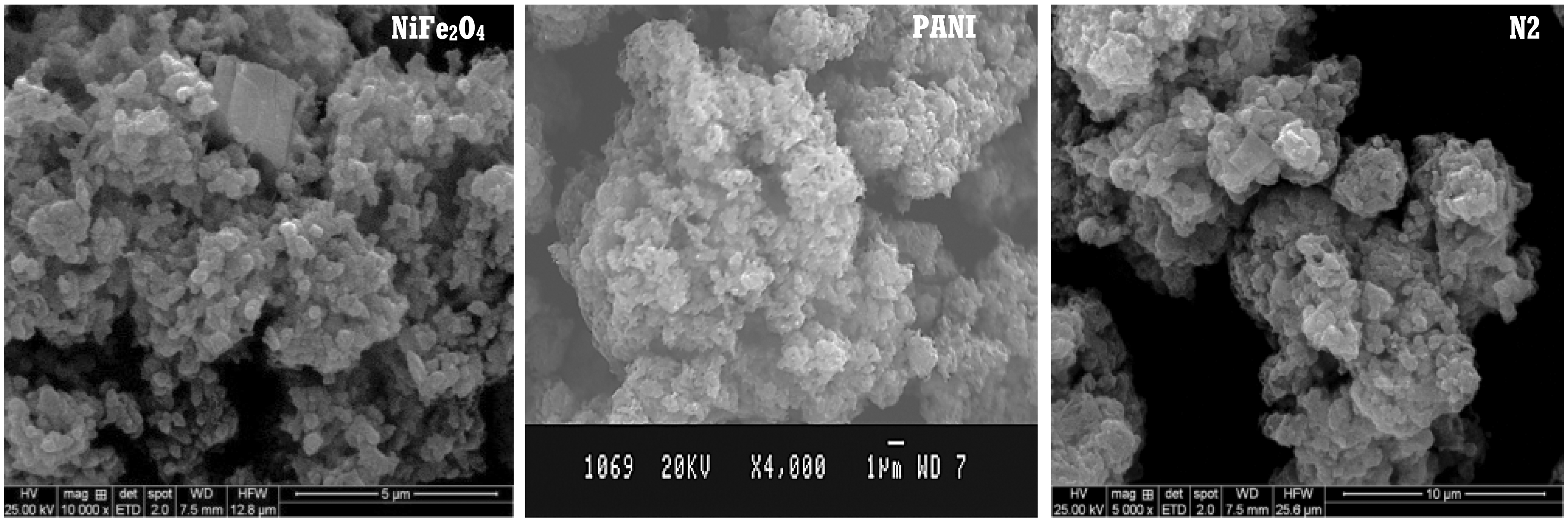
TGA
Figure 5 shows the TGA curves of PANI and PANI/NiFe2O4 nanocomposites. The TGA curve of 100% PANI shows that there were about initial 5% weight loss at lower temperature (less than 120℃) due to the vaporization of water in the PANI and HCl desorption. The second step indicates a weight loss of about 95% in the temperature range 150℃ to 600℃, which is ascribed to the degradation of the polymer chains.2,13 Figure 5 (N1–N4) shows the curves correspond to NiFe2O4 concentrations of 20 wt%, 40 wt%, 60 wt% and 80 wt%, respectively. The decomposition temperature of the PANI/NiFe2O4 composites was found to depend on the amount of NiFe2O4 nanoparticles present in the composite. The trend of degradation for the PANI/NiFe2O4 nanocomposites is similar to that of PANI, and also presents two-steps weight loss process. The initial decomposition temperature was observed around 200℃. The reason for this variation of initial decomposition temperature is that the more amount of NiFe2O4 nanoparticle, the stronger structure strength of the PANI/NiFe2O4 nanocomposites.20,21
Thermal behaviour of pure PANI and PANI/NiFe2O4 nanocomposites. PANI: polyaniline; NiFe2O4: nickel ferrite.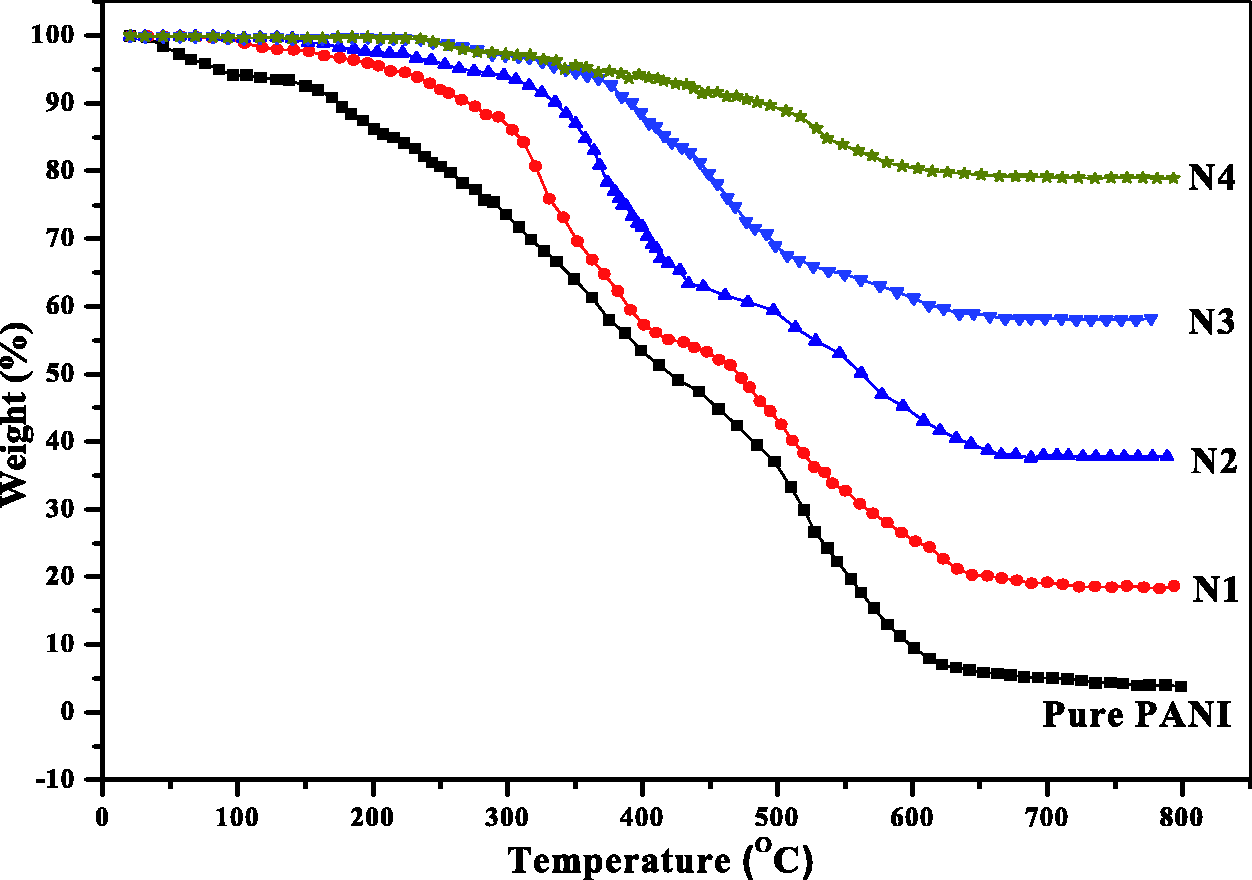
Figure 5 also indicates that pure PANI material will undergo redox reaction or decomposition initially at about 300℃, and PANI has the great weight loss (about 50%) at the temperature between 400℃ and 600℃. Curve for N1, N2 shows that the starting decomposition temperature of the materials of PANI/NiFe2O4 nanocomposite depends on the amount of PANI which is the shell material of core–shell spinel ferrites. As revealed from figure, the thermal stability of the composites is higher than that of pure PANI. For instance, the TGA curve of the PANI/NiFe2O4 (20 wt%) composite reveals a weight loss of 50% at 470℃. In contrast, the pure PANI shows the same weight loss at 415℃. This would be explained by the fact that a strong interaction between PANI and NiFe2O4 restricts thermal motion of the PANI in the composite and enhances a thermal stability of the composite. 2
The gradual weight losses are observed at the temperature above 200℃ for all nanocomposites, revealing PANI itself was decomposed thermally within this temperature range, and PANI has the great weight loss (about 80%) at the temperature between 300℃ and 650℃. The decomposition temperature of the PANI/NiFe2O4 nanocomposites was found to depend on the amount of NiFe2O4 nanoparticles present in the PANI.
DC electrical properties
The temperature-dependent resistivity of PANI was measured in the temperature range of 80 to 300 K. The resistivity of PANI increases with decreasing temperature exhibiting semiconducting behavior as shown in Figure 6. The room temperature conductivity for pure PANI is 5.15 Scm−1 and it increases with temperature.
Temperature dependent of resistivity of PANI/NiFe2O4 nanocomposites; resistivity and conductivity of pure polyaniline (inset). PANI: polyaniline; NiFe2O4: nickel ferrite.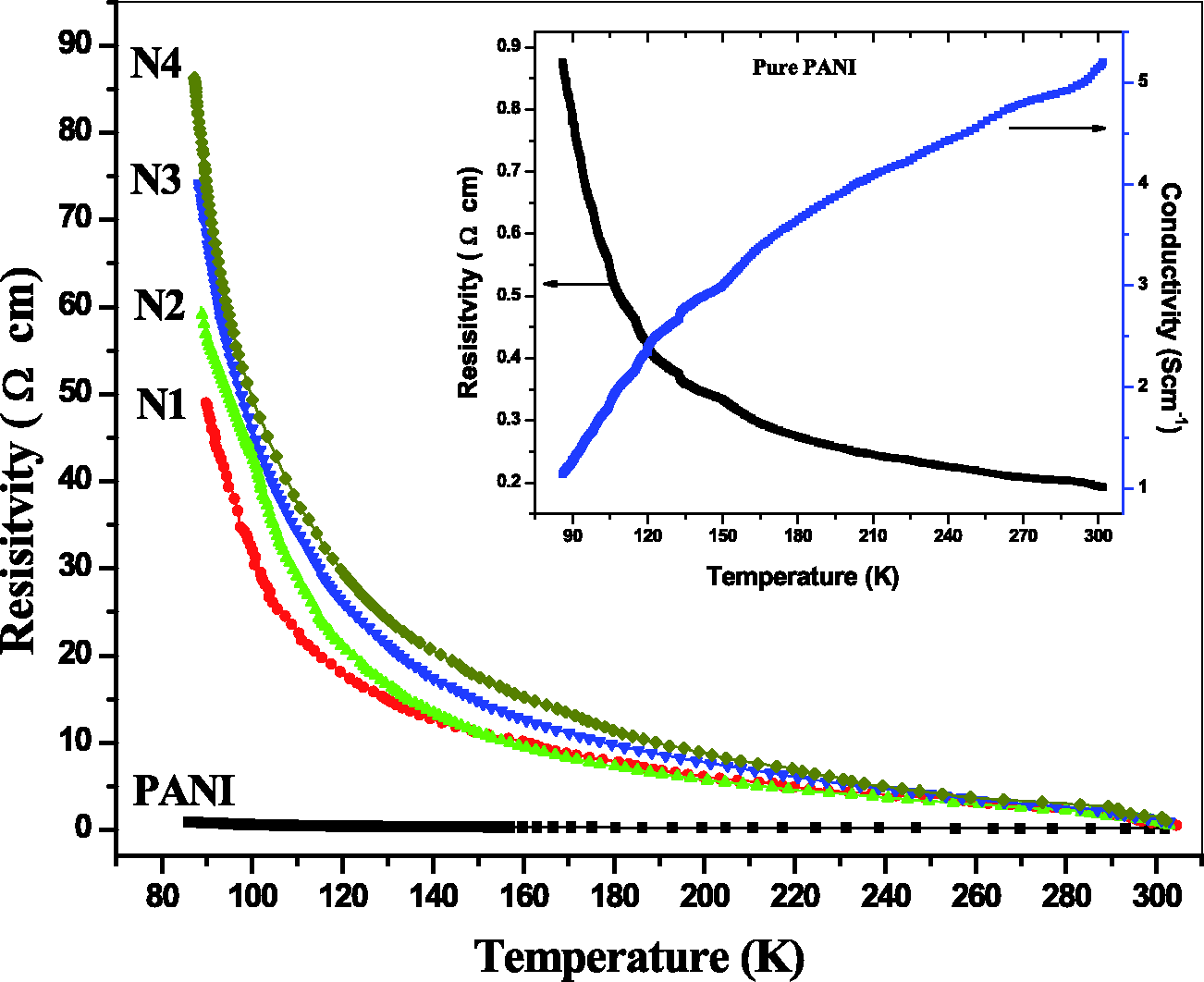
Figure 6 (inset) shows the resistivity of all PANI/NiFe2O4 nanocomposites which increases with decreasing temperature exhibiting semiconducting behavior. 6 Since the NiFe2O4 nanoparticles are embedded in the PANI matrix, interactions between the polymer matrix and NiFe2O4 nanoparticles will increase the charge carrier scattering and thus increase the sample’s resistivity resulting in decrease in the conductivity of PANI/NiFe2O4 nanocomposites with increase in NiFe2O4 content.22,23 Other effects like increased charge carrier rapping, either by the nanoparticles themselves or by morphological changes and defects induced by them, could also play a role.
Magnetic properties
The curve of magnetization M versus the applied magnetic field H for NiFe2O4 and PANI/NiFe2O4 nanocomposites at various temperatures (300 K, 200 K and 10 K) is plotted in Figure 7. The magnetization of NiFe2O4 exhibits a hysteretic behaviour. The magnetic moments of tetrahedral A-sites and octahedral B-sites are aligned antiparallel and not equal, due to antiferromagnetic coupling, resulting in a finite difference to yield a net magnetization (m = mB – mA). The observed magnetic parameters, such as saturation magnetization (MS) and coercivity (HC), determined by the hysteresis loops clearly decrease upon coating. There have been several reports on the decrease of MS and HC for magnetic nanoparticles coated with nonmagnetic matrix when interparticle interactions have decreased, due to the increase of particle–particle separation.8,10,17,18 It is known that interparticle interactions for the magnetic nanoparticles coated with nonmagnetic medium primarily arise from dipole–dipole interactions between nanoparticles, which can contribute to magnetic anisotropy and consequently change the magnetic properties of nanoparticles. The decrease of MS and HC for PANI/NiFe2O4 nanocomposites can be explained by the interparticle dipole–dipole interactions, which are related to the magnetic particle volume fraction in the particles.
Magnetic hysteresis (M–H) curves of pure NiFe2O4 nanoparticles and PANI/NiFe2O4 nanocomposites at temperature (a) 300 K, (b) 200 K and (c) 10 K. PANI: polyaniline; NiFe2O4: nickel ferrite.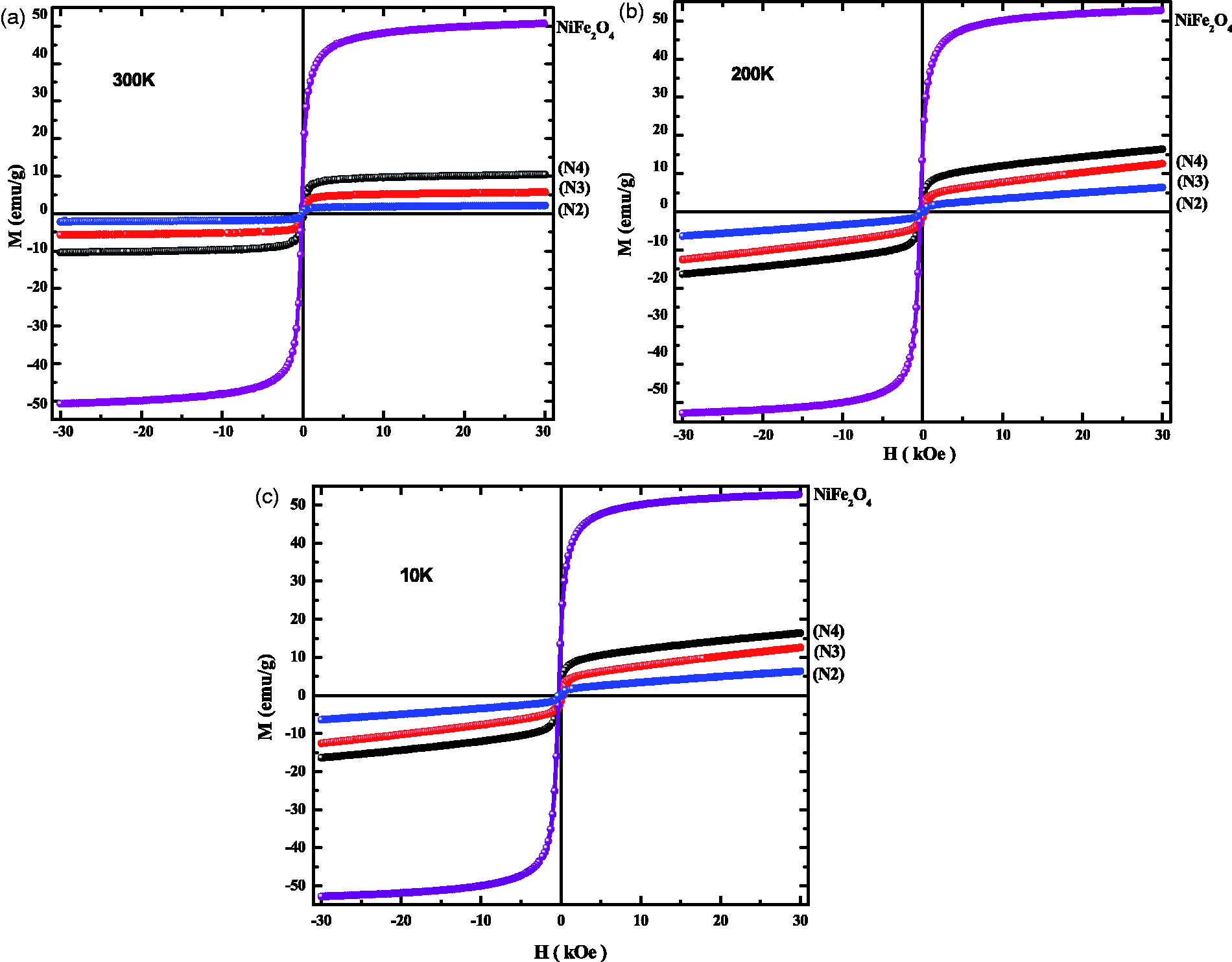
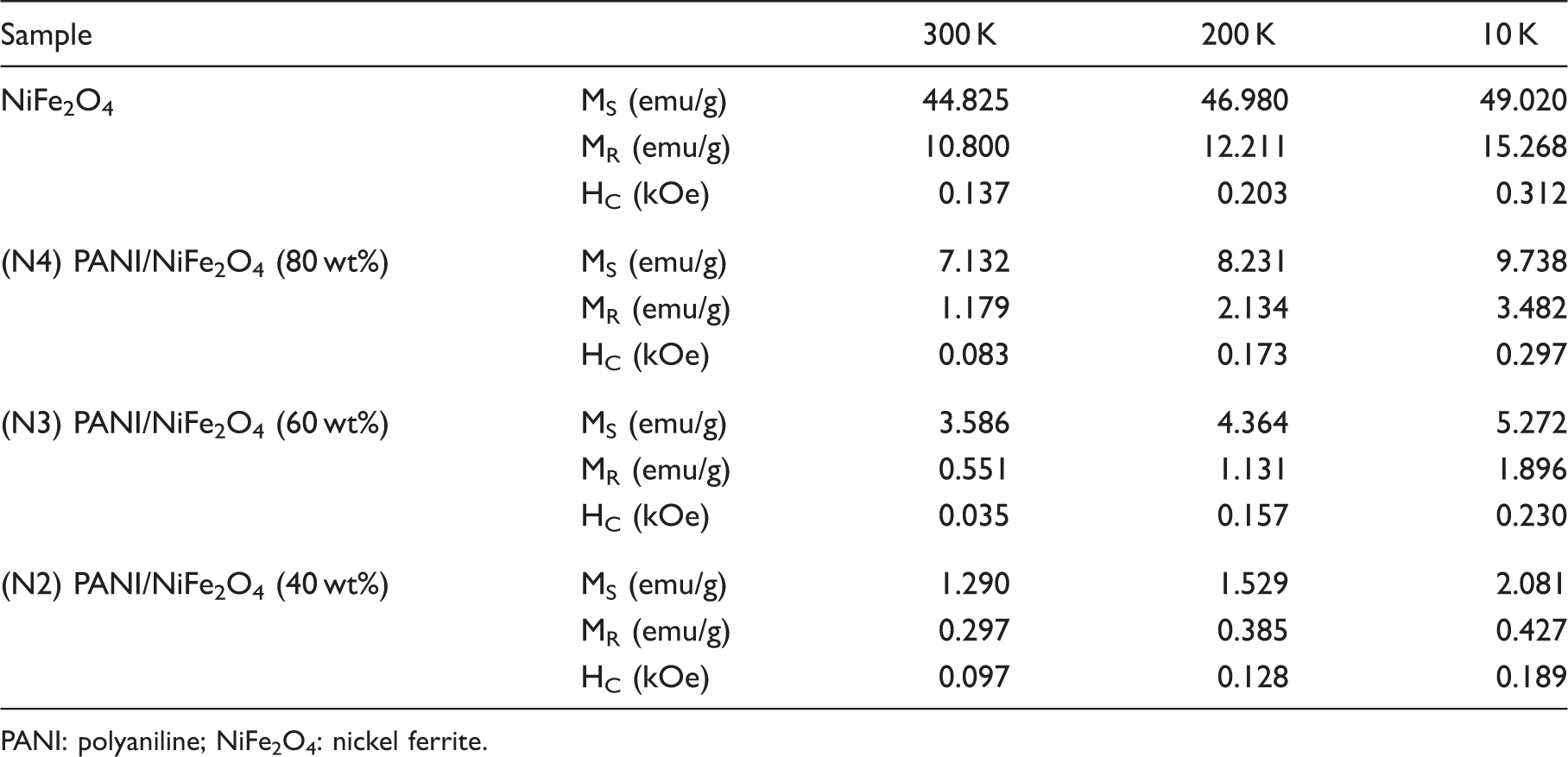
Magnetic parameters of NiFe2O4 nanoparticles and PANI/NiFe2O4 nanocomposites.
PANI: polyaniline; NiFe2O4: nickel ferrite.
It is clear that the value of saturation magnetization, MS, comes out to be 44.82 emu/g at 300 K, which is same as obtained by Jiang et al. 18 The remanent magnetization (MR) can be extracted from the hysteresis loop at the intersections of the loop with the vertical magnetization axis and found to be 10.83 emu/g. Coercivity (HC) is observed at 137.3 Oe. For nanosized ferrite particles, the surface areas are larger and thus the surface energy and surface tension are high. This results in changes in cationic preferences and leads to an increased degree of antisite defects and thus lesser magnetizations.24,25
It is observed that the values MS, MR and HC for PANI/NiFe2O4 nanocomposites (Figure 7(a)) have the same order as observed for pure NiFe2O4 nanoparticles. These values for the nanocomposites are less than those obtained for pure NiFe2O4 nanoparticles, this behaviour is due to the non-magnetic coating layer, can be envisaged as a magnetic dead layer on the surface, thus affecting the magnitude of magnetization due to quenching of the surface moment
26
and also, according to the equation
The hysteresis loops obtained at different temperatures 200 K and 10 K for PANI/NiFe2O4 nanocomposites are shown in Figure 7(b and c), respectively. The magnetic parameters MS, MR and coercive field HC increases almost linear with decreasing temperature and almost follows the same nature as at 300 K for PANI/NiFe2O4 nanocomposites.
At 300 K, Figure 7(a) demonstrates that there is a hysteresis for the PANI/NiFe2O4 nanocomposites and it is observed that the coercivity is small, HC = 137 Oe (Table 1). For comparison, the coercivity is 500–800 Oe for bulk magnetite particle but does not decrease to zero, the reason could be attributed to the few NiFe2O4 particles with larger diameter or clustered nanoparticles (it is difficult to avoid aggregation completely). With decrease in temperature (200 K and 10 K), Figure 7(b and c) clearly indicates that both the coercivity and saturation magnetization increase due to the frozen magnetic moments. At 10 K for the 20 wt% composite (N1), coercivity HC = 189Oe and for pure NiFe2O4 nanoparticles HC = 312 Oe, which are higher than the corresponding values at 300 K. With decrease in the composition of NiFe2O4, coercivity decreases at all temperatures. The variation of saturation magnetization (MS) with wt% of NiFe2O4 nanoparticles for different temperatures is as shown in Figure 8.
Variation of saturation magnetization (MS) with wt% of NiFe2O4 nanoparticles. NiFe2O4: nickel ferrite.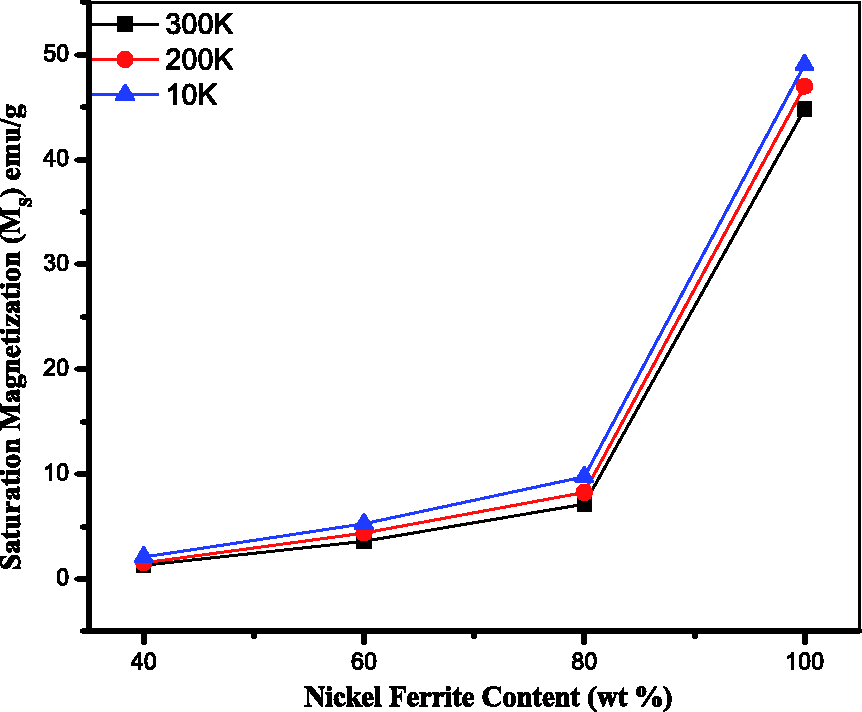
Conclusion
In summary, NiFe2O4 nanoparticles were prepared by sol–gel citrate–nitrate method with an average crystallite size of 21.6 nm. PANI/NiFe2O4 nanocomposites were synthesized by a simple general and inexpensive in-situ polymerization in the presence of NiFe2O4 nanoparticles. The result of XRD, FTIR spectroscopy and SEM shows the formation of the composite and indicates an interaction between PANI and NiFe2O4 nanoparticles. The effect of NiFe2O4 nanoparticles on the DC-electrical properties of PANI was investigated and the conductivity of the nanocomposite decreases with increase in the doping concentration of NiFe2O4. The magnetic properties of all the composites were measured in the temperature range 300–10 K up to 30 kOe magnetic field. The magnetic properties of PANI/NiFe2O4 nanocomposites were improved by adding the NiFe2O4 nanoparticles, the variation in the saturation of magnetization (MS), remanent magnetization (MR) and coercivity (HC) for PANI/NiFe2O4 nanocomposites facilitated the production of composite materials with considerable properties. The work reported has scientifical importance in the field of polymer science to improve the properties of conducting polymers by incorporating NiFe2O4 nanoparticles and hence encourage use of such materials for EMI shielding purpose so as to strengthen applicability of this work.
Footnotes
Acknowledgements
One of the authors, Prasanna GD, is thankful to UGC DAE-CSR, Indore for extending the facilities for studies related to the magnetic properties and also to Department of Physics, Indian Institute of Science Bangalore, for electrical properties studies.