







Abstract
This paper investigates the effect of moisture on bistable characteristics of antisymmetric composite cylindrical by using experimental and finite element method. The bistable characteristics are characterized by the curvatures of antisymmetric composite cylindrical shells in different stable states and snap processes between the two stable states which are indicated by the load–displacement curve and snap load. The manufactured specimens after dried in the oven are immersed in distilled water to full saturation and the saturated salt solutions (MgCl2) to full saturation. The specimen achieves different moisture that is immersed in distilled water at the different period until full saturation and in the saturated salt solution (MgCl2) with the same period of saturation in distilled water. Specimens with different moisture are then mechanically loaded on a testing machine to transform between two stable states. Load–displacement curves are recorded in the computer, from which the snap loads can be found. After the test, the principal and twisting curvatures are captured by a digital image processing. The results are contrasted with hygroscopic influence on another kind of bistable composite structure (asymmetric cross-ply laminates) in this paper. The results show that the shapes and snap loads of antisymmetric composite cylindrical shells are influenced by the moisture increasing.
Introduction
Bistable composite structures as a morphing and deployable structures are featured by their two stable configurations1,2 which can be maintained without a continuous power supply. They are capable of deforming from one stable shape to the other under a external loading (i.e. mechanical forces,3–7 piezoelectric patches,8–10 magnetic driving, 11 shape memory alloys 12 ). Owing to the advantages of favourable great stiffness, lightweight and deformability, it has attracted an increasing attention in the field of smart morphing structures, such as deformable flap for an airfoil, wind generator blades, deformable pipeline, etc.13,14 Recently, a novel anti-icing/de-icing system-based bistable laminate composite structure has been designed. 15 In addition to this, the flytrap-inspired robot, a bistable structure-based bionic structure has been studied.16–18 A potential problem for those bistable composite structure-based products is that their structural performance may be affected by the variation of the ambient environment (i.e. temperature and moisture). Therefore, the service condition of bistable composite structures is worth to be studied, and a number of papers have reported results that deal with the thermal effect on bistable composite structures.19–23 For the hygroscopic influence, equilibrium water absorption behaviour of carbon fibre/epoxy composites has been investigated in Shen and Springer 24 and Suh et al. 25 Composite material has the ability to absorb moisture from the service environments and maximum moisture uptake is around 1.8 wt% subject to the limitation of particular resin–fibre combination. Selzer and Friedrich 26 investigated the effect of moisture on the mechanical properties and the failure behaviours of fibre-reinforced polymer composites. Abdel-Magid et al. 27 studied that strength and stiffness can be reduced due to the influence of the moisture caused by matrix plasticization and degradation of the fibre/matrix interface. Jana and Bhunia 28 demonstrated that, for woven carbon fibre/epoxy composites, the interlinear shear strength dropped from 55 MPa dry to 30 MPa after hygrothermal cycling for a moisture uptake of 1.3 wt%. The results showed that the absorbed moisture degrades the mechanical properties with load–displacement in snap process. The distinct fall of the matrix- and interface-based mechanical values is ascribed to the weakening of bonding properties between fibre and matrix interfaces and softening of the resin matrix material. Choi et al. 29 investigated various hygroscopic effects of parameters which simulate the aircraft environments on carbon fibre/epoxy composite laminates. It is found that hygrothermal temperature, matrix volume ratio, void volume ratio and internal stress affect the moisture absorption rate and the saturation moisture, while the specimen thickness and layup sequence had little effect on the moisture absorption rate and the saturation moisture. The glass transition temperature of composite laminates is strongly affected by the change of the saturation moisture.
Asymmetric cross-ply-type bistable composite structures are affected in the moisture environment. The hygroscopic influence on curing process of bistable composite structures, shapes of bistable composite structures in different stable states and snap processes has been investigated. The deflection of the curvatures of asymmetric cross-ply laminates with moisture absorption in different stable states by the experimental method was examined. It is shown that the curvatures decrease with moisture increasing. Tsai et al. 30 presented a new experimental method to measure the change of asymmetric cross-ply laminates with moisture absorption using a more accurate method named the asymmetric cross-ply curvature technique which monitored the moisture without disturbing the processes for the displacement measurement. Telford et al. 31 used a combined experimental/numerical approach to study and analyse the changes in the through-thickness residual stress state of asymmetric cross-ply laminates due to moisture ingress. A finite element model was developed which was calibrated (by using equivalent coefficient of thermal expansion) to reproduce the dry shapes of laminates measured experimentally. Portela et al. 32 used the finite element method (FEM) to study the morphing structure concept of bistable asymmetrical laminates. The snap processes between two stable configurations through a buckling mechanism have been investigated which was activated by the piezoelectric macro-fibre composite (MFC) actuator. At the same time, moisture effect was considered in order to be actuated by MFC more easily in this paper. Etches et al. 33 experimentally examined the effects of moisture absorption on the mechanical properties of asymmetric cross-ply laminates focusing on bistable structure shapes and snap loads. The experiment showed that substantial changes in bistable structure shapes and snap-through performance occurred with moisture increasing. A theoretical model which considered hygrothermal strain term was also presented to predict the shape changes due to the moisture absorption.
Bistable composite structures can be either asymmetric cross-ply laminates or antisymmetric composite cylindrical shells. Most of previous studies are concentrated on bistable behaviours of asymmetric cross-ply laminates. Asymmetric cross-ply laminates are manufactured in flat mould in the autoclave with high cure temperature and high pressure and then cooled down to room temperature. The cylindrical shapes of asymmetric cross-ply laminates in the first stable state are formed because of thermally induced residual stress from high cure temperature to room temperature in manufacturing process due to the differences between longitudinal thermal expansion coefficient and transverse thermal expansion coefficient at each ply, and the differences that some adjacent plies are stacked with different ply orientations. Antisymmetric composite cylindrical shell is manufactured in the cylindrical steel mould with high pressure and high temperature, and then cools down to room temperature with the pre-load support of the mould in the autoclave. Compared with an asymmetric cross-ply laminate, the initial configuration of antisymmetric composite cylindrical shell can be designed in accordance with the mechanical needs in various working conditions by changing the size of the mould, which makes the antisymmetric composite cylindrical shell with desired configuration.
An analytical model of antisymmetric composite cylindrical shell based on classical lamination theory (CLT) and the minimization of potential energy was presented to predict the second stable configuration. In addition, the process of transforming from the first stable configuration to the second stable configuration was simulated by Iqbal and Pellegrino 34 and Iqbal et al. 35 using finite element modelling. A two-parameter model was developed to distinguish different bistable behaviours of antisymmetric composite cylindrical shells in an analytical method by Guest and Pellegrino. 36 The complete model is further improved on considering the variable curvature and through-the-thickness strain of laminates by Cantera et al. 37 Numerical models of morphing structure have also been developed in recent years.38,39 Zhang et al. 40 systematically investigated bistable behaviours of antisymmetric composite cylindrical shells by theoretical analysis, finite element modelling and experiments. The effects of various factors, such as initial mid-plane transverse radius, ply angle, number of plies, longitudinal length and angle of embrace on the bistable behaviours of antisymmetric composite cylindrical shells were discussed in detail. Besides, it was found that that the temperature change has a significant effect on bistable behaviours.
This paper presents an experimental study on the effect of moisture on bistable behaviour of antisymmetric composite cylindrical shells. The specimens with different moisture are prepared by immersing the fabricated composite shells in either water or saturated salt solution for a certain period, after which those specimens are mechanically loaded and measured on a testing machine. The snap processes and the second stable configurations of those bistable shells are recorded and measured. The experimental results are analysed and compared with those of asymmetric cross-ply laminates reported in the literature.
Experiments
Experimental specimens
Antisymmetric composite cylindrical shells with layup [+α/−α]n are manufactured through a standard cure cycle using T700 carbon fibre/epoxy resin prepreg in the autoclave and cooled down from maximum cure temperature (150℃) to room temperature with the pre-load support of the cylindrical steel mould. The two stable configurations of a specimen are shown in Figure 1 where L is the longitudinal length, R denotes mid-plane transverse radius and β is the angle of embrace.
Photograph of antisymmetric composite cylindrical shell in two stable states. (a) First stable configuration and (b) second stable configuration.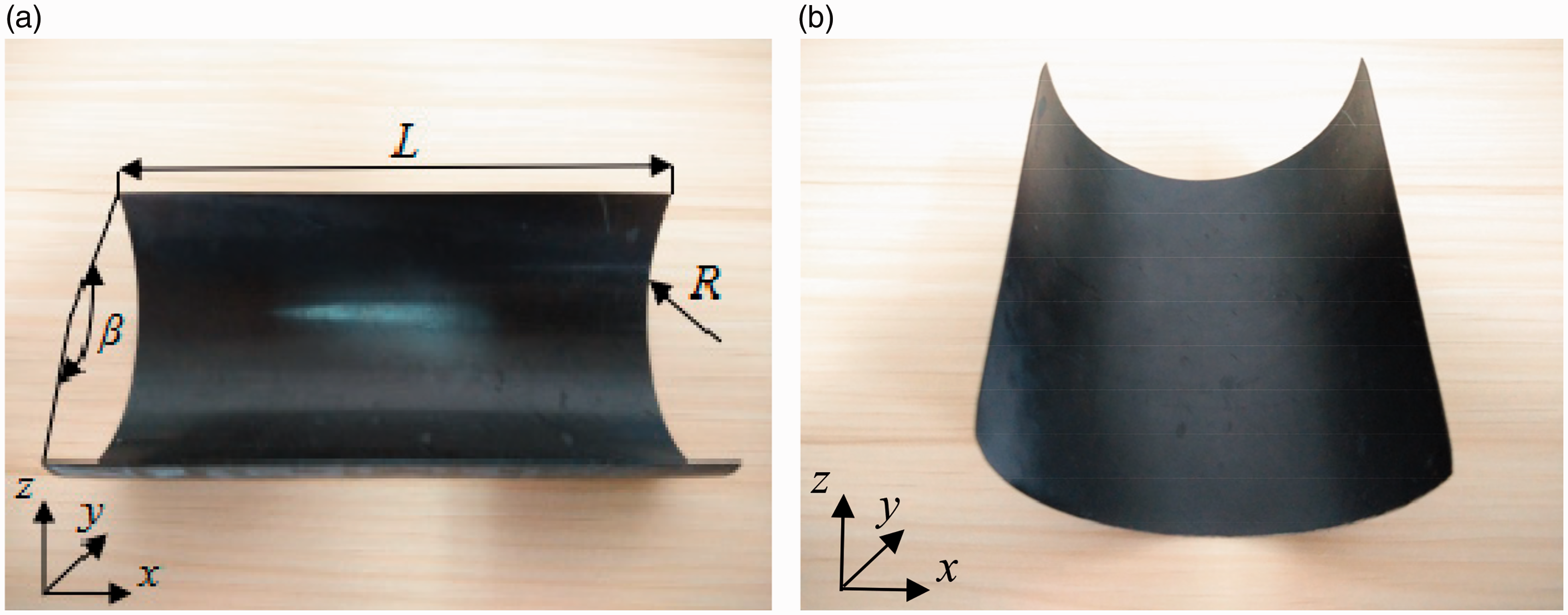
Geometric size of antisymmetric composite cylindrical shells.

Material properties of bistable antisymmetric composite cylindrical shells.

Three specimens are manufactured, including two specimens with four plies and one specimen with five plies. For clarity, the first shell with four plies immersed in distilled water is marked as specimen 1, the shell with five plies immersed in distilled water is specimen 2 and the second shell with four plies immersed in saturated salt solution (MgCl2) is labelled as specimen 3.
Test apparatus and measurement process
Prior to moisture absorption treatment, the three specimens are cleaned and dried in the oven at 50℃ for 12 h and then cooled down to room temperature in order to remove the effect of initial moisture. Then they are weighed on the electronic balance with an accuracy of 0.001 g. Each specimen is weighed for three times to get the average value as the final mass m1 of the specimen in the dry state due to the measurement deflection less than 0.002 g. The measurement results are that specimen 1 is 7.216 g, specimen 2 is 8.726 g and specimen 3 is 7.082 g.
After the moisture absorption treatment, the specimens are placed on the platform of the testing machine REGER3010 linked with the RG_text software, which provides a mechanical load to make the bistable specimens transform between the two stable shapes, by which the load–displacement curve and snap load of each specimen are recorded and measured, respectively. The measurement range of the force sensor is 1 kN, and its accuracy is within 0.5–1%. The test apparatus with a specimen assembled is shown in Figure 2.
Photograph of the experimental set-up.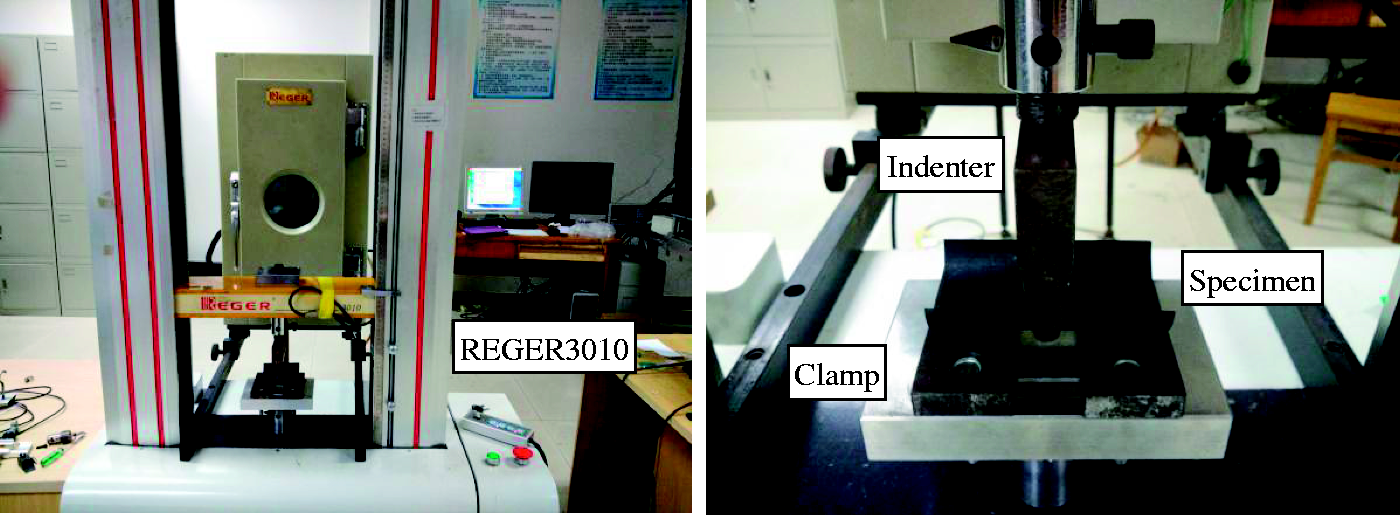
The bistable behaviours of specimens with different moisture are characterized by the bistable configurations as well as the snap process. To this end, the image processing software CorelDRAW in conjunction with a Matlab code is used to obtain the principal curvatures and the twisting curvatures of each stable shapes.
41
The two straight edges and the arc edge are photographed in order to obtain the twisting angle of two straight edges 2θ and the principal curvature of the arc edge C. According to the two-parameter model by Cantera et al.
37

The time of immersing in the solution is also needed to be recorded. A series of experiments are conducted as the introduced process. After the specimens are taken out from the solution, they are wiped to remove the liquid on the surface and then weighed. This process is repeated for a few times until the measured value is no longer changed. This process is done in a short time so as to prevent from the influence of ambient environment. The moisture Mt is given by

The moisture increases quickly with the duration of soak time of the dried specimens in the solution before reaching a plateau at the last stage of absorption process. The experiment of specimen 1 and specimen 2 is designed interval of proper time that the more numbers of test repeats are designed first and then the less test times are considered in order to obtain the different moisture more properly. Mass and shape measurements are conducted until the mass no longer increases which means that the saturation moisture is achieved. Specimen 3 is taken out from the saturated salt solution (MgCl2) when the saturation moisture is achieved. It is expected that specimen 3 has a different saturation moisture with specimen 1.
Simulation procedure
This paper focuses on the antisymmetric composite cylindrical shell, as a morphing structure with two stable cylindrical shapes. Based on the CLT and principle of minimum potential energy, a theoretical model successfully to predict the coiled-up radius of the antisymmetric shells is developed. Then a beam model and a shell model which can be used to analyse the bistable behaviour of the antisymmetric cylindrical shell well although some deviations exist were presented. The commercial finite element software ABAQUS/Standard (version 6.13) is used to implement the finite element analysis of the process of snapping of the shell. In order to better characterize the bistable behaviours of bistable antisymmetric cylindrical shells, a simplified loading model is built (Figure 3), including two bottom plates, one indenter and the antisymmetric composite cylindrical shell. The bottom plates are regarded as rigid part, with displacements and rotations constrained to support the shell (Figure 3). A reference point is created on one end of the indenter to control the displacement changes through the y-direction. The loads of the indenter are applied in the y-direction of the centre of the two straight edges to generate two perpendicular driving moments, namely the transverse moment and the longitudinal moment. The transverse moment caused by the indenter acts to flatten the shell, while the longitudinal moment generated by the two supporting plates rolls up the shell along the z-direction. As the indenter moves along the y-direction, the antisymmetric composite shell snaps from one stable state to the other. The coiled-up radius, the load–displacement curves and the snap loads are reported from the finite element model. The finite element model is also the same for the real experimental environment for antisymmetric cylindrical shells, where loads can be provided by a testing machine with the corresponding indenter.
Initial shape in the simulation.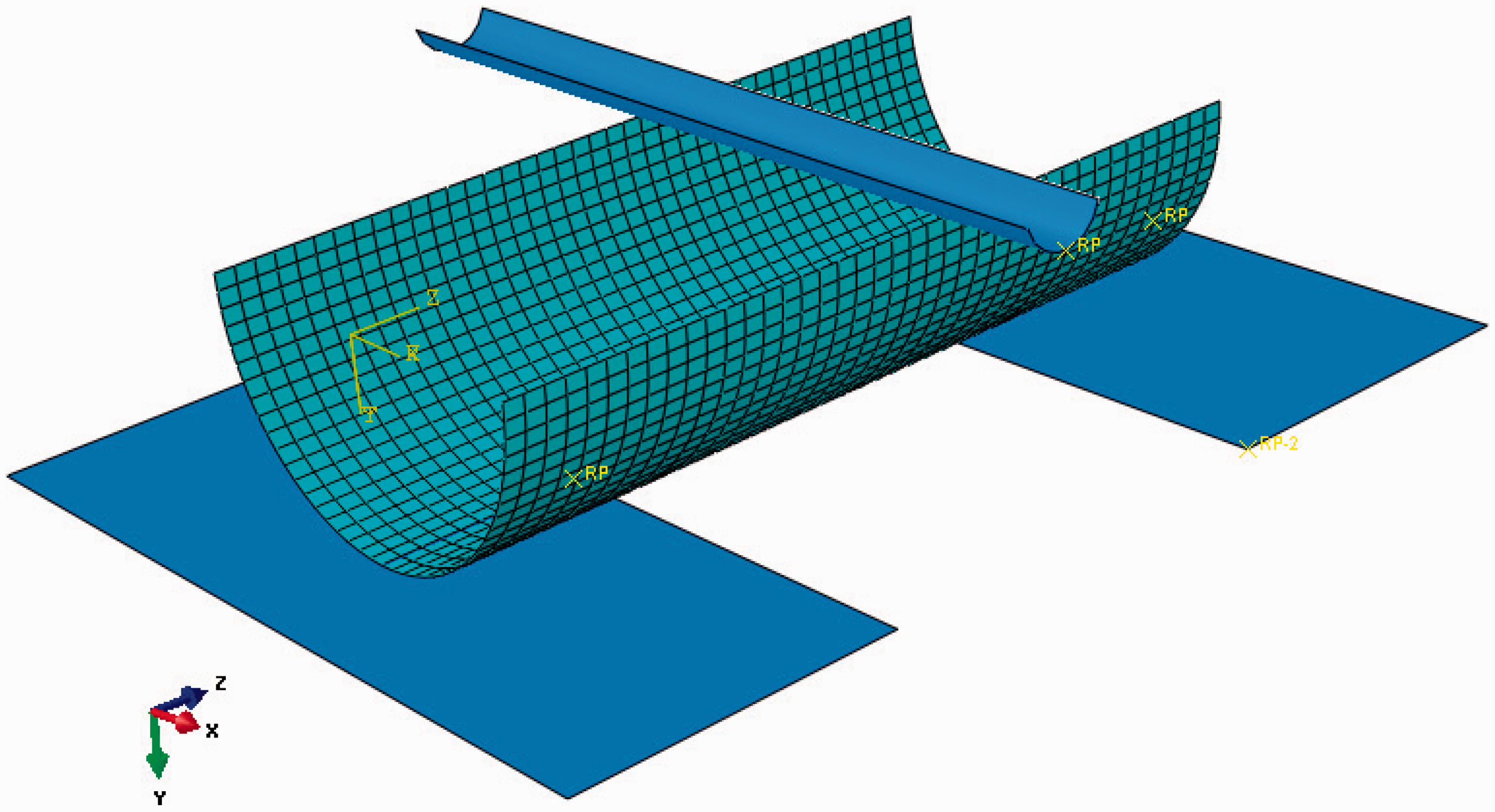
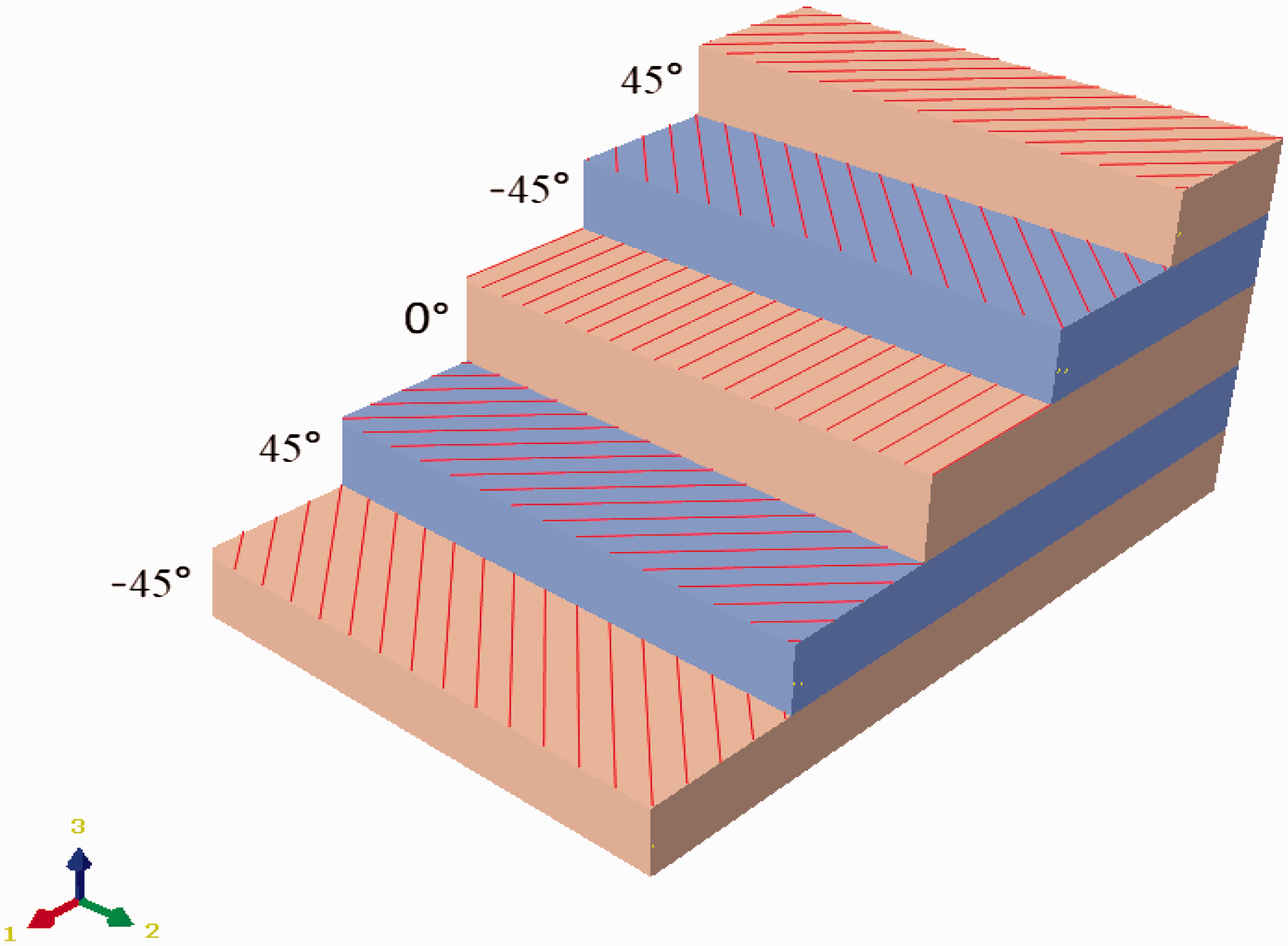
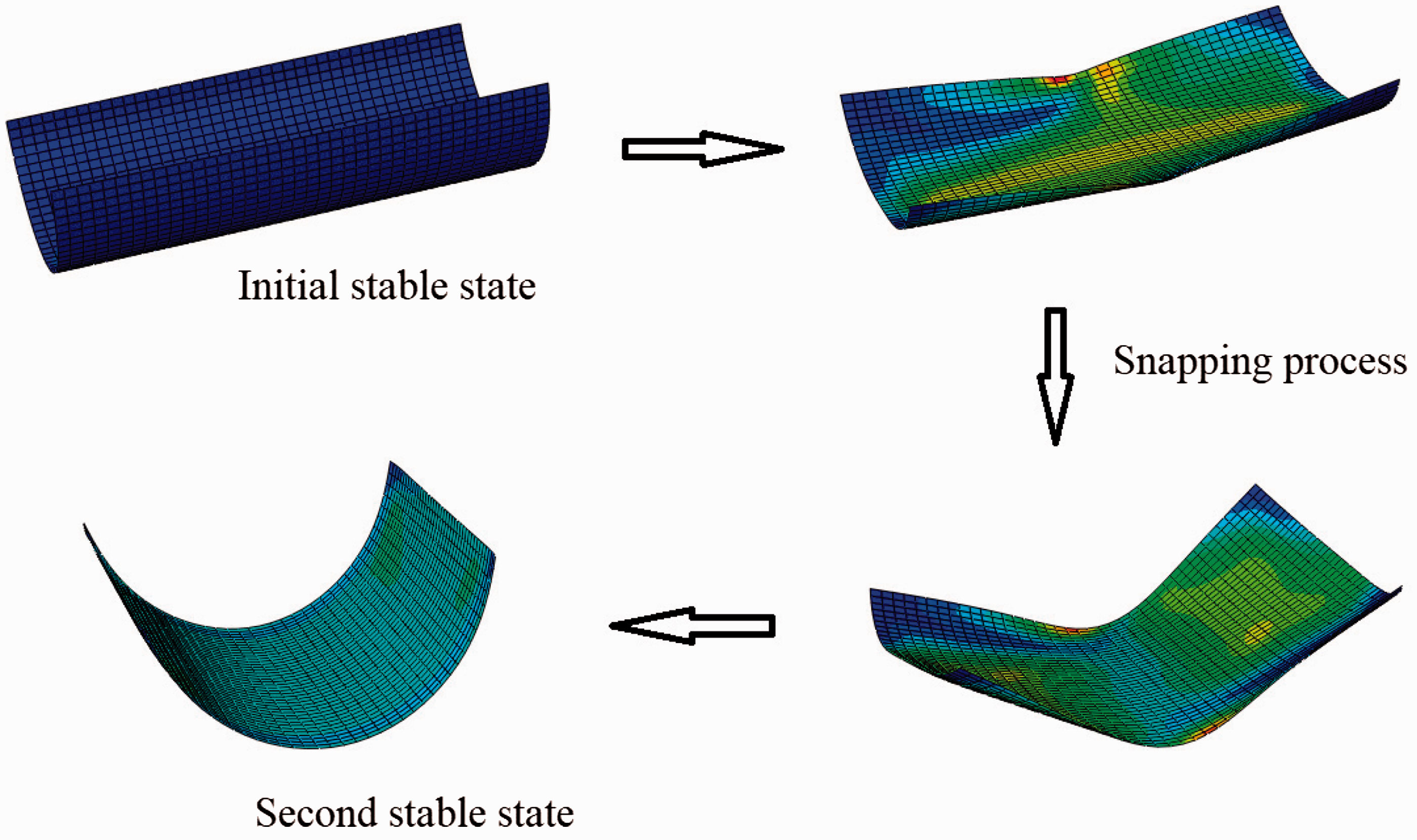
The layers of the bistable antisymmetric composite shell with designed fibre orientations are established by using the create composite layup option. The specimen 2 is of length L = 100 mm, radius R = 25 mm, angle β = 180° and the layup [45°/45°/0/45°/45°], which is shown in Figure 4. The ‘static/general’ solver and the ‘automatic stabilization’ are used to carry out a pseudo-dynamic non-linear simulation to capture the bistable behaviour. Reduced integration usually provides more accurate results and significantly reduces computational time and, therefore, S4R reduced integration shell element is chosen here for better convergence. The process of snap-through is included in the present FEM, as shown in Figure 5: The indenter is continuously moved downward to apply force on the shell edges until the shell snaps from the first state. The settings in this step are as follows: the options Nlgeom on, Stabilize = 0.0002 and allsdtol = 0.005. The finite element software ABAQUS has no suitable steps to set moisture field; the equivalent thermal expansion coefficient can be regarded as the simultaneous effects of moisture environment as determined in equation (3). α1, α2 are the thermal expansion coefficients of the main and tangential direction of the material. β1, β2 are the moisture expansion coefficients in the longitudinal and transverse of the material, respectively. Zhang et al.
19
studied the residual thermal strains and twisting curvatures change caused by thermal expansion coefficient when the cylindrical shell was exposed to high temperature and determined the thermal expansion coefficient of cylindrical shell by using the method proposed by Cantera et al.
42
Composite layup for specimen 2. The finite element model for the snap-through process.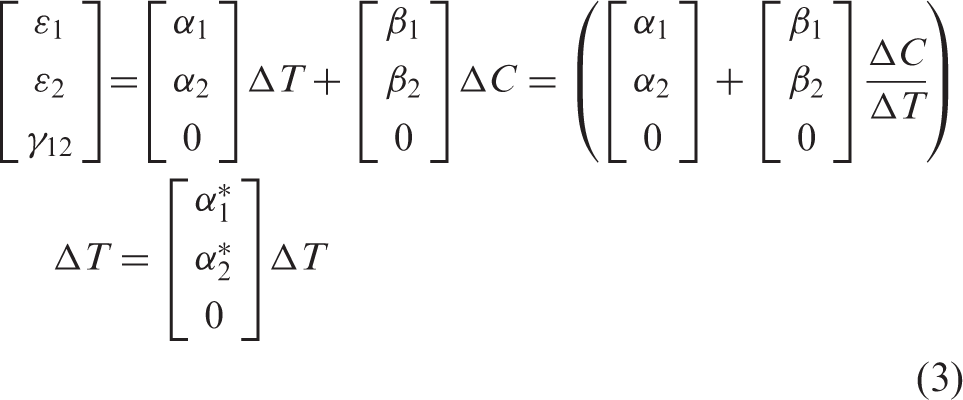
Results and discussion
Moisture absorption
The moisture absorption behaviour of each specimen at 20℃, in terms of percentage moisture gain plotted against square root of time, has been shown in Figure 6. The moisture has a linear growth with the square root of time at the initial state which follows the Fickian behavior
43
and then slows until an equilibrium plateau. The equilibrium state of the moisture absorption curves can be found later for all of the specimens. For specimen 1 and specimen 2, the specimens gain moisture initially and achieve the saturation with the moisture up to 0.78 and 0.86%, respectively, after 32 days of immersion in distilled water. The similar trend of moisture absorption process of specimen 1 and specimen 2 is observed that both of them have a sharp linear increase and then reach an equilibrium plateau. For specimen 3 immersed in the saturated salt solution (MgCl2), the saturation moisture is 0.682% at the same soak time with specimen 1 and specimen 2. Thus, different saturation moistures are achieved by immersing the specimens in different solutions. The dotted line denotes the second half part of moisture absorption curves of specimen 3 because the designed mass measurement of specimen 3 is done until specimen 1 and specimen 2 nearly reach their saturation moisture.
Moisture absorption curves of antisymmetric composite cylindrical shells immersed in the distilled water or the saturated salt solution (MgCl2) at 20℃. Dotted line represents second half part of moisture absorption curves of specimen 3.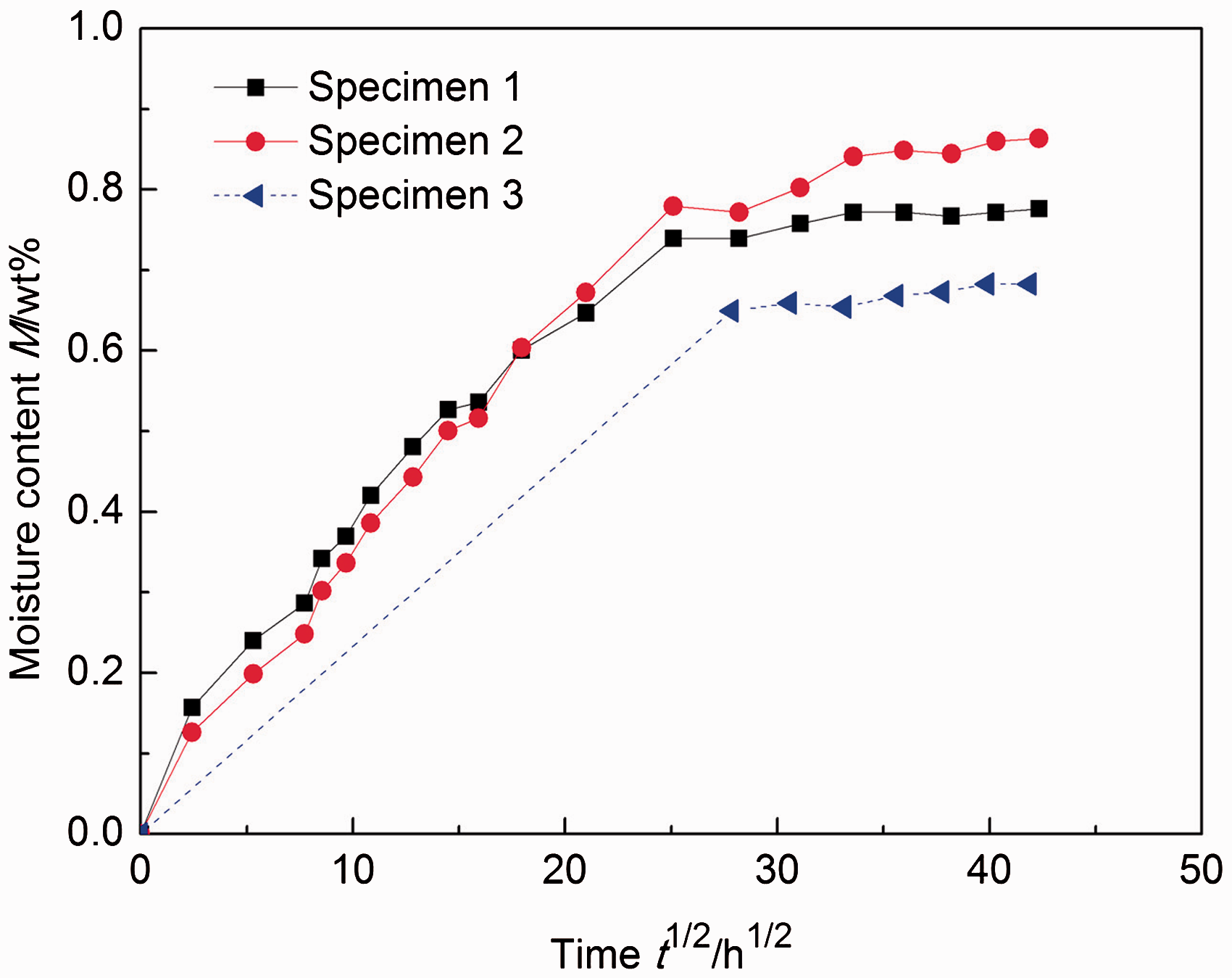
Effect of moisture on bistable structure shapes
First, the initial moisture of the dried specimen is assumed to be 0%. The principal curvatures and the twisting curvatures of dried specimens provide a baseline value for the comparison of the principal curvatures and the twisting curvatures at different moistures. Because of manufacture imperfections, the initial twisting curvatures of the specimens are not zero.
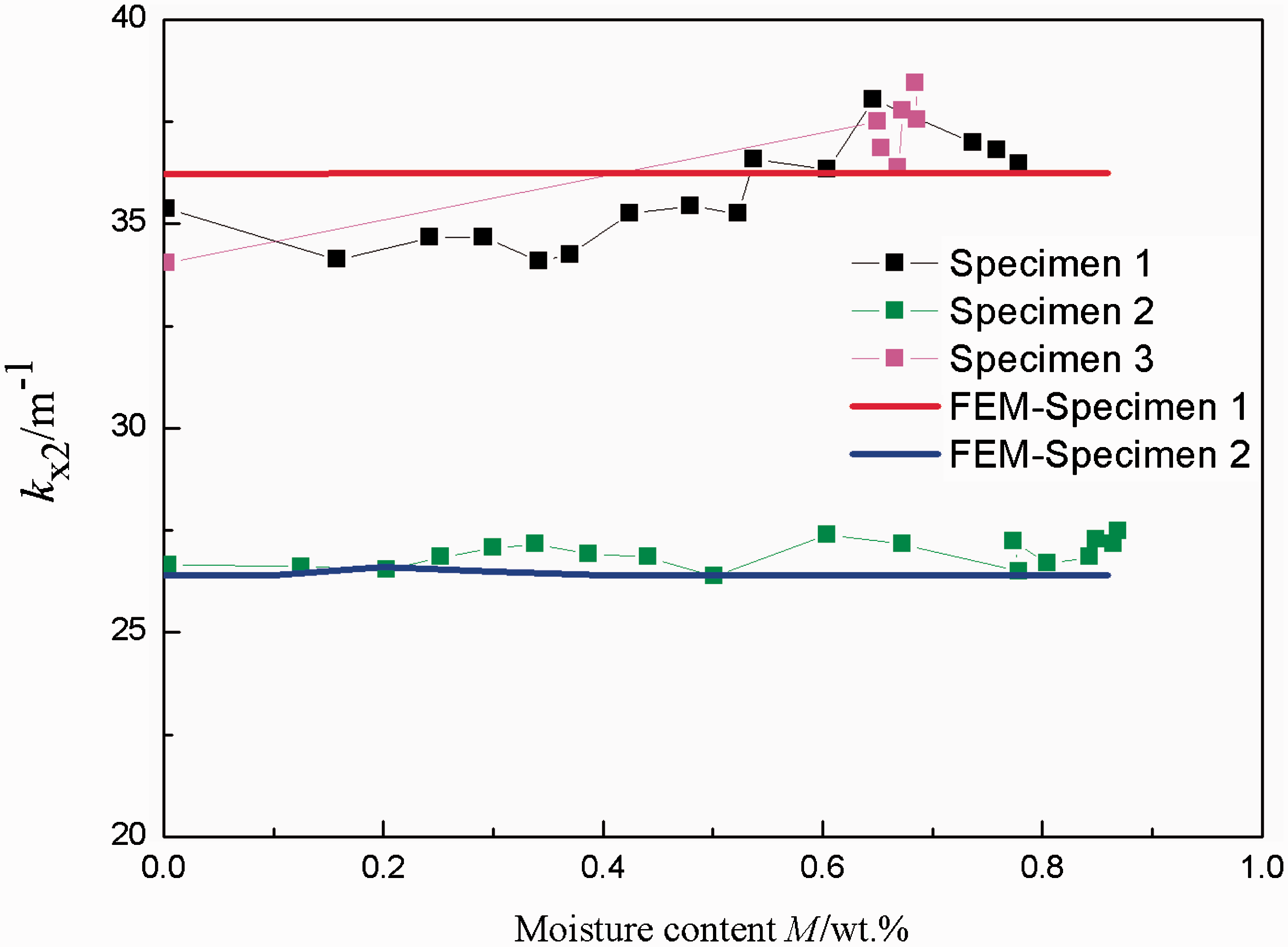
Figures 7 and 8 show the principal curvature ky1 in the first stable state and the principal curvature kx2 in the second stable state plotted against the moisture M at the room temperature, respectively. As shown in Figure 6, the moisture of every specimen tends to converge with immersing time increasing. Most of data points are located at the second half of each curve in Figures 7 and 8. Two specimens are modelled through FEM to give a comparison with the experimental results which is shown in Figure 8. The similar phenomenon can also be found in Figures 9 and 10. In Figure 7, the first stable principal curvatures ky1 of specimen 1 and specimen 2 decrease slightly with the increase of moisture M. This is different with the observations in asymmetric cross-ply laminates whose principal curvatures are substantially affected by the moisture.
31
However, the first stable principal curvature of specimen 3 decreases evidently with moisture M increasing slightly when the moisture is close to the saturation value. In saturation moisture state, the epoxy resin of bistable composite structure becomes softer because of water ingress, and experiment times also influence the shapes of the specimens. Compared with the first stable principal curvature of specimen 1 at the moisture M that is equal to the saturation content Mm of specimen 3, the principal curvature ky1 of specimen 3 at the saturation content Mm is slightly larger. The difference may come from the manufacture error, measurement error and the experiment duration. Figure 8 shows that the second stable principal curvature kx2 of specimen 1 increases gradually with the increase of moisture. However, the second stable principal curvature kx2 of specimen 2 is slightly affected by the moisture. In the finite element simulation, specimen 1 and specimen 2 are selected to establish the model, both experimental and FE results show that moisture has limited influence on the second stable principal curvature kx2. In particular, the moisture effects on the second stable principal curvature kx2 remain stable in the FE results, which agree with the theoretical results well. But as a result of the experiment, system error led to the deviation of experiment and simulation results. The second stable principal curvature of specimen 3 with the saturation moisture is in accordance with the trend of the principal curvature in the second stable state kx2 with the increment of moisture M. This is in accord with our expectation that most of the data points of specimen 3 get together at the saturation moisture M = 0.68%, and its corresponding second stable principal curvature is almost equal to that of specimen 1 at the same moisture.
Variation of the principal curvature in the first stable state ky1 at different moisture. Variation of the second stable principal curvature kx2 at different moisture. FEM: finite element method. Variation of the twisting curvature in the first stable state kxy1 at different moisture. Variation of the twisting curvature in the second stable state kxy2 at different moisture.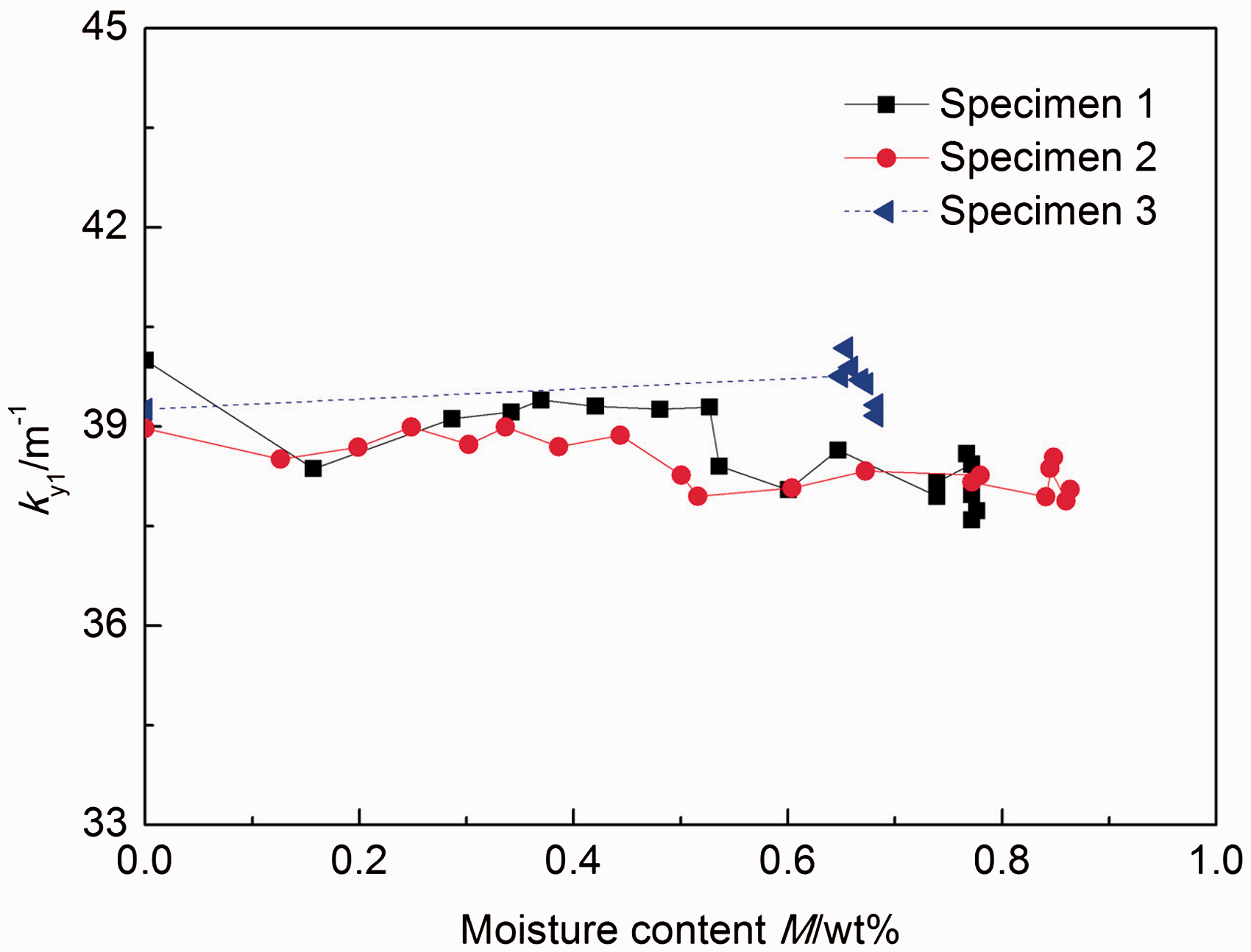
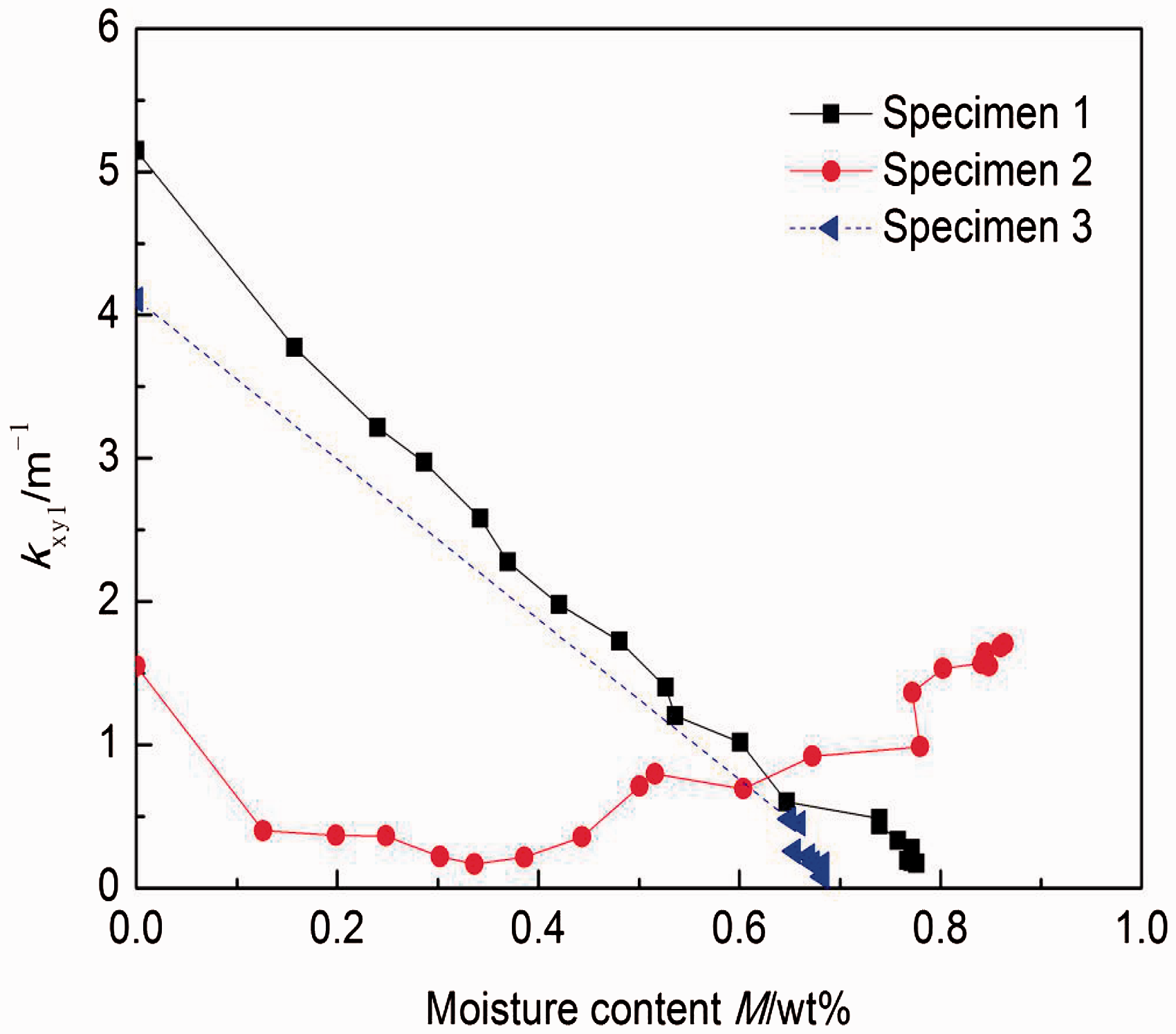
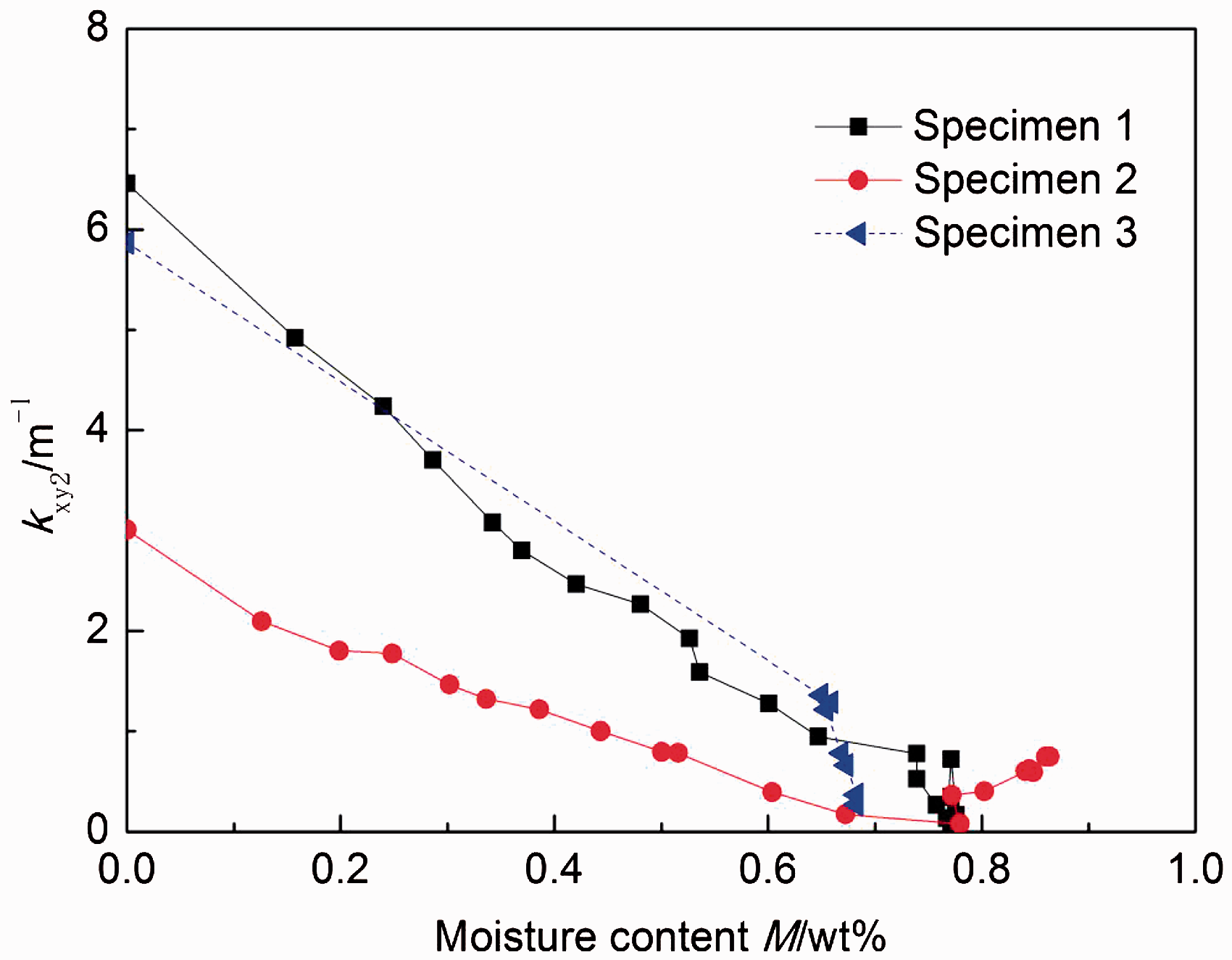
Figures 9 and 10 show the first and second stable twisting curvatures kxy1 and kxy2 plotted against the moisture M, respectively. The twisting curvatures of all specimens decrease, in which the twisting curvatures tend to be zero for both specimens 1 and 3, while the first stable twisting curvature of specimen 2 decreases at M < 0.32% beyond which the twisting curvature gradually increases, and the first second twisting curvature of specimen 2 starts to go up at M = 0.78%. As aforementioned, the initial twisting curvature may come from the manufacture imperfection and residual stress due to the curing process. The release of residual stress is the key reason for the decrease of the twisting curvature at a higher moisture. The five-ply specimen 2 has the smaller initial twisting curvature in contrast with the other specimens. After the twisting curvature kxy1 tending to be 0, for the phenomenon of the twisting curvature kxy1 and kxy2 of specimen 2 increasing at the second half of the curve, they may be induced by the sources that the longitudinal coefficient of moisture expansion and transverse coefficient of moisture expansion are different and the antisymmetric layup is specific.
Effect of moisture on snap process and snap load
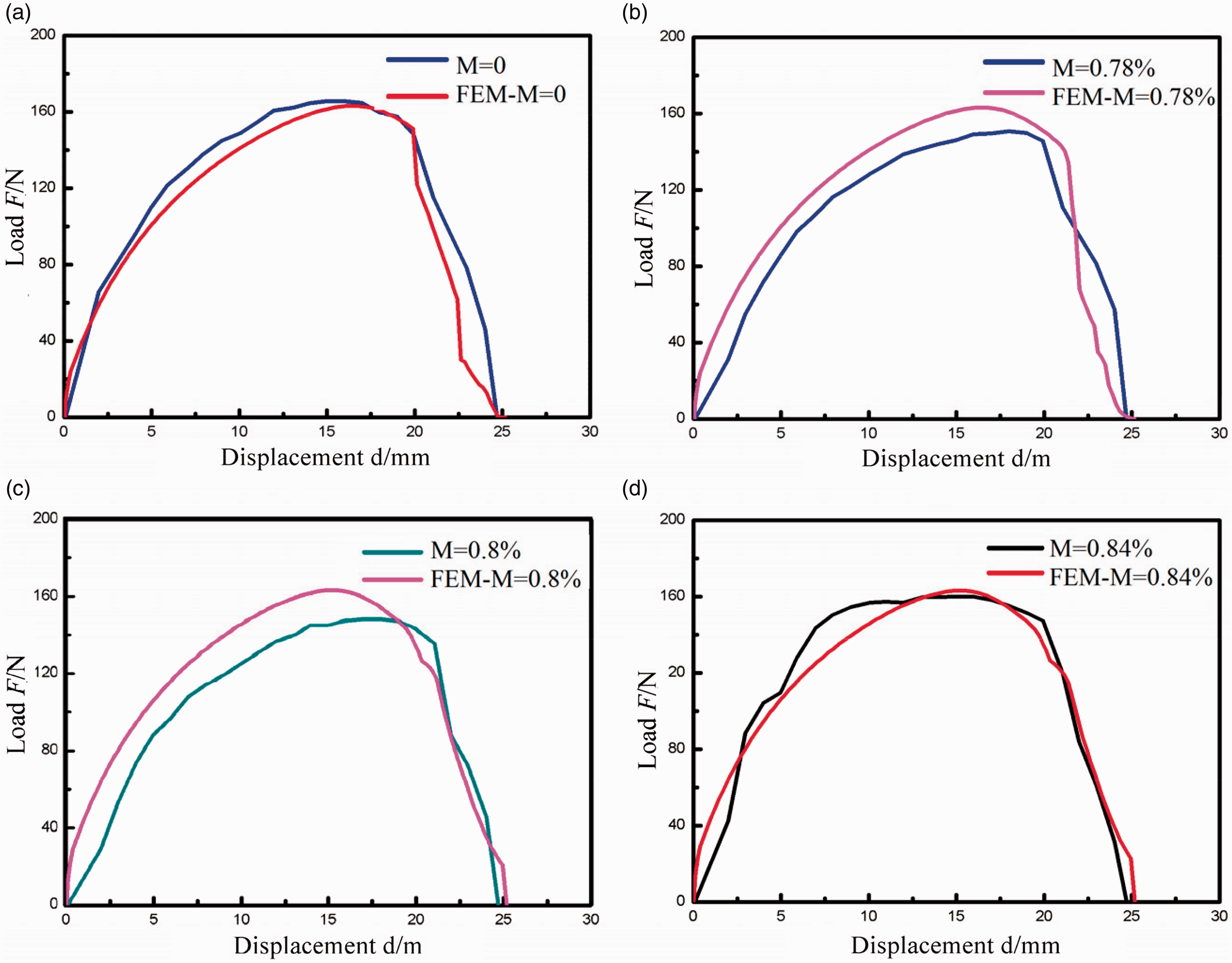
The snap process of specimens is repeated for several times and the measured snap-through load–displacement curves for specimen 2 are presented in Figure 11, and the lines represent numerical simulation and experimental results, respectively. The process of the shell transforming from the first stable state to the second state is named as snap-through, and its reverse process is snap-back. It is seen from Figure 11 that the load increases until a maximum value, namely the snap load, beyond which it decreases into zero that correspond to the second stable state of the shell. For the snap-through load, when the moisture M is from 0 to 0.25%, the snap load of specimen 2 decreases. But it is almost unchanged when the moisture M increases from 0.25 to 0.78%. However, a significant increase in snap-through load is observed when the moisture M changes from 0.78 to 0.86%. It should be noted that a fluctuation of the curve occurs at the moisture M > 0.78%, which is attributed to the relative sliding of the indenter and the specimen. The shell with the larger transverse radius has a smaller snap load and transforms into the second stable shape with a smaller displacement at different moisture. Figure 12(a) shows the moisture M = 0 that the experiment and simulation load–displacement curve contrast, the snap load value, respectively, in 162 and 156 N, and the relative error of 3.84%, for the corresponding displacement of 16 and 17.5 mm, respectively. Figure 12(b) shows the snap load value, respectively, in 160 and 148 N, and the relative error of 8.11% when the moisture M = 0.78%. Figure 12(c) shows the snap load value, respectively, in 161 and 142 N, and the relative error of 13.4% when the moisture M = 0. 8%. Figure 12(d) shows the snap load value, respectively, in 161 and 159 N, and the relative error of 1.26% when the moisture M = 0.84%. It is obvious that the experimental and FE results have the similar pattern in the load–displacement curves. The load increases steadily with displacement until interrupted by a sudden downward change, followed by a significant decrease.
Comparison of load–displacement curves in snap-through process of specimen 2 at different moisture. FEM: finite element method. Load–displacement curves in snap-through process of specimen 2 at different moisture. FEM: finite element method.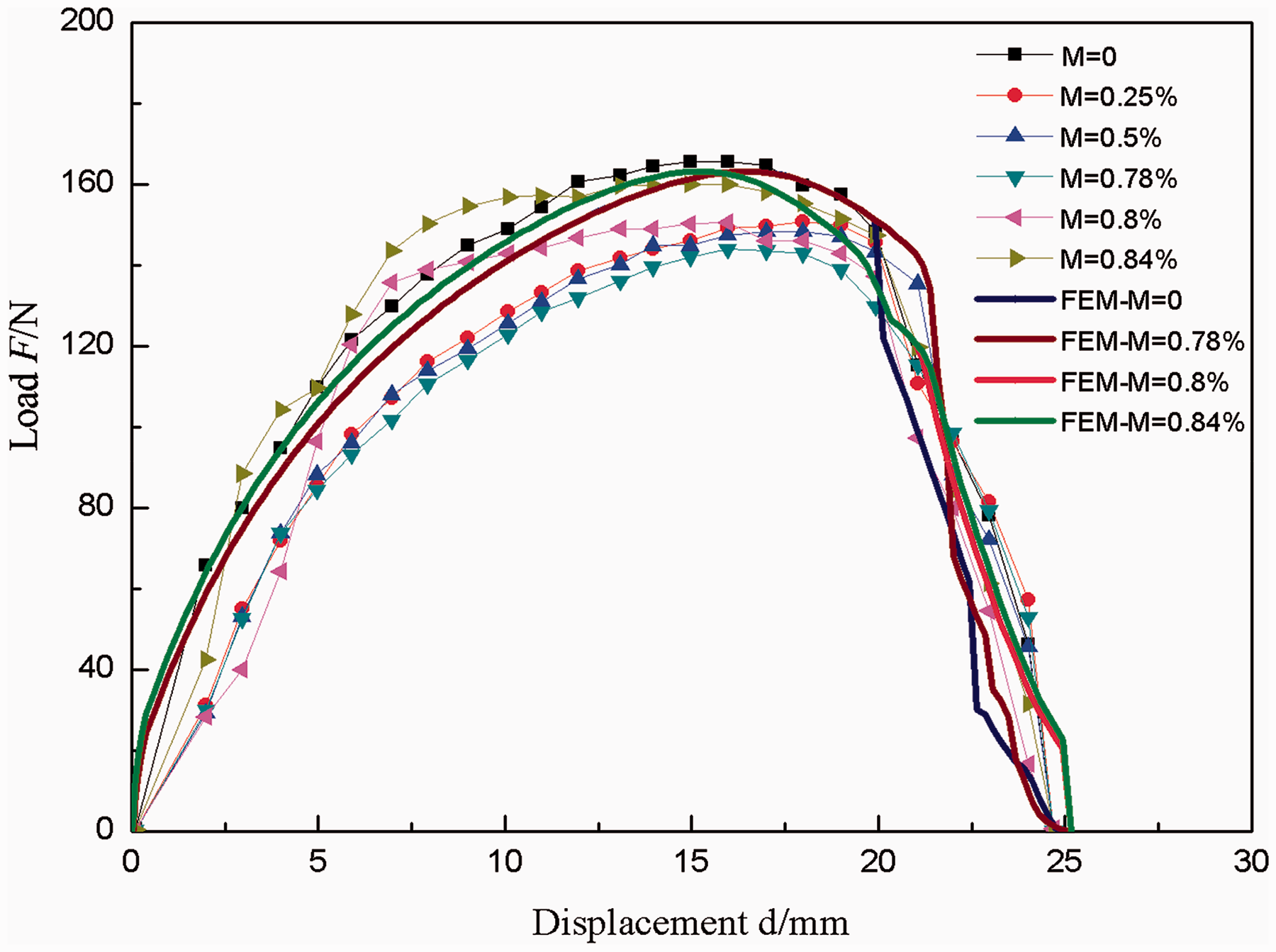
For the snap-back process shown in Figure 13, the snap-back load and the maximum loading displacement increase with the increase of moisture M. As the moisture increases, the retention process occurring near the end of loading process gets more obvious. This is because the composite shell becomes more soft and behaves more viscoelastically at a higher moisture.
44
Load–displacement curves in snap-back process of specimen 2 at different moisture.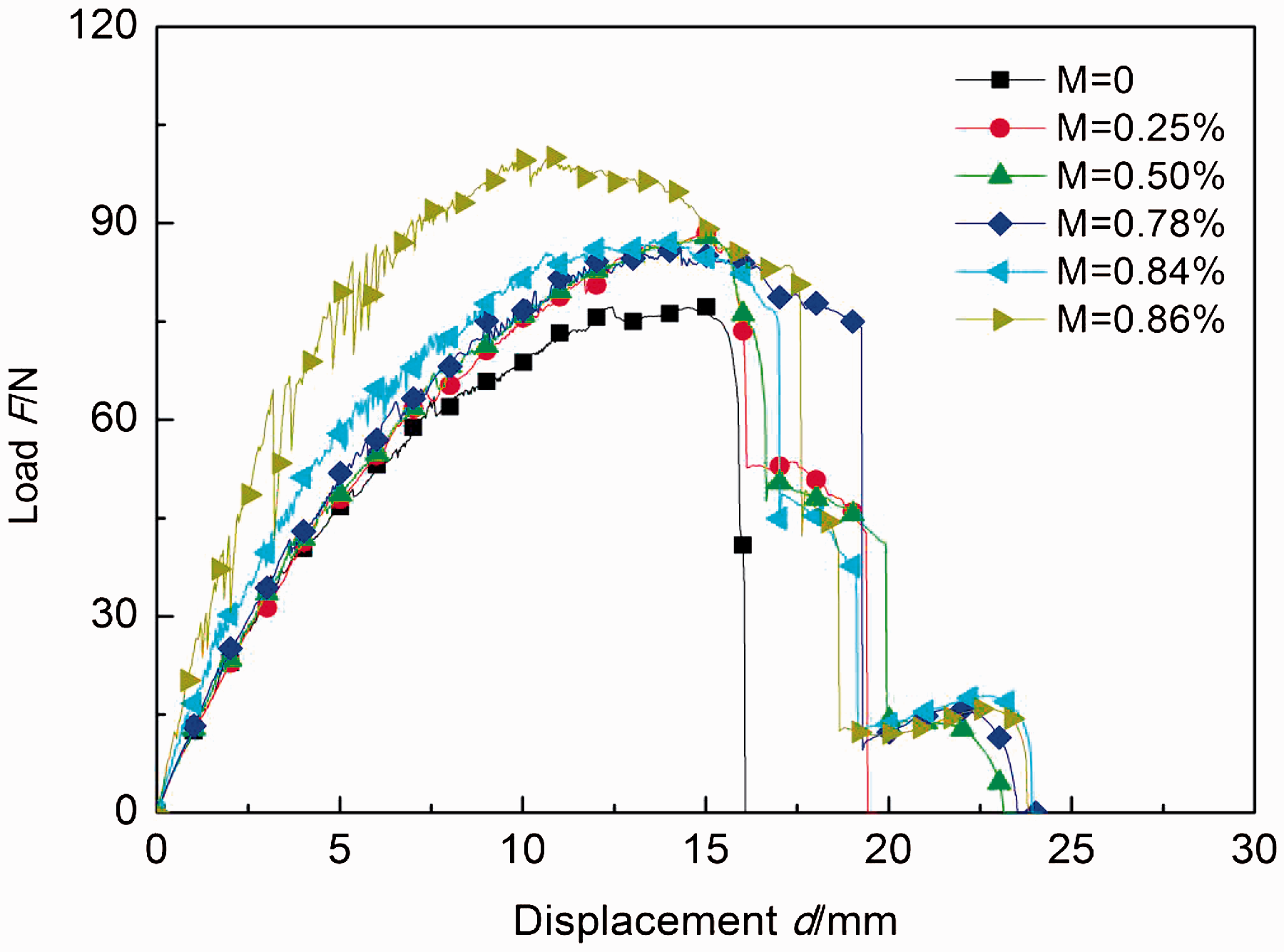
A summary of the snap loads at different moistures is given in Figure 14. It is observed that the snap-through load is significantly larger than the snap-back load. As the number of test iteration increases, the snap-through loads of both specimen 1 and specimen 2 drop slightly and then grows gradually when the number of iteration is larger than 13. Overall, the snap-back loads of specimen 1 and specimen 2 increase gradually as the number of repeats increases. The changing trend of snap-through load of antisymmetric composite cylindrical shells with moisture ingress is different from the observation in asymmetric cross-ply laminates by Jana and Bhunia et al.
28
in which the snap-through load of asymmetric cross-ply laminates dramatically decreased with the increase of moisture.
Variation of snap loads in snap-through process and snap-back process under different number of test repeats.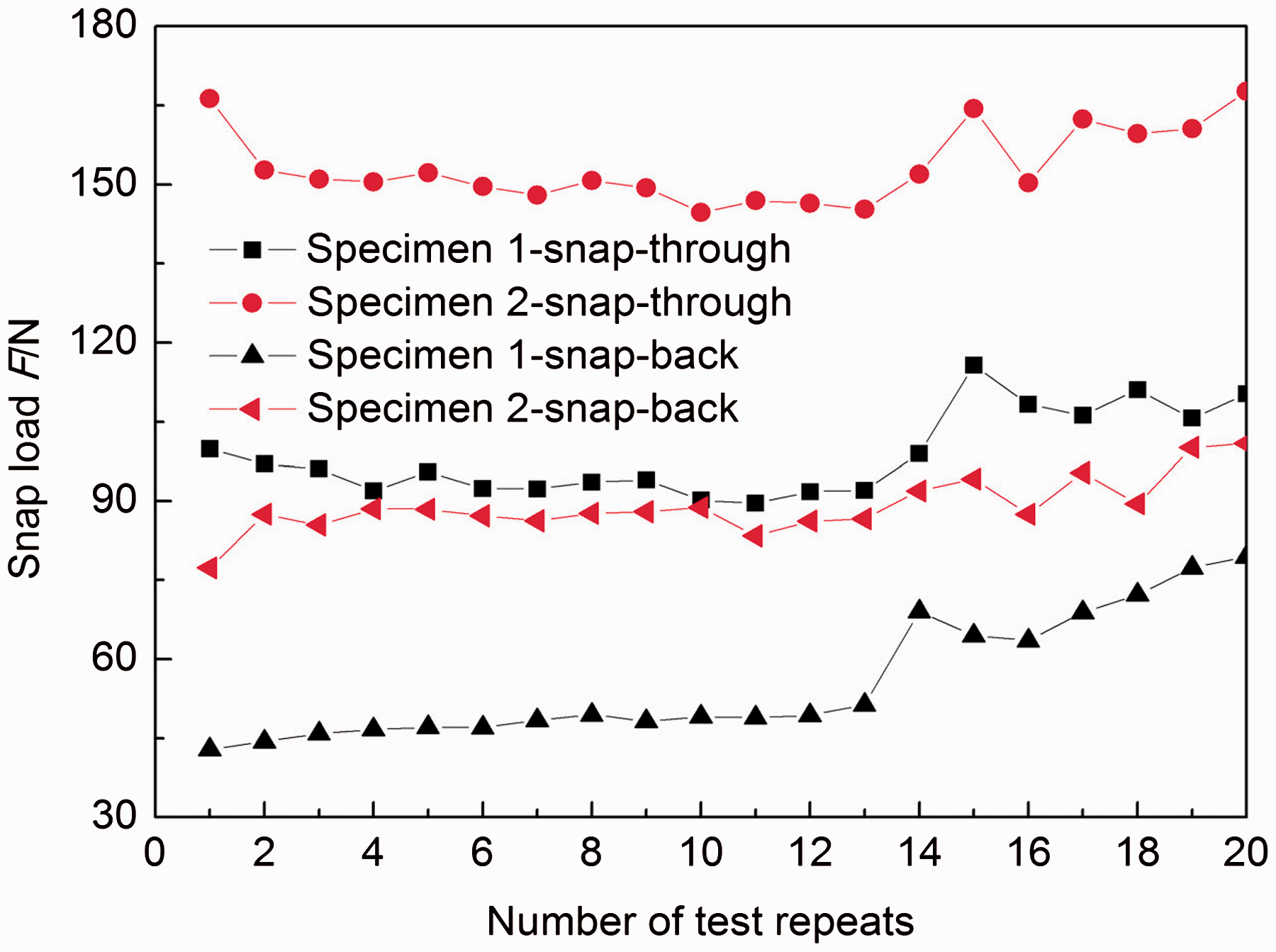
Snap loads and maximum displacement between two stable states.

Conclusions
This paper carried out an experimental study on the effect of moisture on bistable characteristics of antisymmetric composite cylindrical shells. A research method, especially the experimental and numerical methods, for investigating the bistable characteristics of antisymmetric composite shells is given in the paper. As the moisture is increasing, the snap-through loads first decrease a little and then increase gradually. In contrast, snap loads in snap-back process increase gradually. Furthermore, snap loads in snap-through process are much larger than snap loads in snap-back process. The effects of moisture on the curvatures in two stable states are also investigated. The principal curvatures have a slight influence with moisture ingress except the principal curvature in the second stable state kx2 of specimen 1 increases obviously. Because of the initial twisting curvatures due to manufacture error, the twisting curvatures of antisymmetric composite cylindrical shells in two stable states obviously decrease with moisture ingress. A special phenomenon is existed that the twisting curvatures decrease first and then increase, which is explained by different longitudinal and transverse coefficient of moisture expansion and specific antisymmetric layup. At last, in comparison with asymmetric cross-ply laminates, antisymmetric composite cylindrical shells may possess the better ability to overcome hygroscopic influence because of their different manufacture process and specific layup. The effect of moisture on the antisymmetric composite cylindrical shells is similar with its temperature counterpart, which means that twisting curvature can be controlled by adjusting corresponding moisture and temperature. When the shell stays at a constant temperature field, setting specific moisture field can be used to change the shape of shell.
Footnotes
Declaration of Conflicting Interests
The author(s) declared no potential conflicts of interest with respect to the research, authorship, and/or publication of this article.
Funding
The author(s) disclosed receipt of the following financial support for the research, authorship, and/or publication of this article: This research was supported by the National Natural Science Foundation of China (Grant Nos. 51675485, 11672269, U1610112), the Zhejiang Provincial Natural Science Foundation of China (Grant No. LR18E050002), the Zhejiang Provincial Public Welfare Technology Application Research Projects (Grant No. 2016C31040).