







Abstract
In this work, the development of a composite material with geopolymer and a high content of rice husks without heat treatment was investigated to create and characterize a low-cost composite made with agro-industrial wastes. The ratio used was about 12/88 wt./% of sol–gel and metakaolin related to rice husks. This kind of composite geopolymer was designed as both a construction material for load or aesthetic finishing. X-ray diffraction studies reveal that the composite has an amorphous phase and a crystalline one, which is typical of geopolymeric materials. The scanning electron microscopy showed that the geopolymeric matrix completely wrapped the rice husks. The composite material has a compressive strength close to some mortars with a value of about 110 kg/cm2 (10.8 MPa). Laser scanning confocal microscopy reveals that there is a difference of emission in the visible spectrum between the inner and outer sides of the rice husks, which corroborates that they have a different chemical composition. Differential scanning calorimetry analysis confirmed that the composite material has combined characteristics of its raw materials. X-ray diffraction studies show that metakaolin with sol–gel solutions had temperature-dependent interactions besides that, after the dehydroxylation, the composite material is mostly amorphous. The material of high content of rice husk bound by geopolymer could be applicable in various areas of the construction industry and finishing.
Introduction
Nowadays, high food production causes the generation of agro-industrial wastes that have become a pollution problem. Rice is an agricultural product of high demand around the world. World rice production is on the rise: in 2010, it reached more than 100 kg per capita. 1 Therefore, the production of rice husks is increasing also. However, rice husks are considered an agro-industrial waste because they have a low nutritional value, low calorific potential (for use as fuel) and low industrial interest. 2 The typical process to eliminate this waste is the burning in the fields. Due to the preceding, rice husks are rarely used as feedstock. Recently, scientific studies have been conducted to propose different uses, mainly the rice husk ash has been a source of nano-silica for the manufacture of cementitious materials like concrete and geopolymers.3–6
In these cases, rice husks are incinerated and treated in an alkaline medium for the formation of geopolymer with metakaolin. This process is mainly studied for the creation of a material to replace cement and concrete, which would offer a similar behavior, besides being fire resistant. Some investigations have produced shaped agglomerates with applications as finishes and ceiling soffits, using simple compression and some resins and adhesives, such as isocyanate resins, cyclocyanate, sodium silicate, sodium carbonate, phenol-formaldehyde, urea-formaldehyde, some starches, natural adhesives, and so forth.7,8
Several research works have reported on a variety of applications of rice husks, some of them developing substitute wood materials (boards, panels, etc.), implementing processes to improve resistance and aesthetic properties that are currently a challenge to address on a global scale.9–14 The incorporation of rice husks in polymeric matrices provides biodegradable materials of lightweight and greater resistance, which can prolong their durability in comparison with wood-based composites that may be more susceptible to moisture and termite attack. 15
The use of rice husks without treatment can be a significant advantage for the formation of composite materials, such as reinforced geopolymers. This has been not studied in detail and there are few works with this application. In this research, the development of geopolymer was studied using rice husks (without heat treatment), to create and characterize a composite material of low cost, made with agro-industrial wastes, as well. As geopolymer, because of its advantages, it has a high probability of being applied as a construction material in different areas. 16
Experimental
The metakaolin used in this study was a product of kaolin clay calcined at 750℃ in accordance with the methods described by Davidovits.17,18 Rice husks were obtained from a company (Procesadora de ingredientes S.A. de C.V. of Jalisco state, Mexico, density: 570 g/L). The stabilized colloidal silica was provided by OPTACOL® (aqueous solution with 30 wt./% silica nanoparticles, average size 20–30 nm); sodium silicate (Insumos Químicos del Centro®, aqueous solution with 69.2 wt/% of Na2SiO3), and the sodium hydroxide was supplied by KISKAM®. All materials and reagents were used without any further pretreatment or purification procedure.
The preparation of the alkaline chemical solution of silica (sol–gel solution) was carried out by adding the colloidal silica (SiO2) and sodium silicate (Na2SiO3) in a ratio 4:1, to an alkaline solution in a ratio 4.5:1, composed of deionized water and sodium hydroxide (NaOH) 5M. 19 The solution was manually mixed until obtaining a homogeneous mixture.
The composite is prepared by manual mixing, between 5 and 10 min, the sol–gel solution with metakaolin and rice husks. The mixture was held at room temperature during the process. It used a ratio of 20/80 wt./% of sol–gel and metakaolin related to rice husks (a high content of rice husks). In this research, polystyrene cylindrical molds were used with the following dimensions: 5 cm diameter and 10 cm high. The mixture was placed into molds and manually pressing to fill them. The specimens of composites were allowed to dry at room temperature. After that, at the point of reaching a moisture content enough for allowing unmolding without losing the form, the samples underwent a drying treatment at 80℃ for 5 h in a furnace. Finally, the ratio in the dried composite was about 12/88 wt./%.
Studies of X-ray diffraction (XRD) were performed using a Bruker AXS (model D8Avance with a CuKα radiation 1.5406 Å at a scan rate of 0.8 ° 2θ/min). The laser scanning confocal microscopy (LSCM) was performed using a microscope (LSM 710 NLO, Carl Zeiss) with four laser lines to illuminate the sample (405 nm, 488 nm, 561 nm, and 633 nm). The microstructural images of the geopolymers were obtained using a scanning electron microscope (SEM, JEOL JSM-6510 LV coupled to an EDS Bruker). The images were obtained from thick wafers that were cut from the cylindrical samples. Their surfaces were polished to get a smooth finish. Compression tests were performed on a universal machine (Tinius Olsen). Differential scanning calorimetry (DSC) tests were performed with TA Instruments equipment (model discovery heating at a rate of 10℃/min from room temperature to 500℃ in aluminum crucibles).
Results and discussion
Morphology and chemical composition
The geopolymer-rice husks composite had a particular aesthetic appearance similar to wood products, as shown in Figure 1. In the figure, it can be observed that the distribution of rice husks in the geopolymer was uniform and that due to the high proportion of husks, there were macroscopic voids in the material (Figure 1(b) and (c)).
The aesthetic finish of the composite with 80 wt./% of rice husks and 20 wt./% metakaolin with sol–gel. (a) Unpolished and polished surfaces, (b) Zoom-in of an unpolished surface, (c) Zoom-in of a polished surface.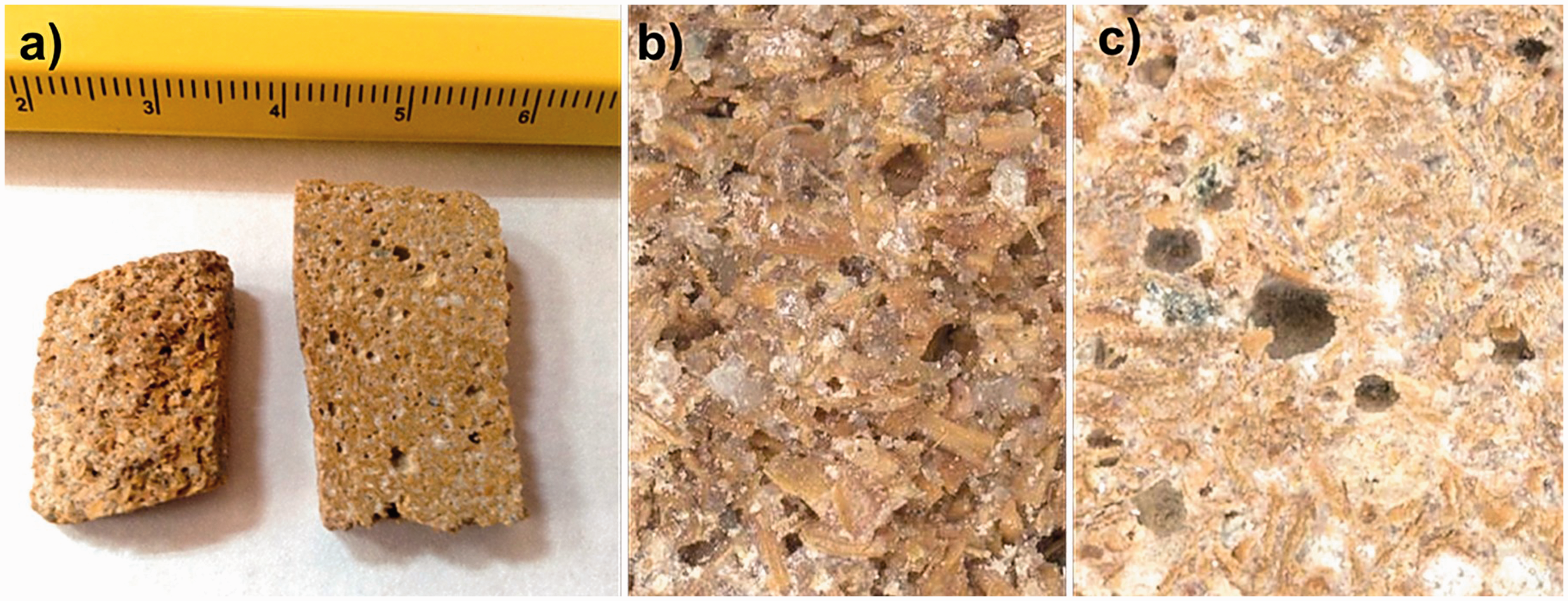
Observing the resulting composite, due to the aim of increasing the rice husks and reducing the proportion of the binder, we can state that the geopolymer did not become a matrix, but an adhesive instead. However, it was possible to confer a molded form to the composites, they were mechanically resistant, and they may get an aesthetic finish. These characteristics altogether with a low cost and use of an excessively abundant byproduct may provide viability for use as a substitute of wood finishes, even unpolished (Figure 1(b)). The rice husks initially had a light-yellow color, which looks with a brown tonality after the pieces of geopolymeric composite were finished.
The way rice husks were distributed within the geopolymeric matrix and their degree of adhesion were important factors for the strength and behavior of the material. In Figure 2, the micrographs of the composite are presented. These images were obtained at different resolutions: (a) 50×, (b) 100×, (c) 1000×, (d) 5000×. The samples had porous and irregular surfaces, generally characterized by the outer rice husks topography with parallel lines, grooves or channels across the direction of grain growth and round mounds; the inner topography is smooth. As shown in Figure 2(a) and (b), rice husks were not embedded in the geopolymer, but only their surfaces were coated and all of them were stuck together. The husks were stuck only at some points, leaving unfilled spaces between them as observed in Figure 2(a).
Micrographs of the geopolymeric composite of metakaolin and rice husks (ratio 20/80%) taken at various magnifications: (a) 50×, (b) 100×, (c) 1000×, (d) 5000×.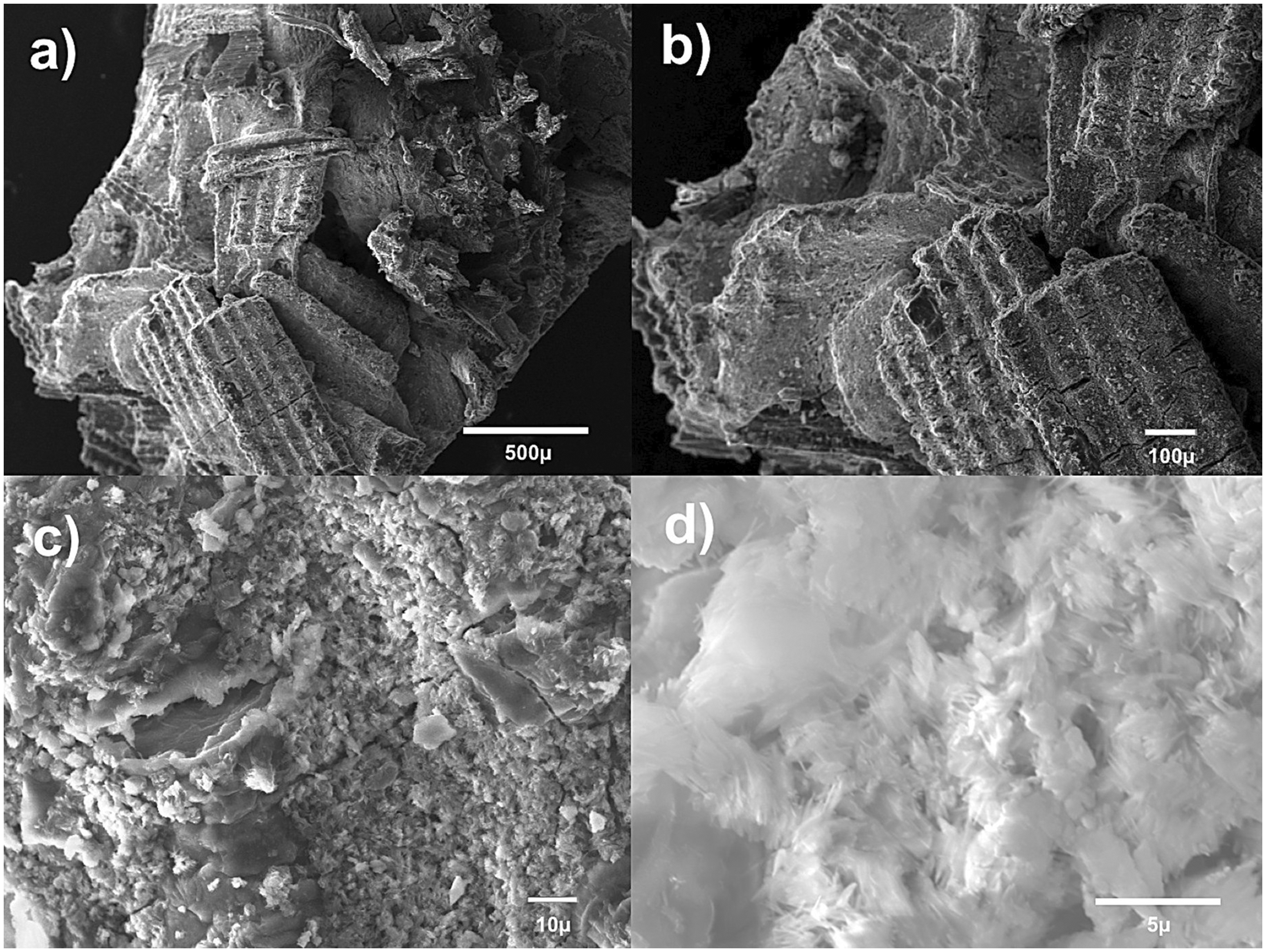
Moreover, it is observed that in the part of the geopolymer, some cracks are present (Figure 2(c)), and these cracks are attributed to the stresses generated during the drying of the sol–gel geopolymer (gelation process). Finally, in Figure 2(d), it is possible to observe the residual sol–gel solution, mainly conformed by sodium and silicates.
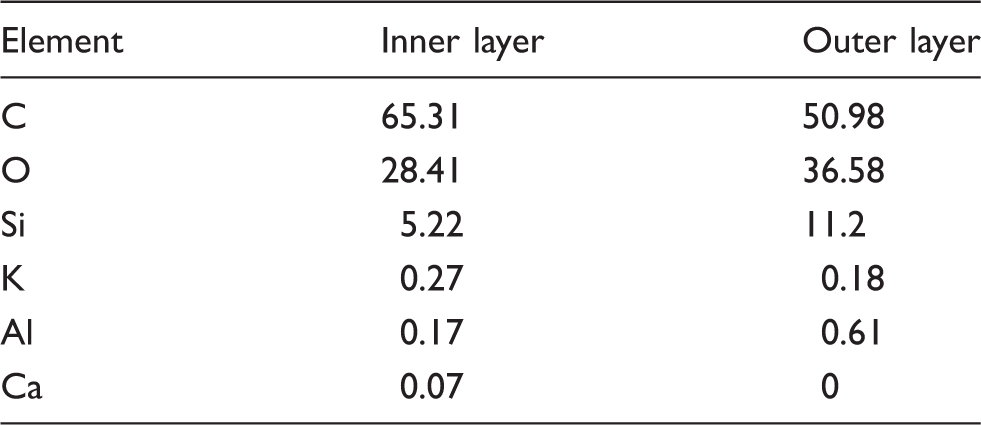
Chemical composition of non-treated rice husks analyzed by EDS.
Fluorescence analysis
Figure 3 shows the emissions from the samples by LSCM. These images gave a clear idea of the distribution of the rice husks in the composite material. Intrinsic characteristics of the husks can be observed, such as location and size within the matrix. In these cases, the emitted fluorescence represents the rice husks and the dark portion corresponds to the geopolymer, which did not show fluorescence in the visible region. This allows to distinguish easily between the organic and inorganic parts comprising the composite material and observe the interaction between both the components. From Figure 3, it is noteworthy that there were different color emissions from the internal and the external sides of the rice husks attributed to the difference between the contents of cellulose, hemicellulose, and lignin at both sides. The difference in emission color is attributed to the chemical composition of the clay which is different in each layer.
Images obtained by laser scanning confocal microscopy on a polished surface of the material composed of geopolymer and rice husks. (a) 3D image of the inside of the geopolymer, (b) zoom-in of the internal structure of the composite.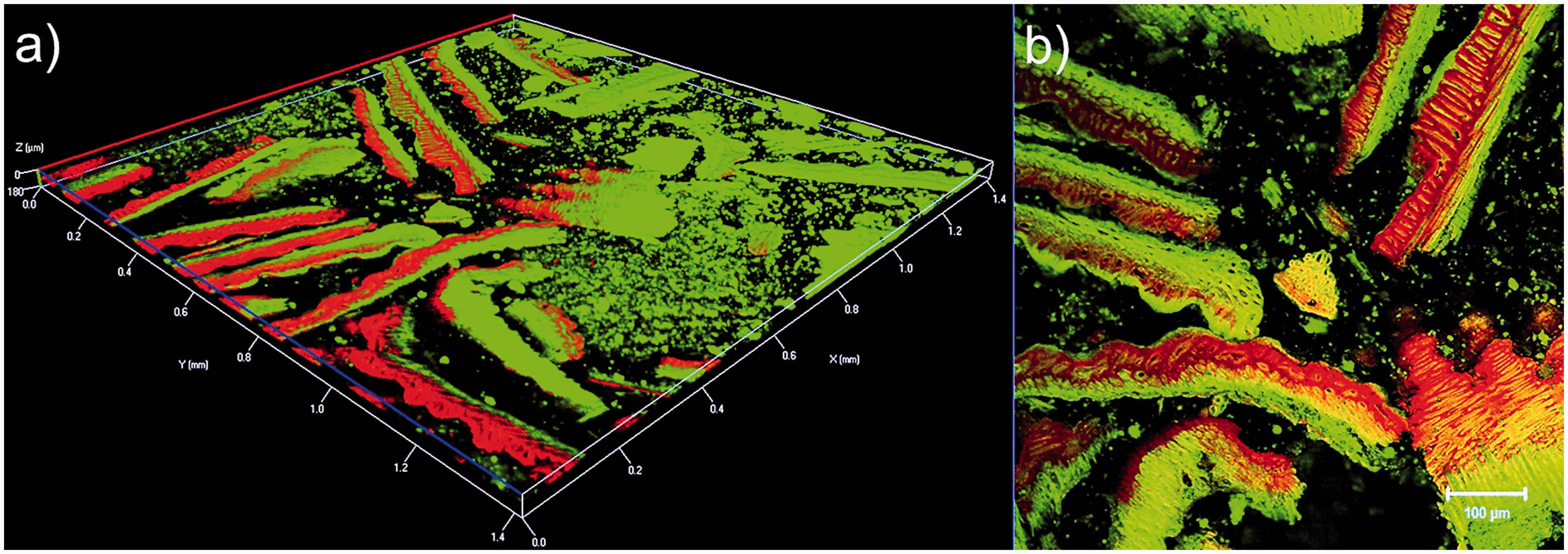
The distribution of the husks within the geopolymeric matrix is homogeneous as shown in Figure 3(a). It is presumed that the method of sample preparation and high concentration of husks causes preferential order in one direction since, as shown in Figure 3(a) and (b), most of the husks acquire an orientation perpendicular to the observed plane. However, it is possible to observe husks displayed parallel to the plane of observation as it is in the circle of Figure 3(a). As can be seen, the emission appears red, corresponding to the outside of the husks which has grooves or channels that are most noticeable in Figure 3(b). These grooves become anchor points, which favor the mechanical interaction with the geopolymer. Moreover, it is confirmed that the inner side of the husks (green part) is smooth. The real wavelengths of emission are shown in Figure 4.
Fluorescence of the composite material made with geopolymer and rice husks, yellow section (red outside), blue section (internal green part).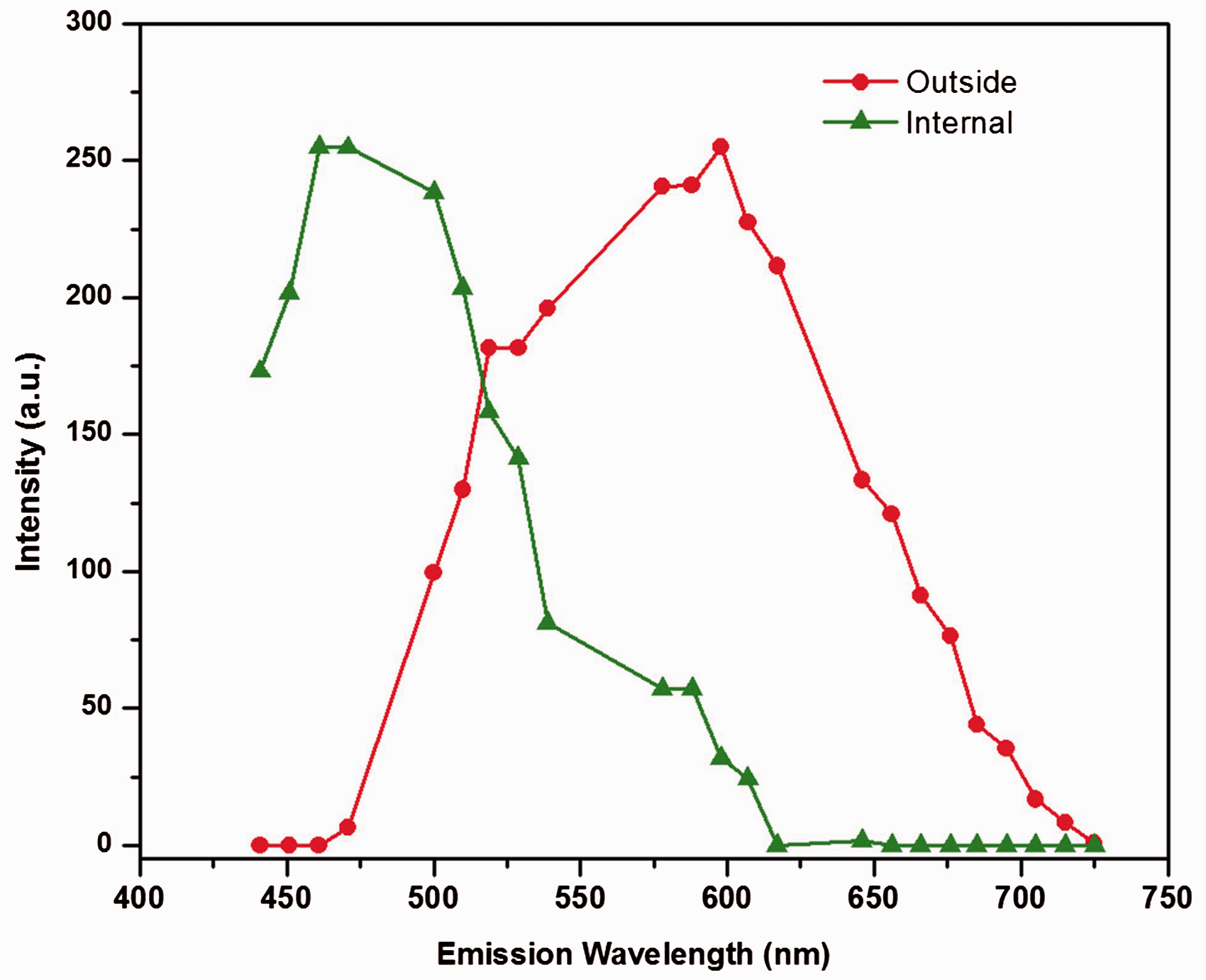
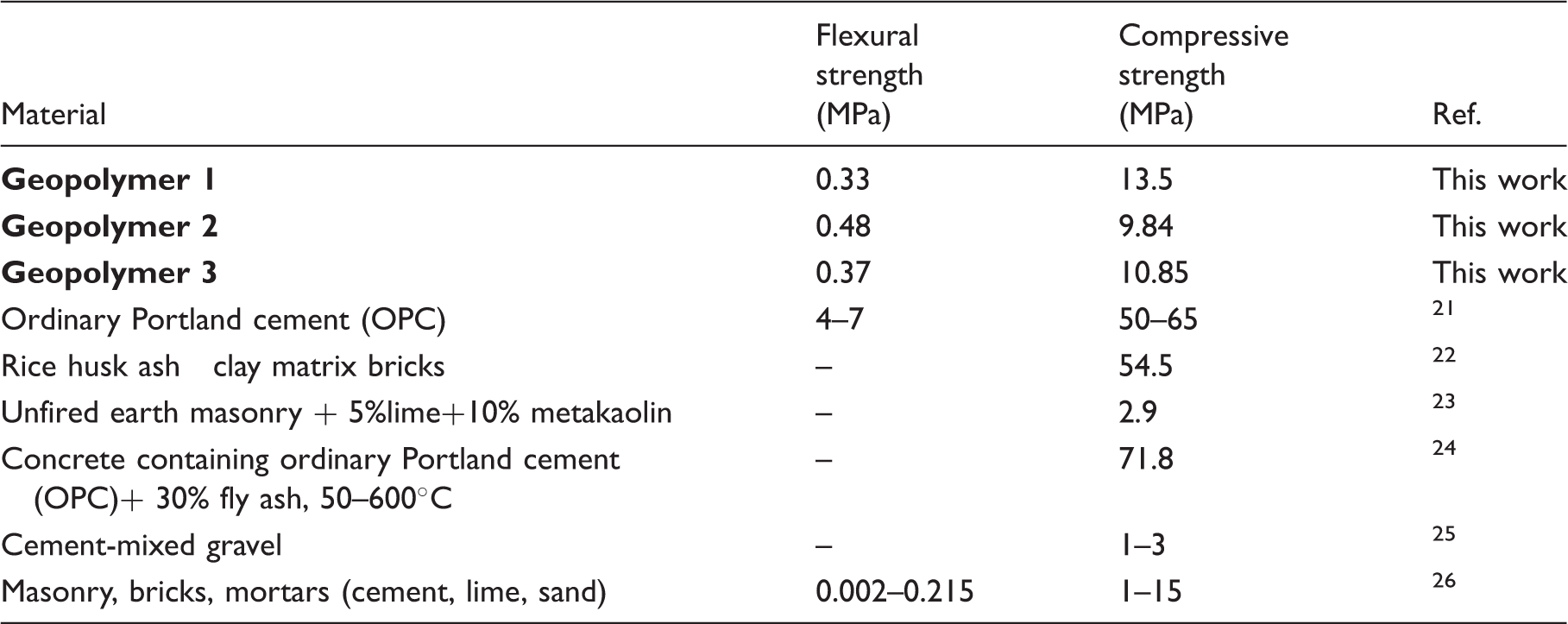
The order of rice husks presented in the composite material can support the mechanical strength and, in this sense, tests were performed to check their resistance to compression. The specimens were subjected to a standard measuring procedure within 14 days of processing and drying.
The compressive strength for the composites and the comparison with some other reported materials.
Crystallinity analysis
Figure 5 shows the diffractograms of the rice husks, the metakaolin, and the geopolymeric composite made with them. As seen in the diffractogram, there is an amorphous part in the geopolymeric composite in the range 10 to 25° 2θ. This is attributed to the vitreous nature of silicates and aluminates present in the geopolymer.
Diffractogram corresponding to the geopolymeric composite based in metakaolin and rice husks.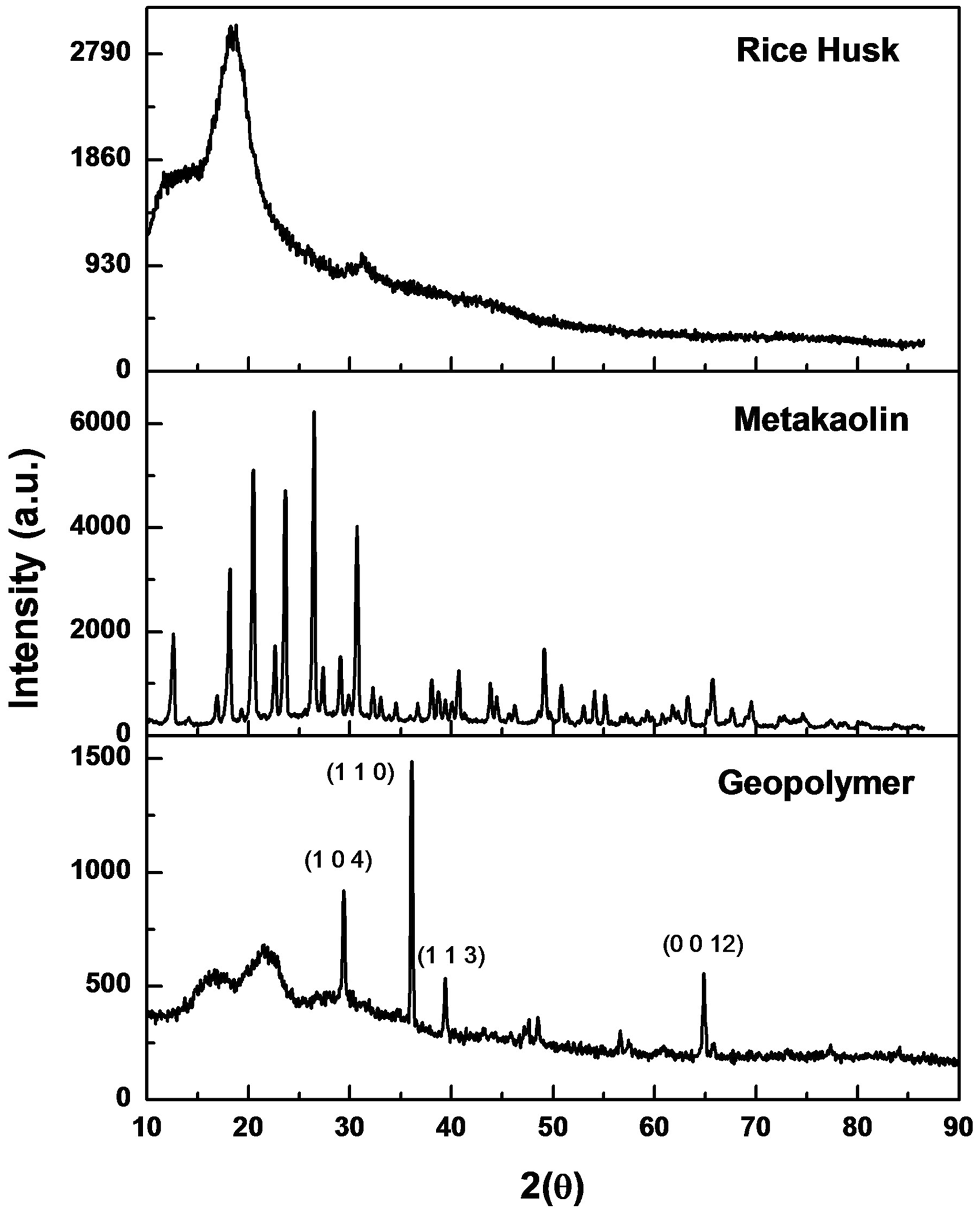
It can also be seen with the naked eye that the material has a crystalline phase, which was identified as calcite Ca(CO3) (JCPDS 83-0578) with its families of planes (1 0 4), (1 1 0), (1 1 3), and (0 0 12). The presence of calcite can be attributed to the chemical composition of the husks, which contain calcium. 2 The preparation procedure uses sodium hydroxide, which may extract the calcium from the rice husks and then conforming the crystallites.
We propose that these rice husks subject to a mercerizing treatment in sodium hydroxide release calcium, which in the drying process rise large crystallites in the inner section of the pieces where the moisture allows their growth.
Composite behavior under thermal analysis
The thermal performance of this material is of great importance for characterization. In Figure 6, curves of DSC analysis for the geopolymer with a high proportion of rice husks and, as reference materials, metakaolin and rice husks are presented. In all cases, initially, it presented a slight fall, possibly attributable to condensation in the aluminum crucible.
Curves differential scanning calorimetry (DSC) for: (a) rice husks (∼0.6 mm), (b) metakaolin, (c) composite material with 80% and 20% metakaolin husk/sol–gel.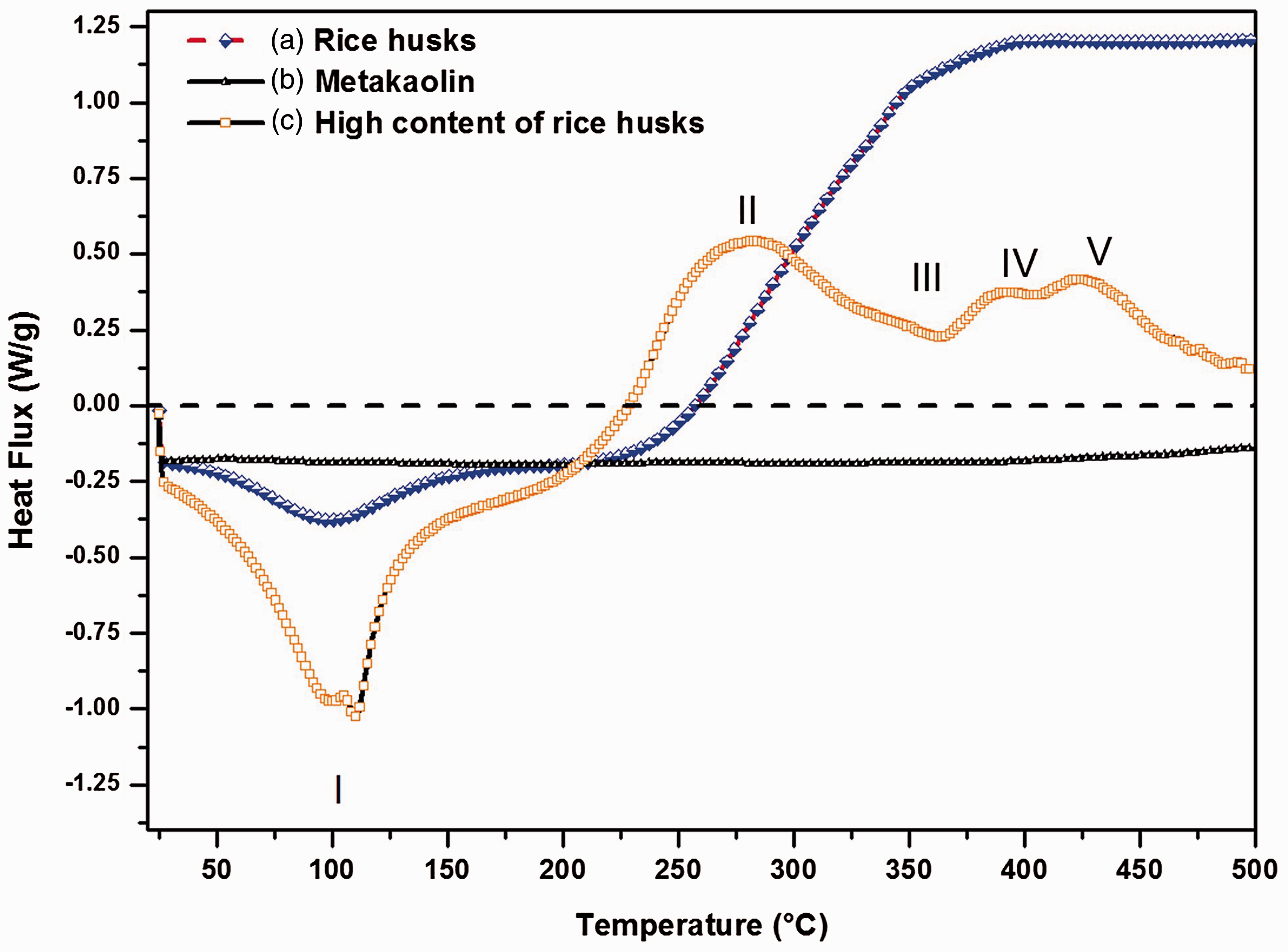
In the case of the metakaolin, it has a high stability in the range of 25–500℃. Rice husks have an endothermic peak centered symmetrically at 100℃; these analyses were conducted at sea level, and then through a carbonization process. This began about 225℃, peaking around 400℃ and extends beyond 500℃. 27
Five regions were identified for the case of the composite. As in the husks, there is a process of evaporation of water around 100℃ (section I). Sections II to V present a process of carbonization of the husks, causing a decline around 400℃. Presumably, together with the exotermic carbonization an endothermic process takes place in sections II and III, the reactions of the silicates contained in the sol–gel to form aluminosilicates (300 and 420℃). To corroborate the latter, a sample was prepared only with sol–gel and metakaolin, which was subjected to heat treatment (200, 350, 400 and 500℃). These results are presented in Figure 7.
Diffractograms of the metakaolin/sol–gel without husks, treated at different temperatures.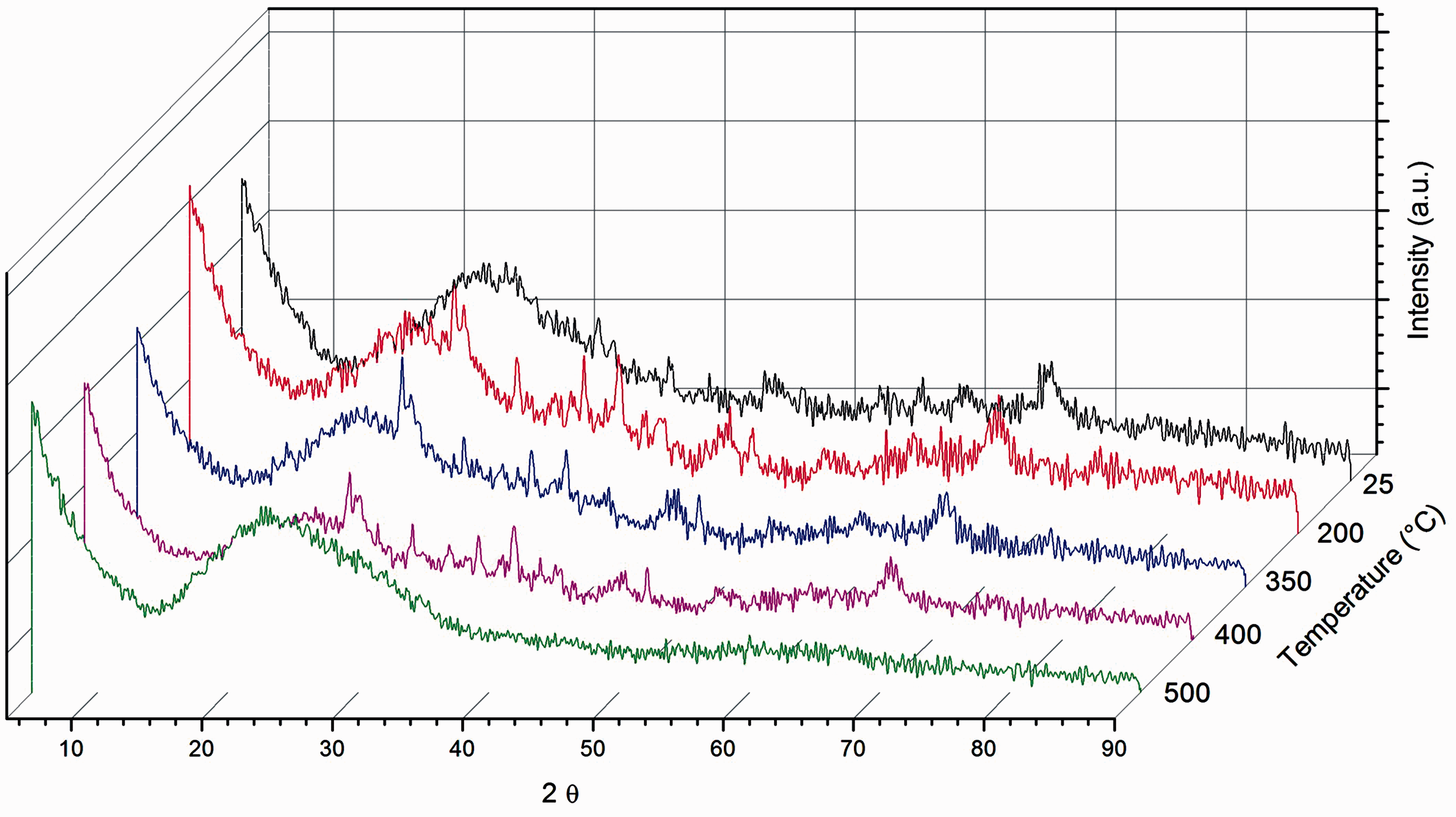
As seen in the diffractograms, the sample metakaolin with sol–gel without heat treatment (25℃) shows an amorphous shoulder between 15 and 35° (2θ), which is the characteristic of metakaolin. 28 However, it also has peaks in ° 2θ: 32, 33, 37, 45, and so forth, which were identified as Analcime (JCPS 72-2329), a hydrated compound whose formula is Na(AlSi2O6) H2O.
As shown in the figure, when heat treatment at 200℃ is made, the mentioned peaks increase intensity, and two prominent peaks in the amorphous shoulder appeared around 25° and 27°. The first is sodium oxide (JCPS 15-0068) and the second is hydrated sodium aluminosilicate. The peak of about 25° 2θ appears sharper when performing the treatment at 350℃, decreasing intensity at 400℃ and disappearing completely at 500℃. This is attributed to the dehydroxylation of the compound, which occurs above 400℃. This explains the behavior of the composite in the DSC of Figure 6. The regions III, IV and V were corresponding to this transition.
Conclusions
Rice husks are a highly renewable agro-industrial waste and may be used without any treatment, as reinforcement in a composite with geopolymer. XRD studies reveal that the composite has an amorphous phase and a crystalline one, which is typical for geopolymeric materials. Furthermore, the scanning electron microscopy showed that the rice husks were covered with geopolymer leaving empty spaces between the husks so that the union between them is given only in some points. This represents a decrease in the density of the material, which can be an advantage for handling some applications. Although husks are joined only at specific points, the composite material has a compressive strength close to some mortars with a value of about 110 kg/cm2 (10.8 MPa), which may be due to the interaction between the husks and the geopolymer, resulting in good adhesion and integration between them.
LSCM reveals that there is a difference of emission in the visible spectrum between the inner and outer sides of the rice husks, which corroborates that they have a different chemical composition. Also, the morphologies of both the surfaces were observed. With this technique, it was observed that the distribution of husks has a preferential orientation, which is attributed to the lamellar shape of the rice husks, their morphology and the method of production of the samples. It was also noted that thanks to the high concentration, the system is homogeneous. DSC analysis confirmed that the composite material has combined characteristics of its raw materials. XRD studies show that metakaolin with sol–gel solutions had temperature-dependent interactions besides that, after the dehydroxylation, the composite material is mostly amorphous.
The composite material of high rice husks content bound by geopolymer could be applicable in various areas of the construction industry and finishing, obtaining a material with characteristics similar to a wooden panel, but with low weight and keeping the resistant similar to a mortar or to an average wood resistance. The use of non-calcinated husks and without any treatment is an advantageous, because at the same time it reduces the number of manufacturing stages in the processes and avoids pollution by incineration saving costs throughout the production.
A high organic content is intrinsically related to a higher biodegradable capability, which may result advantageous for some uses. On the other hand, the geopolymer and the sol–gel solution alkalinity protect against biodeterioration of the composite increasing its time life even under high relative humidity environments.
Footnotes
Acknowledgements
Special thanks to the Center of Nanoscience and Micro and Nanotechnologies for its help in obtaining the LSCM images, especially to PhD Maria de Jesús Perea-Flores.
Declaration of Conflicting Interests
The author(s) declared no potential conflicts of interest with respect to the research, authorship, and/or publication of this article.
Funding
The author(s) disclosed receipt of the following financial support for the research, authorship, and/or publication of this article: The authors gratefully acknowledge the financial support from the National Council for Science and Technology CONACyT (grant CEMIE-Sol No. 207450). The authors gratefully acknowledge the financial support from the Energy Secretariat (SENER) and the World Bank Group through the grant 002/2017-PRODETES-PLATA. Also, Coraquetzali Magdaleno-López and Juan Carlos Flores Segura acknowledge CONACyT for their graduate fellowships.