







Abstract
Attention to environmental problems and the importance of maintaining it have caused the researchers to pay more attention in this regard. The production of polymers and resins has increased in recent years and has affected by environmental pollution due to their long-term degradation. An appropriate solution to this problem is the synthesis of degradable and environmentally friendly polymers and resins. Using natural materials in the synthesis of polymers and resins can help them to be environmentally friendly. The purpose of this research is to synthesize urethane acrylate resins using natural resources. For this purpose, the urethane acrylate pre-polymer was synthesized with castor oil. Then, using modified zinc oxide nanoparticles with 1, 3 and 5 wt% urethane acrylate zinc oxide nanocomposites were produced. The use of castor oil as a degradable part and lack of organic solvent in radiation systems led to the creation of an environmentally friendly resin. Subsequently, the viscoelastic behavior of the prepared nanocomposite was evaluated. Spectrometry results confirm the synthesized resin structure. The morphology of nanocomposites confirmed the proper particle size distribution in a 3 wt.% sample. The results of the dynamic mechanical thermal analysis test showed that increasing the amount of modified nano ZnO could increase the glass transition temperature, and the maximum value was observed in 5 wt.% modified nano ZnO (69.7℃).
Introduction
Polyurethanes (PUs) have attracted much attention in recent years due to their special characteristics. PU alone has many applications in the industry. In order to create other properties, PU is reinforced. Reinforced thermoplastic PU is used for erosion resistance,1,2 highly conductive material, 3 compressible piezoresistive sensor,4,5 flame retardant foam, 6 hybrid materials, 7 hyperbranched polymer, 8 additives 9 and many other materials with special properties. In order to protect the environment from the contamination of the polymer, also biodegradable PUs have drawn lots of attention.10,11
Nowadays ultraviolet (UV) curable coatings are of great significance in various industries. UV curing is an appropriate method that could protect environment because of low curing temperature, high efficiency and removal of hazardous organic solutions. This method includes polymerization process in which monomers and oligomers functionalized with double bonds such as (meth)acrylates moieties turn into a polymer network by UV irradiation in presence of photo-initiators in a short time. Urethane acrylate (UA) oligomers are regarded as one of the main resins to UV-curing synthesis.12,13 The polymers result of renewable resources has attracted much attention in recent years, so due to this fact, development and production of vegetable oils to use in polymers are the main strategic goals of chemistry and polymer industries, because in addition to being renewable and biodegradable they are nontoxic, then there is no harm in use of them to healthiness of human.14,15 Consequently the polymeric productions resulted from vegetable oils could be used in some affairs like production of nanocomposites, coatings, adhesives, thermoplastic elastomers and fibers.16,17
Vegetable oils are thought as renewable resources that could be used as dependable raw materials to achieve products with a variety of structures and usages. Availability and low cost of vegetable oils make them desirable to polymer industry. Triglyceride is the essential and common ingredient of all vegetable oils. 18 A triglyceride weight includes about 90–95% fatty acids and each certain vegetable oil has a special amount of fatty acids. Castor oil (CO) is known as a source of ricinoleic acid; it is an unsaturated fatty acid, too. Ricinoleic acid is among unusual fatty acids, which has a hydroxyl group, and accordingly, CO could be applied as polyol in the synthesis of PUs.19,20
Isocyanates as hard and diols or polyols as soft segments in presence of catalyst are usually used in synthesis of PUs. Diols and polyols used in synthesis of PUs are derived from petroleum, and therefore usage of CO as a natural and biodegradable polyol helps to protect environment. CO is a worthy source to be replaced with oil-based polyols.21–24
Nowadays, polymeric coatings are mostly used to protect and beautify surfaces, additionally by adding suitable additives to polymeric matrix different new properties will be achieved such as thermal resistance, improvement of mechanical features, also antimicrobial and antibacterial traits.25,26
Today, the use of nano scale additives is used to improve the polymer properties. Corresponding to the type of modifier, new features are creating in polymer composites. For example, creating photocatalytic properties by nano TiO2,27,28 thermal conductivity via nano ZrO3, nano Al2O3 and nanoclay,13,29,30 expandable graphite and halloysite nanotube as flame retardant 31 and so on.
ZnO nanoparticles are one of the additives that have drawn many researchers’ attention due to some features including chemical resistance, 32 environmentally friendly, 33 usability as a catalyst 34 and being applied in electronic industries. 35 ZnO is nontoxic and adaptive to the environment, as well as having antibacterial properties that are valuable to biological usages.36,37
Addition of materials to the polymer matrix, dispersion of particle is very important. One of the ways for dispersing particles in a polymer matrix is the use of surfactants in various types. 38 Another way is to modify the particle surface, for example, using silane couplers. These coupling agents act as a bridge between organic chain of polymer and inorganic particles that aid in the proper dispersion of particles.39,40
Study of viscoelastic behavior of nanocomposites including storage modules, loss tangent and loss modulus plays a key role in detection of the use of polymers. Studying these behaviors is done with the help of the dynamic mechanical thermal analysis (DMTA) device. Research into this behavior in UV cure systems has shown improved properties in cured polymer composite.8,41
In the current research, biodegradable and eco-friendly UV-curable UA oligomer was synthesized by reaction of isophorone diisocyanate (IPDI), CO as a nature polyol and renewable resource and 2-hydroxyethyl methacrylate (HEMA). Then by adding different weight percentages of ZnO nanoparticles to the synthesized oligomer, UV curable nanocomposites were prepared. Finally, viscoelastic behavior of the synthesized nanocomposites was studied. The nanocomposites produced in the present study could be use as an eco-friendly UV-curable coating with antibacterial properties or adhesives in different industries and applications.
Experiments
Materials
Commercial grade of CO (molecular weight = 933.45 g/mol) was purchased from a local market. IPDI, dibutyltin dilaurate (DBTDL), 2-HEMA, triethanolamine (TEA), vinyltrimethoxysilane (VTMS), isopropyl alcohol, hydrochloric acid, benzophenone and acetone all were supplied from Merck Company (Germany). Trimethylolpropane triacrylate (TMPTA) as a diluent was supplied from Sigma-Aldrich Company (USA). Nano zinc oxide (ZnO) with a particle size of 10–30 nm was bought from US Research Nanomaterials Company (USA).
Characterization
UV radiation in a UV curing device (1 kW Hg lamp, 80 w/cm) was used for the curing process at ambient temperature. There was a 10 cm distance between the UV lamp and the samples. Fourier transform infrared (FT-IR) spectra were recorded in KBr pellets on the Perkin-Elmer (model Spectrum 1, USA) spectrophotometer with the wave number range from 400 to 4000 cm−1. The morphology of prepared nanocomposites was studied by scanning electron microscopy (SEM) (LEO 1455 VP, Germany). The viscoelastic behavior of nanocomposite films was studied by dynamic mechanical thermal analyzer (DMTA) (Netasch, DMA 242 C, Germany) with a modulus range of 103 to 106 MPa.
Synthesis of UV-curable UA oligomer
First, CO was placed in oven at 70–80℃ for 24 h. Synthesis of UA oligomer was performed in two separate steps: initially, urethane pre-polymer was synthesized as follows: 11.12 g (0.05 mol) of IPDI, 15.56 g (0.016 mol) of CO, 10 mL of acetone and DBTDL (0.2 mL) as a catalyst were charged into a three-necked flask including a thermometer, a condenser and a nitrogen inlet. By a magnetic stirrer, the obtained mixture was stirred in an oil bath at 70℃ for 2 h, then, urethane pre-polymer was achieved. In the next step, 6.5 g (0.05 mol) of HEMA, 10 mL of acetone and DBTDL (0.2 mL) were poured dropwise into the urethane pre-polymer during 30 min, the mixture was stirred at 70℃ for 2 hours. Consequently, UA oligomer was prepared. Afterwards, to remove the solvent, an oven was used to dry the synthesized UA oligomer at ambient temperature for 2 h. Figure 1 shows the synthesis steps of UA oligomer.
Synthesis steps of UA oligomer.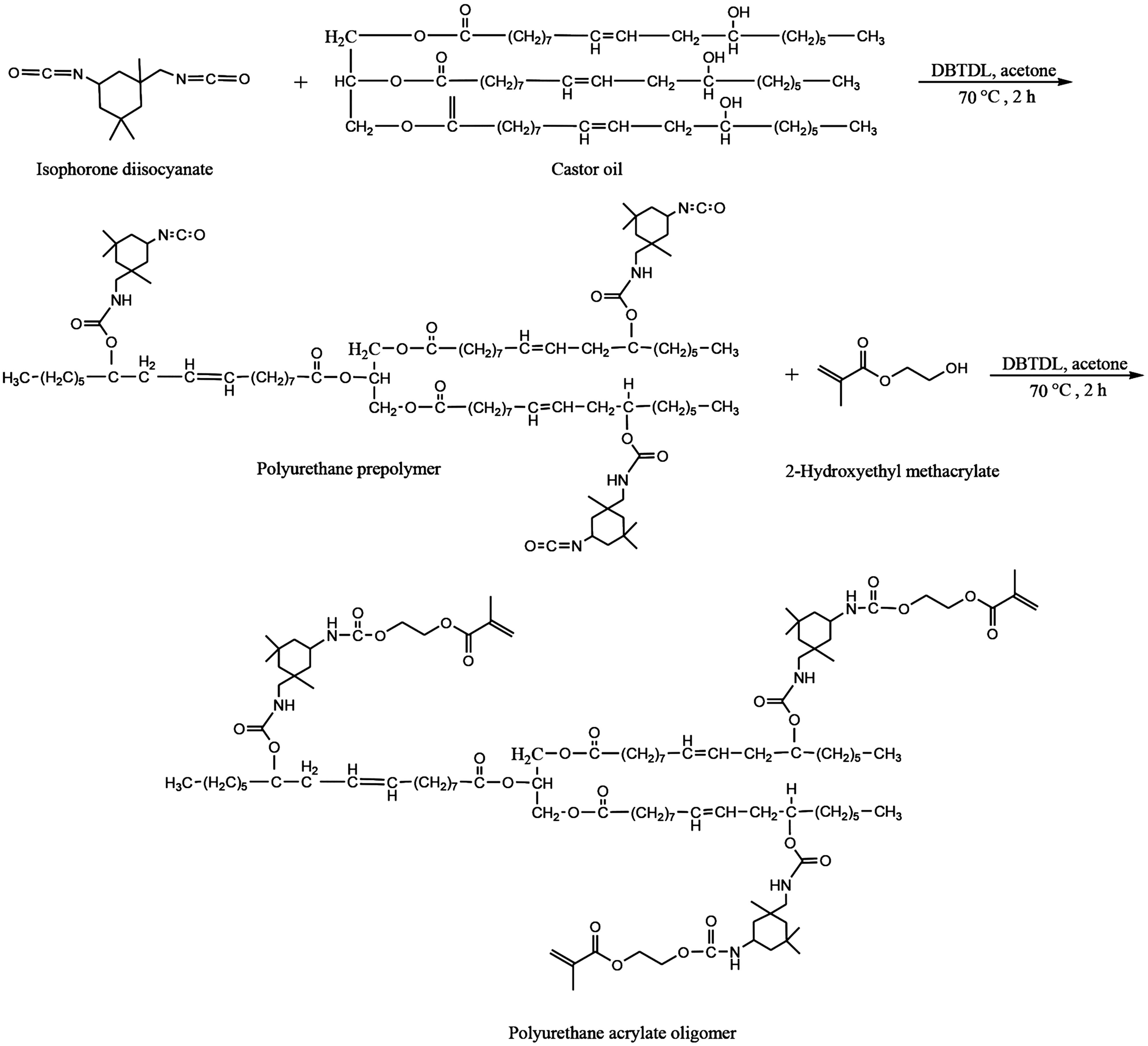
Preparation of nanocomposite
Characterization and surface modification of ZnO nanoparticles by VTMS coupling-agent have been described in literature. 36 ZnO was dispersed in acetone by sonication for 20 min. Then, the UA oligomer (15 g), TMPTA (5 g) as a reactive diluent, constant amount of the benzophenone (0.06 g) as initiator and TEA (0.06 g) as co-initiator (3-5 wt% of resin) were mixed in order to produce free radicals for UV curing process. UV irradiation leads to photo-initiation of initiator (benzophenone) by means of hydrogen abstraction from co-initiator (TEA).42,43
Then, 0, 1, 3 and 5 wt.% ZnO nanoparticles were added to UA resin separately.30,36,41 The resultant mixtures were dispersed by a magnetic stirrer (1200 r/min) for 4 h. Ultimately, the preparation process of the UA and PUA-ZnO nanocomposites films with 120 µm thickness was accomplished on many glass plates by using a film applicator. In this regard, UV radiation contributed to the curing process of films for 1 min in a UV-curing device. After UV radiation curing, the prepared films were used for required studies.
Results and discussion
Characterization of UA oligomer
The FT-IR spectra related to the chemical structures of CO-based urethane pre-polymer and UA oligomer are represented in Figure 2. Absorption peak at 2266 cm−1 assigned to formation of –NCO groups (Figure 2(a)), it means urethane pre-polymer is formed by reaction between isocyanate and CO. In Figure 2(b), with the reaction of urethane pre-polymer and HEMA, absorption peak at 2266 cm−1 disappeared and indicates the connection of HEMA to urethane pre-polymer and formation of UA oligomer.
FTIR spectra of urethane pre-polymer (a) and urethane acrylate oligomer (b).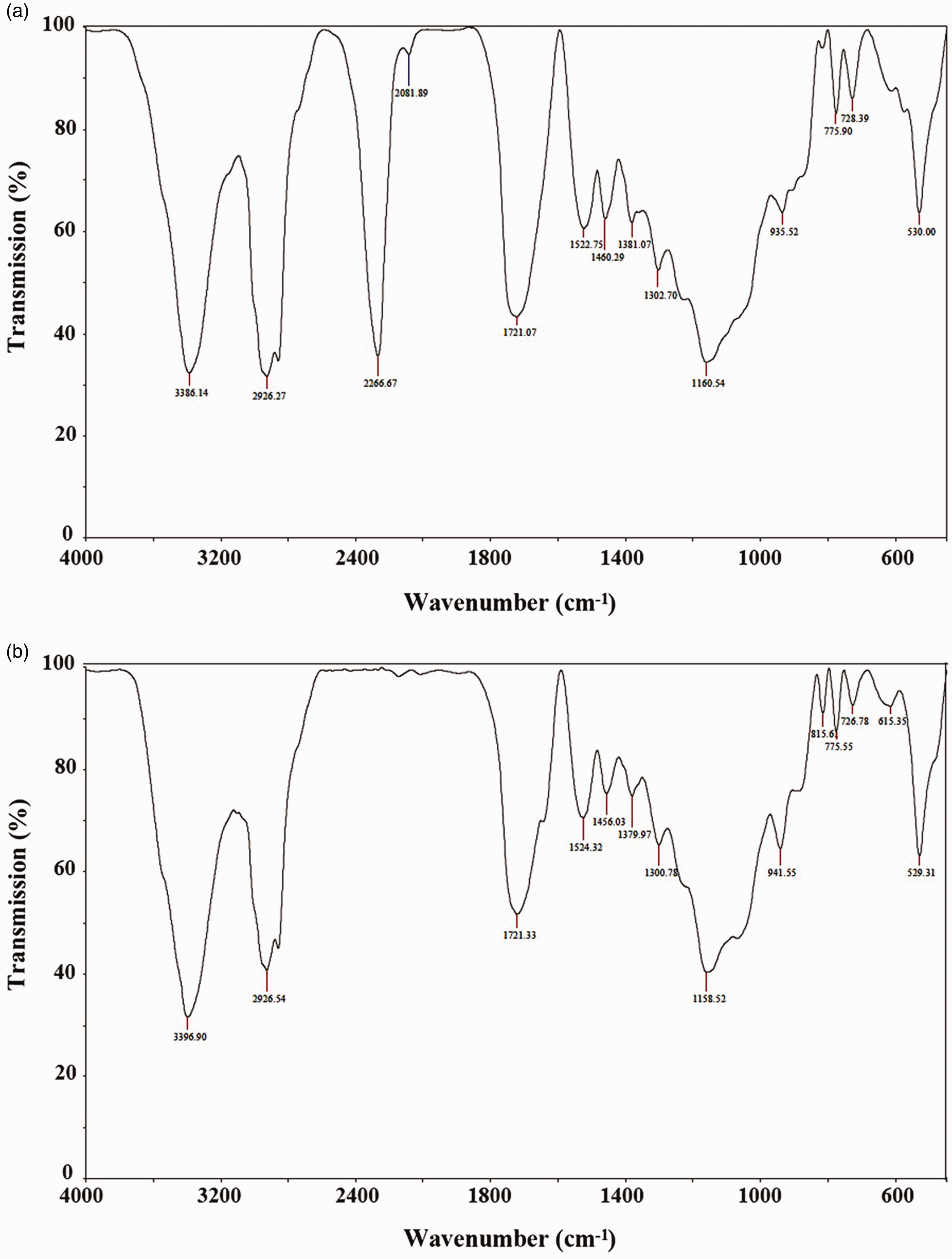
As Figure 2(b) shows, the most significant bands of UA oligomer are related to the N–H (3396 cm−1), CH2 and CH3 groups (2926 cm−1), C=C of HEMA stretching vibrations (1640 cm−1), N–H bending vibrations (1524 cm−1), C–H (CH2) and C–H (CH3) bending vibrations (1456 and 1379 cm−1), C=O ester groups of urethane and CO stretching vibrations in the region of 1720–1750 cm−1 (1721 cm−1),5,10 C–N and C–O of urethane stretching vibrations (1300 and 1158 cm−1), and C–O in HEMA stretching vibrations (1050 cm−1). These results prove the successful synthesis of the UA oligomer.
Morphology of nanocomposites
In order to study the morphology and dispersion of ZnO nanoparticles in urethane, acrylate matrix including different weight percentages SEM was used. Figure 3 indicates SEM images of synthesized PUA-ZnO nanocomposites with 0 (blank), 1, 3 and 5 wt.%. According to Figure 3, soft and gray regions represent polymer matrix and the bright and prominent points signify dispersion of nanoparticles in polymer matrix. As Figure 3(a) indicates, the blank sample lacks any fraction and excessive particles. In Figure 3(b) (1 wt.% sample), nanoparticles are dispersed in polymer matrix aggregating in some regions. Figure 3(c) (3 wt.% sample) shows a proper and relatively homogeneous dispersion of nanoparticles. In Figure 3(d) related to the 5 wt.% sample, dispersion of nanoparticles in polymer matrix is observed as proper and homogenous, also accumulated in some regions due to the high amount of nanoparticles, because the exits of C=C double bond of modified ZnO nanoparticles could participate in curing process and create better dispersion in the polymer matrix. Proper and homogeneous dispersion of nanoparticles in the polymer matrix leads to the improvement of thermal behavior and viscoelastic features of PUA-ZnO nanocomposites.
SEM images of PUA-ZnO nanocomposites. (a) 0%, (b) 1%, (c) 3% and (d) 5%.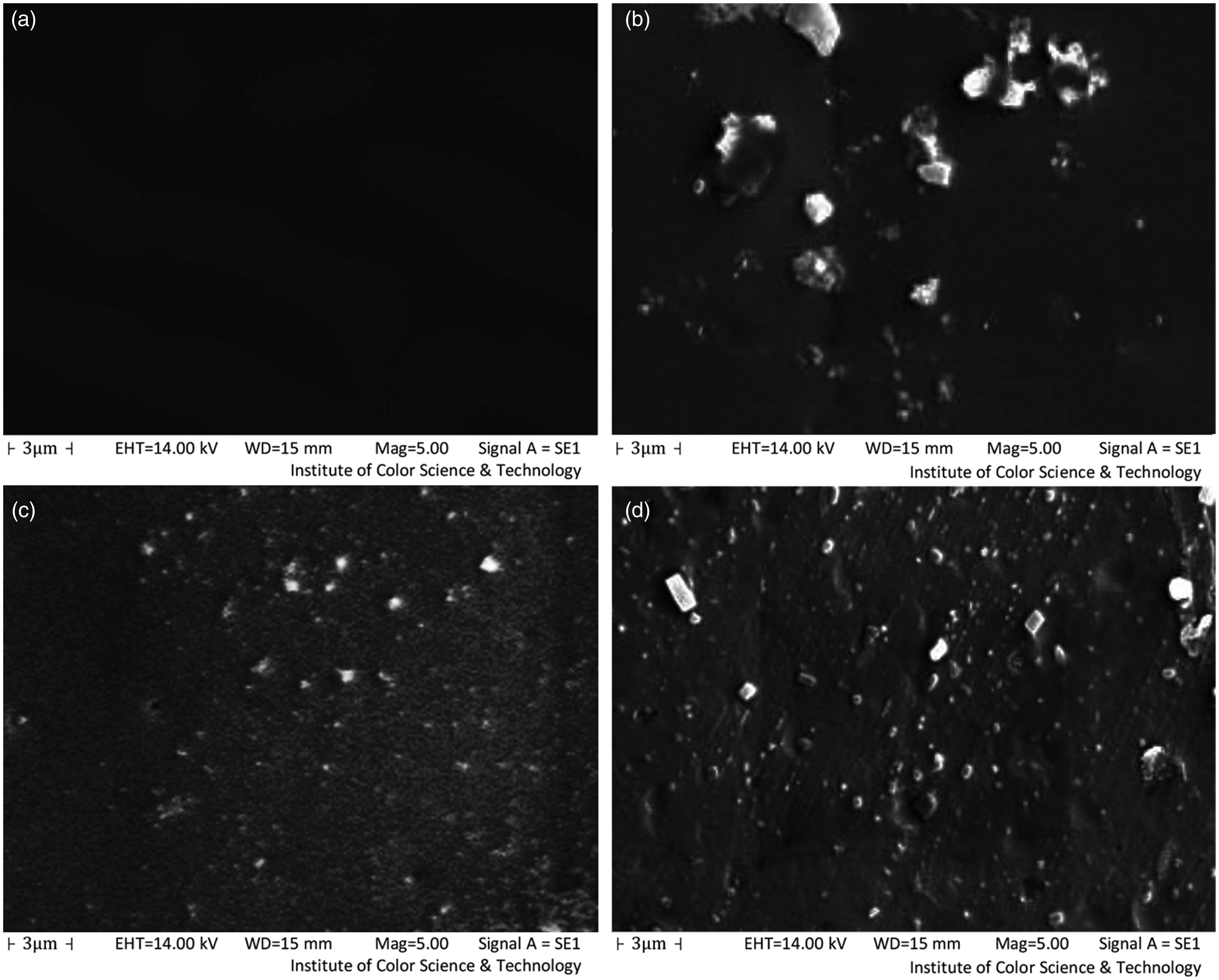
Study of viscoelastic behavior
Storage modulus
DMTA was used to study the viscoelastic behavior of different weight percentages of PUA-ZnO nanocomposites. Elastic phase of the synthesized nanocomposites was described by storage modulus (E′). Figure 4 represents the storage modulus as a function of temperature for PUA-ZnO nanocomposites with blank (0 wt.%), 1, 3 and 5 wt.%. There is a maximum value of storage modulus for all the samples (0, 1, 3 and 5 wt.%) at the temperatures lower than −50℃. But as the temperature increases, storage modulus is decreased. At the temperatures higher than 10℃, a severe damping is observed in storage modulus so that by the higher temperatures and near the glass transition range, a significant drop takes place in the curve of storage modulus of all the samples. The high drop of storage modulus reflects a typical behavior of a two-phase system due to the incomplete phase separation in the range of glass transition temperature. Consequently, increase in temperature leads to lessening of the energy absorption capacity. Storage modulus of the 3 and 5 wt.% samples is higher than other samples in glass transition region; this is due to the proper dispersion of the nanoparticles in the polymer matrix and also strong interfacial interaction between inorganic phase (ZnO nanoparticles) and polymer matrix that increase the capacity of energy absorption in the samples with higher weight percentages (3 and 5 wt.%).18,44 As a result, adding ZnO nanoparticles with higher weight percentages to the polymer matrix causes improvement of mechanical properties of the nanocomposite films.
Storage modulus (E′) dependence on temperature for PUA-ZnO nanocomposites.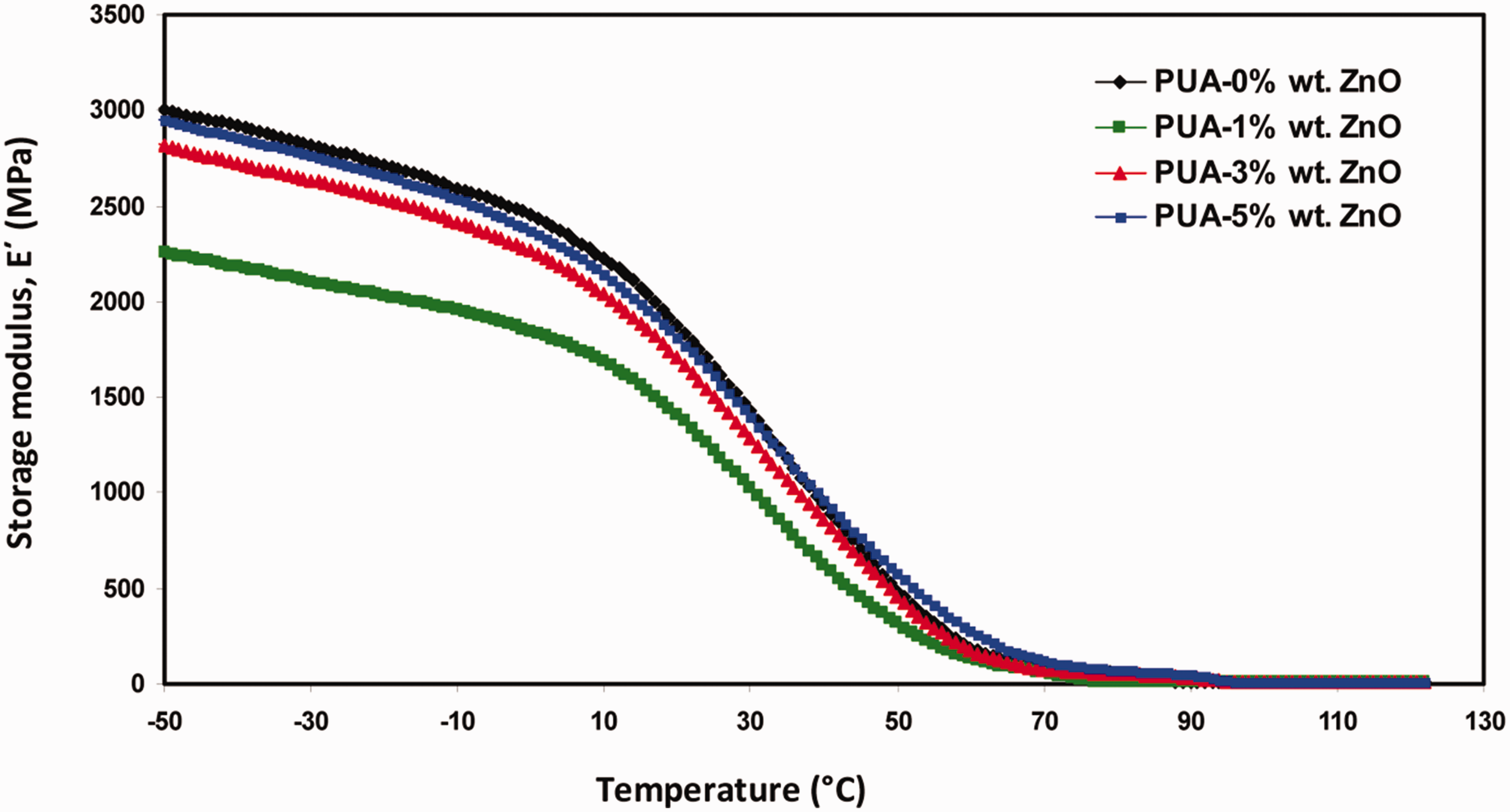
Loss modulus
Loss modulus (E″) represents converted energy to heat that could be applied as a parameter to measure the viscose phase of a substance or irreversible fluctuation energy of every cycle. Figure 5 shows loss modulus changes of PUA-ZnO nanocomposites with 0, 1, 3 and 5 wt.% as a function of temperature. In the beginning, loss modulus of all samples increased, but decreased with increasing temperature. The reason behind this is that dispersed nanoparticles waste energy due to the resistance against viscoelastic transformation of the polymer matrix. In the 3 and 5 wt.% samples, loss modulus curve shifts to the higher temperatures so that when it is raised to around 40℃, the peak height of the E curve falls more at the temperatures above 40℃. Loss modulus decrease in 3 wt.% and particularly 5 wt.% samples are significant in comparison with other samples because of the increase in nanocomposites agglomeration and consequently decline in wasted energy in the system under viscoelastic transformation. The reason is that after a while nanocomposites begin to accumulate and cause a decrease in amount of the wasted energy.
33
The results signify ZnO nanocomposites play a vital role in improving of thermal behavior and viscoelastic feature of UA matrix.
Loss modulus (E″) dependence on temperature for PUA-ZnO nanocomposites.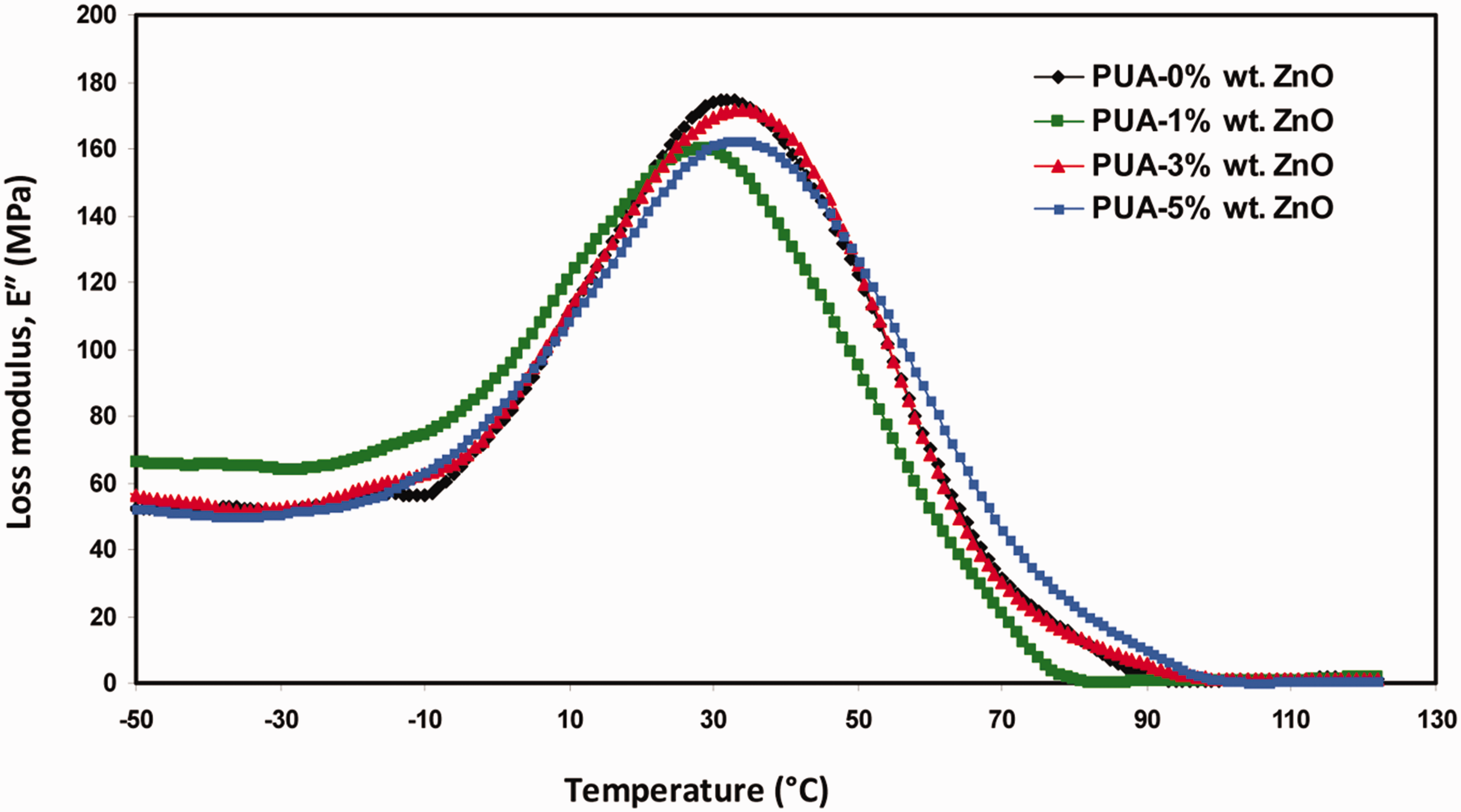
Loss tangent
Loss tangent (tan δ) is a factor between elastic and viscose phases. The curve of tan δ as a function of temperature for PUA-ZnO nanocomposites including different weight percentages (0, 1, 3 and 5 wt.%) is shown in Figure 6. Peak of tan δ curve of the 0 and 1 wt.% samples is observed in its maximum level at about 60–65℃, then it declines as temperature rises. In the 3 and 5 wt.% samples, tan δ curve shifts to the temperatures higher than 75℃ in which the peak gets wider. The peak of tan δ curve of the 5 wt.% sample around 75℃ is seen in the lowest height. The peak temperature of loss tangent is used to determine the glass transition temperature. As the polymer heats and expands, free volume increases in the substance; therefore, this condition paves the way for movements of the polymeric chain bonds. Amorphous or semi-crystal regions of polymer start to move and polymeric chains slide while temperature gets higher, and this evolution is named as glass transition temperature (Tg). Above Tg, polymer starts to melt. Adding inorganic ZnO nanoparticles to the polymer matrix affects the value of Tg, because this could restrict polymeric chains movements, so to achieve the glass transition temperature there should be more thermal energy available.41,43,45 Adding 5 wt.% ZnO nanoparticles to polymer matrix makes the spaces across polymer matrix filled that causes stiffness of polymer to rise, and therefore Tg increased. On the other hand, decrease in Tg results in more flexibility of the nanocomposite films (Tg values for 0, 1, 3 and 5 wt.% are 65.6, 60, 66 and 69.7℃, respectively). There occurred an increase in glass transition temperature and mechanical resistance in the phase separation of soft and hard segments following the addition of 5 wt.% ZnO nanoparticles to the polymer matrix.
Loss tangent (tan δ) dependence on temperature for PUA-ZnO nanocomposites.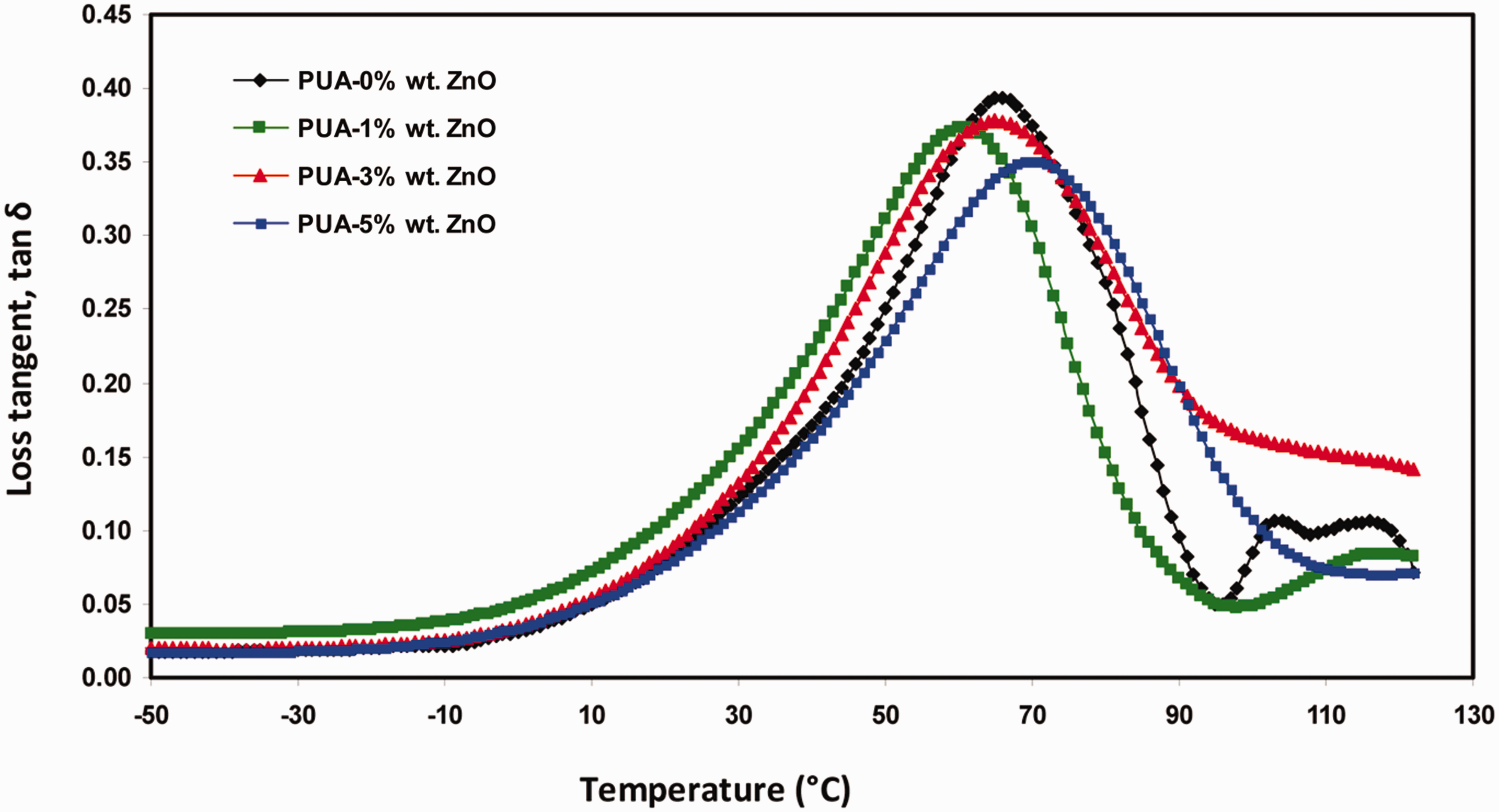
Conclusion
In this study, at first CO-based UA oligomer was synthesized with natural polyol and renewable resource. Then, modified zinc oxide nanoparticles including 0, 1, 3 and 5 wt.% were added individually to UA oligomer and consequently UV-curable PUA-ZnO nanocomposites with different weight percentages were cured using ultra violet (UV) irradiation. Reaction progress, omission of –NCO groups and chemical structure of UA oligomer were confirmed by FT-IR spectroscopy. Afterwards, by SEM images, morphology of the nanocomposite films was analyzed in order to study how ZnO nanoparticles were dispersed. SEM images approved the homogenous dispersion of nanoparticles in polymer matrix. In order to study the thermal and mechanical properties of synthesized nanocomposites, DMTA test was applied. Results show that by adding a certain amount (5 wt.%) of ZnO nanoparticles to the polymer matrix, glass transition temperature and mechanical resistance increased and the viscoelastic behavior of synthesized nanocomposites was significantly improved. According to the findings, a biodegradable and eco-friendly nanocomposite to use in different applications using renewable resources is successfully prepared.
Footnotes
Declaration of Conflicting Interests
The author(s) declared no potential conflicts of interest with respect to the research, authorship, and/or publication of this article.
Funding
The author(s) received no financial support for the research, authorship, and/or publication of this article.