







Abstract
In this paper, different mechanical responses of polymer matrix composite rings under thermal cycling are analyzed. The polymer matrix composite rings are classified to un-notched and open-hole specimens and tested based on the naval ordnance laboratory-ring tensile test method. Internal pressure, fracture and surface degradation changes as a function of the hole diameter and number of cycles are investigated. Experimental results suggest that specimens with larger hole radius have more mechanical property variations during thermal cycling. Also, it is revealed that the mechanical properties of laminates degrade as a function of the number of cycles and the hole diameter. The results also demonstrate that long splitting fiber breakage is the main mode for the failure of un-notched specimens, whereas fiber breakage and fiber matrix debonding are the two main modes for the failure of open-hole specimens. Finally, a multiple regression model is proposed to predict the tensile response of un-notched and open-hole polymer matrix composite rings subjected to thermal cycling condition.
Keywords
Introduction
Satellites and other aeronautical vehicles are exposed to space environment during long-term missions, where cyclic temperature variation is inevitable.1,2 Due to this, it is very crucial to choose and analyze suitable materials as structural elements. A wealth of available researches suggest that composites can be a perfect choice due to their light weight and reliable thermo-mechanical features.3–5 The effects associated with intermittent temperature changes, however, cannot be denied, especially when it comes to thermal cycling, which has a considerable impact on structural performance and fatigue lifetime of these multifunctional materials. 6
Hancox 7 reviewed thermal cycling effects on the polymer matrix composite (PMC) specimens during 1979–1998. He thoroughly analyzed the role of moisture and volatiles in reduction of cracking. Karihaloo 8 examined how mechanical properties of materials vary when they are subjected to thermal cycling. An earlier work in this area was done by Eselun et al. 9 They found out that different mechanical properties, such as tensile strength, modulus, and interlaminar shear strength can be affected by resin micro cracks, which are generated by thermal cycling. Shimokawa et al. 10 studied the effects of thermal cycling on microcracking of high-temperature polymer composite materials. They tested three different kinds of composites and expressed that thermal cycles and transverse microcracks do not affect open-hole-compressive strength. In another research, Zrida et al. 11 investigated composites under thermal cycling and aging. The composites were subjected to two thermal cycling ramps and the increase of crack density in each bundle was quantified. Comparison of two ramps with the same lowest temperature showed that the highest temperature in the cycle has a significant effect on the thermal fatigue resistance. Jean-St-Laurent et al. 12 attempted to evaluate the damage induced by extreme thermal cycling in sandwich panels. They observed three damage types including transverse microcracks, debonding between the fibers, and the matrix and to a limited extent delamination. The mechanical tests demonstrated that while tensile properties are not overly affected by thermal cycling, shear properties are influenced by thermal cycling. Ghasemi and Moradi13,14 proposed Taguchi method to study effective factors of glass/epoxy composite components subjected to the thermal cycling. They investigated four parameters, namely “temperature difference,” “stacking sequence,” “fiber volume fraction,” and “number of thermal cycles” and obtained mechanical properties of specimens using the tensile test after thermal cycling. Experimental results demonstrated that stacking sequence and fiber volume fraction were the main factors to control the thermal cycling effects.
Cyclic loading (thermal, mechanical, hydrostatical, etc.) often leads to fatigue and failure of structures.15,16 Many researches have been done on lifetime assessment of materials under thermal fatigue, 17 but there are fewer studies with particular focus on curved structures such as rings, tanks, and cylinders. Therefore, practical investigations are needed on the life assessment of the structures subjecting to cyclic loadings. The naval ordnance laboratory (NOL) ring test 18 was developed to determine tensile properties of unwoven, glass-reinforced, and filament-wound specimens. In addition, this test was used to a considerable extent of parallel windings. 19 Joselin et al. 20 used the NOL-ring test to estimate the tensile strength of filament wound composite structures. Also, in order to demonstrate the advantages of burst test, appropriate testing and evaluation of glass/epoxy rings under defect free as well as adverse conditions is carried out through acoustic emission monitoring. A standard test method (ASTM-D2290, 2004) explains a specific tensile test to determine the apparent hoop tensile strength, which is applicable to thermosetting resin pipes and extruded pipes. Fan and Wang 21 performed tensile tests for open-hole composite plates with different geometric parameters and lay-up features. They proposed a probabilistic neural network based approach to predict tensile strength of composite plates with an open-hole.
In this paper, the impact of thermal cycling on the mechanical properties of PMC rings are studied. Carbon fiber and epoxy resin are used to prepare specimens. The rings are classified to un-notch and open-hole samples. The diameter to nominal width ratios (ω) are 0.31 and 0.63. A two-chamber apparatus and a NOL-ring tension test machine are used for thermal cycling and tensile test of the specimens, respectively. The rings are subjected up to 200 thermal cycles. Then, tensile strength of carbon/epoxy laminated composites is evaluated using tensile test. The fracture, internal burst pressure and stress–strain behavior are examined as well. In addition, a regression model is proposed to analyze and predict the effects of different parameters theoretically. Finally, theoretical and experimental results are compared.
Experiments
Materials
In this work, carbon/epoxy laminated composites with stacking sequence of The necessary components of composite ring specimen (ASTM D2290). Mechanical properties of carbon/epoxy laminate.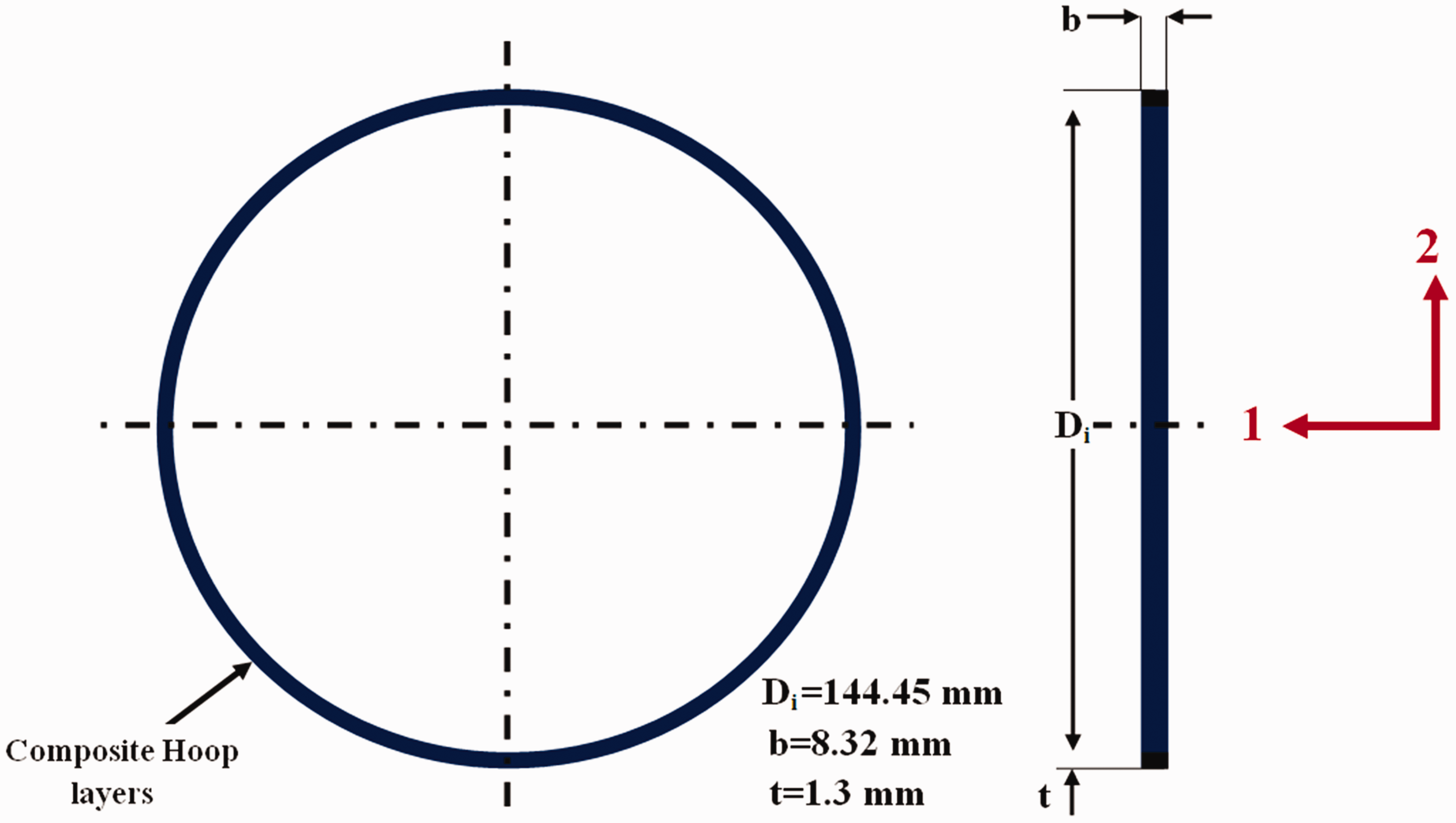

Also, two different hole diameters (2 mm and 4 mm) are chosen to investigate the effects of the notch during thermal cycling. Each hole is produced using a vertical hole drilling machine as shown in Figure 2. In addition, drilling speed and feed rate are considered 2000 rpm and 1 mm/min, respectively.
Composite ring specimens with different hole diameters.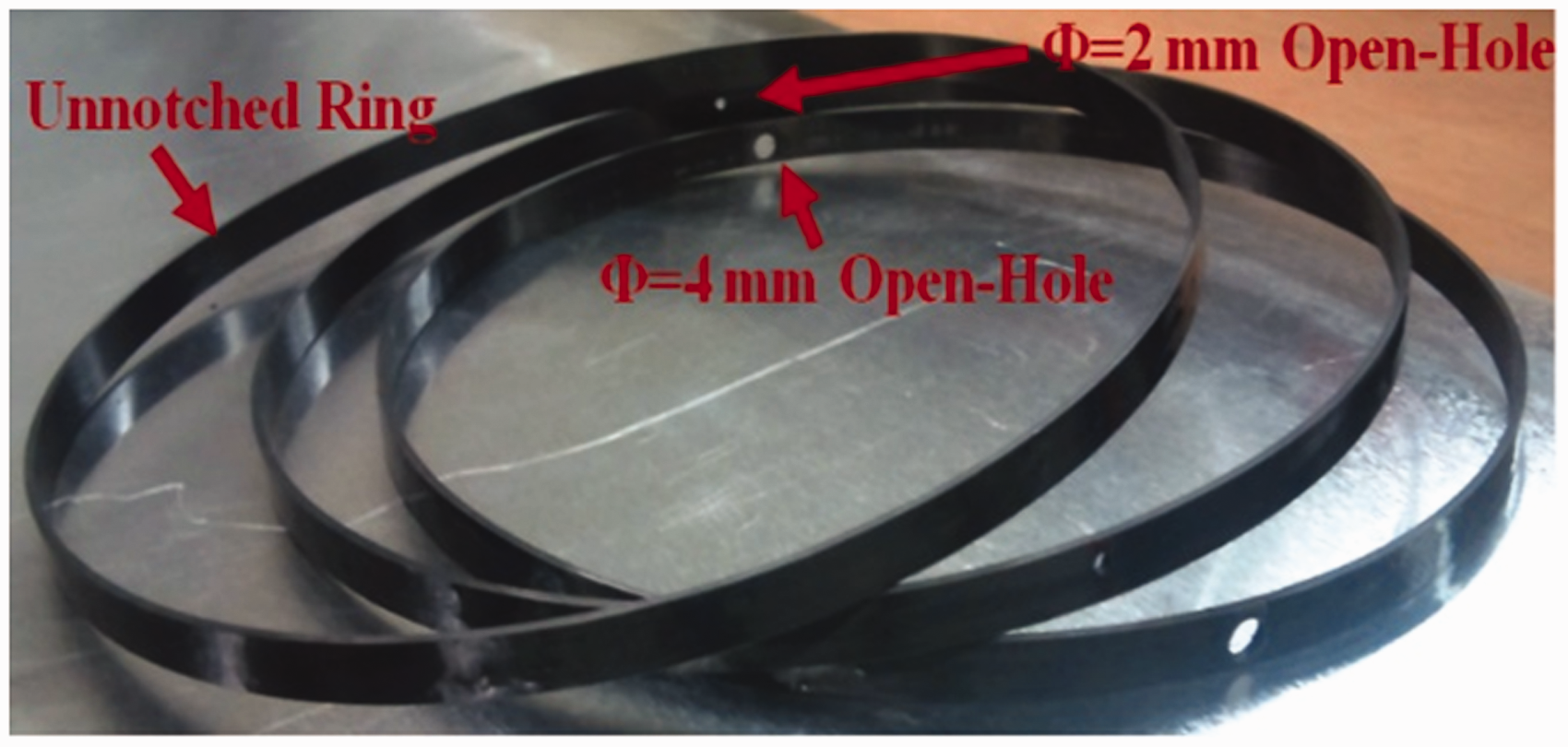
Five specimens were prepared for each test. They were manufactured in shape of the ring with b = 8.32 ± 0.1 mm width for zero and 2 mm hole diameters, and b = 10.34 ± 0.1 mm width for 4 mm hole diameters. The thickness of each layer was 0.22 mm and the thickness of rings was 1.3 ± 0.05 mm. Tensile tests were done using a 50 KN hydraulic tensile testing machine (Figure 3). The considered test velocity during tensile tests was set at 2 mm/min.
The NOL ring fixture and composite ring for tensile test.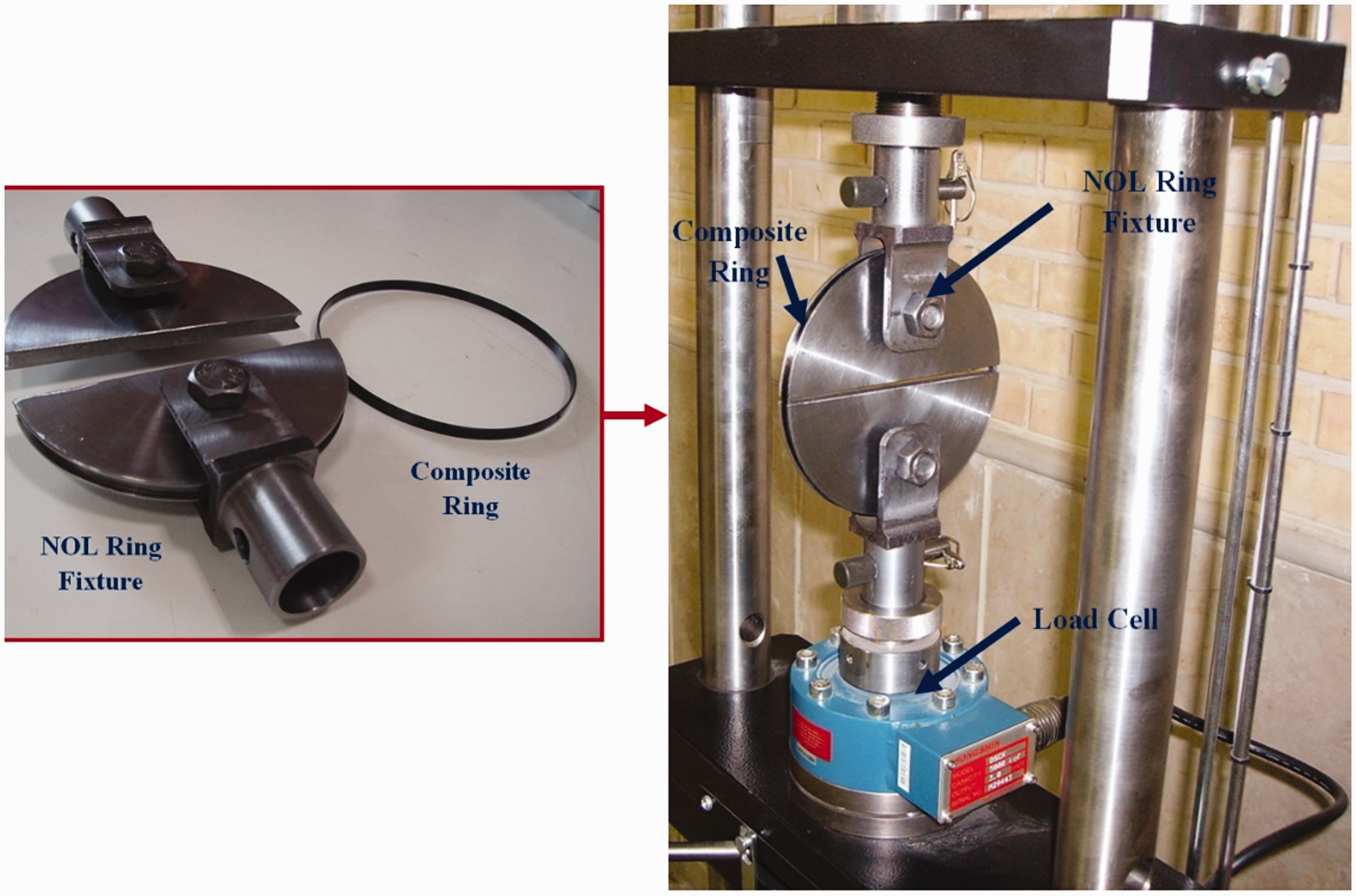
Tensile test setup
The standard of ASTM D 2290-04 introduces a particular tensile test in order to determine the apparent hoop tensile strength applicable to thermosetting resin pipes and extruded pipes. As shown in Figure 3, an appropriate fixture was provided and fixed on the hydraulic tensile testing machine to conduct experiments.
Thermal cycling test
A thermal cycling system including heating and cooling chambers was designed to provide the cyclic temperature change.
24
The minimum and maximum temperature of each cycle is considered 0℃ and 50℃, respectively; while the total number of cycles is 200. Also, cooling and heating rates are constant (17℃/min). Temperature of specimens is measured by two sensors, which are on the two sides of the ring. An example of a temperature record is presented in Figure 4.
Various thermal cycling profiles of this study.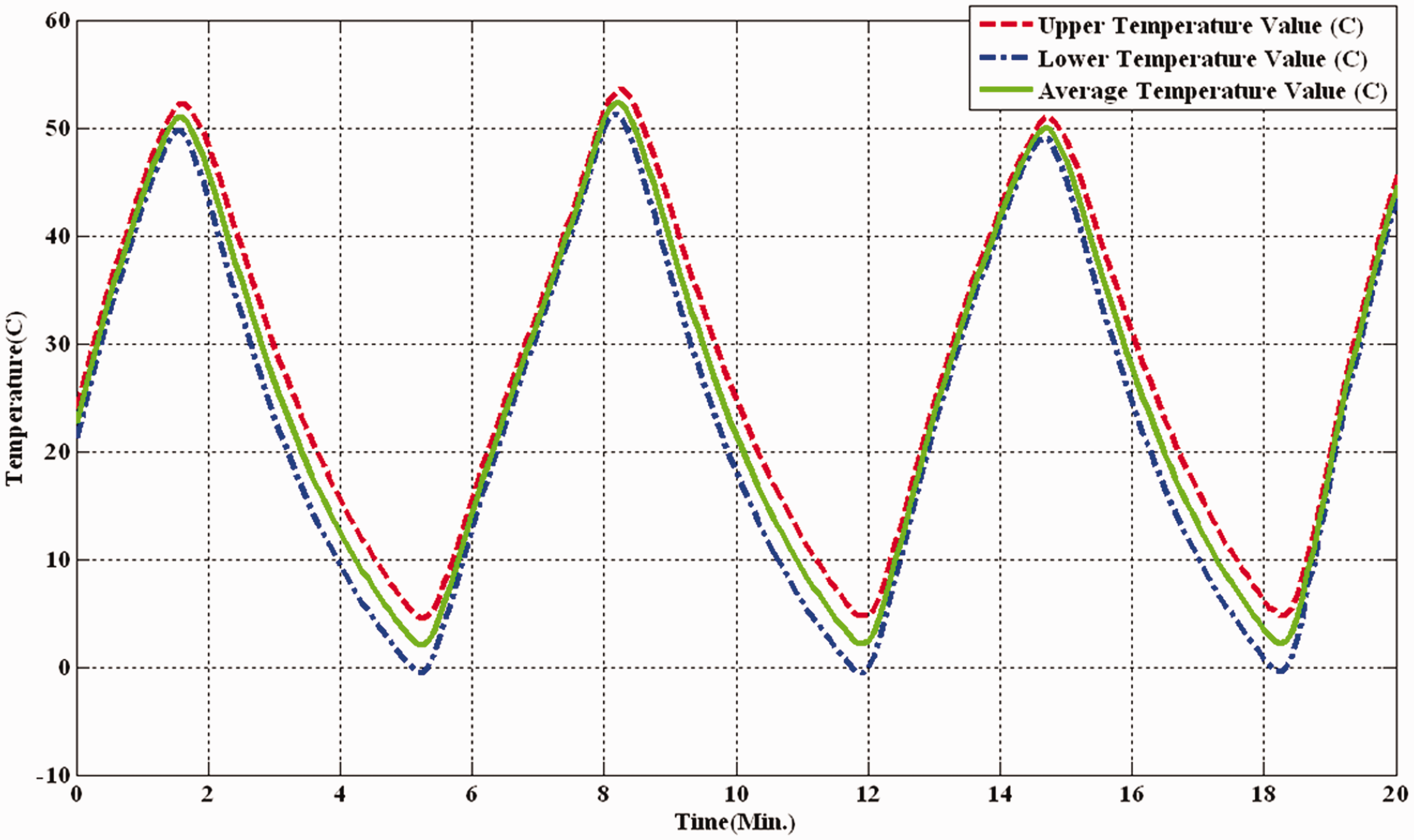
Results and discussion
Results are represented in this section. At first, fracture and internal burst pressure as well as stress–strain behavior of samples are presented. Then, a multiple linear regression model is proposed to predict the effects of thermal cycling.
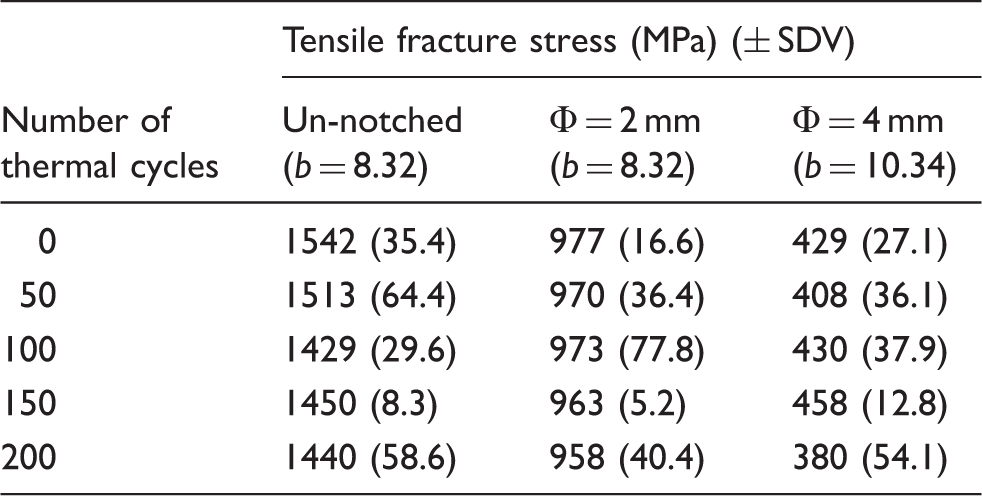
Tensile fracture stress
Average tensile strength of the specimens.
Internal burst pressure
According to the NOL-ring test standards, two notches were created on both sides of composites specimen at angles of 0° and 180° symmetrically (Figure 3).
Then, the ultimate burst pressure of composite rings can be evaluated by using tensile stress as
25

In which Average ultimate burst pressure of the specimens.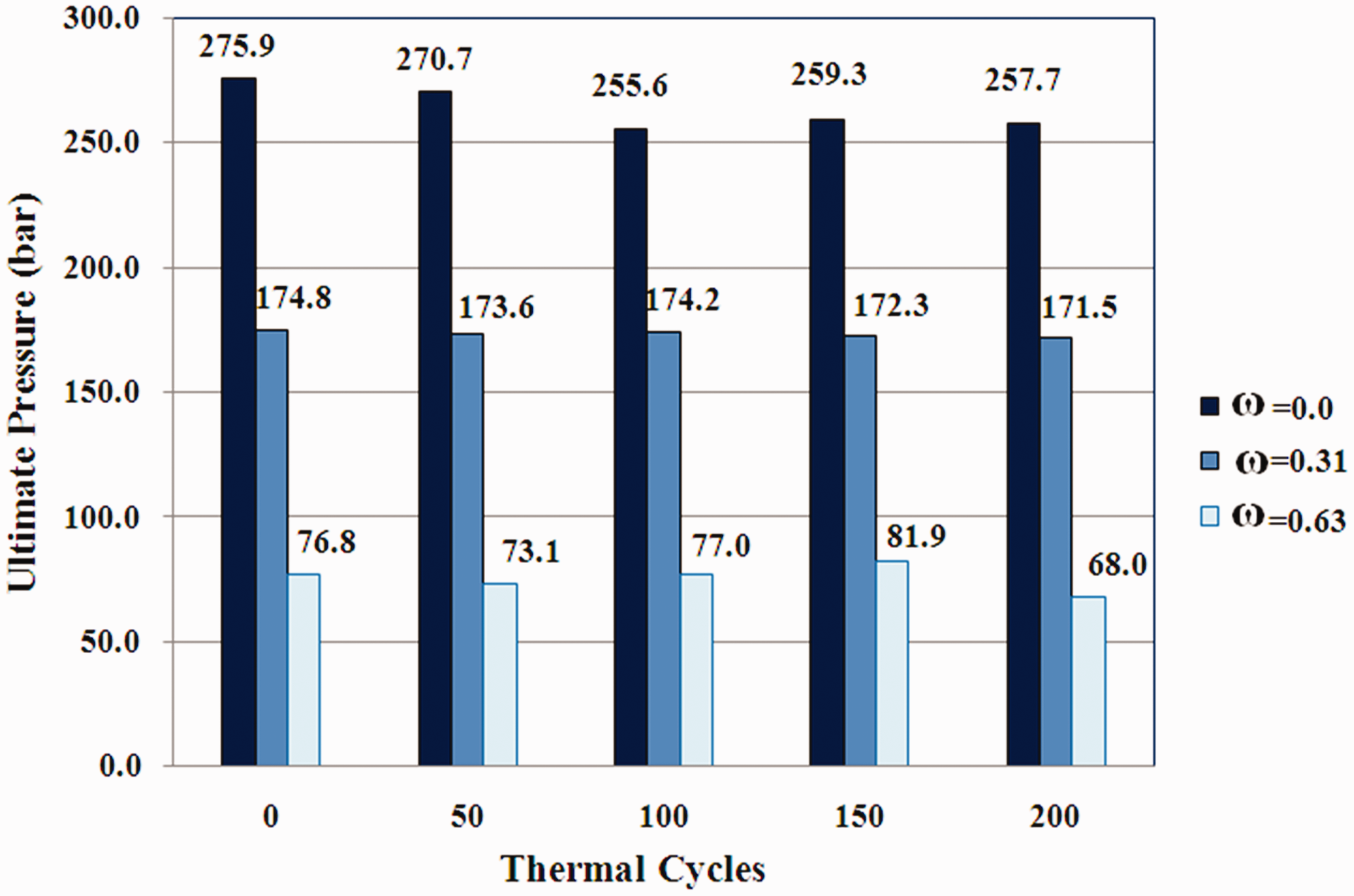
As shown by Figure 5, internal burst pressure of composite rings decreases smoothly during thermal cycling. But, it is observed that variation of open-hole specimens with diameter of 2 mm is less noticeable than un-notched one. While these changes are more significant in open-hole samples with diameter of 4 mm. Internal pressure of these specimens (4 mm diameter) decreases and reaches to 68 bar (12% reduction) after 200 cycles. The separated surfaces of fiber from surrounding resin show the evidence of breakdown of bond due to thermal cycling which has been mentioned by other researchers too. 26
Force–displacement curves
Force–displacement behavior of specimens in longitudinal direction is studied in this section. As shown by Figure 6, hole diameter has a significant effect on the force–displacement curves. For specimens with ω = 0 and ω = 0.31, the stress–strain curve increases after thermal cycling, which can be attributed to completion of curing process over the cycles; while for the specimen with ω = 0.62, the curve decreases after 200 cycles. It is obvious that the stress concentration due to the open hole in these specimens is so much that the influence of thermal fatigue is neglected. Moreover, it is revealed that thermal cycling can enhance force–displacement behavior of composite rings with small hole diameter.
Force–displacement curves of the 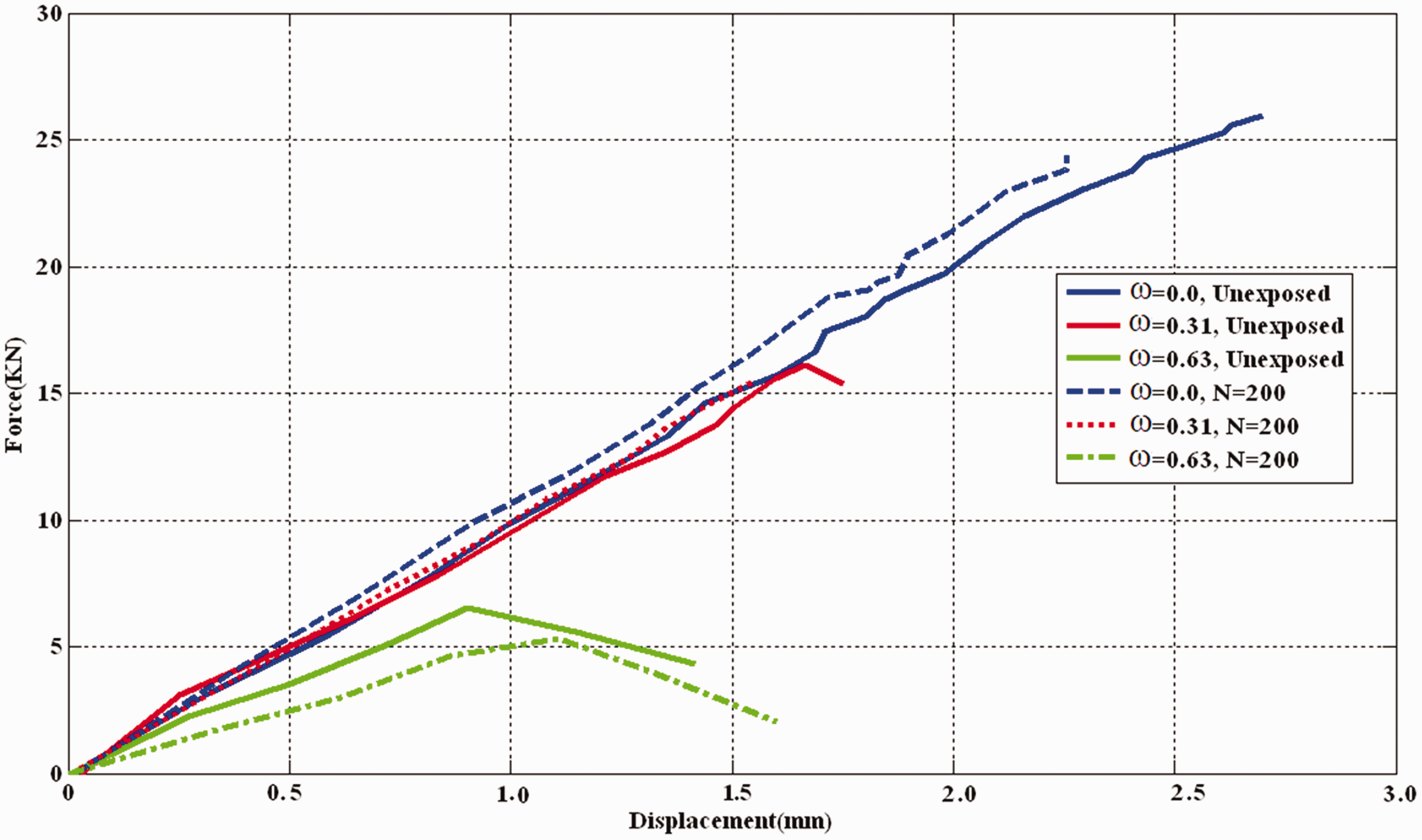
Investigation of the failed areas indicates that before and after thermal cycling (200 cycles), there is no difference in degradation of matrix surface. In fact, the most important parameter to change the failed areas is hole diameter (Figure 7).
Failure sections from tested NOL specimens and close-up of section showing inter-layer separation: (a) un-notched specimens and (b) open-hole specimens.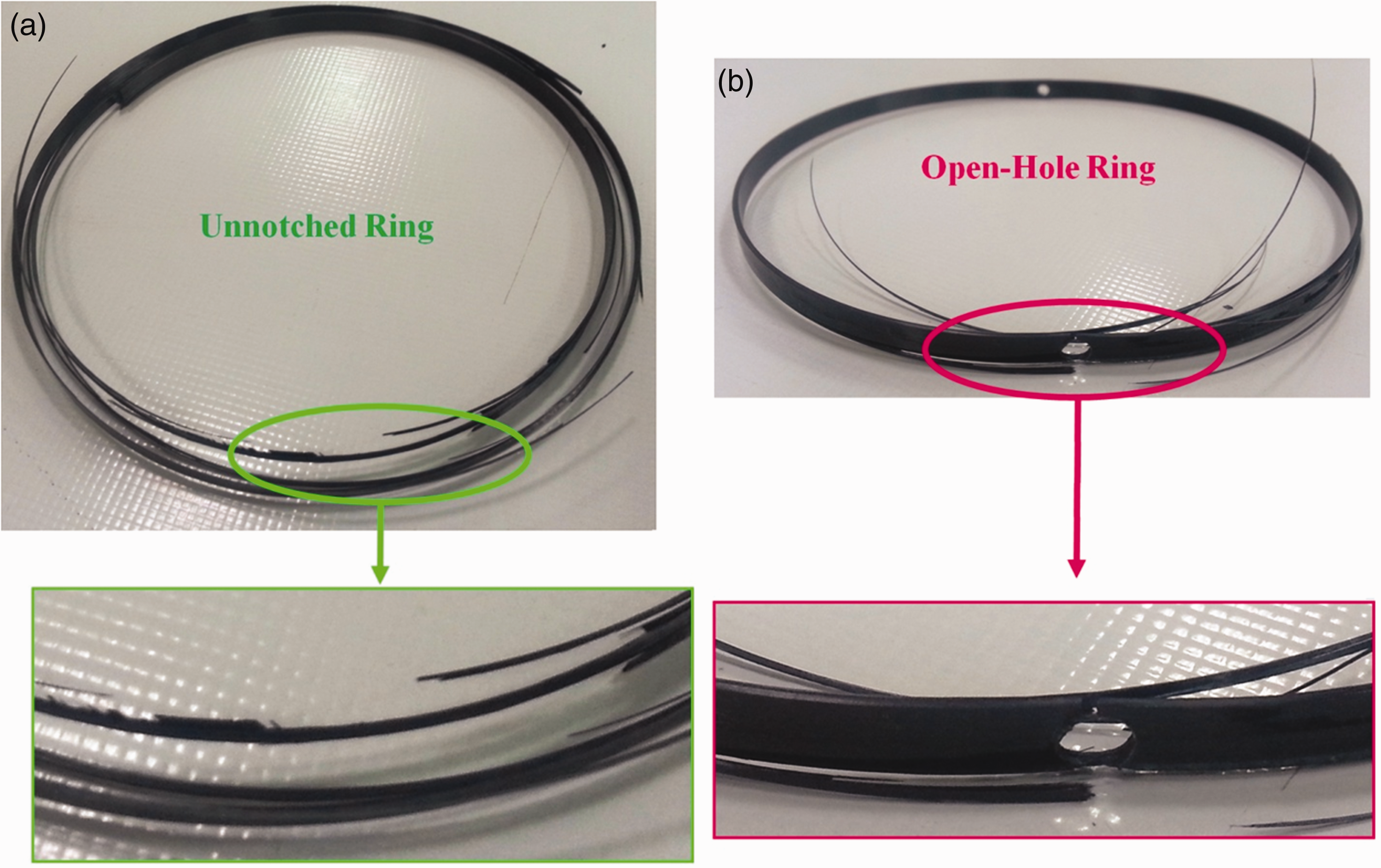
It is also observed that long splitting fiber breakage is the main mode for failure of un-notched specimens, whereas fiber breakage and fiber matrix debonding are two main modes for failure of open-hole specimens (Figure 7).
Regression model

The values of correlation coefficient of the proposed regression model.

Stress analysis of un-notched and open-hole composites under thermal cycling is presented by Figure 8 (using equation (2)). Dimensionless failure tensile stress of the 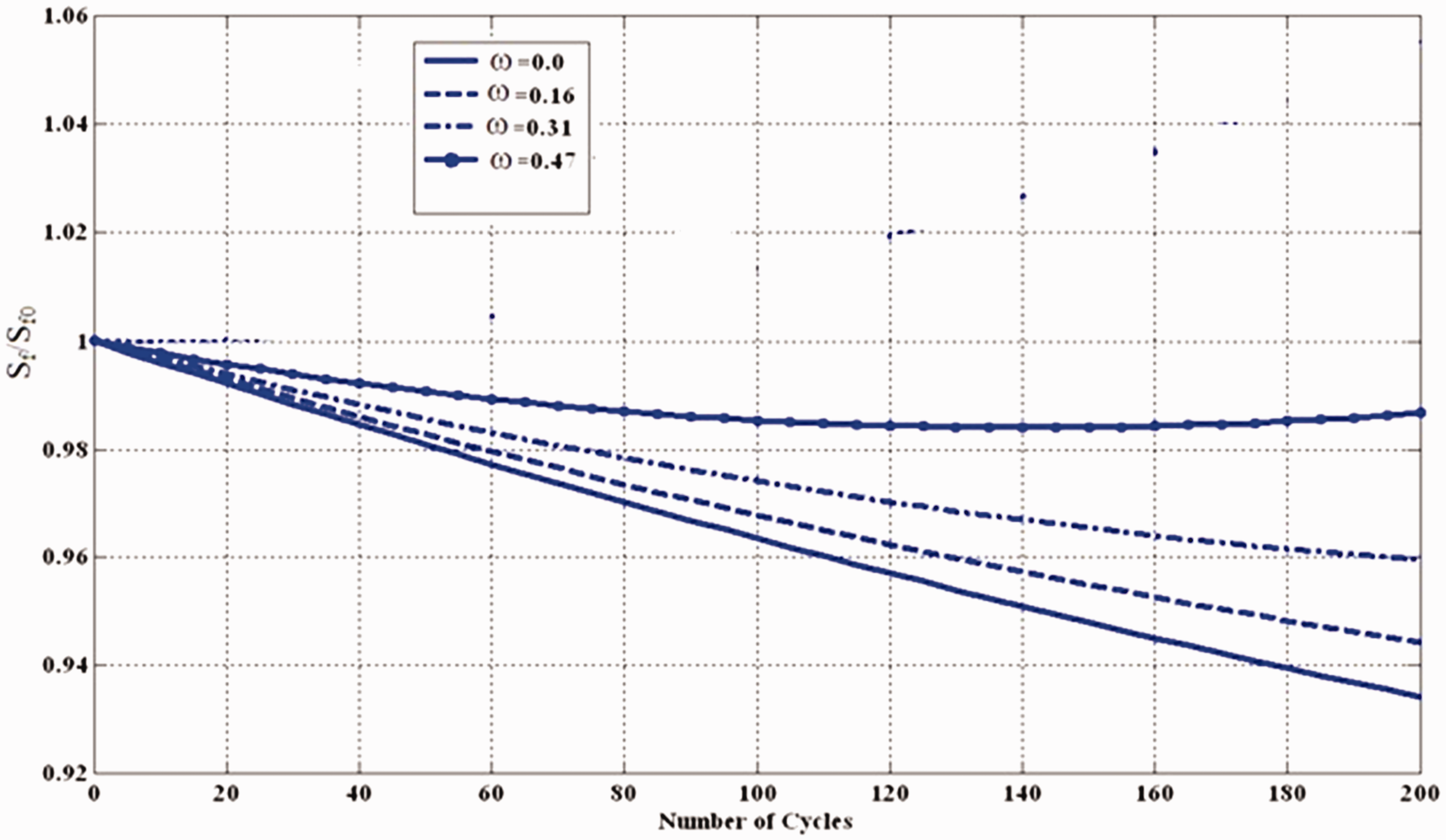
Figure 9 depicts the comparison of experimental and theoretical results for different number of thermal cycles. As shown by this figure, both experimental and theoretical results confirm that hole diameter is an important factor in stress behavior of composite rings.
Comparison of experimental and theoretical results for un-notched and open-hole specimens.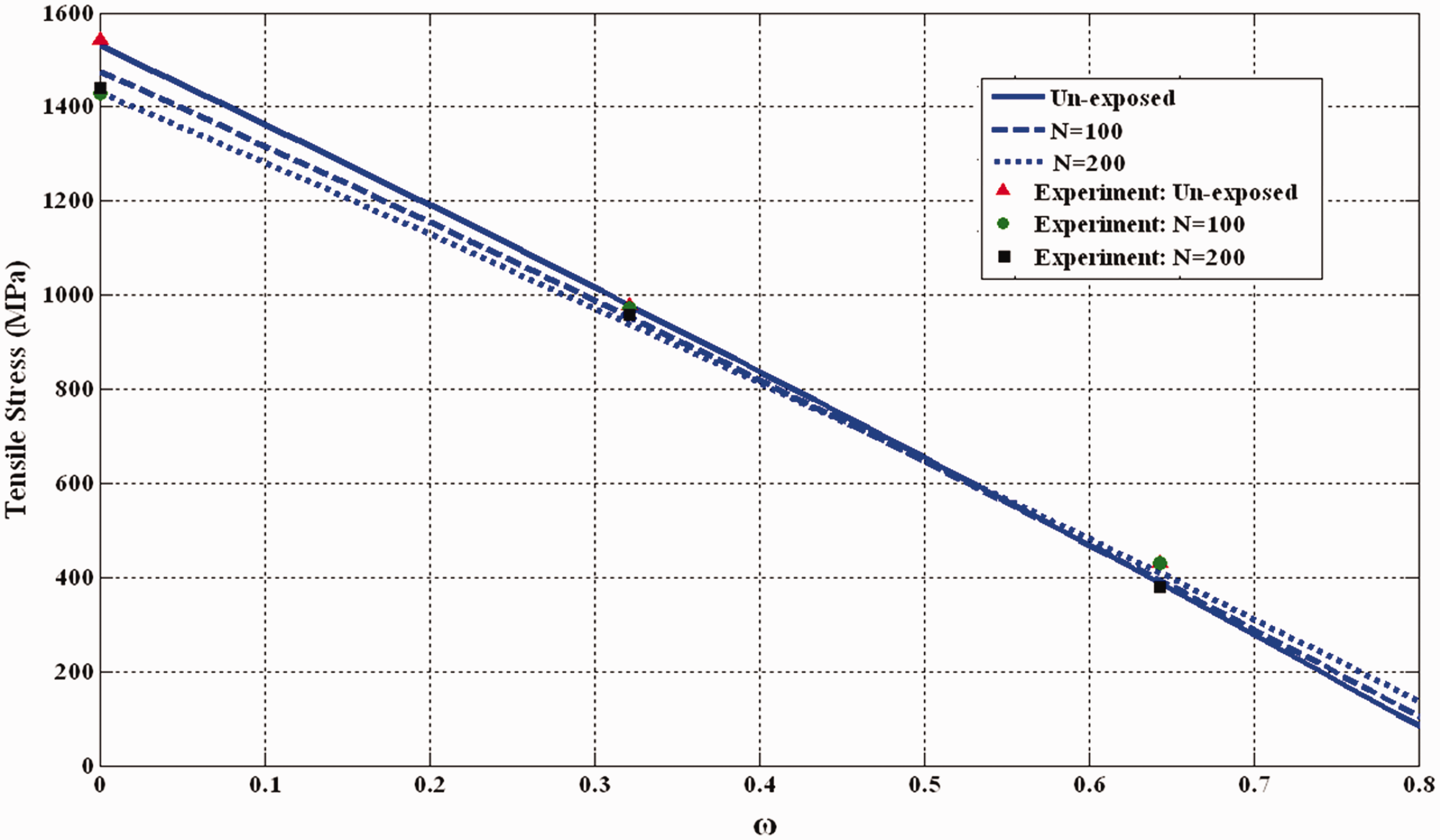
Conclusion
This research presents analysis of un-notched and open-hole composite rings under thermal cycling. Experimental investigations were performed to analyze tensile fracture stress behavior of composites. The NOL-ring test was applied and composites were subjected to 0, 100, and 200 thermal cycles. The results indicated that tensile fracture stress decreases during thermal cycling. In open-hole specimens, variations significantly depend on hole diameter and it becomes greater as the hole diameter rises. Also, it is concluded that thermal cycling decreases internal burst pressure of both un-notched and open-hole composites. Investigation of failure areas of composites showed that long splitting fiber breakage is the main mode for failure of un-notched specimens, whereas fiber breakage and fiber matrix debonding are two main modes for failure of open-hole specimens. Next, according to experimental results, a regression model was proposed to analyze the effects of hole diameter and thermal cycling. Theoretical studies validated that hole diameter plays an important role in stress behavior of composite rings and its effect is more noticeable than that of thermal cycling, especially when it comes to rings with bigger hole size.
Footnotes
Declaration of Conflicting Interests
The author(s) declared no potential conflicts of interest with respect to the research, authorship, and/or publication of this article.
Funding
The author(s) disclosed receipt of the following financial support for the research, authorship, and/or publication of this article: The authors are grateful to the University of Kashan for supporting this work by Grant No. 891234/07.
