






Abstract
A model is developed for the dielectric permittivity of polymer nanocomposites reinforced with transition metal dichalcogenide fillers at microwave frequencies. The model takes into account aggregation of nanoparticles into clusters (that involve both filler and matrix components) and the aspect ratio of aggregates. The governing equations involve four material parameters that are found by matching observations on the real and imaginary parts of the dielectric permittivity of polymers reinforced with MoS2 and WS2 micro- and nanospheres, MoS2 nanosheets and nanoflowers, and composite heterostructures formed by MoS2 and MoS2-CoS2 nanoparticles with graphene and reduced graphene oxide. Good agreement is demonstrated between results of simulation and the experimental data at frequencies in the S, X, and Ku bands of the electromagnetic spectrum. It is shown that composite heterostructures have superior dielectric properties compared with those of neat transition metal dichalcogenide nanoparticles.
Introduction
Development of novel communication technologies and wide use of electronic devices in commercial, civil, and military fields lead to an increasing production of electromagnetic (EM) radiation. 1 Electromagnetic interference (EMI) and pollution have become a serious public concern as they cause damage to telecommunication, induce malfunction in sensitive electronic devices, disturb information security, and adversely affect the human health. 2 EMI shielding (blocking EM radiation into sensitive areas) provides an effective way to diminish these harmful effects with the help of microwave absorbers that convert the EM energy into heat.
An ideal absorber should exhibit a wide absorption frequency range and high effectiveness of the EMI shielding. 3 Development of cost-efficient, flexible, lightweight, and thermally and chemically stable polymer composites for enhanced EM attenuation have recently attracted substantial attention. 4 At the initial stage, the research has mainly concentrated on the EM properties of composites with carbonaceous5,6 and ferromagnetic 7 particles. In the past few years, the focus has been shifted to polymers reinforced with “2D materials beyond graphene,” 8 a wide family of monolayer nanomaterials that involve single-element 2D nanosheets (silicene, germanene, stanene, etc.), 9 transition metal mono and dichalcogenides,10,11 transition metal carbides (MXenes), 12 layered metal oxides and hydroxides, 13 and their hierarchical structures. 14 In particular, the Wang group has recently demonstrated exceptionally high EM absorption of polymers reinforced with (i) superparamagnetic cobalt ferrite nanospheres decorated with reduced graphene oxide (rGO), 15 (ii) capsule-like structures of CoFe2O4 nanoparticles enriched with rGO and covered with poly(vinylpyrrolidone), 16 (iii) binary composites of termochromic samarium-iron garnet Sm3Fe5O12 with cobalt ferrite furnished with rGO, 17 (iv) CoFe2O4 nanospheres embedded into MoS2 nest-like nanostructures, 18 and (v) graphene oxide aerogels loaded with cobalt ferrite nanoparticles. 19
This study deals with dielectric properties and EMI shielding effectiveness of polymer composites filled with semiconductor transition metal dichalcogenide (TMDC) nanoparticles and their hybrid nanostructures. Mono- and few-layered TMDC nanosheets are prepared by micromechanical cleavage of bulk materials, ultrasonication-assisted liquid-phase exfoliation, chemical and electrochemical intercalation, colloidal synthesis, and chemical vapor deposition. 20 Experimental studies demonstrate good dielectric properties of polymer composites reinforced with TMDC nanosheets21–23 and their ability to serve as effective EMI absorbers. However, to achieve satisfactory shielding performance, high loading of filler is required, which causes complications in processing of nanocomposites, leads to deterioration of their mechanical properties, and limits commercial applications. 24
To enhance the EMI shielding effectiveness of composites with TMDC nanofillers, (i) alternation of morphology25–29 and (ii) functionalized hybridization of nanofiller30–34 are suggested as the most efficient strategies. Although the above studies reveal a pronounced improvement of the EM attenuation, comparison of the proposed approaches is rather difficult as the experimental data are reported in different bands of the EM spectrum on absorbers with different thicknesses and different volume fractions on filler.
Mathematical modeling of the dielectric properties of polymer nanocomposites provides a helpful tool for their characterization and comparison of the EMI shielding effectiveness. 5 A number of models have been developed in the past half-a-century for the dielectric permittivity of composite materials, refer Sheen et al. 35 and Araujo et al. 36 for their discussion and comparison. Simple phenomenological models for the dielectric properties of polymers reinforced with spherical particles were proposed in Almond et al. 37 and Drozdov and Christiansen. 38 A micromechanically-based effective-medium theory for the dielectric properties of composites with flake-like nanofillers was developed by Xia et al. 39 To the best of our knowledge, the ability of constitutive models to describe two sets of observations simultaneously (for the real and imaginary parts of the complex dielectric permittivity) on polymers reinforced with TMDC nanoparticles with sophisticated shapes (3D nano-flowers, hollow and hierarchical nanospheres, core-shells spheres coated with nanosheets, hierarchical heterostructures, etc.) has not yet been investigated.
The objective of this study is three-fold: (i) to develop a model for the complex dielectric permittivity of polymer composites that takes into account aggregation of TMDC particles into clusters (due to the van der Waals interaction between particles) and non-spherical shapes of the aggregates, (ii) to determine adjustable parameters in the governing equations by fitting observations on composites with various types of TMDC nanofillers in the S, X, and Ku bands of the EM spectrum, and (iii) to compare dielectric properties of neat TMDC nanoparticles and composite TMDC–graphene heterostructures.
To derive a constitutive model, we treat a composite as a two-phase medium consisting of clusters of aggregated nanoparticles homogeneously distributed in a polymer matrix. Following Xue, 40 we presume each cluster to involve both (filler and polymer) components. The dielectric permittivity of a cluster is connected with the intrinsic dielectric permittivity of filler by the Maxwell-Garnett formula. At small volume fractions of non-spherical clusters in a polymer matrix, the dielectric permittivity of a composite is determined by means of the Fricke model. 41 Its dielectric permittivity at an arbitrary concentration of filler is found with the help of the integration embedding scheme. 42 The effect of frequency of the EM field on the intrinsic dielectric permittivity of TMDC nanoparticles is described within the Debye model. 43
Model
The complex dielectric permittivity

A composite is treated as a two-phase medium, where filler particles with relative dielectric permittivity εf are distributed in a polymer matrix with relative dielectric permittivity εm. The volume fraction of filler is denoted by φ. With reference to Xue,
40
we suppose that filler particles aggregate into clusters that involve both filler and polymer components. Aggregation of TMDC particles in polymer matrices is confirmed by transmission electron microscopy (TEM) images, as well as by observations in tensile tests, which show a pronounced deterioration of the mechanical properties of nanocomposites with volume fraction of filler exceeding 1 vol%.44,45 The effective volume fraction of clusters is defined as


A cluster is treated as a composite material where polymer inclusions (with relative dielectric permittivity

Insertion of equation (3) into this equation results in

When K = 1 (no clustering of filler), equation (4) implies that


We now suppose that clusters of filler with relative dielectric permittivity

Under the assumption that the dielectric permittivity of clusters exceeds strongly that of the matrix, the coefficient B is given by

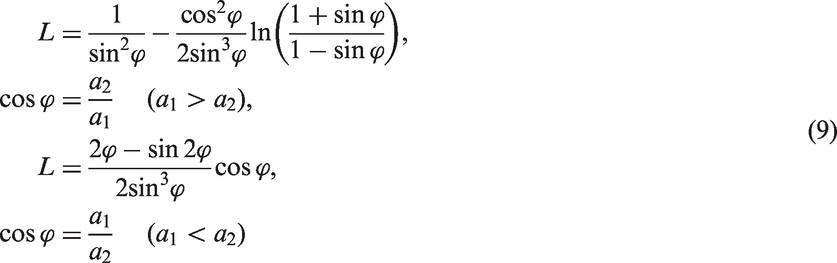
In particular, for spherical particles with
Equation (7) is fulfilled when the volume fraction of clusters is small. To extend this relation to higher values of φ, we apply the integration embedding method.
42
Starting with a matrix with relative dielectric permittivity

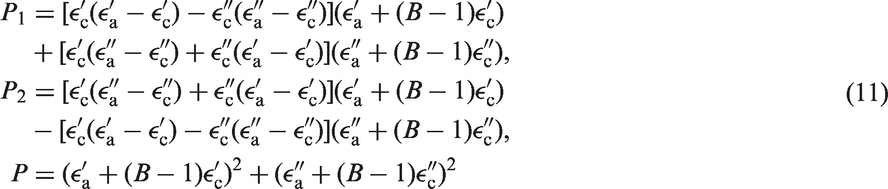
Equations (10) and (11) provide the governing equations for the complex dielectric permittivity of a nanocomposite. They involve four adjustable parameters with the following physical meaning: B is a measure of non-sphericity of clusters, K denotes volume fraction of polymer in clusters of filler, and
Given

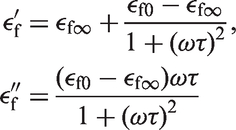
Combination of these relations yields
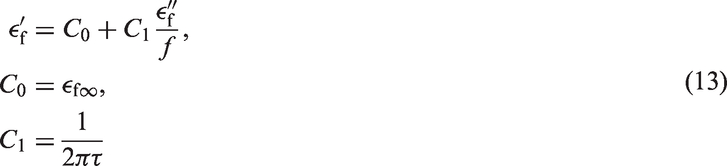
Fitting of observations
In the analysis of experimental data, we focus on observations at frequencies f = 4, 6, 8, 10, 12, 14, and 16 GHz, which correspond to the S, X, and Ku bands of the EM spectrum.
For each set of data, we begin with matching the experimental dependencies

Afterwards, the coefficients B and K are fixed. For each frequency f under investigation and the corresponding set of experimental dependencies
Paraffin wax reinforced with MoS2 microspheres and nanosheets
To examine the difference between the dielectric properties of composites reinforced with spherical micro-particles and nanosheets, we approximate experimental data reported in Ning et al. 21
First, observations in Figure 1(a) are matched on paraffin wax reinforced with MoS2 powder (an average diameter of 1–2 μm). The powder and paraffin wax were blended with ether and ultrasonicated. After cooling and evaporation of ether, the mixture was compressed to produce composite specimens. Given mass fraction of filler m, its volume fraction φ is calculated as
(a) Real 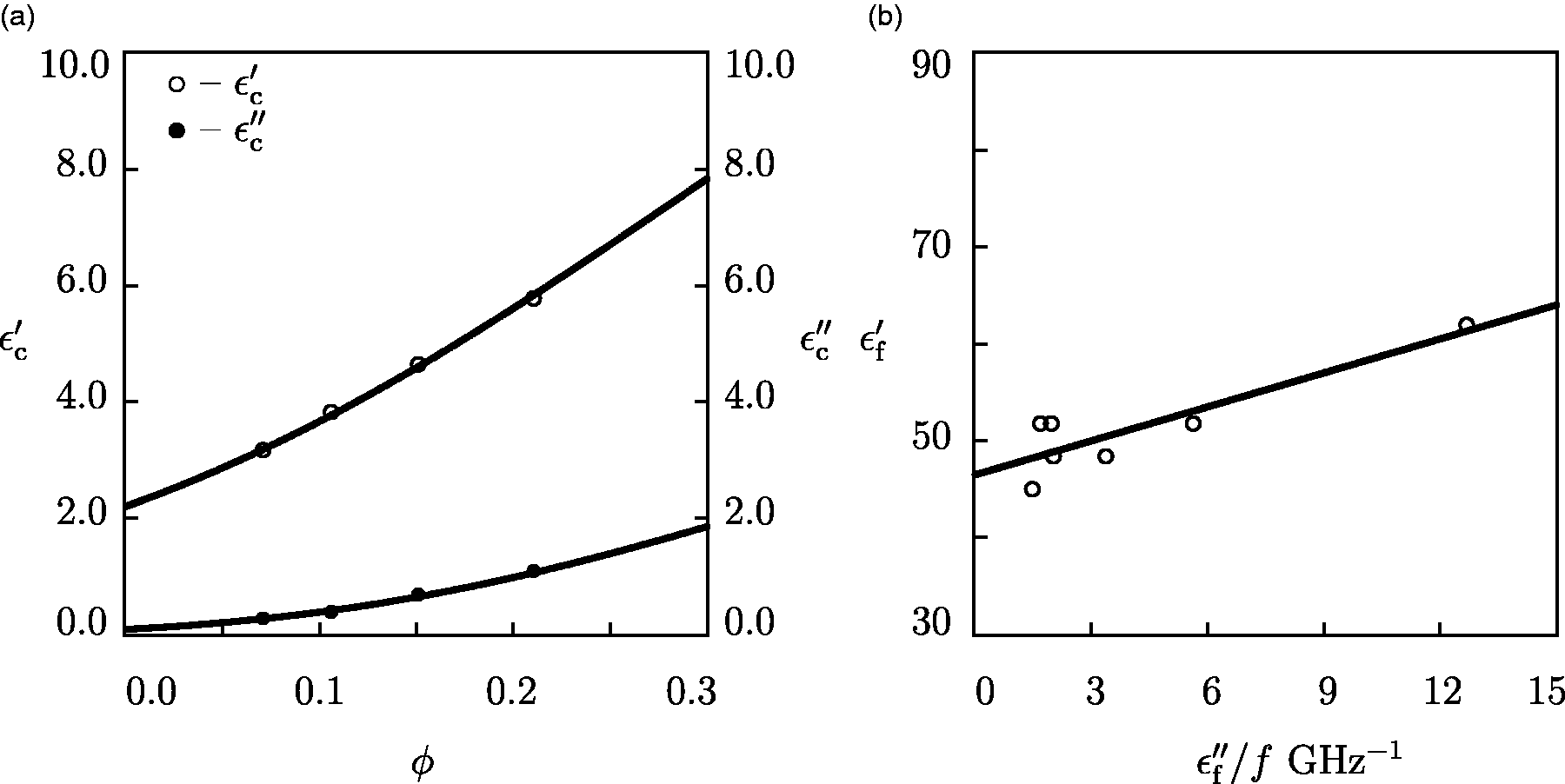

Material parameters for composites at frequency f = 10 GHz.
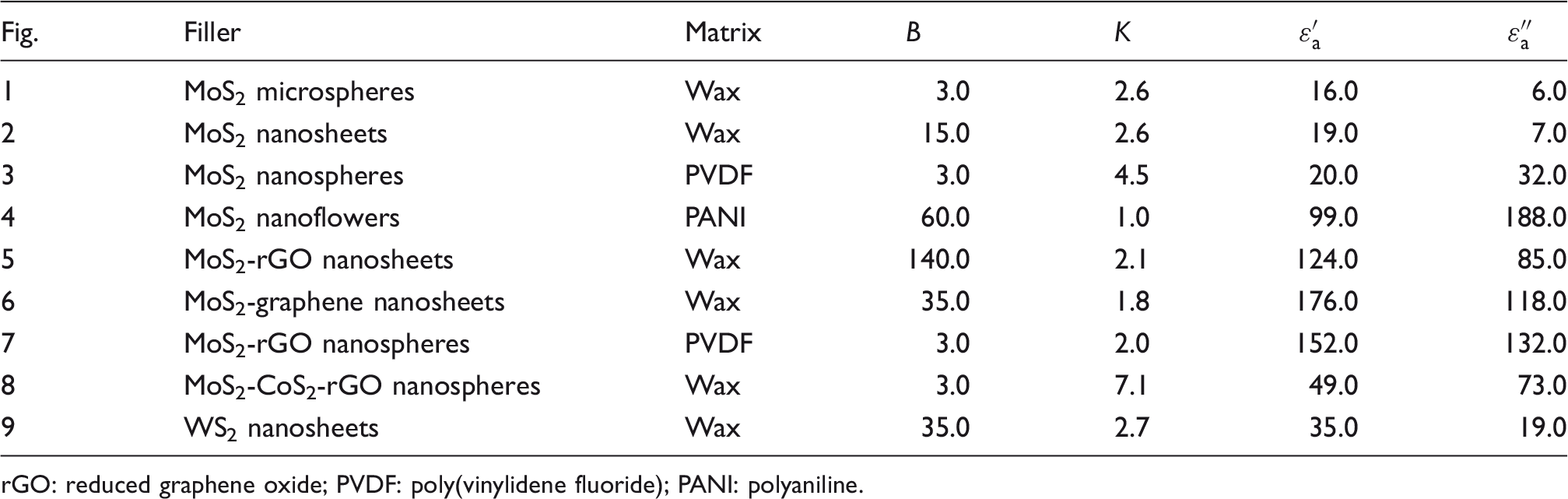
rGO: reduced graphene oxide; PVDF: poly(vinylidene fluoride); PANI: polyaniline.
Parameters in the Debye formula for the dielectric permittivity of filler.
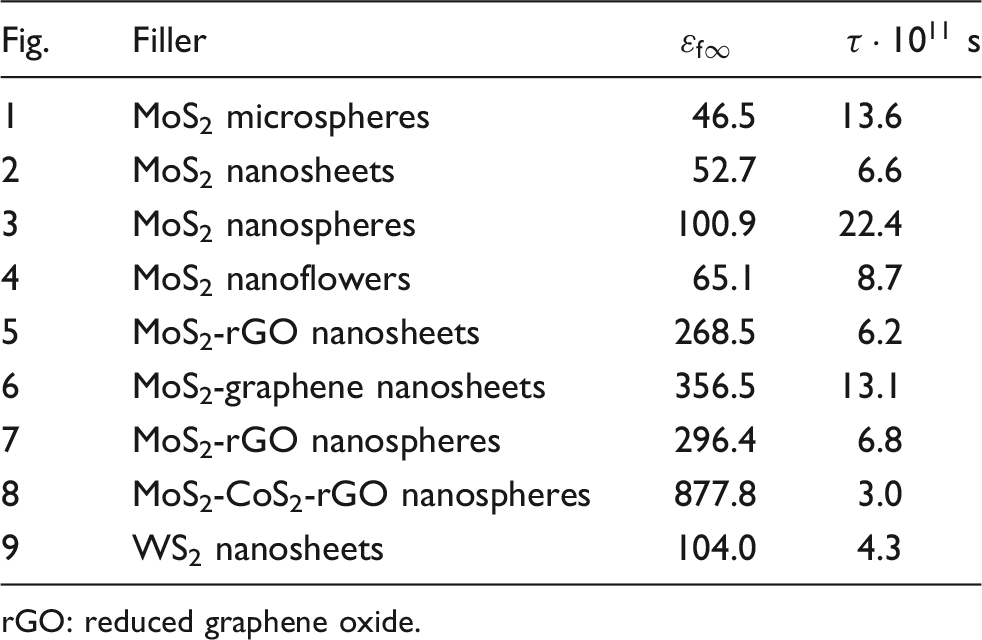
rGO: reduced graphene oxide.
We proceed with matching observations on paraffin wax reinforced with MoS2 nanosheets. The nanosheets were prepared by intercalation of MoS2 powder with lithium ions (in a solution of N-butyl lithium) followed by exfoliation under sonication in an aqueous solution. The nanofiller was mixed with paraffin wax in a solution of ether and ultrasonicated. After cooling and evaporation of ether, the mixture was pressed at room temperature to prepare specimens.
The real (a) Real 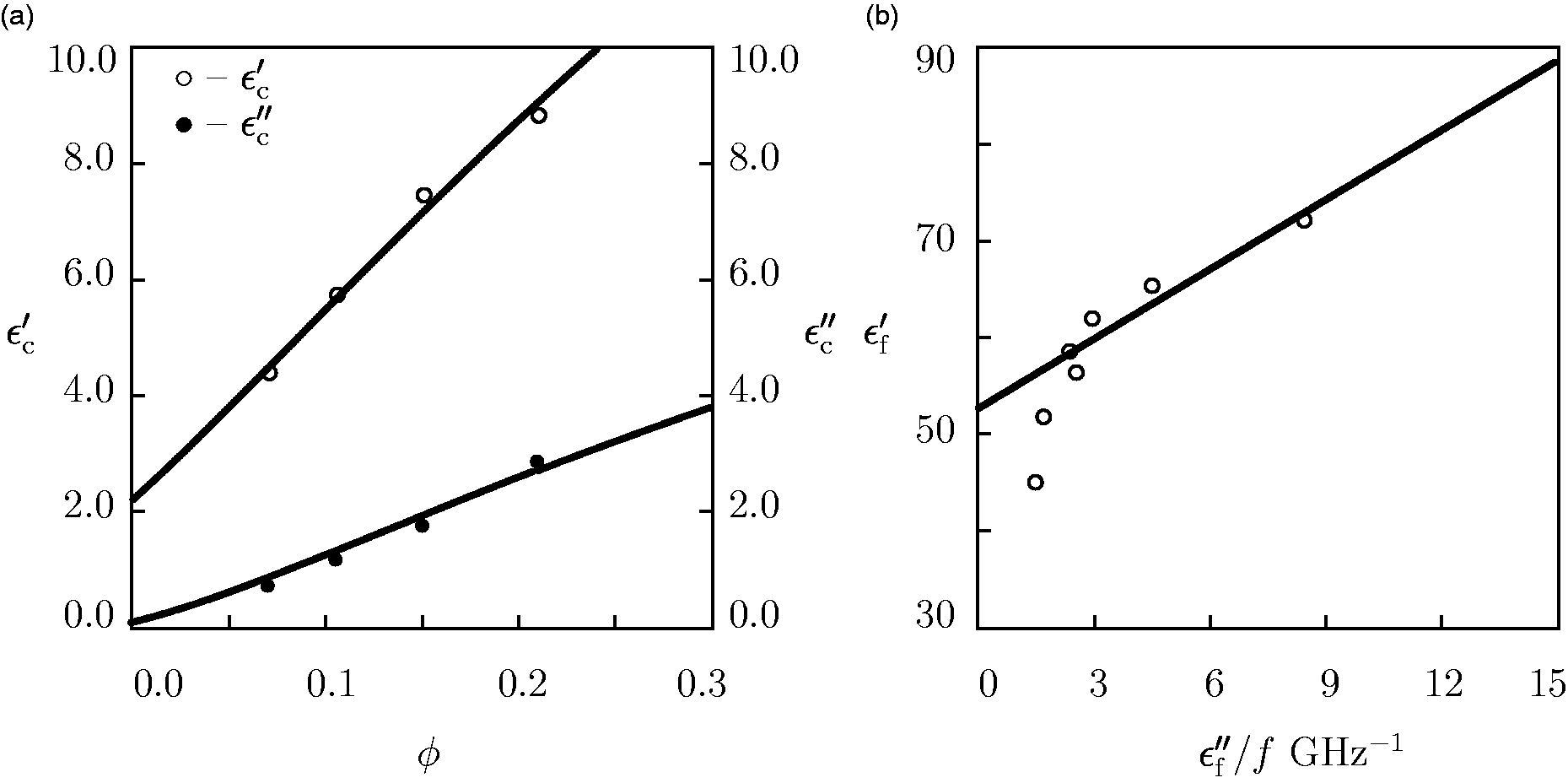
Poly(vinylidene fluoride) reinforced with MoS2 nanospheres
To assess the difference between the dielectric response of composites filled with MoS2 microspheres and hierarchical nanospheres, we fit experimental data reported in Zhang et al. 25
MoS2 nanospheres (an average diameter of 200 to 300 nm) were synthesized by reaction of sodium molybdate (Na2MoO
We begin with fitting observations in Figure 3(a), where the real and imaginary parts of the dielectric permittivity of composites are reported at frequency f = 10 GHz. The best-fit adjustable parameters are collected in Table 1. Then, the experimental dependencies (a) Real 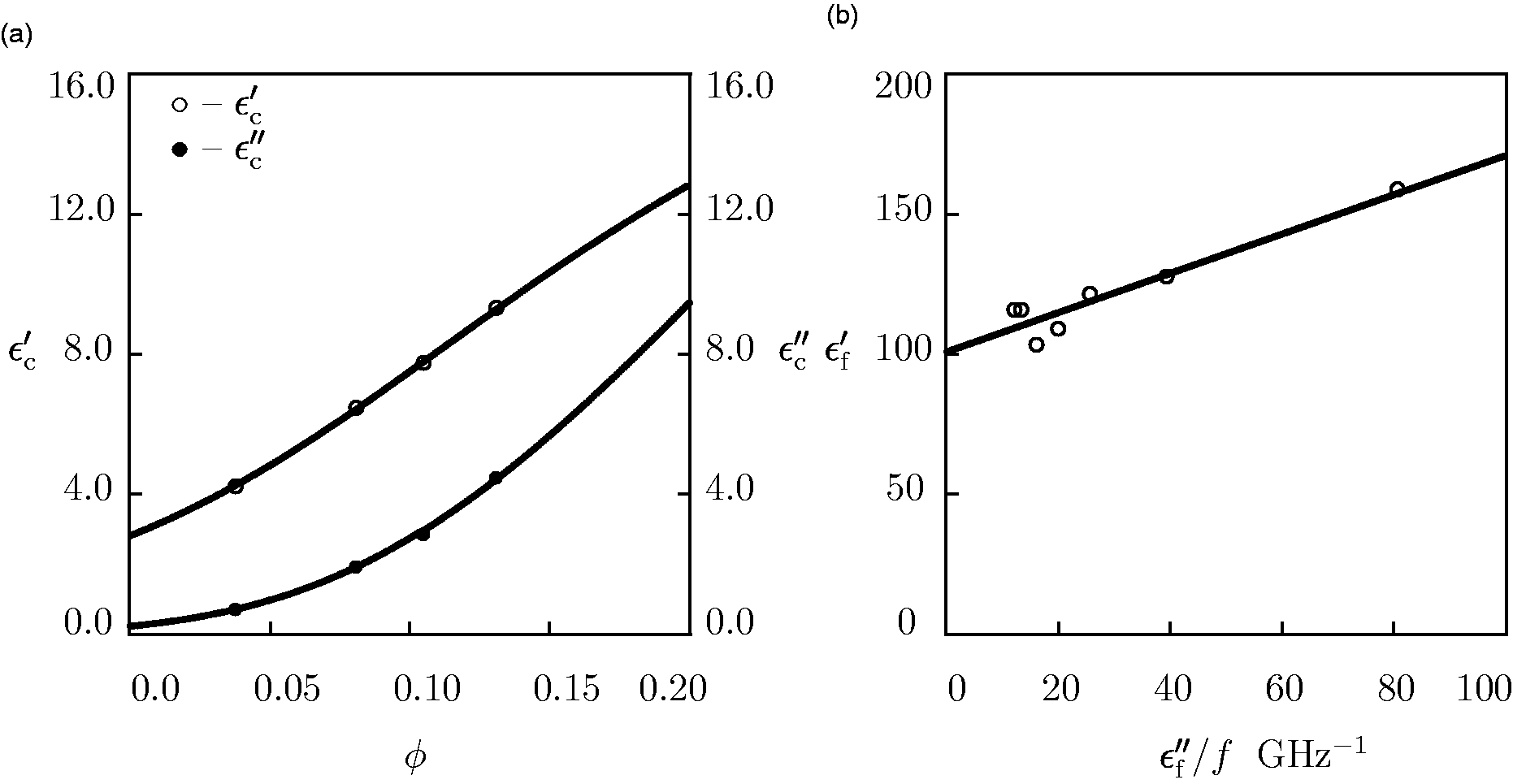
Polyaniline reinforced with MoS2 nanoflowers
To evaluate the effect of electrical conductivity of the polymer matrix on the dielectric properties of nanocomposites, we approximate observations reported in An et al. 27
Polyaniline–MoS2 composites were prepared in a two-step process. At the first step, MoS2 nanoflowers were synthesized by chemical reaction of ammonium molybdate tetrahydrate ((NH4)6Mo7O24) with thiourea (CN2H4S) in an aqueous solution of sodium dodecyl benzene sulfonate (18 h at 220℃). The precipitate was collected by centrifugation, washed, and dried. At the other step, the nanofiller was mixed with aniline monomers in an aqueous solution of dodecyl benzenesulfonic acid and ammonium persulfate. After in-situ chemical oxidative polymerization of polyaniline (PANI), the product was dried under vacuum. Samples for dielectric tests were fabricated by blending nanoparticles with paraffin wax (in proportion 1:4 by weight) and compressing the mixture at room temperature. Volume fraction of filler φ is calculated from equation (15) with
The real and imaginary parts of the dielectric permittivity of composites at frequency f = 10 GHz are presented in Figure 4(a) together with results of simulation with the material parameters collected in Table 1. According to this table, K = 1, which means that MoS2 and PANI are chemically incompatible, and clusters of filler are formed by nanosheets only. Afterwards, the experimental dependencies (a) Real 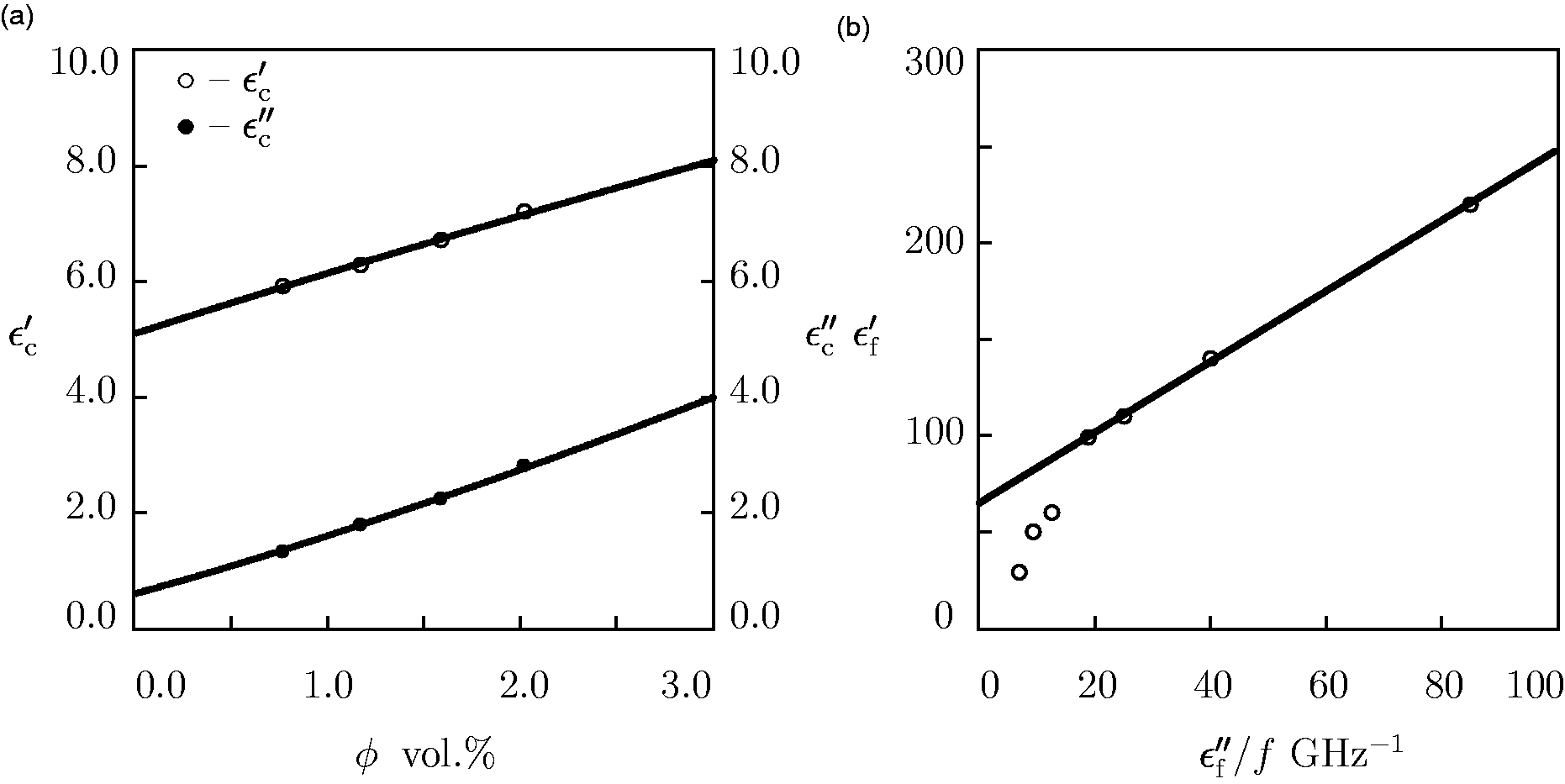
Polymers reinforced with MoS2–graphene hybrids
To study how the presence of graphene and rGO in MoS2–carbon nanohybrids affects the dielectric properties of nanocomposites, four sets of experimental data are matched. In calculations of volume fraction of filler φ, we use density of MoS2, as densities of MoS2–rGO hybrids are not provided.
We begin with observations on paraffin wax reinforced with MoS2-rGO nanosheets. 30 GO sheets were synthesized by a modified Hummers method, freeze-dried to obtain a powder, dispersed in water, and centrifuged to remove agglomerates. Sodium molybdate dihydrate (Na2MoO·H2O) was mixed with GO powder in an aqueous solution and freeze-dried to prepare Na2MoO4–GO hybrid. The powder was transferred to a tube furnace, where it reacted with CS2 vapor (2 h at 650℃) to produce MoS2 and to reduce GO thermally. After washing and drying, MoS2-rGO powder was mixed with molten paraffin wax, cooled, and pressed at room temperature to manufacture composite specimens.
The real and imaginary parts of the dielectric permittivity of nanocomposites at frequency f = 10 GHz are plotted versus volume fraction of filler φ in Figure 5(a) together with results of simulation with the material parameters reported in Table 1. After fitting the experimental diagrams at all other frequencies f under consideration, we determine (a) Real 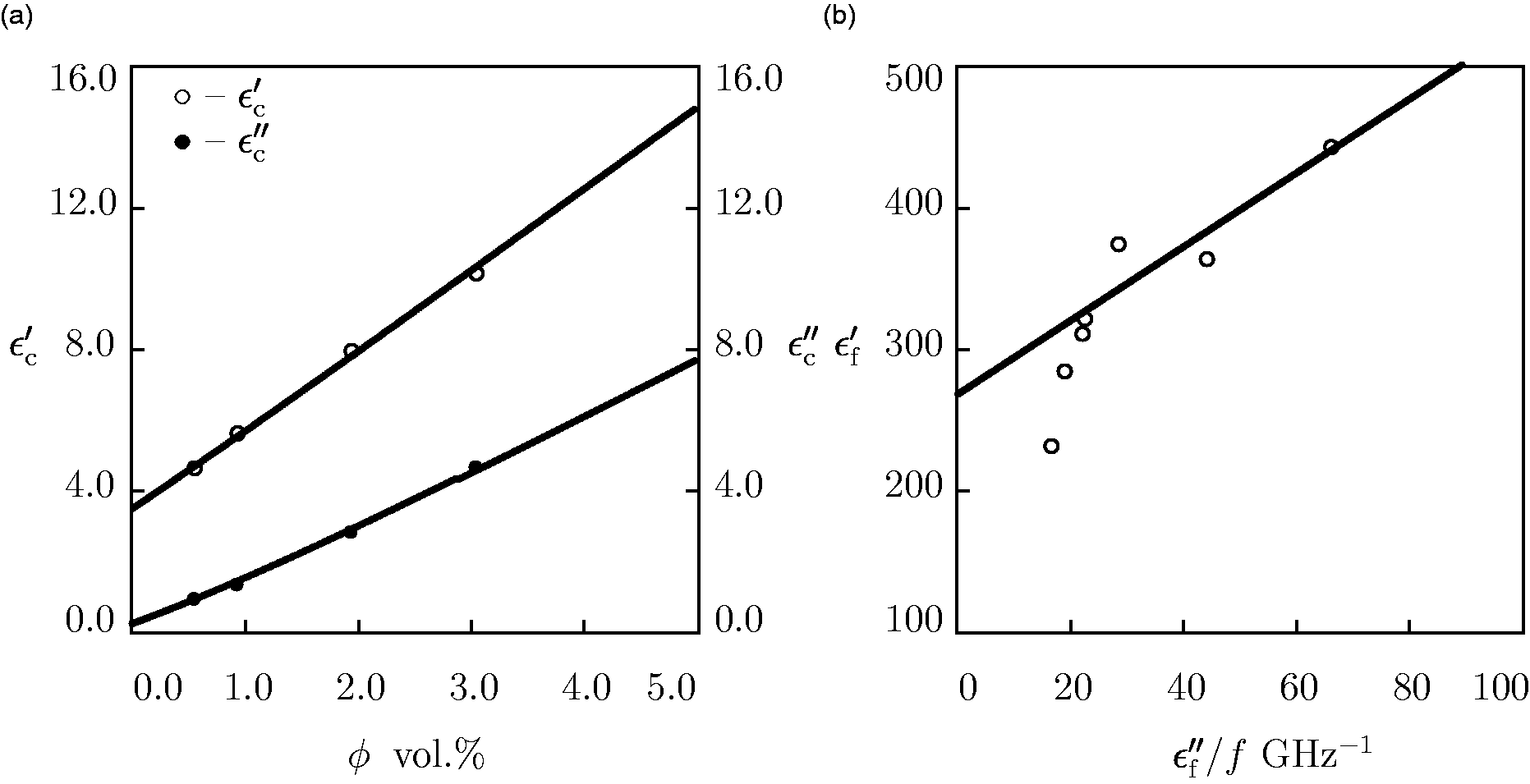
We proceed with matching observations on paraffin wax reinforced with MoS2–graphene nanosheets. 32 MoS2 nanosheets were prepared by dispersion of molybdenum disulfide powder in 1-methyl-2-pyrrolidone (MP) solution followed by sonication, centrifugation, and drying under vacuum. Graphene nanosheets were manufactured by a similar technique: graphite powder was dispersed in MP solution with addition of hexadecyl trimethyl ammonium bromide (CTAB) as a surfactant, sonicated, centrifuged, and dried. MoS2–graphene hybrid nanofiller was produced by hydrothermal reaction. MoS2 and graphene nanosheets (in proportion 4:1 by weight) were dispersed in ethanol solution and held for 12 h at 200℃. After cooling, the precipitate was centrifuged, washed, and dried. Composite specimens were manufactured by pressing mixtures of paraffin wax with MoS2–graphene nanosheets.
Observations on the nanocomposites at frequency f = 10 GHz are presented in Figure 6(a) together with results of simulation with the material parameters reported in Table 1. After fitting the experimental diagrams at all frequencies f under investigation, we calculate (a) Real 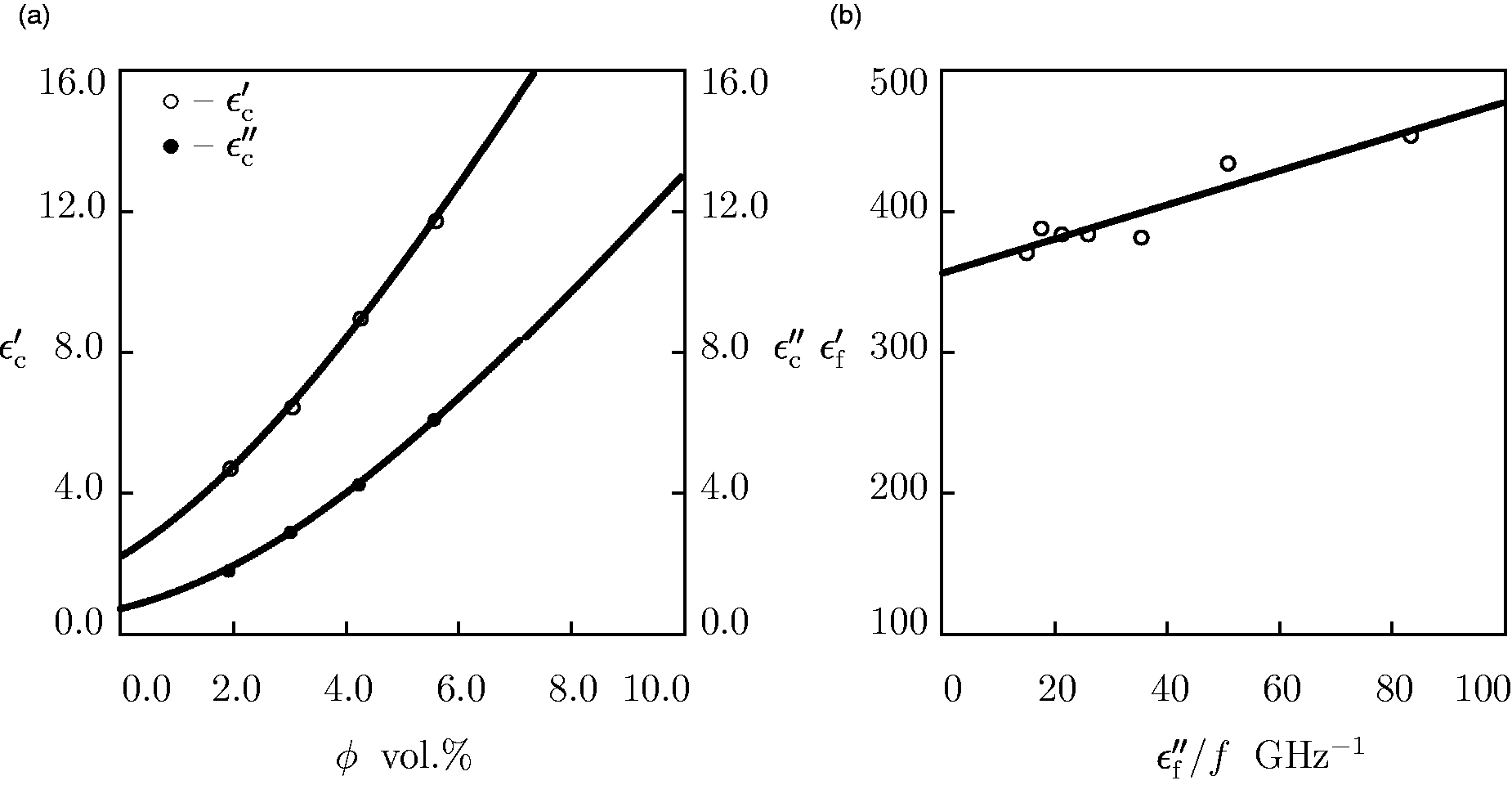
We now approximate experimental data on PVDF loaded with rGO-coated MoS2 nanospheres. 31 The nanospheres (an average diameter of 150–200 nm) were prepared by means of a hydrothermal method: chemical reaction in a suspension of sodium molybdate dihydrate with L-cysteine (20 h at 200℃) followed by centrifugation, washing, and drying. GO nanosheets were synthesized by a modified Hummers method. MoS2 nanospheres and GO nanosheets were mixed (in proportion 1:2 by weight) in an aqueous solution. To reduce GO chemically, the dispersion was heated to 90℃ and hydrazine hydrate was added. Composite specimens were manufactured by mixing the nanofiller with a solution of PVDF in DMF, followed by sonication and drying at an elevated temperature.
The real and imaginary parts of the dielectric permittivity of nanocomposites at frequency f = 10 GHz are reported in Figure 7(a) together with results of simulation with the adjustable parameters reported in Table 1. The plot of (a) Real 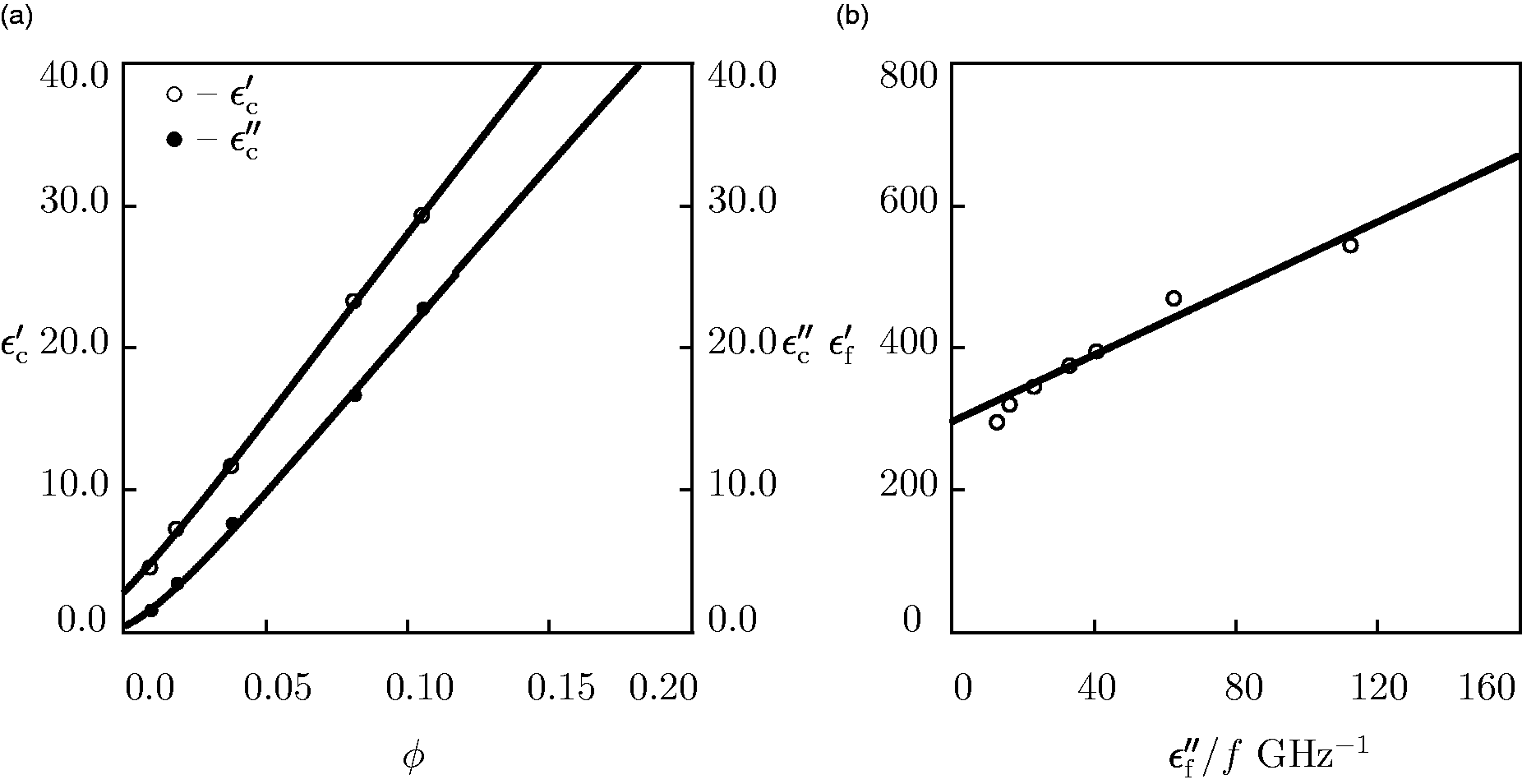
Finally, we match observations on paraffin wax reinforced with rGo-coated CoS2@MoS2 nanospheres.
33
To synthesize CoS2 nanospheres, cobalt chloride hexahydrate (CoCl
The real and imaginary parts of the dielectric permittivity at frequency f = 10 GHz are reported in Figure 8(a) together with results of simulation with the parameters collected in Table 1. As the magnetic permeability of the nanocomposites is close to that of air (see Figure 7(d) and (e) in Zhu et al.
33
), it is disregarded in modeling. At each frequency f under investigation, we find (a) Real 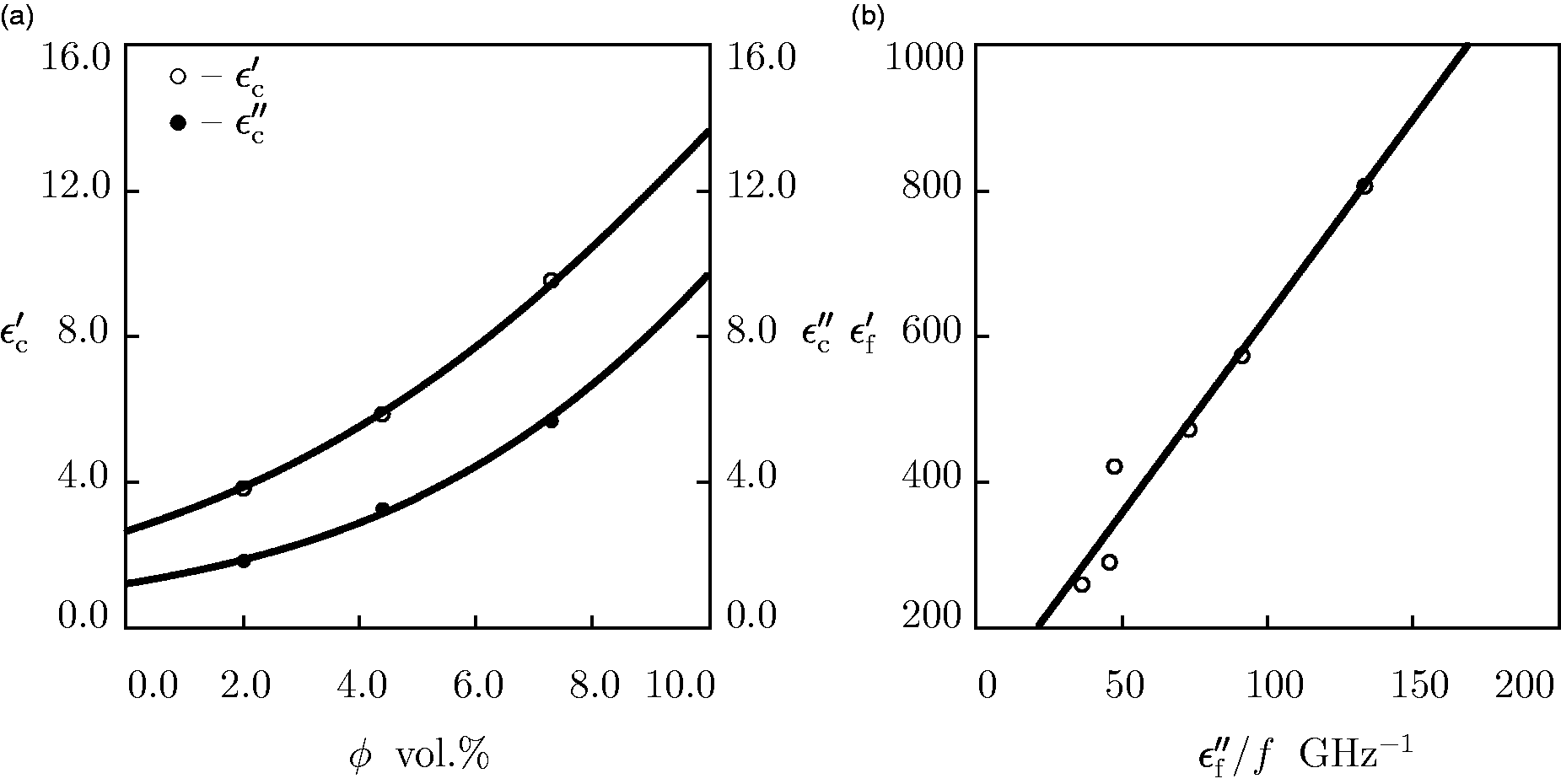
Polymers reinforced with WS2 nanosheets
To compare dielectric properties of polymer composites filled with MoS2 and WS2 nanoparticles, experimental data are fitted on paraffin wax reinforced with WS2 nanosheets. 22
To prepare few-layer WS2 nanosheets, WS2 powder was dispersed in DMF and sonicated. The precipitate was centrifuged, washed, and dried. Composite samples were produced by mixing the nanofiller with paraffin wax and pressing.
The real and imaginary parts of the dielectric permittivity at frequency f = 10 GHz are plotted versus volume fraction of filler φ in Figure 9(a). Volume fraction of nanosheets is calculated from equation (15) with ρ = 0.9 and (a) Real 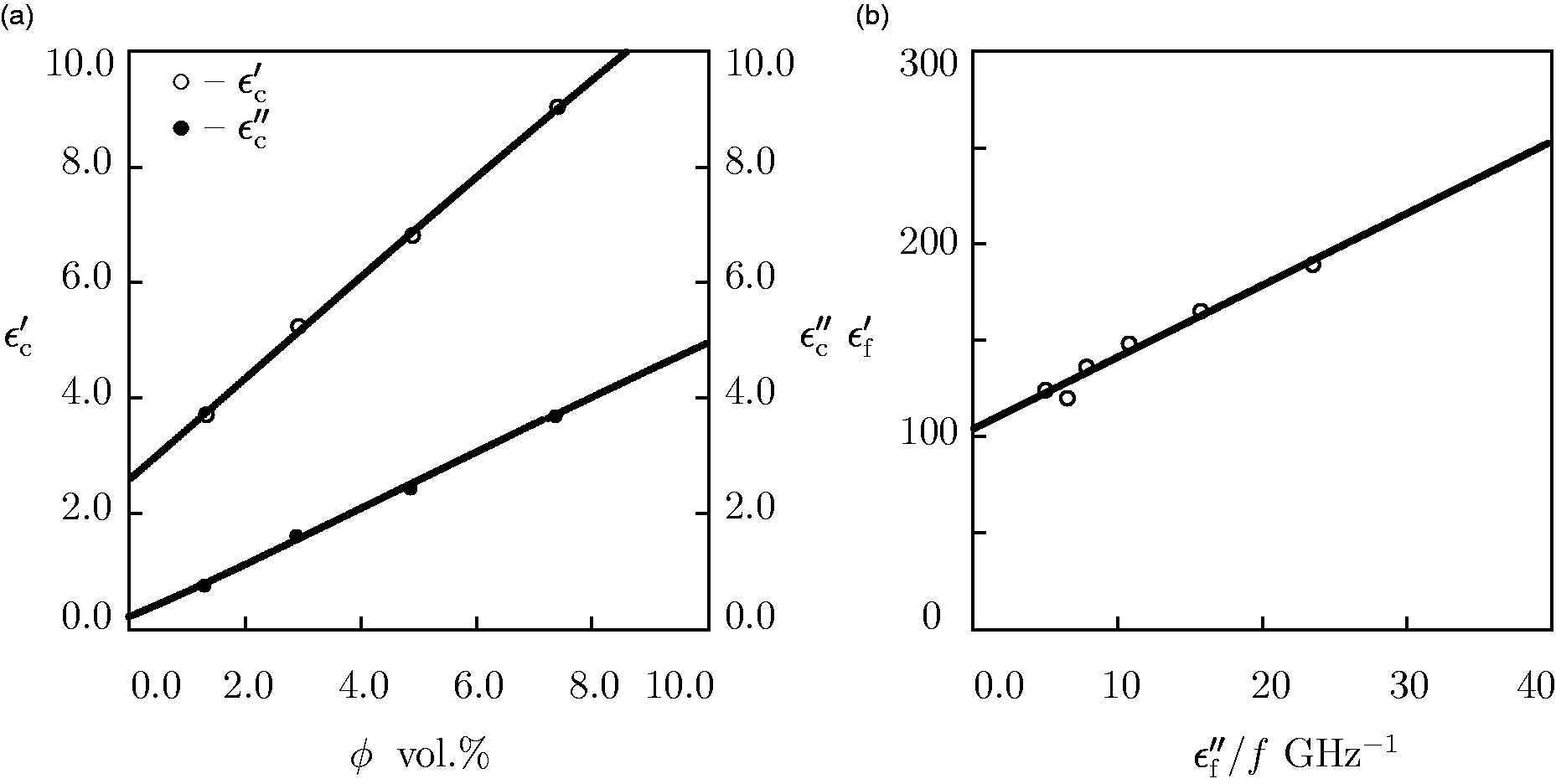
Discussion
Figures 1(a) to 9(a) demonstrate good agreement between the experimental data on the real and imaginary parts of dielectric permittivity of nanocomposites and results of simulation, which confirms the ability of the model to describe observations at microwave frequencies.
Figures 1(b) to 9(b) show that the Debye model (equation (13)) predicts adequately the effect of frequency f on the real

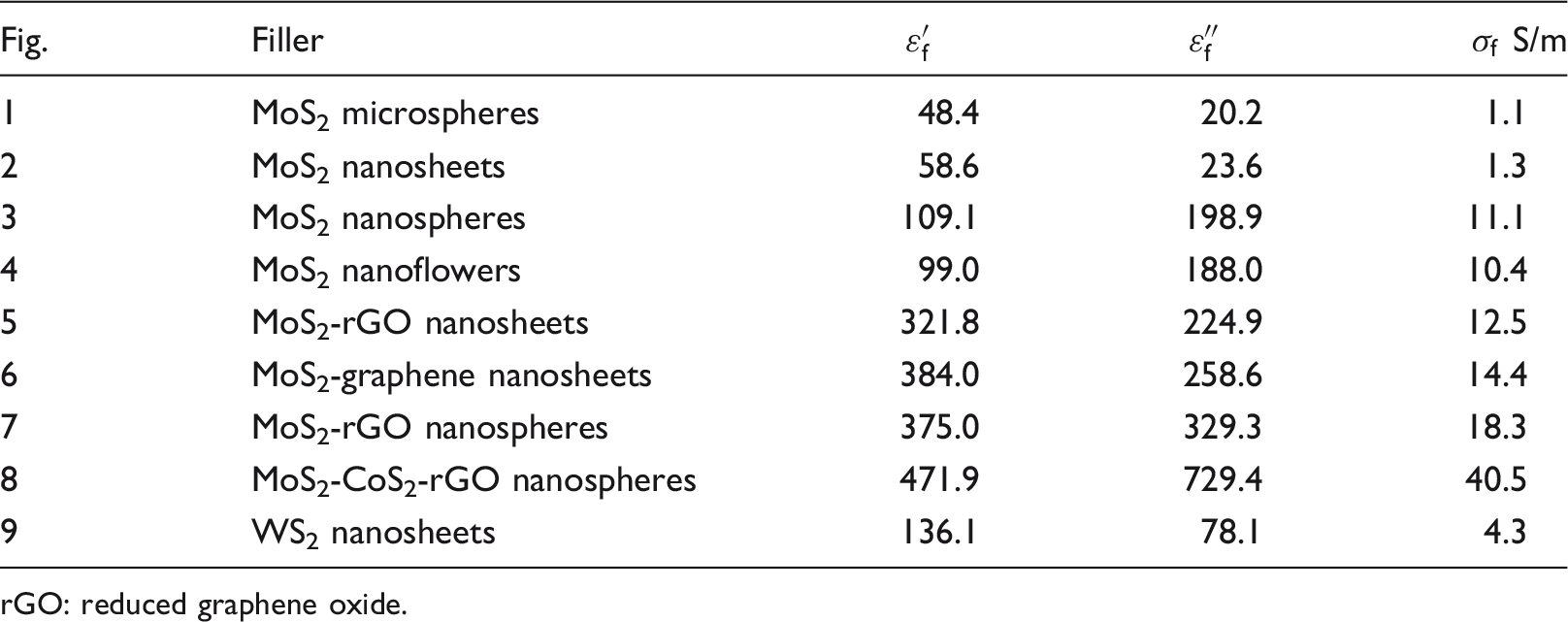
Intrinsic dielectric permittivity and AC conductivity of filler at frequency f = 10 GHz.
rGO: reduced graphene oxide.
Table 2 reveals that for all TMDC nanofillers under consideration, the characteristic relaxation time τ is of order of
The following conclusions are drawn from Tables 2 and 3:
(I) Transformation of MoS2 microspheres into few-layer nanosheets
21
leads to a modest increase in the complex dielectric permittivity of filler (at f = 10 GHz, (II) The real and imaginary parts of the dielectric permittivity of WS2 nanosheets
22
exceed those of MoS2 nanosheets
21
by a factor of 2 to 3. This conclusion is in accord with the experimental data reported in Wang et al.,
23
where (III) Hybrid fillers involving TMDC together with graphene and rGO nanosheets demonstrate superior dielectric properties compared with pure TMDC (
To evaluate the effect of aggregation of filler (characterized by the parameter K in the model) on the complex dielectric permittivity of composites, numerical analysis is conducted for a composite with the paraffin wax matrix reinforced with rGo-coated CoS2@MoS2 nanospheres
33
at frequency f = 10 GHz. Results of simulation with the material constants reported in Tables 1 and 3 are depicted in Figure 10, where the real (Figure 10(a)) and imaginary (Figure 10(b)) parts of the dielectric permittivity are plotted versus volume fraction of filler φ at K values ranging from K = 1 (no aggregation) to K = 10 (high degree of clustering). This figure shows that an increase in K induces a pronounced (by an order of magnitude) growth of Real 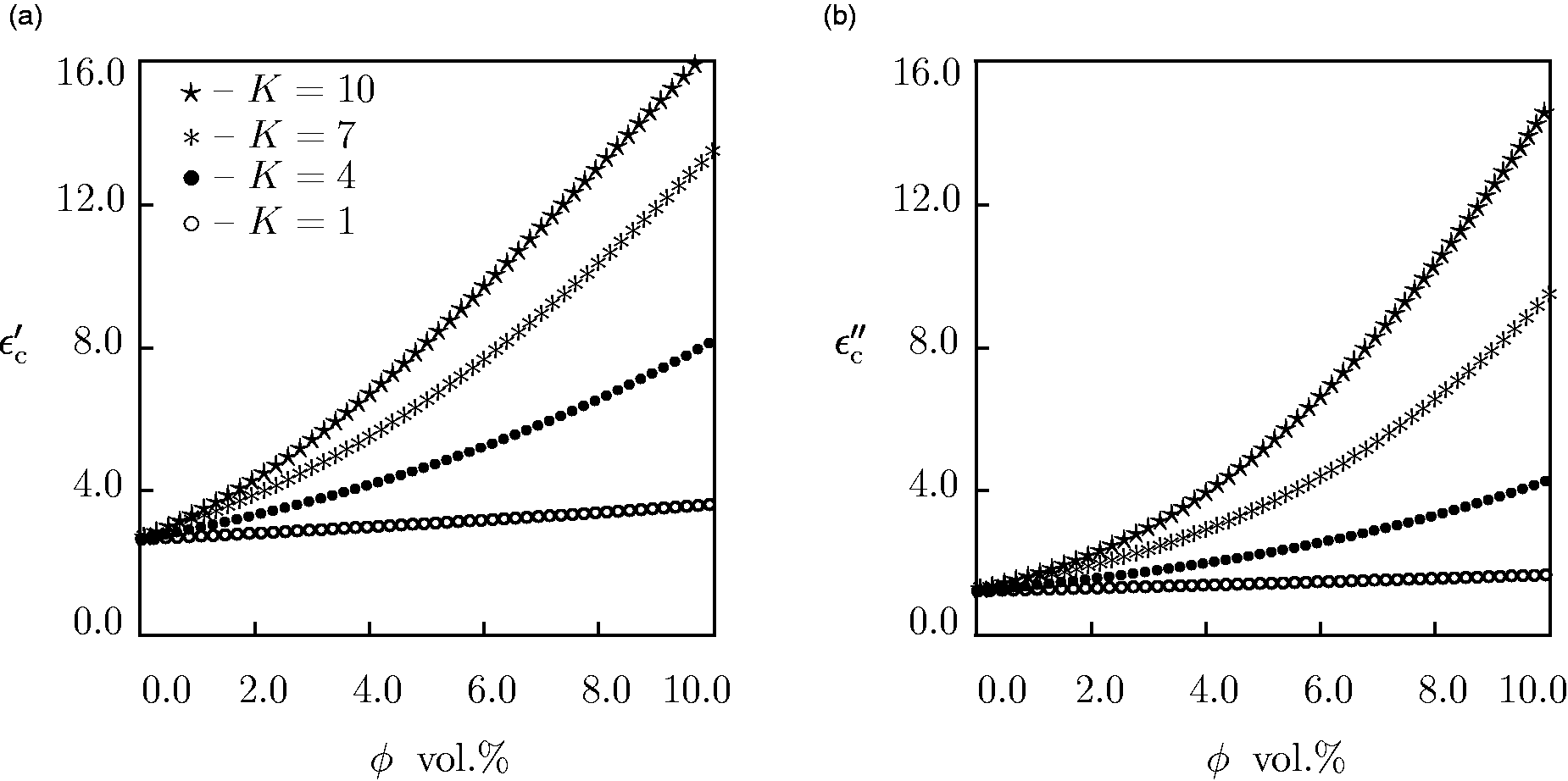
Conclusions
A model is developed for the complex dielectric permittivity of polymer nanocomposites that takes into account non-sphericity of filler particles and their aggregation into clusters containing both filler and matrix components. The dielectric permittivity of composites with small volume fractions of aggregates (spheroids with arbitrary aspect ratios) are determined with the help of the Fricke model. Differential equations for the real and imaginary parts of the dielectric permittivity of a composite with an arbitrary volume fraction of filler φ are derived by means of the integration embedding method. These relations involve four material constants with transparent physical meaning: (i) B characterizes the aspect ratio of clusters, (ii) K describes volume fraction of polymer molecules in clusters and serves as a measure of wetting of filler particles by the matrix, and (iii)
Material parameters are found by matching observations on the real and imaginary parts of the dielectric permittivity (two sets of data are fitted simultaneously) of polymers reinforced with MoS2 and WS2 micro- and nanospheres, MoS2 nanosheets and nanoflowers, and composite heterostructures formed by MoS2 and MoS2-CoS2 nanoparticles with graphene and rGO nanosheets. Figures 1 to 9 demonstrate good agreement between results of simulation and experimental data at microwave frequencies.
It is shown that composite heterostructures formed by TMDC nanoparticles together with graphene and rGO nanosheets have superior dielectric properties compared with neat TMDC nanospheres and nanosheets.
Footnotes
Declaration of Conflicting Interests
The author(s) declared no potential conflicts of interest with respect to the research, authorship, and/or publication of this article.
Funding
The author(s) disclosed receipt of the following financial support for the research, authorship, and/or publication of this article: Innovationsfonden (Innovation Fund Denmark, projects 5152-00002B and 9091-00010B).
