






Abstract
Nowadays, the application of the engineered cementitious composites(ECC) is expected to highly develop. Due to the lack of access to oiled- polyvinyl alcohol (PVA) fibers in many parts of the world, the implementation of the ECC has contained many difficulties. In this study, to increase the mechanical properties of ECC with the use of un-oiled PVA fibers, the polymers of styrene butadiene rubber (SBR), and ethylene vinyl acetate (EVA) were taken into account to resolve the abovementioned issue. Herein, also in order to enhance the tensile and flexural properties of ECC, the cement was replaced by polymers. Accordingly, a total of 7 mix designs were planned to conduct the proposed tests. The compressive strength, uniaxial tensile strength, and three-point bending tests were performed on the ECC at their 28-day age with consideration of the freeze and thaw cycle. The results of this research illustrated that the use of polymers can enhance the tensile and flexural properties of the ECC with un-oiled PVA fibers. The tensile strain in this study increased by more than 3% after the application of the polymers. Furthermore, the compressive strength increased by more than 47 MPa, and the deflection at the mid-span reached more than 9 mm in the bending test. However, the results showed that the use of polymers was effective on the freeze and thaw cycle and almost preserved the mechanical properties of the ECC. SBR latex has higher compatibility with the ECC in comparison with EVA powder.
Keywords
Introduction
Around the globe, nations struggle with the ever-increasing challenges of unsustainable development. The consequences of this struggle are often most visible in developing nations with rapidly expanding economies. A higher quality of infrastructures could preserve the natural resources in the world. In this sense, concrete material can literally be regarded as one of the building blocks of economic development.
1
The ECC, also known as flexible concrete, can be the right solution for increasing structures' ductility.
2
The mechanical behavior of ECC is excellent in bending, which is similar to the flexibility of the metals
3
but the flexibility of ECC depends on the fiber dispersion and mixing method.
4
The tensile strain in this composite reaches up to 8%.
5
The ECC consists of cement, water, fly ash, silica sand, water-reducing admixture, and fiber. The less use of cement in this type of composite has environmental advantages.
6
The use of fly ash in the ECC leads to a better bond between cement, fly ash, and chemical admixtures.
7
In the mix design of the ECC, the micromechanical design type was applied.
8
Previous studies have shown that the ECC has a good performance in the sulfate environment,9,10 self-healing performance,11–13 and where it is exposed to high temperatures and fire.14,15
Furthermore, it has been combined with other admixtures like blast furnace slag, 19 fly ash class c, 20 recycled rubber and concrete,21,22 black carbon, 23 rice husk ash, 24 and other local materials used in ECC and has proven its efficiency. Such materials as polyethylene fibers,25,26 polypropylene fibers,27,28 PVA fibers,29,30 steel fibers,31,32 and hybrid fibers33,34 have been utilized in the previous research.
The cost of PVA fiber is approximately 1/8 that of high-modulus polyethylene fibers, and its tensile strength and elastic modulus are higher than that of polypropylene fibers. 35 Moreover, ECC can successfully tackle the issues of brittleness and cracking vulnerability but does not respond to the economic issues. 36 One way to reduce the cost of making PVA-ECC is to use un-oiled PVA fibers, which the authors have proposed using polymers to improve the mechanical properties of un-oiled PVA-ECC.
Research significance
The inequality of access to sources is an issue for developing countries. And there should be an alternative or a substitute for the developing countries in advanced technologies. Moreover, deploying the natural resources recklessly will end up with dire consequences for sure. For the making of the ECC, oiled PVA fibers are used. Also, to prevent adhesion between the cement matrix and fibers, use is made of hydrophobic oil.
37
In many parts of the world, access to oiled PVA fibers is limited
Experimental program
Materials and mix design
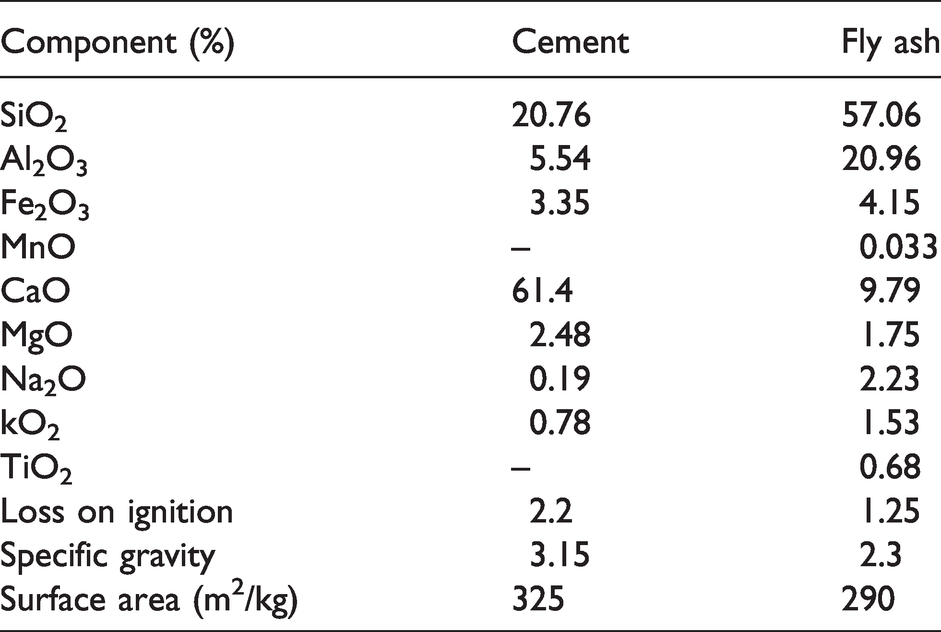
Portland cement (PC) type 2 produced by Tehran Cement Factory (According to ASTMC150 42 ) and F-Class fly ash (FA) (according to ASTMC618 43 ) were used to make ECC with high volume fly ash. The chemical and physical properties of PC and FA have been presented in Table 1. The ECC incorporated fine-grained silica sand with an aggregate size of 1.18 mm and specific gravity of 2.7 gr/cm³. The carboxylate-based high-range water-reducing admixture with a specific gravity of 1.07 gr/cm³ was added to the fresh ECC mixture to improve its workability.
Chemical composition and physical properties of PC and FA.
PVA fibers were used to enhance ductility. Ingredients were tested to determine the properties of the material. The mechanical properties of PVA fibers are presented in Table 2. Un-oiled fibers, SBR, and EVA polymers were used to increase the ductility and tensile strength of the ECC. The physical and chemical properties of the polymers are given in Tables 3 and 4.
Mechanical properties of the PVA fibers.

Chemical and physical properties of SBR.

Chemical and physical properties of EVA.

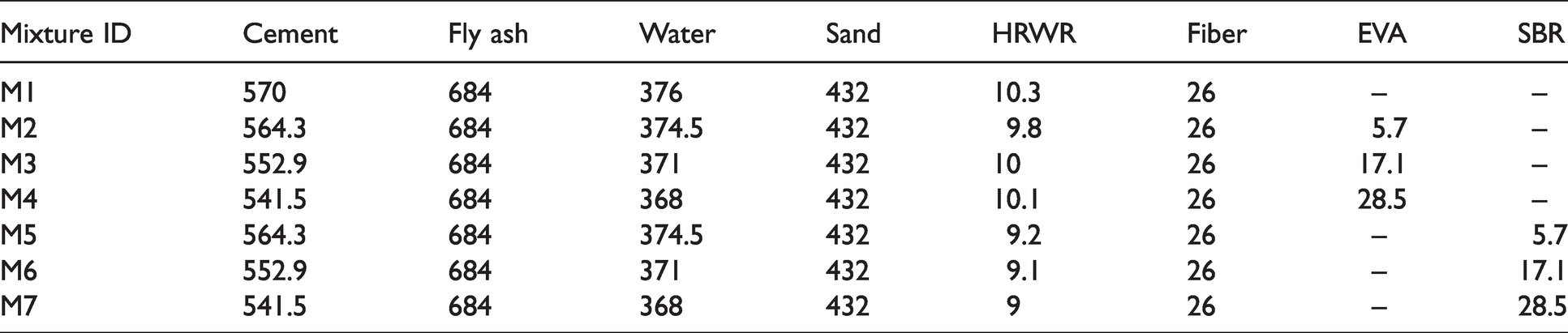
The ECC mixture consisted of a fly ash to cement ratio equal to 1.2. The water to
Mix proportion of PVA-ECC (ingredient: kg/m³).
Preparation of the specimens
A total of 7 mix designs were prepared in which the cement was replaced by EVA and SBR polymers with 0, 1, 3, and 5 wt% of cement. The other variables were assumed constant to investigate the changes. A mixer with 20 liters capacity was used for producing the fresh ECC mixture. The cement, sand, and EVA polymer were mixed for approximately 90 seconds. Water, high-range-water-reducing admixture, and SBR latex were added to the mixture, and the mixing continued for about 3 minutes. PVA fibers were added to the mixture, and this process was continued about 3 minutes more. Totally, it took approximately ten minutes for making the mixture. The prepared mixture was poured into the molds, and a vibrating table was implemented to reach an appropriate compaction rate.
44
After pouring into the molds, the specimens were covered with tight plastic sheets for 24 hours before the molds were demoulded. After demoulding, the specimens were kept for 7 other days within the sealed plastic bags at
Testing procedure
In order to determine the compressive strength of the PVA-ECC, the cubical specimen with 50x50x50mm dimensions was used according to ASTM C39. 49 For measuring the compressive strength, a jacking machine with 2000 KN capacity was implemented. The prismatic specimens with 350x50x15mm (length*width*height) dimensions were used for the bending test. These dimensions of the prismatic beam section have been used in the previous research. 37 The prismatic specimens were loaded using the three-point bending test loading condition. The loading speed of the bending machine was set to 0.5 mm per minute. The span length of the bending test was 300 mm and it reached 150 mm at the middle of the span. The images of performed tests have been shown in Figure 1.
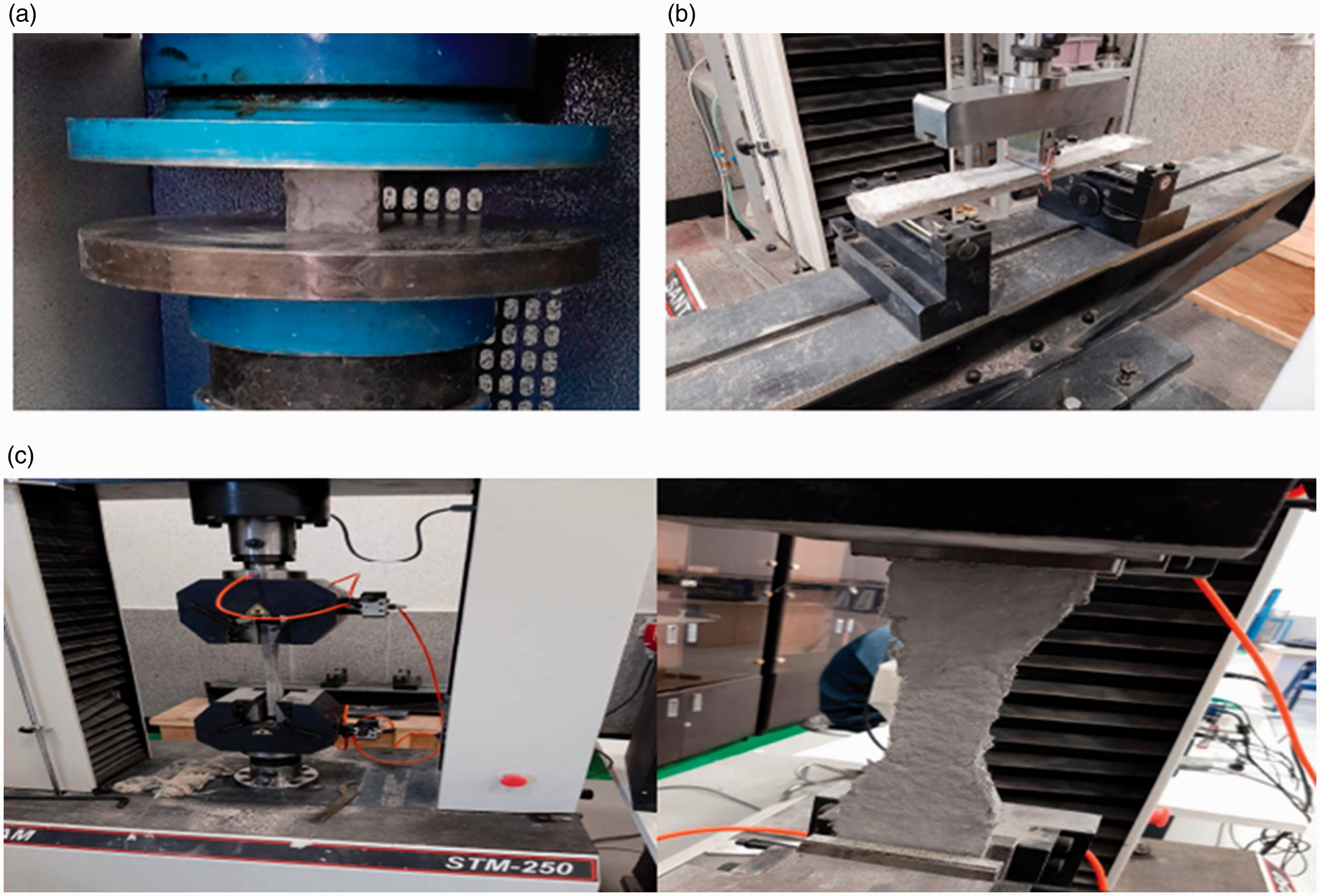
performed tests on PVA-ECC. (a) Compressive strength test, (b) Three-point bending test, (c) Uniaxial tensile test.
The dog-bone-shaped specimens were used for the tensile test. These specimens were used based on the previous studies 47 for uniaxial tensile tests. The SANTAM tensile servo- electromechanical machine with 25,000 Kgf capacity was used. The accuracy of the machine force measurement is 0.5 Kgf. The constant speed control range of the machine was 0.001–300 mm/min. The loading rate of the test machine was set to 0.2 mm per minute. The dimension of the dog-bone-shaped and beam specimen shows in Figure 2.
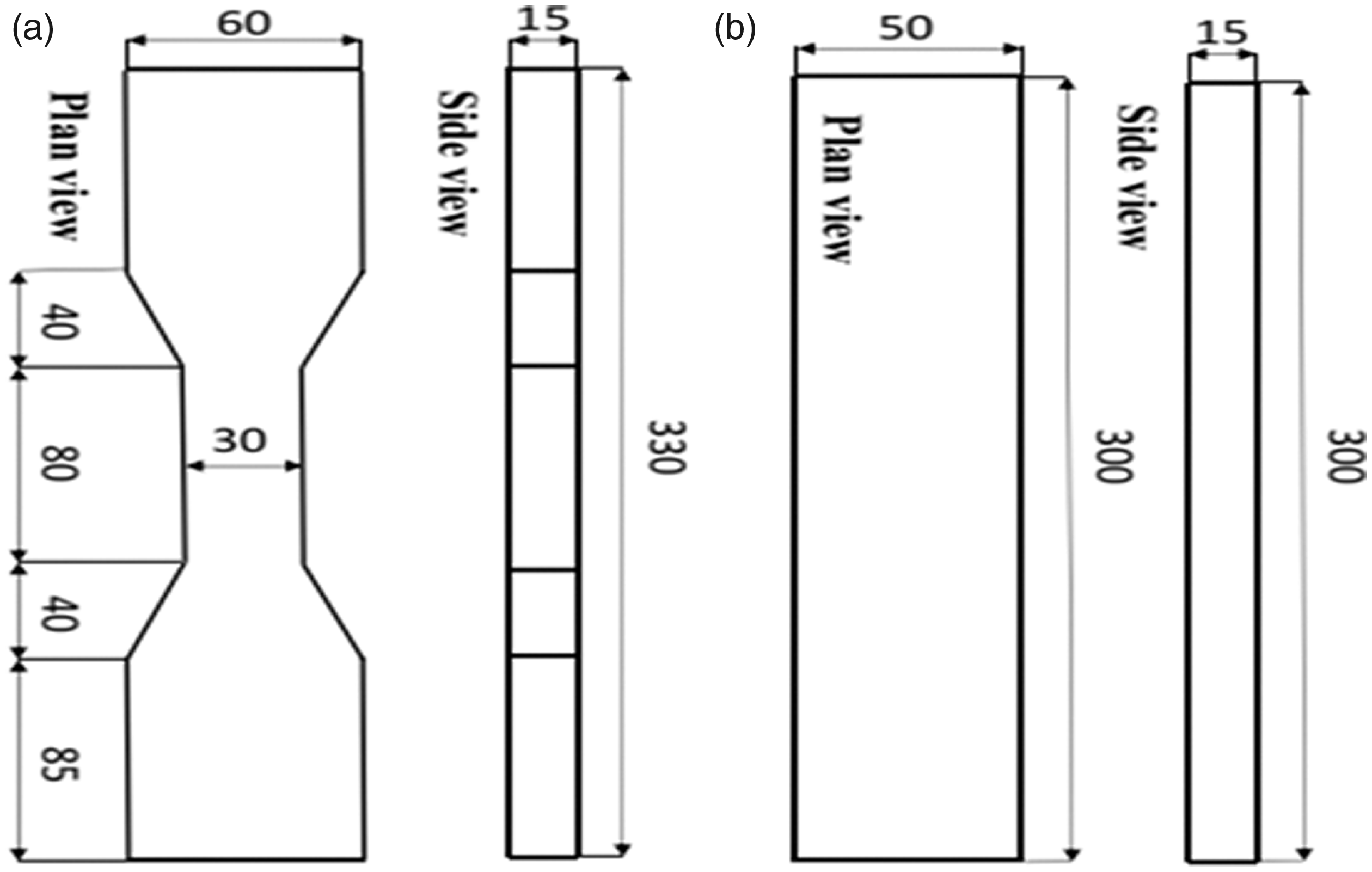
The dimensions of PVA-ECC (mm) (a) dog-bone specimen (b) beam specimen.
Freeze and thaw cycle
Freezing and Thawing are factors that could affect the durability of a concrete structure. The Freeze and Thaw cycles deteriorate the mechanical properties of concrete. 50 For the Freeze and Thaw cycle, the 300 cycles, according to ASTMC666, were used for the test. 51 After the end of the Freeze and Thaw cycle, the mechanical properties of the PVA-ECC were investigated. All the specimens could pass 300 cycles due to the composition of fibers.
Results and discussion
Compressive strength test
The compressive strength tests were conducted subsequent to the Freeze and Thawing cycle on 28-day old specimens. For each mix design, six specimens were prepared, of which three specimens were tested after the end of the Freeze-Thaw cycle. Figure 3 shows the results of the compressive strength test. The increase of the compressive strength with the addition of polymers is significant. In the mix designs with SBR latex, higher compressive strength is observed concerning those containing EVA polymer. By a 1% replacement of cement by SBR polymer, maximum compressive strength was achieved. By replacing cement with SBR polymer, an increase of the compressive strength was observed concerning the mix design without polymer. However, in replacing cement with EVA polymer, the increase of strength was observed at only 1% replacement, and at other replacement percentages, a decrease in the compressive strength was observed. The increase in compressive strength in the M5 mix design, with respect to the M1 mix (without polymer), was about 32%, but the compressive strength in the M2 mix design increased about 6% concerning the M1 mix design. This issue shows a higher consistency between the SBR polymer and the PVA-ECC in compressive strength.
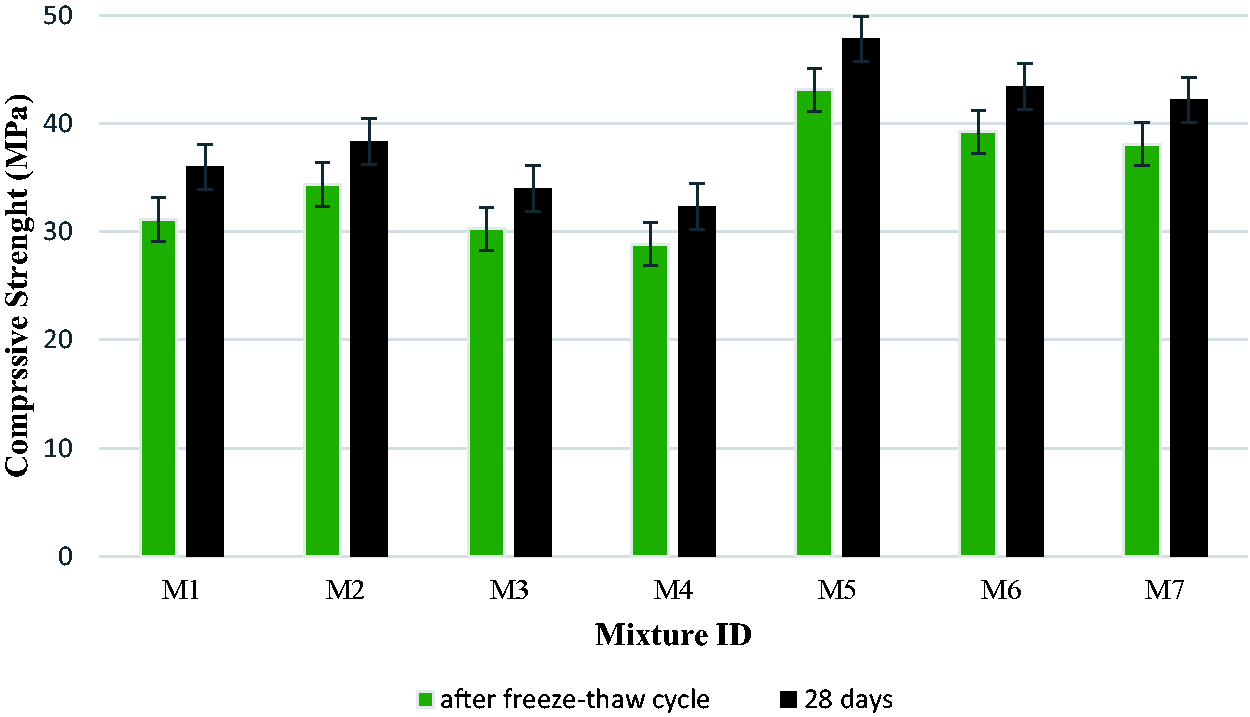
The compressive strength of PVA-ECC.
After the freeze-thaw cycle, a decrease in the compressive strength was observed in all the mix designs. The maximum reduction belonged to the M1 mix design, which was about a 16% reduction in the compressive strength. However, the results show that frequently, using polymers have prevented the loss of compressive strength. Figure 4 shows the reduction in the compressive strength after the end of the freeze-thaw cycle. inspecting Figure 4 could lead to the conclusion that the effect of replacing cement with SBR latex with respect to EVA polymer, after the freeze-thaw cycle, the compressive strength is higher although it is not considerable.
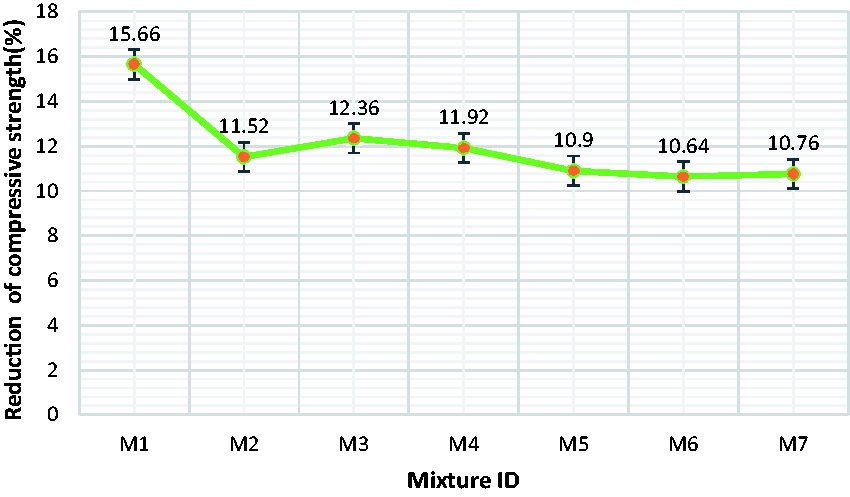
The reduction of compressive strength after freeze-thaw cycle.
The rate of reduction of compressive strength in the EVA polymer mix designs are about 12% and in the SBR polymer mix designs are about 11%, which were more durable than the non-polymer mix design(M1). This durability is mostly due to the surrounding of unhydrated cement particles by polymers. 52 The polymer surrounding of cement particles creates an interfacial layer between the matrix and the sand 53 and protects the ECC against the freeze and thaw cycle. Therefore, after the freeze-thaw cycle, the SBR latex has shown a higher consistency with the PVA-ECC.
Uniaxial tensile test
The uniaxial tensile test was performed in order to determine the tensile strength and tensile stress strain. Three dog-bone-shaped specimens with 28-day age and three specimens subjected to the freeze-thaw cycle were used for conducting the uniaxial tensile test. The test results are shown in Table 6. The stress was calculated based on the applied load divided by the cross-sectional area under tension. The strain was obtained from the elongation ratio over a gauge length of 80 mm. Table 6 showed Increasing the polymers’ percentages within concrete mixtures results in an augmentation in tensile strain.
Tensile properties of unoiled PVA-ECC.
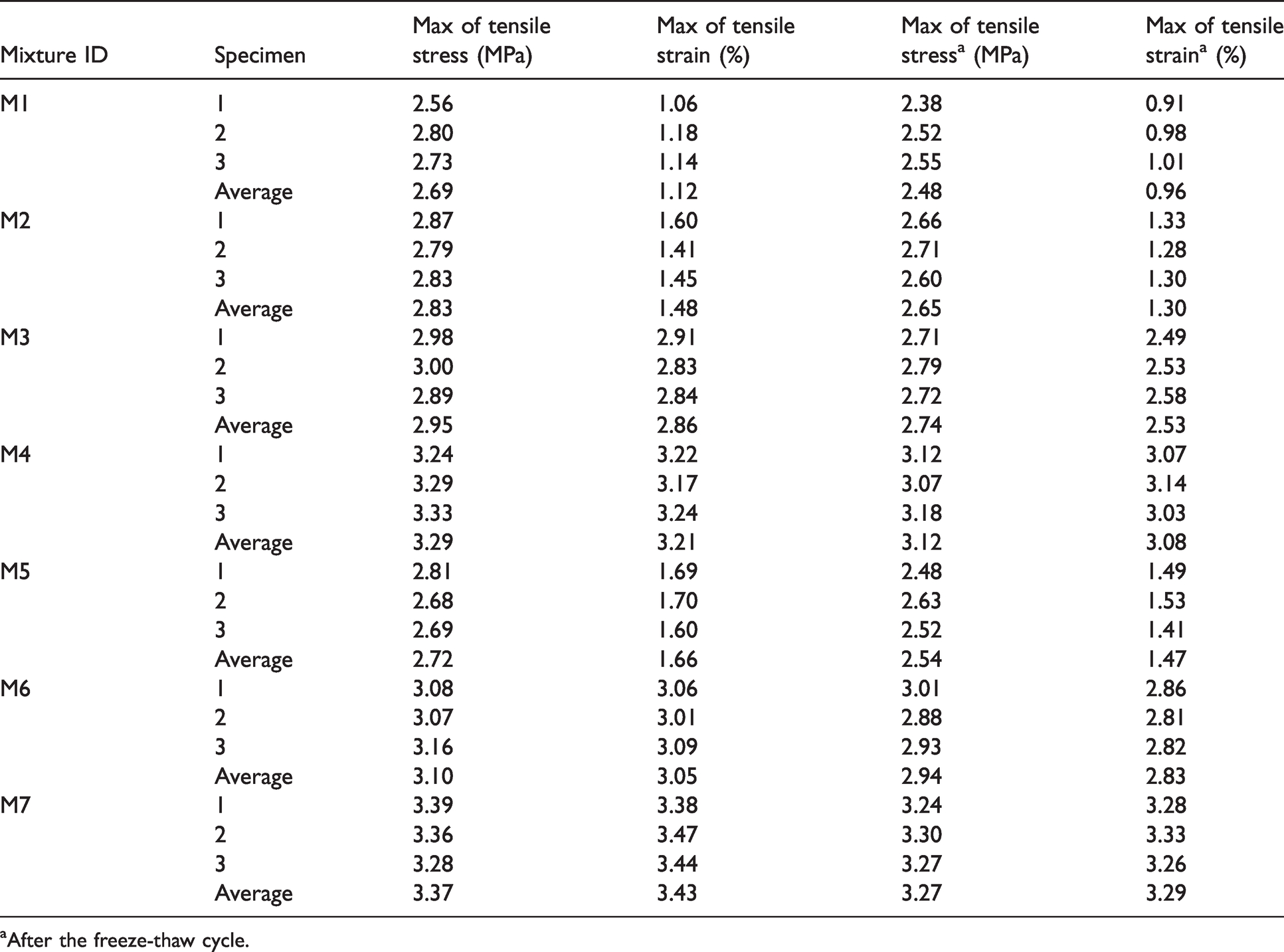
aAfter the freeze-thaw cycle.
After the first crack, the stress increased with the formation of multiple cracks, which led to an increase inelastic strain. The tensile strain changes observed in the M1 mix proportion could be due to random matrix flaws and random distribution of fibers. 54 Also in the M1 mix proportion, after the fibers began to break the strain hardening trend stopped. In mix proportion containing EVA and SBR polymers, the effect of strain hardening at the beginning of cracking was not very distinct, but with increasing displacement, strain hardening properties became apparent. The addition of polymers makes it easier for micro-cracks to start and increase strain capacity. After reaching the maximum stress, a localized crack occurs and leads to the failure of the composite. The highest tensile strain belonged to the mix designs containing SBR polymer with 5% cement replacement. Overall, the tensile strain in the mix designs containing SBR polymer was higher concerning those containing EVA polymer. M4 mix design, which contained EVA polymer, and M7 mix design, which contained SBR latex exhibited the highest tensile strain among all the cement replacement percentages. Thus, the tensile strain of the specimens increased up to 3%. The multiple cracks phenomenon was observed in all the specimens after the thaw-freeze cycle, except for the M1 mix design. The number of multiple cracks increased after partial replacement of cement with the polymers. Figure 5. shows the multiple cracks after performing the uniaxial tensile test.
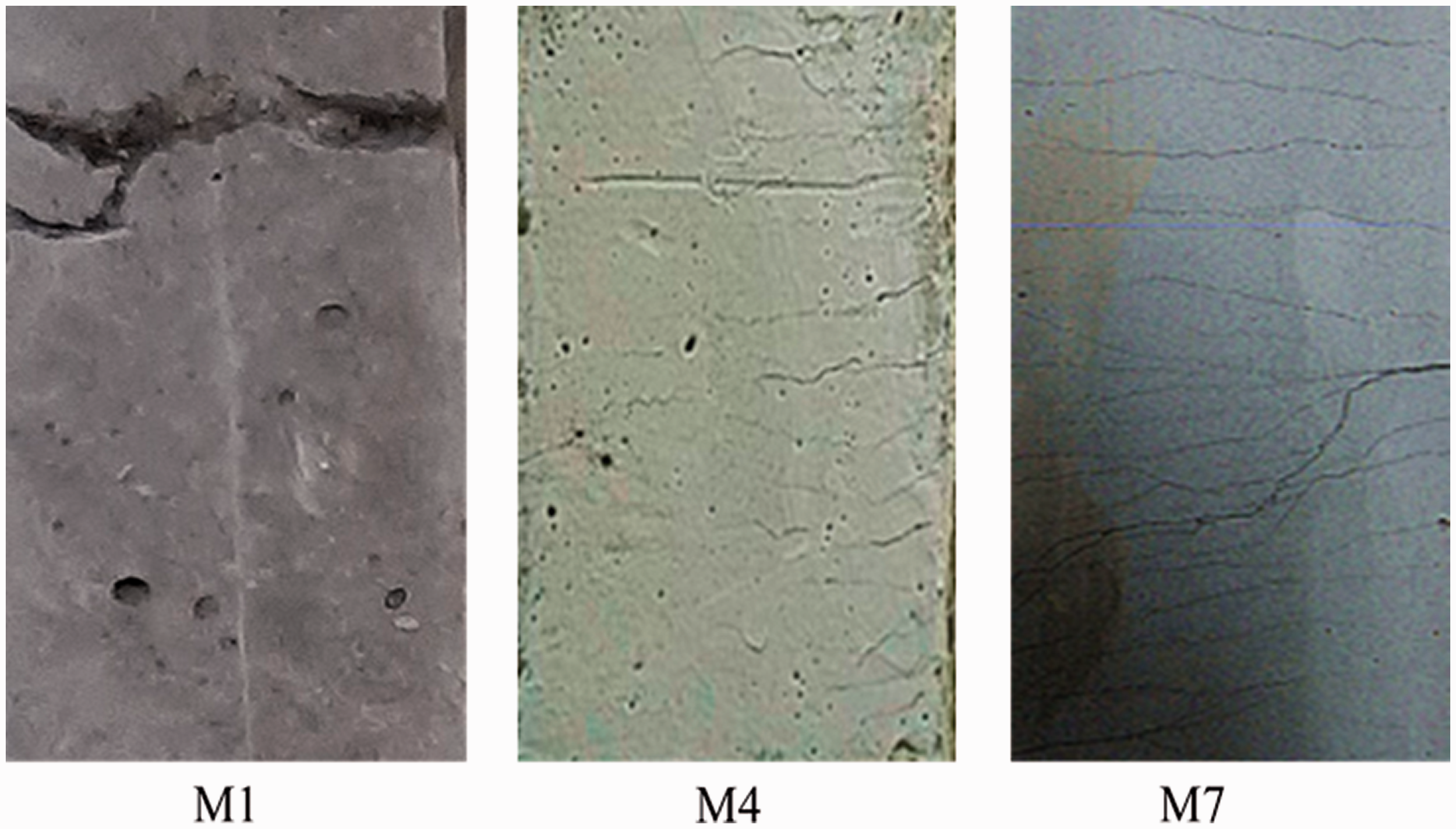
The phenomenon of multiple cracks of specimens under tension.
After the freeze-thaw cycle, the tensile strain of the M1 mix design (without polymer) was reduced by about 14%. In the mix designs containing polymers, after the freeze-thaw cycle, the M2 mix design has the highest loss in the tensile strain equal to about 12%. The mix designs M7 and M4 had a 4% and 5% reduction in the tensile strain, had a minimum loss in the tensile strain After the end of the freeze-thaw cycle, and by replacing cement with liquid and solid (water-soluble) polymers, the tensile strain loss decreased. This issue shows the higher tensile strain in the mix designs containing polymers after the freeze-thaw cycle.
Three point bending test
The three-point bending test was performed based on the change in deflection at the middle of the beam span corresponding to the maximum load. Figure 6. shows the deflection at the middle span of beam specimens. The results show that the replacement of polymer has led to increment ductility in the ECC. At the initial stage of loading, the ECC specimen is in the elastic state. With increasing external load, a tiny crack is created with a flaw in the constant moment region. After the end of loading, cracks appeared and propagated at the middle of the specimen span. For M1 mix proportion, first the initial cracks then a small number of multiple cracks are formed and initial crack spread upward quickly and the specimen is failed. For the mix proportion containing polymer such as M4 and M7 after cracking, the initial crack began to expand upward increasing the width of the crack, which was accompanied by tiny sub-parallel cracks in the specimens. During the loading process, tiny multiple cracks propagate from the middle to both supports and indicating a difference in performance with specimens without polymer.
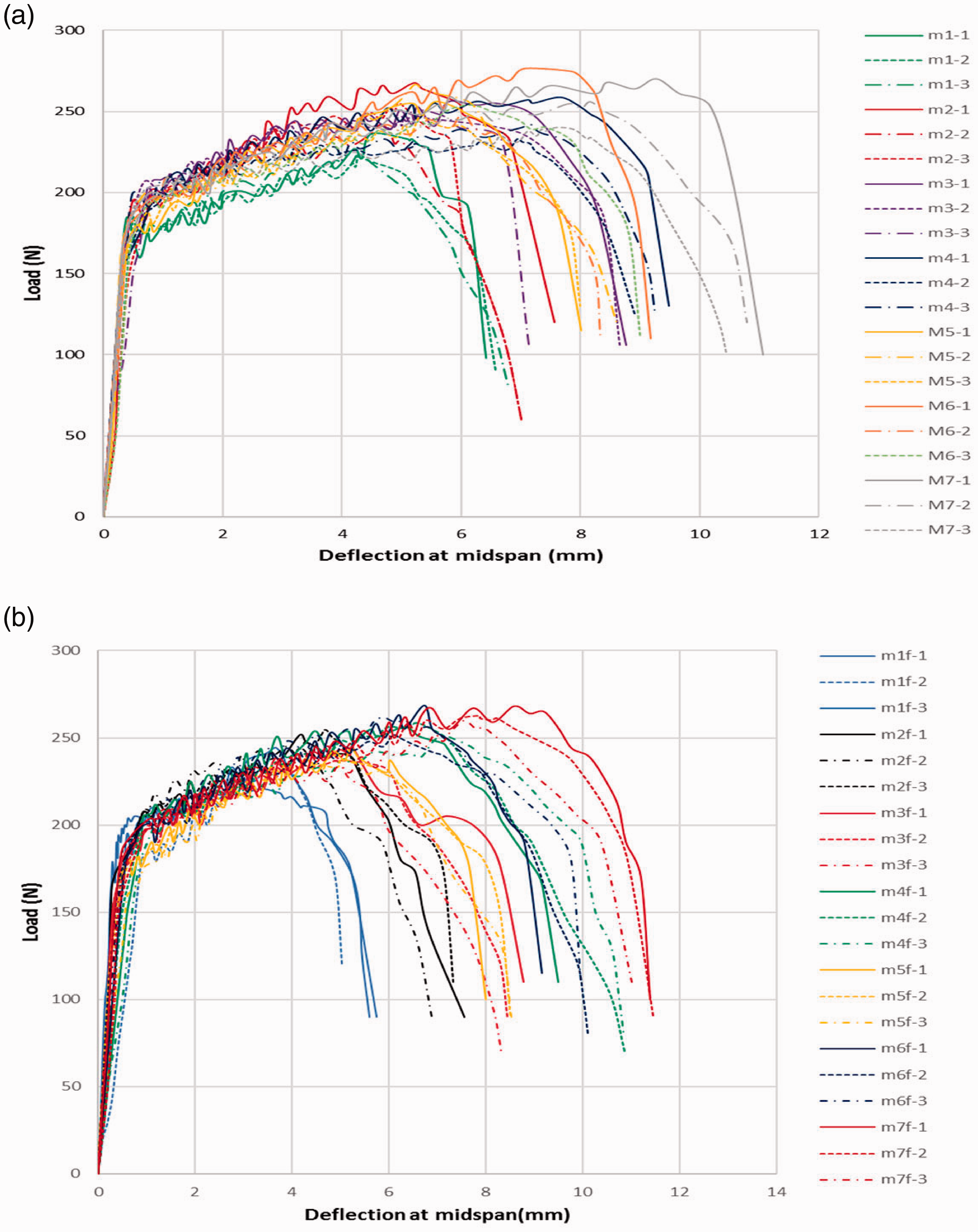
Results of load-displacement of un-oiled PVA-ECC (a) 28 age, (b) after freeze-thaw cycle.
The multiple cracks phenomenon was observed in most of the specimens. The multiple cracks phenomenon was not observed in some specimens, but the bearing capacity was not reduced due to the cracking phenomenon. This may be due to improper dispersion of fibers in some mixing proportions. Ultimately, by the break of the fibers under the bending force, the specimens failed. In Table 7, Thanks to replacement with polymers, ductility increase is demonstrated in the table. Maximum ductility was, on average related to the M7 mix design. In the mix designs where EVA polymer replaced the cement, i.e., in mix designs M2, M3, and M4, the enhanced ductility with respect to M1 mix design (without polymer) was 13%, 24%, and 66%, respectively. Also, in the mix designs where SBR polymer replaced cement, i.e., in mix designs M5, M6, and M7, the enhanced ductility with respect to M1 mix design was 23%, 49%, and 92%, respectively.
Three-point bending test result for unoiled PVA-ECC.
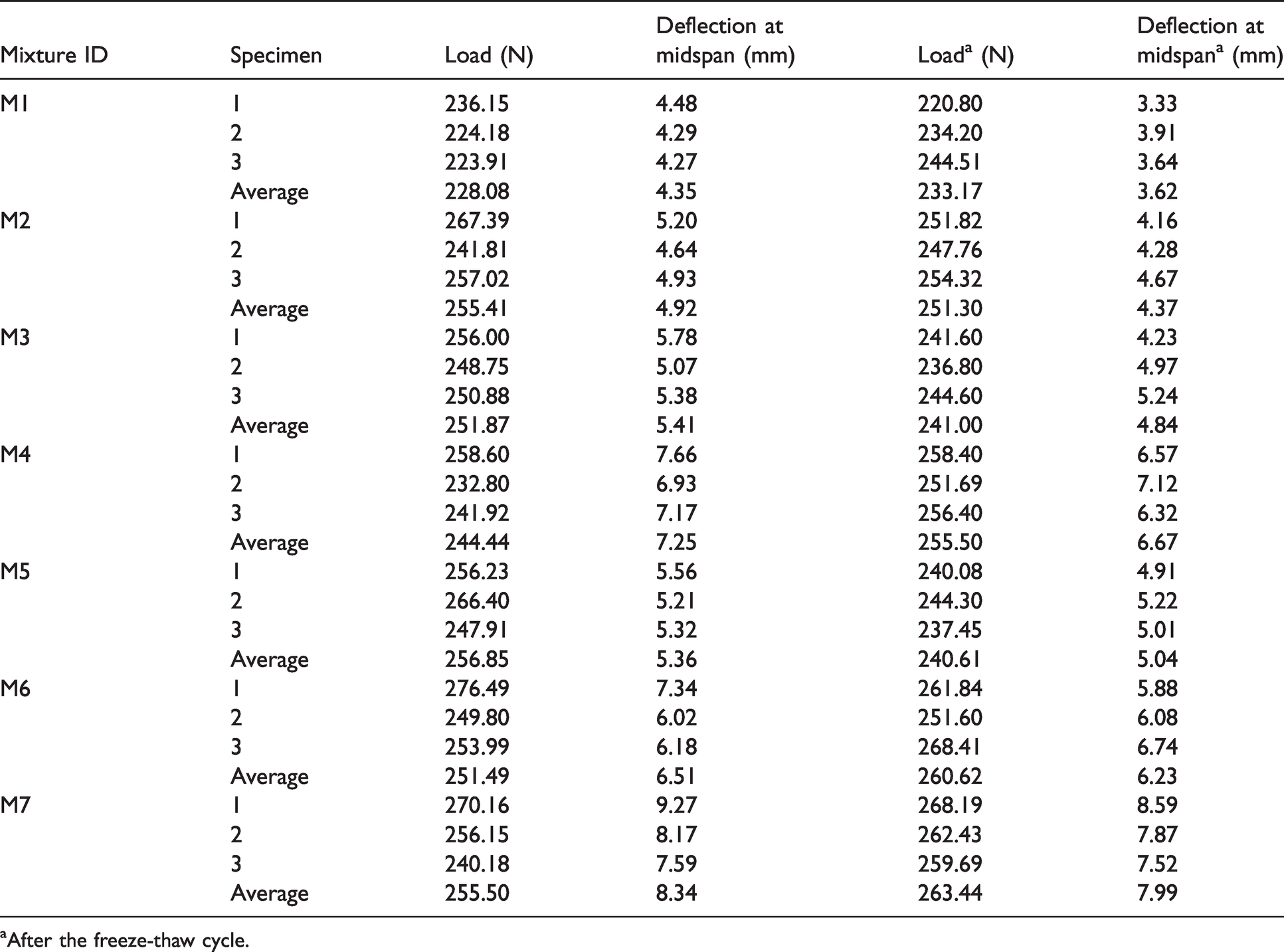
aAfter the freeze-thaw cycle.
After the freeze-thaw cycle, a loss in ductility was observed in all mix designs. In the M1 mix design (without polymer), after the freeze-thaw cycle, a 16.78% reduction in ductility was observed on average. By increasing the percentage of replaced polymer, the loss in ductility was reduced in the mix designs. In the M7 mix design, where cement was replaced by 5% SBR polymer, the best result in ductility was observed after the freeze-thaw cycle. This mix design had an averaged 41.9% loss in ductility with respect to the specimens at 28-day age. Overall, the replacement of cement by SBR latex showed better results with respect to replacement by EVA polymer after the end of the freeze-thaw cycle.
Conclusion
In many parts of the world, access to oiled PVA fibers is almost impossible. Hence, in order to produce the PVA-ECC, there is a need for an alternative method. In this study, polymers in solid and liquid states were taken into account for the production of the ECC. Accordingly, several remarkable outcomes including the behavior of ECC with un-oiled fibers, the addition of polymeric admixtures, and consideration of their mechanical properties were observed, which can be pointed out as follows: The compressive strength of the un-oiled ECC specimen (for the replacement ratios of 1% EVA polymer and 1, 3, and 5% SBR polymer) was improved in comparison to the specimen without polymer. In contrast, in the case of increasing EVA polymer in a range of 3%-5%, the compressive strength was reduced. In fact, the highest compressive strength corresponded to 1% replacement of cement with SBR polymer, which exhibited a compressive strength beyond 45 MPa. This result indicates a higher compressive strength with a lower polymer ratio. It should be noted the compressive strength was measured at the 28-day age. Although, the freezing-thaw cycle causes a huge reduction of the compressive strength of the specimen, the proposed mix designs using polymers replaced cement represented a better strength-durability performance. The rate of the compressive strength reduction of the EVA polymer mix designs and SBR polymer mix design were only 12% and 11%, respectively, which indicates far durable quality with a comparison of the non-polymer mix design (M1). This fact denotes the exceptional performance of using polymers in the engineered cementitious composite. The uniaxial tensile test results showed that stress and strain capacity can be enhanced by increasing the polymer percentage. However, the maximum tensile stress-strain capacity was captured once the cement was replaced by 5% SBR polymer which led to an average tensile strain capacity of 3.43%. Again, although the freezing-thaw cycle causes a significant decrease of the tensile strain, using the proposed alleviated the influence of that process. For instance, the M1 mix design (without polymer) reduction due to the given freezing-thaw condition was about 14%. On the other hand, the tensile strain losses for the mix designs M7 and M4 (with 5% and 4% polymer) just ended up the only reduction of 4%. This can be evidence of the positive effect of the polymers on the tensile stress-strain subjected to the freeze-thaw cycle. The multiple cracks increased by increasing the polymer content in the uniaxial tensile test. The average number of multiple cracks after the addition of the polymers increased significantly. The highest average number of cracks belonged to the specimens containing SBR polymer. However, after the freeze-thaw cycle, no multiple cracks phenomenon was observed in the specimen without polymer. By increasing the amount of the polymer, the ductile behavior of the un-oiled PVA-ECC subjected to the bending test was increased. In the mix designs where EVA polymer replaced the cement (i.e., in mix designs M2, M3, and M4) the enhanced ductility in comparison with M1 mix design (without polymer) were 13%, 24%, and 66%, respectively. The deflection at the middle of the span in specimens with 5% replacement of cement by SBR was more significant than 9mm. Although the bearing capacity decreased by increasing the amount of the polymers from 1 to 5%, the ductility properties increased. Overall, a remarkable improvement of the mechanical properties of the mix designs were observed after adding polymers, which were maintained in presence of the freeze-thaw cycle. Hence, although using both it can be stated that although both SBR polymer (in liquid state) and EVA polymer (in solid-state) can improve the mechanical properties of the ECC, the liquid polymer has slightly acceptable compatibility on ECC in comparison with SBR.
Footnotes
Declaration of Conflicting Interests
The author(s) declared no potential conflicts of interest with respect to the research, authorship, and/or publication of this article.
Funding
The author(s) received no financial support for the research, authorship, and/or publication of this article.
