






Abstract
Residual stresses are detrimental to composite structures as they induce processing defects like debonding, delamination, and matrix cracking which significantly decrease their load-bearing capability. In this research, a new in-situ approach using digital image correlation is utilized to analyze the effect of the cure cycle modification on residual stress evolution during processing. It was found that the modified cure cycle comprising abrupt cooling after gelation reduces the residual stresses. Five different layup configurations are investigated to examine the effect of fiber direction. A maximum average residual stress reduction of 31.8% is observed for the balanced unsymmetric [30/-30/60/-60] laminate. The residual stress reduction results in an increase in failure strength between 4 and 12% in the different layups and can lead up to a 22% increase in first-ply failure strength.
Keywords
Introduction
Polymer matrix composites are extensively used in aerospace, automobile, 1 civil, 2 and other everyday applications. With the increase in the usage of composites, there is a need for reliable and cost-efficient manufacturing processes that reduce processing defects. Processing defects are often associated with residual stresses that arise due to the variations in thermomechanical conditions and chemical reactions during processing. 3 The residual stresses in composite laminates can be classified as intralaminar stresses (between fiber and matrix), interlaminar stresses (between plies), and laminate stresses (structural). Intralaminar stresses are mainly created due to the mismatch of the physical and mechanical properties of fiber and matrix during cure, whereas the interlaminar stresses are due to the lamina anisotropy. 4 At the structural level, through thickness thermal gradients can cause additional residual stresses. 5 Defects such as warpage, 6 undesired distortion, 7 dimensional instability, 8 and microcracks in the matrix 9 may be created due to high residual stresses. While dimensional inaccuracies can lead to prestressing and expensive redesigns, 8 microcracks can expose the fibers to environmental degradation and cause catastrophic delamination in composite structures. 10 It is, therefore, necessary to mitigate the effects of processing-induced residual stresses, as well as factor them into the design of composite structures.
Given their importance in composite processing, there are several experimental and modeling methods in the literature to evaluate the residual stresses. Pagliaro et al. 11 used the through-hole drilling method for studying the residual stresses in orthotropic materials. They obtained residual stresses using a theoretical study of the stress field present on orthotropic plates with a circular hole. Ersoy et al. 12 used an incremental slitting method to measure the through-the-thickness residual stresses in layered composite plates. Residual stresses are estimated in transverse direction for cross-ply composite using the first ply failure method. 13 Non-destructive methods like micro-Raman spectroscopy have been used to study the deformation micromechanics of carbon-fiber-reinforced composites. 14 Nairn et al. 15 utilized photoelasticity to measure the magnitude of the residual stresses in unidirectional graphite composites. Duquennoy et al. 16 used ultrasonic Rayleigh waves to evaluate residual stresses in orthotropic materials using the changes in wave velocity. Temperature-related change in curvature has also been used to measure residual stresses in unsymmetrical laminates. 17 In addition to these methods, several researchers have used embedded sensors to monitor the strains.18–20 One shortcoming with embedded sensor methods is the change in material properties due to the incorporation of the sensors within the layup.
Several modeling approaches have also been developed to analyze and predict the residual stresses in composites. Huang 21 used the elasticity solution method to develop a stress formulation using a bridging matrix. Shokrieh et al. 22 employed an energy method based micro-analysis in combination with the composite laminate theory (CLT) to predict residual stresses in thin composite laminates. Cowley et al. 13 used temperature-dependent thermomechanical properties and CLT based macro-mechanical method to predict the residual stresses. In addition, the finite element method has also been used in unit cell models to compute the residual stresses. 23
In addition to measuring residual stresses, numerous studies have developed approaches to reduce residual stresses by modifying the cure cycle. Shah et al. 24 reduced residual stresses by 47% by finding optimal cure cycle parameters using a genetic algorithm and Latin hypercube sampling method. Agbo et al. 25 used stepped cool-down mode with subsequent fanning to control stress relaxation and thermal residual stress during the cure. They also observed a 37% difference in strength between regular cure and stepped cool-down cure. Kim et al. 26 devised a cure monitoring system using dielectrometry and a fiber Bragg grating (FBG) sensor to reduce thermal residual stress. They rapidly cooled the specimen to control the bonding temperature of the interface between fiber and resin and decreased the thermal residual strain by 48.6%. This improves the flexural strength by 20.6% compared to the ordinary cure cycle. Prussak et al. 27 also used FBG sensors and developed a smart cure cycle to reduce process-related residual stresses in co-cured bonded fiber metal laminates by making modifications to the temperature cycle, cooling, and heating rates.
Modifying the cure cycle is the most promising route to reduce processing-induced residual stresses, which in turn reduces the occurrence of manufacturing defects and increases strength. Studies that estimated residual stresses and methods to decrease residual stresses are often confined to measurements after completion of the cure. In-situ approaches to measuring residual stresses during the processing are rare since the monitoring setup should be incorporated inside the autoclave.
The objective of this study is to use this in-situ approach to analyze the effect of cure cycle modification on residual stresses in carbon fiber composites. This continuous evolution of residual stresses helps understand the mechanisms by which residual stresses decrease due to the changes in the cure cycle. Variation in residual stresses due to the symmetry and angles of the plies is studied by analyzing and comparing different layups. The changes in the tensile strength of the composite due to residual stress reduction are also investigated.
Experimental setup and in situ characterization
Composite plates in this research are fabricated using unidirectional carbon fiber prepreg with a fiber weight of 139 gsm. The resin in the prepreg has a density of 1.2 g/cc. The prepreg is recommended to be cured at 120oC with an hour of hold by the manufacturer, Fibre Glast. A custom autoclave with borosilicate glass viewports is used in this study. The autoclave is equipped with Digital Image Correlation (DIC) setup procured from Correlated Solutions Inc. The Real-Time DIC system cameras are pointed toward the composite samples through the glass viewports of the autoclave as shown in Figure 1(a). These cameras are calibrated using a calibration tile to measure the distance and angle between them which helps in extracting the three-dimensional (3D) data. A random high contrast speckle pattern was sprayed on the surface ply of the specimen using high-temperature spray paint as shown in Figure 1(b). Pictures of the sample with speckle pattern are imported into VIC-3D software followed by selecting the region of interest on the sample to analyze. The change in the grey value of the speckle pattern on the surface ply is used in extracting and calculating displacements and strains of the composite laminates during cure in the VIC-3D software. (a) Autoclave with Digital Image Correlation setup; (b) sample with speckles; (c) cure cycle comparison.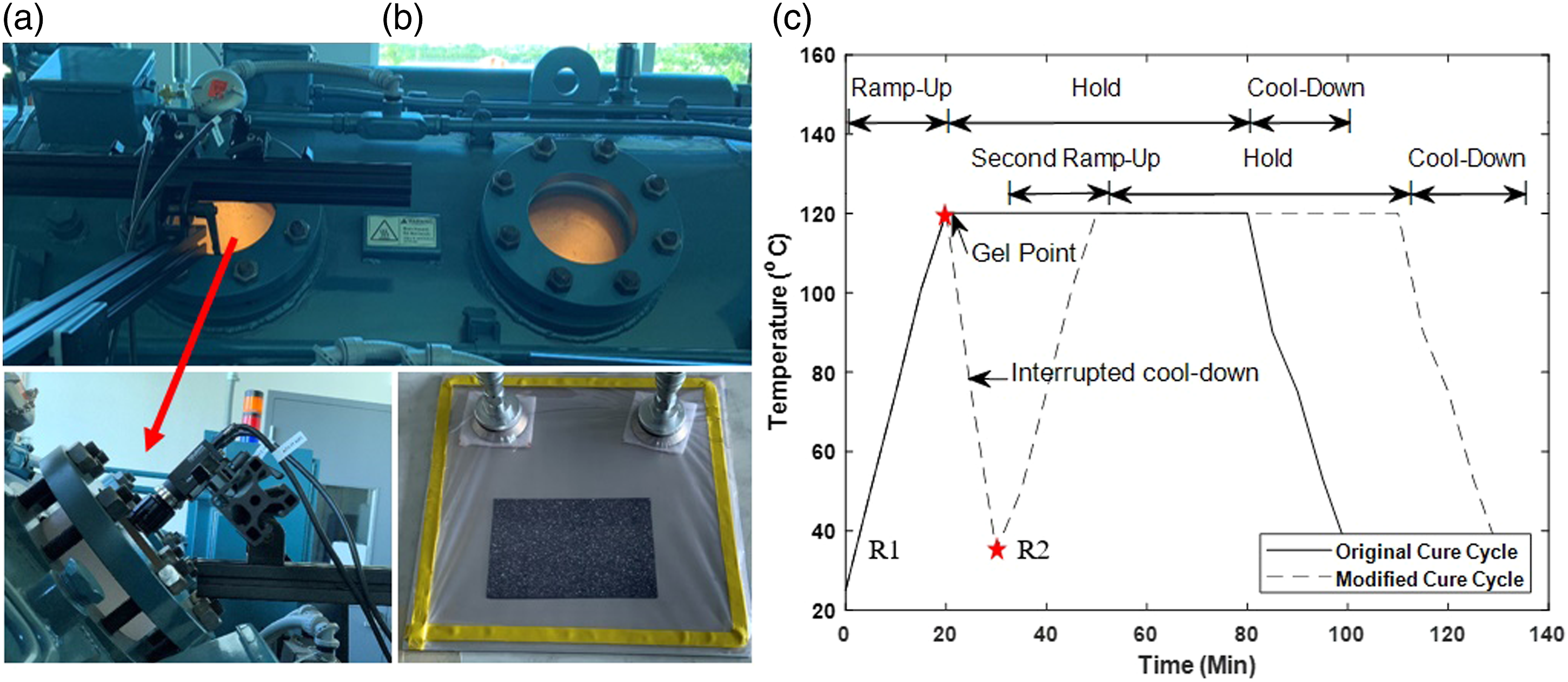
The cure cycle from the manufacturer and the modified cure cycle are converted into a step-by-step recipe, which is then programmed into composite processing control of the autoclave computer. The modified cure cycle consists of controlled abrupt cooling as the matrix reaches the gel point at ∼120oC. This typically happens 20 min into the cure. The cooling operation is performed by relocating the sample from the autoclave to a walk-in freezer. All the samples consist of four-ply layups and are of similar weight. The samples reach room temperature in 12 min to achieve an average cooling rate of −8°C/min. FLIR A615 thermal machine vision camera was used for thermal analysis of the specimen during the abrupt cool-down process. After cooling, the sample is moved back to the autoclave to the same (pre-marked) location. The rest of the cure from 20 min to 100 min is performed as shown in Figure 2. Original cure cycle and the corresponding degree of cure.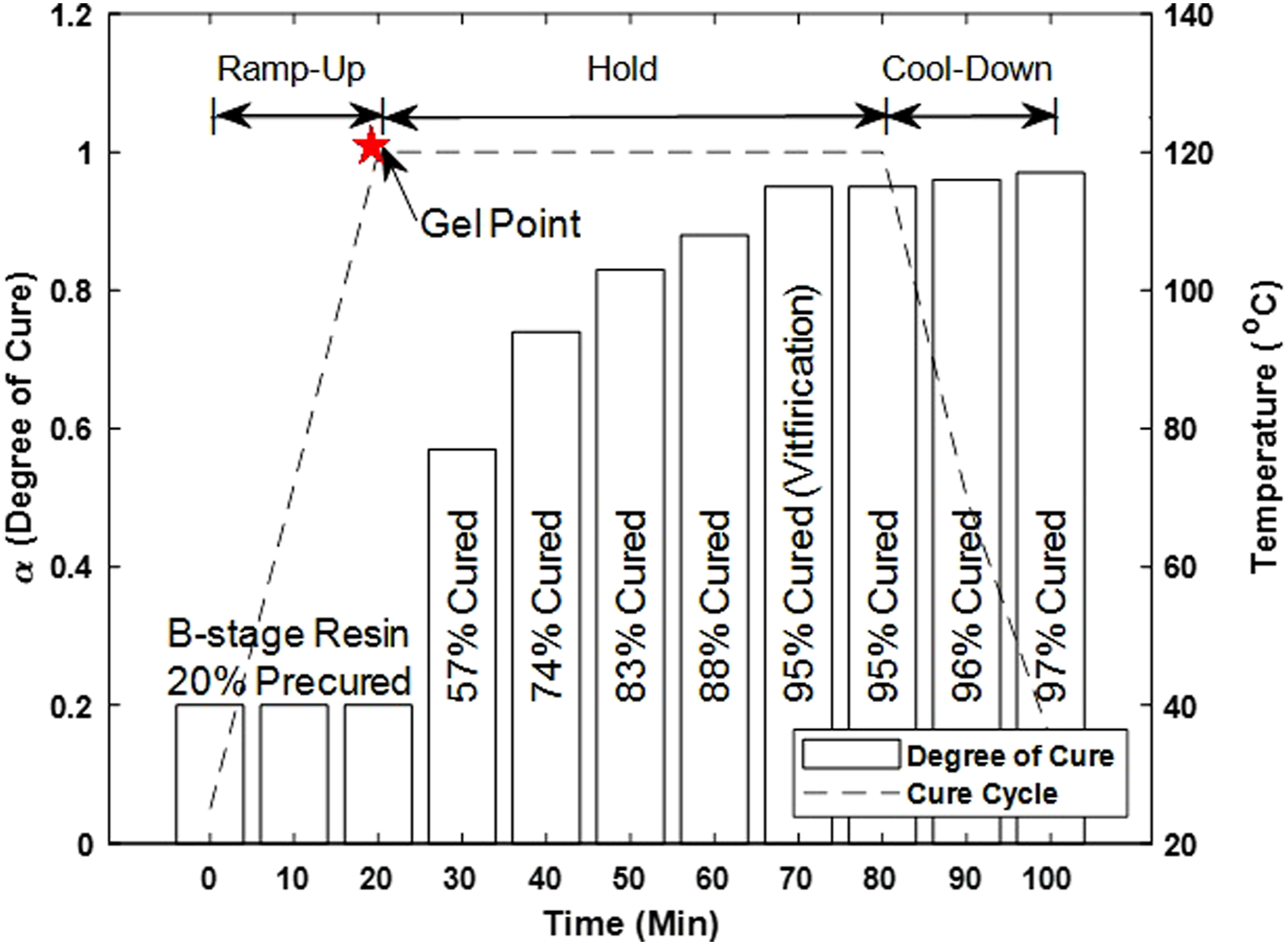
Two symmetric and three asymmetric composite plates were fabricated with the dimensions of 10.16 cm × 15.24 cm using four plies of UD carbon fiber prepreg. The symmetric and asymmetric configurations analyzed in this research are [0/90]s, [0/45]s, [30/-30/60/-60], [0/30/45/90], and [45/-45/45/-45]. Another set of specimens for tensile testing with dimensions 25.4 mm × 152.4 mm (1-inch × 6-inch) were prepared for all five layups from the original samples using a composite water jet cutter. Mechanical tests for assessing the first-ply failure strength and stress at failure are executed using an MTS tensile machine. The first-ply failure test is commonly used to analyze the effect of residual stresses present in the laminate13,28–30. The tensile strength is quantified through acoustic emission of the first crack, hence the term “first-ply failure”. The acoustic emission in this work is captured using an omnidirectional microphone connected to a smartphone running a decibel meter application.
Temperature-dependent dynamic elastic moduli of the composite material are characterized through dynamic mechanical analysis (DMA) by DMA8000 procured from PerkinElmer. A three-point bend fixture is used for the mechanical analysis of a small unidirectional four-ply sample with dimensions 50 mm × 7.5 mm as it can eliminate the possibility of potential clamping errors. Temperature ranges from 30°C to 120°C were considered based on the manufacturer’s recommended cure cycle for the prepreg along with the maximum displacement of 0.01 mm at 1 Hz frequency for the DMA. The cure characteristics of the epoxy are analyzed using a DSC-3 differential scanning calorimetry (DSC) from Mettler Toledo. Resin samples of weight 30 mg were placed in 40 μL aluminum crucibles for the analysis. In a two-step dynamic and isothermal process, the resin samples are first heated at a constant rate of 10o C/min between – 25o C to 250o C for dynamic analysis followed by holding the samples at a constant temperature of 120oC for isothermal analysis. Fracture analysis is performed for all the laminates cross-sections after tensile testing using FEI Quanta 650, scanning electron microscope from Thermo Fisher Scientific Co.
Results and discussion
Elastic properties and cure kinetics
The DMA is employed to experimentally measure the temperature-dependent elastic properties (EL(T) & ET(T)) of the composite material. The average longitudinal and transverse moduli obtained at the end of the cure are 272 GPa and 7.9 GPa, respectively, at room temperature. The DMA was also employed to get the tan δ peak for the prepreg used in this research. This peak occurred around 120°C which represents the point of stress-free temperature or gel point of the matrix in the prepreg matching the literature. 31 The matrix is in the viscous stage until reaching the gel point after which the cross-linking of the polymer begins, and the matrix becomes rubbery until gelation. Interrupting the cure at gel point and abruptly cooling back to room temperature will reduce the bonding temperature of the matrix and fiber which reduces the residual stresses. 32
The DSC is employed to analyze the cure kinetics of the resin in the prepreg. The degree of cure (α) is calculated as shown in equation (1) using the change in heat of reaction (ΔHt) obtained through the residual heat of reaction (ΔHR) and the total heat of reaction (ΔHtotal)33,34
According to the DSC analysis, the resin in the prepreg is pre-cured to 20%, and the gel point for the resin is at 120oC. As the cure interruption point in the modified cure profile is the gel point, the resin is 20% cured at this point of abrupt cooling. As seen in Figure 2, the epoxy reaches vitrification, the point at which resin is converted from a rubbery state to a glassy state at 70 min into the cure. This point corresponds to 94% cross-linking and the resin is 97% cured at the end of the cure.
Digital image correlation data analysis
Images from DIC cameras are analyzed using VIC-3D software to obtain the in-situ surface strains for layups considered in this study. The average surface strains are correlated with the cure cycle of the composite as shown in Figures 3 and 4. As the emphasis of this paper is on the evolution of residual stress, the strains can be seen displayed from the 20 min mark, which is to analyze the build-up of the stresses from the gel point (stress-free point). The continuous strain evolution in the longitudinal direction is shown in Figure 3. For the [0/90]s layup, the strain gradually increases during the cure to reach a maximum strain of 2.1 μm/mm at the end of the cure. For the [0/45]s layup, 3.8 μm/mm is the max strain observed at the beginning of the isothermal stage and rapidly reduces after resin vitrification (70 min) to 2.9 μm/mm at the end of the cure. For the anti-symmetric angle ply [45/-45/45/-45] layup, only a small change in strain can be observed throughout the cure. For the balanced [30/-30/60/-60] layup, 2.7 μm/mm strain is observed at the end of the cure with a maximum strain of 4.2 μm/mm. In the case of unsymmetric [0/30/45/90] layup, a rapid decrease in strain can be observed after vitrification due to distinct ply orientations. In-situ strains in the longitudinal direction using modified cure cycle. In-situ strains in the transverse direction for the modified cure cycle.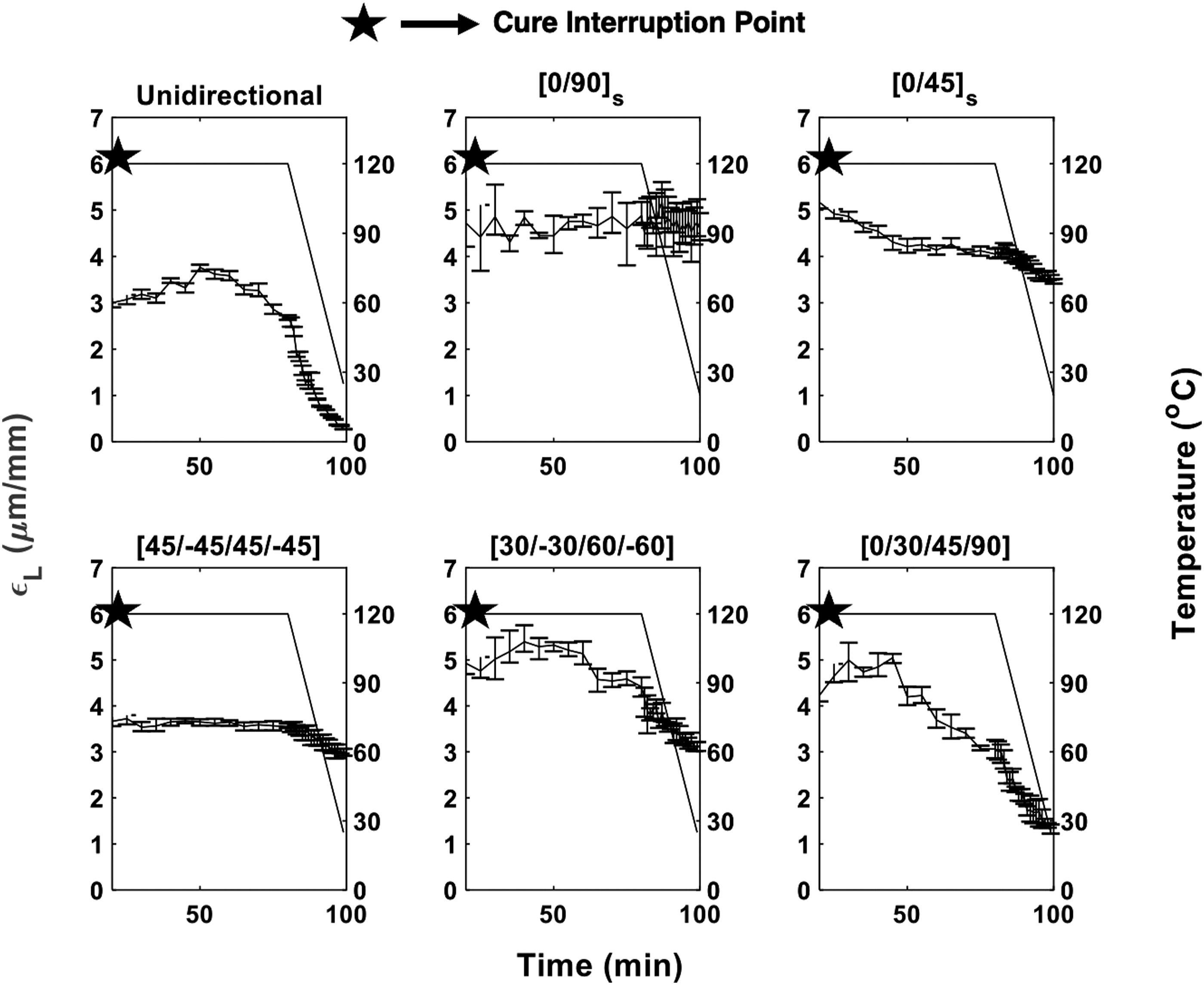
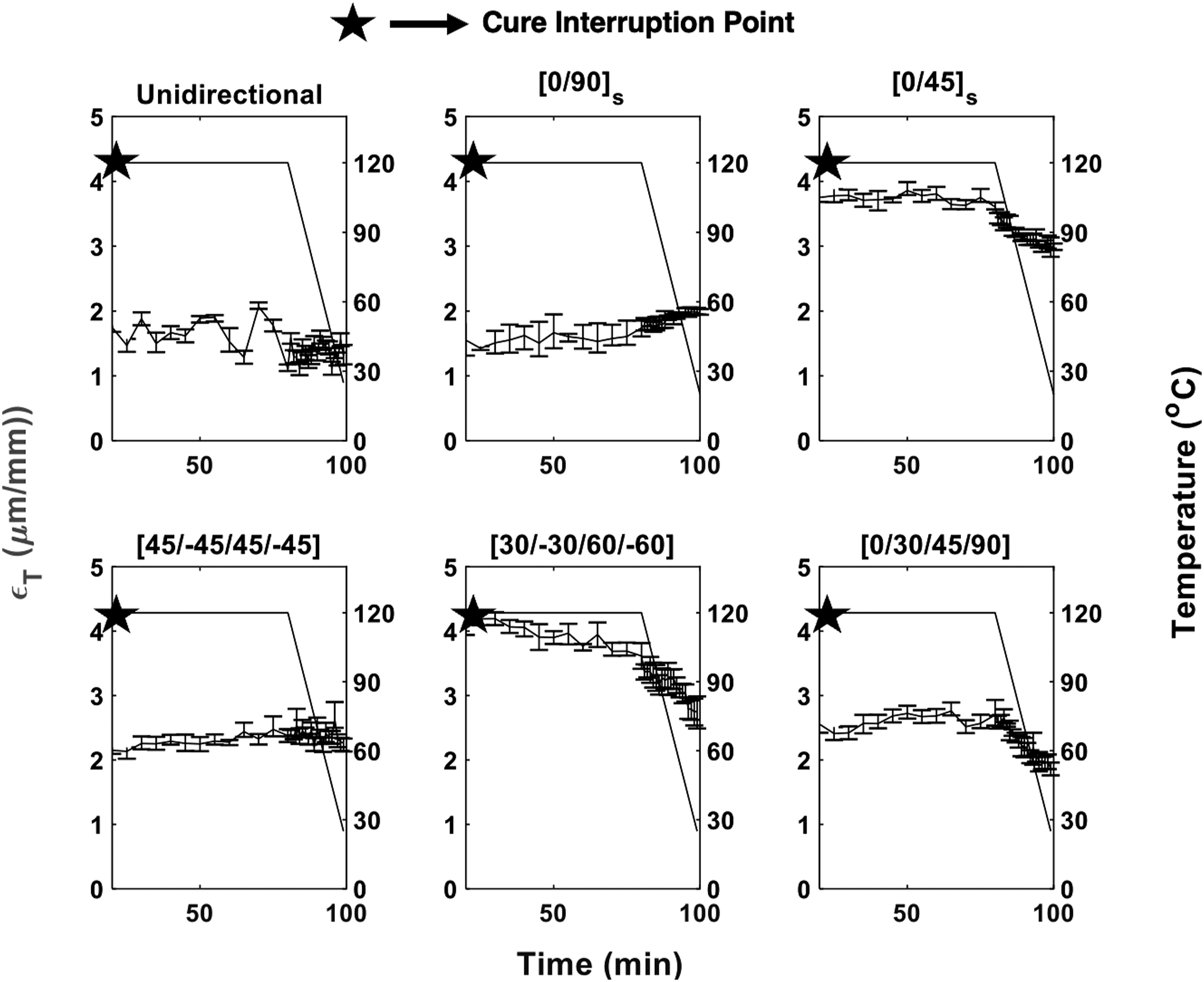
The strain in the transverse direction for [0/90]s cross-ply layup increases slightly from the start of the isothermal stage to the end of the cure, as shown in Figure 4. The angled effect of the 45o ply in [0/45]s layup resulted in a max strain of 5.1 μm/mm which later reduced to 3.5 μm/mm at the end of the cure. The [45/-45/45/-45] layup exhibits a constant strain in the isothermal stage until vitrification and the strain decreases after that during the cool-down. A maximum transverse strain of 5.3 μm/mm is observed for [30/-30/60/-60] layup which gradually reduced to 2.9 μm/mm toward the end of the cure. In the case of unsymmetric [0/30/45/90] layup, the transverse strain increases initially in the isothermal stage but then reduces continuously to 1.3 μm/mm at the end due to the combination of dissimilar ply orientations in the same layup. In general, for unidirectional carbon fiber prepregs, the transverse thermal expansion is higher than in the longitudinal direction. 35 This can be observed in the above results as well.
Residual stress calculation
In-situ residual stresses in this research are calculated using the liberated strain approach. Liberated strain is the difference in strain between what a ply in laminate experiences and what it would experience if the ply is liberated from the effect of adjacent plies.36,37 The time and temperature-dependent liberated strain for each ply was calculated as shown in equation (2) where
The compliance matrix
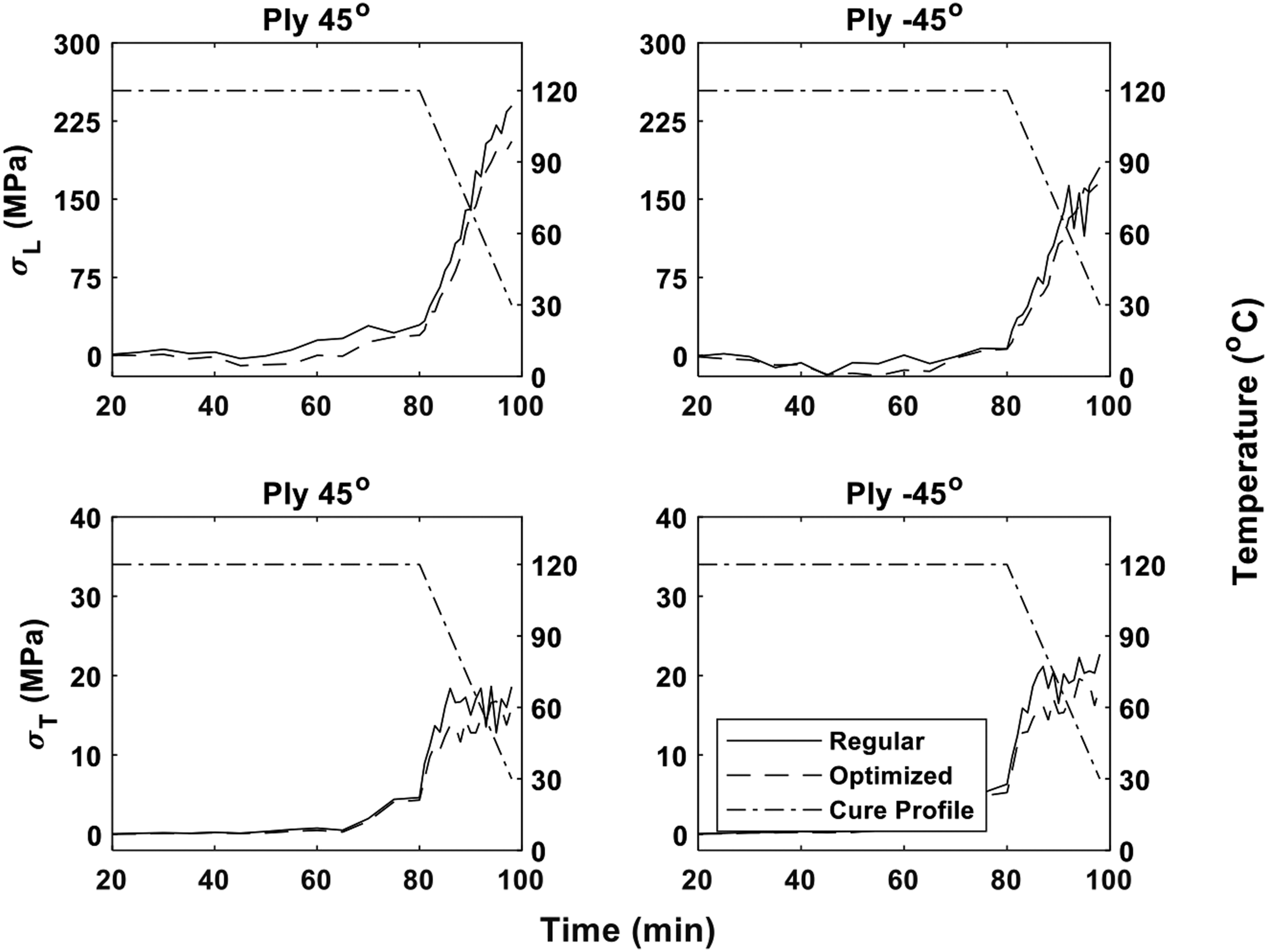
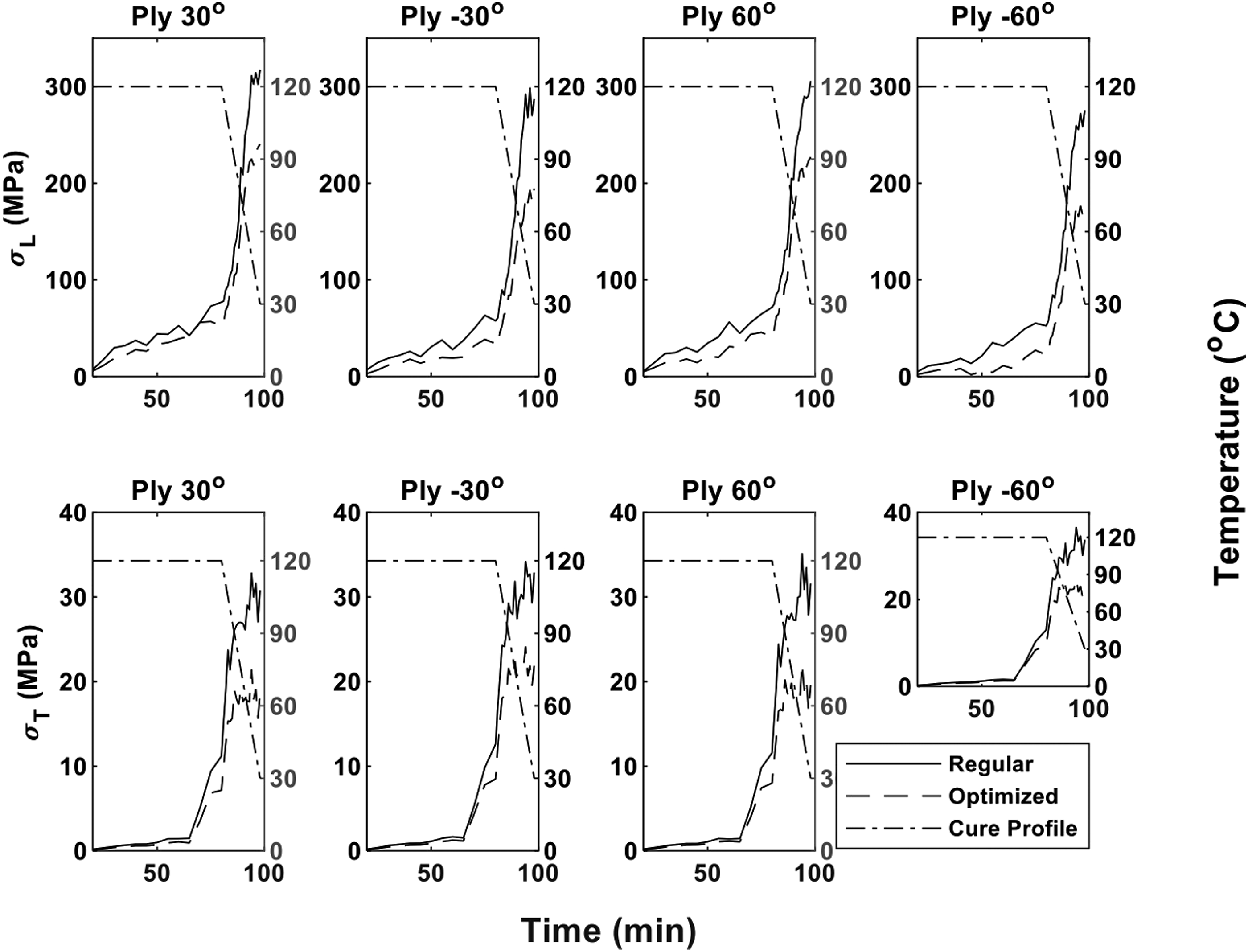
The residual stresses calculated for the laminates cured using the modified cure profile are compared with the stresses calculated for the manufacturer’s recommended cure cycle in Figures 5 to 9. These results are an average of four tests for each layup with the solid line representing the regular cure and the broken line representing the modified cure. The regular cure cycle is 100 min long and the modified cure cycle is 130 min. However, the residual stresses are compared from the start of the hold phase between both the cure cycles which is 20 min point for the regular cure cycle and 50 min point for the modified cure cycle. Hence the total time from the start of the hold phase till the end is 80 min long in both cure cycles as seen in Figures 5 to 9. Residual stresses comparison for [0/90]s laminate.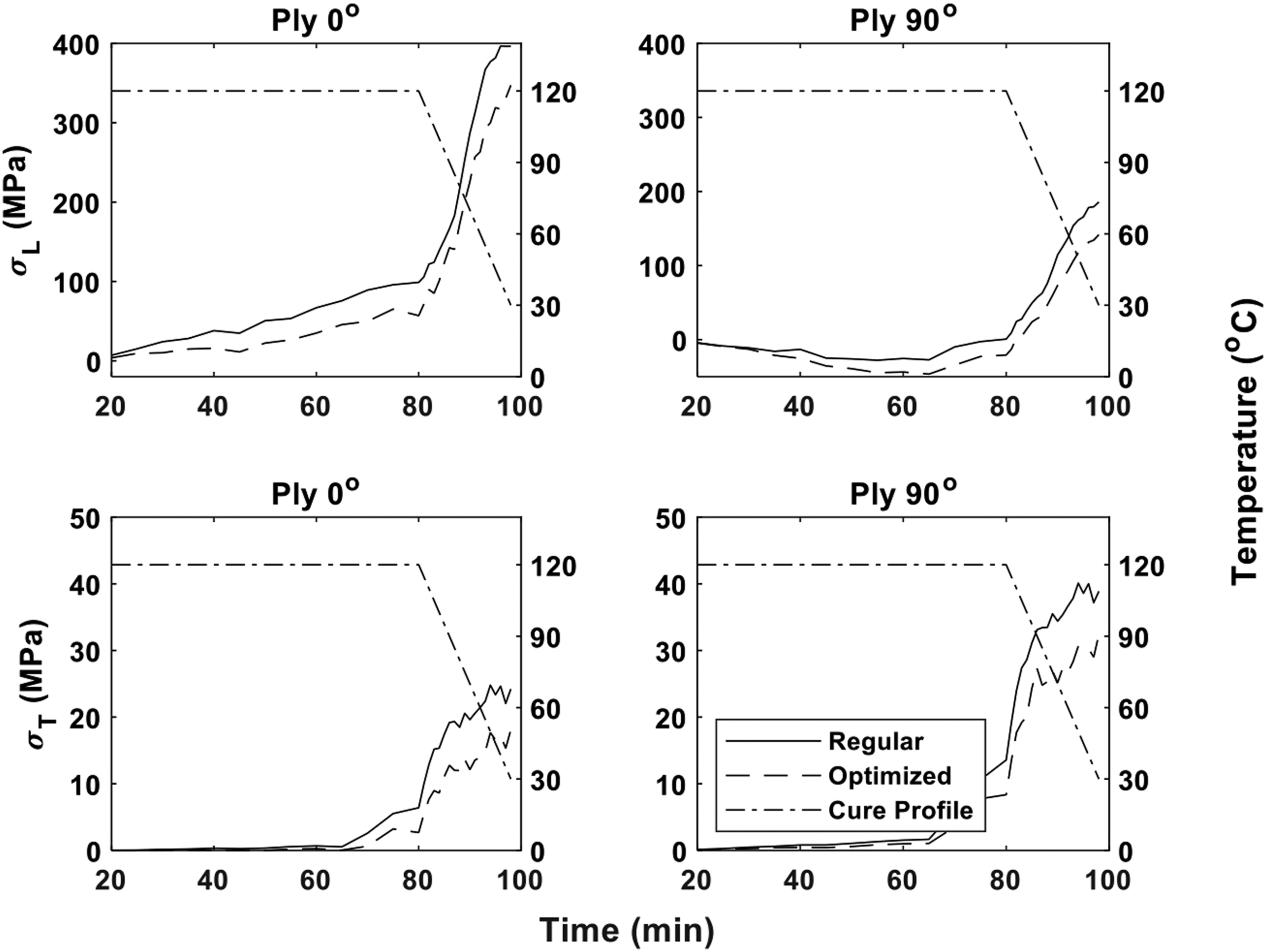
For the cross-ply [0/90]s laminate as shown in Figure 5, the residual stresses are lower for the modified cure approach in both longitudinal and transverse directions. Stresses in the transverse direction exhibited a higher relaxation after vitrification compared to longitudinal. This layup exhibited the highest residual stress among all the ply layups considered. The residual stresses evolution for [0/45]s laminate is shown in Figure 6. For this layup in the longitudinal direction, both plies experienced slightly lower residual stresses from the start of the isothermal stage with 45o ply experiencing a reduction from 198 MPa to 180 MPa toward the end for the modified cure. In the transverse direction, the plies did not experience any major change until vitrification but after vitrification and during cool-down both 0° ply and 45° ply experienced a decrease of about 2 MPa at the end of the cure.
The residual stresses evolution for the [45/-45/45/-45] laminate is shown in Figure 7. The 45° ply in this laminate in longitudinal direction experienced lower stresses from the isothermal stage and that difference rapidly increased toward the end of the cool-down stage. In the transverse direction, the difference in residual stresses is observed during the cool-down stage only. The −45o ply, exhibits a small change in stresses between regular and modified cure until vitrification, but after vitrification, the difference gradually increased to a maximum of 10 MPa in the longitudinal and 3 MPa in the transverse directions. For the balanced unsymmetrical [30/-30/60/-60] laminate shown in Figure 8, all the plies experienced large residual stress reduction for modified cure compared to regular cure. This reduction of 31.82% is the highest among the layups considered in this research (see Table 1). For this laminate, during the isothermal stage, 60° ply exhibits a minimal change in stress, while the −30o ply shows a higher difference, in the longitudinal direction. There is a small change during the isothermal stage in the transverse direction but the residual stresses for modified cure are lower during the cool-down stage. Residual stresses comparison for [0/45]s laminate. Residual stresses comparison for [45/-45/45/-45] laminate. Residual stresses comparison for [30/-30/60/-60] laminate. Maximum residual stresses and respective ply orientation for all configurations.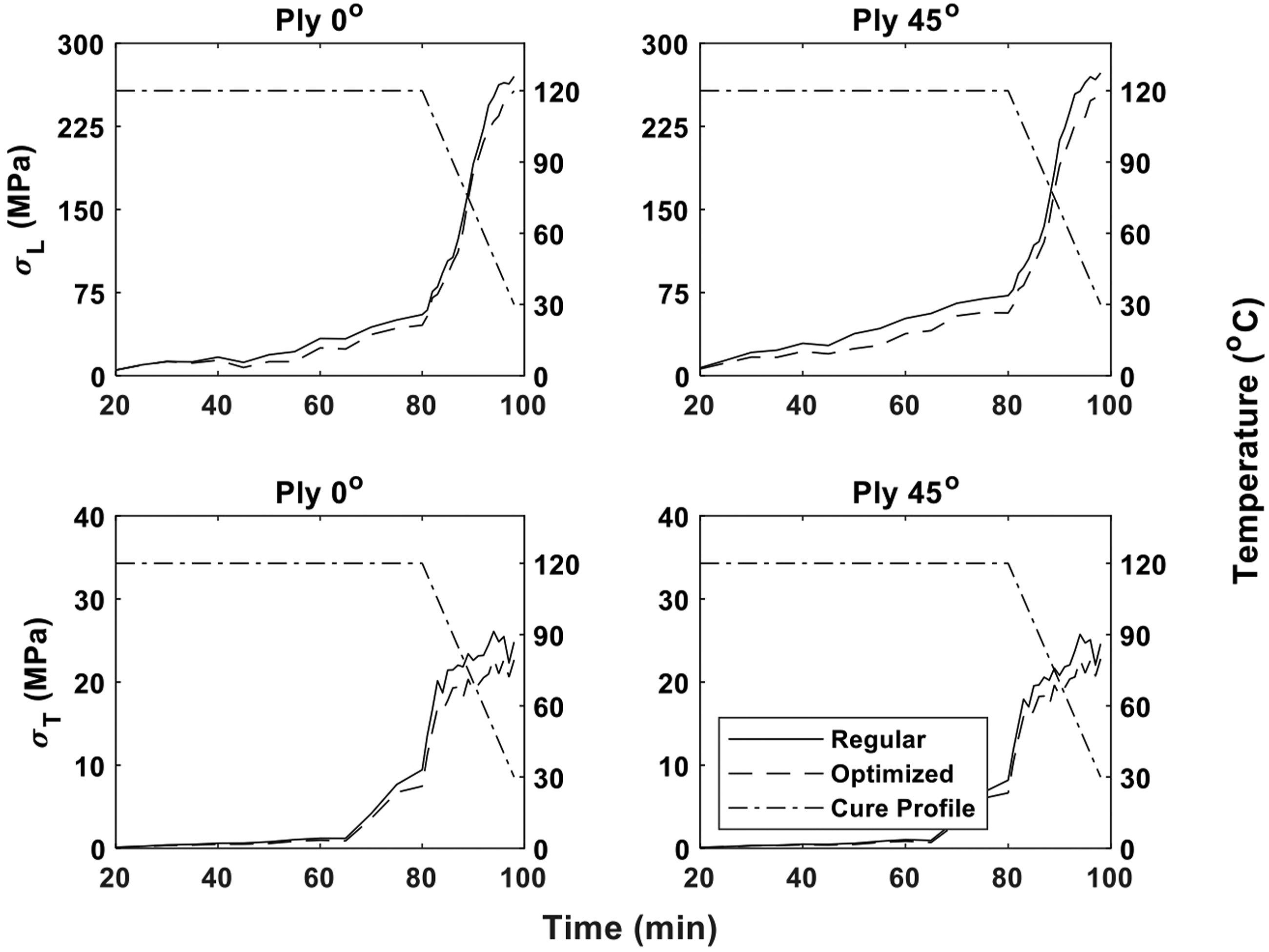

The continuous evolution of residual stresses during the cure for the unsymmetrical [0/30/45/90] laminate is shown in Figure 9. For this layup, in the longitudinal direction, the 0o ply exhibited reduced stresses from the start of the isothermal stage, unlike the other three plies where the difference in stresses is observed only during the cool-down stage. In the transverse direction, like the other layups, only a small difference is observed during the isothermal stage, but the residual stresses are significantly reduced during cool down for all the plies. Maximum residual stress in each layup for the regular cure and modified cure are compared in Table 1. Residual stresses comparison for [0/30/45/90] laminate.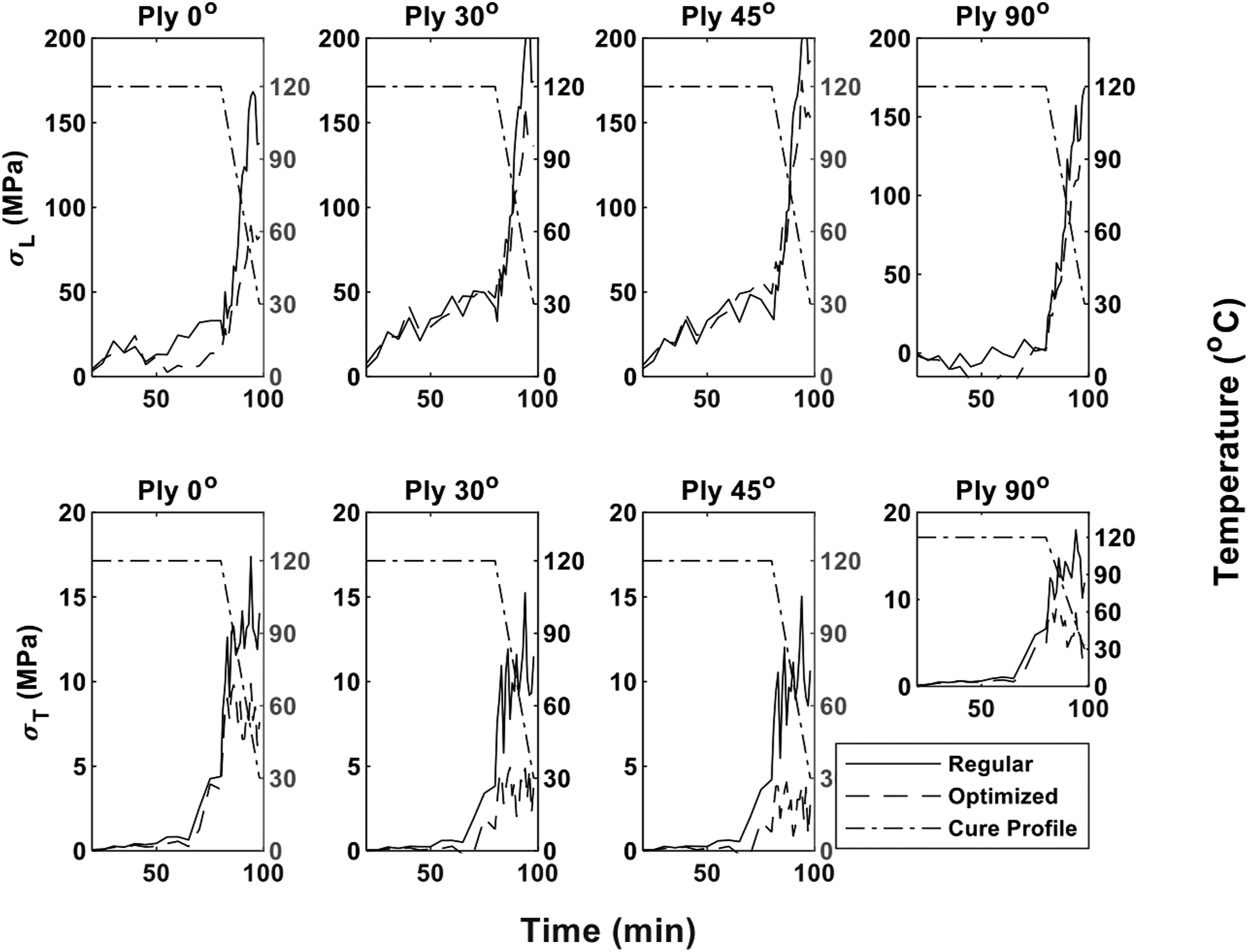
Experiments show that an abrupt-cooling operation after gelation could efficiently dissipate the strain generated by the laminate thermal contraction due to the resin’s viscoelastic behavior. 38 It is reported that this reduction in strain decreases the bonding temperatures between adjacent plies thereby reducing the residual stresses. All the layups considered in this research have only four plies and the total thickness of the laminate after cure is around 1 mm. Due to the lower thickness of the samples, through-thickness variations in temperature are likely very small. Therefore, the contribution of thermal gradients to residual stress and deformations is expected to be negligible. 39 Regarding chemical gradients, Palmese et al. 40 note that when the characteristic time for diffusion is less than the duration for chemical reaction, there are no significant chemical gradients. Interrupting the cure at the gel point and abruptly cooling the sample decreases the resin diffusion. On the other hand, the chemical reaction continues due to the exothermal reaction heat during the cure interruption. Therefore, chemical gradients are not expected to play a significant role.
The phenomenon of low-temperature curing during the rapid cooling process can be analyzed using thermal images of the specimen. Thermal analysis pictures in Figure 10 correspond to the region between gel point and R2 in Figure 1(c) for the layups considered in this study. It is instructive to observe the images of asymmetric layups as these layups are expected to create warpage during cure.
36
For example, the anti-symmetric angle-ply [45/-45/45/-45] layup will have a twist warpage at the corners associated with curing. This warpage reduces the contact between the tool and the part, resulting in a higher cooling rate at the corners, which can be observed in Figure 10(c). This indicates that the curing and bonding are happening during the rapid cooling process. This low-temperature cure is responsible for the decrease in residual stresses. Thermal images of the laminate during interrupted cool-down.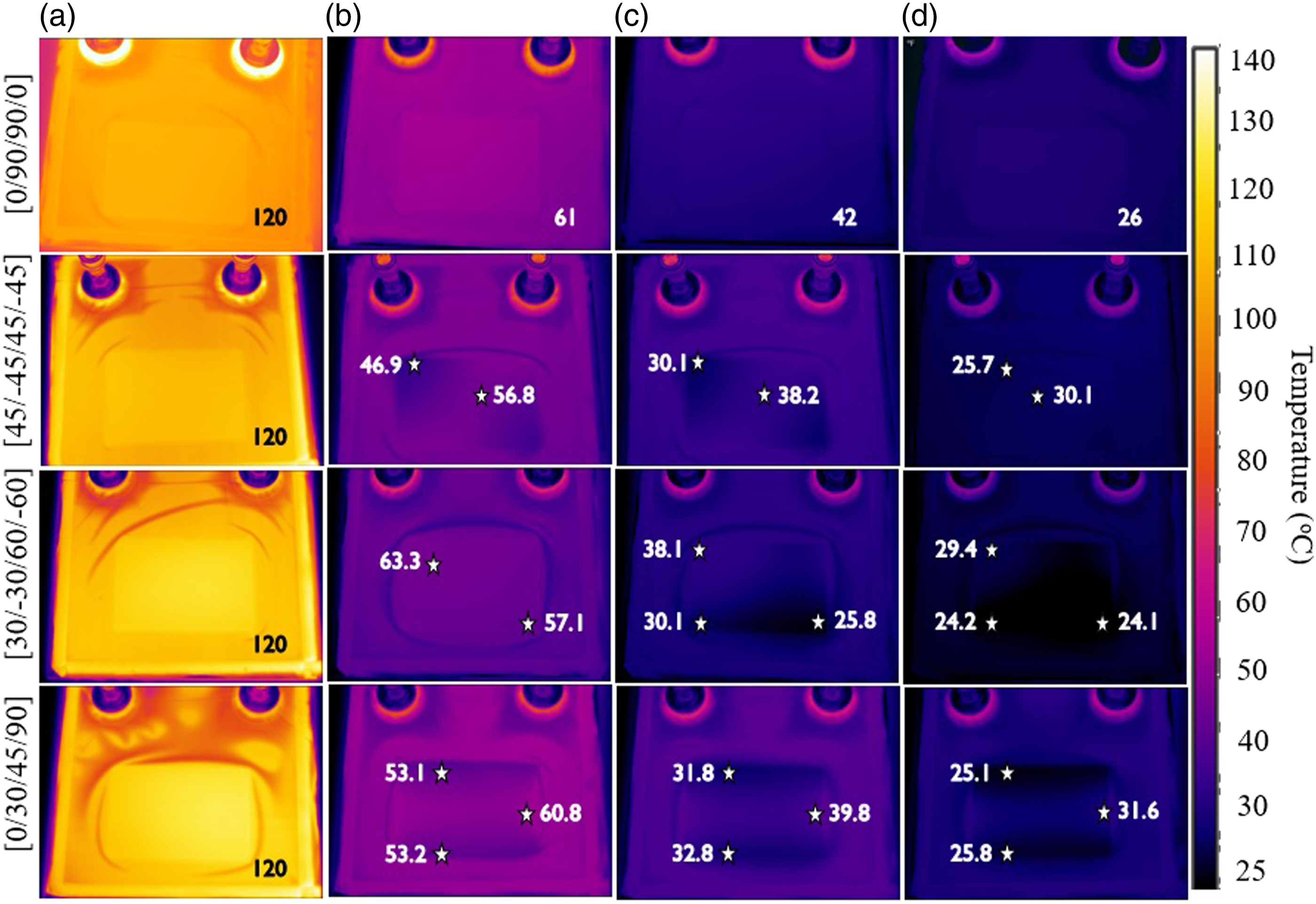
The cure interruption point in the modified cure profile is the primary process design variable that plays a key role in reducing the residual stresses. This is chosen to be the gel point of the resin, that is, the cross-linking of the resin begins at this temperature. For the matrix considered in this research, the gel point is at 120oC. Abruptly cooling the material at this point will continue the chemical reaction at low temperatures as seen in the thermal images in Figure 10. Choosing the interruption point before the gel point is ineffective as the resin cross-linking will not start before the gel point. To achieve chemical bonding to happen at lower temperatures, interrupting the cure post-gel point will not be effective either. Therefore, the cure interruption point is chosen when the sample reaches this temperature. Several other researchers26,41–43 use a similar approach for cure interruption.
Kim et al. 41 modified the cure profile with abrupt cooling at different cure states and reheating to decrease residual stresses and improve interfacial strength. They identified that abruptly cooling the sample reduces the bonding temperatures resulting in lower residual stresses and higher interfacial strength. According to them, this decrease in residual stresses is because the cure had been almost completed by the exothermic reaction heat even after the abrupt cooling down operation was applied, further they note that interrupting the cure early in the isothermal stage is more effective. This result and the literature above justify interrupting the cure at the gel point and the low-temperature chemical bonding is observed as evidenced by the thermal images in Figure 10. Soohyun et al. 43 note that residual stresses decrease by 52% in a glass-carbon epoxy composite when they decreased the bonding temperatures by 40%. In the current work, Figures 5 to 9 show that reducing the bonding temperature resulted in lower stress build-up throughout the cure compared to a regular cure. From Figures 5 to 9, it can be noticed that all layups exhibited lower stresses in the longitudinal direction for the modified cure cycle compared to the regular cure cycle from the starting of the cure cycle. The difference however between modified cure and regular cure is substantially increasing after vitrification during the cool-down phase of the cure. In the transverse direction, all layups exhibited almost identical stresses in the isothermal stage, but the modified cure approach results in much lower residual stresses during the cool-down. This detailed observation can only be made through the novel in-situ experimental approach developed in this research.
Mechanical testing
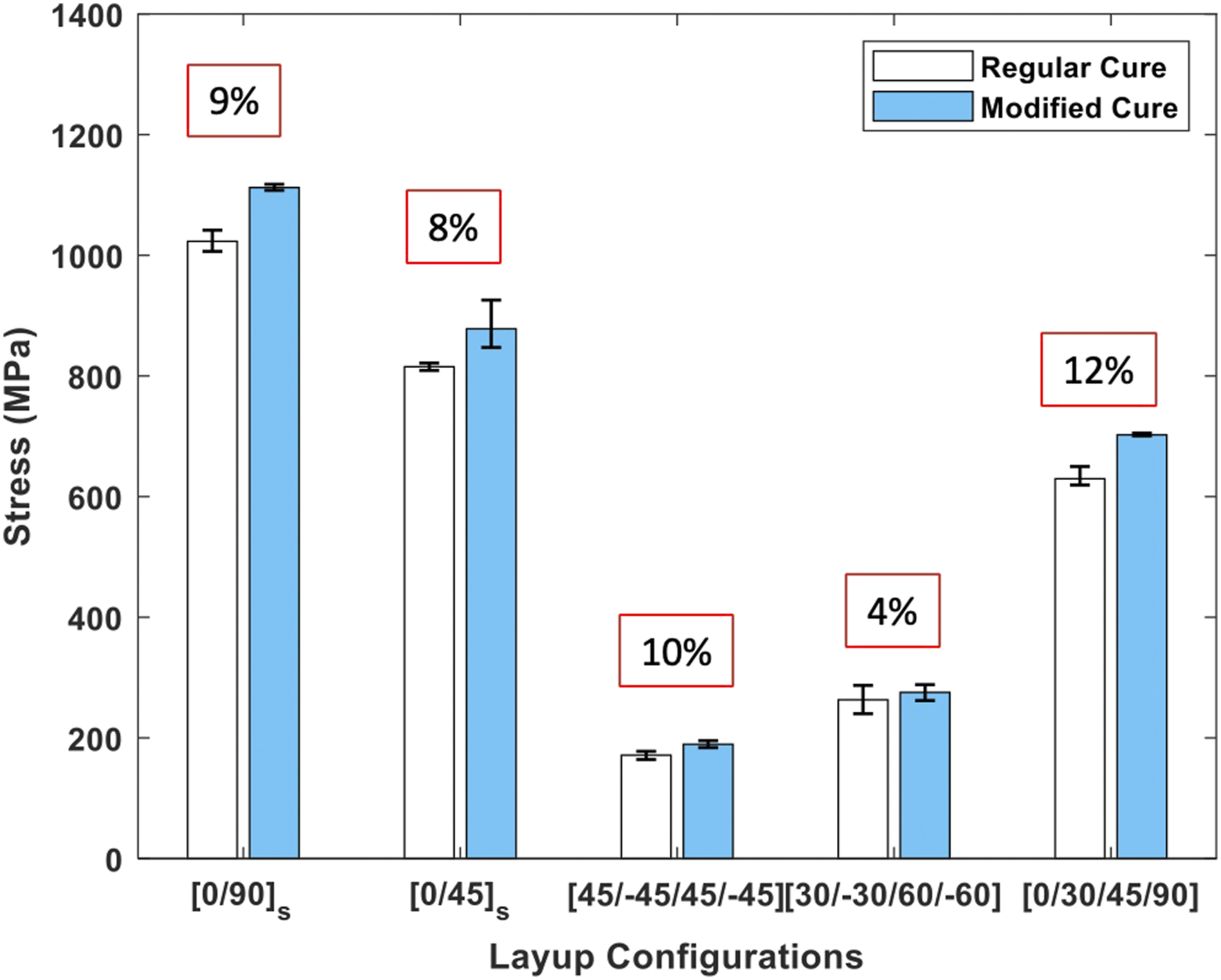
The first-ply failure strength for the layups considered is shown in Figure 11(b). Figure 11(a) shows the loading response for a [0/90]s specimen. The first ply failure is captured using the acoustic emission due to the first crack, which often causes a kink in the loading response due to the load redistribution in most of the tests. This is observed for both regular cure and modified cure as shown in the insets in Figure 11(a). All the mechanical testing results in this research are an average of three tests per layup configuration as shown with error bars in Figures 11 and 12. In general, the plies perpendicular to the loading direction in a tensile test are prone to fail first. Here, the tensile testing direction is 0° and the perpendicular direction is 90°. Among all the laminates, the cross-ply [0/90]s and unsymmetric [0/30/45/90] laminates contain 90° ply in their layup. The 90° ply in [0/90]s exhibited a 12% decrease in longitudinal residual stresses through modified cure while improving 5% in the first-ply failure strength. In the case of [0/30/45/90] laminate, the 90° ply exhibited a 71% decrease in longitudinal residual stresses with a 22% increase in the first-ply failure strength as seen in Figure 11(b). Similarly, the first ply failure strength increased for all the specimens processed through the modified cure cycle. This increase in strength can be directly attributed to the decrease in residual stresses in the respective layups. Samples from all the layups are also tested until ultimate failure and the corresponding stresses at failure are shown in Figure 12. The strength of the laminates increased for all the layups due to cure cycle modification. A maximum increase in strength of 12% is observed for unsymmetric [0/30/45/90] laminate followed by the cross-ply layup. (a) First-ply failure load for [0/90]s laminate; (b) first-ply failure strength for all the layup configurations. Stress at failure for all the layup configurations.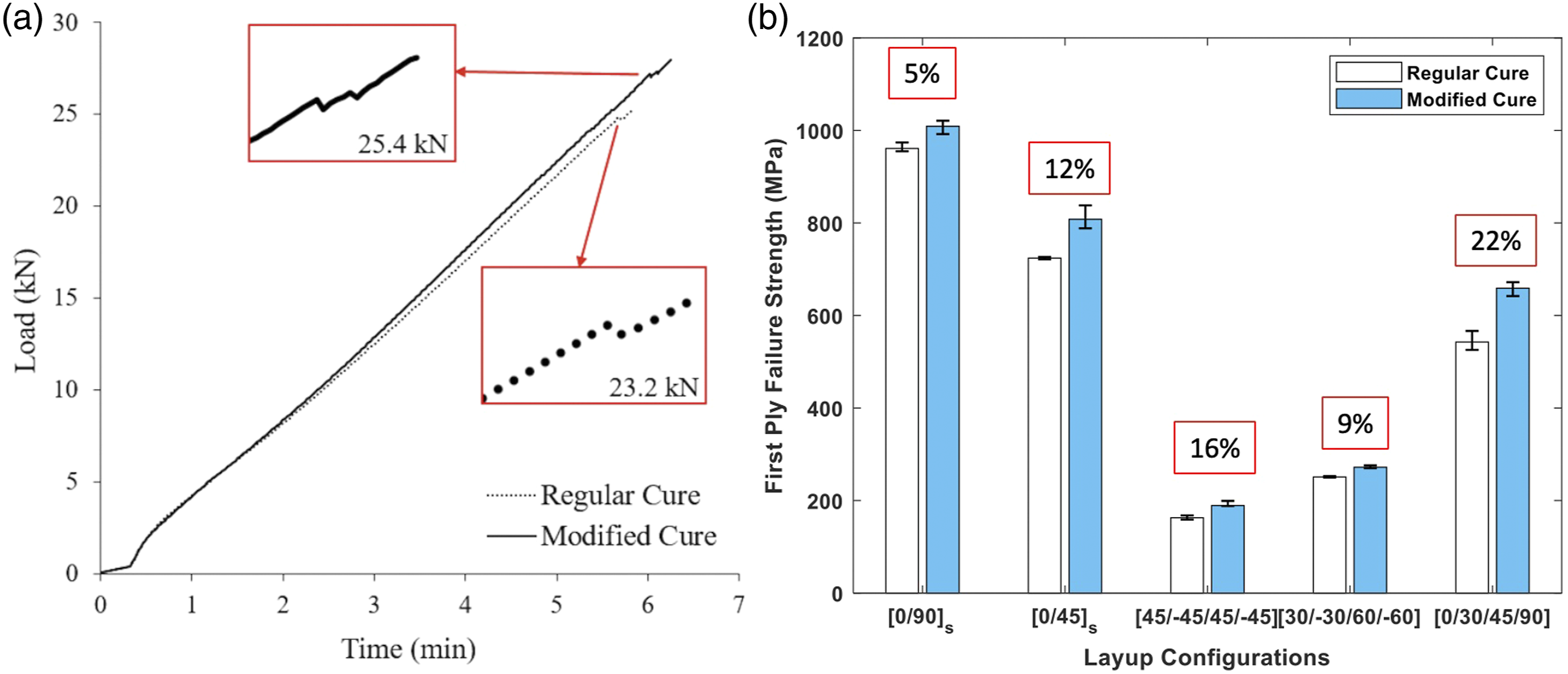
The micrographs of the fracture analysis for all the laminates cross-sections after tensile testing from SEM are shown in Figures 13(a) to (e). The fracture initiates in the middle of the tensile specimen in most of the samples. The analysis indicates that there is an initial fracture of the specimen which corresponds to first ply failure, in addition, there is subsequent delamination as is commonly observed in composite fracture. A kink in the tensile response corresponding to the acoustic emission in many tensile tests confirms this independently. Processing of the composite without pressure contributes to the delamination after the initial fracture.
44
Further, the extent of damage in unsymmetric laminates correlates with the ply angle distribution. The laminates with coarse ply angle distribution exhibited more damage due to the development of interlaminar edge stresses. Each ply in the laminate will carry the load along the direction of the fibers which explain the more visible fibers damage in the [0/90]s and [0/30/45/90], compared to symmetric laminate such as [0/45]s and balanced laminates such as [30/-30/60/-60]. These observations reinforce the recommendation to select both symmetric and balanced layups for structural applications to avoid extension/bending and shear couplings during tensile loading.
45
Scanning Electron Microscopy (SEM) of the fracture surfaces at two scales (1 mm & 50 μm) for (a) [0/90]s, (b) [45/-45/45/-45], (c) [0/30/45/90], (d) [0/45]s, and (e) [30/-30/60/-60].
Numerous researchers have reported that the decrease in residual stresses results in an increase in the strength of the composites after the cure. Kim et al. 38 observed that a 50% reduction in thermal residual stresses for a cross-ply [05/905]s layup improved the static strength and fatigue life by 16% and 614%, respectively. Agius et al. reported that a 25% increase in residual stresses in resin-infused carbon-fiber laminates reduced the composite’s short beam shear strength by 16% 46 . The first-ply failure is another method adopted by researchers to quantify the amount of residual stresses within a composite laminate.13,28–30 Typically, a decrease in residual stresses should amplify the first-ply failure strength. It can be observed from Figure 11 that the first-ply failure strength increased for all the layups with modified cure profile with unsymmetric [0/30/45/90] layup exhibiting a maximum increase of 22%. Similarly, the stress at complete failure for modified cure profile also increased for all the layups considered in this study with unsymmetric [0/30/45/90] layup exhibiting a maximum increase of 12%. These strength increases are identical to those observed in the literature.
While there are several methods to evaluate the residual stresses post-cure, the current approach can uniquely perform continuous evolution of processing-induced residual stresses throughout the cure. This approach was used to modify the cure cycle to reduce residual stresses and thereby increase the strength of the specimen. The current approach also has the potential to dynamically adjust the cure cycle while curing based on the real-time residual stress evolution data. While a promising cure modification is examined in this paper, as a future direction, these experimental methods could be combined with modeling (e.g., cure simulation) to further optimize composite processing.
Conclusion
Residual stresses are detrimental to any composite structure as they induce defects like debonding, delamination, matrix cracking, etc. The ability to monitor the residual stresses throughout the cure process and develop methods to reduce these stresses is vital due to the rapid growth in the use of composite structures. In the current work, a modified cure approach is developed to reduce processing-induced residual stresses in composite laminates. The key research outcomes are summarized below: 1. An in-situ characterization approach is developed to monitor the evolution of processing-induced residual stresses and is used to develop approaches to reduce these residual stresses. 2. A modified cure approach based on interrupting the cure after gelation is proven to be effective in reducing the residual stresses in both symmetric and asymmetric layups. This approach has the potential to be applied to other composite materials 3. The decrease in bonding temperatures due to the abrupt cooling operation resulted in lower residual stresses after vitrification. This reduction in stresses can be observed for all the laminates analyzed in this study. 4. Among all the ply configurations, a maximum reduction of 31.8% is observed for the balanced unsymmetric angle-ply [30/-30/60/-60] laminate. 5. The decrease in residual stresses after cure increased both the first-ply failure strength and ultimate strength of all the layups study in this research. 6. A maximum increase of 22% for first-ply failure strength and 12% for failure strength is observed for the unsymmetric [0/30/45/90] laminate.
Footnotes
Acknowledgments
The authors acknowledge Dr Sandra Boetcher and Dr Jeff Brown for access to the DSC machine and thermal camera, respectively. The authors thank Suma Ayyagari for her support in utilizing the SEM.
Declaration of conflicting interests
The author(s) declared no potential conflicts of interest with respect to the research, authorship, and/or publication of this article.
Funding
The author(s) disclosed receipt of the following financial support for the research, authorship, and/or publication of this article: This research was supported by National Science Foundation (NSF) Advanced Manufacturing Grant (2001038).
