







Abstract
The research aims to bridge the gap by providing an integrated approach to material design, process optimization, and intelligent failure prediction. A novel approach to material design and process optimization was developed to examine the impact of stacking sequences and processing parameters on the mechanical behavior of flax-basalt composite laminates. Five laminate stacks were manufactured by hand lay-up and compression curing techniques. These stacks were then characterized by tensile, flexural, impact, interlaminar fracture toughness (ILFT), and energy absorption density (EAD) properties. Among the laminate stacks, B-F-F-F-B (S2) showed superior properties with tensile, flexural, impact, ILFT, and EAD properties of 150 MPa, 185 MPa, 14.2 J, 1580 J/m2, and 0.68 J/cm3, respectively. To further optimize the material properties, the Response Surface Methodology (RSM) was combined with a novel approach based on a hybrid DQN-LSTM-Mother Optimization Algorithm (MOA) approach. In addition, scanning electron microscope (SEM) analysis was incorporated to interpret the material properties and provide a direct link to material structure and properties. This approach represents a major advancement over existing RSM-ANN and machine learning techniques for designing high-performance composite materials.
Keywords
Introduction
There has been an increase in demand for sustainable, high-performance composite materials. Flax fibers are commonly used due to their low density, degradability, and specific properties.1,2 Flax fibers face limitations in moisture absorption, variability in property, and low strength. Hybridization with high-performance fibers such as basalt has been proposed to overcome the limitations of flax fibers. Hybridization has proven to enhance the strength and durability of composite materials.3,4 The performance of hybrid flax and basalt laminates is largely influenced by processing parameters such as stacking sequence and resin content, which affect stress distribution, interfacial adhesion, and failure mechanisms.5–7 Optimizing parameters is necessary to enhance the performance of the laminates.
Recent work has focused on hybrid composite systems and data-driven prediction methods, with greater emphasis on sustainability and optimization. For example, machine learning methods have been used to predict the mechanical behavior of hybrid natural fiber composites. 8 In contrast, agro-waste composite optimization has been carried out using a combination of methods. 9 Additionally, advanced hybrid composite systems and decision-making tools have been developed, 10 while the impact of stacking sequence and thickness variation on the thermo-mechanical properties has been investigated. 11 While the above-mentioned research demonstrates the viability and effectiveness of using hybrid composite materials and prediction methods, the research has been largely restricted to material characterization and/or optimization methods. However, the integration of material design, process optimization, and failure prediction using AI methods has yet to be fully investigated, specifically in the context of hybrid flax-basalt composites. Nevertheless, it is worth noting that the majority of the literature focuses on either experimental characterization or optimization approaches, without a unified framework for material design, optimization, and failure prediction. RSM has been widely used for modeling and optimizing composite processing parameters with reduced experimental effort.12,13 Meanwhile, artificial intelligence methods such as ANNs, CNNs, and regression models were used to predict complex nonlinear behaviors.14,15 However, these methods often failed to incorporate feature selection, sequential learning, and multi-objective optimization. Besides, failure analysis by Scanning Electron Microscopy (SEM) is often qualitative, lacks predictive capabilities, and is limited in its integration with AI models.
Thus, the novelty of the present work lies in the formulation of a comprehensive experimental and computational framework that combines the RSM approach with the hybrid DQN-LSTM-MOA model for simultaneous optimization and prediction of mechanical properties of hybrid composites of flax and basalt. Moreover, the SEM technique is utilized for data-driven failure mode prediction by incorporating the microstructural analysis into the AI framework. This approach enables the direct linkage between processing parameters, microstructure, and mechanical performance, thereby facilitating the optimization of high-performance composites.
Literature study
Because of their biocompatibility, low mass density, and competitive specific strength, multiple researchers, including Irshad et al., 16 have studied the applications of flax fiber. They have also shown potential for use as lightweight structural materials. Factors such as inconsistent fiber properties, limited water uptake, and durability have limited the benefits of this fiber type over time (Yan and Xu). 17 Studies have indicated that it is critical to increase the bond between the fiber and the polymer to improve the mechanical performance of flax-reinforced polymers. 18
Basalt fiber is an environmentally friendly alternative for glass fiber that is produced from heating volcanic rock until it melts. It is able to produce stronger materials than traditional glass fiber with better thermal resistance and virtually constant chemical stability Chellan et al. 19 Due to their high durability and ability to maintain their strength during thermal cycling, basalt composites are able to provide for high-end engineering applications Raja and Devarajan. 20
Combining flax and basalt in hybrid composites has demonstrated improved mechanical properties along with some sustainability benefits. Previous literature indicated that hybridizing the two materials increased laminate stiffness and interlaminar shear strength and reduced brittleness compared with solely using natural fibers. The strength of basalt combined with the flexibility or toughness of flax created a system with higher damage tolerance. However, there are inconsistencies between the studies regarding laminate configurations, which limit the ability to compare findings across studies (Dogar et al. 21 ).
Numerous studies suggest that the stacking sequence strongly impacts load distribution, failure initiation, and energy absorption in hybrid composites. By judiciously locating the basalt and flax layers within these composite structures, significant gains in tensile, flexural, and impact characteristics can be achieved (Shi et al. 22 ). Additionally, the content of resin was revealed to be an important variable affecting wetting-out of the fibers, amount of voids, interfacial adhesion, and overall integrity of the laminate. Applying either too little or too much resin results in performance loss; thus, a need exists for the development of optimal resin content during lamination of hybrid composites Taheri et al. 23
RSM has been used to optimize composite manufacturing parameters because it can provide models of interactions among the manufacturing parameters with fewer experimental results. For example, RSM has been used to optimize fiber ratio, curing conditions, printing conditions, and reinforcement levels. RSM has been shown to predict responses that lead to optimal conditions for improving tensile, flexural, and interlaminar shear strength. This has been demonstrated by Thanikodi et al. 24
The effectiveness of deep learning techniques for accurately predicting and categorizing fiber composite meltdown mechanisms has been enhanced by advances over the past few years. The different neuro-network modalities used in past research include; CNNs (Convolutional Neural Networks) being used for fracture surface identification, MLPs (Multilayer Perceptrons) and DBNs (Deep Belief Networks) for correlating mechanical test data to how the composite broke down, Support Vector Regression and Random Forest Regression for identifying matrix cracking and fiber ply mechanisms, and Inception-V3 networks used to identify mixed mode failure from SEM images. All of these modeling techniques successfully extract microstructural features and therefore enable automated detection of fiber composite defects (Rothenhäusler et al. 25 ; Chang et al. 26 ; Wang et al. 27 ). However, hybrid composites of flax/basalt will require integrating deep learning techniques with experimental optimization techniques such as RSM; very little research has been conducted on this to date.
Research gap
Composites such as flax, basalt, and their hybrids have been investigated by various researchers, but most studies have been focused on specific aspects, such as material characterization, optimization, or AI applications. Although the RSM-machine learning approach has been explored in composites, its application to hybrid composites such as flax-basalt is less well established, especially for optimizing stacking sequence and resin content. Moreover, integrated approaches for processing parameters, microstructure, and multi-response mechanical properties are less explored, while advanced approaches for failure prediction have not been explored. To bridge these gaps, this study proposes a novel experimental-computational framework for hybrid feature selection, prediction, and optimization, as well as failure interpretation, integrating RSM with a hybrid DQN-LSTM-MOA model and SEM-based microstructural analysis. This approach provides a direct process-structure-property relationship, which is a breakthrough compared to existing RSM-ML models for hybrid flax-basalt composites.
Objectives
• To fabricate hybrid flax–basalt composite laminates with different stacking sequences and resin contents. • To characterize the mechanical response of the developed laminates under tensile, flexural, and impact loading conditions. • To investigate failure mechanisms using microscopic (SEM) observations for different laminate configurations. • To apply RSM to identify the optimal combination of stacking sequence and resin percentage for improved mechanical properties. • To integrate RSM-based optimization and deep learning–based failure prediction into a unified framework for designing high-performance hybrid flax–basalt composites.
Proposed methodology
A complete overview of the methodology for obtaining FLX-BAS composite laminate materials, along with their mechanical properties and microstructural characteristics, is presented in Figure 1. The approach starts with an appropriate selection of fiber and resin materials that are mechanically compatible and used in eco-friendly operations. Manufacturing of the composite laminates consists of five different stack arrangements of both types of fiber types, curing simultaneously under controlled ambient conditions to provide defect-free specimens. Mechanical properties of manufactured laminates are determined by conducting a series of laboratory tests, including tensile and flexural tests; energy-absorption tests; impact tests; and interlinear fracture-toughness tests. SEM image analysis has allowed for determination of the major failure mechanisms associated with composite laminates, such as inter-fiber matrix bonding failure, inter-layer matrix rupture, and fiber matrix debonding due to tensile loads, etc., and, through the process of RSM, has predict how each of these mechanisms will affect composite performance responses. The DQN-LSTM-MOA hybrid AI framework provides an additional tool for accurately predicting composite performance characteristics and optimizing laminate performance characteristics for a particular fabric stack sequence and/or composite fabrication parameters, thereby increasing the reliability of selecting those factors. Flow chart of proposed methodology.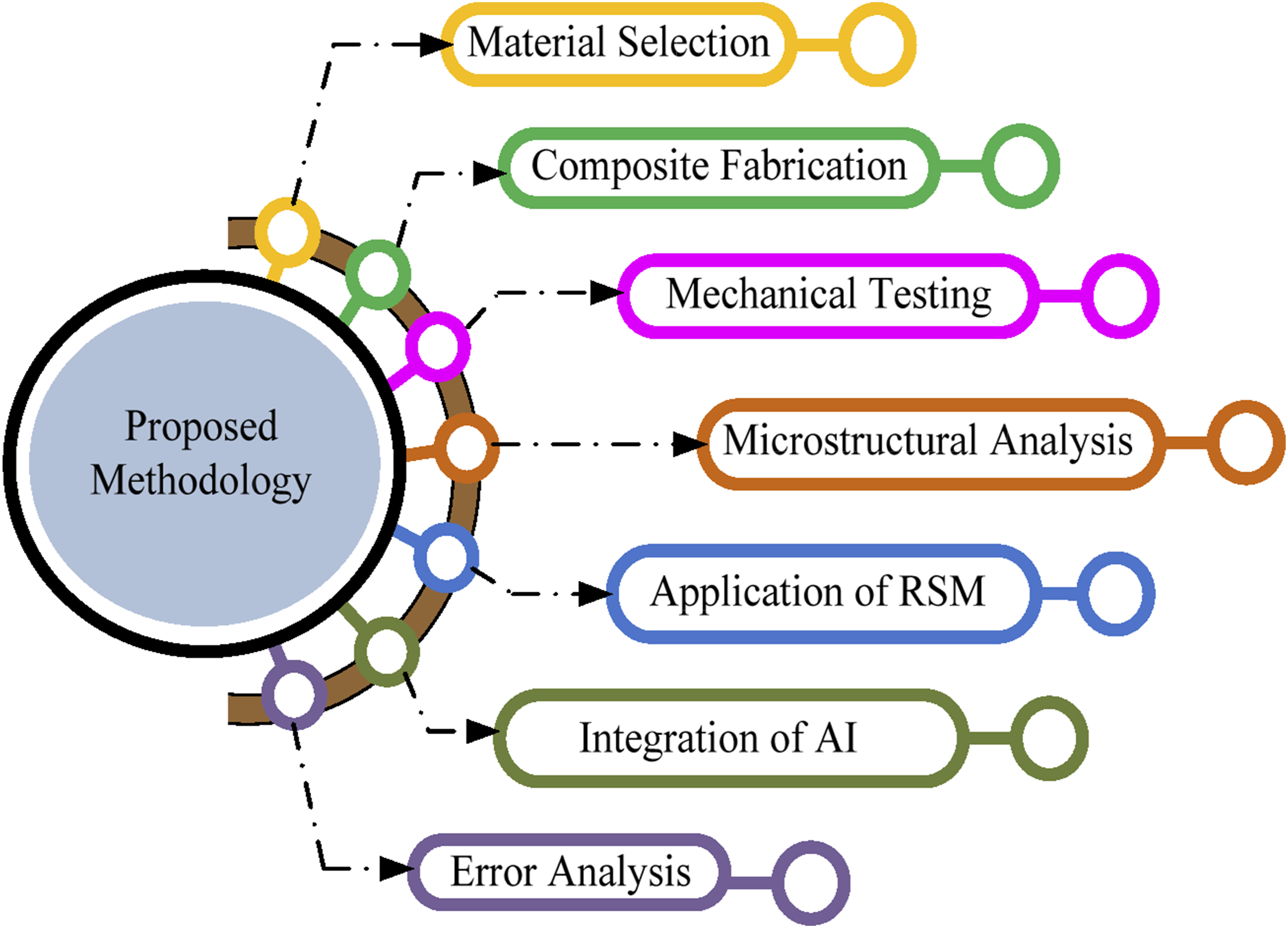
Material selection
The objective of this research was to evaluate the compatibility of flax and basalt fibers in terms of the special properties they possess. Flax fibers are natural, renewable resources with low density and good tensile properties. They are also ductile materials with low environmental impact. On the other hand, basalt fibers, derived from volcanic rocks, exhibit exceptionally high tensile strength. They also possess high thermal stability and chemical durability. The combination of flax and basalt fibers ensures the composite material has the required balance of strength, stiffness, and impact resistance. The epoxy resin was adopted as the matrix material because it provides the required bonding to the fibers and, when handled properly, improves the mechanical behavior of the composite. The materials were obtained as fabric and the required ratios of resin and hardener were used to produce the composite materials. The bonding nature of the selected materials was later examined using SEM image analysis.
Fabrication of composites
The flax fibers used in the present work had an areal density of approximately 300 gsm in plain-weave fabric. The basalt fibers utilized in the present work had an areal density of 400 gsm. The flax fabric was first dried in an oven at 60°C for 24 h before composite processing. The epoxy resin system used in the current research comprised LY556 resin and HY951 hardener, mixed at a 10:1 weight ratio. The epoxy resin was mixed with the flax and basalt fibers. Hybrid composites were prepared using the hand lay-up technique and cured under a compression of 0.5 MPa at 100°C for 4 h. Degassing and rolling of the flax and basalt fabric were performed to ensure proper fibers wetting. Figure 2 illustrates the fabrication process of Hybrid Flax-Basalt composite laminates. The stacking sequences, including pure forms (FFFFF, BBBBB) and hybrid forms (BFFFB, FBBBF, FBFBF), were designed to investigate interface interactions, stress distributions, and reinforcement. Triplicate laminate samples were prepared to ensure reproducibility. The void content of the fabricated laminates was evaluated using the density method, comparing the measured laminate density with the theoretical density calculated from the fiber and resin proportions. The void fraction was found to be below 3%, indicating good impregnation of the fibers and uniform laminate quality. Fabrication of hybrid flax-basalt composite laminates.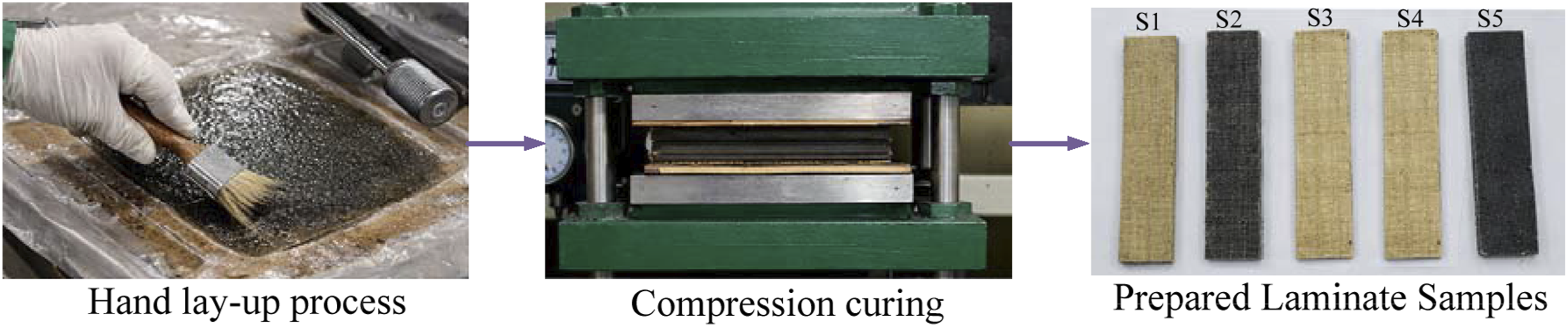
Stacking sequence and specimen preparation
The stacking sequence (Figure 3) significantly influences load transfer, stiffness, and failure behavior in laminated composites. Five representative configurations were selected: all-flax (S1) as the baseline, basalt-outer (S2: BFFFB) for improved surface strength, alternating (S3: FBFBF) for balanced load sharing, basalt-rich (S4: FBBBF) for higher rigidity, and all-basalt (S5) as the synthetic benchmark. These configurations enable a systematic evaluation of the effect of ply arrangement on mechanical performance and failure mechanisms in hybrid flax–basalt composites. Stacking sequence.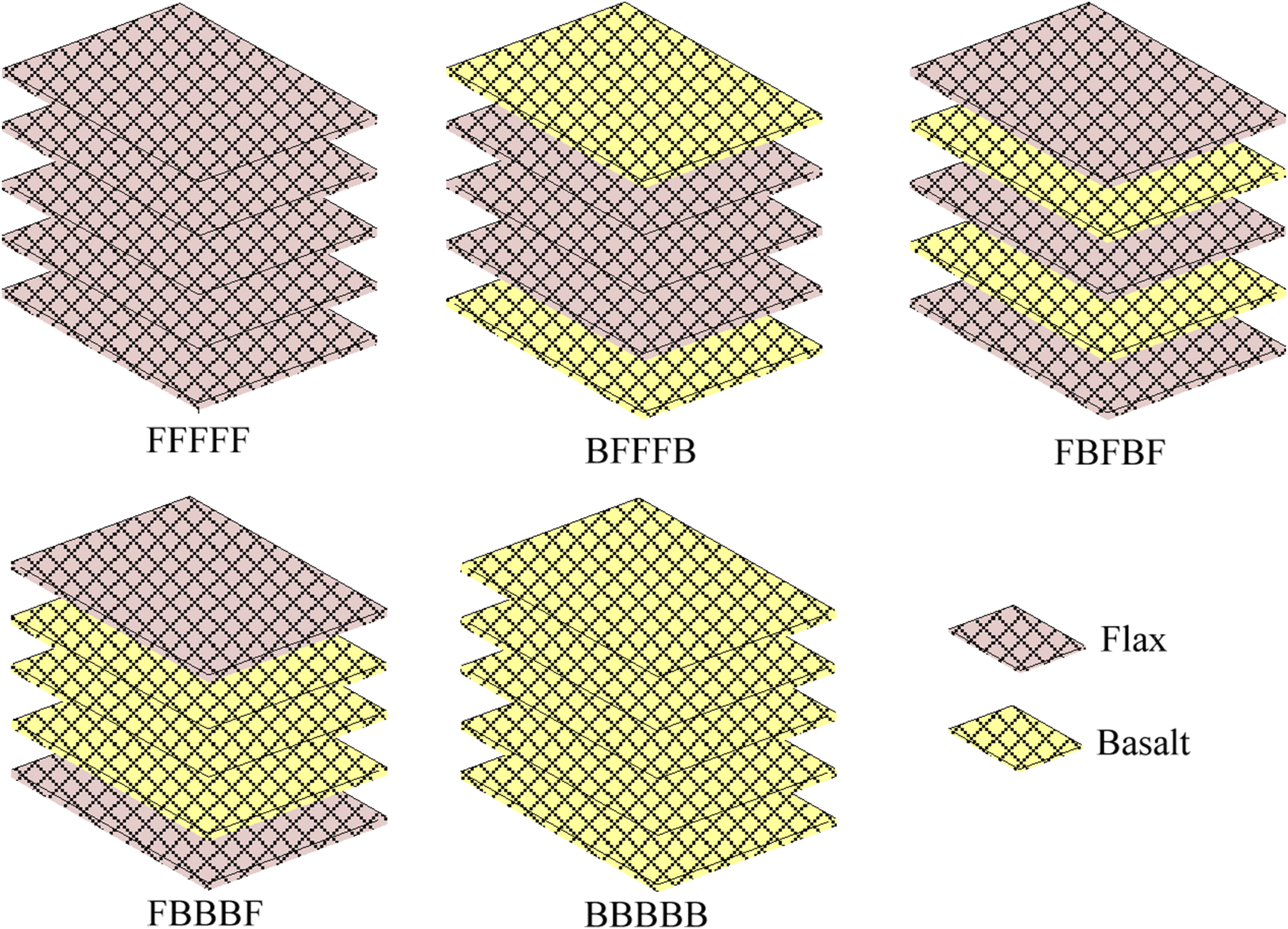
The stacking sequences were selected before the experiment to investigate different structural configurations. These include the natural fiber baseline (S1), the synthetic fiber baseline (S5), and various hybrid configurations (S2, S3, and S4). This approach will provide a comprehensive evaluation of the laminate’s properties, considering the influence of stacking sequence, including basalt placement at the outer surfaces, the alternating effect, and the basalt core. Although the number of stacking sequences used in this study is limited, the chosen configurations represent the major laminate configurations in terms of outer layer reinforcement, core reinforcement, and alternating effects.
Selection of parameters
Selection of relevant input and output parameters is critical for understanding how fabrication conditions affect the mechanical properties of hybrid flax-basalt composite laminates. Four major fabrications, which were critical input parameters, were selected for this study based on their significant influence on composite matrix interaction, quality, and structural integrity. The parameters include fiber weight fraction, epoxy resin content, curing temperature, and curing time. The levels of the factors were determined for the BBD based on the results of preliminary experiments, material limitations, and literature on hybrid composites of natural and synthetic fibers. The fiber weight fraction range was determined to be 30–50%, as it is critical for proper impregnation without compromising matrix interaction. The range for epoxy resin content was determined to be 50–70%, as it is critical for proper impregnation and minimizing voids. The range for excessive epoxy resin content would result in decreased mechanical properties of composites. The range for curing temperature was determined to be between 80 and 120°C, as it is critical for proper curing without degrading the matrix. The range for curing time was determined to be between 2 and 6 h, as it is critical for proper curing without degrading the matrix. The range was determined based on recommendations for the epoxy resin system (LY556 and HY951).
Mechanical testing
The mechanical properties of hybrid flax-basalt laminates were tested under standardized conditions. Specimens were prepared according to ASTM standards and tested at room temperature under controlled laboratory conditions. The experiments were conducted in triplicate for all stacking sequences (S1 to S5). All mechanical properties were tested in triplicate for all stacking sequences. This is according to standard experimental procedures for composite materials. The average values were determined for all properties measured. Moreover, all specimens were tested under controlled conditions to account for natural fiber properties. This ensured consistent results for all specimens.
Tensile strength
The tensile test was carried out according to ASTM D3039 on a Universal Testing Machine (UTM) equipped with wedge grips. Loading was performed at a crosshead speed of 2 mm/min until fracture occurred. Figure 4 shows tensile testing and a fractured tensile specimen, which indicates the modes of failure in the fibers and the matrix material. Tensile strength.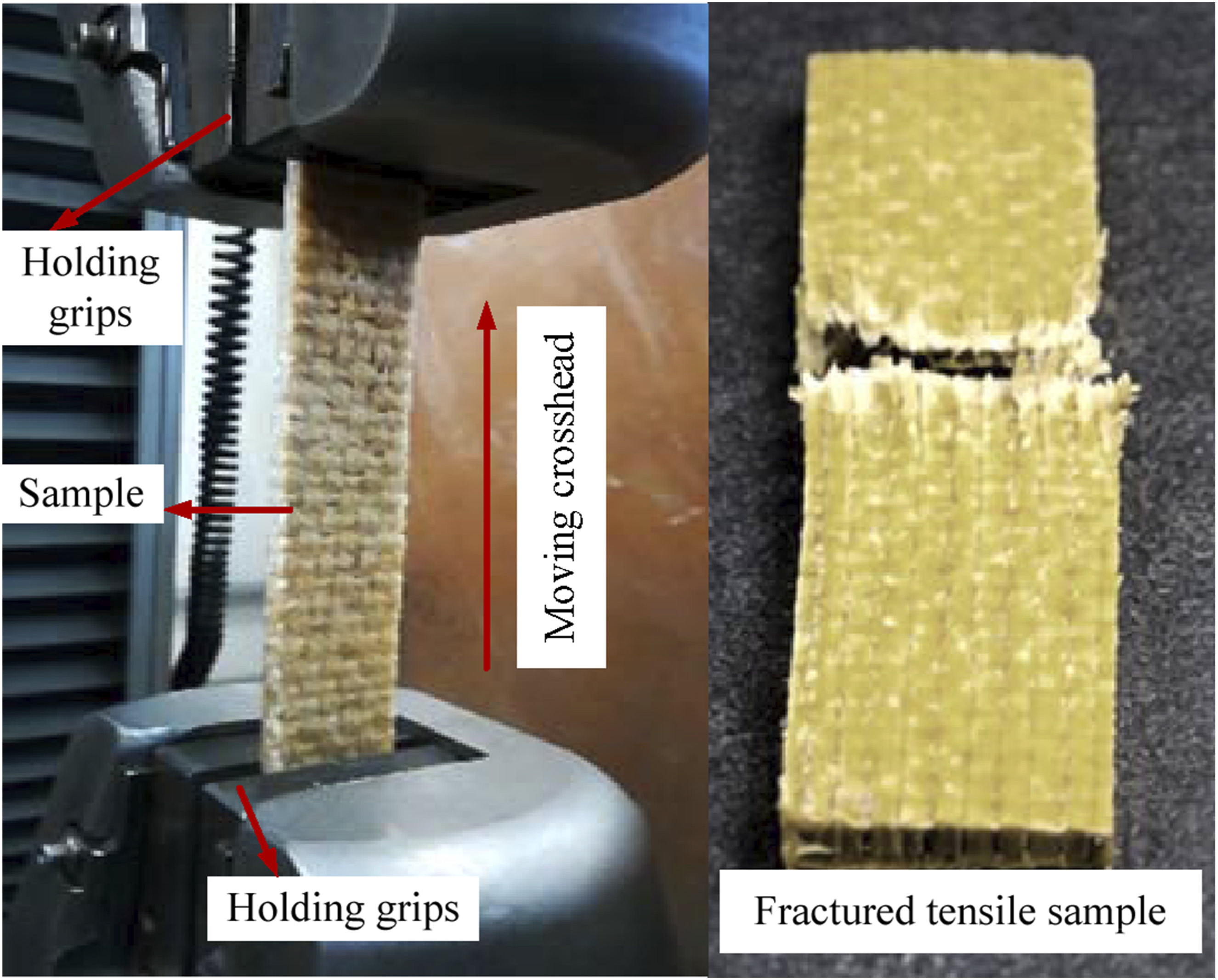

The above relation (equation (1)) is a simplified rule of mixtures. This rule assumes an ideal load sharing mechanism and an ideal bond condition. However, the actual behavior of composite materials, especially those with a hybrid laminate configuration, may not follow this rule due to various factors. Therefore, this equation is an approximate analytical tool to understand the trend of TS. This simplified rule is applicable to woven composite materials. This is because this rule provides an approximate indication of the tensile behavior of composite materials. Although the load-sharing mechanism is complex due to crimped fibers and the heterogeneous fiber distribution, this rule is applicable for understanding the trend in tensile behavior. This is because this rule provides an approximate indication of the tensile behavior and the contributions of both flax and basalt fibers to the tensile strength.
Flexural strength
Flexural strength and modulus were measured using the three-point bending test consistent with ASTM D790. The span depth ratio was 16:1, and the crosshead speed was 2 mm/min. The images of the specimens after the bending test are presented in Figure 5. These images show the laminate bending. Flexural strength.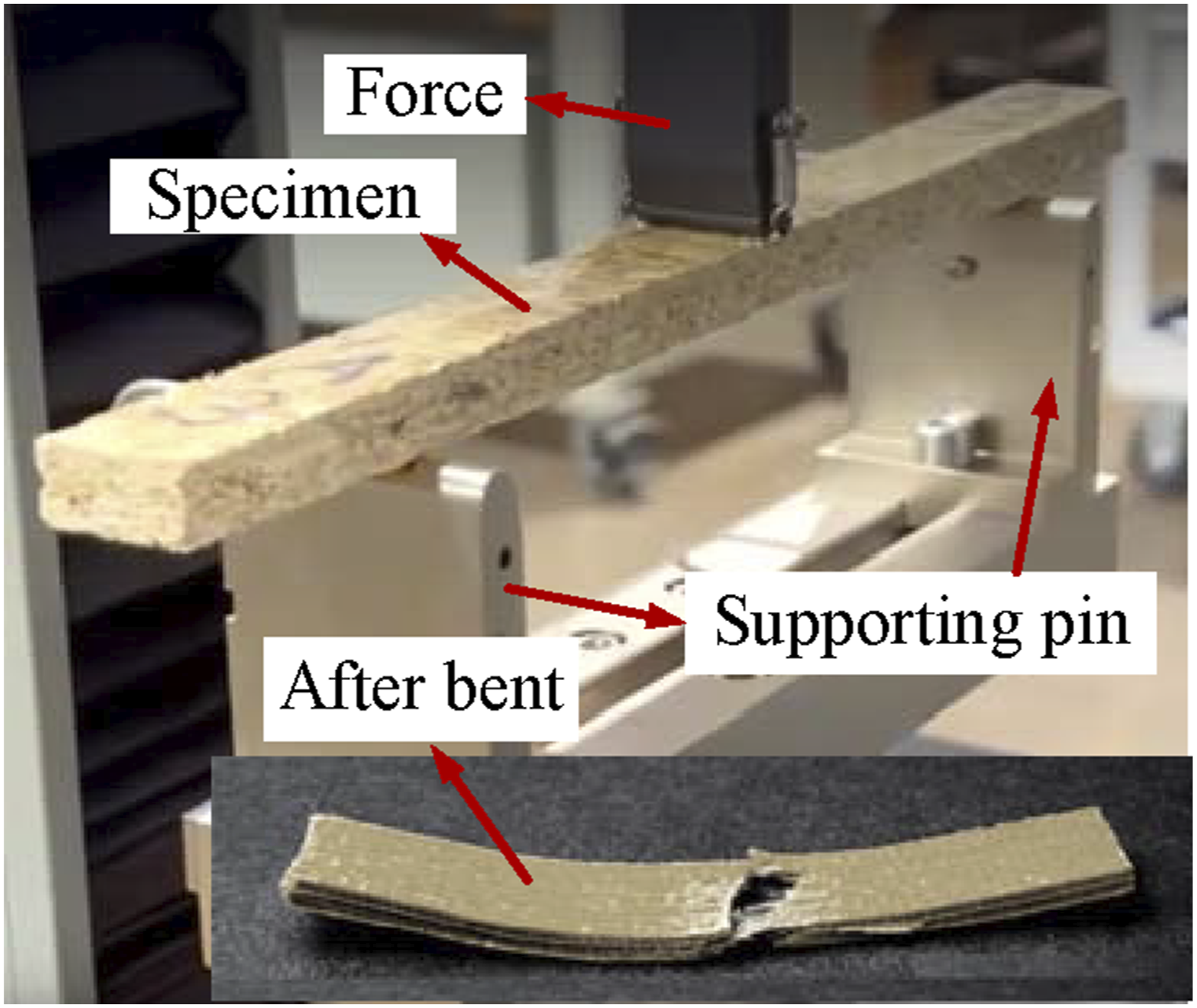

Impact energy
Impact resistance was evaluated using the Izod Impact Test (ASTM D256). The energy absorbed in the fracture process was measured. Figure 6 displays the laminates after impact testing, demonstrating their impact resistance and energy absorption. These values can be calculated using equation (3). Impact energy test.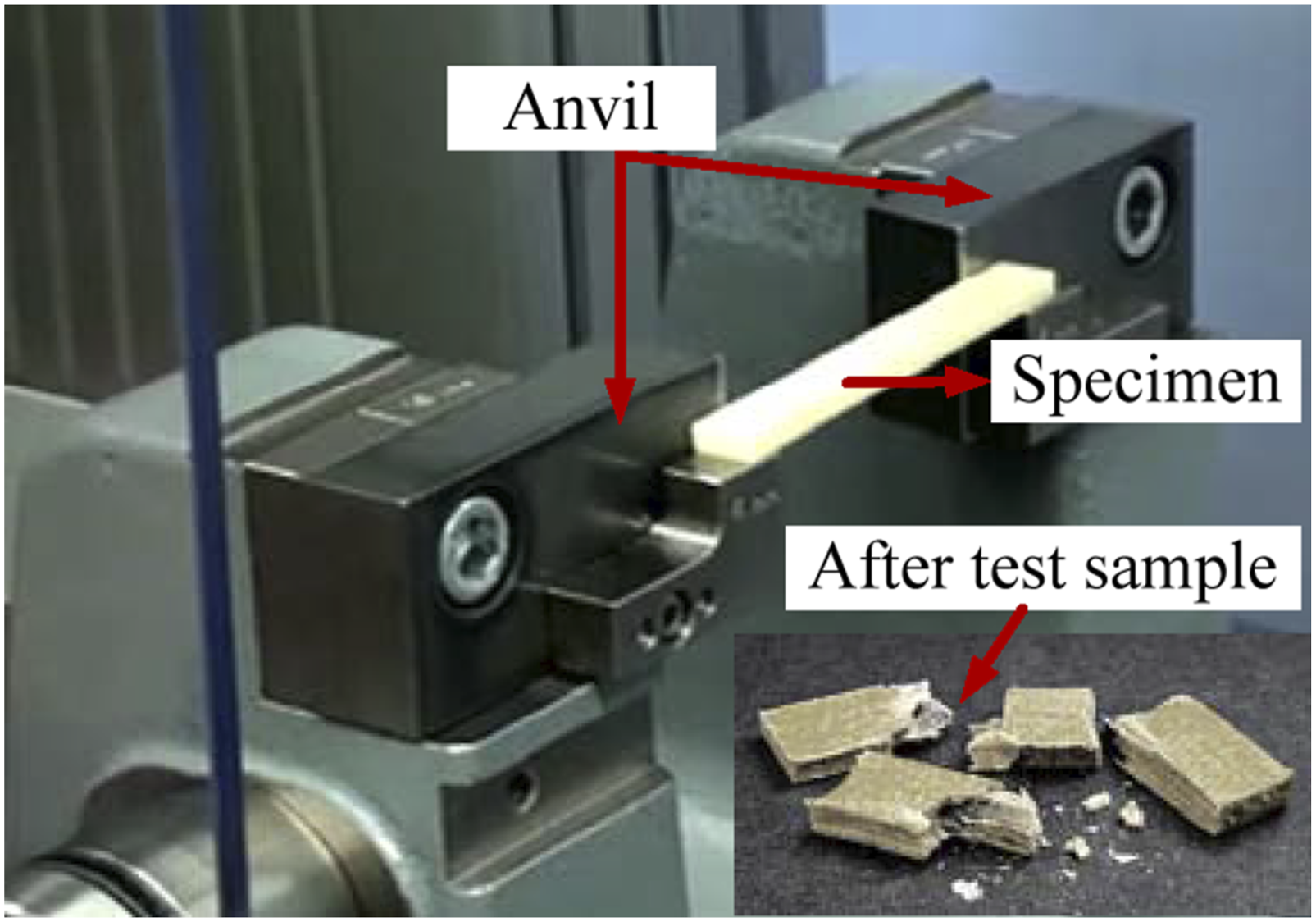

Interlaminar fracture toughness
The delamination toughness was quantified by the Double Cantilever Beam (DCB) test according to ASTM D5528. The value of GIc was calculated using the Modified Beam Theory based on load-displacement measurements. Figure 7 displays the DCB test specimens with visible crack propagation and delamination. The GIc was obtained using equation (4). Interlaminar fracture toughness test.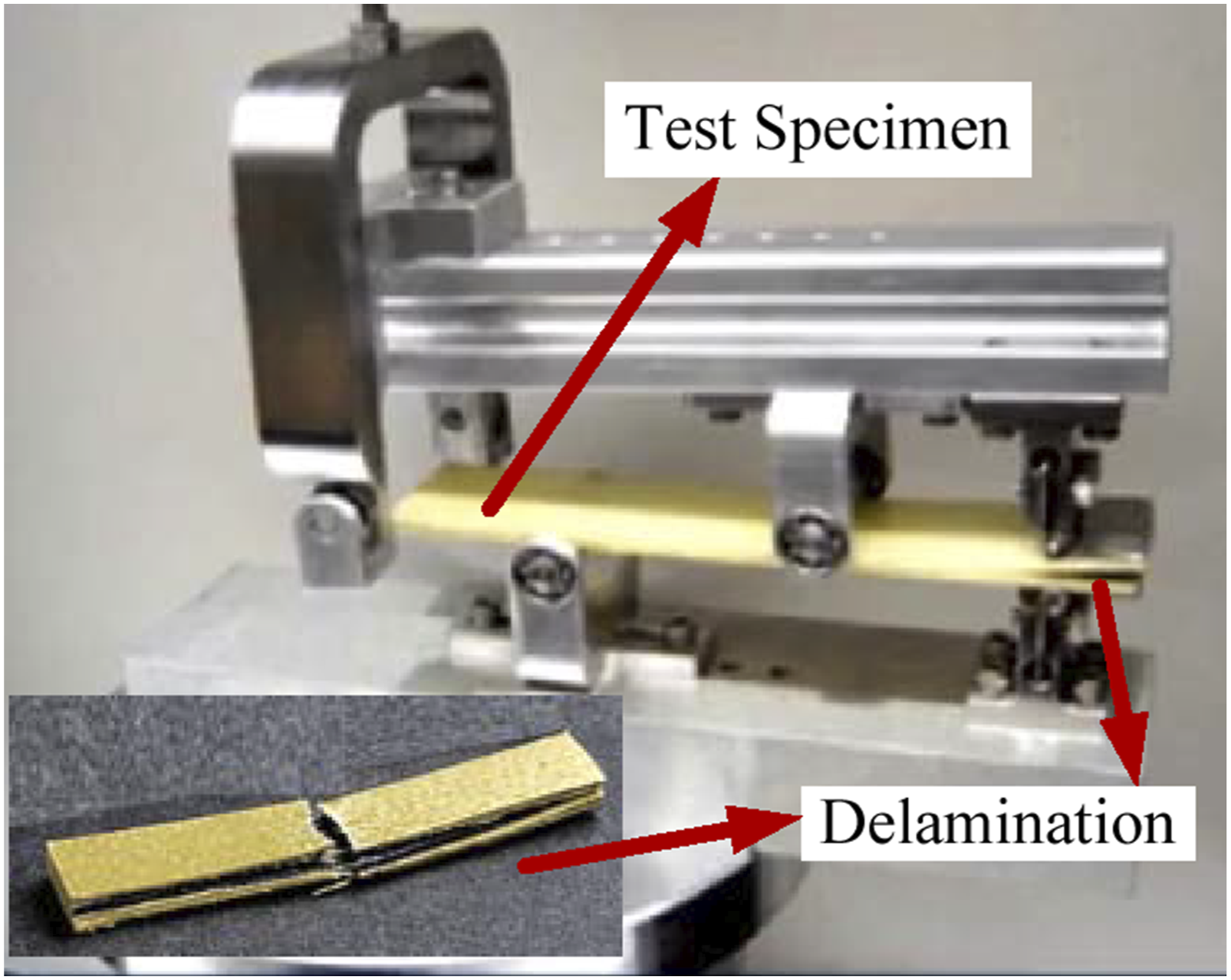

Energy absorption density
EAD, which represents the amount of energy a material can absorb per unit volume before failure, is summarized by the area under the Stress/Strain Curve, with the total toughness of a given material equal to this area. EAD can be calculated using equation (5), and the schematic representation in Figure 8 represents EAD from the Stress/Strain Curve. Schematic illustration of EAD derived from the stress–strain curve.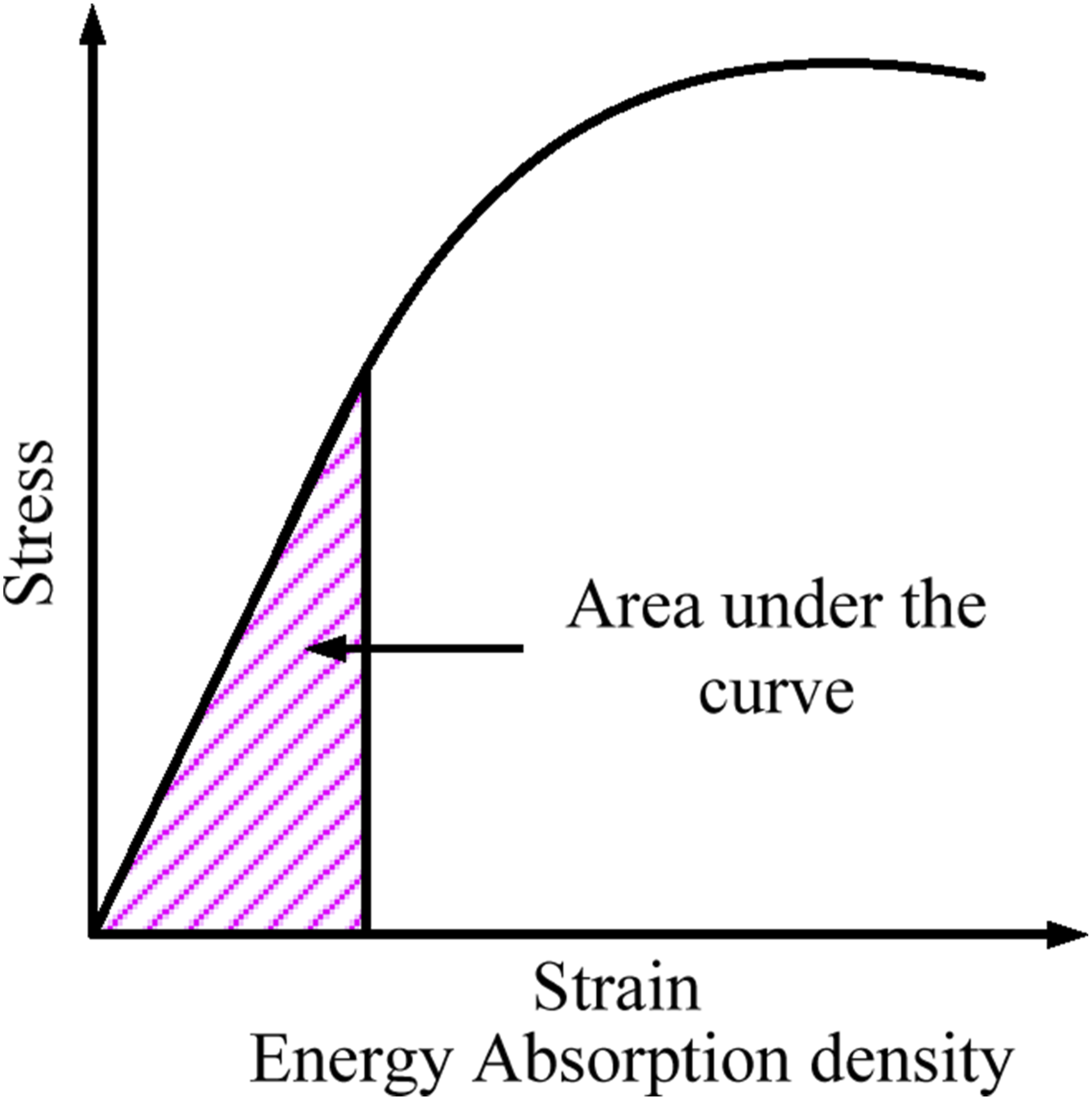

Microstructural analysis (SEM)
To identify the different failure mechanisms, a SEM provided further insight into broken samples resulting from mechanical testing. Prior to SEM analysis, all fractured samples were prepared by mounting and coating them. Following sample preparation, SEM inspections took place with different degrees of magnification and included observations on how matrix cracking, fiber breakage, delamination, and void formations all contributed to mechanical failure of the laminate samples. Additionally, these observations were related back to the mechanical performance associated with each laminate’s stacking sequence and resin content in order to comprehend how each of these factors influenced laminate failure behavior. The void fraction of the fabricated laminates was also assessed by image-based analysis of the SEM images. In this regard, the void area was identified according to the contrast difference between the matrix material and the voids, and the area fraction was estimated accordingly.
Response surface methodology analysis
RSM was used to establish how much input parameters (fiber weight fraction (A), polymer resin content (B), curing temperature (C), and curing duration (D)) affect the mechanical properties of hybrid flax and basalt laminates. A Box-Behnken design with 30 experimental trials was used to create valid statistical regression models for five response variables that include tensile strength, flexural strength, impact energy, inter-laminar fracture toughness (IFT), and EAD.
The construction of a second-order polynomial equation allows RSM to link the predictor Variables with measured Responses while minimizing the number of experiments. The coded values for each factor were created based on the researcher-specified ranges, ensuring that the experimental design points are evenly distributed within the experimental domain. The responses of each output were fitted to a standard quadratic model as shown in equation (6) as described by Boobalan et al.
28

To verify the reliability of the regression models, multicollinearity among the input variables was evaluated before model development. The correlation matrix of the input factors showed low correlation coefficients (
Application of AI
The integrated framework uses experimental RSM results as input to a DQN for feature selection and a subsequent LSTM for predicting mechanical properties. Finally, the predicted results are optimized using the MOA to obtain the optimum processing parameters. The DQN architecture consists of fully connected layers with a learning rate of 0.001 and a replay memory. Similarly, the LSTM architecture consists of 64 hidden units, and training is performed over 100 epochs using the Adam optimizer. The network’s input parameters are fiber weight fraction, epoxy weight fraction, curing temperature, and curing time. Similarly, the output parameters consist of TS, FS, IE, ILFT, and EAD. The dataset consists of 30 BBD experiments. The dataset was split in the ratio 80-20 for training and testing. The performance was evaluated using MSE, MAE, and RMSE. Despite the dataset’s limited size, the structured DOE design and optimized network architecture minimize the risk of overfitting. The close correlation between the predicted and experimentally obtained results demonstrates the robustness and reliability of the DQN-LSTM-MOA framework for predicting the mechanical properties.
The dataset consists of 30 BBD experiments. However, the structured design ensures high information density in the dataset. Recent research has successfully used such DOE-based datasets for machine learning-based prediction and optimization of composite properties. These structured datasets have been successfully used to obtain reliable predictions with machine learning algorithms, even with a limited number of samples.
Deep Q network for feature selection
To determine the most influential input parameters from the RSM dataset, an automated process is used to develop a DQN. The learning process of the DQN aims to minimize the difference between the predicted Q-value and the Q-value for each state and action pair. This process is defined mathematically by the Deep Q-Network loss function shown in equation (7), as presented in Shonkwiler et al.
29

The Deep Q-Network (DQN) was selected for feature selection over traditional methods such as PCA or Genetic Algorithms (GA) because reinforcement learning–based selectors dynamically learn the importance of features in non-linear and interdependent spaces. Unlike PCA, which only captures linear correlations, or GA, which relies on stochastic search without adaptive learning, DQN optimizes feature selection through reward-based learning. Similar approaches have been shown to significantly improve feature selection performance in engineering applications (Yang et al. 30 ).
LSTM model for mechanical property prediction
Five mechanical responses are predicted using the selected DQN features as input to the LSTM. The LSTM’s training goal is to reduce the error between predicted and experimental values. The LSTM uses Mean Squared Error (MSE) to measure the gap between predictions and reality as shown in equation (8) Deng et al.
31

Although the LSTM is designed for time-series data, it can be used to model datasets with highly interdependent variables. In the present work, the variables in the experimental data are the different parameters involved in the process, which have high interdependency between the mechanical responses. This means that the variables can be considered as a series of dependent features rather than independent features. This is where the LSTM model is used for modeling the complex nonlinear relationship between the variables by utilizing the memory-based learning capacity. This is because the model can better represent the relationship between the features compared to other machine learning models. This is why the LSTM model is used in the present work for modeling the complex relationship between the variables involved in the hybrid composite systems.
Moreover, the use of deep learning models, specifically the hybrid machine learning model, has been justified by recent studies on modeling complex composite systems, especially those involving nonlinear interactions between the parameters and the mechanical responses (Saha et al. 32 ).
Optimization using mother optimization algorithm
The MOA receives LSTM-generated feedback on the optimal weight fiber fraction, amount of resin, temperature, and cure time (multi-response), using the overall desirability function as the decision criterion to guide an optimal/correct path forward for these experiments.

This equation (9), Kiratli 33 converts all predicted mechanical outputs into a single performance index, helping MOA determine the globally optimal processing parameters.
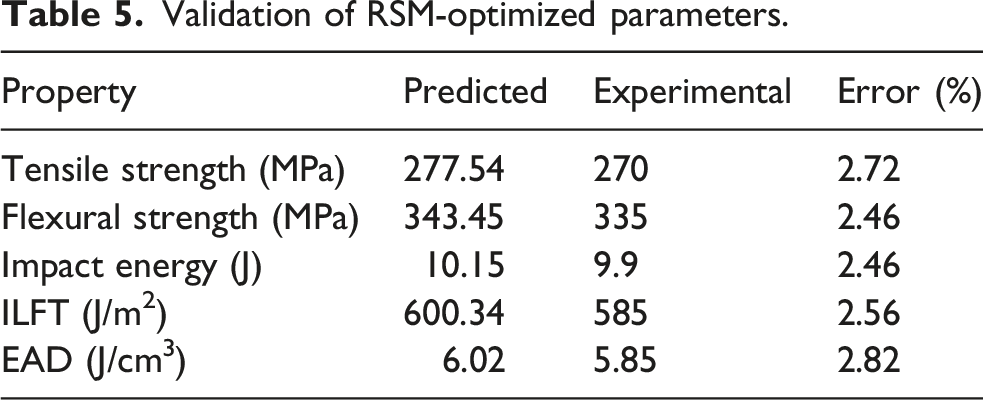
To confirm the reliability of the hybrid DQN–LSTM–MOA framework, the optimized parameters were experimentally tested. The agreement between predicted and experimental values is quantified using percentage error.

Result and discussion
Experimental result
Mechanical properties of hybrid flax–basalt laminates.

It is noteworthy that the experimental results reported in Table 1 are based on variations in stacking sequence at constant processing conditions.
Stress–strain performance of hybrid laminates
To analyze the deformation mechanism and failure mode of such composite structures, the tensile and flexural stress-strain behaviors of hybrid flax-basalt laminae S1–S5 are illustrated in Figure 9(a) and (b). As far as tensile stress-strain graphs are concerned, it can be concluded that the stacking sequence plays an important role in determining tensile properties. It can be seen that the S2 laminate has the highest tensile strength and the most uniform strain. This is because the basalt fibers on the outer surface and the flax fibers in the core provide the best conditions for stress distribution and delayed failure. However, the S1 laminate has lower tensile strength but a higher strain because the flax fibers are ductile. Additionally, the S5 laminate exhibits high stiffness but fails abruptly at a low strain. However, the S3 and S4 laminates have intermediate values, thus proving the effect of the stacking sequence on the tensile properties. From the flexural stress-strain curves, it is evident that the S2 laminate has the best bending properties and the highest tensile stress at a moderate strain. However, the S1 laminate has poor bending properties because the bonding forces between the flax and basalt fibers are low, and the S5 laminate has a brittle fracture because the flax fibers have a poor strain value. (a) Tensile and (b) flexural stress–strain curves of hybrid flax–basalt laminates (S1–S5).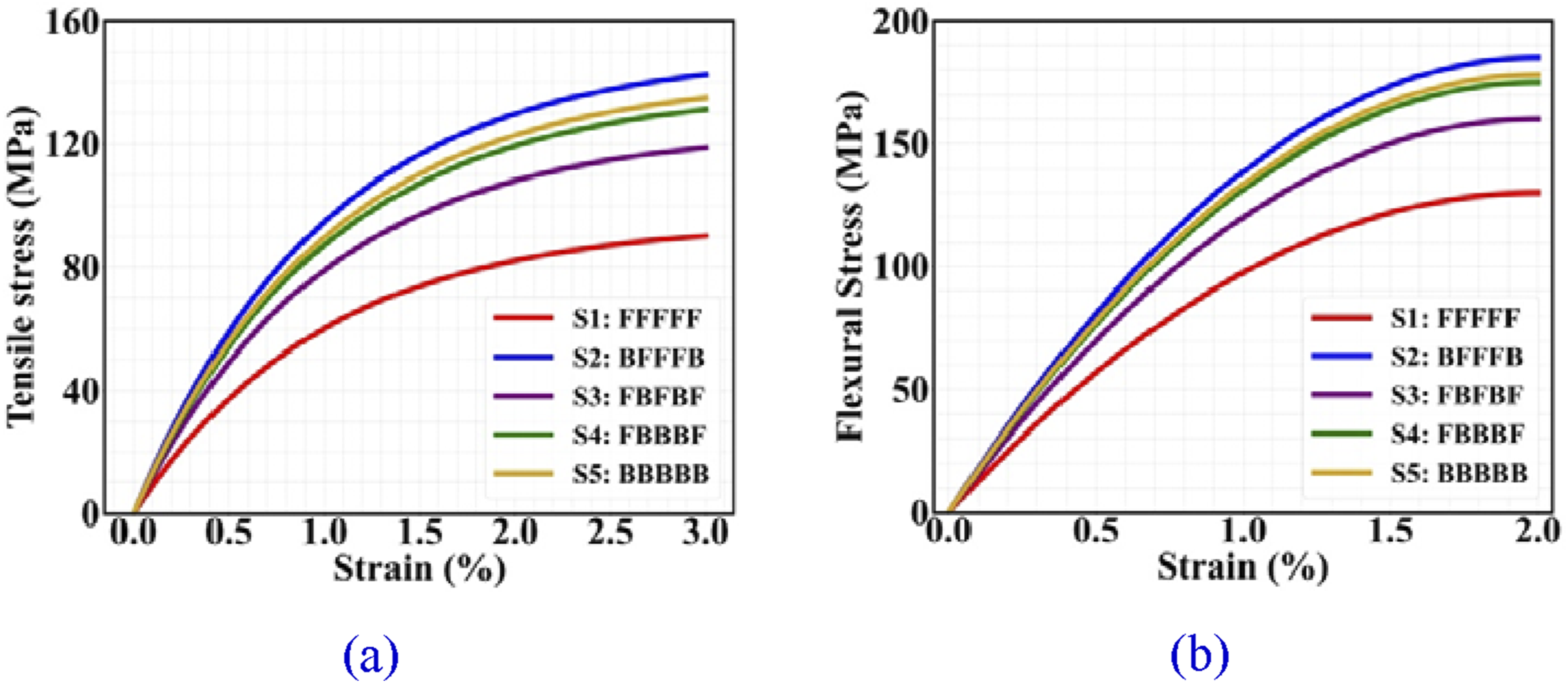
Microstructural evolution
In Figure 10, it is clear that there is a significant difference in the microstructural characteristics of the three materials. The basalt material (Figure 10(a)) shows fiber pull-out due to the lack of bonding between the two materials. The flax material (Figure 10(b)), on the other hand, shows the presence of voids resulting from moisture content, which affects the bonding between the two materials. The hybrid material (Figure 10(c)), however, shows improved bonding between the two materials with fewer voids. Micrographs of (a) basalt fiber (b) flax fiber and (c) flax-basalt fiber.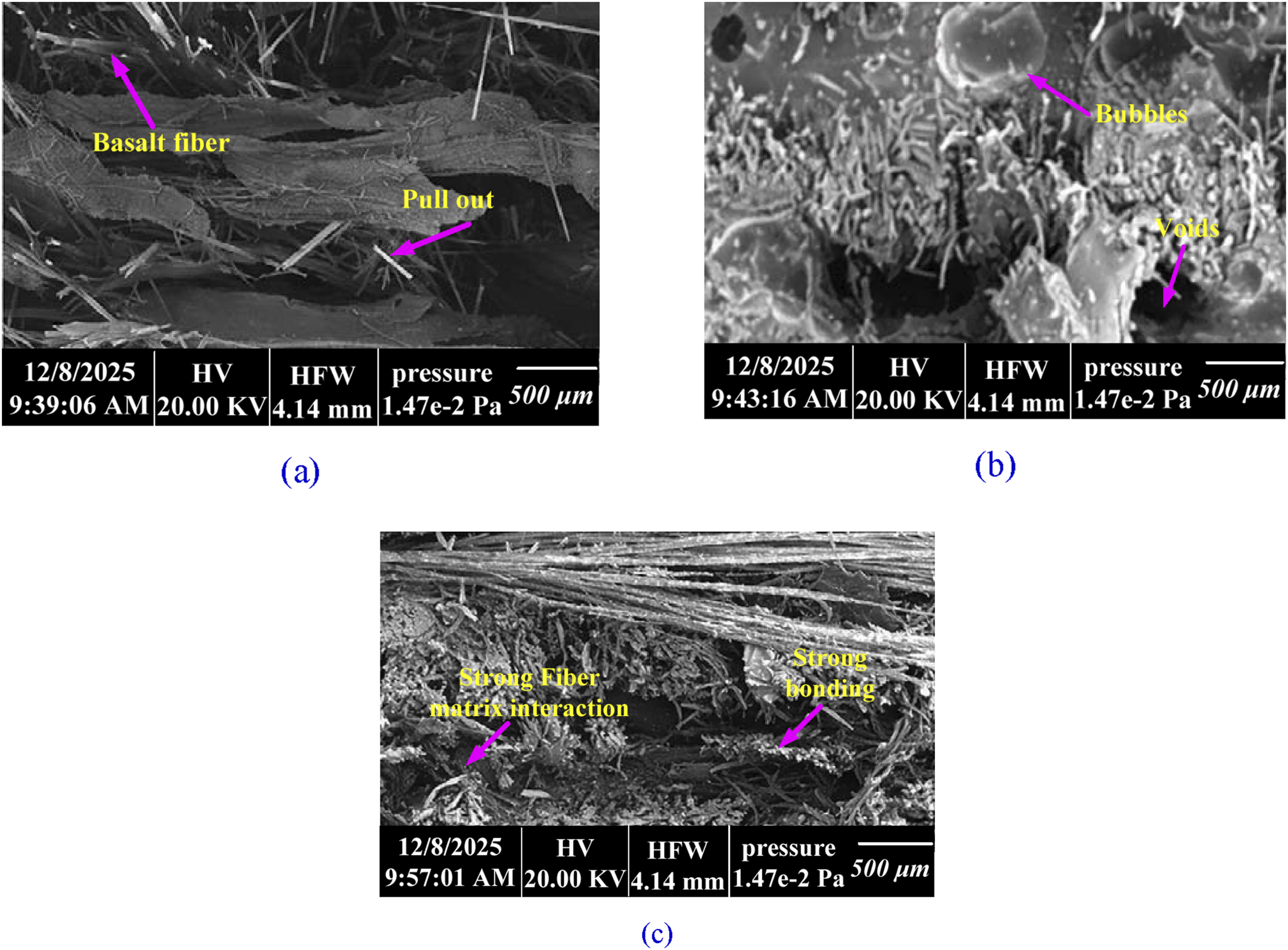
The void content was quantitatively assessed through SEM images by defining the pore regions based on contrast differences. After analyzing multiple images, it was confirmed that the porosity was less than 3% in hybrid laminates, indicating better interfacial bonding and resin impregnation between fibers and matrices than in pure flax or basalt laminates. Moreover, the failure mechanisms were well captured in SEM images, including fiber pull-out, matrix cracking, and interfacial debonding, confirming the AI model’s predictions.
The failure initiation mechanisms different across stacking sequences. In S2 (BFFFB), failure was initiated at the surface of the basalt layers, while in S1, failure was initiated at the matrix regions due to poor bonding between the matrices and fibers. In S5, brittle failure was observed at the surface, while in S3 and S4, mixed-mode was observed at the interface between the fibers and matrices. These failure mechanisms confirm that the stacking sequence affects failure initiation and failure propagation, consistent with the better mechanical performance of the laminate compared to other laminates, as discussed in the previous study by Saha and Kumari. 8
RSM results
RSM experimental design and data’s
RSM experimental results.
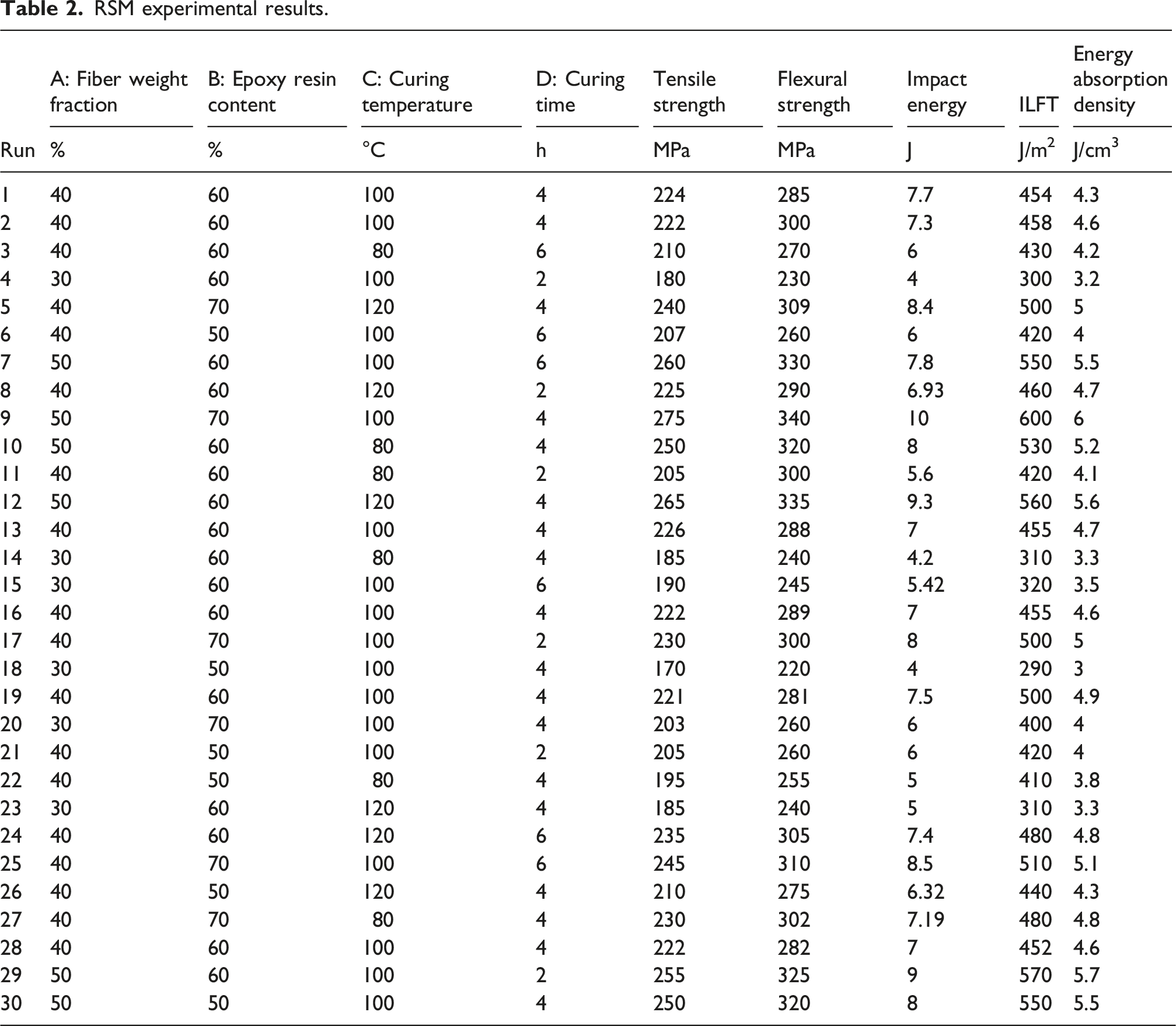
Table 2 presents the results of 30 RSM experiments in which fiber weight fraction, epoxy content, curing temperature, and curing time were varied. The high mechanical properties in this table are the results of optimized processing parameters rather than the stacking sequence. Therefore, Table 2 illustrates the possibility of performance enhancement via RSM optimization.
ANOVA analysis
ANOVA for quadratic model.

Fit statistics.

To confirm that the high R2 values (>0.97) are not due to overfitting, cross-validation and analysis of the predicted residuals have been performed. It has been found that the adjusted and predicted R2 values are very similar to the R2 values for all response variables, confirming the model’s high predictive capability with minimal signs of overfitting. Furthermore, the residual plots show a random pattern around zero with no notable trends, thus confirming the high capability of the RSM model. In addition, plots of actual versus predicted values for all response variables show strong agreement, with points closely clustered along the 45° line.
Residuals versus predicted plots
The residuals versus predicted plots Figure 11(a)–(e) for each mechanical property show the differences between predicted and experimental results. The random distribution of the residuals around the zero axis indicates that the predicted values unbiased and that the errors are homoscedastic. This is supported by the narrow range of residuals, indicating that the RSM-AI model’s predctions agree well with the measured values. Residuals versus predicted plots (a) tensile strength, (b) flexural strength, (c) impact energy, (d) ILFT, and (e) EAD. The random scatter around zero confirms unbiased predictions and homoscedasticity.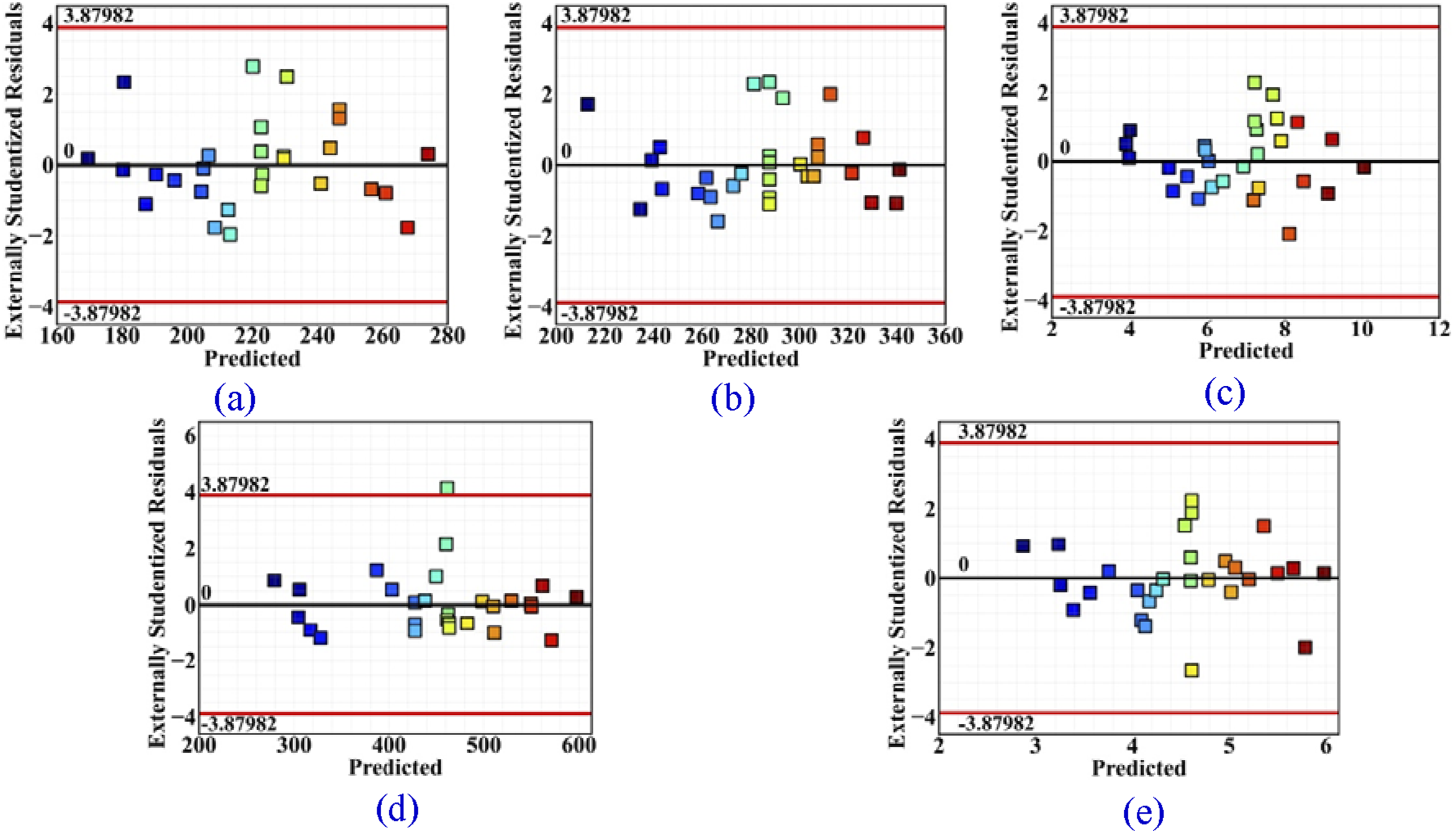
Predicted versus actual plots
The predicted-versus-actual plots in Figure 12(a)–(e) show a strong correlation between model predictions and experimental results for all mechanical properties. Most data points align closely with the 45° reference line, demonstrating high predictive accuracy of the model for tensile strength, flexural strength, impact energy, ILFT, and EAD. Minor deviations reflect experimental variability and material heterogeneity but remain within acceptable error limits, confirming the reliability and robustness of the developed optimization framework. predicted versus actual plots (a) tensile strength, (b) flexural strength, (c) impact energy, (d) ILFT, and (e) EAD.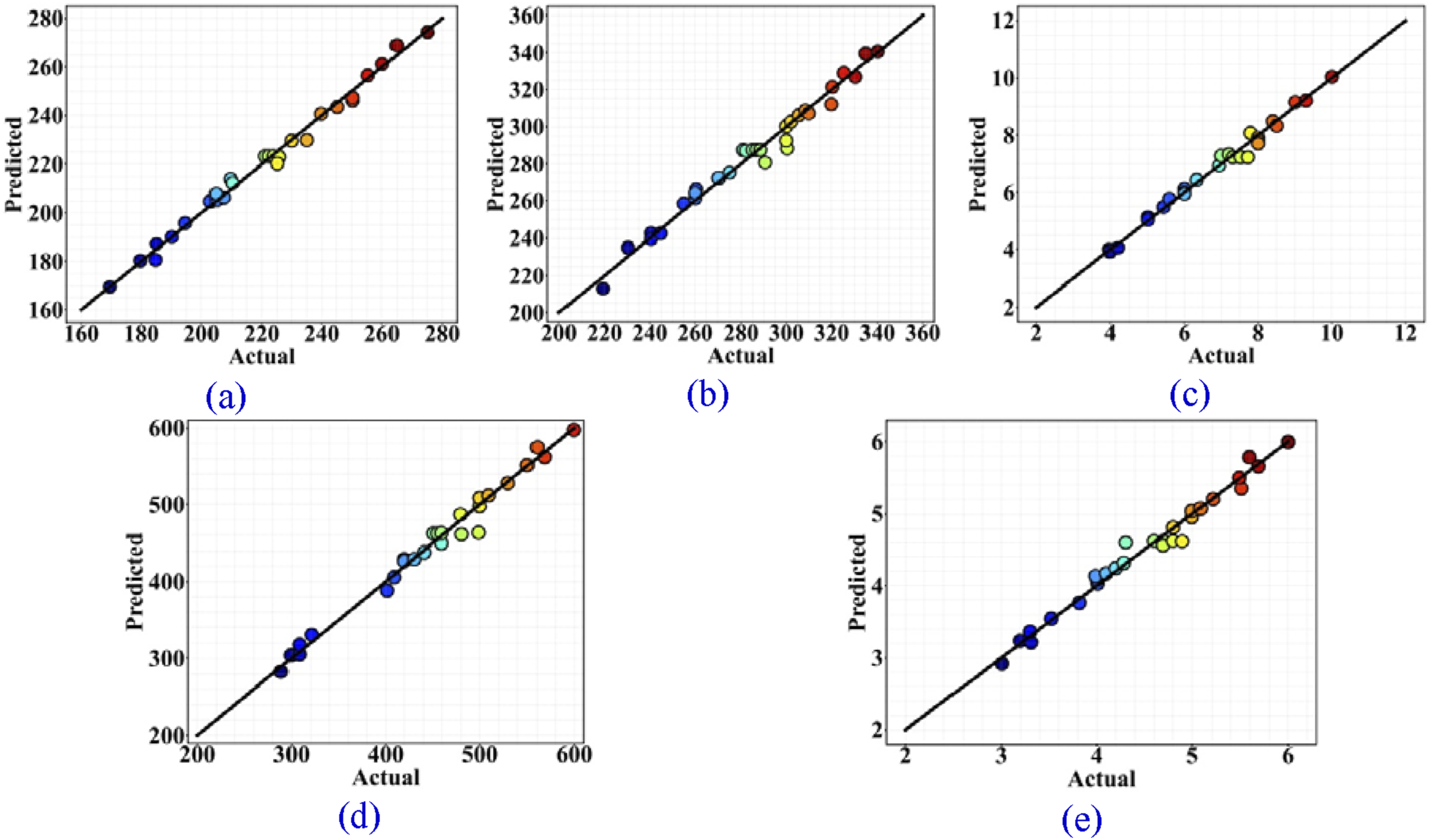
Normal probability plots of residuals
In the following figures, normal probability plots of residuals for various response variables are depicted Figure 13(a)–(e). In each plot, the values of externally studentized residuals are placed on the X-axis while the expected value of normal probability is taken on the Y-axis. The red straight line shows the perfect normal distribution. Data points that follow the red line indicate that the residuals are normally distributed, an essential requirement of regression models, such as RSM. It can be seen from the plots that the data points closely follow the red line. A few points show minor deviations at the tails, which is common in experimental data, but overall, the residuals appear reasonably normally distributed. This confirms the adequacy of the fitted models and supports the reliability of the predicted results from the RSM analysis. Normal probability plots of residuals corresponding to (a) tensile strength, (b) flexural strength, (c) impact energy, (d) ILFT, and (e) EAD. Points close to the diagonal line indicate approximate normality of residuals and validate the regression models.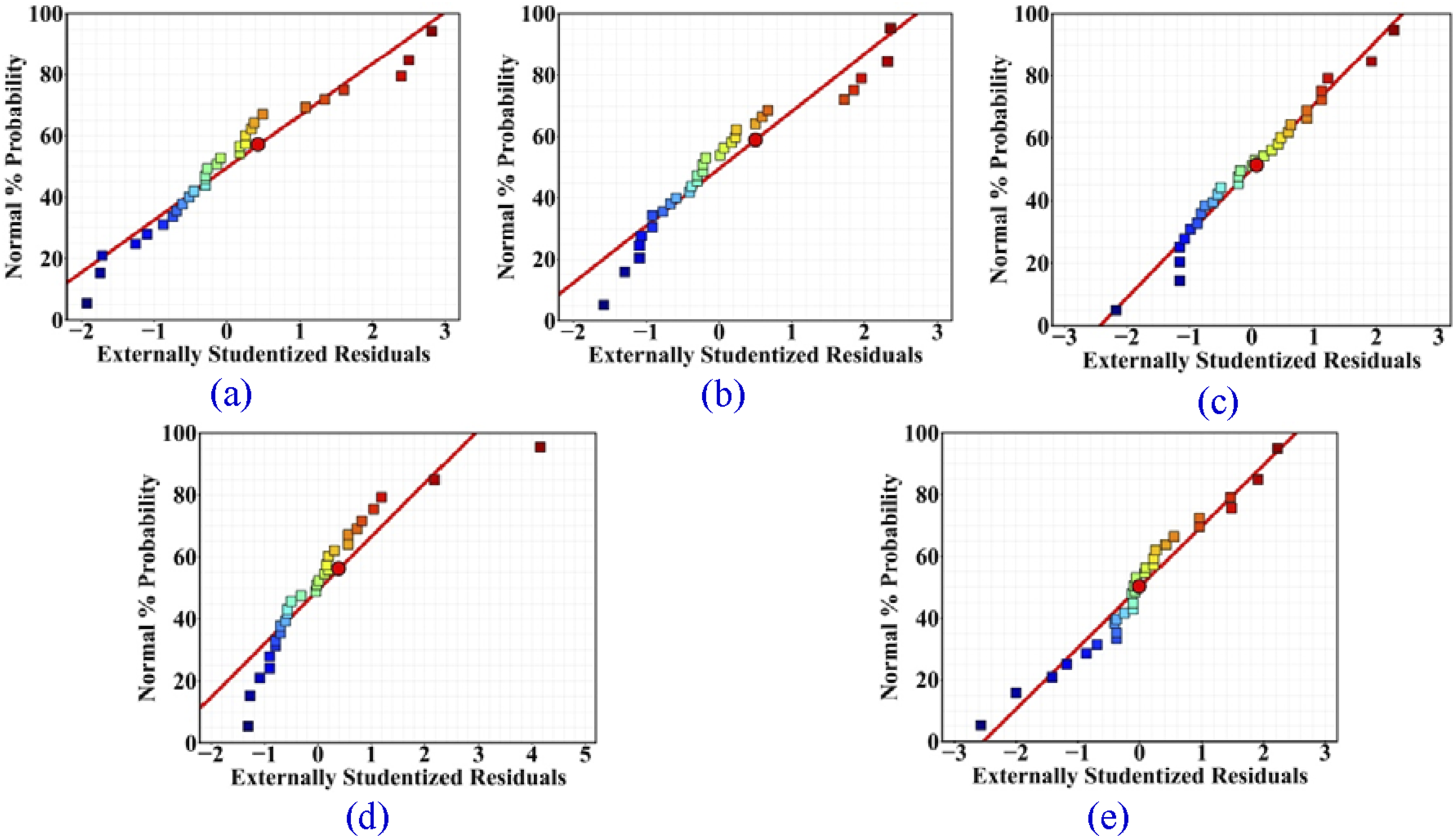
Sensitivity analysis
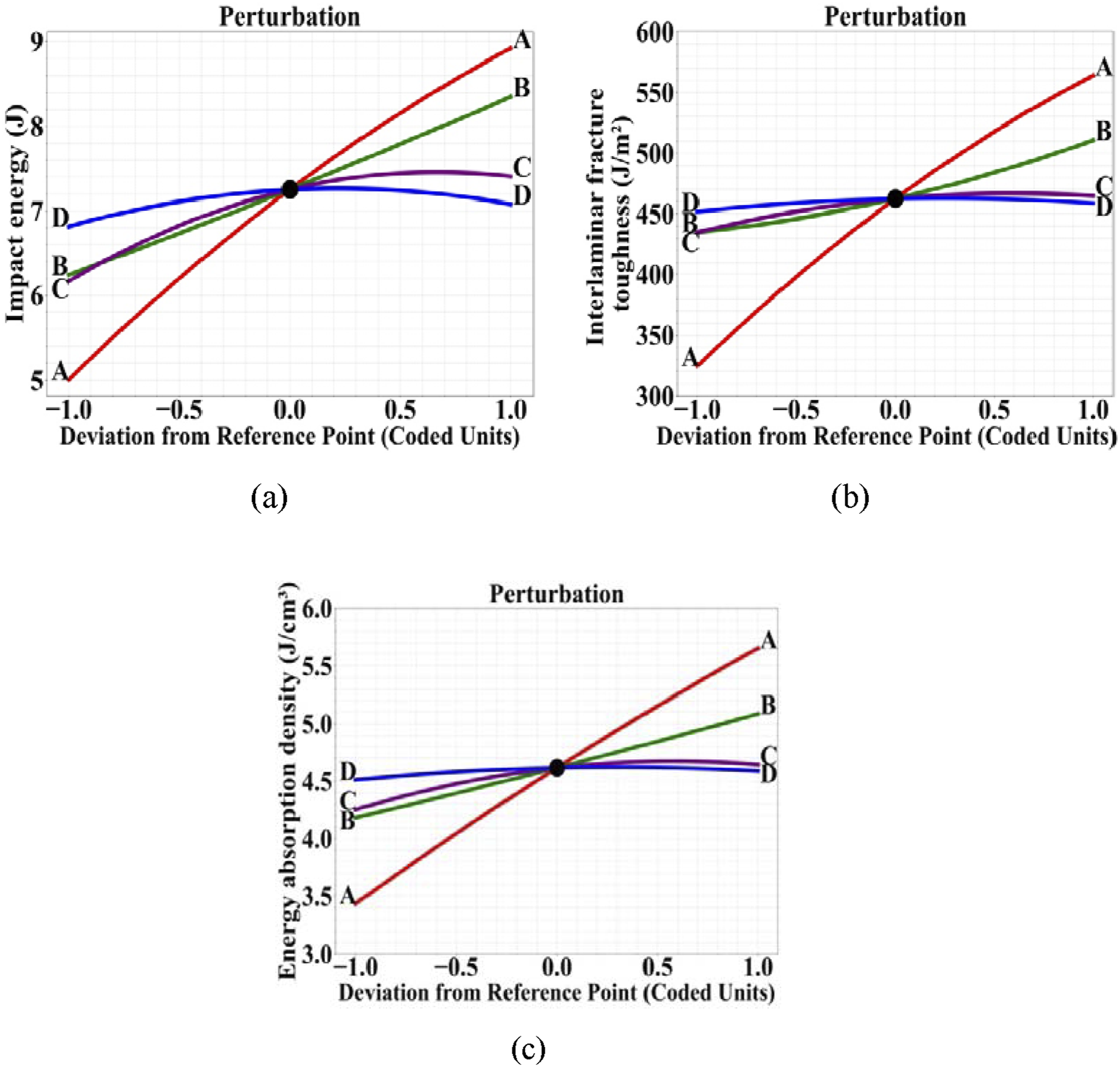
Sensitivity analysis was performed using RSM-based perturbation plots (Figures 14 and 15) to evaluate the influence of input parameters on mechanical responses, a method widely used in composite optimization studies, Gillani et al.
35
The results show that fiber weight fraction (Factor A) has the most significant effect, as indicated by steep slopes, due to its direct role in load transfer and reinforcement efficiency, leading to improvements in flexural strength, tensile strength, impact energy, ILFT, and EAD. Epoxy resin content (Factor B) has a moderate positive influence, enhancing fiber–matrix adhesion and reducing void formation. In contrast, curing temperature (Factor C) and curing time (Factor D) show minimal impact, with nearly flat trends indicating that once adequate curing is achieved, further variation does not significantly affect performance. Overall, across processing conditions, the results confirm that mechanical properties are primarily governed by reinforcement content and interfacial bonding. Perturbation plot of, (a) tensile strength and (b) flexural strength. Perturbation plot of, (a) impact energy and (b) ILFT and (c) EAD.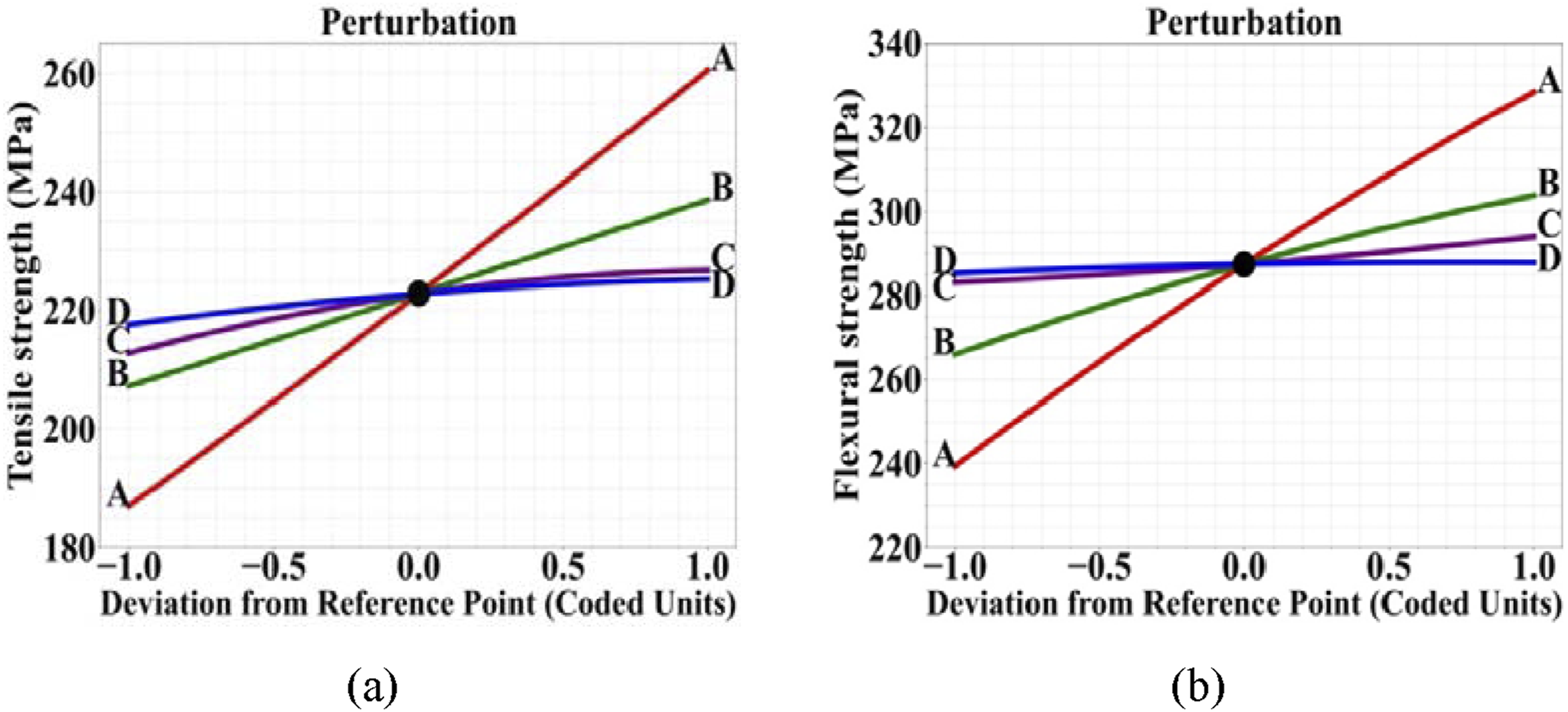
Desirability analysis
Figure 16 presents the results of the multi-response optimization using RSM. The desirability index is 0.995, indicating that the chosen optimal solution meets all required mechanical responses. The optimized parameters were found to be the fiber weight fraction at 49.9%, the content at 69.72%, the curing temperature at 107.93°C, and the curing time at 4.219 h. The responses were the tensile strength (277.54 MPa), flexural strength (343.45 MPa), impact energy (10.15 J), ILFT at (600.34 J/m2), and EAD (6.02 J/cm3). RSM optimization plot.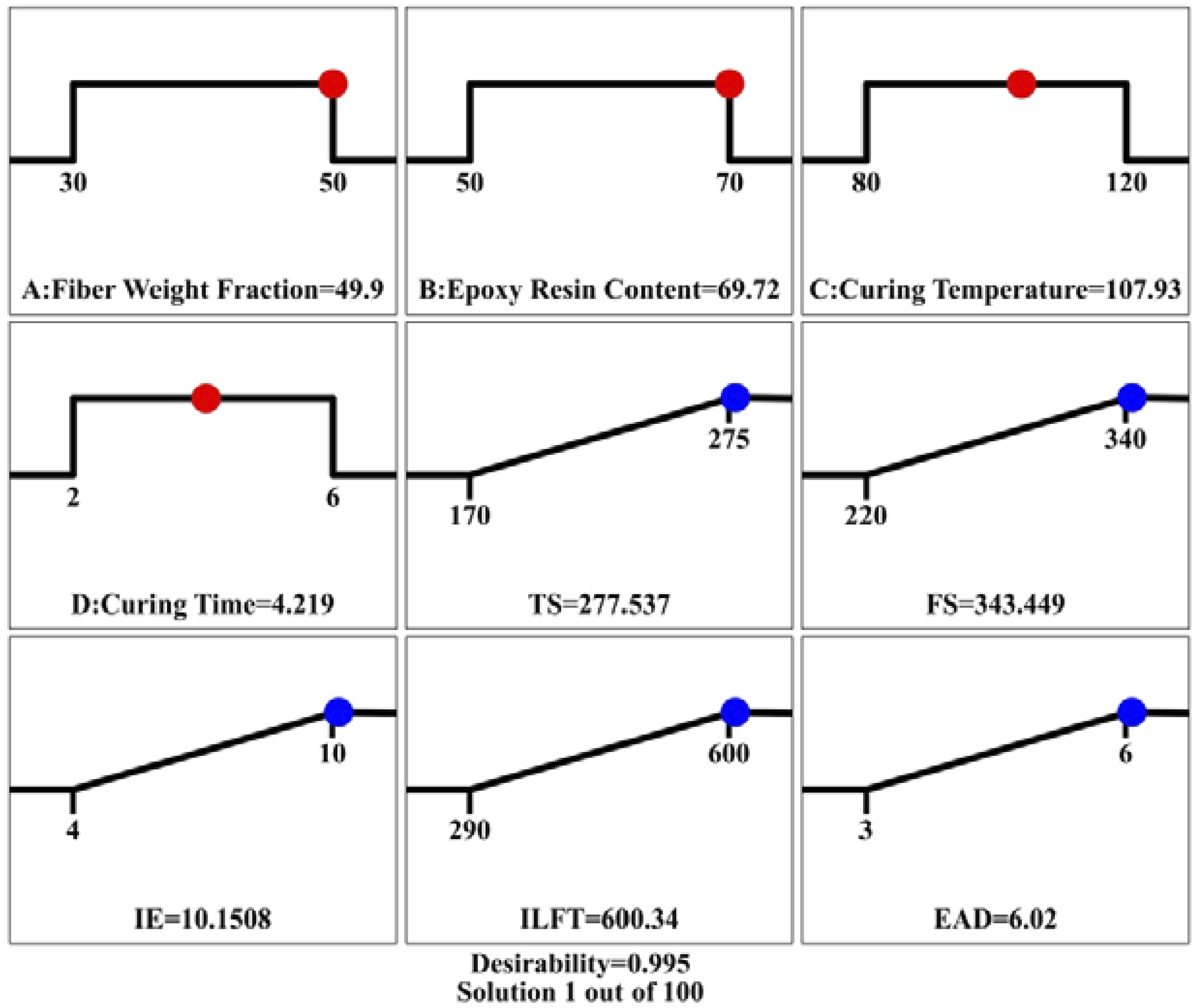
Validation of RSM-optimized parameters.
Machine learning model comparison and validation
Figure 17(a) illustrates the variation in tensile strength across 30 experimental runs, comparing the experimental values with predictions from multiple machine-learning and statistical models, including, DBN-RFR, RSM, CNN-SVR, and the proposed hybrid model (DQN-LSTM-MOA). The experimental tensile strength fluctuates noticeably from run to run due to variations in process parameters, while all predictive models follow the same overall trend. Among these, the proposed model consistently aligns more closely with the experimental data, capturing both peak and low tensile-strength values more accurately than other methods. In contrast, the CNN-SVR model shows more deviation and larger oscillations, indicating lower prediction stability. Comparison for prediction performance (a) tensile and (b) flexural strength.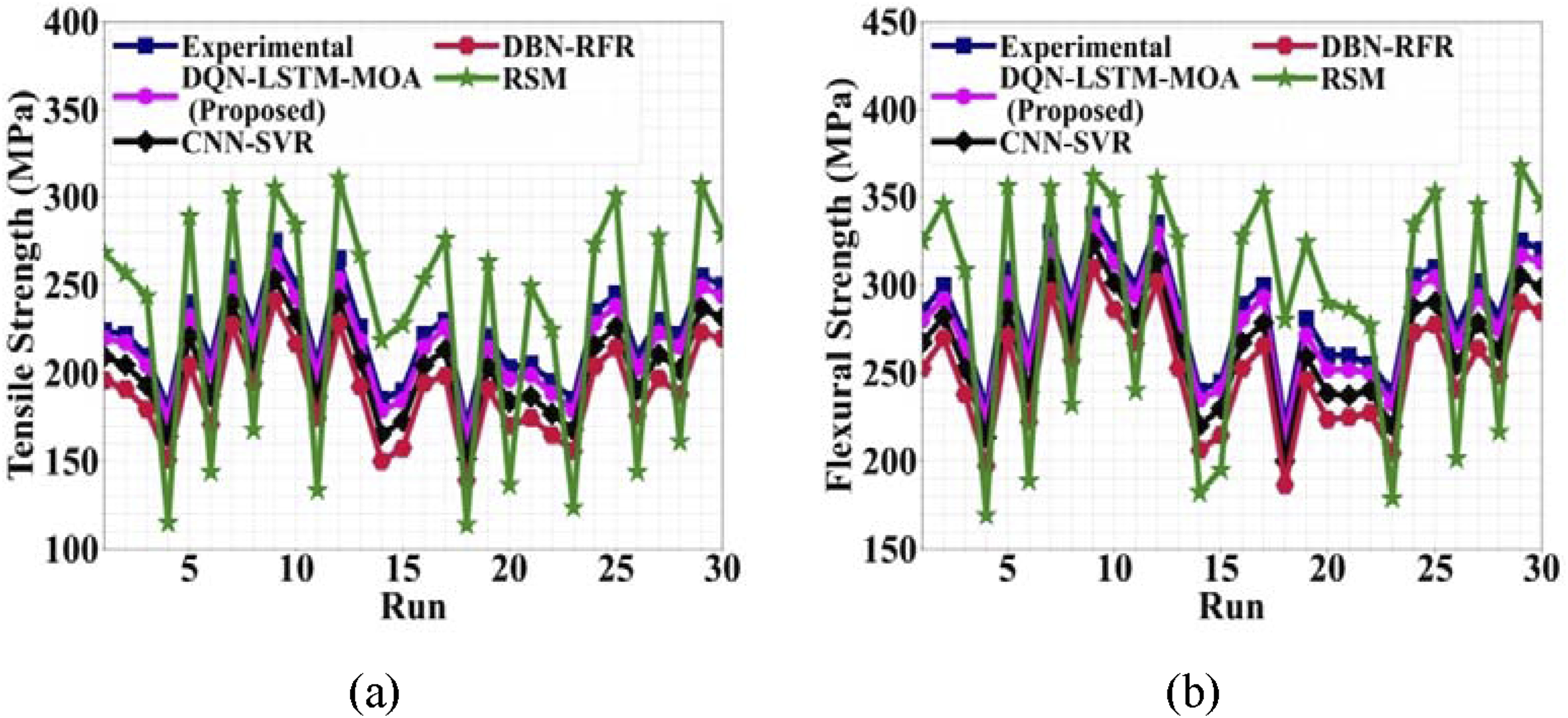
Figure 17(b) presents the flexural strength results for the same 30 runs, again comparing experimental responses with the outputs of the different prediction models. Similar to the tensile case, the flexural strength exhibits noticeable fluctuations across the runs. The proposed model demonstrates the closest agreement with the experimental measurements, successfully replicating the major variations and peak responses. Other models, such as DBN-RFR and RSM, follow the general pattern but show larger prediction gaps at several runs. The CNN-SVR model shows the highest deviation and instability, with larger spikes and dips than the actual flexural strength values.
Figure 18(a) presents the variation of impact energy across 30 experimental runs and compares the experimental results with predictions from different models. The experimental impact energy fluctuates significantly between runs due to changes in fabrication parameters, and all models attempt to follow this trend. Among them, the proposed model provides the best match to the experimental data, accurately capturing both the high- and low-impact energy values. Other models show moderate deviations, with RSM exhibiting the greatest variation and occasional overshoot, indicating lower prediction reliability. Comparison for prediction performance (a) IE (b) ILFT and (c) EAD.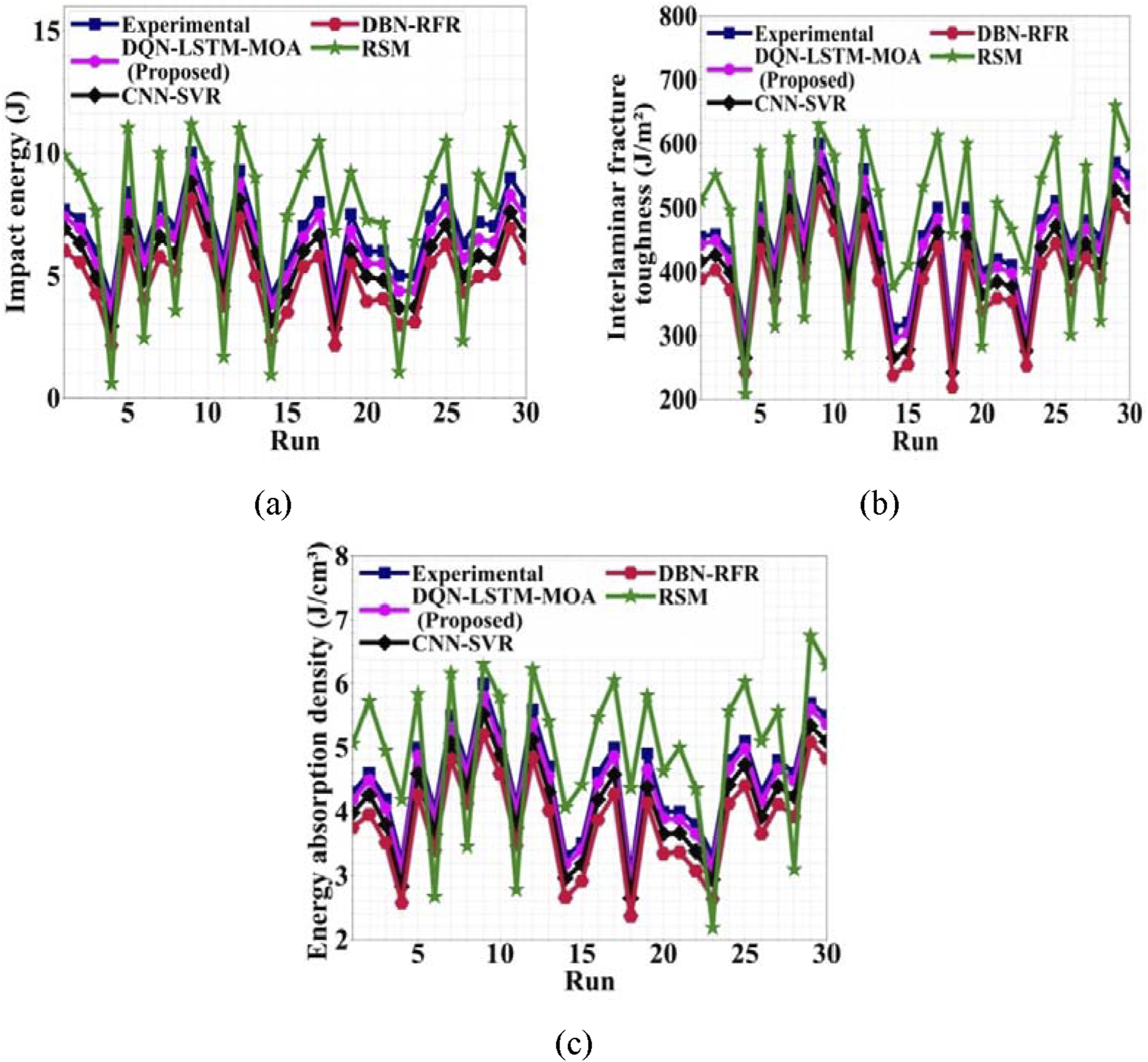
Figure 18(b) shows the experimental values exhibit strong variations, reflecting sensitivity to process factors such as fiber–matrix bonding and laminate integrity. The proposed model consistently aligns more closely with the experimental pattern, effectively tracking the peaks and troughs. Models such as DBN-RFR and CNN-SVR follow the general trend but display noticeable discrepancies at several points. The RSM model again shows larger oscillations and reduced stability, deviating more from the experimental measurements. Figure 18(c) illustrates the variation in energy-absorption density, comparing experimental results with predictions from the different modeling approaches. The trend shows multiple fluctuations across the runs, and the proposed model provides the most accurate and stable prediction, matching the experimental curve with minimal deviation.
Performance comparison of different predictive models.
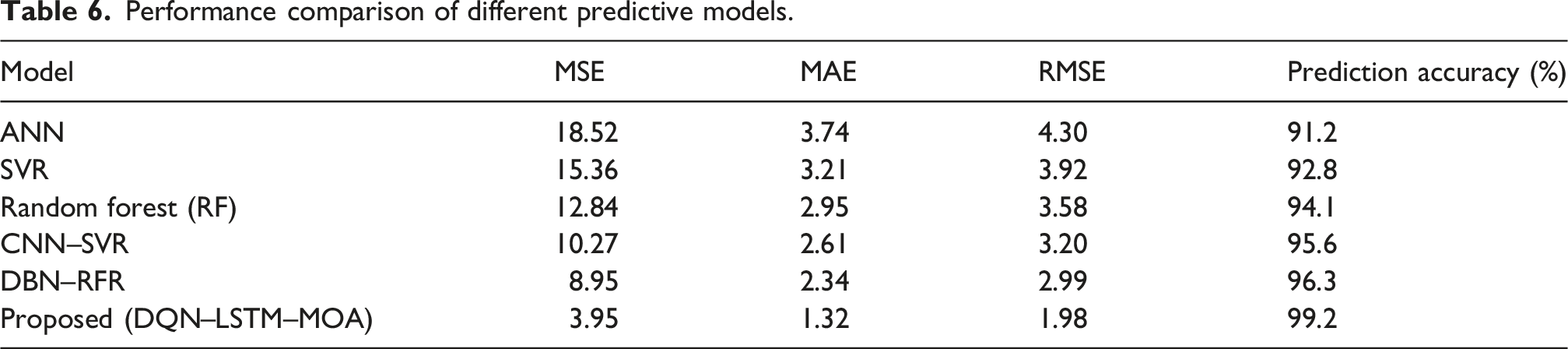
To further validate the reliability of the model comparison, a statistical analysis was conducted using one-way ANOVA and t-tests on the prediction errors (MSE values) at a 95% confidence level. From the results, it was evident that the proposed DQN-LSTM-MOA model showed a statistically significant improvement over the other models (p < 0.05), thereby confirming that the proposed model’s better performance was not due to random variation.
From the comparative analysis, it was evident that the proposed DQN-LSTM-MOA model outperforms conventional models such as ANN, SVR, and RF in terms of prediction accuracy and error minimization. Although ANN and SVR have high errors due to their inability to effectively handle complex nonlinear relationships, the RF model shows moderate improvement but lacks the capability to handle interdependencies. Other hybrid models, such as CNN-SVR and DBN-RFR, also have better performance due to the deep features extracted in the context of the proposed framework. However, the proposed DQN-LSTM-MOA model achieves the best prediction accuracy of 99.2%, thereby demonstrating its robustness in predicting the mechanical behavior of hybrid flax-basalt composites.
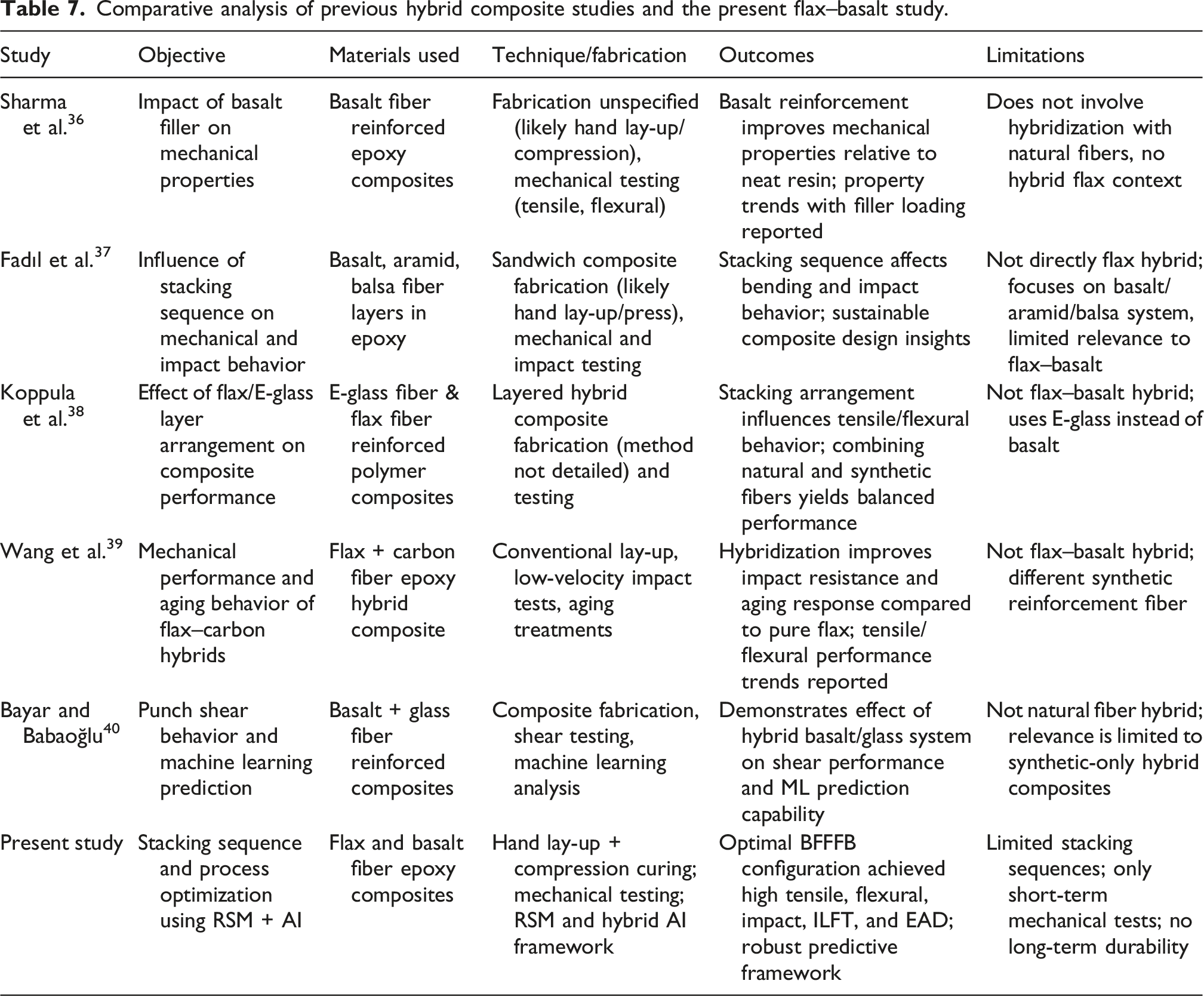
Comparison with previous hybrid composite studies
Comparative analysis of previous hybrid composite studies and the present flax–basalt study.
Conclusion
• The study demonstrates that hybridization of flax and basalt fibers significantly enhances the mechanical performance of composite laminates. • The S2 (B–F–F–F–B) configuration exhibited the best overall performance, achieving 150 MPa tensile strength, 185 MPa flexural strength, 14.2 J impact energy, 1580 J/m2 ILFT, and 0.68 J/cm3 EAD. • Improved performance is attributed to effective stress distribution, reduced void content, and enhanced fiber–matrix interfacial bonding, as confirmed by SEM analysis. • The RSM-based optimization and DQN–LSTM–MOA model demonstrated high prediction accuracy and effective multi-response optimization capability. • Overall, the proposed integrated experimental–computational framework provides a reliable approach for designing high-performance hybrid flax–basalt composites.
Limitations and future scope
The study is limited by the use of hand lay-up fabrication, which may introduce variability in fiber wetting and void content. Additionally, only a limited number of stacking sequences were investigated, and long-term durability aspects such as fatigue, moisture, and thermal aging were not considered. Future work should focus on advanced manufacturing techniques, such as vacuum infusion and expanded stacking configurations, as well as durability analysis under environmental conditions. Incorporating larger datasets and advanced optimization algorithms can further improve the predictive capability and practical applicability of the proposed model.
Footnotes

Ethical considerations
Ethical approval is not required for this study, as it does not involve human or animal participants. Therefore, ethical approval is not applicable.
Consent to participate
Formal consent is not essential for this particular type of research.
Author contributions
Every author has made an equal contribution to the work. All authors reviewed the manuscript.
Funding
The authors received no financial support for the research, authorship, and/or publication of this article.
Declaration of conflicting interests
The authors declared no potential conflicts of interest with respect to the research, authorship, and/or publication of this article.
Compliance with ethical standards
Potential Conflict of Interest Disclosure: None of the authors have any potential conflicts of interest.
Replication of results
The results reported in this study can be reproduced using the methods, data, and parameters described in the manuscript.
Code availability statement
The computational code associated with this research is currently kept confidential due to institutional restrictions and author agreements.
Data Availability Statement
The majority of the data supporting the findings of this study are presented within the manuscript in the form of tables and figures. Additional raw data may be made available from the corresponding author upon reasonable request.