







Abstract
Gallium-based liquid metal elastomer composites (LMECs) have attracted increased attention in the fields of stretchable electronics, soft robots and sensors owing to their combination of superb functionalities and fluidity. A comprehensive understanding of the micromechanics of LM droplets within the elastomer matrix is instrumental in establishing the structure-property relationship of LMECs. It is imperative to observe the micro-deformation process of LM droplets along with the surrounding matrix under the applied loading, whereby the synergic mechanisms between the droplets and soft matrix are revealed. In this study, in-situ loading experiments were conducted to ascertain the deformation evolution of single droplet and the interaction between paired droplets on their micro-strain fields. The level of difficulty in droplet deformation under different configurations was analyzed, alongside the evolution of their aspect ratio with the applied stretch ratio. At the same time, FEM simulations were implemented in order to analyze the hoop strain distribution and droplet aspect ratio as a function of the applied strain. The experimental and simulation results indicated that the normally adopted affine transformation between the droplets and the macroscopic applied strain was not satisfied for the dilute droplet in the composites. Furthermore, the orientation of paired droplets significantly influenced the micro-strain fields within the droplets, which is attributable to the interference effect among the displacement fields. The present research is constructive to interpreting the evolution of mechanical and functional performances of LMECs during finite strain deformation.
Keywords
Introduction
Gallium-based liquid metal elastomer composites (LMECs) have been shown to preserve the flexibility and deformability of the elastomer matrix, enabling significant mechanical deformations (such as tension, torsion, and bending) to be accommodated. This is achieved while fully leveraging the high electrical conductivity (3 × 10⁶ S/m), high thermal conductivity (26.4
Under finite strain deformations, LM droplets undergo the significant shape variation, and whereby the effective properties of LMECs would change greatly, e.g., thermal conductivity, stiffness and strength and stretchability as well. 7 Wang et al. 8 adopted the double inclusion model to successfully analyze the effect of changed architectures on the thermal conductivity of LMECs. The effective elastic behaviors of LMECs also strongly relies on the micromechanics of LM droplets in the matrix. Style et al. 9 claimed that small liquid inclusions may significantly stiffen soft solids from the experimental results measured, and found that surface tension and liquid compressibility are two important factors associated to the fluids and deserve to be evaluated clearly. Recently, Hoang et al. 10 experimentally reported the distinct variation of the effective modulus under different loading mode in gallium-based LM filled elastomers, and the variation of compressive modulus with the droplet volume fraction was elusive. All the micromechanics models were failed to give a reasonable explanation, and their inherent synergic mechanisms remain unknown.
LM droplets also affect the strength, toughness and plasticity of LMECs greatly. Zhang et al. 11 founded that the tensile stress-strain curves exhibited significant strain hardening at large strain with the elongation of PDMS/LM composite specimens, due to the surface tension domination in LM droplet deformation when its size reduces to less than the elastocapillary length. Fang, 12 and Kazem et al. 13 experimentally confirmed that LM droplets could render an extreme toughening effect on the elastomer matrix, which was achieved by (i) increasing energy dissipation, (ii) adaptive crack movement, and (iii) effective elimination of the crack tip. Based on the microscopic observation, Zhao et al. 14 presented that LM droplets can generate large deformation with the movement of the PBSE matrix during the stretching process. Based on this unique mechanism, the fracture strain and toughness of the LM/PBSE elastomer are significantly enhanced. Bai 15 presented a continuum theory for an incompressible hyperelastic matrix containing nematic liquid crystal inclusions, and confirmed that the softening or stiffening effect was affected by the distortional energy of the inclusion and the anchoring strength of the interface. Lately, Moronkeji et al. 16 investigated the deformation of isolated and pairs of liquid glycerol inclusions embedded in a soft PDMS elastomer by means of experiments and simulations, and revealed some interesting micro-deformation phenomena, but the relevant in situ experiment on the gallium LM droplet was still lacking.
Up to date, some analytical models were developed to explain the mechanical performance from their inherent microstructures. Chen et al. 17 derived the displacement and stress fields in the composites containing liquid inclusions under far field loading and solely focused on the role of liquid compressibility. Generally, Gallium-based droplets are quite reactive and easily form a native compact stiff oxide layer Ga2O3 on the surface. Chiew et al. 18 adopted a double-inclusion model to predict the size-dependent elasticity of LMECs and indicated that the particle size effect stems from the solid gallium oxide interphase. Jiang 19 furtherly extended Chiew’s micromechanics model by involving the effect of surface tension. These models can accurately account for the effective tension and shear moduli of LMECs, but cannot discriminate the effect of compressive loading on the effective elasticity, and the conformal deformation of droplets associated with the surrounding matrix. Zhou et al. 20 proposed the (MMT) model, which employs an iterative stepwise homogenization approach to divide the total filler into micro-increments that comply with the dilute-phase assumption, and utilizes the mathematical similarity of thermo-mechanical governing equations to seamlessly extend the model to thermal conductivity prediction. Recent studies have shown that the synergy between solid and liquid inclusions can be strategically leveraged to tailor multifunctional properties, particularly when optimized via machine-learning-assisted inverse design frameworks. Zhou 21 proposed a machine learning-assisted inverse design framework to overcome the core challenges in the development of liquid metal–solid particle hybrid soft composites, specifically the low efficiency of traditional trial-and-error methods and the difficulty in exploring high-dimensional formulation spaces.
In this study, in-situ loading experiments were conducted to observe the deformation evolution of LM droplets in the elastomer matrix under both tension and compression. Moreover, numerical simulations were conducted to analyze the hoop strain distribution along the droplet/elastomer interface, with a view to comprehend the orientation effect on the microscopic strain fields. The veracity of the affine transformation assumption adopted in the classic theoretical model was verified to ascertain its rationality. The roles of LM droplets in the coordination deformation between the liquid inclusion and elastomer matrix were clarified.
Experiment
Materials
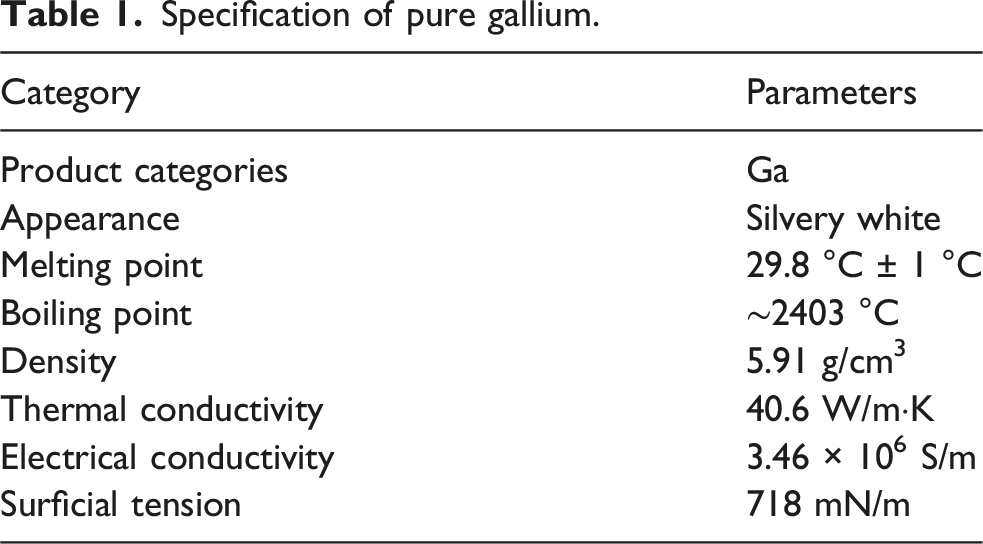
Specification of pure gallium.
Specimen preparation
Figure 1 schematically illustrates the methodology for preparing LM droplets embedded in Ecoflex elastomer. The procedure of fabricating specimens is as follows: initially, the base film with thickness of 0.5 mm is made by employing a template casting technique, which is then cured at room temperature for 2 h. Subsequently, solid, isodiametric pure gallium-based LM spheres, each approximately 1 mm in diameter, are arranged on the pre-cured film according the desired orientation. The required volume of Ecoflex to achieve the remaining 1.5 mm thickness is weighted and subsequently poured into the mold. The mold is placed in an oven and cured at 100°C for 2 h. Finally, the specimen is demolded and sectioned for the following testing. Methodology for the fabrication of LM droplets embedded in Ecoflex elastomer.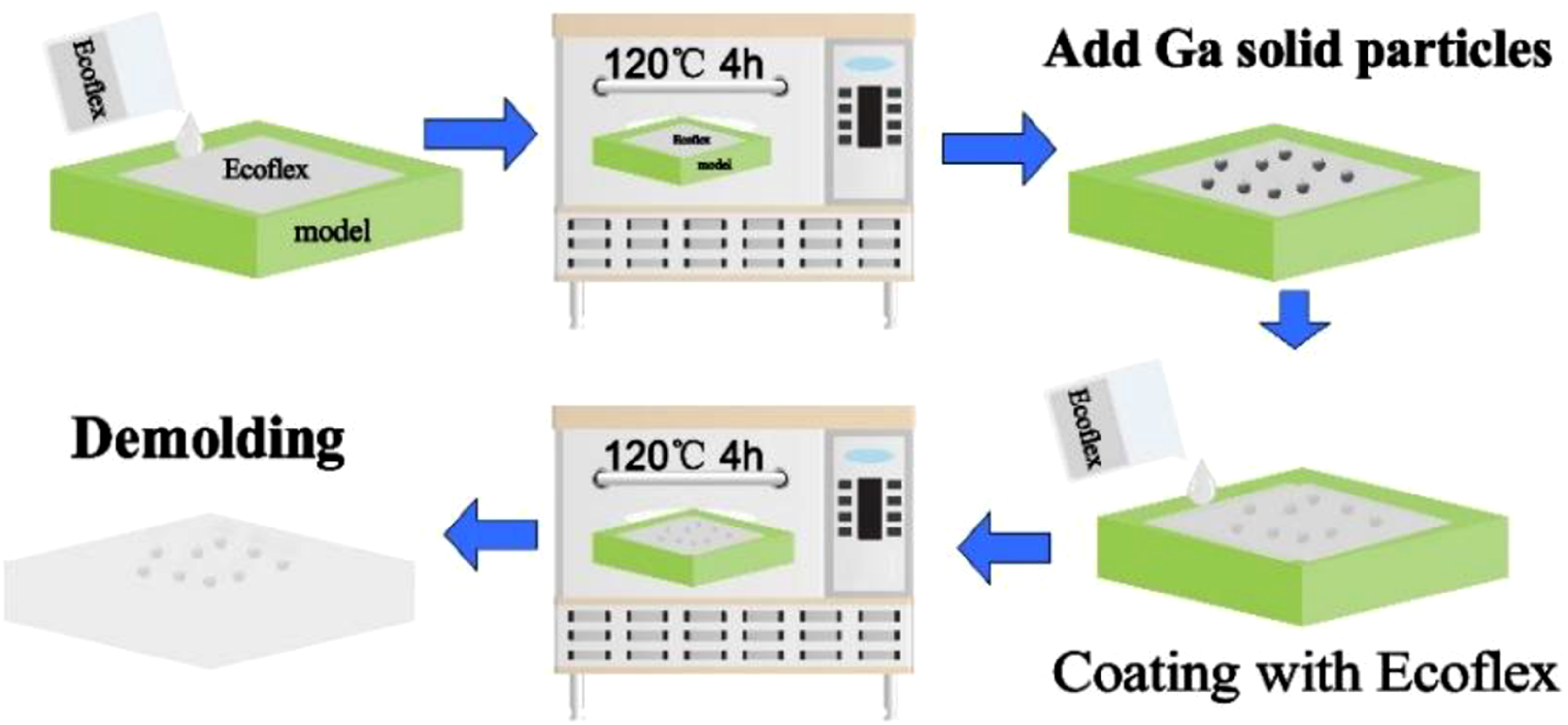
Figure 2 presents schematic diagrams of four specimen types subjected to testing, along with the corresponding samples utilized for tension and compression. To mitigate boundary effects on droplet deformation,the sample length and width were maintained at a minimum of 10 times the droplet diameters. Conversely, the spacing between droplet pairs was constrained to less than half the droplet diameter to accurately capture inter-droplet interactions. Additionally, three orientations relative to the loading direction, Schematics of the four types of specimens tested and the corresponding samples used for tension and compression. Specimens containing an isolated droplet of initial diameter d and specimens containing pairs of droplets of initial diameter d that are separated by a small initial distance 0.5 mm and orientated at 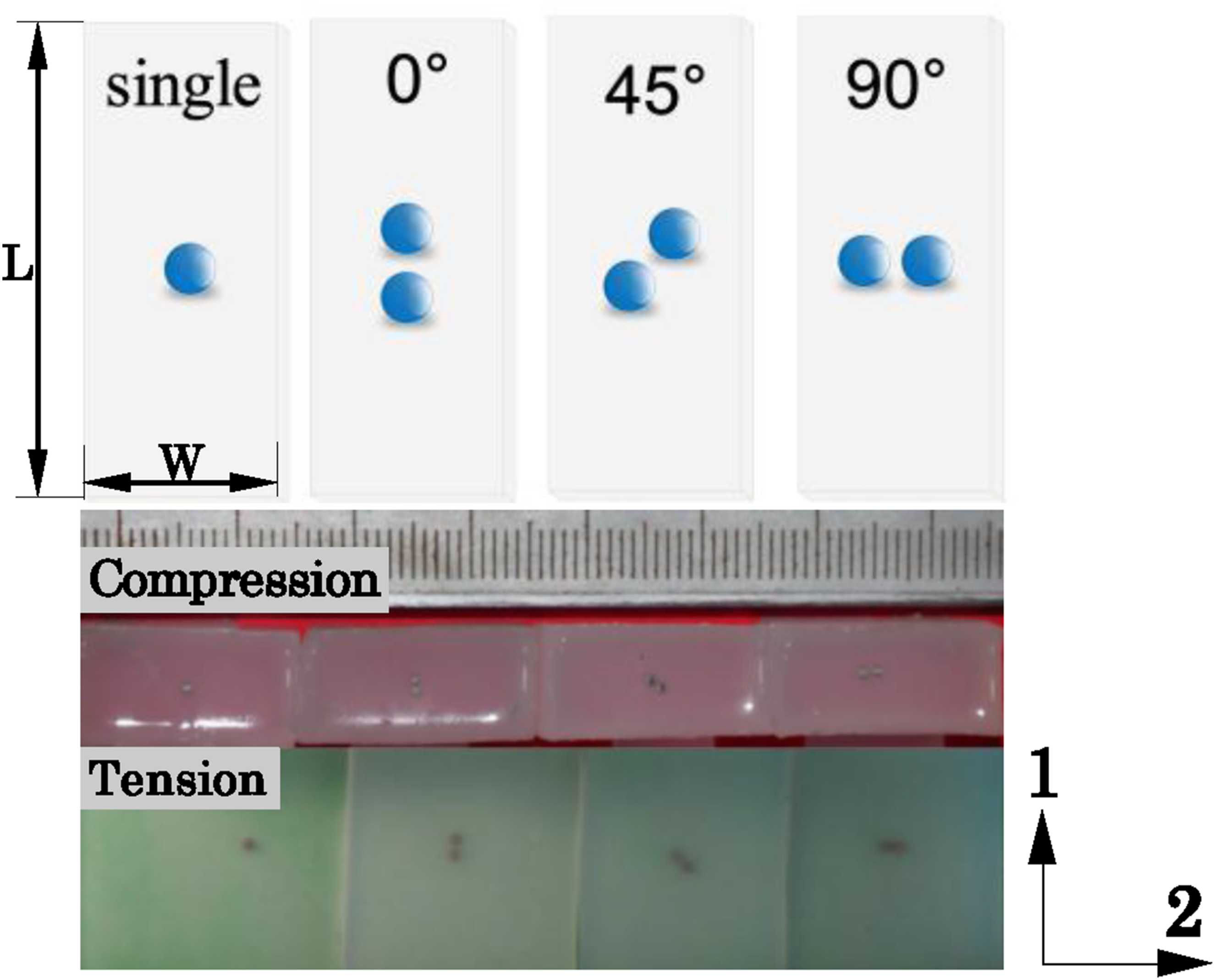
Experimental method
A uniaxial micro-tensile testing apparatus was employed to conduct uniaxial stretching or compression on the specimen as shown in Figure 3(a), while the deformation of droplets was observed using an optical microscope (EV202HC, Nanjing) at high magnification. The tensile strain was varied from 0 to 60%, with images captured at 5% strain increments to record the droplet deformation. For uniaxial compression tests, considering that both the elastomer and LM droplets are incompressible materials, the compression strain was limited to a range of 0% to 20%, with images similarly recorded at 5% intervals. To eliminate the influence of the initial droplet size, the lengths of the major and minor axes were normalized by the initial radius d, thereby enabling assessment of their evolution in response to applied strain. Specifically, the normalized major ( Schematic of the apparatus for the in-situ uniaxial loading experiments in (a), and the normalized major and minor axes of the isolated droplet against the initial diameter d in (b).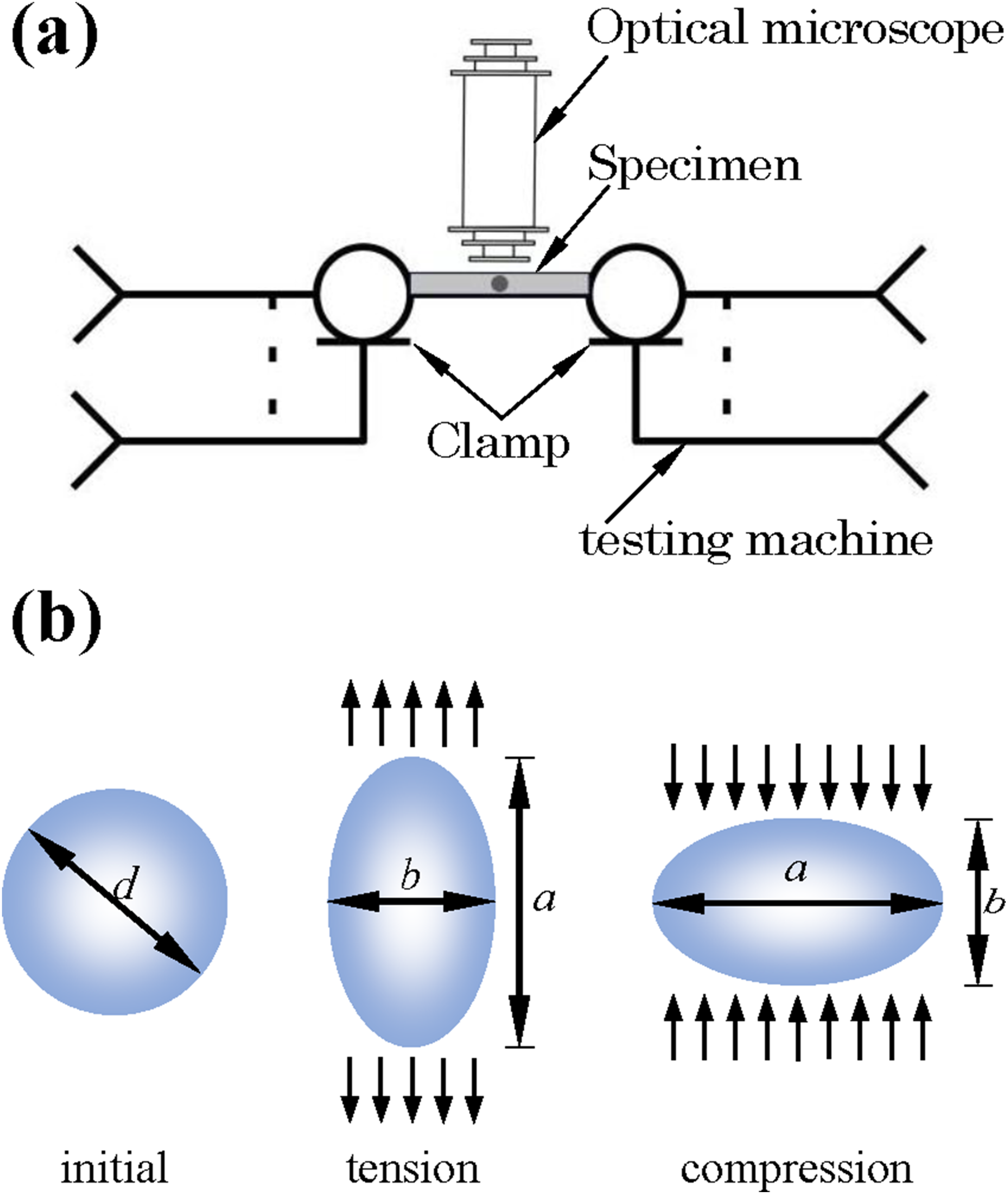
FEM simulation
Neo-Hookean model
For the Ecoflex elastomer used in the experiments, the strain energy density function is expressed with the following Neo-Hookean hyper-elastic model,


The stress-stretch ratio relationship under uniaxial stretching is given as,
By fitting with the measured curves can determine the value Uniaxial tension response of the Ecoflex elastomer used in the experiments. The theoretical stress-stretch response is described by the neo-Hookean model in equation (4).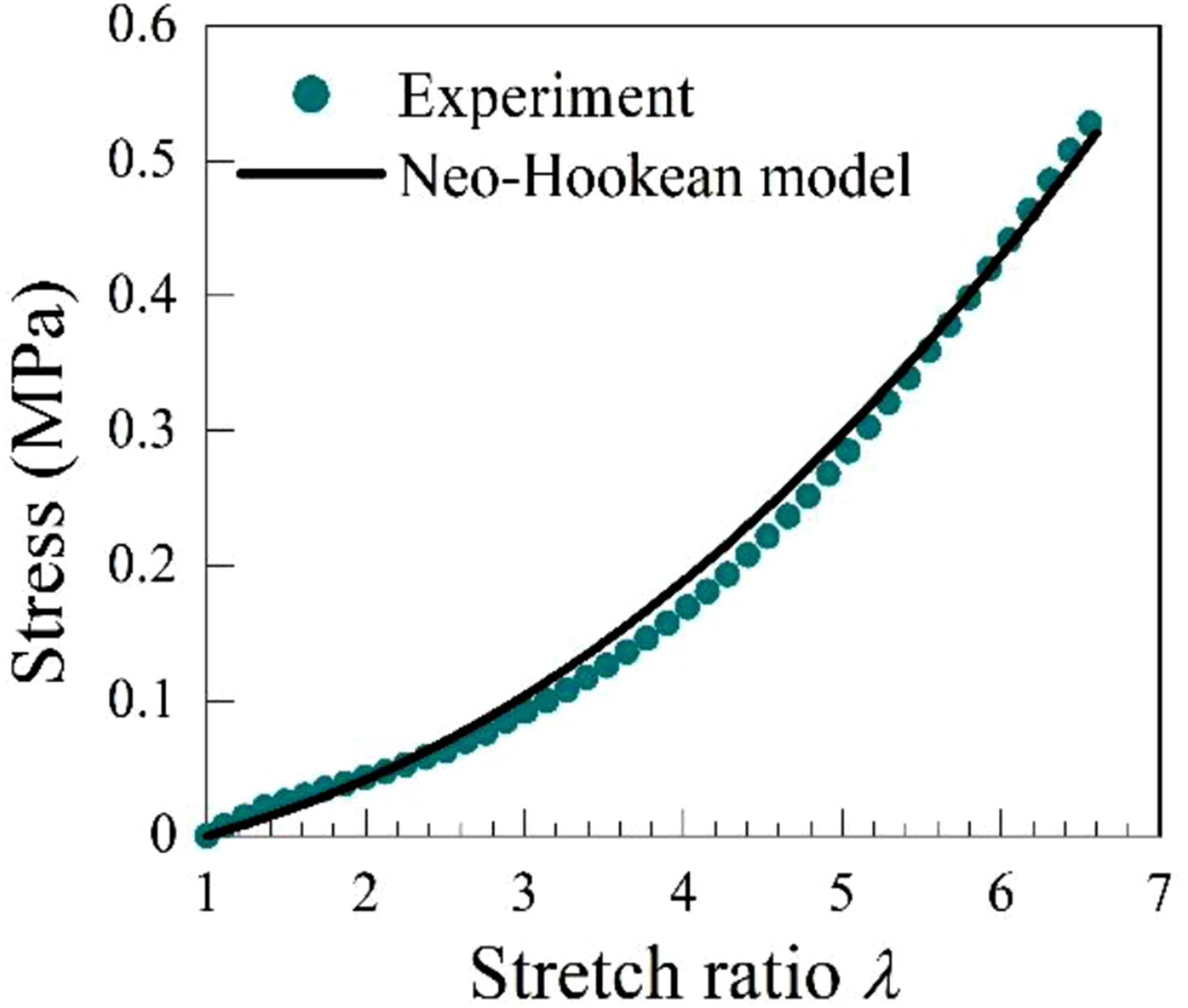
FEM model
Considering that the three-dimensional deformation field of the specimen in this paper has translational symmetry, it can be described by superimposing variations of a series of parallel interfaces. A two-dimensional plane stress model is employed wherein the matrix is characterized using the neo-Hookean hyperplastic constitutive model with the predetermined values. Since the effects of the oxide layer have already been considered in the Neo-Hookean model fitting parameters of the LM droplets, the LM droplets are modeled without accounting for the influenced of the Ga2O3 coating. Due to its incompressible behavior, the droplets are also described by the Neo-Hookean model with parameters
Hoop strain distribution
For a certain material point in the initial configuration 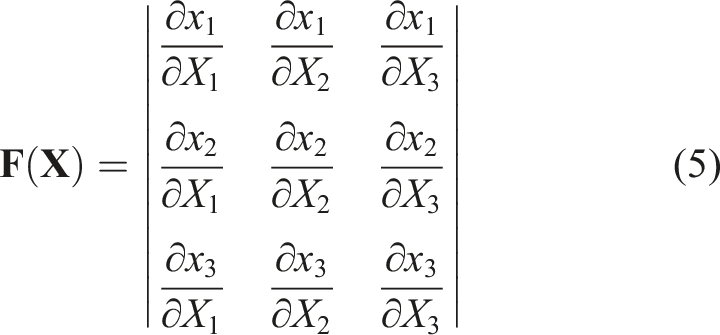
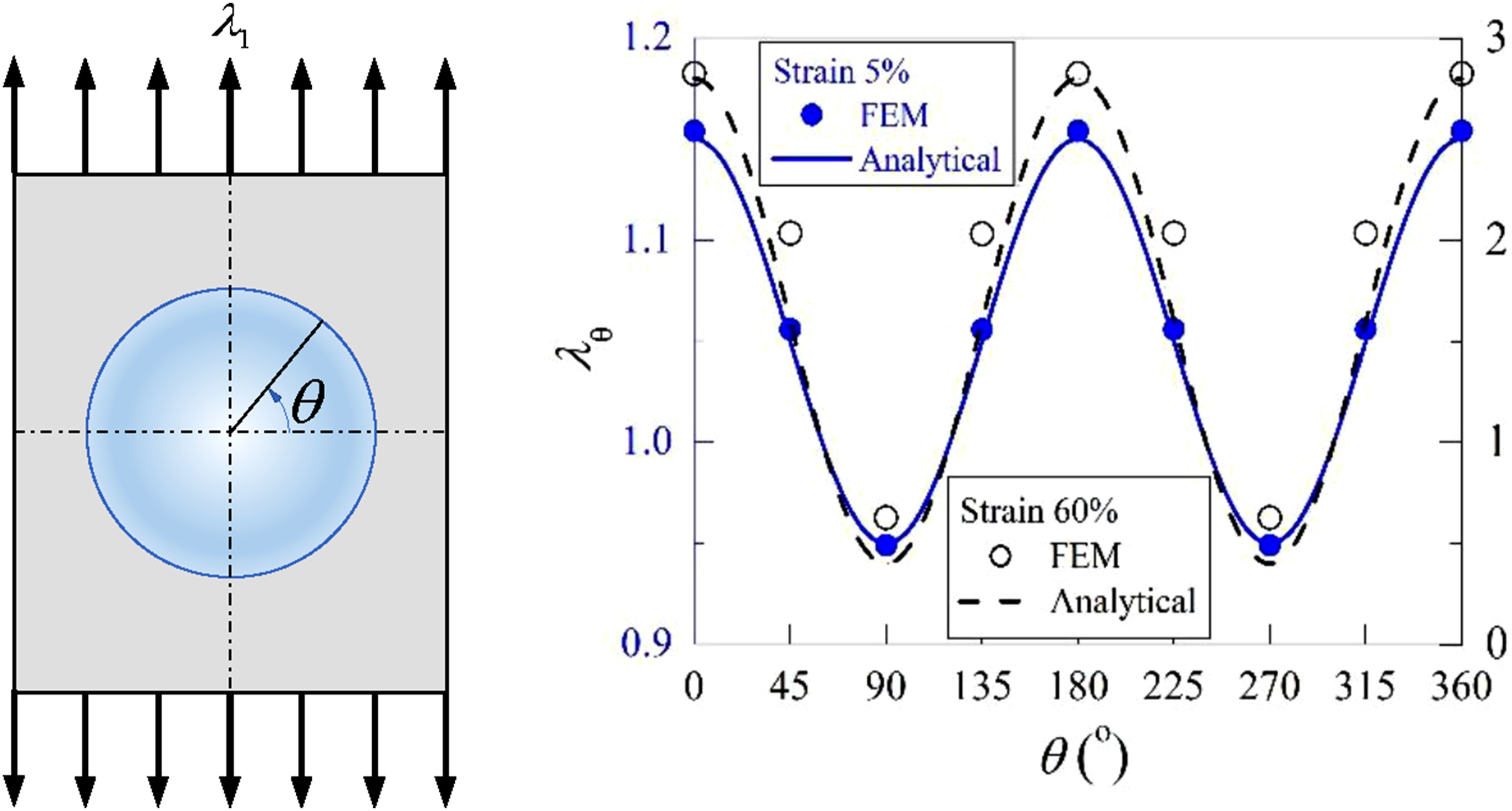
The unit vector along the circumferential direction Comparison between the analytical solution and FEM simulations on the hoop strain along the droplet/elastomer interfaces of the individual droplet for the single droplets.


For the plane tension under finite deformation without rotation, i.e., the rotation tensor is unit tensor (
Furthermore, the hoop strain in equation (8) is rewritten as
Analytical solution of a hole under tension
For an infinite large flat plate with a central circular hole of radius R (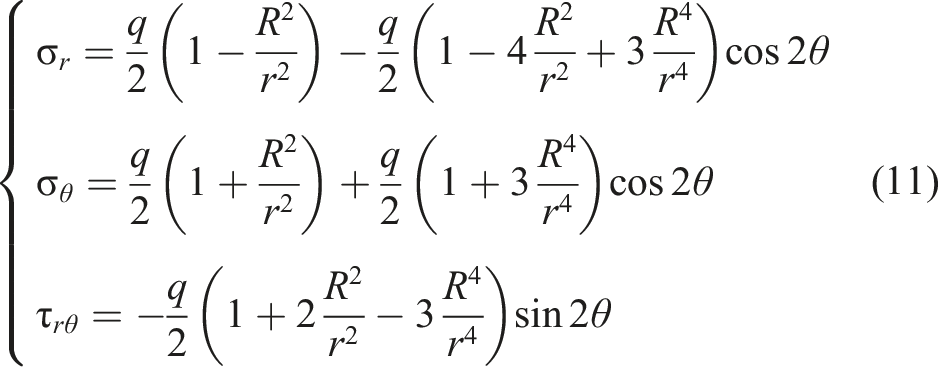
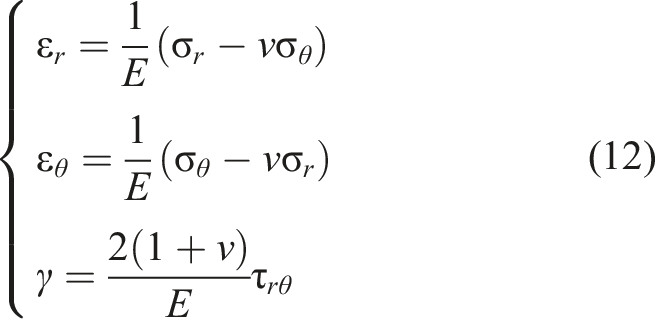

The far-field strain under uniaxial tension is given by

Figure 5(b) shows the comparison between the analytical solution and FEM simulations on the hoop strain along the droplet/elastomer interfaces for the single droplet. It is readily observed that for small deformations (less than 5%), the analytical solution derived from elastic mechanics aligns closely with FEM results for equivalent ring stretching. However, as the stretch ratio increases, the analytical solution progressively underestimates the deformation compared to the FEM outcomes. Consequently, while the analytical solution from elastic mechanics provides an accurate characterization of hoop stretching under small deformation conditions, it becomes increasingly inadequate for representing hoop behavior under large deformations as the stretch ratio grows.
Mechanical behaviors under tension
Micro-deformation of droplets
Figure 6 demonstrates a series of optical microscopy images of droplets as the macroscopic stretch Optical microscopy images showing the deformation across the mid-plane of isolated, couple droplets orientated at 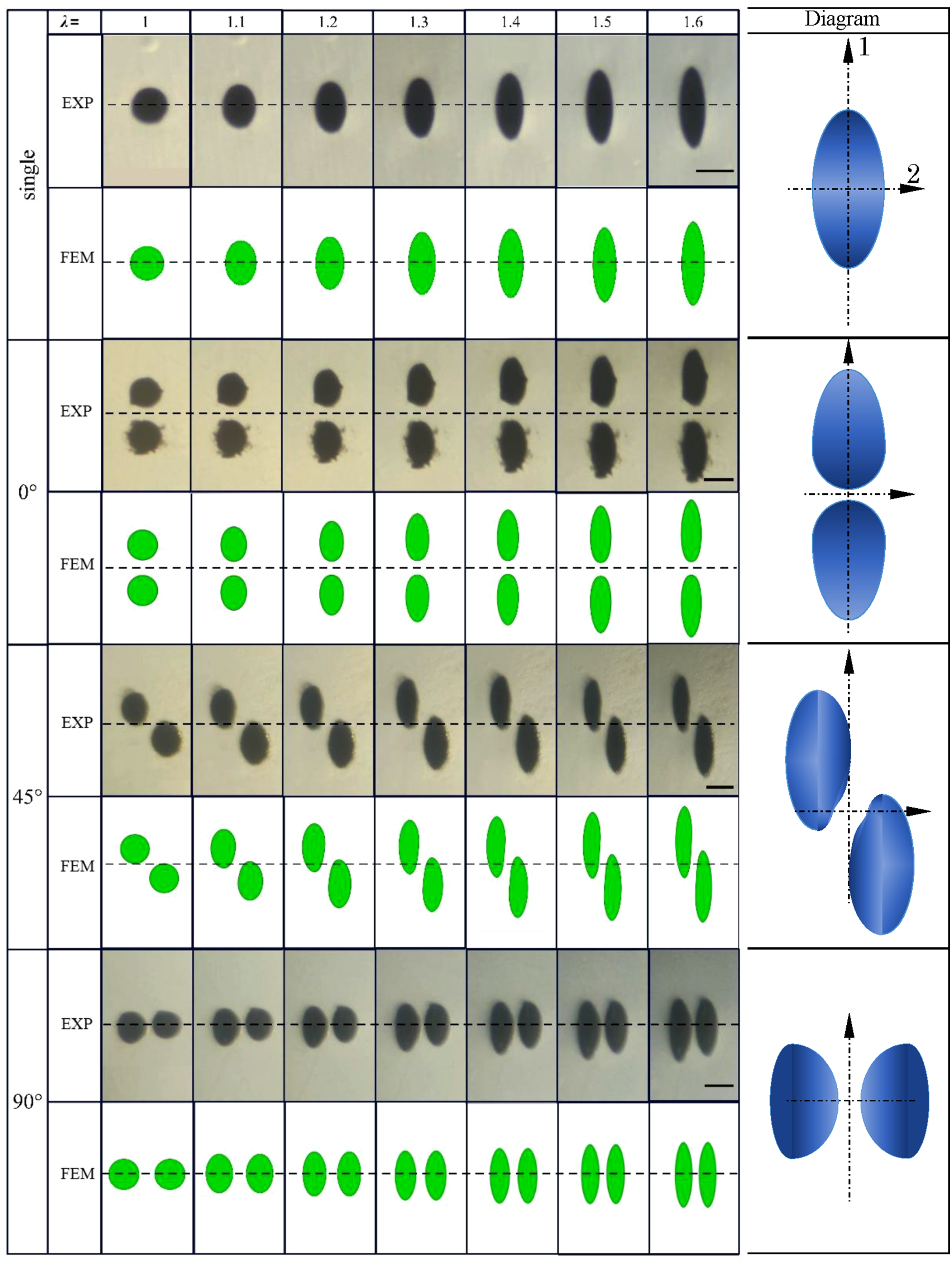
It is noted from the Figure 7 that the numerical results are consistent with the experimental data. Moreover, the comparison clearly indicates that Evolution of the major, a, and minor, b, axes of the isolated and pair droplets at various orientation under tension shown in Figure 2. The results are shown normalized by the initial diameter d of the droplets, as a function of the applied macroscopic stretch 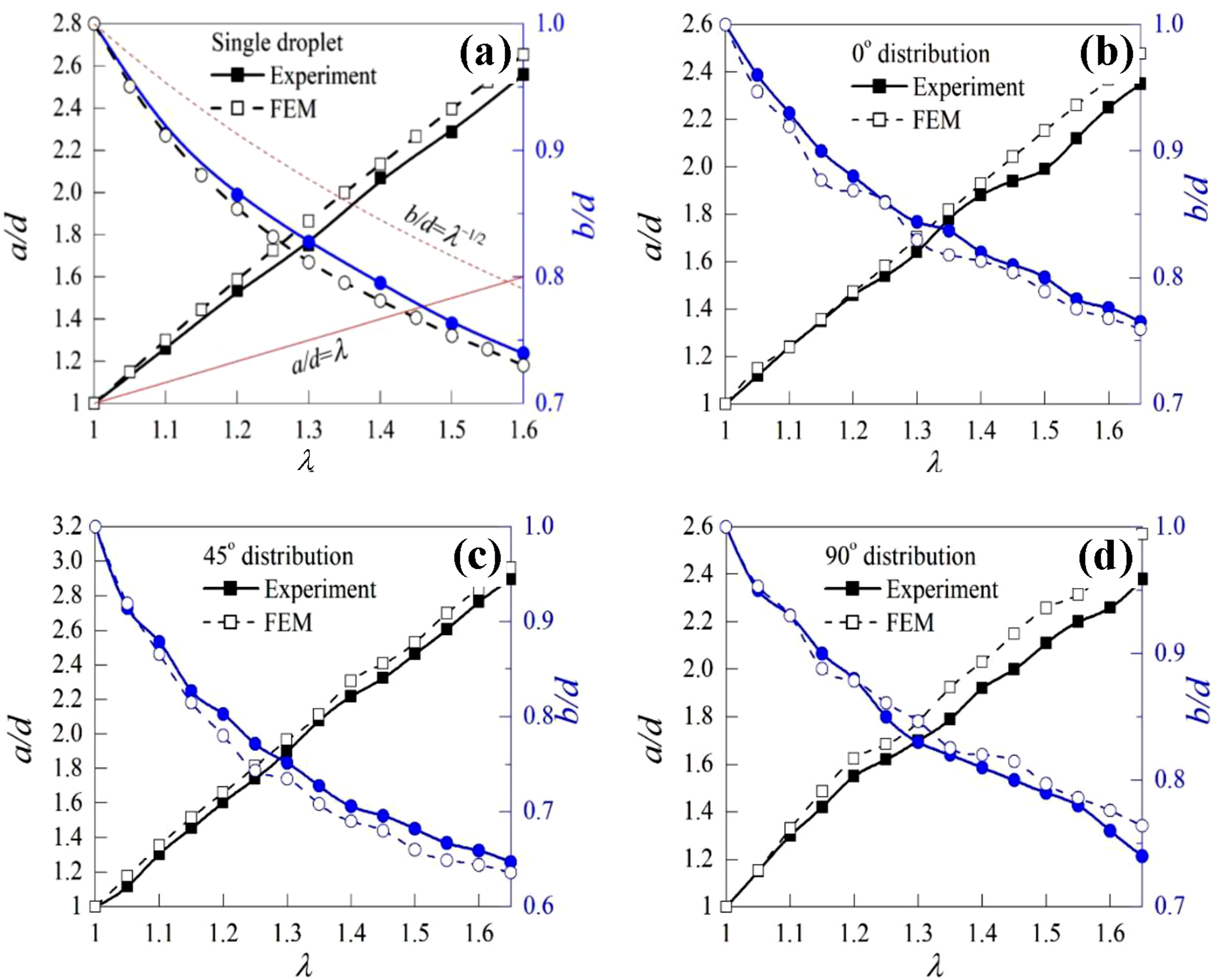
Hoop strain distribution
Figure 8 shows the results for λθ from the modeling for several macroscopic stretches, as a function of the hoop angle θ, and for several values of θ, as a function of The hoop stretch 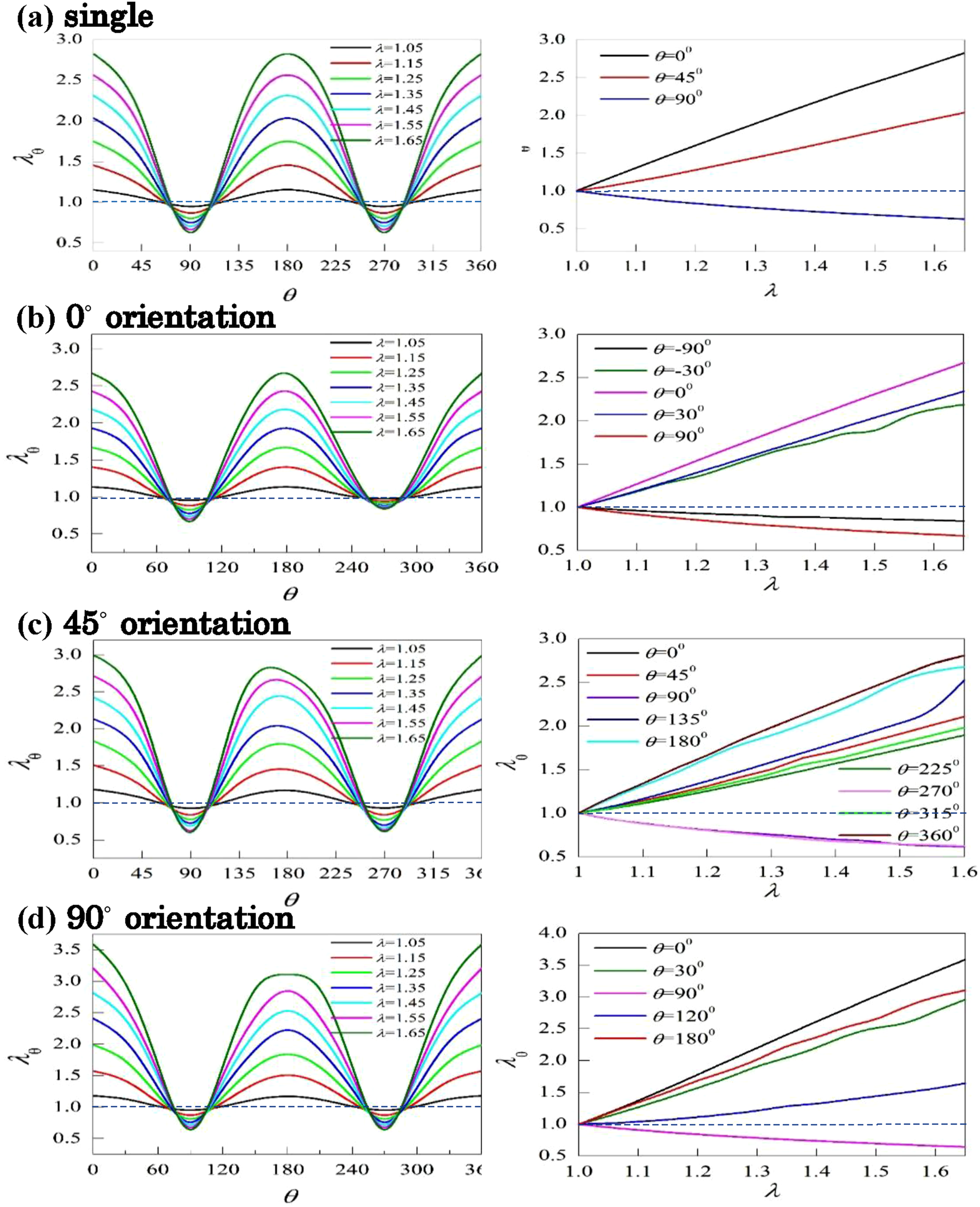
In the case of a single droplet, the pole of the droplet is subjected to the highest compressive circumferential stress. When the magnitude of this compressive stress attains a critical threshold, local instability arises at the interface, resulting in the onset of wrinkle formation. Consequently, the area surrounding the point of maximum compressive circumferential stress constitutes the primary potential site for wrinkle initiation and concurrently exhibits localized stress concentration. The symmetry axes vary according to different orientations. In particular, an isolated droplet exhibits three symmetry axes at
In the 0° orientation, a pronounced mechanical shielding effect occurs between the poles of the two droplets that face each other (mutual constraint effect). This interaction substantially reduces the compressive hoop stretch along the loading direction between the droplets. Consequently, the region of maximum compressive hoop strain shifts toward the pole area on the side opposite to the loading direction, causing the potential folding zone to correspondingly migrate away from the line connecting two droplets. Additionally, owing to this shielding effect, the rate of increase in the compressive hoop strain amplitude is comparatively gradual. As a result, the critical macroscopic stretch required to initiate wrinkling is marginally higher than that for isolated droplets.
Among the three orientations examined, the 45° orientation demonstrates the most intricate interaction pattern between droplets. As illustrated in Figure 8, the hoop strain in this orientation exhibits the greatest asymmetry relative to the circumferential angle. Notably, the peak compressive hoop strain shifts toward the oblique polar regions where the two droplets are in proximity, leading to a distinctly asymmetric distribution of the potential wrinkle region, which is biased toward the side adjacent to the droplets. The critical threshold for wrinkle initiation is attained, and the compressive region expands at the most rapid rate as the macroscopic stretch ratio increases.
At the 90° orientation, no shielding effect is observed at the poles, and the compressive strain remains comparatively weak. The peak compressive hoop strain is predominantly localized in the polar areas where the two droplets confront each other, designating this zone as the primary potential site for wrinkle initiation.
Mechanical behaviors under compression
Micro-deformation of droplets
Figure 9 illustrates a series of optical microscopy images of droplets as the compressive strain Optical microscopy images showing the deformation across the mid-plane of isolated, couple droplets orientated at 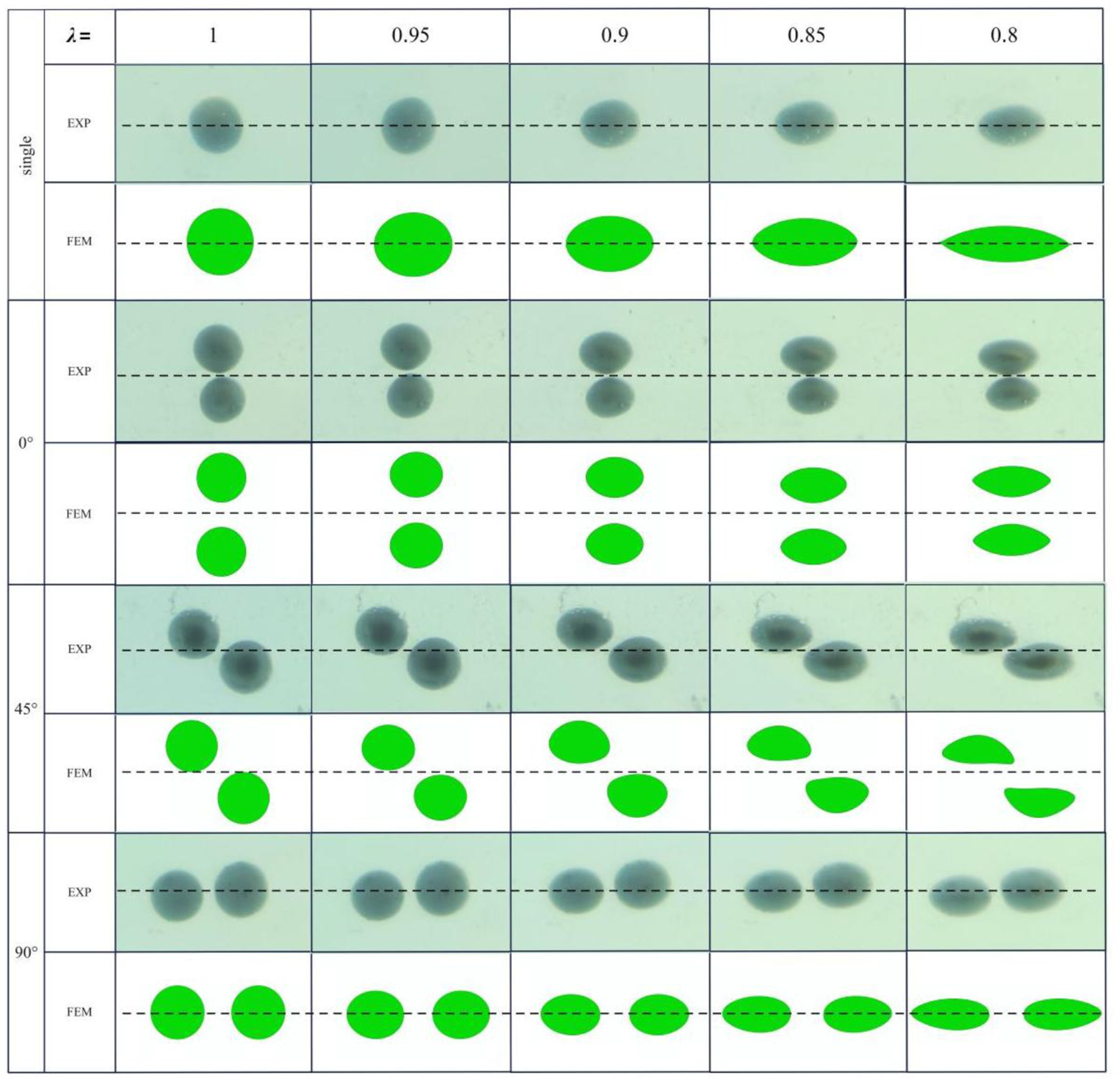
It is noted from the Figure 10 that the numerical results are consistent with the experimental data. Moreover, the comparison clearly indicates that Evolution of the major, a, and minor, b, axes of the isolated and pair droplets at various orientation under compression. The results are shown normalized by the initial diameter d of the droplets, as a function of the applied macroscopic compression 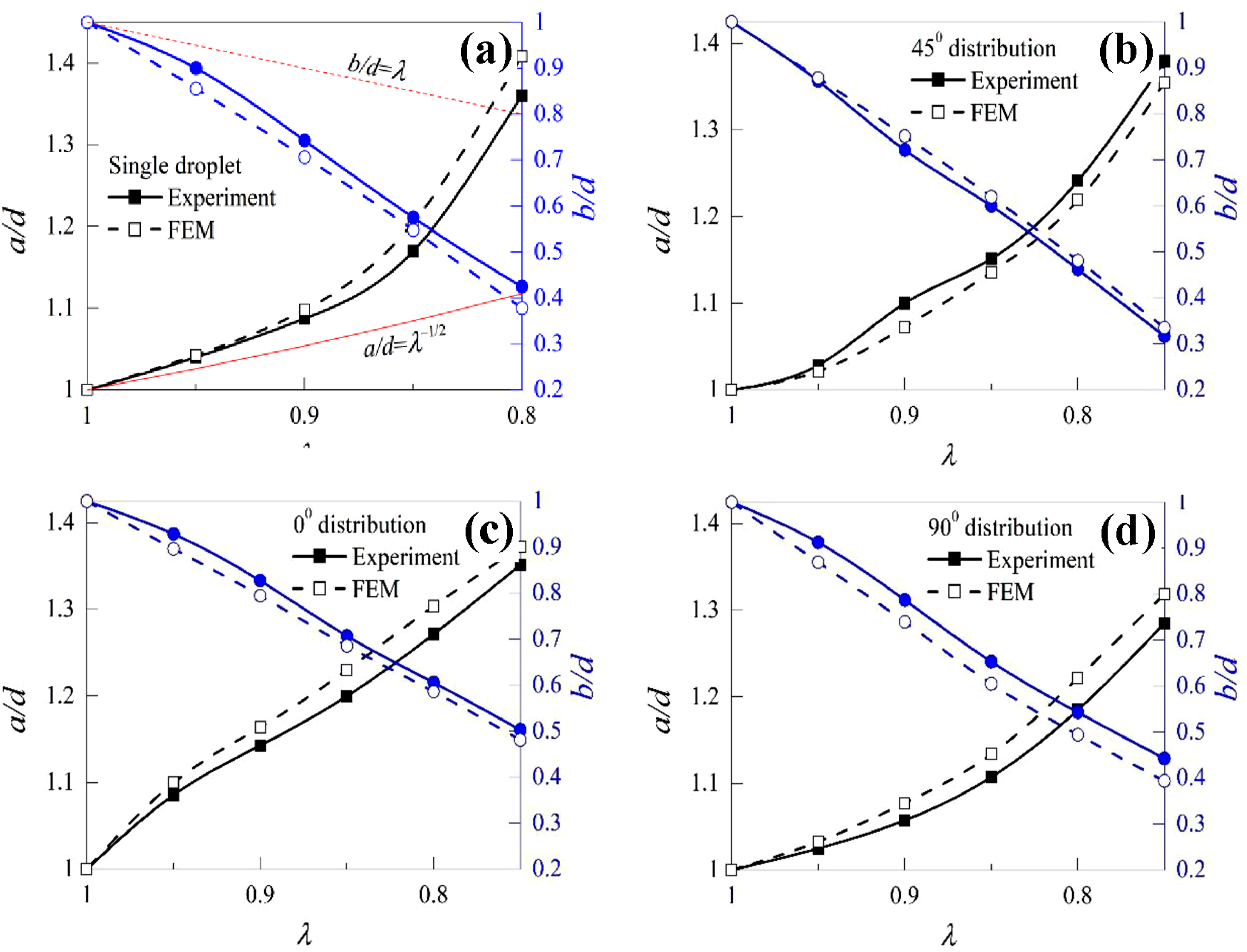
Hoop strain distribution under compression
The hoop strain over the whole interface of the droplet under the compression was analyzed as shown in Figure 11. At the 0° orientation, the hoop strain adjacent to the radial poles exceeds 1, signifying a tensile state, whereas the remaining regions experience compressive strain, with the maximum compression observed at the equatorial poles, demonstrating radial symmetry. At the 45° orientation, the hoop strain distribution lacks any axis of symmetry. Here, the hoop strain near the radial poles remains above 1, indicating tension, with the peak tensile strain occurring near the two poles distant from the contact surface. The other areas exhibit compressive strain, with the greatest compression found at the equatorial poles and significant compressive strain near the poles away from the contact surface. At the 90° orientation, the deformation field exhibits transverse symmetry. The hoop strain near the poles again surpasses 1, indicating tensile state, while the remainder of the positions are under compression, with the highest compressive strain located at eh equatorial poles, consistent with transverse symmetry. The hoop stretch 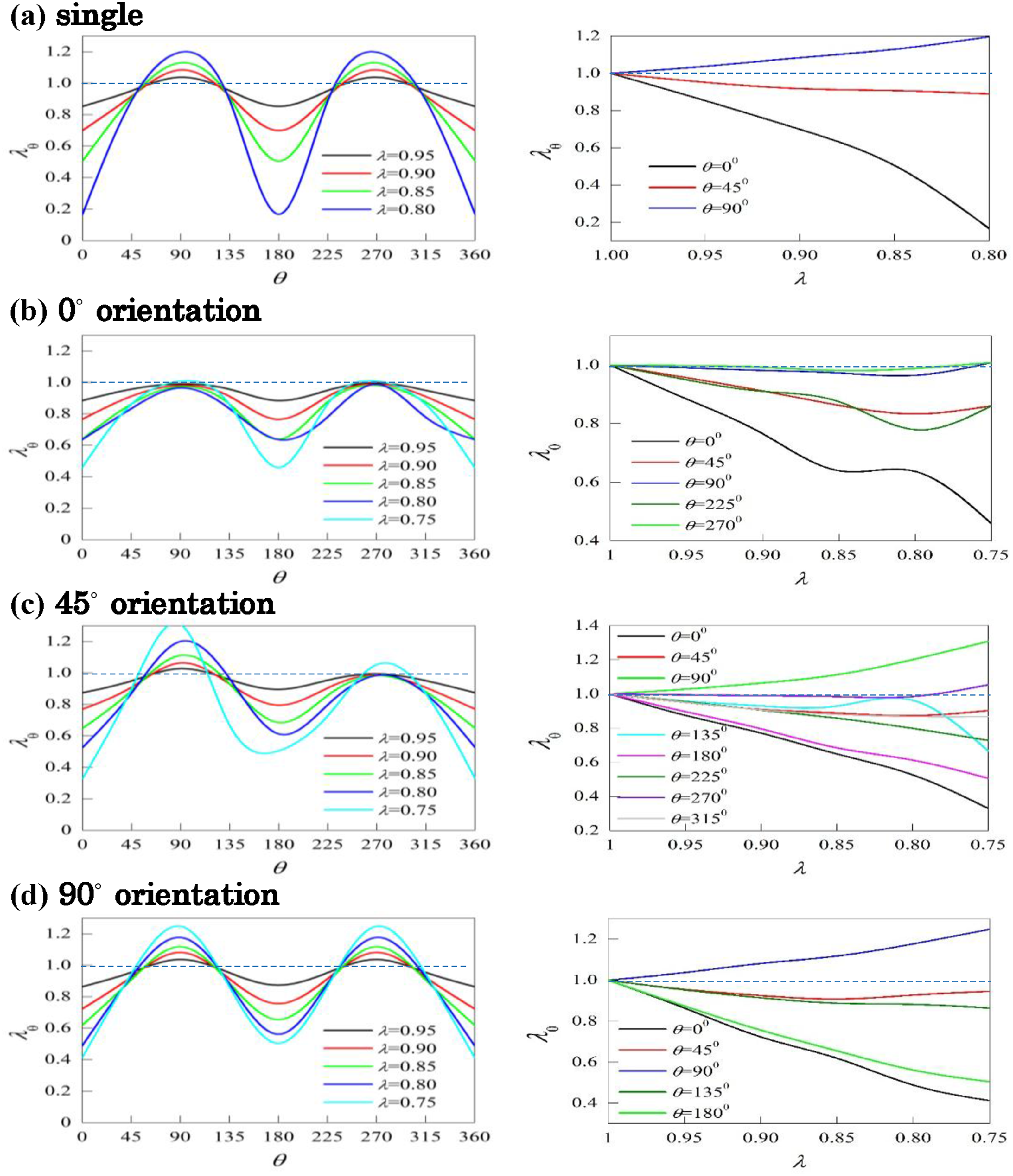
Orientation effect on the droplet’ s rigidity
Level of difficult in droplet deformation
The deformation heterogeneity in paired droplets is markedly more pronounced than that in isolated droplets. The deformation mode, the extent of elongation and contraction, as well as the distribution of circumferential stress, are all strongly affected by the orientation of paired droplets against the loading direction. To quantitatively characterize the level of difficult in transformation for the paired droplets with varying orientations, the normalized major axis Evolutions of the major axes, a, under tension in (a) and minor, b, axes under compression in (b) of the isolated and pair droplets at various orientation. The results are shown normalized by the initial diameter d of the droplets, as a function of the macroscopic compressive strain 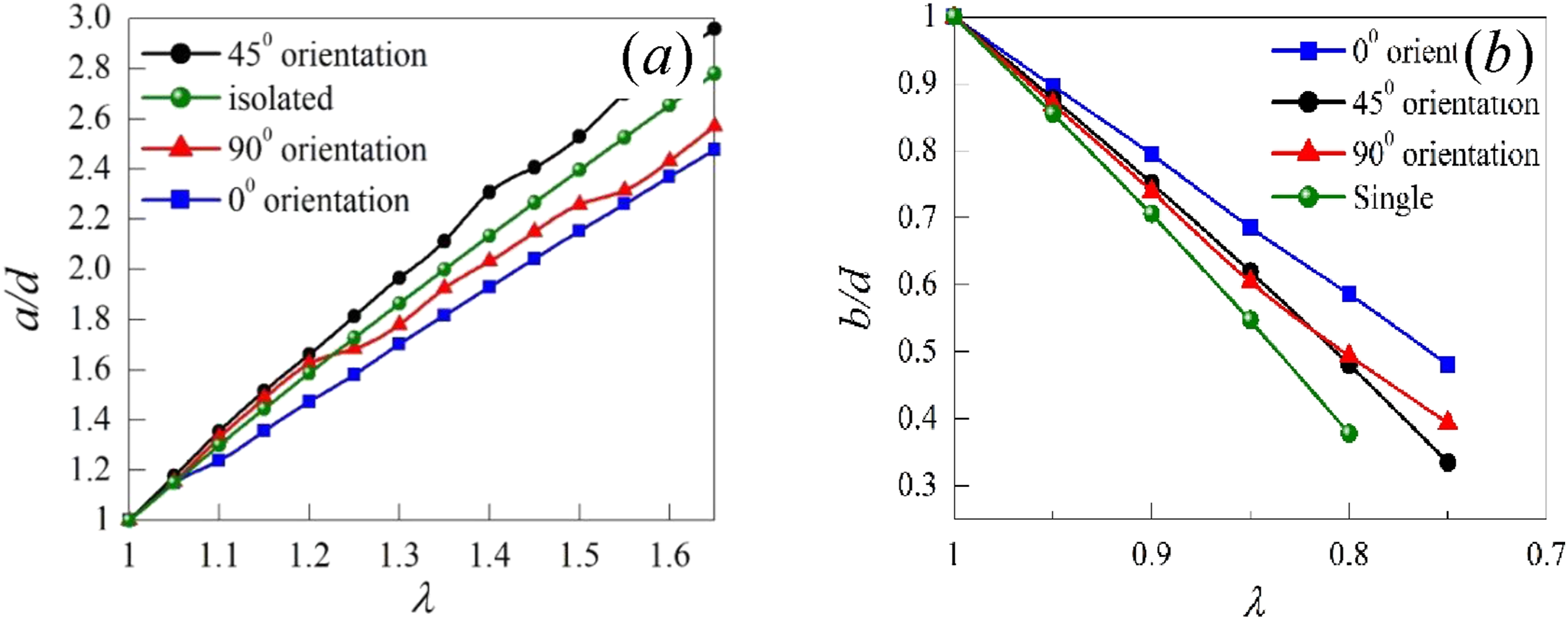
Micromechanical mechanism
The microscopic deformation of droplets is found to be strongly dependent on the dynamics of the surrounding matrix.
25
The isolated droplet was regarded as a base reference for the comparison of the level of difficulty in droplet deformation. The droplet/elastomer interface is too weak to effectively transfer the external load to the inner droplets. As a result, the matrix part between two droplets at the 0° orientation could not be loaded. Therefore, no deformation occurs during the stretching process, as shown in the Figure 13(a), the matrix regions adjacent to the two droplets display the small curvatures. For the 90° orientation, the stress state in each droplet is very similar to that of single droplet during stretching. Because of this, the way the major axis changes along with the stretch ratio is close to the plot of the single droplet shown in Figure 12(a). The matrix part between the two droplets would shrink sharply, which would reduce the two droplets’ Poisson effect, and thus their transverse strains are slightly higher than the single case. Therefore the Contours of Mises stress in the droplets under tension 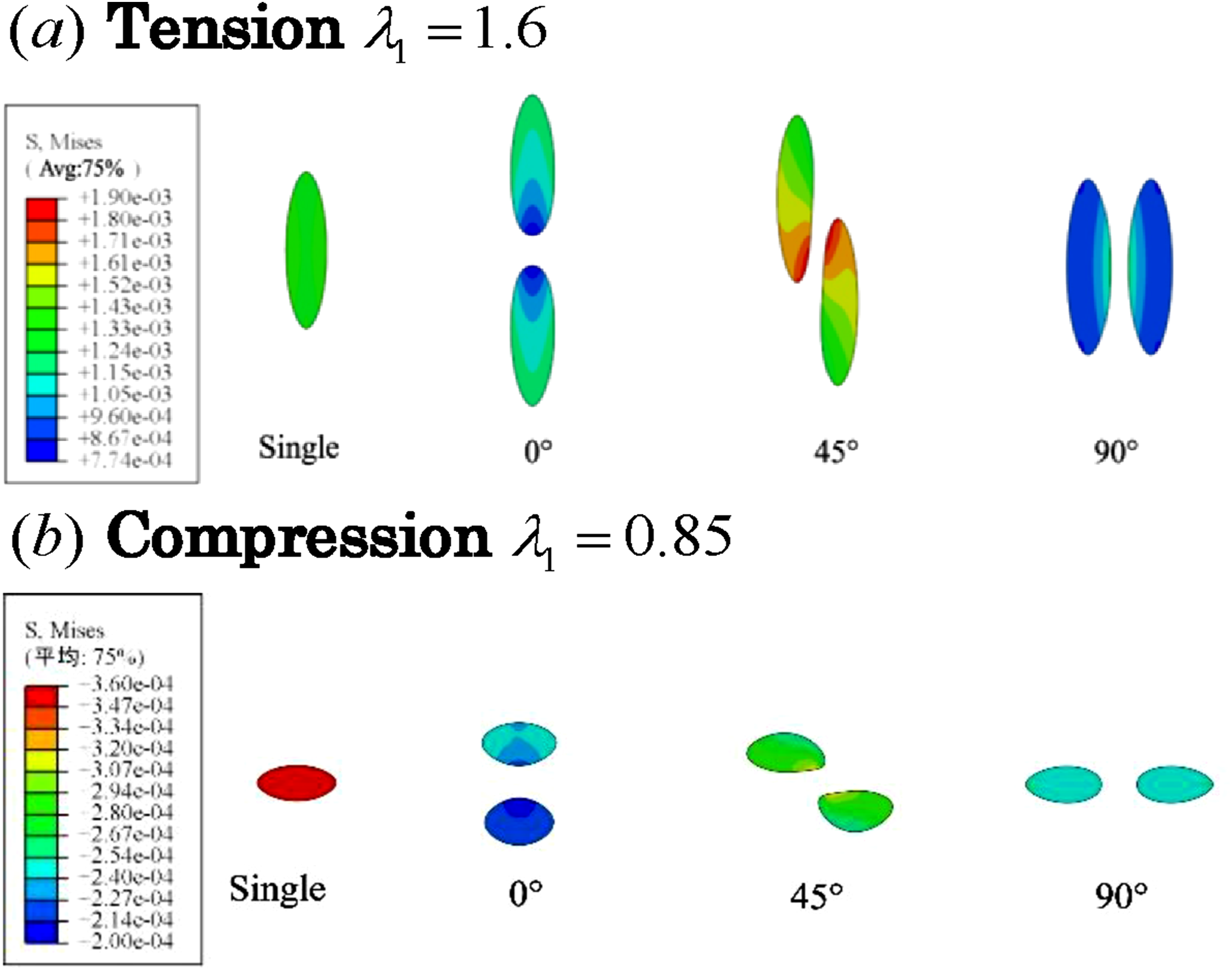
The isolated droplet was regarded as a base reference for the comparison of the level of difficulty in droplet deformation under compression. For the 0° orientation, the compressive shrink of the matrix segment between the two droplets should be slight due to the low stress state, as shown in the Figure 13(b). For the 45° orientation, the stress levels of droplets are in the same states as those of the single droplets, and fatherly the oblique matrix segment between the two droplets would rotate toward the horizontal direction, which is adverse to the compressive deformation of droplets. At the 90° orientation, the stress state in each droplet is very similar to that of single droplet during compression, and the greater transverse expansion in the matrix segment between the two droplets results in the diminished curvature on the adjacent faces, therefore the
Conclusions
The in-situ loading experiments were performed to study the interaction between droplets on the micro-strain fields, and the level of difficulty in droplets deformation under various architectures was analyzed with their aspect ratio evolution with the applied stretch ratio. FEM modellings were also conducted to analyze the hoop strain distribution and aspect ratio as functions of the applied macroscopic strain. Some important conclusions were reached, (1) The affine transformation between the local micro-displacement fields in the droplets and the macroscopic applied displacements was not hold for the dilute droplets, as confirmed by the present experiments and FEM simulations. In FEM, two droplet inclusions of different scales are set, and the deformation fields of the droplets are identical, indicating that in a dilute system, the deformation field of the droplets is independent of droplet scale. (2) Droplet orientation greatly affects the micro-strain fields over the droplet domains, and their evolution with the applied strain. Correspondingly, the rigidity of elongation in terms of the droplet aspect ratio would be distinctly different under various morphology of droplets. The rigidity of paired droplets with various orientations under tension are ranked as: 45° < single < 90° < 0°, while ranked as: single < 90° < 45°< 0° under compression. This is due to the displacement fields around the two droplets undergo linear superposition and interference, and there are significant differences in the substrate deformation modes and stress transfer efficiency between droplets with different orientations. (3) The analytical solution to a hole under far-field strain is similar to the observed droplet deformation and FEM simulations, which implies that the droplets deform conformably to the surrounding elastomer matrix. The similarity between the two stems from the fact that their boundary conditions are essentially equivalent.
Footnotes

Author Contributions
Funding
The authors disclosed receipt of the following financial support for the research, authorship, and/or publication of this article: This project was generously funded by the National Natural Science Foundation of China for General Program (No. 12072149), and the Fundamental Research Funds for the Central Universities (No. ILB24007).
Declaration of conflicting interests
The authors declared no potential conflicts of interest with respect to the research, authorship, and/or publication of this article.
Data Availability Statement
Data will be made available on request.