







Abstract
The long-term First Secretary of the Czechoslovak Communist Party and later also President of the Republic, Antonín Novotný (1904–75), was popularly known as “Nice Tony”. As a communist politician and statesman, Novotný was well known as a great disciple and follower of Soviet leader Nikita S. Khrushchev, famous for his personal and very contact-oriented diplomacy. The main contours of several of Novotný's official visits have already been analysed from political and diplomatic history perspectives. Based on archival research and available memoirs, this article tries to reconstruct the still non-visible and unknown view of transport history and, consequently, traveling and tourism history. It outlines the general contours and several aspects of V.I.P. communists’ international travels on the cases of several trips abroad which took place during the 1950s and 1960s of the Cold War era.
Introduction
Some readers of The Journal of Transport History may wonder why the journal has published an article with a research scope based primarily in political history, especially the history of Cold War international relations and the history of the so-called “state socialism” in former Czechoslovakia. As the key authors of transport/mobility historiography (such as Michael Robbins, Gijs Mom or Massimo Moraglio) already mentioned in their previous theoretical and methodological outputs, mobility history should also try “to contextualise the traditional topics” and redefine the long-term paradigm via a mobility turn, going “beyond history of movements and towards movements as history”. 1 This fits also in the goal of intermediating transport/mobility history with the trends and approaches of the so-called new political history and also with the biographical perspective. Specifically, this article does so on the case of post-Stalinist communist nomenklatura members, namely the communist party leader and Czechoslovak President, Antonín Novotný. 2 The trips abroad of this Czechoslovak politician are the main topic of the article, not only because of the considerable preservation and relatively good accessibility of the source material, but especially with the aim of interpreting the specific significance of foreign trips in the new “globalisation” stage of the Cold War. For the purpose of this case study, I will present in more details the contours of Novotný travelling to the Far East in 1959 (China, North Korea, Mongolia), his trip to the United Nation's plenary session in Ney York (1960), visits of several decolonised countries of the Third world in 1963 and 1966 (Burma, Cambodia, Indonesia, UAR, Ethiopia, India, Iraq) and his official visit to Canada on the occasion of EXPO 1967.
Simone Derix noted that most studies of contemporary political history pay rather marginal attention to state visits, and even if they do, they are mentioned only as supporting illustration for an earlier argument. 3 More recently, a greater attention is paid on the history of political representations and the staging of state visits as a probe into everyday political life, state “imagery”, and the formation of visual strategies. 4 This new concept of historiography is beginning to see the overlooked interstices between diplomatic negotiations as journeys and visits that are dynamic performances. It is equally important to consider their content and the overall contemporary context in which these “travel theatres” take place. 5 From the given perspective, it is also difficult to distinguish between “actors” (travellers and hosts) and “audiences”, as both parties form an integral part of the resulting “performance”. 6
In order to better explain the context of transport and mobility histories, it should be noted that Czechoslovakia – created after WWI as one of the successor landlocked states of the former Austrian-Hungarian Empire and also being a relatively industrialised and pro-export-based economy – was vitally dependent on having good international relations and transport connections. However, newly established borders in Central Europe, the East–West geographical orientation of the new state, as well as the non-ideal coherency of the multinational and multiregional state posed a great complication also in the field of transport and mobilities. 7 In fact, as seen from the long-term perspective, every step of the Czechoslovak political representation in the field of international policy, including their representation abroad and international trips of different manner, can also be interpreted as an attempt to overcome this relative geopolitical and also transport/mobility isolation. Generally, none of these facts changed after WWII, when Czechoslovakia became part of the Soviet Union bloc. 8 It is a historical fact (and possibly a paradox), that Czechoslovakia, despite being a loyal regimes of the Eastern Bloc (at least till the political fall of Antonín Novotný, the subsequent Prague Spring and the friendly occupation by Warsaw Pact armies in August of 1968), was existentially dependent on its commercial relations with Western countries. 9
Official visits abroad in the post-Stalinist era
The official visits abroad of political elites can be considered a very specific type of international mobility, especially when it comes to the trips of the highest nomenklatura cadres of the Eastern bloc countries in the Cold War era. They differ from “ordinary” business trips: their central actors were the representatives (and co-creators) of state-socialist regimes, who were at the top of the power pyramid. The visits abroad of political elites combine roughly three basic components: (a) the performance of policy “in the service” of the state; (b) reinforcing the rank of the travellers within the system of power; and (c) moments of individual “self-realisation”, creating a “travel experiences” for an individual or a narrow group of travellers. 10
While between the two world wars, in the era of the Versailles system, many Czechoslovak (as well as Polish or Romanian) politicians were highly praised for their “Francophile” ties and contacts, the situation changed after 1945, when their gravity centre was more and more East Europe. Active participation in visits abroad also increased the actor's significance on the domestic political scene. 11 Participants in such trips added significant symbolic capital from them, as building network, having latest and first-hand information, using informal informational gained via foreign partners or friends, achieving the valued and appreciated status of “world travellers”, subsequently increasing their chances of career progression. It should be noted here that the avant-garde “internationalised” character of their party careers was essential for politicians from communist parties outside the Soviet Union. 12 As in the case of the Catholic clergy and the Roman Vatican, it was a community with an “ideological-administrative” headquarters outside the territory of their own state, with Moscow being the centre of their power network and legitimation. 13 These members of the “Djilas new class” of the communist cadres, in many cases, became more than just representatives of the domestic political scene; they became – and frequently they also perceived themselves – as informal honorary ambassadors of the World of Progress and Socialism (under the control of the Soviet Union). 14
With Khrushchev's entry into the international arena in 1955, a new concept of a very active Soviet foreign policy was gradually formulated. Khrushchev promoted his political rhetoric of peaceful co-existence and competition between the East and the West and the export of socialism to the so-called Third World. From the contemporary transport/mobility perspective, this radical shift has also meant a wider opening to the world, including the growing support of international mobilities and development of new state-sponsored policies of tourism. 15 Until then, Khrushchev as a politician combined two different and usually separate roles: the position of the official representative of the second (socialist) world and his personal passion for travel and tourism. In many cases, he did not hesitate to take family members on his travels, some of whom were quite consumerist in their lifestyles and demands. 16 According to his biographer, Khrushchev loved travelling so much that he became the most frequent traveller among the Soviet leaders. 17 With an active contribution of his son-in-law, the powerful editor-in-chief of Soviet newspaper Komsomolskaja Pravda, Alexei Ivanovitsch Adzhubey (1924–93), he liked to promote his journeys and used them as an important tool of political self-presentation. 18 In Czechoslovakia, this post-Stalinist development was personalised first by the First Secretary of the Central Committee of the communist party of Czechoslovakia and, from 1957, the President of the Republic, Antonín Novotný.
To shine some light on the historical and biographical context, it should be noted that Novotný was born in 1904 in the Austro-Hungarian Monarchy, coming from a poor working-class family living in the suburb of Prague. After WWI, he became one of the founding members of the Czechoslovak communist party, serving as functionary mainly in the Prague region. Arrested in 1941 and later imprisoned in the concentration camp at Mauthausen, he managed to survive until the end of the war, when he became a national communist leader. His life was spent in a world of small structures with only limited suburban mobility (especially at weekends) and the absence of foreign experience (except for his forced war-related imprisonment in the concentration camp), quite typical for members of his generation from the Czech working-class environment. 19 After 1951, in consequence of the great purges in the Czechoslovak communist party, Novotný, as a loyal functionary, was catapulted to the top positions of the communist hierarchy. He became a member of the Politburo and its First Secretary. During the Czechoslovak destalinisation process, he became the unequivocal leader in power. However, his previous life experience and mental horizons limited his performance, which were overcome by hard working, authoritative behaviour, orthodox devotion to the communist party and the Marxist–Leninist–Stalinist ideology. 20
Seen from the perspective of transport/mobility history, it is important to add that Novotný's political trajectory had moved very high because Novotný expressed personal support for Khrushchev in the post-Stalinist fight for leadership in the Soviet Politburo (against Nikolay A. Bulganin), especially during the hectic events of anti-Soviet revolts in Poland and Hungary in 1956. 21 Novotný, elected with Khrushchev's support, tried his best to adapt to the new trend as a travelling apprentice (Figure 1).
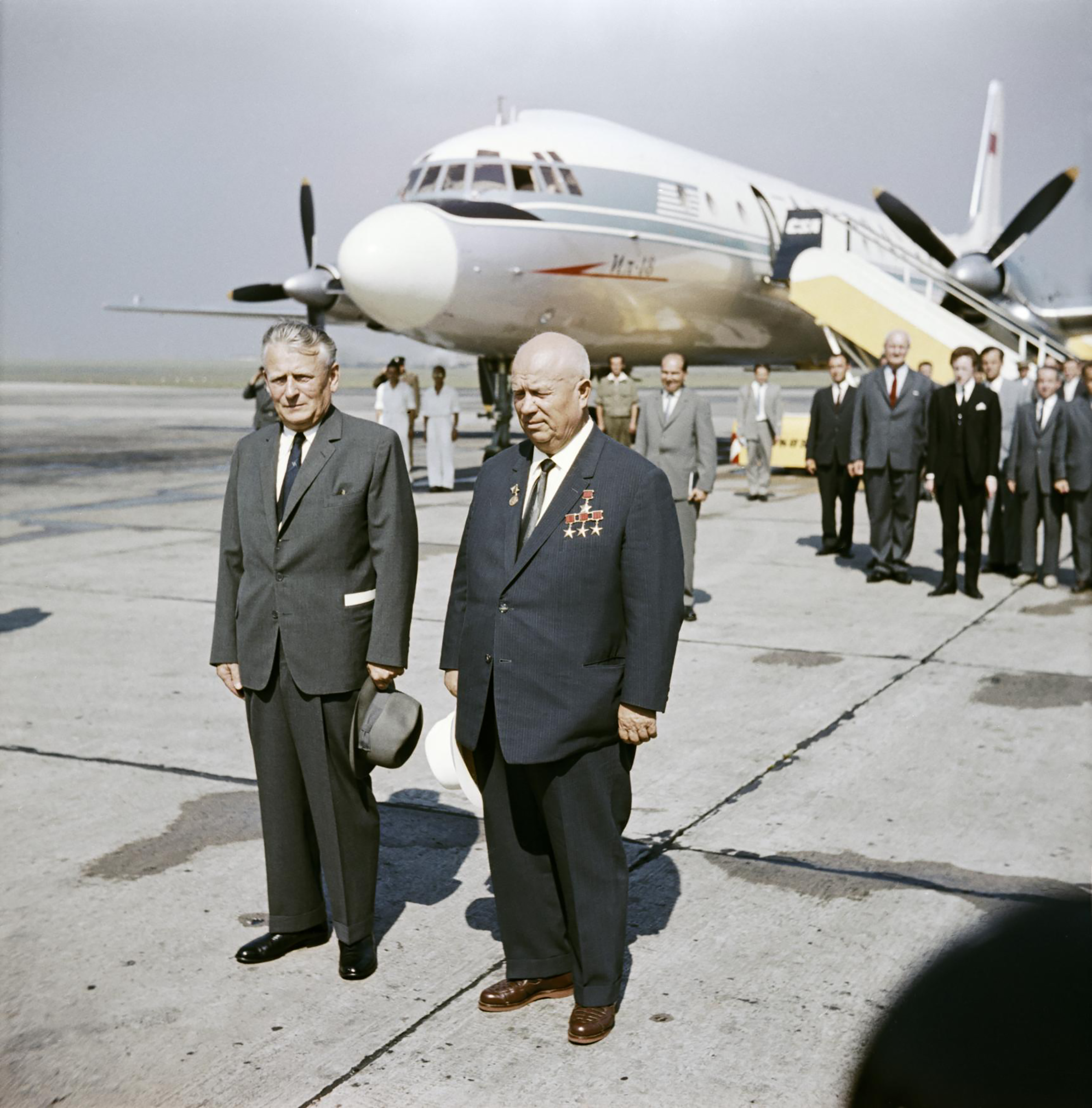
Nikita S. Khrushchev and Antonín Novotný at the airport at Prague-Ruzyně, 27 August 1964. Credit: ČTK (https://multimedia.ctk.cz/foto/document/1616360/1).
Political decision making and permission procedures
Not surprisingly, for abroad official visits by Antonín Novotný, there were usually very intensive communication between the Czechoslovak authorities and the hosts before a trip was approved. The contact authorities in the given country or countries were mainly Czechoslovak embassies; negotiations were mostly mediated by the ministry of Foreign Affairs, led by Novotný's long-term supporter, Václav David. Depending on the nature of the delegation and partly the historical period, the umbrella and main coordinating authority for pre-departure preparations was either the office of the Prime Minister or the Central Committee of the communist party of Czechoslovakia. The securing of passports and visas and the organisation of state security measures was in the hands of the ministry of the Interior, the secret police, the Czechoslovak state security, which will be discussed later.
The actual execution of the journey could, of course, be ruined by the unfavourable development of the international or domestic political situation. This was the case of a visit of the Czechoslovak highest-level delegation to communist China and other Asian countries in the late 1950s. It was first thwarted by the events of the Hungarian uprising (and the subsequent reactions of the communist leadership) and then by the circumstances accelerating the Soviet-Chinese rifts and leadership disputes in the international communist movement. 22
The Far Eastern trip finally took place in connection with the celebrations of the tenth anniversary of the founding of the People's Republic of China at the turn of September and October 1959, under somewhat changed circumstances. In addition, Novotný's delegation at the time also visited the Democratic People's Republic of Korea and Mongolia, which were rather secondary in terms of significance, at least in the opinion of the contemporary international communist movement. 23 (Figure 2).
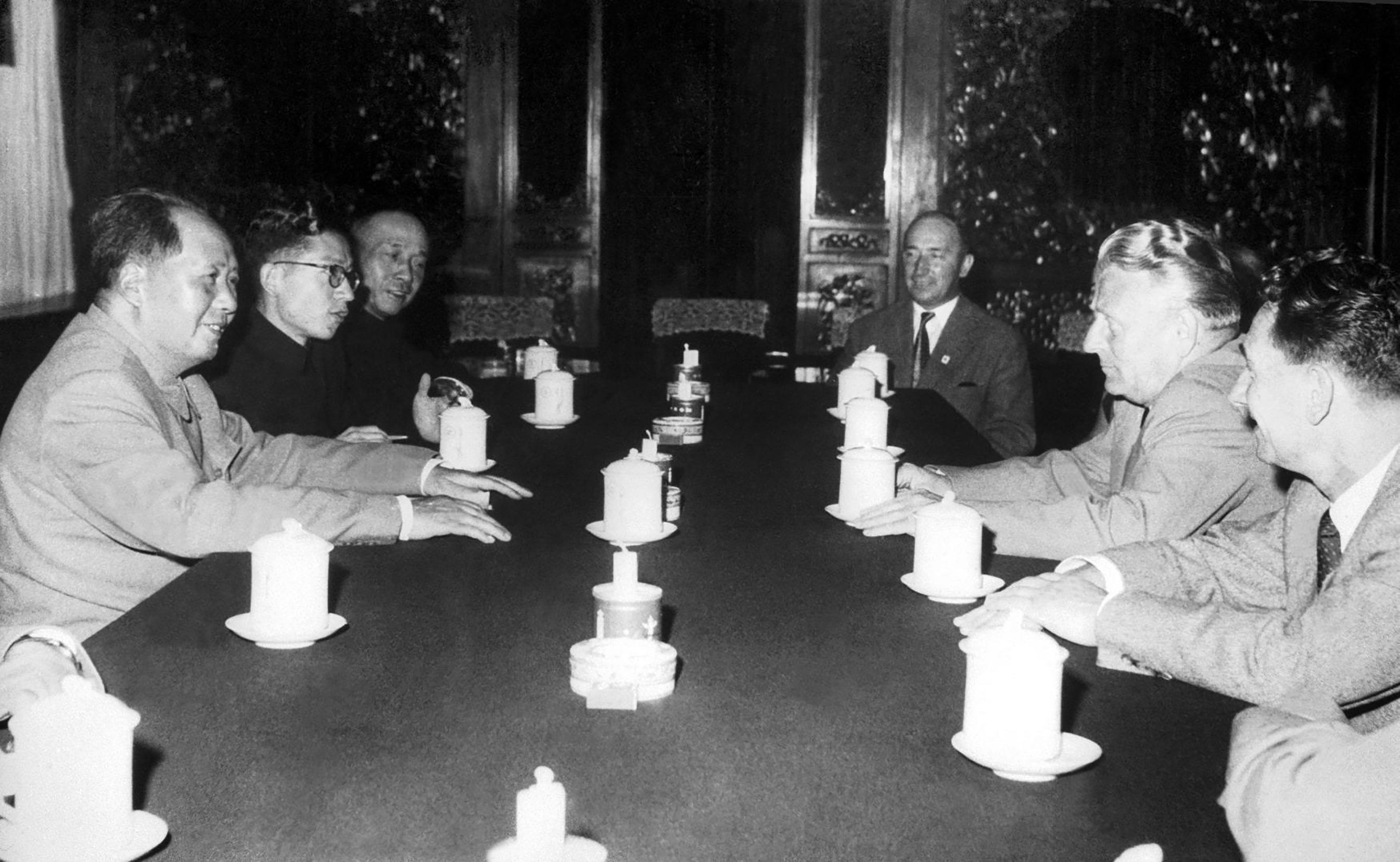
Antonín Novotný (right) with a delegation during negotiations with Mao Zedong, 1 October 1959. Credit: ČTK (https://multimedia.ctk.cz/foto/document/910126/1).
On the contrary, North Vietnam and Egypt, which had originally been considered, were omitted from these journeys. Seen from the Czechoslovak perspective, the North Vietnamese had been manoeuvring between Soviet and Chinese power patronage, and the Nasserians in UAR were (temporarily) leading a repressive internal campaign against the domestic communist opposition, and therefore Novotný's visits had to be re-scheduled for better times.
Both these long-distance trips were accompanied by visits of other countries, which we can retrospectively perceive as having an exploratory character rather than holding high importance from the perspective of Czechoslovak international policy. During the trips in 1963 and 1966, Novotný's delegation visited in this manner Cambodia, Myanmar (but known as Burma in the past) and Ethiopia – regimes of a monarchic or authoritarian governments, which however had a “Non-Aligned Movement” orientation. 24 The short stop and half-day official visit of Iraq (1966) then resulted from pragmatic logistic issue and the need to take a technical break on the long flight back to Czechoslovakia. 25
The special (and only) cases of crossing the Iron Curtain by Antonín Novotný as an official were two trips in 1960 and 1967. In 1960, Novotný took part in the XV General Assembly of the United Nations in New York, where he arrived to show his warm support for Soviet politics and to Khrushchev, contributing to the promotion of the pro-decolonisation (and pro-Eastern) agenda. 26 In 1967, in the post-Khrushchev era, but still during the course of the détente, which brought the East and West closer together, Novotný was hosted by Canada, at that time ruled by the liberal government of Lester B. Pearson. Novotný had been delegated to open officially the Czechoslovak exhibition at the EXPO 1967 World Fair in Montreal, but the visit was welcomed as an opportunity to promote a coloured image of friendly, progressive and peacefully socialist Czechoslovakia. 27
Practical preparations, realisations of trips and their transport arrangements
The pre-departure negotiations consisted mainly of arranging specific dates, the composition of the delegations and the programmes of the visits.
Because Antonín Novotný, alongside the prioritised function of the First Secretary, held also the position of President of the Republic (in his own words – as a part-time job, because of his presence at the Prague Castle only three half working days per week), the pre-travelling issues and practical preparations had to be co-assumed by several institutions. The Central Committee of Czechoslovak communist party apparatus mainly provided administrative management and general coordination, the selected ministries (like the ministry of Foreign Affairs or ministry of Interior) ensured communication with foreign partners abroad, securing transport and the passport/visa agenda, or they provided a requested number of experts, security staff and the necessary interpreters. The Government Office was in charge to prepare the official gifts; and among the major tasks of the Presidential Chancellor were not only the preparation of major official speeches for Novotný, but thanks to his wide network of personal social contacts and access to the generous Presidential account, he was in charge of supplying the whole expedition with suitable beverages, food and cigarettes for the long journey. In addition to the Czechoslovak organisers, the foreign country government hosting Novotný, took an active part in the preparations. 28
The delegation's departure was preceded by processing information, the scope of which was usually derived from the degree of exoticism of the country and also whether the participants in the trip had some previous experience with the country. These dense sets of information included, in particular, the political, socio-economic and cultural characteristics of the countries visited, an overview of bilateral relations, proposed principles for personal foreign policy negotiations and, in some cases, drafts of joint declarations to be signed by delegations at the end of the visit. The overwhelming majority of the heads of delegations also requested the submission of draft speeches to be delivered. If the Czechoslovak delegation was heading to a country for the first time (especially regarding Third World countries), biographical profiles of the main hosts were attached to the information materials, sometimes accompanied by photographs for easier identification. 29 The organisers used the experience of friendly states for preparation and the reports of Czechoslovak embassies, or relied on confidential information from Czechoslovak insiders established in the local environment. The Czechoslovak delegations were expected to make the most of the experience by previous trips made by other socialist countries too, and use it to eliminate potential political-diplomatic “misunderstandings” or risks related to the organisation of travel. 30
From a practical point of view, perhaps the most important part of the pre-departure information sets was the exact programme of the foreign visit (including a list of the members of the delegation, with a description of their positions), supplemented by a timetable and recommendations for the daily schedule of the visit – including the expected climate, daily weather at the destination, supposed character of local gastronomy or a dress-code recommended for official events or non-official leisure time.
Because of the prevailing humidity during this period, a larger number of shirts are recommended, so that there are enough of them for frequent changes. A larger supply of underwear, socks and handkerchiefs is also needed. […] Very tasty European food is served on all occasions (Vietnamese chefs know French cuisine well). Poultry, pork and beef, and sea and freshwater fish predominate. In terms of beverages, beers and all kinds of wines are quite popular. Heavy drinks (liqueurs, spirits) are not served. Various fruit juices (orange, pineapple) are also served. There is plenty of fresh fruit on the table, especially bananas and tangerines. 31
From the political, but also organisational and transport point of view, the visits were carried out not only in accordance with the customs and procedures of formal etiquette, but also improved against previous trips. I would like to note that each program preparation and its following realisation had an inherent transport/mobility dimension – not only because of the elementary necessity of moving between the visited localities on a strictly planned time schedule, but also because of the (self)presentation through mobility, which was consciously calculated both by the host and the visitor. Coming from the social milieu of the technocratic optimism of the 1950s and early 1960s, those responsible for preparing the trips planned transport systems in a balanced combinations of progress/modernity means versus more traditional/local ones. 32
In the first years after World War II, similarly to ordinary travellers, the official Czechoslovak delegations, where possible, preferred trains for long-distance travel. 33 With the increasing possibilities of air travel, its considerable exclusivity, but also practicality (especially the considerable time savings), the Czechoslovak elites increasingly sought to use this type of travel during the 1950s. 34 From the second half of the 1950s onwards, the government squadron became the operator of special flights transporting major Czechoslovak delegations abroad. 35
Antonín Novotný himself – despite the fact that he was a member of the old-boys communist generation – became the first Czechoslovak communist statesman who systematically started to use air travel to foreign countries. As a result, new political rituals were created, which corresponded to this new traveling mode. 36 If the trip was made by air, most of the Czechoslovak delegations used the facilities of the government airport at Prague-Ruzyně, where the official farewell and welcome took place as well. Selected members of the Politburo or the Secretariat, the Prime Minister and selected members of the government, other party's dignitaries, and members of the Prague diplomatic corps were invited to officially bid farewell to Antonín Novotný and then welcome him. The President's travels as Commander-in-Chief of the Armed Forces also included an honorary parade of a military unit, usually in the presence of the Minister of Defence. 37 For these occasions, representatives of the Czechoslovak media, who were then to promote and publicise the visit accordingly, were also invited to the airport area and to the presidential lounge at the airport.
Czechoslovak representatives tried to use mainly the services of their own air capacities – either special flights or machines belonging to Czechoslovak Airlines – and if this was not possible, the services of friendly companies and aircraft carriers were used. With a few exceptions, all the Eastern visits in 1959 (China, North Korea), 1963 (Indonesia, Democratic Republic of Vietnam, Myanmar, Cambodia) and 1966 (UAE/Egypt, Ethiopia, India, Iraq), as well as Novotný's trip to Canada in 1967, the Czechoslovak delegation travelled on the board the Czechoslovak special governmental airplane, a Tupolev Tu-104 of Soviet origin. Air capacity from capitalist or neutral countries was used only in exceptional cases (when there was no other option from the trip organisers’ point of view). 38 Technical stopovers on long-haul flights were sometimes used to conduct shorter official or unofficial visits. 39
In the usual scenario of Novotný's trip abroad, immediately after landing in the host country, a political and military welcome took place (including a military parade) according to a pre-agreed scenario developed by diplomatic protocol. 40 In addition to their own political meetings, the delegation usually not only visited the headquarters of the host states and the state administration or legislatures, but they also visited natural, cultural-historical and sacral monuments, museums, memorials and places of general importance for the country and the ruling regime. There were often also excursions to selected military units, scientific research complexes or schools of various degrees and specialisations. Furthermore, the hosts, if possible, often wanted to boast a tour of selected industrial plants, farms or cultural performances. Selected events were usually associated with the delivery of prepared speeches and social events such as banquets and receptions. In order to present the visit to a domestic audience, the Czechoslovak delegates also inspected the Czechoslovak embassies and places where Czechoslovak experts were operating in the country.
As typical of the times, positions of power were firmly a male prerogative. The only female presence was the wives of the highest Czechoslovak officials, who travelled abroad with them. The spouses formed a parallel part of the official delegation. The wives/representatives often had a separate programme during the visits focused on visiting places that were of less importance from the point of view of high politics; they visited places of symbolic importance, or sites and operations that were important for the overall presentation of the country. These were selected industrial plants, schools, hospitals or museums, or the women's part of the expedition was formally provided with a free programme to make an excursion into the daily lives of the ordinary people in the country (including the possibility of shopping) (Figure 3).
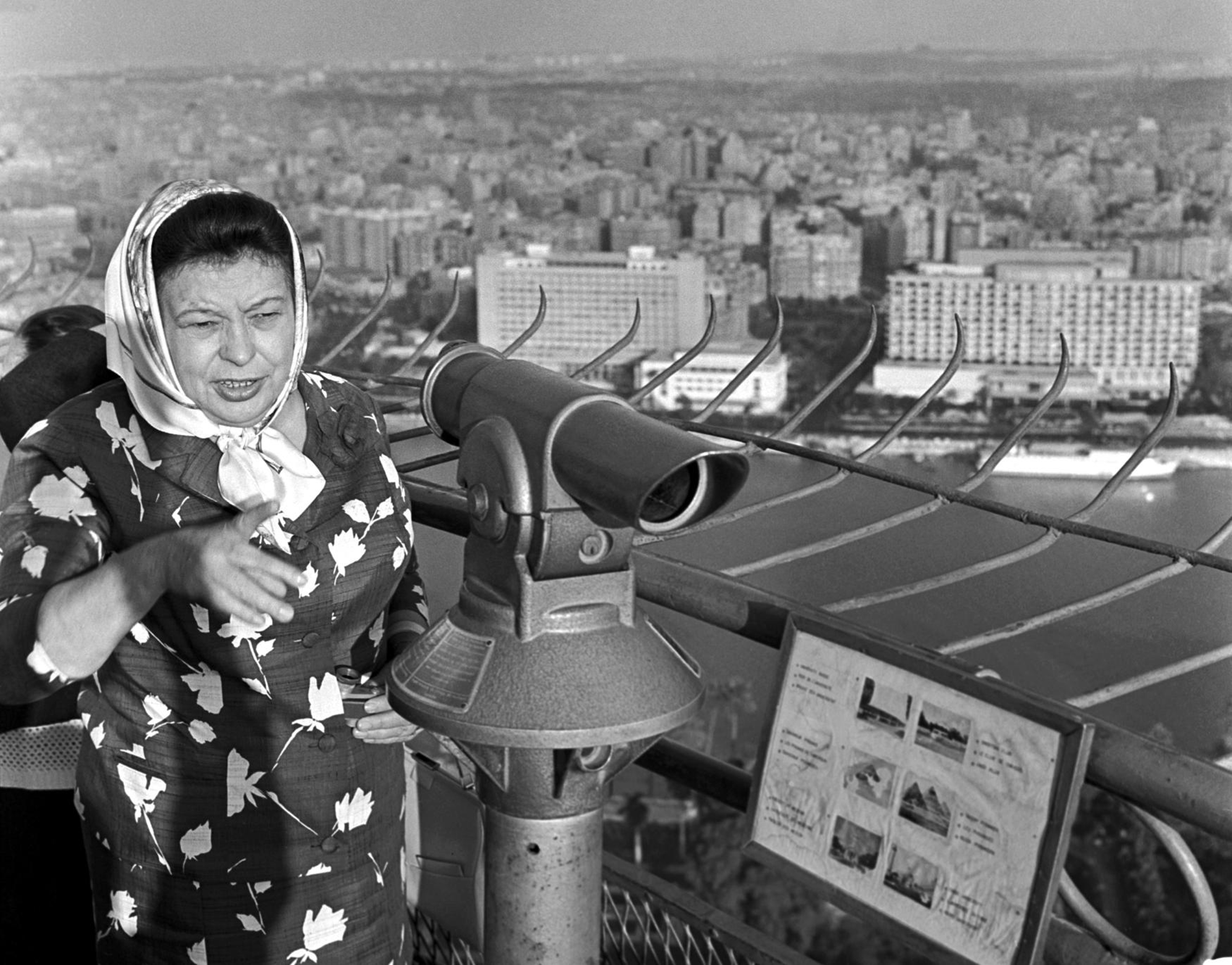
Božena Novotná on the TV Tower in Cairo, 1966. Credit: ČTK/Mevald Karel (https://multimedia.ctk.cz/foto/document/1695704/8).
As already indicated, seen from the perspective of transport/mobility, the visits had multifaceted dimensions – from practical to symbolic aspects, partly trying to point towards the bright visions of prospective development. For instance, a boat ride on the river Nile to the famous King's Valley was intended not only as a kind of tourist attraction, but in reference to local traditions and national history: it could also be interpreted as following the old pharaonic coronation path, which symbolised rule over the whole of Egypt. During the same boat ride, the stop at the construction site of the water dams at lake Nasser in Aswan were presented and perceived as an insight into the future of the new Nassarian republic. Thus, through this mix of traditionality and modernity (a jeep safari ride and fishing in Ethiopia, pirogue races in Cambodia, a visit of the TV and sightseeing tower or military technical Academy in Cairo, etc.), a public image of the visited country was created and co-performed an affirmation of its respectable status not only by the host, but also the guests. 41
Frequently these events produced side effects and an intersection of mutual interests: several visited countries were willing to improve and develop their industrial and transport capacities. Czechoslovakia was perceived as a traditional producer and exporter of these items or technologies (such as Škoda locomotives, railway coaches, electric tramways or trolley buses, cars, Tatra or LIAZ trucks, ČZ or JAWA motorbikes etc.). Thus, performing high-tech mobility opened space for bilateral agreements and commercial contracts. 42 (Figure 4).
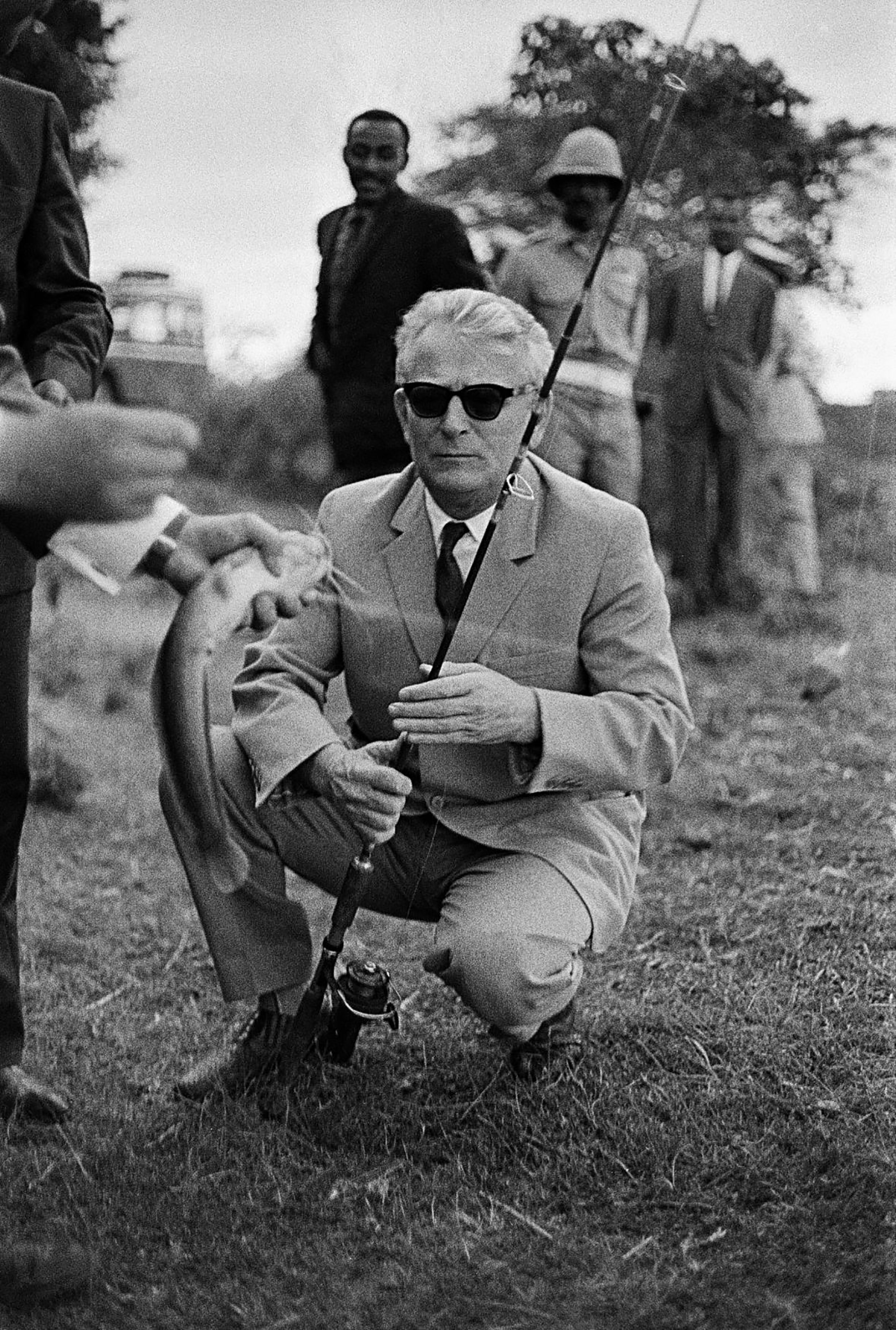
Antonín Novotný fishing during a visit to Ethiopia, 1966. Credit: ČTK/Mevald Karel (https://multimedia.ctk.cz/foto/document/1007043/1667).
Last, but not least, similarly to ordinary travellers, members of the Czechoslovak elites submitted either an oral or written report upon their return, usually at the first subsequent meeting of the highest communist party bodies. These communications were subsequently discussed by senior management (and usually approved). The texts of foreign travel reports, when read from today's point of view, are formulated in a time-dependent and ideologically highly coloured language with frequent tendencies towards repetitive expressions, idealised descriptions of mutual relations and the resulting concealment of problems encountered by the delegations.
Security arrangements and medialisation of trips abroad
As for any dignitaries, but possibly even more in authoritarian political system, as the Czechoslovak one, the mobility of political elites triggered security concerns. The Czechoslovak leadership was always concerned about their health and lives. 43 In the first years after the end of World War II, security measures were relatively extensive and the official delegation was accompanied by a relatively large number of members of the National Security Corps (that is the bodyguards), both in civilian clothing and uniformed. As a highly protected VIP, Novotný can be described as someone who respected official security measures whether at home or during trips, as well as permanent surveillance on his public and private life by Czechoslovak secret police. 44 Due to the scattered archival source on this matter, I present here an example of security measures performed to Antonín Novotný's trip to the United States of America in 1960 45 (Figure 5).
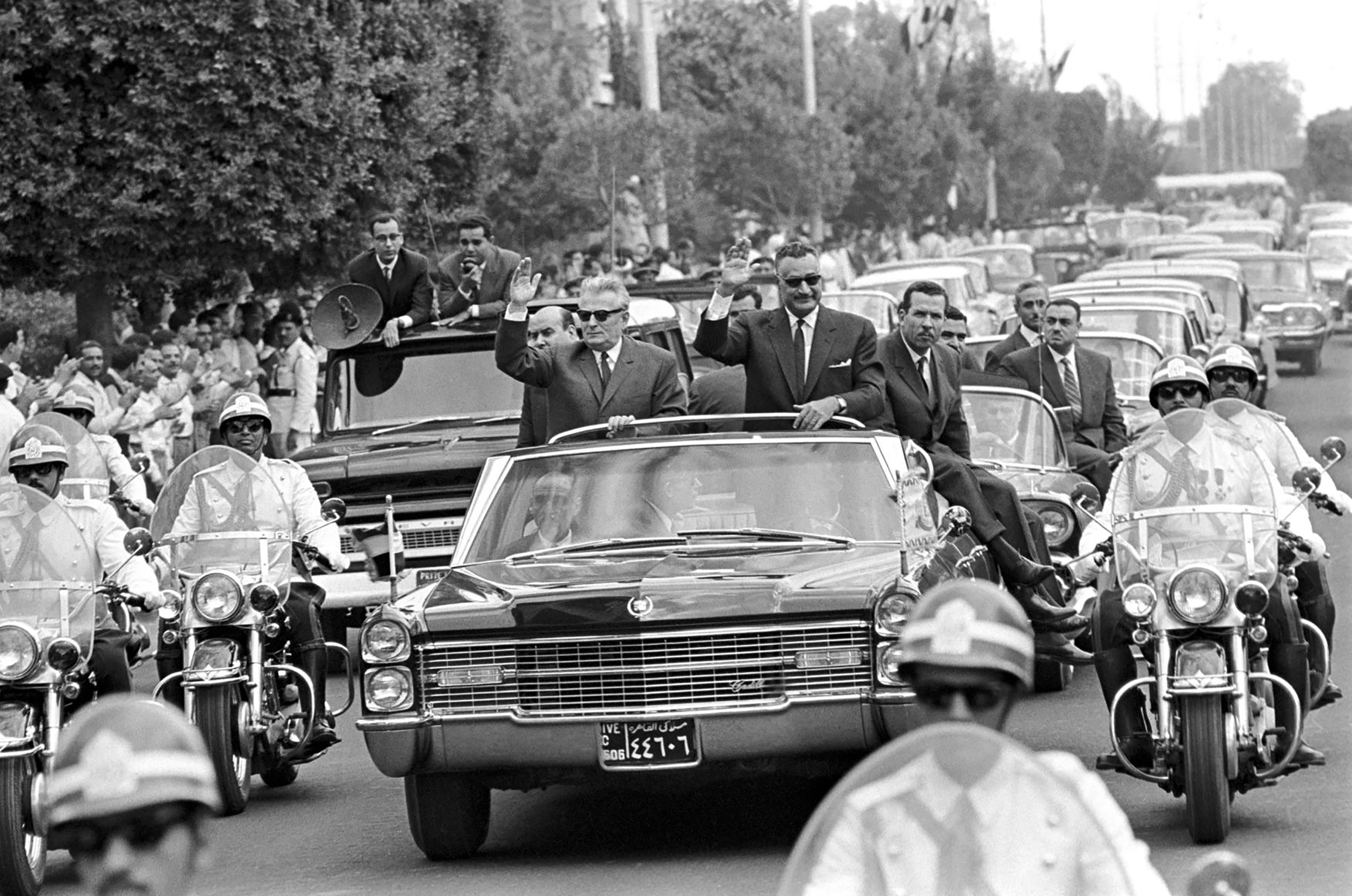
Antonín Novotný during car parade in Cairo with Gamal Abdel Nasser, Egypt 1966. Credit: ČTK/Mevald Karel (https://multimedia.ctk.cz/foto/document/1324888/1664).
Antonín Novotný was personally accompanied on his way overseas by two leading representatives of the Czechoslovak State Security Forces, the Chief of the VIII Department of the State Security, Colonel Josef Čech, and the head of a department within the Czechoslovak foreign intelligence, Captain Karel Zelenka. 46 In order to maintain the greatest possible level of security measures, President Novotný stayed in the (probably wiretapped) apartment of a Czechoslovak delegate to the United Nations. Next to the president's room there were his personal butler and Colonel Čech. To maintain a seamless communication with Prague, an experienced Czechoslovak coder was available, as it was available a skilled driver, who was familiar with the traffic conditions of the American city. 47 Not only were Czechoslovak agents from the New York residency to be available, but reinforcements were called from Washington DC, along with their cars. 48 The available documentation implies that no incident occurred, while the visit attracted almost no attention among anti-communist advocates. 49 Apparently, the biggest problem, as reported by Novotný in his unofficial memoirs, was caused by unprecedented all-day attention by local journalists and paparazzi.
They were everywhere where we came and they were so intrusive that once, I had to vigorously defend myself. And do you know what one responded to me? “But, Mr. President, surely you didn't come to America to get me fired?!” 50
Media coverage was also one of the important parts of the preparation and realisation of visits abroad, but at this point in history, it rose to a completely new level – towards a systematic and sophisticated building of the desired image of socialist Czechoslovakia. A systematic medialisation and visualisation was, step by step, incorporated into travel. Novotný was accompanied on his trips abroad by representatives of the Czechoslovak press, state radio, television, film, as well as by the Czechoslovak Press Office, who documented the trip. After the end of each trip, the media reach and feedback were evaluated by Czechoslovak diplomats; the foreign press were carefully analysed as a very important part of the official travel reports.
Unlike Khrushchev, Antonín Novotný was no great tourist or lover of the pleasures of travelling abroad. Throughout his political career, it is claimed he permanently disliked public appearances, especially those in front of the media, mainly because of his self-perceived lack of education, his limited language skills (both in his mother tongue and with regard to his knowledge of foreign languages), and lacked personal self-esteem. It could be said he suffered from stage-fright. 51 Despite his limitations, he was able to handle the challenging role of the first citizen and president of the state with decorum, including improvised performances during some press conferences.
Without doubts, the most successful media campaign was carried out during Novotný's official visit to Canada in 1967. Novotný's achieved a great visibility, accompanied by the popular Czechoslovak exhibition in Montreal. 52 Czechoslovakia was able to continue this media-promotional success on a global level in the following years, especially in the creation of very ambitious incoming tourism strategies, realised during late 1960s and in 1970s. Paradoxically, thanks to the increased level of visibility of the unknown country in the middle of Europe (using the words of Neville Chamberlain at the 1938 Munich Conference), this fact most probably contributed to the increased interest of the international public in Czechoslovakia during the events of the Prague Spring and the subsequent occupation of Czechoslovakia by the Warsaw Pact armies in August 1968. 53
Conclusion: Antonín Novotný as a world-traveller?
Without the support of Khrushchev, Novotný was weaker not only in the soviet bloc but also in Czechoslovakia. Curiously enough, Novotný's descent and final departure were triggered also by one of his trips: in August 1967, Novotný was invited to the North Slovak town of Martin, the symbolic cultural centre of the modern Slovak nation. During the visit, as a great support of a unified Czechoslovakia (and thus opponent of the efforts of Slovak to put on an equal foot with the Czechs), he made some very harsh statements about the organisers of the celebration. In addition, instead of laying flowers in a cemetery where important Slovak cultural figures were buried, he ostentatiously visited the local unified agricultural cooperative, refusing to accept the gifts prepared for him. The accumulated split in Czech-Slovak relations also hit the communist party leadership, and it later contributed significantly to Novotný's fall from power at the turn of 1967/1968. He was replaced as the first secretary by a new generation of apparatchiks represented by Alexander Dubček.
Novotný still was the country President, which was seen as a conservative counterpart to the pro-reform Politburo. In this position, thinking of the East–West new wave of dialogue, he stated “that he [Novotný] is not a friend of trips outside the republic and he goes [abroad] only when absolutely necessary…” 54 This statement was made also thinking of his absence from Prague as a weaken element of his already rather unstable position at the top of the hierarchy of power, although he was forced to resign anyway in March 1968. Like Khrushchev in the USSR 4 years earlier, he became a political pensioner who lived his life in seclusion.
Moving back to Simone Derix's ideas, as characterising the visits to the Federal Republic of Germany and specifically to West Berlin, the presence of the iron curtain made any political trips resonating on both sides. Those official visits and their overt or hidden meaning were very intensively commented by both East and West European leaders, in many cases in a mirror concept. 55 Promoting, in the future a parallel investigation of the trips of the Eastern communist elites, compared to those of their Western counter parts could thus be key to gaining a more balanced interpretation of the overall situation and primarily to understanding the specific impacts, including the transport/mobility perspectives.
Footnotes
Declaration of conflicting interests
The author declared no potential conflicts of interest with respect to the research, authorship, and/or publication of this article.
Funding
The author disclosed receipt of the following financial support for the research, authorship, and/or publication of this article: This work was supported by the grant project of the Czech Science Foundation [grant number GA19-09594S] called ‘Business trips abroad from Czechoslovakia in the years 1945–1989’, conducted at the Institute of Contemporary History of the Czech Academy of Sciences.
