






Abstract
Suicide by inhalation of carbon monoxide is not uncommon and usually involves car exhausts or burning charcoal or defective boilers. We report a case of a 25-year-old man, who committed suicide by inhaling carbon monoxide gas inside a polythene bag in a bathroom. The open carbon monoxide cylinder found inside the polythene bag was purchased online by the deceased a few days earlier. He had stated that the gas would be used for his experiment on the environment. A suicide note recovered from his trouser pocket revealed his intention for a painless death.
Introduction
Worldwide, carbon monoxide (CO) poisoning is a frequent cause of accidental death, but it is also a common method of suicide. 1 The sources of CO for suicide are mainly burning coal briquettes or barbecue charcoal.2,3 Other less common sources of CO for suicide are from a gas-powered generator, the exhaust fumes of cars, gas geysers, combining formic acid and sulphuric acid within a confined space, etc.4–7
Asphyxia by placing a plastic bag over the head and neck region is a less common method of suicide.8–10 A few cases involving the additional use of inert gases like propane and helium inside the plastic bag are reported in the scientific literature.11–13 However, the use of CO by means of a cylinder placed inside a polythene bag to commit suicide is rarely reported. In this case, a 25-year-old man meticulously planned and committed suicide by asphyxiating himself using CO inside a polythene bag.
Case report
Case history
A 25-year-old man was found dead inside a transparent polyethylene bag in the right lateral position in the bathroom of his rented apartment (Figure 1). The polythene bag was tied and secured with the fittings of the bathroom. An empty, red-coloured CO cylinder was found inside the polyethylene bag (Figure 2). The room was locked from the inside. A suicide note was recovered from his trouser pocket. The note mentioned his hopelessness for life and the intention of a painless death. The victim was a graduate in web designing but had been out of work for the past few months. Investigation revealed that, 10 days before the incident, the victim had ordered a CO cylinder by mail with the stated reason of using it for his research project on the environment. He received the CO cylinder five days before the incident.
Head and neck of the victim inside the polyethylene bag. Carbon monoxide cylinder inside the polythene bag.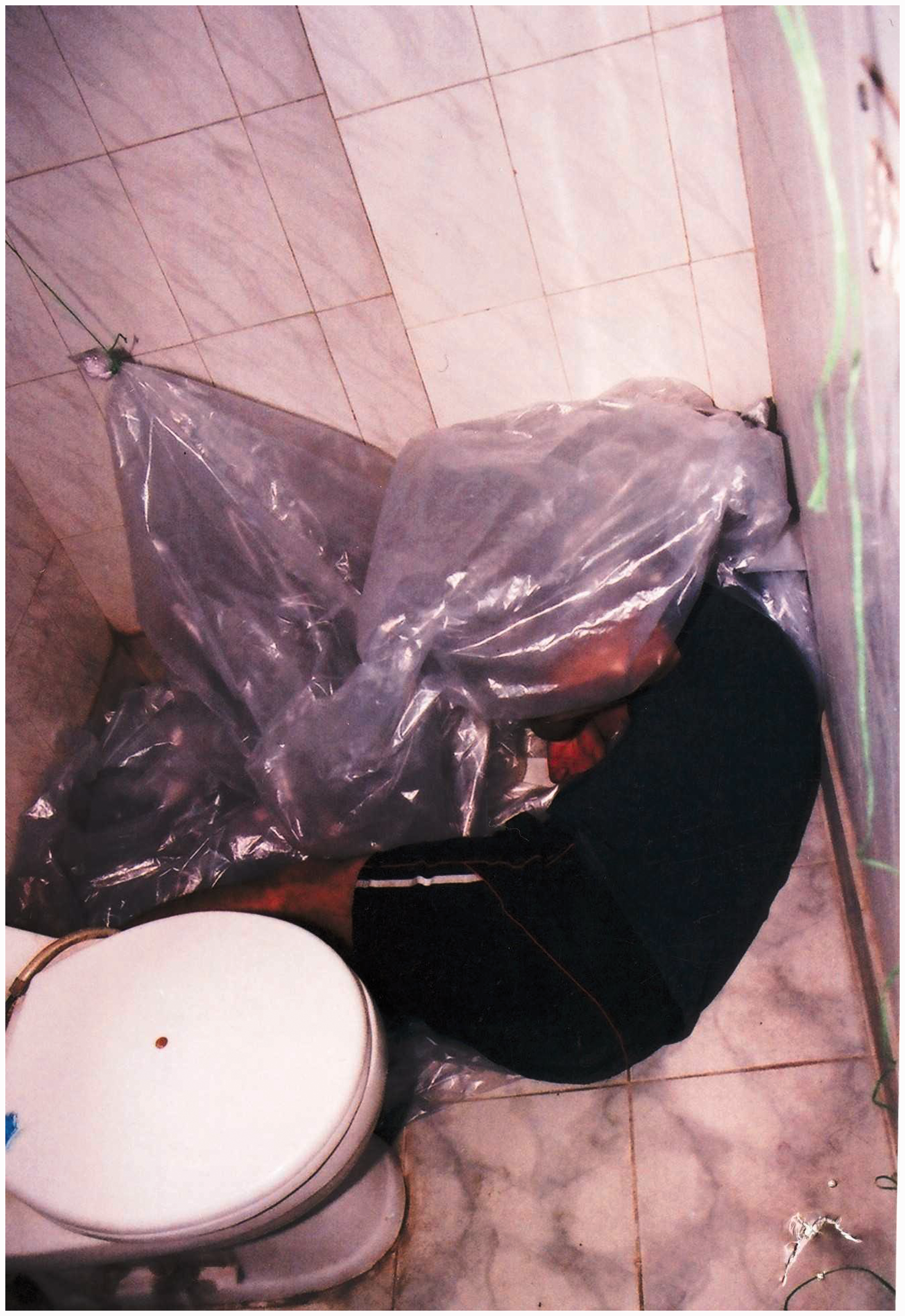
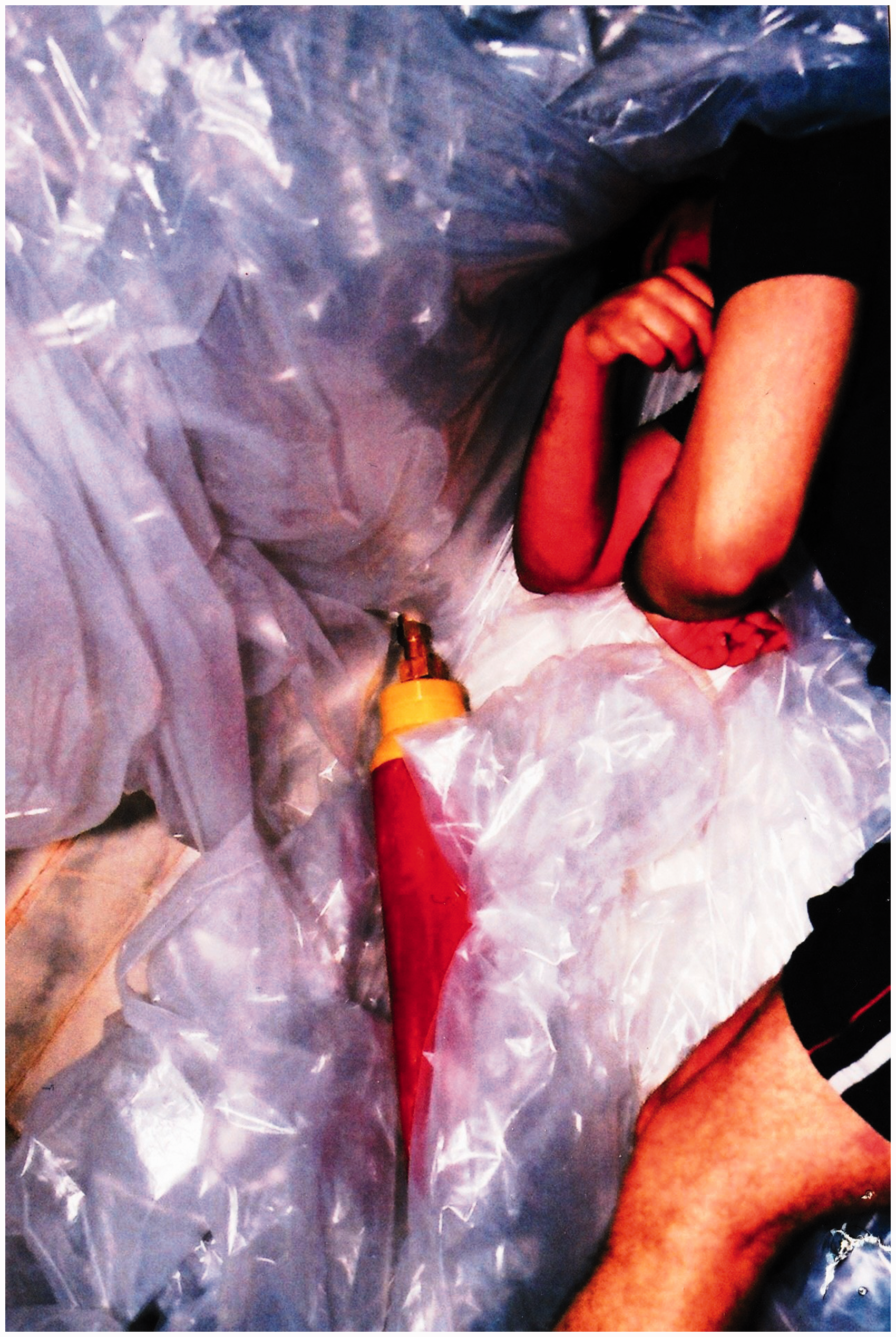
Autopsy findings
The body was that of a 25-year-old man of average build. The face and eyes were congested. Subconjunctival haemorrhages were present in both eyes. Multiple bright cherry red coloured petechiae were present diffusely over the abdomen, the back and the posterior surface of the thighs. Nasal and oral mucosae were of bright cherry red. Internally, all solid organs were congested and were of cherry red. Frothy oedematous fluid was present in the respiratory tract as far as the terminal bronchioles. The pleural cavities had about 200 ml of transudation. The lungs were oedematous.
Histopathology of the brain showed red neurons, suggestive of hypoxia. There was oedema and haemorrhage on pulmonary microscopy. The liver showed dilated sinusoids with focal macrovesicular steatosis. The spleen showed congestion of the white pulp. Microscopy of the kidneys was within normal limit. Hoppe-Seyler’s qualitative test for carboxyhaemoglobin was positive. Cause of death was asphyxia as a result of CO poisoning.
Discussion
CO is a colourless, odourless and non-irritant gas that binds with haemoglobin with a greater affinity (more than 200 times) than oxygen. Death due to CO inhalation depends on the concentration of CO in the inhaled air, period of exposure and percentage saturation of haemoglobin. CO in the inhaled air will progressively replace the oxygen in the blood leading to cerebral anoxia and death. Production of high concentration of CO within a confined space can result in immediate death as seen in our case. The victim made an airtight chamber with the help of a polyethylene bag inside the bathroom and placed an opened CO cylinder inside it. The high concentration of CO was achieved within a short period due to the small volume of the airtight chamber.
Wehr and Schafer 14 reported a case in which a 35-year-old student committed suicide by enclosing himself in a plastic bag together with four plastic bags of minor capacities. But, in contrast to our case, the victim used sulphuric acid and formic acid inside a plastic bag to produce CO inside the closed space.
In our case, the victim mentioned in the suicide note that he wanted a painless death. On investigation, it was found that he had accessed the internet before choosing this method of painless death. Nowadays, the role of the internet in committing suicide is on the rise, especially in choosing the method of suicide. Power and Power 15 reported a similar case in which the victim used the internet to search for a painless method of committing suicide and finally settled on CO inhalation. She planned and executed the event in a very meticulous way by using a conventional method, i.e. burning coal for the production of CO. 15 Laberke et al. 16 reported a unique case in which joint suicide was planned and committed using CO. The initial contact between both the victims was established through the internet. In this case, the internet played an important role in the selection of the suicidal method.
Footnotes
Declaration of conflicting interests
The author(s) declared no potential conflicts of interest with respect to the research, authorship, and/or publication of this article.
Funding
The author(s) received no financial support for the research, authorship, and/or publication of this article.