






Abstract
The most common volatile substances used in suicide are liquefied petroleum gas mixtures, which consist of propane and butane gases mixed in different proportions. These substances are odourless and colourless. Some substances, such as ethanethiol, are added to liquefied petroleum gas mixtures to provide a garlic scent. The main causes of death in acute liquefied petroleum gas inhalation are cardiac arrest and asphyxia, but determining the manner of death is difficult. We present a case of a 30-year-old man found dead at home. On his head was a black plastic bag with a hole through which he had run a gas hose connected to a domestic liquefied petroleum gas cylinder tank. Toxicological analysis revealed butane and ethanethiol in his body. This study aims at understanding the lethal role of ethanethiol through the analysis of its chemical action and its influence on decomposition.
Introduction
The inhalation of volatile substances is a rare method of suicide, despite being a common method of substance abuse worldwide (volatile substance abuse). Adult prisoners are the most likely group to use volatile substances to commit suicide,1,2 while adolescents are most likely to use them as an intoxicant due to their easy availability and low cost, and they are an important cause of mortality and morbidity among young people. 3 The most common volatile substances that can be abused are aliphatic (butane, propane), aromatic (glues, lacquers, solvents) and halogenated hydrocarbons (spray paint, propellants). The main methods of intake include direct inhalation from the container (‘sniffing’), inhaling through the nose or mouth (‘huffing’), or inhaling from a plastic bag filled with the volatile substance. 4 About 22% of people using these inhalants die during their first attempt; propane, butane, or propane-butane mixtures have the highest mortality rates. Liquefied petroleum gas (LPG) is included among these concoctions and consists of a mixture of gases (butane and propane) used in heating, cooking and lighting. LPG is in a gaseous state at room temperature, but it can easily be compressed in a liquid form (cylinder tanks, cigarette lighter fuel, etc.). 5 Cylinder tanks are the most common gas containers used to commit suicide. 6 LPG has a greater density than the ambient air when in a gaseous state, making it impossible for the gas to dissipate in the surrounding normal air, so the spread of gas is limited to the area surrounding the leak. Furthermore, LPG (CH3 CH2 CH3 + CH3 CH2 CH2 CH3) is colourless and odourless, so substances with organoleptic properties, such as ethanethiol, are commonly added to LPG mixtures. Ethanethiol (CH3 CH2 SH) is a gas with harmful properties and a bad smell (alliaceous), and can cause toxic effects on the central nervous system including fatal respiratory depression. The main causes of death due to acute LPG inhalation are cardiac arrest (sudden sniffing death syndrome), asphyxia and respiratory depression, while the main causes of death due to chronic LPG inhalation are cardiomyopathy, myocardial infarction, central nervous system toxicity and haematological abnormalities.1,3,5–11 The post-mortem analysis of the effect of these gases on biological fluids and tissues is performed by gas chromatography (GC-MS, (HS)-GC-MS).6,9,12
Case report
Here, we report the case of a 30-year-old man of Belarusian origin found dead in his house (room temperature: 26°C). The body was in the kitchen, in a supine position with a black plastic bag wrapped around the head with a gas hose that passed through a hole in it, which had been connected to a domestic LPG cylinder tank. No indication of forced entry or struggle was found during forensic inspection.
Materials and methods
The case report described here is based on the analysis of the crime scene, the circumstantial evidence collected during the forensic inspection and the autopsy. A toxicology analysis was carried out on the victim's biological fluids checking for the presence of noxious substances. The vitreous body and blood screening was carried out with an ILAB 600 device, after being de-proteinised with trichloracetic acid and was analysed using an immunoenzymatic method. Positivity was confirmed by an analysis carried out using an HP 7890 A gas chromatograph equipped with an HP5975C XL inert mass spectrometer (Agilent Technologies, Boblingen, Germany). A forensic autopsy was also carried out. The histological analysis was performed according to a standard protocol requiring tissue fixation with 10% formaldehyde, subsequent inclusion in paraffin and haematoxylin/eosin staining.13,14
Results
The victim suffered from borderline personality disorder, for which he had been recently hospitalised, and had a history of drug addiction. Applying the psychological autopsy method, it emerged from the witness statement data that his sister had previously committed suicide. 15 The initial examination of the body showed no sign of a struggle, indicating possible death by suicide. Putrefaction (Figures 1 to 4) was advanced, especially evident on the face, with areas of discolouration and ‘marbling’. Maggots were discovered in the nasal cavities and the abdomen was bloated due to bacterial putrefactive activity. Inspection of the oral cavity showed mucosal hyperaemia, and the lung parenchyma appeared oedematous and congested with diffuse anthracosis. Small sub-epicardial petechiae were found during the examination of the heart. However, the examination of other organs, especially the brain, was limited due to the advanced state of decomposition. The toxicological analysis of the biological fluids revealed the presence of alcohol, amphetamine, butane and ethanethiol, while the histopathological analysis showed diffuse putrefactive decay of the analysed tissues. Collectively, the data allowed the investigators to state that the death was a suicide caused by acute cardio-respiratory failure due to acute volatile substances intoxication after intentional LPG inhalation by a man under the influence of alcohol and amphetamine who was a drug addict. The estimated time of death was at least two days before the body was found. Circumstantial data and autopsy enabled clarification of the exact manner of death, although the early decomposition of the body initially caused the medical examiner and investigators uncertainty.

Decomposition of the corpse.

Decomposition of the brain.

Green discolouration of the skin.

Results of bacterial putrefactive activity.
Discussion
Putrefaction is a post-mortem process driven by bacteria, which are mainly from the anaerobic intestinal microbial flora, such as Clostridium perfringens, and can be divided into different stages. Description of the stage of body putrefaction is important when determining the post-mortem interval (PMI). Thus, we hypothesise that the ethanethiol (Figure 5) may have a role in accelerating the normal timing of the stages of putrefaction which was driven by the SH group present in the chemical structure of ethanethiol; it could act with an analogous mechanism to H2S, which is a product of putrefactive bacterial metabolism. We believe that possible ante-mortem acute intoxication by ethanethiol could be an important factor affecting the determination of the correct PMI in these kinds of deaths. Moreover, we believe that ethanethiol could act with a similar mechanism to H2S in the acute intoxication of living subjects due to the presence of an SH group in its chemical structure.
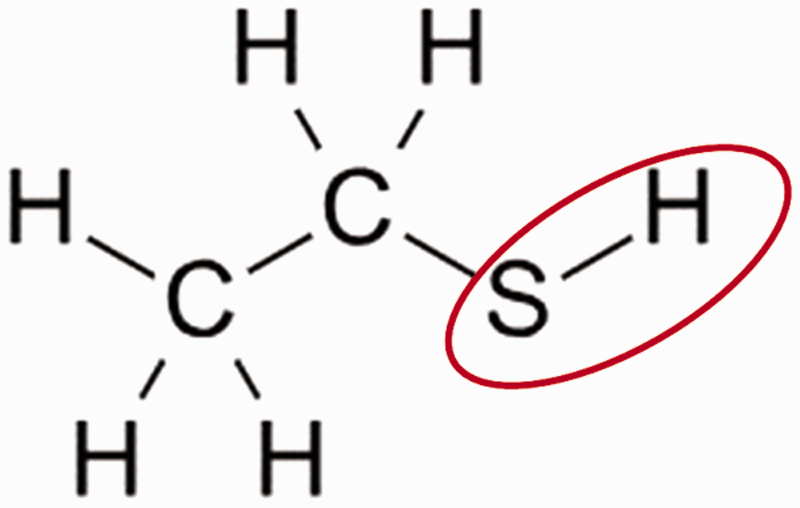
Chemical structure of ethanethiol.
Determination of the correct PMI, especially in cases of unnatural or suspicious deaths, is important for law and forensic medicine. The main post-mortem changes that are examined to determine the PMI are livor mortis, rigor mortis, algor mortis, insect activity and the degree of decomposition. All of these can be influenced by factors such as the victim's antemortem general health, body weight and level of physical activity, the cause of the death, the temperature and humidity of the environment and animal and insect activity. The PMI can be specified in hours during the early period, in days and weeks for the late period, and in months and years for very late periods. During the early post-mortem period, the determination of PMI usually relies on post-mortem changes such as livor mortis, rigor mortis, algor mortis, potassium concentration in the vitreous humor, quantitative and morphologic changes in the cells of blood and bone marrow and chemical changes in blood and body fluids. In the later post-mortem period, forensic entomology and botanic sciences are also used to determine the PMI. In the very late post-mortem period, ranging from months to years, the PMI changes are significantly influenced by environmental factors where the body was found. In these cases, evaluation of the scene markers becomes more important. There is currently no single method that can determine the time of death accurately in putrefied bodies, and the determination of PMI in such cases involves the collaboration of specialists in forensic medicine, forensic anthropology and forensic odontology. 16
The putrefaction process is predominantly influenced by environmental factors, and mainly by the ambient temperature. Secondary factors include the presence of underlying disease and body size. Advanced stages of putrefaction may be seen within a few hours of death, although signs of putrefaction may not appear for weeks in moderate or cold climates. Even in relatively constant ambient temperatures, the progression of putrefaction varies considerably. 17 The first sign of putrefaction is usually a green discolouration in the right iliac region, corresponding to the location of the cecum, which normally contains a major concentration of putrefactive microorganisms such as C. perfigens. This green discolouration begins to develop on average between 18 and 36 h after death and is due to the presence of H2S, which is a product of putrefactive bacterial metabolism. The H2S spreads through vessels and tissues and binds to the haemoglobin released from the lysis of red blood cells. The H2S–haemoglobin binding process produces putrefaction pigments, including sulfhaemoglobin (Figure 6) amongst others. The green discolouration first spreads from the right iliac region to the rest of the anterior abdominal wall, and then spreads to the back, the head and finally to the extremities. The bodies of victims of LPG or ethanethiol intoxication are not described as showing the early onset of advanced putrefaction in the published medical literature. However, the bodies of victims in some cases of death by acute H2S intoxication are described as showing a diffuse green discolouration of the skin and internal organs in the published literature.18,19 This is due to the early formation of sulfhaemoglobin and other pigments similar to the products of putrefactive bacterial metabolism. However, other signs of advanced putrefaction are not present in these cases probably due to the short interval between the times of death and autopsies. In our case, the role of ethanethiol was extremely important, not only by accelerating putrefaction but especially by producing the intense green discolouration in the victim’s body. We therefore hypothesised that there is a correlation between the toxicological effects of ethanethiol and its ability to bind to haemoglobin, and acute intoxication is caused by the formation of bonds between the toxic agent (poison) and haemoglobin. In particular, the effects of carbon monoxide (CO) are known to be due to its greater affinity for haemoglobin than oxygen, producing carboxyhaemoglobin; therefore, we hypothesise that sulfhaemoglobin production can interfere with the normal oxygen affinity of haemoglobin, causing systemic toxic effects due to hypoxia. Furthermore, the two major toxic effects of H2S, which we believe are similar to the effects of ethanethiol, consist of local irritant effects, such as bronchitis, pulmonary oedema and congestion, as well as direct neurotoxic effects, which can lead to respiratory paralysis, asphyxia and acute cardiac failure. These effects are especially notable after the inhalation of H2S at concentrations above 700 ppm; even higher concentration levels (above 1000 ppm) lead to immediate unconsciousness and cardiopulmonary arrest (‘knockdown’).
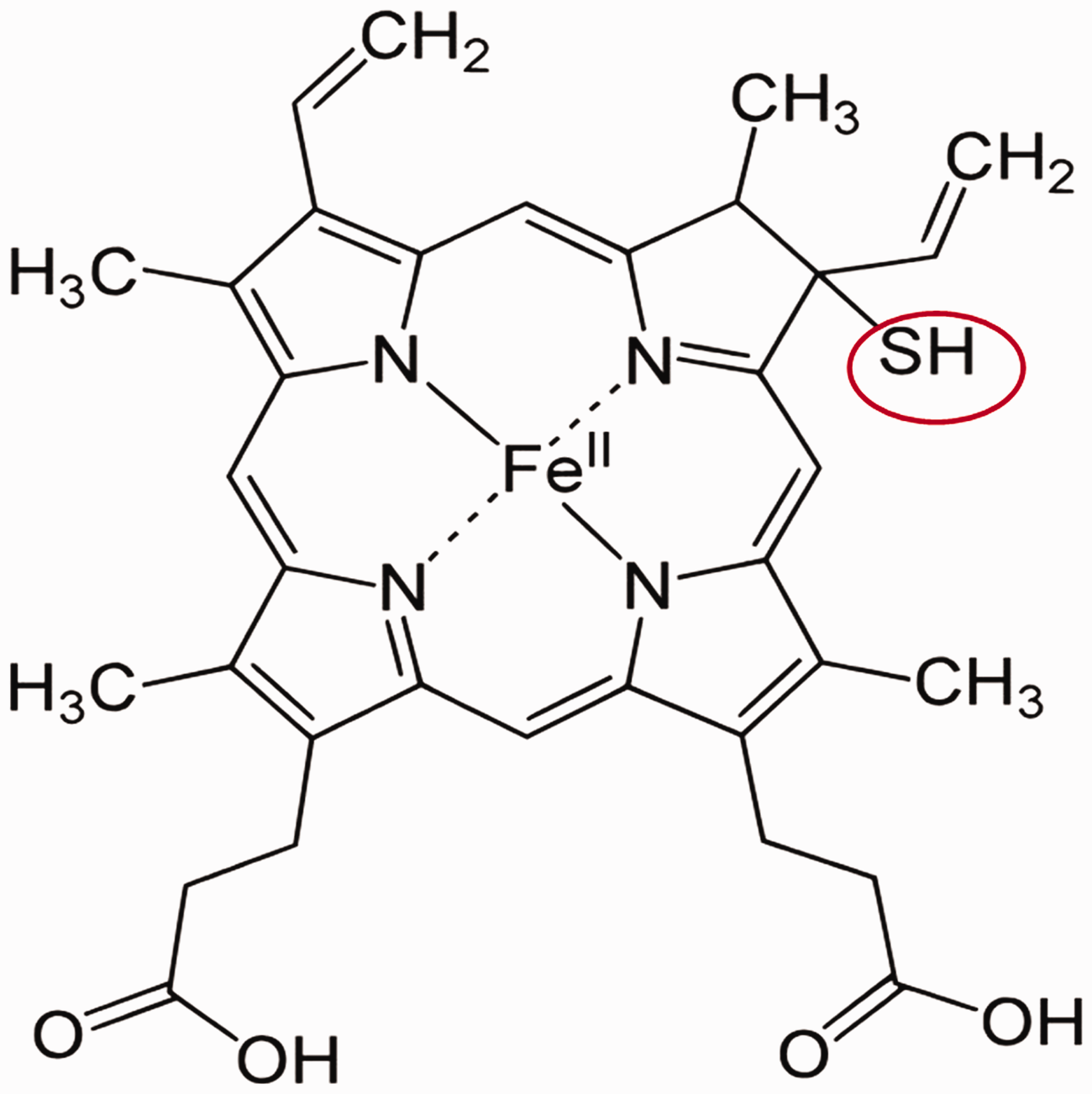
Chemical structure of sulfhaemoglobin.
Death by H2S intoxication is therefore caused by a direct pulmonary effect and a neurotoxic effect on the cerebral respiratory centre, both of which lead to acute respiratory failure, respiratory acidosis and then to cardiac arrest.18–21 Moreover, there is evidence that H2S may cause a shift to anaerobic cellular metabolism which can be explained by the H2S inhibiting the action of cytochrome c oxidase, which paralyses the electron transport system. In addition to the hypoxia caused by H2S binding to haemoglobin, the inhibition of cytochrome c oxidase causes a cellular switch to anaerobic metabolism and the accumulation of lactate.20,21 Since ethanethiol could cause similar effects to H2S, it is possible that acute LPG intoxication could be treated in the same way as acute H2S intoxication, in addition to specific treatment for propane and butane poisoning. In particular, there is evidence that hyperbaric oxygen and nitrites could be a useful treatment in cases of H2S intoxication, using a similar rationale to the treatment of cyanide poisoning. Nitrites efficiently induce the conversion of haemoglobin into methaemoglobin, which has a greater affinity for H2S than cytochrome c oxidase. Methaemoglobin then reacts with H2S to form sulfmethaemoglobin, freeing cytochrome c oxidase and allowing aerobic metabolism to resume.20–22
Conclusions
In conclusion, forensics should note that ethanethiol may alter the timing of the different stages of putrefaction when attempting to determine the correct PMI, when death resulted from acute LPG or ethanethiol inhalation. From a clinical point of view, ethanethiol could also produce a similar effect to H2S in cases of acute intoxication, due to the presence of an SH group in its molecular structure. Our analysis of the physiopathology of ethanethiol intoxication demonstrates that systemic toxicity induced by ethanethiol can cause clinical deterioration due to respiratory and metabolic acidosis. From a pharmacological point of view, acute intoxication by ethanethiol or LPG could potentially be treated by administering methaemoglobin inducing agents, such as nitrites, similar to the treatment of cyanide poisoning.
Footnotes
Declaration of conflicting interests
The author(s) declared no potential conflicts of interest with respect to the research, authorship, and/or publication of this article.
Funding
The author(s) received no financial support for the research, authorship, and/or publication of this article.