







Abstract
The objective of this study was to translate and psychometrically evaluate a Spanish version of the Grief Impairment Scale (GIS) using a sample of bereaved adults from El Salvador (N = 579). The results confirm the unidimensional structure of the GIS, and solid reliability, item characteristics, and criterion-related validity, where the GIS scale significantly and positively predicts depression. However, this instrument only showed evidence of configural and metric invariance between different sex groups. Overall, these results support the Spanish version of the GIS as a psychometrically sound screening tool for health professionals and researchers to use in their clinical work.
Introduction
The loss of a loved one is known to be one of the most emotionally challenging events in life. Although most people are fairly resilient during bereavement (Galatzer-Levy & Bonanno, 2012) some individuals experience a disabling course of grief that impairs their ability to perform daily activities (Caycho-Rodríguez et al., 2021a; Nielsen et al., 2020; Nordström et al., 2022; Üstün & Kennedy, 2009). Functional impairment is not only considered a central diagnostic criterion for mental disorders (Breen et al., 2021), it often more important in defining psychopathology and determining referrals to psychiatric services than psychiatric symptoms alone (McFarlane, 1988). The World Health Organization and the 11th revision of the International Classification of Diseases conceptualize functional impairment as an impairment of functioning that is expressed in personal, family, social, educational or other important areas of living (Üstün & Kennedy, 2009). Previous research has shown that complicated grief symptoms are strongly associated with impairments in daily functioning (Kristensen et al., 2015; Maccallum & Bryant, 2020; Nielsen et al., 2020). During the COVID-19 pandemic it was reported that, bereaved persons, whether from death due to COVID-19 or any other cause, with symptoms of separation distress and/or post-traumatic stress disorder, were at risk for functional impairment (Breen et al., 2021; Gallagher et al., 2020; Lee & Neimeyer, 2022; Neimeyer & Lee, 2022; Padala et al., 2020). Accordingly, the importance of functional impairment has been recently recognized in the diagnostic criteria for prolonged grief disorder, by both the ICD-11 (World Health Organization, 2023) and the DSM-5-TR. Consequently, the assessment of functional impairment is vital to health professionals in both diagnosis and treatment of bereavement-related conditions (Killikelly & Maercker, 2017; Lichtenthal et al., 2018).
Different instruments have been used to measure functional impairment in people who have lost a loved one, such as the Work and Social Adjustment Scale (WSAS; Mundt et al., 2002) and one of the items from the PG13-Revised (PG-13-R; Prigerson et al., 2021). However, these measures have notable limitations in assessing grief-related impairment. For instance, these instruments do not assess important domains of functioning that are known to be impacted by grief, such as the biological (e.g., health problems), the behavioral (e.g., unhealthy coping), and the cognitive (e.g., memory) (Lee & Neimeyer, 2023). Another limitation of these measures is that they operate using response options that have little clinical utility. For example, the response alternatives of the WSAS items only allow a very subjective assessment of perceived severity, where 0 indicates the absence of impairment and eight indicates the presence of very severe impairment; whereas, the PG13-R impairment item only allows determining the presence or absence of impairment based on dichotomous “yes” or “no” options. A more clinically useful response option than these subjective assessments is symptom frequency, which is used for diagnosis and treatment evaluation in both health care and medical research situations (Lee & Neimeyer, 2023).
To address the pressing need for a more robust and clinically useful measure of grief-related, functional impairment, Lee and Neimeyer (2023) developed the Grief Impairment Scale (GIS). The GIS was designed based on the biopsychosocial model of illness (Engel, 1977), where illness affects different levels of human functioning. Specifically, the GIS measures functional impairment in the biological, the psychological, and the social domains of functioning that are known to be affected by bereavement (Lee, & Neimeyer, 2023). Thus, items one and two measure difficulties with cognitive processes and health problems due to bereavement respectively. Item three measures the presence of maladaptive and unhealthy coping activities due to bereavement, such as alcohol consumption, drug use, self-destructive behavior or poor eating habits (Lee & Neimeyer, 2022). Item four measures the inability to fulfill responsibilities at work, school, home or other contexts due to bereavement. Finally, item five measures difficulties in relating to others, which corresponds to problems in social functioning due to bereavement (Harrison et al., 2022). In addition, unlike the WSAS and the PG-13-R impairment item, the GIS has more objective response options based on the frequency of impairment over a 30-day period. Using a sample of 363 American adults who are struggling with a loss through death, Lee and Neimeyer (2022) found strong psychometric support for the GIS in terms of reliability, factorial validity convergent and divergent validity, and diagnostic accuracy. Moreover, the GIS demonstrated measurement invariance across age, gender, and race groups.
Although the original psychometric study of the GIS showed important results, more research is needed to fully substantiate this instrument. For example, the item response pattern based on Item Response Theory (IRT) has not been applied to the GIS. IRT allows the evaluation of two important characteristics of the items of a scale, such as difficulty and discrimination (Reise et al., 2005). Information on the difficulty of the items allows health professionals to design and implement assessments according to the severity of the problematic situation (Hays et al., 2000). Likewise, the discrimination of an item allows to differentiate between individuals with different levels of the construct; therefore, the more different the item is the better it can differentiate between individuals within a given range of latent traits (Hays et al., 2000). IRT also assesses item sensitivity through the item characteristic curve (ICC) where a higher ICC slope would indicate that the item adequately distinguishes between different degrees of the latent trait; thus, it is more sensitive to changes. This kind of analysis would allow the identification of items more likely to reflect changes in the trait (Sijtsma et al., 2008). In general, using the IRT to assess bereavement-related functional impairment has implications for the work of health professionals and researchers. Thus, progress would be made in the evaluation and diagnosis of deterioration, as well as in the measurement of changes in deterioration and the response that can occur. in response to treatment (Alimoradi et al., 2022). Recently, the IRT has been used to assess the characteristics of bereavement-related scale items in different Latin American countries (Caycho-Rodríguez et al., 2021b; Caycho-Rodríguez et al., 2022).
A Spanish translation of the GIS is also missing from the literature. Because a large portion of the world speaks Spanish, it is vital for the GIS to be available in this commonly used language. Therefore, the purpose of this study is to examine the psychometric features of a Spanish version of the GIS using a large sample from El Salvador. This investigation will employ methods using both Classical Test Theory and Item Response Theory.
Method
Participants and Procedure
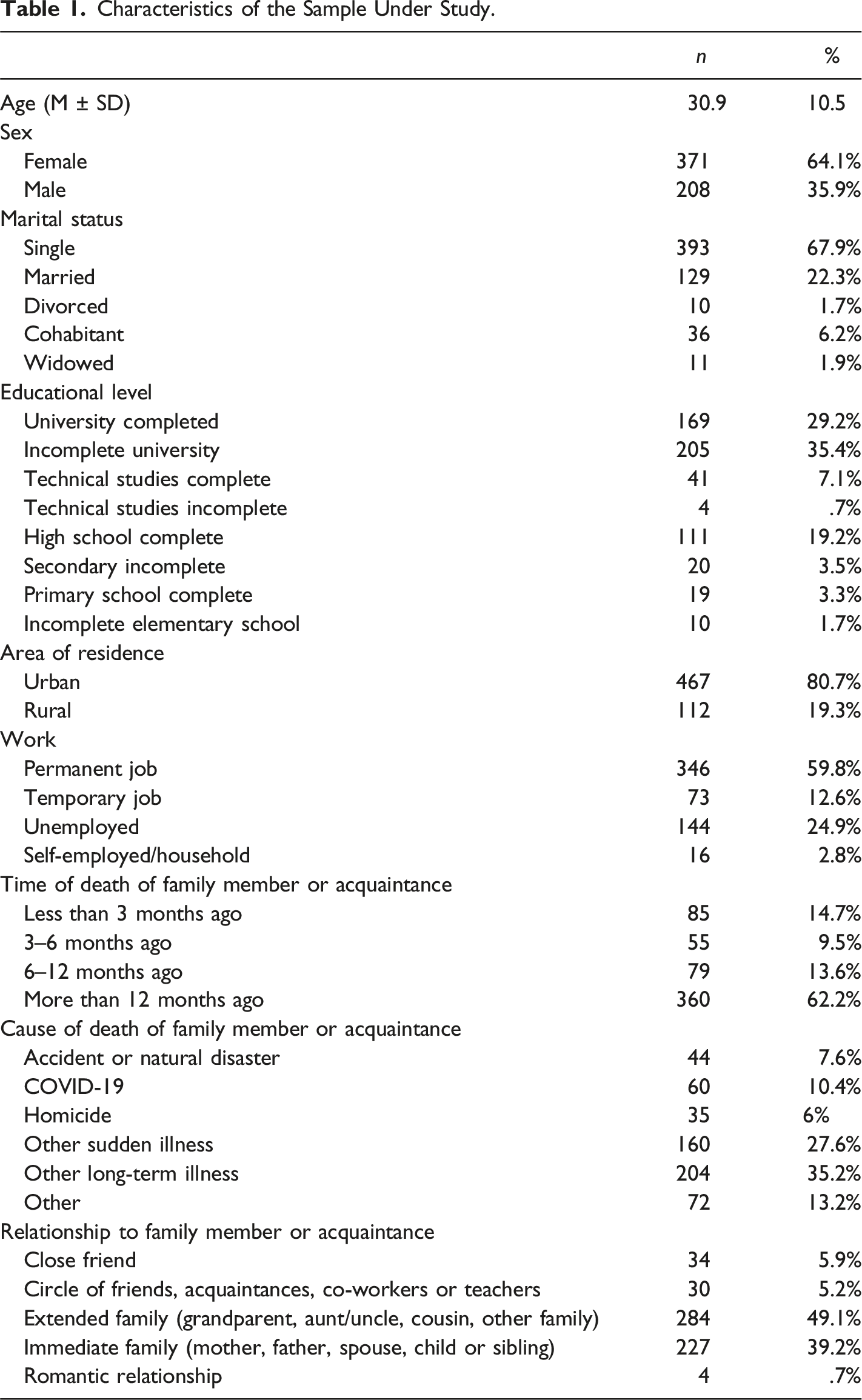
Participants were persons of legal (adult) age from El Salvador. The inclusion criteria were: (1) to be from El Salvador; (2) to be of legal age; (3) to have suffered the death of a loved one; (4) to give informed consent. The study was conducted during the months of October and November 2022. Data were collected through non-probabilistic convenience sampling by means of an online survey, developed on the Google Form platform, which was distributed through different social media platforms, such as Facebook and Instagram. To be part of the study, participants gave informed and voluntary consent. Participation was reported to be anonymous and data confidential. In addition, participants had the right to withdraw from the study at any time.
Characteristics of the Sample Under Study.
Instruments
In this study, the GIS and the Patient Health Questionnaire-2 (PHQ-2) were applied.
Grief Impairment Scale (GIS; Lee & Neimeyer, 2023). The GIS is a unidimensional scale that measures the impact of bereavement on biopsychosocial domains of functioning. The scale is comprised of five items (e.g., “Experienced health problems due to bereavement”) that have five response options ranging from 0 (0 days/never) to 4 (30 days/always). Scores that can be obtained from the GIS range from 0 to 20 where higher scores indicate that people more frequently experience functional impairments due to their bereavement.
The original English version of the GIS was translated into Spanish using the forward and backward translation method (Beaton et al., 2000). Specifically, the direct translation from English to Spanish was performed by a bilingual author of the present study. Subsequently, a professional translator, who was unaware of the original English version, translated the initial Spanish version back into English. When comparing the original English version and the back-translated version, no discrepancies were observed. The research team checked that the Spanish version of the GIS adequately reflected the original English version, with particular attention to words that may have been translated incorrectly. The Spanish version was administered to a small number of participants to evaluate the clarity of the instructions and items. No problems or changes were reported in the Spanish version of the GIS, which can be found in Appendix 1.
Patient Health Questionnaire-2 (PHQ-2; Kroenke et al., 2010). The PHQ-2 measures the severity of depression based on two symptoms: (1) Feeling down, depressed, or hopeless and (2) Little interest or pleasure in doing things. Each of the items has four response options ranging from 0 = not at all to 3 = almost every day. The total score of the PHQ-2 ranges from 0 to 6, where a higher score would indicate greater severity of depressive symptoms. The Spanish version of the PHQ-2 has been used recently in a study on bereavement in a Latin American country (Caycho-Rodríguez et al., 2021a). In the present study, the reliability of the PHQ-2 was very good (α = .83).
Data Analysis
In the study, the Diagonally Weighted Least Squares with Mean and Variance corrected (WLSMV) estimator was used to perform the Confirmatory Factor Analysis (CFA). The RMSEA, SRMR, CFI and TLI indices were used to evaluate model fit. For the RMSEA and SRMR indices, values lower than .08 were considered acceptable (Kline, 2015). For the CFI and TLI indices, values greater than .95 were considered adequate (Schumacker & Lomax, 2015). To assess scale reliability, the omega coefficient was used (McDonald, 1999), where a value ω > .80 is adequate (Raykov & Hancock, 2005).
Regarding Item Response Theory, an extension of the 2-parameter logistic model (2-PLM) for ordered polytomous items was used (Hambleton et al., 2010). To estimate model fit, the C2 test was used (Cai & Monroe, 2014) and the following fit criteria were used: RMSEA ≤ .08 and SRMSR ≤ .05 (Maydeu-Olivares & Joe, 2014). CFI and TLI values were also taken into account using the same fit criterion (≥.95) employed in CFA models, as suggested by the scientific literature (Cai et al., 2021; Lubbe & Schuster, 2019). Regarding item parameters, the discrimination (a) and difficulty (b) index were employed. In addition, five thresholds were estimated for parameter b, since the items have five response categories. The Item Characteristic Curves (ICC) and the Scale Characteristic Curve (SCC) were also calculated.
To evaluate the factorial invariance of the scale according to sex, Multigroup Confirmatory Factor Analysis (MGCFA) was used, where a sequence of four hierarchical variance models was proposed: (1) configural invariance (reference model), (2) metric invariance (equality of factor loadings), (3) scalar invariance (equality of factor loadings and intercept) and (4) strict invariance (equality of factor loadings, intercept and residuals). To compare the sequence of models, a modeling strategy was used, for which the differences in the RMSEA (ΔRMSEA) were used, where differences less than <.015 show the invariance of the model between groups (Chen, 2007). The differences in the CFI (ΔCFI) were also used, where values less than <.010 show the invariance of the model between groups (Chen, 2007). Regarding the validity analysis, which is based on the theoretical assumption that functional impairment predicts depression, an explanatory model was proposed using an SEM model. The WLSMV estimator was used to estimate the model and the same adjustment indicators used in the CFA were taken into account.
For the statistical analysis, the RStudio environment (RStudio Team, 2018) for R (R Core Team, 2019) was used. Specifically, the “lavaan” package (Rosseel, 2012) was used to perform the AFC and SEM model, the “semTools” package was used to perform the factorial invariance (Jorgensen et al., 2018) and the “mirt” package was used for the IRT models (Chalmers, 2012).
Results
Descriptive Analysis
Descriptive Analysis of the GIS Items.
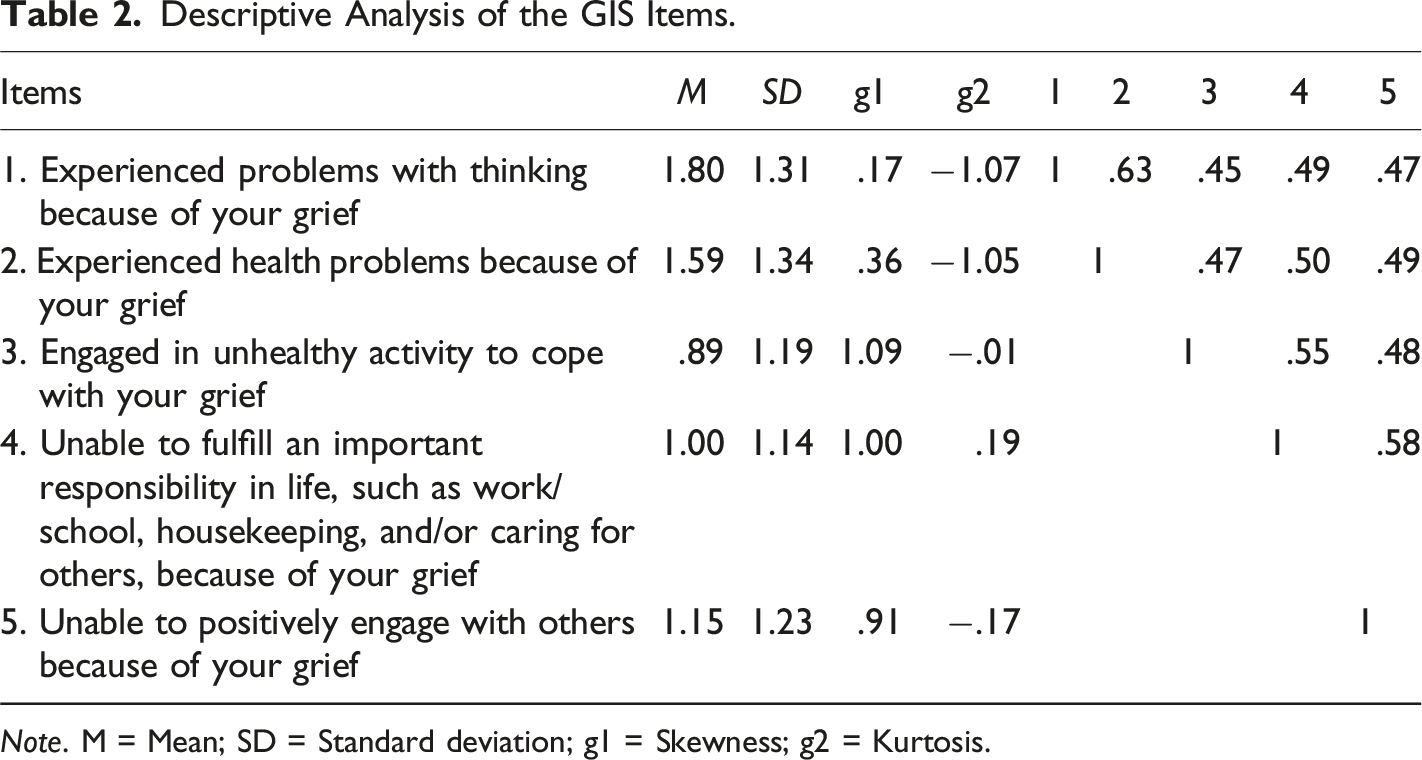
Note. M = Mean; SD = Standard deviation; g1 = Skewness; g2 = Kurtosis.
Validity Based on Internal Structure
The study showed that the unidimensional model of the GIS in Spanish evidenced adequate fit indices (χ2 = 2.89; df = 4; p = .577; CFI = 1.00; TLI = 1.00; RMSEA = .000 [CI90% .000–.054]; SRMR = .009). In addition, it can be seen in Figure 1 that the factorial weight of all items was acceptable. However, further analysis, following the method of Saris et al. (2009) to evaluate the relevance of the modification indexes (MI) in the model and according to the content analysis of the items, resulted in finding a correlation between the errors of items 1 and 2 (.36). Confirmatory Factor Analysis of the scale.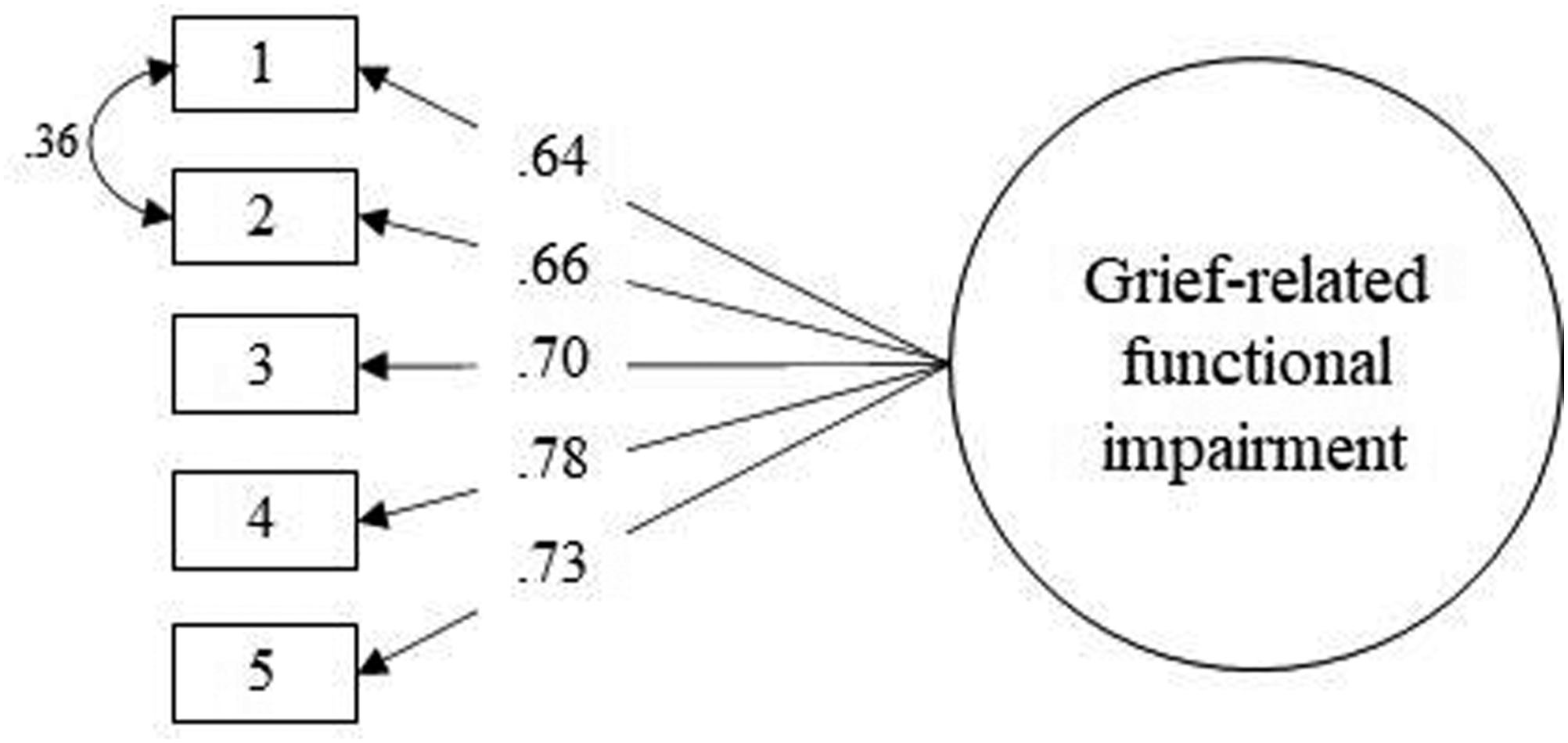
Scale Reliability
In the total study sample, the five-item scale (GIS) presents adequate reliability indices (ω = .80). In terms of gender, the sample of women (ω = .80) and men (ω = .78) yielded comparable reliability indices.
Item Response Theory Model: Graded Response Model (GRM)
Parameters of the GRM Model Items for Each Version of the Scale.
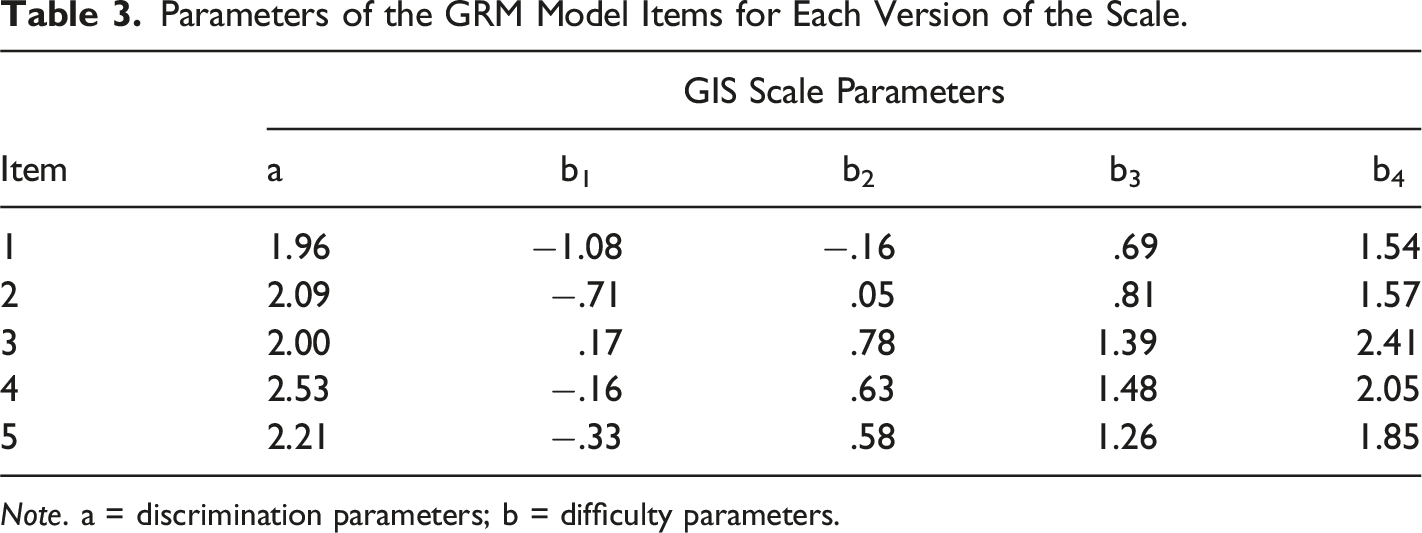
Note. a = discrimination parameters; b = difficulty parameters.
Figure 2 shows the Characteristic Curves for the five items and the scale (ICC and CCT respectively). The CCI shows that item four is the most accurate item of the scale for assessing the latent trait. In addition, the CCT shows that the test is more reliable (accurate) in the range of the scale between −1 and 2.5. Item and test characteristic curves for the GIS.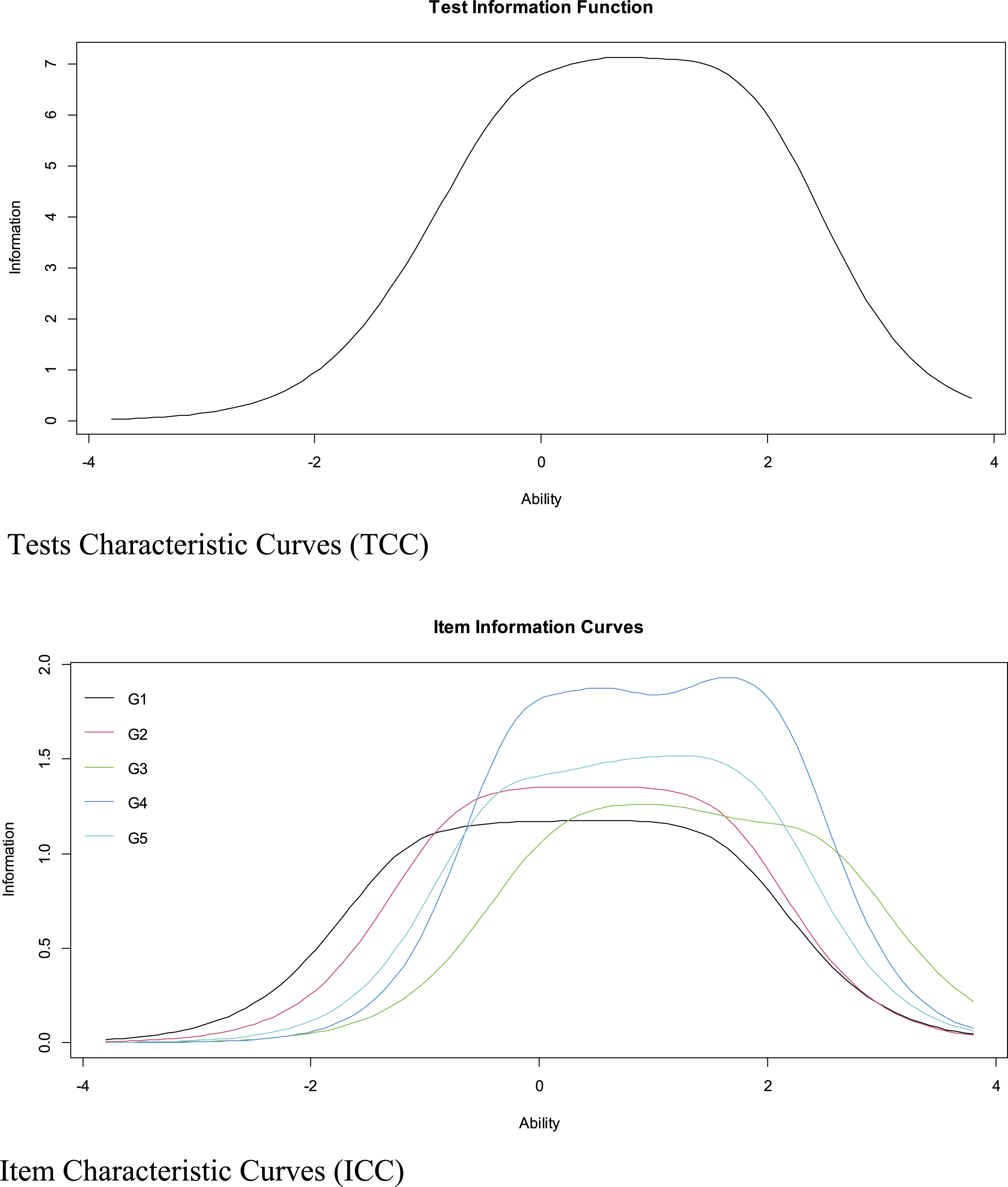
Factorial Invariance
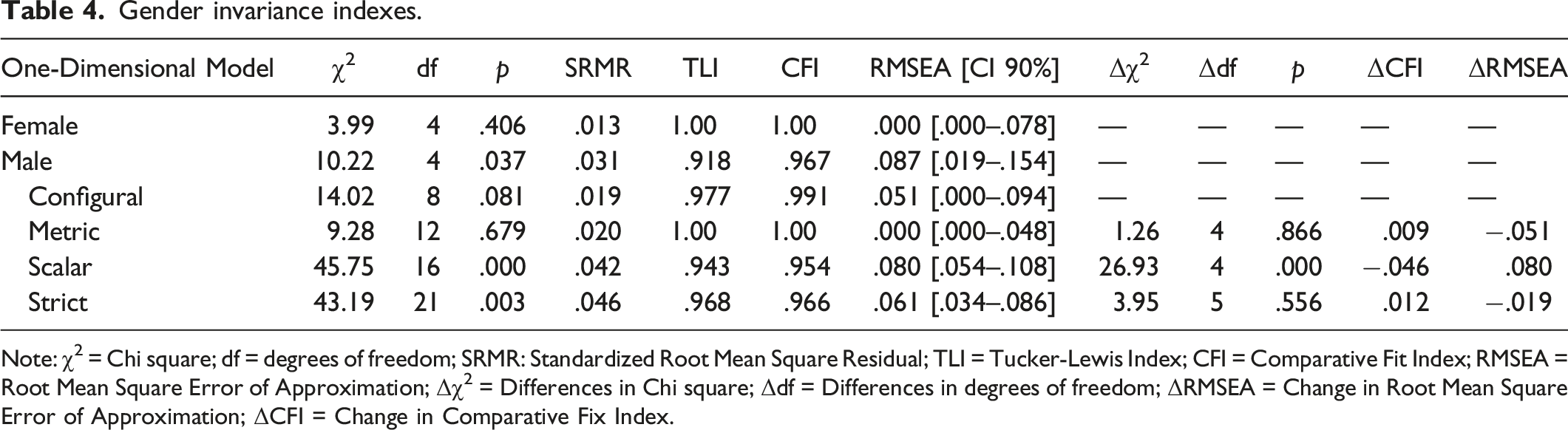
Gender invariance indexes.
Note: χ2 = Chi square; df = degrees of freedom; SRMR: Standardized Root Mean Square Residual; TLI = Tucker-Lewis Index; CFI = Comparative Fit Index; RMSEA = Root Mean Square Error of Approximation; Δχ2 = Differences in Chi square; Δdf = Differences in degrees of freedom; ΔRMSEA = Change in Root Mean Square Error of Approximation; ΔCFI = Change in Comparative Fix Index.
Validity Based on the Relationship With Other Variables
Taking into account the literature review, an SEM model was proposed to evaluate the impact of the GIS scale on depression levels. It was shown that the structural model presents adequate fit indices (χ2 = 15.91; df = 12; p = .196; RMSEA = .024 [CI 90% .000–.052]; CFI = .99; TLI = .99) and the measurement models are adequately represented by their items (see Figure 3). Figure 3 shows that the GIS scale significantly and positively predicts the level of depression (.78; p < .01). GIS scale predictive model.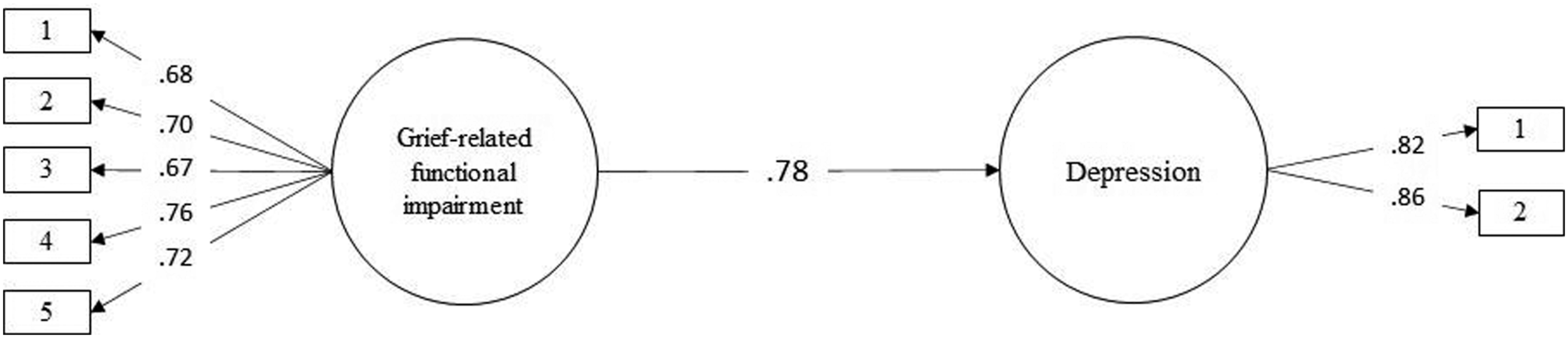
Discussion
The present study aimed to translate the GIS into Spanish and evaluate its psychometric properties using a large group of Salvadoran participants who reported having experienced the death of a loved one. The result of the CFA confirmed the unidimensional structure of the GIS, which was reported in the original psychometric study that was based on data from a North American sample (Lee & Neimeyer, 2023). However, an error covariation between items 1 (“Experienced trouble thinking due to grief”) and 2 (“Experienced health problems due to grief”) was found in this study. The presence of correlated errors would suggest similarity in either item content, task demands, measurement errors, and response styles (Brown, 2006; Yang & Green, 2010). The presence of this finding was considered conceptually acceptable because cognitive difficulties (Eisma et al., 2015) and physical health issues (Stroebe et al., 2007) are closely tied consequences to maladjustment to loss. To control for this issue, we applied the ωcorrected to the reliability assessment of the latent variable and this approach showed that the GIS continued to have very good reliability.
The results based on the IRT provided important information on the GIS items that have not been reported before (Edelen & Reeve, 2007). Specifically, the IRT analysis indicated that the five GIS items had adequate characteristics for assessing functional impairment due to grief. All of the items demonstrated good discrimination values, indicating that they were suitable items for discriminating individuals with high and low levels of functional impairment due to grief. However, item 4 (“Unable to fulfill an important life responsibility, such as work/school, housework, and/or caring for others, due to grief”) was an exceptional item for being the most accurate item for assessing functional impairment due to grief. This finding confirms previous research that shows that complications in grief has an adverse impact on job performance (Toblin et al., 2012), school work (Roberts, 2016), and the ability to perform essential housekeeping work (Breen et al., 2021). Moreover, the values of the difficulty parameters of this item increased monotonically. This would indicate that a greater presence of the latent trait of functional impairment is necessary to answer the higher response categories of the GIS. That is, a person with little functional impairment due to grief will tend to choose the lower response alternatives; whereas, as he/she has greater impairment, he/she will choose a higher response alternative.
The analysis of measurement invariance of the GIS in Spanish demonstrated invariance at the configural and metric levels, which is consistent with the original psychometric study of the GIS (Lee & Neimeyer, 2023). Specifically, the factor structure of the scale (number of factors) was found to be similar between the groups of men and women (configural invariance); while the factor loadings, which were also similar between groups, allows comparisons of correlations and regression weights between groups (metric invariance). However, no evidence of scalar-level invariance was found, which informs whether the residuals are similar between groups and therefore would allow comparison of latent means. In other words, it appears that the factor loadings remained unchanged between the male and female groups, but not the intersections. To overcome this issue we tentatively suggest avoiding cross-gender comparisons when using the Spanish version of the GIS or if necessary, apply partial scalar invariance to the analysis (Whisman & Judd, 2016). This approach assumes that in practice the presence of full measurement invariance is unlikely (Schnettler et al., 2017).
The results of the SEM analysis which examined the relationship between functional impairment and depressive symptoms provided additional validity support for the GIS as grief impairment has been found to be strongly associated with depression (Breen et al., 2021; Lee, & Neimeyer, 2023). Moreover, research has shown that depressive episodes may be the result of functional impairment in many areas of functioning, such as the social and occupational, for example (McKnight & Kashdan, 2009). The finding also has implications for health care professionals who should consider targeting and tracking both depression symptoms and functional impairment when treating patients struggling with their grief (Möller et al., 2003).
The study has limitations that should be considered when interpreting the psychometric results. First, the participants were selected through convenience sampling. Therefore, the findings cannot be generalized to the entire population in El Salvador. In this sense, future research should evaluate the psychometric properties of the GIS in Spanish using probability samples. In addition, these studies should work with samples with diverse cultural and demographic characteristics to completely assess the extent grief has on functional impairment in this population. Second, the study used an online survey. This approach restricted the participation of those without internet access. Last, self-report measures were used to assess functional impairment due to bereavement and depressive symptoms. The use of this type of measures could generate the presence of social desirability bias and recall effects. Despite the limitations, the study confirms the unidimensional structure of the GIS in Spanish, its adequate reliability, evidence of validity and desirable item characteristics. Moreover, this study reported unique findings indicating the effectiveness of a specific biopsychosocial measure for the detection of functional impairment among bereaved Spanish speaking persons.
Supplemental Material
Supplemental Material - A Psychometric Analysis of the Spanish Version of the Grief Impairment Scale: A Screening Tool of Biopsychosocial Grief-Related Functional Impairment in a Salvadoran Sample
Supplemental Material for A Psychometric Analysis of the Spanish Version of the Grief Impairment Scale: A Screening Tool of Biopsychosocial Grief-Related Functional Impairment in a Salvadoran Sample by Tomás Caycho-Rodríguez, Sherman Lee, Lindsey W. Vilca, Marlon Elías Lobos Rivera, Angélica Nohemy Flores-Monterrosa, Jennyfer Carolina Tejada Rodríguez, Edgardo René Chacón-Andrade, Wendy Carolina Marroquín-Carpio, Carlos Carbajal-Le in OMEGA - Journal of Death and Dying.
Footnotes
Author Contributions
All authors have read, reviewed, and approved the final text of the article.
Declaration of Conflicting Interests
The author(s) declared no potential conflicts of interest with respect to the research, authorship, and/or publication of this article.
Funding
The author(s) received no financial support for the research, authorship, and/or publication of this article.

Supplemental Material
Supplemental material for this article is available online.
Author Biographies
References
Supplementary Material
Please find the following supplemental material available below.
For Open Access articles published under a Creative Commons License, all supplemental material carries the same license as the article it is associated with.
For non-Open Access articles published, all supplemental material carries a non-exclusive license, and permission requests for re-use of supplemental material or any part of supplemental material shall be sent directly to the copyright owner as specified in the copyright notice associated with the article.
