






Abstract
Suicidal ambivalence, the co-occurring desire to live and die is widely discussed in clinical practice yet remains understudied in empirical research. This qualitative study explored how young adult suicide attempt survivors understand and experience suicidal ambivalence. Using a phenomenological approach, in-depth semi-structured interviews were conducted with 19 young adult suicide attempt survivors between the ages of 18 and 29. Data were analyzed using thematic analysis. Five themes emerged across two areas. First, participants described suicidal ambivalence as a (1) internal conflict (2) a dynamic process, and (3) a source of comfort. Second, their experiences were characterized by (4) conflicting desires between life and death and (5) feelings of numbness. Suicidal ambivalence was seen as a dynamic psychological process that holds the tension between life and death. Future research should investigate how suicidal ambivalence can serve as a protective factor to serve as a potential entry point for crisis intervention.
Keywords
Introduction
Suicide is often described as having risk and protective factors that increase or decrease the likelihood of suicidal behavior. However, suicide is a complex phenomenon characterized by a desire to both live and die. Suicidal ambivalence, the co-occurring desire to live and die (Kovacs & Beck, 1977), is widely recognized in clinical settings but has received less attention in empirical research (Pompili, 2024). While ambivalence generally involves mixed feelings toward someone or something, suicidal ambivalence specifically refers to conflicting emotions about life and death (Page & Stritzke, 2020). Understanding suicidal ambivalence creates space for a nuanced conceptualization of suicide, a dynamic phenomenon characterized by fluctuation in the wish to live and die.
Shneidman (1964) and Stengel (1964) were among the earliest scholars to introduce suicidal ambivalence. Suicidal ambivalence was initially defined as “internal debates between life and death” (Shneidman, 1964, p. 98) or the coexistence of conflicting views on the desire for self-destructive behavior combined with fluctuating desires to live at different times (Stengel, 1964). Kovacs and Beck (1977) developed a framework called the internal struggle hypothesis, describing suicidal ambivalence as an “internal debate” or a “struggle” (Kovacs & Beck, 1977, p. 361). The internal struggle hypothesis laid the foundation for understanding the ongoing conflict between life and death among suicide attempt survivors. Kovacs and Beck (1977) measured suicidal ambivalence as the wish to live (WTL) and wish to die (WTD) on a Likert scale, where individuals who had the same WTL and WTD score were viewed as “truly ambivalent” (Kovacs & Beck, 1977, p. 363). Subsequent studies found that while WTL and WTD were distinct constructs, individuals with stronger WTL or scoring closely on WTL and WTD were more likely to be ambivalent, having lower levels of suicidal intent (Brown et al., 2005). Brown et al.’s (2005) findings support the internal struggle hypothesis by demonstrating the multidimensional nature of suicidality across varying levels of WTL and WTD. Following these studies, a third category called “ambivalent” was added to WTL and WTD (O’Connor et al., 2012, p. 462), or WTL points subtracted from WTD to measure suicidal ambivalence (Bryan et al., 2016). When using open-ended questions to ask about reasons for living and reasons for dying, along with ratings from WTL and WTD, most participants reported experiencing an internal struggle between the desire to live and die simultaneously (Corona et al., 2013). Several studies operationalized suicidal ambivalence in relation to WTL and WTD (e.g., Brown et al., 2005; Bryan et al., 2016; Fox et al., 2021), yet there is a lack of uniformity in definition across the literature (Teismann et al., 2024). Suicidal ambivalence can be seen as a risk factor for increasing suicidal behavior (Brown et al., 2005; Bryan et al., 2016), as the feeling of constantly holding onto the desire to live and die was distressing (Bergmans et al., 2017). However, suicidal ambivalence also provided suicide attempt survivors with momentary relief from the ongoing emotional turmoil (Bergmans et al., 2009), alleviating the pressure of committing to one decision and choosing to live moment-by-moment (Bergmans et al., 2017).
Previously, suicide prevention research has been conducted mainly in acute clinical settings, which has limited opportunities to gain insights into the lived-experiences of attempt survivors (National Action Alliance for Suicide Prevention: Suicide Attempt Survivors Task Force, 2014). Community-based recruitment presents an opportunity to operationalize suicidal ambivalence among attempt survivors beyond clinical settings. Gaining perspectives of suicidal ambivalence in different settings may support more avenues for earlier intervention when an individual experiences suicidal ideation.
Attempt survivors have expressed feeling empowered when they were provided with an opportunity to share their lived experiences beyond clinical interviews, describing the opportunity to be a “lifesaving” experience, as it was a way to reduce the stigma of being an attempt survivor (Maple et al., 2019, p. 10). Additionally, gaining a deeper understanding of suicidal ambivalence from the perspective of attempt survivors can create new opportunities for earlier intervention. Increased knowledge of suicidal ambivalence can help expand risk assessments beyond the dichotomous yes-or-no assessments, as suicidal ambivalence reveals the internal conflict when individuals experience when the co-occurring desires between wanting both life and death.
The purpose of this study was to explore the perceptions of suicidal ambivalence among attempt survivors. Particularly, young adults, between the ages of 18–29, were targeted because they are a high-risk group for suicide due to having the highest rates of psychiatric disorders compared to other age groups (Arnett et al., 2014). The research questions guiding the study were (1) how do young adult attempt survivors describe suicidal ambivalence? and (2) what was it like for young adult attempt survivors to experience suicidal ambivalence?
Methods
Study Design
This qualitative study was guided by a social constructivist perspective and employed a phenomenological design. The social constructivist framework allows the researcher to recognize that multiple realities exist, based on individual experiences (Crotty, 1998). On the other hand, phenomenology explores the “common meaning” a group of individuals ascribes to their lived experiences (Creswell & Poth, 2018, p. 118). Researcher positionality is a crucial aspect of qualitative research. The principal investigator (PI) approached this work through their professional background of engaging with clients in both inpatient and outpatient settings who experienced suicidality. The PI’s conversations with clients discussing their distress between wanting to live but also wanting to die is what guided their interest in exploring this complex phenomenon.
Participants
The research team used a purposive sampling strategy, specifically criterion sampling. Participants were identified by following a set of guidelines for the inclusion criteria. Snowball sampling was also employed by asking participants to share information about the study with their networks if they felt comfortable doing so. Participants were recruited through community partnerships, such as advertisements with student groups on university campuses and state- and nationwide organizations dedicated to suicide prevention advocacy. When individuals expressed interest in the study, they completed an eligibility assessment form via Qualtrics and provided their contact information if they were screened as eligible. To qualify, individuals had to: (1) have had at least one past suicide attempt, (2) be between the ages of 18–29, (3) reside in one of the 50 states in the U.S. and be fluent in English, (4) be able to recall and be comfortable discussing their suicide attempt(s), (5) not have experienced active suicidal ideation within the past month, and (6) be at least 12 months removed from their most recent suicide attempt. These eligibility criteria are designed to ensure the participants’ safety.
Because suicide attempt survivors are considered an “at-risk” population, the team implemented a safety protocol as part of the study. Specifically, the PI discussed grounding activities for participants in case they felt distressed during the study. The PI also informed the participants about the safety protocol, which involved assessing active suicidal ideation and facilitating calling the national suicide lifeline (i.e., 988) for a warm hand-off. The safety protocol was discussed in detail with participants prior to obtaining their verbal consent, and it was also presented to them on three separate occasions to provide multiple opportunities for questions. This process ensured a trauma-informed and transparent approach to prevent re-traumatization. The protocol of this study was approved by the Institutional Review Board (IRB) at the PI’s home institution at the time of the study (Protocol # 24-04-7560).
Data Collection
At the start of the interview, participants were informed that the study aims to hear about their experience with suicidal ambivalence, the co-occurring desire to live and die. The research team developed a semi-structured interview guide. The interview questions were developed on a chronological order, such as how the participant heard about suicide for the first time, moving towards what their experience was like hearing about suicide, their experience with wanting to live and die at the same time, and ending with how they’re managing their suicidal ambivalence since the attempt. The goal was to get a larger picture of the participants’ experience, in addition to using the earlier questions as a primer before getting to the core questions of asking about their experience with suicidal ambivalence. The researcher often followed up by asking the participants to elaborate on the emotions they experienced, and the context that led to that experience.
All interviews were conducted by the PI via Zoom, with both the participants and the researcher in private settings to ensure confidentiality. This measure helped ensure participants felt comfortable engaging in what could be a difficult conversation. The interviews on average lasted about 60 minutes. At the end of the interview, participants received a $30 gift card as compensation. After each interview, transcripts were created and de-identified to protect confidentiality. The first two interviews were transcribed using a professional transcription service. However, this process was later adjusted based on the IRB’s recommendation to amend the protocol and use Zoom transcription to enhance participant confidentiality. The PI checked each Zoom transcription against the recording for accuracy. All data were stored in HIPAA-compliant cloud storage supported by the university.
Data Analysis
Thematic analysis (Braun & Clarke, 2006) was adopted to analyze the interview data using the qualitative analysis software NVivo. Taking an inductive approach, the PI immersed themself in the data by repeatedly reading the transcripts and taking notes on potential codes. Once a list of codes was established, higher-level analyses were conducted to identify themes. The goal was to identify repeated patterns and themes that speak to the primary phenomenon of the study, which was suicidal ambivalence. The analysis process was iterative as the PI went back and forth in identifying the codes and themes that tell the story of the participants. Each theme wase refined and evaluated to ensure it accurately reflected the participants’ narrative, which were discussed with the team members. Sub-themes were developed if a theme was too complex or multi-faceted. As the last step, the PI selected quotes that best represented each theme and conveyed the participants’ stories. The goal was to maintain clarity and accurately reflect on the participants’ shared experiences. For the trustworthiness of this qualitative study, the researcher obtained feedback on the themes from participants through member checking (Lincoln & Guba, 1985). The researcher also kept detailed field notes to provide a better contextual understanding of each participant. In addition, audit trail was utilized through documenting coding decisions, analytical memos, and reflexive journaling. These steps supported both methodological and analytical decision-making processes throughout the study. The PI regularly discussed the process with the team members to maintain rigor and adhered to ethical standards throughout the study.
Results
Participants Demographics
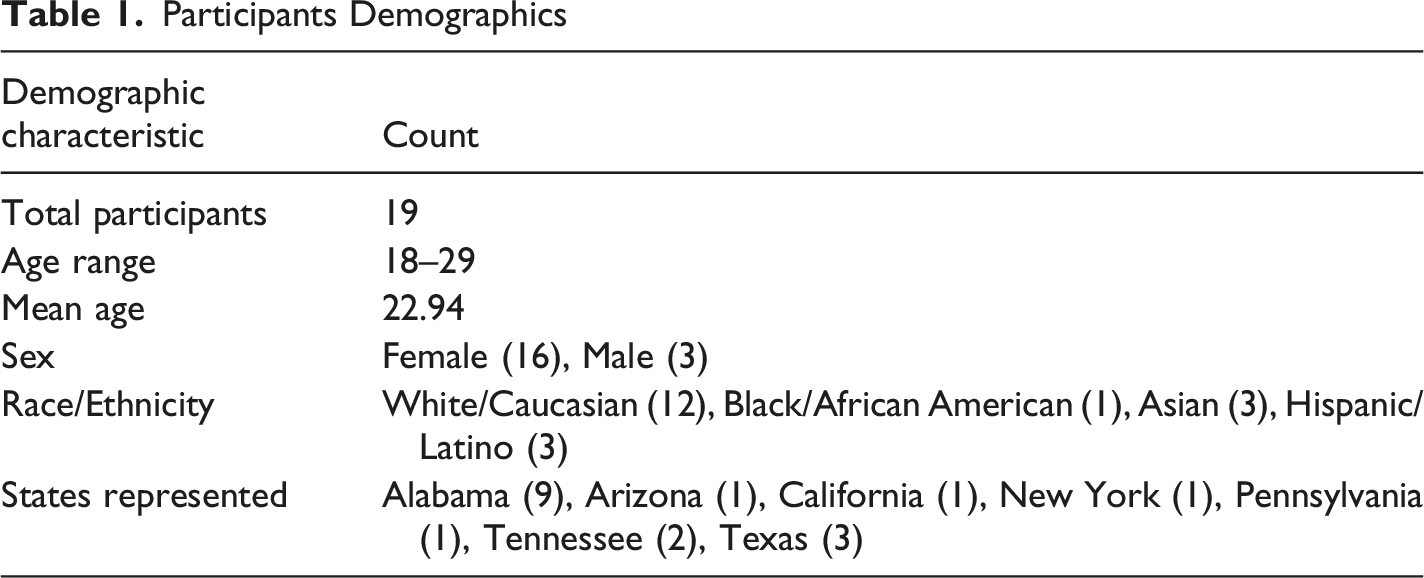
Research Question 1: How do Attempt Survivors Describe Suicidal Ambivalence?
Theme 1: Suicidal Ambivalence as an Internal Conflict Between Life and Death
Participants described suicidal ambivalence as a love-hate relationship between life and death. Ambivalence often caused frustration because they were unsure whether they wanted to live or die. Although the participants recognized an innate desire to live, they struggled to move away from their wish to die. A quote from a participant illustrates these complex emotions, highlighting feelings of sadness, anger, and confusion as they experienced both a strong desire to live and to die. I would say – the biggest one is probably this inherent sadness that it’s like, why. Why am I wanting to doubt like, why can’t I just want to live, and that’d be it. That’d be the end of it, you know, and also anger because you’re angry at yourself. You’re angry that you feel that way because, you know, you want to live so like, why is it that this almost like a compulsion or an urge to die is so strong like you’re mad. You don’t understand. It’s very confusing (Participant 112).
However, participants also described suicidal ambivalence as the reason they delayed their attempts, serving as an “excuse,” even if the reason might be irrelevant, highlighting the internal struggle to choose between life and death. […] because there was always like, like an excuse in my mind that I could find that could be like, no, no, okay, like I can’t do it now, like it was always something stupid like, okay, like I, I can’t quit now. I can't do this now, because I just committed to this work schedule with my with my team, and like it would mess everything up […] (Participant 115).
While many participants found suicidal ambivalence distressing and confusing, some also saw it as a protective buffer. Suicidal ambivalence slowed their impulses, allowing them to search for reasons to live, which counteracted their urge to end their life. A participant described suicidal ambivalence as a “gift,” since it encouraged them to delay the suicide attempt, while some shared suicidal ambivalence kept giving them reasons to not attempt by making it feel “inconvenient,” which is described in the following statement: Oh, I can’t do it on vacation, because we're on vacation, and how ungrateful would that be! And so it’s always like that was at least one of the biggest like backtrackers for me was, well, it’s just too inconvenient was a big thing of like – yeah, I want it. But like it’s just too much effort and like preparation, and like having to consider everyone else. It was just it was a hassle. It wasn’t even as much as it was like… what I wanted. It’s like it’s like, you know. So when you want more water, and you're too lazy to walk to the fridge. That’s how it felt (Participant 119).
Theme 2: The Dynamic State of Suicidal Ambivalence
Participants described suicidal ambivalence as a changing state that varied in intensity and often decreased just before a suicide attempt. It also felt unpredictable, shifting at any moment. While suicidal ambivalence acted as a protective buffer, as shown in theme 1, it also caused distressing emotions that some found overwhelming. As a result, participants reported feeling relieved when they attempted suicide since the distressing emotions linked to ambivalence were also released with the attempt. Despite the immediate relief, ambivalence returned once participants realized they had survived. Such realization reignited the conflicting desire for both life and death, which highlighted the dynamic nature of suicidal ambivalence. […] if ambivalence has a lot of tension… And when you’re feeling that kind of like frantic – I need to decide if I’m staying or going, the, the suicide attempts felt like a relief to the tension. Like I don’t have to sit in this space anymore where part of me wants this and part of me wants that like I just get to relieve the tension. And so when I… both times that I, like, committed to the attempt, I felt like a lot of relief I think because I didn’t… I wasn’t in like the hopeful… I want to live place. And then I think when, after both attempts, when I didn’t die… I kind of swung the other direction to feeling a lot of relief that I’d lived kind of temporarily before the ambivalence came back (Participant 109).
Several participants described experiencing little to no ambivalence before their attempt, whether it was a spontaneous decision or something they had planned for a long time. Participants stated that although deciding to end their life was difficult, attempting suicide felt like a peaceful solution after weighing life and death and experiencing suicidal ambivalence. […] once I had that decision to, like, kill myself. I was super calm like I was still sad, but I was like calm and like it was like a resolution (Participant 106).
Some participants described how suicidal ambivalence can change quickly, going from uncertainty to certainty. One participant referred to their suicide attempt as a “spur-of-the-moment” decision, showing how the fluctuating nature of suicidal ambivalence can shift rapidly. Yeah, so my suicide attempt was a pretty spur-of-the-moment thing, so I guess that’s the big shift. It was not where you’re fearful of what will happen or what will happen next, but it was just—I got my head set on it, and I went for it (Participant 102).
Theme 3: Suicidal Ambivalence as a Source of Comfort (or Relief)
Lastly, participants found that suicidal ambivalence was comforting because it reminded them that they always had the option to delay their attempt. This reduced the pressure of having to make the “right” decision, as they understood suicide could be an option in the future. One participant shared a powerful insight with their mental health provider, who told them that the practice of “delaying the attempt” was helpful, saying “[…] if you want to kill yourself in a month, you can kill yourself in a month.” Ironically, the participant said that hearing this remark has “really helped” because it made them realize that the “option [suicide attempt] is always there […].”
Especially when suicidality felt constant, both passively and actively, suicidal ambivalence helped them realize there was no immediate pressure to decide whether to live or die. The understanding that suicide can always be an option when life gets difficult gave them the hope to see how life can change before making a final decision to end their lives. So I’ll be like, okay, let’s just give yourself five days. And if in those five days it doesn’t get better, then you could think about like hurting yourself again. But just five days, do your like do your best to like focus on you, and what makes you happy (Participant 120).
Research Question 2: What Was it Like for Attempt Survivors to Experience Suicidal Ambivalence?
Theme 1: Ambivalence Feels Like an Internal Conflict Between Desiring Life and Death
Participants experiencing suicidal ambivalence characterized it as an internal conflict between life and death. This was explained in two ways: the desire to live was motivated by the fear of death, while also feeling peace and calmness behind their wish to die. Participants shared that they constantly desired to die, even when their life circumstances improved at times. This increased their fear of death, as they were often afraid of what death might look like, especially since life sometimes did not seem so terrible. This heightened their fear of death and strengthened their desire to stay alive. However, participants emphasized that their wish to live was not based on “hopefulness” or good life circumstances but was driven by their fear of death, which felt more like “[…] driving me away from suicide and death than it was like me running towards life” (Participant 104).
On the other side, participants shared how they felt more confident about their decision to end their lives during tough life circumstances. These included interpersonal violence, drug addiction, child abuse and neglect, and mental health challenges. The desire to die intensified, fueled by a sense of urgency to escape the emotional pain caused by these hardships. For example, one participant shared how interpersonal violence influenced their decision to take their own life: […] he [significant other] was just being really cruel to me like in front of them [acquaintances]. And he ended up hitting me that day with that flashlight. And I just remembered I felt so freaking powerless and humiliated and just hopeless […]. I felt like I absolutely needed to end my life because I just couldn’t emotionally handle that anymore (Participant 105).
However, there were also times when participants felt that neither living nor dying would solve the pain, leading to even greater emotional turmoil. One participant, who shared their long-standing battle with chronic suicidality since childhood, described feeling trapped by suicidal ambivalence, as if they could never escape. I was running from my suffering that I was experiencing towards death. And in the other, I was running away from the suffering I thought I would experience in death. So that was kind of where the conflict kind of came from is like I’m damned if I do, and I’m damned if I don’t (Participant 104).
Theme 2: Experiencing Numbness
Whenever participants felt overwhelmed by suicidal ambivalence, they began to feel apathetic toward life and death, which was characterized as numbness. Even when suicidal ambivalence caused distress, the fear of losing their ability to feel pushed them to engage in non-suicidal self-injury to preserve their sense of feeling. One participant shared the following to describe their thought process. […] I know I’m sad. I know there’s so much sadness around me. But I’m just here. I'm just here, you know. I’m just taking up a space. […] Can I still feel? Can- am I still hurting, you know? So, I guess, to retrospect that feeling of numbness. Nothing going on, I would hurt myself (Participant 113).
Participants also shared that numbness discouraged them from making another suicide attempt. They would go into “autopilot” when they believed there was no way to “escape” their difficult circumstances, which led to the feeling of numbness. In many cases, participants struggled to describe the feeling of “numbness” because it was an emotion they had not previously experienced. I just felt very like numb at that point. […] Okay, I’m not going to kill myself anymore because I can’t do it. I just stopped feeling I mean, I was very upset, but it was very different than I don’t? It’s very hard for me to explain, because I don’t I… There isn’t really a word for the emotion I was feeling […] (Participant 114).
Lastly, participants emphasized that numbness persisted throughout their experience with suicidal ambivalence, serving as a way to protect their “sanity” while they grappled with the internal struggle between life and death. For example, one participant described their fear of not being missed, which made their reality feel unbearable and led to numbness. I mean… It’s terrible to say, but I think I was so, like, not desperate for attention, but desperate for someone to care and to just reach out and whatever, hug me. I just wanted-it was hard to think about, but I wanted people to be sad. I wanted people to cry and miss me and things like that, but also there’s that same thing in my head where it’s like no, they won’t, stuff like that. It was definitely numbness when I thought about that […] (Participant 102).
Discussion
This qualitative study explored how young adult attempt survivors describe their experience of suicidal ambivalence. Participants described suicidal ambivalence as an internal conflict between the desire to live and the desire to die. For many, suicidal ambivalence gave attempt survivors relief, helping them realize they can delay their attempt. Our findings support and build on the internal struggle hypothesis (Kovacs & Beck, 1977), which establishes suicidal ambivalence as the desire between life and death. However, this framework does not elaborate on how the internal tension can shift or resolve, which was extensively discussed by the participants of this study, aligning with Galasiński and Ziółkowska (2024), where participants described suicidal ambivalence resolved moments before their attempt, showing the decision to die temporarily resolves the internal struggle.
The findings draw on existing suicide theories, such as the Interpersonal Theory of Suicide (IPTS; Van Orden et al., 2010). IPTS states that individuals’ risk for suicide increases through perceived burdensomeness, thwarted belongingness, and the acquired ability to end one’s life (Van Orden et al., 2010). Based on IPTS, one may argue that sense of burdensomeness and thwarted belongingness can intensify the desire to die and decrease ambivalence, which may lead to acquiring the capability of ending one’s life. At the same time, suicidal ambivalence captures both fear and calmness, which highlights the psychological complexity of suicidal thoughts. These findings could offer additional insight into interpersonal constructs described in IPTS. Our findings are also well aligned with frameworks such as the Fluid Vulnerability Theory (FVT; Rudd, 2006), which views suicidality with both stable and fluctuating states influenced by various situational factors. Participants in this study repeatedly discussed the impact of environmental factors contributing to their suicidality and the shift in suicidality. This finding suggest suicidal ambivalence may serve as a buffer in this fluctuating intensity of suicidality, showing there is a further need to understand the implications of how suicidal ambivalence can be incorporated into theoretical frameworks to speak more to this dynamic process.
There are also several clinical implications for practitioners working with clients experiencing suicidality. Our findings show ambivalence may not only be a risk factor but could also be a protective factor. This is different from how we are used to viewing suicide risk, as the goal is often to eliminate the desire to die completely. However, if clinicians can explore their client’s internal struggle between life and death without viewing it as a risk factor, this can serve as an entry point for intervention, as clients can recognize their innate desire to live yet also acknowledge the challenges of life that are increasing their desire to die. Furthermore, participants described how suicidal ambivalence persisted even after their active suicidal ideation had lessened. This finding suggests clinicians helping clients normalize the coexistence of opposing emotions can be beneficial by using modalities such as Acceptance and Commitment Therapy (ACT) (Hayes et al., 2013). ACT emphasizes accepting one’s circumstances without judgment and committing to value-based living (Hayes et al., 2013). ACT can support attempt survivors to accept their distressing thoughts of death without judgment yet commit to a life in accordance with their values. Future research should examine whether suicidal ambivalence can serve as a protective factor, as participants reported that suicidal ambivalence helped them delay their attempts and gave them time for reflection. Additionally, incorporating suicidal ambivalence into binary risk assessments could provide an entry point for more tailored intervention. Studies should also incorporate research methodologies such as ecological momentary assessments (EMA) or longitudinal studies to enhance our understanding of how suicidal ambivalence evolves across different circumstances and throughout the lifespan to assess risk and protective factors for suicide prevention efforts. This approach would also allow for opportunities to gain insight into someone’s ambivalence when they experience active suicidal ideation, which can provide more accurate insight compared to when someone is reflecting upon their experiences retroactively.
This study has a few limitations. First, participants were self-selected, which means they may have been more open to sharing their experiences. Self-selection could result in a perspective different from those who chose not to participate. Furthermore, this study focused on young adult survivors of suicide attempts. Future research should include broader demographic samples to capture a wider range of lived experiences from diverse backgrounds and better understand how suicidal ambivalence manifests in different populations. Lastly, the analysis was conducted by a single coder, which may have resulted in potential coder biases. However, the researchers took other steps to maintain trustworthiness, such as member-checking, memoing, and conducting audit trail.
This study explored what suicidal ambivalence means for young adult suicide attempt survivors. The findings showed that ambivalence is a fluid phenomenon, which can bring both comfort and distress. Based on the lived experiences of attempt survivors, this study offers deeper insight into how we can move beyond assessing binary risk and protective factors, emphasizing ambivalence as a model of care that recognizes the complex experiences of these individuals. To our knowledge, this is one of the few qualitative studies exploring suicidal ambivalence. Gaining more insight into suicidal ambivalence from the perspective of the attempt survivors advances current research beyond just prevention and risk identification, promoting trauma-informed approaches to suicide prevention.
Footnotes

Ethical Considerations
This study was approved by The University of Alabama’s Institutional Review Board (Protocol # 24-04-7560). All participants provided informed consent prior to participation.
Funding
The authors disclosed receipt of the following financial support for the research, authorship, and/or publication of this article: This study was supported by The University of Alabama, Graduate School through the Doctoral Dissertation Fellowship.
Declaration of Conflicting Interests
The authors declared no potential conflicts of interest with respect to the research, authorship, and/or publication of this article.
Data Availability Statement
Data generated during this study is not publicly available due to ethical considerations to participant confidentiality.