







Abstract
In the current study, we examined the effect of an aerobic dance program as part of physical education (PE) classes on aspects of primary school children’s executive functions (EFs) (inhibition, working memory, and cognitive flexibility). Participants were 41 children (21 boys and 20 girls; M age =10.30, SD = 0.50 years, M height = 134.09, SD= 3.9 cm; M weight = 35.61, SD = 7.85 kg) who were divided into an experimental group (EG) and a no-PE control group (CG). The EG followed an aerobic dance intervention as part of their PE program (45 minute sessions two days per week over eight weeks). Participants in both groups performed EF tests before and after the intervention period to evaluate their mental flexibility, inhibition, and working memory. A two-way mixed model repeated measures ANOVA revealed a significant effect of the aerobic dance program on participants’ cognitive flexibility (i.e., on Trails Making Tests B-A times and committed errors) (p <0.001), and on Stroop measures of inhibition (corrected number of words and corrected errors) (p <0.001 and p <0.01, respectively), with post-hoc analyses showing an improved performance by the EG in working memory (digit recall score) from pre-test to post-test and in comparsion to the CG (p < 0.001). Thus, this 8-week aerobic dance program promoted EF development among primary school children.
Introduction
In childhood, especially in late childhood, motor skills undergo dynamic development (Myer et al., 2015), and cognitive functions, especially executive functions (EFs), are identifiable and mature at different rates (Anderson, 2002). There is considerable debate regarding which cognitive skills represent EFs, but Diamond (2013) has asserted that they include three types of brain functions: working memory, inhibitory control, and cognitive flexibility. EF skills develop during childhood in parallel with the development of neural synapses, myelination, and the recruitment and consolidation of neural networks for specific cognitive tasks (Stevens et al., 2009). These functions are multidimensional and include a broad variety of skills such as attentional control, cognitive flexibility, inhibition, and strategic planning (Reader et al., 1994). EFs play an important role in determining the cognitive and academic functioning that support learning and scholarly achievement (McClelland & Cameron, 2012; Raver et al., 2011; Ursache et al., 2012). On the other hand, poor EF skills may put children at risk for ineffective environmental interactions leading to significant and lasting cognitive, academic, and social difficulties (Biederman et al., 2004; Clark et al., 2002; Ellis et al., 2004; Tapert et al., 2002). Indeed, students with poor working memory are more likely to experience difficulties following instructions for an activity, performing mental calculations, and retaining relevant information for other academic work (Cosnefroy, 2010). As EFs involve cognitive processes responsible for organizing and controlling goal-directed behavior, they are directly relevant to success in school and life in general (Kulinna et al., 2018).
Previous researchers have noted that cognitive skills develop in parallel with motor skills (Diamond, 2000; Hillman et al., 2005; Metcalf et al., 2011). Physical activity (PA) has been specifically associated with children’s EF (Sibley & Etnier, 2003). In this context, a previous study showed that PA improved EF in children aged 6–7 years old (Abdelkarim et al., 2017). Indeed, PA may exert beneficial effects on working memory (Kamijo et al., 2011), inhibition and cognitive flexibility (Hillman et al., 2014). Drygas et al. (2001) showed that school-aged children who devoted at least an hour a day to intensive PA showed much better cognitive functioning than those who were sedentary (Drygas et al., 2001). Specifically, both acute and chronic aerobic exercises have effectively improved children’s EF (Best, 2010), and insufficient PA in childhood has been associated with limited perception and developmental disorders (Schmidt et al., 2015).
Despite these crucial benefits to PA, there has been a shift in children’s lifestyles in recent years, particularly in their late childhood, suggesting that children today spend most of their time engaged in sedentary activities, perhaps influenced by the availability of electronic forms of entertainment (e.g., television, internet, mobile telephones, and video games) (Bidzan-Bluma & Lipowska, 2018). A reduction in physically demanding activities begins during the school years (Papaioannou et al., 2004) and may be explained in part by students’ diminished interest in PE from primary grades to senior high school, linked, in turn, to lack of motivation for PA (Owen et al., 2014; Yli-Piipari, 2011). Likewise, Jaakkola et al. (2008) confirmed that intrinsic motivation was a definitive influence on moderate or vigorous PA in the context of PE (Jaakkola et al., 2008). Recently, some have recommended that school PE programs be made more attractive and interesting by training new challenging skills in order to enhance motivation for PE lessons (Rokka et al., 2019).
Dancing, as a type of aerobic activity, has been described as a patterned rhythmic movement in space and time (Murrock & Graor, 2014). In this context, dance-based interventions have shown promise for improving cognitive performances (Norouzi et al., 2019; Predovan et al., 2019), including improved memory and attention (Kattenstroth et al., 2013) among elderly persons. When practiced by children, dance may be an effective strategy for engaging children’s cognitive development (Giguere, 2011). Existing school opportunities for focusing on cognitively engaging PA have improved children’s selective attention (Kulinna et al., 2018), and dance interventions during primary school PE classes have improved children’s working memory capacity (Oppici et al., 2020). One recent study reported that an 8-week dance training improved inhibitory control and working memory capacity in primary school children (Rudd et al., 2021), but van den Berg et al. (2019) found no evidence of any cognitive benefit to children’s practicing dance 10 minutes a day for nine weeks. Oppici et al. (2020) called for further studies to understand how dance may influence cognition in children.
Aerobic dance is a motivational form of PA that has become popular in recent decades (Iermakov et al., 2016). Interestingly, an aerobic dance program is easy for PE teachers to design and implement, and it is generally enjoyable for students (aged 12–13); it holds promise for promoting intrinsic motivation and greater enjoyment of PE classes (Rokka et al., 2019). It is an easy and fun form of exercise that everyone can practice, and it has attracted much attention for its positive effects on functional abilities (Pantelić et al., 2007) and social integration in our modern society (Rokka et al., 2019). Recent studies showed positive effects of aerobic dance programs on health-related physical abilities in children aged 8- to 12-years-old (Kaya et al., 2011; Mavridis et al., 2004). Furthermore, children have adapted to such programs easily and with pleasure (Kremenitzer, 1990), as dance is not a competitive group exercise (Ciomag & Dinciu, 2013), and it does not require highly technical skills.
Based on all the foregoing considerations, we suspected that aerobic dance would have beneficial effects on EF for older children. To our best knowledge, most studies carried out for children in this age period focused on the motor and psychosocial benefits of aerobic dance. Therefore, in this study, we aimed to explore the effects of an 8-week aerobic dance program, on aspects of EF (inhibition, working memory, and cognitive flexibility) in primary school children aged 9–11 years. We hypothesized that children who underwent the 8-week aerobic dance program would exhibit EF improvement compared to those who participated in no PE or physical training program.
Method
Estimating a Required Sample Size
We calculated an a priori power analysis to determine an estimated required sample for this study, using G * power software (version 3.1.9.4; Faul et al., 2007). We set the statistical probability value or α at 0.05, statistical power at 0.80 and the non-sphericity correction = 1. Based on previous literature (Greeff et al., 2018) and discussions between the authors, we estimated the effect size for this research at 0.22. The power analysis then indicated that, to reach this desired statistical power with these assumptions, data from 40 participants would be sufficient.
Participants
Our recruitment strategy was a three-stage screening process. In the first stage, we recruited 47 primary school children between 9–11 years old from a single primary school in which no PE classes were scheduled. In the second stage, 43 of these screened children met our inclusion and exclusion criteria (see details below) and were selected. According to Tanner’s (1962) criteria, a pediatrician classified these children as pre-pubertal (stage 1). Our inclusion criteria were for children (a) from a middle socio-economic status (based on parents' income, education level, and occupation), (b) without any physical or mental illness that could interfere with our pre- and post-testing (see below for details), and (c) who experienced no locomotor system surgeries, respiratory dysfunctions, visual or auditory problems, and/or cardiovascular or metabolic disorders. All these details were collected from the school’s database for enrolled students. In the third stage, we excluded two children because they did not pass all the pre-training measures or because they were absent during familiarization or pre-training test sessions. Consequently, 41 children remained in the study. After a clear explanation of the procedures, including the risks and benefits of participation, children gave their assent, and their parents or legal guardians signed an informed consent form prior to the children’s participation in this study. The present study was conducted in accordance with the Declaration of Helsinki and its protocol was approved by the local ethics committee.
Participants’ Anthropometric Characteristics, Expressed as Means (and SDs).
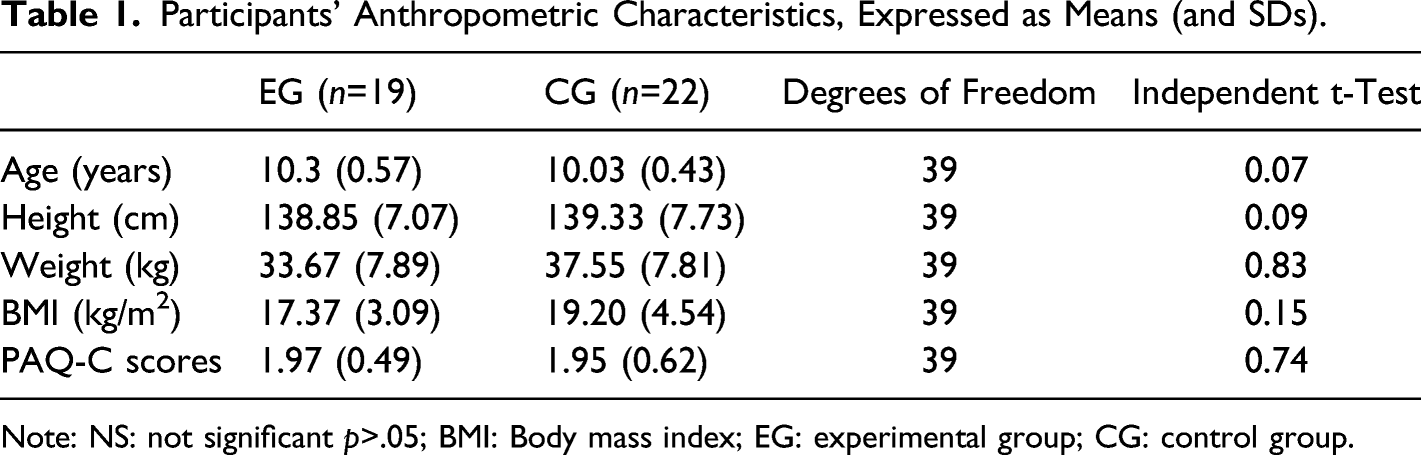
Note: NS: not significant p>.05; BMI: Body mass index; EG: experimental group; CG: control group.
Study Design
As noted, our study design was a randomized controlled training intervention in which each participant was randomly assigned to either the EG or CG. The EG followed an 8-week-aerobic dance program within PE classes at school, and the CG participated in no PE or physical training program, simply continuing their normal daily activities during the same 8 week-period. The aerobic dance sessions were designed by a professional aerobic dance instructor with 20 years experience in aerobic dance. A single dance instructor with 5 years experience in aerobic dance supervised all training sessions for the EG group. The aerobic dance exercises were delivered in a sequence of progressive difficulty levels to minimize the risk of injuries. We requested that all participants practice no outdoor PA during the period of this experiment.
At pre- and post-intervention sessions, we administered three EF tests to all participants. To assess cognitive flexibility, inhibition and working memory, we administered the Trail-Making Test (TMT; Howie et al., 2015; Lezak et al., 2004), the Stroop test (Stroop, 1935; van der Niet et al., 2016), and the Digit Recall Test (Gathercole et al., 2003), respectively. Before baseline measurements, we conducted a familiarization session in order to ensure that the test instructions were correctly understood. All baseline and post-testing was performed in the morning, 2 days before and then 2 days after the intervention period.
Intervention Program
Objectives of Each Session of the Aerobic Dance-Training Program.
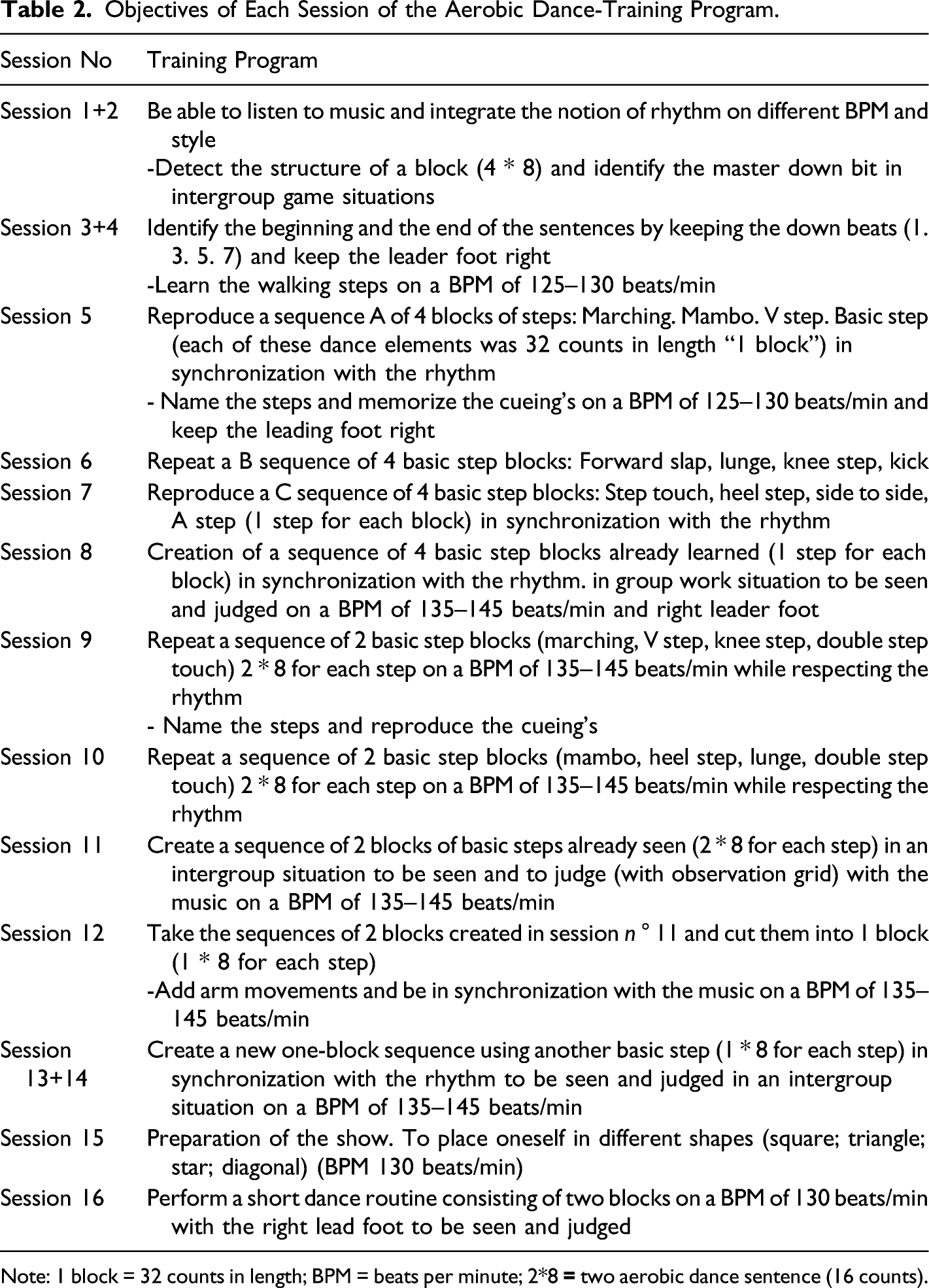
Note: 1 block = 32 counts in length; BPM = beats per minute; 2*8
Measurements
Cognitive flexibility: We measured the children’s cognitive flexibility with the 25 circles version of the Trail-Making Test (TMT; Lezak et al., 2004). Though Retian (1979) described this as an adult version of the TMT, it has been used in many child studies (Alesi et al., 2020; Elghoul et al., 2014; Howie et al., 2015; Ledochowski et al., 2019) and it has been shown to be a valid and appropriate test of cognitive flexibility for children (Howie et al., 2015; Lezak et al., 2004) with moderate test-retest reliability in children (Howie et al., 2015) and an intraclass correlation coefficient of .50–.60. The TMT is comprised of two parts, A and B, each consisting of 25 circles distributed on a sheet of paper (Reitan, 1979). In Part A, the circles are numbered 1–25, and participants were asked to draw lines to connect the numbers in ascending order (1-2-3 … 25). In Part B, the circles include both numbers (1–13) and letters (A–L), and participants were asked to connect the circles in an alternating ascending and alphabetical pattern (i.e., 1-A-2-B-3-C, etc.). Children were timed for when they completed the “trail.” Before the two-part test (TMT A and B), we administered a pre-test containing six example items to ensure that the instructions were correctly understood. The forms used for the paper and pencil task were those proposed in Reitan (1979). In both Parts A and B of the test, the participant was required to connect items as rapidly as possible without lifting the pencil from the paper (Lezak et al., 2004). Both the participants’ execution time and corrected errors were calculated, and we also calculated difference scores between TMT Part B-A (TMTB-A) for both completed time and corrected errors as a measure of cognitive flexibility (Sánchez-Cubillo et al., 2009).
Inhibition: We used the Stroop test to measure cognitive inhibition. The Stroop test was found to be a valid measure of inhibition in children (Stroop, 1935), with good intra-tester reliability in children (van der Niet et al., 2016) and an intraclass correlation coefficient higher than .80. The children completed three reading stages (45 seconds each) in the following order: (a) children were asked to name a series of words written in black ink (Word card), (b) then children were asked to name the colors of colored rectangles (Color card), and (c) finally, children were asked to read the ink color in which words were written (e.g., the word “green” written in blue ink; Color-Word card). In all three stages, we scored the participants’ correctly mentioned words (corrected words) and corrected error numbers (Diamond, 2013).
Working Memory: We assessed working memory with the Digit Recall Test, a valid measure of working memory in children (Gathercole et al., 2003). The intra-tester reliability of this test when used with children was found to be moderate to good (Howie et al., 2015) with an intraclass correlation coefficient of .63–.80. Participants were given a list of three to seven numbers (e.g., 5, 7, 3, 9), and were then given five seconds to write them in chronological order. The Digit Recall score was the sum of the sequences processed that the participant answered correctly, adjusted according to the length of the sequence (Gathercole et al., 2003).
Statistical Analysis
We processed and analyzed data using STATISTICA 10 software (Fournet et al., 2019), and descriptive data were expressed as means (M), SDs (SD) and 95% confidence intervals (95% CI). We confirmed the normality and homogeneity of data distributions with by the Shapiro–Wilk test and Levene’s test, respectively, and we used an independent t-test to compare the participants’ age, height, and body weight across the two groups.
We analyzed group score differences on the TMT, Stroop and Digit Recall tests using a two-way mixed model repeated measures ANOVA [2 groups (EG/CG) × 2 testing times (pre-/post-intervention)] (group as a between factor, time as a within factor). We conducted a Bonferroni adjustment for multiple comparisons and calculated the effect size as partial ETA-squared (η2p) to estimate the meaningfulness of significant findings, interpreting effect size according to Cohen (1988), with partial eta-squared values of 0.01 defined as small, 0.06 (medium) and 0.14 (large). We set the alpha level for statistical significance at p < 0.05.
Results
Participant characteristics on anthropometric variables for the two groups are presented in Table 1. Independent t-tests revealed no group significant differences in participants’ age, height, or body weight.
Cognitive Flexibiltiy
Summary of ANOVA Results of Participant Performances on EF Tests (TMT B-A, Stroop Test and the Digit Recall Test).
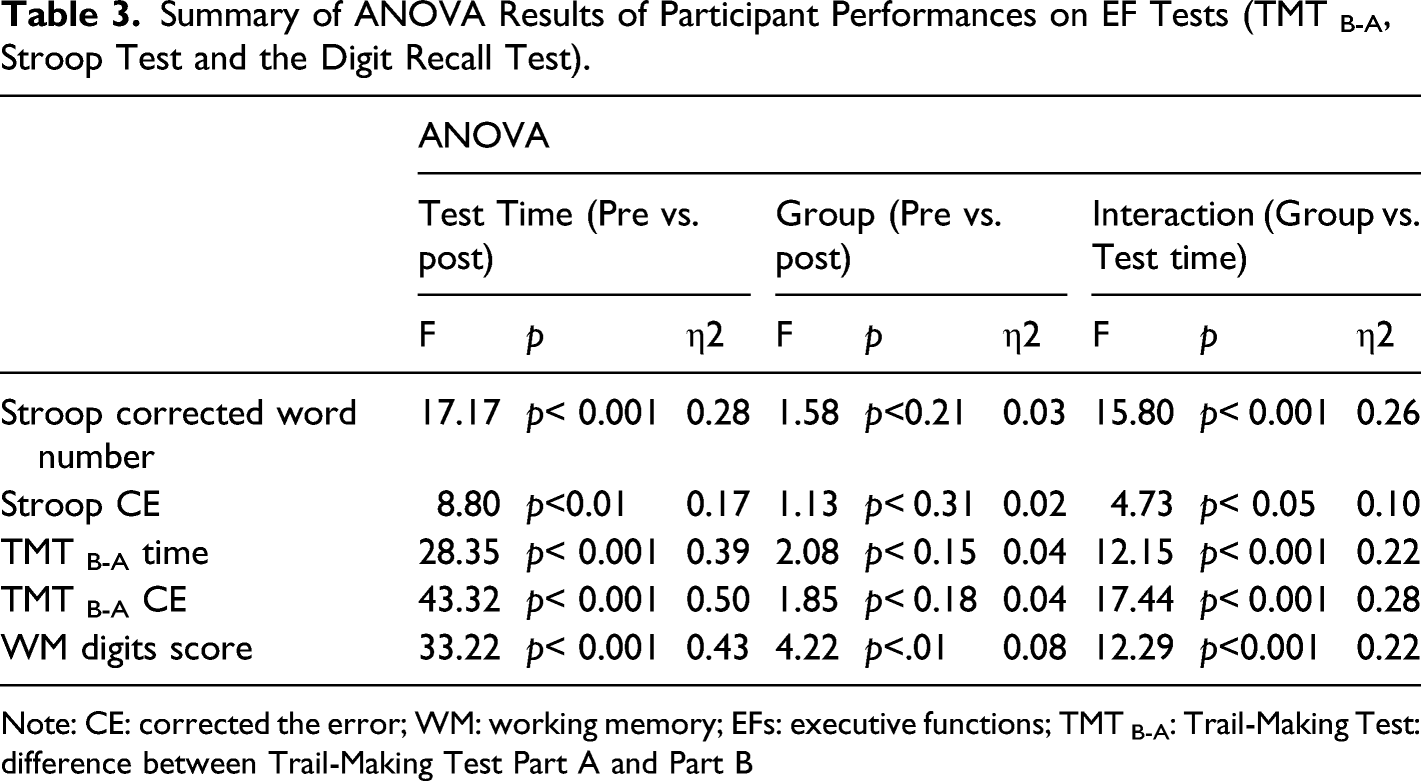
Note: CE: corrected the error; WM: working memory; EFs: executive functions; TMT B-A: Trail-Making Test: difference between Trail-Making Test Part A and Part B
Summary of Means (SDs) and 95% Confidence Interval (95% CI) Values for EF Performance Measures (TMT B-A, Stroop test and Digit Recall Test) at Pre- versus Post-Testing.
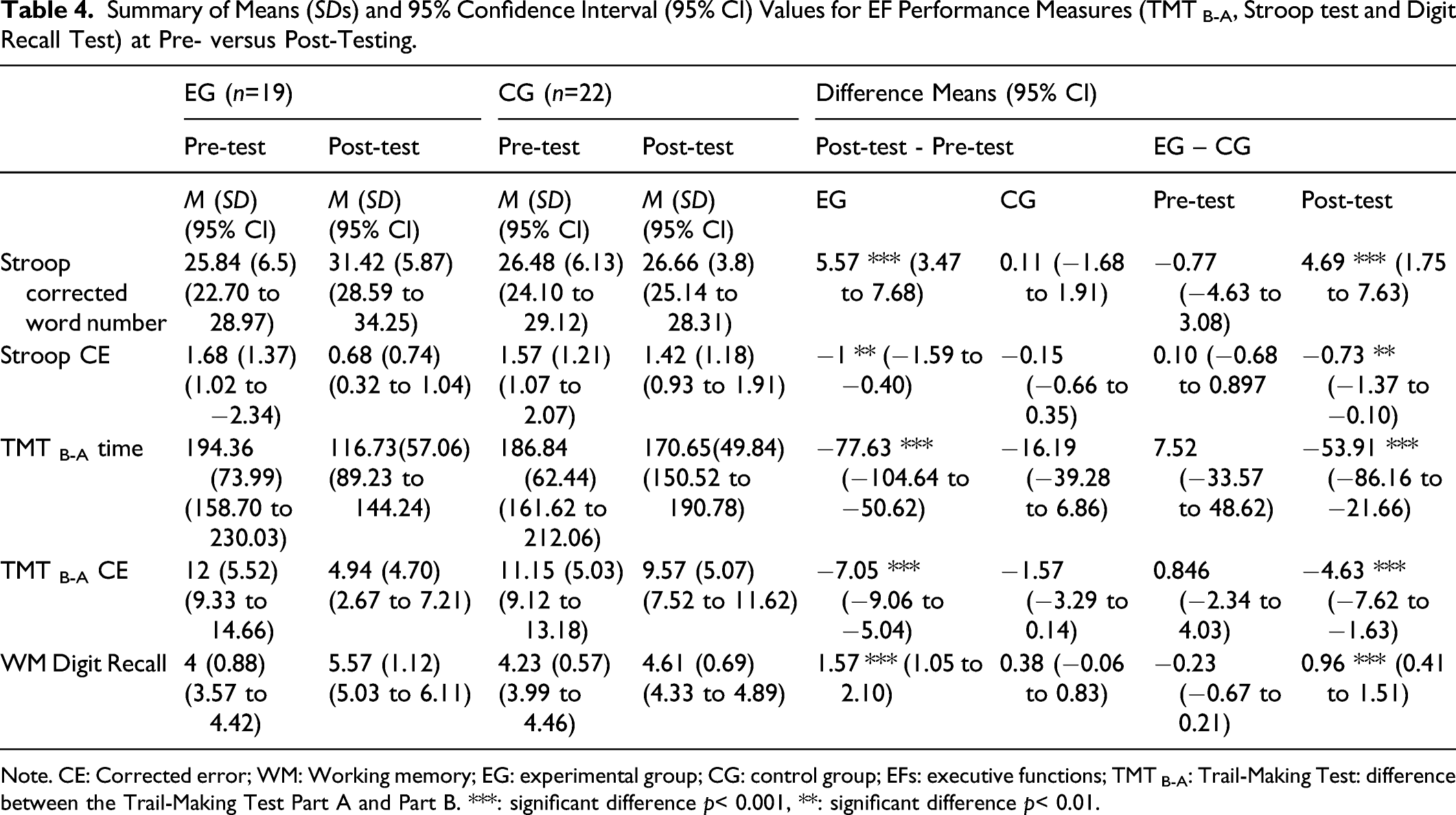
Note. CE: Corrected error; WM: Working memory; EG: experimental group; CG: control group; EFs: executive functions; TMT B-A: Trail-Making Test: difference between the Trail-Making Test Part A and Part B. ***: significant difference p< 0.001, **: significant difference p< 0.01.
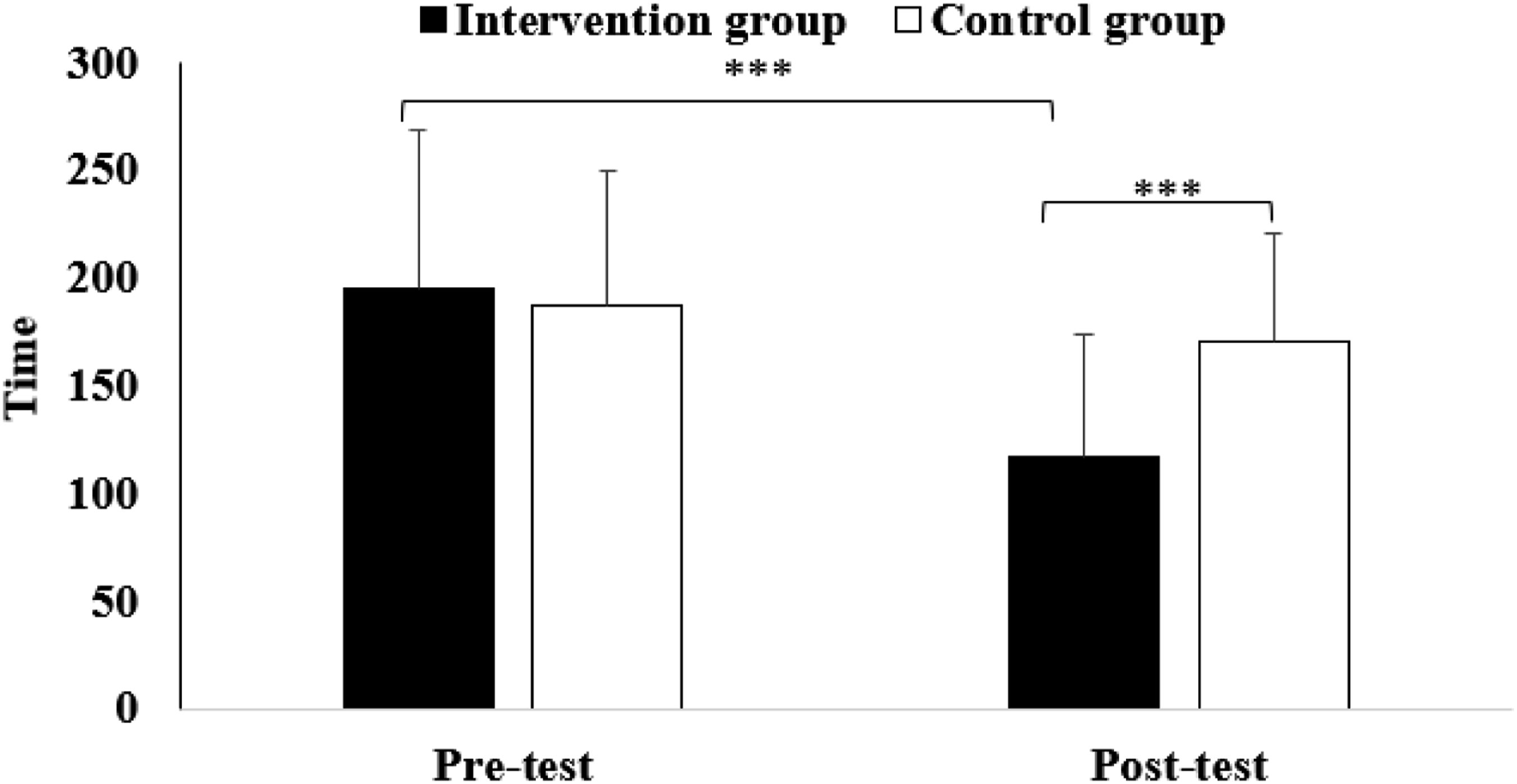
TMT B-A Time Scores of EG and CG at Pre- and Post-Test. Note: *** = p< 0.001.
Concerning corrected errors for TMTB-A, there was again a significant main effect for time (F(1,43) = 43.32, p < 0.001, η2p = 0.50) but no significant main effect for group. Again, there was a significant interaction between group and time (F(1,43) = 17.44, p < 0.001, η2p = 0.28) (Table 3). Post-hoc testing revealed a significant decrease in error scores for the EG (but not for CG) participants from pre-test to post-test (Table 4), and a there was a significant difference in improvement for the EG when compared to CG participants (p < .0001) (Figure 2). TMT B-A Corrected Error (CE) Scores of EG and CG at Pre- and Post-Test. Note: *** = p< 0.001.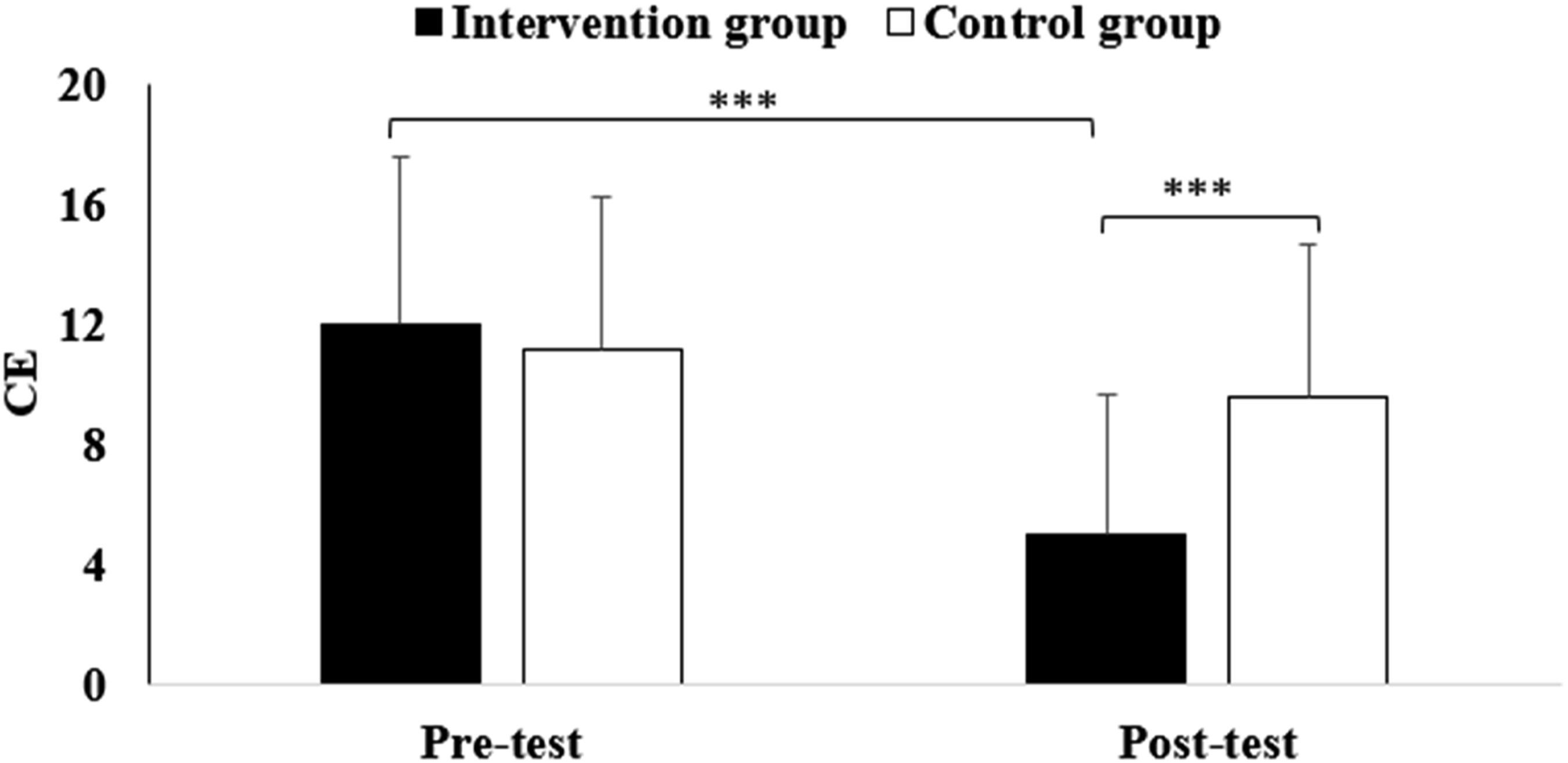
Inhibition
On the Stroop Test, for the corrected word numbers, a two-way repeated measures ANOVA showed a significant main effect for testing time (F (1.44) = 18.22, p < 0.001, η2p = 0.29) but no significant main effect for group. The interaction between group and time was significant (F(1.44) = 15.95, p < 0.001, η2p=0.26) (Table 3). Post-hoc testing showed a significant increase in the corrected words numbered at post-testing versus pre-testing for the EG (but not for the CG) participants (p < 0.001) (Table 4). In addition, post-hoc testing showed a significant pre-test to post-test improvement for the EG, compared with CG participants (p < 0.001) (Figure 3). Stroop test Corrected Word Number Scores of EG and CG at Pre- and Post-Testing. Note: *** = p< 0.001.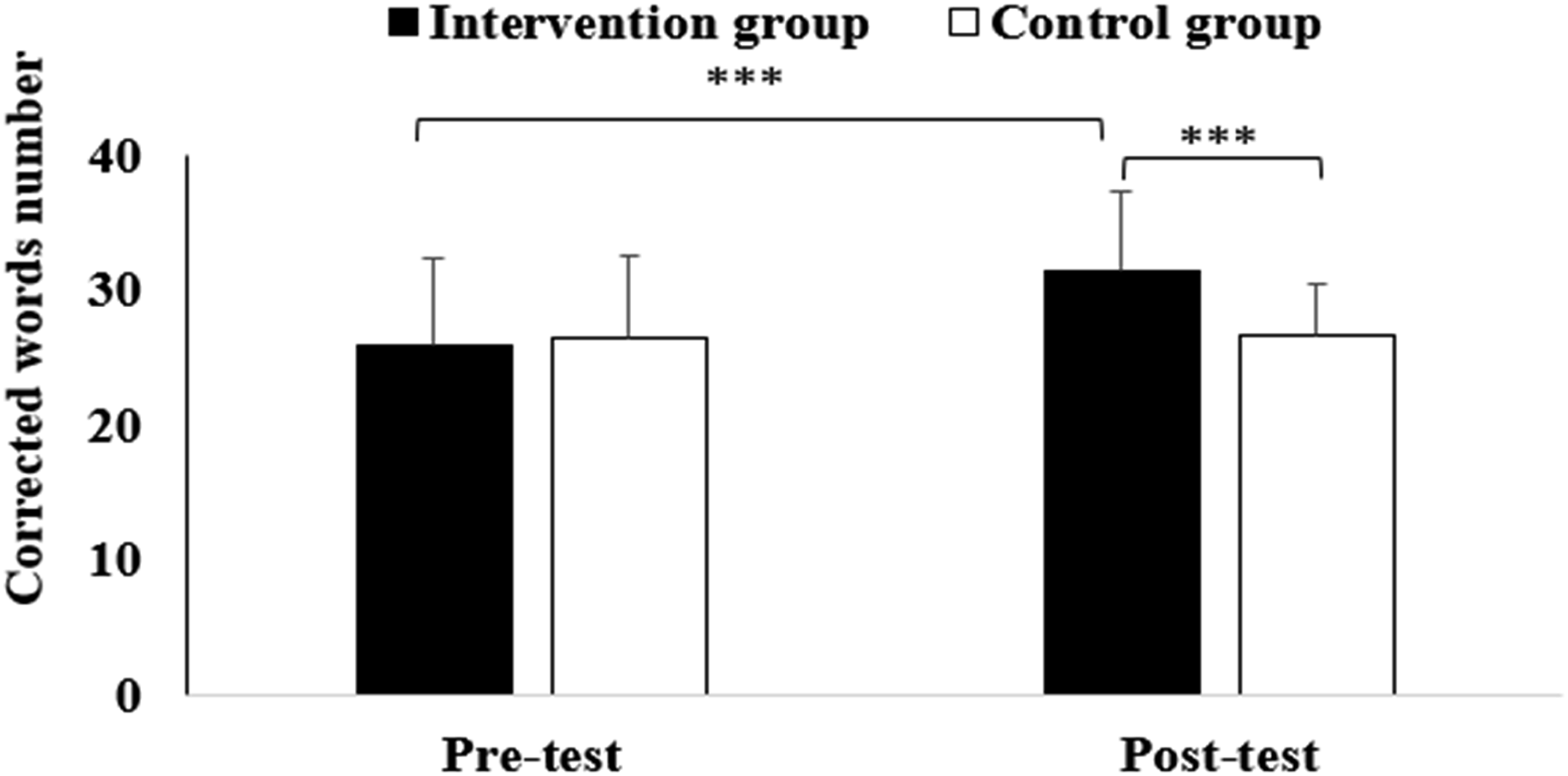
For the corrected error numbers, the ANOVA showed a significant main effect for testing time (F (1.44) = 9.05, p = 0.004, η2p = 0.17), but no significant main effect for group. There was a significant interaction (group × time) (F(1.44) = 4.98, p = 0.03, η2p = 0.10) (Table 3). Post-hoc testing showed a significant decrease in the corrected errors at post-testing versus pre-testing for the EG, but not for the CG, participants (p < 0.01) (Table 4). Moreover, post-hoc testing revealed fewer corrected errors for the EG compared with the CG participants at post-testing compared to pre-testing (p < 0.01); the CG performance remained at the same level before and after the intervention (Figure 4). Stroop Test Corrected Error (CE) scores of EG and CG at Pre- and Post-Testing. Note: ** = p<0.01.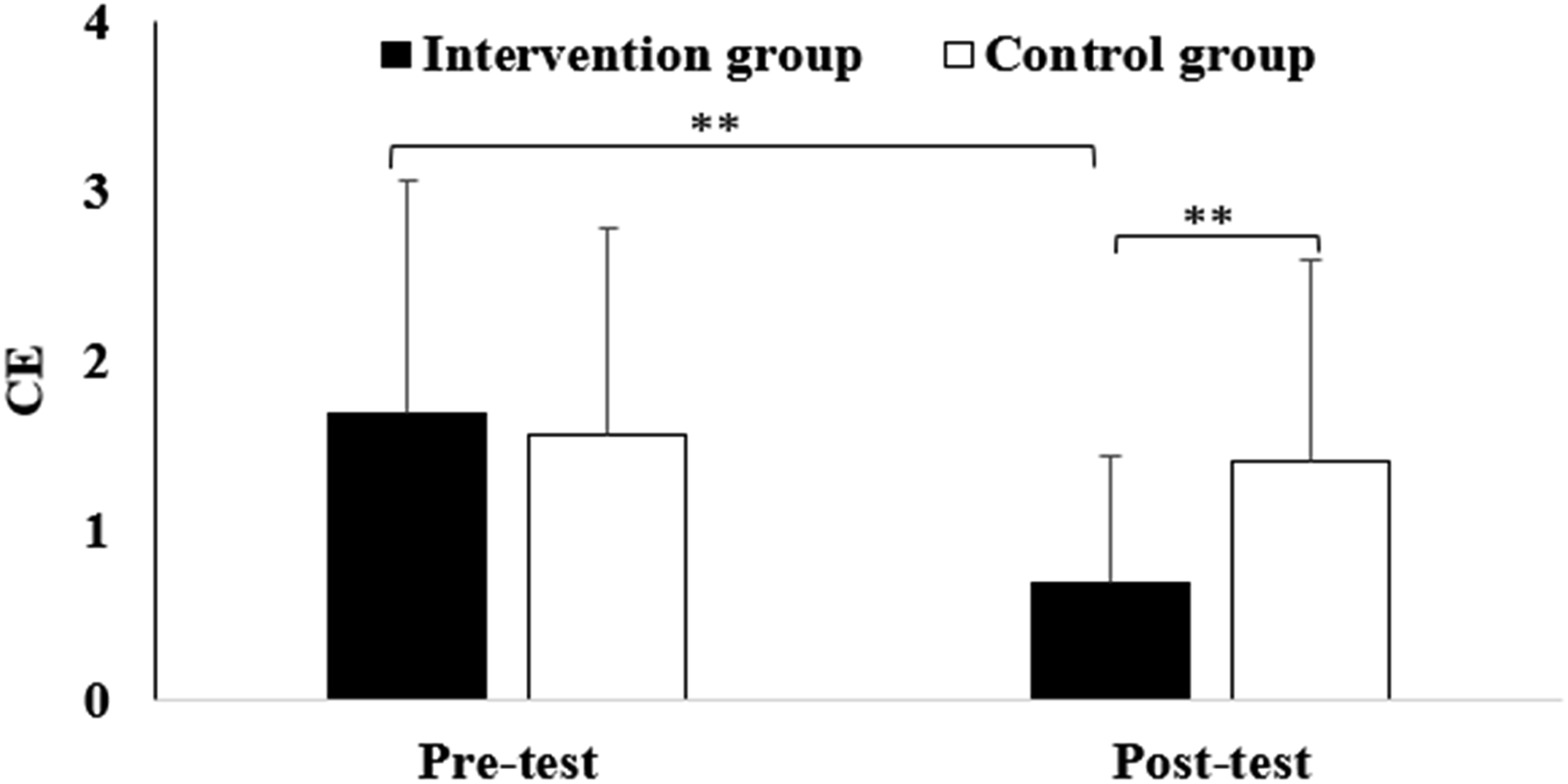
Working Memory
Concerning working memory as measured by the Digit Recall score, the repeated measures ANOVA revealed significant main effects for testing time (F(1,44) = 36.58, p < 0.001, η2p = 0.45) and group (F(1,44) = 9.54, p < 0.01, η2p = 0.17). There was also a significant (group × time) interaction effect (F(1,44) = 12.41, p < 0.001, η2p = 0.22) (Table 3). Post-hoc testing revealed a better performance for the EG, but not CG, participants at post-testing when compared to pre-testing (p < 0.01; Table 4). In addition, post-hoc testing showed significantly higher digit recall scores for the EG compared with the CG participants at post-testing (p < 0.01) (Figure 5). The Digit Recall Test Number of Digits Score of EG and CG at Pre- and Post-Testing. Note: *** = p< 0.001.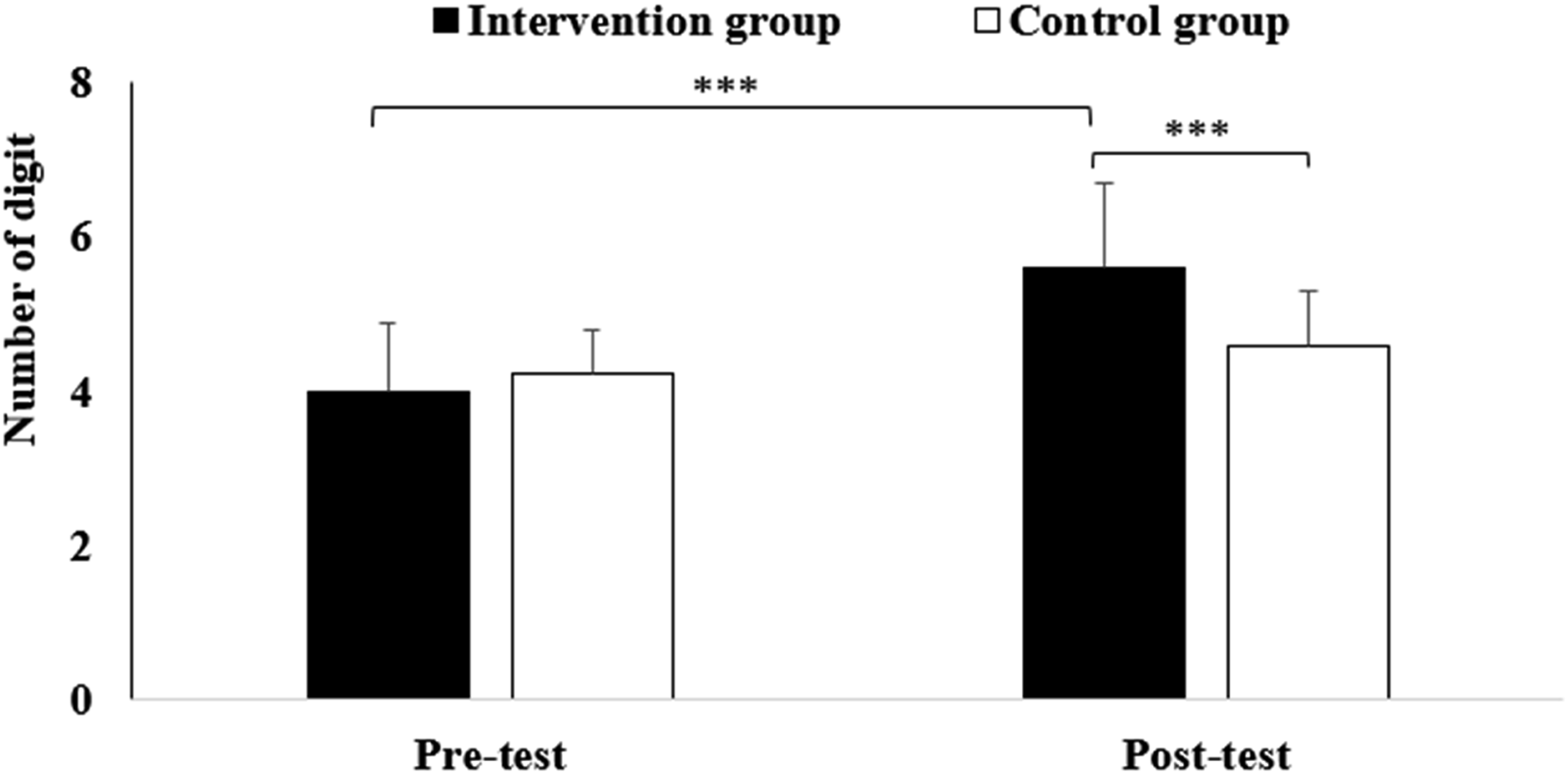
Discussion
We aimed, in this study, to examine the effects of an aerobic dance program on inhibition, working memory, and cognitive flexibility among children aged 9–11 years. Our data supported our hypothesis that participating in an eight week aerobic dance program during school-based PE classes (vs. participating in no PE) would enable improvement on these cognitive measures of EF. Cognitive flexibility was improved in terms of gains in time execution and corrected errors recorded on the TMT for the EG (but not the CG) participants. Positive changes in inhibition were demonstrated through improvements in corrected word numbers and corrected errors on the Stroop Test for EG, but not CG participants. Working memory as measured by the Digit Recall score was also enhanced after the aerobic dance program but not for participants in the control group. These findings are in line with previous reports that creative dance training significantly influenced EF in children (Yetti et al., 2019) and with findings that a street dance program significantly improved cognitive flexibility, inhibition and working memory in preschool children (Shen et al., 2020). Oppici et al. (2020) gave support in their finding that dance practice coupled with a high cognitive challenge improved working memory in children. A very recent study has also reported that an 8-week dance training improved inhibitory control and working memory in primary school children (Rudd et al., 2021), although the current study is the only evidence of the effect of an aerobic dance program, specifically, on working memory, inhibition and cognitive flexibility in children of primary school ages.
One of the main findings in our study was a significant improvement in cognitive flexibility as measured by both TMTB-A execution time (p <0.001, η2p= 0.39) and TMTB-A corrected error (p <0.001, η2p= 0.5). It is likely that the combination of aerobic dance steps, requiring practice, repetition, and cognitive effort within the dance routine facilitated this cognitive flexibility improvement. In addition, in our aerobic dance program, participants were asked to follow the instructor’s lead when changing dance elements and to synchronize the dance steps with the rhythm of the music.
Previous studies also demonstrated that music training can stimulate cortical activity (Moreno et al., 2009). Moreno opined that short-term music training for 6 months significantly improved behavior and changed the growth of synapses, showing that music is a means of fostering brain plasticity (Moreno et al., 2009). As noted above, Shen et al. (2020) also showed that street-dance training can improve children’s cognitive flexibility, and, similarly, Kosmat and Vranic (2017) found that elders with predispositions toward cognitive decline showed significantly better results in terms of their cognitive flexibility and their working memory after 10 weeks of classic dance, compared to elders who did not dance.
Regarding our finding of working memory improvement from the aerobic dance program, it is important to note that working memory is the process of storing and processing information (Shen et al., 2020). In our intervention, participants were asked to retain each of the dance movements they had performed within a long choreographic routine consisting of all four dance movements. When children were learning the movements, they needed to recall the name of the movement, its characteristics, its location in space, etc., and they had to store this information in the brain and call it up when they needed to use the movement. These processes likely contributed to their working memory gains on our Digit Recall test. Previous studies showed that dance provides continuous sensorimotor stimuli, including a variety of whole-body movements, and individuals must memorize and recall long movement sequences (Cortese & Rossi-Arnaud, 2010; Jola et al., 2013; Merom et al., 2013). Visuo-spatial working memory performance has been associated with frontal lobe brain activation (Klingberg et al., 2002; van Ewijk et al., 2015). A recent study showed that PA, in general, could improve EFs, attentional resources, and information processing by improving white matter integrity in the frontal lobes (Meijer et al., 2020). Importantly, our results agree with these earlier studies suggesting that dance can improve working memory capacity (Diamond & Ling, 2016; Eggenberger et al., 2015; Tomporowski & Pesce, 2019).
Regarding our participant’ gains in inhibition as measured by Stroop corrected word numbers and corrected error numbers, inhibition has been seen as the first domain of executive functioning to appear during childhood, showing its most significant development at 6–10 years, and it may be most sensitive to environmental factors around the age of 6–12 years (Jurado & Rosselli, 2007). As inhibition has also been linked to working memory (Davidson et al., 2006), it was not surprising that we found gains in both inhibition and working memory, as have others (Hillman et al., 2014; Kamijo et al., 2011; Shen et al., 2020). In aerobic dance training, children must inhibit some motor movements while engaging in others. As noted above, neuro-imaging studies have observed a relationship between PA generally and gains in inhibition, as mediated by improved integrity of frontal lobe white matter structures (Bellgrove et al., 2004; Botvinick et al., 2004; Lin et al., 2014; Voss et al., 2013).
Limitations and Directions for Future Research
Among limitations in this study that should be addressed in future research, our CG followed their normal routine during school without practicing any PE sessions, meaning that we cannot be certain that the relative gains in our EG were due specifically to the aerobic dance program versus general PA and PE instruction that occurs in other PE programs. Also, we requested that all participants minimize their PA outside of school, perhaps exaggerating the difference between an active EG and a sedentary CG. Of course, there was no control (beyond this simple request) over participants’ actual PA behavior outside of school. It would be interesting to conduct neuro-imaging assessments before and after the dance intervention to affirm or disaffirm the assumption that this activity directly affected white matter integrity in the frontal lobes. Other cognitive variables and measures of EF might also be assessed in future studies (e.g., selective attention, planning, time sense, and others) to determine whether aerobic dance benefits extend to these EFs and better design and integrate aerobic dance activity into PE curricula. Additionally, a post-intervention retention test might be used to test persistence of these gains over time. Finally, consideration should be given to the effect of training at a specific time of day on physical (Souissi et al., 2012) and cognitive (Elghoul et al., 2014) performances, particularly as some research as suggested that exercise early in the day may have the greatest cognitive benefits for academic functioning through the day, at least for adolescents (Mezcua-Hidalgo et al., 2019).
Conclusion
In the present study, we showed that an aerobic dance program spanning eight weeks at the rate of two sessions per week is likely to improve aspects of executive functioning (cognitive flexibility, inhibition, and working memory) in primary school children aged 9–11 years. These results suggest that it is important to integrate dance activities of this type into the school PE curricula, particularly because an aerobic dance program is easy for teachers to design and implement within a PE class (Rokka et al., 2019). Such a program is apt to improve to primary school children’s general PA with the added benefit of enhancing their EF.
Footnotes
Acknowledgements
We would like to thank the principal of the school, all the children who participated in this study, and the university teacher who participated in the design of our intervention program.
Author contributions
Conception or design of the work: Khawla Zinelabidine, Yousri Elghoul and Sonia SahliData collection: Khawla ZinelabidineData analysis and interpretation: Khawla Zinelabidine and Ghada JouiraDrafting the article: Khawla Zinelabidine and Yousri ElghoulFinal approval of the version to be submitted: Sonia Sahli
Declaration of Conflicting Interests
The author(s) declared no potential conflicts of interest with respect to the research, authorship, and/or publication of this article.
Funding
The author(s) received no financial support for the research, authorship, and/or publication of this article.
Ethical Approval
A signed consent form was obtained from the participants themselves or their parents/guardians. The present study was conducted according to the Declaration of Helsinki and the protocol was fully approved by the local Ethics Committee.Children gave their assent to participate in this study, and we obtained written consent from their parents or legal guardians. The study was conducted according to the Declaration of Helsinki, and the protocol was fully approved by the local Ethics Committee.
