







Abstract
This study used a qualitative grounded theory approach to explore disaster experiences of law enforcement officers (LEO)s (n = 56), in two high disaster areas of the United States. Respondents indicated that disasters cause increased stress on LEOs from fatigue, extended shifts, changing duties, increased workload, work–family role conflict, and new operational expectations and challenges within the agency during disasters. Family safety was also identified as a critical stressor and pre-occupation for LEOs during disaster policing, as well as an enhanced reliance on critical thinking as an adaptive response to untrained for challenges that are unique to disasters.
Introduction
Disasters create unique challenges for law enforcement agencies and law enforcement officers (LEOs). Law enforcement leaders hoping to maintain continuity of operations during disasters would likely benefit from enhanced understanding of how disasters impact LEOs personally and professionally. However, little research exists addressing the impacts of disaster on LEOs at work and at home. Our article assists in filling that gap in the literature. We also provide some measures that law enforcement agencies might implement to enhance LEO well-being and operational capabilities during disasters, while protecting their most vital asset—the LEOs.
Law enforcement, disasters, and stress
Law enforcement officers are exposed to a chronic high stress load and consistently high demands (Purba and Demou, 2019) including exposure to toxic environments and unpredictable danger (Tuttle et al., 2018). Although LEOs most likely expect stressful situations as part of their job and might show an increased resilience to stress (Garbarino et al., 2013), stress and compassion fatigue (also termed ‘the cost of caring’) can accumulate over one’s career (Foley and Massey, 2020). The human body releases cortisol and other stress hormones during stressful events (McEwen, 1998), which help an individual initially deal with a stressor. However, prolonged stressful environments keep the body in a constant state of activation, which taxes biological systems (McEwen, 1998). Consequences of extended stress can be physical, like reduced immunity and driving skills, or mental, like impaired thinking, impulse control, and decision making (Gutshall et al., 2017). Additionally, Cartwright & Roach (2020) found that absences due to mental health had almost doubled between 2008 and 2018 using data that represented more than half of police employees in the United Kingdom.
Additionally, high-risk situations can cause fatigue and impact individual LEO’s decision making and the safety of everyone at a scene (Foley and Massey, 2020; Griffin and Sun, 2017). Stress is a reality of law enforcement work, but disasters add the stress of a disaster to an already stressful job, and previous studies have found post-Traumatic Stress, acute stress disorders, depression, and anxiety to be associated with policing during disasters (Regehr et al., 2019). For example, West et al. (2008) found that LEOs responding to Hurricane Katrina had a prevalence rate of 19% for acute stress disorders. Disasters can also present challenges at the organizational level by causing major alterations to agency operations. This can increase employee stress since employees can view any organizational change, such as altered operations during disaster, as a type of crisis in and of itself (DuFrene and Lehman, 2014).
Family relationships and law enforcement
Personal relationships can enhance or detract from stress buffering and resilience (Bowles et al., 2015). Positive and supportive family relationships are well known to be stress reducers and health enhancers whereas negative family relationships are linked to poor health, lower performance, and stress (Kiecolt-Glaser and Wilson, 2017; Woody, 2006). Role conflict can occur when a person attempts to fill multiple conflicting roles simultaneously (Adams and Anderson, 2019) and it is a common relational consequence of high stress professions, like policing (Adams and Anderson, 2019; Tuttle et al., 2018). Role conflict is also linked to increased risk for poor health, lower performance, stress, and burnout (Carlson et al., 2000; Cinamon and Rich, 2002), and it can occur during disaster policing (Adams and Anderson, 2019).
Guiding theories
Two theories and a concept inform the study at the system, organizational, and individual levels. According to ecological theory, there are four levels of systems: microsystem (LEOs and their family), mesosystem (interaction of the department and LEOs, and/or work and family), exosystem (the larger community), and macrosystem (disasters) (Bronfrenbrenner, 1994). We use the concept of allostatic load as a reflection of the cumulative physiological wear and tear as the body adapts to life’s demands (McEwen, 1998). We also use Uncertainty Management Theory (UMT) to understand LEOs responses to uncertainty (Yang et al., 2019).
Research method
Our research question is “What impact does disaster have on LEOs?” To answer the question, the study used qualitative surveys (n = 56) and a focus group to develop a grounded theory related to the impact of disasters (other than pandemics) on the personal and work lives of LEOs. Grounded theory is often used to provide a new perspective on a phenomenon or to reveal processes and it uncovers rich data using a systematic and structured process (Creswell, 2007). We used online qualitative surveys because they allowed for detailed responses while also allowing us to minimize the time commitment from hard-to-reach LEOs.
Unlike quantitative surveys that capture frequencies of responses, qualitative surveys focus on the diversity of responses relative to a topic (Augusto et al., 2020; Jansen, 2010). Qualitative surveys have been used in social science research (Jansen, 2010), in law enforcement research (Eliason, 2006; Javaid, 2017; Moore et al., 2019). We used a viability review process as a form of pilot-test to develop the surveys, and we incorporated feedback from three uninvolved LEOs to enhance the utility and clarity of questions. Data were gathered from 56 federal, state, and local level LEOs primarily in Coastal Texas, and Florida, in the United States of America. Participants were selected due to their experience with law enforcement during disasters. Respondents were notified of the aims of the study and provided informed consent.
Sampling
We used purposeful and theoretical sampling, which are both common in qualitative research (Creswell, 2007). We began with purposeful sampling involving an intentional selection of participants, based upon the parameters of the study (Chun et al., 2019). Theoretical sampling then began, and additional surveys were sent to other LEOs who might enhance the diversity of responses. We focused on LEOs from Florida and coastal Texas since they were likely to have law enforcement experience during Hurricanes Barry, Dorian, Imelda, Ike, and Harvey. Respondents included line level LEOs and supervisors with 5–20 years of patrol and/or investigative experience at the federal, state, or local levels, including during disasters.
The anonymous online survey was administered April through June 2020 and it consisted of 26 questions, most of which were open-ended. The survey explored LEOs experiences and perspectives related to disaster crime and disaster law enforcement. Survey questions were intentionally broad to allow for diverse interpretations by respondents. The questions focused on LEO challenges, discretion, resources needed, and general experiences during disasters. Microsoft Excel and NVivo qualitative data analysis software were used for data coding and analysis. Qualitative surveys identify the diversity of potential experiences instead of frequencies of responses (Jansen, 2010), so we do not emphasize how the responses are grouped by age, demographics, or years of experience of officers. Attempts to do so would likely provide little utility due to the purpose and design of this study.
Data analysis and coding process
We used open coding to allow initial codes to be revealed by the data (Creswell, 2014). In keeping with the grounded theory process, we repeatedly compared and conceptualized the text, and generated coding categories (Glaser, 1998). After using open coding to allow unforeseen codes to emerge, theoretical coding (Creswell, 2014) resulted in more than 200 major and minor codes from the 65 pages of qualitative data collected. After completing multiple coding cycles, the codes were grouped into categories (Glaser, 2001). Subcategories were also aligned under the larger categories. Second cycle coding incorporated axial coding, and helped to reorganize and refine categories and subcategories (Glaser and Strauss, 1967; Strauss and Corbin, 1998). Categories were further merged into new concepts, themes began to emerge, and thematic networks were identified (Attride-Stirling, 2001). Researcher memos were used to assist in data conceptualization and identifying connections between categories. The final sorting of memos connected the identified categories and was the final stage in creating the thematic networks that provide the framework for the completed grounded theory. We discontinued the surveys once our continued efforts revealed no additional properties of a category (otherwise known as saturation) (Glaser and Strauss, 1967). Finally, an anonymous online focus group was formed using a website developed by the researchers. Focus group members helped refine the grounded theory and visual models.
Validity
Avoiding researcher bias and reactivity are two primary concerns relative to validity in qualitative research (Maxwell, 2005). Researcher bias was minimized by creating open-ended and objective questions free from any tone or expected responses, and by using a diverse research team with practical law enforcement experience, emergency preparedness experience, mental health and wellness experience, resiliency experience, and academic experience. We attempted to minimize reactivity, or the effect of the researcher on the group being studied (Paterson, 1994), by creating anonymity for the respondents and by using an asynchronous data collection process. To enhance credibility, or the confidence one can have in the findings (Creswell, 2014), we also sought discrepant evidence or negative cases, and sought investigator triangulation and theory triangulation (Carter et al., 2014). The use of a focus group to review and comment on visual models also added credibility to the models.
Results
Theme #1: Changes Occur at the Agency and Management Level During Disasters
Reported changed to LEO needs during disasters.
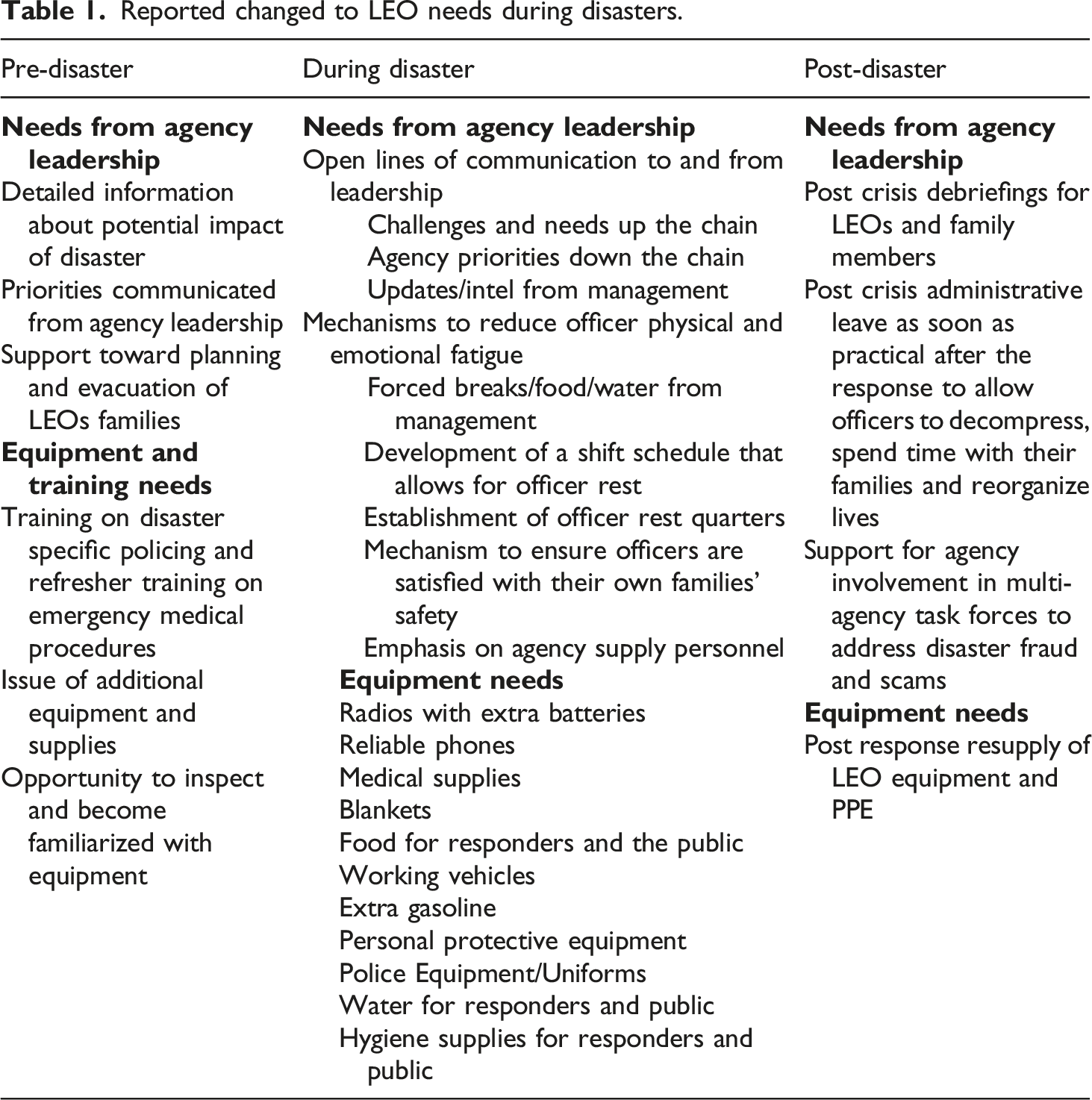
Poor communication from management was said to cause LEO indicisiveness because LEOs are not confident they can adequately predict the priorities of management. LEOs also indicated a need to relay challenges and hindrances up the chain of command and have supervisors prioritize addressing those issues. Interagency communication is also critical. Communication is always the most critical. We need to be able to communicate with each other, other first responders (Fire and EMS), as well as the community (LEO 50). Communication with the Emergency Operation Center is key to your safety as well as your effectiveness in providing value added (LEO 7).
Theme #2: Line Level LEO Duties Change During Disasters
Reported changes to the duties of line level LEOs during disasters.
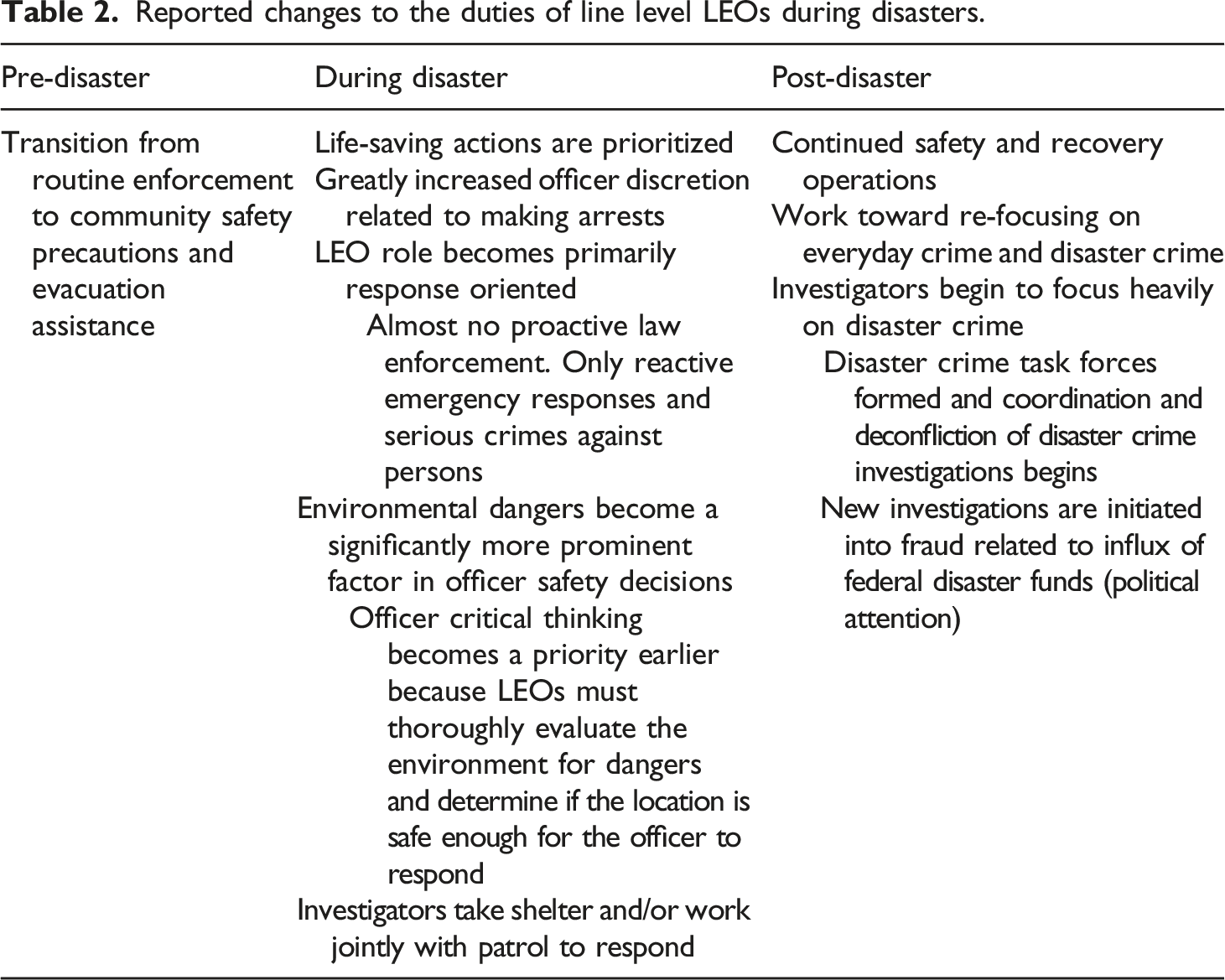
Daily enforcement duties change to mitigate immediate danger to life or limb (LEO 13).
During Hurricane Harvey, I was assigned to patrol and my duties included high water rescues and enforcing curfews. During night time hours I was tasked with manning roadway barricades to prevent motorists from driving into high water (LEO 9).
Theme #3: LEO Stress, Fatigue, and Potential Exposure to Traumatic Events
LEOs consistently mentioned the impact of added stress and fatigue resulting from extended shifts and increased workload. There is a fatigue factor as well from the mandatory shifts/overtime (LEO 3). Added stress (fear of the unknown) (LEO 34).
Others emphasized the need for mental health support for LEOs. Emotions run high on both spectrums. Some may experience depression, especially due to fear or if there are any losses of life, which may then lead to PTSD for anyone involved (LEO 22). Seeing and doing certain things during a disaster can be traumatic (LEO 29).
Overall, respondents overwhelmingly described disaster law enforcement as a stressful undertaking wherein increased calls for service occur repeatedly through extended shifts that are teeming with unfamiliar environmental hazards, which require officers to be highly focused on officer safety, despite physical and mental fatigue.
Theme #4: LEOs’ Concerns for their Families
The most consistent distraction identified was the LEOs’ concern for family safety. In some cases, the LEO’s knowledge of his or her family’s safety was described as a prerequisite to completing the job because LEOs need “the knowledge that their families are safe” (LEO 14). They (families) negatively create more distractions, stress, guilt and worry (LEO 35). Make sure you and your family are safe and prepared first (LEO 25). Make sure your family is equipped with necessities that you may not be able to provide if required to be immediately available during a disaster (LEO 1).
Respondents also expressed the potential for stress and guilt from prioritizing the community over their families and the overwhelmingly one-sided time and attention that the LEO must dedicate to the job, particularly when the family is also facing a disaster. During the crisis I can say there is a tremendous amount of stress and felt neglect by our families. It’s like we are there for everyone BUT them (LEO 38). Disasters personally impact officers and their families negatively because the officer is away from home helping other people. When the officer makes it home, he or she is likely exhausted and may not be able to help their own family (LEO 46). Officers and their families are severely impacted by stress due to separation and the lack of communication. Meaning, during the disaster and immediately afterwards, we are so busy with calls for service, we don’t have the opportunity to call and check in with our families. This causes stress not only on us but on our families as well (LEO 3). Hopefully the family is supportive and will agree to evacuate to safety if that is an option. Having to split your time and resources during a disaster to look after your family suffering from the effects and devote yourself to your job duties is difficult, exhausting, stressful and sometimes not an option (LEO 28).
Theme #5: Increased Officer Discretion and Critical Thinking
Another consistent theme was that LEO’s “officer discretion” increases significantly during disasters. Respondents consistently indicated a greatly diminished likelihood of making arrests for low level offenses for several reasons. LEO’s indicated a need to be free to respond to emergency situations and are at times directed by management to avoid making arrests for offenses below a certain level. Definitely not as strict on lesser infractions and concentrated more on humanitarian functions and criminal enforcement becomes more reactive instead of proactive (LEO 5).
An LEO needs to keep in mind you are not in a normal LEO role. You aren’t arresting most people who are violating the law. You are protecting life (LEO 21).
Respondents also expressed a need for patience and compassion with violators because they are experiencing the worst time of their lives. Understand to there will be some people that you can’t help the way that you wish you could (LEO 27). I believe officers are given more discretion during times of disasters. Right now the REDACTED Police department is not to arrest anyone who is non-violent and warrants are to be written and executed at a later date. Compassion and common sense come into play more so during times of natural disasters and emergencies (LEO 16). You are there to protect life and property. Remember you are dealing with people who are likely experiencing the worst time and lowest point of their life (LEO 50).
LEOs also indicated that disasters require LEOs to apply increased critical thinking. Remain calm and slow down your critical thinking the best you can (LEO 47). Definitely requires officer to prioritize and use more strategic thinking (LEO 19). Take a second and think before you act (LEO 33).
Discussion and Theoretical Models
In line with our theoretical frameworks, we found multi-level effects that increase LEO allostatic load during disasters (see Figure 1). Respondents described increased uncertainties, added fatigue from extended shifts, changing duties, and increased workload during disasters. They also described family factors, such as knowledge that their family is safe, as prerequisites to combat the increased stress of disaster law enforcement. They also articulated a need for enhanced critical thinking to manage the uncertainties of disasters and identified increased role conflict between protecting and supporting their families and the community during disasters. LEOs perceptions of the overall changes to law enforcement from disaster.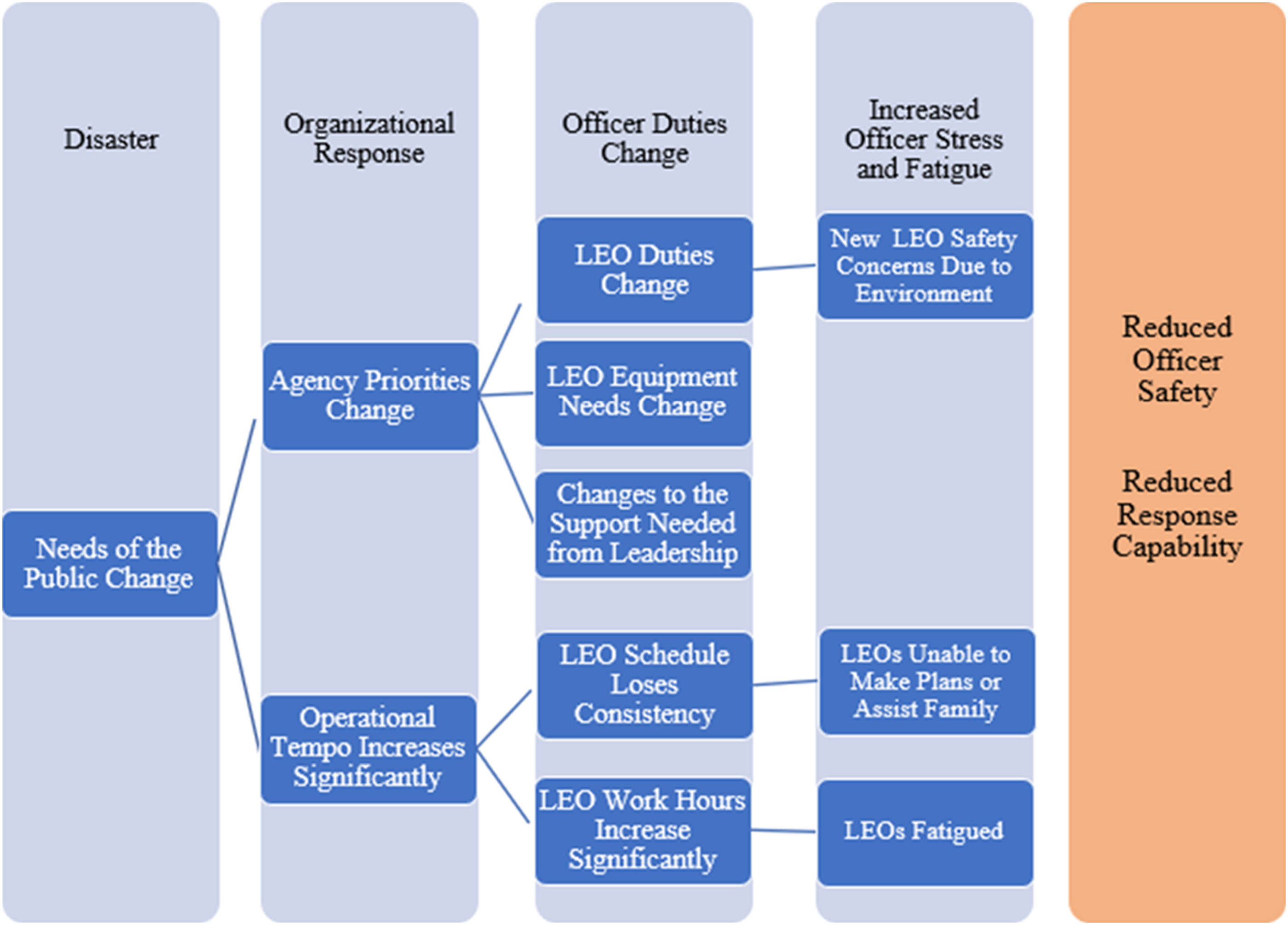
The Need for LEO Self-Care to Combat Stress
Our findings indicate that disasters exacerbate LEOs typical high stress load and can increase the risk for stress related negative effects (Purba and Demou, 2019). The themes that unfolded relative to officer safety and self-care resembled military deployments. During disasters, LEOs are in danger and away from home sometimes for multiple days, with limited communication with the family. LEOs sacrifice safety and family time, and subject themselves to increased emotional stress and/or possibly trauma as a result of disaster policing.
LEO’s Need to Know That Their Families are Safe During Disasters
Our findings reinforce the crucial role family relationships play (Bowles et al., 2015; Kiecolt-Glaser and Wilson, 2017) and extend this important role/function to disasters. This was a common theme among respondents and underscores previous research that family relationships can have a powerful effect on performance. Our findings emphasized an essential prerequisite for LEOs during disasters—“the knowledge that their families are safe”. LEOs face increased and unfamiliar safety concerns due to the hazards of the disaster environment. LEOs focus almost exclusively on the increased needs of the community during a disaster while simultaneously (often) being unable to reach or coordinate with their own families in order to know they are safe and taken care of. Not knowing their families are safe can distract and create guilt during a time where LEOs are balancing risks and dangers inherent in a disaster.
Disasters Intensify Role Conflict: Wanting to Support One’s Own Family, as Well as the Community
The findings of our study align with Adams and Anderson (2019) who found that officers are challenged by work–family role conflict and torn between protecting and supporting their families and the community during disasters. LEOs expressed feelings of guilt and elevated stress from this conflict. Such difficult dilemmas could create moral distress among LEOs (Papazoglou and Chopko, 2017), particularly if negative consequences resulted. It is plausible that disasters create increased instances where LEOs are unable to ease the suffering he or she is witnessing. Examples might be victims of disasters (i.e., flood water too high to save someone) or, as our participants indicated, the continued conflict between supporting one’s own family versus the community. This can place a moral burden on LEOs at a time when their physical burdens (i.e., long shifts, mental and physical fatigue, etc.) are exponentially increased and resources (like sleep, rest, and recharge) are decreased. Even in less stressful times, chronic moral distress can lead to compassion fatigue (Foley and Massey, 2020). Disasters could potentially magnify this distress between law enforcement duties and duties as a family member/leader. Figure 2 depicts the web of overlapping factors that negatively affected LEOs’ personally, and have the potential for decreased performance. Personal impacts of disaster response on LEOs.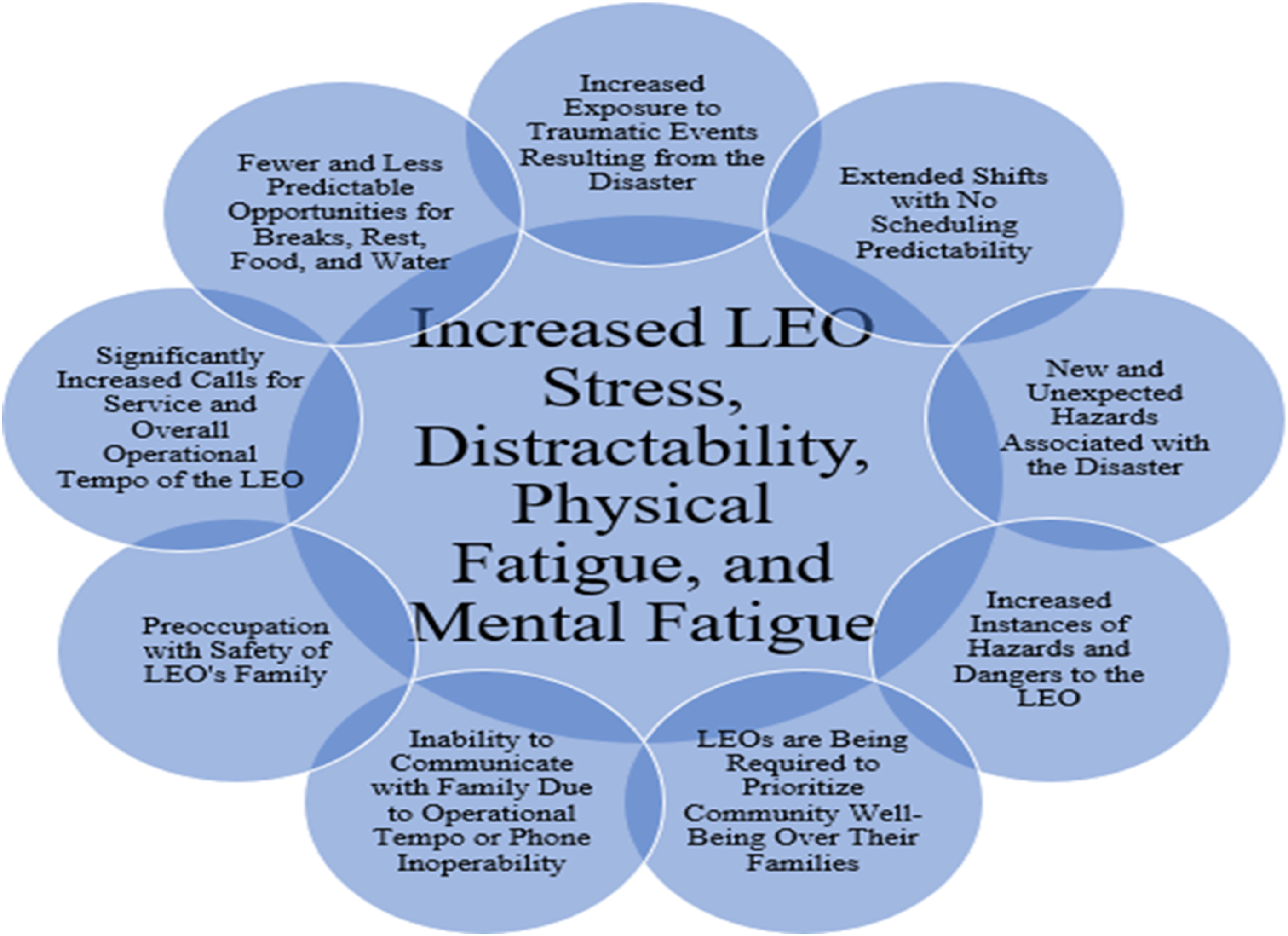
Unique Officer Safety and Decision Making During Disasters
Law enforcement officers also articulated a need for a more involved critical thinking process during disaster responses. This increased need for critical thinking comes from new and unfamiliar hazards during disasters combined with a more pressing need for LEOs to triage and prioritize the most important responses. Law enforcement officers are confronted with difficult decisions that require quick thinking in disasters—indeed often in areas that are not frequently trained (i.e., rescuing someone from a flooded car, etc.). Law enforcement officers also face the need to think critically and prioritize during extended shifts and repeated exposure to hazards that induce physical and emotional fatigue.
Recommendations for Law Enforcement Agencies
Overall, we found that disasters create environments wherein law enforcement agencies are called upon to operate at peak effectiveness, with LEOs applying enhanced critical thinking and discretion. However, LEO injuries, fatigue, emotional trauma, pre-occupation with family safety, or something as minor as missing equipment can create a chain of events that leads to unnecessary safety concerns for officers or the public. Building from the findings, with an eye towards practical application, the following are recommendations for enhancements in LEO well-being and organizational continuity, specifically around disasters. These recommendations might also have broader applications for any high stress event. The recommendations are in no particular priority order. Agency leaders will undoubtedly apply their own expertise to increase officer safety and agency effectiveness during disasters, but these findings might provide considerations for updates to existing continuity plans.
The recommendations below could also apply to LEOs outside the US. However, international LEOs may need to apply area-specific considerations related to climate, geography, and frequency of various types of disasters. For example, Japanese LEOs might focus on considerations specific to earthquakes or tsunamis while LEOs in some African countries might focus on heat-related disasters and draughts, with an emphasis on LEOs avoiding heat injuries. Additionally, although our findings were generated from the experiences of LEOs in the US, the human body and brain process stress similarly regardless of location, and human stress responses are similar across the globe, therefore, these recommendations are likely to also have broader applicability internationally. Tables 1 and 2 provide specific considerations that might prove beneficial to agencies intending to establish or update their continuity plans.
Recommendation #1: Seek Disaster Response Training for LEOs
Law enforcement officers would likely benefit from targeted training providing exposure to the unique challenges they face during disaster responses. Local fire departments might be an initial source of advice or training specifically related to environmental and structural hazard identification. Police departments in disaster-prone areas could also likely pool their training staffs to create a uniform training module designed based on the agency’s disaster experiences. Police academies serving disaster-prone areas might also consider incorporating such training. Agencies might also develop critical thinking exercises and training that incorporate disaster scenarios.
Recommendation #2: Foster an Organizational Culture that Emphasizes LEO Self-Care
Although acute stress from disasters can diminish over time (Cone, 2015), negative effects can also increase over time, depending upon other stressors (Zvolensky et al., 2015). Incorporating regular self-care and mental health check-ins can identify some potential problems before they start. Agency leaders could consider establishing a process for automatic administrative leave prior to a forecasted disaster so LEOs can fully devote time to family readiness needs. This could play an important down-regulating role in stress and give LEOs some prep-time prior to the stress and fatigue of disaster response. Also, Regehr et al. (2019) recommended supplementing immediate post-disaster mental health interventions with multiple check-ins and support points (“points of entry”) to enhance LEOs long term mental health. Permitting time to regroup with families might also rebalance LEOs’ allostatic load and down-regulate their stress responses after disasters (Leppma et al., 2017).
Additionally, although perhaps contrary to the culture within many law enforcement agencies, positive emotions like gratitude, joy, and interest can help protect from excess stress and increase resilience (Frederickson et al., 2003). In particular, Frederickson et al. (2003) suggest that finding positive meaning in adverse events may be the most powerful instigator towards bouncing back from crisis. One example might be to hold an agency-wide post-disaster briefing wherein agency leadership provides information on the number of lives saved and other benefits of the agency’s disaster response efforts. Agencies might also train employees on the protective value of gratitude and meaning-making by reframing not just everyday events with positive value, but also adverse events, and working on and accomplishing realistic goals.
Recommendation #3: Explore Military Style Self-Care and Disaster Training
Supervisor respondents emphasized the need to focus on the health and effectiveness of their subordinates during disasters. These findings resemble a military deployment leadership practice where supervisors extend their oversight to subordinates physical and mental ability to complete a particular mission. This could be as simple as ordering subordinates to take a nap ahead of a mission or requiring personnel to change their socks to avoid foot problems. Sleep is also particularly important since a recent meta-analysis indicates that over half of LEOs suffer from bad sleep quality (during regular duties), and people suffering from sleep deprivation are unable to self-assess their own cognitive and physical decrements, and face increased risk for physical illnesses and diseases (Garbarino et al., 2019).
We suggest that law enforcement agencies explore disaster training similar to military deployment readiness training. Self-aid and buddy care, sleep hygiene, environmental acclimation, structural hazards, and other survival skills might prove beneficial to officers working extended shifts with limited support. Basic stress inoculation training could include the effects of lifestyle factors on LEOs’ stress responses (McEwen, 1998). Supervisors might also be trained on specific indications that LEOs are overly fatigued. Much like in the military, this training could work best when done on a regular basis, not necessarily in a ramp up to a forecasted disaster, so all LEOs have a baseline of survivor skills that include family preparedness and cognitive decision making in disasters. Military personnel or local fire academies might be a resource for such training, but law enforcement agencies will likely need to coordinate various components of training.
Agencies might also consider developing or utilizing a law enforcement-specific program or plan to help LEOs decompress from continued exposure to stress, as well as primary or secondary traumatic experiences (McCraty and Atkinson, 2012). Just as military members return from deployments with emotional and physical injuries, LEOs may end their disaster response time with somewhat similar challenges. US military branches are utilizing a resilience approach with some success (Harms et al., 2013) and mindfulness-based resilience training is seeing promising initial results with LEOs (Christopher et al., 2018). Heart rate variability training has also shown promising results for reducing both physiological and psychological stress and increasing LEO well-being and performance (McCraty and Atkinson, 2012; Tomes et al., 2020). Leaders might benefit from building this resilience approach and training into the organizational culture, particularly given the sensitizing effect of continued traumatic experiences on LEOs.
Recommendation #4: Support the Whole Family as an Extension of Supporting the LEO
The importance of the family to the LEO’s experience in disasters was another important finding. The overall wellness of families is essential in enhancing resilience and mitigating stress for high stress occupations (Lester et al., 2013). Well-functioning families facilitate interpersonal support, which was found to moderate the negative stress experienced by LEOs in New Orleans after Hurricane Katrina (Leppma et al., 2017). Additionally, given the higher prevalence rate of PTSD associated with LEOs compared to civilians (SAMHSA, 2018; NIH, 2017), as well as exposure to disasters (Leppma et al., 2017), understanding PTSD is crucial. Post-traumatic Stress Disorder is associated with relationship concerns (Khaylis et al., 2011), decreased relationship satisfaction (MacDermid-Wadsworth et al., 2013), elevated emotional and behavioral symptoms in children, and greater anxiety and depression in parents (Lester et al., 2013). Perhaps because of this, previous studies have found those in high stress occupations prefer family-based interventions over individual treatment, especially after exposure to stressful events (Khaylis et al., 2011), and interventions can be more helpful if the whole family is involved and specialized to the occupation (MacDermid-Wadsworth et al., 2013). For example, an American military family centered prevention program titled Families Overcoming Under Stress Family Resilience Training, reduced distress in military children and parents, and improved family adjustment (Lester et al., 2013). Additionally, a resilience training program for LEOs utilizing heart rate variability training also found a significant positive impact on LEO’s family relationships as LEOs reported improved communication, and an enhanced capacity to listen and understand their family members (McCraty and Atkinson, 2012).
Recommendation #5: Develop Family Disaster Preparedness Programs
Respondents consistently described family safety as a prerequisite to mission accomplishment, and some respondents recommended evacuating family from the area during disaster. Failure to account for family as a legitimate LEO concern may have officers preoccupied with family safety, adding to stress, and likely increasing fatigue and impeding LEO focus, decision making, and critical thinking. Agencies might provide resources and guidance for household preparedness and evacuation planning. The guide could include information on family “go bags” with supplies and food. Agencies might also identify training services for family disaster preparedness training including family resilience programs to enhance LEO family resilience and readiness. Agency leadership might also identify resources to support LEO families’ early evacuations and well-being during disasters. Establishment of a “sister city” program between departments might also allow for evacuated LEO families to have a point of contact with families of LEOs in the “sister city” designated as the evacuation point. Organizing a voluntary family check-in system might also reduce LEO distractions.
Limitations and Suggestions for Future Research
The use of 56 qualitative surveys and a focus group might be viewed as a limitation of this study. However, the qualitative survey allowed us to reach saturation, and gather rich and detailed data from respondents who would otherwise likely not have had time to participate. Additionally, although our method and sampling strategy are standard in qualitative research (Creswell, 2007), they provide diversity of responses and thus should not be generalized to the entire population of LEOs across the US or worldwide.
These findings also highlight a need for further research. Recommendation three suggests seeking military style self-care training for LEOs. This recommendation seems particularly suitable for further research that could result in positive changes. Researching the adaptation of military self-care training for LEOs could produce relatively quick benefits since existing military practices are based on decades of lessons learned in real-world dangerous situations, including crisis environments. In short, researchers would not be “reinventing the wheel,” but simply determining if the tactics and techniques used in the military work in the LEO disaster context, and what adaptations, if any, are needed. This has already started to occur in law enforcement agencies (McCraty and Atkinson, 2012), but further research into using resilience training specifically for and around disasters, as well as scaling up programs across departments could be helpful. Additionally, given our findings, and others (Anderson et al., 2002), related to LEO stress, expanding on current research efforts in LEO communities to examine the impact of resilience training programs might prove useful. Additionally, further research might also explore which components of resilience programs are most effective (and the cost of each component) in preparing LEOs and their families for disasters, and how those interventions vary across different nations and contexts. In addition, the heart rate variability training mentioned above has shown promising results for reducing LEO stress and improving performance (McCraty and Atkinson, 2012; Tomes et al., 2020), and it follows that those benefits would extend to LEOs exposed to disaster, so further research is warranted. Additionally, further research into best practices for building family preparedness programs is also likely to produce relatively quick and useful results. Existing research on family preparedness and family resilience could be used as a starting point and adapted towards the unique considerations of the families of LEOs.
Conclusion
Disasters cause increased stress on LEOs from fatigue, extended shifts, uncertainty and changing duties, increased workload, work–family role conflict, and new operational expectations and challenges within the agency during disasters. Additionally, we found that family safety is a critical stressor and pre-occupation for LEOs during disaster policing. The challenges are then compounded because the need for LEO critical thinking increases to match the increase in untrained for challenges that are unique to disasters. From a theoretical lens, our findings align with ecological theory, UMT, and the concept of allostatic load. From a practical lens, we suggest several initiatives and approaches that agency leaders might consider to mitigate the unique challenges to LEOs well-being, which stem from disasters. Our findings also reinforce the crucial role family relationships play in LEO wellness, and extend this important role/function to disasters. Overall, this study provides several recommendations that law enforcement executives can use to enhance their continuity of operations during disasters, while simultaneously protecting and supporting their most vital asset, the LEO.
Footnotes
Declaration of conflicting interests
The authors declared no potential conflicts of interest with respect to the research, authorship, and/or publication of this article.
Funding
The authors received no financial support for the research, authorship, and/or publication of this article.
