






Abstract
Post-COVID-19, there is an increase in e-learning, synchronous, and hybrid approaches to police recruit education. In parallel, police organisations are experiencing challenges with recruiting and retaining the required workforce levels. This study examines the relationship between the experience of learning to be a police officer through e-learning and/or hybrid education delivery and decisions to disengage from a future police career. The findings suggest the e-learning and/or hybrid approach is well supported by police recruits and is not the single or major determining factor in decisions to discontinue their police studies and aspirations to join the police profession.
Keywords
Introduction
Current evidence indicates that police organisations in countries such as the United Kingdom and Wales, Canada, New Zealand, and Australia are experiencing challenges in recruiting and retention. As presented in the New South Wales Police Force (NSWPF) Australia Annual Report for 2023 – 2024, the gap is widening between available employment numbers and the number of officers employed. The gap illustrated in Figure 1 suggests 1,284 available unfilled positions in 2023, rising to 2,119 in 2024. NSW Police Force Officer Employment (Source: https://www.police.nsw.gov.au/_data/assets/pdf_file/0003/890805/FINAL_Annual_Report_2023-24.pdf p. 31).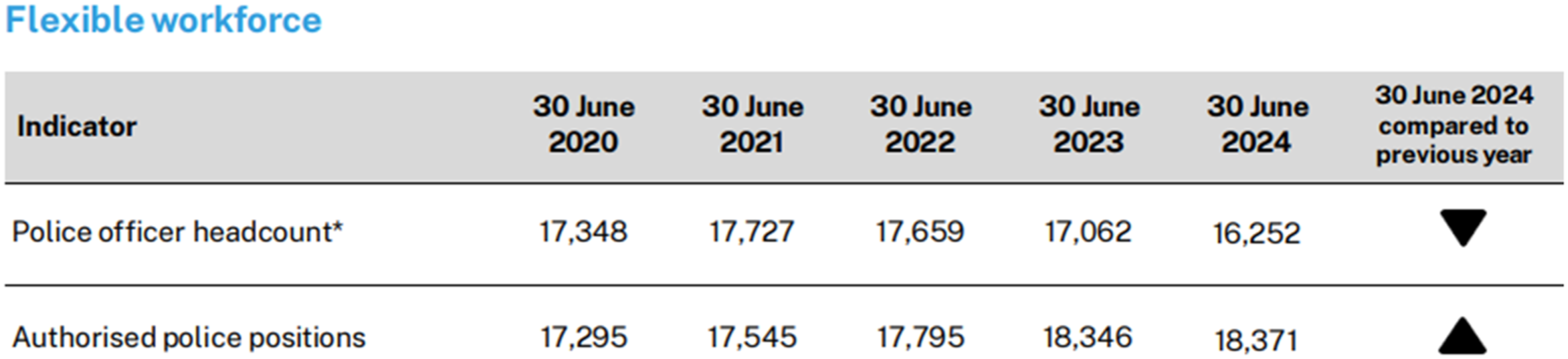
Similar trends are being experienced in New Zealand where a targeted officer number of an extra 500 officers by November 2025 was experiencing a shortfall of 477 (McCulloch and Smith, 2024). The work of Adams et al. (2024) reports a similar trend for the United States with the country experiencing challenges for police departments to attract and retain police officers. The work of Wilson and Grammich (2024), suggests police staff shortages are driven by a range of factors, including legitimacy crises, demographic and generational shifts, changing workloads, and evolving performance expectations. As indicated in the International Association of Chiefs of Police (IACP) reporting of 2024 survey results, 78% of agencies reported in 2019 difficulty recruiting officers, with staffing declining by 80% in some agencies serving large cities between 2019 and 2023 (www.theiacp.org, 2024). Police officer numbers in England and Wales have witnessed a rollercoaster trajectory. The total headcount of police officers across the 43 territorial forces stood at 148,886 at the end of September 2024. This number is down 833 from a peak of 149,769 at the end of March 2024 and is down year on year by 278 from 149,164 at the end of September 2023. The UK government accredited official statistics as of 19 March 2025, reports The number of officers leaving the service is the second highest number of leavers in a financial year since comparable records began in the year ending 31 March 2003…police officers voluntarily resigning from the service were more likely to be newer officers, with 72% of all police officers voluntarily resigning having less than 5 years’ service
Undertaking studies to offer insight into factors influencing retention is pivotal for supporting organisational strategies in this domain. One area that has the potential to contribute to retention of police recruits is the early detection of factors that influence a police recruit’s (i.e., student officer not yet operational) decision to disengage from the learning journey to enter the police profession. In parallel, understanding the perspectives of those police recruits who are progressing through their studies as to the influences on the management of their studies as a full time or part time student where more than 80% of their learning is conducted in the online/e-learning environment provides both (a) a balanced perspective and (b) insights into what works and what hinders their studies and progress.
This article explores the under-reported topic of the influence of the delivery of initial police recruit training in an e-learning hybrid model on rates of recruit attrition. The article discusses the areas of literature in respect of police attrition that are available, a summary of what is known in respect of utilising e-learning in police education, followed by an explanation of the study’s methodology, data collection, data analysis, and a discussion of the results and implications for future policy and research. Of note, this study does not focus on recruitment and retention of police officers; rather, it is the application of the unique e-learning/hybrid approach to initial training and its influence on attrition and retention.
Literature review
Whilst there are limited studies associated with exploring the role of e/learning in police recruit education and its role in attrition of police recruit students, there is a wealth of studies examining causal factors for attrition of serving officers. Such studies indicate the following themes are key contributors to attrition within police agencies across the world: Job satisfaction and organisational commitment (Charman and Bennett, 2021; Rief and Clinkard, 2021; Ahmad et al., 2019), quality of organisational leadership (Charman and Bennett, 2022; Mourtgos et al., 2022) quality and dedication of supervisors (Anand et al., 2022; Baker et al., 2023; Paoline and Gau, 2019; Wilson and Grammich, 2024), work-life balance (Lambert et al., 2021; Andreescu and Vito, 2021; Hilal and Litsey, 2019), recruitment, training and officer expectations (Skaggs et al., 2022; Williams and Sondhi, 2022), financial compensation and alternative job opportunities (Charman and Bennett, 2022; Hilal and Litsey, 2019; Wilson and Grammich, 2024).
The key area of literature that has the potential to offer insight for this study is the role and influence of the online/e-learning approach to police recruit education on students’ satisfaction with this learning approach and those who self-select attrition from such programs. Reporting of comprehensive and in-depth information associated with the delivery of education and training for police recruits globally is limited. A report from the Institute for Criminal Justice Training Reform offers a comparison of the number of hours of education and training for police recruits, as illustrated in Figure 2. Comparative hours of education and training for police recruits (Source: Institute for Criminal Justice Training Reform Report 2021).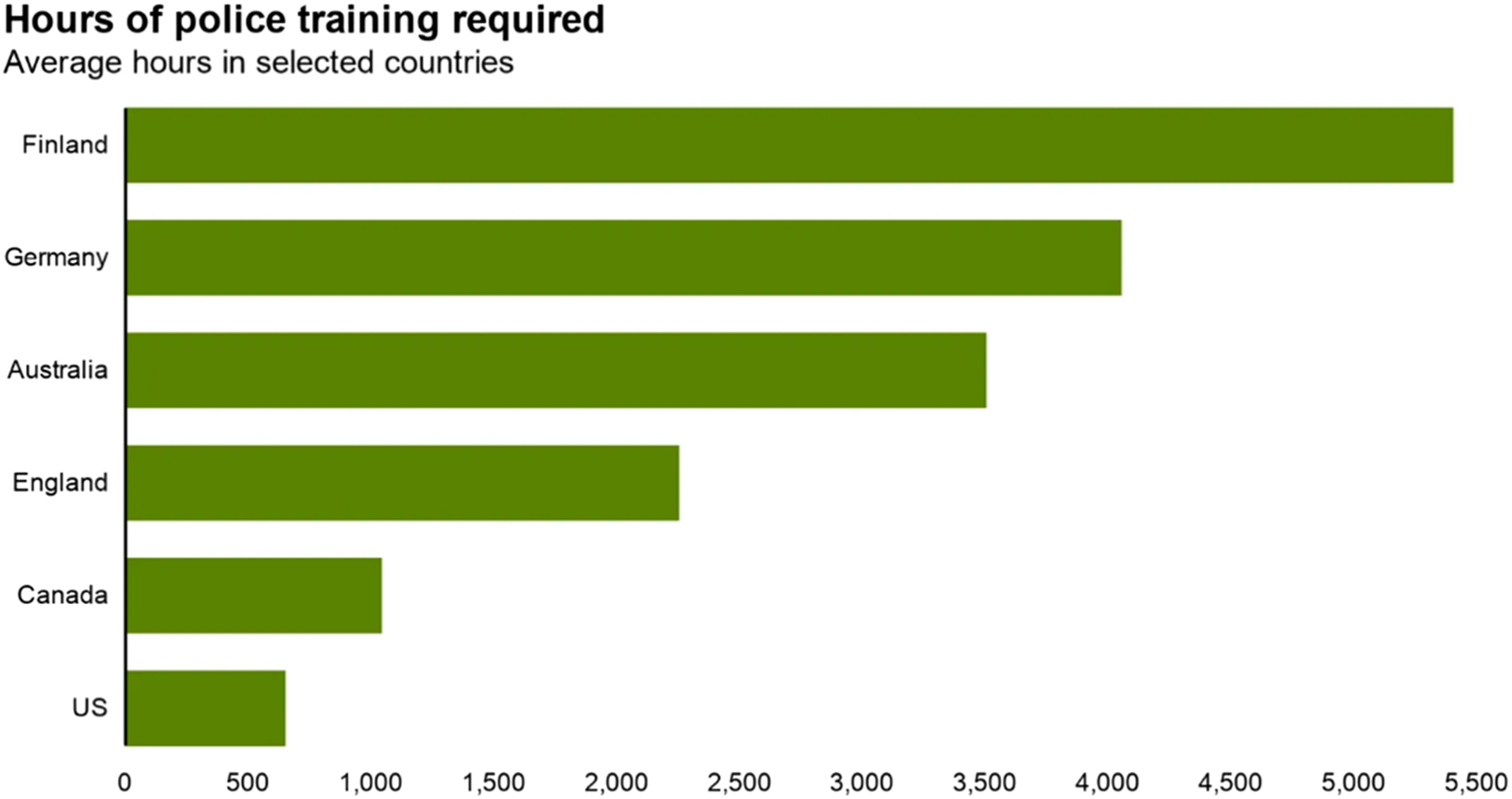
The body of literature more broadly associated with examining online/e-learning for police education and training increased as a result of the transition to online learning for police organisations during COVID-19. The work of Belur and Bendall (2023) examines the application of the range of online/e-learning and blended learning environments as England and Wales police transitioned to embracing virtual and blended learning in response to their circumstances. Asexplained by Belur and Bentall (2023) the introduction of the Police Education Qualification Framework (PEQF) and the National Police Uplift Programme (PUP) designed to encourage an additional 20,000 police recruits were critical catalysts for rethinking and designing police education delivery. (p.168).
The experience of the England and Wales police in embracing the online/e-learning environment resonates with that of a police education institution in the Middle East, Rabdan Academy, which experienced the rapid adoption of a synchronous online learning approach during Covid-19 and beyond (Davies and Al Sharefeen 2022). As explained by Davies and Al Sharefeen (2022), the transition to the online/e-learning environment had minimal impact on the learning achievements for the students, whereby they were achieving similar final grades in assessment as those achieved in face-to-face classes. This finding resonates in the work of Belur and Bentall (2023) which indicates: The experience of remote training during the pandemic has shown it is both possible and desirable, especially if it is cost-effective in the long run and more effective in achieving learning outcomes as compared to traditional methods.
The work of Culduz (2024) highlights a critical factor in the achievement of learning programs for students that are centred on online/e-learning approaches to learning delivery. Culduz (2024) suggests whilst there are benefits to this mode of learning delivery there are also challenges which relate to the demand for learner self-discipline and technological capabilities (p.1).
A study by Hefter and Nitsch (2024) examining the effects of interest and achievement goals on police students (at a German University) learning engagement and outcomes in a synchronous distance learning domain identified the police students (25% of study participants were newly commencing police recruit students and 75% were police officers with years of practical duty as police officers) identified the synchronous learning approach was successful with students achieving high rates of learning.
Whilst there is a paucity of literature dedicated to examining the experience of police recruits undertaking synchronously delivered education, coupled with examining reasons police recruits self-select to withdraw from their police recruit learning program, this current study seeks to contribute to closing this gap in the literature. The key research question underpinning the study is framed as: What are the attitudes and perceptions of police recruits toward the effectiveness, accessibility, and engagement of e-learning-based initial education programs in police training?
In addition, the study seeks to affirm that an e-learning/hybrid delivery of police recruit education is only one of several factors that may contribute to an individual student to self-select to disengage from their study program and a future career in policing. Understanding the influence or lack of influence of this police recruit education design on a police student’s decision to withdraw may contribute to deliberations as to the future design of police recruit education delivery.
Methods
Study design
The work of Creswell and Plano Clark (2011, 2018) and Creswell (2016) proffers that a mixed-methods approach to research is a research methodology in its own right. It is this approach that has been adopted for the study presented in this article, incorporating both survey and interview data collection instruments. Seminal research theory scholars Bryman (2012), Creswell (2016), Miles and Huberman (1994), and, more recently, the works of Taherdoost (2022), Wasti et al. (2022), Hirose and Creswell (2023), and Kawar et al. (2024) advocate for the advantages of a mixed method or triangulation of qualitative and quantitative data. A fundamental benefit in employing a mixed method approach is that the qualitative data gives voice to the meaning underpinning the statistics/quantitative data from the perspective of the research participant/s. In the study presented in this article, the mixed method approach has been employed in an effort to capture the nuanced details associated with the reasons participants select a particular survey response. This approach is cognizant of balancing the fact that participants may interpret survey questions differently from the researcher’s intent. Further, offering an opportunity for both open-ended questions and interviews may reveal content that had not previously been accounted for in the Likert scale survey questions. Analysis of the interview transcriptions has utilised a discourse analysis approach. The Sage Dictionary of Qualitative Inquiry (Schwandt, 2007) explains that discourse analysis is one of the many procedures employed in textual analysis and is a general term for the variety of approaches to the analysis of recorded talk, with a ‘strict focus on the content of the talk [rather] than on its linguistic organisation’ (Schwandt, 2007). The discussion of discourse analysis concepts by Taylor (2013) in offering a comprehensive guide to discourse analysis aligns with the explanation by Schwandt (2007) in advocating that discourse analysts use ‘talk’ to look beyond the person to build evidence of phenomena. The purpose of employing discourse analysis in this study is to identify the patterns between the responses to survey questions and the interview responses, potentially offering a deeper understanding of the survey response data.
To place the study presented here into context, it is helpful to set the scene from which the study data has been drawn, in the process identifying emerging trends associated with the participants’ perspectives on learning to be a police officer through an online/e-learning approach to learning delivery. The online learning approach within a policing or law enforcement degree is unique. There are online/e-learning courses in associated fields of law and criminology, and the online domain is utilised within police programs; however, the delivery concept of e-learning for more than 80% of a police officer recruit’s initial training course is the unique point of difference with the New South Wales Police recruit education program.
The Associate Degree in Policing Practice (ADPP) is the mandatory education program for those seeking to enter the New South Wales Police Force in Australia. The ADPP is referred to as a two-year program. Year 1 consists of Session 1, a 16-week full-time online/e-learning delivery with 2 x 2-h compulsory live streaming tutorials for each week 1 - 14, mid-session and end-session examination assessments. This is followed by 1 week of residential school at the police academy and 40 hours of work placement at a police station (Figure 1). On successful completion of Session 1, students progress to Session 2, which is the mandatory on-campus session at which time students wear police uniform and carry appointments, undertake simulated policing scenarios, and undertake firearms and weaponless tactics training in preparation for attesting as a Probationary Constable. Session 2 includes theoretical knowledge acquisition from Sessions 1 and 2 that is applied during the simulated policing scenarios. The Session Two curriculum is 16 weeks in duration and is followed by an Attestation Parade and deployment to the allocated police station for the students to begin their operational career as a Probationary Constable of Police. Session One and Two combined is not strictly a full year (52 weeks); however, for ease of system recording, it is generally referred to as Year 1. Year 2 study of the ADPP is undertaken by the probationary constables whilst working at their allocated police stations. Year 2 comprises three Semesters of 16 weeks in which the officers study both theoretical and practical police topics aligned to their operational duties.
The former description of the Session 1 learning delivery approach does not directly align with the range of definitions that embrace online/e-learning; it is in part online synchronous learning, as explained by Belur et al. (2021). Learning that takes place with the learner(s)/tutor or learner(s)/peer(s) are available at the same time. This might be facilitated by live video conferencing for a ‘virtual face to face’ experience and tools such as live chat functionality. Examples of online platforms to support synchronous learning include Zoom, MS Teams, Skype and Google Classroom (p.10).
As Hefter and Nitsch (2024) succinctly explain, ‘synchronous learning is same time but different place’ (p.118). In addition, the Session 1 ADPP program learning is in part a blended learning approach as described by Staker and Horn (2012), where a student learns part of the program through attendance in person at a learning institution (e.g., academy/university). The blended approach for the ADPP is evidenced through the attendance at the Academy for residential schools during the final weeks of Session 1.
Students of the ADPP may select to study Session 1 as a part-time student during which time they undertake the Session 1 in two parts, Session 1 A (50% equivalent full-time lessons spread across 16 weeks) followed by Session 1B (the remaining 50% of the full-time program i.e. 8 weeks of lessons spread over 16 weeks) the learning material is identical between the full time and part time students.
Session 1A and Session 1B students attend 2 x 2-h live tutorials each week, are provided with the learning material online/e-learning, attend the Academy for a residential school at the end of Session 1B, and undertake their work placement before progressing to Session 2. The part-time students, on completion of Session 1B, join the full-time class that is also progressing to Session 2at that time. The ADPP course delivery is illustrated in Figure 3. ADPP course delivery design.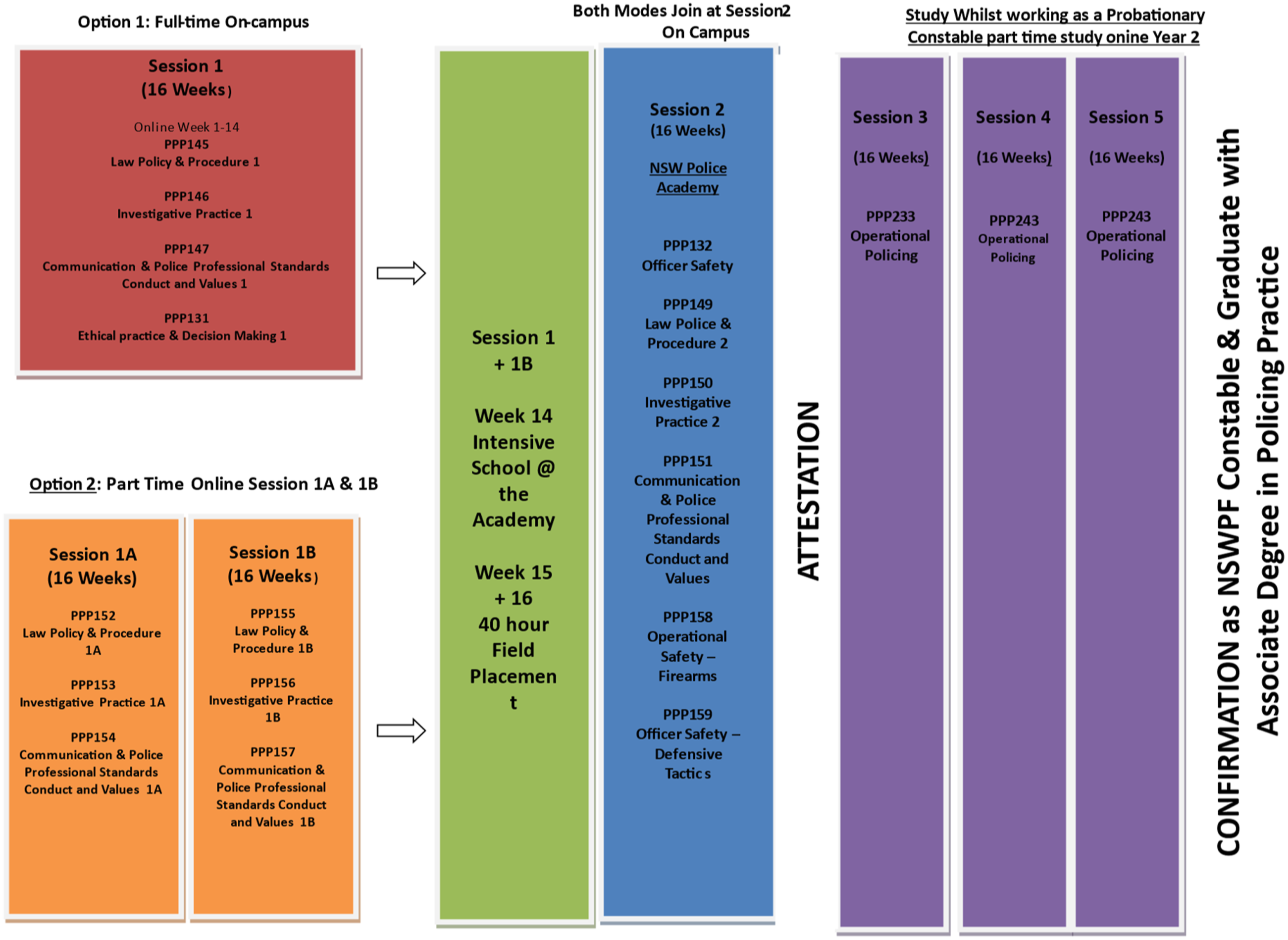
The two classes of police students that are the subject of the study are those that commenced as full-time students of the (ADPP), i.e., Session 1 (S1), and those who commenced the ADPP program in a part-time capacity, i.e., Session 1A.
Data collection
Following Human Research Ethics Approval from the Charles Sturt University Human Research Ethics Committee, an online survey comprising 22 questions was distributed to a class of Session 1 and a class of Session 1A students. Of note, in addition to demographic questions, only those questions that related to the participants’ experience of the e-learning/hybrid curriculum delivery are included in this article (3 questions). The remainder of the questions were focused on motivational factors for selecting a policing career, recruitment, and career expectations. A total of 18 interview questions were employed, with five questions related to the experience of e-learning/hybrid learning.
Participants
The study in this article is based on a training program offered for the initial police recruit education for New South Wales (Australia) and includes two cohorts of students – a Session 1 and Session 1A class during 2025. The participation in the survey was voluntary and anonymous, with the survey distributed online to the S1 and S1 A classes via their class intranet site. The interviews were voluntary and conducted through MS Teams, recorded, transcribed, and offered to the participant for review and correction before analysis. These two classes are also the first participants in a 5-year longitudinal study, which involves distributing surveys and invitations for interviews iteratively throughout their 5-year career path with the New South Wales Police Force. The 5-year study includes a further five classes of police recruits as they commence their ADPP studies – the commencement of these classes is spread across 18 months. The longitudinal study seeks to identify nuanced details of causal factors influencing attrition and, by so doing, contribute to future retention strategies for the NSW Police Force.
Data collection tools
The survey questions analysed for this article were those clustered to include demographic data (e.g., age, gender, level of qualification, language spoken); experience with online/e-learning technologies; experience of studying in the online/e-learning environment; long-term career plans; and levels of support from family, friends, and teaching staff. The survey was also distributed to those students in both classes who selected to voluntarily disengage/leave/withdraw from their study of the ADPP and included additional questions in respect of the key influences on their decision to withdraw and a question asking if they intended to reapply in the future. The students in both classes (including those who withdrew voluntarily from their studies) were offered the opportunity to participate in an interview. The survey question design included a Likert Scale (Very Strongly agree, Strongly Agree, Agree, Undecided, Disagree, Strongly Disagree, Very Strongly Disagree, Not Applicable) or required the preferential selection of nominated responses with the option of adding free text responses. The interview questions replicated the survey questions and invited the participants to explore the rationale underpinning their perspectives. The interviews were conducted through Microsoft Teams, recorded, transcribed, and participants were offered the opportunity to review and confirm the transcription.
Number of surveys and interviews completed (S1 & S1A).
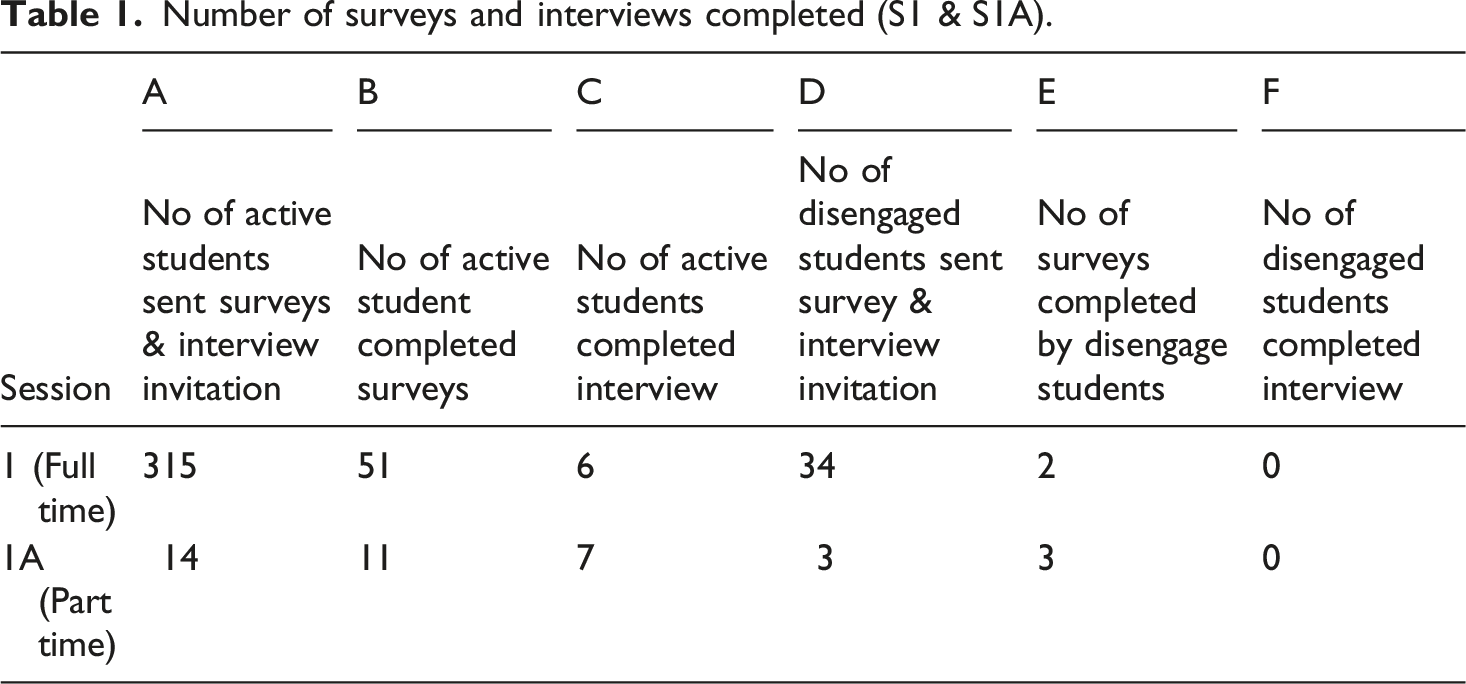
As the majority of the survey questions were Likert scale, the analysis of the data was undertaken manually, downloading and creating graphs and tables from the Survey (Qualtrics Software was employed for the study).
Results
Participant group demographics
It is insightful to consideration of the results by firstly considering a comparison of demographic data that illustrates the constituency of the respective S1 and S1A students. As indicated in Figures 4 and 5, the majority of students undertaking the full-time program are in the Generation Z age group (defined as people born around 1997 to 2012), whilst for the part-time class S1A, this is the lowest age category. Age of participants. Level of qualification held by participants.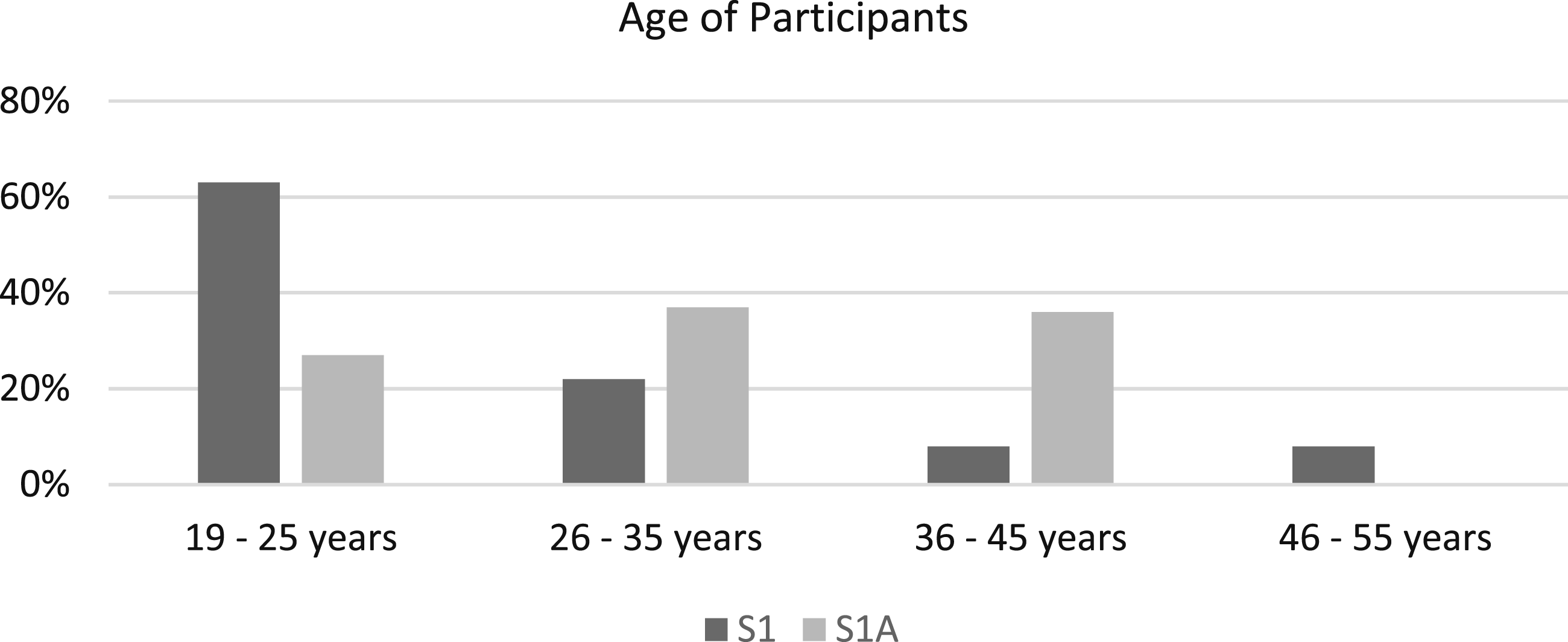
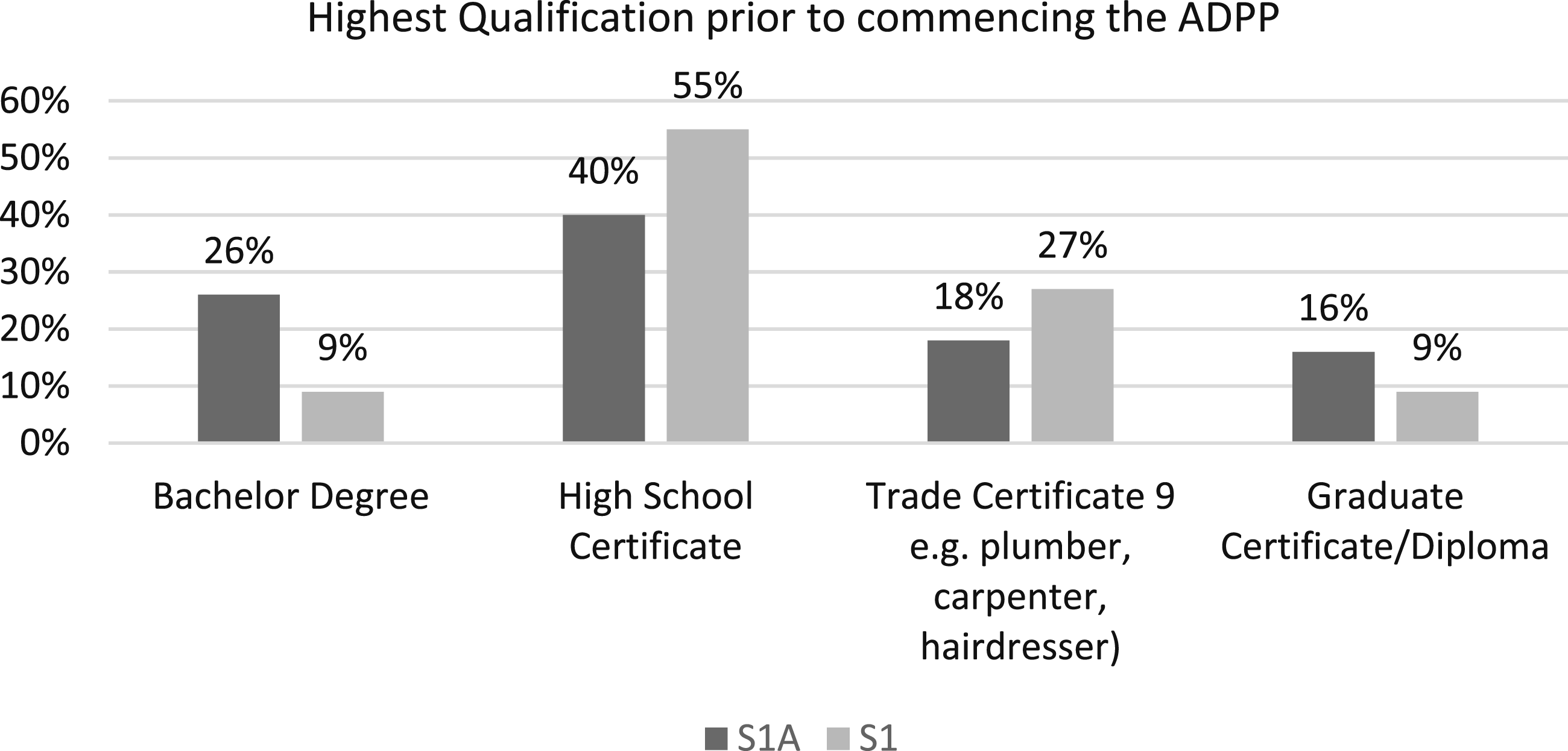
Qualifications held by participants
The qualification held by the participants before entering the ADPP program indicates that these were relatively similar between the two cohorts in terms of the percentage of qualifications per cohort. An area that was outside of this general similarity was the percentage of part-time (S1A) participants who hold Bachelor level degrees, with more than a ¼ (26%) of the cohort identifying they held this level of qualification, whilst for the S1 full-time students the rate was 9% (Figure 5). Here also, the part-time interviewee participants offered insight into how this impacted their ability to manage the part-time study: I was sort of expecting it. I have done a degree before and worked during that. So, the study side of it, I was already very prepared for it. (S1A participant)
Level of support from family and friends
A factor that has the potential to influence a positive experience with studying in an online/e-learning environment for both full and part-time students is the support they receive from their family and or friends for their endeavours. Figure 6 illustrates that participants in both S1 (76%) and S1A (82%) agreed they were strongly supported by family and friends (Likert scale survey question: What level of support (time and understanding of the demands of the study) do you receive from family and or friends to undertake the Session 1 study of the ADPP? Very Strongly Supported, Strongly Supported, Limited Support, Very Strongly Unsupported, Unsupported, Undecided). Level of family and friends support for participants.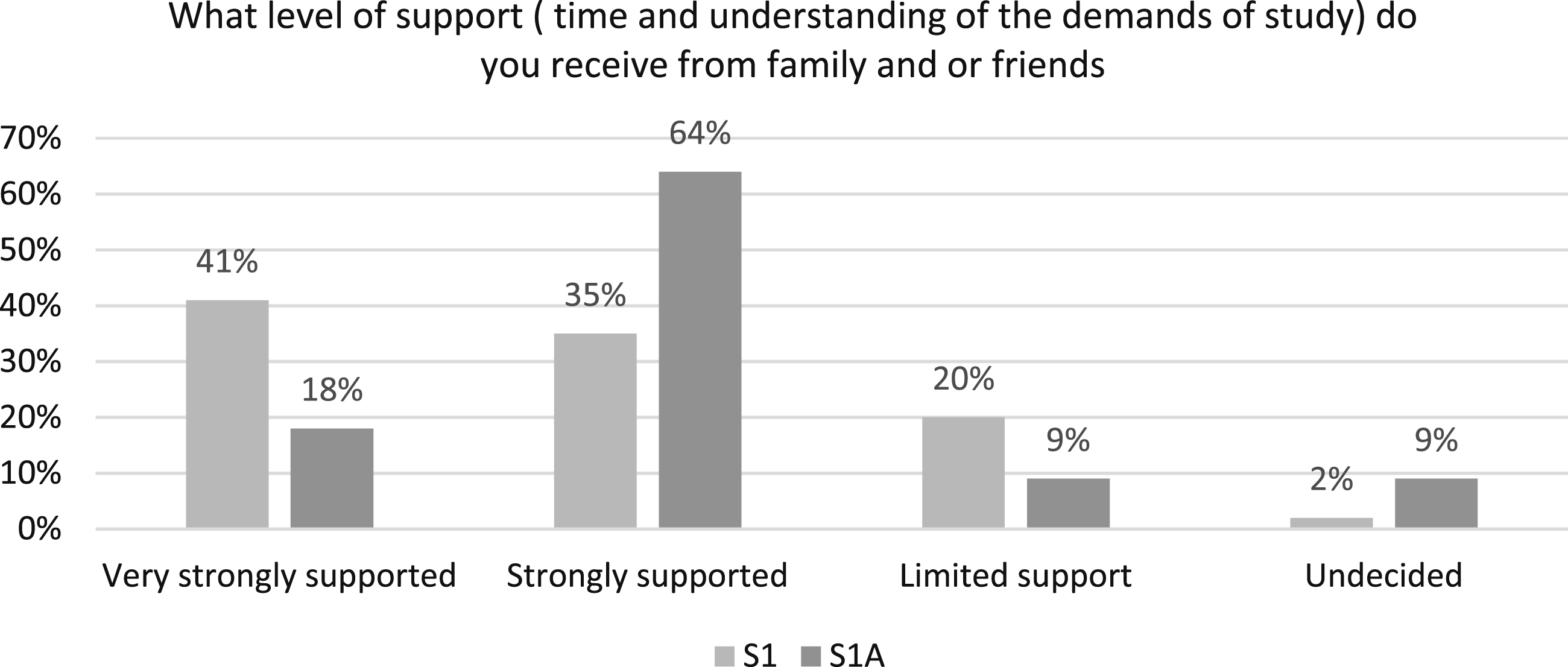
The following comments offered by S1 interviewees in respect of the support they receive from family and friends offer insight into the premise for the strong positive response in respect of this influencing factor on their study aims. • Interview questions: Do you feel supported by family in your studies and pursuit of a policing career? Can you tell us about that? • Do you feel supported by friends in your studies and pursuit of a policing career? Can you tell us about that? I have a very understanding wife who is very supportive of me, and she understands that the weekends of this four-month period are going to be pretty much wiped out because I just need to study. …Family - [wife and young child] is demanding time for them, but she's been very good about it. …It is a bit of a compromise …Yes. The course is demanding, so I just told him Look, I have to work hard, so if I'm not around for periods of time, it's because of this, and they are understanding, so it isn’t a problem. …My family is pretty supportive. They help me throughout the journey.
The comments offered by the S1A (Part-time) participants in respect of the support they receive paint a very clear picture of the role support from family and friends plays in enabling the participant to engage with and progress their online/e-learning studies: …yeah, I am lucky in that regard, I've got a 7-year-old and a 2-year-old, so the 7-year-old's pretty good. She understands that if I've got to do the lecture at night, she's fine with that, and the 2-year-old is a 2-year-old! …I've got a lot of support from my partner, a lot, which is good. She helps me any way she can. …Yeah. I feel well supported, my team leader at work at the moment, he used to be a police officer, so he's very supportive of me doing it. And he thinks that it would be a good career move for me. And he really enjoyed the job here. So, it's been very good that he's been supportive because I do need to leave work early. The days that I have my lectures, and he's just very happy for me to just do that, which does help. …being able to leave work, leave work early, and having a partner who can cook dinner at night. Yeah, everyone's been very helpful. …Yes, so every time I've spoken with family, saying, I'm in the process of becoming a police officer. It's all positive things, and everybody's very happy for me. …My family is very supportive. My wife is supportive. And then, yeah, I've got a Labrador, and yeah, he's always outside with me doing the fitness training.
Level of confidence with online/e-learning technologies
An influencing factor when exploring the experience of online/e-learning learners is the level of confidence they hold in utilising online technologies. The data (Figure 6) indicates a small percentage of both the S1(Full time), 2% and S1A (Part time), 9% participants were not confident with the use of online technologies, having no prior experience with the online environment, and or have not studied in the online environment before commencing the ADPP. By contrast, 90% of the S1(Full time) respondents recorded they were confident/very confident with online technologies, and a similarly strong level, at 73% was recorded by the S1A (Part time) respondents. Survey question: What level of confidence do you have in online technologies for learning online/e-learning (e.g., internet, online programs, online systems)? (Figure 7) Level of confidence with online technologies.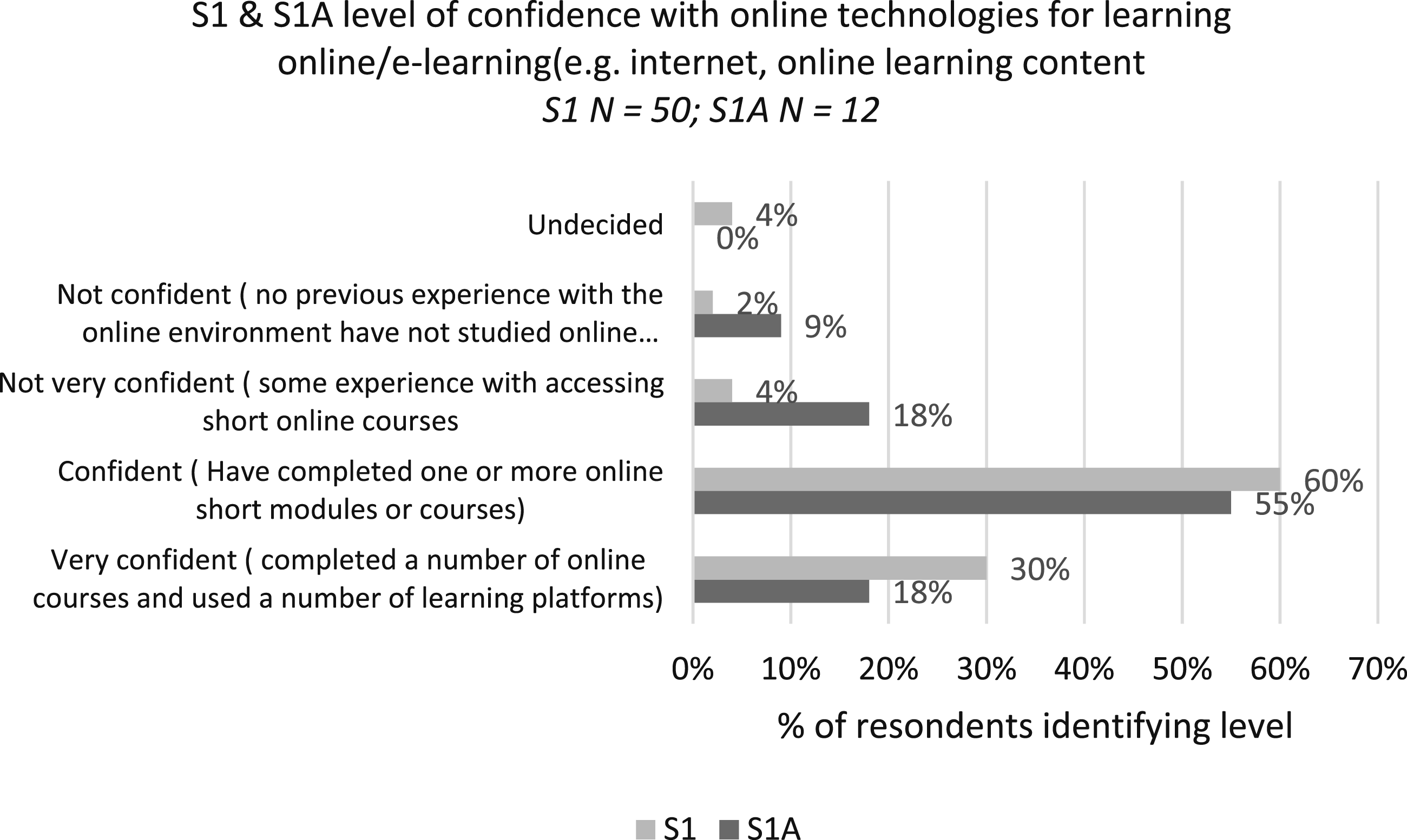
A further survey question delved into whether the online learning environment and content delivery met their expectations. This question drew a positive response from the majority of the respondents, both S1 and S1A. Respondents identified that they liked the online environment because it allowed them to manage other commitments around the online learning requirements. This was particularly apparent in the responses from the S1A part-time participants; however, there were equally positive comments from the S1 full-time respondents, as indicated in the following interview extracts. Interestingly, one interviewee who identified as having been a year 12 student during Covid-19 and having to undertake their studies online was a strong advocate for on-campus learning delivery: …No, no way [do I like the online environment]. I would rather do all of this on campus because I’m actually a COVID 2020 graduate. So, I did all of year 12 online, and I hated it. And so did my entire year group.
Further comments from the S1(Full-time) participants advocated strong support for the online environment: …I did my research before I applied. You know, it was pretty clear on the website and all of that that session one was online, session two was at the Academy. So, I don’t feel like so far, it’s been anything different than what I expected it would be …I feel that the way the learning material is presented, [online], has made it easy. Not easy, but it sort of gave me a straight path to follow. …It definitely meets my expectations. I think it’s pretty similar to what I did for my certificate. We accessed an online site and basically had all the information up there. …I've been out of school now a little while, and I’m probably not, as you know, computer literate, as, say, some of you know, some of the other guys that are younger just out of school, or even in their twenties, so it's probably more challenging for me to get my head around some things.
The S1A (Part-time) respondents were strong advocates for the online/e-learning environment: …I definitely do like the online studying. It's a lot more flexible. It allows me to do it kind of in my own time, just because I work full-time. I do have a very busy schedule, and sometimes I'm working extra shifts. So, for me to be able to wake up in the morning around 5 AM. Do 2 h before going to work, and then get home, and then do some more. It's flexible I knew it was going to be online, but I didn't think it would be like it would flow this well. …I think, in this current day, online learning does have its place until you know the hands-on stuff needs to happen.
Managing demands of online/e-learning studies
At the centre of the exploration of the role of online/e-learning hybrid delivery of a police recruit education program lies the reality of how well the students, in this study, the research participants, manage the demands of the study program in either the full-time or part-time program. As illustrated in Figure 8, the data with respect to participants in both the S1 and S1A cohorts and their perspective on the management of the demands of the online study records a positive view on this critical aspect of the study. A total of 75% of the full-time S1 participants indicated they were coping well or very well with the demands of the study, 20% were coping moderately well, and 2 participants (4%) indicated they were not managing their online studies well and were concerned about completing the course successfully. In contrast, the part-time S1A participants indicated 63% of the cohort were managing well or very well, with 36% identifying they were managing moderately well. To better understand what these statistics mean requires exploring the interview comments offered by the respondents with respect to the management of their online studies. Management of online/e-learning studies.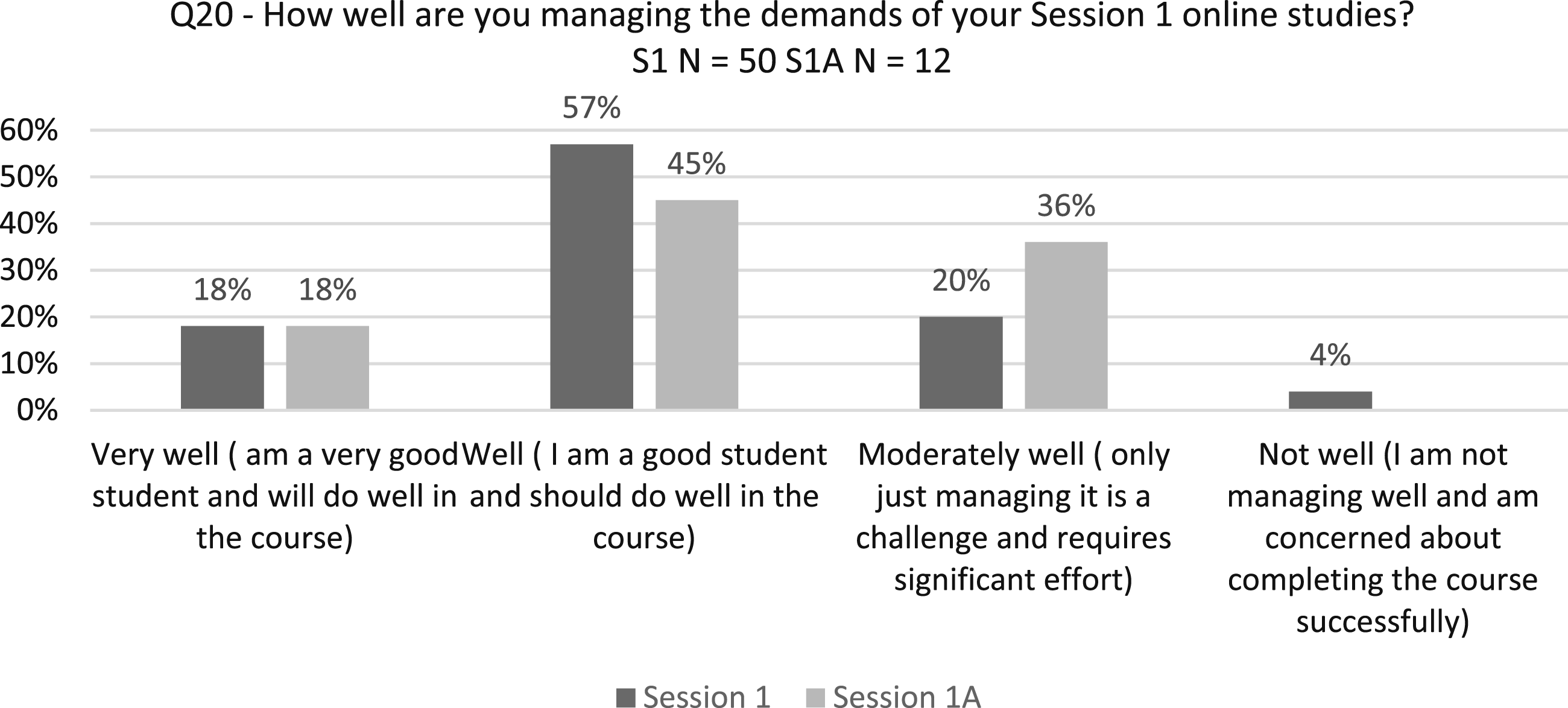
The interview comments offered by S1 respondents indicate an array of explanations as to how they are managing and the factors that are impacting the management of their online studies. It appears from the comments that some full-time students were also attempting to hold down full-time paid workloads. The comments indicate the respondents found this was not feasible or sustainable.
As illustrated by S1 interviewees, they are managing the study; however, it has meant sacrifices in other areas: …Doing all the work, I am finding that’s fine. I have had to sacrifice other elements of my life, however, to achieve that. I had dropped from 4 [work] shifts a week down to 3 when I started the policing, and then I immediately found out that that’s not sustainable. …Study - fairly up to date with where I need to be. Unfortunately, I haven’t been able to cut back on work like was recommended for us early on. It just wasn’t [financially] realistic or feasible for our family for me to drop back on work at all. …I’ve honestly made [study] my priority. Before this, I’ve never, not that I've never really cared about studying, but I’ve never really put my absolute effort into something like that in terms of studying. So, I've made that a massive priority for me. Work – I quit a couple of weeks ago. That was a challenge for me during this whole stage. …Studies were alright, I’ve done a certificate four [which] was pretty similar to that, doing exams, submitting assignments. So, I have no issues with that. The only issue I had was working around the schedule, since I had to attend the tutorial lessons on weekdays, which were my workdays. So, I actually ended up doing work for those 2 days and worked around my schedule, so that was the only hard part.
The following excerpts from the S1A interviews offer insight into why no survey respondents for S1A identified that they were not managing well. …So I think I'm fortunate because I only work Monday, Tuesday, Wednesday, 12-hour shifts, so from 6 am to 6 pm. So, because of that, I'm lucky, I guess, I get 4 days off. I'm also lucky that I get most Thursdays to study, and I do some nights as well. So, Friday may be a little bit of Saturday, but being part-time study it's a lot slower. It is doable in my circumstance it is doable as long as you keep up. I think if you just maintain the pace, I'm comfortable with it. …I was sort of expecting it. I have done a degree before and worked during that. So I the study side of it, I was already very prepared for. It's probably more so the fitness side of it, having to do exercises on certain days has probably been the most difficult part. Just cause I'm already flat out, so having the time to go and run when it's daylight in the middle of winter as well. That's sort of been probably my most my major struggle, but I am managing it OK, I just you know need to be prepared and have A plan for each Day and make sure everything goes to plan or yeah, it can be a bit difficult, but otherwise Yeah, it's been not too bad. Recently, it has been slightly challenging. Just because I'm working almost 40 to 45 h. And then if I'm doing, let's say on a Monday I’m working from 8 Am. until 5 pm. Get home and we need to be able to go do our run [physical fitness] straight away. So just being able to allocate time, is very important. Which it has been a bit a bit hard, but of course, I'm going to get it done and that's what I've been doing for the past 9 weeks. I like to train 5 times a week, so just making sure I allocate and work around my schedule. So far, so good.
The strong level of preparedness planning and dedication to the study and physical fitness elements of the ADPP program suggested by the S1A respondents was required to successfully complete the Session 1A program requirements, which was well rewarded with only one student requiring retaking/repeating an exam, which then resulted in 100% of the cohort graduating to Session 1 B. In respect of Session 1, a total of 83% of the commencing cohort graduated to Session 2; the attrition rate of interest in this study is concerned with self-selection to withdraw from their studies, 9% a total of 34 students from the commencing number of 351.
Teaching support
A final area of interest that is influential in understanding the e-learning/hybrid learning experience of police recruits undertaking the ADPP online component of the Session 1 or Session 1A study program is the support they received from teaching staff. This was unanimously positive from all interviewees. Indications were that the staff were approachable, readily available, and knowledgeable in respect of teaching the curriculum, as illustrated in the following comments: …Everyone has been quick for to respond and sort of told me a way to do things. So, it's been really helpful. …100% yes, every single time I've reached out, whether it's to my tutor or the team leaders or anything like that. …My direct tutors have been really, really fantastic.
Influencing factors on participants’ self-selecting to withdraw from the ADPP studies and a police career
The data associated with identifying the influencing factors on police recruit students selecting to withdraw from their studies and a future career in the police force indicates a common factor between the two cohorts, full-time and part-time students, which emerged as the requirement to keep up with study commitments.
Whilst the participant numbers responding to the survey are low, they do represent (a) 100% of those who self-selected to disengage from the S1A part-time study program, and (b) 8% of those who self-selected to disengage from the S1 full-time study program. Figure 9 presents the survey responses from S1 and S1A participants who self-selected to disengage from their ADPP studies and a policing career. Of note, VSI = very strongly influenced; SI = strongly influenced; LL = low influence; Nil = no influence. Influencing factors for self-selecting to disengage from ADPP studies and a policing career.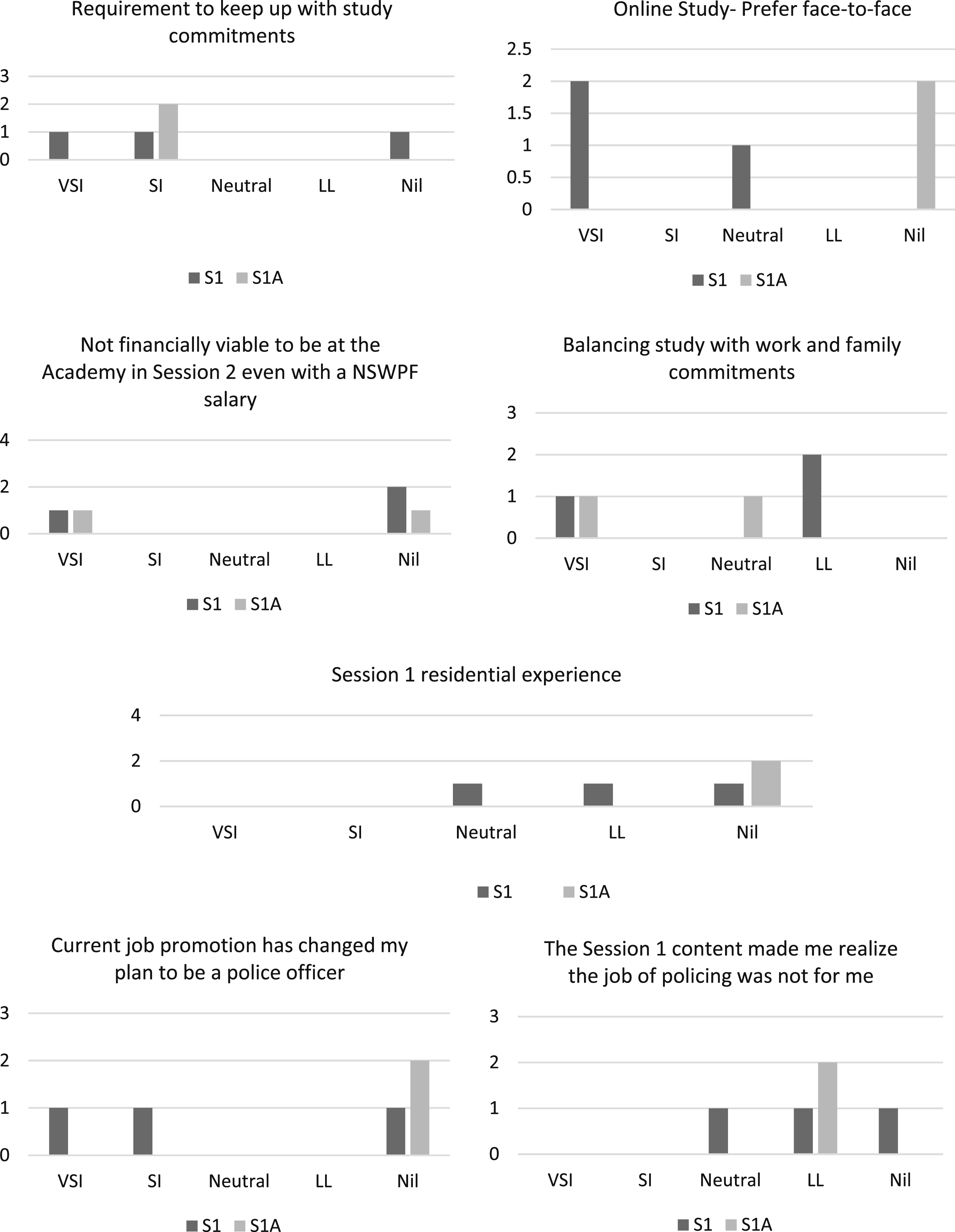
As indicated in Figure 9, there are some common factors influencing decisions to withdraw from the police recruit education program for both S1 and S1A. These factors relate to the balancing of studies with other commitments. For example, respondents in both cohorts identified balancing study with work and family commitments as influencing factors on the decision to withdraw from the ADPP. However, in respect of this factor, there was a greater level of respondents in both cohorts, indicating this factor had a nil or low-level influence.
Session 1 survey respondent offered the following comment in respect of this factor: …I discontinued Session 1 because I was unable to meet family commitments, as I have a 2-year-old child to take care of (S1 survey response).
The factor identified as: Requirement to keep up with study commitments, received support from both cohorts that this was a very strong/strong influencing factor. This aligns with the earlier data and interviewee comments associated with management of online learning studies, which indicated the S1 respondents found this challenging. This also aligns with the Figure 9 data that indicates the S1 respondents’ preference for face-to-face, with 66% of the S1 (Full-time) respondents recording this factor as having a very strong influence on their decision to disengage from the ADPP and a police career. Further, this interconnects with the Not financially viable to be at the Academy in Session 2, even with a NSWPF salary influencing factor, which recorded an equal number of participants from S1 and S1A nominating this as having a very strong influence on their decision to disengage.
In the current competitive employment market experienced in Australia, gauging the influence of the factor: Current job promotion has changed my plan to be a police officer, based on a respondent’s decision to disengage, is insightful. The data indicates an equal number of S1and S1A respondents agreed this factor was a strong influence on their decision to disengage. In contrast, there was strong support from S1A (Part-time) that this factor did not influence their decision to disengage.
The factor: The Session 1 content made me realize the job of policing was not for me, and the Session 1 residential experience factor returned neutral, low-level, or nil influence on the respondents’ decision to disengage. This level of response aligns with the earlier data, which indicated the program met their expectations for online/e-learning.
Discussion
The findings in this study indicate the participants in both Session 1 and Session 1A were confident in their use of online technologies, confident with the management of their study program, and whilst having some challenges, were, in the majority, managing their studies/work life balance commitments to their satisfaction. As discussed by Culduz (2024), the online remote learning design brings with it demands for self-discipline and technical proficiency. The data in this study indicates, particularly for the S1A (Part-time) students, that they were cognizant of the need for a disciplined approach to their studies. Further, as illustrated in Figure 6 (level of family/friends support), Figure 7 (level of technology competency), and Figure 8 (management of e/learning studies), each recorded high levels, the combination of which may be potential contributing factors to the overall success of the student’s study outcomes. An interesting trend that has emerged from interviews for this study is the potential the S1A (Part-time) students are more prepared and able to manage the online study commitments compared to those in S1 (Full-time). The comments from the S1A interviewees suggest they have been able to meet their study commitments, the physical fitness requirements of the ADPP program, and their work and family life balance. This is not to suggest they have not had to make sacrifices; however, as indicated earlier, they identified that they are well supported by family and friends in understanding the commitment of their study endeavours. There is the potential here to consider that the higher rate of part-time students in the 26-35 and 36-45 age groups is related to factors such as having full-time employment and family commitments. This was evidenced in the interviews with the part-time students (S1A), where all 7 interviewees indicated they had family commitments and full-time work and therefore selected for the part-time study track.
A further key point with respect to the age of the participants is that there is the potential that the survey and interview question responses from the S1A (Part-time) participants are influenced by a more mature life experience perspective.
The findings with respect to the online experience resonate with the suggestions from Belur and Bentall (2023) and Hefter and Nitsch (2024) that remote learning is achievable in the policing studies domain. Specifically, in this study, the online/e-learning education delivery was successful with high percentages of students achieving positive outcomes. Of note, the students who disengaged from the S1A (Part-time) study indicated that the mode of delivery, i.e., e-learning/hybrid model, had nil influence (Figure 9) on their reasons for leaving their studies and the potential of a future policing career.
A key finding in this study, and a note of caution here, as the low numbers may only indicate a trend and not be representative of the whole, is that other life circumstances are those that influence the decision to withdraw from the course of study. In particular, family commitments, including financial obligations, were identified as strongly influencing the decision to withdraw from the ADPP. Interestingly, there were participants in the study who did identify it was a challenge to manage the study, the family, and financial obligations; however, they and their support groups (family/friends) also acknowledged these challenges and provided support. The implications here are that without such support, the participant may not be able to manage the combination of obligations. It would have been insightful if those who withdrew had indicated more specifically the support that may have assisted them and mitigated their withdrawal.
Prior experience with learning through the online environment emerged as a positive trend associated with the ability to manage the online/e-learning program delivery, coupled with strong affirmation of support from the teaching staff.
On balance, the high rate of student success in both the S1 and S1A cohorts to which the study participants belong indicates the synchronous and blended learning approach is working; the factors that are contributing to the attrition rate at the early stage of the police recruit’s studies are potentially outside of the education institution and the police agency’s domain. These factors would be for individual police agencies to review in respect of future strategies for supporting police recruits in their endeavours to forge a policing career.
Limitations and future research
It is appropriate to consider the results as indicative trends. As indicated in Table 1, the response numbers to the invitation to participate in the study are low, especially for those who had disengaged. It is not unexpected that those who have disengaged are similarly uninterested in completing surveys and interviews in respect of their decisions; they have potentially ‘moved on’ from the decision.
It is acknowledged that the Session 1A (Part-time) participants in this study are a small representative group, and the findings may only be considered as early trends. Similarly, the very low return rate of surveys from those who self-selected to withdraw from their police recruit education program invites caution when considering the findings from the analysis of the respective surveys. Nevertheless, whilst the findings may only be considered as early trends, they do offer a level of insight for consideration in strategies to mitigate future attrition. As discussed, this article presents the early findings of a 5-year longitudinal study, and it is anticipated that the surveys and interviews with the additional 6 police recruit cohorts in the larger study will add depth to the findings. As other police agencies, for example, England and Wales, further study their experience with the online/e-learning delivery of police recruit education, there is the potential to offer further insight into strategies for managing attrition at the early stages of police recruit education.
Conclusion
Examining the experience of police recruits at many junctions in their journey to join the police profession is critical to developing early interventions that may mitigate high attrition rates and support long-term career engagement. This study identified that e-learning was not an influencing factor on decisions by police recruit students to continue in their studies and ambitions to be police officers. This trend in the findings has implications for the future design of initial police education delivery particularly at times when there is unforeseen circumstances that may be a driver of online education delivery as occurred during the Covid-19 pandemic. Further, the findings also offer potential for police agencies where face to face delivery is not physically or financially viable whilst in parallel there is a need for building the workforce. As indicated in this study, there are aspects of the police recruit experience that may be outside of the police agency’s area of influence, and it is pivotal that these are identified alongside those that are able to be influenced. This enables investment by the police education providers in areas that have the capacity to make a difference and build a sustainable workforce.
Footnotes
Acknowledgement
The author/s wish to acknowledge the support and assistance from the NSWPF in undertaking this research. The views expressed in this publication are not necessarily those of the NSWPF, and any errors of omission or commission are the responsibility of the author/s.

Ethical considerations
This project was conducted under the approval of the Charles Sturt University Human Research Ethics Committee Protocol Number: H24022.
Funding
The authors received no financial support for the research, authorship, and/or publication of this article.
Declaration of conflicting interests
The authors declared no potential conflicts of interest with respect to the research, authorship, and/or publication of this article.