






Abstract
The purpose of this study was to investigate the degree to which the 24 character strengths in Peterson and Seligman’s character strengths model moderate the relationship between disability-related stress and life satisfaction in individuals with acquired physical disabilities. Participants included 165 individuals with self-reported acquired physical disabilities. The Satisfaction with Life Scale, the Disability-Related Stress Scale, and the Global Assessment of Character Strengths were used to measure the variables in the study. Twenty-four linear regressions were conducted to test the moderating effects of the character strengths in the relationship between disability-related stress and life satisfaction. The majority of character strengths significantly moderated the relationship between disability-related stress and life satisfaction. Humor, curiosity, appreciation of beauty, and social intelligence had the strongest moderating effects. Bravery and prudence did not have a significant moderating effect. Gratitude, humility, and leadership originally had significant moderating effects, but after Type 1 error controls were applied, their results were no longer significant. This study supports the role of character strengths in moderating the relationship between disability-related stress and life satisfaction among individuals with acquired physical disabilities. Promoting strengths-based interventions can allow individuals to more effectively cope with stressors and achieve a high level of life satisfaction.
Introduction
Disability is a prevalent aspect of life, with one in four adults (27%) in the United States identifying as having a disability (Centers for Disease Control and Prevention [CDC], 2023). Despite growing awareness and advances in accessibility, individuals with disabilities face systemic barriers and heightened challenges compared to their non-disabled peers. For example, only 19.1% of people with disabilities are employed compared to 63.7% of those without disabilities (U.S. Bureau of Labor Statistics, 2022). Even when employed, they often encounter stigma, discrimination, and a persistent pay gap (Baker et al., 2018). Addressing these challenges is crucial for promoting well-being for individuals with disabilities.
Among individuals with disabilities, those with acquired physical disabilities (APD) face unique challenges. Physical disabilities are the most common type of disability (Centers for Disease Control and Prevention, 2025), and the likelihood of acquiring a disability increases with age. Unlike congenital disabilities, APD often involve a sudden adjustment to new physical limitations, requiring adaptations in identity, independence, and societal perceptions (Bogart, 2014). These added layers of adjustment make the experience of APD distinct and often more difficult than adapting to congenital disabilities. Thus, focusing on the experiences of individuals with APD is essential for tailoring interventions and support systems for the largest positive impact.
In rehabilitation counseling, character strengths may be relevant across multiple service phases, including intake and assessment, development of the Individualized Plan for Employment (IPE), adjustment counseling, and employment maintenance. Strengths such as curiosity, social intelligence, and humor may support career exploration, interpersonal effectiveness, and coping, while strengths such as prudence or perseverance may support goal planning and job retention.
Stress and Disability
Disability-related stress is a key contributor to such mental health struggles. Stressors may include individual issues such as health problems and social relationship difficulties, and systemic barriers like physical inaccessibility, social exclusion, and employment discrimination (Cree et al., 2020; Iwasaki & Mactavish, 2005). These stressors often negatively impact overall life satisfaction and well-being (Kagan et al., 2018).
The ability to evaluate and manage stress-inducing factors significantly affects an individual’s adaptation to disability (Dennison et al., 2009). Research indicates that individuals with physical disabilities report higher levels of perceived stress, reflecting a sense of unpredictability and lack of control (Cohen & Williamson, 1988; Hughes et al., 2005). Stress may have a more severe impact on individuals with fewer resources, such as adequate social support, to mitigate its effects (Hughes et al., 2005). Stressors like additional demands of daily living, exclusionary social systems, and financial difficulties exacerbate these challenges (Iwasaki & Mactavish, 2005).
Stress has been found to be associated with poorer psychological well-being among individuals with disabilities (Gilchrist & Creed, 1994). It also contributes to the worsening of symptoms and disease progression in chronic health conditions like arthritis (e.g., Zautra et al., 1997). However, individuals with good adaptive coping mechanisms often experience fewer adverse consequences. Positive psychosocial resources, such as optimism and social support, have been shown to buffer the effects of stress and reduce vulnerability to health issues (Schneiderman et al., 2005). Identifying and fostering effective coping mechanisms holds the potential to improve outcomes for disabled people (Zimmer-Gembeck & Skinner, 2016).
One promising avenue for reducing stress and improving adaptation is the exploration of character strengths. Character strengths provide a positive psychological framework for understanding how individuals can leverage internal resources to better manage stress and enhance life satisfaction (Lee et al., 2023). Lee and colleagues (2024) explored different latent profiles of character strengths utilized across a continuum by people with disabilities and examined their relationship to employment outcomes. Their findings suggested that character strengths play a crucial role in positive employment experiences. In another cross-cultural longitudinal study, researchers found that the use of character strengths supported self-perceived health, social connectedness, meaning in life, and mental health during adversity (Węziak-Białowolska et al., 2021). These findings, consistent with the present study, reinforce the potential of strengths-based interventions for individuals with chronic conditions and disabilities. By focusing on these positive traits, interventions can support individuals with APD in navigating their unique challenges, fostering a greater sense of agency and well-being.
Character Strengths and Disability
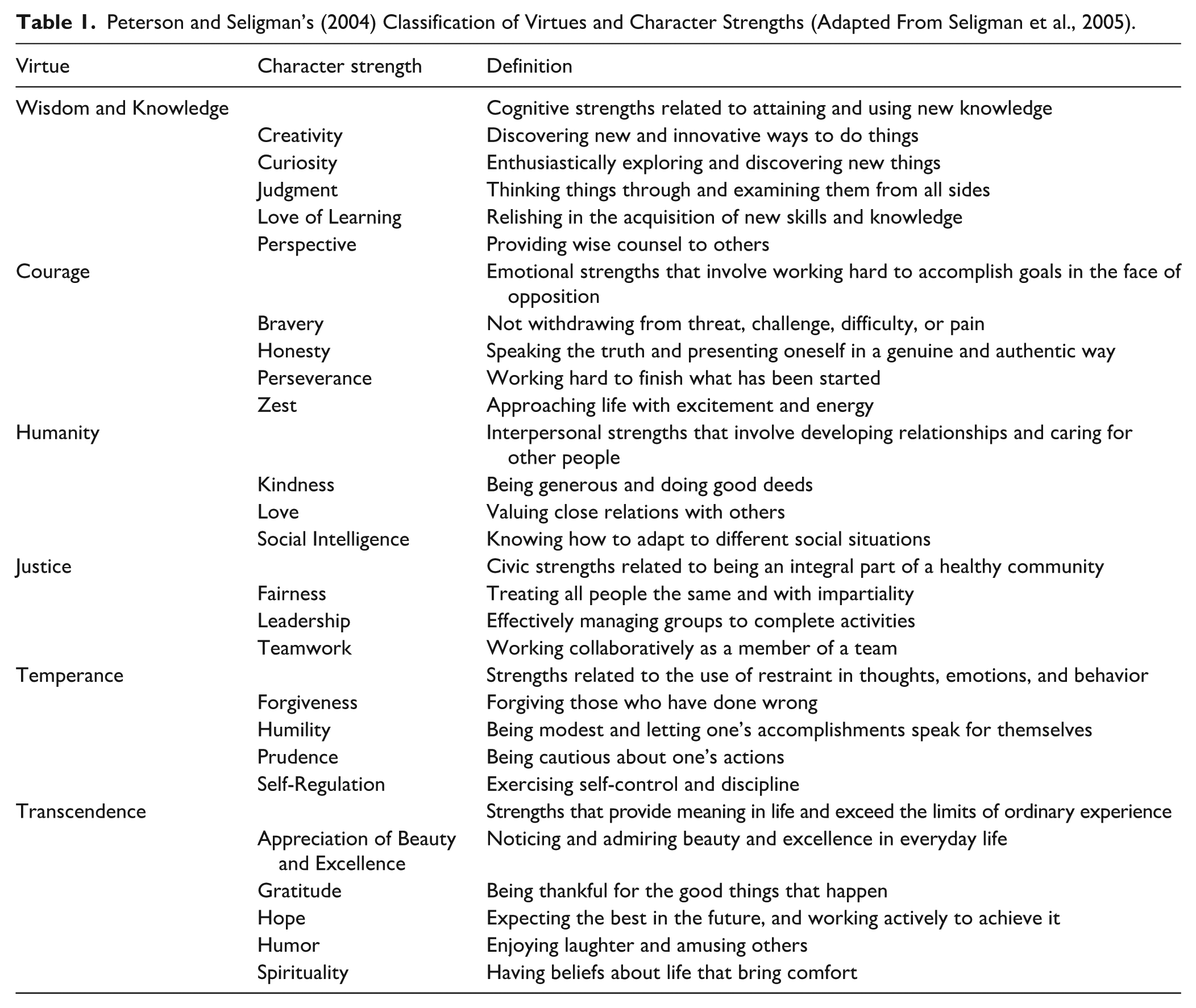
Positive psychology is the scientific approach to uncovering, highlighting, and building upon people’s strengths and positive functioning (Lopez et al., 2019). The Values in Action (VIA) Classification of Strengths (Peterson & Seligman, 2004) is a well-known framework that consists of 24 character strengths organized around six virtues (see Table 1). It has been theorized that each individual exhibits specific strengths, also known as their signature strengths, that represent their core identity and functioning (Peterson & Seligman, 2004).
Peterson and Seligman’s (2004) Classification of Virtues and Character Strengths (Adapted From Seligman et al., 2005).
The field of rehabilitation aligns closely with a strengths-based approach. Research demonstrates that character strengths act as protective factors, buffering the negative effects of stress and enhancing well-being among individuals with chronic conditions and disabilities. For instance, Umucu et al. (2020) found that character strengths helped individuals with disabilities manage stress related to the COVID-19 pandemic, leading to higher levels of well-being. Another study by Umucu et al. (2022) highlighted the cross-cultural benefits of utilizing character strengths in enhancing self-perceived physical health, social connectedness, and mental health among individuals with disabilities. These findings emphasize the potential of strengths-based interventions to improve well-being outcomes for individuals with APD.
Character strengths have been shown to be associated with life satisfaction in many disability populations, including traumatic brain injury (Hanks et al., 2014), multiple sclerosis (Smedema, 2020; Smedema & Bhattarai, 2021), spinal cord injury (Phillips et al., 2015), and intellectual disabilities (Niemiec et al., 2017). Furthermore, studies have demonstrated that interventions targeting character strengths can lead to improvements in mental health and well-being (Martínez-Martí et al., 2020). Overall, growing evidence supports the notion that fostering character strengths can enhance resilience and life satisfaction (e.g., Gander & Wagner, 2020; Tehranchi et al., 2018), highlighting the importance of integrating strengths-based approaches into therapeutic practices.
Character Strengths, Stress, and Life Satisfaction
Research highlights the role of character strengths in helping individuals with disabilities cope with stress and improve life satisfaction. For example, Harzer and Ruch (2015) found that intellectual, emotional, and interpersonal strengths were positively associated with effective coping, helping individuals manage stress in work environments. Li et al. (2017) demonstrated that individuals with higher character strengths experienced faster cardiovascular recovery from stress, underscoring the physical benefits of strong character traits. These findings suggest that developing character strengths may enhance resilience, particularly in the face of adversity. Unlike traditional personality traits, which are generally considered stable, character strengths are positive, morally valued qualities that can be developed through intentional practice. Studies have supported the validity of the VIA model across diverse cultural and clinical groups (e.g., Niemiec et al., 2017), including individuals with disabilities (Shogren et al., 2018; Smedema, 2020; Umucu et al., 2020, 2021). Research has demonstrated that using signature strengths is associated with improvements in physical health, social relationships, and psychological well-being (Węziak-Białowolska et al., 2021), suggesting its relevance and applicability for people with APD.
Life satisfaction among individuals with APD is influenced by various psychological, social, and environmental factors. While the onset of disability often leads to declines in life satisfaction, research shows that adaptation and resilience, influenced by character strengths, play significant roles in improving well-being over time (Huang, 2022). Strengths such as hope, perseverance, and gratitude enable individuals to maintain a positive outlook and develop adaptive coping mechanisms. The purpose of the present study, therefore, is to investigate the degree to which character strengths moderate the relationship between stress and life satisfaction in individuals with APD. A conceptually similar study by Lee et al. (2023) explored how disability-related stress influences life satisfaction through the serial mediating roles of optimism and mental health in individuals with multiple sclerosis. While that study did not directly examine character strengths, it highlighted how internal psychological resources can buffer the negative effects of stress, supporting the theoretical basis for the current study. Like optimism, character strengths represent modifiable traits that contribute to well-being and may serve a similar protective function. Integrating the VIA framework offers a more granular and nuanced lens than broader trait-based approaches, allowing for the identification of specific, actionable strengths most relevant to individuals facing disability-related stress. The decision to focus on individual character strengths, rather than broader virtue categories, was based on prior research suggesting that specific strengths demonstrate unique predictive relationships with psychosocial outcomes independent of their virtue classification (Niemiec, 2023). Thus, the current study builds upon and extends the work of Lee et al. by using a multidimensional model of psychological resources to examine moderation rather than mediation, providing a complementary perspective on how internal traits may buffer the effects of disability-related stress. By understanding how strengths influence the experience of stress, we can inform interventions that empower individuals to build resilience and improve their quality of life.
Method
Participants
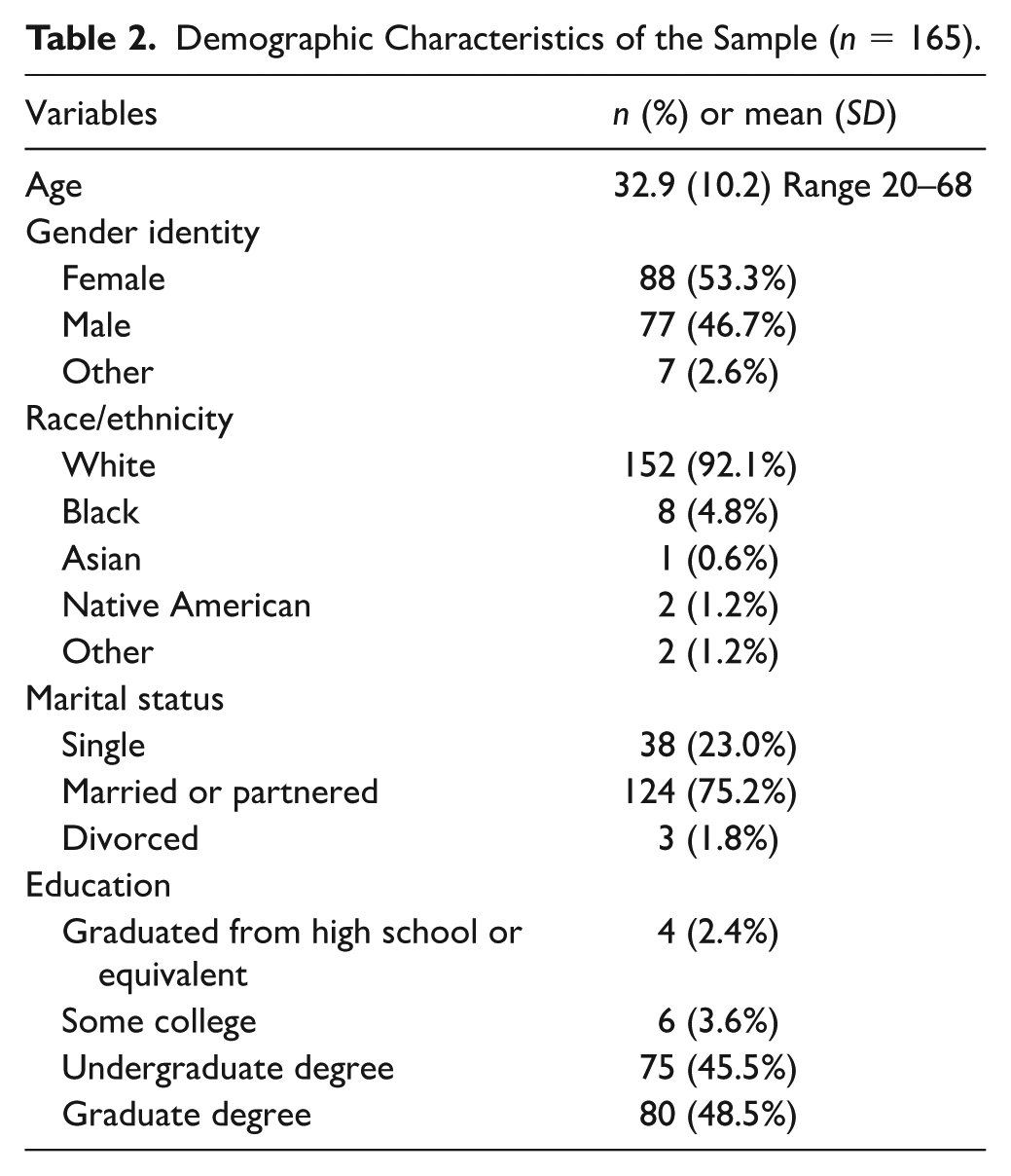
The participants who completed the survey included 165 individuals with self-reported APD. The top five APD reported by participants included diabetes (n = 75), arthritis (n = 60), brain injuries (n = 44), neurological disorders (n = 37), and amputations (n = 37). Counts exceed the total N because some participants reported more than one APD. The gender identities of participants were 88 (53.3%) females and 77 (46.7%) males. The mean age for participants was 32.9 years (SD = 10.2, Range = 20–68). The racial/ethnic characteristics of participants were as follows: 152 (92.1%) White, 8 (4.8%) Black, 1 (.6%) Asian, 2 (1.2%) Native American, and 2 (1.2%) who identified as “other”. With respect to marital status, 38 (23.0%) of the participants indicated that they are single, 124 (75.2%) indicated that they are married or are partnered, and 3 (1.8%) indicated that they are divorced. The educational attainments of participants were as follows: 4 (2.4%) indicated that they have a high school diploma or GED, 6 (3.6%) indicated that they have some college, 75 (45.5%) indicated that they have an undergraduate degree, and 80 (48.5%) indicated that they have a graduate degree. Demographic information for the sample can be found in Table 2.
Demographic Characteristics of the Sample (n = 165).
Measures
The following instruments were used to measure the variables in this study: a demographic questionnaire, the Satisfaction with Life Scale, the Disability-Related Stress Scale, and the Global Assessment of Character Strengths.
Demographic Questionnaire
Participants began the survey by providing demographic information, including gender identity, race/ethnicity, age, marital status, and educational level.
Satisfaction With Life Scale
Life satisfaction was measured with the Satisfaction with Life Scale (SWLS; Diener et al., 1985). A global score is computed by summing 5 items, which are rated on a 7-point Likert scale from 1 = “strongly disagree” to 7 = “strongly agree.” An example item is “In most ways, my life is close to my ideal”. Higher scores are reflective of greater levels of life satisfaction and how closely one’s life aligns with what they desire. Diener et al. (1985) found initial adequate test/retest reliability (.82), alphas ranging from .61 to .89, and it was found to correlate with other life satisfaction scales (r = .50–.70). The Cronbach’s alpha for the present study was calculated to be .77.
Disability-Related Stress Scale
Stress related to disability was measured with the Disability-Related Stress Scale (DRSS; Rhode et al., 2012). The scale was developed to measure stressful life events experienced by people with disabilities. Each item in the scale consists of two questions: whether the event occurred (event) and how stressful the event was (impact). The impact scores are rated on a 7-point Likert scale from 1 = “moderately stressful” to 7= “extremely stressful”. An example item is “Chose not to participate in enjoyable activities because of my disability”. In order to reduce participant burden, only the impact scores for the first two scales, disability impact (9 items) and societal barriers (7 items), were included in the present study. When an event did not occur, the impact rating was coded as 0, and the final DRSS score represents the summed impact of all included items. Rhode et al. (2012) reported alphas ranging from .72 to 84. The Cronbach’s alpha for the present study was calculated to be .95 for the combined disability impact and societal barriers items.
Global Assessment of Character Strengths
Character strengths were measured with the Global Assessment of Character Strengths–24 item version (GACS-24; McGrath, 2017). This scale was developed to measure each of the 24-character strengths in the Peterson and Seligman (2004) model with a single item rated on a 7-point Likert scale from 1 = “very strongly disagree” to 7 = “very strongly agree”. An example item is “You are viewed as a creative person; you see, do, and/or create things that are of use; you think of unique ways to solve problems and be productive.” This measurement has been shown to be correlated with the VIA Inventory (r = .40–.70) (McGrath, 2017). Strengths were grouped according to their associated virtues, as defined by Peterson and Seligman (2004).
Procedures
Before conducting this study, Institutional Review Board (IRB) approval was sought and obtained. Participants were recruited using Amazon Mechanical Turk (MTurk), a widely used online platform for data collection. MTurk offers several advantages over traditional recruitment methods, including (a) access to a more diverse participant pool, (b) rapid and cost-effective recruitment, (c) realistic compensation rates that do not adversely affect data quality, and (d) data reliability comparable to traditional collection methods (Buhrmester et al., 2016).
A convenience sample of individuals with APD was targeted for this study. The inclusion criteria for this study required participants to be a minimum of 18 years of age, a U.S. citizen, and currently experiencing an APD. In addition, individuals with congenital disabilities were excluded from this study. The pre-screening process was automated using the skip logic feature on Qualtrics. Respondents were presented with a brief screening survey to determine their eligibility for the study. Those who did not meet the inclusion and exclusion criteria were directed to the end of the survey. Eligible participants provided informed consent online before beginning the study.
Participants completed a 20-min online survey, including a demographic questionnaire and measures of life satisfaction, disability-related stress, and character strengths. The survey was presented using Qualtrics. The demographic questionnaire was presented first in the survey. The remaining instruments were counterbalanced to mitigate potential order effects (Heiman, 2002). To minimize threats to data integrity, the survey included three attention-check items and two motivation-check items (Meade & Craig, 2012). Surveys from participants who failed to respond appropriately to any of these 5 items were excluded from the final analysis. A total of 298 responses were initially obtained. Of these, 227 passed the data integrity items. Including such quality control measures is an established practice for enhancing data reliability and reducing noise (Oppenheimer et al., 2009). To ensure data quality, responses completed in less than 50% of the expected completion time (<10 min) were excluded. This threshold was established based on pilot testing, where even the fastest conscientious participants required at least this amount of time to thoughtfully complete the survey. Extremely short completion times were considered indicative of insufficient engagement, which could compromise the validity of the data. Entries submitted from duplicate IP addresses were also excluded. This decision was based on the assumption that duplicate entries from the same IP address could indicate one or more of the following issues: (a) repeated participation by the same individual, which could lead to overrepresentation of certain perspectives; (b) collusion among individuals completing the survey together, potentially compromising the independence of responses; or (c) the use of automated bots or scripts to generate multiple responses. While it is possible that some duplicate IP addresses may reflect shared internet access by different individuals (e.g., within a household or public space), a conservative approach was used to prioritize data integrity. This data integrity approach yielded 172 respondents.
Participants received US$1.25 immediately following approval of completion through the MTurk system. Participants who submitted invalid surveys, withdrew from the study, or discontinued participating did not receive financial compensation. All responses were collected anonymously, and participants were assured that their data would remain confidential. Data were securely stored on encrypted servers in compliance with IRB-approved protocols. Participants were informed of their right to withdraw at any time without penalty, and a debriefing form was provided at the conclusion of the study.
Data Screening and Analysis
All data analyses were conducted using SPSS version 29.0. Several diagnostic tests, including examination of missing data, identification of outliers, and examination of normality and multicollinearity of all variables, were conducted prior to data analysis. No measure had higher than 5% of values missing, and mean imputation was used to replace missing values. Given that missing values were below 5% and the design was cross-sectional, mean imputation was deemed acceptable. Multiple imputation was not used because the low proportion of missing data reduces the expected efficiency gains. Seventeen multivariate outliers were detected and removed after Mahalanobis distances were examined. This resulted in a final sample of 165 participants. All variables were deemed to be normally distributed after inspection of skewness and kurtosis values. Examination of the correlations of each of the character strengths with disability-related stress and life satisfaction revealed no issues with respect to multicollinearity.
Twenty-four linear regressions were conducted to test the moderating effects of the 24 character strengths in the Peterson and Seligman (2004) model in the relationship between disability-related stress and life satisfaction. In order to do this, interaction variables were constructed by multiplying disability stress with each of the character strengths. Then, linear regressions were conducted by including disability stress, the character strength, and the corresponding interaction variable in each analysis. Due to the large number of analyses in the study, the Benjamini-Hochberg procedure (Benjamini & Hochberg, 1995) was used to control the false discovery rate (FDR), which differs from family-wise error rate adjustments such as Bonferroni. Given the preliminary nature of this line of research and that this is an initial exploratory study, an FDR of .1 was used. Using a relatively liberal FDR threshold increases sensitivity to potentially meaningful effects in exploratory research while accepting a higher probability of false positives. According to McDonald (2014), the Benjamini-Hochberg procedure is as follows: Put the individual p values in order, from smallest to largest. The smallest p value has a rank of i = 1, then the next smallest has i = 2, and so on. Compare each individual p value to its Benjamini-Hochberg critical value, (i/m)Q, where i is the rank, m is the total number of tests, and Q is the false discovery rate you choose. The largest p value that has p < (i/m)Q is significant, and all of the p values smaller than it are also significant, even the ones that aren’t less than their Benjamini-Hochberg critical value (p. 259).
An a priori power analysis was conducted using G*Power 3.1.9.7 (Faul et al., 2007), a software tool for power analysis. Using 25 predictor variables (the 24 character strengths and disability stress), power equal to .80 and an alpha level of .05, the analysis determined that a sample size of 172 would be needed to detect a medium effect size (f 2 = .15; Cohen, 1988). The final sample obtained in the present study, 165, while slightly low, was deemed adequate to proceed with the analyses.
Results
Means, standard deviations, and correlations among all character strengths, disability-related stress, and satisfaction with life are presented in Table 3. The results of the 24 moderation analyses are presented in Table 4. As can be seen in the table, the majority of character strengths significantly moderated the relationship between disability-related stress and life satisfaction, such that individuals with higher amounts of the respective strength were less affected by stress. Humor, curiosity, appreciation of beauty and excellence, and social intelligence had the strongest moderating effects. Bravery and prudence did not have a significant moderating effect on the relationship between stress and life satisfaction. Gratitude, humility and leadership originally had a significant moderating effect, but when the Benjamini-Hochberg procedure was applied, their results were no longer significant. An example of a moderation effect (appreciation of beauty) is depicted in Figure 1.
Item Means, Standard Deviations and Correlations of Character Strengths With Disability Related Stress and Satisfaction With Life (n = 165).
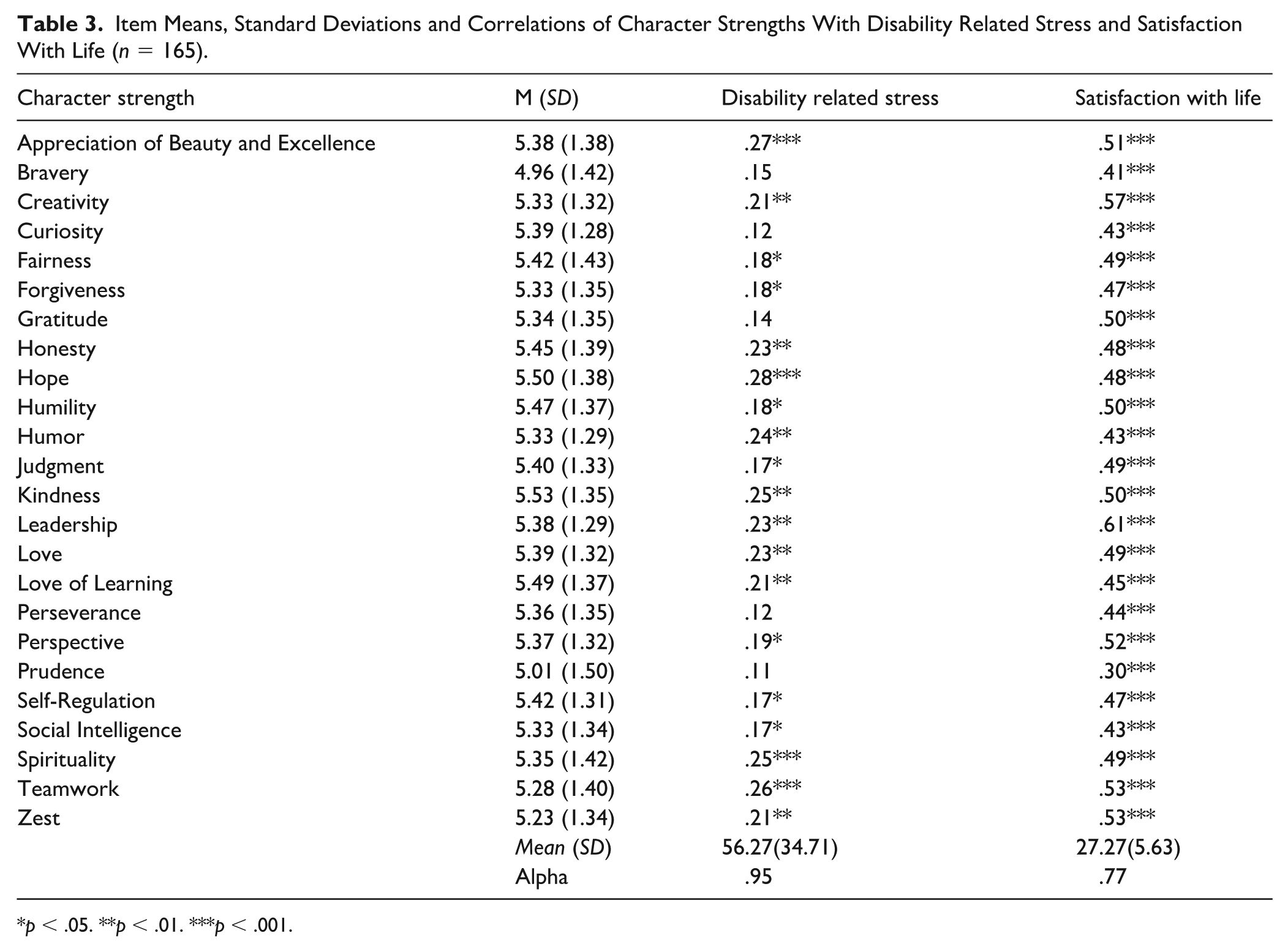
p < .05. **p < .01. ***p < .001.
Moderation Analyses for the Effects of Character Strengths on the Relationship Between Disability Related Stress and Satisfaction With Life (n = 165).
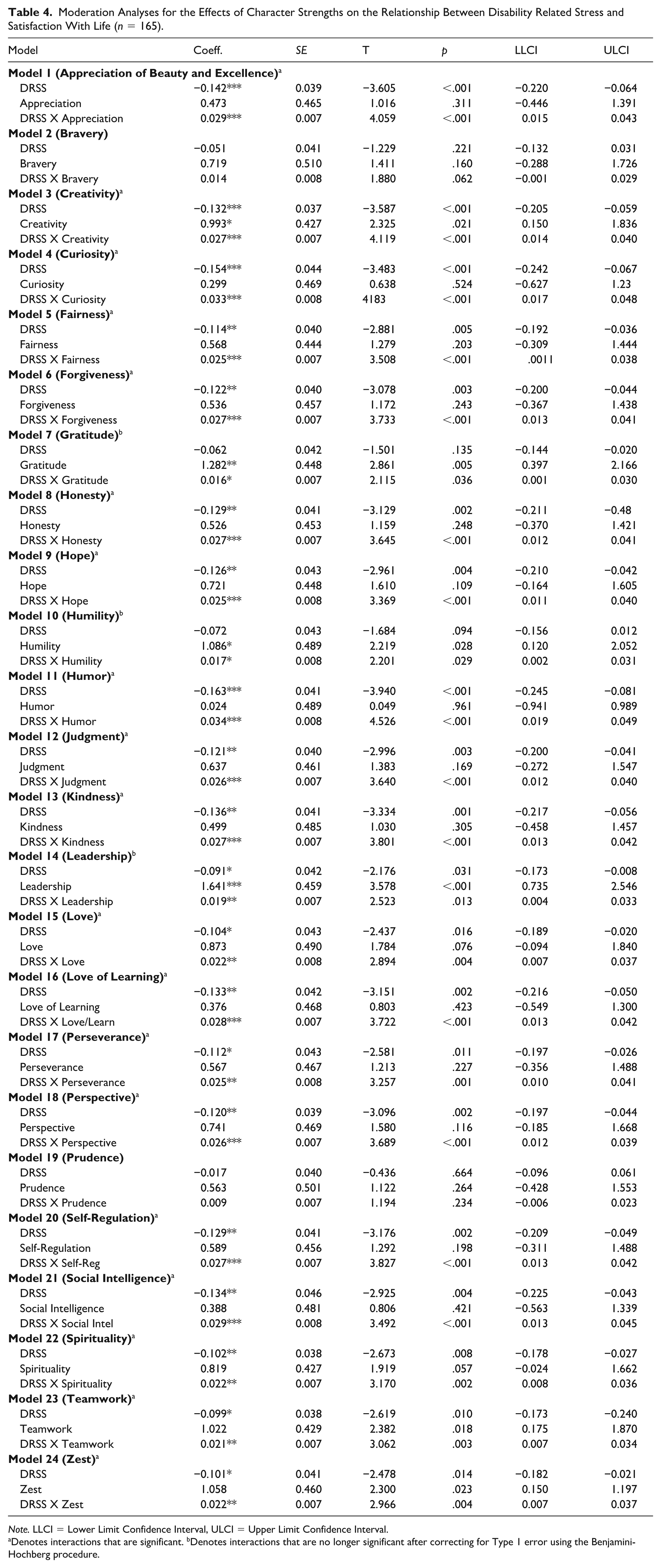
Note. LLCI = Lower Limit Confidence Interval, ULCI = Upper Limit Confidence Interval.
Denotes interactions that are significant. bDenotes interactions that are no longer significant after correcting for Type 1 error using the Benjamini-Hochberg procedure.
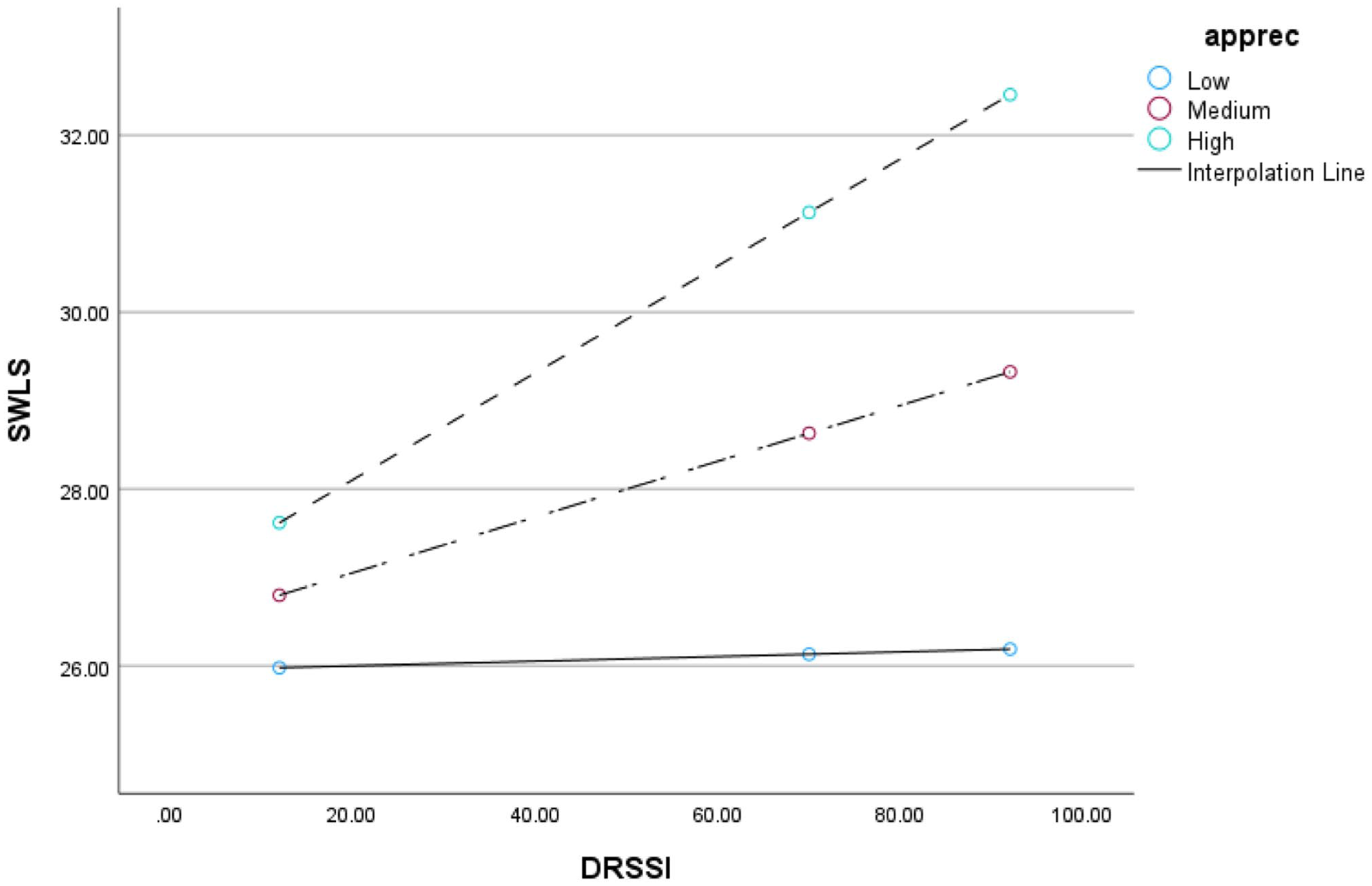
Visual representation of moderation effect of appreciation of beauty and excellence in the relationship between disability related stress and life satisfaction.
Discussion
This study examined the moderating effects of character strengths in the relationship between disability-related stress and life satisfaction in persons with APD. The results provide valuable insights into the ways character strengths may protect against the effects of stress that are brought about due to disability. While the majority of character strengths demonstrated a protective effect, some did not, and others lost significance after statistical corrections. These patterns underscore the complex interplay between individual traits, situational factors, and the unique challenges posed by APD themselves.
Most character strengths in the Peterson and Seligman (2004) framework appeared to act as effective moderators, suggesting their potential as valuable psychological resources for individuals experiencing stress. Humor, for instance, has been widely recognized as a powerful coping mechanism in people with disabilities and chronic illnesses (Nielsen et al., 2024; Voss et al., 2020). By encouraging a lighter perspective and reducing the emotional weight of stress, humor fosters psychological resilience and enhances life satisfaction (Merz et al., 2009). Curiosity, on the other hand, promotes engagement with one’s environment and a willingness to explore new experiences (Peterson & Seligman, 2004). This active, exploratory mindset may counteract the detrimental effects of disability-related challenges (Denneson et al., 2017).
Appreciation of beauty and excellence, which also emerged as a strong moderator, likely fosters mindfulness by helping individuals find joy and meaning in the world around them (Peterson & Seligman, 2004). This strength may encourage a focus on uplifting aspects of life, counterbalancing the negative emotions associated with stress (Bhattarai et al., 2022). Similarly, social intelligence—a strength centered on understanding and navigating social dynamics—can enhance interpersonal relationships and support networks (Peterson & Seligman, 2004). Strong social connections are critical for managing stress, as they provide both emotional validation and practical assistance, which can improve overall life satisfaction (Dehghankar et al., 2024; Fisher et al., 2022; Umucu et al., 2023).
However, not all strengths moderated the relationship between disability-related stress and life satisfaction. Bravery and prudence, for instance, did not exhibit significant effects. While bravery involves facing fears and taking risks (Peterson & Seligman, 2004), its utility in moderating disability-related stress may be limited to specific contexts. For instance, bravery might be more relevant in situations requiring assertiveness or advocacy rather than in managing persistent, chronic stressors. Similarly, prudence, characterized by cautious decision-making and foresight, may be more effective in preventing unnecessary stress rather than in alleviating existing stress. These results suggest that the protective effects of these strengths may be context-dependent and less directly tied to emotional resilience in the face of chronic stress.
It is also notable that the effects of gratitude, humility, and leadership, which initially appeared significant, did not remain so after statistically correcting for the likelihood of Type I errors. This indicates that the initial findings for these strengths may reflect weaker or more variable effects. For gratitude, while its role as a buffer against stress in people with disabilities is well-documented (Lee, 2022; Phillips et al., 2022), its effectiveness may depend on an individual’s ability to focus on positive aspects of life amidst significant stress. Similarly, humility’s effects might be more subtle or operate primarily within social contexts (Peterson & Seligman, 2004), making them harder to detect in quantitative analyses. Leadership, often linked to external roles and group dynamics, may not directly mitigate the personal experience of stress but could instead play a more prominent role in collective or advocacy settings.
These findings highlight the differential impact of specific character strengths on the relationship between disability-related stress and life satisfaction. Strengths such as humor, curiosity, appreciation of beauty and excellence, and social intelligence may play particularly significant roles in fostering resilience, while others may be more situationally or contextually effective. The unique challenges of disability-related stress, including societal stigma, accessibility barriers, financial impacts, and chronic health issues, may amplify the need for certain strengths over others. Cultural and environmental factors likely further shape these dynamics, influencing how individuals draw upon their strengths to cope with stress.
Implications for Rehabilitation Counseling Practice
Individuals with APD often face unique challenges (Bogart, 2014), which require tailored intervention approaches. Rehabilitation counselors routinely address these challenges through intake and assessment, vocational planning, and adjustment counseling. This study holds significant implications for professionals working with individuals who have APD. It highlights the stress and reduced life satisfaction often experienced by individuals and underscores the potential benefits of character strength interventions. Identifying and utilizing character strengths can serve as a crucial tool in rehabilitation counseling practice, offering a means to support well-being by providing practical pathways to adaptive coping strategies. The findings reveal that strengths such as humor, curiosity, appreciation of beauty and excellence, and social intelligence serve as powerful psychological resources that promote resilience and improve life satisfaction.
Practitioners can identify character strengths in clients using validated tools such as the VIA Survey (Peterson & Seligman, 2004) or the Global Assessment of Character Strengths (GACS-24; McGrath, 2017), both of which allow for self-reflection and structured assessment of individual strengths. In rehabilitation counseling settings, these tools can be administered during intake or early sessions to inform strengths-based case formulations. Research has shown that identifying one’s signature strengths can lay the foundation for personal growth and goal setting, leading to lasting improvements in well-being (Niemiec, 2014; Seligman et al., 2005). This information may also inform the development of the IPE by aligning vocational goals and services with clients’ strengths and preferences.
In addition to identifying character strengths, research indicates that these traits can be developed through intentional practice. Seligman et al. (2005) demonstrated that encouraging individuals to use their top five strengths in novel ways led to lasting improvements in well-being. For example, creativity can be developed by setting daily challenges to solve problems differently, while appreciation of beauty might be enhanced through mindfulness walks or art-based activities (Niemiec, 2014). Love and social intelligence can be strengthened through exercises in active listening, expressing gratitude, or fostering compassionate relationships (Harzer & Ruch, 2015). Structured interventions and daily practice are central to the intentional development of strengths, and meta-analyses suggest such approaches are effective in reducing depression and improving life satisfaction (Schutte & Malouff, 2019; Yan et al., 2020). Rehabilitation counselors may integrate these strengths-based activities into adjustment counseling, vocational preparation, or employment retention services.
While some strengths, such as bravery and prudence, did not significantly moderate the relationship between stress and life satisfaction in this study, they may still contribute meaningfully to other domains of well-being. For instance, prudence may assist with decision-making and future planning, while bravery may support assertiveness in navigating healthcare or workplace barriers. Thus, practitioners should not discount these strengths but consider their broader relevance to personal growth and life satisfaction outside of the stress-buffering context (Niemiec, 2014; Peterson & Seligman, 2004).
Limitations and Future Research Directions
This study provides important insights into the moderating effects of character strengths on the relationship between disability-related stress and life satisfaction, but several limitations related to the sample and design of the study must be considered. The sample was predominantly White (92.1%) and highly educated, with nearly half of the participants holding a graduate degree. This limited diversity restricts the generalizability of the findings to individuals from more varied racial, cultural, and socioeconomic backgrounds. Furthermore, the study excluded those with congenital conditions. While this approach helped isolate the unique stressors of APD, it limits the applicability of the findings to other types of disabilities.
The use of MTurk as a recruitment platform, while offering many advantages such as cost-effectiveness and diverse participant pools, also introduces potential limitations. MTurk workers may not fully represent the broader population of individuals with APD due to factors such as internet access, technological literacy, or motivation for participating in online studies. Additionally, self-reported disability status cannot be independently verified, raising the possibility that some participants may not have met the intended inclusion criteria.
While the cross-sectional design of this study is cost-effective and provides a snapshot of the population being studied, it does not allow for conclusions about causality. Although the findings suggest that character strengths moderate the relationship between stress and life satisfaction, it remains unclear whether these strengths actively buffer stress or if individuals with higher life satisfaction are more likely to develop certain strengths.
Although the use of the Benjamini-Hochberg procedure to control for Type I errors was a strength of the study, this statistical correction may have excluded findings with subtle but meaningful effects. For instance, strengths like gratitude and humility initially appeared significant but did not meet the adjusted significance threshold. Future studies with larger sample sizes may be able to detect these subtler effects more reliably.
Future research should aim to broaden the application of character strengths interventions for individuals with APD. One important direction involves studying more diverse populations, including those from varied racial, ethnic, and socioeconomic backgrounds. The current study’s focus on a predominantly White and highly educated sample limits its generalizability, and expanding the scope could provide a richer understanding of how cultural and contextual factors shape the relationship between character strengths, stress, and life satisfaction. Additionally, future studies should explore intersectional factors such as age, gender, and co-morbid conditions to better understand how these variables interact with character strengths to impact well-being.
Longitudinal and experimental designs are also needed to provide a deeper understanding of causality and long-term effects. For example, future studies could examine the long-term benefits of developing specific strengths such as humor or curiosity, which showed strong moderating effects in this study. Investigating how these strengths are developed and sustained under varying stress conditions could deepen our understanding of their role in building resilience. Incorporating technological tools, such as mobile apps or virtual platforms, could also make strengths-based interventions more accessible to individuals with APD, particularly those in rural or underserved communities. These directions would provide meaningful contributions to improving support systems and enhancing life satisfaction for this population.
Conclusion
This study underscores the critical role of character strengths in moderating the relationship between disability-related stress and life satisfaction among individuals with APD. Given the significant challenges associated with disability, understanding how to support individuals with APD is essential for enhancing well-being and fostering empowerment. Through these efforts, we can provide more effective support that enhances resilience and life satisfaction, empowering individuals to thrive in the face of adversity.
Footnotes

Funding
The authors received no financial support for the research, authorship, and/or publication of this article.
Declaration of Conflicting Interests
The authors declared no potential conflicts of interest with respect to the research, authorship, and/or publication of this article.