






Abstract
Acupuncture can be associated with potentially life-threatening complications. Although rare, we feel that potential complications are not being conveyed to patients. We present a case of acupuncture-induced pneumothorax and describe some changes to acupuncture practice that we would like to see implemented.
Introduction
Acupuncture, a form of traditional Chinese medicine (TCM), has been practised since 1000 years BC. It is an alternative medical therapy used chiefly in the relief of chronic pain but can be performed for a range of outcomes from helping people to stop smoking to treating chemotherapy-induced nausea and vomiting. 1
The Acupuncture Association of Chartered Physiotherapists website detail the different forms of acupuncture available and state “Acupuncture is safe when practiced by a member of the Acupuncture Association of Chartered Physiotherapists (AACP) because of the strict hygiene guidelines that must be adhered to, and the training courses and educational updates that are required in order to stay on the membership register.”
We report a patient who presented to our emergency department (ED) with a pneumothorax as a direct result of Chinese acupuncture.
Case presentation
A 66-year-old gentleman attended his third Chinese acupuncture session for chronic back pain secondary to arthritis. He had never received any advice regarding potential complications. The pressure points used by the physiotherapist for needle insertion were down his paraspinal, infrascapular and axillary regions bilaterally.
On arising from the acupuncture bed, the patient described a severe sharp pain stabbing from his central chest through to his back. This lasted for one second. On leaving the acupuncture suite, he climbed a set of 20 stairs to his car, the same set of stairs he climbed after his previous two acupuncture sessions, and noted that he was significantly short of breath. After arriving home, he retired to the living room to lie down and again experienced a similar pain but this time on the left side of his chest. His daughter prompted him to attend the ED as he had had a coronary angioplasty the previous week with the insertion of a stent.
On arrival at the ED, the patient was pain-free initially; however, he did begin to complain of a tight chest and a sensation that he could not fully inspire as he waited in the department. He was systemically well and his observations were normal. It was noted that he had some reduced air entry in his left lung fields. A chest X-ray was performed which revealed a large left pneumothorax (Figure 1).
Chest X-ray on admission to the ED.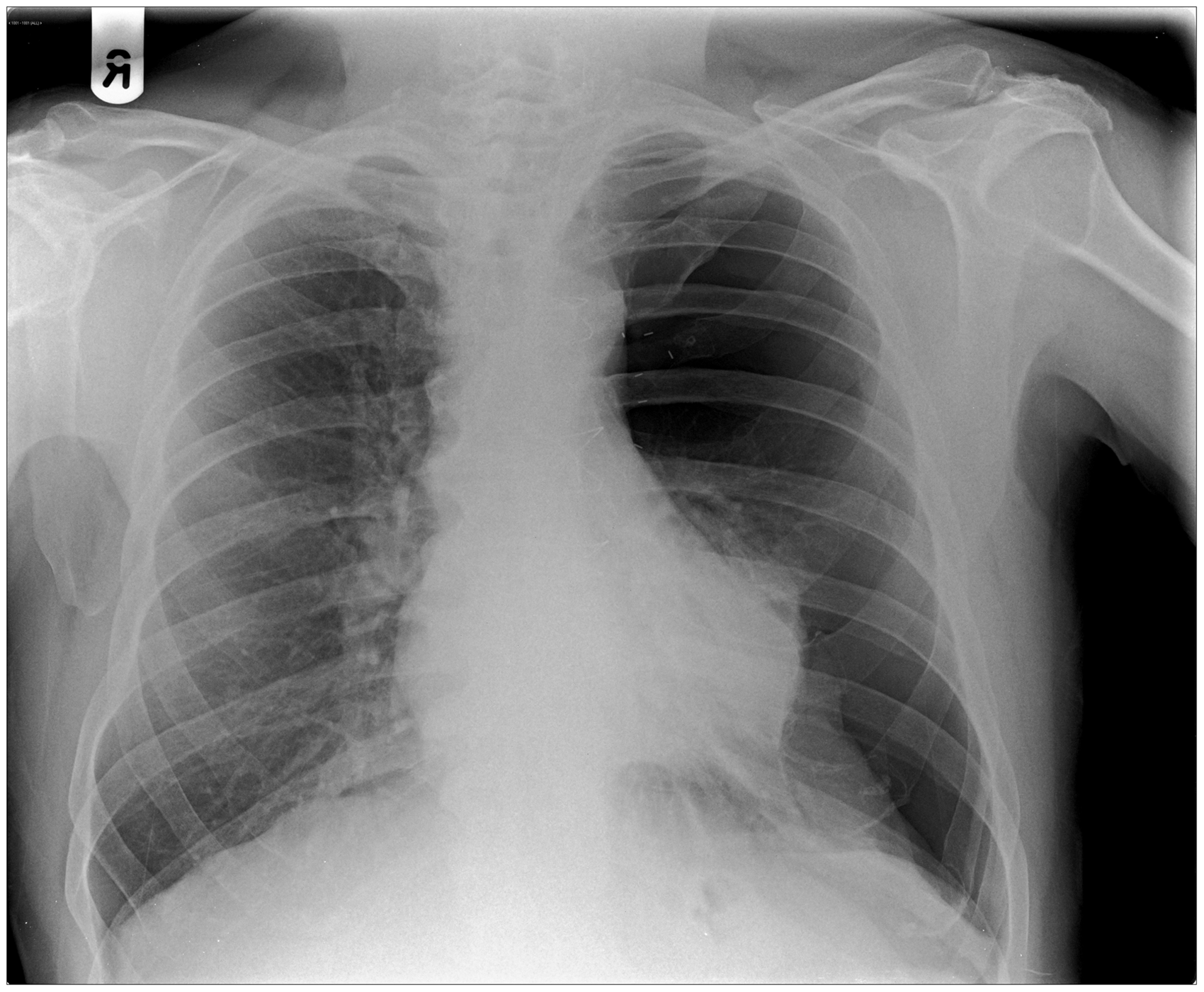
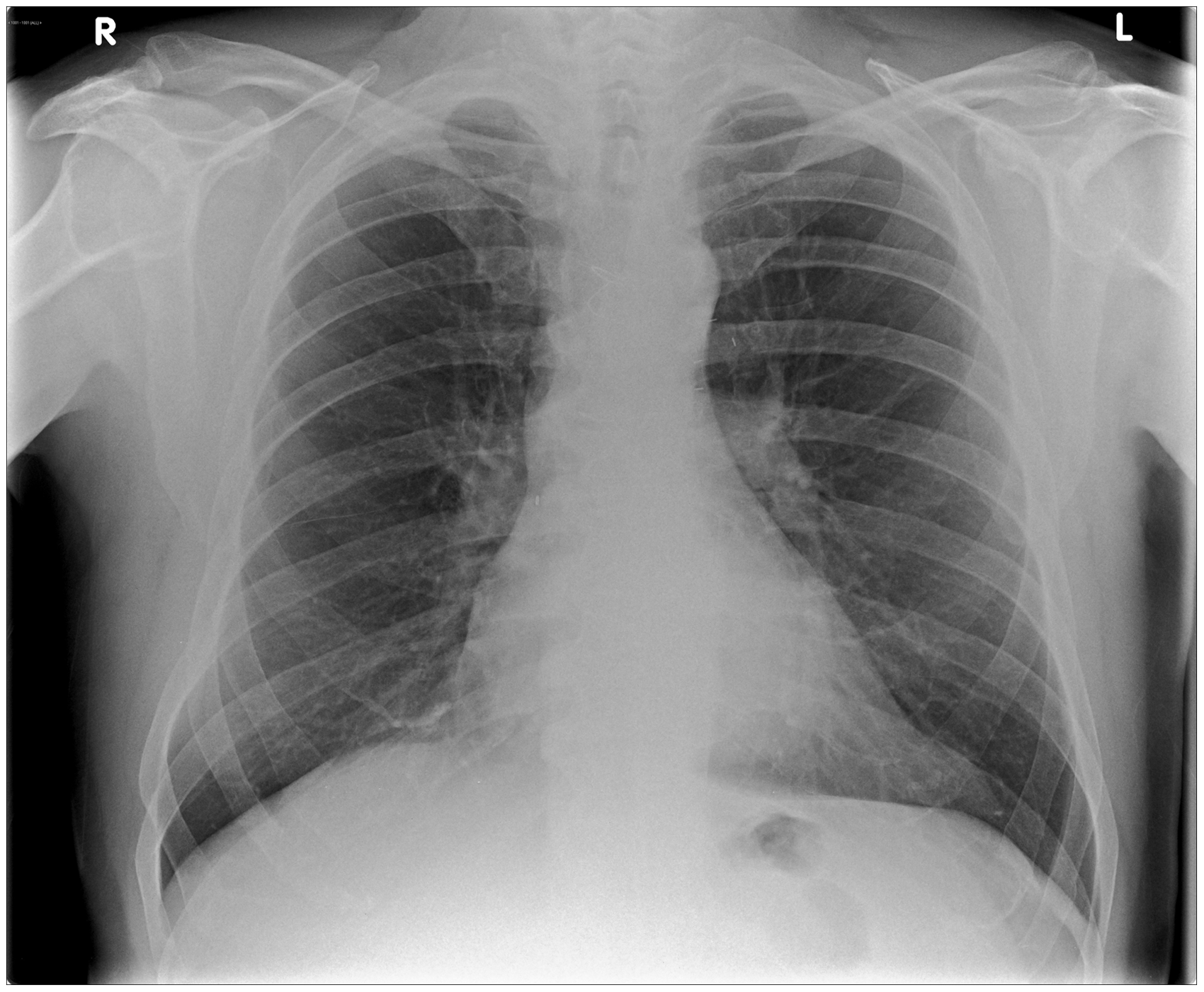
The patient was moved to the resuscitation room where his pneumothorax was aspirated. A repeat chest X-ray showed resolution of his pneumothorax (Figure 2). As the patient remained haemodynamically, stable he was allowed home with follow-up arranged in the ED clinic 1 week later. A week later, the patient remained well with no recurrence of his symptoms (Figure 3).
Chest X-ray following aspiration of pneumothorax. Follow-up chest X-ray.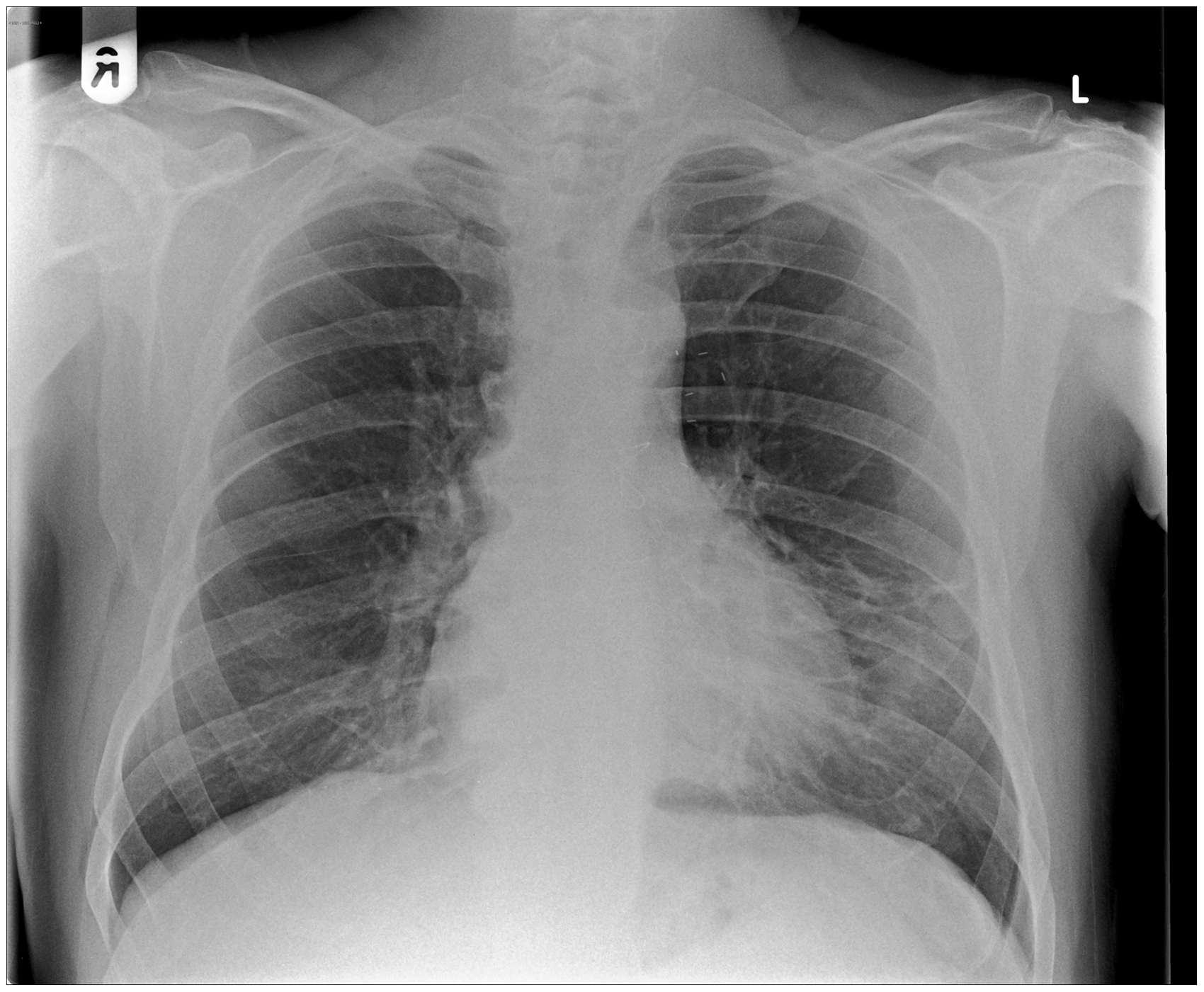
Discussion
Pneumothorax is a potential complication during acupuncture needle insertion in the vicinity of the pleura. In coronary angiography, the route taken during stent insertion is always intra-vascular. Therefore, if a pneumothorax was going to be caused by the latter method it would firstly be associated with arterial rupture and then pleural perforation. Arterial rupture would lead to potential catastrophic complications immediately. In this case report, the patient had remained well after his stent insertion and his symptoms appeared acutely after an acupuncture session.
The practice of TCM is ever increasing in western society with the National Institute for Clinical Excellence recommending it as a treatment for back pain. 3 With the rise in acupuncture use, we are also seeing increasing numbers of published case reports detailing life-threatening complications such as tension pneumothorax. 4 Ernst et al. 5 provide a useful literature review that includes systematic reviews and case reports concluding that acupuncture has little evidence for reducing pain. They also report five deaths as a result of acupuncture, four of which were due to pneumothorax. Stenger et al. 6 describes two cases of pneumothoraces secondary to acupuncture presenting to his department in a short period of time.
White et al. 7 described no serious adverse events per 10,000 acupuncture consultations and 671 minor adverse events per 10,000 acupuncture consultations. However, these event rates were calculated per consultation and therefore do not give the risk per patient. This paper is quoted by the British Acupuncture Council website. There are differences in acupuncture practice as described by DePaula 8 depending on its country of origin, some which could potentially be associated with more severe complications due to the nature of the practice.
A common feature of many of the current case reports is a lack of patient education. Patients have a right to informed consent to any medical treatment that they undergo. For this to be possible, they have to be fully aware of the risks involved. As with any patient interaction, health professionals are required to gain consent, whether it be implied or written, and part of this process involves explaining potential complications. The GMC states ‘You must tell patients if an investigation or treatment might result in a serious adverse outcome … resulting in death … admission to hospital … even if the likelihood is very small.’ 9
The question we would like to ask is ‘are acupuncturists and their patients fully aware of the risks?’ The British Medical Acupuncture Society does list complications on their consent form such as bleeding and also that serious side effects occur in 1:10,000. However, it fails to detail what these serious side effects are. 10 Additionally, the patient leaflet entitled ‘Acupuncture for you: all you need to know to make the right choice’ provided by the British Acupuncture Society again quotes the above paper, despite its limitations, and fails to mention any serious adverse effects or advice about when to seek a doctor.7,11
In the case presented above, our patient was unaware of any minor or serious adverse effects. The Code of Professional Conduct as detailed by the British Acupuncture Council, a voluntary self-regulated body, states that ‘Consent must be given by a legally competent person, must be given voluntarily and must be informed.’ 12 How can a patient possibly make an informed decision if they are unaware of the risks involved?
Learning points
In the future, we would like to see patients making informed decisions about their treatments. For this to occur, we suggest introducing a standardized patient information leaflet, such as the one provided by the British Acupuncture Society, but with additional details of adverse effects and when to seek medical attention.
Footnotes
Declaration of conflicting interests
None declared.
Funding
This research received no specific grant from any funding agency in the public, commercial, or not-for-profit sectors.